We Warp Time

slow time down, live each moment,

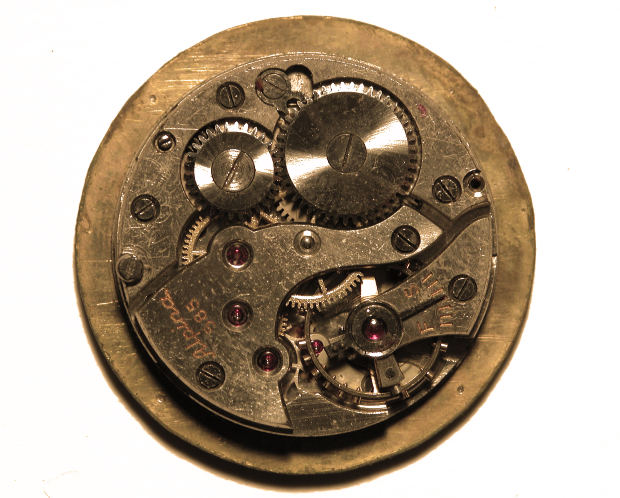
Remember sitting in third grade watching the minute hand move so slowly that dismissal time seemed weeks away?  Remember how your ninth birthday took almost forever to arrive? Yeah, that was childhood. Now months zip by with such speed that it’s becoming clear our elders hang on to handrails because time is practically knocking them down as it whips past.

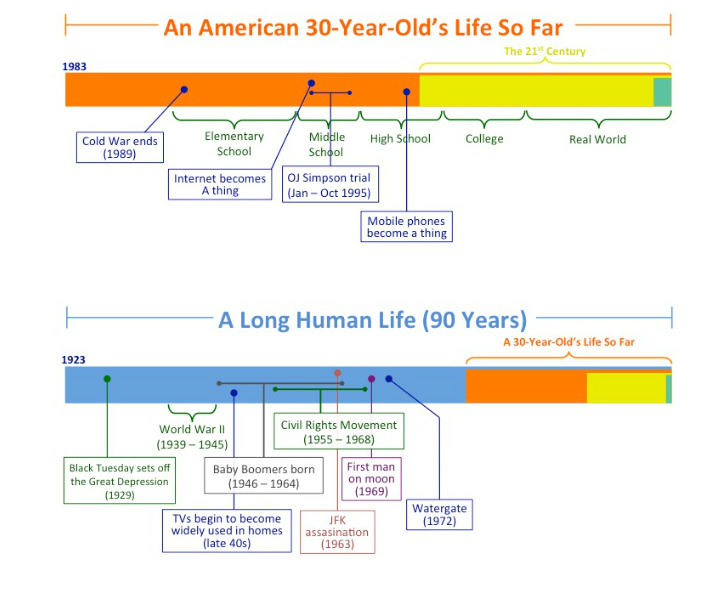
This concept is brilliantly depicted at Wait But Why.

waitbutwhy.com/2013/08/putting-time-in-perspective.html

waitbutwhy.com/2013/08/putting-time-in-perspective.html

See how our perspective of time changes as the years go by?

Researcher Robert Lemlich studied the way we perceive this. According to him, 80 year olds have gone through 71 percent of their subjective experience of time by the age of 40, making the years between ages 60 and 80 seem like 13 percent of their lives. By his calculations, when we’re 20 years old we’re halfway through the felt experience of our lives, meaning that 60 additional years will seem to pass as quickly as the first 20. That’s a nasty blow.

It makes me wonder how the youngest among us sense time. If a baby cries when a parent leaves, does it feel like an eternity of sorrow to him? If a toddler’s plaything is grabbed by another toddler, does that frustration seem to stretch out forever? Maybe that’s not far from the truth.

It illustrates why our experience of time isn’t entirely explained by the proportional theory. If we think about it, we realize our perception of time has a great deal to do with what we’re experiencing. Time actually warps. Notice that it moves grindingly slow when we’re in physical or emotional pain. Time also elongates (far more wonderfully) when we’re fully present,  making even the most ordinary moments—a child’s squeal of laughter or a sip of cool water—into something larger. It stretches even further when we’re immersed in a wholly new experience—say first love or scuba diving or public speaking.

Far too often, our personal time warp goes the other way. It gathers speed because we’re busy, we’re multitasking, we’re in a rut, and thus less mindful of the passing moments that make up our days, weeks, and years.

We can get all quantum-y about it. There’s an experiment that seems to explain why time moves slower and faster according to our perception. But we don’t really need to study entangled photons to figure it out. We want to fully live the time we’re allotted on this planet.

I’m working on making my time more warpable. How do you stretch your sense of time?

slow down time, perception of time,

“The only reason for time is so that everything doesn’t happen at once.”  ~Albert Einstein

What A Cow Taught Us About Free Range Learning

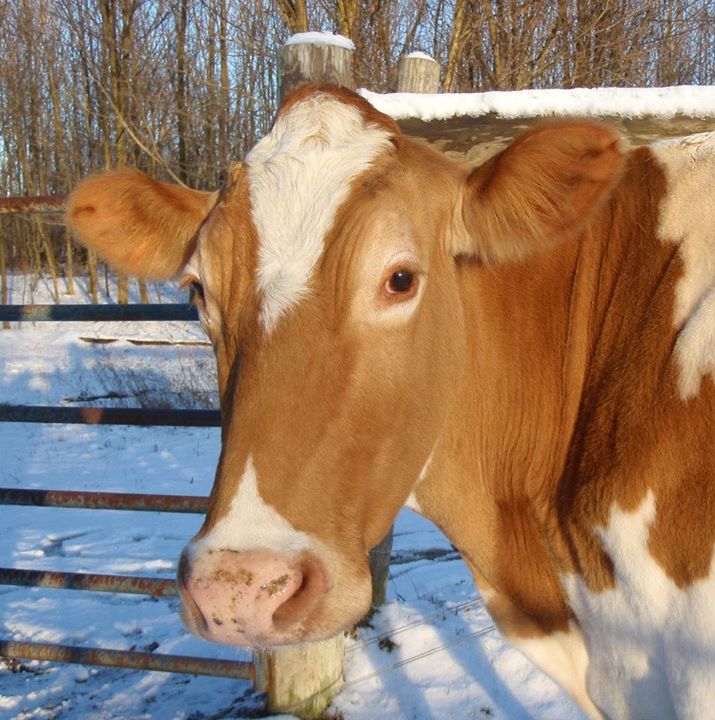
Isabelle. (Photo by Claire Weldon)

Isabelle. (Photo by Claire Weldon)

Look closely at any one thing long enough and you start to see how much more there is to know, stretching your mind (and often your heart) well beyond the supposed “right” answers. You also may notice the way this one thing interconnects with everything else. A cow helped us see that.

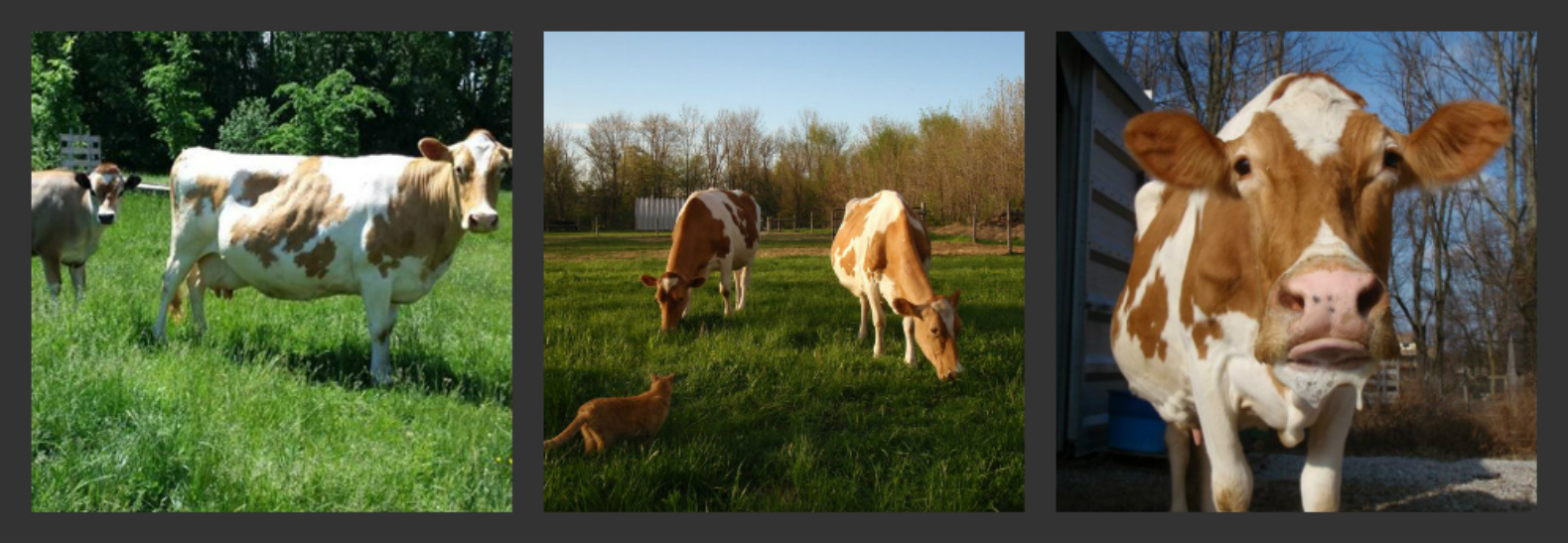
Years ago we were only raising chickens and honeybees on our small farm. My daughter researched, did the numbers, and convinced us that keeping a cow would not only provide an amazing learning experience but would be an excellent way to supply our own milk, butter, yogurt, and cheese. That’s why Isabelle, a gentle Guernsey, entered our lives. And every single day since my daughter has worked hard to care for her, without fail.

Isabelle taught us more than we could have imagined about thinking for ourselves, about tenderly raising animals, and much more. When it was time for college, my daughter wrote her entrance essay about this and was awarded an amazing scholarship.

Today Isabelle is 16 years old. She continues to teach us, our vet, and a community of people who participate in a family cow forum. To celebrate her birthday, I’ll be bringing her extra carrots and apples. I invite you to celebrate too by reading about Isabelle’s life on our farm

family cow, homestead dairy,

Isabelle (Photos by Claire Weldon)

It’s About Reading For Pleasure

One week during the summer I was twelve, I had a crisis.

I ran out of library books.

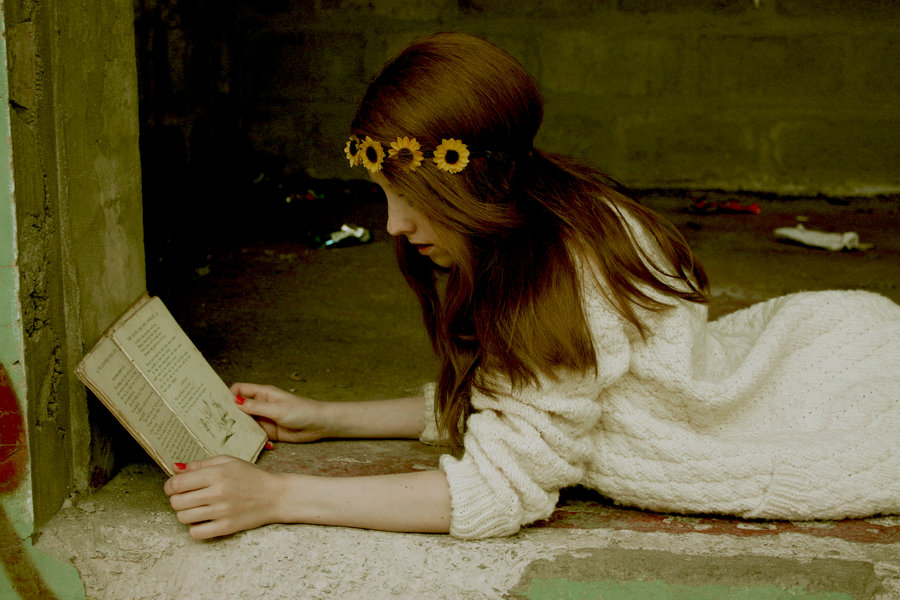
Sure I rode my bike, went swimming with friends, and listened to music trying to figure out what the lyrics meant but I also indulged in hours of reading every day. Books transported me. My mother would call me to dinner and I’d look up, astonished to find I wasn’t a wolf on the tundra but a girl in shorts lying on the carpet. Or someone would knock on the bathroom door and I’d remember that I was soaking in the tub, not eluding soldiers in a medieval battle.

My parents supported reading, but they had no problem saying “get your nose out of that book and go outside.” They didn’t take us to the library more than two or three times a month, so the stack of books each of us brought home had to last.

When I realized I was bookless, I turned in desperation to a volume my older sister read as a class requirement. It had tiny print and a not-too-inspiring title, The Scarlet Letter. “It’s too hard,” she told me. “It’s a classic.”

I didn’t know “classic” meant it was good for me, like a bitter vitamin tablet. I insisted I was out of other options.

I promptly fell into Nathaniel Hawthorne’s words. They were exquisite in a way I’d never experienced, centered on the inner life and all its convolutions, something I already knew well but didn’t have the sophistication to express. I wasn’t aware such books existed. Instead of racing through it, as I did with every other book, I savored it. It felt as if I could run my fingers over the page and feel the texture of shame and longing. When I finished I was newly in love with the idea of classics, so I got books by Charles Dickens out of the library. I worked my way through two of them that summer although they didn’t live up to my great expectations. I thought Dickens droned and was nothing like Hawthorne.

Several years later I had to read The Scarlet Letter for English class. Everyone grumbled when assigned more pages to read. Those piercing insights, when listed in bullet points on the board, didn’t sink into my heart. Lectures and assignments obscured the book’s beauty. I didn’t read it with a cloak thrown over my head or the prick of a rose thorn in my skin. It lay dead, like a victim on the autopsy table.

Then I realized that my love of books had developed entirely outside of the classroom. I’d never really fallen in love with any of the books assigned in school, although the ones our teachers read aloud after recess, a few pages a day or an entire chapter on special days, still stood out in my mind. Reading, for me, was about pleasure. It was more than a habit, it was an integral part of my being. The books I read helped form my outlook and character. I dare say that many of us, if we look back, will find that favorite books from childhood have a surprising link to who we are today.

If I could, I’d reclaim reading for all of us, from earliest childhood on, as pleasure first and foremost. Turning to the written word for information and edification then becomes a pleasure too.

Decision To Make? Ask Your Body

I tend to fuss over decisions, considering all possible options while weighing the benefits and risks for everyone involved. Sometimes I choose the most difficult path even when it clashes with my admittedly Hobbit-like nature, in part because I have the annoying idea that growth comes from taking on new challenges.

Unfortunately the process of logical decision-making tends to wedge us into what we intellectually determine is best even if it doesn’t feel right. (I’ve gotten myself into plenty of tough situations doing exactly that.) Many of us tap into our intuition as well, but we usually give much more weight to what reason has to say.

These days I’m trying to rely less on my head and more on gut feelings for decisions large and small. It doesn’t take much to realize the glad expansiveness in my chest is a “yes” while a heavy clenched feeling in my throat is a “no.”

I don’t always succeed at this. Recently I agreed to give a series of talks and already dread them. The process of trying to be more aware of what’s authentically right for me is gradual. (NOT public speaking, my body retorts.) I suspect many of us push ourselves until our bodies force us to start paying attention….

Let’s remember, each one of us is a whole person with intelligence coming from our hearts, our guts, maybe all of our cells. But our culture teaches us from our earliest years to be in our heads while ignoring, even shutting off inner knowing. When inner promptings are so strong they override the left hemisphere of the brain, children are often labeled something else entirely—-lazy, reluctant, stubborn, headstrong, picky, anxious, timid, fussy. In reality, our bodies are telling us we need:

1. time to process or time do things at a pace natural to us

2. to step away from a particular person/situation/food/obligation

3. to honor the voice inside that already knows the answer

This is the kind of awareness that people have used since the beginning of humankind to make decisions fully, in ways we rarely access in today’s world.

Here’s a recent example of what can happen through listening to body wisdom. I have poor posture. I fight it, when I think about it, by holding my head up straight for as long as I can remember and more recently, by learning to practice natural posture. But when I’m working at the computer my head tends to sink forward until I’m hunched like a half-conscious orangutan. I know that listening to the body means, in part, paying attention to the body’s messages. So one afternoon I stopped resisting, just for a few minutes.

I listened to what my slumped posture had to tell me. It didn’t say “sit up straight!” It said go with the slump. Feeling a little silly, I let my head sink forward to a ridiculously exaggerated degree. Instantly I recognized in my body the way my father slouched when he was sad, the way my mother’s head jutted forward and down with disappointment. Their postures are in me, speaking to me. I didn’t analyze this, I just sat with it, paying attention to my body in that posture. Strangely I felt relief, even comfort, as my upper body curled like a fetus.

Then I tried the opposite. I pulled my head up into rigid “good posture”and was surprised when tears came to my eyes. My throat felt vulnerable and exposed, as it did when I was a little girl and couldn’t sleep unless my throat was covered. Again, I didn’t analyze right away, I just sat with it.

The whole process took about three minutes. Yet afterward I felt a wonderful strength up my spine. My posture felt buoyantly upright. The feeling lasted all afternoon. It was astonishing to get so much benefit from such a short body-awareness experience.

What I am saying is that your internal guidance system is there, ready to be accessed. You possess logic, which is invaluable as you consider variables and imagine outcomes. You have remarkably instructive emotions—you may feel excited, a little scared, a little eager, and pretty relieved when you imagine yourself going forward with one decision while you may feel let down, hesitant, and resistant when you imagine going forward with a different decision. Just past logic and emotion are actual body sensations. You may feel tightness in your jaw or churning in your stomach or tension in your back. You might feel the urge to stretch or dance or take a deep breath.

Simply remember, when you have a decision to make, consult your thoughts and emotions and body wisdom. The answer is there, waiting for you to pay attention.

For more on this, check out:

7 Ways To Access Your Body’s Unique “Knowing”

Free Fix For What Troubles Us

The Little Trick To Make Any Moment Better

body wisdom, gut feeling, body intelligence,

Inner Cosmos by memzu.deviantart.com

Smart Pants: High Tech Trousers For Every Contingency

I was called “Smarty Pants” a few too many times in my childhood. A little girl who can’t keep sarcastic asides to herself isn’t silenced by a nonsense term, especially when the invective is hurled by underpaid math teachers who wear terribly unflattering polyester slacks. The ultimate not-smart pants.

Now I’m well into adulthood and still too smart for my pants, thank you. I’m also not living up to my potential, just as my teachers predicted. Perhaps inventing trousers that qualify as truly smart could be my lucky break. Futuristic technology must be out there just waiting to be applied to legs and backsides in a fashionable manner.

What features would my Smarty Pants offer the savvy wearer?

  1. Zapper to halt verbal or physical forms of stupidity. Imitating the irritating way your boss smacks her lips for emphasis after every third word? Smarty Pants will helpfully jolt you with a mild electric shock if your boss is in range. Tempted to accept a drink with whoever is waving from the shadows of the airport bar?  Your pants will know if that’s the pilot. Zap again.
  1. A memory chip. This technology will mobilize at the first sign of perplexity. Forgotten names, numbers, and directions will appear on a Post-It in the Smarty Pants pocket for discreet retrieval. This could come in handy as the decades roll by.
  1. Low dose laser to melt fat in preselected areas even while the pants wearer is noshing on a post-lunch snack.  Disclaimer: noticeable steam generated by the device must be dissipated by walking briskly or swiveling in one’s chair.
  1. Seat belt tightener for those situations where the Smarty Pants wearer is sharing the road with idiots. Or is driving like an idiot. It happens.
  1. Anti-skid device. Not that kind. The kind that helps the wearer remain upright and avoid slipping on ice, tripping over curbs, skidding on banana peels, you know, equilibrium cruise control. Graceful strolling guaranteed, even for the chronic klutzes.
  1. A clever anti-erection device, useful in situations when this state unwelcome. It will activate when needed anywhere within range of the wearer. Never fear, the feature causes no permanent disability.
  1. Warming and cooling agents. Hot wait on a plastic seat at the DMV?  Smarty Pants will provide a zone of frosty coolness from waistband to ankles.  Tobogganing on a sudden whim? Smarty Pants will make sure you are a hottie.  But not so toasty that you melt the ice.
  1. Wrinkle-free, stain-proof and fade-free fabric. What’s more, these exceptional trousers will also be fireproof, inflate as emergency flotation devices, deflect bullets, and sport James Bond-like gadgets which are so top secret that each pair of pants will be unique. Figuring out the instruction manual may require tech support.
  1. Auxiliary wit, of course. Smarty Pants will telepathically transmit clever banter and droll remarks for every occasion. Unfortunately, this may become habitual.  Human smarty pants rarely know when to keep comments to themselves. It isn’t likely that the trousers model will be any more discerning.

Originally appeared in Poor Mojo’s Almanac(k)

Five Ways to Transcend the School Mindset

child

School-like instruction has been around less than a fraction of one percent of the time we humans have been on earth. Yet humanity has thrived. That’s because we’re all born to be free range learners. We are born motivated to explore, play, emulate role models, challenge ourselves, make mistakes and try again—continually gaining mastery. That’s how everyone learns to walk and talk. That’s how young people have become capable adults throughout history. And that’s how we have advanced the arts, sciences, and technology. In the long view, school is the experiment.

But it’s hard to see beyond the school mindset because most of us went to school in our formative years. So when we think of education, we tend to view school as the standard even if we simultaneously realize that many parts of that model (found also in daycare, preschool, kids’ clubs, and enrichment programs) aren’t necessarily beneficial. Narrowing the innate way we learn can interfere with the full development of our gifts.

Here are five ways to get past the school mindset.

build divergent thinking, creative children, more imagination, creativity builds leaders, nurture divergent thinking,

Welcome divergent thinking

In today’s test-heavy schools the emphasis is on coming up with the correct answer, but we know that the effort to avoid making mistakes steers children away from naturally innovative perspectives. Divergent thinking generates ideas. It’s associated with people who are persistent, curious, and nonconforming. Research going back to the 1970’s shows that this generation of children are less imaginative and less able to produce original ideas. An extra whammy may very well be coming from increased participation in organized sports: more than a few hours a week appears to lower a child’s creativity.

This is dire news, because creativity is actually much more closely linked to adult accomplishment than IQ. In fact, 1,500 CEO’s listed creativity as the leading indicator of “leadership competency.

We don’t have to instruct kids in divergent thinking, just nurture it. Children are naturally inclined to question and explore. Remain open to their enthusiasms, encourage them to identify and solve problems no matter how unusual, and welcome the learning power of mistakes.

exercise and learning, overtaxed impulse control, full body learning, sensory education,

Value full body learning

School-like learning emphasizes the brain over the body. It narrows from there, emphasizing one hemisphere of the brain over the other with its focuses on left-brain analytical thinking. But children don’t learn easily when they spend so much time sitting still, eyes focused on a teacher or lesson or screen, their curiosity silenced and their movements limited. Children ache for more active involvement.

Research shows us that the rules necessary to keep a classroom full of kids in order all day, like being quiet and sitting still, can overtax a child’s ability to resist other impulses. The mismatch between school-like expectations and normal childhood development has resulted in millions of children being diagnosed with ADHD. (One of those kids was my third child, whose “symptoms” disappeared once we took him out of school and figured out how to homeschool such an active child.) 

What we need to remember is that the mind and body are exquisitely tuned to work together. Movement allows sensory input to stimulate the brain as it absorbs a flood of information. This is the way the brain builds new neural pathways, locking learning into memory. (Check out A Moving Child Is a Learning Child by Gill Connell and Cheryl McCarthy, Balanced and Barefoot by Angela Hanscom, as well as Spark by John J. Ratey for more on this.) Active, talkative, curious children aren’t “bad.” They’re normal.

If we look at movement we realize that even a very brain-y activity, reading, has to do with the body. Young children develop reading readiness in a variety of ways, including conversation and being read to, but also through physical activities that help their neurological pathways mature. These are activities children will do whenever given the opportunity, like swinging, skipping, climbing, walking, and swimming.

All the relentless activity of early childhood may very well be a sort of intrinsic wisdom built into them, because movement is key to keeping an active brain. Children who are more physically active actually increase the areas of their brains necessary for learning and memory. That doesn’t mean the antidote to the school mindset is a constant frenzy of activity. It does mean that children tend to self-regulate within loving safeguards. Every child needs to balance physical activity with other essentials like snuggling, daydreaming, and sufficient sleep. We simply need to remember that movement isn’t an enemy of education.
goldilocks effect, individualized education,

Build on the “Goldilocks effect”

This term came from researchers who demonstrate that we are cued to ignore information that’s too simple or too complex. Instead we’re drawn to and best able learn from situations that are “just right.” Sort of like the educational equivalent of Goldilocks on a porridge-testing quest.

The Goldilocks effect means you are attracted to what holds just the right amount of challenge for you right now.  Usually that means something that sparks your interest and holds it close to the edge of your abilities, encouraging you to push yourself to greater mastery. That’s the principle used to hold a player’s attention in video games. That’s what inspires artists, musicians, and athletes to ever greater accomplishments. That’s how kids who follow a passion of their own tend to learn and retain more than any prepared lesson could teach them.

Our kids tell what they’re ready to learn. They tell us through what bores them and fascinates them, what they’re drawn to and what they resist. They’re telling us that, until they’re ready, learning doesn’t stick.

 too much adult-run learning, stubborn kids, child-led learning, natural learning,

Diminish the focus on instruction

The school mindset leads us to believe that children benefit from lessons, the newest educational toys and electronics, coached sports at an early age, and other adult-designed, adult-led endeavors. Well-intentioned parents work hard to provide their children with these pricey advantages. We do this because we believe that learning flows from instruction. By that logic the more avenues of adult-directed learning, the more kids will benefit. But there’s very limited evidence that all this effort, time, and money results in learning of any real value. In fact, it appears too many structured activities diminish a child’s ability to set and reach goals independently. 

When we interfere too much with natural learning, children show us with stubbornness or disinterest that real education has very little to do with instruction. Learning has much more to do with curiosity, exploration, problem solving, and innovation. For example, if baby encounters a toy she’s never seen before, she will investigate to figure out the best way or a number of different ways to use it. That is, unless an adult demonstrates how to use it. Then all those other potential avenues tend to close and the baby is less likely to find multiple creative ways to use that toy.

Studies show that “helpful” adults providing direct instruction actually impede a child’s innate drive to creatively solve problems. This experience is repeated thousands of times a year in a child’s life, teaching her to look to authorities for solutions, and is known to shape more linear, less creative thinking.

This isn’t to say that all instruction is bad, by any means. It does mean that six long hours of school-based instruction plus afterschool adult-organized activities in sports or recreation or screen time supplants the kind of direct, open-ended, hands-on activity that’s more closely associated with learning. Most of the time this kind of learning is called play.

free play benefits, play versus learning, chores, self-regulation,

Recognize free play is learning 

Before a young child enters any form of schooling, his approach to as much of life as possible is playful. A walk is play, looking at a bug is play, listening to books being read is play, helping with chores is play. The school mindset separates what is deemed “educational” from the rest of a child’s experience. It leads us to believe that learning is specific, measurable, and best managed by experts.

A divide appears where before there was a seamless whole. Playful absorption in any activity is on one side in opposition to work and learning on another. This sets the inherent joy and meaning in all these things adrift. The energy that formerly prompted a child to explore, ask questions, and eagerly leap ahead becomes a social liability in school. But play is essential for kids, for teens, for all of us. (For more check out these two marvelous and very different books: Free to Learn by Peter Gray and A Playful Path by Bernie DeKoven.)

Free play promotes self-regulation and this is a biggie. It means the ability to control behavior, resist impulse, and exert self-control  —all critical factors in maturity. Play fosters learning in realms such as language, social skills, and spatial relations. It teaches a child to adapt, innovate, handle stress, and think independently. Even attention span increases in direct correlation to play.

That doesn’t mean a child’s entire day must be devoted to free play. There’s also a great deal to be learned from meaningful involvement in household responsibilities as well as community service.

why homeschool, democratic schools, raise successful children,

I want to nurture my children in such a way that they define success on their own terms. I hope that means they craft a life based on integrity, one that brings their unique gifts to the world. Homeschooling, for my family, gives us the freedom to go beyond narrow roads to success. (Democratic schools can also provide that freedom.) This is the way young people have learned throughout time. I’ve come to trust the way it works for my family.

Portions of this post excerpted from Free Range Learning.

Why Write Poetry

write poetry, why poetry, becoming a poet,

Image: karrr.deviantart.com

I started to write poetry when I was eight or nine years old and continued until I was 13. The highlight? Winning a poetry contest in Mrs. Barker’s third grade class. The prize was a large chocolate bar.

The few scraps of writing I’ve found from those years consist of a child’s earnest questions and the comfort sought in a forest that once stood behind my parent’s home. Most lines are drenched with early existential dread. I’m not sure why I stopped writing. It could have been the surprisingly arduous trials of growing up or simple self-consciousness.

A moment from my 12th year comes to mind. I was in sixth grade, trying very hard to be like the other girls, never discussing the concerns that kept me awake most of the night. During the day, sleep-deprived into silliness, it often seemed to me that the conventions people took for granted were absurd. I did lots of laughing. One afternoon, walking out of class toward the playground for recess, I was telling a funny anecdote. A cluster of friends not only walked with me but jockeyed to be closest to me. The sun was shining on gumdrop green grass and I felt completely alive as I reached the best part of my story. I thought for a blindingly self-absorbed instant that this was what it was like to be popular. The next second I walked straight into a tall pole.

I hit it so hard I was thrown back. Dizzy, I made a joke about not seeing what had been there all along. My friends acted concerned but that was it, my brief encounter with popularity. Maybe I lost the secret habit of writing poetry because it seemed too much like an unseen pole, the sort of fullness that can erupt into a poem but might also raise a welt.

I never walked entirely away from poetry. As an adult I created poems from the phrases given to me by nursing home residents, crediting them separately for each line that eventually appeared in a book titled Gathering Our Thoughts. I led support groups for victims of abuse, hearing poetry as they shared their anguish in grace-laden detail. I taught non-violence workshops using poetry to emphasize the message of each session. I sent the work of my favorite poets to dear ones as a way of celebrating their joys and sharing their sorrows.

Yet I rarely encountered people living nearby who talked about, read, or wrote poetry. Far from our little farm I’m aware that poetry speaks for itself in slam festivals and readings, that it takes up residence in MFA programs and literary journals. Those worlds seem distant.

Poetry still feels like an indulgence. It hear it rustle in my head, trying to shuffle impressions into form, but I focus on my usual work of writing articles, editing, gardening, bringing in firewood, feeding cows, and other ordinary tasks. Besides, those impressions never entirely fit into words. I usually hush them till they are quiet. The ones that continue to pester I allow to fall onto paper although they don’t fully capture what’s just beyond language. When I took my manuscript to the post office to be weighed, addressed to “Poetry Editor,” I felt faintly ashamed, as if publicly admitting I squander time that could be devoted to more useful pursuits. The Puritan ethic dies slowly.

But the articles I write and the books I’m working on center around letting each person’s unique radiance shine. I believe this has to do, in part, with claiming both the light and dark in our lives so we can move toward a world of deeper mutuality. I know I’m not true to my ideals unless I live them. So I’m learning to treat the poetry writing impulse more gently. It feels starkly revealing, as liberation does.

The pieces in this collection have to do with beginning, uprooting, gathering, and abundance. They rise from the simple daily rituals that nourish me and from the loved ones who shape my life. They’re a way of walking into something hard without falling backwards.

publish poetry, why write poems,

Image: xxju.deviantart.com

Endless thanks to the intrepid souls who helped shape this book. The first ms readers: my beloved siblings Dale Piper and Cynthia Piper. My merry writing group: Connie Gunn, Margaret Swift, and Sarah Vradenburg. Those discerning individuals who commented on later drafts: Laurie Kincer, Leslie Nielson, Katherine Clark, and Mark Hersmann. I’m endlessly grateful. 

Odd Second Saturday Suppers

Odd Second Saturday Suppers, potluck inspiration, easiest party ever,

Image: 8o-clock.deviantart.com

The happiness glass fills when we spend time with people we love.  It’s startling and appalling to me how many friends I adore, but almost never see. When we do get together we can pick up right where we left off, laughing as well as diving into the deepest topics, yet we don’t make time to see each other very often. That’s just wrong. (I’ll keep myself from using the newest curse word although it applies here.)

Years ago we spontaneously invited friends over for dinner all the time. We hosted wildly silly kid events like BYOB parties (bring your own box) and pig pen parties. But lassitude set in after years of constant financial strain and the sadness of dealing with our parents’ last years. Lately I’ve been fighting back.

At the start of 2013 I decided to commit to a series of events at our house. I named them Odd Second Saturday Suppers. Last January I sent emails to a few friends who live nearby inviting them to potlucks here on the second Saturday of every odd month. That meant we committed in advance to hosting parties in January, March, May, July, September, and November. Because they were planned well in advance, I bypassed the vague “Oh we really should get together” intentions that are unlikely to happen. Here’s the invite:

Odd* Second Saturday Suppers

We’re starting a new tradition.

We are inviting friends to a regular gathering at our home for food, conversation, and simple relaxation. These will take place the second Saturday on odd months.

 I’ll send out reminders at the beginning of those odd months. We’ll provide an entree or two. Bring something to share if you can: beverage, appetizer, side, or dessert. Not sure about the time, I was thinking around five-ish but let’s stay flexible. Different months may offer different possibilities. You are invited to all but of course, come to the ones that best fit your schedule.**

 We also welcome new friends, so feel free to bring along a guest or two.

 Here are the dates:

January 12th

March 9th

May 11th

July 13th

September 14th

November 9th

*Odd as in quaint, funny, unusual. Also odd as in unevenly numbered months.

**If you abhor the idea or plan to be busy every one of those Saturdays let me know and I’ll spare you the reminders.

Sometimes as the date got closer we didn’t feel ready to have a houseful of guests. But when the day arrived we were eager to see everyone. Each event has been slightly different. We’ve sat out back to enjoy a bonfire, we’ve played Cards Against Humanity, I even cajoled people into playing absurd outdoor games, but mostly we’ve focused on eating and chatting. Because these are potlucks there’s minimal fuss. (Also, my husband and kids are great about hustling in advance of events to straighten the house, mow grass, and generally help prepare.)

By the last scheduled Odd Supper we weren’t sure if we’d continue. Difficulties cropped up as they do—a house needing repair, a job lost, a refrigerator that no one wanted to clean even if the Queen herself might be arriving.  But really, it’s not hard at all. It’s wonderful. (I was kidding about cleaning the refrigerator, we don’t invite people who care about my semi-awful refrigerator.)

So in 2014 year we’re throwing the invite list open a little wider and asking friends from a little farther away. And they won’t all be Odd Suppers. I’m plotting that several dates will be art parties or adventures far from our little farm.

How are you fighting back against the forces that keep you from enjoying friends near and far?

On Being A Frugal Geek

cheap geek, materialism, frugal living, cheap interests, cheap homeschooling, There are plenty of assumptions about what geeks do. We own the most advanced technology. We see the latest movies, watch the newest series on subscription channels, play the most recently released video games. wouldn’t miss Maker Faire. If we collect anything, it’s probably awesomely obscure and sure to gain in value. All these things cost money.

I tend to geek out over less expensive interests. Outsider art, foreign films, poetry, recent neuroscience findings, nonviolence, mindfulness practices, the new acquisition section of the library—that sort of thing.

Still, stark economic realities have made penny pinching essential. Long ago I assumed I could afford more geeky indulgences once I got past pricey milestones like college, marriage, and new babies. Didn’t happen. Turns out sick kids, unemployment, and falling down houses are also expensive.

Instead, I’ve geeked out on frugality itself. I garden, preserve food, make homemade cheese, sew, repurpose, and concoct herbal remedies that look so vile my household prefers to stay healthy. I’ve advanced my career with little more than a not-so-new computer, a love of research, and library privileges. My kids have been dragged to every free concert and science program available, and know area nature preserves like their own backyard. They’ve become Makers almost entirely out of necessity, turning junk and other dirt cheap materials into marvels. Because every one of us goes deep into passions like forensics, turbocharger modifications, bagpipe playing, arachnid study, and advanced plasma welding techniques our dinner table conversations are strangely fascinating. We’re geeks all right, just frugal geeks. Maybe you are too. Mainstream assumptions about geeks don’t define us. GeekMom, where I’m a senior editor, agrees. As explained on the “about” page:

Being a geek is a state of mind, and that state of mind leads us to intensely explore our interests and approach the world with endless curiosity. When we want to get involved in something cool, we get really involved. In other words, we get geeky about it.

I know the research shows that frugal living benefits kids while materialism doesn’t. And I believe that living simply is good for the planet. That doesn’t mean I wouldn’t like a few geek frills, some day. More movies, newer gadgets, and the bucks to finally get to Maker Faire. While I’m dreaming, I’d like an invisible bike helmet too.

How does living frugally affect your geeky or not-so-geeky passions?

child

Don’t Sit Up Straight: Why Natural Posture May Be Better

natural posture, don't sit up straight, stress relief, trauma relief, body wisdom,

Pondering the skeleton within (Image CC by 2.0 Dreaming in the deep south)

I come from a family of slouchers and after a typical day at the computer I have ample reason to worry I’ll develop the dowager’s hump my grandmother had by the time she was in her late 50s. Worse, my husband recently required back surgery due to longstanding problems after a car accident.

That’s why I’m on a quest to find out all I can about our spines and our posture. It has taken me in some unexpected directions. Here are some crumbs along this trail.

First off, don’t sit or stand up straight. At least not the way we think is correct, with our shoulders back and chins held high. That, my friends, is not remotely natural no matter what your mother or your gym teacher or your fitness coach told you. I learned this from a book with gorgeous photographs of people all over the world engaged in often strenuous tasks, yet moving with posture that is graceful and perfectly supported — 8 Steps to a Pain-Free Back: Natural Posture Solutions for Pain in the Back, Neck, Shoulder, Hip, Knee, and Foot. The title doesn’t hint at how important this book is for those of us who don’t have back pain, but nonetheless plan to continue using our spines. The author, Esther Gokhale, teaches what she calls “primal posture.” Her book is packed with more than inspiring images. It explains how we can sit, stand, walk, and lie down in ways that contribute to our overall health and well-being. For example, by using a postural method she calls “stretch sitting.” She gives a brief intro in the following video, instruction starts about 4:20.

Next, all the fuss about building muscle doesn’t get to the core of the issue. Toned abs can’t replace strong, well-aligned bones. I learned more about this from another amazing book Natural Posture for Pain-Free Living: The Practice of Mindful Alignment by Kathleen Porter Ms. Porter explains that children in the non-industrialized world naturally sit and stand with aligned posture they maintain their entire lives without the neck, spine, and leg problems that plague people in the developed world. She also contends that a child’s posture and body awareness supports learning.

Why do we have so many slumped kids and achy adults in industrialized countries? Our fixation on TV and computer screens may be part of the problem. But Ms. Porter thinks it starts earlier. She notes that the design of car seats, strollers, and baby seats work against an infant’s developing posture. (She offers one solution, called a Baby Wedgie.)

I suspect it has something to do with how little free play today’s kids enjoy, a time when they can engage in brain-boosting and spine stretching movement. A recent study of 4 million U.S. preschool-aged children found that almost half were not taken outdoors to play on a daily basis, probably because we’re busy carting those kids around in car seats that incorrectly position their spines. Ms. Porter explains how to raise kids with healthy posture in her book Sad Dog, Happy Dog: How Poor Posture Affects Your Child’s Health and What You Can Do About It. The following video does a good job of showing how to grow up with naturally aligned posture.

And finally, it’s worth considering how our bodies react to strong emotion.

During frightening, painful, or otherwise highly stressful experiences our bodies are flooded with chemicals preparing us to react physically. Most often our response, in today’s world, is not physical. We aren’t running away from or fighting off predators as our ancient ancestors did, although our bodies respond in the same way (the “fight or flight” response). We staunch our physical impulses and sit still during all sorts of stressors, remaining immobile during a painful medical procedure, while the boss politely tells us we’re going to be laid off, or when our car is nearly hit on the highway. Experts in trauma tell us that mentally processing a frightening or powerfully upsetting experience doesn’t always resolve it. The bodily movements we wanted to take, but didn’t, are still locked within. There they can cause all sorts of long-term problems, including back pain. (Check out what movement can help alleviate this stress.)

I’m still learning about this as I read remarkable books by Peter A. Levine. The first one I waded through is geared more toward physical therapists and psychotherapists, but still highly relevant for the layperson. I stumbled on it initially because I loved the title’s implication, In an Unspoken Voice: How the Body Releases Trauma and Restores Goodness. It’s one of those books to read with a highlighter in hand. Now I’m reading one of his far more accessible books, Trauma-Proofing Your Kids: A Parents’ Guide for Instilling Confidence, Joy and Resilience, which I heartily recommend. It casts a bright light on experiences adults may consider average, but which can turn into long-term trouble for kids (masquerading as behavior problems, hyperactivity, anxiety, or depression) unless we know how to help them deal with it.

I love the way seeking out information tends to lead us in new, unanticipated directions. I’m still on the lookout for what I can learn about natural posture. And I’m working on sitting as if I had a tail, one that is behind and not under me. I swear this effort makes me look taller than my almost five foot three inch height. See, another unexpected perk!

stress relief, trauma relief, don't sit up straight, natural posture,

Originally published in Wired.