Understanding Children Through Imitation

follow your child's example, what it feels like to be a child, child's experience,

Mirror a child’s movements. (morguefile)

So much of a child’s experience, from infancy on, is constantly being shaped by adults. Their behavior, posture, movement, and sound are restricted by structured activities, confining seats, and grown-up expectations . If we allow ourselves, we can drop into a child’s world for few moments by replicating his or her movements. It’s a form of listening at the bodily level that can be instructive as well as enlightening.

I’ve admitted to trying this the very first time as a new mother, imitating my newborn’s movements in an experience so profound it felt like a ceremony.

I didn’t try it again until I was the mother of three kids under six. I’d dashed over to a friend’s house to drop something off, feeling rushed to get back to my nursing baby. My friend’s children weren’t home. I stood in her quiet kitchen telling her how much I wanted to sit down and chat, but couldn’t spare the time. She answered my complaint with mock outrage, “Don’t you dare relax! What were you thinking?”

In my best imitation toddler voice I said, “WANT TO!”

She wagged her finger. “That’s enough out of you. Do what you’re told right this minute.”

Then I dropped to the floor in a full-on act of defiance; lying on my back, kicking my legs, and squalling, “You can’t maaaaaake me!”

By this time our hilarity was well out of proportion to this brief moment of improv. When I got up I felt different—wonderfully de-stressed and energized.

I insisted my friend give it a try. She resisted, until I admonished her with the same phrases I’d heard her use on her kids. I even flung out her full name accompanied by finger wagging. That did it. She twirled around whining “Noooooo. No no no!” till she was out of breath, with hair in her mouth and a smile on her face.

We both agreed we felt incredible.

I don’t for a minute suggest you do this, ever, in front of any child. Self-expression should never be ridiculed. But if they’re not home, give it a try. What this did, for me as well as my friend, was let us fully express strong emotions through our bodies as our children do, as we used to do when we were children. We may have been well-educated, reasonably sophisticated women but the need to indulge in some primal venting hadn’t left us. A little method acting gave us both new insight into what our children experience.

After that, I looked for ways to learn from my children through imitation. We adults do this all the time when we play with our kids. We chase and let them chase us. When they pretend to be an animal or make-believe character we join in. We’re the big bad wolf blowing down a child’s fort made of cushions. We’re the sotto-voiced doll talking to another doll or the train engine struggling up an imaginary hill. Playing is a window into a child’s experience, and remarkably restorative for us as well.

But what truly let me honor my children’s world was letting them choreograph my movements. Sometimes we’d play what we called “mirror”— standard actor training done face to face. The child is the leader, the parent the “mirror.” As the child makes gestures, facial expressions, and hand movements the parent tries to duplicate the movements exactly. Then we ‘d switch so the child got a turn being the mirror. I always ended up laughing first.

Sometimes we played a variant of this, making each other into emotion mirrors. One would call out a feeling like “surprised” or “angry” or “wild” and the other would try to convey the word through facial expression. (This is also a great way to advance emotional intelligence.)

My favorite imitation was through dance. We’d turn on some lively music and I’d try to copy my child’s dance moves. This is much more difficult than it sounds. It’s nearly impossible to keep up with a child’s energy level for long!

My kids are past the stage where they want me to imitate their dance moves. But I haven’t forgotten how much letting my kids choreograph my movements taught me. Even now, they’ll catch my eye across a crowded room for a brief moment of mirroring. It’s funny, warm, and lets us both feel understood.

Don’t miss this wonderfully expressive choreography by Zaya, imitated by real dancers.

“It is good to love many things” ~Vincent Van Gogh

Sunflowers, by Vincent van Gogh

“It is good to love many things, for therein lies the true strength, and whosoever loves much performs much, and can accomplish much, and what is done in love, is well done.”

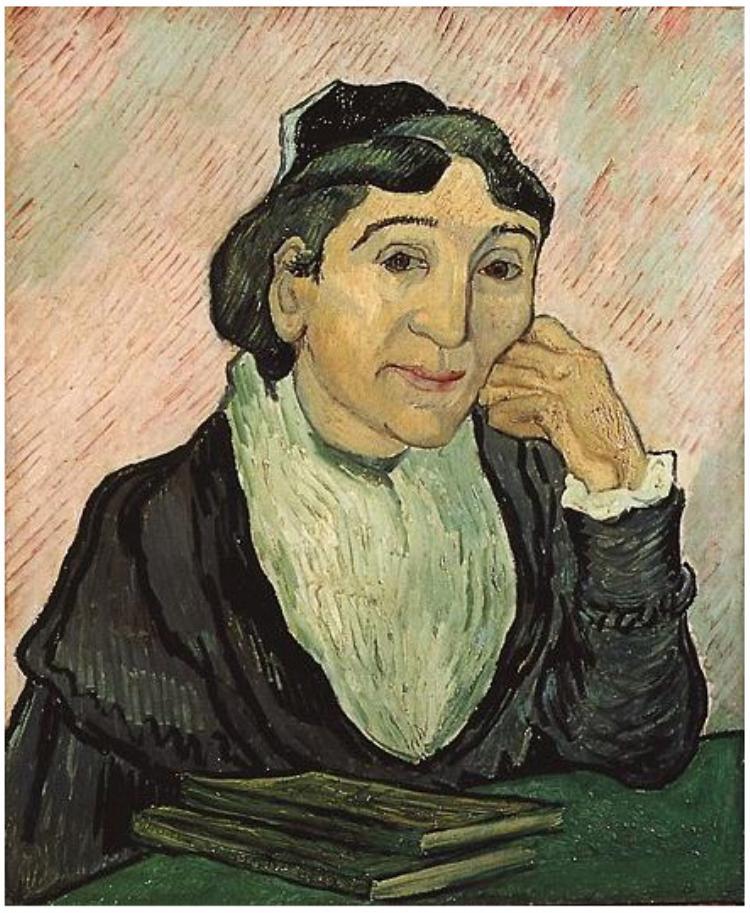
L’Arlésienne, L’Arlésienne, by Vincent van Gogh

L’Arlésienne, L’Arlésienne, by Vincent van Gogh

“Poetry surrounds us everywhere, but putting it on paper is, alas, not so easy as looking at it.”

child 2

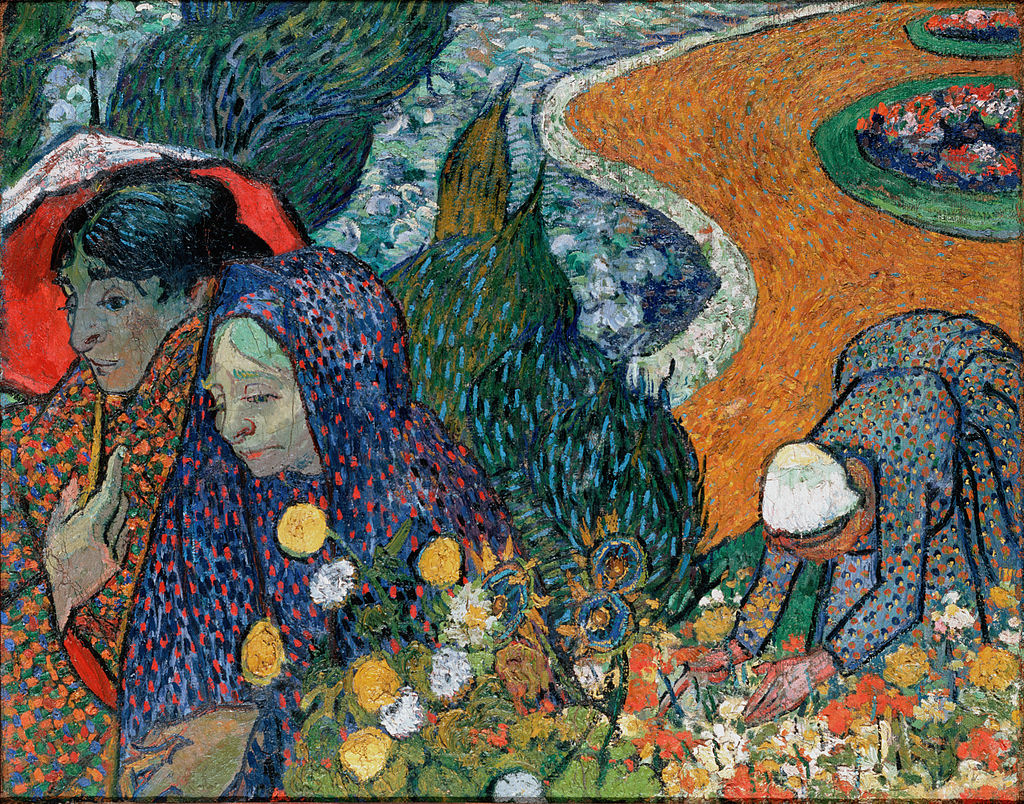
Memory of the Garden at Etten (Ladies of Arles), by Vincent van Gogh

“Even as a boy I would often look up with infinite sympathy, indeed with respect, at a woman’s face past its prime, inscribed as it were with the words: here life and reality have left their mark.”

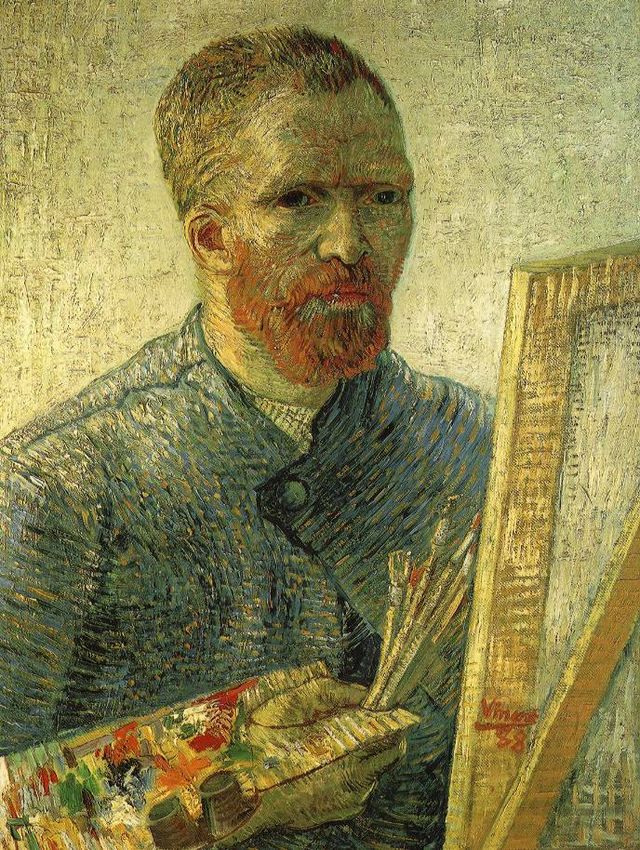
Self-portrait in front of easel, by Vincent van Gogh

“If you hear a voice within you say you cannot paint, then by all means paint and that voice will be silenced.”

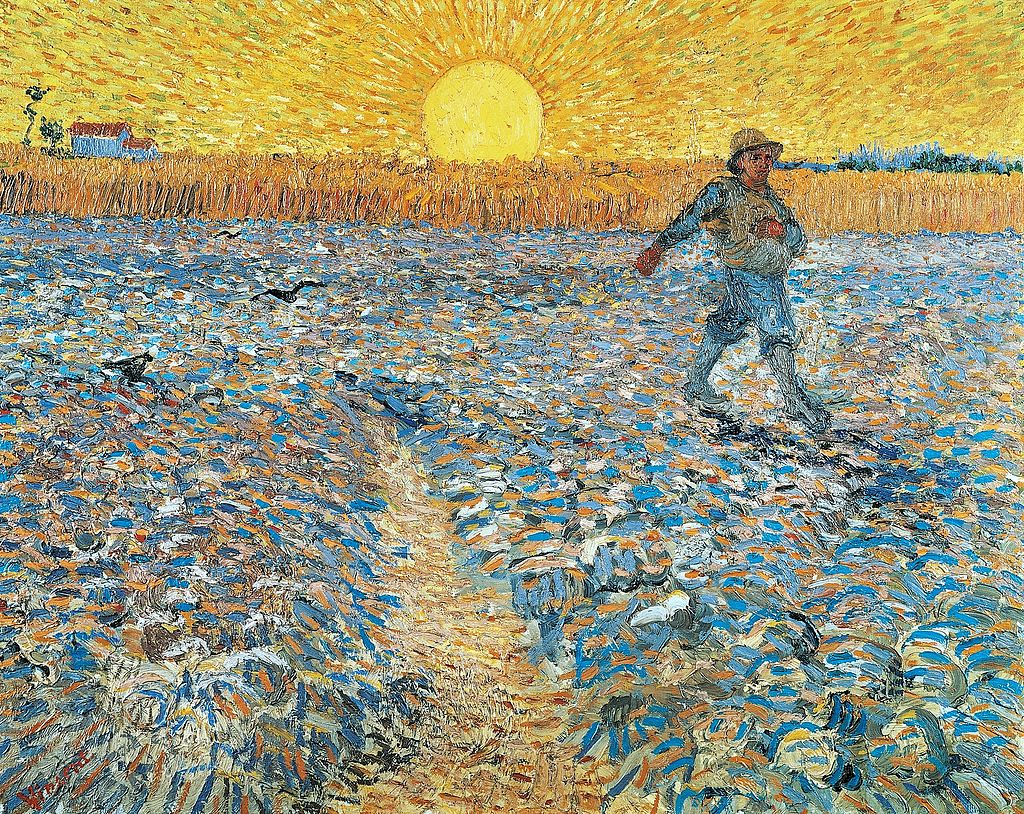
The Sower, by Vincent van Gogh

The Sower, by Vincent van Gogh

“Great things are done by a series of small things brought together.”

child 2

“Normality is a paved road: It’s comfortable to walk, but no flowers grow on it.”

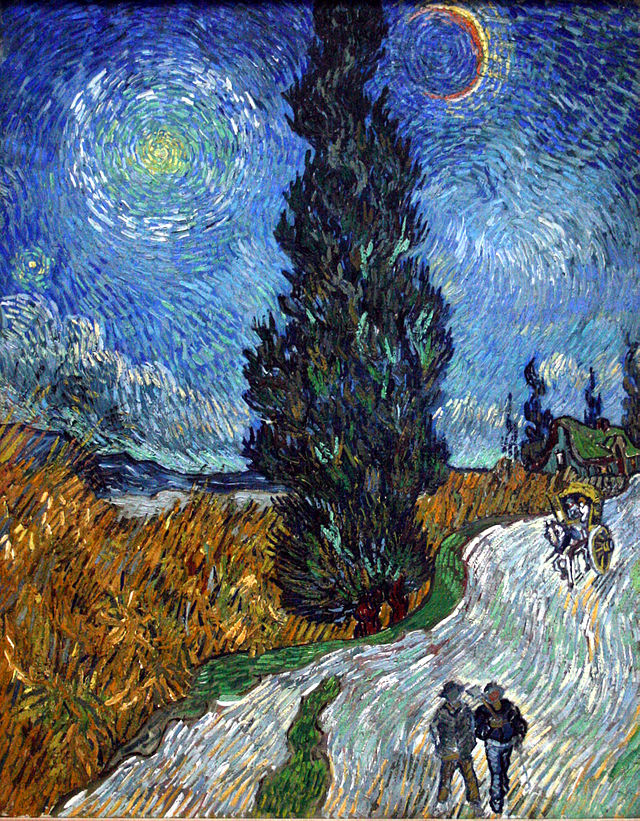
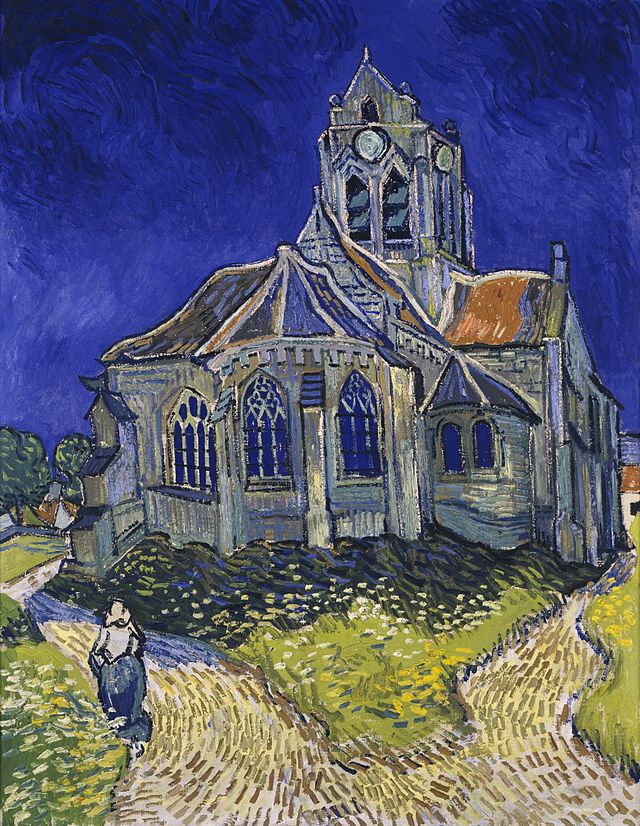
The Church in Auvers-sur-Oise, View from the Chevet by Vincent van Gogh

“That God of the clergymen, He is for me as dead as a doornail. But am I an atheist for all that? The clergymen consider me as such — be it so; but I love, and how could I feel love if I did not live, and if others did not live, and then, if we live, there is something mysterious in that. Now call that God, or human nature, or whatever you like, but there is something which I cannot define systematically though it is very much alive and very real, and see, that is God, or as good as God. To believe in God for me is to feel that there is a God, not a dead one, or a stuffed one, but a living one, who with irresistible force urges us toward aimer encore; that is my opinion.”

“I cannot help thinking that the best way of knowing God is to love many things. Love this friend, this person, this thing, whatever you like, and you will be on the right road to understanding Him better, that is what I keep telling myself. But you must love with a sublime, genuine, profound sympathy, with devotion, with intelligence, and you must try all the time to understand Him more, better and yet more.”

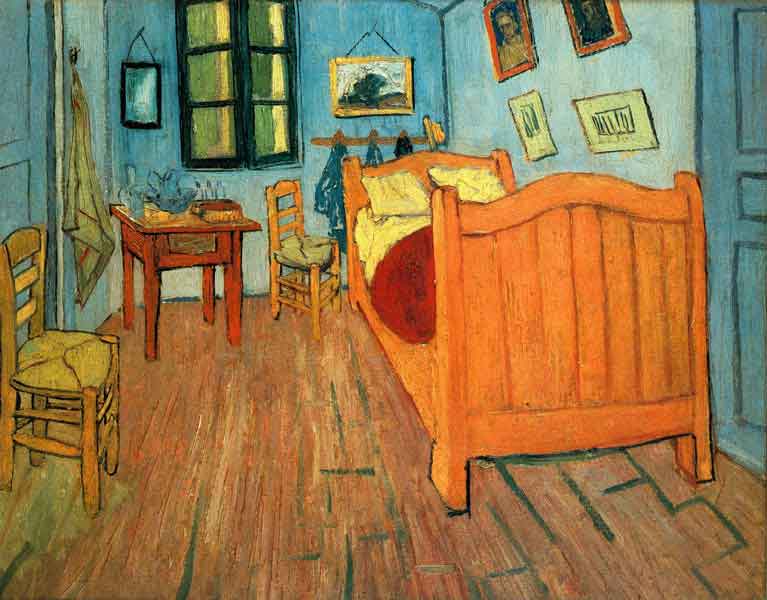
Bedroom in Arles, by Vincent van Gogh

“I dream my painting, and then I paint my dream.”

“I am always doing what I cannot do yet, in order to learn how to do it.”

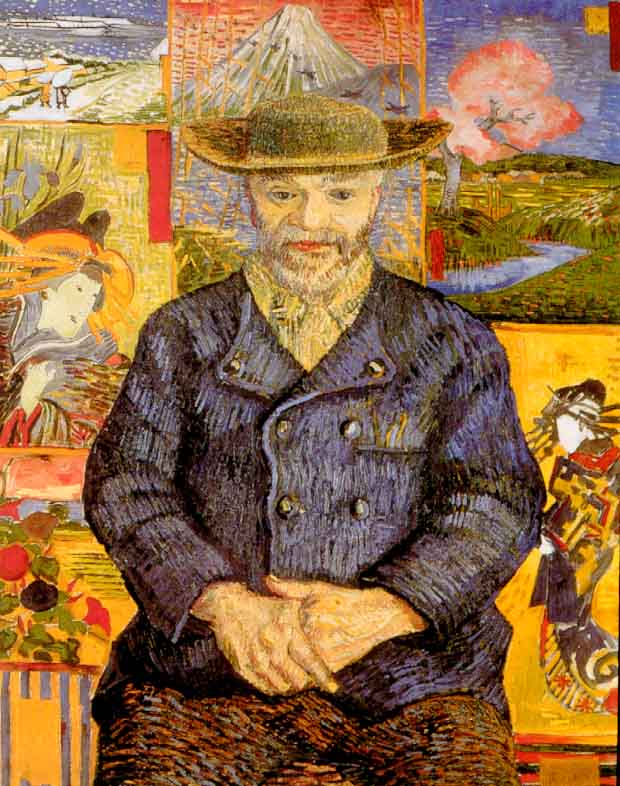
Portrait of Père Tanguy, by Vincent van Gogh

“It is with the reading of books the same as with looking at pictures; one must, without doubt, without hesitations, with assurance, admire what is beautiful.”

“If only we try to live sincerely, it will go well with us, even though we are certain to experience real sorrow, and great disappointments, and also will probably commit great faults and do wrong things, but it certainly is true, that it is better to be high-spirited, even though one makes more mistakes, than to be narrow-minded and all too prudent.”

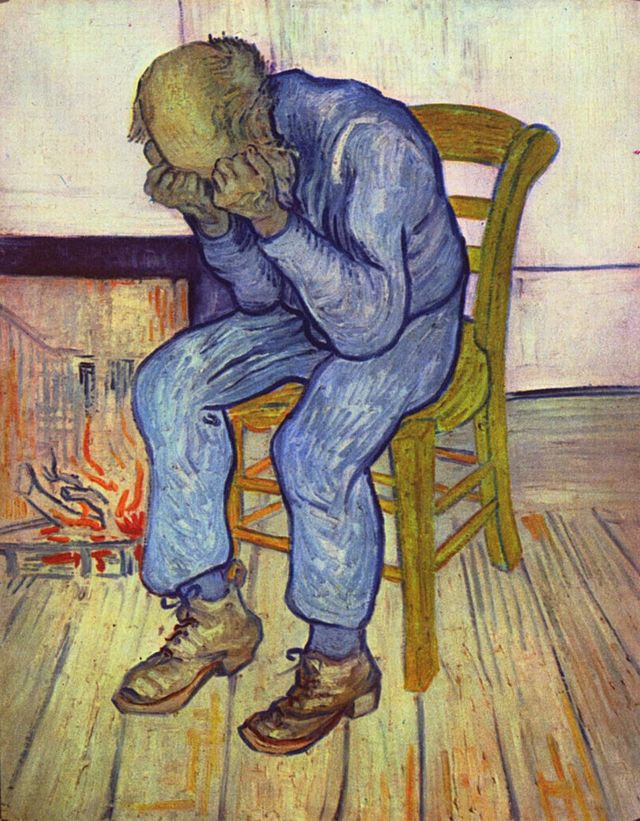
Sorrowing Old Man (At Eternity’s Gate), by Vincent van Gogh

“Well, right now it seems that things are going very badly for me, have been doing so for some considerable time, and may continue to do so well into the future. But it is possible that everything will get better after it has all seemed to go wrong. I am not counting on it, it may never happen, but if there should be a change for the better I should regard that as a gain, I should rejoice, I should say, at last! So there was something after all! “

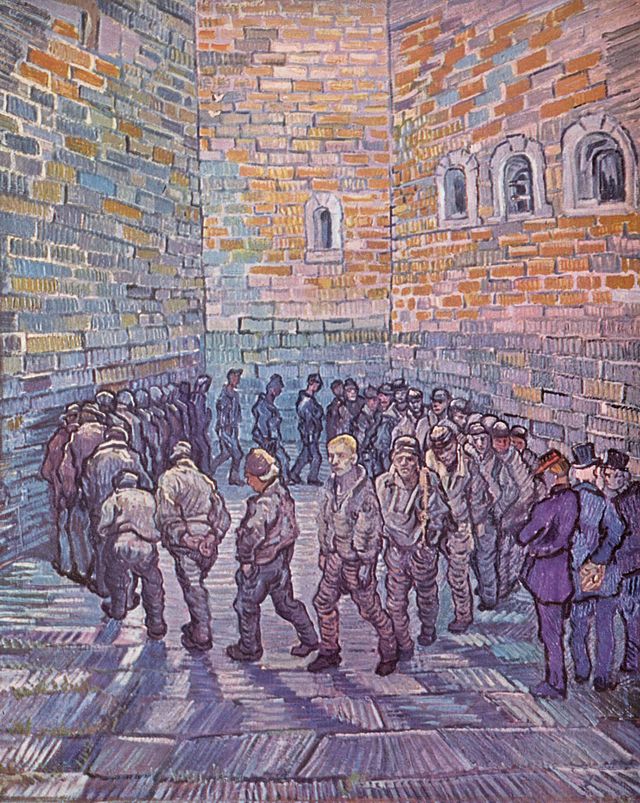
Prisoners’ Round, by Vincent van Gogh

“People are often unable to do anything, imprisoned as they are in I don’t know what kind of terrible, terrible, oh such terrible cage.I do know that there is a release, the belated release. A justly or unjustly ruined reputation, poverty, disastrous circumstances, misfortune, they all turn you into a prisoner. You cannot always tell what keeps you confined, what immures you, what seems to bury you, and yet you can feel those elusive bars, railings, walls.

Is all this illusion, imagination? I don’t think so. And then one asks: My God! will it be for long, will it be for ever, will it be for eternity? 

Do you know what makes the prison disappear? Every deep, genuine affection. Being friends, being brothers, loving, that is what opens the prison, with supreme power, by some magic force. Without these one stays dead. But whenever affection is revived, there life revives.” 

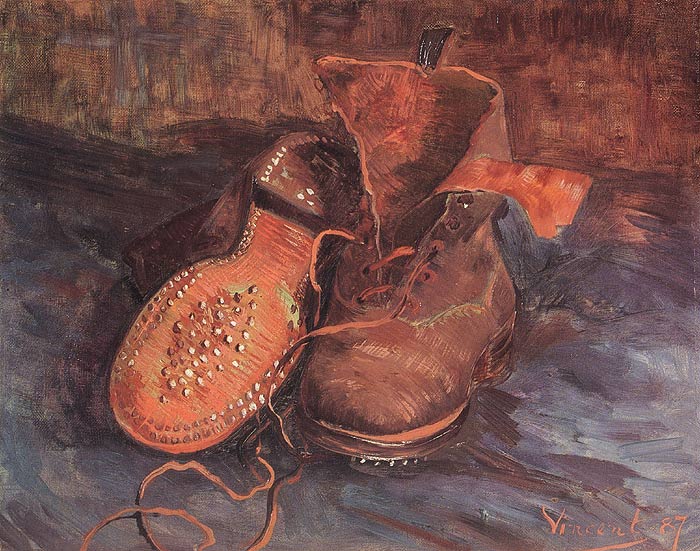
A Pair of Shoes, by Vincent van Gogh

A Pair of Shoes, by Vincent van Gogh

“What preys on my mind is simply this one question: what am I good for, could I not be of service or use in some way, how can I become more knowledgeable and study some subject or other in depth?

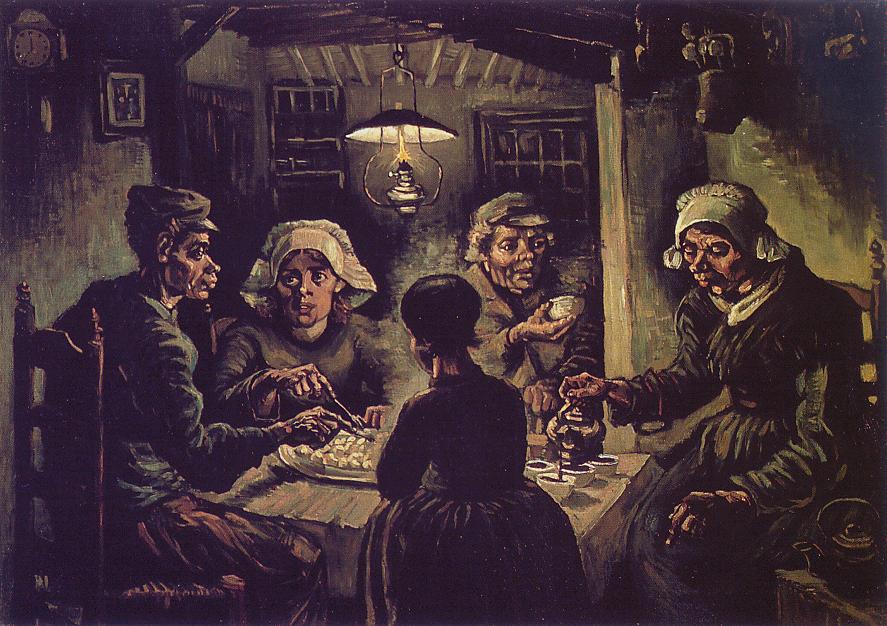
The Potato Eaters, by Vincent van Gogh

The Potato Eaters, by Vincent van Gogh

“One must not be afraid of going wrong, one must not be afraid of making mistakes now and then. Many people think that they will become good just by doing no harm — but that’s a lie, and you yourself used to call it that. That way lies stagnation, mediocrity.”

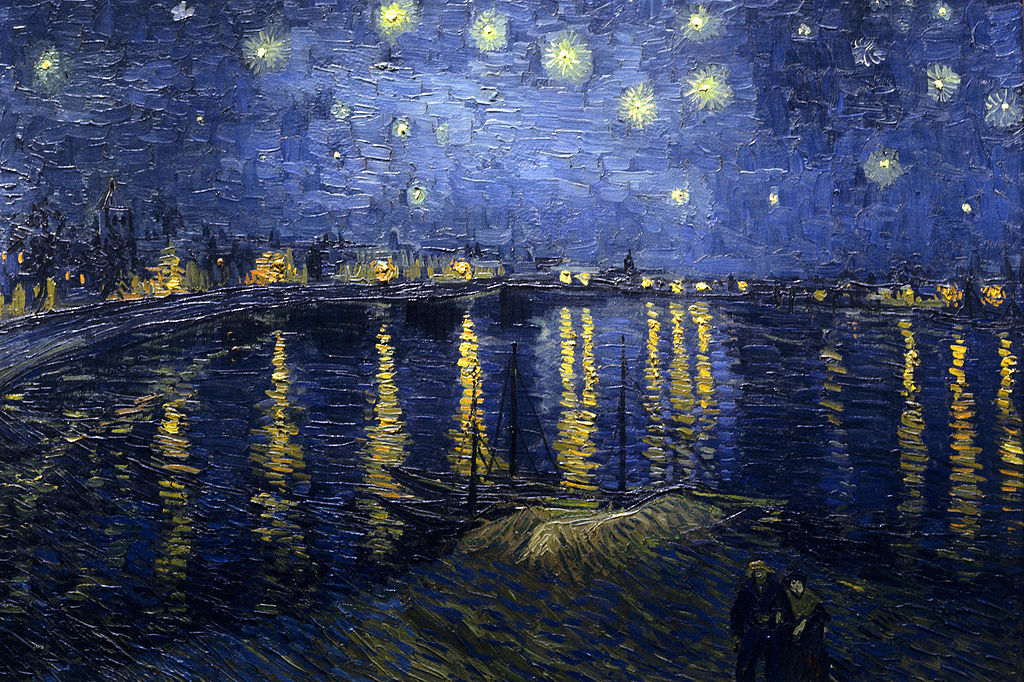
Starry night over the Rhone, by Vincent van Gogh

“Be clearly aware of the stars and infinity on high. Then life seems almost enchanted after all.”

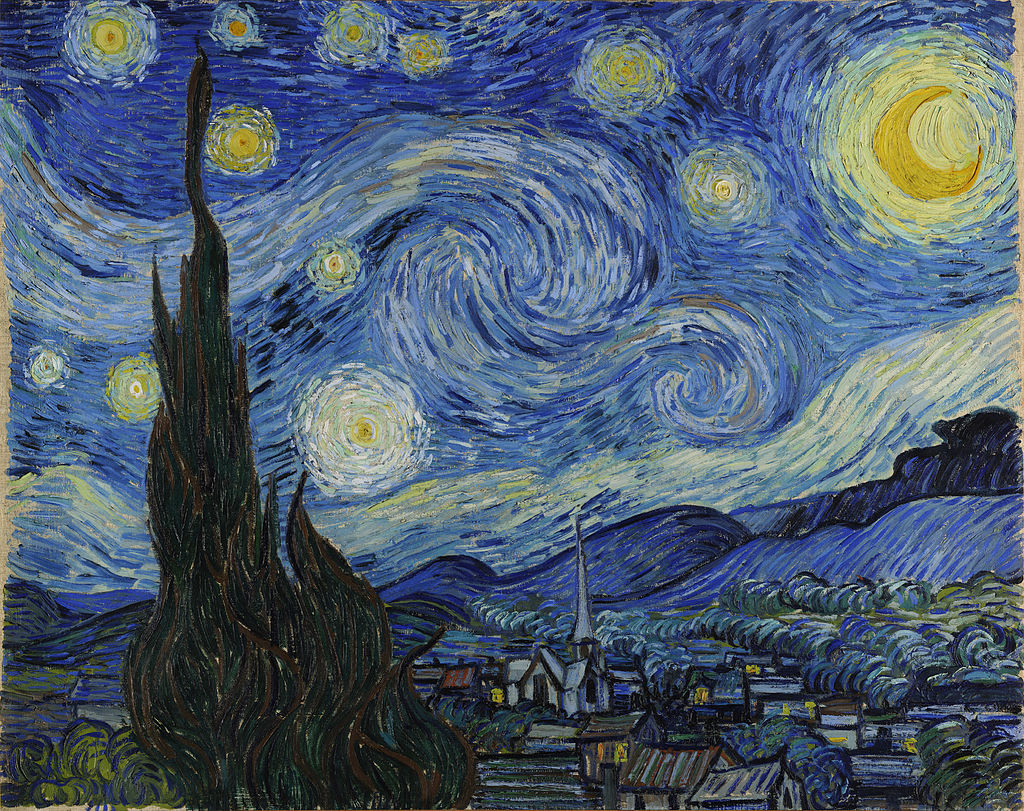
Starry Night, by Vincent van Gogh

Starry Night, by Vincent van Gogh

“When I have a terrible need of — shall I say the word — religion. Then I go out and paint the stars.”

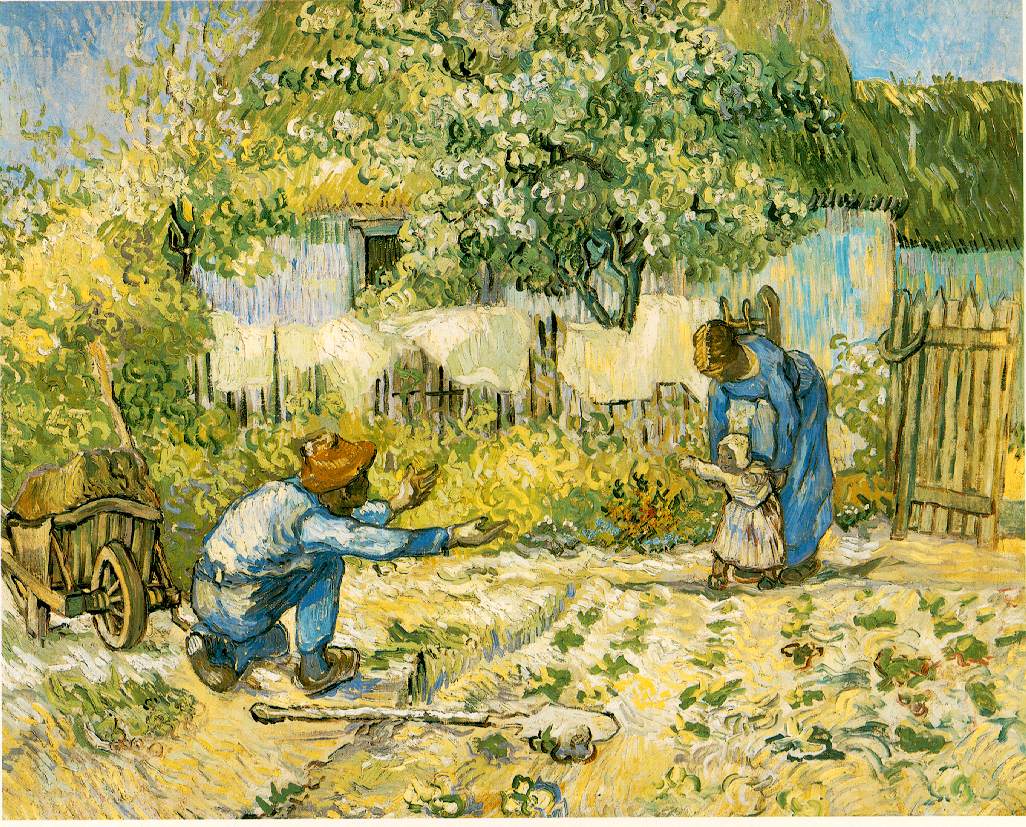
First Steps, by Vincent van Gogh

First Steps, by Vincent van Gogh

“Love is eternal — the aspect may change, but not the essence. There is the same difference in a person before and after he is in love as there is in an unlighted lamp and one that is burning. The lamp was there and was a good lamp, but now it is shedding light too, and that is its real function.”

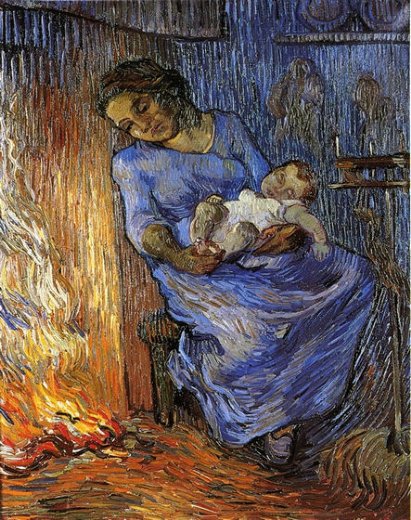
The Man is at Sea (after Demont-Breton), by Vincent van Gogh

“The more I think it over, the more I feel that there is nothing more truly artistic than to love people.”

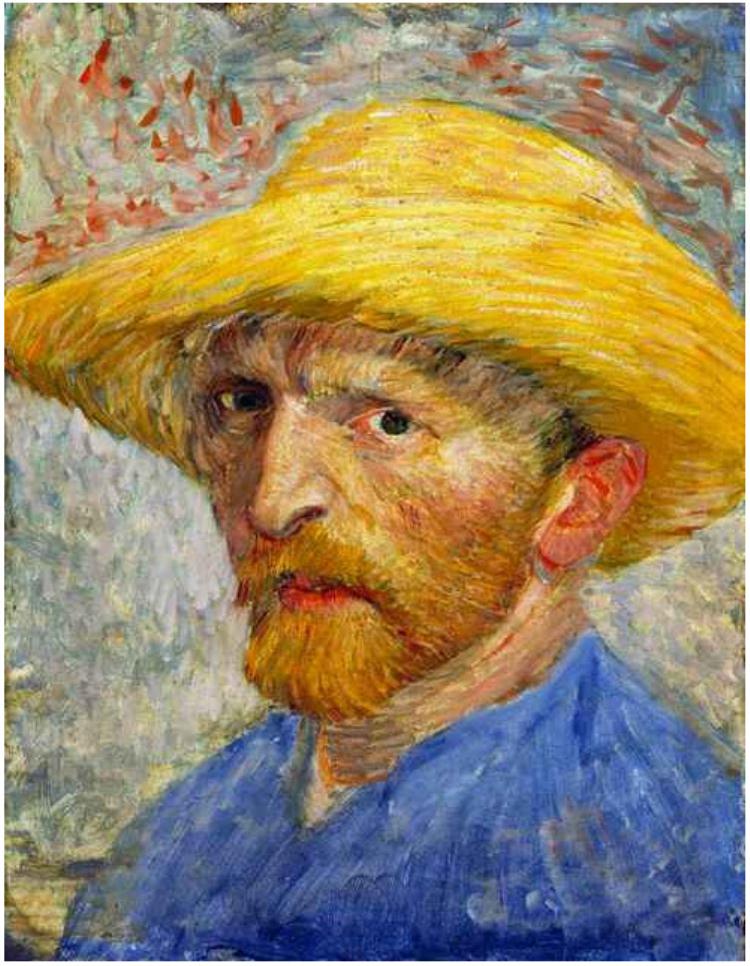
Self-portrait with straw hat, by Vincent van Gogh

Self-portrait with straw hat, by Vincent van Gogh

Gifting a Week of Meals

giving meals, cooking for others, meal sharing,

Yum. (CC by 2.0 thebittenword.com on flickr)

Soon after my second baby was born, I was informed that I’d be receiving a week of meals delivered by my friends. The next seven nights our doorbell rang and there stood someone dear to me holding warm dishes filled with delights.

A break from planning and making dinner was a blessed relief. It also exposed my family to a wider array of foods. More importantly, each night we sat down to eat a relaxed dinner lovingly made for us.

We were given so much food that we tucked lots of it in the freezer, spreading the bounty of kindness into the following weeks. One friend came laden with two different kinds of lasagna, one with garlicky white sauce and spinach, another layered with black beans and lots of veggies. Years later I still make both of her recipes.

A week of meals for families with new babies became a tradition in my circle of friends and my Le Leche League chapter. Here’s what worked for us.

1. Someone particularly close to the new mom and her family usually broached the idea to their mutual friends. We never designated a person in charge of planning. But your group of friends, or church, or neighborhood may decide that putting one person in charge of noting who will make a meal which night makes it easier.

2. We contacted the new mom with some basic questions such as best days and times to drop off food, food preferences, and if she wanted food brought ready to eat at dinner time or in advance to heat up later that day. Some moms preferred to have meal deliveries every other day.

3. Then we verified the plans with all potential participants. It worked best to accommodate a variety of needs among people contributing meals. Some preferred to drop off bags of Mid-Eastern salads or trays of sushi they picked up on the way home from work. Some didn’t have time to deliver a meal during the week but happily provided brunch on the weekend. It helped to jot down what people were planning to make so the family didn’t end up with three enchilada entrees on three consecutive nights.

4. We sent out a full schedule to everyone participating. It functioned as a reminder, listed who was bringing what, and offered suggestions such as labeling pans and including recipes. A shared Google doc can uncomplicate things. Or use one of these online meal scheduling sites to make this easier:

Meal Baby

Take Them a Meal

Meal Train

Care Calendar

Lotsa Helping Hands

Caring Meals

Of course, a new baby isn’t the only reason to provide a series of meals. It’s a great way to welcome someone home when they return from service project or military assignment. It’s a godsend when people are dealing with illness or injury. And it’s remarkably helpful during the time a family is undergoing a major home renovation. Mix it up. Rather than arranging a week of steady meals, you might offer a meal every Wednesday or set up a regular potluck date to eat together.

There may be no more basic gesture of kindness than feeding people. Food sharing is a tradition found in every culture, stretching back to our earliest history. It’s a stomach-filling, community-building kindness like no other. It can also swing back around remarkably. By the time my fourth child was born I was gifted with a full three weeks of meals, nearly all made by people I’d once cooked for. It was an embarrassment of riches but oh how those delicious foods warmed our hearts.

Other ways to build community:

Bring Kids Back to the Commons

Engage the Window Box Effect

It Really Does Take a Village

We Don’t Need No Age Segregation 

Welcome Kids Into the Workplace More Than Once a Year

Odd Second Saturday Suppers

Better Together: Restoring the American Community

The Abundant Community: Awakening the Power of Families and Neighborhoods

All That We Share

This is a repost from our farm site

Response to Kids’ Misbehavior: “Good Old Days” vs. Now

older generation of kids, historical comparison of children,

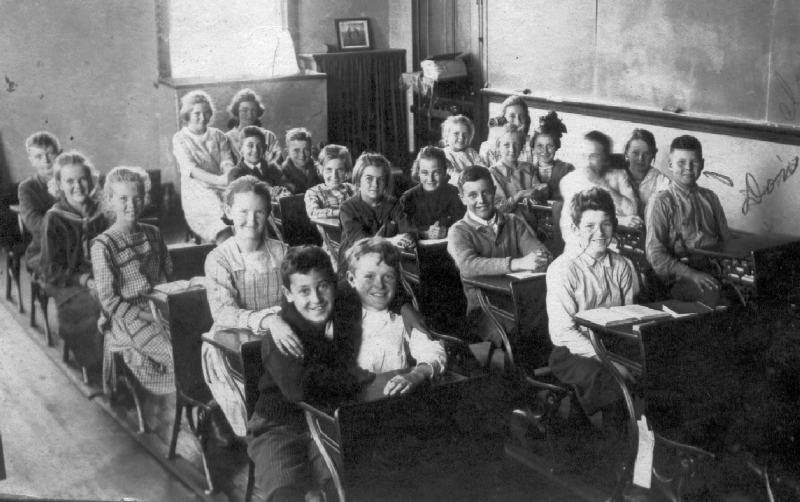
Unable to find a job in my field after college, I ended up working as a nursing home activity director. It was the best job in the place. Unlike overworked staff in other departments, I had time to form real relationships with the residents. Our 100 bed unit was brimming with people too frail to care for themselves but most were otherwise mentally acute.

These elders were in their 80’s and 90’s, born around the 1900’s, and always happily reminisced with someone willing to listen. They were extraordinary teachers and gave me perspectives I could have encountered nowhere else. One angle new to me was how differently childhood was viewed by adults back when they were growing up.

Kids worked hard then. They were expected to do heavy chores at home as well as work on the family farm or family business. Some even held jobs in factories. But when their obligations were over they were entirely free. They roamed the streets or woods with their peers, improvised games, put on their own skits and plays, made playthings like twig whistles and soapbox cars, built forts, swung from vines into swimming holes, and indulged in make-believe well into their early teens. They skirted around the adult world in a realm of their own, as children have done throughout human history.

criminalizing children, school-to-prison pipeline,

I’m not implying that childhood was remotely easy back then. Aside from hard work there seemed to be very little recognition of a child’s emotional needs. Worse, it was a time of blatant racial, gender, ethnic, and class discrimination. But I’d like to point out that when these elders were kids back in 1910’s and 1920’s many of them caused real trouble. Here are a few of the more extreme stories they told me.

Halloween was a holiday with no real adult involvement or interest. That night kids of all ages went out trick-or-treating, knowing they weren’t likely to get a treat (cookie or apple) from most neighbors. Preteens or teens often played tricks to retaliate. Soaping windows was the mildest trick they described. Most were much worse. Wooden steps were pulled away from doors, gravestones left in yards, pigs let out of pens, fires set in dry cornfields ready for harvest, water pumped into basements. One man told me he and his friends put an elderly widow’s buggy on top of her back porch roof. It wasn’t till a few days later that her plight was noticed and someone strong enough to help could get it down. A common Halloween prank was lifting an outhouse a foot or so to the side. In the dark, an unsuspecting person heading out to use it was likely to fall into the hole.

A 14-year-old stole whiskey from a bootlegger and got shot at as he ran off. Another bootlegger was blamed and never seen again.

A 15-year-old took her older sister’s papers booking passage on a ship to the U.S., saying her sister could better look after their family back home. Once she arrived, she worked as a cook for a family that paid for the ticket, answered to her sisters name, married under that name, and gained citizenship under that name. Her sister used the same name back in Ireland all that time.

There were plenty of other stories. Public drunkenness, fist fights that turned into brawls, runaways who rode the rails and runaways who got married against their parents’ wishes, shoplifting, breaking into school offices to change grades and steal tests, and one story of a school riot over a change in dismissal time.

These people suffered no appreciable consequences from authorities.

Not. One. Of. Them.

Their parents were certainly angry if they found out. The usual punishment? More chores. If police were informed they gave the kids a talking to, in the most extreme cases put them in the back of a squad car for a more serious talking to at the police station. No charges. No jail time. No record of their misdeeds beyond a local cop’s memory. Back then, it was assumed that kids would grow out of it.

All of these people grew up to work stable jobs and own homes. Most were married until death parted them from their spouses. One was a judge, one a career military officer, several were in the skilled trades, several others were business owners, many were homemakers and tireless volunteers, nearly all were proud parents of highly accomplished children, grandchildren, and great-grandchildren.

Yet today’s kids are being criminalized.

I’m not for a moment defending any young person’s impulse to wreak mayhem at home or in the community. I am saying that today’s response to (far less drastic) behaviors common during any child’s growing up years is appalling.

These days armed officers roam schools in thousands of districts. Studies show their presence doesn’t actually improve safety. Instead, children are often treated like criminals for common disciplinary issues such as yelling, swearing, or pushing. Here are a few of the more extreme examples.

A seventeen-year-old girl spent 24 hours in jail for truancy. This honors student works two jobs to help support her family and can’t always get to school.

A six-year old boy and avid Cub Scout was suspended for five days after bringing to school his Cub Scout eating utensil containing a fork, spoon, and knife. Due to public pressure, the school board voted to spare him the other punishment he’d received: 45 days in reform school.

A thirteen-year-old boy was handcuffed, arrested, and transported from school to a Juvenile Detention Center although his parents weren’t notified. His crime? He “burped audibly” in gym class.

A twelve-year-old girl was arrested for doodling on a desk with a green marker.

A seventeen-year-old boy who broke up a fight between two girls was shot with a taser by a deputy on duty at the school. The young man suffered a brain hemorrhage, spent 67 days in intensive care, and remains brain injured. The officer wasn’t charged due to lack of evidence.

The Guardian interviewed Deborah Fowler, who authored a 200-page study of the consequences of policing in Texas schools. They report,

…most schools do not face any serious threat of violence and police officers patrolling the corridors and canteens are largely confronted with little more than boisterous or disrespectful childhood behavior.

What we see often is a real overreaction to behavior that others would generally think of as just childish misbehavior rather than law breaking,” said Fowler. Tickets are most frequently issued by school police for “disruption of class,” which can mean causing problems during lessons but is also defined as disruptive behavior within 500 ft of school property such as shouting, which is classified as “making an unreasonable noise.”

Minority students are much more likely to be disciplined, fined, or arrested than white students in what’s being called the school-to-prison pipeline. Huge corporations like Corrections Corporation of America and smaller companies like AIM Truancy Solutions lobby for get-tough policies that bring them big profits in tax-payer money.

In some states tickets are issued, even in primary grades. These citations may compel the student to appear in court to face sentences including fines, court costs, and mandatory participation in remedial programs. This means the child is now entered into the judicial system, with police or court records that may or may not be sealed. If students don’t appear or their families can’t afford the fines, an arrest warrant may automatically be issued when they turn 17. This means childish misbehavior can follow young people into their adult lives. There’s a common question on applications for college, the military, and employment “Have you ever been charged with a crime?”  The answer, for these kids, is “yes.”

Heavy-handed tactics used against children may get worse very soon. School districts in 22 states including Texas, California, Florida, Kansas, and Utah are participating in a federal program which provides military surplus to local law enforcement organizations. We’re talking gear like assault rifles, extended magazines, military vehicles, and other weapons intended for combat.

What happened to free range childhood? Why do we act as if every choice a child makes must be the correct one? That risks are always too risky? That freedom of any kind equals danger?

The goal of creating high-achieving young people through unremitting scrutiny, at times backed up by force, is wrong. But today’s treatment of young people isn’t even based on evidence. Ask any high-achieving adult about their youthful high jinks. Better yet, ask the oldest people still left to us. A long look back may be the cure we need.

“We live in a decaying age. Young people no longer respect their parents. They are rude and impatient. They frequently inhabit taverns and have no self-control.”  inscription in an Ancient Egyptian tomb

“I see no hope for the future of our people if they are dependent on frivolous youth of today, for certainly all youth are reckless… When I was young we were taught to be discreet and respectful of elders, but the present youth are exceedingly unwise and impatient.”   -Hesiod, 8th century BC 

“The world is passing through troublous times. The young people of today think of nothing but themselves. They have no reverence for parents or old age. They are impatient of all restraint. They talk as if they knew everything and what passes for wisdom with us is foolishness with them. As for the girls, they are forward, immodest, and unladylike in speech, behavior, and dress.”   -Peter the Hermit, sermon preached 1274 AD

what your great-grandparents did, oral history,

Design Revealed


Design Revealed


Heart leaping faster

than my limbs

I answered each cry,

rocking tiny ones

till lashes closed

into worlds past me.


I nodded at mantras chanted

by women my mother’s age

enjoy them while they’re young

this time goes too fast

though so weary

my skeleton ached for rest.


Motherhood’s origami

folded and creased me

in unfathomable patterns,

as together we composed songs

for the Milky Way

on late night walks,

blessed insects we set free

from window-bound prisons,

danced through days

far from time’s imagination.


Mantras come true.

Those little ones now

lean over me,

pausing gently

before hurrying

toward worlds beyond.


Last night

I dreamed of fallen fruit

ripe unto bursting.

I offered this bounty to children

but in house after house

they had been fed.


Waking,

I see design revealed.

I feel the beauty

of greater unfolding.


Laura Grace Weldon, from Tending

So much good is happening in the lives of my beloved children, each one out of my lap and into the world. This poem is for them.

Why Learning Must Be Hands-On


hands-on learning, hands-on education, hand and brain connection, direct learning,

images: morguefile

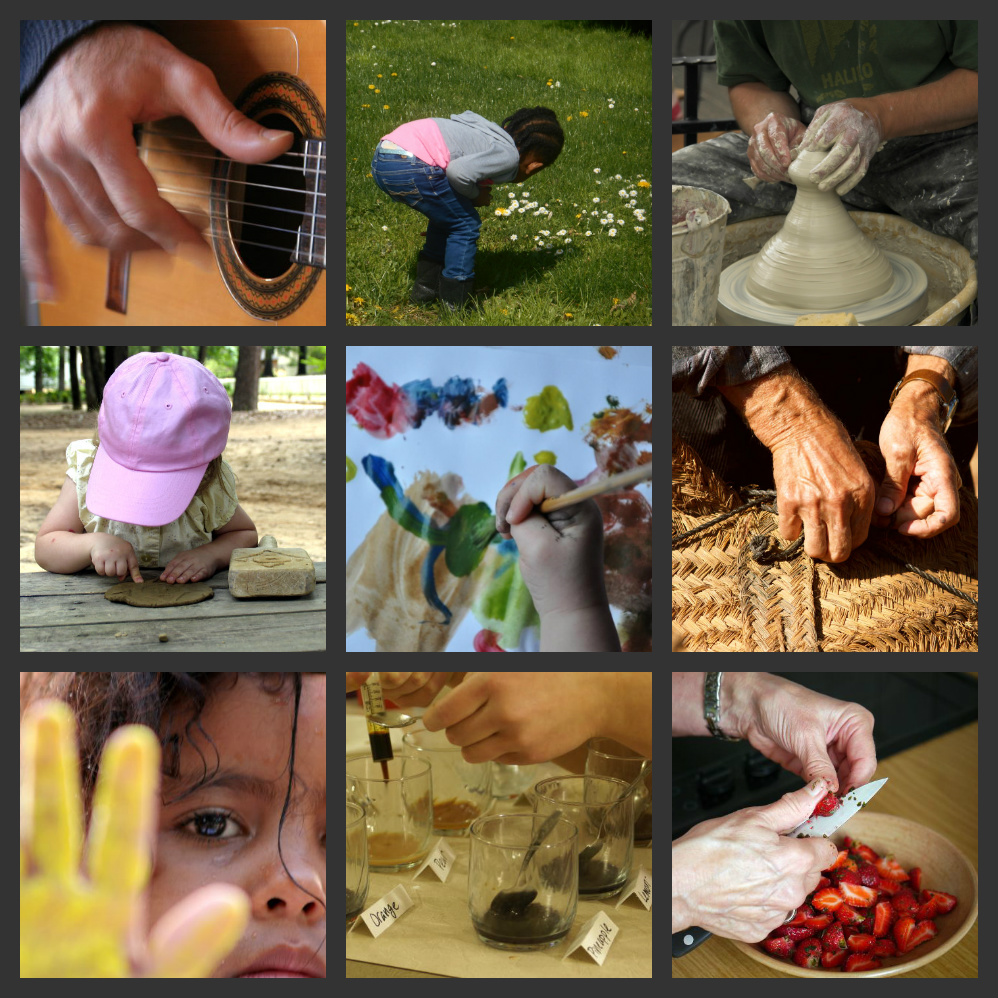
Children are drawn to explore the world through their senses. (We all are, at any age.) When they are fully involved, what they learn is entwined with the experience itself. A child’s whole being strains against the limitations of curricula meant only for eyes and ears, or that assigns closed-ended tasks.

A typical school or school-at-home lesson intended to teach a child about worms may have diagrams of a worm’s body to label and a few paragraphs about the importance of worms, followed by comprehension questions. If the child musters up enthusiasm to learn more about worms despite this lackluster approach, there’s no time to do so because directly after the science lesson the child must go on to the next subject. When education is approached in this disconnected manner, the brain doesn’t process the information in long-term storage very effectively. It has no context in the child’s experience and no connection to the child’s senses.

On the other hand, a child encountering a worm while helping in the garden gains body memories to associate with the experience. The heft of a shovel, sun on her face, fragrant soil on her knees, and the feel of a worm in her hands provide her with sensory detail. She also encodes the experience with emotion. Her father likes to read books about soil health and sometimes she looks at the pictures. When she asks about worms he answers the few questions she has. And when she is satisfied he doesn’t go on to give her more information than she can handle. Next time they go to the library or get online they may decide to find out more about worms. She may be inspired on her own to draw worms, save worms from the sidewalk after the next rain, or otherwise expand on that moment in the garden. She is much more likely to retain and build on what she has learned.

The difference between these two approaches is worlds apart. Separating children from meaningful participation, as in the first example, doesn’t simply impair comprehension. It changes the way learning takes place. The child is made a passive recipient of education designed by others. Then the excitement of learning is transformed into a duty.

Education that treats the brain apart from the body will ultimately fail. Our senses cannot be denied. They inform the mind and encode memory. We must see, hear, smell, touch and, yes, taste to form the kinds of complex associations that make up true understanding. We humans are direct hands-on learners.

Brain development and hand use are inextricably intertwined. When neurologist Frank R. Wilson interviewed high achievers to understand this connection, he found that people credit their success to attributes learned through hands-on activities.  In The Hand: How Its Use Shapes the Brain, Language, and Human Culture Wilson writes:

I was completely unprepared for the frequency with which I heard the people whom I interviewed either dismiss or actively denounce the time they had spent in school. Most of my interview subjects, although I never asked them directly, said quite forcefully that they had clarified their own thinking and their lives as a result of what they were doing with their hands. Not only were most of them essentially self-taught, but a few had engineered their personally unique repertoire of skills and expertise in open retreat from painful experiences in a school system that had dictated the form and content of their education in order to prepare them for a life modeled on conventional norms of success.

Hands-on experience makes learning come alive. For example, principles of geometry and physics become apparent while children work together figuring out how to stack firewood. They develop multiple layers of competence as they solve tangible problems. Their bodies are flooded with sensation, locking learning into memory. Such experiences develop a stronger foundation for working with abstract postulates, theorems, and formulas later on. (Household responsibilities are actually a vital way to incorporate more hands-on experience, with amazing long-term benefits.)

When we’re engaged hands-on something greater can come into being. We gain a sense of effortlessness, of becoming one with the movement. Then it seems we’re longer working with things, but with material partners in a process of co-creation. Work and play are one, we are whole within it.

direct learning, hands-on learning, hand and brain connection,

image: morguefile

Portions of this article excerpted from Free Range Learning.


Heart Intelligence

” The heart hath its own memory, like the mind.” Henry Wadsworth Longfellow

The deepest truths are felt by the heart. Humanity has known this since prehistory. We keep this knowledge alive in repositories of original wisdom—our stories, our art, and our bodies.

Our hearts brim with the same neurons as our brains, so we experience the world first not through our thoughts but bodily intelligence, both heart intelligence and gut intelligence. We make decisions, learn, and remember with our bodies as well as our brains. Our hearts perceive and respond to the meaning encoded in experiences, building an intrinsic memory of emotion. Sometimes we feel a response directly in our hearts, although we don’t have words big enough to describe this.

In ancient Greek medicine it was known that noble sentiments such as honesty, compassion, and courage strengthened the heart while the most dire emotions weakened it. We now recognize they were on to something. Cardiologists say there’s such a thing as a broken heart, found in people with no blood clots in their arteries, no evidence of coronary heart disease. Instead, stress cardiomyopathy can be caused by intense grief or trauma. We can indeed die of a broken heart.

Heartbeats are a language affecting the way we perceive and react to the world around us. It’s known that strong negative emotion can cause heart rhythms to become irregular and disordered, disordering other body systems as well. In contrast, positive feelings of love, gratitude, and compassion create coherent heart rhythms. These coherent heartbeats put the body in sync. As a result, the two branches of the nervous system coordinate with enhanced efficiency, immune responses are boosted, protective and regenerative hormones are released, even brain function improves in alignment with the heart. It’s no wonder that positive emotions summon a full-body sense of well-being. We are biologically guided toward feelings such as compassion and appreciation, since our bodies function most effectively in this state.

Our hearts are not only a primary form of perception. They also communicate with others at a level below our conscious awareness. According to research by the HeartMath Institute, the electrical field emitted by a human heart is 60 times greater in amplitude than brain activity. Its electromagnetic field is 5,000 greater. The heart’s field radiates through every cell in the body, extending well beyond the skin. In other words, we broadcast the electromagnetic signal of our own hearts. This can be measured several feet away from our bodies. Energy activity in the heart of one individual affect and can be measured in the brain waves of another person (or pet!) in close proximity.

As HeartMath Institute studies continue to show, the most powerfully coherent heartbeat is that of the caring heart. Love and compassion are not only emotional experiences, they are sent outward in signals that can calm the heart rates of people nearby. A loving heart at close proximity can calm an angry heart, a sorrowful heart, and yes, a lonely heart.

With feelings of love or gratitude, you reach for your child’s hand in a crowded stadium or subway. Your loving heart rhythm affects your child, and more, it also affects the stranger at your side. All three of you are blessed by those harmonious beats emanating from your chest. Poets had it right all along.

heart intelligence, your heartbeat affects others, heart coherence, broken heart syndrome,

wikimedia commons

i carry your heart(i carry it in my heart)   -e.e. cummings

Portions of this article are excerpted from Free Range Learning.

Family Stories Form Us

My mother kept family stories alive by folding them into our lives as we grew up. She’d remark, “This would have been your Uncle John’s birthday,” and then she’d tell us something about him. Like the time he taught her how bad cigarettes were. That day he took her behind the garage and let her smoke until she was sick. (She was four years old.) Or how he skipped out on his college scholarship and pretended he didn’t have a bad back so he could sign up for the Air Force. His plane was shot down on his 47th mission, his body never found.

She told us about a great-great-grandfather, left to take a nap under a shade tree as a baby. He was taken by passing Native Americans, who may very likely have thought the tiny boy was abandoned. His parents didn’t go after him with guns, they brought pies and cakes to those who’d taken him to ask for him back.

She told us about a tiny great grandmother who expected other people to meet her every need, but when a candle caught the Christmas tree on fire that same helpless little grandmother immediately picked it up and threw it out the plate glass window to keep the house from burning down.

She told us about her Swedish grandmother who was widowed not long after coming to this country, but kept the family together by taking in laundry. And about the only son growing up in that family who ran away as a teen. They didn’t hear from him till he’d made a new life under a new name, years later.

My mother didn’t just talk about long-gone family members. She told us about people in our everyday lives too. She talked about dating our father, saying he was still the most wonderful man she ever met. She told us about meeting his sister and her husband for the first time—they were on the roof of the house they were building together, hammering down shingles. And she shared inspiring stories from friends, neighbors, and people she’d only read about. She never said it aloud, but her stories gave me the sense that I too had within me the sort of mettle and courage to handle whatever came my way.

Turns out there’s more value to stories than my mother might have imagined.

1. Child development experts say young children who know family stories have fewer behavior problems, less anxiety, more family cohesiveness, and stronger internal locus of control. When mothers were taught to respond to their preschool-aged children with what researchers call elaborative reminiscence, their children were better able to understand other people’s people’s ideas and emotions—a vital skill at any age.

2. Family storytelling provides remarkable benefits as children get older. Preteens whose families regularly share thoughts and feelings about daily events as well as about recollections showed higher self-esteem. And for teens, intergenerational narratives help them to shape their own identity while feeling connected

3. Researchers asked children 20 questions on the Do You Know Scale, such as:

  • Do you know where your grandparents grew up?
  • Do you know some of the lessons that your parents learned from good or bad experiences?
  • Do you know the story of your birth?

Results showed that the most self-confident children had a sturdy intergenerational self, a sense they belonged and understood what their family was about. This sense of belonging was called the best single predictor of children’s emotional health and happiness.”

(Here are some ways to naturally incorporate family stories into your children’s lives.)

I’ll admit, the stories my mother told throughout my childhood didn’t skimp on tragedy but always highlighted positive character traits. It wasn’t until I was much older that more shadowed family tales slipped out—stories of mental health problems, alcoholism, and lifelong rifts. Those stories are just as important.

Our family tales are simply stories of humanity. All stories help to remind us what it means to be alive on this interconnected planet.  Every day that passes gives us more stories to tell. Even better, more to listen to as well.

family stories, tell children family stories, share family history, family history stories,

image: Navanna

ANNA-RF: Beautiful Proofs of Mankind’s Similarity


Mid-Eastern new music, Israeli musicians play globally,

anna-rf.com

I first heard of ANNA-RF when a friend shared “Jump,” a playful video with lyrics that resound in our fractured world.

For all of us love is the flame
The fire that burns the hate
Helps us dream and create.
I can’t see the different between
And I know that the answer’s within.
Humanity is one big tribe
So why can’t we live side by side?


The very next video of theirs I clicked on was a stirringly beautiful rendition of a folk song from Azerbaijan.

Intrigued, I found out all I could about the group.

Musicians Roy Smila and Ofir J.Rock met in the small desert village of Shaharut, Israel back in 2011. They quickly forged a musical connection that evolved into the band ANNA-RF, which they named after an Arabic-Hebrew expression that means both “I know” and “I don’t know.” They play what they call electro-ethnic-reggae, although that term doesn’t stretch as far as their music which is highly versatile, in part thanks to collaboration with musicians from all over the world. Their compositions are original and often spontaneous, mixing new sounds with ancient traditions. Instruments they use include the kamancha, lafta, sazbush, flute, guitar, and didgeridoo.

A little rummaging around YouTube makes it obvious that visual art is an integral part of what they do. They create videos for each song, filming in mountains, deserts, and busy markets. They can be found dancing in desert rain

and playing Celtic reggae with musicians in Switzerland.

Last year the band added a new member, Or Rave. I reached out to them for an interview and they kindly made time to email me back from a concert date in London.


Despite our complicated political times, your lyrics are mostly celebratory. What message does your music convey?  

We find no truth in borders or other fictive ideas of separation. We enjoy the beauty of everyone and we find inspiration in every culture and every place. Our music is based on this point of view, therefore it is positive and open.


What’s your songwriting process like?

Our home and studio is in a tiny village in the desert. The emptiness of the desert is what inspires us to fill it with creation.

A song can start from anything. A line on the kamancha (the Persian violin), a riff on the guitar, a sentence someone throws to the air.

We also tour a lot and in our journeys we meet amazing people and artists who we collaborate with. In many cases that connection is an inspiration for a new song.


How does travel influence your music?

When you are traveling your life is highly dynamic and flexible. From that we get a variety of new points of view and inspiration. By traveling we meet a lot of amazing people and artists that influence us and broaden our horizons.


Tell us a little about collaborating with other musicians and who you’ve played with so far.
 

For us one of the most beautiful proofs of the similarity of mankind can be found in music. When you play with other musicians from around the globe you understand that all over this planet people get the same feeling from music and you can find similarity right in the musical scales.

We’ve played with:

  • Imamyar Hasanov, the great kamancha master from Azerbaijan
  • Yair Dalal, the well-known Oud master
  • The Turbans, the great Gypsy band from England
  • Farafi, beautiful African music from France and California
  • Daniel Waples, famous hang player from England
  • Davide Swarup, the hang and SPB pioneer from Italy
  • Tom Bertschy and Thom Freiburghaus, the medieval musicians from Switzerland

And many, many more amazing artists from all over this planet.


These videos are mostly filmed in evocative natural settings. What are some complications of filming in the sand, on a mountainside, or roadside?

In most of those beautiful locations there is no water or electricity there so we have to prepare in advance. We have to have food and water supply and to be very precise. We have to carry on our backs all the props and all the equipment.


Any interesting stories about mishaps in filming?

In the “Weeping Eyes” video we had to hike for nine hours to the location in the Himalayas. The energy that we spent there was way too much and we could not stay, so we had to climb down all the way back to our guesthouse. All of us were so worn out.


Can you tell us the story of how one song evolved?

Our last song is a collaboration with a great composer and musician called Eran Zamir. He came for a weekend of creation. A tradition we like to do on the first day—we played together and he played some of his own compositions and after a while we chose a line that all of us especially liked. With this line, Or the beat master added his own rhythm and we wrote the lyrics and created the structure of the song. Roy added a kamancha solo (that we connected to a guitar amp for the special sound of the over-drive) and Ofir recorded the vocals. On the next day we wrote the script and shot the video in the desert. The video is a result of our creative connection.


What are you listening to these days?

We listen to a lot of Azeric, Turkish, and Persian music as well reggae, pop and new electro and dubstep acts. We are inspired by many different styles and find beauty in all of them.


Your videos tend to include repeat props like a stuffed monkey and a variety of hats, and repeat themes like hitchhiking. What’s up with that?

The symbols are there for any person to see them as they will.


Fans can buy ANNA-RF music here

anna-rf.com


This interview originally appeared in First Day Press.

The Dread Experience

dreadlocks, old people reactions,

image: pixabay

Kirby, who is now 15, is probably the most serene of my four kids. Completely without guile, he’s not even vain about his beautiful hair. It is dark blonde and wavy, coarse enough to fluff up into a temporary Afro, and so thick that balding men comment on it jealously.

Mostly it is an irritation to him because it grows so quickly. When he was 10 years old he decided he wouldn’t comb it again. He still doesn’t, yet it looks charmingly tousled with nary a tangle.

At his birthday party last year he got rid of his hair. It was quite an event — Kirby in the bathroom, his tall buddies crowding around the mirror, shaver cutting down to the scalp. He left a wide swath of hair all along the top. While this is popularly called a Mohawk, he informed us that members of the Mohawk tribe traditionally did not go about sporting that hairstyle. They actually used a kind of toupee. Only Kirby would bother to learn these details.

He kept the mistakenly-named Mohawk hairstyle only a few days before quickly realizing it wasn’t worth the trouble of shaving and putting on goop to keep the central path of hair standing. He didn’t get much of a reaction. Our liberal friends just gave him a thumbs up or asked if he was into punk music. Our more conservative friends just chuckled with a glad-it’s-not-my-kid look. The only extreme comment came from his grandmother, who asked, “Why do you want to change your personality?” (The assumption that appearance dictates character explains the strictures of my own upbringing.)

This year our musician son has grown taller and his hair, longer and longer.  At some stages his hair looked like yearbook pictures from the 70s, then like a movie poster for Jesus Christ Superstar. Finally it got to the length he deemed right for developing some dreadlocks. Yes, white-boy dreads. Not being blessed with the right hair for them to form naturally, he had to print out 20 pages of instructions he’d researched (some contradictory) and order $36 worth of specialty products including pure bar soap and chunks of beeswax with tea tree oil. He cleans out horse stalls for spending money so this is no minor expenditure.

When the dreading day arrived, Kirby’s girlfriend and I set up for the procedure in a festive mood. He looked pretty serious. We sectioned off his hair using an array of clips and held it back with a tortoise shell headband we called his tiara. I think we teased it enough. His hair that is. His tiara kept slipping and based on the number of times he said ‘ouch’ it was apparent we were hurting his scalp with all the tugging and fussing.  I’m pretty sure we used too much beeswax. By the time we were done he looked the way our dog’s belly does when he’s been outside after the rain, a dangling chandelier of mud.

Kirby was convinced the hair would eventually ‘dread’ around the beeswax spikes. He washed it with his pricey soap and smiled sweetly from under all those hair candles. He laughed when his dad danced around singing reggae tunes with made up lyrics. He adhered to the theory behind his hair research for at least a month.

Still, his hair looked more dreadful than dreadlocked.

We all missed his formerly beautiful hair. The faux dreads looked particularly out of place when, as a bagpiper, he dressed in his kilt to march with his highland band — a serious band made of mostly of formal older gentlemen. Kirby finally got the idea his rebel coiffure wasn’t appreciated when the band’s Scottish Pipe Master warned, in his thick brogue, “We dress as one man, we look as one man.”

So, Kirby decided the dread experiment was over. Being a person who doesn’t go halfway, he didn’t just cut his hair. He shaved it off completely.

His grandmother doesn’t adjust quickly to surprises. She was alarmed when he entered her door at our next visit sporting his new Mr. Clean look. She blurted out what should never be said to a teenaged male, especially by a grandmother, “Kirby, what a boner!”

I couldn’t explain to him right then that the term meant blunder to her generation.

No matter. He smiled at her calmly. His bald head shone.

Throwback post, first published by Errant Parent