Vagus Overusers Anonymous


vagus nerve peace, vagus nerve calm, vagus nerve relaxation, sigh for relaxation,

moonglowlilly.deviantart.com

sigh

There I go again, sighing. Most of the time I don’t know I’m doing it but thanks to my family I’m aware that I emit plenty of audible exhales.

My grandmother was a chronic sigher.  Each time she sat down, air rushed out of her mouth. It just seemed like an intrinsic part of her mechanism. A decade or two later my mother became a sigher as well. I should have realized the same fate would eventually strike me. I persist in thinking it’s a phase. Surely the women in my line sighed for the same reasons everyone else does—blowing off stress, expressing relief, giving in to exhaustion. Maybe they just had more than their fair share of sigh-worthy burdens.

There are good body-based reasons to sigh. When we’re stressed or fatigued our breathing is less variable. That’s not healthy. Our lungs, like the rest of our bodies, operate best dynamically. Our respiratory function becomes less efficient if we breathe in one state too long. A deep sigh resets breathing, loosening the lung’s air sacs and providing a feeling of relief.

More importantly, a deep sigh also stimulates the vagus nerve. We know all about the flight-or-flight response, which is controlled by the parasympathetic nervous system. In that state our stress hormones are turned way up. We’re jittery, impulsive, and cued to react to stress. When we are relaxed, the opposite system, the parasympathetic nervous system is active. The vagus nerve is a primary stimulator of this feel-good nervous system, operating via the neurotransmitter acetylcholine. This neurotransmitter promotes relaxation and a feeling of well-being. That’s why good deep breaths are linked to the stress-quelling results found with the Relaxation Response as well as more traditional meditation. Acetylcholine also has to do with learning, memory, even reduced inflammation. So stimulating your vagus nerve is great for brain AND body.

Not ready to sigh just yet?

Well, Dacher Keltner, psychology professor and Director of the Greater Good Science Center says that the vagus nerve is responsible for much more. Biggies like empathy and who we are as a species. In his book, Born to Be Good: The Science of a Meaningful Life* he explains that the vagus nerve,

…resides in the chest and, when activated, produces a feeling of spreading, liquid warmth in the chest and a lump in the throat.  The vagus nerve…originates in the top of the spinal cord and then winds its way through the body…, connecting up to facial muscle tissue, muscles that are involved in vocalization, the heart, the lungs, the kidneys and liver, and the digestive organs. In a series of controversial papers, physiological psychologist Steve Porges has made the case that the vagus nerve is the nerve of compassion, the body’s caretaking organ.

…Porges notes that the vagus nerve innervates the muscle groups of communicative systems involved in caretaking – the facial musculature and vocal apparatus. In our research, for example, we have found that people systematically sigh – little quarter-second, breathy expressions of concern and understanding – when listening to another person describe an experience of suffering. The sigh is a primordial exhalation, calming the sigher’s flight/flight physiology, and a trigger of comfort and trust, our study found, in the speaker. When we sigh in soothing fashion, or reassure others in distress with our concerned gaze or oblique eyebrows, the vagus nerve is doing its work, stimulating the muscles of the throat, mouth, face, and tongue to emit soothing displays of concern and reassurance.

Second, the vagus nerve is the primary brake on our heart rate.  Without activation of the vagus nerve, your heart would fire on average at about 115 beats per minute, instead of the more typical 72 beats per minute. The vagus nerve helps slow the heart rate down. When we are angry or fearful, our heart races, literally jumping five to ten beats per minute, distributing blood to various muscle groups, preparing the body for fight or flight. The vagus nerve does the opposite, reducing our heart rate to a more peaceful pace, enhancing the likelihood of gentle contact in close proximity with others.

Third, the vagus nerve is directly connected to rich networks of oxytocin receptors, those neuropeptides intimately involved in the experience of trust and love. As the vagus nerve fires, stimulating affiliative vocalizations and calmer cardiovascular physiology, presumably it triggers the release of oxytocin, sending signals of warmth, trust, and devotion throughout the brain and body, and ultimately, to other people.

Finally, the vagus nerve is unique to mammals…as caretaking began to define a new class of species – mammals – a region of the nervous system, the vagus nerve, emerged evolutionarily to help support this new category of behavior.

I’m sticking with what the body knows. I’ll be activating my vagus nerve, feeling calm and relaxed. Vagus Overusers Anonymous here I come. sigh

*Portions quoted from pages 228-230 of Keltner’s wonderful book. Read the whole thing!
 

Where Fascination Leads

child's interests, toddler's fears show inclinations, fear is fascination,

Born with uniqueness.

“I didn’t say I liked it. I said it fascinated me. There is a great difference.” Oscar Wilde

My oldest was calm and attentive as a baby, except around vacuum cleaners. The machine’s sound made him scream with the sort of primal terror normally associated with death by predator. He had no previous experiences with loud sounds in his short life, good or bad. Except for surgery, performed when he was five weeks old, he’d had no bad experiences at all.

As a first time parent I turned his reaction into a giant philosophical issue. (Okay, maybe I turn everything into a giant philosophical issue.) Should we only vacuum when one of us took him out of the house until he somehow grew out of it? Or should we hold and reassure him when the vacuum had to be turned on? I was convinced whatever we decided would somehow have lifelong ramifications.

For a few months we relied on the first solution. The only vacuum sounds he heard were through open windows. Even outside, he listened on Baby High Alert status until it was turned off, with wide eyes and a stiff body. Fortunately the vacuum didn’t run long since our house was tiny. Then winter hit. It wasn’t easy to go outdoors simply to turn on the vacuum. Much as I appreciated any excuse to be slothful, I was still in the first child clean house stage (that ended resoundingly long before child number 4). So we tried desensitizing him to the Terror Machine sound. Although he initially screamed when I got it out and named it, he began to calm down as I did this day after day, naming it, then saying OFF and ON while performing those functions quickly. I was relieved when he no longer cried in nervous anticipation. Next I’d hold him as I pushed it around, doing one room before letting him turn it off. His tension dissipated and it became a favorite activity. Have you guessed? Mastery of fear led to fascination.

One of his first words was “vacuum.” He wanted to know all about them. He loved sale fliers with pictures of vacuums. I ended up cutting out all sorts of vacuum pictures to put in a photo album so he could flip through it, pointing and making “vroom” noises. Anything associated with vacuums, like hoses and plugs, also made his fascination list. An early talker, he memorized manufacturer names of vacuums and, like a household appliance geek, would quiz other people about vacuums. I recall one such incident when he was not quite two. We were at the park when my child tried to instigate a conversation with a fellow toddler. It didn’t seem the other little boy was a talker yet. Meanwhile my son, telegraphing his strange upbringing, was asking, “Do you have a Eureka vacuum at home? Do you have a Hoover? A Kirby?” When he saw the respondent didn’t understand, my son tried what he thought was an easier question. “Is your vacuum upright or canister?” Both little boys looked up at me with incredulous expressions, as if asking what was wrong with the other.

He often called his play “work” and was never happier than when he could contribute to real work. For his third birthday my son’s dearest wish was for a hand vac. And to go to Sears so he could hang out in the vacuum section. That’s what we did. Even his best buddy Sara, who had come along for the birthday excursion, patiently indulged him. She understood him well and when they played house she often had him fix pretend things or turn on pretend things, which always made him happy. That year he got a gift wrapped hand vac.

The vacuum obsession wasn’t his only early childhood weirdness. Once he figured out that bones have Latin names (I think a physician friend leaked this info) he insisted on memorizing those names. He liked to rescue bugs from situations he deemed dangerous, telling them “go in peace little brother,” a line he got from one of his favorite books. He preferred actual tools to toys, and before he was four he started building things out of scrap wood and nails, carefully hammering them into shapes almost as incomprehensible as his crayon drawings.

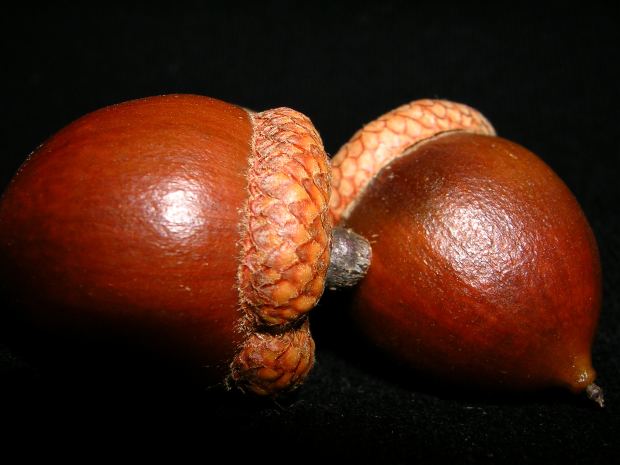
Around that time I read a fascinating book by James Hillman, The Soul’s Code. Hillman is a deep, insightful thinker. It has been a long time since I read the book, but I recall that it described each of us as coming into the world with a uniqueness that asks to be lived out, a sort of individual destiny, which he termed an “acorn.” It’s a remarkable lens to view who we are. A child’s destiny may show itself in all sorts of ways: in behaviors we call disobedience, in obsession with certain topics or activities, in a constant pull toward or away from something. Rather than steering a child to a particular outcome, Hillman asks parents to pay closer attention to who the child is and how the child shows his or her calling.

The examples Hillman gives are memorable. If I recall correctly, Yehudi Menuhin, one of the preeminent violinists of the 20th century, became fascinated when he heard classical music on the radio as a three year old. He wanted to feel the same rich notes coming out of a violin in his hands. His parents lovingly presented him with a toy fiddle. He drew the bow across the strings and was horrified at the cheap squawk the toy made. Enraged, he threw the instrument across the room, breaking it. His imagination had already taken him to the place in himself where beautiful music was made and he was unable to bear that awful sound. We normally call that behavior a “tantrum.”

Another example is award-winning director Martin Scorcese. As a child he suffered from terrible asthma and wasn’t allowed to go out to play on the New York streets. So he watched the world framed by a window. He drew what was going on, making frame after frame of cartoons. He was teaching himself to create scenes and action, essentially tutoring himself in the basics of moviemaking. We’d normally consider his circumstances a form of deprivation. Reading Hillman’s book gave me insight into the acorn of my own fears, longings, and daydreams. It also helped me see my child’s interests with new eyes.

My firstborn is an adult now. He can weld and fabricate, repair tractors and cars, build additions on a home and turn a shell of a room into a working kitchen, drive heavy equipment, do complicated calculations in his head, make do on little, and work until everyone around him has long given up. He’s also witty, intelligent, and endlessly generous. I don’t know if those early vacuum terrors had anything to do with how he’s turned out, but I’m sure the child he was would be amazed at the man he has become.

What was your earliest fear, fascination, and other ways you may have shown the “acorn” of yourself?” What about the children in your life? 

Child 1

This article first appeared in Life Learning Magazine.

These Are Interstellar Times

interstellar travel, voyager 1 beyond heliosphere, first in space exploration, conscious shift, NASA rocks, amazing news,

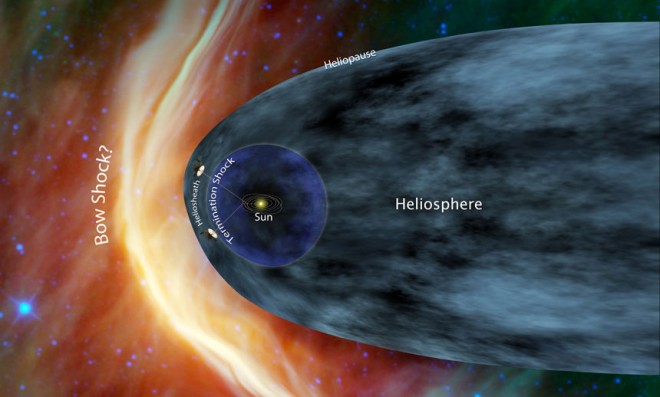
Voyager 1 and 2 are traveling through the outermost layer of the heliosphere.
Image: NASA.gov

The most epic science fiction fantasy is coming true. For the first time ever a human-built vehicle is leaving the entire solar system behind. This is huge. The daily news cycle has barely mentioned it in passing. Most people on this lovely blue-green planet have no idea what our species has accomplished.

Six months ago experts predicted say it could happen any time. Now it has. Voyager 1 has flown beyond the heliosphere, the bubble-like region dominated by the Sun and its solar wind. We’re going where we’ve never been before. I’m talking interstellar. That’s defined as “the space between stars.” The whole futuristic thing? It’s here.

Thirty-five years ago NASA launched probes designed to explore our solar system. Perhaps to confuse historians, Voyager 2 blasted off first on August 20, 1977. Voyager 1 followed on September 7.

We’re making science history with 1977 technology too. That year our species toddled toward greater innovations. For the first time optical fiber was used to carry telephone traffic. New technology debuted, such as Commodore PET, Tandy TRS-80, and Apple II series computers. The Atari 2600 was released. And (coincidence?) Star Wars opened.

space exploration, big news in space,

Voyager spacecraft sent back 52,000 images of Jupiter. (Image: nasa.gov)

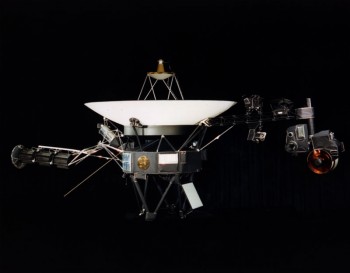
Voyager spacecraft are powered by computers with 80 kilobytes of memory, using software without data storage capability. (They rely on relics known as tape recorders.) Despite weak signal power, information is sent from both Voyagers daily. So far that totals five trillion bits of scientific data.

Over time some of the instruments have been turned off to save energy but not before both Voyagers sent back remarkable, never-before-seen images of our solar system. Thanks to Voyager drive-bys we more fully understand the far-off worlds of Jupiter, Saturn, Uranus, and Neptune. Science is still mulling over the data.

Then in 1990, as Voyager 1 moved ever farther from us, Ground Control directed the craft to turn around so its cameras could photograph the planets. From that vast distance, Earth appeared only as a point of light in the darkness. The image was titled “pale blue dot.” It inspired Carl Sagan to give a lecture and later to write a book titled Pale Blue Dot: A Vision of the Human Future in Space. In it he wrote,

It has been said that astronomy is a humbling and character-building experience. There is perhaps no better demonstration of the folly of human conceits than this distant image of our tiny world. To me, it underscores our responsibility to deal more kindly with one another and to preserve and cherish the pale blue dot, the only home we’ve ever known.

The Voyager crafts weren’t actually intended to do more than a planet hop for five years. But as we’ve seen, those unsung NASA types take their jobs seriously. They designed the probes to do a lot with a little. The program weathered funding cuts, even a Bush-era threat to end the entire program, and as money trickled in NASA reprogrammed the spacecraft to keep going.

The total cost of the Voyager missions from planning in 1972 to today (including launch vehicles, power source, and tracking support) comes to $865 million. This equals about eight cents per U.S. citizen per year. To put it another way, we’re cracking interstellar space for a fraction of the $6 billion the 2012 U.S. political campaigns were estimated to cost.

Now exploring interstellar space. (Image: nasa.gov)

Now exploring interstellar space. (Image: nasa.gov)

The Voyager probes carry more than 70′s era equipment. Before the spacecraft were launched, Carl Sagan chaired a committee to determine what message we humans should send to beings who might eventually come across the Voyagers. That’s why each Voyager carries sounds and images from earth on gold-plated copper disks, electroplated with uranium-238. They’re called Golden Records. They include diagrams of DNA, maps of the Earth, greetings in 55 languages, sounds like a chimpanzee’s call, images of people engaged in daily activities, and music such as blues by Blind Willie Johnson and a concerto by Bach. One of the messages is by President Jimmy Carter, which says in part,

“This is a present from a small, distant world, a token of our sounds, our science, our images, our music, our thoughts and our feelings. We are attempting to survive our time so we may live into yours. We hope someday, having solved the problems we face, to join a community of galactic civilizations. This record represents our hope and our determination, and our good will in a vast and awesome universe.”

Here’s to Voyager 1. Eleven billion miles from the Sun and now beyond our heliosphere carrying determination and goodwill.

Here’s to humankind, achieving wonders even if we too rarely pause to notice. Let’s have another beautiful shift in consciousness, as we did when the luminous image of Earth seen from space was photographed in 1972 awakened us to a worldwide ecological movement. It’s time to shift again. We are co-participants in a much larger and more amazing story.


Why You Care About (insert celebrity here)

celebrity obsession, fans, reality tv, media hypervigilance, celebrity worship, celebrity idols,

The distance between a baby in arms and nursing mother is eight to 15 inches, perfect for the focusing ability of a newborn. Even the youngest babies speak with their eyes. They hunger for eye contact and tell us how to respond to them by looking delighted, looking away, watching intently, or drifting off to sleep. When babies are cared for by people who are nurturing and responsive they learn to trust.

When a baby is a few months old,  he or she is held upright in a parent’s arms, still in close facial range. Such young children, still new to speech, pay close attention to a parent’s expression especially in new or unsettling situations. Eye contact is paired with the comfort of close body proximity. The child’s nerve endings continually input the sensation of being held safely but gently while correlating movement, smells, tastes, and sounds they experience.

celebrity worship explained, eye contact through tv screen, depression linked to tv, relationships versus tv, screens and mental health,  Close proximity to loved ones. (dhgoodman's flickr photostream)

Close proximity to loved ones. (dhgoodman’s flickr photostream)

As children get older they still are in close proximity to caregivers and family members, but also become close to friends. Face to face contact is likely with a few close friends as the child matures, and perhaps some face time with a disciplining teacher or coach also makes a pretty strong impact.

I’m not heading in the direction you suspect. This isn’t about growing up with insufficient eye contact, although when everyone is distracted by handheld screens this may be an increasingly sorrowful issue.

There are cultural variations in personal space as we become adults but in general, close personal contact has a lot to do with close emotional connections. We care about the people we’re closest to, literally, and our emotional health hinges on whether they care about us. In fact, two studies showed that strangers who were asked to maintain eye contact for two full minutes reacted by not only liking the other person but feeling “passionate love” for that person. Talk about the power of eyes, up close!

We also have, whether we recognize it or not, close associations between their facial expressions and our own self image. Closeness to another person’s face also means sensory experiences—smell, touch, taste, and movement that helps us continually form a sense of ourselves in relation to other people. That may be why brief sexual encounters and bad relationships are so emotionally damaging, not enough time spent looking with affection at one another’s faces along with insufficient eye contact. We’re left feeling as if we aren’t fully ourselves in the relationship, we’re not SEEN for who we are. That may be the case in unhealthy family dynamics too—-not enough face time or face time associated with unresponsive nurturing (either inattentive or intrusive). And inappropriate facial closeness, a screaming boss or threatening bully or dangerous intruder, can strip away this very essential boundary we establish early on that only welcomes those people who nurture us in some way to get that close.

How many people have you been in close facial proximity to over and over, so many times that their faces are more known to you than your own face? I’m guessing not that many. In childhood it was likely your parents, maybe a grandparent, and a close sibling or two. In adulthood it may be a partner (or several partners over time) and your own children. Tally that up. Perhaps a dozen people in total?

proximity and relationships, eye contact effects, eye contact affection,

I know, I’m slow getting around to my point but here it is. We are primed to care about and expect reciprocal caring from people whose faces we regularly see up-close, to know we have a place in each other’s lives. Screens change all that.

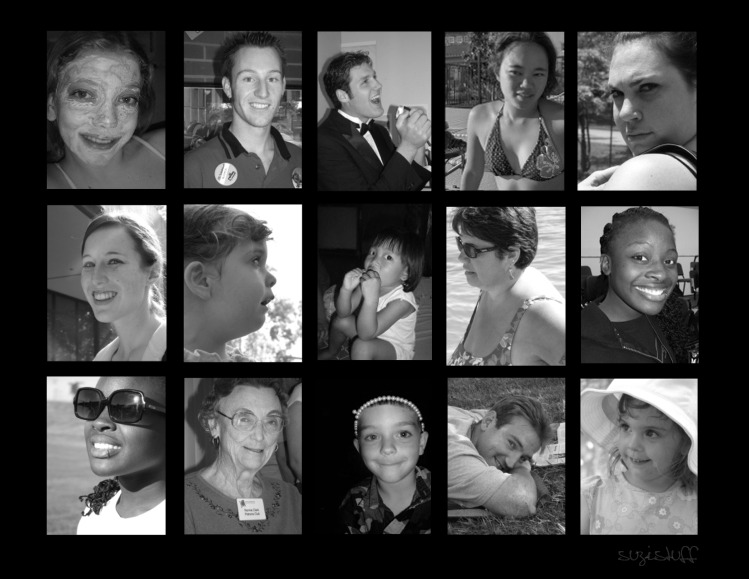
Movies, television, videos, and some video games bring other faces into personal range. You aren’t nose to nose with the screen but zoom shots bring those expressive lips and eyes up close, letting our brains experience an intimacy that isn’t there.  That’s the only way acting and filming techniques work, when viewers suspend reality by believing what’s on the screen. These screens have been around a scrap of time in the long expanse of human history. We’ve evolved to care intensely for and do everything we can to stay in touch with to those who have been repeatedly in close eye contact with us. They are, our bodies and minds believe, the core members of our tribe. Now there’s a good chance you see close-up faces of broadcasters, movie stars, and sports figures at least as many hours a day, probably more, than you do your close friends and family.

alienation tv, eye contact essential,

Feel connected? ( Bludgeoner86 flickr photostream)

I deeply appreciate the way technology allows us to learn and connect. I’m also a movie-watcher and fan of several TV series, so I’m not pointing any fingers. But I am intrigued about the way technology intersects with, perhaps intrudes upon, the unspoken essence of loving connection.

I wonder if this explains obsession with celebrities and absorption with lives of reality TV participants. I wonder if this relates to widespread problems in sustaining relationships, to general malaise, and to the fact that ten times more people are suffering major depression than than during World War II. (Yes, there are other factors.)

If we expect reciprocal attention and care from those whose faces are close to us, yet those faces can’t see us, it may very well reinforce a sense of loneliness and misery. It would drive us back to those screens, to look again and again at eyes that for the moment seem so close.

The concept seems laughable, but still I wonder. What do you think?