Letting Beauty Go

Beauty rarely shows herself nowadays.

It’s been years since I thought I owned her, but I remember our time together well. At first she was small, shy, and had more in common with cuteness than Beauty. Yes, I coddled her. I lavished hours on Beauty and the attention showed.

“Best not get attached to Beauty,” I was warned by people older and wiser. They told me the day would come when ordinary measures wouldn’t be enough to control her. They also told me that there was nothing I could do to change fate. Eventually Beauty and I would be parted forever.

I tried to deny it when the first chin bristles showed up. I pretended the increasing girth didn’t put me farther from Beauty. I ignored other tendencies like messy habits and gleeful snorting.

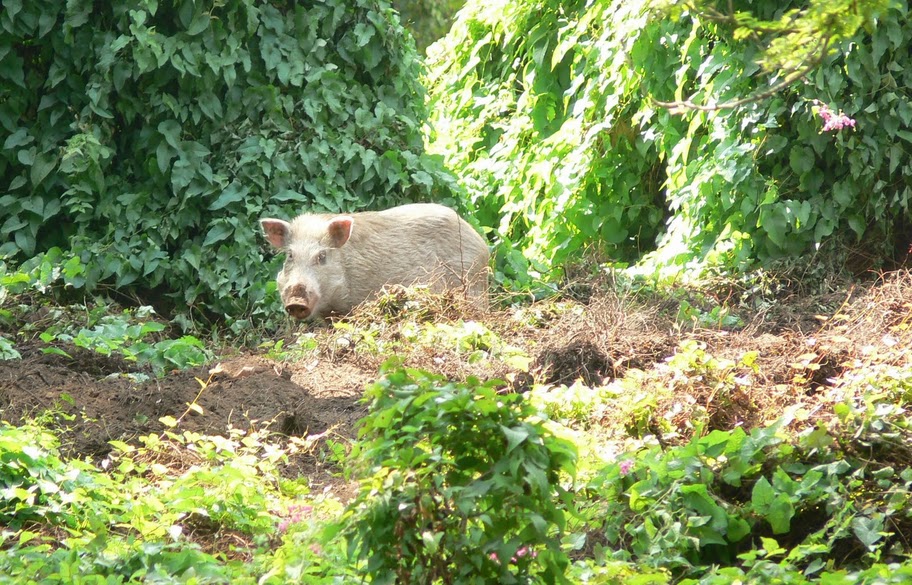
Time passed. Beauty was well on the other side of cute and would soon be taken from me for good. So I did what no one I know has ever done. I opened the gate to her pasture and made a path to the woods with apples, corn, and banana bread. Beauty was wary but followed her appetite. When she was well into the forest she heeded her instincts and kept walking toward freedom.

I don’t often get a glimpse of her these days. When Beauty shows herself I see that she is huge, bristled, her snout trembling as she smells the air. She seems gloriously happy. Let Beauty go. You’ll both be free.

*

*


Recommended post When Girls Think Their Looks Mean Everything

Woman and Pig by Wade Schuman

Free Pig

When Girls Think Their Looks Mean Everything

lookism, girls who hate their looks, moms helping girls love themselves, mean girls, geek girls,

As little girls, Elissa’s friends were rambunctious and wholly themselves. They pursued their own interests with no concern for other people’s opinions. They drew comics featuring hilarious dialogue, danced and laughed simultaneously until they fell down in breathless mirth, conducted basement science experiments, and pretended they had super powers. Their mothers talked about how freely their girls expressed themselves, grateful to have strong daughters.

Then it started.

Like a relentless viral infection, one by one these girls succumbed to our appearance-obsessed culture. Elissa watched angrily as her friends were laden with heavy new concerns. They worried about what they looked like and what others thought of them. By 11, 12, or 13 years old they hid their unique interests and suppressed their considerable talents. Instead they maintained a near constant awareness of hair, make-up, clothes, body shape, who said what, and how everyone else reacted.

Threats, screaming outbursts, bleak despair became common. And that was just their mothers’ reaction to their daughters’ behavior. Helplessly witnessing what has become a female ritual of relentless self-scrutiny causes many of us to lose it.  We know all too well that the effort to constrict oneself into a mold is exhausting.

But who can blame our girls, let alone the adult women who continue to suffer painful confidence wounds, when impossible standards are the norm?  It’s almost as if we females are set up to fail at this appearance game. Oh wait, we are. Even the Beautiful People aren’t beautiful enough.

photoshopping, mena suvari, celebrity photoshop, teen beauty,

Celebrities “fail” too. Take a look at the already lovely Mena Suvari, model and actress whose acne is removed, pores eliminated, eyes brightened and skin smoothed.

Check out the before-photoshop pics of women like Kirsten Dunst, Alicia Silverstone, Christina Ricci, and others. Until they’re rendered plastic smooth and Barbie thin, they look somewhat like ordinary people.

And let’s not forget, reality shows have made transformation from ordinary to perfect an entertainment phenomenon in a society where make-overs for little girls and high heels for babies aren’t out of the question.

Image after image through their young lives, girls absorb an ever present lesson that females aren’t good enough as they are. Such lessons aren’t confined to images. Girls and women portrayed in movies are typically clad in sexualized clothes and lead one-dimensional lives.

What’s the effect?

Devastating, according to the American Psychological Association. Shame, anxiety, eating disorders, and depression. Girls judge their bodies harshly as young as the age of five.  No wonder a girl might choose keep the vitality of her true self hidden.

But there’s another side, often overlooked. Because Elissa and a few of her friends didn’t suffer (at least fully) the perils of lookism. They barreled through their pre-teen and teen years fueled by interests strong enough to hold them steady. Elissa poured her energy into a number of pursuits. She was a docent at the zoo, raised white rats, studied an ever increasing range of scientific interests, and moderated an online forum. One of her friends took up photography, becoming proficient in pinhole camera techniques and making albumen prints, while also advancing in a hockey league. Elissa noticed that girls who didn’t engage in the looks-first game were often ostracized by their more mainstream peers, but they also had strong friendships beyond school. Elissa, homeschooled through highschool, was one of those friends. She says she felt freer to follow her own interests without the pressures of school culture and advocated individuality to others.

As a teen, Elissa was angry at the influences that swayed so many of her other girlhood friends. She scorned their preoccupation with boys, clothes, body image, and interpersonal drama. But now Elissa is in her early 20’s. She’s reconnected with many of these same friends and learned a little about the adversity they suffered as they made their way through adolescence different than hers. One of her childhood friends became a mother at 15, another made multiple suicide attempts, still another struggles with bulimia. Elissa is sure the strengths from girlhood are still with all of them. She just doesn’t know how to let them know that their looks don’t define them.

Here are a few resources to light the way.

About Face

Adios Barbie

All Made Up: A Girl’s Guide to Seeing Through Celebrity Hype to Celebrate Real Beauty

Body Drama: Real Girls, Real Bodies, Real Issues, Real Answers

Body Outlaws: Rewriting the Rules of Beauty and Body Image

Can’t Buy My Love: How Advertising Changes the Way We Think and Feel

Mothers for a Human Future

New Moon Girls

Packaging Girlhood

Pink Stinks

Resolving the Confidence Crisis

Teen Voices

The Body Project: An Intimate History of American Girls

101 Ways to Help Your Daughter Love Her Body

*

*

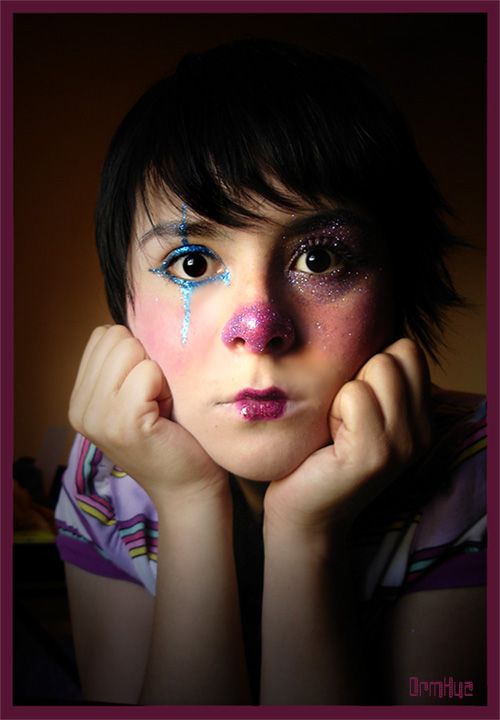
Trying to Be Happy courtesy of Orm Huz

What To Expect From A Load of Crap

optimism, bad day, negativity,

I’ve had one of those days. A steaming pile of crap sort of day. You know how it is.

We all have them. When the morning starts out with headache, an angry tailgater or the continuation of some tough circumstances the bad mood usually isn’t far behind. This has a ripple effect. We complain to others, tipping conversational topics toward what grinds and grates. And somehow that negative outlook sets our personal radar to scan for more difficulty on the horizon. Those days rarely improve.

Some of us hold out a little longer. We work hard at emphasizing the positive, which is handy because moods are downright contagious. Studies show an individual’s emotions can influence entire groups (families, playgrounds, workplaces). Positive contagion leads to more cooperation and less conflict. Negative contagion, well, you know how fun that can be. Apparently moods stick like that pink goo from The Cat in the Hat Comes Back.

No one is upbeat all the time. Besides, constantly perky people inspire loathing. But I keep learning the necessity of choosing the way we experience life’s ups and downs. You know how easy it is to focus on five minutes of difficulty rather than the smooth progress of the day. We do it all the time. A child’s angry outburst overshadows hours of sunny cooperation. A colleague’s late return from lunch somehow reflects badly on a week’s worth of work. Or a whole slew of minor problems start to look like a steaming pile.

I’ve discovered while reading Buddha’s Brain: The Practical Neuroscience of Happiness, Love, and Wisdom that we’re fighting a hard-wired tendency. Our brains pay more attention to the negative than the positive. That was probably helpful when saber-toothed tigers threatened our early ancestors. Not so helpful these days.

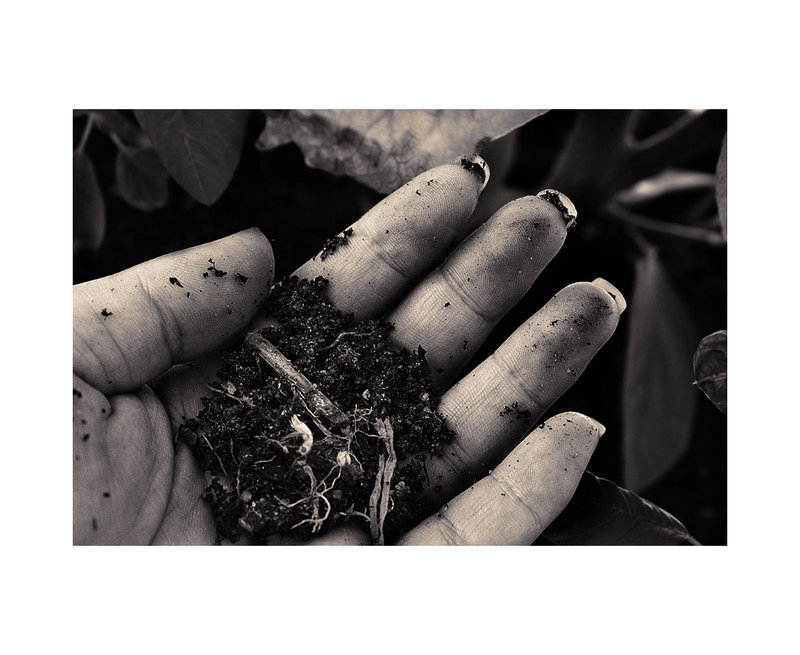
Fortunately I live on a small farm where the cows produce loads of actual crap. So I know what to expect from it. Whether mixed in to the garden beds or left in a heap, eventually it bursts into flower.

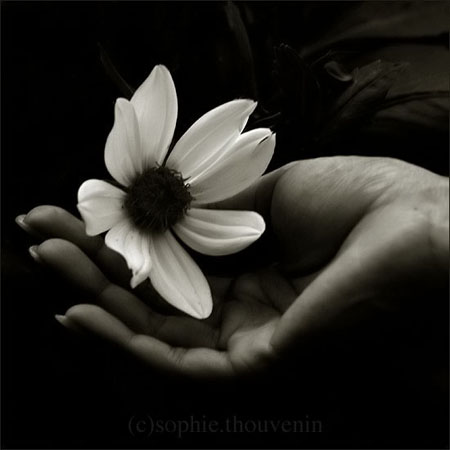
The same potential lies dormant in our worst days. No matter what, we’re still in charge of our own attitudes. Because “sh*t happens” is only one way to look at it. “Compost happens” too.

*

*

*

Dirt in hand photo courtesy of Tea Cupie

Flower in hand photo courtesy of Prismes

Going to Hope in a Handbasket


“Not only is another world possible, she is on her way. On a quiet day, I can hear her breathing.”             Arundhati Roy

*

*

*


Fear sells. Blood and guts sell even better. What really grabs our attention? Out and out panic. That largely explains today’s so-called news channels, talk radio, actually much of commercial media. The worse it sounds, the greater audience share they grab and the more money they make. Trouble is, they also make up minds and harden hearts and plant misery where optimism could so easily flourish.

But they’re wrong.

Sure, it seems we’re in big trouble. Structures we count on to be stable are crumbling—finance, health care, education, consumption driven economies, us versus them mentalities, you name it.

Remember the parable of the mighty oak and thin reeds? The oak boasted of his immense girth and height, mocking the reeds all around him for their weaknesses. But the reeds could withstand wind, lightening and the weight of snow. The oak succumbed while the reeds survived, stronger than the oak in their ability to bend and stand again. Big institutions are fighting transparency, reform or annihilation with everything they’ve got, believing that strength means rigidity. Meanwhile a shift is happening on the grassroots level, as flexible and self-correcting as reeds in the wind.

Times of change are destabilizing and difficult, but ultimately valuable. After all, what’s broken, corrupt or simply no longer workable must be fully revealed before it’s healed or transformed into something much better.

Look more closely. Things are getting better all the time. In fact amazing evidence shows that we’ve long been on the path to health and harmony. Here are a few examples.

~

We’re Smarter.

Intelligence continues to increase from generation to generation. In fact, to accommodate continuously increasing intelligence the IQ test must be renormalized (standardized to keep the average test results at the 100). This is called the Flynn Effect.

Between 1932 and 1978, mean IQ scores in the U.S. rose 13.8 points. If your grandparent received IQ score results of 98 back in 1932 they’d have been deemed of average intelligence. That same grandparent, if administered today’s tests, would be considered to have a borderline mental disability by current scoring standards. IQ scores have risen even higher in some other countries: 27 points in the UK between 1942 to 1992. Of late, developing countries seem to be experiencing the biggest surge.

Many explanations have been proposed, but the increase can’t be definitively pinned on genetic improvements, improved nutrition, greater familiarity with testing or better schooling.

According to Cornell professor Stephen J. Ceci, the most direct gains are not in subjects that are taught (math, vocabulary) but are shown in parts of the test that seem unrelated to schooling (matrices, detecting similarities). In fact, test gains have been enormous in areas requiring the child to apply his or her own reasoning, such as arranging pictures to tell a story or putting shapes in a series. Although teaching children does return positive results, what a child learns through the natural stimulation of everyday life has a more profound effect. For example, a study to determine the effect of schooling on rural children in India found that the increase in overall intelligence from a year of age is twice the increase from that of attending a year of school.

IQ test scores don’t relate to what truly provides satisfaction in life. But the Flynn Effect is intriguing. Factors we can’t completely explain are giving us the intellectual capacities to deal with a ever more challenging world.

~

We’re Healthier.

Studies conducted by Robert W. Fogel, a Nobel laureate and economic historian at the University of Chicago, show that in a few hundred years human biology has changed in startling ways. We are more resistant to ill health, more likely to recover when faced with disease and less likely to live with chronic disability. We are also smarter and live longer. Fogel calls this radical improvement “technophysio evolution.”

An interview in the University of Chicago Magazine quotes Fogel as saying, “The phenomenon is not only unique to humankind, but unique among the 7,000 or so generations of human beings who have inhabited the earth.”

Fogel doesn’t necessary attribute the changes to genetic shifts.  Improvements in medical care, nutrition, sanitation and working conditions may cause epigenetic changes.  These are shifts in gene expression that can last through many generations without altering underlying DNA.

Information amassed by Fogel indicates that chronic diseases such as arthritis, heart disease and lung ailments are occurring 10 to 25 years later in life than they did 100 or 200 years ago. Interestingly, well-being may be more strongly affected by conditions each individual faces in utero and during the first few years of life than previously suspected.

Fogel’s most dramatic proof of technophysio evolution was found by comparing Civil War veterans to subsequent generations. Researchers examined health and longevity data of 45,000 Union Army veterans, including over 6,000 black soldiers. Military records revealed that young American men of that era commonly suffered debilitating health conditions. Approximately 65 percent of men from 18 to 25 years of age volunteered for the Union Army. But arthritis, tuberculosis, cardiovascular disease and blindness disqualified a quarter of them. And the military of that era wasn’t choosy. Incontinence and blindness in one eye didn’t disqualify a recruit. Even the youngest men lived with chronic disabilities. Fully one-sixth of volunteers between 16 to 19 years of age were rejected for serious health conditions.

By the time Civil War vets passed the age of 65, 68 percent of them suffered from arthritis, 76 percent from heart disease and over 50 percent from back problems. World War II veterans at the same age, in contrast, counted among their ranks 48 percent as arthritis sufferers, 39 percent with heart disease and 30 percent with back problems.

These remarkable health gains don’t diminish our current struggles with cancer, diabetes, Alzheimer’s disease, autism and other serious health conditions on the increase. Despite the blessing of bodies more resilient and healthy than those of our ancestors of just 150 years ago we suffer the effects of environmental toxins and nutritionally squalid diets. To fully accept the gift of health and energy from our ancestors, it seems we must expand our awareness to make positive changes here and now. That way our choices continue to benefit our descendants.

~

We’re More Peaceful.

We function best through cooperation and harmony. Even our body systems are in greatest sync when we are peaceful, according to studies at the Heart Math Institute. It may be taking us quite a while, as a species, to get accustomed to living in larger settled groups but it seems we’ve come a long way in the last few centuries.

And peace is how our species has come this far, despite what history tells us. According to anthropologist Douglas Fry, evidence shows that for 98 percent of human existence on earth we lived in small nomadic bands that thrived precisely because warfare was avoided. He presents compelling proof in his book, Beyond War: The Human Potential for Peace
along with the message that human beings have highly developed capacities to seek and maintain peace.

Psychologist Steven Pinker points out in an essay titled “A History of Violence” that public cat burnings were a popular form of entertainment in the sixteenth century.  Although we pay more attention to atrocities now than ever before, the horrors of slavery, genocide, barbaric punishment and vigilante justice were accepted as commonplace a little more than a century ago.

Empathy for people of another race or class? Not a typical attribute even a few generations ago. Pinker notes, “Conventional history has long shown that, in many ways, we have been getting kinder and gentler.”

As Pinker cites specific data, the good news gets better. For example, the homicide rate has declined from a rampant 24 murders per 100,000 Englishmen in the 14th century to 0.6 per 100,000 in the 1960’s (5.4 per 100,000 in the U.S. in 2008).

No matter what the angle, the view is good when we look at more recent U.S. history through this lens as well. Despite what ranting pundits and blaring news promos may indicate, crime rates have been steadily dropping per capita since the 1970’s.  Some analysts say by as much as 50 percent in 15 years.  Despite staggering economic losses, crime has continued to decline recently.

The ecumenical organization Project Ploughshares reports,  “Peacebuilding efforts do work. Although one conflict is too many for those being killed and wounded, there has been a significant decrease in the number and intensity of armed conflicts over the past 10 years.”

We’ve come a long way without direct efforts to educate each person in the ways of negotiation, mediation, intervention, reconciliation, heck, even listening skills. Imagine turning our attention toward cooperation and mutual respect. Surely acknowledging the human tendency toward peace welcomes greater possibilities for harmony in the years to come.

~

We Care.

Never before in history have so many people worked tirelessly and selflessly to benefit others. Paul Hawken writes in Blessed Unrest: How the Largest Social Movement in History Is Restoring Grace, Justice, and Beauty to the World
that the abolitionist movement was the first major movement by human beings to advocate on behalf of others without seeking advantage for themselves or their particular social or political group.  Since that time, such efforts have grown with astonishing vigor.

There are now over a million organizations on the planet working for environmental stewardship, social justice, the preservation of indigenous cultures, and much more.  These groups don’t seek wider acclaim, they seek to make a difference for the greater good.

Artist Chris Jordan has made a mandala of the names of those million-plus organizations.  His work is inspiring—-make sure you look at the images up close as well as the whole picture.

It’s time to turn our attention away from doom-shrieking media. While it’s valuable to be informed, such knowledge is useful only to the extent that it motivates us to turn more consciously in a positive direction.

A heavy heart, or worse, a hardened heart, makes it nearly impossible to raise a child or plant a garden or grow a benevolent future.

*

*

Creative Commons image

Crazy Busy

simplify holidays, crazy busy, holiday frenzy solutions,

Orin Zebest’s work on Flickr

Who isn’t busy all the time? But around the holidays we’re crazy busy. At least women are, and those lights in our lives we call children make the pace even more frantic.

Sure we make all sorts of efforts to simplify and de-stress but for most of us the joys of holiday shopping, gifting, cooking, decorating, visiting, hosting, and merrymaking have to fit right into our regular (overburdened) schedules.

It’s not like we can make more time where there is none. Well, maybe we can. Or at least use our time differently. I confess to the Crazy Busy Syndrome but I fight back with these tactics.

Renounce the How-Does-She-Do-It-All Disease. You know the symptoms. You show excessive responsible because you’re sure no one else will do it (or do it right). You uphold traditions your family counts on. You pay close attention to get just the right gifts. You worry about money more than usual. You try to keep the focus on intangibles like faith and togetherness. When the frenzy is over you end up with an empty feeling. I’m the first to stand and admit that I’m still in recovery from this disease.

The cure? Talk to your loved ones about what means the most to them, then slice away the rest. If there’s disagreement, slice anyway.

Shun Those Voices. They’re everywhere around the holidays. They seem so genuine and alluring but their sole aim is to make you feel insufficient. They speak to you from TV, magazines, websites, blogs, store displays— let’s admit they’re ubiquitous. These voices tell you that you’re not enough. To compensate you must do more. Dress beautifully, make elaborate meals, buy lavish gifts and wrap them more ingeniously.

This is the only diet you need to go on. Don’t watch a single cooking show, don’t open one slick women’s magazine, stay away from Pinterest, and avoid stores as much as possible. You’ll have a lot more time, plus you won’t have to reassemble what’s left of your self esteem.

Screw Tradition. No, I don’t mean avoiding your house of worship or shunning Grandma’s house. I do mean it’s possible to celebrate the season without so much of the heavy Gotta Do It weight hanging over you.

Some of my most memorable holidays have actually been those that veered wildly from tradition. My family will not forget a holiday dinner at Rebecca’s house complete with walls of wet paint, an oven on fire, and a dog getting sick everywhere. The zinger, she was eager to show foreign guests how we celebrate here in the U.S!

If you’ve always gone to the movie theater to see the newest holiday releases after a day of shopping, skip both and go to a play at your community theater. If you’ve accepted every holiday invitation despite the costs of babysitters and lost sleep, limit your yes RSVPs to those events that are the most warm and wonderful. If you’ve always accommodated your kids’ requests for gifts because it’s Christmas or Hanukkah or Kwanzaa, put new limits on materialism —try emphasizing non-toy gifts or give four gifts in the categories of Want, Need, Wear, Read. If you’ve always driven around to see the holiday lights, instead go outside on a frosty night to sing together (even if only to a lone tree lit by moonlight). You’ll not only save time and money, you’ll also create new traditions.

Rethink Gift-Giving. Things have gotten out of hand. Children in this country once looked forward to a fresh orange, maybe a piece of candy and if they were lucky a toy or useful gift like a pocketknife or sewing kit. Historian Howard Chudacoff writes in Children at Play: An American History that most toys co-opt and control a child’s play. They’re better off with free time and objects they can use to fuel their imaginations (yes, a cardboard box).

I admit things got out of hand in my own house. In a quest for meaning (let’s rephrase that to my quest for meaning) we’ve always had handmade holidays. Yes, I’m one of those annoying people….. Meals from scratch, homemade organic cookies, handmade gifts. Each of my four children made gifts for everyone every year, gifts that took substantial effort such as woodworking, felting, and ceramics. My teens still make some of the gifts they give although thankfully I’m not the one coming up with the ideas and supervising the process. The last few years economic realities have made hand made gifts ever more necessary, for other gifts I turn to non-profit and artisan sources. Try products offered by non-profits you support, works of art sold at local galleries, and these resources for simple holiday giving.

Last Resort. This tactic is heavy duty, the one I bring out when I start to feel sorry for myself. Because we’re not crazy busy in comparison to women throughout history. We think we’re stressed? Our foremothers hauled water; carded, spun and sewed clothes; chopped firewood and maintained the stove they cooked on; ground grain and made bread each day; planted and weeded gardens, then canned or dried the harvest; stretched limited food reserves with careful planning to last until the next harvest; cared for babies, children and the elderly with no professional help; treated the sick, stitched wounds and prepared the dead for burial; well, you get the idea.

Worse, many many women in the world still do this sort of grinding labor each day. Typically, women in developing countries work 17 hours a day.  Our sisters receive a tenth of the world’s income while performing two-thirds of the world’s work. These harsh realities put any concept of busy or stressed right out of my head. For more information and ways to help, check out the wonderful book Half the Sky: Turning Oppression into Opportunity for Women Worldwide.

So fight the Crazy Busy Syndrome with all you’ve got. Remember to count your blessings, including the joy of not eating my homemade buckwheat cookies!