“It is becoming increasingly clear through research on the brain, as well as in other areas of study, that childhood needs play. Play acts as a forward feed mechanism into courageous, creative, rigorous thinking in adulthood.” ~ Tina Bruce
Nine-year-old Charlotte has one hand slung around a utility pole as she slowly twirls, her head tipped to watch the upper floors of her Cleveland apartment building circle past. Her mother is unloading groceries and chides her daughter, “Stop playing around!”
Charlotte actually has very little time to play. Her days are tightly woven as the dozens of perfectly tended braids in her hair. She’s in the gifted stream at school, participates in swim team and basketball team, takes clarinet lessons, and attends a computer-oriented STEM program on Saturdays.
“I had more of a Little Rascals childhood,” Charlotte’s mother says. “My girlfriends and I would use sheets hanging on the clothesline as curtains to perform Michael Jackson hits or I’d ride bikes with my brothers down dirt piles pretending to be Evel Knievel. It was a lot of fun but Char has more advantages than I could have dreamed of.”
Charlotte’s mom needs to get the groceries unpacked before heading back out. She’ll drop Charlotte off at basketball practice, then buy craft supplies her daughter needs to make a school project. “It’s endless,” she says. “We’re running all the time.”
Although she’s in a hurry, she has more to say about play. “The other day Char had friends over,” she says. “They were whispering and giggling. I felt bad that I had to barge in and tell the girls their playdate was over because we had to leave. I know they need more time to just be silly.”
She’s right.
Most adults don’t hesitate to interrupt play with an activity they assume is more important or to halt play they deem too loud, messy, or rough. And they don’t see a problem with corralling children’s leisure time in ways that remove most aspects of “free” from play. Dismissing what kids do as “just” play also denies what makes us fully ourselves.
There’s no definitive description of free play, but as author and play advocate Bob Hughes wrote back in 1982, it’s behavior that is “freely chosen, personally directed, and intrinsically motivated, i.e. performed for no external goal or reward.”
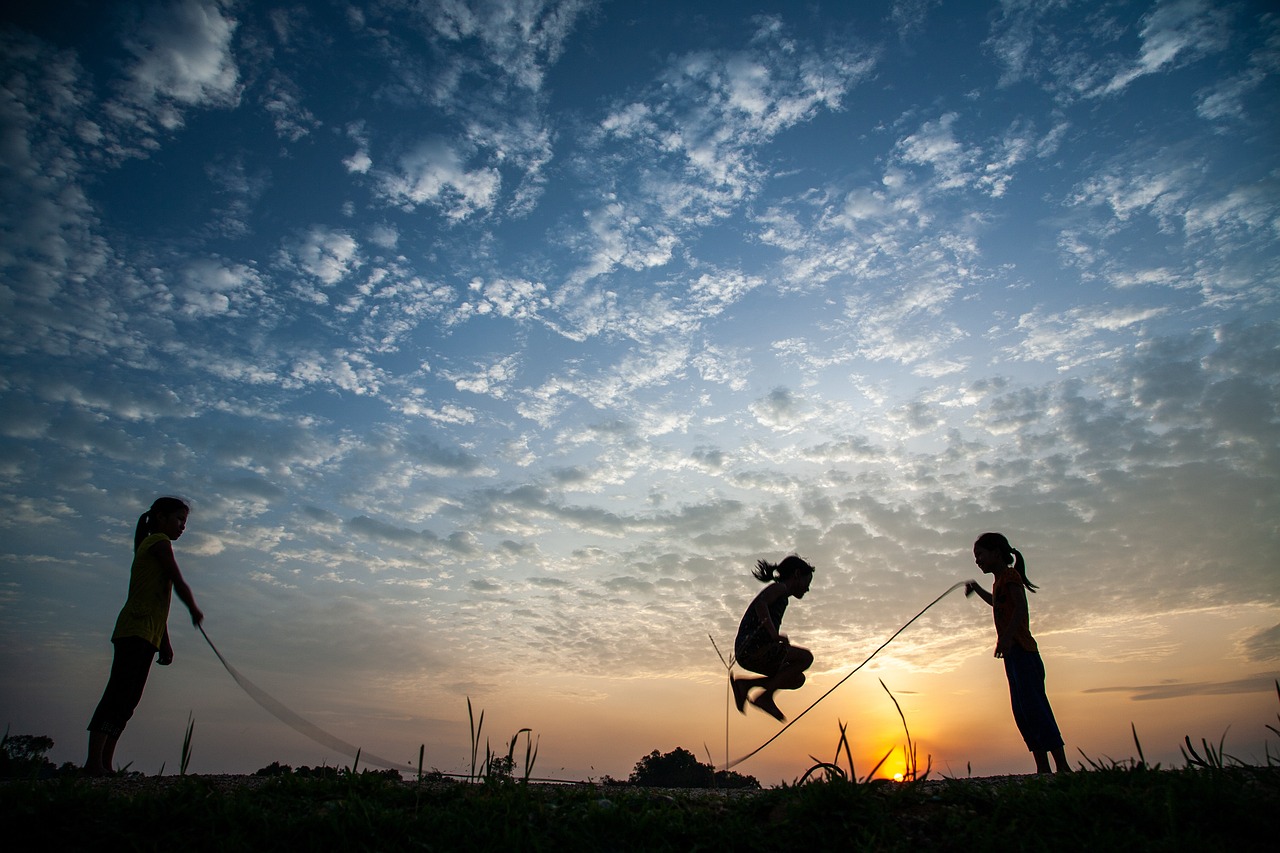
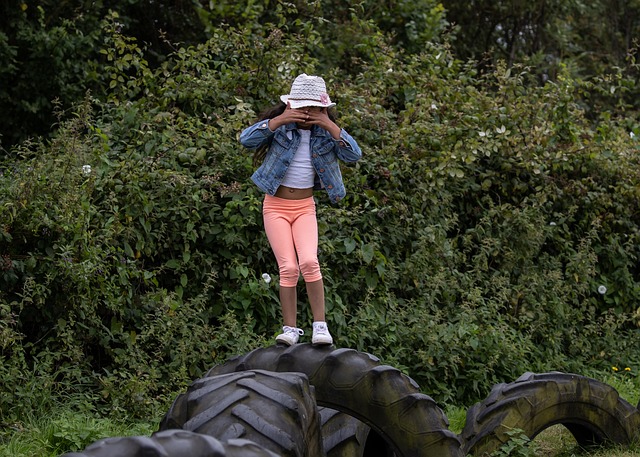
Psychiatrist Stuart Brown, founder of the National Institute for Play, expands on this. He says play basics include purposeless, repetitive, pleasurable, spontaneous actions. Play takes many forms. Sometimes this is driven by curiosity and the urge to discover. Sometimes it’s imaginative play driven by an internal narrative. Sometimes it’s rough and tumble play, the kind that necessarily puts the player at risk and involves anti-gravity moves such as jumping, diving, and spinning.
Picture the wildly free play of puppies and kittens as they wrestle and explore; that’s what he is describing. As Dr. Brown writes, “The urge to play is embedded within all humans, and has been generated and refined by nature for over one hundred million years.”
Ever taller stacks of research demonstrate that free play is critical for development. It fosters problem-solving, reduces stress, enhances learning, and boosts happiness.
Make-believe games go a long way toward helping kids develop self-regulation, including reduced aggression, ability to delay gratification, and advancing empathy. One form of make-believe, more common in children who have lots of minimally unsupervised free time, is called worldplay. This is considered the apex of childhood imagination and is linked with lifelong creativity,
Preliminary studies indicate the less structured time in a child’s day, the better their ability to set goals and reach those goals without pressure from adults. Childhood play is even correlated with high levels of social success in adulthood.
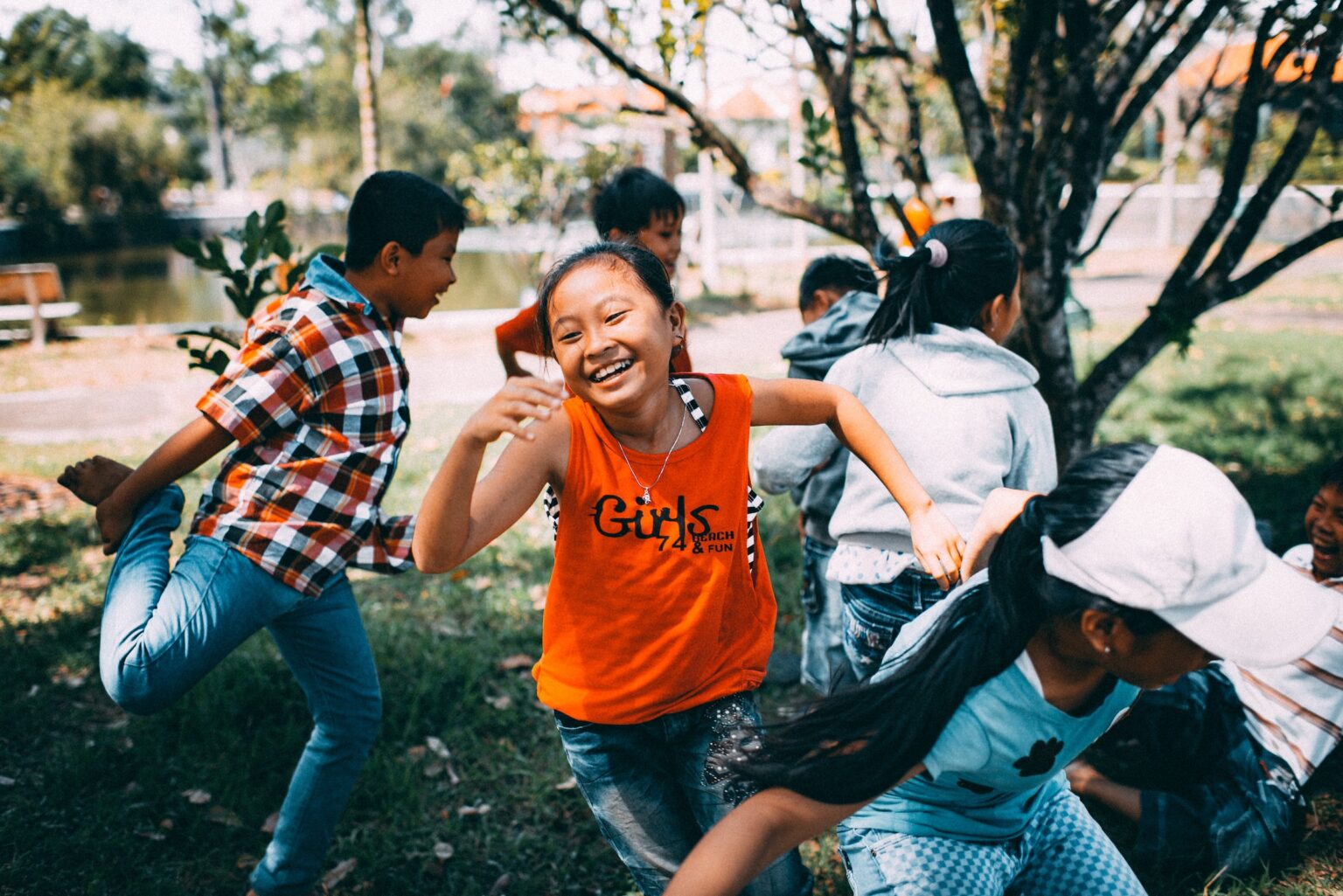
And, as if we didn’t already know this, free play generates sheer joy. The BBC series “Child of Our Time” studied play. They found the more children engaged in free play, the more they laughed, particularly when playing outside. The kids who played the most laughed up to 20 times more than kids who played less. This is surely the best reason of all to play.
But then it strikes us. Suddenly, with the same horrified expression mad scientists wear in sci fi movies while uttering the lines, “What have we done?” we realize that we’ve squeezed nearly all the free play out of childhood. If there are monsters in this scenario, they come disguised as tighter safety restrictions, more adult-run activities, insufficient recess at school, and the lure of screens. Since the 1970’s children have 25 percent less time to play, with 50 percent less time in unstructured outdoor play. In the 1980’s, school-aged children spent 40 percent of the day, on average, engaging in free play. By 1997, that average had dwindled to a mere 25 percent and continue to decline. A recent report notes that American kids, on average, spend about four to seven minutes a day playing outside but over seven hours a day in front of screens. Even when kids do have time to play freely, it’s now common for adults to supervise.
This is particularly true in educational settings. Play is a buzzword for educators, but as Elizabeth Braue wrote in a journal article titled “Are We Paving Paradise?” — “What counts as play in many classrooms are highly controlled situations that focus on particular content labeled as ‘choice’ but that are really directed at capturing a specific content-based learning experience, such as number bingo or retelling a story exactly as the teacher told it on a flannel board.” Free play, particularly the more emotionally expressive and physically active forms, are also squeezed out of daycare and afterschool programs in favor of planned activities.
It’s not just a U.S. thing. A structured and heavily supervised childhood is becoming more prevalent globally. When thousands of mothers around the world were asked about their children’s activities, they tended to agree that a lack of free play and experiential learning was eroding childhood. At the same time, they listed their children’s main free-time activity as watching television. This held true for children growing up in North and South American, Europe, Asia, and Africa. The researchers, writing in the American Journal of Play, made clear their surprise at what they called a “homogenization of children’s activities and parents’ attitudes.”
Marketing messages are so ever-present that they’ve reshaped the norms for raising children. Those messages lead us to believe that good parents heavily supervise children, keeping them busy with purchased playthings and pricey programs starting in toddlerhood or earlier. Such opportunities, we’re told, are found in specialized toys, educational apps, adult-run programs and lessons, gym and fitness sessions, organized sports, and extra-curricular activities. This presumes the kind of spending power and free time that’s entirely out of reach for most US parents. The cost is greater than money because they also lose family time, relaxation, and free play.
That’s not to say a child shouldn’t take drum lessons, go to the rock climbing gym, or participate in scouts. The difference between an overscheduled child and a child who’s eager to take on more activities has to do with each child’s unpressured choices, balanced with what’s best for the family as a whole. It’s also worth remembering that shuttling our kids around for enrichment activities is not necessarily correlated with later success.
Play is a constant in the life of young children. When we formalize it with too many activities that turn play into a tool for academic or physical advancement, we lose sight of play for play’s sake.
This is an important consideration, because the short and long-term consequences of too little free play are more serious than most of us imagine. Play deprivation (yes, it’s a term) has been linked to significant problems. At the most extreme is the potential for increased criminal behavior. Dr. Brown has studied the topic for 47 years, conducting something like six thousand individually conducted play histories. He was initially drawn to learn more when he looked for common backgrounds among men convicted of felony drunk driving and men convicted of homicide. To his surprise, he found these individuals shared a background of severe, sustained, long-term play deprivation. More recent studies have identified play deprivation as a factor in violent crimes committed by juveniles.
Overscheduled kids aren’t more likely to commit crimes, by any means. Much more research needs to be done to establish a causal link. But we do know that too little free play is serious problem. Youth mental health continues to worsen—with particularly stark increases in problems among teen girls. Nearly 1 in 3 girls seriously considered attempting suicide—up nearly 60% from a decade ago. Across all racial and ethnic groups teens are experiencing increasing rates of persistent sadness or hopelessness.
Over 20 years ago, David Elkind wrote in The Hurried Child: Growing Up Too Fast Too Soon, that overscheduled children and teens are more likely to show signs of stress, anxiety, and depression. It’s thought that free play and quality family time are a protective effect, helping children work through and manage such feelings.
Peter Gray finds it logical that a decline in play might result in increased emotional and social disorders. He writes in Free To Learn, “Play is nature’s way of teaching children how to solve their own problems, control their impulses, modulate their emotions, see from others’ perspectives, negotiate differences, and get along with others as equals. There is no substitute for play as a means of learning these skills.”
Physical play is critical in maintaining good mental health and a useful intervention when young people suffer from depression. A recent study found physical activity at least three times a week resulted in a significant reduction in depression symptoms. The effect was greatest “when the physical activity was unsupervised than when it was fully or partially supervised.”
Play is humanity’s spark plug. It connects us to a current that exists within us and around us, an aliveness that runs on fun. This is how we make scientific advances; how we develop products that were once in the realm of fantasy; how we create music, books, movies, games, and art; how we laugh with friends, build community, and come up with solutions. It’s no wonder all of us need more play.
When Charlotte notices her mother is caught up in conversation with me, she runs up the staircase outside their apartment and slides her backpack down the railing, then tries to scurry down the steps fast enough to catch it. When she succeeds on the second try, she boosts the challenge by running down the mulched dirt on the outside of the steps. An elderly man approaches the steps. She pauses, perhaps wary of his disapproval. Instead he playfully slides the backpack back up just as she nears the bottom. Charlotte’s mother turns around when she hears her daughter’s giggle join the older man’s hearty laugh. It’s a lighthearted moment of connection for all four of us, brought into being through playfulness. “That’s the great thing about kids,” she says. “They can turn anything into play.”
So can we all. I don’t think anyone says it better than games expert and play advocate Bernie DeKoven, who wrote inA Playful Path,
“Playfulness is a gift that grants you great power. It allows you to transform the very things that you take seriously into opportunities to shared laughter; the very things that make your heart heavy into things that make you rejoice, it turns junk into toys, toys into art, art into celebration. It turns walking into skipping, skipping into dance. It turns problems into puzzles, puzzles into invitations to wonder.”
I am sitting on the ground weeding our tomato plants. I gratefully take refuge in useful tasks like gardening and cooking. Busy hands almost always un-busy my mind. But that’s not working for me right now.
Instead I’m thinking about several editing projects nearly due. I also need to plan a class, complete a volunteer training program, deal with a health insurance hassle, and prepare because we have nine people coming over for a meal tomorrow. Mental fuss is erasing me from the garden.
I take a deep breath, choosing to put myself right back where I am. That works. I hear birdsong, hear the plop of a frog in the pond. Soon I’m complimenting our plants on their sturdy stems and reveling in the breeze.
I learned the word eustress while researching my first book. The term was created by adding the Greek prefix “eu” — meaning “good, healthy” to the word “stress,” It’s defined as a positive stress response, often generated by a demanding but worthwhile effort. Stress is inherent in growth-producing situations. We stress our bodies to reach greater levels of physical ability, breaking down muscle to build it stronger. We tear down old limitations when challenging ourselves to do something hard for us like taking on a public speaking role, mastering a new job, or asserting ourselves in a tough situation. Stressors like these, even if we haven’t exactly welcomed them, help to strengthen us.
We’ve long been told stress is bad for us. Maybe that perception is bad for us too. A few years ago a study was done to determine if our beliefs about stress affect our health. Nearly 30,000 adults were asked how much stress they’d experienced over the previous year and if they thought stress was harmful to their health. Then their health records were tracked for the next eight years. The results were surprising. People who most strongly believed that stress impacted their health, and then went on to experience a great deal of stress, exhibited a 43% increased risk of premature death over that time.
Research psychologist Kelly McGonigal cites this study at the start of her TED talk, How To Make Stress Your Friend. When we’re in a stressful situation our pulse rate increases, we breathe faster, often sweat. Most of us interpret those physical changes as signs we aren’t coping well under pressure. But what if we saw those as indicators our bodies are energizing to meet the challenge?
Participants in another study at Harvard University were told to interpret these symptoms as helpful. They learned to recognize that a pounding heart prepares us to take action. Faster breathing brings more oxygen to our brains. People taught to view stress responses as promoting performance were less anxious, more confident, even showed fewer physical signs of stress. And although blood vessels typically constrict during stress (making chronic stress damaging to our hearts), people who viewed the stress response as helpful exhibited more relaxed blood vessels, the sort of reaction typically seen in moments of positive emotion.
Dr. McGonigal goes on to explain something even more remarkable. She reminds us that we think of oxytocin as a love hormone. It prompts us to strengthen close relationships, especially the mother-child bond. It’s released when we snuggle with someone we love and when we play with a pet. As she says in her TED talk,
But here’s what most people don’t understand about oxytocin. It’s a stress hormone. Your pituitary gland pumps this stuff out as part of the stress response. It’s as much a part of your stress response as the adrenaline that makes your heart pound. And when oxytocin is released in the stress response, it is motivating you to seek support. Your biological stress response is nudging you to tell someone how you feel instead of bottling it up. Your stress response wants to make sure you notice when someone else in your life is struggling so that you can support each other. When life is difficult, your stress response wants you to be surrounded by people who care about you….
Oxytocin doesn’t only act on your brain. It also acts on your body, and one of its main roles in your body is to protect your cardiovascular system from the effects of stress. It’s a natural anti-inflammatory. It also helps your blood vessels stay relaxed during stress. But my favorite effect on the body is actually on the heart. Your heart has receptors for this hormone, and oxytocin helps heart cells regenerate and heal from any stress-induced damage. This stress hormone strengthens your heart, and the cool thing is that all of these physical benefits of oxytocin are enhanced by social contact and social support, so when you reach out to others under stress, either to seek support or to help someone else, you release more of this hormone. Your stress response becomes healthier, and you actually recover faster from stress. I find this amazing, that your stress response has a built-in mechanism for stress resilience, and that mechanism is human connection.
A final note by Dr. McGonigal. Even people who are dealing with a great deal of stress have no increase in mortality if they also reach out to help others.
I don’t mean for a moment to minimize dangerously depleting forms of stress, especially long-term stress. I’ve had some miseries the last few years that include having to cancel a book contract, getting a difficult diagnosis, and someone I love removing me from her life. My family’s crisis hamster wheel has included financial problems, health complication, and my husband being life-flighted from one hospital to another last month. (He’s going to be okay.)
I acknowledge there are much larger stress-related issues undermining people. Some of us are temperamentally more sensitive to stress, many of us are permanently affected by adverse childhood experiences, and many deal every day with the crushing effects of poverty, prejudice, and violence.
Right now I am bringing in an armload of fresh tomatoes. There’s dirt under my fingernails and a remnants of the straw we use for mulch falling from my knees. I affirm to myself that my obligations stem from work I love. That I’m eager to volunteer in a new program. That our insurance bills result from positive medical interventions. That I am grateful to the core for every loved one coming here tomorrow. Reframing these small stresses into blessings it makes all the difference.
I tend to be skeptical about praising the Next Great Thing. Maybe that’s because I’m a fan of proven great things like public libraries, holding hands, and peace accords. Or maybe it’s because our house is falling apart.
It seems that back in the late 70’s when the house was built the U.S. began to notice something called an energy crisis. The price of gas had gone from 36 cents to 86 cents (yes, a gallon) in just a few years. Heating oil, natural gas, and electricity cost more. People realized their homes were leaking lots of nice warm air all winter long and suddenly everyone wanted insulation. The newer the product the better. Some advertisements practically guaranteed their insulation would seal homeowners in all winter with nothing but each other’s exhale for air. Every product was the Next Great Thing.
I can imagine what happened when the contractor slapped our house together. Surely he (statistically speaking it was a he) promoted the house as featuring the very newest extra thick rigid insulation. But construction workers performing the actual hands-on work didn’t have longer nails or an interest in compensating for that thickness.
Fast forward a few decades. After years of repairing foundation cracks, water damage, and worse we realize that our front and back porches are ready to falloff the house. That’s because in some areas, the beams holding up the porch rails, supports, and roof are only NAILED INTO THE INSULATION. Many nails never quite made it into the actual wood meant to connect porch to house. In fact, the Next Great Thing insulation was applied to the exterior of the house in such a way that it trapped rainwater and rotted the wood. That these porches held up many feet of snow and ice winter after winter is some kind of scientific marvel. That they remained attached to the house at all, another marvel.
So next time you flip past one of those home repair shows, all of which should be subtitled “Look What Money Can Do,” notice that they’re often designed around new products promoted as the Next Great Thing. (You’re basically watching a program-length advertisement.) Composite countertops made from dust epoxied together by hype. Lighting bouncing off reflectors that look like aluminum foil hats worn by the UFO-wary. Heated floorboards with inaccessible heating units. These products may be great. They may not. I think any hairspray host with a tool belt could convince awed homeowners that toilets constructed from celery trimmings are the Next Great Thing and they’d spend thousands on them. Happily.
Fortunately we discovered the porch problem in time. Added to the known blessings of public libraries, holding hands, and peace accords we now add the security that comes with newly sturdy porches.
We’re primed to practice the generative power of laughter from our earliest years. As babies interact with their mothers, their laughter quadruples from three months of age to their first birthday. Interestingly, mothers laugh nearly twice as often in these interactions. By a baby’s second year, they laugh nearly as long and often as their mothers do, meaning the more mom laughs the more her child laughs!
Some scientists believe laughter was a precursor to language itself. As neuroscientist Jaak Panksepp explains,
“Neural circuits for laughter exist in very ancient regions of the brain, and ancestral forms of play and laughter existed in other animals eons before we humans came along with our ‘ha-ha-has’ and verbal repartee.”
Throughout life, from childhood on, most of our laughter comes from social interactions. Studies tell us we laugh 30 times more often in the presence of others than we do when we’re alone. Since laughter does so many good things for us, body and soul, it motivates us to spend time with the very people who make us happy. What a lovely feedback loop — instigating, reacting to, and inspiring more laughter —- bonding us to each other through delight.
Laughter can even become an epidemic. In 1962, three girls started giggling in Kashasha, a small town in what’s now Tanzania. It spread to 95 students in their school, lasting for hours. Within two weeks, similar laugh attacks infected kids in the nearby towns of Nshamba and Bukoba. It continued to spread, closing 14 schools before quarantines were enacted. It took 18 months before the epidemic slowed.
I am serious about all sorts of issues and will discuss them with you to death (a worse death, I’m sure, than death by laughter). But I’m also an unrepentant guffaw-er. I’m pretty sure this is a genetic condition, my very polite mother was also prone to fits of hilarity. Like her, I am capable of laughing normally, but sometimes I end up shrieking and cackling. Controlling such laughter is just about impossible. Once, as a teenager, I was swimming across a small lake with my friend Kathy. As we swam, we started laughing about how funny the other person looked swimming. Weakened by glee, we got to the point where we could only dog paddle in place. Seeing the other person dog paddling, wide-mouthed with laughter, made us laugh all the more. Soon we were barely able to keep our heads above water. After gulping too many mouthfuls of water, we finally staunched our laughter until we somehow managed to get ourselves onto dry land. There we lay exhausted, aware we’d nearly drowned, laughing again.
I mostly laugh about my own awkwardness (plenty of material there) like falling , eating a mouthful of dirt, and accidentally snorting in a stranger’s face. Snorting, by the way, got me laughing crazily the other day. For some reason Olivia was snorting with joy as Sam tossed her on the couch and for some reason that snorting set me off. I was trying to video this, but you can barely hear her snorts over my ridiculous shrieks.
Laughter’s contagious nature is more evidence that we humans are connected across all so-called boundaries. I’m writing about laughter today because my family has had a tough time lately and so has our country and so has our world. So I’ll leave you with these timely words by dear soul and wise sage, Bernie DeKoven. who writes in a post titled “Play, Laughter, Health, and Happiness,”
Playing and laughing together, especially when we play and laugh in public, for no reason, is a profound, and, oddly enough, political act.
Political, because when we play or dance or just laugh in public, people think there’s something wrong with us. It’s rude, they think. Childish. A disturbance of the peace.
Normally, they’d be right. Except now. Now, the peace has been deeply disturbed – everywhere, globally. And what those grown-ups are doing, playing, dancing, laughing in public is not an act of childish discourtesy, but a political act – a declaration of freedom, a demonstration that we are not terrorized, that terror has not won.
A Frisbee, in the hands of people in business dress in a public park, is a weapon against fear. A basketball dribbled along a downtown sidewalk, is a guided missile aimed at the heart of war. Playing with a yo-yo, a top, a kite, a loop of yarn in a game of cats’ cradle, all and each a victory against intimidation. Playing openly, in places of business, in places where we gather to eat or travel or wait, is a gift of hope, an invitation to sanity in a time when we are on the brink of global madness.
Yes, I admit, I am a professional advocate of public frolic. I am a teacher in the art of fun. I hawk my playful wares every time I get a chance, with every audience I can gather, war or peace.
But this is a unique moment in our evolution. America is no longer bounded by its boundaries. We are tied into a network of terror that crosses national divisions…
And I believe that we have far more powerful weapons than any military solution can offer us. And I believe that those weapons can be found in any neighborhood playground or toy store.
Like for play, laughter is also a political act, a declaration that fear and terrorism have not won. Incontrovertible evidence that there is hope.
I cannot bear to hear a baby cry. I feel it right to my core. But in the first year of my daughter’s life she suffered from a chronic illness that caused a lot of crying. And I mean a lot. Her wails were heartrending, made all the worse by how little I could do to ease her misery. We got through the days with kangaroo parenting and lots of nursing, but, because it was so hard for her to sleep, our nights were unspeakably long.
For hours each evening she could stay asleep only if I walked while holding her against my shoulder. I’d circle the dining room table, looking out the dark windows hoping for the momentary distraction of a passing car. The minutes went by in slow motion. My arms were cramped and my body beyond weary. Finally, in the early hours of the morning, she usually calmed enough that I could slump into bed against a pile of pillows where she slept on my chest and I slept too.
During those hours of walking I couldn’t watch TV, even dim light kept her awake much longer. (Science now tells us that as little as a light shining on the back of our knees is enough to change our circadian clocks.) So I resorted to the only distractions available: the ones I could play inside my head.
Now that my daughter is grown (and healthy!) I’d nearly forgotten those mental games until I listened to my friend Bernie DeKoven’s marvelous new recording, Recess for the Soul, which is packed with ideas for playing on what Bernie calls the Inner Playground.
Bernie describes undergoing a procedure at the dentist, saying,
Under certifiably physical duress, my mighty mind can take me away from the all too personal now. I can, instead, should I so choose, talk to myself, joke with myself, fool myself into some semblance of squirmlessness, even when the world wherein I found myself proves so profoundly squirmworthy.
I wish I’d heard of Bernie’s tactics back then…
I’ll share a few of the games I played on my own inner playground. These weren’t clever by any means, simply last-resort mechanisms to keep a desperately tired and worried parent going. If you’re at the end of your rope for whatever reason, head on in to your inner playground. (For a much wider range of mental games, refer to Bernie’s recording.)
Betting On Myself
I’d tell myself that I could make it another 15 minutes without looking at the clock. Then I’d try to gauge how long that time period might be before checking the time. If I gave in and looked too soon, losing the bet, I’d lengthen the next time period, not letting myself look for another 20 minutes. And so on.
Reconstructing
As I walked back and forth in my dark home in the wee hours, I’d challenge myself to reconstruct something in detail. One night it might be a book plot. Another night a childhood memory and another night a good time I’d had with friends. It wasn’t easy, but good mental exercise. It also, I’m sure, was a relief to so fully visit another realm in my mind.
Absurd Movie Screenplays
I’d mentally write screenplays, the more absurd the better. If I found myself with anything resembling a normal plot line I’d joggle it up by adding a talking giraffe, a time travel bathtub, or something equally implausible. The exhausted mind is actually pretty creative, maybe because logic is for people who get enough sleep.
Hidden Camera
When I was totally at the end of my rope and could find no way to ease my baby’s misery, I got to the point where I longed to set her down gently and fling myself out the window. So I’d pretend there was some omnipresent camera watching me. Somehow that made it easier to keep going, as if I were acting in a play about a very patient mother. When I was really tired, I pretended the film being made that moment was the only evidence that God might see of my life. I know, dire.
It wasn’t as if I didn’t want to be fully present with my daughter, I did. But there’s only so much mindfulness one can bear after hours of walking a sick child. Don’t wait until you’re ready to toss yourself out the window. Play as wildly as you’d like on your own inner playground.
(And if you’ve got techniques to help any of us through miseries like sitting on a plane with take-off delayed, waiting for the jury to come to a verdict, or pacing the floor of a surgical ward please share them with us!)
Waiting for medical test results is itself a stress test. I play mental games, especially the one where I won’t let myself check the time even though I’m also cheating by checking the time. I keep busy with small tasks. Mostly I try to smother dread by piling on layer after layer of positive thoughts.
This is what I was doing the day we took our firstborn baby for an upper GI. Benjamin was a bright-eyed delight, so enthralling to his new parents that we’d watch him sleep while commenting like giddy sportscasters at his every facial expression. But as weeks went by, we realized he was sick and getting sicker. He’d nurse contentedly but the milk didn’t stay down. Sometimes immediately, sometimes not for almost an hour, he’d struggle as if in pain until he vomited the milk back up in forceful plumes. By the time he was two and a half weeks old he was nursing almost continually, desperate to keep something in his stomach.
Doctors, nurses, friends who were parents, and our own parents all said he was fine. We were told we were overreacting as first-time parents tend to do. We were assured that he was allergic to breastmilk or that he wasn’t being burped correctly or that he needed rice cereal to settle his stomach. We were told he had reflux or colic. The usual refrain was, “He’ll grow out of it.”
Being me, I researched every possibility for our baby’s symptoms. One that stood out was pyloric stenosis. This is a narrowing of the pylorus, the lower part of the stomach through which food passes to enter the small intestine. The opening continues to narrow as the disease progresses, eventually preventing the baby from getting any nutrition at all. Our doctor said that diagnosis was unlikely with a “big, strapping boy” like ours, and not to worry. My mother, an RN, showed me pictures of babies diagnosed with the disease. They looked like famine victims, not at all like my baby.
By the time he was four weeks old Benjamin’s weight had stalled. The doctor said if we insisted, he could schedule an upper GI, but he was sure the baby was just fine. I ordered John Gofman’s Radiation and Human Health from the library and was horrified to read that the earlier a child is exposed to x-rays, the greater his lifetime risk of cancer. That didn’t make the decision easier.
I also read more about pyloric stenosis. Like some kind of Biblical plague, it’s most likely to occur in firstborn male babies. It also runs in families. I remembered hearing that the first son in my father’s family had died in infancy. (My grandmother blamed herself and refused to nurse her subsequent children. The formula she used caused my poor father to have eczema so severe that the doctor ordered her to spare his skin the pressure of being picked up, that instead he should have his arms tied to his crib all day so he couldn’t scratch. I’d like to reach through time and throttle that doctor.)
After putting it off for a few days, my husband and I were sure we saw desperation in our nearly five week old son’s eyes. We took him for the test. Then we waited. And waited.
Finally the doctor called with the results. He told us to take our baby directly to the hospital for emergency surgery. Benjamin had the blocked digestive tract indicative of advanced pyloric stenosis.
When we got there our baby was deemed so severely dehydrated that it was too dangerous to take him to surgery right away. After many attempts to insert an IV, each second a screaming misery for our child, Benjamin ended up with a line running into his head. Worse, I wasn’t allowed to nurse him in case surgery was scheduled soon, so he screamed with hunger as well. Hours passed and the surgeon didn’t show up to examine him or talk to us.
I was frantic, knowing that my baby had been starving and yet I wasn’t able to feed him. One nurse assured me that the glucose drip was as good for the baby as mother’s milk. Another nurse, seeing that we were holding him rather than letting him wail in the crib, told us “I don’t have much use for pick-me-up-shut-me-up kids.” That explained the largely ignored toddler in the next crib who cried mournfully, so traumatized that he barely paused his crying when we tried talking to him and playing with him.
Hours dragged by and the surgeon still hadn’t arrived. I went to the nurses’ desk and said as politely as I could that if the surgeon didn’t speak to us in the next half hour I would nurse my inconsolable baby on the way to another hospital.
That did it. A sleepy-voiced surgeon roused himself to call, saying with annoyance that he’d operate in the morning. And he did. The stenosis was repaired and our baby faced a few more days of hospitalization to recover.
My husband and I, first time parents at 22 and 24 years old, were so focused on our baby’s health that we were barely aware of our own stress. We had already decided to live on one salary. Our budget had space for homemade meals and quiet pleasures like taking a walk. It didn’t have space for my husband to take off more than the day before and day of our baby’s surgery. It didn’t have space for parking fees in the hospital lot. It didn’t have space for meals in the hospital cafeteria.
I stayed at the hospital with Benjamin as he recovered. Nurses snuck me cans of apple juice and crackers. They brought me pillows so I could lie back in the chair holding my baby. They looked at my bedraggled state and hinted that I could go home to shower. I was still not allowed to nurse until my baby had healed, a source of misery for both of us. And I suffered over every procedure I could hear being performed on crying children up and down the halls. Every beeping monitor and rattling cart jangled at what was left of my nerves.
Plenty of people offered to help. I was entrenched in such moment-to-moment care that had no idea what help I needed. My husband was there every spare hour, other than that no one came to visit.
Then one afternoon my husband’s Aunt Grace showed up. Despite our affection for her we rarely got to see her. She was and still is a private person who is a busy volunteer and active grandmother. Just seeing her familiar face was a blessed relief. She said she wasn’t going to stay long, she just wanted to hold the baby for a bit to give me a break. I hadn’t imagined such a break, but passing him over let me take what felt like the first deep breath in a long while.
Then she gave me a white bag. When I smelled it I realized I’d been hungry for days. Ravenous, actually. I pulled out a warm foil-wrapped sandwich with deep gratitude. As I unwrapped it my hope flagged. I’d been a whole food vegetarian for years, yet here was a white roll with roast beef and mayonnaise — a trifecta of What Laura Doesn’t Eat.
I didn’t want to seem unappreciative. Maybe I could wrap it back in the foil and pretend I’d eat it later. I looked at her holding my baby on her shoulder, her cheek against his cheek. She looked back with such deep kindness that I bit into that sandwich, wiped the goo from my lips, and took another bite.
I could practically feel every cell in my body embrace those nutrients. Never before or since have I eaten something so powerful. That sandwich tasted like love.
~
Life is full of tests that have no assured results. A big one is how to help someone in crisis. If you’re not sure what to do, take it from Aunt Grace. Show up. Hold whoever needs holding. And bring a sandwich.
A handmade Gratitude Tree has hung in our hallway for years. We keep the tree lively by writing on leaves made of brightly colored paper, then tape them to the tree. It’s usually filled with life affirming reminders like hugs from Daddy, going to the library, bike rides, playing cards with Grammy, and yes, winning arguments. The year my youngest son Sam was six, he got so inspired that he said he was grateful for a hundred things. A bit dubiously I offered to type the list while he dictated. I was astonished as he kept going until the list numbered 117.
Listing what we’re grateful for is increasingly popular. Studies show that those who practice gratitude are healthier, happier, more helpful to others, and even more likely to reach their goals. People post gratitude lists on Facebook and on their blogs, keep gratitude journals, and pray in gratitude each morning. This is undeniably wonderful. Orienting ourselves toward what works in our lives is perpetually rejuvenating.
But perhaps we’re limiting ourselves to a childlike version of gratitude. Are we grateful only for what we deem good and ungrateful for all the rest?
I’m all about emphasizing the positive—heck, I’m pretty sure we amplify what we pay attention to. But that doesn’t mean that the darker sides of our lives aren’t a source of blessings as well. It’s one thing to be grateful for a disease in remission, a distant friend’s visit, or a new job, but there’s much to be grateful for right in the heart of what we consider the worst of times, the worst in ourselves. Maybe mining these experiences for gratitude can get us past the need to separate our lives into good and bad, putting us right into the seamless whole of a fully lived life. Here are a few to consider:
Mistakes
I’m not talking about the little mistakes we make each day, but those big, honking mistakes all of us who are honest with ourselves can admit we’ve made—errors that damaged relationships or changed the future we anticipated. Some of these mistakes were well-intended, while others were careless or downright stupid.
It’s quite possible to be grateful for what we call mistakes. If nothing else, our fallibility demonstrates the foolishness of being self-righteous about others. Hopefully we learn even more. Our mistakes give us a depth of experience, a dose of humility, and the beginnings of wisdom.
Beware people who claim they have not made significant mistakes—either they haven’t stepped out the door yet, or what they hide from themselves is too dark to be claimed. Our mistakes are a wonderful part of who we are. Thank goodness for our mistakes in all their falling down, awkward, forgiveness-hungry glory.
Doubt
While doubt seems ruinous, it can actually be a gift. We may doubt choices we’ve made, relationships we’re in, or the faith we have practiced all our lives. Doubt is a powerful motivator. When we look at doubt, using our heads and our hearts, we may not like what we see. It may take us years to find answers. This forces us to tell the truth to ourselves, and that process makes us stronger. Sure it’s painful, but it also leaves us much to be grateful for.
The harsh light cast by doubt can lead, after a time, to a much brighter path. We may find ourselves in stronger relationships and making more conscious choices. We may end up with deeper faith or accept that we don’t know the answers, but that we love the search all thanks to our friend, doubt.
Crisis
I don’t mean to minimize the impact of crisis. Like almost everyone, I’ve been at the mercy of crime, grief, and pain. But no matter the crisis, we have a choice. We can choose which attitude to take, and that alone is worthy of some gratitude.
Beyond that, many people find blessings of all sorts hidden in experiences that, on the surface, seem starkly horrible. They say that cancer woke them up to truly living, or they say that losing everything in a fire helped them choose more authentic priorities. Some people dedicate their energy to helping those who have suffered as they once suffered, thereby transforming their own crisis into a blessing for others.
Throughout history, cultures around the world have told folk tales that not only entertain, but also teach values while offering lessons on growing through difficulty. Too often, we’ve replaced these stories with weaker parables found in popular entertainment. Consider the following:
A man was given a strong horse. Many came to admire it, telling him he was the luckiest man around. He replied, “We’ll see.” A few days later the horse ran away and the neighbors came to console him. “How terrible!” they said. The man replied, “We’ll see.” The next week the horse returned. Following him were six wild horses. The neighbors congratulated him, saying, “You are richer than any of us now.” The man replied, “We’ll see.” When his son tried to train one of the wild horses, it threw him and the young man broke his leg. “Oh, what bad luck,” his neighbors said. The man only replied, “We’ll see.” Then an army swept through the village and conscripted all able-bodied young men, leaving only the man’s son with the broken leg. The neighbors told him how fortunate he was. The man only replied, “We’ll see.”
The next time crisis looms chances are you will stumble, get up, cry, laugh, protest, and argue. But you may also be aware just how grateful you are to be here and living life with all it has to offer. And, as the farmer in the story did, you may step back from your predicament and say to yourself, “We’ll see.”
We don’t bother to give thanks for many aspects of our lives, from the face in the mirror each morning to the minor frustrations of the day. Look again at your mistakes, your doubts, and your crises to see the richness that lies waiting to be discovered. I’ll be doing the same.
It’s not my practice to make gratitude lists, especially one as long as six-year-old Sam’s list of 117 items. If I did, I admit it would include many more of the “easy” ones—birdsong, a bountiful garden, finding a lost book. But I’m inclined to see gratitude as a tree—it not only grows upward with bright leaves, it also grows deep roots in dark soil.
Learning is a whole experience of mind, body, and self in relation to the world
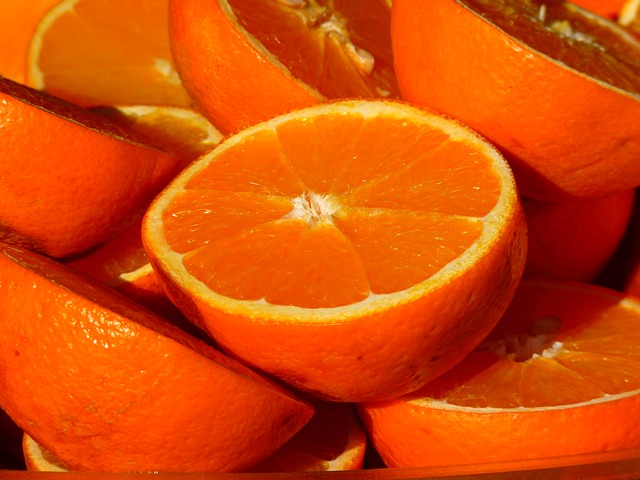
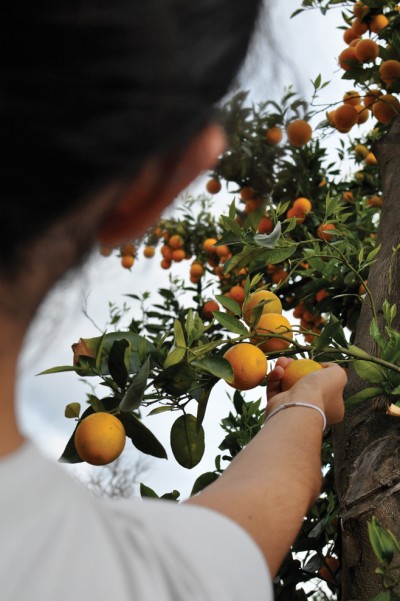
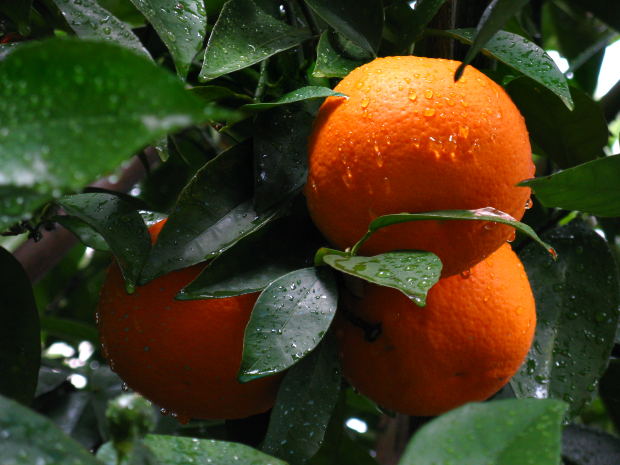
When you pick up an orange you feel its texture and weight in your hand. You breathe in scent emitted by the brightly colored rind. If you’re hungry, you peel and section it to savor piece by piece. A fresh orange has phytonutrients, fiber, minerals, and vitamins that promote health. And it tastes wonderful.
It’s possible to purchase the separate nutritional components of an orange. You simply buy vitamin C, vitamin A, flavonoids, B-complex vitamins, fiber, potassium, and calcium in pill form. Of course replacing an orange with supplements is ridiculously expensive compared to the cost of consuming the fruit itself. And isolated compounds don’t work as effectively in the body as the whole fruit. Besides, where is the sensation of biting into an orange bursting with juice? Lost. Divided into a fraction of the experience.
Imagine being told in your earliest years that pills were superior to food and should replace it as often as possible. Even if handfuls of supplements were deemed more valuable than food by every adult in your life you’d still clamor to eat what you found appetizing. If meal-substitution pills became mandatory for children once they turned five years old, you’d never relate to food (or its replacement) the same way again. The body, mind, and spirit reject what diminishes wholeness.
Don’t argue. Just take it.
Yet that’s an apt analogy for heavily structured education, where learning is set apart from the threads that connect it to what has meaning and purpose for the learner. Conventional education separates learning into thousands of measurable objectives. It has very little to do with a child’s hunger to master a particular skill or thirst to pursue an area of interest, in fact such appetites tend to interfere with institutional requirements. It’s not designed for the whole child but aimed at one hemisphere of the brain, doled out in pre-determined doses and repeatedly evaluated. The most gifted, caring teachers are stuck within systems that don’t acknowledge or understand natural learning. In fact, most of us believe, however grudgingly, that schooling is necessary for learning without recognizing that damage is done.
For the very youngest children, learning is constant. Their wondrous progress from helpless newborn to sophisticated five-year-old happens without explicit teaching. They explore, challenge themselves, make mistakes, and try again with an insatiable eagerness to learn. Young children seem to recognize that knowledge is an essential shared resource, like air or water. They demand a fair share. They actively espouse the right to gain skills and understanding in a way that’s useful to them at the time.
Although we have the idea that learning flows from instruction, when we interfere with natural learning children show us with stubbornness or disinterest that it has nothing to do with coercion. Children often ignore what they aren’t ready to learn only to return to the same concept later, comprehending it with ease and pleasure. What they do is intrinsically tied to why they do it, because they know learning is purposeful. They are curious, motivated, and always pushing in the direction of mastery.
Learning is a hunger too.
But schooling irrevocably alters the natural process of learning for every single child.
The very structure of school makes children passive recipients of education designed by others. They cannot charge ahead fueled by curiosity, pursuing interests wherever they lead. Although interest-driven learning results in high level mastery, the top priority in school is completing assignments correctly and scoring well on tests. Despite what individual children want to learn, value is given to what can be evaluated.
Segregated by age, children are limited to examples of behavior, reasoning, and ability from those at a similar level of maturity. They have little exposure to essential adult role models and minimal engagement in community life. They’re also deprived of the opportunity to practice the sort of nurturance and self-education that happens when children interact in multi-age settings. Even collaboration is defined as cheating.
A child’s natural inclination to discover and experiment is steered instead toward meeting curricular requirements. Gradually the child’s naturally exploratory approach is supplanted by less meaningful ways of gathering and retaining information.
The mind and body are exquisitely cued to work together. Sensory input floods the brain, locking learning into memory. Movement is essential for learning. The emphasis in school, however, is almost entirely static, and almost entirely focused on left-brain analytical thinking. Many children ache for more active involvement, but their attempts to enliven the day are labeled behavior problems. The mismatch between school-like expectations and normal childhood behavior has resulted in millions of children being diagnosed with ADHD.
Coming up with the correct answer leaves little room for trial and error. Thinking too carefully or deeply may result in the wrong answer. The right answer from a child’s personal perspective may actually be the opposite of the correct answer, but to get a good mark the child cannot be true to his or her experience. The grade becomes more important than reality.
Emphasis on the correct answer squeezes out unconventional thinking. The fear of making mistakes squelches creativity and innovation. After years of being taught to avoid making mistakes, the child has also learned to steer clear of originality.
Readiness is pivotal for learning, particularly in reading. In school, reading is used to instruct in every other subject, so the child who doesn’t read at grade level quickly falls behind. The subject matter in school, even when taught well, isn’t necessarily what the child is ready to learn. The way it is presented tends to be indirect, inactive, and irrelevant to the child. Schoolwork repeatedly emphasizes skill areas that are lacking rather than building on strengths, or goes over skills already mastered with stultifying repetition. Neither approach builds real learning
The desire to produce meaningful work, the urge to make contributions of value, the need to be recognized for oneself, and other developmental necessities are undercut by the overriding obligation to complete assignments.
Conventional education takes the same approach to a six-year-old and an 18-year-old: assignments, grades, tests. Self-reliance and independence doesn’t easily flourish in such a closed container.
Children must hurry to do the required work, then change subjects. The information is stuffed into their short-term memories in order to get good grades and pass tests, even though such tests tend to measure superficial thinking. In fact, higher test scores are unrelated to future accomplishments in such career advancement, positive relationships, or leadership. Students aren’t learning to apply information to real life activities nor are they generating wisdom from it. The very essence of learning is ignored.
Schoolwork clearly separates what is deemed “educational” from the rest of a child’s experience. This indicates to children that learning is confined to specific areas of life. A divide appears where before there was a seamless whole. Absorption and play are on one side in opposition to work and learning on another. This sets the inherent joy and meaning in all these things adrift. The energy that formerly prompted a child to explore, ask questions, and eagerly leap ahead becomes a social liability. Often this transforms into cynicism.
When young people are insufficiently challenged or pushed too hard, they do learn but not necessarily what they’re being taught. What they learn is that the educational process is boring or makes them feel bad about themselves or doesn’t acknowledge their deeper gifts. They see that what they achieve is relentlessly judged. They learn to quell enthusiasm and suppress the value-laden questions that normally bubble up as they seek to grow more wholly into themselves. Gradually, their natural moment-to-moment curiosity is distorted until they resist learning anything but what they have to learn. This is how the life force is drained from education.
We’re so committed to structured, top-down instruction that we impose it on kids beyond the school day. Young people are relentlessly shuttled from the classroom to enrichment activities to organized sports and back home to play with educational toys or apps when there’s very little evidence that all this effort, time, and money results in learning of any real value.
Many of us think that education has always been this way—stuffing information into young people who must regurgitate it back on demand. Based on dropout numbers alone, this approach doesn’t work for at least a quarter of U.S. students. So we advocate copying Finland or Singapore, using the newest electronics, taking away testing, increasing testing, adding uniforms or yoga or chess or prayer. We’ve been reforming schools for a long time without recognizing, as Einstein said, “You cannot solve a problem from the same consciousness that created it.”
Figuring something out is itself a delight.
Structured education is actually very new to the human experience. Worse, it actually undermines the way children are primed to advance their abilities and mature into capable adults. That’s because most of the time humanity has spent on Earth has been as nomadic hunter-gatherers, before the advent of agriculture. This time span comprises approximately 98% of human history. Although our culture and lifestyle have changed considerably, our minds and bodies have not. Like our earliest ancestors we are still tuned to nature’s rhythms, cued to react quickly to danger, desire close interdependence with a cohesive group of people, and need in our earliest years highly responsive nurturing that gradually fosters our abilities.
Studies of isolated groups who continue to live in hunter-gatherer ways have shown us that during this era (and throughout most time periods afterward) babies are breastfed and remain in close contact with their mothers for the first few years. This results in securely attached infants who are more likely to grow up independent, conscientious, and intellectually advanced.
Their children play freely in multi-age groups without overt supervision or direction by adults. Such free play promotes self-regulation (ability to control behavior, resist impulse, and exert self-control) which is critical for maturity. Play fosters learning in realms such as language, social skills, and spatial relations. It teaches a child to adapt, innovate, handle stress, and think independently. Even attention span increases in direct correlation to play.
Playfulness can’t be separated from learning. Children watch and imitate the people around them. The child’s natural desire to build his or her capabilities doesn’t have to be enforced. Instruction happens when the child seeks it. The learning environment is particularly rich when young people are surrounded by adults performing the tasks necessary to maintain their way of life. Children naturally learn as they playfully repeat what they see and begin to take part in these real life tasks. Mastering all the skills for self-reliance isn’t easy. Hunger-gatherer children must recognize thousands of species of plants and animals as well as how to best obtain, use, and store them. They must know how to make necessary items such as nets, baskets, darts, carrying devices, clothing, and shelter. They need to learn the lore of their people and pass along wisdom through story, ritual, and art. And perhaps most importantly, they need to be able to cooperate and share in ways that have allowed humanity to thrive. In such cultures, children learn on their own timetables in ways that best use their abilities.
It’s about curiosity and awe.
We don’t have to live as hunter-gatherers do to restore natural learning to children’s lives. Homeschoolers and unschoolers have been doing this, quite easily, for a very long time. Our children learn as they are ready and in ways that augment strong selfhood. They stay up late to stargaze or make music or design video games, knowing they can sleep late the next morning. They may fill an afternoon reading or actively contribute to the community. They have time to delve into topics of interest to them, often in much greater depth and breadth than any curriculum might demand. They explore, ask questions, volunteer, hang out with friends of all ages, take on household responsibilities, daydream, seek challenges, make mistakes and start over. They’re accustomed to thinking for themselves and pursuing their own interests, so they’re more likely to define success on their own terms. Because homeschooing/unschooling gives them the freedom to be who they already are, it pushes back against a world relentlessly promoting narrow definitions of success.
This kind of natural learning isn’t just an antidote to the soul crushing pressure of test-happy schools. It’s the way young people have learned throughout time.
Let children sleep in. Let them dream. Let them wake to their own possibilities.
One year it seemed we were having the worst Christmas ever. That autumn my husband had been in a car accident. His broken neck was healing, but it left him with severe migraines and what doctors thought might be a seizure disorder. Because he wasn’t medically cleared to return to work, we had to pay for health insurance through COBRA (which cost more than our mortgage) while not receiving a paycheck. In addition, my mother was fighting cancer, my brother-in-law was recovering from open heart surgery, and my son was struggling with asthma so severe that his oxygen intake regularly hovered at the “go to emergency room” level.
We were broke and worried. But I insisted on a normal Christmas. I put up our usual decorations, baked the same goodies, and managed to wrap plenty of inexpensive gifts for our kids. Everyone else on my list would be getting something homemade.
Each night after getting my four children tucked in, I sat at the sewing machine making gifts for friends and family. The evening of December 23rd as I was finishing up the last few sewing projects I realized I didn’t have a single item for the kid’s stockings and absolutely no funds to buy even a pack of gum. I put my head down, too tired to cry. I was so overwhelmed by the bigger issues going on that the stocking problem pushed me right to the edge. I don’t know how long I sat there unable to get back to sewing, but when I lifted my head my eleven-year-old daughter stood next to me. When she asked what was wrong I admitted that I had nothing for any of their stockings. Her response lightened up my mood then and still does every time I think of it.
“All that matters is we’re a family,” she said. “ I don’t care if you squat over my stocking and poop in it.”
I laughed so loudly and for so long that something cleared out in me. I felt better than I had in months. She and I stayed up at least another hour together, restarting the giggles with just a look or more hilariously, a squatting motion.
When I woke up the next morning I still felt good. Until the phone rang. It was Katy* who said she needed to talk to someone. The mother of one of my children’s friends, she always seemed like a super women who did everything with panache. It was hard to imagine her with anything but a big smile. She said she didn’t want to tell anyone who might feel obligated to help her but, oddly, said she felt free to talk to me because she knew of my family’s dire financial straits. “We’re in the same boat I guess,” she said, “sinking.”
Katy revealed that her husband had been abusive and she’d finally worked up the courage to ask him to leave. He did, but not before emptying their bank accounts, turning off their utilities, disabling her car, and taking every single Christmas gift for their four children. Utility companies had promised to restore power to their cold, dark home but she was left with no money for groceries and no gifts for her kids. Katy said she was going to talk to her priest, hoping he’d find someone willing to drive her family to the Christmas service. She said her problems would be public knowledge soon enough. The neighbors would notice that her husband had punched a hole in the door on his way out.
Heartsick at her situation, my husband and I agreed we had to do something. I spent that day in eager anticipation of the plan we hatched. I went through the gifts I’d wrapped for our kids and took out about a third, putting on new gift tags for Katy’s children. I rewrapped gifts that friends and relatives had sent for me, putting Katy’s name on them. While I was happily engaged, my friend Rachel* called, someone who didn’t know Katy. I told her about the situation without revealing Katy’s identity. A few hours later Rachel showed up at my door with a tin of homemade cookies and a card with $100 tucked inside. She said she’d told her mother about the situation, and her mother insisted on supplying grocery bags full of holiday treats including a large ham.
Close to midnight my husband and I loaded up our car and drove quietly to Katy’s street. Snow was falling and the moon was full, like a movie set Christmas Eve. He turned off the headlights and cut the engine as we coasted into her drive. We quietly stacked groceries and piles of gifts on her porch, then pounded on her door yelling “Merry Christmas!” before dashing to make our getaway. By the time our car was a few houses down I could see that Katy had opened the door. Her hands were up in the air in a classic gesture of surprise and delight.
Katy called the next day. She told me there’d been a late night interruption. She thought to herself, what now, but when she got to her door her porch was full of gifts and groceries.
“You wouldn’t believe it,” she said. “The gifts had the kids’ names on them and were just right for their ages and there were even gifts for me. We can’t figure out who might have done that. I know it couldn’t have been you but why wouldn’t someone leave their name so I could thank them?”
I could only tell her that whoever left her porch that night must have wanted the gesture to remain a simple gift of love. She said her kids were calling it their Christmas miracle.
A small gesture of kindness hardly makes up for what Katy’s family endured that Christmas. But as we drove away, my husband and I felt a lift of euphoria that our own circumstances couldn’t diminish. That feeling stuck with us. It held us through problems that got worse before they got better. Even when our situation seemed intractable my husband and I could easily summon the sense of complete peace we felt in those moments at Katy’s door. I’m not sure if a word has been coined that encompasses that feeling: a mix of peace, and possibility, and complete happiness. But it’s far more precious than any wrapped package.
Oh, and that Christmas my brother gave my daughter, who at that time was an aspiring paleontologist, the perfect gift. Coprolite. Basically a hunk of fossilized poop. He thought it was a funny present but never understood why seeing it made me laugh until tears came to my eyes.
” The heart hath its own memory, like the mind.” Henry Wadsworth Longfellow
The deepest truths are felt by the heart. Humanity has known this since prehistory. We keep this knowledge alive in repositories of original wisdom—our stories, our art, and our bodies.
Our hearts brim with the same neurons as our brains, so we experience the world first not through our thoughts but bodily intelligence, both heart intelligence and gut intelligence. We make decisions, learn, and remember with our bodies as well as our brains. Our hearts perceive and respond to the meaning encoded in experiences, building an intrinsic memory of emotion. Sometimes we feel a response directly in our hearts, although we don’t have words big enough to describe this.
In ancient Greek medicine it was known that noble sentiments such as honesty, compassion, and courage strengthened the heart while the most dire emotions weakened it. We now recognize they were on to something. Cardiologists say there’s such a thing as a broken heart, found in people with no blood clots in their arteries, no evidence of coronary heart disease. Instead, stress cardiomyopathy can be caused by intense grief or trauma. We can indeed die of a broken heart.
Heartbeats are a language affecting the way we perceive and react to the world around us. It’s known that strong negative emotion can cause heart rhythms to become irregular and disordered, disordering other body systems as well. In contrast, positive feelings of love, gratitude, and compassion create coherent heart rhythms. These coherent heartbeats put the body in sync. As a result, the two branches of the nervous system coordinate with enhanced efficiency, immune responses are boosted, protective and regenerative hormones are released, even brain function improves in alignment with the heart. It’s no wonder that positive emotions summon a full-body sense of well-being. We are biologically guided toward feelings such as compassion and appreciation, since our bodies function most effectively in this state.
Our hearts are not only a primary form of perception. They also communicate with others at a level below our conscious awareness. According to research by the HeartMath Institute, the electrical field emitted by a human heart is 60 times greater in amplitude than brain activity. Its electromagnetic field is 5,000 greater. The heart’s field radiates through every cell in the body, extending well beyond the skin. In other words, we broadcast the electromagnetic signal of our own hearts. This can be measured several feet away from our bodies. Energy activity in the heart of one individual affect and can be measured in the brain waves of another person (or pet!) in close proximity.
As HeartMath Institute studies continue to show, the most powerfully coherent heartbeat is that of the caring heart. Love and compassion are not only emotional experiences, they are sent outward in signals that can calm the heart rates of people nearby. A loving heart at close proximity can calm an angry heart, a sorrowful heart, and yes, a lonely heart.
With feelings of love or gratitude, you reach for your child’s hand in a crowded stadium or subway. Your loving heart rhythm affects your child, and more, it also affects the stranger at your side. All three of you are blessed by those harmonious beats emanating from your chest. Poets had it right all along.
wikimedia commons
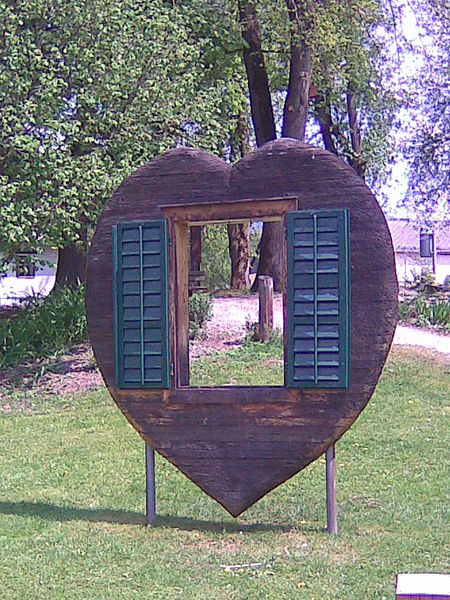
i carry your heart(i carry it in my heart) -e.e. cummings









 .
.


 Laura Grace Weldon