A Slanty Line Approach To Learning

slanty line principle, Bernie DeKoven,

Image: feigenfrucht.deviantart.com)

 Playfulness guru Bernie DeKoven is an amazing guy. His new book A Playful Path brims with wisdom and an irrepressible spirit of delight. It’s so good I think everyone needs a copy as a reference book on How To Be Human. 

He cheerfully agreed to let me publish this guest post. Thanks Bernie! 

Bernie DeKoven wonders if you’re having fun (deepfun.com)

Bernie suggests having fun (deepfun.com)

There’s an elegant model, called the “Slanty Line” principle, developed by physical educator Muska Mosstonxiv that puts the concept of individually negotiable challenge very clearly into practice.

If you’re a Phys Ed teacher, one of the things you do with kids is help them develop their high-jumping skills. In “non-adaptive” Phys Ed, the way you did this was to hold jumping contests. You’d hang a high bar horizontal to a certain height and everybody would have to take a turn jumping over the high bar. If they succeeded, they’d get to the next round, and the high bar would be raised. The contest would continue until only one person was left. That person would be lavishly praised as the one who established the high jump record for the class.

The problem with this kind of competitive incentive structure is that the kids who need the most practice are the kids who get to jump the least often. The worse they are at jumping, the sooner they’re out of the game.

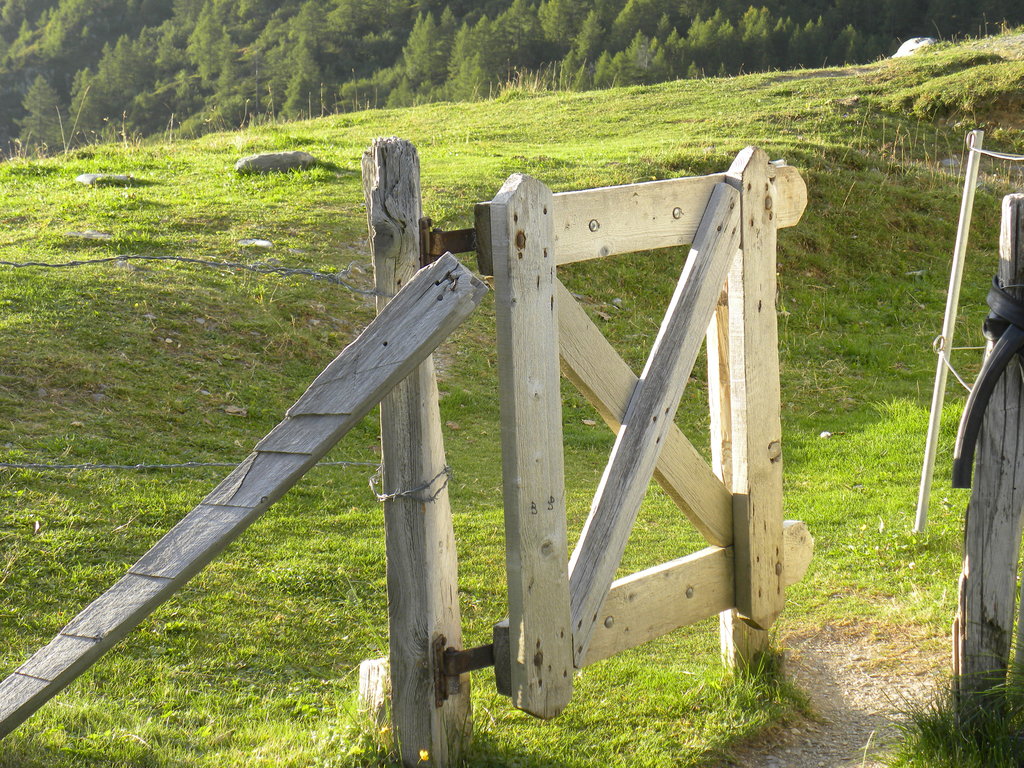
Try this. Make the high bar diagonal rather than parallel to the ground. This lets everybody jump over any part of the high bar and take as many turns as they want. And what do you get?

Instead of the teacher, each kid sets his/her own challenge. The jumpers who are not so good at jumping can still jump across the high bar as many times as anyone else, they just cross at a lower point. And, when they feel the need to increase the challenge they can just station themselves at a higher part of the high bar.

No one is eliminated. No one is given prizes. Everyone wins. Repeatedly.

Slant the high bar and the authority rolls right out of the hands of the teacher, out of, actually, any one body’s hands, into everybody’s. The challenge (jump as high as you can, and then jump higher) remains the same, but the challenger has changed. It’s not the Phys Ed instructor who increases the challenge, it’s the kids, themselves: the kids as a group, and the kids, individually.

A challenge that is determined by the individual player is more complex, because it requires “reflective action.” The player must evaluate not only his or her own success, but also the success of the challenge. And even though kids can get very competitive, the challenge is ultimately self-selected, ultimately guided by sheer fun.

Without an external evaluator, each kid can devise and revise the challenge. Of course, evaluation is going on, and whether the competition is inner-directed or outer-directed, the fact is that the teacher, your fellow jumpers (both higher and lower), your inner referee; somebody is evaluating your performance, challenging you to challenge your self.

Ideally, each kid should be seeking out his/her personal level of flow, driven by the natural desire for complexity into a deeper and healthier engagement with the relationships between the human body and gravity. But, in fact, there’s still something about the way the task is framed that draws the kids apart.

Even though nobody’s eliminated, even though everyone’s free to increase or decrease the challenge, even though you don’t even have to take turns, the fact is that the challenge is directed towards the individual. With the focus on individual performance, on how high who jumps; the relationship is fundamentally the same.

And what’s worse (or more complex), someone might be attaching meaning to your performance, as if how high you can jump says something about your character!

So, what if we completely redirected the challenge, away from the individual and towards the group? What if the entire class tried to jump holding hands? Or with their arms around each other’s shoulders? Or each other’s waist?

Shifting the focus of the game away from what they can do individually (ME), we focus, also, on what the kids can do together (WE) – on collective as well as individual performance.

To jump the Slanted Bar together, we need to make sure that each individual kid is going to make it. Even though the challenge is to the group, there are still plenty of challenges to the individual player. Each has to be stationed at the appropriate part of the high bar: too high and you might not get over, too low, you might make it harder for someone else. Each has to be able to ask for help, and provide help. Preparing for the big jump, synchronizing the preparatory, simultaneous squat, each individual is doubly challenged. And yet, not competing. Same slant, same task, but fundamentally shifted experience.

Raising the high bar, you intensify the competitive relationship between the diminishing few. The game, internally and externally, becomes one of increasingly isolated MEs (the “winners”) against an increasingly disempowered WE.

Slant the High Bar, and the relationship relaxes, becomes supportive, empowering, healthy, ME\WE.

self-regulating learning,

Image: excess1ve.deviantart.com

Five Ways to Transcend the School Mindset

child

School-like instruction has been around less than a fraction of one percent of the time we humans have been on earth. Yet humanity has thrived. That’s because we’re all born to be free range learners. We are born motivated to explore, play, emulate role models, challenge ourselves, make mistakes and try again—continually gaining mastery. That’s how everyone learns to walk and talk. That’s how young people have become capable adults throughout history. And that’s how we have advanced the arts, sciences, and technology. In the long view, school is the experiment.

But it’s hard to see beyond the school mindset because most of us went to school in our formative years. So when we think of education, we tend to view school as the standard even if we simultaneously realize that many parts of that model (found also in daycare, preschool, kids’ clubs, and enrichment programs) aren’t necessarily beneficial. Narrowing the innate way we learn can interfere with the full development of our gifts.

Here are five ways to get past the school mindset.

build divergent thinking, creative children, more imagination, creativity builds leaders, nurture divergent thinking,

Welcome divergent thinking

In today’s test-heavy schools the emphasis is on coming up with the correct answer, but we know that the effort to avoid making mistakes steers children away from naturally innovative perspectives. Divergent thinking generates ideas. It’s associated with people who are persistent, curious, and nonconforming. Research going back to the 1970’s shows that this generation of children are less imaginative and less able to produce original ideas. An extra whammy may very well be coming from increased participation in organized sports: more than a few hours a week appears to lower a child’s creativity.

This is dire news, because creativity is actually much more closely linked to adult accomplishment than IQ. In fact, 1,500 CEO’s listed creativity as the leading indicator of “leadership competency.

We don’t have to instruct kids in divergent thinking, just nurture it. Children are naturally inclined to question and explore. Remain open to their enthusiasms, encourage them to identify and solve problems no matter how unusual, and welcome the learning power of mistakes.

exercise and learning, overtaxed impulse control, full body learning, sensory education,

Value full body learning

School-like learning emphasizes the brain over the body. It narrows from there, emphasizing one hemisphere of the brain over the other with its focuses on left-brain analytical thinking. But children don’t learn easily when they spend so much time sitting still, eyes focused on a teacher or lesson or screen, their curiosity silenced and their movements limited. Children ache for more active involvement.

Research shows us that the rules necessary to keep a classroom full of kids in order all day, like being quiet and sitting still, can overtax a child’s ability to resist other impulses. The mismatch between school-like expectations and normal childhood development has resulted in millions of children being diagnosed with ADHD. (One of those kids was my third child, whose “symptoms” disappeared once we took him out of school and figured out how to homeschool such an active child.) 

What we need to remember is that the mind and body are exquisitely tuned to work together. Movement allows sensory input to stimulate the brain as it absorbs a flood of information. This is the way the brain builds new neural pathways, locking learning into memory. (Check out A Moving Child Is a Learning Child by Gill Connell and Cheryl McCarthy, Balanced and Barefoot by Angela Hanscom, as well as Spark by John J. Ratey for more on this.) Active, talkative, curious children aren’t “bad.” They’re normal.

If we look at movement we realize that even a very brain-y activity, reading, has to do with the body. Young children develop reading readiness in a variety of ways, including conversation and being read to, but also through physical activities that help their neurological pathways mature. These are activities children will do whenever given the opportunity, like swinging, skipping, climbing, walking, and swimming.

All the relentless activity of early childhood may very well be a sort of intrinsic wisdom built into them, because movement is key to keeping an active brain. Children who are more physically active actually increase the areas of their brains necessary for learning and memory. That doesn’t mean the antidote to the school mindset is a constant frenzy of activity. It does mean that children tend to self-regulate within loving safeguards. Every child needs to balance physical activity with other essentials like snuggling, daydreaming, and sufficient sleep. We simply need to remember that movement isn’t an enemy of education.

goldilocks effect, individualized education,

Build on the “Goldilocks effect”

This term came from researchers who demonstrate that we are cued to ignore information that’s too simple or too complex. Instead we’re drawn to and best able learn from situations that are “just right.” Sort of like the educational equivalent of Goldilocks on a porridge-testing quest.

The Goldilocks effect means you are attracted to what holds just the right amount of challenge for you right now.  Usually that means something that sparks your interest and holds it close to the edge of your abilities, encouraging you to push yourself to greater mastery. That’s the principle used to hold a player’s attention in video games. That’s what inspires artists, musicians, and athletes to ever greater accomplishments. That’s how kids who follow a passion of their own tend to learn and retain more than any prepared lesson could teach them.

Our kids tell what they’re ready to learn. They tell us through what bores them and fascinates them, what they’re drawn to and what they resist. They’re telling us that, until they’re ready, learning doesn’t stick.

 too much adult-run learning, stubborn kids, child-led learning, natural learning,

Diminish the focus on instruction

The school mindset leads us to believe that children benefit from lessons, the newest educational toys and electronics, coached sports at an early age, and other adult-designed, adult-led endeavors. Well-intentioned parents work hard to provide their children with these pricey advantages. We do this because we believe that learning flows from instruction. By that logic the more avenues of adult-directed learning, the more kids will benefit. But there’s very limited evidence that all this effort, time, and money results in learning of any real value. In fact, it appears too many structured activities diminish a child’s ability to set and reach goals independently. 

When we interfere too much with natural learning, children show us with stubbornness or disinterest that real education has very little to do with instruction. Learning has much more to do with curiosity, exploration, problem solving, and innovation. For example, if baby encounters a toy she’s never seen before, she will investigate to figure out the best way or a number of different ways to use it. That is, unless an adult demonstrates how to use it. Then all those other potential avenues tend to close and the baby is less likely to find multiple creative ways to use that toy.

Studies show that “helpful” adults providing direct instruction actually impede a child’s innate drive to creatively solve problems. This experience is repeated thousands of times a year in a child’s life, teaching her to look to authorities for solutions, and is known to shape more linear, less creative thinking.

This isn’t to say that all instruction is bad, by any means. It does mean that six long hours of school-based instruction plus afterschool adult-organized activities in sports or recreation or screen time supplants the kind of direct, open-ended, hands-on activity that’s more closely associated with learning. Most of the time this kind of learning is called play.

free play benefits, play versus learning, chores, self-regulation,

Recognize free play is learning 

Before a young child enters any form of schooling, his approach to as much of life as possible is playful. A walk is play, looking at a bug is play, listening to books being read is play, helping with chores is play. The school mindset separates what is deemed “educational” from the rest of a child’s experience. It leads us to believe that learning is specific, measurable, and best managed by experts.

A divide appears where before there was a seamless whole. Playful absorption in any activity is on one side in opposition to work and learning on another. This sets the inherent joy and meaning in all these things adrift. The energy that formerly prompted a child to explore, ask questions, and eagerly leap ahead becomes a social liability in school. But play is essential for kids, for teens, for all of us. (For more check out these two marvelous and very different books: Free to Learn by Peter Gray and A Playful Path by Bernie DeKoven.)

Free play promotes self-regulation and this is a biggie. It means the ability to control behavior, resist impulse, and exert self-control  —all critical factors in maturity. Play fosters learning in realms such as language, social skills, and spatial relations. It teaches a child to adapt, innovate, handle stress, and think independently. Even attention span increases in direct correlation to play.

That doesn’t mean a child’s entire day must be devoted to free play. There’s also a great deal to be learned from meaningful involvement in household responsibilities as well as community service.

why homeschool, democratic schools, raise successful children,

I want to nurture my children in such a way that they define success on their own terms. I hope that means they craft a life based on integrity, one that brings their unique gifts to the world. Homeschooling, for my family, gives us the freedom to go beyond narrow roads to success. (Democratic schools can also provide that freedom.) This is the way young people have learned throughout time. I’ve come to trust the way it works for my family.

Portions of this post excerpted from Free Range Learning.

School Violence Led Us To Homeschooling

bullying leads to homeschooling, school violence, guns in school,

We became homeschoolers suddenly. One morning my oldest son, a freshman in an award-winning suburban high school, called home right before the first class of the day. The teen who’d been harassing him had just showed him a gun, saying it would be his last day to live.

“Get out now,” I said. “Run home.”

I phoned the principal to tell him about the gun. I insisted that he not call the teen to the office on the intercom but remove him directly from his classroom. “Please,” I begged. “I’m worried about every other child still in the building.”

Throughout the school year my son told us what he heard about this youth and a few other kids. They’d sexually assaulted a girl in the school bathroom, broken the arm of a student’s father when he tried to reason with them, fought a gang-style skirmish near the football field with the assistance of older relatives. When I asked school officials about these allegations they scoffed. I assumed they were baseless.

My son’s situation was pretty standard. Honors student versus tough kid. My son used sarcasm as his defensive weapon. A few days earlier he’d retorted back to the taunting with, “Bad mood? Drug dealer not giving you credit?”

That morning the principal seemed only mildly perturbed by my frantic call. I insisted my son told me these kids stashed weapons in their cars. He seemed more interested in containing what he called a “rumor.” When the principal didn’t get back to me, my husband and I called the police. Detectives sat at our table and confirmed every story. The girl assaulted, the father’s arm broken, the gang fight. In fact area businesses had been warned to notify police immediately if groups of teens assembled, in case another gang fight was brewing. Parents were not informed.

I’d assumed that police had been called to the school after my report of a student with a gun. They weren’t. Instead, the student in question was summoned to the office on the intercom. Other students said he went outside to the trunk of his car before heading to the office.

I met with the superintendent the next day. In my work life I taught non-violence to community groups, including school systems. I told him I’d teach this program free of charge to staff and students in our district. The superintendent turned me down, admitting that it might be safer if we homeschooled. My son never returned to school.

I’d always been committed to the idea of public schools. I believed it was not only right but necessary to work within systems to improve them. Plus, I had plenty of misconceptions about homeschooling. Yet I realized that school had never really “worked” for my kids. Our four-year-old already knew how to read but had to practice sight words in pre-school anyway. Our sweet but inattentive second-grader was deemed a good candidate for Ritalin by his teacher. Our fifth-grader could do college level work, but due to cuts in the gifted program had to follow grade level curriculum along with the rest of her class. And our freshman detested the rote tasks that filled his days and the hours of homework each night.

Overnight, I faced homeschooling kids who were eager to learn on their own terms. I learned right along with them. I learned how essential imagination is to innovative thinking, how freedom to play is vital for creativity (and fun!), and how pursuing their own interests can translate into advanced comprehension across a range of subjects. I learned how they sought out challenges and insisted on meaningful involvement. I saw what they gained from daily activities at home and how easily they could learn directly from people of all ages right in our community.

The ADD symptoms my third child exhibited at school were no longer present once we began homeschooling. The hurry-up days that roped my kids in from morning bus to evening homework were gratefully left behind. Instead we read books for hours, indulged in long-term science projects, went on adventures with friends, found role models in all sorts of fields, and let real learning unfold. The crisis that hurled my children out of school created a way of being far richer life than any of us could have imagined.

suddenly homeschooling, school versus homeschool, school violence,

(Image: artamusica.deviantart.com)

This piece originally appeared on Wired.

Homeschool Worries: Erased With Research & Experience

school versus homeschool, homeschooling research,

I never planned to homeschool. I am the daughter, niece, and granddaughter of excellent public school teachers. I cheerfully volunteered in my children’s classrooms and worked on parent committees. I believed in doing my best to change a flawed system from within.

Yet I kept seeing school wasn’t a good fit for my children. Our four-year-old already knew how to read, but had to practice sight words in preschool anyway. Our sweet but inattentive second-grader was deemed a good candidate for Ritalin by his teacher. Our fifth-grader could do college level work, but due to cuts in the gifted program had to follow grade-level curriculum along with the rest of her class. Our freshman was an honors student but detested school, not only the hours of homework but the trial of dealing with a few teens who were harassing him.

We became homeschoolers overnight when those teens pulled a gun on my oldest in the school hallway, telling him he wouldn’t live to see the end of the day. School officials, who had done nothing to ease the harassment, didn’t even call the police. The next morning every reason I had to avoid homeschooling stared me in the face. So did my kids. They were eager to learn on their own terms.

Here are a few of the misconceptions homeschooling erased for me.

growth mindset, homeschool, children's self-regulation,

1. Education that counts happens in school. My kids were growing up in an enriching home. We read aloud every day and enjoyed wide-ranging conversations. We went to parks, museums, and plays. But I was raised to believe that formal education is something separate and measurable.

Still, I saw that my kids learned most eagerly when filled with the aliveness we call curiosity. That’s true of all of us: learning sticks when we’re interested. When we’re not, much of what we learn tends to become inaccessible after the grade is earned. Hard as it is to believe, studies show that that shallow thinking is actually related to higher test scores. (Maybe we acknowledge this reality when we prepare kids for tests by saying, “Don’t overthink it.”)

When we’re curious we not only retain what we learn, we’re also inspired to pursue the interconnected directions it leads us. I saw this the summer before we began homeschooling. My eight-year-old, the one who barely paid attention in school, was playing with balsa airplanes brought to a picnic by a family friend who piloted his own plane. Other kids gave up after the planes broke, but my son worked to fashion the pieces into newly workable aircraft. This gentleman showed him a few modifications and the unlikely looking planes flew. After that my son was on a quest. He loaded up on books at each library visit, telling us about Bernoulli’s principle, aviation history, and experimental aircraft. He begged for balsa to make models of his own design, each somewhat more sophisticated as he overcame earlier mistakes. The next time we met up with this friend my son was offered a ride on his Cessna. It was the highlight of his summer. His interest in planes eventually waned, but not the knowledge he gained. He’d taught himself history, science, math, and more importantly, shown himself just how capable he was.

His pursuit is what researcher Carol Dweck, in her book Mindset, calls a growth mindset. It’s the understanding that achievement comes from purposeful engagement, that talent and smarts are not fixed traits but are developed through persistence. A growth mindset is linked to resilience and accomplishment throughout life. That’s education that counts!

late reading, early reading, homeschooling,

2. Kids have to follow grade-level standards. I once thought homeschoolers had to follow conventional school standards. You know what I mean, if it’s second grade it’s time to learn about ancient Rome, multiplication, and adverbs. For my family, an overly school-ish approach never made sense. I can give dozens of reasons, but here’s one that springs to mind.

Kids develop unevenly. They may be way ahead in reading and struggle in math, able to make up imaginative stories but not coordinated enough to easily to write or type them. If they don’t advance evenly in school, quite a bit of attention is focused on where they’re lacking (extra help, easier and more repetitive work, labels, poor grades). But outside of school it’s easy to emphasize their strengths while other areas are mastered gradually without ever being considered “deficiencies.” This has a basis in current research which shows that children are remarkably good at self-regulating. They’re cued to ignore information that’s too simple or too complex, but instead are drawn to learn from situations that offer the right amount of challenge.

For example, it’s well known in the homeschooling community that many kids aren’t ready to read at five or six. Some aren’t ready until they’re several years older. In school that’s a crisis, because every subject is taught using reading. The child who can’t read not only grows disheartened, he also feels stigmatized. But as a homeschooler he remains immersed in a learning-rich lifestyle whether he reads or not because homeschooling is infinitely adaptable. Stories abound of homeschooled children who move quickly from non-reading to zipping through Harry Potter books once they’re ready. A recent study showed that homeschooled children whose parents don’t push them to learn to read, but instead emphasize the joy of reading, end up with kids who are avid readers no matter if these kids started reading early or late. In our family, we found our kids eagerly accomplished far more in a whole range of subjects over time. “Grade-level” expectations were, to us, limitations.
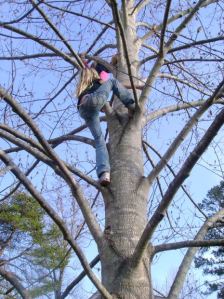
easy homeschooling,

3. The parent has to be teacher/coach/principal. Being a mother to my children has always been richly rewarding (okay, maybe not in the colicky phase). I didn’t want to take on other roles. Turns out I didn’t have to. We found homeschooling to be an immediate stress reduction. My kids got enough sleep, woke rested, and don’t have to rush through the day. Instead they had ample time for conversation, reading, indulging in art projects and experiments, finding the answers to questions, and going on adventures. Our live were guided by fascination, not bells. Much less control on my part was required.

I found that our cultural emphasis on adult-led activities is somewhat counterproductive. We assume children benefit from the newest educational toys and electronics, coached sports, lots of lessons, and other adult-designed, adult-led endeavors. Well-intentioned parents work hard to provide their children with these advantages although there’s limited evidence that all this effort has value. We do this because we believe that learning stems from instruction. By that logic the more avenues of adult-directed learning, the more children will benefit.

But studies show that a child’s innate drive to creatively solve problems is actually impeded when adults provide direct instruction. This experience is repeated thousands of times a year in a child’s life, teaching her to look to authorities for solutions, and is known to shape more linear, less innovative thinking.

Research also shows that a child’s natural motivation tends to diminish in adult-led activities. Unless they’ve been raised on a steady diet of ready-made entertainment, children are naturally drawn to free play and discovery-based learning. They make up games, daydream, pretend, and launch their own projects–freely seeking out adults for resources and guidance when necessary. They are naturally drawn to achieve mastery. My kids have shown me how motivated self-direction can go into high gear in the teen years. They’ve earned their own money by shoveling stalls, which they spent to buy and restore a vintage car, go on a month-long backpacking trip, and build a bedroom-sized recording studio. And they have stick-to-it-iveness, devoting years to pursuits like a bagpipe band, wildlife rehabilitation, farming, and their own intensive scholarship. Homeschooling has helped us foster a young person’s growing need for independence while providing useful guidance.

hands-on learning, homeschooling,

4. I can’t afford to provide a decent education. Like many new homeschoolers, I thought I’d have to replicate everything from music class to chemistry lab. I knew I’d never have the time, energy, or money. But we quickly discovered we can activate our own knowledge networks and that the community around us is filled with people eager to impart skills and knowledge to the next generation, almost always for free.  They’re found at ethnic centers, museums, libraries, colleges, churches, service organizations, plus clubs like those for rock hounds, ham radio enthusiasts, and astronomy buffs. My children’s lives have been illuminated by spending time with biologists, potters, engineers, geologists, entrepreneurs, archaeologists, organic farmers, model railroaders, meteorologists—the list could take up this page. People seem honored when asked to share a little of what they know. It’s sad that young people are customarily segregated from adults doing fascinating things right in their own communities, especially in the teen years when they so desperately want more role models.

We’ve also gotten together with fellow homeschoolers for countless field trips, enrichment programs, game days, clubs, and learning co-op classes. My kids have re-enacted Shakespearean duels, toured factories, sheared sheep, raced sailboats, learned chemistry from a Ph.D chemist, debated Constitutional challenges, competed in robotics tournaments, built a hovercraft of their own design, learned fencing, calculated the position of the stars, played with world-class musicians, and spent an afternoon with an astronaut after winning a science contest. All free or practically free. When certain subjects got really challenging we easily bartered with an expert or found a community college class to cover it. And we’ve saved thousands by relying on the remarkable resources of our library system.

Sure, I envy those homeschooling families who learn while bike riding in Ecuador or rambling through European castles. But I realize my kids haven’t missed anything despite my penny pinching, especially since surveys indicate two-thirds of school kids say they’re bored in class.   Deep scholarship and hands-on learning are simply another homeschooling perk.

homeschool socialization, peer segregation,

5. Homeschooling will deprive my kids of friends.  I realized the school day isn’t really set up for socializing, although we’d come to rely on school as a source of same-age friendship. Sadly, according to Beyond the Classroom by Laurence Steinberg,
less than five percent of school kids belong to peer groups that value academic achievement, while pressure from prevailing peers steer young people toward underachievement. Even high-achieving students, when asked, say they’d prefer popularity over academic success.  That comes at a price, because members of those lower achievement groups are more likely to demonstrate negative behaviors like conduct problems and drug use. Not the kind of influence parents expect.

And it turns out studies show homeschooled children have better social skills and fewer behavior problems than their demographically matched schooled peers. Homeschooling families also tend to be more active in the community. Initially it took me a while to get used to homeschool gatherings where kids hung out with a wide range of ages and abilities. Sure, they’re kids and not beacons of perfection, but I was pleased to see so much overall good cheer.

As for friends, my kids kept many of their school friends. They also made more as we widened our circle of acquaintances. Many of their new friends were around the same age but some were decades older, bringing perspectives shaped by widely varying experiences. They offered my children a route to maturity they couldn’t have found in school among kids similar to themselves. Their friends include a Scottish gentleman in his 70’s, a group of automotive restoration enthusiasts, a wildlife rehabilitator in her 60’s, fellow backpackers, people with differing physical challenges, Christians, Buddhists, atheists, Wiccans, well, you get the idea. These friendships happened because they had the time to stretch in all sorts of interesting directions.

homeschool success, homeschool misconceptions,

6. Homeschooling is an experiment. Like any other parent, I’m driven to provide my children with the essential ingredients that lead to life-long happiness and success. Late at night, unable to sleep, I’ve entertained my share of doubts. What if homeschooling will limit their chances?  I finally realized I was looking at it from too narrow a perspective. Schooling is the experiment. For 99 percent of all our time on earth, the human race never conceived of this institution. Our species nurtured children close to extended family, within the rich educational milieu of the community, trusting that young people would grow into responsible adulthood. Worked like a charm for eons.

Taking my kids out of school liberated them from the test-heavy approach of today’s schools, one that actually has nothing to do with adult success. Instead of spending over 1,200 hours each year in school, they could devote time to what more directly builds happiness as well as future success. Things like innovation, hands-on learning, and meaningful responsibility. That doesn’t mean I lost all my doubts. Some days, all right, months, I worried. It’s hard to unlearn a mindset

Now all four of my kids are in college or launched into careers. I sat at a recent dinner with my family, appreciating our closeness. My kids take on challenges with grace, react with droll wit even under pressure, and haven’t lost their zest for learning. We laughed as their lively conversation covered Norse mythology, caddisfly pheromones, zeppelin history, and lines from new movies. I’m not sure how much I can credit to homeschooling, but I know it’s given my kids freedom to explore their own possibilities. That’s more than enough.


Portions of this post excerpted from Free Range Learning.

Talking During Recess

childhood lies, teacher punishment, child's honestly, truth and lies in childhood, second grade punishment,

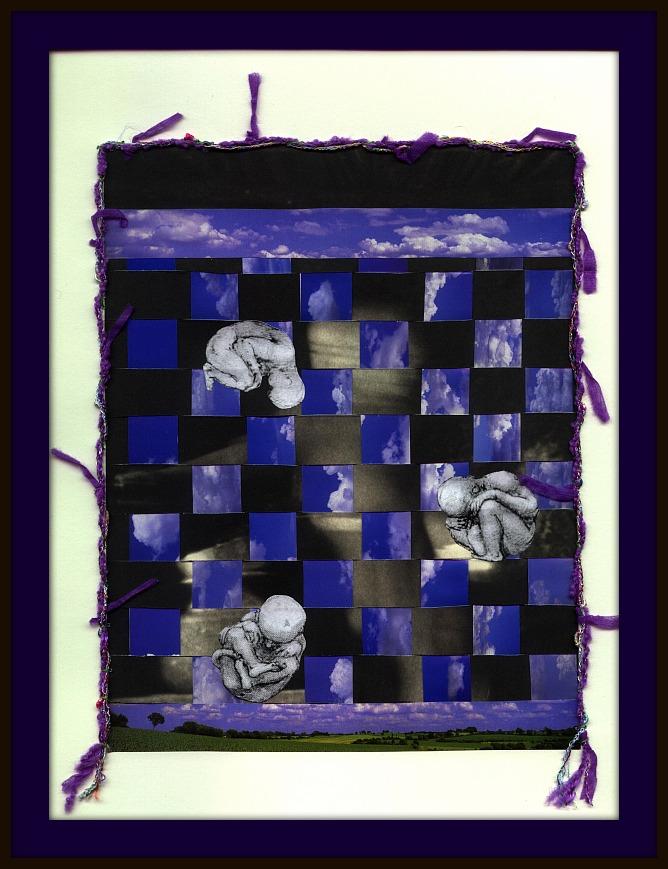
collage by L.G. Weldon

“That’s not true,” the girl behind me said in a singsong voice. “You’re lying.”

I turned around and shook my head, hoping she wouldn’t attract the teacher’s attention. Judy’s hair was unkempt and dirty. Maybe her mother didn’t love her enough to take good care of her. I knew I should feel sorry for her, but Judy was as nasty as she smelled.

Rain rolled down the windows during indoor recess. Our second grade classroom was a neat rectangle except for the jutting wall where the door fit in. I preferred symmetry. At seven years of age, my mother’s mindset formed neat geometric spaces in my head. I adhered to her categories: clean and dirty, right and wrong, bad people and good people, truth and lies. Well, I had some trouble with the truth.

My mother often said that she loved us more than any words could say. She told us no one tried harder to have children than she did. Then she would tell us how many babies she had lost in order to have us.

Lost. The word resounded throughout my body.

When I was very small I worried that I too would be lost, as I often was in the grocery store. When I understood that her babies had died before they were born it didn’t help. My mother talked about the lost babies to express her love for us. She went through eleven pregnancies to have a family with three living children. I did the math. My brother, sister and I were conceived because those babies died. I tried talking to my sister about it once but she didn’t understand.

“They weren’t even people yet,” she told me. “They were probably smaller than a minnow. Don’t get all weird about it.”

But they were people to my mother. And to me.

Sitting at our desks during indoor recess, vying for attention, I casually mentioned to my friends, Jennifer and Stephanie and Julie, that I would have had a big family but lots of the babies died. I knew this wasn’t really true. My parents planned to have three kids, they just wouldn’t have had me. I also knew it was wrong to make family grief into a public tale even if it gave me momentary thrill of popularity.

“Oh, the poor babies,” Jennifer said.

“How many babies?” Stephanie wanted to know.

“Lots,” I said. “Eight babies.” I knew I’d gone too far.

Judy overheard, and she piped up, “I’m telling Mrs. Lauver.”

I felt my fate as tightly sealed as the braids my mother lovingly bound in colors to match my dress. I was in trouble.

After the tattletale got to her, Mrs. Lauver called me up to her desk. My knees trembled when she paid attention to me. I was a good student, but sometimes my teacher called me names and then pointed out that I was blushing. We had moved the year before and rules from my last school, such as rising when called upon, had been hard for me to break for the first week. Mrs. Lauver called me a “jumping jack” and punished me when I didn’t stop standing up right away. That started it. It seemed she was always after me.

But this time I’d brought it on myself.

Everyone watched as I walked up to the front of the room. No one got called up to the teacher’s desk during indoor recess. The teacher normally had that time off, sitting with her friends in the smoke-filled lounge, so she tended to ignore us and read a thick paperback at her desk, her chair turned slightly away from the class as if we weren’t her responsibility. We honored that inattention by keeping the hubbub down. After recess she would read a chapter of Charlotte’s Web to us.  She always threatened that if we got too loud she might deny us that privilege and go right to social studies.

I went up to Mrs. Lauver’s desk as slowly as possible. Anxiety made my senses acute. I could smell the awful geraniums she kept on the windowsill, their brown sickly leaves rotting away. I could feel my classmates’ eager curiosity—-cartoon watchers waiting for the silly wabbit to be shot. As I got closer I could see where the teacher’s too tight sleeveless dress cut into her flesh, the frighteningly hard texture of her hair and the orange-hued makeup on her face. I wanted my mother badly. Her dresses were loose, her hair soft, her face never anything like my teacher’s.

I should have been planning what to say, but a liar sticks to the story, sometimes makes it worse. I made it worse. I stood at the desk, unsure of what to do with my hands that twisted the ends of my braids. I insisted that our family did have lots of children once but they died.

“Oh, and how did that happen?” She had a tight smile on her face.

I thought about it.

I saw them inside my head, my unknown brothers and sisters. They would have been older than me. If they had lived, I would not have been born. To me, their deaths felt like a gift and a burden. Standing there at Mrs. Lauver’s desk I saw their lives pass without breath in the darkness of water, waves breaking over their heads in the distance. I could almost see their faces. So I said simply, “They drowned.”

Despite further questions I couldn’t get another word out.

“I’m calling your mother,” the teacher said. “We’ll see what she has to say .”

That awful outcast’s land. Wanting one’s mama, but being in trouble. Now how could I rush home to a welcoming hug when I would encounter anger? My stomach folded up and I had to remember what my face was supposed to look like the rest of the afternoon.

After school there was a scene. My mother said that only bad people were liars. Liars grow up to commit crimes and go to jail. Over and over she asked, “Just tell me, why would you make up such an awful story?

All I could answer was, “I don’t know.”

I didn’t. What I said about the lost babies couldn’t be explained. I took my spanking and went to my room. My parents had a conversation later and came up with a punishment—write an apology to my teacher for lying. My notebook paper was filled with carefully printed words, but they were just shapes. I didn’t feel anything I’d written.

When I stood there in front of Mrs. Lauver that afternoon I was being honest. I told her what I saw. A child may not have words for what she knows even on the day she begins to understand that there are no neat categories for truth and lies.

I haven’t forgotten those lost babies. I hope I live as a testament to the joys they never knew, like telling stories true as our shared DNA.

Educating Too Early

A1

My daughter started preschool a month before she turned three. She was too young. The facility was wonderful, the teachers kind, the activities entirely age-appropriate but she resisted the structure. It didn’t make sense to her that she was asked to learn color words she already knew. Or that she had to perform with her classmates at the annual holiday show after she’d already practiced the song and movement pieces well beyond her boredom tolerance. She did what she was told but she wasn’t happy.

I know why I was eager for her to start. Pregnant with her brother, I felt nauseated all the time and hoped preschool would feed her active mind. Or perhaps because she had been chronically ill nearly all of her first three years. Now she was finally better and I suspect, unconsciously, I signed her up to assure myself she was as healthy as any other little girl.

When I talked with her teachers about my child’s frustrations they emphasized how important it was to follow rules, even if she didn’t see the logic herself, because it prepared her to conform to many more rules in “real” school. That didn’t make sense to me either and we finally pulled her out of preschool.

Once she was a preschool dropout we went back to our ordinary, richly educational lives of chores and play. We played outside, hiked in the woods, made up songs, went to the library, visited friends and family, took trips to museums, snuggled, and read. She filled her free time with make-believe play as well as hours of drawing while listening to story tapes. If I had to do it over again, I’d have skipped preschool entirely. I’m not against the concept, just troubled by how much emphasis is placed on adult-led educational structure.

Take a look at promotional material for preschools in your area. Chances are they tout early math, pre-reading, and other academics. This approach sells.  Most people I know sign their children up at the age of two or three to attend specialized enrichment programs that claim to boost abilities in science, art, sports, music, or language. In addition, nearly everyone I know is sure their children benefit from a few hours each day using electronics that “teach.”

a1 (6)

Well-intentioned parents operate on a mindset that’s hard to dismiss in today’s society. They are convinced that learning flows from instruction. Logically then, early instruction will help maximize their child’s potential. But learning in young children (and perhaps at all ages) has much more to do with curiosity, exploration, and body-based activities. It has very little to do with structured activities, which may actually impair a child’s ability to set and reach goals independently.

Studies with four-year-olds show that, “Direct instruction really can limit young children’s learning.” Direct instruction also limits a child’s creativity, problem solving, and openness to ideas beyond the situation at hand. This is true when the instruction comes from parents as well as teachers.

As Wendy S. Grolnick explains in The Psychology of Parental Control: How Well-meant Parenting Backfires, research shows that rewards, praise, and evaluative comments actually undermine motivation and stifle learning in preschoolers as well as school-aged children. This is true when those actions come from parents or teachers.

Highly instructional preschool programs have been studied for years. Although they’re more popular than ever, the outcomes don’t hold up under scrutiny. 

a (1) (2)

Researcher Rebecca Marcon evaluated children in preschool and kindergarten programs falling within three categories: play based, academically oriented, and those that combined both approaches. Her study checked up on these students as they progressed through primary school. Students who had been in early academically oriented programs gradually declined, falling behind their peers. Children who’d been in a combined approach program also showed achievement gaps. Who benefited the most? Children who’d been in play-based programs. Their academic success was greater than those in the other two types of programs and continued to gain. Marcon concluded,

Children’s later school success appears to be enhanced by more active, child-initiated learning experiences. Their long-term progress may be slowed by overly academic preschool experiences that introduce formalized learning experiences too early for most children’s developmental status. Pushing children too soon may actually backfire when children move into the later elementary school grades and are required to think more independently and take on greater responsibility for their own learning process.

Another study confirmed that future success has to do with the kinds of abilities gained  through child-initiated, exploratory play. Compared to children in non-play-based preschool programs, the play-based group of children exhibited greater self-control, working memory, flexible thinking, and relational ability. These traits have more to do with academic success than testable abilities in math and reading, even more than IQ.

And when researchers  in the High/Scope study followed high-risk children who attended different preschool environments they found even more resounding results.  Some children were enrolled in an academic setting, others in a child-initiated play setting, and a third group in a preschool that balanced both approaches. By the middle grades, children from the play-oriented preschool were receiving the highest grades. They also showed the most social and emotional maturity.  Those who had attended the academic preschool lagged behind in a significant way— poorer social skills. The differences became more apparent as these children got older. By age fifteen, students from the academic preschool program showed twice as much delinquent activity as the other two groups. And in adulthood, former students of the play preschool and balanced preschool showed higher levels of success across a whole spectrum of variables. The academic group did not attain the same level of education as the play group and required more years of treatment for emotional impairment. They also faced more felony arrests than the other two groups.

And now a resounding new study (2022) is out. It followed children across Tennessee who had attended high quality pre-K programs staffed by teachers with bachelor’s degrees as well as early childhood certification, using the best available curriculum. These children were matched with those who did not attend such a program. The academic group initially performed better than the control group at kindergarten age, but by third grade they fell behind the control group in school. They were also more likely to be disciplined and to have a diagnosed learning disorder. By sixth grade the academic group was even more likely to have a diagnosed learning disorder and were also much more likely to have exhibited violent behavior at school.

a2

Today’s test heavy schools are burdening five-year-olds with a heavy load of academics. In 1998, 31 percent of kindergarten teachers studied believed students should learn to read in kindergarten. By 2010 that number had jumped to 80 percent. Play time, the arts, and recess had decreased in favor of worksheet and computer instruction. The study‘s co-author Daphna Bassok said, “We were surprised to see just how drastic the changes have been over a short period of time/ We expected to see changes on some of these dimensions but not nearly so systematically and not nearly of this magnitude.“

We know that free play, now so limited in the lives of most children, is actually essential for learning and character development. We also know that children learn more effectively when they’re the ones in charge of self-regulating. And we know loose parts play is far more valuable for a child’s development than adult structured activities.

My daughter mostly remembers the toy dinosaurs from preschool. I hope that pushing academics on toddlers itself becomes extinct.

a3

Additional resources

Free To Learn by Peter Gray

Reading Instruction in Kindergarten: Little to Gain, Much to Lose” summary of research by Alliance for Childhood

Balanced and Barefoot: How Unrestricted Outdoor Play Makes For Strong, Confident, and Capable Children  by Angela Hanscom

Play: How it Shapes the Brain, Opens the Imagination, and Invigorates the Soul by  Stuart Brown and Christopher Vaughan

Einstein Never Used Flashcards: How Our Children Really Learn–and Why They Need to Play More and Memorize Less by Roberta Golinkoff, Kathy Hirsh-Pasek, and Diane Eyer

The Power of Play: Learning What Comes Naturally by David Elkind

Natural Antidote To Bullying

antidote to bullying, free play prevents bullying, bullies made by restrictions, nature prevents bullies,

Wikimedia Commons

Children are drawn to challenge themselves. They need to take risks of all kinds—physical, social, emotional, intellectual—in order to grow into mature self-reliance.

Where do such challenges most naturally occur? Outdoors. As detailed in Last Child in the Woods, when children spend time in natural areas their play is more creative and they self-manage risk more appropriately. They’re more likely to incorporate each other’s ideas into expressive make-believe scenarios using their dynamic surroundings—tall grasses become a savannah, tree roots become elf houses, boulders become a fort. Their games are more likely to incorporate peers of differing ages and abilities. Regular outdoor experiences not only boost emotional health, memory, and problem solving, they also help children learn how to get along with each other in ever-changing circumstances. Free outdoor play with others, especially when it’s not hampered by adult interference, teaches kids to interact with others while also maintaining self-control. Otherwise, no one wants to play with them. It’s the best sort of learning because it’s fun. Sounds like the perfect way to raise bully-proof kids doesn’t it?
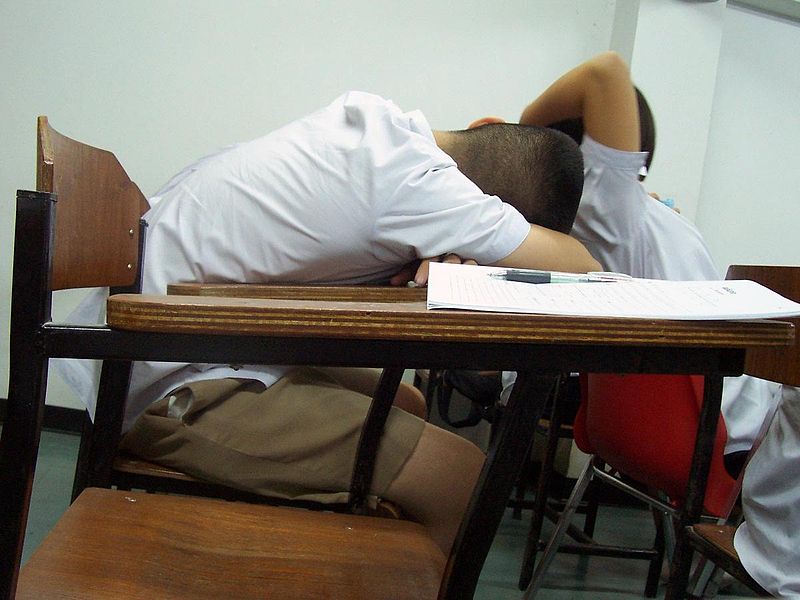
But the opportunity for free play and risk is funneled into very narrow options for today’s children. They are shuttled from one adult-run activity to another. Time between these obligations is often spent indoors. And children’s outdoor play is restricted by excessive rules designed to keep them safe from dangers out of proportion to any real safety issue.

So kids don’t get natural challenges like climbing trees, exploring fields, building forts. They are deprived of the rich lessons of cooperation and self-control found in free play. And they don’t develop biophilia, that essential sense of connection with nature. Then we expect them to get along and recognize real risk. Any wonder that bullying is a growing problem?

Here are examples of playground designs that, in institutions like schools and daycare programs, foster free play using natural materials. Sensory play, places for solitude, and opportunities for physical risk are built in and, no surprise, children get along better.

It’s a step in the right direction. A few steps farther and we’ll let kids back in nature herself, playing in woods and fields and beaches. Too bad all the money thrown at anti-bullying programs aren’t used to fling open the doors to the natural world. “Go out and play,” may very well be the best anti-bullying advice yet.

Better Test Scores Don’t Lead To Success

national test score rankings meaningful ,US students compared internationally meaningless data, global test score comparisons overlook data, standardized tests meaningless, rebel against standardized tests, opt-out of proficiency tests, opt out of school tests,

Wikimedia public domain

We shake our heads at the way standardized testing chews the heart out of real learning.   We know about the zombifying effect on schools, teachers, and kids.

Even in the best districts, the effort to attain those all-important numbers eliminates deeper, richer education. Less stellar districts see their schools under a test-heavy siege, charged with getting results or being taken over. This drive also shapes the kind of material students see, relentlessly preparing them to reach higher for the Almighty Score while giving them little time to build essential traits such as critical thinking, creativity, initiative, and persistence.

Parents and educators alike decry this approach, but it’s seen as a necessary pill to swallow (or actually, to make students swallow) in order to achieve some longer term goal. The goal, policy-makers tell us, is greater success for individual students and greater success in global competitiveness.

Do they have proof that boosting individual as well as overall test scores lead to success on either count?

No.

*

National test scores

We’re told that national test score rankings are vitally important indicators of a country’s future. To improve those rankings, core standards are imposed with more frequent assessments to determine student achievement (meaning more testing, more oversight, more teaching to the test).

But do higher test scores actually make a difference to a nation’s future?

study by Christopher H. Tienken compared results from international mathematics and science tests from a fifty-year period to future economic competitiveness by those countries. Surely it showed that those countries with kids performing best on tests become high performing counties. Actually, no. Across all indicators there was minimal evidence that students’ high test scores produce value for their countries. Tienken concluded that higher student test scores were unrelated to any factors consistently predictive of a developed country’s growth and competitiveness.

In another such analysis, Keith Baker, a former researcher for the U.S. Department of Education, examined achievement studies across the world to see if they reflected the success of participating nations. Using numerous comparisons including national wealth, degree of democracy, economic growth, even happiness, Baker found no association between test scores and the success of advanced countries. Merely average test scores were correlated with successful nations while top test scores were not.

Baker explains, “In short, the higher a nation’s test score 40 years ago, the worse its economic performance…” He goes on to speculate whether testing [or forms of education emphasizing testing] itself may be damaging to a nation’s future.

*

Individual test scores

What about individual success?

Educational reformer Alfie Kohn explains, “Research has repeatedly classified kids on the basis of whether they tend to be deep or shallow thinkers, and, for elementary, middle, and high school students, a positive correlation has been found between shallow thinking and how well kids do on standardized tests. So an individual student’s high test scores are not usually a good sign.”

Why do we push standardized tests it has been demonstrated that the results are counterproductive? We’ve been told this is the price children must pay in order to achieve success. This is profound evidence of societal shallow thinking because the evidence doesn’t stack up.

Studies show that high test scores in school don’t correlate with adult accomplishments  (but do line up with interpersonal immaturity). We’ve known this for a long time. Back in 1985, the research seeking to link academic success with later success was examined. It was appropriated titled, “Do grades and tests predict adult accomplishment?”

The conclusion?

Not really.

The criteria for academic success isn’t a direct line to lifetime success. Studies show that grades and test scores do not necessarily correlate to later accomplishment in such areas as social leadership, the arts, or sciences. Grades and tests only do a good job of forecasting how well youth will perform in future grades and tests. They are not good predictors of success in real life problems, relationships, or career advancement.

What can concerned parents do?

Let’s work toward a future where our children have more time to play, to dream, and to love learning.

school tests don't lead to success, proficiency tests useless, good test scores no related to adult success, ban standardized tests now, ban No Child Left Behind now,

CC Flickr photostream of comedy_nose

School ADHD Isn’t Homeschool ADHD

ADHD school issues, learning outside of school, why we homeschool, ADD school problem,

I hesitated at the heavy glass doors of my son’s school. I’d cheerfully walked in these doors many times. I volunteered here, served on the PTA board, joked with the principal and teachers, even helped start an annual all-school tradition called Art Day. But now I fought the urge to grab him from his first grade classroom, never to return.

I’d come in that morning hoping to discuss the angry outbursts my son’s teacher directed at several students, including my little boy. But I entered no ordinary meeting. It was an ambush.  Sides had clearly been chosen. The principal, guidance counselor, and my son’s teacher sat in a clump together along one side of the table. Feeling oddly hollow, I pulled out a chair and sat down. Since I led conflict resolution workshops in my working life, I was confident that we could talk over any issues and come to an understanding.

I was wrong.

The counselor read aloud from a list of ADHD behavioral symptoms my son’s teacher had been tracking over the past few weeks. My little boy’s major transgressions were messy work, lack of organization, and distractibility. The teacher nodded with satisfaction and crossed her arms.

No one who spent time with him had ever mentioned ADHD before. I breathed deeply to calm myself. I knew it was best to repeat what I was hearing in order to clarify, but the counselor barreled ahead, saying they had a significant “ADHD population” in the school system who showed excellent results with medication.

After giving the teacher kudos for dealing with a classroom full of children and acknowledging the difficulty of meeting all their needs, I tried to stand up for my child (although I felt like a mother bear defending her cub from nicely dressed predators). I said the behaviors she noted actually seemed normal for a six-year-old boy, after all, children are in the process of maturing and are not naturally inclined to do paperwork. The teacher shook her head and whispered to the principal. The counselor said first grade children have had ample time to adapt to classroom standards.

I asked if any of my son’s behaviors had ever disrupted the class. The teacher didn’t answer the question. Instead she sighed and said, looking at the principal, “I’ve been teaching for 15 years. This doesn’t get better on its own. I’m telling you this child can be helped by medication.”

When I asked about alternatives such as modifying his diet the teacher actually rolled her eyes, saying, “Plenty of parents believe there are all sorts of things they can do on their own. But students on restricted diets don’t fit in too well in the lunchroom.”

There was no real discussion. No chance to bring up her teaching style. No opportunity  for better collaboration between home and school. A conclusion had been reached without consulting me, my husband, or a mental health professional. My son required one vital ingredient in order to flourish in school: pharmaceuticals.

As I stood at the door, my heart pounding in distress, I vowed to solve this problem rationally. I told myself such an approach would help my child and other misunderstood students. I made it all the way to the car without crying.

Over the next few weeks I took my child to all sorts of appointments. A psychologist diagnosed him with ADHD (inattentive/distractible type) and said, after talking to me, that I probably had it as well. (It manifests somewhat differently in me.) Her report was tucked in a stack of handouts from a national non-profit organization known for its ties to the pharmaceutical industry. An allergist diagnosed our little boy with multiple food allergies including almost every fruit and grain he liked to eat (my research showed that diet can indeed affect behavior even for kids without allergies). A pediatric pulmonologist determined that his asthma was much worse than we’d known. In fact his oxygen intake was so poor the doctor said it was likely our son would change position frequently, lift his arms to expand his lungs, and have trouble concentrating. Right away I started the process of eliminating allergens in his life and following other advice given me by these professionals.

I also read about learning. I began to see childhood learning in a wider way as I studied authors such as Joseph Chilton PearceDavid Elkind , James Hillman, and Bill Plotkin. I read about the gifts inherent in ADHD. I talked to other parents who described managing ADHD using star charts, privilege restriction, close communication with teachers, and immediate consequences for behavior. Many told me their child’s problems got worse during the teen years. Some described sons and daughters they’d “lost” to drug abuse, delinquency, chronic depression and dangerous rage. One woman told me her 14-year-old son was caught dealing. The boy sold amphetamines so strong they were regulated by the Controlled Substance Act—his own prescription for ADHD.

And I spent a lot of time observing my son’s behavior. Yes, he was disorganized with his schoolwork. His room was often a mess too, but only because he had so many interests. I saw no lack of focus as he drew designs for imaginary vehicles, pored over diagrams in adult reference books, or created elaborate make-believe scenarios. I knew that he was easily frustrated by flash cards and timed math tests, methods that did little to advance his understanding. But I also knew that he used math easily for projects such as designing his own models out of scrap wood. And of course he was distractible. He resisted rote tasks as most small children do. Their minds and bodies are naturally inclined toward more engaging ways to advance their natural gifts. Mostly I noticed how cooperative and cheerful he was. He didn’t whine, easily waited for his own turn, and loved to help with chores. As a biased observer I found him to be a marvelous six-year-old.

Resolutely I tried to make school workable. I let the teacher know how my son’s allergies and asthma might impact his classroom abilities. I shared the psychologist’s report. And I tried to explain my son’s stressful home situation. In the past year our family had been victimized by crime, his father had been injured in a car accident and left unable to work, and several other loved ones had been hospitalized. His schoolwork may have reflected a life that suddenly seemed messy and disorganized.

The teacher, however, only told me what my son did wrong. She was particularly incensed that he rushed through his work or left it incomplete, only to spend time cleaning up scraps from the floor. She did not find his efforts helpful. In clipped tones she said, “Each student is supposed to pick up only his or her scraps. Nothing more.”

My son’s backpack sagged each day with 10 or more preprinted and vaguely educational papers, all with fussy instructions.  Cut out the flower on the dotted lines, cut two slits here, color the flower, cut and paste this face on the flower, insert the flower in the two slots, write three sentences about the flower using at least five words from the “st” list.  I’d have been looking for scraps on the floor to clean up too, anything to get away from a day filled with such assignments.

It took almost two years of watching my child try to please his teachers and be himself in two different school systems that were, by necessity, not designed to handle individual differences. His schoolwork habits deteriorated except when the project at hand intrigued him. He appreciated the cheerful demeanor of his third grade teacher even though she told me she didn’t expect much from him until his Iowa Test results came back with overall scores at the 99th percentile.  Then she deemed him an underachiever and pulled his desk next to hers, right in front of the whole class, to make sure he paid attention to his paperwork rather than look out the window or fiddle with odd and ends he’d found. That’s where he stayed, in the “not working up to your potential” morass common to many gifted kids.

When he was eight years old I took my children out of school forever.

Homeschooling didn’t “fix” everything for my son, at least right away. I made many of the same mistakes teachers made with him. I enthusiastically offered projects that meant nothing to him, expecting him to sit still and complete them. And I saw the same behaviors his teachers described. My son sat at the kitchen table, a few pages to finish before we headed off to the park or some other adventure. But every day he dropped his pencil so he could climb under the table after it, erased holes in his paper, found a focal spot out the window for his daydreams, complained as if math problems were mental thumbscrews. I used to lie awake at night afraid that he’d never be able to do long division.

Yet every time I stepped back, allowing him to pursue his own interests he picked up complicated concepts beautifully. I watched him design his own rockets. He figured out materials he needed, built them carefully and cheerfully started over with his own carefully considered improvements when he made mistakes. I realized his “problem” was my insistence he learn as I had done—from a static page. Homeschooling showed me that children don’t fare well as passive recipients of education. They want to take part in meaningful activities relevant to their own lives. They develop greater skills by building on their gifts, not focusing on abilities they lack.

The more I stepped back, the more I saw how much my son accomplished when fueled by his own curiosity. This little boy played chess, took apart broken appliances, carefully observed nature, helped on our farm, checked out piles of books at the library each week, memorized the names of historic aircraft and the scientific principles explaining flight, filled notebooks with cartoons and designs—-learning every moment.

Gradually I recognized that he learned in a complex, deeply focused and yes, apparently disorganized manner. It wasn’t the way I’d learned in school but it was the way he learned best. His whole life taught him in ways magnificently and perfectly structured to suit him and him alone. As I relaxed in our homeschooling life he flourished. Sometimes his intense interests fueled busy days. Sometimes it seemed he did very little— those were times that richer wells of understanding developed.

I sank back into worrying about academic topics during his last year at home before college. Although his homeschool years had been filled with a wealth of learning experiences I suddenly worried that he’d done too little writing, not enough math, minimal formal science. My anxiety about his success in college wasn’t helpful, but by then his confidence in himself wasn’t swayed.

His greatest surprise in college has been how disinterested his fellow students are in learning. Now in his sophomore year, my Renaissance man has knowledge and abilities spanning many fields. Of his own volition, he’s writing a scholarly article for a science publication (staying up late tonight to interview a researcher by phone in Chile). Self taught in acoustic design, he created an electronic component for amplifiers that he sells online. He also raises tarantulas, is restoring a vintage car, and plays the bagpipes. He’s still the wonderfully cooperative and cheerful boy I once knew, now with delightfully dry wit.

My son taught me that distractible, messy, disorganized children are perfectly suited to learn in their own way. It was my mistake keeping him in school as long as we did. I’m glad we finally walked away from those doors to enjoy free range learning.

learn freely, benefit of homeschooling, ADHD homeschooling, eclectic homeschooling, unschooling,

Wikimedia Commons

 Find out more about Free Range Learning here

Emphasis On Testing Cheats Everyone

testing bad for kids, testing hurts world competivness, opt out of testing, why to opt out of testing, SAT cheating, why kids cheat,

SAT language scores aren’t near the levels seen in the early 1970’s.  Some test-takers resort to cheating, most recently seven teens from Great Neck, NY who hired an impersonator to stand in (well, sit in) for them. The company that administers the SAT estimates cheating, mostly by collaboration, occurs in only one-tenth of 1 percent of the 2.25 million students who take the test annually. That seems insignificant, but it underscores a larger problem—our test-obsessed educational system.

E. D. Hirsch Jr., author of The Making of Americans: Democracy and Our Schools wrote in a recent New York Times op-ed that declining verbal scores have to do with enduring school days stripped of “substantial and coherent lessons concerning the human and natural worlds…” He goes on to note,

The most credible analyses have shown that the chief causes were not demographics or TV watching, but vast curricular changes, especially in the critical early grades. In the decades before the Great Verbal Decline, a content-rich elementary school experience evolved into a content-light, skills-based, test-centered approach.

I don’t agree with Hirsch’s basic stance that a core curriculum be taught in every U.S. school but he’s got a point. It’s not a new point. Learning has taken a hit heavy hit from the emphasis on standardized tests. The zombifying effect on schools, teachers and kids brought by high stakes testing isn’t pretty.

Even in the best districts, attaining those all-important numbers eliminates opportunities for innovation and time to work with students’ interests. Less stellar districts see their schools under test-heavy siege charged with getting results or getting eliminated.  This drive also shapes the kind of material students see, relentlessly preparing them to reach higher for the Almighty Score while giving scant attention to more complex yet essential skills for higher learning like critical thinking, creativity, initiative, and persistence.

Why this emphasis on testing? We assume policy-makers know what they’re doing. Surely they haven’t been restructuring education based on bare numbers unless they have substantial proven results. Greater competiveness on the world market or at least greater individual success?

Nope.

Here are some eye-opening facts from my book:

National test scores

It’s widely assumed that national test score rankings are vitally important indicators of a country’s future. To improve those rankings, national core standards are imposed with more frequent assessments to determine student achievement (meaning more testing).

Do test scores actually make a difference to a nation’s future?

Results from international mathematics and science tests from a fifty-year period were compared to future economic competitiveness by those countries in a study by Christopher H. Tienken. Across all indicators he could find minimal evidence that students’ high test scores produce value for their countries. He concluded that higher student test scores were unrelated to any factors consistently predictive of a developed country’s growth and competitiveness.

In another such analysis, Keith Baker, a former researcher for the U.S. Department of Education, examined achievement studies across the world to see if they reflected the success of participating nations. Using numerous comparisons, including national wealth, degree of democracy, economic growth and even happiness, Baker found no association between test scores and the success of advanced countries. Merely average test scores were correlated with successful nations while top test scores were not. Baker explains, “In short, the higher a nation’s test score 40 years ago, the worse its economic performance . . .”   He goes on to speculate whether testing [or forms of education emphasizing testing] itself may be damaging to a nation’s future.

Individual test scores

What about individual success?

Educational reformer Alfie Kohn explains, “Research has repeatedly classified kids on the basis of whether they tend to be deep or shallow thinkers, and, for elementary, middle, and high school students, a positive correlation has been found between shallow thinking and how well kids do on standardized tests. So an individual student’s high test scores are not usually a good sign.”

Why do we push standardized tests if it has been demonstrated that the results are counterproductive? Well, we’ve been told that this is the price children must pay in order to achieve success. This is profound evidence of societal shallow thinking, because the evidence doesn’t stack up.

Research shows that high test scores in school don’t correlate with later accomplishments in adulthood such as career advancement or social leadership.

We’ve known this for a long time. Back in 1985, the research seeking to link academic success with later success was examined. It was appropriated titled “Do grades and tests predict adult accomplishment?

The conclusion?

No.

The criteria for academic success isn’t a direct line to lifetime success. Studies show that grades and test scores do not necessarily correlate to later accomplishments in such areas as social leadership, the arts, or the sciences. Grades and tests only do a good job at predicting how well youth will do in subsequent academic grades and tests. They are not good predictors of success in real-life problem solving or career advancement.

Kids certainly cheat because they haven’t prepared for the test, but they also may cheat because they simply see the whole testing game as a farce.  A survey of 43,000 high school students showed that 59 percent admitted cheating on a test during the past year.

What can we do?

Some of us homeschool.

Some parents submit compelling letters telling schools they will not permit their children to be tested, part of a larger opt out movement.

Some are heartened by the ever-growing list of four year colleges that don’t require the ACT or SAT for admission.

Do you think high-stakes testing cheats our kids?