“The world is mud-luscious and puddle-wonderful.” ~e.e. cummings
One street over in the neighborhood where I grew up was a small pond where ducks congregated. The ducks lifted from the water with reluctant quacks when we showed up. Despite summer’s heat, the pond was always cool. Aquatic plants waved their greenish fronds just below the surface and the bottom was lined with a thick layer of muck. My sister, a budding naturalist, speculated that the muck was made up of decayed plant matter. When we waded in, our feet sunk into that thick layer of soft goo, a squishy delight for our toes.
It might occur to you that we were standing in duck poo. You would be right.
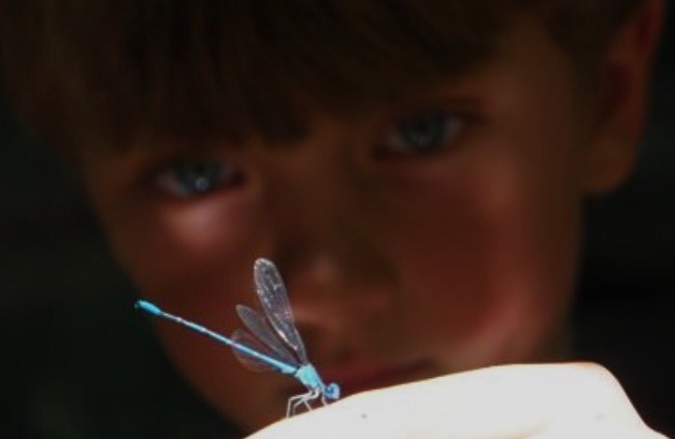
It smelled a bit when the water was stirred up, but that didn’t bother us. My sister and I would crouch near the edge watching insects. Water striders scurried on the surface. Each of their steps made a faint impression in the water as if they walked on gel. Beetles, ants, and the creatures my sister called by the fairytale name nymphs scampered through pondside plants. She liked to let insects climb up her arms. I was impressed, but too squeamish to copy her. Most magical of all were the dragonflies, their huge eyes looking back at us as they hovered on iridescent wings. This seemed like a separate world.
Eventually we had to return home. Our mother, a registered nurse who strictly adhered to standards like rigorous hand washing and early bedtimes, didn’t miss what we’d been up to. We came home spattered and stinky. But her only rule was that we strip off our clothes and scrub ourselves. She’d call from somewhere in the house, “be sure to use the nail brush!” She didn’t seem to mind that we’d walked a block away to play in a bacteria-infested pond as long as we scrubbed away all traces afterwards.
My mother was on to something.
In her book Balanced And Barefoot, pediatric occupational therapist Angela Hanscom writes about teachers, parents, and medical professionals who are alarmed by ever-growing numbers of children who can’t sit still or pay attention; who have trouble with coordination, balance, or sensory processing; who are fearful, easily frustrated, or act aggressively. She explains that these problems can be connected to an overly contained childhood, one that has become the norm. Restrictions begin in the earliest months, when babies spend hours each day strapped into strollers, car seats, and baby seats. As they get older their movements are curbed by passive indoor activities. Even outdoors, kids are often limited to low-challenge play areas or to prescribed movement in adult-structured programs.
The push for academics, often starting in preschool, strips even more time from active free play, while elementary schools are increasingly limiting or eliminating recess. This is profoundly counterproductive. Reading readiness is strongly influenced by physical movement. So is grasping and using mathematical concepts.
It helps to understand just how closely movement and sensory input is related to development. In the first year of a baby’s life, her brain doubles in size. It reaches 80 percent of its adult volume by age three. Babies are born with vast numbers of neuronal links in their brains and spines, primed to be shaped by what they encounter. Unused networks are not activated and disappear. This is what neuroscientists call “experience-dependent plasticity.” Early experiences rich in movement (plus the nurturance and emotional warmth that set the foundation for learning) activate a wider range of neural connections. This is nature’s wisdom at work, shaping a child’s brain through experience so they develop what they’ll need for the world they’re born into.
Your baby squirms and cries after a few minutes in the high chair. He can be placated with a new food or a spoon to bang on the tray, but only for a few minutes. He wants to get to work on crawling. Your toddler resists being put in her car seat and sometimes cries until she exhausts herself. She wants to run, climb, and play. They’re both responding to an inborn need to learn through movement.
Gill Connell and Cheryl McCarthy, authors ofA Moving Child is a Learning Child, clarify. They write that neural pathways developed in the first years of life,
“determine how a child thinks and learns, but more importantly, they will shape who she becomes… her passions and pursuits, triumphs and challenges, inner reflections, outer reactions, and outlook on life…all flowing through the neural network built by her earliest physical and sensory experiences.
With breathtaking simplicity, nature has created this move-to-learn process to be both dynamic and self-perpetuating, building the body and brain simultaneously. As such, the more a child moves, the more she stimulates her brain. The more the brain is stimulated, the more movement is required to go get more stimulation. In this way, nature gently coaxes the child to explore beyond her current boundaries toward her own curiosity to acquire new capabilities.”
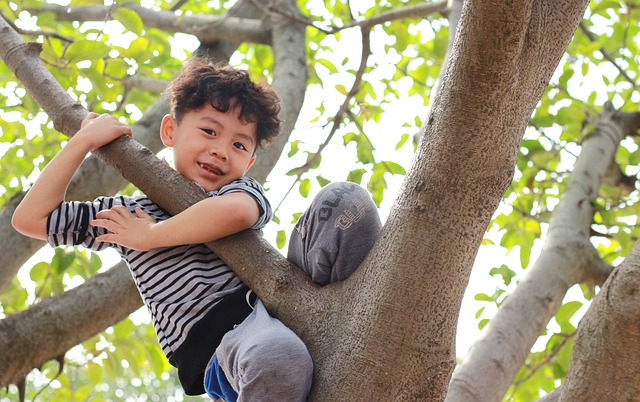
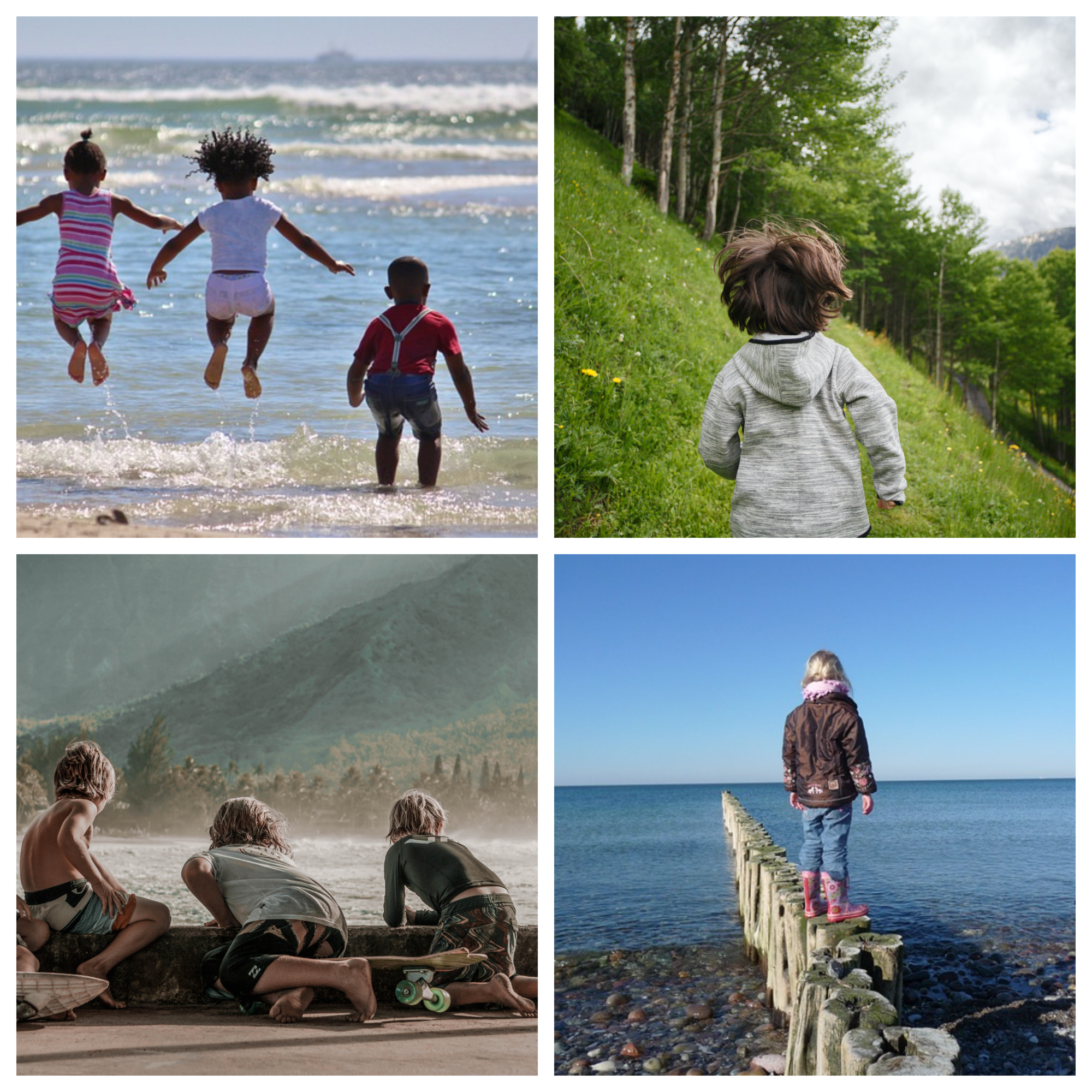
Overall, today’s kids show decreasing core strength and flexibility compared to averages in the 1980’s.”The more we restrict children’s movement and separate children from nature,” Angela Hanscom explains, “the more sensory disorganization we see.” That’s why she advocates sensory-rich, movement-based outdoor free play. Chasing, rolling down slopes, climbing trees, playing with nature’s play-perfect loose parts like leaves and sticks — these and other experiences build spatial awareness, balance, fine motor skills, and bodily control.
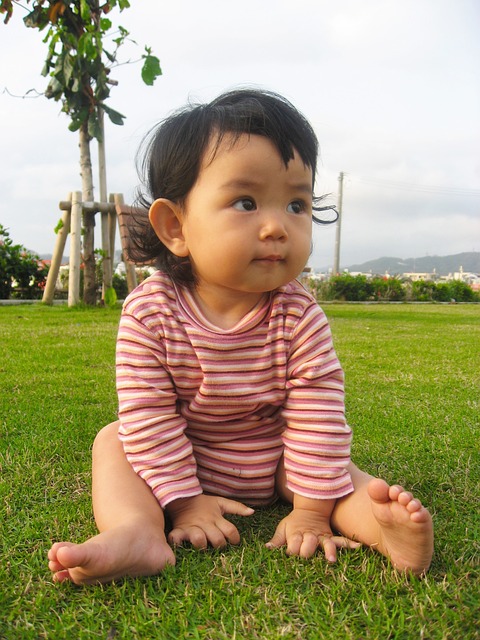
Let’s hone in on one sensory-rich experience; going barefoot. Madeline Avci, an Australian pediatric occupational therapist, explains that walking on grass, stones, and sand develops body awareness, called proprioception. Nerve endings in the feet and toes promote the development of sensory pathways, building functional movement patterns while helping children move with a sense of their body in space. When we wear shoes, the quality of sensory information is diminished. A paper published in Podiatry Management details all sorts of ways shoes, including those with flexible soles, interfere with a child’s gait, development, and posture. Walking barefoot also promotes better biomechanics, a more natural gait, and less pressure on our feet. Bones in the feet are not fully ossified until the late teen years, so the more barefoot time possible, the more naturally the foot’s shape can develop. Of course few of us are raising our families in a beachside hut where walking barefoot makes sense year-round. But Katy Bowman, author of Move Your DNA, suggests that all of us try to walk on natural surfaces like sand, rocks, grass, or wood for 10 to 20 minutes a day whenever possible, and to go barefoot at home.
Neurobiologist Gerald Hüther notes that “the most important learning experiences come to us, essentially, by way of our bodies — which means that learning is always an experience of the whole body. At the same time, every learning experience involves emotions. We are only able to learn when the so-called emotional centers in the brain are activated. These centers release neuroplastic messenger substances enabling what has been learned to become anchored in the brain ….[via] emotional activation. The most enjoyable activation we know of is ‘enthusiasm.'”
It’s ridiculous that we need science to confirm the value of enthusiasm. This is the energy each child brings fresh to the world. What they’re able to explore and experience with the whole of themselves, magnified by the capacity for awe, remains with them.
Dr. Hüther gives an example,
“Children living in the Amazon forests learn 120 different shades of green and can name them all, using 120 different terms. Potential of that kind is either used in practice or is little used. Children here can at best distinguish light green, green, and dark green. How far a potential is actually used depends on how important it is .. in a given culture…The result is that what was once a possibility, this potential, …if not used, will just wither away.”
Enthusiasm goes a long way toward explaining why children and nature go together so well. Children are themselves magic — able to shape shift into a toad or hawk, to feel what it’s like to hop nearly hidden under leaves or to glide on the air’s invisible currents. While imagination is alive everywhere, it can’t help but flourish when surrounded by aliveness. The more natural an area, the more kids have a chance to have meaningful encounters with the life around them. In fact, kids play differently in a park with play structures compared to more natural areas like an overgrown field, a row of trees, or a small creek.
As Richard Louv details inLast Child in the Woods, kids confined to structured play areas have poorer balance and agility than those who play in unpaved areas. The social dynamic changes too. Older and physically larger kids dominate on playgrounds but in more natural areas, it’s the creative kids who act as leaders. In wild places, even an overgrown lot, kids are more likely to incorporate each other’s ideas into expressive make-believe scenarios using their dynamic surroundings—tall grasses become a savannah, tree roots become elf houses, pine cones become treasure. The essence of the child comes alive. Outdoor play in natural areas is more likely to include peers of differing ages and abilities. Regular outdoor experiences not only boost emotional health, memory, and problem solving, they also help children learn how to get along with each other.
Outdoor free play also inspires kids to challenge themselves. They are things to climb on and places to explore. In pursuit of fun, kids ignore minor annoyances like cold fingers, sharp briars, stumbles. Kids face and overcome fears. Such play is linked to greater social skill, resilience, and creativity.
And if you’re interested in academic test results, time outdoors has an impact there too. Here are a few encouraging studies.
Kids exposed to more nature had higher scores of working memory than kids who did not.
Simply going for a walk in a nature area, in any weather, can significantly improve memory and attention spans improved by 20 percent after people spent an hour interacting with nature.
If pre-college test results perk up your interest, the children most connected to nature are also most likely to score well in tests including the SAT.
We also know exposure to bacteria can be a good thing. Certain bacteria found in soil, Mycobacterium vaccae, have been found to boost the release of serotonin, a neurotransmitter linked to positive mood and enhanced learning.
Dirt may improve our health too. For example, children who grow up exposed to a greater range of soil microorganisms have been found, in some studies, to have a lower incidence of asthma. Heck, even common bacteria on our skin have been shown to cut down on rashes and reduce inflammation when we’re cut or bruised. A child’s exposure to dirt is part of the body’s education, microbiologist Mary Ruebush explains inWhy Dirt Is Good, “allowing his immune system to explore his environment.” (She adds a caveat, saying that the soil in some urban areas may be contaminated with heavy metals such as lead. That is indeed a wakeup cry. Soil is the structure we need to feed ourselves. When it’s poisoned, so is life.)
The importance of outdoor free play is getting a lot of attention these days. Playground designers, schools, and daycare programs are far more open to the benefits of outdoor free play with natural materials. It’s no surprise that children do better with natural sensory play, places for solitude, and opportunities for self-chosen challenge. This is a step in the right direction. A few steps farther and we’ll let kids back in nature herself to play in woodlands, fields, and beaches as well as back lots, mud puddles, and all the nature around us. It’s a step in the direction of wonder and delight, maybe even in the muck of a duck pond.
Today’s kids sit more than ever. Babies spend hours confined in car seats and carriers rather than crawling, toddling, or being carried. As they get older their days are often heavily scheduled between educational activities and organized events. Children have 35 percent less time for free play than they did a generation ago, and that’s before factoring in distractions like TV or video games.
Left to their own devices, children move. They hold hands and whirl in a circle till they fall down laughing. They beg to take part in interesting tasks with adults. They want to face challenges and try again after making mistakes. They climb, dig, and run. When they’re tired they like to be rocked or snuggled. According to the authors of A Moving Child Is A Learning Child, stifling these full body needs actually impairs their ability to learn.
Large muscle activities like climbing, running, lifting, carrying, rolling, jumping, throwing, and balancing not only build strength and coordination, they are also critical for reading and writing readiness since they develop proximal muscles (including trunk and upper arms). This in turn helps develop distal muscles in hands and fingers. Efficient coordination of large muscles progresses to the elbow, then wrist, then hand — making writing and drawing possible.
We know that our little ones walk and talk on their own timetables. No rewards or punishments are necessary to “teach” them. Yet children are expected to read, write and spell starting at five and six years old as if they develop the same way at the same time. Academics are pushed on young children with the assumption this will make them better students. This approach is not only unnecessary, it may be contributing to problems such as learning disorders, attention deficits, and long term stress.
Studies contrasting reading instruction at age five compared to instruction at age seven find earlier lessons may damage reading development. By the time children reach the age of 11, students who were instructed earlier show poorer text comprehension and less positive attitudes toward reading than children whose instruction started later.
Children pushed to read early (not those who naturally pick it up) tend to rely on right brain processes because that area matures more quickly. These early readers are likely to guess at unknown words using clues such as appearance, context, beginning and ending letters. Their main tactic is memorizing sight words. These are valuable methods but not a balanced approach to reading. Such children may quickly tire after reading short passages or read smoothly but have difficulty deriving meaning from what they read. The procedure they use to decode words can make the content hard to comprehend. These reading problems can persist.
On the other hand, children benefit when they learn to read naturally or are taught later. That’s because, as the left brain matures and the pathway between both hemispheres develops, it becomes easier for them to sound out words, to visualize meanings, and mentally tinker with abstractions. They memorize short sight words but sound out longer words, an approach that is less taxing. As they incorporate more words into their reading vocabulary they more easily picture and understand what they are reading.
In order for children to read, write and spell they must be developmentally ready. Some are ready at the age of four or five, some not for many years later. This readiness includes complex neurological pathways and kinesthetic awareness. It includes the proprioceptive sense developed through sensory receptors in the muscles, joints, and tendons: a form of maturation essential for a physical sense of self (even essential for learning how to modulate one’s voice and to hold objects carefully).
Such readiness isn’t created by workbooks or computer programs. It’s the result of brain maturation as well as rich experiences found in bodily sensation and movement.
These experiences happen as children play and work, particularly in ways that cross the midline. They includes expansive movements such as climbing, jumping, digging, swimming, playing hopscotch and catch, riding bikes, sweeping, running. They also include fine movements such as chopping vegetables, drawing, building, playing rhyming and clapping games, using scissors, and playing in sand. And of course there’s the essential growth that comes from snuggling, listening to stories, singing, trying new tastes, enjoying make believe. Children are drawn to such experiences. Without these bodily experiences, warns pediatric occupational therapist Angela Hanscom, they won’t have a strong foundation for learning. (Find out more in her book Balanced and Barefoot: How Unrestricted Outdoor Play Makes for Strong, Confident, and Capable Children.)
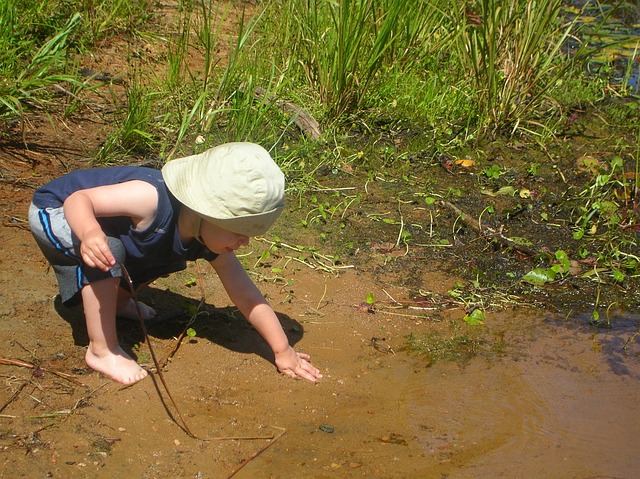
These activities stimulate the child’s brain to develop new neural pathways. Such activities also build confidence, smooth sensory processing, and create a bank of direct experience that helps the child visualize abstract concepts. Well-intended adults may think a good use of a rainy afternoon is a long car ride to an educational exhibit. A young child is likely to derive more developmental value (and fun) from stomping in puddles and digging in mud followed by play time in the tub.
There are many other factors contributing to reading readiness. Perhaps most important is a supportive family life where play, reading, and conversation are an enjoyable part of each day. But it helps to remember that young children want to participate in the purposeful work of making meals, fixing what’s broken, and planting the garden. They also need free time without the built-in entertainment of specialized toys, television, or video games. Their development is cued to movement. These bodily experiences prepare children for the magic found when shapes become words, words become stories, and they become readers.





 Laura Grace Weldon