Fostering the Flip Side of Gratitude

dark side of gratitude, responding to nay-sayers, when those in authority predict doom, when doctors are wrong, when teachers are wrong, when therapists are wrong,

Cajoled into seeing a friend’s obstetrician, the one she praised so highly, I came prepared with a list of questions folded in my jeans pocket. But I didn’t get a chance to ask about a doula, the Leboyer method, or anything else. The doctor walked in, greeted me and looked me over without performing an exam. Then he announced with certainty that I had “insufficient pelvic capacity.” He assured me that my petite size meant I would never be able to deliver a full-term baby.

“What do you mean?” I gasped.

“It’s nothing to worry about,” he said. “It just means you’ll require a Cesarean.”

I was six weeks pregnant.

I may have been young and expecting my first child, but I dared to question his judgment. He became indignant. A lecture followed about the number of babies he’d delivered. He went on about anoxia and brain damage, then intoned the words that surely convinced legions of women before me, “Do you want to endanger the life of your baby?”

That was all it took.

I never returned.

But how was this self-satisfied man to know if his assertion turned out to be valid?  I didn’t get back to him. Nor did I refute the next obstetrician whose office I also left after he told me my vegetarian diet would result in a sickly, underweight baby.

Although these physicians never knew if their dire predictions came true, I went on to deliver a 9 lb, 10 oz baby quite naturally. In subsequent years I had three more sizeable vegetarian-grown babies.

On behalf of each of my children I learned to speak up–forcefully and often. This pushed me right past the shyness I thought was an indelible part of my personality. Once I became comfortable speaking up I felt empowered to assert my feelings of gratitude as well.

According to Thanks!: How Practicing Gratitude Can Make You Happier and Living Life as a Thank You: The Transformative Power of Daily Gratitude, regularly practicing gratitude boosts our health and well-being. Small acts of kindness also create a ripple effect, generating more compassion in others. Sometimes it’s easier to thank those who are close to us but it’s powerful to acknowledge people who are consequential strangers or people we’ve never met but whose efforts make a difference.

My gratitude practice often takes the form of appreciative letter to strangers. I leave a note for a waitress whose cheery demeanor has healed me of some common sadness. I send a letter to a nursing home administrator describing the tender affection I witnessed an aide show a patient. I send written kudos to the cast of a locally produced play. They don’t take long to write although occasionally I have to make an effort to find out where to send one.

Not long ago I was delighted to finally locate the address of a local school bus driver. I regularly wait in my car as he stops on a 55 mph road and in only a few moments backs into a narrow entry way with the grace and dexterity of a ballroom dancer. So I wrote a letter to explain that seeing him drive with such skill gave me the sense one day I too might develop true mastery in my line of work.

I never sign my name. I think it’s better to write “your customer” or “fellow traveler” or whatever fits the situation. That way it isn’t about me, it’s about a wider sense of appreciation. Although I have to admit, I benefit too. Looking for the good in a situation changes my energy in a positive way.

But really, paying attention only to sweetness and light ignores the shadow. People in positions of authority need to know when their judgments or actions are harmful. All of us can learn from mistakes, unless somehow we’re deprived of the consequences of our words or actions. Today, many professionals are well insulated from those consequences unless they reach litigation.

I don’t advocate griping or threatening. I’m talking about communication that fosters understanding. A simple letter can spare future clients, students or patients the same struggles your family may have endured. Of course this isn’t necessary when the situation can be handled right away. But how many of us have faced long term predictions of doom? A family bed is nothing but bad parenting.  Without this surgery you’ll end up crippled. Homeschool and you’ll have a maladjusted child on your hands. Ritalin is the only solution for that behavior. After years of hearing such pronouncements I have come to realize that updating a professional on his or her assessment is another form of kindness. It’s the flip side of gratitude.

If you choose to get in touch with someone for these same reasons, here are guidelines that have worked for me.

1. Be clear about your own goals before writing that letter or email. Wait until you can proceed without anger. The person you are contacting will be unlikely to learn anything unless you maintain a positive and respectful tone throughout.

2. Refresh the recipient about your situation as it was when you were last in contact.

3. State clearly and kindly that (as a physician, teacher, therapist) he or she is in a position to help many people. You assume that as a matter of professional interest it would be helpful to know about the outcome of a situation he/she assessed.

4. Sticking only to the facts, explain how in your situation their judgment or actions were misguided. Then update with pertinent details.

5. If relevant, include research or other data which the professional can use to gain insight.

6. Wish this person well. Don’t expect or ask for follow up contact.

The highest response to nay-sayers is to flourish joyfully in our choices. So I respond  to those who predicted doom for my children who were held long and nursed often, to those who judged our learning and lifestyle choices harshly—we are well. For that I’m endlessly appreciative.

Lets try, whenever possible, to find the freedom right beyond the boundaries of old ideas. To do that we need to share the insight that comes from experience. There, even the flip side of gratitude turns toward wisdom.
when professional advice is wrong, shadow side of gratitude, finding peace rather than revenge, gratitude's underbelly,

A version of this piece first appeared in the Sept/Oct 2010 issue of Natural Life magazine

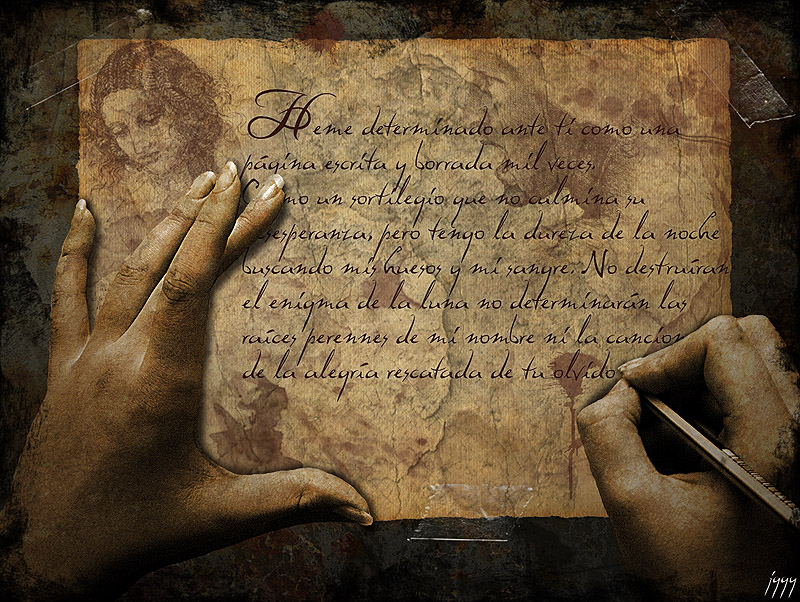
Writing Hands image courtesy of Jggy

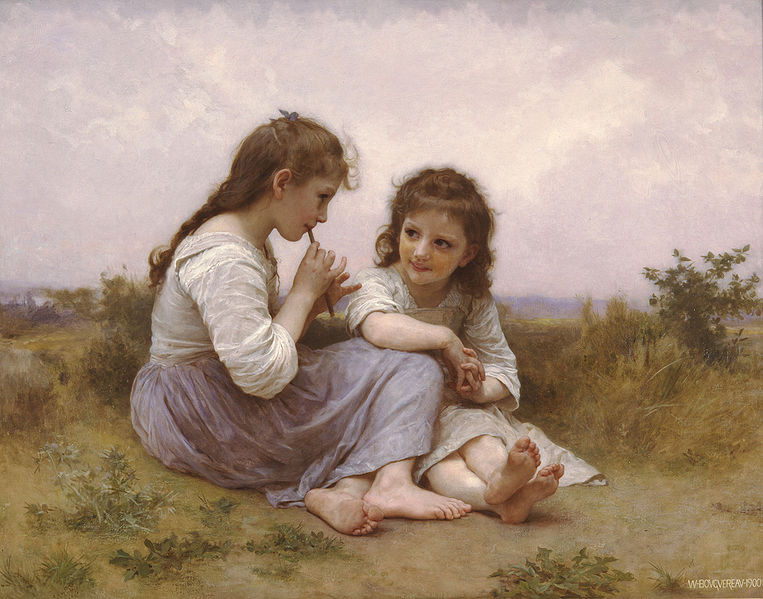
A Childhood Idyll by William-Adolphe Bouguereau
Mom Knows Nothing

open to questions, don't know answers, kid's questions, being a mom,

“Why don’t you know any answers?” my then three-year-old asked me.

He was exaggerating. I always gave him a straight answer when he asked what we could have for dinner or when we were going to the library. But it was true, sometimes I had to look things up. That’s because I really didn’t know answers to questions he posed like, “Do bees have intestines?”

Still, I knew what he meant. I tended to respond to his questions with inquiries of my own. “What do you think?” or “Let’s find out.” Of course I was intentionally vague in order to spark the process of discovery. I didn’t know such a tactic might annoy a toddler who sometimes just wanted to know. Yes, I modified my approach, although he’ll tell you today that I’m just as annoying in other ways.

However the habit of putting questions where answers might be continues, at least in my head. The more I experience the sorrows and delights of life the more I recognize that answers aren’t the aim. So much is better understood as a question.

Today I walk out back with a pail of vegetable peelings and leftover oatmeal for the chickens on our little farm. Chickens look perpetually quizzical, perhaps that’s one reason I like them so much.

Our cows graze in the sunny part of the pasture. I can’t get past marveling at the mystery of plants eating sunlight, cows converting grass to milk, and milk transforming into cheese on my stove. I simply stand watching the cows in wonderment.

While I stand here I know that what we call gravity bonds me and everything I see to the planet. Without this force all of us would drop into the darkness of space. Earth holds us. Yet here on this perfect sphere we humans find reasons to hurt one another and harm the Earth. I hear humanity’s questions asked over and over in songs, poetry and the scriptures of many faiths, and I am comforted by our common quest for understanding.

There’s peace to be found right beyond the need for answers. This sense of calm I find puts the emphasis on love, not on what’s right. (It doesn’t hurt to recognize that those who have all the answers actually don’t.) I walk back to the house, taking in the way the water flows along the creek and the mud squelches around my boots. I’m glad to live with people who are astonished daily by this world’s wonders. Even if they continue to ask me what’s for dinner and expect an answer.

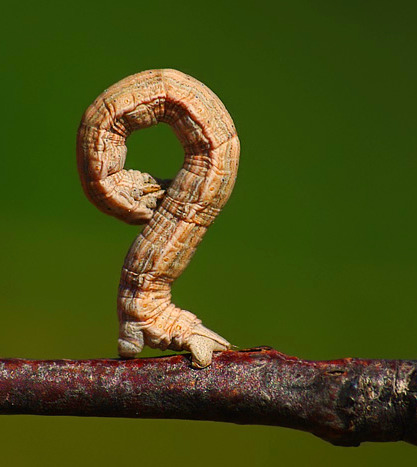
inchworm, questioning everything, appreciating the moment,

*

*

*

Question tree photo courtesy of Type Zero

How to Make Spiders Your Teachers, Trees Your Guides

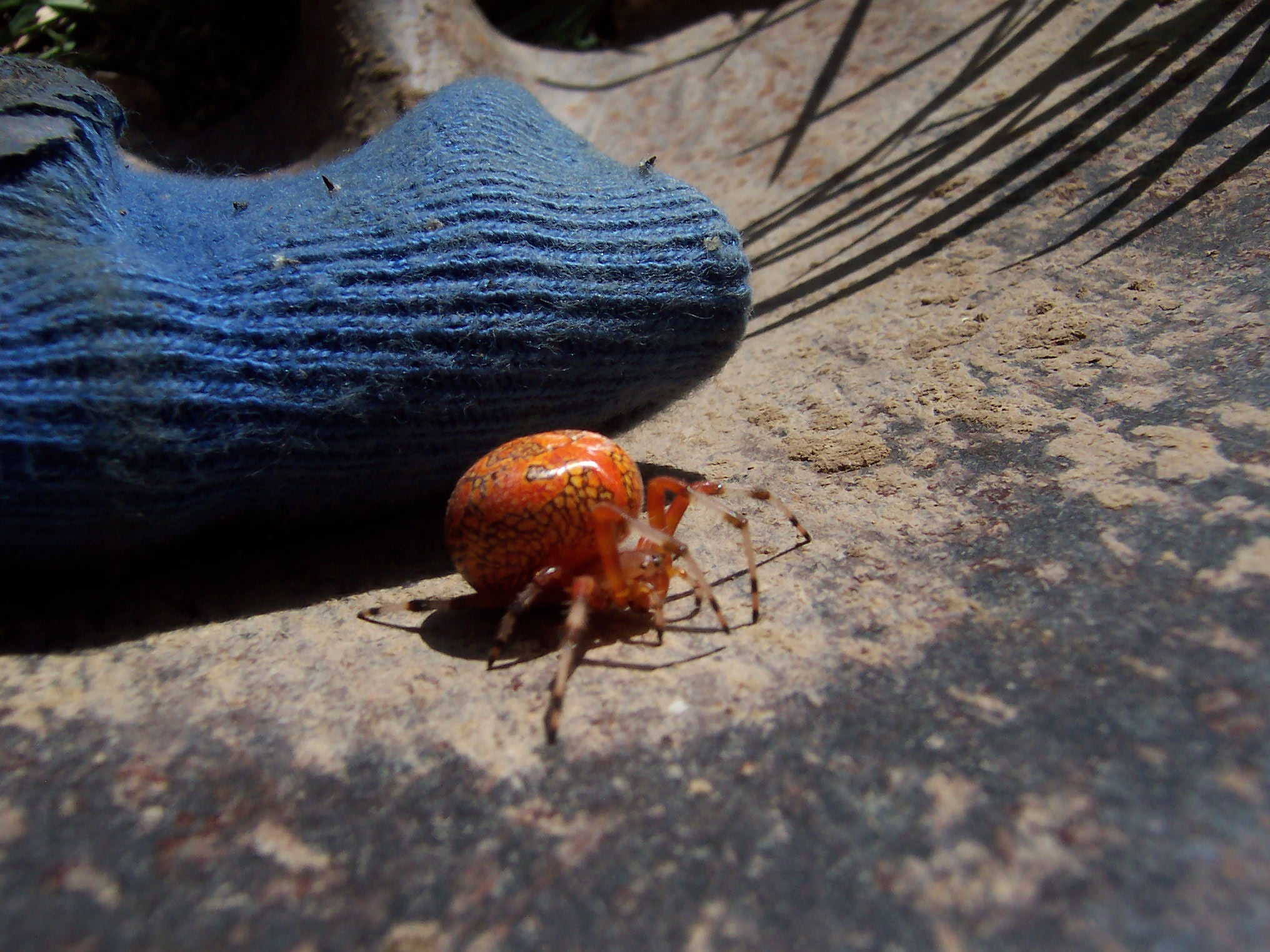
amateur naturalist, spiders, mindfulness, nature, paying attention, field guide, children,

Pay close attention to anything. In it you’ll find wonders.

Consider the spider.

We appreciate spiders in our family. A large orb weaver lives just outside the front door. Every night when we take the dogs out before going to bed we pause to appreciate the intricate web she’s rewoven. It has a lot to teach us about strength, symmetry, impermanence and beauty.

I probably shouldn’t admit it, but a spider also hangs out on the ceiling of our pantry. Its continued presence means there are enough insects in the vicinity to keep it fed, which logically means there are that many fewer beasties getting into our potatoes, dry beans, oats and other stored foods. It has a lot to teach us about interdependence. I’m actually cheered to see it up there, a quiet brown chap making a life for itself high above my canning jars.

When we find the occasional spider elsewhere in the house we move it gently outdoors, unless it’s winter in which case we move it to a large potted plant. (I prefer spiders be relocated to basement plants but I suspect my family members free them in more conveniently located houseplants.)

No, our home isn’t teeming with creepy crawlies. It’s the same as your house. We’re all part of an ecosystem beyond our awareness. Our fellow Earth inhabitants proceed with lives of purpose everywhere around us whether we know it or not. As an example, beneficial bacteria reside in your gastrointestinal tract, contributing not only to digestion but overall health. These microbes outnumber the cells in your body 10 to 1, their types varying widely from person to person—perhaps accounting for major differences in weight, energy and wellness.

No amount of clean living sets us apart from the wider ecosystem we’re in.

It’s easier to think of nature as “out there” in the pristine wilderness. But we’re a part of nature every moment. It is air we breathe, plants we eat, birdsong we hear, weather slowing this morning’s traffic, our very cells dividing and yes, that high pitched whine signifying a mosquito is hovering nearby.

Tiny creeping and flying things around us are the creatures we’re most likely to encounter, reminders that we share our ecosystem with others. It’s even possible to notice them with pleasure.

My kids particularly appreciate spiders so we pay closer attention to these creatures. I don’t know much about arachnids, but what I learn through my offspring helps me to see more complexity, beauty and worth that I could have imagined.

I think it’s easier to pay attention when we keep the joyous curiosity we’re born with but it’s possible to recapture it, to expand it into awe at the wonders everywhere around us.

Consider making a nature study of a something nearby. A tree’s lifecycle through the seasons, the activity around a wasp nest in the eaves, the behavior of birds at a feeder. We’ve learned some techniques for the amateur naturalist from Lyanda Lynn Haupt’s wonderful book Crow Planet: Essential Wisdom from the Urban Wilderness.

  1. Learn names, proper as well as colloquial. Learn details about habitat, health and interdependence with other life forms.
  2. Have patience. The practice of seeing, really seeing, takes more than time. It also takes cultivated watchfulness.
  3. Respect wildness.
  4. Cultivate an obsession. Let questions unfold into more questions and whenever possible, find a community of fellow enthusiasts.
  5. Keep a notebook. Writing observations and making drawings are wonderfully wider ways to learn.
  6. Maintain a field trip mentality. Keep up your observations wherever you go.
  7. Make time for solitude.
  8. Stand in the lineage. Vital knowledge has been gained by a long history of people no different than you, people who let the world around them teach its wonders to those whose eyes are open.

*

*

*

I Know You Are But What Am I?

Quick, describe your neighbor. The friend you just talked to on the phone. And one other person you know.

Tally up the negatives and positives. What do they indicate?

Actually, they say a lot more about you than the people you’re describing.

Sages, poets and mystics have told us all along that what we perceive is who we are. Research indicates they were right. Our perceptions of others actually say much more about us.

According to a study in the July 2010 issue of Journal of Personality and Social Psychology, the tendency to assess people in our social networks positively is linked to our own

enthusiasm,

happiness,

kind-heartedness,

politeness,

emotional stability,

life satisfaction,

even how much others like us.

A lead researcher says, “Seeing others positively reveals our own positive traits.”

The opposite is also true. The study found that how negatively we view others is linked to our own unhappiness as well as a greater likelihood of problems such as depression, narcissism and antisocial behavior.

That explains a lot.

Sure, any three people we know are likely to have annoying traits. Who doesn’t? But as Carl Jung said, “Everything that irritates us about others can lead us to an understanding of ourselves.”

Often people whose behavior is most challenging turn out, in retrospect, to bring out new strengths in us. They illuminate what we don’t want to see, make us more aware and teach us to be better people ourselves.  Perhaps we’re drawn to the sandpaper that smoothes us our own imperfections.

It isn’t reasonable to cast a wholly positive light on every person. But knowing that what we see is what we enhance in ourselves, that can make all the difference.

*

*


A human being is essentially

a spirit-eye.

Whatever you really see,

you are that.

Rumi

*

*

Art courtesy of SkyHorizon

To Be, Or To Multitask

multitasking, busy, mindfulness, I.Q., cell phone, distraction,

I did it again. Deleted unwanted emails while on the phone, just trying to be efficient. No, I wasn’t reading the emails. Honestly I started out just deleting. But I had to scan quickly through a few to make sure I wasn’t missing something important. And next thing you know it was time to end the conversation. Sadly our entire interaction felt flat, as if we never really connected. I know why. I wasn’t really part of it. Chances are the very busy person I was talking to wasn’t either. Yay for multitasking.

This is the opposite of my true intentions. I keep writing about the importance of paying attention, connecting with nature, and centering our lives on what’s positive.

I try, I really do. But even when we live simply it takes real effort to avoid being rushed and over-obligated.

My mother was an early adherent of multitasking. She liked to say there was no sense doing just one thing at a time. I wasn’t too thrilled about it, however, when she spent requisite quality time playing a board game with me while heating her curler-bedecked head under the hairdryer (those 70’s models were as loud as leaf blowers) and talking on the phone. I was never sure how the person on the other end of the phone heard her over that hairdryer; that person may have been loudly washing dishes, making them both disconnected multitaskers.

It’s much easier to multitask now. In fact, we’re rewiring the way we operate minute-to-minute. We’ve tuned ourselves to distraction. That seems to make us uncomfortable with distraction’s opposite—-the powerfully real time spent in contemplation or conversation.

A recent study found that people asked to forgo media contact for 24 hours (no texting,email, Facebook, TV or cell phone use) actually suffered withdrawal symptoms. They experienced anxiety, cravings and preoccupations so overwhelming that their ability to function was impaired.

When we multitask it feels as if we’re accomplishing more. Who can’t stir a pot of noodles, listen to music and still maintain a decent conversation?  That’s easy.  Although we’re not really paying attention to that music or honoring the conversation with eye contact and full awareness (let alone mindfully attending to the noodles).

The major multitasking whammy comes from doing similar functions at the same time, as I was doing by talking on the phone and checking email. That’s because the brain doesn’t really do both task simultaneously, it goes back and forth, relentlessly switching attention.

All that switching causes our performance to plummet.  Studies show multitasking makes us up to 40 percent slower or causes the same lack of concentration as giving up a night’s sleep.

Perhaps even worse, we don’t recognize the stress it imposes.  As our brains focus and refocus, our bodies release cortisol and adrenaline.  We may work faster, but also feel more frustration and pressure, and the ability to concentrate becomes increasingly impaired.

Talking on the phone and reading email doesn’t just make me somewhat inattentive, studies find that multitasking can functionally lower one’s I.Q. by as much as ten points.  In my case, I suspect it’s quite a bit more.

So many parts of our lives seem to require multitasking. Parenthood certainly does, nearly every job does too. But I want to be, really be. Multitasking subtracts from that.

I’m taking a vow to walk away from any screen any time I pick up the phone. I’m vowing to spend less time using technology, more time in nature. Any vows you’ve taken? How’s that going for you?

*

*

*

“To live in the present moment is a miracle. The miracle is not to walk on water. The miracle is to walk on the green Earth in the present moment, to appreciate the peace and beauty that are available now.”

Thich Nhat Hanh Touching Peace: Practicing the Art of Mindful Living

*

*


photo courtesy of Jayo

Is Nature Somewhere Else?

connect with nature, look at the sky, peace, tranquility, research nature and health,

We tend to think of nature as separate. We imagine spending time “out there” hiking in some remote wilderness, drinking from mountain streams and observing creatures that have never faced highway traffic. There, in a place far from our busy lives, we might find peace, tranquility and some kind of deep connection to what is real.

If. We. Just. Found. Time. To. Get. There.

That’s part of the problem. Because we’re already there. We are nature, right down to the life processes of every cell. And what’s around us even in the smallest city apartment? Nature.

Nature is the food we eat, air we breathe, water we drink. It’s seedlings pushing up between cracks in the cement (and the cement itself, depending how you define it), birds lighting on utility poles, pollen making us sneeze, storm clouds swelling with rain. It’s a living planet in a universe of natural laws that continue to be revealed.

When we define nature as separate from us it’s easier to push it aside as something apart from our very life force.  This disconnect isn’t healthy for us or the planet.

In part it simply has to do with SEEING. I learned this when I helped conduct a psychology study in college.  We went to urban office buildings and asked people two questions. First, we asked each person to describe his or her mood. Second, we asked them to describe the current appearance of the sky. These people were in their offices or hallways when we talked to them and the windows in most buildings were shuttered with horizontal blinds ubiquitous during that decade, so the only way they could have described the sky is if they had paid attention on their way to work or during a break. Here’s the interesting part. The people who identified themselves as pessimistic, angry, depressed or in other negative terms were also the ones unable to describe the sky’s appearance. You guessed it. The happiest and most optimistic people either correctly described the sky or came very close.

That study was never published, but research continues to show that pausing to experience nature in our daily lives has a powerfully positive effect on our minds and bodies. Just a few minutes of regular exposure leads us to be more generous, creative, and enlivened.

So wherever we are, let’s pay attention. Let’s remind ourselves to look at the sky every day, not just for a moment but long enough to savor it (without declaring the weather good or bad). Let’s put our bodies into the experience by taking regular strolls and touching the bark of a tree, a flower’s soft petal, the texture of a rock. Let’s watch the habits of birds, squirrels, spiders and other creatures making their lives amongst ours. Let’s pick one tree near our homes and notice it as the seasons pass, as we would a quiet friend sharing the same neighborhood. It takes only a shift of awareness, but it can make a world of difference.

Nature is right here, moment to moment, in each breath we take. It connects us to what’s real and helps us be the people our planet needs right now.

How Big Are Your Moments?

hurry, multi-tasking, paying attention, living each moment, conscious living, cherishing loved ones, “Every moment is enormous, and it’s all we have.”   Natalie Goldberg

When my daughter was a baby she napped in the stroller. One time. This may stand out in my memory because it was so unusual. Or because I savored that wonderfully long nap in a babyhood troubled by chronic illness. But I think it’s because I consciously chose to hold on to the memory.

That day I pulled the stroller gently into the backyard. Tiny spring wildflowers sprouted everywhere in the expanse of weeds we called a lawn. The honey locust trees were in bloom, making the air smell particularly sweet. As I sat there watching my oldest child play and my daughter sleep, an ice cream truck passed a few streets away, adding a magical tune to the afternoon.  The springtime smells, the sun shining on my little boy, the soft untroubled look on my baby’s face, the complete peace of sitting on the back step are still with me.

Our lives are stitched together by what we notice and remember. Look back at any particular phase of your life. What you recall is constructed from what you paid attention to. Each moment there are sights, sounds, tastes, thoughts and feelings unique to your experience. The way you pay attention to those elements forms your memories. The shocking part? Looking back and realizing how few rich and full memories we really form.

That’s because we only really latch on to memories when we pay attention. When we’re engaged in the moment. Recall the last really memorable meal you had. It probably wasn’t one you ate in the car or standing at the kitchen counter. It was one you savored with full awareness of flavor, texture, scent. Most likely there were other important elements as well. Perhaps it was a meal shared with a new friend or made from a challenging cookbook. Perhaps it was a last meal you had before a loved one passed away, a meal you now try reconstruct in detail.

It’s easier than ever to miss our own lives. I’m guilty. Large chunks of mine have drifted by unheeded. Sure I was there. But I was distracted. I was multitasking. I was rummaging around in the past or fussing over the future rather than paying attention to the moment.

I won’t delude myself into believing that I have the capacity to stay in the moment. But I can try. And because my daughter has just come into the room I’ll be turning from the computer now to hear about her day.

*

*

*

*

Maybe Next Time courtesy of PORG

Crazy Busy

simplify holidays, crazy busy, holiday frenzy solutions,

Orin Zebest’s work on Flickr

Who isn’t busy all the time? But around the holidays we’re crazy busy. At least women are, and those lights in our lives we call children make the pace even more frantic.

Sure we make all sorts of efforts to simplify and de-stress but for most of us the joys of holiday shopping, gifting, cooking, decorating, visiting, hosting, and merrymaking have to fit right into our regular (overburdened) schedules.

It’s not like we can make more time where there is none. Well, maybe we can. Or at least use our time differently. I confess to the Crazy Busy Syndrome but I fight back with these tactics.

Renounce the How-Does-She-Do-It-All Disease. You know the symptoms. You show excessive responsible because you’re sure no one else will do it (or do it right). You uphold traditions your family counts on. You pay close attention to get just the right gifts. You worry about money more than usual. You try to keep the focus on intangibles like faith and togetherness. When the frenzy is over you end up with an empty feeling. I’m the first to stand and admit that I’m still in recovery from this disease.

The cure? Talk to your loved ones about what means the most to them, then slice away the rest. If there’s disagreement, slice anyway.

Shun Those Voices. They’re everywhere around the holidays. They seem so genuine and alluring but their sole aim is to make you feel insufficient. They speak to you from TV, magazines, websites, blogs, store displays— let’s admit they’re ubiquitous. These voices tell you that you’re not enough. To compensate you must do more. Dress beautifully, make elaborate meals, buy lavish gifts and wrap them more ingeniously.

This is the only diet you need to go on. Don’t watch a single cooking show, don’t open one slick women’s magazine, stay away from Pinterest, and avoid stores as much as possible. You’ll have a lot more time, plus you won’t have to reassemble what’s left of your self esteem.

Screw Tradition. No, I don’t mean avoiding your house of worship or shunning Grandma’s house. I do mean it’s possible to celebrate the season without so much of the heavy Gotta Do It weight hanging over you.

Some of my most memorable holidays have actually been those that veered wildly from tradition. My family will not forget a holiday dinner at Rebecca’s house complete with walls of wet paint, an oven on fire, and a dog getting sick everywhere. The zinger, she was eager to show foreign guests how we celebrate here in the U.S!

If you’ve always gone to the movie theater to see the newest holiday releases after a day of shopping, skip both and go to a play at your community theater. If you’ve accepted every holiday invitation despite the costs of babysitters and lost sleep, limit your yes RSVPs to those events that are the most warm and wonderful. If you’ve always accommodated your kids’ requests for gifts because it’s Christmas or Hanukkah or Kwanzaa, put new limits on materialism —try emphasizing non-toy gifts or give four gifts in the categories of Want, Need, Wear, Read. If you’ve always driven around to see the holiday lights, instead go outside on a frosty night to sing together (even if only to a lone tree lit by moonlight). You’ll not only save time and money, you’ll also create new traditions.

Rethink Gift-Giving. Things have gotten out of hand. Children in this country once looked forward to a fresh orange, maybe a piece of candy and if they were lucky a toy or useful gift like a pocketknife or sewing kit. Historian Howard Chudacoff writes in Children at Play: An American History that most toys co-opt and control a child’s play. They’re better off with free time and objects they can use to fuel their imaginations (yes, a cardboard box).

I admit things got out of hand in my own house. In a quest for meaning (let’s rephrase that to my quest for meaning) we’ve always had handmade holidays. Yes, I’m one of those annoying people….. Meals from scratch, homemade organic cookies, handmade gifts. Each of my four children made gifts for everyone every year, gifts that took substantial effort such as woodworking, felting, and ceramics. My teens still make some of the gifts they give although thankfully I’m not the one coming up with the ideas and supervising the process. The last few years economic realities have made hand made gifts ever more necessary, for other gifts I turn to non-profit and artisan sources. Try products offered by non-profits you support, works of art sold at local galleries, and these resources for simple holiday giving.

Last Resort. This tactic is heavy duty, the one I bring out when I start to feel sorry for myself. Because we’re not crazy busy in comparison to women throughout history. We think we’re stressed? Our foremothers hauled water; carded, spun and sewed clothes; chopped firewood and maintained the stove they cooked on; ground grain and made bread each day; planted and weeded gardens, then canned or dried the harvest; stretched limited food reserves with careful planning to last until the next harvest; cared for babies, children and the elderly with no professional help; treated the sick, stitched wounds and prepared the dead for burial; well, you get the idea.

Worse, many many women in the world still do this sort of grinding labor each day. Typically, women in developing countries work 17 hours a day.  Our sisters receive a tenth of the world’s income while performing two-thirds of the world’s work. These harsh realities put any concept of busy or stressed right out of my head. For more information and ways to help, check out the wonderful book Half the Sky: Turning Oppression into Opportunity for Women Worldwide.

So fight the Crazy Busy Syndrome with all you’ve got. Remember to count your blessings, including the joy of not eating my homemade buckwheat cookies!