“It is becoming increasingly clear through research on the brain, as well as in other areas of study, that childhood needs play. Play acts as a forward feed mechanism into courageous, creative, rigorous thinking in adulthood.” ~ Tina Bruce
Nine-year-old Charlotte has one hand slung around a utility pole as she slowly twirls, her head tipped to watch the upper floors of her Cleveland apartment building circle past. Her mother is unloading groceries and chides her daughter, “Stop playing around!”
Charlotte actually has very little time to play. Her days are tightly woven as the dozens of perfectly tended braids in her hair. She’s in the gifted stream at school, participates in swim team and basketball team, takes clarinet lessons, and attends a computer-oriented STEM program on Saturdays.
“I had more of a Little Rascals childhood,” Charlotte’s mother says. “My girlfriends and I would use sheets hanging on the clothesline as curtains to perform Michael Jackson hits or I’d ride bikes with my brothers down dirt piles pretending to be Evel Knievel. It was a lot of fun but Char has more advantages than I could have dreamed of.”
Charlotte’s mom needs to get the groceries unpacked before heading back out. She’ll drop Charlotte off at basketball practice, then buy craft supplies her daughter needs to make a school project. “It’s endless,” she says. “We’re running all the time.”
Although she’s in a hurry, she has more to say about play. “The other day Char had friends over,” she says. “They were whispering and giggling. I felt bad that I had to barge in and tell the girls their playdate was over because we had to leave. I know they need more time to just be silly.”
She’s right.
Most adults don’t hesitate to interrupt play with an activity they assume is more important or to halt play they deem too loud, messy, or rough. And they don’t see a problem with corralling children’s leisure time in ways that remove most aspects of “free” from play. Dismissing what kids do as “just” play also denies what makes us fully ourselves.
There’s no definitive description of free play, but as author and play advocate Bob Hughes wrote back in 1982, it’s behavior that is “freely chosen, personally directed, and intrinsically motivated, i.e. performed for no external goal or reward.”
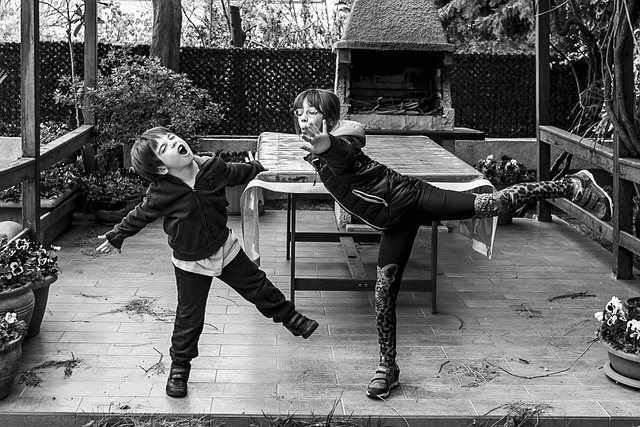
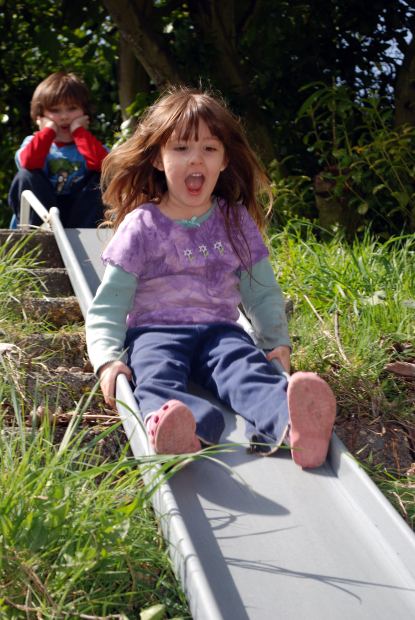
Psychiatrist Stuart Brown, founder of the National Institute for Play, expands on this. He says play basics include purposeless, repetitive, pleasurable, spontaneous actions. Play takes many forms. Sometimes this is driven by curiosity and the urge to discover. Sometimes it’s imaginative play driven by an internal narrative. Sometimes it’s rough and tumble play, the kind that necessarily puts the player at risk and involves anti-gravity moves such as jumping, diving, and spinning.
Picture the wildly free play of puppies and kittens as they wrestle and explore; that’s what he is describing. As Dr. Brown writes, “The urge to play is embedded within all humans, and has been generated and refined by nature for over one hundred million years.”
Ever taller stacks of research demonstrate that free play is critical for development. It fosters problem-solving, reduces stress, enhances learning, and boosts happiness.
Make-believe games go a long way toward helping kids develop self-regulation, including reduced aggression, ability to delay gratification, and advancing empathy. One form of make-believe, more common in children who have lots of minimally unsupervised free time, is called worldplay. This is considered the apex of childhood imagination and is linked with lifelong creativity,
Preliminary studies indicate the less structured time in a child’s day, the better their ability to set goals and reach those goals without pressure from adults. Childhood play is even correlated with high levels of social success in adulthood.
And, as if we didn’t already know this, free play generates sheer joy. The BBC series “Child of Our Time” studied play. They found the more children engaged in free play, the more they laughed, particularly when playing outside. The kids who played the most laughed up to 20 times more than kids who played less. This is surely the best reason of all to play.
But then it strikes us. Suddenly, with the same horrified expression mad scientists wear in sci fi movies while uttering the lines, “What have we done?” we realize that we’ve squeezed nearly all the free play out of childhood. If there are monsters in this scenario, they come disguised as tighter safety restrictions, more adult-run activities, insufficient recess at school, and the lure of screens. Since the 1970’s children have 25 percent less time to play, with 50 percent less time in unstructured outdoor play. In the 1980’s, school-aged children spent 40 percent of the day, on average, engaging in free play. By 1997, that average had dwindled to a mere 25 percent and continue to decline. A recent report notes that American kids, on average, spend about four to seven minutes a day playing outside but over seven hours a day in front of screens. Even when kids do have time to play freely, it’s now common for adults to supervise.
This is particularly true in educational settings. Play is a buzzword for educators, but as Elizabeth Braue wrote in a journal article titled “Are We Paving Paradise?” — “What counts as play in many classrooms are highly controlled situations that focus on particular content labeled as ‘choice’ but that are really directed at capturing a specific content-based learning experience, such as number bingo or retelling a story exactly as the teacher told it on a flannel board.” Free play, particularly the more emotionally expressive and physically active forms, are also squeezed out of daycare and afterschool programs in favor of planned activities.
It’s not just a U.S. thing. A structured and heavily supervised childhood is becoming more prevalent globally. When thousands of mothers around the world were asked about their children’s activities, they tended to agree that a lack of free play and experiential learning was eroding childhood. At the same time, they listed their children’s main free-time activity as watching television. This held true for children growing up in North and South American, Europe, Asia, and Africa. The researchers, writing in the American Journal of Play, made clear their surprise at what they called a “homogenization of children’s activities and parents’ attitudes.”
Marketing messages are so ever-present that they’ve reshaped the norms for raising children. Those messages lead us to believe that good parents heavily supervise children, keeping them busy with purchased playthings and pricey programs starting in toddlerhood or earlier. Such opportunities, we’re told, are found in specialized toys, educational apps, adult-run programs and lessons, gym and fitness sessions, organized sports, and extra-curricular activities. This presumes the kind of spending power and free time that’s entirely out of reach for most US parents. The cost is greater than money because they also lose family time, relaxation, and free play.
That’s not to say a child shouldn’t take drum lessons, go to the rock climbing gym, or participate in scouts. The difference between an overscheduled child and a child who’s eager to take on more activities has to do with each child’s unpressured choices, balanced with what’s best for the family as a whole. It’s also worth remembering that shuttling our kids around for enrichment activities is not necessarily correlated with later success.
Play is a constant in the life of young children. When we formalize it with too many activities that turn play into a tool for academic or physical advancement, we lose sight of play for play’s sake.
This is an important consideration, because the short and long-term consequences of too little free play are more serious than most of us imagine. Play deprivation (yes, it’s a term) has been linked to significant problems. At the most extreme is the potential for increased criminal behavior. Dr. Brown has studied the topic for 47 years, conducting something like six thousand individually conducted play histories. He was initially drawn to learn more when he looked for common backgrounds among men convicted of felony drunk driving and men convicted of homicide. To his surprise, he found these individuals shared a background of severe, sustained, long-term play deprivation. More recent studies have identified play deprivation as a factor in violent crimes committed by juveniles.
Overscheduled kids aren’t more likely to commit crimes, by any means. Much more research needs to be done to establish a causal link. But we do know that too little free play is serious problem. Youth mental health continues to worsen—with particularly stark increases in problems among teen girls. Nearly 1 in 3 girls seriously considered attempting suicide—up nearly 60% from a decade ago. Across all racial and ethnic groups teens are experiencing increasing rates of persistent sadness or hopelessness.
Over 20 years ago, David Elkind wrote in The Hurried Child: Growing Up Too Fast Too Soon, that overscheduled children and teens are more likely to show signs of stress, anxiety, and depression. It’s thought that free play and quality family time are a protective effect, helping children work through and manage such feelings.
Peter Gray finds it logical that a decline in play might result in increased emotional and social disorders. He writes in Free To Learn, “Play is nature’s way of teaching children how to solve their own problems, control their impulses, modulate their emotions, see from others’ perspectives, negotiate differences, and get along with others as equals. There is no substitute for play as a means of learning these skills.”
Physical play is critical in maintaining good mental health and a useful intervention when young people suffer from depression. A recent study found physical activity at least three times a week resulted in a significant reduction in depression symptoms. The effect was greatest “when the physical activity was unsupervised than when it was fully or partially supervised.”
Play is humanity’s spark plug. It connects us to a current that exists within us and around us, an aliveness that runs on fun. This is how we make scientific advances; how we develop products that were once in the realm of fantasy; how we create music, books, movies, games, and art; how we laugh with friends, build community, and come up with solutions. It’s no wonder all of us need more play.
When Charlotte notices her mother is caught up in conversation with me, she runs up the staircase outside their apartment and slides her backpack down the railing, then tries to scurry down the steps fast enough to catch it. When she succeeds on the second try, she boosts the challenge by running down the mulched dirt on the outside of the steps. An elderly man approaches the steps. She pauses, perhaps wary of his disapproval. Instead he playfully slides the backpack back up just as she nears the bottom. Charlotte’s mother turns around when she hears her daughter’s giggle join the older man’s hearty laugh. It’s a lighthearted moment of connection for all four of us, brought into being through playfulness. “That’s the great thing about kids,” she says. “They can turn anything into play.”
So can we all. I don’t think anyone says it better than games expert and play advocate Bernie DeKoven, who wrote inA Playful Path,
“Playfulness is a gift that grants you great power. It allows you to transform the very things that you take seriously into opportunities to shared laughter; the very things that make your heart heavy into things that make you rejoice, it turns junk into toys, toys into art, art into celebration. It turns walking into skipping, skipping into dance. It turns problems into puzzles, puzzles into invitations to wonder.”
“The world is mud-luscious and puddle-wonderful.” ~e.e. cummings
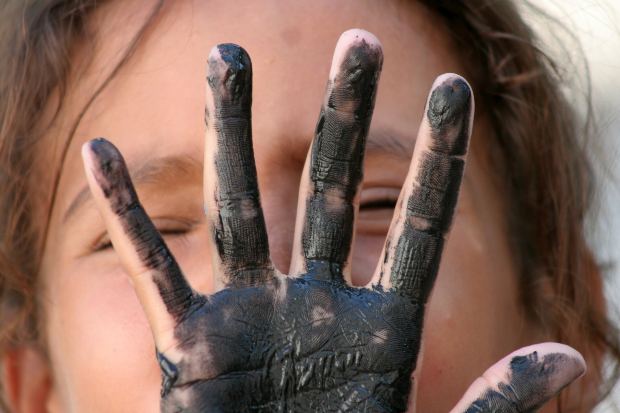
One street over in the neighborhood where I grew up was a small pond where ducks congregated. The ducks lifted from the water with reluctant quacks when we showed up. Despite summer’s heat, the pond was always cool. Aquatic plants waved their greenish fronds just below the surface and the bottom was lined with a thick layer of muck. My sister, a budding naturalist, speculated that the muck was made up of decayed plant matter. When we waded in, our feet sunk into that thick layer of soft goo, a squishy delight for our toes.
It might occur to you that we were standing in duck poo. You would be right.
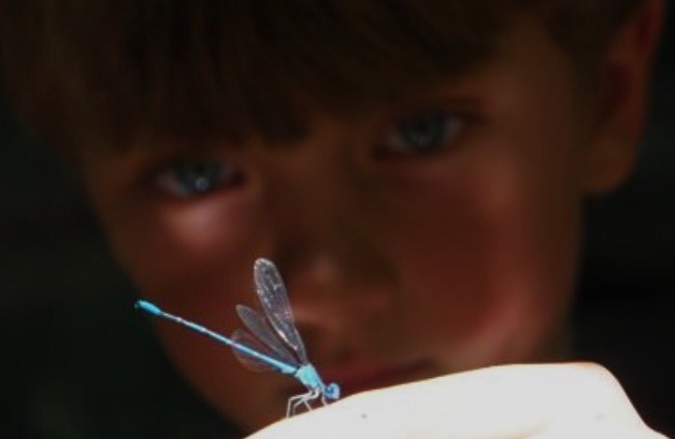
It smelled a bit when the water was stirred up, but that didn’t bother us. My sister and I would crouch near the edge watching insects. Water striders scurried on the surface. Each of their steps made a faint impression in the water as if they walked on gel. Beetles, ants, and the creatures my sister called by the fairytale name nymphs scampered through pondside plants. She liked to let insects climb up her arms. I was impressed, but too squeamish to copy her. Most magical of all were the dragonflies, their huge eyes looking back at us as they hovered on iridescent wings. This seemed like a separate world.
Eventually we had to return home. Our mother, a registered nurse who strictly adhered to standards like rigorous hand washing and early bedtimes, didn’t miss what we’d been up to. We came home spattered and stinky. But her only rule was that we strip off our clothes and scrub ourselves. She’d call from somewhere in the house, “be sure to use the nail brush!” She didn’t seem to mind that we’d walked a block away to play in a bacteria-infested pond as long as we scrubbed away all traces afterwards.
My mother was on to something.
In her book Balanced And Barefoot, pediatric occupational therapist Angela Hanscom writes about teachers, parents, and medical professionals who are alarmed by ever-growing numbers of children who can’t sit still or pay attention; who have trouble with coordination, balance, or sensory processing; who are fearful, easily frustrated, or act aggressively. She explains that these problems can be connected to an overly contained childhood, one that has become the norm. Restrictions begin in the earliest months, when babies spend hours each day strapped into strollers, car seats, and baby seats. As they get older their movements are curbed by passive indoor activities. Even outdoors, kids are often limited to low-challenge play areas or to prescribed movement in adult-structured programs.
The push for academics, often starting in preschool, strips even more time from active free play, while elementary schools are increasingly limiting or eliminating recess. This is profoundly counterproductive. Reading readiness is strongly influenced by physical movement. So is grasping and using mathematical concepts.
It helps to understand just how closely movement and sensory input is related to development. In the first year of a baby’s life, her brain doubles in size. It reaches 80 percent of its adult volume by age three. Babies are born with vast numbers of neuronal links in their brains and spines, primed to be shaped by what they encounter. Unused networks are not activated and disappear. This is what neuroscientists call “experience-dependent plasticity.” Early experiences rich in movement (plus the nurturance and emotional warmth that set the foundation for learning) activate a wider range of neural connections. This is nature’s wisdom at work, shaping a child’s brain through experience so they develop what they’ll need for the world they’re born into.
Your baby squirms and cries after a few minutes in the high chair. He can be placated with a new food or a spoon to bang on the tray, but only for a few minutes. He wants to get to work on crawling. Your toddler resists being put in her car seat and sometimes cries until she exhausts herself. She wants to run, climb, and play. They’re both responding to an inborn need to learn through movement.
Gill Connell and Cheryl McCarthy, authors ofA Moving Child is a Learning Child, clarify. They write that neural pathways developed in the first years of life,
“determine how a child thinks and learns, but more importantly, they will shape who she becomes… her passions and pursuits, triumphs and challenges, inner reflections, outer reactions, and outlook on life…all flowing through the neural network built by her earliest physical and sensory experiences.
With breathtaking simplicity, nature has created this move-to-learn process to be both dynamic and self-perpetuating, building the body and brain simultaneously. As such, the more a child moves, the more she stimulates her brain. The more the brain is stimulated, the more movement is required to go get more stimulation. In this way, nature gently coaxes the child to explore beyond her current boundaries toward her own curiosity to acquire new capabilities.”
Overall, today’s kids show decreasing core strength and flexibility compared to averages in the 1980’s.”The more we restrict children’s movement and separate children from nature,” Angela Hanscom explains, “the more sensory disorganization we see.” That’s why she advocates sensory-rich, movement-based outdoor free play. Chasing, rolling down slopes, climbing trees, playing with nature’s play-perfect loose parts like leaves and sticks — these and other experiences build spatial awareness, balance, fine motor skills, and bodily control.
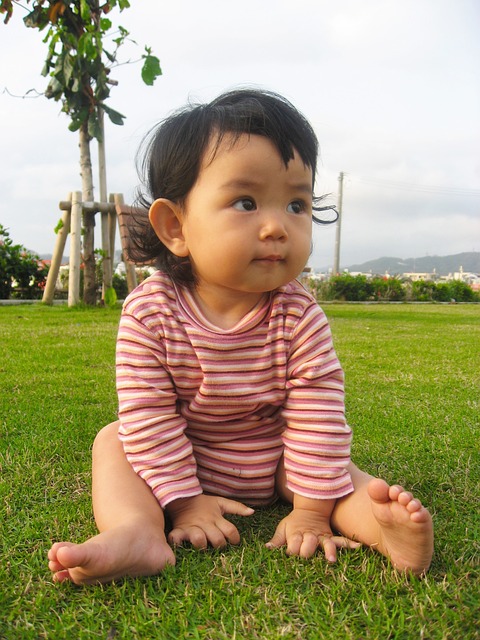
Let’s hone in on one sensory-rich experience; going barefoot. Madeline Avci, an Australian pediatric occupational therapist, explains that walking on grass, stones, and sand develops body awareness, called proprioception. Nerve endings in the feet and toes promote the development of sensory pathways, building functional movement patterns while helping children move with a sense of their body in space. When we wear shoes, the quality of sensory information is diminished. A paper published in Podiatry Management details all sorts of ways shoes, including those with flexible soles, interfere with a child’s gait, development, and posture. Walking barefoot also promotes better biomechanics, a more natural gait, and less pressure on our feet. Bones in the feet are not fully ossified until the late teen years, so the more barefoot time possible, the more naturally the foot’s shape can develop. Of course few of us are raising our families in a beachside hut where walking barefoot makes sense year-round. But Katy Bowman, author of Move Your DNA, suggests that all of us try to walk on natural surfaces like sand, rocks, grass, or wood for 10 to 20 minutes a day whenever possible, and to go barefoot at home.
Neurobiologist Gerald Hüther notes that “the most important learning experiences come to us, essentially, by way of our bodies — which means that learning is always an experience of the whole body. At the same time, every learning experience involves emotions. We are only able to learn when the so-called emotional centers in the brain are activated. These centers release neuroplastic messenger substances enabling what has been learned to become anchored in the brain ….[via] emotional activation. The most enjoyable activation we know of is ‘enthusiasm.'”
It’s ridiculous that we need science to confirm the value of enthusiasm. This is the energy each child brings fresh to the world. What they’re able to explore and experience with the whole of themselves, magnified by the capacity for awe, remains with them.
Dr. Hüther gives an example,
“Children living in the Amazon forests learn 120 different shades of green and can name them all, using 120 different terms. Potential of that kind is either used in practice or is little used. Children here can at best distinguish light green, green, and dark green. How far a potential is actually used depends on how important it is .. in a given culture…The result is that what was once a possibility, this potential, …if not used, will just wither away.”
Enthusiasm goes a long way toward explaining why children and nature go together so well. Children are themselves magic — able to shape shift into a toad or hawk, to feel what it’s like to hop nearly hidden under leaves or to glide on the air’s invisible currents. While imagination is alive everywhere, it can’t help but flourish when surrounded by aliveness. The more natural an area, the more kids have a chance to have meaningful encounters with the life around them. In fact, kids play differently in a park with play structures compared to more natural areas like an overgrown field, a row of trees, or a small creek.
As Richard Louv details inLast Child in the Woods, kids confined to structured play areas have poorer balance and agility than those who play in unpaved areas. The social dynamic changes too. Older and physically larger kids dominate on playgrounds but in more natural areas, it’s the creative kids who act as leaders. In wild places, even an overgrown lot, kids are more likely to incorporate each other’s ideas into expressive make-believe scenarios using their dynamic surroundings—tall grasses become a savannah, tree roots become elf houses, pine cones become treasure. The essence of the child comes alive. Outdoor play in natural areas is more likely to include peers of differing ages and abilities. Regular outdoor experiences not only boost emotional health, memory, and problem solving, they also help children learn how to get along with each other.
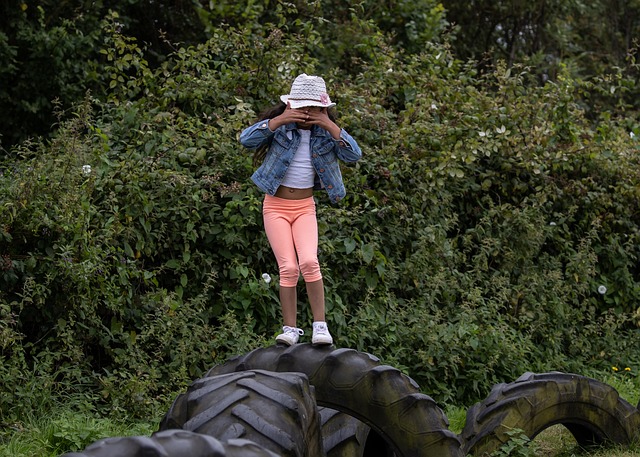
Outdoor free play also inspires kids to challenge themselves. They are things to climb on and places to explore. In pursuit of fun, kids ignore minor annoyances like cold fingers, sharp briars, stumbles. Kids face and overcome fears. Such play is linked to greater social skill, resilience, and creativity.
And if you’re interested in academic test results, time outdoors has an impact there too. Here are a few encouraging studies.
Kids exposed to more nature had higher scores of working memory than kids who did not.
Simply going for a walk in a nature area, in any weather, can significantly improve memory and attention spans improved by 20 percent after people spent an hour interacting with nature.
If pre-college test results perk up your interest, the children most connected to nature are also most likely to score well in tests including the SAT.
We also know exposure to bacteria can be a good thing. Certain bacteria found in soil, Mycobacterium vaccae, have been found to boost the release of serotonin, a neurotransmitter linked to positive mood and enhanced learning.
Dirt may improve our health too. For example, children who grow up exposed to a greater range of soil microorganisms have been found, in some studies, to have a lower incidence of asthma. Heck, even common bacteria on our skin have been shown to cut down on rashes and reduce inflammation when we’re cut or bruised. A child’s exposure to dirt is part of the body’s education, microbiologist Mary Ruebush explains inWhy Dirt Is Good, “allowing his immune system to explore his environment.” (She adds a caveat, saying that the soil in some urban areas may be contaminated with heavy metals such as lead. That is indeed a wakeup cry. Soil is the structure we need to feed ourselves. When it’s poisoned, so is life.)
The importance of outdoor free play is getting a lot of attention these days. Playground designers, schools, and daycare programs are far more open to the benefits of outdoor free play with natural materials. It’s no surprise that children do better with natural sensory play, places for solitude, and opportunities for self-chosen challenge. This is a step in the right direction. A few steps farther and we’ll let kids back in nature herself to play in woodlands, fields, and beaches as well as back lots, mud puddles, and all the nature around us. It’s a step in the direction of wonder and delight, maybe even in the muck of a duck pond.
When my mother was a little girl, a favorite aunt took her for a walk in the woods to spot wildflowers each spring. It was a tradition my mother upheld each year when she had her own children. She’d talk in whispered tones as she pointed out snowdrops, violets, jack-in-the-pulpit, trillium, and spring beauties. My father was a more avid nature lover and often took us for walks in the Cleveland Metroparks where he let us lead the way on hikes, climb on fallen trees, and skip stones in the river. These were pivotal experiences for me.
But time I spent in nature without adults left the biggest impression. I’ve written before about how the woods behind our house enlarged my imagination and sense of wonder. A more unlikely place I held dear was right next to the library parking lot. Many times after we picked out books, my mother let us go outside while she stood in line to check out. We’d go down a small incline where a tiny stream wiggled past. Most of the year it was just a trickle coming from the open mouth of a drainage pipe, but to us it was mesmerizing. We’d crouch at the edge looking for insects and tadpoles. We’d drop in leaves to see if they’d float away. We’d add a rock to watch water riffle around it. Most exhilarating was after a rainfall, when water poured from the pipe. We were careful not to get too close because we’d lose this privilege if we got our shoes wet. Each visit to the stream was brief, ending when our mother called us to get in the car.
Not long ago I drove back to look at that spot. I found a tiny ditch between two parking lots, something I wouldn’t even notice unless I was looking for it. But because my siblings and I were free to investigate it on our own, it was elevated. It was a Special Place.
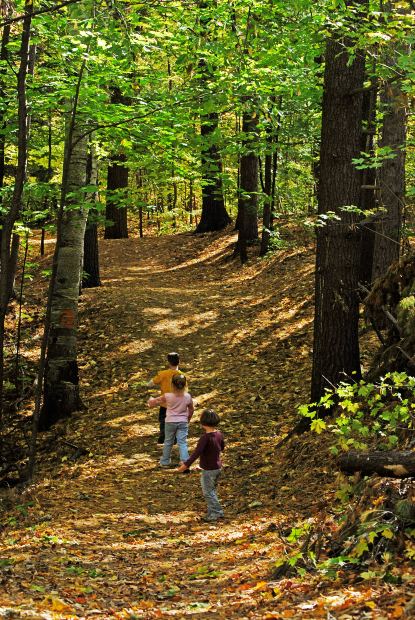
Such places are around most of us, no matter where we live. And kids can find them! It might be a rampantly green area behind an apartment building where it’s hard for mowers to reach. Trees to climb and small hills to master on empty city lots. A mini meadow or woods at the end of a cul-de-sac. A ravine or other backyard area left wild.
These places may seem inconsequential to adults, who tend to view nature as somewhere else, somewhere pristine and unspoiled. In reality nature is constantly around us and in us. Giving kids freedom to explore, observe, play, and get dirty allows them to make these tiny places a whole universe.
As Richard Louv reminds us in Last Child in the Woods, even small natural areas are better than playgrounds and manicured parks. They call up a more resilient and engaged way of being. When children spend time in natural areas their play is more creative and they self-manage risk more appropriately. They’re more likely to incorporate each other’s ideas into expressive make-believe scenarios using their dynamic surroundings—tall grasses become a savanna, tree roots become elf houses, boulders become a fort. Their games are more likely to incorporate peers of differing ages and abilities. Such outdoor experiences not only boost emotional health, memory, and problem solving, they also help children learn how to get along with each other in ever-changing circumstances.
And free play in nature helps children develop a kinship with the natural world. When researchers asked 2,000 adults about childhood nature experiences, they found those who participated in activities such as camping, playing in the woods, hiking, and fishing were more likely to care about the environment. Taking part in structured outdoor activities such as scouts and other education programs had no effect on later environmental attitudes or behaviors. The lead researcher, environmental psychologist Nancy Wells, surmised that “participating in nature-related activities that are mandatory evidently do not have the same effects as free play in nature…”
Time in nature, even a small patch of it, lets kids center themselves in something greater. As John Muir wrote, “Wonderful how completely everything in wild nature fits into us, as if truly part and parent of us. The sun shines not on us, but in us. The rivers flow not past, but through us, thrilling, tingling, vibrating every fiber and cell of the substance of our bodies, making them glide and sing.”
“When the fun goes out of play, most often so does the learning” –Joanne E. Oppenheim
I recently had coffee with a child psychologist friend. She told me her practice is packed with parents desperate to find solutions for their unhappy children. She sees six-year-olds who are anxious and withdrawn. Eight-year-olds who are angry and cynical. Preteens who suffer from perfectionism, from depression, from self-harming behaviors.
I nodded sorrowfully.
We discussed today’s childhood stressors, from too much homework to too little family time. We agreed kids need more opportunities for play. But I couldn’t hide my surprise when she said she often advised parents to get their kids into sports.
My eyebrows went up and I probably ranted a little. I sputtered that organized sports aren’t really play. Play is self-directed fun that exists for its own sake. While organized sports can be and often are fun, they’re still highly structured programs run by adults. I asked my friend if she prescribed play, why not free play?
She agreed in principle. “But there are no kids running around outside any more,” she said gently, “We have to funnel them into sports so at least they get a semblance of play.”
That may be the status quo in many areas, but it doesn’t have to be.
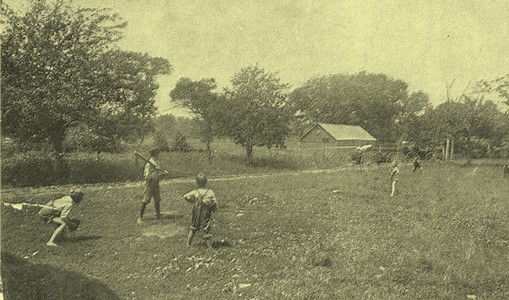
Sports, like play, used to belong entirely to kids. Just a few generations ago there weren’t many organized sports programs, especially for kids younger than teens. Kids loved sports with just as much fervor as they do today, but to engage in them they simply went outside, found a few other kids, and played.
Organized competitions for boys began to rise in the 19th century following the emergence of compulsory education. The school day itself restructured children’s lives, separating educational time from free time. Adults began to more seriously consider how kids used those out-of-school hours. By the early part of the 20th century, increasing numbers of immigrant children playing on city streets got the attention of reformers. Along with an extraordinary new movement to create urban playgrounds, and organizations that took poor children to the country for nature experiences, came the idea that play should be supervised, particularly for boys from the poorest families. As historian Robert Halpern explains, the physical challenges of sports were thought to prepare the poorest classes to be physical laborers in the emerging industrial society.
According toUntil It Hurts by Mark Hyman, the forerunners of today’s supervised youth teams were originally made up of mostly poor and lower-middle-class children, and were intended to ameliorate social conditions. Leagues were started by organizations such as the Young Men’s Christian Association (YMCA) which used sports to promote religion more than to advance athletics as well as groups advocating organized sports as way to save boys from vice. Little League took hold during the Depression, slotting youthful energy toward sports in a time when the job outlook wasn’t good.
Until a few generations ago most middle-class children in the U.S. didn’t engage in organized sports outside of the school day until they were in their early teens, and then usually in school sponsored teams. A middle-class emphasis on adult-run sports ratcheted up right around the time that salaries for professional teams began to skyrocket. Parents and coaches promoted the idea that talented kids had a shot at professional sports if they started early, worked hard, and were sprinkled with enough “believe in yourself” magic. Sports bulged beyond traditional seasons with training camps, private coaching, and travel games.
Parents also began to equate success in athletics with a better chance of admission to choice colleges and universities. This motivated parents to start their kids in organized sports at younger and younger ages, hoping to give them a competitive edge over other kids.
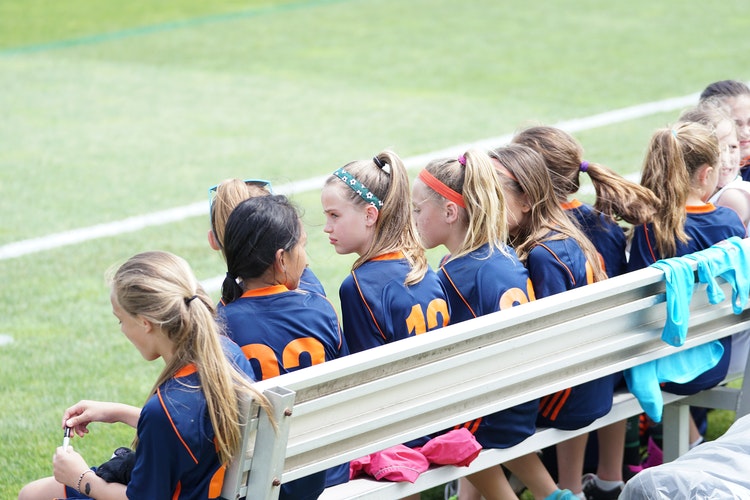
Now, organized sports have become standard for children as young as four years old, sometimes younger. A distinguishing factor in early entry into competitive sports is monetary—kids are most likely to start young when annual household income is over $100,000. Already in the U.S., 60 percent of boys and 47 percent of girls are on a team by age six.
Sports participation dominates in the suburbs where boys are likely to play on three or more teams. Parents are expected to buy specialized gear, drive children to practices, attend games, participate in fundraisers, plus pay for skill clinics and off-season camps. Enthusiastic participants can find extraordinary positives in sports, particularly in the preteen and teen years, but is it worth starting so young and becoming so heavily committed? Childhood time for free play is sacrificed. So is family time. Is all this necessary?
Apparently not. Here are some reasons why.
Starting kids as early as possible does not give them an advantage over other kids. In fact, notes Brooke de Lench in Home Team Advantage, it has been found to diminish their eagerness to participate.
De Lench also finds that preschoolers who take part in sports programs are not more likely to be high school athletes than kids who don’t.
Correctly identifying who is genuinely talented at a young age is extremely complicated. Studies reported by the National Institutes of Health show the earlier a child is identified as having talent, the more uncertain is the prediction of his or her future success.
Elite achievement in youth does not translate into these early high achievers becoming pinnacles of their fields in adulthood. There are some well-known exceptions, but top achievers in adulthood typically advance more gradually in their over a longer period of time after growing up with diverse interests. This is the conclusion of a study analyzing data on 34,000 adult high achievers around the world as well as 66 studies of young prodigies and people just below the elite level of their fields. “When comparing performers across the highest levels of achievement,” the researchers wrote, “the evidence suggests that eventual peak performance is negatively associated with early performance.”
Sports, even in the early elementary years, can be intense. Hours devoted to practice sessions, clinics, games, and tournaments chew up children’s free time. But pressure doesn’t create champions. When educational psychologist Benjamin Bloom interviewed world-class tennis players about their early years, they talked about not being any better than other players. They remembered their parents supported them without taking over and their coaches made tennis fun. Their own enthusiasm drove them forward. And sports psychologists remind parents that young children aren’t able to differentiate performance from who they are as people.
The bullying coach isn’t just a meme. It’s all too often a reality, one that’s harmful not only for young children but older athletes as well. Laurence Steinberg, an expert on adolescent psychology, explains in The Atlantic that the pressure on kids causes serious performance anxiety. Critical, sometimes demeaning language directed at kids is far more powerful than adults realize, particularly during the teen years when the brain is more highly attuned to emotional arousal. “When an adult is delivering a message to an adolescent, if it’s in an emotional way,” Steinberg says, “the kids will pay more attention to the way the message is delivered than to what is in the message.”
Negative, high pressure coaching doesn’t improve young athletes’ performances. A study of coaching techniques published in the journal Sport, Exercise, and Performance Psychology concluded, “…abusive coaching behaviors can bring out the worst in their team by fostering an atmosphere where student-athletes are more willing to cheat, less inclusive toward others, and less satisfied…”
A study of over 1,600 high school athletes published in the Journal of Adolescent Health noted that teenage boys who participate in football and/or basketball are almost twice as likely to have acted abusively to their dating partners. Researchers found that high school athletics can reinforce “hyper-masculine attitudes,” and boys who hold such attitudes were up to three times more likely to abuse their girlfriends. Another study of nearly 100,000 high school students, published in American Sociological Review, found that players of contact-heavy sports, particularly football, were nearly 40 percent more likely to act aggressively off the field than non-athletes.These aren’t necessarily causative factors but are a reason for concern.
As young athletes get older, they’re increasingly likely to drop out. Almost 75 percent of kids who play organized sports quit by age 13, according to Steven Henson on the blog The Post Game. Their reasons? Nearly 40 percent list as their top reason, “I was not having fun.” Even more young people drop out in their freshman year, when stats show there’s another 26 percent drop in the number of students who play.
The odds, overall, of a high school athlete landing a college scholarship at an NCAA school stands at two percent. That’s true even for youth whose parents have spent heavily on high-level youth sport for years.
The cost of competing is increasingly likely to consume up to 10.5 percent of gross family income. Parents on average pay per player, per year (in 2015 dollars): $2,200 to $4,000 to participate in travel soccer, $2,600 in hockey, $5,000 to more than $10,000 for gymnastics. “
All this spending ratchets up the pressure on young athletes. When college players were asked to talk about their worst memory from playing youth sports, overwhelmingly they answered, “The ride home from games with my parents.” Apparently even the most well-intentioned parents weigh in with their opinions rather than allowing the child to own his or her own experience. It’s significant to note that the same survey of players found the best comment by parents was very simply, “I love to watch you play.”
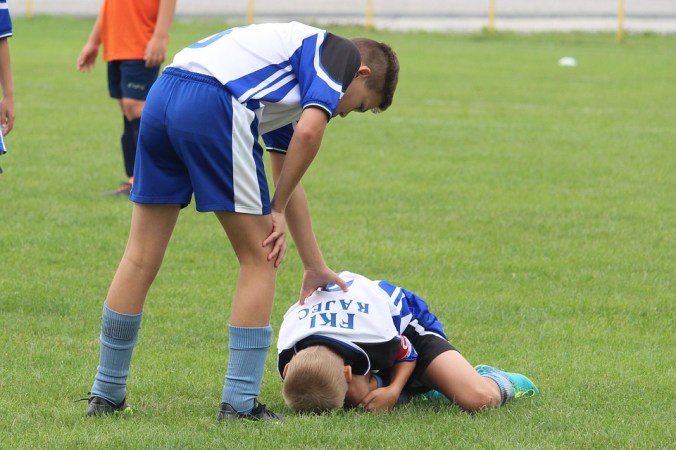
Then there are the health consequences. Reports of injuries are up, with 2.6 million emergency room visits a year, and there’s evidence that concussions and other head trauma cause lasting damage. In soccer alone, kids are playing more competitively more months of the year, leading to a 74 percent increase in injuries severe enough to be treated in a hospital ER. Some of that may be an increased awareness of head injuries, but removing such injuries from the data still reveals a 60 percent increase in ER visits due to youth soccer. Imaging studies published in the journal Radiology shows football players younger than 13, with no concussion symptoms, still show signs associated with traumatic brain injury. A large-scale study in Sweden found teen concussions appear to increase the risk of developing multiple sclerosis later in life. Another study found children who started playing football before the age of 12 manifested mental health problems later in life at much higher rates than people who took up the sport later. They were twice as likely to have issues with initiative, problem solving, and apathy and three times more likely to have symptoms of depression. The results were not related to total number of years in football or number of concussions reported, but specifically related to early experience playing football. The first major study of chronic traumatic encephalopathy (CTE) in young people who died before the age of 30 found of those engaged in contact sports, 40 percent had this degenerative brain disease linked to head trauma. And a study funded by the Michael J. Fox Foundation people diagnosed with Parkinson’s disease were were 61 percent more likely to have a history of playing organized tackle football. Although rarely studied, there is some evidence that children are much more likely to suffer serious harm in adult-run sports than in pick-up games.
One reason parents encourage sports is to boost a child’s health, yet obesity is on the increase. From the early 1970s to now, the prevalence of obesity in children ages 6 to 11 has quadrupled; for those ages 12 to 19 years it has tripled. There are certainly many causes, including more processed foods in the diet and more estrogen-mimicking hormones in the environment, but organized sports may be a factor. If you compare kids running and climbing freely on a playground with kids the same age running laps to warm up for soccer practice, you see eager full body movement reduced to an obligation. Children are normally full of energy. They play energetically for the sheer joy of movement. But when that activity is channeled into practices and games, kids may be turned off from engaging in physical activity outside of sports, instead slumping into a chair like workers after a busy factory shift. We know that external rewards diminish intrinsic motivation. For example, rewarding kids for reading severely diminishes their motivation to read for pleasure. It’s worth considering that sports might have a similar effect on some young people’s desire to engage in other forms of physical play.
Participation in organized youth sports is correlated with lower overall creativity while playing informal games is significantly related to overall creativity. One study compared the sort of childhood leisure activities students engaged in with their levels of creativity as assessed on the Abbreviated Torrance Test for Adults. The most highly creative students spent only about two hours a week in structured sports throughout their school-age years.
It’s not an all or nothing proposition. Sports brim with benefits. They promote fitness. They can provide extraordinary lessons in teamwork, persistence, and handling disappointment. That’s true of organized sports, but it’s also true of informal sports. The issue is really about what adults have done to co-opt and overrun the games kids once organized on their own to play with each other, and how we can leave more time in children’s lives to play as they choose.
“The cure for boredom is curiosity. There is no cure for curiosity.” ~Dorothy Parker
Eight-year-old twins Caleb and Ella used to complain of boredom on a daily basis. “There’s nothing to do,” they’d whine. “I’m bored!”
Their father Mateo didn’t remember being bored when he was growing up. Back in the early 90’s he rode his bike wherever he needed to go. A favorite place he and other kids played was a small creek behind an apartment building. At home he liked to read comics or tinker with projects of his own devising (including a phase of making anti-burglar projects after watching Home Alone). He says he honed his daydreaming skills when he was bored in school. Being an inattentive student didn’t bring him the best grades, but he’s now an aspiring cartoonist who relies on daydreaming for ideas.
Their mother Camila said her childhood wasn’t boring either. She remembered lots of imaginative play with her sister while their mother worked a full-time job at home. The girls played for hours as spies, queens, and magicians. They also liked to play office, mimicking their mother’s phone calls and typing. Camila says her friends preferred playing at her house because they were allowed to hang sheets off a tree branch for an impromptu theater, bake cupcakes, even paint and repaint their old wooden play structure in the back yard.
“If I moped around my mother would say, ‘Go out and play.’ It wasn’t a suggestion, it was a command,” Mateo said. “Maybe that’s what made me so self-reliant.”
When Caleb and Ella complained of boredom their parents gestured to all the toys they owned and reminded their kids about sports practice and other activities. They urged their kids to go outside. But the kids tended to say, “There’s nothing I want to do!” and off they’d go to play a game on the tablet, watch the same movie again, or look for a snack.
Mateo and Camila wondered if they were unwittingly raising their kids to be bored. They worried the kids weren’t getting enough of that all-important free play. Let’s consider these possibilities.
Excessive Distractions
This may start early on. There are so many mobiles, play gyms, bouncy seats, swings, and toys marketed to new parents that we’re led to believe they’re necessary, even though babies need little more than loving connections with caregivers and a safe place to explore. Nature insures that the newest humans are perfectly cued to observe and interact with the world around them. A three-month-old lying near a window can amuse herself looking at patterns of sunlight, work on rolling over, and chew on a simple toy. She’s already busy learning exactly as she needs to learn. Few of us are raising infants in some tranquil Eden by any means. But we can avoid overstimulating them, distracting them, and breaking their concentration as they play.
Within a child’s first few years many of us accumulate a staggering overload of items, each one meant to amuse and educate our kids. Camila, who repeatedly tried to reorganize her kids’ toys, reported they had bins and shelves packed with toys but everything was always a mess. “Just to see how bad it was, I thought I’d count all their stuffed animals, large and small,” she said. “I gave up when I got to 100.”
Like so many other purchasing choices we make, quality matters more than quantity. For example, when toys are tied to specific movies or shows, kids are likely to reenact storylines but less likely to play creatively. They also play more passively with toys that make sounds, move, or otherwise perform. ” In contrast, open-ended playthings like blocks, dolls, a wagon, a ball, art supplies, and yes, a few generic stuffed animals, are far more likely to inspire imagination. Engaging fun happens when kids create their own projects, come up with their own games, and drift into their own make-believe worlds. A significant way to encourage this is the freedom to play with loose parts.
Parents (well, those who can afford it) know it’s easy to placate bored kids with a treat, toy, or digital playtime. But we don’t need to overdo it. We don’t want to teach them to depend on external stimulation instead of building strength essential for resilience and happiness at any stage in life — the ability to amuse themselves. Sure, every parent is going to distract and placate at times, but we need to keep from letting this become the go-to solution. We can build on a child’s capacity for self-directed play just by getting out of their way. This starts early on, in babyhood, as Janet Lansbury explains in “7 Myths That Discourage Independent Play” and there are all sorts of ways to encourage self-directed play as kids get older.
Top-Down Activities
The more we structure children’s time, the more we interfere with their own drive to learn, explore, imagine, and simply be. The inner motivation we want for our kids can be supplanted by external rewards like constant validation, a fix for every frustration, and bribes for good behavior. It’s possible to focus so intently on what we believe will make our children happy and successful that we forget children look to us as guides. They feel most secure when adults are grounded, consistent, and caring authority figures who trust that kids they’re growing up just fine as they are.
Many adults seem determined to keep kids busy. Unintentionally, this teaches children that fallow time is undesirable. Yet daydreaming, contemplation, even the uncomfortable condition we call “boredom” are necessary to incorporate higher level learning and to generate new ideas.
As psychologists Dorothy Singer and Jerome Singer write inThe House of Make-Believe, children who have plenty of time for free play are more imaginative and creative, have more advanced social skills, and are actually happier as they play. The Singers contrast two children who are given free-form playthings like dolls or building blocks. The child who has had plenty of experience with daydreaming and make-believe is comfortable coming up with pretend scenarios, and can easily find inventive ways to play with these toys. The child who has not had much experience with make-believe or daydreaming may find little engaging about the toys after a short time —- in other words, he gets bored quickly. The imaginative “muscles” built by daydreaming, make-believe, and downtime simply haven’t developed.
Default Screens
Here we get to the dreaded “actions speak louder than words” thing. Kids see how we handle boredom. What are our go-to solutions? When we’re waiting in line do we take the opportunity to observe what’s around us, think our own thoughts, talk to each other? When we have a free evening do we do something that actually aligns with our interests —- test out a new recipe, read a book, practice the guitar, shoot hoops, relax on the porch doing nothing but relaxing? Or do we default to scrolling through our feeds, checking email, watching videos? I’m just as engaged with screens as the next person (and hey, there are a lot of important reasons to check our phones) so I’m not pointing fingers, but it helps to recognize that this is the first generation to grow up around such immersive technology and our example matters.
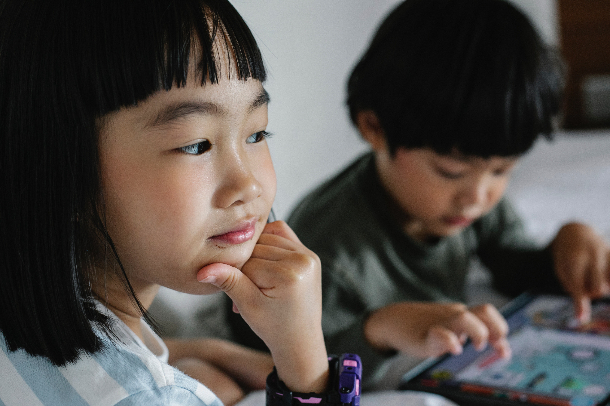
According to their parents, many days Caleb played online games for hours and Ella liked to watch the same movies over and over. There’s a great deal of variability in how screen time affects different children and there are enormous positives to be found in the offerings of today’s technology, but apparently not in a child’s earliest years.
Preliminary research indicates that exposure to more than two hours a day of screen time (even background screens) during infancy and toddlerhood is associated with a shorter attention span and more difficulty with self-regulation (the ability control one’s own behavior) as they get older. Pediatrician Dimitri Christakis believes that rapidly changing images on the screen precondition a young child’s mind to expect high levels of stimulation, making lower levels of stimulation such as those found in everyday life somewhat boring. (Dr. Christakis’ viewpoint is, at this point, remains largely conjecture.)
Older kids often use screens in more challenging and stimulating ways. Today’s electronics are far from the passive entertainment Ella and Caleb’s parents and grandparents grew up with. It is, however, a problem when sitting for hours on end replaces other more active, hands-on ways of being. Sometimes kids simply get out of the habit of doing other things. One study even found that older kids are bored during screen time but feel they don’t have other play options. Perhaps that’s because kids don’t have permission to do a variety of other things like make a mess, make noise, and get out of sight of adults —- sure signs that fun is happening.
Makers of toys, games, and movies expect boredom. They counteract this by ramping up conflict and violence to more effectively sustain attention. Makers of children’s programming, even children’s building sets, have resorted to increasingly violent themes to boost sales. Marketers certainly know how to use brain science to keep our kids’ dopamine levels surging.
We definitely get those dopamine hits when we play a video game or watch a movie. Nothing wrong with that. Our brains get the same rush of pleasure when we create, challenge ourselves, get active, socialize, figure out a problem. Remember that role model thing? Let’s remember to demonstrate to our kids that we enjoy our screens and get a kick out of non-screen living too. Maybe learn some new dance movies, fix something broken, make up a story, invent a new sandwich, ask Grandma to teach you something, wave to garbage collectors, or whatever playful idea strikes your fancy. Playfulness is contagious.
Two Kinds of Boredom
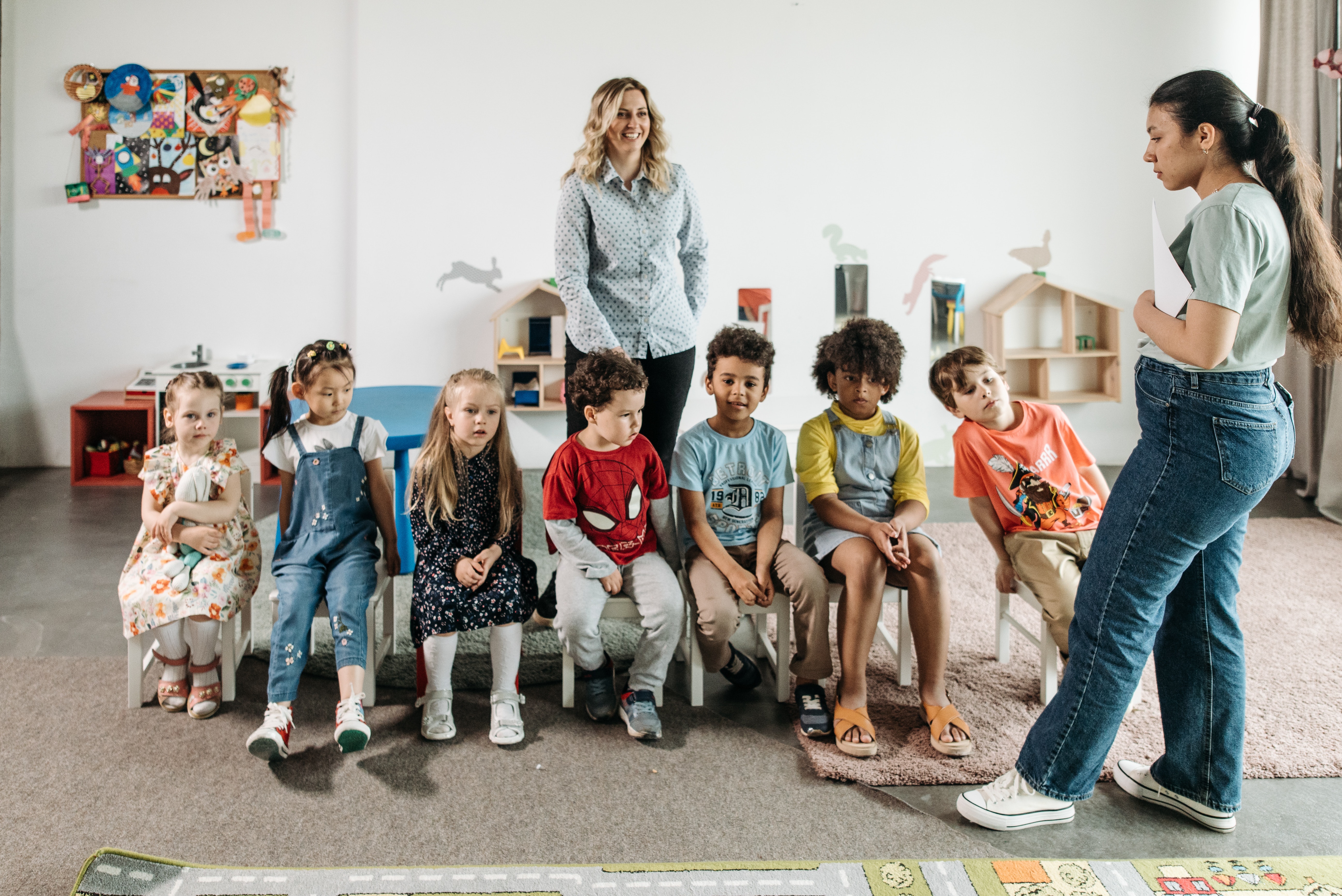
There’s a difference between a shut-down, numb mind and a fertile, constructively bored mind. Numbing boredom can set in when kids are stuck in a situation where they have very little control over their own activities. This is common in structured, physically restrictive settings — think school, religious services, long trips in the car, sitting through a sibling’s sports event. When numbing boredom happens too often or goes on too long, kids may learn passivity or learn to make trouble.
Constructive boredom is something else entirely. It’s a fertile state all its own. When kids sit on their nothing-to-do frustrations for a while, boredom can hatch into all sorts of possibilities. What kids invent when making their own fun invariably challenges them in myriad ways, often right to the edge of their next developmental milestones. What we don’t want to do is take over or supervise too closely, squashing boredom’s marvelous potential.
Boredom may feel uncomfortable, but it’s actually the tingle of imagination signaling of possibilities to explore. We can tell kids to say “yes” to boredom, letting it tug at them until they come up with an idea. When they do, we need to remember to say “yes” to as many of their ideas as we can, to accept the mess and uncertainty and noise that often accompanies kid-generated fun.
~~~~~
Camila and Mateo were frustrated by their children’s chronic boredom until a radical change was imposed on them. Mateo, who worked in building maintenance, lost his job when the company closed. His only income was a small cash flow from drawing comics and some side jobs as an illustrator. Camila taught several courses as an adjunct at a local college for low pay. Faced with a drastically reduced income, they talked to the kids and together prioritized holding on to their house and maintaining a close family.
This meant taking big steps to simplify. They stopped the kids’ lessons and sports. They dropped cable, leaving internet service with a data cap — which cut into Caleb’s gaming time and Ella’s movie time. They held a series of tag sales to raise money. The kids chose what toys to sell and kept the proceeds. (They turned their nearly empty closets into hideouts.)
Next they embarked on a project to bring in some income by converting their walk-out basement into a compact apartment to rent out. It was hard work, even harder to adjust to having another person living in their house at first, but the rent effectively paid most of their mortgage.
Mateo found another job three months later, yet they’re sticking with the changes made during the upheaval of unemployment. “No one wants to minimize because they’re forced to,” Mateo says, “but what we cut out helped.”
He sees all sorts of benefits. There’s no nagging about getting out the door for sports practice and games. Honing down their possessions cooled the pressure on everyone to clean up clutter and almost magically made their home feel more welcoming. Rehabbing the basement, Mateo believes, was the best thing of all. The kids felt good about helping out and still incorporate “fixing things” into their play. It’s like this was a reboot,” he says, “reminding us the four of us are in this together.”
Camila reports the kids are thriving. “They’re not perfect,” she says, “but there’s a lot less whining. I’m really impressed that they’re able to amuse themselves for hours on end.” That day while she graded papers, Caleb and Ella colored, pretended the stairs were a volcano, and made paper airplanes they threw off the porch. Then they conducted an ill-fated experiment to see if they could balance the recycling bin on their dad’s old skateboard. They could not, but they got an idea for another project as they cleaned up the spilled contents. Painful as simplifying was, it helped bored kids find ways to make their own fun.
The big takeaway from Caleb and Ella’s story, to me, doesn’t center on fewer structured activities, minimizing toys, or helping out around the house. It has to do with having time and freedom to play. Time? Hours each day. Freedom? Noise, mess, arguments, mistakes, space to play away from constant adult supervision. As Robert Coles said, “We all need empty hours in our lives or we will have no time to create or dream.”
School-like instruction has been around less than a fraction of one percent of the time we humans have been on earth. Yet humanity has thrived. That’s because we’re all born to be free range learners. We are born motivated to explore, play, emulate role models, challenge ourselves, make mistakes and try again—continually gaining mastery. That’s how everyone learns to walk and talk. That’s how young people have become capable adults throughout history. And that’s how we have advanced the arts, sciences, and technology. In the long view, school is the experiment.
But it’s hard to see beyond the school mindset because most of us went to school in our formative years. So when we think of education, we tend to view school as the standard even if we simultaneously realize that many parts of that model (found also in daycare, preschool, kids’ clubs, and enrichment programs) aren’t necessarily beneficial. Narrowing the innate way we learn can interfere with the full development of our gifts.
Here are five ways to get past the school mindset.
Welcome divergent thinking
In today’s test-heavy schools the emphasis is on coming up with the correct answer, but we know that the effort to avoid making mistakes steers children away from naturally innovative perspectives. Divergent thinking generates ideas. It’s associated with people who are persistent, curious, and nonconforming. Research going back to the 1970’s shows that this generation of children are less imaginative and less able to produce original ideas. An extra whammy may very well be coming from increased participation in organized sports: more than a few hours a week appears to lower a child’s creativity.
This is dire news, because creativity is actually much more closely linked to adult accomplishment than IQ. In fact, 1,500 CEO’s listed creativity as the leading indicator of “leadership competency.”
We don’t have to instruct kids in divergent thinking, just nurture it. Children are naturally inclined to question and explore. Remain open to their enthusiasms, encourage them to identify and solve problems no matter how unusual, and welcome the learning power of mistakes.
Value full body learning
School-like learning emphasizes the brain over the body. It narrows from there, emphasizing one hemisphere of the brain over the other with its focuses on left-brain analytical thinking. But children don’t learn easily when they spend so much time sitting still, eyes focused on a teacher or lesson or screen, their curiosity silenced and their movements limited. Children ache for more active involvement.
What we need to remember is that the mind and body are exquisitely tuned to work together. Movement allows sensory input to stimulate the brain as it absorbs a flood of information. This is the way the brain builds new neural pathways, locking learning into memory. (Check out A Moving Child Is a Learning Child by Gill Connell andCheryl McCarthy, Balanced and Barefootby Angela Hanscom, as well as Spark by John J. Ratey for more on this.) Active, talkative, curious children aren’t “bad.” They’re normal.
If we look at movement we realize that even a very brain-y activity, reading, has to do with the body. Young children develop reading readiness in a variety of ways, including conversation and being read to, but also through physical activities that help their neurological pathways mature. These are activities children will do whenever given the opportunity, like swinging, skipping, climbing, walking, and swimming.
All the relentless activity of early childhood may very well be a sort of intrinsic wisdom built into them, because movement is key to keeping an active brain. Children who are more physically active actually increase the areas of their brains necessary for learning and memory. That doesn’t mean the antidote to the school mindset is a constant frenzy of activity. It does mean that children tend to self-regulate within loving safeguards. Every child needs to balance physical activity with other essentials like snuggling, daydreaming, and sufficient sleep. We simply need to remember that movement isn’t an enemy of education.
Build on the “Goldilocks effect”
This term came from researchers who demonstrate that we are cued to ignore information that’s too simple or too complex. Instead we’re drawn to and best able learn from situations that are “just right.” Sort of like the educational equivalent of Goldilocks on a porridge-testing quest.
The Goldilocks effect means you are attracted to what holds just the right amount of challenge for you right now. Usually that means something that sparks your interest and holds it close to the edge of your abilities, encouraging you to push yourself to greater mastery. That’s the principle used to hold a player’s attention in video games. That’s what inspires artists, musicians, and athletes to ever greater accomplishments. That’s how kids who follow a passion of their own tend to learn and retain more than any prepared lesson could teach them.
Our kids tell what they’re ready to learn. They tell us through what bores them and fascinates them, what they’re drawn to and what they resist. They’re telling us that, until they’re ready, learning doesn’t stick.
Diminish the focus on instruction
The school mindset leads us to believe that children benefit from lessons, the newest educational toys and electronics, coached sports at an early age, and other adult-designed, adult-led endeavors. Well-intentioned parents work hard to provide their children with these pricey advantages. We do this because we believe that learning flows from instruction. By that logic the more avenues of adult-directed learning, the more kids will benefit. But there’s very limited evidence that all this effort, time, and money results in learning of any real value. In fact, it appears too many structured activities diminish a child’s ability to set and reach goals independently.
When we interfere too much with natural learning, children show us with stubbornness or disinterest that real education has very little to do with instruction.Learning has much more to do with curiosity, exploration, problem solving, and innovation. For example, if baby encounters a toy she’s never seen before, she will investigate to figure out the best way or a number of different ways to use it. That is, unless an adult demonstrates how to use it. Then all those other potential avenues tend to close and the baby is less likely to find multiple creative ways to use that toy.
This isn’t to say that all instruction is bad, by any means. It does mean that six long hours of school-based instruction plus afterschool adult-organized activities in sports or recreation or screen time supplants the kind of direct, open-ended, hands-on activity that’s more closely associated with learning. Most of the time this kind of learning is called play.
Recognize free play is learning
Before a young child enters any form of schooling, his approach to as much of life as possible is playful. A walk is play, looking at a bug is play, listening to books being read is play, helping with chores is play. The school mindset separates what is deemed “educational” from the rest of a child’s experience. It leads us to believe that learning is specific, measurable, and best managed by experts.
A divide appears where before there was a seamless whole. Playful absorption in any activity is on one side in opposition to work and learning on another. This sets the inherent joy and meaning in all these things adrift. The energy that formerly prompted a child to explore, ask questions, and eagerly leap ahead becomes a social liability in school. But play is essential for kids, for teens, for all of us. (For more check out these two marvelous and very different books: Free to Learnby Peter Gray and A Playful Path by Bernie DeKoven.)
Free play promotes self-regulation and this is a biggie. It means the ability to control behavior, resist impulse, and exert self-control —all critical factors in maturity. Play fosters learning in realms such as language, social skills, and spatial relations. It teaches a child to adapt, innovate, handle stress, and think independently. Even attention span increases in direct correlation to play.
I want to nurture my children in such a way that they define success on their own terms. I hope that means they craft a life based on integrity, one that brings their unique gifts to the world. Homeschooling, for my family, gives us the freedom to go beyond narrow roads to success. (Democratic schools can also provide that freedom.) This is the way young people have learned throughout time. I’ve come to trust the way it works for my family.
My daughter started preschool a month before she turned three. She was too young. The facility was wonderful, the teachers kind, the activities entirely age-appropriate but she resisted the structure. It didn’t make sense to her that she was asked to learn color words she already knew. Or that she had to perform with her classmates at the annual holiday show after she’d already practiced the song and movement pieces well beyond her boredom tolerance. She did what she was told but she wasn’t happy.
I know why I was eager for her to start. Pregnant with her brother, I felt nauseated all the time and hoped preschool would feed her active mind. Or perhaps because she had been chronically ill nearly all of her first three years. Now she was finally better and I suspect, unconsciously, I signed her up to assure myself she was as healthy as any other little girl.
When I talked with her teachers about my child’s frustrations they emphasized how important it was to follow rules, even if she didn’t see the logic herself, because it prepared her to conform to many more rules in “real” school. That didn’t make sense to me either and we finally pulled her out of preschool.
Once she was a preschool dropout we went back to our ordinary, richly educational lives of chores and play. We played outside, hiked in the woods, made up songs, went to the library, visited friends and family, took trips to museums, snuggled, and read. She filled her free time with make-believe play as well as hours of drawing while listening to story tapes. If I had to do it over again, I’d have skipped preschool entirely. I’m not against the concept, just troubled by how much emphasis is placed on adult-led educational structure.
Take a look at promotional material for preschools in your area. Chances are they tout early math, pre-reading, and other academics. This approach sells. Most people I know sign their children up at the age of two or three to attend specialized enrichment programs that claim to boost abilities in science, art, sports, music, or language. In addition, nearly everyone I know is sure their children benefit from a few hours each day using electronics that “teach.”
Well-intentioned parents operate on a mindset that’s hard to dismiss in today’s society. They are convinced that learning flows from instruction. Logically then, early instruction will help maximize their child’s potential. But learning in young children (and perhaps at all ages) has much more to do with curiosity, exploration, and body-based activities. It has very little to do with structured activities, which may actually impair a child’s ability to set and reach goals independently.
Studies with four-year-olds show that, “Direct instruction really can limit young children’s learning.” Direct instruction also limits a child’s creativity, problem solving, and openness to ideas beyond the situation at hand. This is true when the instruction comes from parents as well as teachers.
As Wendy S. Grolnick explains in The Psychology of Parental Control: How Well-meant Parenting Backfires, research shows that rewards, praise, and evaluative comments actually undermine motivation and stifle learning in preschoolers as well as school-aged children. This is true when those actions come from parents or teachers.
Highly instructional preschool programs have been studied for years. Although they’re more popular than ever, the outcomes don’t hold up under scrutiny.
Researcher Rebecca Marcon evaluated children in preschool and kindergarten programs falling within three categories: play based, academically oriented, and those that combined both approaches. Her study checked up on these students as they progressed through primary school. Students who had been in early academically oriented programs gradually declined, falling behind their peers. Children who’d been in a combined approach program also showed achievement gaps. Who benefited the most? Children who’d been in play-based programs. Their academic success was greater than those in the other two types of programs and continued to gain. Marcon concluded,
Children’s later school success appears to be enhanced by more active, child-initiated learning experiences. Their long-term progress may be slowed by overly academic preschool experiences that introduce formalized learning experiences too early for most children’s developmental status. Pushing children too soon may actually backfire when children move into the later elementary school grades and are required to think more independently and take on greater responsibility for their own learning process.
Another study confirmed that future success has to do with the kinds of abilities gained through child-initiated, exploratory play. Compared to children in non-play-based preschool programs, the play-based group of children exhibited greater self-control, working memory, flexible thinking, and relational ability. These traits have more to do with academic success than testable abilities in math and reading, even more than IQ.
And when researchers in the High/Scope study followed high-risk children who attended different preschool environments they found even more resounding results. Some children were enrolled in an academic setting, others in a child-initiated play setting, and a third group in a preschool that balanced both approaches. By the middle grades, children from the play-oriented preschool were receiving the highest grades. They also showed the most social and emotional maturity. Those who had attended the academic preschool lagged behind in a significant way— poorer social skills. The differences became more apparent as these children got older. By age fifteen, students from the academic preschool program showed twice as much delinquent activity as the other two groups. And in adulthood, former students of the play preschool and balanced preschool showed higher levels of success across a whole spectrum of variables. The academic group did not attain the same level of education as the play group and required more years of treatment for emotional impairment. They also faced more felony arrests than the other two groups.
And now a resounding new study (2022) is out. It followed children across Tennessee who had attended high quality pre-K programs staffed by teachers with bachelor’s degrees as well as early childhood certification, using the best available curriculum. These children were matched with those who did not attend such a program. The academic group initially performed better than the control group at kindergarten age, but by third grade they fell behind the control group in school. They were also more likely to be disciplined and to have a diagnosed learning disorder. By sixth grade the academic group was even more likely to have a diagnosed learning disorder and were also much more likely to have exhibited violent behavior at school.
Today’s test heavy schools are burdening five-year-olds with a heavy load of academics. In 1998, 31 percent of kindergarten teachers studied believed students should learn to read in kindergarten. By 2010 that number had jumped to 80 percent. Play time, the arts, and recess had decreased in favor of worksheet and computer instruction. The study‘s co-author Daphna Bassok said, “We were surprised to see just how drastic the changes have been over a short period of time/ We expected to see changes on some of these dimensions but not nearly so systematically and not nearly of this magnitude.“
We know that free play, now so limited in the lives of most children, is actually essential for learning and character development. We also know that children learn more effectively when they’re the ones in charge of self-regulating. And we know loose parts play is far more valuable for a child’s development than adult structured activities.
My daughter mostly remembers the toy dinosaurs from preschool. I hope that pushing academics on toddlers itself becomes extinct.
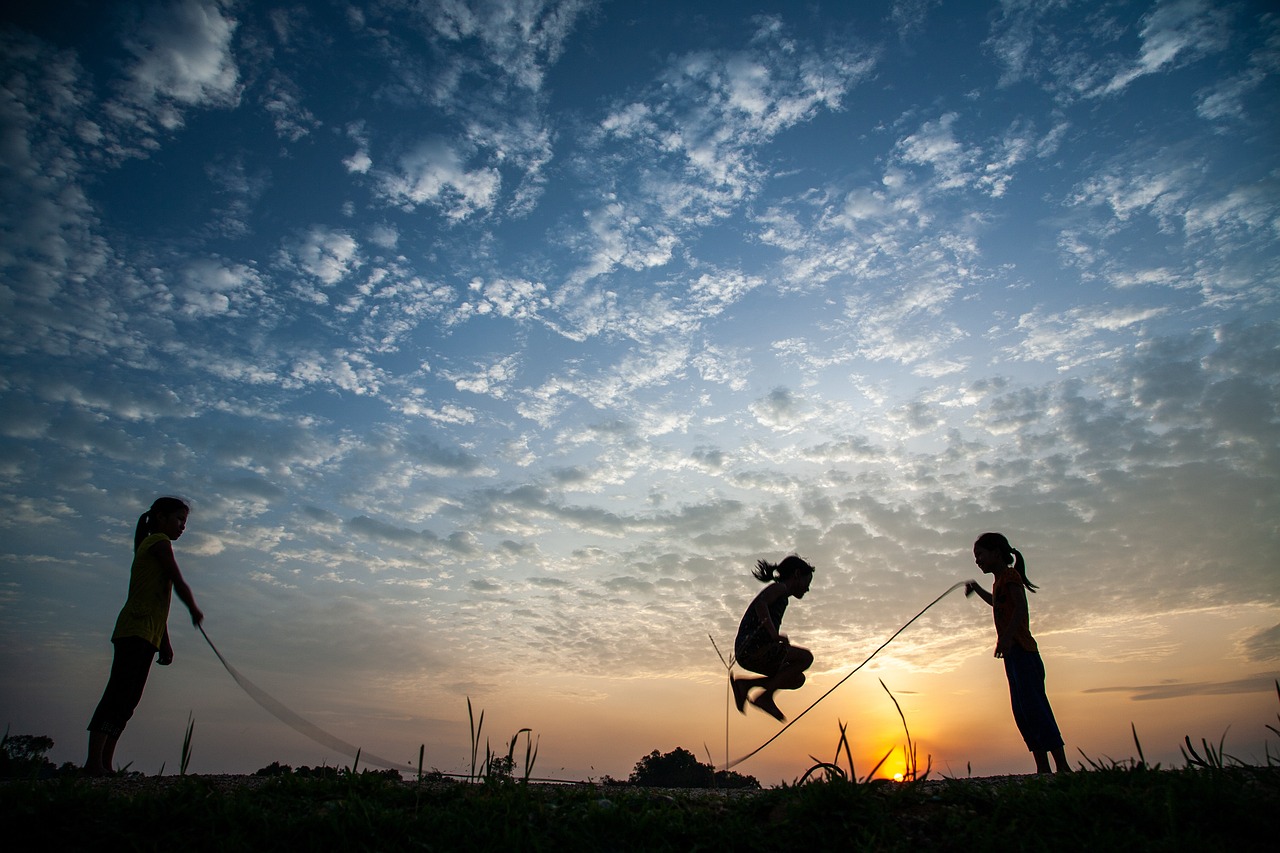
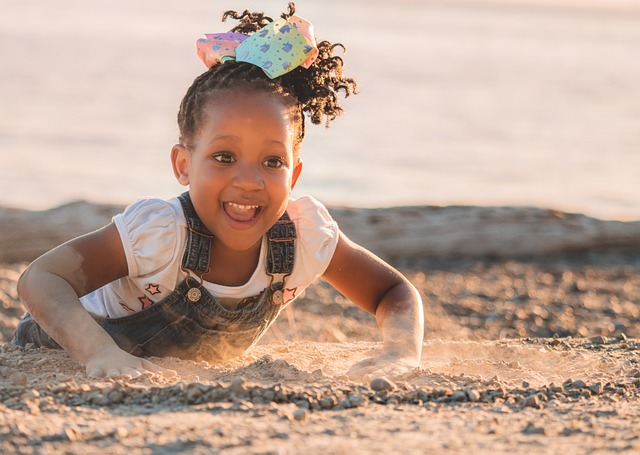
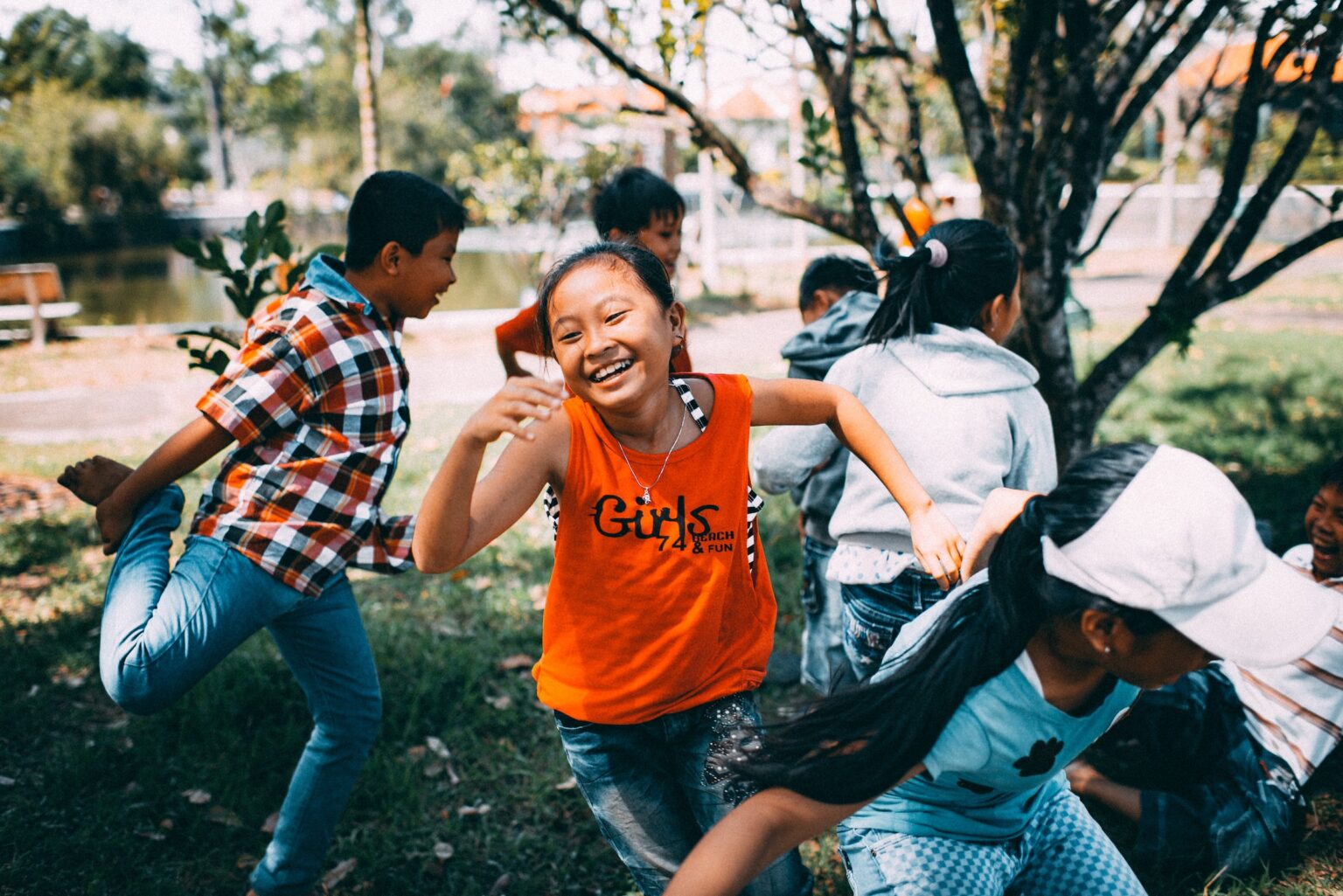
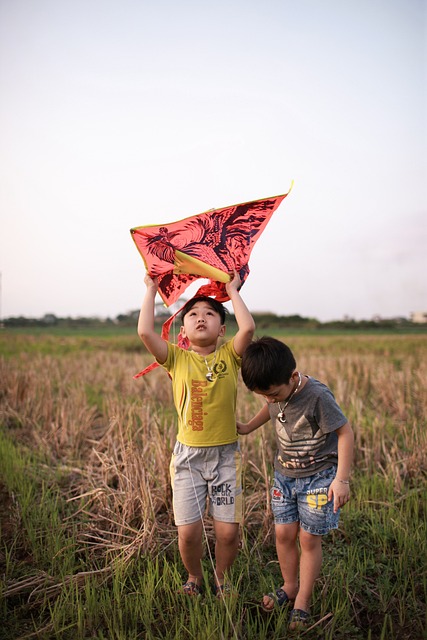

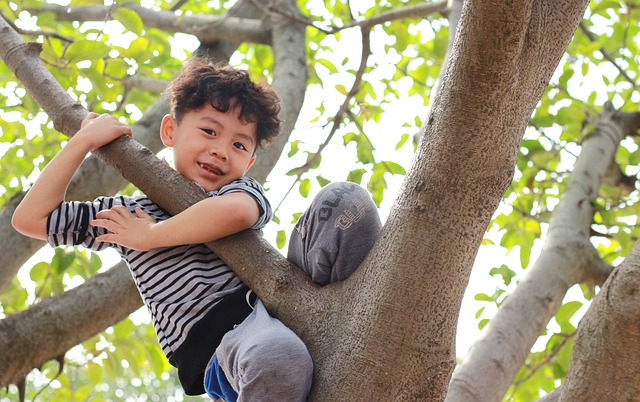
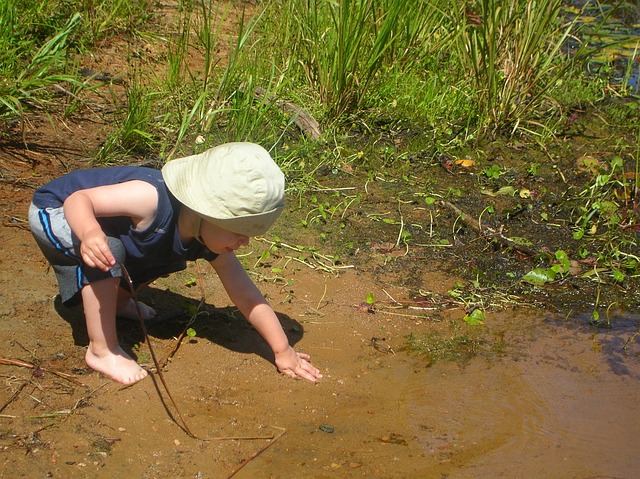


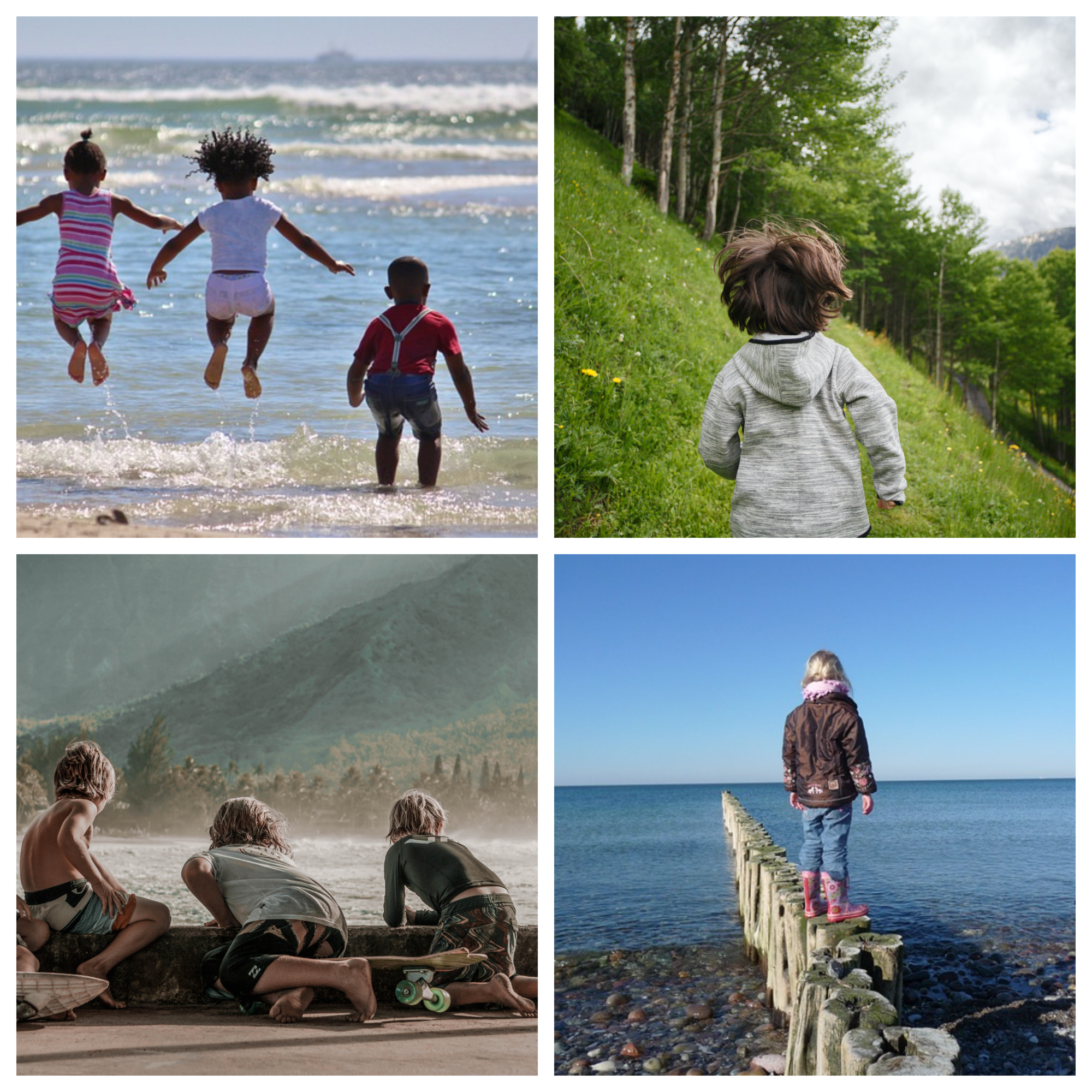
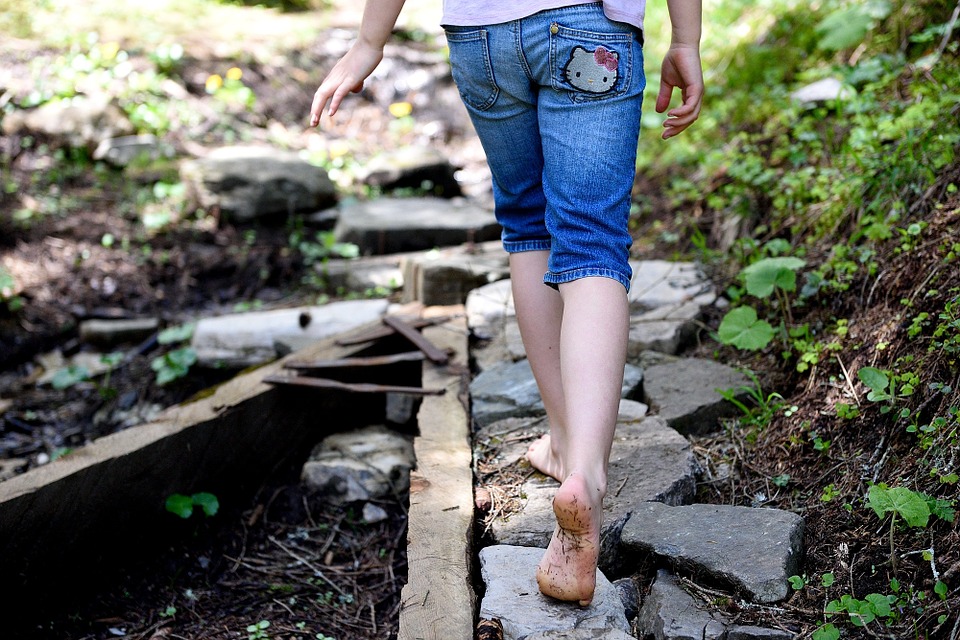
 , even small natural areas are better than playgrounds and manicured parks. They call up a more resilient and engaged way of being. When children spend time in natural areas their play is more creative and they self-manage risk more appropriately. They’re more likely to incorporate each other’s ideas into expressive make-believe scenarios using their dynamic surroundings—tall grasses become a savanna, tree roots become elf houses, boulders become a fort. Their games are more likely to incorporate peers of differing ages and abilities. Such outdoor experiences not only boost emotional health, memory, and problem solving, they also help children learn how to get along with each other in ever-changing circumstances.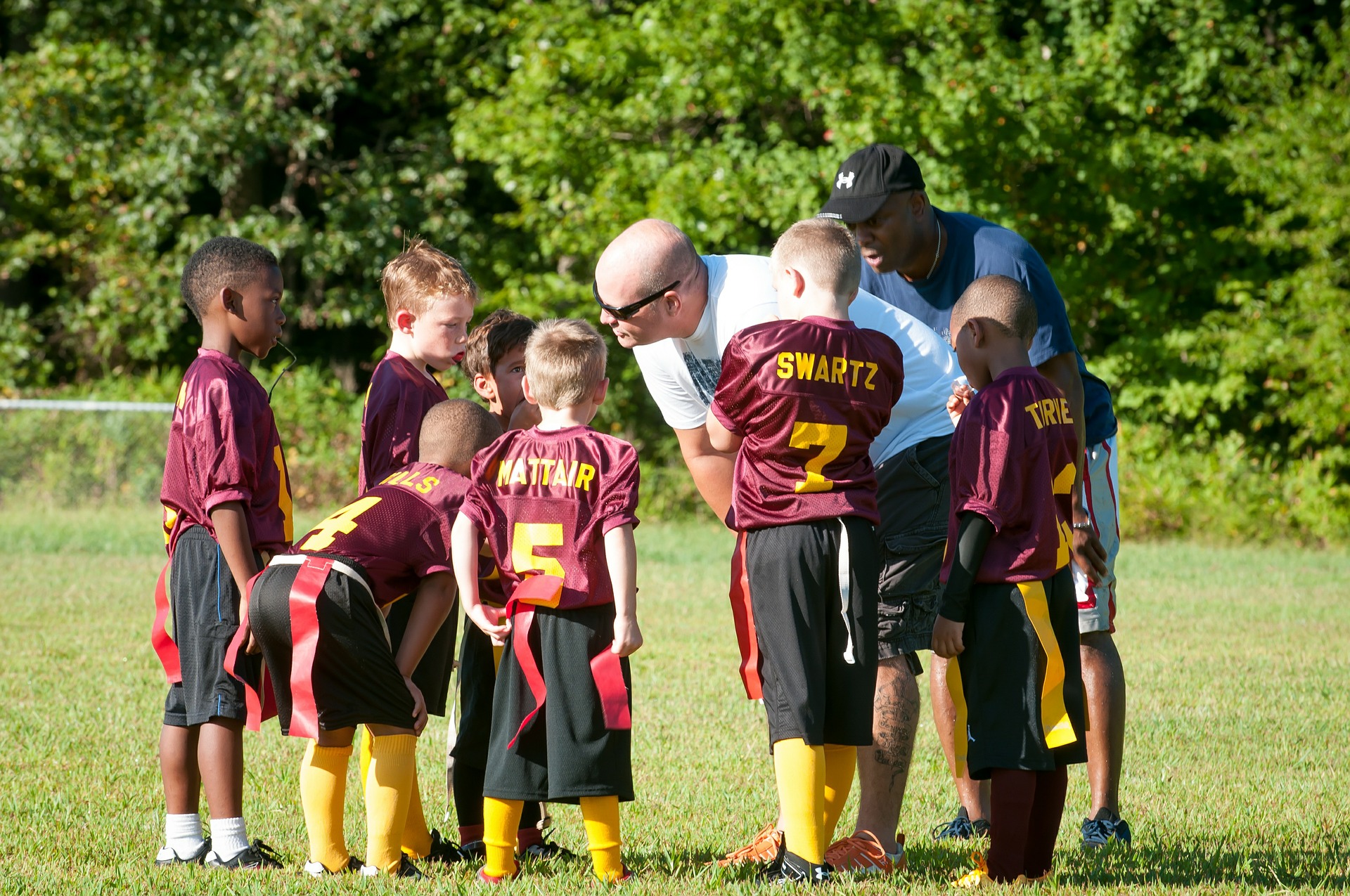




 by
by  by John J. Ratey for more on this.) Active, talkative, curious children aren’t “bad.” They’re normal.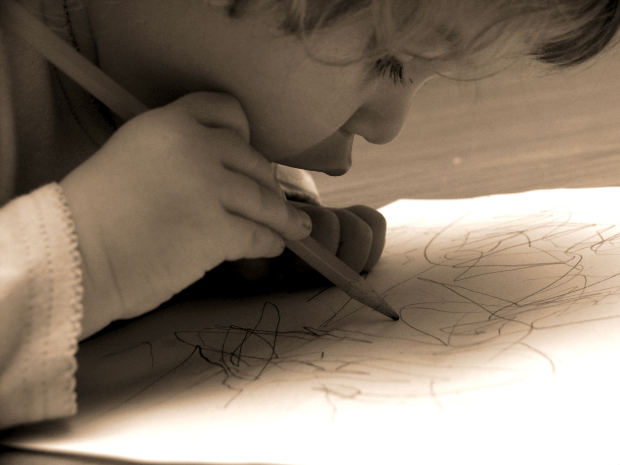

 by Peter Gray and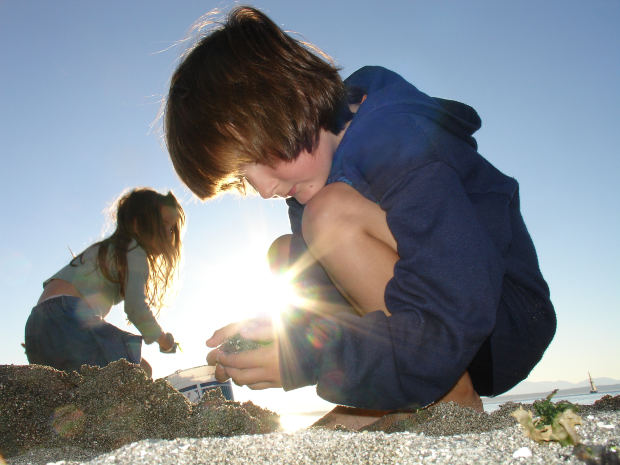
 .
.
 , research shows that rewards, praise, and evaluative comments actually undermine motivation and stifle learning in preschoolers as well as school-aged children. This is true when those actions come from parents or teachers.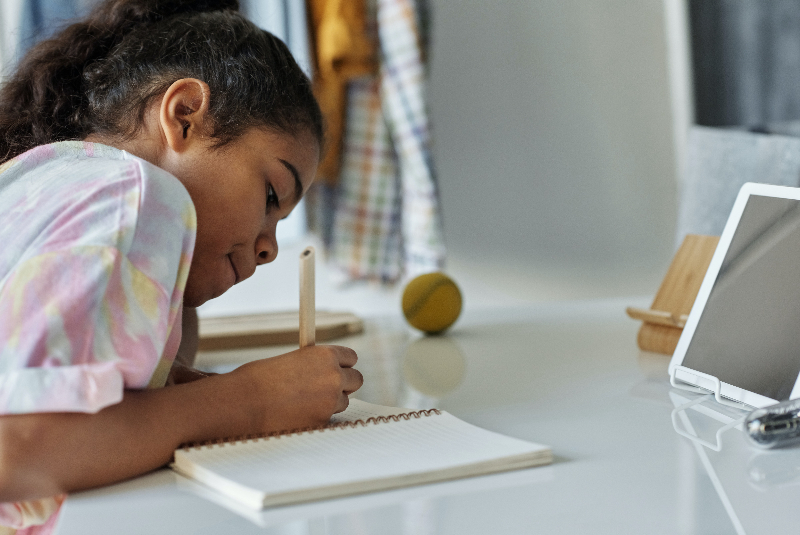
 by Stuart Brown and Christopher Vaughan
 Laura Grace Weldon