Where Fascination Leads

child's interests, toddler's fears show inclinations, fear is fascination,

Born with uniqueness.

“I didn’t say I liked it. I said it fascinated me. There is a great difference.” Oscar Wilde

My oldest was calm and attentive as a baby, except around vacuum cleaners. The machine’s sound made him scream with the sort of primal terror normally associated with death by predator. He had no previous experiences with loud sounds in his short life, good or bad. Except for surgery, performed when he was five weeks old, he’d had no bad experiences at all.

As a first time parent I turned his reaction into a giant philosophical issue. (Okay, maybe I turn everything into a giant philosophical issue.) Should we only vacuum when one of us took him out of the house until he somehow grew out of it? Or should we hold and reassure him when the vacuum had to be turned on? I was convinced whatever we decided would somehow have lifelong ramifications.

For a few months we relied on the first solution. The only vacuum sounds he heard were through open windows. Even outside, he listened on Baby High Alert status until it was turned off, with wide eyes and a stiff body. Fortunately the vacuum didn’t run long since our house was tiny. Then winter hit. It wasn’t easy to go outdoors simply to turn on the vacuum. Much as I appreciated any excuse to be slothful, I was still in the first child clean house stage (that ended resoundingly long before child number 4). So we tried desensitizing him to the Terror Machine sound. Although he initially screamed when I got it out and named it, he began to calm down as I did this day after day, naming it, then saying OFF and ON while performing those functions quickly. I was relieved when he no longer cried in nervous anticipation. Next I’d hold him as I pushed it around, doing one room before letting him turn it off. His tension dissipated and it became a favorite activity. Have you guessed? Mastery of fear led to fascination.

One of his first words was “vacuum.” He wanted to know all about them. He loved sale fliers with pictures of vacuums. I ended up cutting out all sorts of vacuum pictures to put in a photo album so he could flip through it, pointing and making “vroom” noises. Anything associated with vacuums, like hoses and plugs, also made his fascination list. An early talker, he memorized manufacturer names of vacuums and, like a household appliance geek, would quiz other people about vacuums. I recall one such incident when he was not quite two. We were at the park when my child tried to instigate a conversation with a fellow toddler. It didn’t seem the other little boy was a talker yet. Meanwhile my son, telegraphing his strange upbringing, was asking, “Do you have a Eureka vacuum at home? Do you have a Hoover? A Kirby?” When he saw the respondent didn’t understand, my son tried what he thought was an easier question. “Is your vacuum upright or canister?” Both little boys looked up at me with incredulous expressions, as if asking what was wrong with the other.

He often called his play “work” and was never happier than when he could contribute to real work. For his third birthday my son’s dearest wish was for a hand vac. And to go to Sears so he could hang out in the vacuum section. That’s what we did. Even his best buddy Sara, who had come along for the birthday excursion, patiently indulged him. She understood him well and when they played house she often had him fix pretend things or turn on pretend things, which always made him happy. That year he got a gift wrapped hand vac.

The vacuum obsession wasn’t his only early childhood weirdness. Once he figured out that bones have Latin names (I think a physician friend leaked this info) he insisted on memorizing those names. He liked to rescue bugs from situations he deemed dangerous, telling them “go in peace little brother,” a line he got from one of his favorite books. He preferred actual tools to toys, and before he was four he started building things out of scrap wood and nails, carefully hammering them into shapes almost as incomprehensible as his crayon drawings.

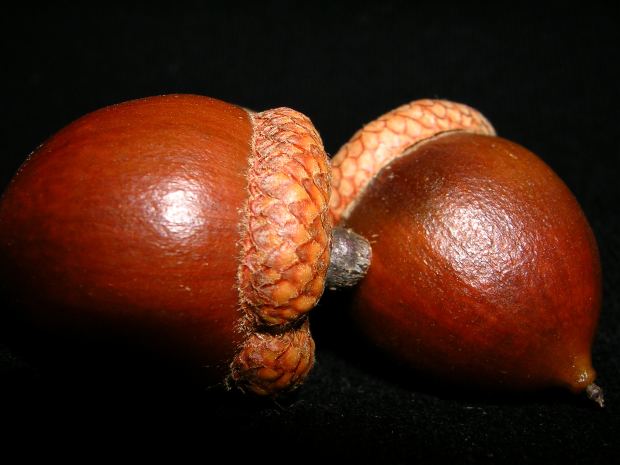
Around that time I read a fascinating book by James Hillman, The Soul’s Code. Hillman is a deep, insightful thinker. It has been a long time since I read the book, but I recall that it described each of us as coming into the world with a uniqueness that asks to be lived out, a sort of individual destiny, which he termed an “acorn.” It’s a remarkable lens to view who we are. A child’s destiny may show itself in all sorts of ways: in behaviors we call disobedience, in obsession with certain topics or activities, in a constant pull toward or away from something. Rather than steering a child to a particular outcome, Hillman asks parents to pay closer attention to who the child is and how the child shows his or her calling.

The examples Hillman gives are memorable. If I recall correctly, Yehudi Menuhin, one of the preeminent violinists of the 20th century, became fascinated when he heard classical music on the radio as a three year old. He wanted to feel the same rich notes coming out of a violin in his hands. His parents lovingly presented him with a toy fiddle. He drew the bow across the strings and was horrified at the cheap squawk the toy made. Enraged, he threw the instrument across the room, breaking it. His imagination had already taken him to the place in himself where beautiful music was made and he was unable to bear that awful sound. We normally call that behavior a “tantrum.”

Another example is award-winning director Martin Scorcese. As a child he suffered from terrible asthma and wasn’t allowed to go out to play on the New York streets. So he watched the world framed by a window. He drew what was going on, making frame after frame of cartoons. He was teaching himself to create scenes and action, essentially tutoring himself in the basics of moviemaking. We’d normally consider his circumstances a form of deprivation. Reading Hillman’s book gave me insight into the acorn of my own fears, longings, and daydreams. It also helped me see my child’s interests with new eyes.

My firstborn is an adult now. He can weld and fabricate, repair tractors and cars, build additions on a home and turn a shell of a room into a working kitchen, drive heavy equipment, do complicated calculations in his head, make do on little, and work until everyone around him has long given up. He’s also witty, intelligent, and endlessly generous. I don’t know if those early vacuum terrors had anything to do with how he’s turned out, but I’m sure the child he was would be amazed at the man he has become.

What was your earliest fear, fascination, and other ways you may have shown the “acorn” of yourself?” What about the children in your life? 

Child 1

This article first appeared in Life Learning Magazine.
Respecting A Child’s Urge To Discover

theory of loose parts, kid innovators, creativity, learning is discovery, self-motivation,

misspenthopesxx.deviantart.com

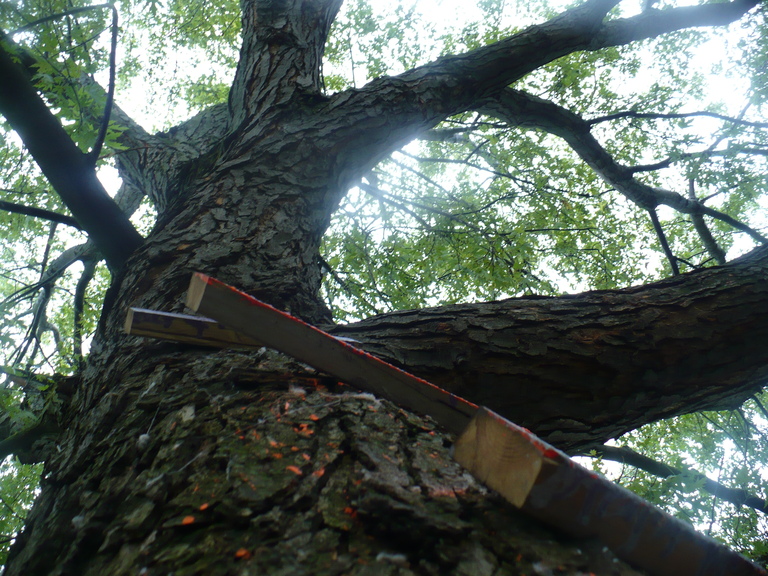
The kids had a bunch of boards, some old nails, a hand saw, and a few hammers. They also had the two most important ingredients, the desire to make something and the freedom to do so.

They spent an afternoon planning their tree fort, enthusiastically arguing over whose plan was best. Their first few attempts failed spectacularly. They were undaunted, even bragged a little bit about the noise the boards made falling down. Several of them asked family members for advice. A few others paged through books and watched YouTube videos as they tried to figure out basic construction techniques. They started again, measuring more carefully as they built a frame. The process took much longer than they’d expected but they stuck with it. When they ran out of materials they scavenged tree lawns on garbage pickup day, dragging back pieces of wood. They got a few cuts and bruises. They were proud of those too. As they worked they talked about how they’d use their clubhouse. It didn’t occur to them how much they were learning.

Conventional thinking tells us that children benefit from the newest educational toys and electronics, lessons, coached sports, and other adult-designed, adult-led endeavors. Well-intentioned parents work hard to provide their children with these advantages. They do this because they believe that learning flows from instruction. By that logic the more avenues of adult-directed learning, the more their children will benefit.

But learning has much more to do with curiosity, exploration, problem solving, and innovation. For example, if baby encounters a toy she’s never seen before, she will investigate to figure out the best way or a number of different ways to use it. That is, unless an adult demonstrates how to use it. Then all those other potential avenues tend to close. Studies show that “helpful” adults providing direct instruction actually impede a child’s innate drive to creatively solve problems. This experience is repeated thousands of times a year in a child’s life, teaching her to look to authorities for solutions, and is known to shape more linear, less creative thinking That’s true of a baby as well as older children and teens.

Young people are also cued to ignore information that is too simple or too complex. Research indicates that people are drawn to learn from situations that are “just right” for them.  They may make plenty of mistakes along the way, just as babies fall when learning to walk, but facing those challenges and making those mistakes are pivotal steps in maturity.

It’s also well-known that a child’s natural motivation tends to diminish in adult-led activities. Unless they’ve been raised on a steady diet of ready-made entertainment, children are naturally drawn to free play. They pretend, make up games, daydream, wonder, and launch their own projects. They are discovering not only the world around them but a rich inner life as well.

Of course adults are vital to young people’s lives. They provide safety, guidance, love, and much more. Kids know they can ask trusted adults for help or advice. They do so more eagerly when they recognize these adults won’t overwhelm them with information, quiz them on what they are learning, or take over. Adult responses simply need to stay in proportion to a young person’s request.

For an example of how powerful the drive to discover can be, let’s take a brief detour to two Ethiopian villages. These places may be rich in intangibles like family and tradition, but they are poor in every other way. The illiteracy rate is practically 100 percent. There aren’t even written words around for children to see: no books, no labels on packaged foods, no street signs. That’s where the One Laptop Per Child (OLPC) project dropped off 1,000 tablet PCs with solar chargers. They weren’t handed out in a school, but to kids. The devices were pre-loaded with English-language operating systems and software that tracked how the tablets were used. The boxes were taped shut, with no instruction given at all.

In less than five minutes, one child (who’d never seen an on/off switch) powered up a system. The kids collaborated as they learned. Within a few days they were using 47 apps per child, within five months they were taking pictures. That took a while since the kids had to teach themselves to hack Android because the tablet cameras were mistakenly deactivated. The OLPC project is finding, all over the world, that kids are learning to read and speak in multiple languages. They easily search, program, and connect using inexpensive tablets. These kids are also teaching adults in their villages to read and use computers. They’re doing it without adult instruction.

So how did our fort-builders do? They had three sides framed and were working on the fourth when one boy’s father stepped in to help. His help may have been welcomed if they’d asked or if he simply contributed to the team effort, but this very well-meaning man decided the kids weren’t doing a good job. He took over, telling the kids to re-do some of their work and to build the rest of it according to his instructions. They did, but without much gusto. The resulting fort was more sturdily built yet they only used it a few times.

A year or so later they scavenged some boards from it to make a go-cart, and then another go-cart. This time they welcomed the help of another child’s grandfather who worked alongside them, learning together as the project unfolded. Their enthusiasm had returned.

How To Grant Wishes

fostering success, partnering for success, making dreams happen, goal group, fostering goals,

Image:helen-carter.deviantart.com

When I was a child an elderly neighbor shared her life-long dream. Lottie Borges had always wanted to get behind the wheel of a semi, start it up, and drive. I got a glimpse of a yearning that couldn’t be hidden by her apron and heavy orthopedic shoes. Years later when I heard she’d died I was sorry the thrill she longed to experience driving an 18 wheeler had never come to pass.

Each one of us has dreams. Sometimes they’re suppressed so long that it’s not easy to remember them or the spark of vitality they once roused in us. We forget because we’re busy meeting our family’s need, what the boss wants, what amusements can fill the moments we have left over. We set aside the goals we once held dear. They are not gone, just dormant.

Our culture emphasizes personal effort. It’s assumed that failure to achieve our aims lies entirely with the individual. But that’s not how wishes usually come true. They happen in the context of relationships. When we talk about our goals with people dear to us we infuse our ideas with energy. It’s a way of activating a network of people who, along with us, envision our dreams taking place. That network may help bring about the exact circumstances necessary to achieve our goals. Perhaps if my former neighbor had shared her wish with someone other than a child she might have connected with a truck driver who’d have gotten a kick out of letting her take his rig for a run around a back lot.

A few years ago I got together with a group of friends and, on the spur of the moment, we decided to write down our long-held wishes. We laughed, wondering if old fantasies (such as running away with a teen idol) should be included. But the challenge was compelling so we started writing. When my friends shared their goals I saw sides to them they rarely revealed. Here are some of their wishes:

  • I will get a lead role in community theater.
  • I will travel to Ethiopia.
  • I will master class 5 white water rafting.
  • I will record my parent’s reminiscences.
  • I will have a graphic novel published.
  • I will get a master’s degree in library science.
  • I will become a foster parent.
  • I will take a class in conflict resolution.
  • I will paint wall-sized murals.
  • I will build a clay oven in the back yard.
  • I will finish the quilt my grandmother started.
  • I will learn to speak Russian.
  • I will be elected to city council.

We realized that we should meet occasionally to support each other’s dreams. By discussing what we are doing to reach our goals and how we can help each other, we’re more likely to turn intention into reality.

If you’re interested in our wish granting process, here’s the method we’re using.

1. Get together with at least one other person with whom you have a mutually supportive relationship.

2. Brainstorm. Call up the longings you had as a child, the grand plans you envisioned as a young adult, the places your mind wanders when you daydream.

3. Write down those yearnings. Word them concretely. It is easier to check off a goal such as “Complete a pottery class” than a vague listing such as “Try making pottery.” Instead of vowing to “appreciate people more,” expect yourself to “Write letters to six people telling them why you appreciate them.” Include a range of possibilities— creative, professional, interpersonal, physical, and inspirational. Make some challenging, some just for fun.

4. Make the list as long as possible. Shoot for 50 or 100. Pushing yourself to write so many goals forces you to look inward, uncovering deep desires that you may have buried.

Such a list will take some time, but you may find that long-suppressed dreams ease back into your consciousness only after you’ve written down goals that seem silly or impossible.

5. Put stars by at least five of the most important dreams. Remember your list isn’t a set curriculum. It can change as your goals evolve. 

6. Talk about what steps you need to take to accomplish them and how can you support each other in these steps. Often it’s helpful to plan on baby steps, starting small and recognizing there may be tumbles as you work your way up to bigger steps.

7. Write yourself a note to be opened three months from now. Or write an email using futureme.org timed to arrive in three months. This note should be in present tense and action oriented, “I am saving $50 a week towards my trip” or “I am practicing Russian each evening and looking for a native speaker to build my language skills.” This is a great way to promote progress. Then write another message to yourself, to be opened in another few months.

8. Keep the wishes shared by others alive through encouragement but also through your belief that the vision will be reached. Continue to pay attention to circumstances that may be helpful to others as you work toward your dreams together.

Something happens when goals are written down. When we make a conscious decision to guide our lives in the direction of our dreams, possibilities begin to open. And when we share that process with others, we have the delight of helping them make their wishes come true.

By the way, the wish lists written with my friends are already adorned with check marks.

Don’t Deprive Kids Of Risk

let kids take risks, don't overprotect,

jessicareeder’s flickr photostream

I publicly admitted to letting my teen take risks that would make most parents shudder. I’m not talking about the month long backpacking trip my 16-year-old took with his older brother and a friend. Nope, I’m talking about letting him meet up with middle-aged guys he talks to online.

The circumstances were perfectly suited to advancing his maturity as well as his skills. But to most parents, that decision marks me as a very bad mother. I’ll take that risk. Parenting has a lot to do with drawing the line between safe and unsafe. And then there’s that pesky line between good and bad.

It found it easier to see absolutes when my kids were babies. Bottle or breast, free play or playpen, guiding or scolding. The choices seemed easy. As they got older I didn’t lose my cherished parenting philosophies and obnoxiously healthy dietary scruples, but I did relax into the gray area. Some would say I’ve gotten too relaxed.

Every day I watch as parents pile their cars with their darling backpack-laden children, then transport them all the way to the end of the driveway where they sit, engines idling, until the school bus arrives. The reverse process takes place in the afternoon. These kids are spared more than the exercise required to get from house to curb. Presumably they’re also kept safe from potential child abduction. I don’t know if this is the case in your neighborhood but it’s a standard practice around here, even though I live in a rural township so small that it doesn’t have a single traffic light. (It’s rumored we may get lines painted on the streets.)

Despite the pastoral beauty of our area, kids rarely play outside. Clearly their parents are quite a bit more cautious than I am. Apparently this is a major trend. With the very best intentions kids are kept indoorswatched closely, even monitored. But why?

According to How to Live Dangerously by Warwick Cairns, “stranger danger” is so vastly overblown that you’d have to leave your child outside (statistically speaking) for about 500,000 years before he or she would be abducted by a stranger.

Violence against kids has markedly decreased and the overall crime rate continues to plummet. A teen is three times safer today than a teen in 1979. Sure, there was no Internet in the 70’s but online, the real danger to kids tends to be peer harassment. A larger danger? Kids who have no experience with real challenges.

Kids require escalating responsibility as well as escalating risk in order to grow toward a healthy adulthood. The common practice of delaying risk (and often responsibility as well) stems from the best motivations: love, concern for their safety, interest in staying closely involved. But today’s highly cautious approach to parenting actually inhibits a young person’s healthy development, according to Too Safe for Their Own Good: How Risk and Responsibility Help Teens Thrive by resilience expert Michael Ungar. It can result in young people who are overly anxious or who take unnecessarily dangerous risks. It can also leave them unprepared for adulthood.

The decisions I make for my family probably aren’t the ones you make for yours. I give my kids the go-ahead to build spud cannons in the name of science but I wouldn’t dream of giving them non-organic celery. I encourage them to join online special interest forums but abhor movies with gratuitous violence. It’s not easy to keep looking at where we draw the line, but just like you, I’ll risk anything for my kids.

Successful Teen Homeschooling: Two Vital Factors

homeschooling teens, meaningful work for teens, responsibility for teens, teen interests,

The teenaged years are actually the most rewarding of the homeschooling years. That’s what we’ve found with our four homeschooled children. And that’s what I was told by many of the 110 families I interviewed for my book Free Range Learning:: How Homeschooling Changes Everything. People in Ireland, Australia, India, Germany, and the U.S. described coming to this realization in similar ways. Their concerns about helping a young child master the basics or their struggles to find the right homeschooling style gradually resolved. Parents grew to trust the process of learning much more completely and, perhaps as a result, they saw their children mature into capable and self-directed young people.

Homeschooling isn’t the cure-all, by any means, for a culture that barely recognizes a young person’s need for identity and meaning. But homeschooled teens are not limited to the strictures of a same-aged peer culture or weighed down by a test-heavy form of education. They also have more time. This provides ample opportunity to stretch and explore in ways that can benefit them for life.

There are a number of pivotal elements in the period we call adolescence. Two significant ones are the pursuit of interests and meaningful work. These factors are just as important for teens in school as those who are homeschooling. But homeschoolers are freer to fill their time with what’s significant to them. That can make all the difference.

INTERESTS

Pursuing interests builds character traits that benefit us for life.


In my family, we’ve noticed that interest-based learning builds competence across a whole range of seemingly unrelated fields. For example, as a preteen one of my sons put together a few rubber-band powered airplanes at a picnic. When they broke, he tried fashioning the pieces into other workable flying machines. This got him interested in flight. He eagerly found out more through library books, documentaries, museum visits, and You Tube. Soon he was explaining Bernoulli’s principle to us, expounding on changing features of planes through the last century, and talking about the effect of flight on society. He designed increasingly sophisticated custom models. He read biographies of test pilots, inventors, and industrialists. He won a state award for one of his planes through 4H and got a family friend to take him for a ride in a small plane. What he picked up, largely on his own, advanced his understanding in fields including math, history, engineering, and physics. All inspired by learning that felt like fun.

This particular passion didn’t last, but the pursuit of his interests continued. He built spud guns with friends, played bagpipes in a highland band, bred tarantulas, repaired recording equipment, and tried his hand at woodworking. He wasn’t always at full tilt (never missing a chance to sleep in). Now a college student, he’s surprised that his fellow students are so turned off by learning.

Interests engaged him, as they do each one of us, in the pleasure of exploring and building our capabilities. They teach us to take risks, make mistakes, and persist despite disappointment as we work toward mastery. Making sure that a young person pursues interests for his or her own reasons, not the parent’s, keeps motivation alive and passion genuine. Research backs this up. Pursuing our interests builds character traits that benefit us for life.

Self-directed young people really take off in their teen years

Long-term homeschooling families know that self-directed young people really take off in their teen years. Comfortable with their ability to find out what they need to know, they often challenge themselves in their own ways. Some add ambitious schedules to previously unstructured days, others seek out heavy doses of academic work to meet their own goals, still others don’t appear to be remotely interested in conventional educational attainment but instead create new pathways for themselves.

Children as well as teens tend to have lengthy pauses between interests. A boy may not want to act in any more plays despite the promise he’s shown, a girl may not choose to sign up again for the fencing team just when she was starting to win most of her matches. During these slack times they are incorporating gains made in maturity and understanding before charging ahead, oftentimes toward totally new interests. The hiatus may be lengthy. They need time to process, daydream, create, and grow from within. They need to be bored and resolve their own boredom.

Decades ago educational researcher Benjamin Bloom wondered how innate potential was best nurtured. He was convinced that test-based education wasn’t bringing out the best of each child’s ability. So he studied adults who were highly successful in areas such as mathematics, sports, neurology, and music. These adults, as well as people significant to them (teachers, family, and others), were interviewed to determine what factors led to such high levels of accomplishment. In nearly every case, it was found that as children, these successful people had been encouraged by their families to follow their own interests. Adults in their lives believed time invested in interests was time well spent. Due to their interests, these individuals developed a strong achievement ethic and a drive to learn for mastery.

This makes sense. We recognize that young people gain immeasurably as they pursue their interests. And not only in terms of success. When caring adults support a teen who loves to play baseball, study sea turtles, and draw comics, he’s likely to recognize, “I’m okay for who I am.” The interests well up from within him and are reinforced by those around him, so there’s coherence between his interior life and exterior persona. This reinforces a strong sense of self. All of us need sturdy selfhood to hold us in good stead while so many forces around us emphasize unhealthy and negative behaviors.

Interests have a great deal to do with promoting a young person’s feelings of worthiness. There’s an enhanced quality of life, a sense of being completely present that’s hard to name but recognized by those who “find” themselves within a compelling pursuit. A girl may love speed skating, or writing short stories, or designing websites. When she’s engaged in her interests, she knows herself to be profoundly alive. That feeling doesn’t go away, even when she has to deal with other tasks which are not as entrancing. Everyone needs to belong, contribute, and feel significant. The teen who knows his or her interests provide fulfillment is already aware that self-worth doesn’t come from popularity or possessions.

MEANINGFUL WORK

Teens want challenges and the accompanying responsibilities.


A group of homeschoolers touring a rural historical society noticed that storage areas were stuffed with uncataloged documents, some crumbling from age. They offered to digitally scan and reference these materials with the museum’s coordinator. Several other teens researched the requirements for a dog park in their suburb. Working with a group of interested citizens, they petitioned city council for a permit and eventually won a grant to construct the dog park. Another teen started a business fixing and modifying bicycles. He also earns revenue from videos of his mods. These examples from my book indicate how young people eagerly take on challenges and the accompanying responsibilities.

Throughout human history teens have fully participated in the work necessary to help their families and communities flourish. They were needed for their energy as well as their fresh perspective, and they built valuable skills in the process. Working alongside adults helped motivate them to become fully contributing adults themselves. Most of today’s young people are separated from this kind of meaningful work. They have fewer opportunities to encounter inspiring people of all ages who show them how to run a business or foster a strong community. Now that teens aren’t needed to run a farm or shop, they also don’t get as many real world lessons in taking initiative, practicing cooperation, deferring gratification, and working toward a goal.

Ideally young people have taken part in real work from an early age. Many studies bear out the wisdom of giving children responsibility starting in their earliest years. In fact, having consistent chores starting in early childhood is a predictive factor for adult stability.

Although work is largely valued for monetary reasons in our society, the kind of meaningful work I’m talking about has inherent worth. Chances are it is unpaid. (Here are dozens of service ideas for kids.)Through this work young people learn that it’s the attitude brought to any task, whether shoveling manure or performing a sonata, that elevates its meaning. Often an endeavor that’s inspiring doesn’t always feel like work. It may include establishing an informal apprenticeship, developing a small business, traveling independently, or volunteering with a non-profit.

It’s the attitude brought to any task that elevates its meaning.

What is meaningful work may be different for each person. A homeschooled teen may put up a shed for a neighbor, make a documentary with fellow parkour enthusiasts, perform puppet shows at a nearby daycare, help a zither club record their music, become a volunteer firefighter, assist an equine therapy program, coach a kids’ chess team, tend beehives, walk puppies at a dog shelter, or help a chemist in the lab. Through such work they tend to get more involved in their communities and connect with inspiring role models.

Meaningful work may not always be interesting, let alone fun. It has to do with putting in sustained effort to get results, even when the hours become long and the endeavor doesn’t feel rewarding. Through this work young people gain direct experience in making a valuable contribution. They know their efforts make a difference. That’s a powerfully rewarding experience at any age.

  Learning of the highest value extends well beyond measurable dimension. It can’t be fit into any curriculum or evaluated by any test. It is activated by experiences which develop our humanity such as finding meaning, expressing moral courage, building lasting relationships, channeling anger into purposeful action, recognizing one’s place in nature, acting out of love. This leads to comprehension that includes and transcends knowledge. It teaches us to be our best selves.

Originally published in Lilipoh Magazine, Winter 2012

Natural Antidote To Bullying

antidote to bullying, free play prevents bullying, bullies made by restrictions, nature prevents bullies,

Wikimedia Commons

Children are drawn to challenge themselves. They need to take risks of all kinds—physical, social, emotional, intellectual—in order to grow into mature self-reliance.

Where do such challenges most naturally occur? Outdoors. As detailed in Last Child in the Woods, when children spend time in natural areas their play is more creative and they self-manage risk more appropriately. They’re more likely to incorporate each other’s ideas into expressive make-believe scenarios using their dynamic surroundings—tall grasses become a savannah, tree roots become elf houses, boulders become a fort. Their games are more likely to incorporate peers of differing ages and abilities. Regular outdoor experiences not only boost emotional health, memory, and problem solving, they also help children learn how to get along with each other in ever-changing circumstances. Free outdoor play with others, especially when it’s not hampered by adult interference, teaches kids to interact with others while also maintaining self-control. Otherwise, no one wants to play with them. It’s the best sort of learning because it’s fun. Sounds like the perfect way to raise bully-proof kids doesn’t it?

But the opportunity for free play and risk is funneled into very narrow options for today’s children. They are shuttled from one adult-run activity to another. Time between these obligations is often spent indoors. And children’s outdoor play is restricted by excessive rules designed to keep them safe from dangers out of proportion to any real safety issue.

So kids don’t get natural challenges like climbing trees, exploring fields, building forts. They are deprived of the rich lessons of cooperation and self-control found in free play. And they don’t develop biophilia, that essential sense of connection with nature. Then we expect them to get along and recognize real risk. Any wonder that bullying is a growing problem?

Here are examples of playground designs that, in institutions like schools and daycare programs, foster free play using natural materials. Sensory play, places for solitude, and opportunities for physical risk are built in and, no surprise, children get along better.

It’s a step in the right direction. A few steps farther and we’ll let kids back in nature herself, playing in woods and fields and beaches. Too bad all the money thrown at anti-bullying programs aren’t used to fling open the doors to the natural world. “Go out and play,” may very well be the best anti-bullying advice yet.