How To Time Travel

time travel, memory is time travel, storing memory, preserving memory,

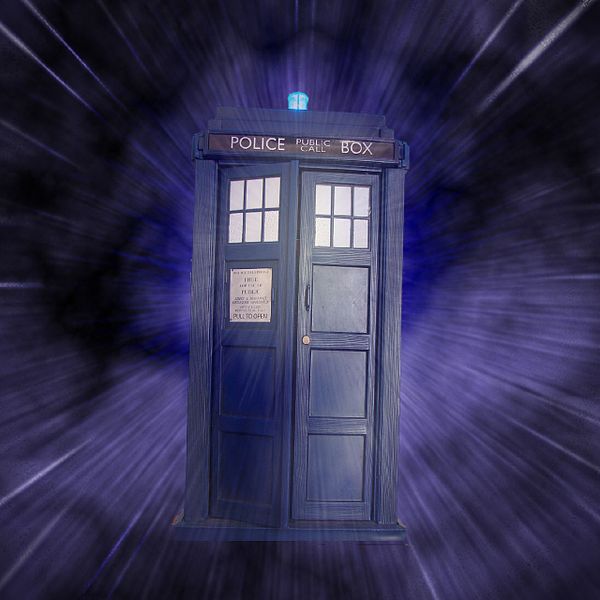
Wikimedia Commons

My oldest is getting married. Yes, that outs me as old enough to have become a mother the year I graduated from college.

That itself seems strange, because I feel pretty much the same as I did at 14, back when I used to sneak out of the house wearing a halter top under whatever mom-approved top I wore over it. It’s such a distinct feeling that when I walk past my reflection in a store window I don’t instantly recognize the person hustling along, the woman carrying my purse and wearing my jacket. I have to remind myself, that’s me. My skinny insecure 14-year-old self is history.

Why can I access that time in my life so easily? Because I really remember being 14. Everything was new. Testing out the forbidden, suffering daily angst, uncovering adult hypocrisy, lying on my bedroom floor memorizing music lyrics. And vivid memory is the key to time travel.

In essence, our lives are made from what we notice and remember. When you look back at any particular phase of your life what you recall is constructed from what captured your attention, particularly those times when your emotions as well as your senses were engaged.

It’s a nasty surprise to realize how few truly full memories we manage to form. That’s because we only efficiently latch on to memories when we pay attention. We’re more likely to do so when the experience is new. That’s probably why we seek out emotionally charged thrills (roller coasters or white water rafting), get so much out of travel, and remember firsts like our first kiss or first attempt driving a stick shift.

The emotional and sensory experience of one’s first baby makes for lasting memories. Ordinary moments remain imprinted on my body as well as my mind from my son’s early years: a newborn slumped against me in sleep, a toddler crouching on sturdy legs to watch a beetle, an inquisitive child taking everything apart. As I watch this tall and capable young man go through the many rituals surrounding his upcoming wedding, I feel as if I exist in multifaceted time, sensing the layers of his childhood simultaneously with the present.

I know it’s easy to miss the simple grandeur all around us. I do it all the time. I get distracted, I multitask, I’m too busy to make eye contact and when I do I might very well be thinking of something else. But we have to live in the fullness of our lives right now. That means engaging in the sights, sounds, tastes, thoughts, and feelings unique to our own experience.

This moment, this day is yours to remember. Pay attention in such a way that you can time travel back to visit it.

And if you’d care to, describe in the comments the sights, sounds, and feelings of a memory that lets you travel in time.
Save Moments In A Memory Jar

make a memory jar, how to save family memories,

Today is a wonderfully ordinary day. Lots of laughter and no squabbles. Will we remember any of it? Probably not.

It’s hard to understand why we hang on to some memories but not others. The process isn’t about how much effort or money we expend trying to make something memorable.

Long-term retrievable memories are built by what we notice, fully notice, with our minds as well as our bodies. (They aren’t made when we multitask.) Look back at any particular memory. What you recall is constructed from the sights, sounds, tastes, thoughts, and feelings unique to your experience. The way you pay attention to those elements forms your memories. The shocking part? Looking back and realizing how few rich and full memories we really form.

That’s because we only really latch on to memories when we pay attention. When we’re engaged in the moment. Recall the last really memorable meal you had. It probably wasn’t one you ate in the car or standing at the kitchen counter. It was one you savored with full awareness of flavor, texture, scent. Most likely there were other important elements as well. Perhaps it was a meal shared with a new friend or made from a challenging cookbook. Perhaps it was a last meal you had before a loved one passed away, a meal you now try reconstruct in detail.

Emotion plays a part in memory formation. And our five senses are integral when forming strong memories. Particularly smell, perhaps because the olfactory bulb is closely connected to the hippocampus (related to learning) and the amygdale (related to emotion).

For years I’ve encouraged my family to take “sensory snapshots.” We may be standing out back together, having just finished stacking firewood (because togetherness on our little farm often has to do with work) and I urge them to remember the moment in their bodies as well as their minds. We notice the scent of blackberry and milkweed blossoms, listen to frogs croaking in the pond, feel the evening’s coolness on our skin, look at the fireflies beginning to arc through the dusky sky. I don’t just want the moment to linger, I want to be able to retrieve it long after today. I want to hang on to our easy banter and feeling of shared accomplishment.

That’s where memory-storing traditions come into play. Yes, it’s easier than ever to take photos and videos. But there’s something about writing down our impressions that augments the process of locking them into place.

hang on to memories, write down family memories, unique memory traditions,

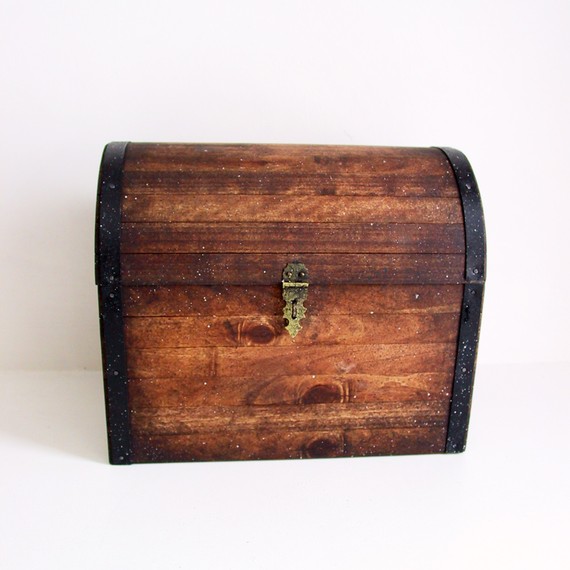
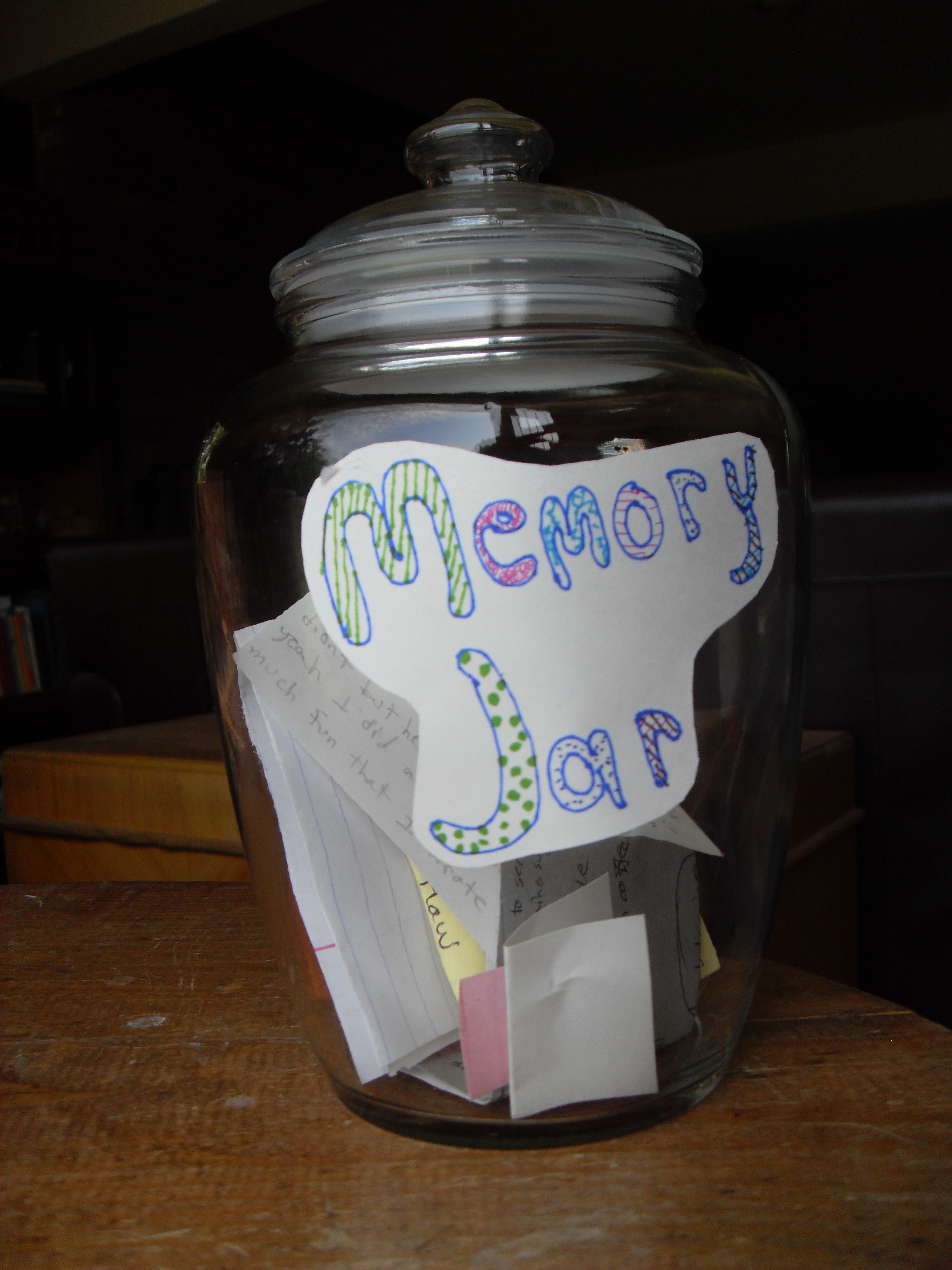
One tradition you might want to start in your family is a memory jar. Grab any jar, name it the Memory Jar, and keep it in an accessible place. Filling it is pretty easy. Encourage your family members to scrawl memories on any piece of paper, sign their names, add a date if they can, and stuff these memory scraps in the jar. Let the youngest ones dictate their memories to you and pop them in as well.

You’ll be interested to note what different family members regard as significant enough for the memory jar. Good grades on a test probably won’t get in. Watching the neighbor’s puppies born probably will. Your five year old may stuff in a new memory each day, your teenager may add one only at your prompting, you may tend to write down funny things the kids say. But if they’re not noted and saved, chances are they’re lost.

It’s helpful to have a “no grudge” rule. Memories don’t have to be happy, of course. The most powerful are probably those that aren’t. Your daughter may write,

“I was really scared when Max fell off the slide. We went right from the park to the hospital. We waited a long time and I fell asleep watching a TV high on the wall. Max got a green cast on his arm and I was first to sign it. I was mad my name didn’t come out too good because it’s not easy writing on a cast. The letters are kinda bumpy. We were so hungry Mom stopped for ice cream on the way home. I got peach, Max got chocolate chip, Mom got a smoothie. I think it would be fun to have a cast too but I don’t want to fall off a slide to get it.”

There are plenty of options that go along with opening and sharing the tidbits from your Memory Jar. You might choose to have a memory ceremony once a year. That’s a day when the jar is opened and the memories are read. You might want to do this on Thanksgiving, New Year’s Day, or every July 13th because that’s your family’s yearly Dad Finished His Tour of Duty party.

And you’ll want to store these memories safely. It’s easiest to start a new jar every year. Label last year’s jar and tuck it in the back of your closet. If you’re ambitious, carefully scrapbook each slip of paper next to photos or turn them into a photo collage to hang on the wall. Or, your family may prefer to keep adding to a collective jar of memories without going over the contents together, happy to make the jar a sort of time capsule to be opened well into their adult years.

While a memory jar is well-suited for family use, there are other great ways to use this random-memories-on-scraps-of-paper approach.

how to hang on to memories, memory-making for couples

For couples, why not start a Memory Bank? This is best made with an opening no bigger than a piggybank. This way the memories each of you contribute can’t be fished out and read in private. It’s a way of noting little tidbits about your lives together without the pressure to contribute. Of course a “no grudge” rule is still important. And when a Memory Bank is shared by a couple, it’s best to make it a long-term project. Vow to keep it sealed until your 25th anniversary or some other far off date. By then neither of you will care if she contributed 95% of the memories, you’ll both simply have fun going over recollections you thought were long gone.

Perhaps the best impetus for storing and retrieve memories is in partnership with the oldest members of the family. On each Father’s Day card I used to share a reminiscence about my childhood to let my Dad know how much he factored into my happiness then and my resilience now. I thought I was doing it for him but I know now that sharing these memories was one way I strengthened a link with someone so dear to me.

preserve memories with your elders, keep a memory book, daily log book for seniors,

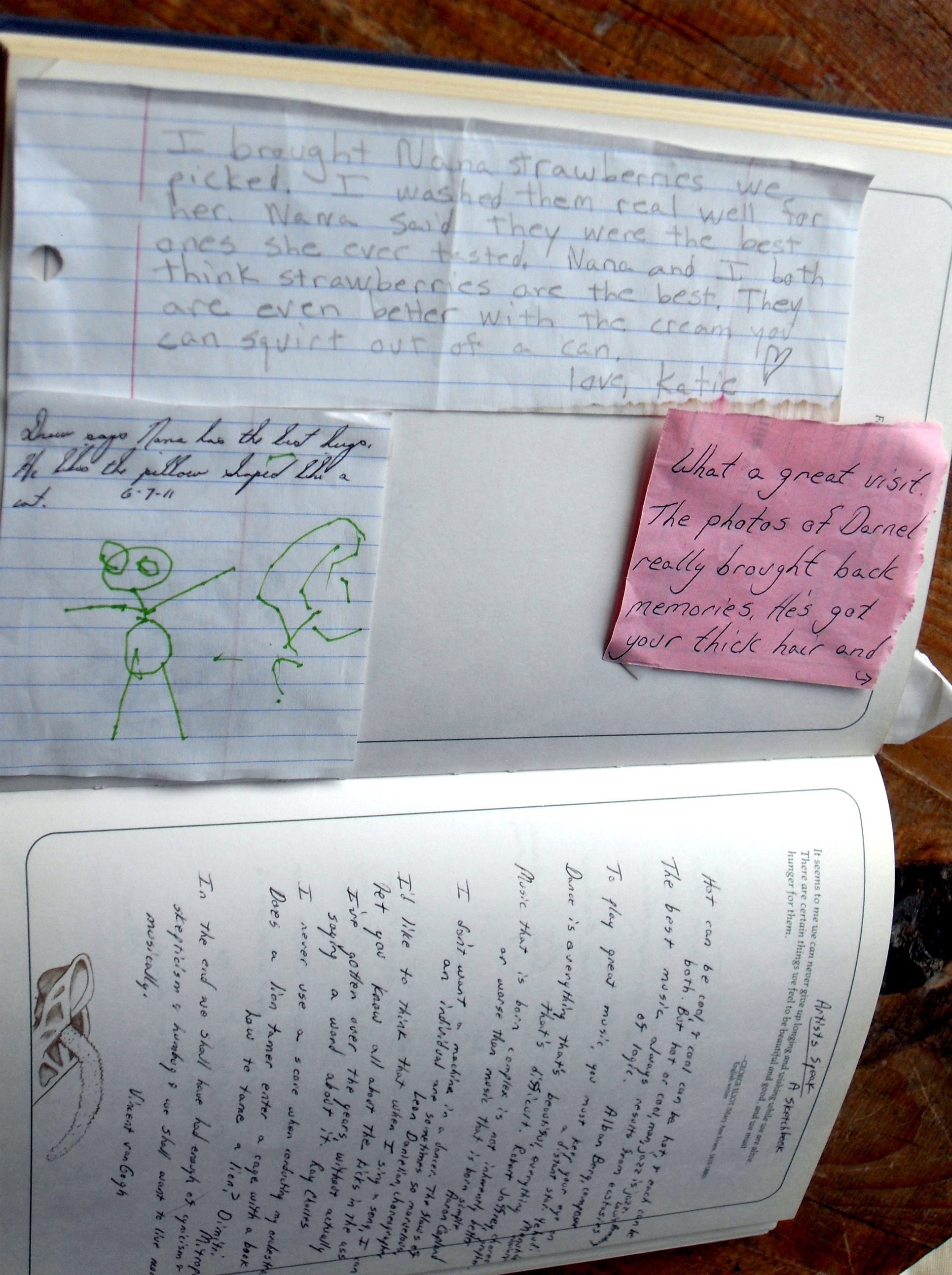
You can keep track of up-to-date memories with the elders in your family using a Memory Book, one that’s always open. A large format blank book is especially good for this purpose. With each visit write down a recollection (old or new) to paste in the log book. Add drawings and photos. If you’ve exchanged memorable phone calls, texts, and other communications remember to add notes about them when you visit. The Memory Book is a warm reminder of your affection. It’s also helpful if your loved one is in an assisted living facility or nursing home because other visitors can flip through the pages, starting conversations by talking about these and other memories while making new ones.

Thinking about the ways we form and hold on to memories is inspiring me to have more fun with my family than stacking firewood!

7 Ways To Access Your Body’s Unique “Knowing”

developing body based awareness, raising consciousness, paying attention,

Ever notice that the smallest children seem to be one with their bodies? Unlike us, they don’t value their thoughts over their senses. They also don’t get caught up in ruminating about what isn’t directly part of the moment. Past or future: irrelevant. Other people’s opinions of their appearance: irrelevant. They are tuned to the sensory world around and within them.

This state of awareness may be similar to the state that was essential for our earliest ancestors, whose attention to the here-and-now ensured survival. Eons ago, hunter-gatherers had to be alert for scents, sights, and sounds of potential food or danger. Chances are this alertness included respect for the body’s way of knowing—unease felt in the belly, anticipation in the throat, restlessness in the limbs—signaling awareness transcending overt indicators. And they had to be able to respond appropriately and meaningfully in an instant. Pausing to consider their options would have let the antelope get away or given the bear time to attack. The people who were most attuned to their body’s perceptions (inner as well as outer) were more likely to live, passing along those abilities to the next generation. We have the same capacities today although typically they’re pushed well below our awareness.

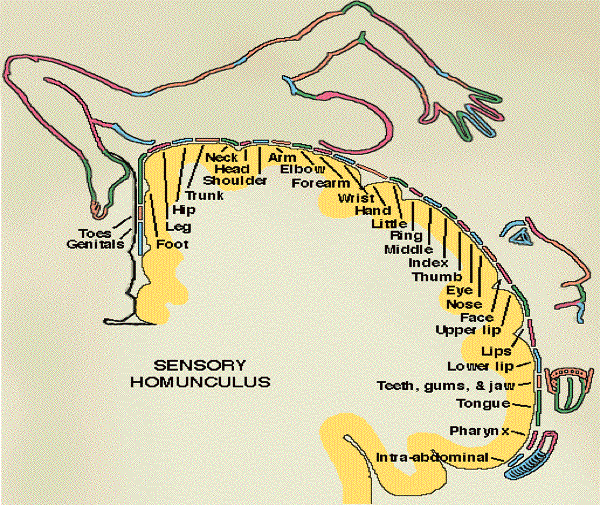
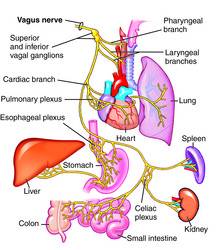
Powerful nerves connect our brains with our digestive system, heart, lungs, and other organs. And this communication is sensory. It isn’t top down, with our brains bossing around our bodies. Instead 90 percent of the information goes the other way, with the gut informing the brain.  The network of nerves along our digestive system is so significant that researchers call it the enteric brain.

Our impulses and emotions are influenced (perhaps generated) by the nerves in our gut. Our brains then work to logically explain the emotion, as Candace Pert explains in her groundbreaking book, Molecules Of Emotion.

Our intuition and reasoning is also influenced by our enteric brain. This ability to know without thinking about it is what Malcolm Gladwell termed “adaptive unconscious” in his bestseller Blink. We constantly process data from all around us (as well as within us) below the level of conscious awareness. Accessing and understanding this information is part of what makes us safe and happy.  What we call feeling good is a sense of accord with this innate bodily knowing, transmitted to us directly as a visceral sensation.

We drive ourselves and our children away from this awareness when we emphasize head over body, when we value thoughts but dismiss that knowing  in our very cells. We worsen the problem when we adopt the standard practice of valuing one hemisphere of the brain over the other.

So what are some ways to tune ourselves to this bodily knowing? 

1. Notice how the youngest children perceive reality. They have an innate ability to assign unique meanings and interpret creatively. They haven’t yet learned the boundaries of acceptable/unacceptable forms of knowing. Simply watching, listening to, and living within the reality of a very young child can stretch your perceptions and re-awaken your awareness.

2. Avoid the distraction of multitasking. This fractures your attention into tiny (often useless) pieces.

3. Devote time each day to simple practices which cultivate awareness. Daydream. Contemplate a flame, or the evening sky, or a tree. Meditate. Take a walk that’s focused entirely on sensation—-the feeling of your feet as they touch and push away from the ground with each step, the whoosh of air in and out of your lungs, the temperature of the outdoor air as it contacts your exposed skin. Eat slowly. Look into a loved one’s eyes.

4. Practice using your intuition. With regular use, your gut sense and intuitive hunches will become more reliable. Try using the classic Intuition Workout by Nancy Rosanoff.

5. Check out what Eugene Gendlin calls focusing.   We’ve been talking about the feeling of knowing that lies deep in us, related to the way our bodies carry concerns or life situations. According to Gendlin’s book Focusing, these perceptions can be accessed using specific steps of clear bodily attention. This opens up knowingness as it is “felt” and garners direct information that comes from the center of one’s being.
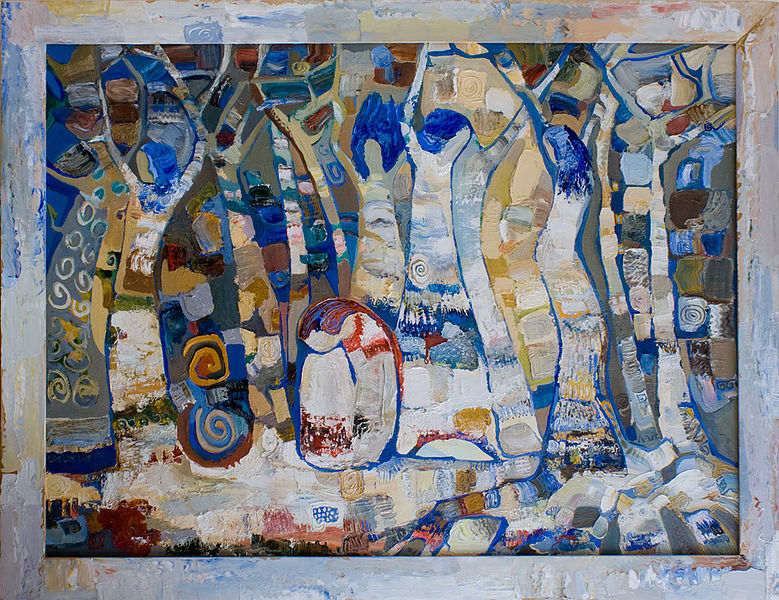
6. Pay attention to your dreams. When you waken, spend a few moments relishing the feelings and images you just experienced in the dreamworld. Let them enter your waking body and waking consciousness. They are specific to you, and have unique purpose that transcends analysis. They are another form of direct knowing.

7. Ask your body questions and “listen” as answers arrive in the form of images, physical sensations, memories, or emotions. You may want to ask a headache why it’s occurring or ask your throat why it feels tight. Learn to recognize metaphors in your body’s answers.

“My belief is in the blood and flesh as being wiser than the intellect. The body-unconscious is where life bubbles up in us. It is how we know that we are alive, alive to the depths of our souls and in touch somewhere with the vivid reaches of the cosmos.” D.H. Lawrence 


How To Listen & How To Be Heard

what's real listening, are you listening, how to pay attention, being ignored,

Katerina Omelchuk “Beginning”

“Do you really want a dead cat on your desk?”

When a teacher took a parent’s phone call at the end of another busy school day, she was taken aback by the question. She couldn’t figure out why a first grader in her class came home telling his mother that their recently deceased family pet had to be on the teacher’s desk the next morning.

Then she realized what must have happened. At the beginning of each school day, children clustered around her desk in the few minutes available before the bell rang. They were all eager to talk.

“Fish sticks are yucky so I want to change my lunch ticket.”

“Want to see me do jumping jacks?”

“This picture of me and my bike is for you.”

“Here’s a note from my mom.”

Any of us would suffer from limited focus if we tried to listen to kids clamoring for attention while also monitoring a classroom. To compensate, this teacher tended to look only briefly at the child doing the talking. She often told them to put whatever they had to offer on her desk. Thinking back, she realized she never even heard the little boy say that that his cat had died. She just gave him an automatic response. “Put it on my desk.”

It doesn’t feel good to be disregarded. It shuts us down, diminishes our sense of worth, even leads to misunderstandings that can be epic in scale.

And you know when you aren’t being really heard.

It goes both ways. We may not be heard often or heard well. We also may not be very good listeners.

Like that teacher, we’re often wedged into circumstances that aren’t conducive to listening. The potential distractions are greater than ever. Ear buds in, smart phones on, screens blaring in all but a few restaurants and waiting rooms, we multitask our way to fractured attention. And limited listening. As a result we don’t hear, really hear. And we don’t feel heard.

We can consciously enhance listening skills. It’s about paying attention, tuning in to others, and limiting distractions. That helps us to hear and to be heard.

Psychiatrist Daniel N. Stern is an expert on attunement, particularly as it develops in infancy. And Dr. Stern’s research has led to this resounding conclusion. When a child or adult doesn’t give as well as receive sufficiently empathic responses they tend to resort to less healthy methods of filling their needs.

A woman who took one of my non-violence workshops turned in a paper containing an excerpt from the book Soul Work: A Field Guide for Spiritual Seekers, which explored Stern’s work. I take the liberty of including a passage here. Check yourself against Stern’s scale of attuned responses in your interactions with your partner, co-workers, children, extended family, and friends.
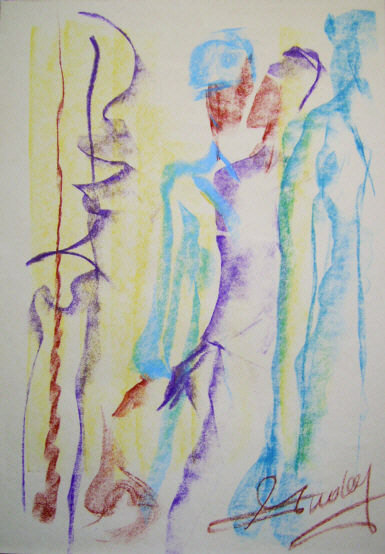
Scale of Attuned Responses

Beyond Unresponsive: The person you are talking with interrupts you in the middle of your sentence and shifts to a different topic.

Unresponsive: The person obviously isn’t listening, only waiting for you to stop talking. When you finish, the person shifts to an entirely different topic.

Indirectly Unresponsive: The other person says or implies, “Well, you shouldn’t feel that way.”

Self-Referential Free Association: The person says something like, “Oh yeah, that reminds me of the time when I…” or “Well you think you had it bad—listen to what happened to me,” and makes no other reference to anything you have said.

Free Association: The person responds to your statement by going off on a tangent and making only an indirect reference to what you said.

Impersonal/Nonnurturing: The person indicates she has heard you but offers no sympathetic or empathic response. Basically her stance is, “That’s the way the cookie crumbles.”

Superficial: Although the person responds by saying, “Yeah I know what you mean,” she does not sound sincere or empathic.

Adequate: The person shows evidence that he heard what you said but does not show interest or follow up your statement by encouraging you to expand upon it.

Responsive: The person not only hears what you said but also inquires further so that you can elaborate. He asks questions that demonstrate interest.

Resonant: The person indicates that she emotionally resonates with what you have said by responding with statements that show she is trying to imagine what you are experiencing (e.g., “I can imagine that you feel terrible…”).

Really listening and really being heard. It spares us from more than a dead cat on the desk. It’s an eyes open, hearts open path to wholeness.

Half Life

We walk through half our life
as if it were a fever dream

barely touching the ground

our eyes half open
our heart half closed.

Not half knowing who we are
we watch the ghost of us drift
from room to room
through friends and lovers
never quite as real as advertised.

Not saying half we mean
or meaning half we say
we dream ourselves
from birth to birth
seeking some true self.

Until the fever breaks
and the heart can not abide
a moment longer
as the rest of us awakens,
summoned from the dream,
not half caring for anything but love.

Stephen Levine, from Breaking the Drought: Visions of Grace


how to listen, how to know if you are heard, attuning yourself to real responses, what it means to listen,

Alfons Anders “Begegnung”


Mom Knows Nothing

open to questions, don't know answers, kid's questions, being a mom,

“Why don’t you know any answers?” my then three-year-old asked me.

He was exaggerating. I always gave him a straight answer when he asked what we could have for dinner or when we were going to the library. But it was true, sometimes I had to look things up. That’s because I really didn’t know answers to questions he posed like, “Do bees have intestines?”

Still, I knew what he meant. I tended to respond to his questions with inquiries of my own. “What do you think?” or “Let’s find out.” Of course I was intentionally vague in order to spark the process of discovery. I didn’t know such a tactic might annoy a toddler who sometimes just wanted to know. Yes, I modified my approach, although he’ll tell you today that I’m just as annoying in other ways.

However the habit of putting questions where answers might be continues, at least in my head. The more I experience the sorrows and delights of life the more I recognize that answers aren’t the aim. So much is better understood as a question.

Today I walk out back with a pail of vegetable peelings and leftover oatmeal for the chickens on our little farm. Chickens look perpetually quizzical, perhaps that’s one reason I like them so much.

Our cows graze in the sunny part of the pasture. I can’t get past marveling at the mystery of plants eating sunlight, cows converting grass to milk, and milk transforming into cheese on my stove. I simply stand watching the cows in wonderment.

While I stand here I know that what we call gravity bonds me and everything I see to the planet. Without this force all of us would drop into the darkness of space. Earth holds us. Yet here on this perfect sphere we humans find reasons to hurt one another and harm the Earth. I hear humanity’s questions asked over and over in songs, poetry and the scriptures of many faiths, and I am comforted by our common quest for understanding.

There’s peace to be found right beyond the need for answers. This sense of calm I find puts the emphasis on love, not on what’s right. (It doesn’t hurt to recognize that those who have all the answers actually don’t.) I walk back to the house, taking in the way the water flows along the creek and the mud squelches around my boots. I’m glad to live with people who are astonished daily by this world’s wonders. Even if they continue to ask me what’s for dinner and expect an answer.

inchworm, questioning everything, appreciating the moment,

*

*

*

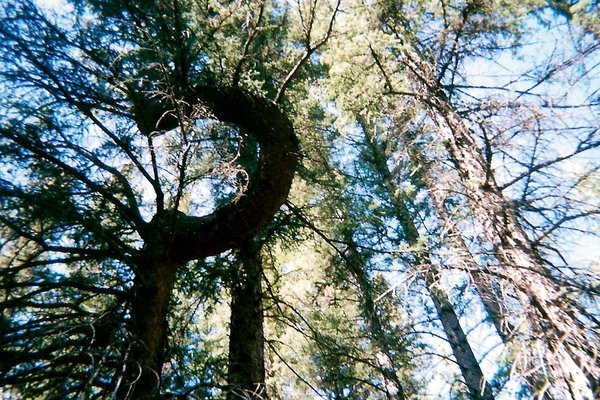
Question tree photo courtesy of Type Zero

How to Make Spiders Your Teachers, Trees Your Guides

amateur naturalist, spiders, mindfulness, nature, paying attention, field guide, children,

Pay close attention to anything. In it you’ll find wonders.

Consider the spider.

We appreciate spiders in our family. A large orb weaver lives just outside the front door. Every night when we take the dogs out before going to bed we pause to appreciate the intricate web she’s rewoven. It has a lot to teach us about strength, symmetry, impermanence and beauty.

I probably shouldn’t admit it, but a spider also hangs out on the ceiling of our pantry. Its continued presence means there are enough insects in the vicinity to keep it fed, which logically means there are that many fewer beasties getting into our potatoes, dry beans, oats and other stored foods. It has a lot to teach us about interdependence. I’m actually cheered to see it up there, a quiet brown chap making a life for itself high above my canning jars.

When we find the occasional spider elsewhere in the house we move it gently outdoors, unless it’s winter in which case we move it to a large potted plant. (I prefer spiders be relocated to basement plants but I suspect my family members free them in more conveniently located houseplants.)

No, our home isn’t teeming with creepy crawlies. It’s the same as your house. We’re all part of an ecosystem beyond our awareness. Our fellow Earth inhabitants proceed with lives of purpose everywhere around us whether we know it or not. As an example, beneficial bacteria reside in your gastrointestinal tract, contributing not only to digestion but overall health. These microbes outnumber the cells in your body 10 to 1, their types varying widely from person to person—perhaps accounting for major differences in weight, energy and wellness.

No amount of clean living sets us apart from the wider ecosystem we’re in.

It’s easier to think of nature as “out there” in the pristine wilderness. But we’re a part of nature every moment. It is air we breathe, plants we eat, birdsong we hear, weather slowing this morning’s traffic, our very cells dividing and yes, that high pitched whine signifying a mosquito is hovering nearby.

Tiny creeping and flying things around us are the creatures we’re most likely to encounter, reminders that we share our ecosystem with others. It’s even possible to notice them with pleasure.

My kids particularly appreciate spiders so we pay closer attention to these creatures. I don’t know much about arachnids, but what I learn through my offspring helps me to see more complexity, beauty and worth that I could have imagined.

I think it’s easier to pay attention when we keep the joyous curiosity we’re born with but it’s possible to recapture it, to expand it into awe at the wonders everywhere around us.

Consider making a nature study of a something nearby. A tree’s lifecycle through the seasons, the activity around a wasp nest in the eaves, the behavior of birds at a feeder. We’ve learned some techniques for the amateur naturalist from Lyanda Lynn Haupt’s wonderful book Crow Planet: Essential Wisdom from the Urban Wilderness.

  1. Learn names, proper as well as colloquial. Learn details about habitat, health and interdependence with other life forms.
  2. Have patience. The practice of seeing, really seeing, takes more than time. It also takes cultivated watchfulness.
  3. Respect wildness.
  4. Cultivate an obsession. Let questions unfold into more questions and whenever possible, find a community of fellow enthusiasts.
  5. Keep a notebook. Writing observations and making drawings are wonderfully wider ways to learn.
  6. Maintain a field trip mentality. Keep up your observations wherever you go.
  7. Make time for solitude.
  8. Stand in the lineage. Vital knowledge has been gained by a long history of people no different than you, people who let the world around them teach its wonders to those whose eyes are open.

*

*

*

To Be, Or To Multitask

multitasking, busy, mindfulness, I.Q., cell phone, distraction,

I did it again. Deleted unwanted emails while on the phone, just trying to be efficient. No, I wasn’t reading the emails. Honestly I started out just deleting. But I had to scan quickly through a few to make sure I wasn’t missing something important. And next thing you know it was time to end the conversation. Sadly our entire interaction felt flat, as if we never really connected. I know why. I wasn’t really part of it. Chances are the very busy person I was talking to wasn’t either. Yay for multitasking.

This is the opposite of my true intentions. I keep writing about the importance of paying attention, connecting with nature, and centering our lives on what’s positive.

I try, I really do. But even when we live simply it takes real effort to avoid being rushed and over-obligated.

My mother was an early adherent of multitasking. She liked to say there was no sense doing just one thing at a time. I wasn’t too thrilled about it, however, when she spent requisite quality time playing a board game with me while heating her curler-bedecked head under the hairdryer (those 70’s models were as loud as leaf blowers) and talking on the phone. I was never sure how the person on the other end of the phone heard her over that hairdryer; that person may have been loudly washing dishes, making them both disconnected multitaskers.

It’s much easier to multitask now. In fact, we’re rewiring the way we operate minute-to-minute. We’ve tuned ourselves to distraction. That seems to make us uncomfortable with distraction’s opposite—-the powerfully real time spent in contemplation or conversation.

A recent study found that people asked to forgo media contact for 24 hours (no texting,email, Facebook, TV or cell phone use) actually suffered withdrawal symptoms. They experienced anxiety, cravings and preoccupations so overwhelming that their ability to function was impaired.

When we multitask it feels as if we’re accomplishing more. Who can’t stir a pot of noodles, listen to music and still maintain a decent conversation?  That’s easy.  Although we’re not really paying attention to that music or honoring the conversation with eye contact and full awareness (let alone mindfully attending to the noodles).

The major multitasking whammy comes from doing similar functions at the same time, as I was doing by talking on the phone and checking email. That’s because the brain doesn’t really do both task simultaneously, it goes back and forth, relentlessly switching attention.

All that switching causes our performance to plummet.  Studies show multitasking makes us up to 40 percent slower or causes the same lack of concentration as giving up a night’s sleep.

Perhaps even worse, we don’t recognize the stress it imposes.  As our brains focus and refocus, our bodies release cortisol and adrenaline.  We may work faster, but also feel more frustration and pressure, and the ability to concentrate becomes increasingly impaired.

Talking on the phone and reading email doesn’t just make me somewhat inattentive, studies find that multitasking can functionally lower one’s I.Q. by as much as ten points.  In my case, I suspect it’s quite a bit more.

So many parts of our lives seem to require multitasking. Parenthood certainly does, nearly every job does too. But I want to be, really be. Multitasking subtracts from that.

I’m taking a vow to walk away from any screen any time I pick up the phone. I’m vowing to spend less time using technology, more time in nature. Any vows you’ve taken? How’s that going for you?

*

*

*

“To live in the present moment is a miracle. The miracle is not to walk on water. The miracle is to walk on the green Earth in the present moment, to appreciate the peace and beauty that are available now.”

Thich Nhat Hanh Touching Peace: Practicing the Art of Mindful Living

*

*


photo courtesy of Jayo

How Big Are Your Moments?

hurry, multi-tasking, paying attention, living each moment, conscious living, cherishing loved ones, “Every moment is enormous, and it’s all we have.”   Natalie Goldberg

When my daughter was a baby she napped in the stroller. One time. This may stand out in my memory because it was so unusual. Or because I savored that wonderfully long nap in a babyhood troubled by chronic illness. But I think it’s because I consciously chose to hold on to the memory.

That day I pulled the stroller gently into the backyard. Tiny spring wildflowers sprouted everywhere in the expanse of weeds we called a lawn. The honey locust trees were in bloom, making the air smell particularly sweet. As I sat there watching my oldest child play and my daughter sleep, an ice cream truck passed a few streets away, adding a magical tune to the afternoon.  The springtime smells, the sun shining on my little boy, the soft untroubled look on my baby’s face, the complete peace of sitting on the back step are still with me.

Our lives are stitched together by what we notice and remember. Look back at any particular phase of your life. What you recall is constructed from what you paid attention to. Each moment there are sights, sounds, tastes, thoughts and feelings unique to your experience. The way you pay attention to those elements forms your memories. The shocking part? Looking back and realizing how few rich and full memories we really form.

That’s because we only really latch on to memories when we pay attention. When we’re engaged in the moment. Recall the last really memorable meal you had. It probably wasn’t one you ate in the car or standing at the kitchen counter. It was one you savored with full awareness of flavor, texture, scent. Most likely there were other important elements as well. Perhaps it was a meal shared with a new friend or made from a challenging cookbook. Perhaps it was a last meal you had before a loved one passed away, a meal you now try reconstruct in detail.

It’s easier than ever to miss our own lives. I’m guilty. Large chunks of mine have drifted by unheeded. Sure I was there. But I was distracted. I was multitasking. I was rummaging around in the past or fussing over the future rather than paying attention to the moment.

I won’t delude myself into believing that I have the capacity to stay in the moment. But I can try. And because my daughter has just come into the room I’ll be turning from the computer now to hear about her day.

*

*

*

*

Maybe Next Time courtesy of PORG