“All the soarings of my mind begin in my blood.” Rainer Maria Rilke
I was called a “fidget” and a “wigglewump” when I was growing up. I was told to sit still and pay attention. I had no problem paying attention to library books I picked out, happily swinging my legs from a chair as I read for hours. But sitting in school or worship services made my whole body feel like a coiled spring. I behaved, but it took a lot of effort. This made it even harder to understand what the adult at the front of the room was droning on about. Long car rides were even worse. I thought everyone felt headachy and nauseated while traveling, so it didn’t occur to me to report this to a grown-up. All I knew is that I wanted the car to stop moving so I could be the one to move.
We aren’t a still sort of species. Even in utero our bodies receive changing stimuli constantly. Our mother’s movements rock us in a watery world. Her footsteps send thud-like vibrations through us. Her heartbeat, along with our far faster fetal heartbeat, sets up a percussive syncopation. Her breath, speech, and digestion, plus sounds from outside her body add to this ever-changing symphony. Sound pairs with sensation, over and over, throughout prenatal development linking movement with meaning.
Within seconds of being born, a newborn will reflexively grasp a finger and turn her head to find a nipple. Within a few months she will teach herself to grab objects, roll over, and stand with support. These aren’t just motor skills; each movement builds ever more complex neural pathways in her growing brain. As Hungarian pediatrician Emmi Pikler advocated back in 1946, babies do best when given freedom of movement. In an article titled “Exercise Affects Baby Brains,” Janet Lansbury writes,
[Dr. Pikler] “studied the contrasts between the children who had been taught, propped, positioned and restricted in devices like infant seats, walkers and bouncers, and those who were given freedom of movement and allowed to develop at their own rate. Dr. Pikler found that the natural approach not only affected the quality of motor skills, but also influenced ‘all other areas of growth – social, emotional, cognitive – and even character development.’ Pikler babies, as the children in her practice were known, could be easily distinguished at the parks in Budapest, because they were ‘poised and graceful, alert and friendly, and so confidently independent.’”
Babies expend effort comparable to world-class athletes as they master new abilities. Child development expert Karen Adolph describes, in a journal article titled “What Changes in Infant Walking and Why,” what it takes the average baby to teach himself to walk.
“Walking infants practice keeping balance in upright stance and locomotion for more than 6 accumulated hours per day. They average between 500 and 1,500 walking steps per hour so that by the end of each day, they may have taken 9,000 walking steps and traveled the length of 29 football fields…. Albeit intense, infants’ practice regimen is not like an enforced march of massed practice where walking experiences are concentrated into continuous time blocks. If practice were massed, the sheer amounts of daily practice would be even more astounding (the average cadence for a 14-month-old toddler walking over the laboratory floor, for example, is 190 steps per minute). Rather, infants’ walking experience is distributed throughout their waking day, with short periods of walking separated by longer rest periods where infants stand still or play….”
It seems exhausting, yet this is what natural learning looks like. The same extraordinary level of motivation continues as the growing child teaches herself, on her own timetable and in ways best for her, a whole spectrum of abilities through direct, real world experiences. That is the way we humans learn best.
Our brains evolved to help us confront and solve problems. We can’t separate learning from the rest of the body, or from the context of an individual life, yet that’s how we expect education to work. Despite the most caring and dedicated staff, the very structure of most schools is top-down, so lessons address students’ brains (mostly left brain) rather than their whole beings. This approach rewards only those students who can most easily narrow their full-body need to DO. Replacing traditional instruction with technology doesn’t make school any more physically engaging.
Learning sticks when our emotions and senses are active because, as psychologist Louis Cozolino explains, “visual, semantic, sensory, motor, and emotional neural networks all contain their own memory systems.”
For example, studies show we don’t master a foreign language best by studying grammar and memorizing words, nor by speaking it before we feel comfortable. Instead we learn most easily and effectively when we are interested in the message it conveys, like trying to decipher music lyrics or follow an instructional video in a different language. We learn better when we have IRL experiences to pair it with, like ethnic food eaten with native language speakers. And we learn better when our bodies are active, even more easily remembering foreign words when we learn them while making gestures.
Research shows that movement, even as small as hand movement, helps people unfamiliar with difficult subjects like organic chemistry understand and remember complex topics.
Those of us constitutionally less able to sit still and remain focused on material of little interest to us are pathologized as “suffering” from ADHD. We’re urged to take powerful pharmaceuticals to better help us sit still and focus. This is effective in the short term, which isn’t surprising, as amphetamines have long been used to get through boring tasks. The main long-term result of using such meds in childhood is growing up about an inch shorter than those who were not taking them. People with ADHD tend to be particularly creative. The very things we define as problems are instead vital aspects of human diversity
All of us learn best, from basic skills to academic subjects, when mind, body, and emotions are involved. Such experiences help to inform later understanding. Consider an introductory physics lesson aimed only at the brain. A student is presented with a concept, perhaps on the page or by online tutorial or lecture, and then must complete comprehension questions for a grade. Contrast this with learning that’s encoded through movement, as happens in play. That same student may already have discovered the principle herself, perhaps learning about centripetal force and acceleration by whirling a bucket of water in a full circle fast enough to keep the water contained or by discovering how fast a toy car needs to go around an upside down loop without falling. These play experiences make her much more likely to retain and build on what she has learned, and more likely to understand principles when they are more formally presented.
This kind of learning sticks with us. That’s what neurologist Frank Wilson noticed when he asked people at the top of their careers about their early experiences. Musicians, mathematicians, surgeons, engineers, artists, and architects all talked about formative hands-on experiences in childhood that were entirely unrelated to formal instruction. What they gained through play and doing chores became so integral to their later success that they recalled it many decades afterwards.
The problem is, kids are immobile for much of the school day. They sit through the journey to and from school. They sit doing homework. And many times they sit through what free time they have left. The average child spends just 4-7 minutes in outdoor free-play every day. All this sitting doesn’t help to develop the vestibular system. Muscle sensors (proprioceptors) react to input from this system to tell the body where it is in space. When the vestibular system isn’t developing properly a child may seem uncoordinated, resist trying new things, be afraid of crowds, bump into people, seem inattentive, have difficulty controlling impulses, or have trouble with reading and other academics.
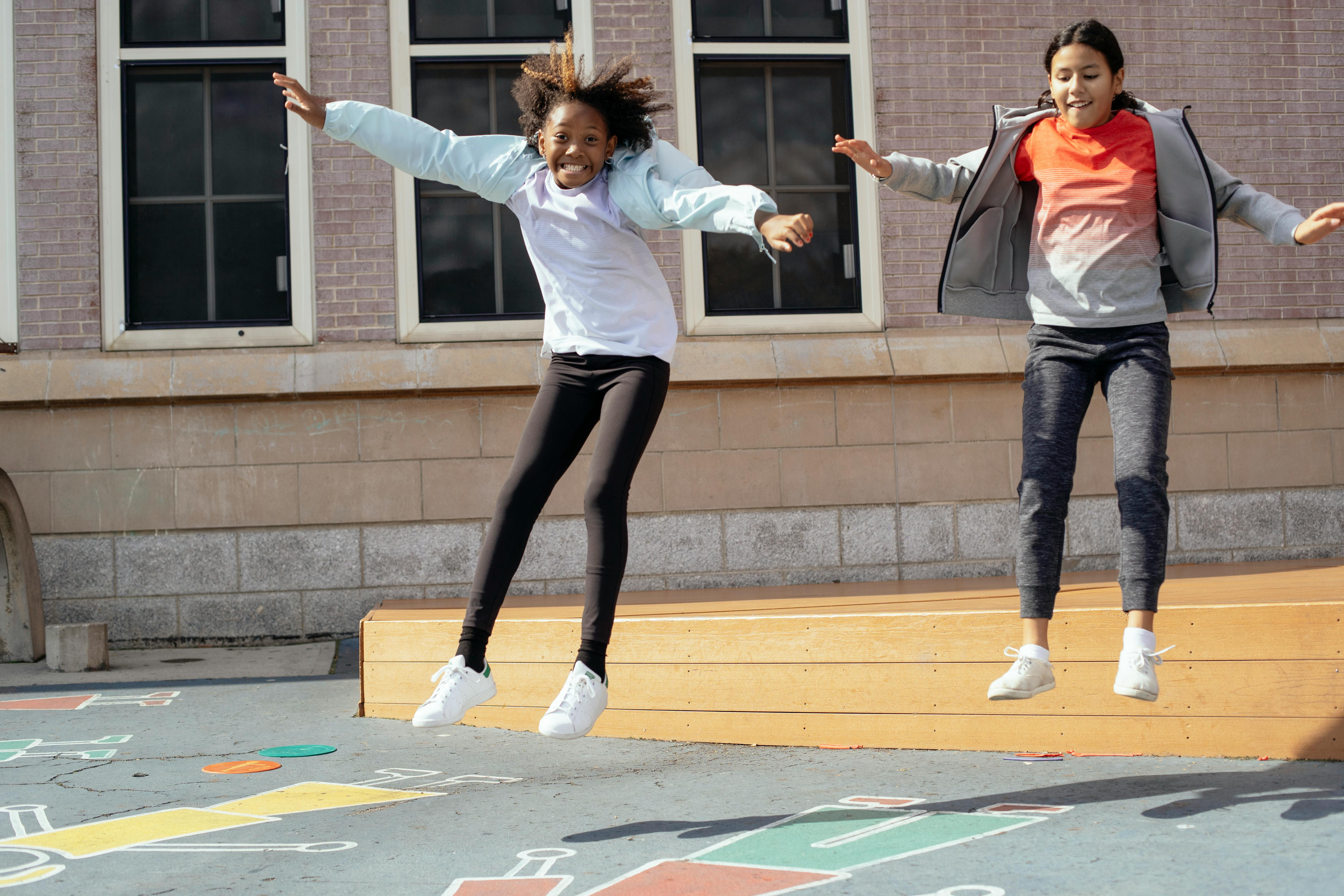
To develop a strong vestibular system, kids need plenty of time every day to run, jump, climb, balance on uneven surfaces, and otherwise happily move their bodies in all directions. This is important. A developed vestibular sense supports spatial awareness, focus, self-regulation, and other abilities necessary for learning. And sports practice or gym class a few times a week isn’t enough, nor do adult-run programs offer the full-body freedom necessary for this development.
Pediatric occupational therapist Angela Hanscom writes in her book Balanced and Barefoot,
“As adults, we may feel that we always know what is best for our children. A child’s neurological system begs to differ. Children with healthy neurological systems naturally seek out the sensory input they need on their own. They determine how much, how fast, and how high works for them at any given time. They do this without even thinking about it. If they are spinning in circles, it is because they need to. If they are jumping off a rock over and over, it is because they are craving that sensory input. They are trying to organize their senses through practice and repetition.”
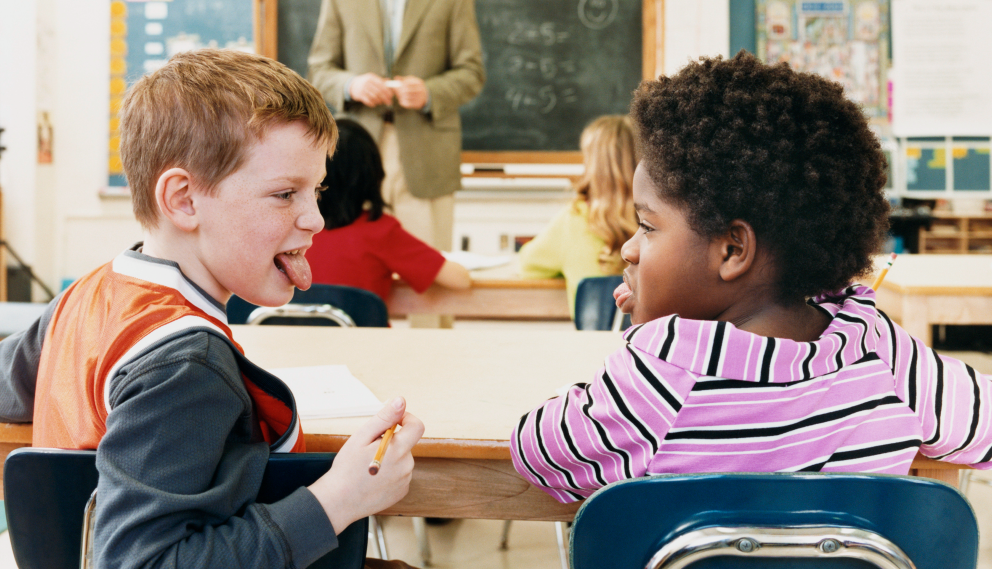
In an article titled “Why Children Fidget,” Ms. Hanscom writes about observing a fifth grade classroom near the end of their school day. She saw kids so desperate for movement that they were tilting their chairs, rocking their bodies, chewing on pencils, lightly smacking their heads. She tested the kids and found most had poor balance and core strength.
“In fact, we tested a few other classrooms and found that when compared to children from the early 1980s, only one out of twelve children had normal strength and balance. Only one! Oh my goodness,I thought to myself. These children need to move!
Children are going to class with bodies that are less prepared to learn than ever before. With sensory systems not quite working right, they are asked to sit and pay attention. Children naturally start fidgeting in order to get the movement their body so desperately needs and is not getting enough of to ‘turn their brain on.’ What happens when the children start fidgeting? We ask them to sit still and pay attention; therefore, their brain goes back to ‘sleep.’”
Research continues to indicate that movement is intrinsically linked to healthy development and learning in powerful ways.
Vigorous movement stimulates the birth of new neurons and is correlated with greater brain volume in the hippocampus, which plays a part in short and long-term memory.
Exercise boosts neurotransmitters necessary for attention, positive mood, and learning. It also produces proteins necessary for higher thought processes.
Studies show the sweet spot for kids is somewhere between 40 to 70 minutes of active movement a day for improved executive function, focus, and cognitive flexibility.
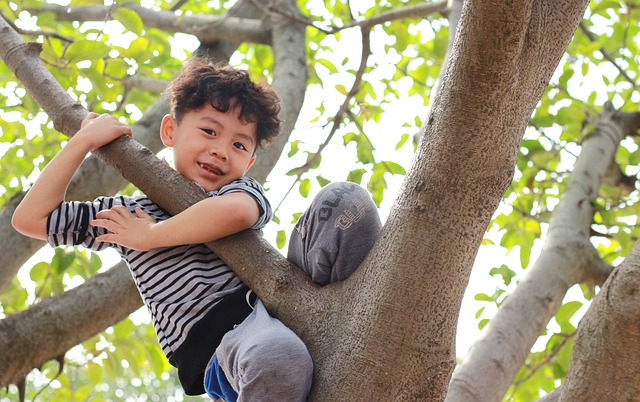
One study showed that after just two hours of playful activities like climbing trees, balancing on uneven surfaces, and navigating obstacles people temporarily increased their working memory capacity by 50 percent.
Overall, 60 years of research shows physical activity has overwhelmingly positive effects on kids’ mental health, cognitive abilities, and school achievement. The most fit kids are most likely to be the highest academic achievers.
Some kids can sit still and pay attention longer than others, but that’s not how we’re wired to learn best. In fact some educators point to research saying that after 20 minutes of inactivity, the neural communication networks in our brains function less effectively. And an analysis of nine studies indicate that the more time kids spend sitting, the more anxiety they are likely to experience.
Research shows kids actually fidget in order to better focus on complicated intellectual tasks. This is more noticeable in kids said to have ADHD, but it’s likely that foot-tapping and chair-scooting actually helps most kids store and process information. That’s why they are more likely to be restless working on math problems but relaxed while watching a movie or playing video games.
And several studies show that high levels of physical energy, a.k.a psychomotor overexcitability, is not only common but can be expected in highly intelligent children.
Some kids may grow out of the “fidget” and “wigglewump” stage, but I never did. I can’t even easily sit through a restaurant meal without stifling the urge to misbehave. My kids have blackmail-worthy stories about this. (Fortunately we can’t afford many restaurant meals.) Writing this essay required lots of breaks to walk the dogs, make a snack, do barn chores, talk with dear ones, and otherwise distract myself. If only today’s students were equally free to get out of their seats and move.
“The world is mud-luscious and puddle-wonderful.” ~e.e. cummings
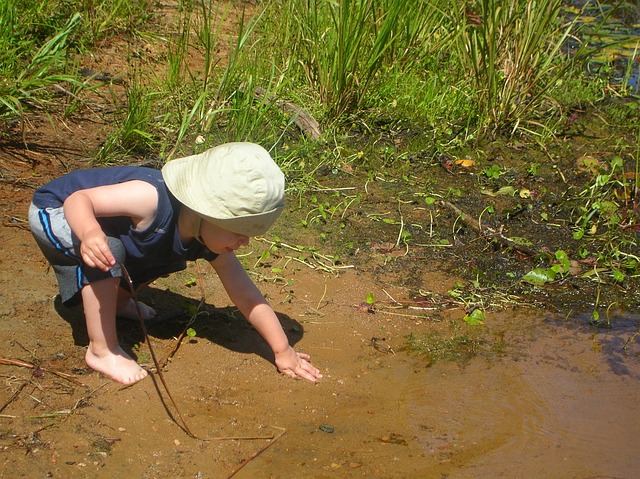
One street over in the neighborhood where I grew up was a small pond where ducks congregated. The ducks lifted from the water with reluctant quacks when we showed up. Despite summer’s heat, the pond was always cool. Aquatic plants waved their greenish fronds just below the surface and the bottom was lined with a thick layer of muck. My sister, a budding naturalist, speculated that the muck was made up of decayed plant matter. When we waded in, our feet sunk into that thick layer of soft goo, a squishy delight for our toes.
It might occur to you that we were standing in duck poo. You would be right.
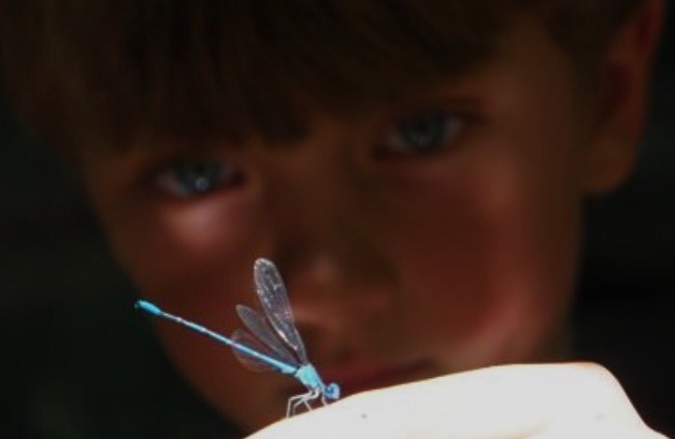
It smelled a bit when the water was stirred up, but that didn’t bother us. My sister and I would crouch near the edge watching insects. Water striders scurried on the surface. Each of their steps made a faint impression in the water as if they walked on gel. Beetles, ants, and the creatures my sister called by the fairytale name nymphs scampered through pondside plants. She liked to let insects climb up her arms. I was impressed, but too squeamish to copy her. Most magical of all were the dragonflies, their huge eyes looking back at us as they hovered on iridescent wings. This seemed like a separate world.
Eventually we had to return home. Our mother, a registered nurse who strictly adhered to standards like rigorous hand washing and early bedtimes, didn’t miss what we’d been up to. We came home spattered and stinky. But her only rule was that we strip off our clothes and scrub ourselves. She’d call from somewhere in the house, “be sure to use the nail brush!” She didn’t seem to mind that we’d walked a block away to play in a bacteria-infested pond as long as we scrubbed away all traces afterwards.
My mother was on to something.
In her book Balanced And Barefoot, pediatric occupational therapist Angela Hanscom writes about teachers, parents, and medical professionals who are alarmed by ever-growing numbers of children who can’t sit still or pay attention; who have trouble with coordination, balance, or sensory processing; who are fearful, easily frustrated, or act aggressively. She explains that these problems can be connected to an overly contained childhood, one that has become the norm. Restrictions begin in the earliest months, when babies spend hours each day strapped into strollers, car seats, and baby seats. As they get older their movements are curbed by passive indoor activities. Even outdoors, kids are often limited to low-challenge play areas or to prescribed movement in adult-structured programs.
The push for academics, often starting in preschool, strips even more time from active free play, while elementary schools are increasingly limiting or eliminating recess. This is profoundly counterproductive. Reading readiness is strongly influenced by physical movement. So is grasping and using mathematical concepts.
It helps to understand just how closely movement and sensory input is related to development. In the first year of a baby’s life, her brain doubles in size. It reaches 80 percent of its adult volume by age three. Babies are born with vast numbers of neuronal links in their brains and spines, primed to be shaped by what they encounter. Unused networks are not activated and disappear. This is what neuroscientists call “experience-dependent plasticity.” Early experiences rich in movement (plus the nurturance and emotional warmth that set the foundation for learning) activate a wider range of neural connections. This is nature’s wisdom at work, shaping a child’s brain through experience so they develop what they’ll need for the world they’re born into.
Your baby squirms and cries after a few minutes in the high chair. He can be placated with a new food or a spoon to bang on the tray, but only for a few minutes. He wants to get to work on crawling. Your toddler resists being put in her car seat and sometimes cries until she exhausts herself. She wants to run, climb, and play. They’re both responding to an inborn need to learn through movement.
Gill Connell and Cheryl McCarthy, authors ofA Moving Child is a Learning Child, clarify. They write that neural pathways developed in the first years of life,
“determine how a child thinks and learns, but more importantly, they will shape who she becomes… her passions and pursuits, triumphs and challenges, inner reflections, outer reactions, and outlook on life…all flowing through the neural network built by her earliest physical and sensory experiences.
With breathtaking simplicity, nature has created this move-to-learn process to be both dynamic and self-perpetuating, building the body and brain simultaneously. As such, the more a child moves, the more she stimulates her brain. The more the brain is stimulated, the more movement is required to go get more stimulation. In this way, nature gently coaxes the child to explore beyond her current boundaries toward her own curiosity to acquire new capabilities.”
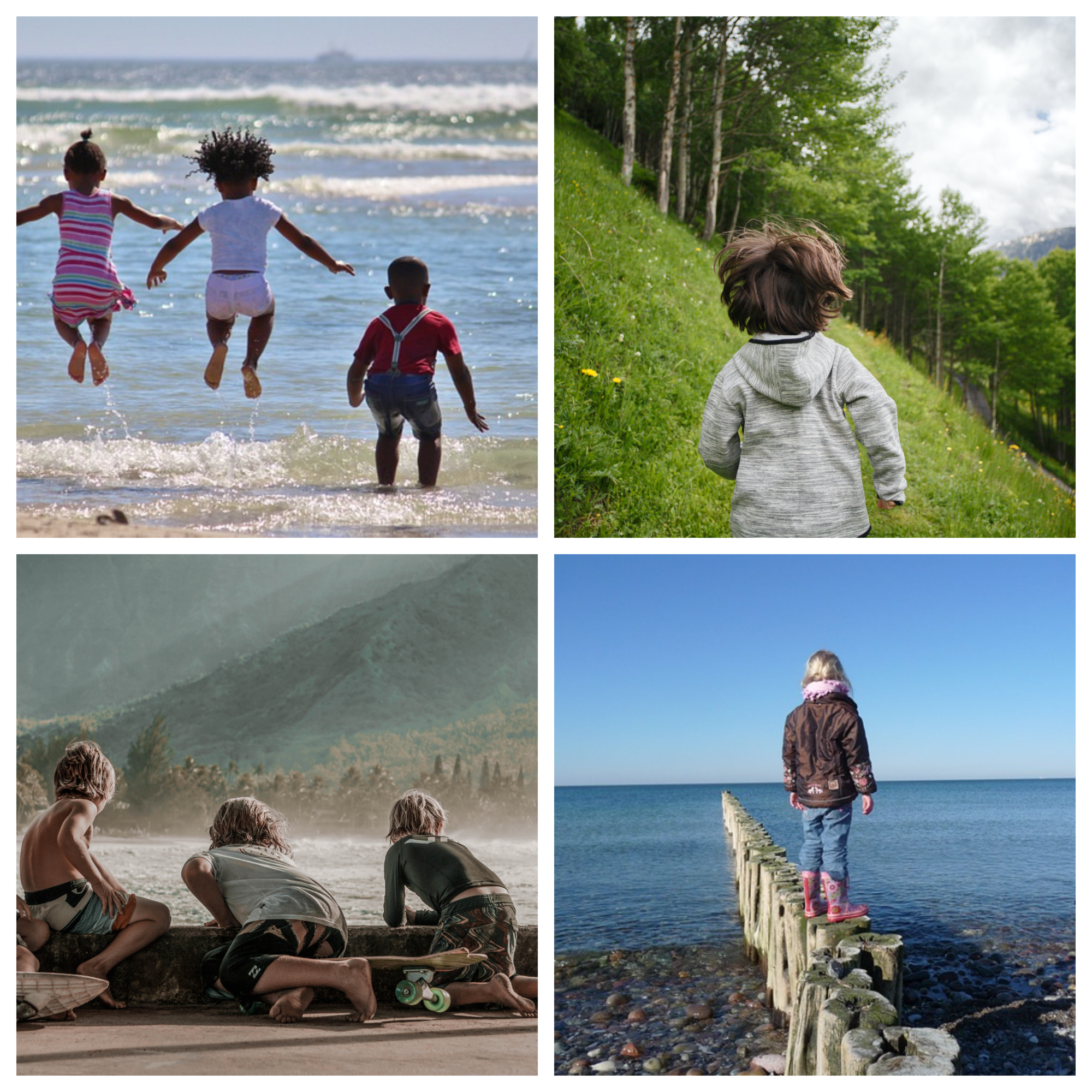
Overall, today’s kids show decreasing core strength and flexibility compared to averages in the 1980’s.”The more we restrict children’s movement and separate children from nature,” Angela Hanscom explains, “the more sensory disorganization we see.” That’s why she advocates sensory-rich, movement-based outdoor free play. Chasing, rolling down slopes, climbing trees, playing with nature’s play-perfect loose parts like leaves and sticks — these and other experiences build spatial awareness, balance, fine motor skills, and bodily control.
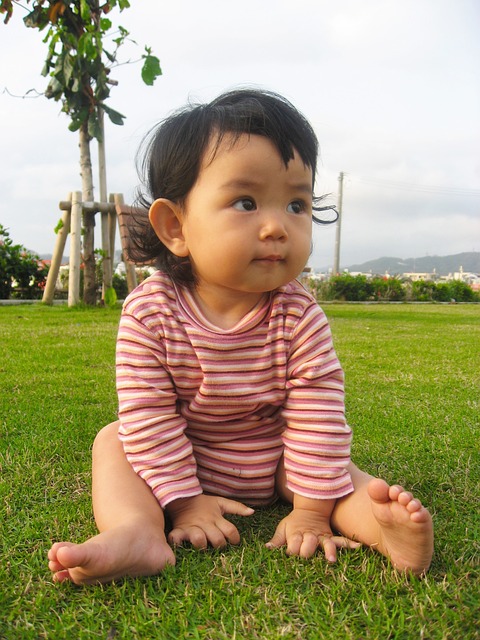
Let’s hone in on one sensory-rich experience; going barefoot. Madeline Avci, an Australian pediatric occupational therapist, explains that walking on grass, stones, and sand develops body awareness, called proprioception. Nerve endings in the feet and toes promote the development of sensory pathways, building functional movement patterns while helping children move with a sense of their body in space. When we wear shoes, the quality of sensory information is diminished. A paper published in Podiatry Management details all sorts of ways shoes, including those with flexible soles, interfere with a child’s gait, development, and posture. Walking barefoot also promotes better biomechanics, a more natural gait, and less pressure on our feet. Bones in the feet are not fully ossified until the late teen years, so the more barefoot time possible, the more naturally the foot’s shape can develop. Of course few of us are raising our families in a beachside hut where walking barefoot makes sense year-round. But Katy Bowman, author of Move Your DNA, suggests that all of us try to walk on natural surfaces like sand, rocks, grass, or wood for 10 to 20 minutes a day whenever possible, and to go barefoot at home.
Neurobiologist Gerald Hüther notes that “the most important learning experiences come to us, essentially, by way of our bodies — which means that learning is always an experience of the whole body. At the same time, every learning experience involves emotions. We are only able to learn when the so-called emotional centers in the brain are activated. These centers release neuroplastic messenger substances enabling what has been learned to become anchored in the brain ….[via] emotional activation. The most enjoyable activation we know of is ‘enthusiasm.'”
It’s ridiculous that we need science to confirm the value of enthusiasm. This is the energy each child brings fresh to the world. What they’re able to explore and experience with the whole of themselves, magnified by the capacity for awe, remains with them.
Dr. Hüther gives an example,
“Children living in the Amazon forests learn 120 different shades of green and can name them all, using 120 different terms. Potential of that kind is either used in practice or is little used. Children here can at best distinguish light green, green, and dark green. How far a potential is actually used depends on how important it is .. in a given culture…The result is that what was once a possibility, this potential, …if not used, will just wither away.”
Enthusiasm goes a long way toward explaining why children and nature go together so well. Children are themselves magic — able to shape shift into a toad or hawk, to feel what it’s like to hop nearly hidden under leaves or to glide on the air’s invisible currents. While imagination is alive everywhere, it can’t help but flourish when surrounded by aliveness. The more natural an area, the more kids have a chance to have meaningful encounters with the life around them. In fact, kids play differently in a park with play structures compared to more natural areas like an overgrown field, a row of trees, or a small creek.
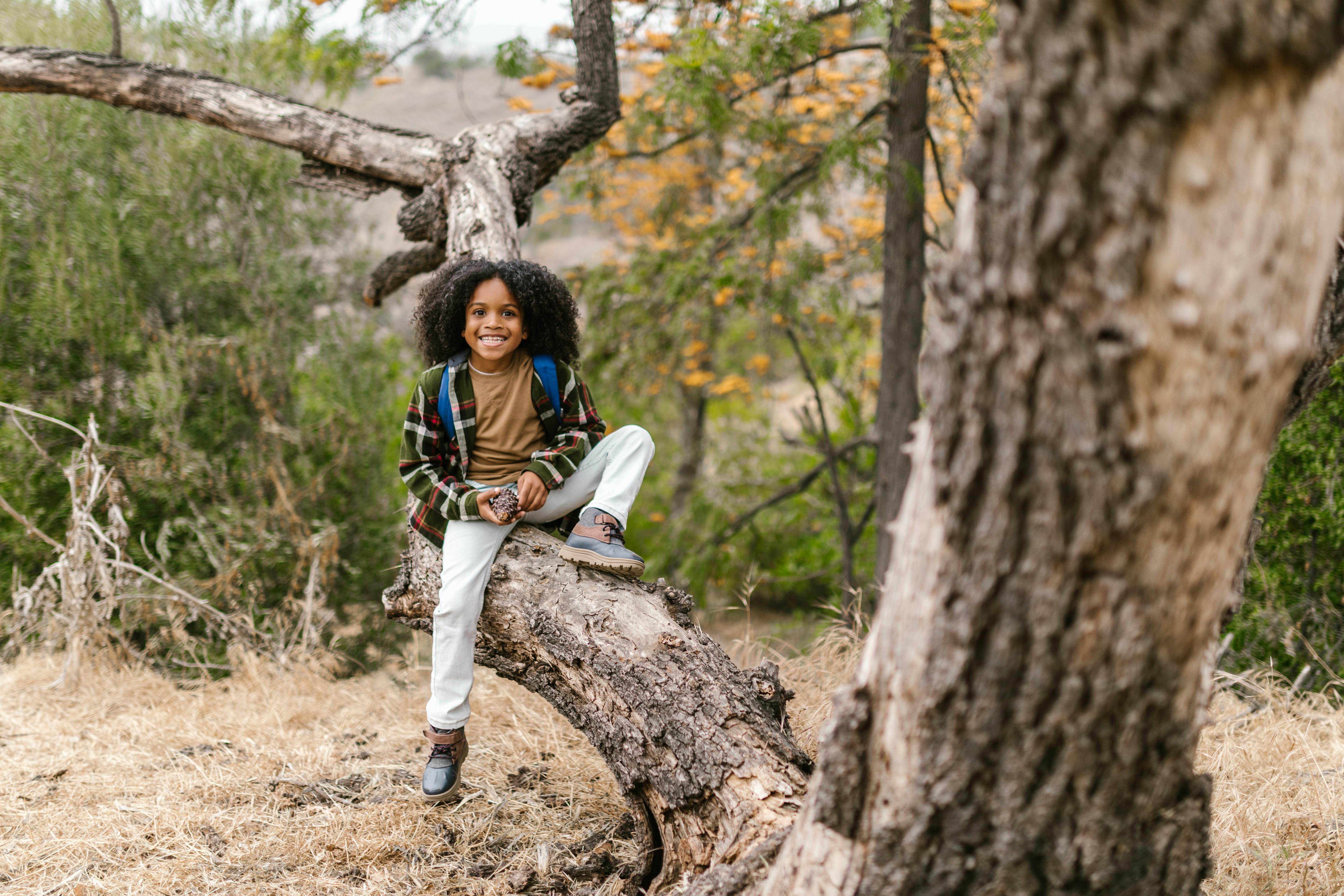
As Richard Louv details inLast Child in the Woods, kids confined to structured play areas have poorer balance and agility than those who play in unpaved areas. The social dynamic changes too. Older and physically larger kids dominate on playgrounds but in more natural areas, it’s the creative kids who act as leaders. In wild places, even an overgrown lot, kids are more likely to incorporate each other’s ideas into expressive make-believe scenarios using their dynamic surroundings—tall grasses become a savannah, tree roots become elf houses, pine cones become treasure. The essence of the child comes alive. Outdoor play in natural areas is more likely to include peers of differing ages and abilities. Regular outdoor experiences not only boost emotional health, memory, and problem solving, they also help children learn how to get along with each other.
Outdoor free play also inspires kids to challenge themselves. They are things to climb on and places to explore. In pursuit of fun, kids ignore minor annoyances like cold fingers, sharp briars, stumbles. Kids face and overcome fears. Such play is linked to greater social skill, resilience, and creativity.
And if you’re interested in academic test results, time outdoors has an impact there too. Here are a few encouraging studies.
Kids exposed to more nature had higher scores of working memory than kids who did not.
Simply going for a walk in a nature area, in any weather, can significantly improve memory and attention spans improved by 20 percent after people spent an hour interacting with nature.
If pre-college test results perk up your interest, the children most connected to nature are also most likely to score well in tests including the SAT.
We also know exposure to bacteria can be a good thing. Certain bacteria found in soil, Mycobacterium vaccae, have been found to boost the release of serotonin, a neurotransmitter linked to positive mood and enhanced learning.
Dirt may improve our health too. For example, children who grow up exposed to a greater range of soil microorganisms have been found, in some studies, to have a lower incidence of asthma. Heck, even common bacteria on our skin have been shown to cut down on rashes and reduce inflammation when we’re cut or bruised. A child’s exposure to dirt is part of the body’s education, microbiologist Mary Ruebush explains inWhy Dirt Is Good, “allowing his immune system to explore his environment.” (She adds a caveat, saying that the soil in some urban areas may be contaminated with heavy metals such as lead. That is indeed a wakeup cry. Soil is the structure we need to feed ourselves. When it’s poisoned, so is life.)
The importance of outdoor free play is getting a lot of attention these days. Playground designers, schools, and daycare programs are far more open to the benefits of outdoor free play with natural materials. It’s no surprise that children do better with natural sensory play, places for solitude, and opportunities for self-chosen challenge. This is a step in the right direction. A few steps farther and we’ll let kids back in nature herself to play in woodlands, fields, and beaches as well as back lots, mud puddles, and all the nature around us. It’s a step in the direction of wonder and delight, maybe even in the muck of a duck pond.





 Laura Grace Weldon