Staring Down Worry

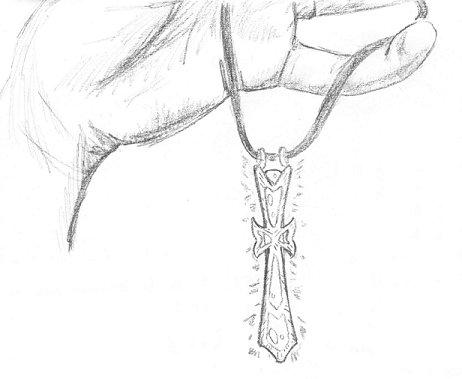
mystical experience of fear, metaphysical encounter with darkness, overcoming evil, facing worry, staring at Satan, prince of darkness in my room,

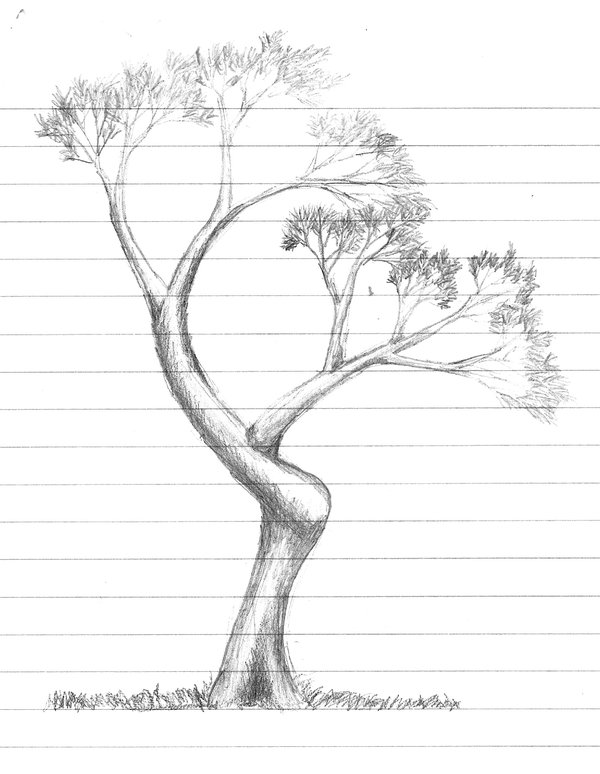
Image courtesy of pitrisek.deviantart.com

Something happened the night Worry appeared to me.

Some of us are chronic worriers. There’s probably an adaptive reason for this, since humans who envisioned potential dangers would be more likely to survive and pass on their genes. But saber-toothed tigers aren’t lurking by our front doors these days. I know for a fact that worry generates misery while producing absolutely no benefit. Giving it up, however, isn’t an easy matter. Worry runs in our heads like movies of disaster to come, unbidden yet powerful, making some of us wary of the smallest choices.

I worried from the earliest time I can remember. It may have an adaptive start in my life too. As a tiny child I spent many nights struggling to breathe through asthma attacks. When I was five years old I got a bit of food lodged in my esophagus. When my worried mother called the doctor he said it couldn’t possibly still be stuck hours later, I was just overreacting. I stayed awake all night spitting my saliva into a bowl, since even a moment’s inattention caused it to run down my windpipe and sent me into fits of choking. The next morning my parents took me to the ER where a surgeon removed a very stuck bit of food. The year I turned nine my grandparents all died, catapulting me into years of obsessive worry that everyone else I loved would die too. I was assaulted by an adult when I was 13, telling no one until years later. The focus of my worry widened as I spent years searching for the causes of evil and suffering. Worry continued to be my companion when I hit my 20’s. Each of my babies were born with medical problems. The unknown dangers threatening even the most innocent lives suddenly resided in my house. Chances are my chronic insomnia has roots in all this worry.

One night as I lay awake worrying, I had an experience that profoundly changed me. That night I had plenty of things to worry about: serious concerns about my children’s health, our finances, and other problems. Normally I fought off worry with gratitude—focusing on the comfort of my family sleeping safely nearby and the many blessings in my life. But worry was there haunting my mind and hollowing my body.

Sudden as a car crash, something happened.

I know it sounds bizarre but it was as real as the lamp on my desk is now. I became aware of a huge black column next to my bed. It was comprised of the most immense energy I’d ever experienced. It was dark and powerful with a presence that seemed alive and completely aware of my thoughts.

I had the sense that it was of such infinite size and strength that it went through the floor and out the roof, stretching far in both directions. I should have been more frightened, but the moment this column appeared I realized, as if the message hit all my cells at once, that I had summoned this darkness.

It was born of my own intense worry. It was a profound lesson that went through me the way wisdom does, filling not just our brains but also our bodies and souls. Lying there, I resolved to bring forth every ounce of light I could muster.

The instant I thought to do this, whatever that column was disappeared.

I woke my husband to tell him. He kindly assured me that I was nuts. Until this post I’ve only told one other friend. But in today’s atmosphere of worry, I wanted to share this image—of fear so huge that it manifests next to you. It taught me that worry is a kind of unintentional evil. It presupposes things will go wrong. It’s the opposite of faith.

I’m not entirely cured of worrying nor would I ever change those earlier years of worry. They’ve made me stronger, more open to the beauty found just beyond despair, and left me with a positive quest. But ever since that moment, years ago, I have made a conscious effort to reorient myself.

Ironically, my family has been through times more difficult than I could have imagined back when this happened—crime, financial hardship, loss, and grief. But I know the antidote—to shine forth with all the light I can. Some days I’m practically optimism’s parasite.

But really, if all my moments of hope coalesce into some kind of vision, I can’t wait to see it.

metaphysical experience of evil, starting at evil, facing Satan, summoning fear, transcending worry, transcending fear, overcoming worry, renewing optimism,

Image courtesy of m0thyyku.deviantart.com

Book Zombie

zone out while reading, reading addict, can't stop reading, staying up late to read, tune out the world when reading,

L.G. Weldon, book zombie

book [book]  noun
1. a work of fiction or nonfiction bound within covers or digital version
zom·bie  [zom-bee] noun
1. a person whose behavior or responses are wooden, inanimate, remote
 2. an eccentric or peculiar person.


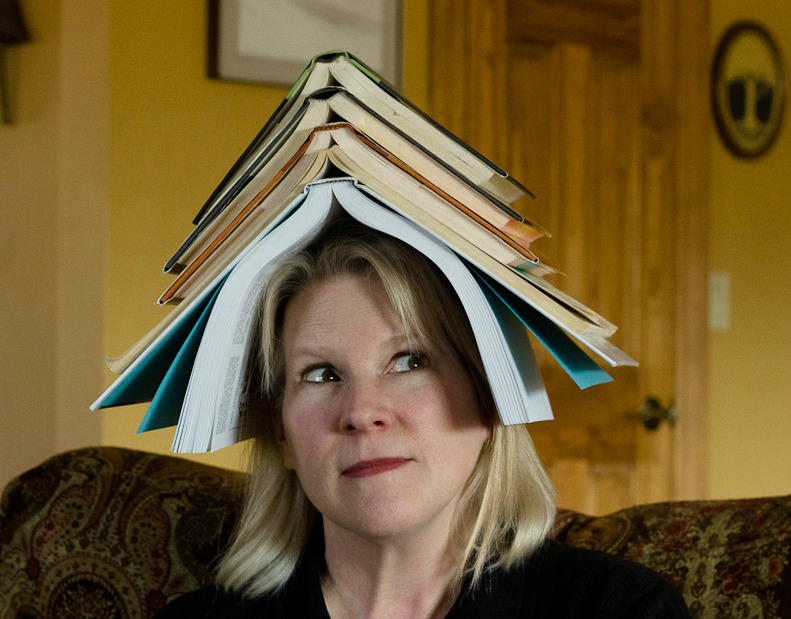
I stayed up past two a.m. last night happily churning through a book. Reading seems timeless to me, a book-related fugue state that got me in trouble in elementary school.  Many days the class moved on from reading time to math while I remained completely absorbed in a book. I’d look up to find I’d been called on to answer an equation. My brain would scramble to move from The Wolves of Willoughby Chase’s18th century manor house to third grade long division, the plight of children dealing with villians more real than dreary numbers chalked on the board.

This still causes me trouble. I have no idea how many minutes or hours have elapsed when I finally lift my eyes from the page. That’s not helpful. At night I tuck into an enticing stack of books, often enjoying non-fiction for a few hours and then finishing up with a long indulgent dessert of fiction. The evening me doesn’t care about the morning me, she unpages chapter after chapter oblivious of the clock’s reality. But no matter how late she stays up reading there’s still an early start. When the morning me looks at the stack of books she isn’t bitter. She may sigh, but she also looks forward to reading some more.

When my kids were tiny I only let myself read when they were asleep or nursing. Okay, I also read while they were safely strapped in the stroller, pushing it with a book propped against the handle. I hoped this would keep them safe from their mother’s zombie reading state. It didn’t. Now they’re zombies when they read. Or maybe they pretend to be, the better to filter out reminding parental voices.

I can’t recall a fraction of all the marvelous books, essays, poems, and articles I’ve read over the years. But I’m convinced that they’re in there, ready to provide a bit of insight or wisdom I might call on when the need arises. They are a part of who I am as surely as the experiences that make up my life.

Yes, today I feel pretty zombified with only a few hours of sleep due to the magical novel, The Night Circus. But if my schedule allowed I wouldn’t wait until this evening to finish it.

Perhaps because I’m tired, it occurs to me that books lure us into this zombification. Think about it. Close scrutiny of readers reveals that we willingly zone out, only our eyes moving in oddly repetitive back and forth motions. While reading we are out of our own minds, happily roaming through the imaginings of someone else’s. Perhaps our beloved books build brains to feed on them. If that were true I’d say, “Nosh away my dear books. Make a buffet of my mind. I am your happy zombie.”

Are you a fellow book zombie? If so, what are you reading lately? And if not, does something else cause you to zombie-out?

How The “10,000 Hour” Rule Can Benefit Any Child

homeschooling for success, interest-led learning, learning for success,

Image: uktara.deviantart.com/gallery

If you haven’t heard about the 10,000 Hour Rule, you’re probably busy doing what people do, living life on your own terms. But what you may not realize is how this rule affects young people, whether they have one all-consuming interest or not.

Malcolm Gladwell identified the 10,000 hour maxim in his book, Outliers: The Story of Success. The rule describes how to attain Big Time Success. Based on an analysis of people who reached the top of their fields, Gladwell claims that any of us can reach greatness by practicing tasks relevant to our chosen field for a total of 10,000 hours. He provides pretty compelling examples including the Beatles, Bill Gates, and Tiger Woods. These guys put in the hours, then rapidly pulled ahead of the competition.

Plenty of other circumstances factor into success but it’s worth taking a closer look at what the 10,000 hour rule means for today’s kids. Good news. Those who are homeschooling or attending Democratic schools benefit enormously from the 10,000 hour rule, although not in ways you might expect.

First and most obviously, they have more time to explore their interests. They don’t spend hours every day on the school bus, standing in line to change classes, listening to instructions/attendance/announcements, doing rote schoolwork, and then completing homework in the evening. Even highly academic homeschooling families find that a full load of “schoolwork” can be completed in substantially fewer hours than the average school day.

That leaves plenty of time to pursue real interests. Long hours every day can be lavished, if a child wishes, on building expertise through direct experience in video game design, creative writing, chemistry, speed skating, cello playing, sculpting, astronomy, cake decorating, computer animation, or any other area.

It’s not difficult for a young person, free from the time constraints of conventional schooling, to spend 10,000 hours in an area of passionate interest. Let’s look at the numbers. The average school year in the U.S. is 180 days (pretty similar in most of the world) with an average school day of 6.7 hours.  Thus children are unable to pursue their own interests and learn in wider ways for a minimum of 1,206 hours a year. Even if we don’t count kindergarten, that’s 14,472 hours by the time they’re 18. And we’re not even adding time necessarily spent on travel to and from school, prepping for the school day in the morning, and doing homework after school (although we know these obligations probably add another hour or two each school day).

Sure, school kids engage in all sorts of worthy pursuits in their spare time. But homeschoolers and students in Democratic schools have a lot morespare time. These young people can accumulate the requisite 10,000 hours quite easily by their mid-teens, putting them on the fast lane to Big Time Success in exactly the field that makes them feel most vibrant and alive. If they choose.

But what about the homeschooled kids and students in Democratic schools who don’t have a single all-consuming interest? A girl might like to read sci-fi, go horseback riding, play soccer, and teach the dog tricks. A boy might drift from one pursuit to another, avidly creating his own graphic novel, then becoming passionate about parkour. Should these kids choose one thing in order to accumulate the all-precious 10,000 hours?

Absolutely not. They’re already putting 10,000 hours into the exact skills that more widely define success.

That’s because their daily lives are filled with self-directed and meaningful learning. Of course, depending on the style of homeschooling, it’s obvious that many kids will spend time doing some rote educational tasks. But nothing approaching15,000 hours. Instead they’re accumulating more useful and accessible wisdom honed by experience. How?

~Thousands of hours spent feeding their own curiosity, becoming well acquainted with the pleasure of finding out more. This develops eager lifetime learners.

~Thousands of hours exploring, creating, building friendships, making mistakes, taking risks and accepting the consequences (what’s ordinarily called play).This develops innovative thinkers.

~Thousands of hours spent shouldering real responsibility and connecting with role models through chores, volunteer work, and spending time with people of all ages. This develops self-worth based on competence and meaning.

~Thousands of hours pursuing interests, in whatever direction they take, building proficiency through direct engagement. This develops mastery.

~Thousands of hours reading, contemplating, conversing, asking questions and searching for answers, looking at the bigger picture from different angles, and discovering how people they admire handle challenges. This develops maturity and strength of character.

Gladwell reminds us that 20 hours a week for 10 years adds up to 10,000 hours. Filling those hours meaningfully? That’s no problem for self-directed, endlessly curious learners. Chances are, they’ll grow up to redefine success. Who knows what today’s young people, raised to think deeply and freely, can bring to the future?

homeschool success, success for today's kids, kids succeed on own terms,

Image: just1bite.deviantart.com

This article was first published in Life Learning Magazine, Sept/Oct 2011.

Let The Youngest Teach You Mindfulness

child-paced, slow down, slow to appreciate,

Image from jesse.millan’s Flickr photostream

Ask any child. When adults meet them for the first time, standard questions include, “What do you want to be when you grow up?” right after classics like, “What grade are you in?” and “What’s your favorite subject?”

Such questions, unintentionally, gauge a child’s progress toward adulthood. That’s because adults tend to be future oriented. We’re distracted from the present moment by the need to plan and work toward any number of goals—what to do about dinner, how to juggle next week’s schedule, when bills can be paid. These distractions take our attention away from what is in the here and now. When we think ahead so often we have less time to notice, let alone appreciate, what makes up our lives minute by minute.

What is impatience except denying the value of the present moment? The watercolor effect of rain on the window, the meandering quality of a child’s conversation, the long wait for a pot to boil—these can be occasions to experience impatience or opportunities to breathe deeply and be present, gratefully.

Leaning so often toward the future unconsciously demonstrates to our children that later is more important than now. Yet as we know, later never comes. As long as we’re alive there’s always “later” to strive toward. Worse, we are surrounded by advertiser-driven messages telling us that we aren’t there yet, that we need to do more or become something more in order to have friends, be successful, find love.

The nature of early childhood is the perfect antidote to this hurry-up attitude. That is, if adults truly pay attention to the lessons the youngest model for us. Young children who are not yet pulled by the adult world’s messages are oriented to the present moment. When forced to disregard what is vital to their bodies and spirits—pretending, daydreaming, playing, snuggling—they rebel. They are who they are, where they are. They’re not caught up in the future tense which dimishes the here and now. They demonstrate the oldest way of knowing.

Pay close attention to the youngest children in your life. Let them help you learn solutions to our cultural overdrive.

As we slow down we have time to truly know each other and to truly know ourselves. We’re more aware of the messages our bodies send us and can act on those signals before they become symptoms. We have time to reflect. Time to remember our dreams when we awaken. After all, time is the only true wealth we have to spend.

slowing down, slow movement, child-pace, mindfulness, mindful living, mindful parenting,

Image from kla!’s Flicrk photostream

Mentor: Fancy Name For Grown-Ups Kids Need

mentor, role model, adult pals for kids, children in the neighborhood, real work for kids,

image courtesy of LisaW123’s Flickr photostream

The little boy just wanted to “do stuff.”

His parents let him traipse around with his wagon on garbage collection day. He’d take home pieces of wood, carefully pulling out nails to store in a can, so he and his friends would have the necessary materials to build forts or go-carts. Occasionally he found small engines that he’d do his best to fix. No one intervened to tell him his pursuits weren’t safe, although he was expected to clean up any mess as well help around the house.

His neighbors didn’t mind having this kid appear whenever they did something interesting—fix a car, build a shed, tend a greenhouse full of plants, run a garage sale. He was eager to learn and even more eager to help, so they did what adults have done throughout time. They shooed him away occasionally but mostly they shared what they knew.

He made use of what he learned. By the time he was 12 or 13 years old, these neighbors let him take on their home and car repairs, recognizing he was able to do a more exacting job than they might have done themselves. He gained more than skills from the adults in his life. He may have been leaning over a car hood with Clyde, but he was also learning how to understand the function of each system by paying attention. It seemed he was only helping Mr. Christman with the heavy tasks of operated a greenhouse but he was also taking in something important about growing old with dignity. It appeared he was working alongside his grandfather but he was also seeing how reputation, honesty, and treating each person with respect builds a small business.

Because he developed richly rewarding relationships with people of all ages, relatives as well as neighbors, he had plenty of examples to draw on as he matured. He saw how different people handled decisions, disciplined their children, laughed off trouble, solved problems, stayed in love.

His experience was rare. It’s becoming rarer all the time.

Throughout nearly all of their childhood and teen years our kids are segregated in day care, school, sports, and other activities. Even when they benefit from the very best programs, if they’re restricted to the company of same-aged peers doing what adults consider educational and enriching they are deprived of the riches found through fully engaging in the wider world. This subverts the way youth have matured throughout human history, when children learned right in the context of family and community—freely able to watch, imitate, and foster relationships with people of all ages.

We put kids in an oddly uncomfortable position when most adults in their lives are focused on them. Children want to center themselves, not have adult attention centered on them. Kids long to model themselves after adults who are engaged in meaningful, interesting, and useful activities of their own. When their experience of adults is limited to those who are there to care for, educate, or entertain children (important callings but not all that adults can do) the dynamic is shifted. The age-old desire to gain mastery and take on responsibility, eagerly becoming a capable adult, doesn’t have the same pull.

There are plenty of educational initiatives to bridge this gap, particularly for teens. These programs connect students with mentors or bring community members into schools to talk about their careers. While these efforts are admirable, such stopgap measures aren’t the way young people learn best. They need to spend appreciable time with people of all ages—observing, conversing and taking on responsibility. Real responsibilities, real relationships.

How can we remedy this?

That little boy? He grew up to be a remarkably capable, beautifully open-hearted, and endlessly positive person. I married him.

mentor, building competence through imitation, children at work,

Fun Theory

I’m not aware of any official Fun Theory in the field of learning. But fun shimmers under the surface of motivation and focus like a very big fish. And the fish named Fun shouldn’t be ignored.

I lifted the term Fun Theory from an old Volkswagen campaign. One of their videos shows busy commuters choosing an escalator instead of a staircase. People are rarely motivated to do otherwise. But when the same stairs were transformed into a giant electronic piano sixty-six percent more people chose to hop, dance and run up those musical steps. Fun works. (It also sends the Volkswagen logo around the world in a great example of viral marketing.)

It’s no surprise that pleasure is motivating, although what one person finds enjoyable may not be remotely engaging for the next person.

That’s the key. Fun is highly individual. It can’t be easily pre-packaged, even though promoters of textbooks, curricula, and enrichment programs assert their products do just that.

You can tell when educational materials and experiences don’t engage the young people in your life. They exhibit, shall we say, obvious symptoms. I won’t list them here. These symptoms tend to cause us all kinds of angst.

A child’s stubborn insistence that learning be meaningful and interesting is actually a sign of positive selfhood. We need to pay close attention to each child to really see what sparks enthusiasm, evokes awe, sharpens focus, builds on interests, and challenges abilities. That’s what advances learning.

The elements that make an activity or interest compelling for any one person can’t be neatly summed up, nor should they. A person is too complex to reduce to a List of Handy Motivators. But you might want to consider such factors if you’d like to understand why your child prefers to do things his or her way, or why some enriching activities “work” and others don’t. Below you’ll find brief notes about some of the factors that make learning intrinsically pleasurable and interesting. Think of your child as you read over the list. Think of yourself too. You’ll recognize many unique ways that lively, engaged learning happens quite naturally.

                Trial and Error 

Learning is fun when errors don’t feel like failures. Watch a group of friends figure out what tools and design elements they’ll use to make bracelets from a cast-off metal objects. Their initial results will likely be both positive and negative. Their mistakes will help to guide and refine their progress. Thomas Edison said of trial and error, “Results! Why man, I have gotten a lot of results. I know several thousand things that won’t work.”

When your child is building a fort out of branches she may experiment with several approaches. This open-ended process allows her to repeat successes and learn from errors, getting ever closer to the desired result. Trial and error often pulls the learner forward to greater mastery. It’s also tremendously enjoyable.

                 Meaning  

Full engagement in any pursuit that is meaningful to the individual may not sound like a prescription for fun. But it is, because it tends to lead to what is called flow:  a sense of focusing so fully that we lose sense of time, discomfort, even self.

Artists and athletes aren’t the only ones who experience flow, children easily merge into this state. A child may experience flow while engaging in make-believe, drawing, swinging on a backyard swing, playing the guitar, fixing a bicycle, even organizing a shelf.

You may not be able to predict what has meaning for your child, but chances are it fuels learning. Your daughter’s fascination with horses may lead her to equine-related mathematics, history and science. Her learning is enlivened with wonder and purpose. That absorption is also fun.

                Discovery/Exploration    

Discovery is highly motivating and feels quite a bit like fun. It lures babies to put everything into their mouths. It propels us to try new music, peer around forbidden corners, travel to distant places.

When a friend brings up an obscure bit of information, your preteen may check it out later only to find an unexpectedly engaging exploration through subjects that never interested her before. Or perhaps your son’s curiosity is piqued by a new venture he wants to try like making homemade cheese. The project opens up to ever wider explorations such as homesteading skills, the claims of raw milk advocates, and recipes using artisan cheeses. For most of us independent discovery has the greatest allure.

                Novelty

What is new and unexpected heightens attention and activates all kinds of interest. That’s why marketers are constantly coming out with newer versions of the same thing. Novelty leads readily to exploration or play. By itself, novelty wears off quickly. (Those commuters will tire of the musical stairs and probably go back to using the escalator.)

You can rely on something new to stimulate interest. Just remember that too much reliance on novelty doesn’t help children build their own deeper resources of attention and interest.

                Play

Play isn’t “just” for fun. It’s an essential component of learning. Stuart Brown, author of Play: How It Shapes the Brain, Opens the Imagination, and Invigorates the Soul said in an interview, “…evidence continues to accumulate that the learning of emotional control, social competency, personal resiliency and continuing curiosity plus other life benefits accrue largely through rich developmentally appropriate play experiences.”  Unstructured free play is particularly important. We already know it’s fun.

                Direct Experience

Hands-on efforts make learning come alive with pleasure and satisfaction. Frank R. Wilson notes in  The Hand: How Its Use Shapes the Brain, Language, and Human Culture that brain and hand use have always been connected. When a young child is put in charge of preparing vegetables for a stir fry dinner his efforts may not be entirely helpful, but the sensory experience of washing, chopping, and tasting offer him much more than growing competence in meal preparation. The sensory experiences enhance comprehension and lock in learning. When a child expresses interest in puppetry she may want the opportunity to make puppets, stage puppet shows, and go to puppet guild meetings. The more fully involved a child can be the more direct (and lasting) his or her learning will be.

                Challenge 

Challenges are fun as well as educational because they keep us right at the edge of our competence, pushing us on to the next level (exactly why video games are so compelling). A ten-year-old may enjoy the logical challenge of debating his older brother, the practical difficulties of planning and filming his own scary movie, the physical and social risks of showing off at the skating rink. These self-selected activities push him to advance a whole range of abilities. Challenges keep us too absorbed to grin but for our own good reasons.

There are plenty of other “fun in learning” factors such as relationship development, collaboration, sensory pleasure—surely you can think of more. All these elements are intertwined so completely that they only make sense when we see them as connected.

I think that’s why we need to pay attention to what’s fun about learning. Yes it’s different for each person. But what’s universal is that each of us is capable of fascination, excitement, and wonder. Why fish around for methods to motivate and sustain a child’s attention when joy is right there, showing us the way?

Portions of this post excerpted from Free Range Learning.

Do YOU Have A Choice?

stay at home mothering choice,
 
 
Today’s guest post is by Karyn Van Der Zwet from New Zealand. Her parenting advice is brilliant, based on science and loving interaction, and I can’t wait until her e-book is ready.  
 

When Germaine Greer wrote  The Female Eunuch, at the height of The Feminist Revolution, she suggested that motherhood should not be considered a substitute to a career. By the time she wrote The Whole Woman in 1999, she had done a complete 180 degree turn and called for proper state-funding for Stay at Home Mums.

She realised full-time mothering is as valuable to many women as being in paid work. She also realised there were benefits to society as a whole.

Children who feel well attached to their mothers do better at life. They make better decisions; they chose more mature friends and partners, and their relationships are more likely to last; they have a work ethic which is balanced with a sense of play; they are physically healthier and they have a stronger sense of community. And becoming properly attached takes intense commitment from one main carer for a long time.

Of course, just being at home doesn’t automatically mean that we’re doing the job that our children need us to do. Likewise, being at home doesn’t have to mean being a house-slave or turning off our brains. Attachment Theory (the science) suggests that a great mother is one who understands (intellectually or not) what her children need, according to their biology, and does her best to provide it. When she can’t manage  the full-time commitment (or chooses not to make it), she is the one who finds nurturing care for her child and does what she can to connect when she is at home. Great attachment can happen, and often does, but it’s a much more emotionally demanding experience for mothers when they aren’t around 24/7 for the first few years.

Truly giving children the emotional support their biology demands, especially in the first three years, is tough going for many of us. What we can give emotionally and consistently is largely dependent on the amount and degree of positive emotional experiences we have received. It’s the difference between intellectually understanding that we are loved by our parents, and feeling/knowing/living that experience of love. Remembering that our mothers had their own burdens to carry, and as adults we can make sense of their stories and understand they did the best they could at the time.

It’s much easier to understand how difficult things may have been for our mothers, when we’ve been mothers ourselves. We’ve all lived it: the act of mothering can be overwhelming, intense and, at times, threatening to our sense of self.

It seems odd to our modern-day western lives that the biology of human babies is so intensely demanding of their mothers. Of us. For many women it seems unfair. But equally, human biology never expected that we would have to mother in isolation or that we would have to do everything. Alone. Or that we would have to make the unnatural choice between our children and social isolation, and paid work and social contact.

Modern women were told we could do anything.

Which evolved into – we should do everything.

And now many of us have no option: we have to do everything.

The point? Well, to me, the main tenents of feminism are: honouring and respect women’s bodies; equity; and choice. Western women did not have the choice to work or to be educated in the past. Now many of us do not have the choice to stay at home as full-time mothers for as long as we want to.

Ten years ago in New Zealand when I was pregnant with our eldest son, the average single income could service a mortgage or pay the rent and still feed and clothe a family. Because of this, we have a much smaller mortgage than most people, and I have been able to choose to stay at home. It’s been tough going at times and luxuries are definitely luxuries – but I am content with my decision. Since we bought, house prices have more than doubled. Most New Zealand women cannot be at home with their children beyond basic maternity-leave for financial reasons. I understand this means we have ‘caught up’ with the rest of the western world. I am not convinced it’s progress.

In light of all this, here’s my questions for you all:

Have we traded supression by men for suppression by economics?

Did you have the choice to stay at home with your children for as long as you wished?

time crazed moms, lack of choice for mothers,

This was originally posted to World Moms Blog by Karyn Van Der Zwet of Napier, New Zealand. Karyn can also be found on her blog, kloppenmum on twitter @kloppenmum and on facebook: Karyn At Kloppenmum. 

References:
The Whole Woman, Germaine Greer, Anchor Books 1999
The Developing Mind, Daniel J Siegel, Guilford Press, 1999
Becoming Attached, Robert Karen, Oxford University Press, 1994

Accepting Challenges, Embracing Mistakes

children need challenges, mistakes can be good,

Escalera al cielo by David Oliva

Interesting problems and exciting risks are life’s calisthenics. They stretch us in directions we need to grow. Children are particularly oriented this way. They think up huge questions and search for the answers. They face fears. They puzzle over inconsistencies in what is said and done around them. They relentlessly challenge themselves to achieve social, physical, or intellectual feats that (from a child’s perspective) seem daunting. They struggle for mastery even when dozens of attempts don’t provide them any success. It’s a testament to courage that they continue to try.

let children face challenges,

Illustration from ”Lustige Gesellschaft” by Franz, Count von Pocci

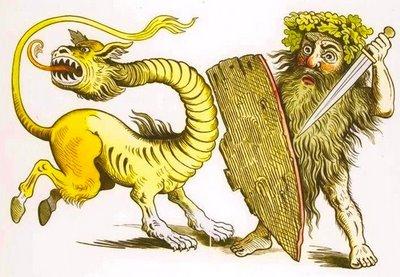
Sometimes children are accused of “looking for trouble” when they simply yearn to vanquish dragons of their own making. A child’s desire to challenge him- or herself is at times as unrelenting as physical growth.

As adults we do this in our own way. If we don’t have enticing challenges, we may develop a state of mental friction to compensate. It seems to be a very human trait to clutter up our days with trouble if we have no more engaging prospects. We worry, rehash old issues, overreact, or find complications where there may be none. As the roots of a plant become more tightly entangled once they are pot bound, an individual without the freedom to take on greater challenges often gets caught up in the same confining struggles.

challenges are necessary, life without risk, take risks,

Image by Keith Williamson

One thing we can learn from children is the way they are attracted to dilemmas that help them learn and grow. Children who are nurtured in a healthy, free range learning environment are invigorated by the challenges they seek out. They expand their own frontiers on a comfortable, self-regulating timetable. Perhaps people of all ages define themselves, in part, through the challenges they take on and the way they resolve those challenges.

Oftentimes we deprive children of normal day-to-day challenges because of our own time constraints. As adults we are often distracted and focused on moving forward. It takes considerable tolerance to keep from stepping in and doing for children what will take them much longer to do for themselves, such as solving problems, making choices, completing tasks, and accepting the consequences. But when we recognize that even these small challenges are catalysts for growth, it is easier for us to step back and let children face them as they occur. These are normal stressors. Dealing with them gives children the critical experiences that lead to self-reliance.

accept challenges, embrace mistakes,

pdphoto.org

So much about today’s “managed childhood” has developed in order to prevent young people from making mistakes. We think we know the prescription for success, but as we’ve seen, a one-size-fits-all approach doesn’t allow individuals to thrive. It also denies them the very human right to learn in the way best for them and to listen to the callings that prompt them. The “right way” to proceed in our culture usually means health, popularity, good grades, attractiveness, college degree, career, marriage, mortgage, and so on. We’ve created these societal expectations largely to cushion our youth from mistakes. But error is inevitable even if we avoid all risks. That narrow, preordained path is anathema to genuine experience. Setting rigid standards for children sends a message. It says to them that failure is the worst outcome and that our acceptance is conditional.

What we might do instead is recognize that courage is required to go one’s own way, that mistakes are inevitable, and that the outcome is authenticity. The real challenge lies in accepting each person’s possibilities. That’s how each of us proceeds when we do what we can with what we have in order to live our lives fully. The path not taken may be the journey regretted forever. That’s why we need to honor mistakes as important passages in our lives too. They help us face the next challenge with a wry smile and new determination, knowing another lesson has been learned.

Excerpt from Free Range Learning: How Homeschooling Changes Everything

Don’t Say It, Draw It: Non-Threatening Sketching Inspirations

Quick, draw something important to you. Try to do it in five minutes or less.

Is it an object, a person, an idea, a goal, a value, or something else entirely?

drawing to explore feelings, drawing as meditation,

Image courtesy of jhannah42590.deviantart.com

Those of us who don’t draw often (or ever) may be uncomfortable taking pencil in hand to create an image. But if we draw something without criticizing, erasing, and apologizing for the result we find that the process itself pulls us out of our habitual patterns of thinking. Like a form of meditation, sketching can take us to a still point in ourselves.

We may rely heavy on the written word throughout the day but our species used images long, long before formalized symbols such as words. Images are much more primary. When we generate those images we’re going deeper, beyond the chatter and clamor of daily life.

drawing for non-artists, why we draw,

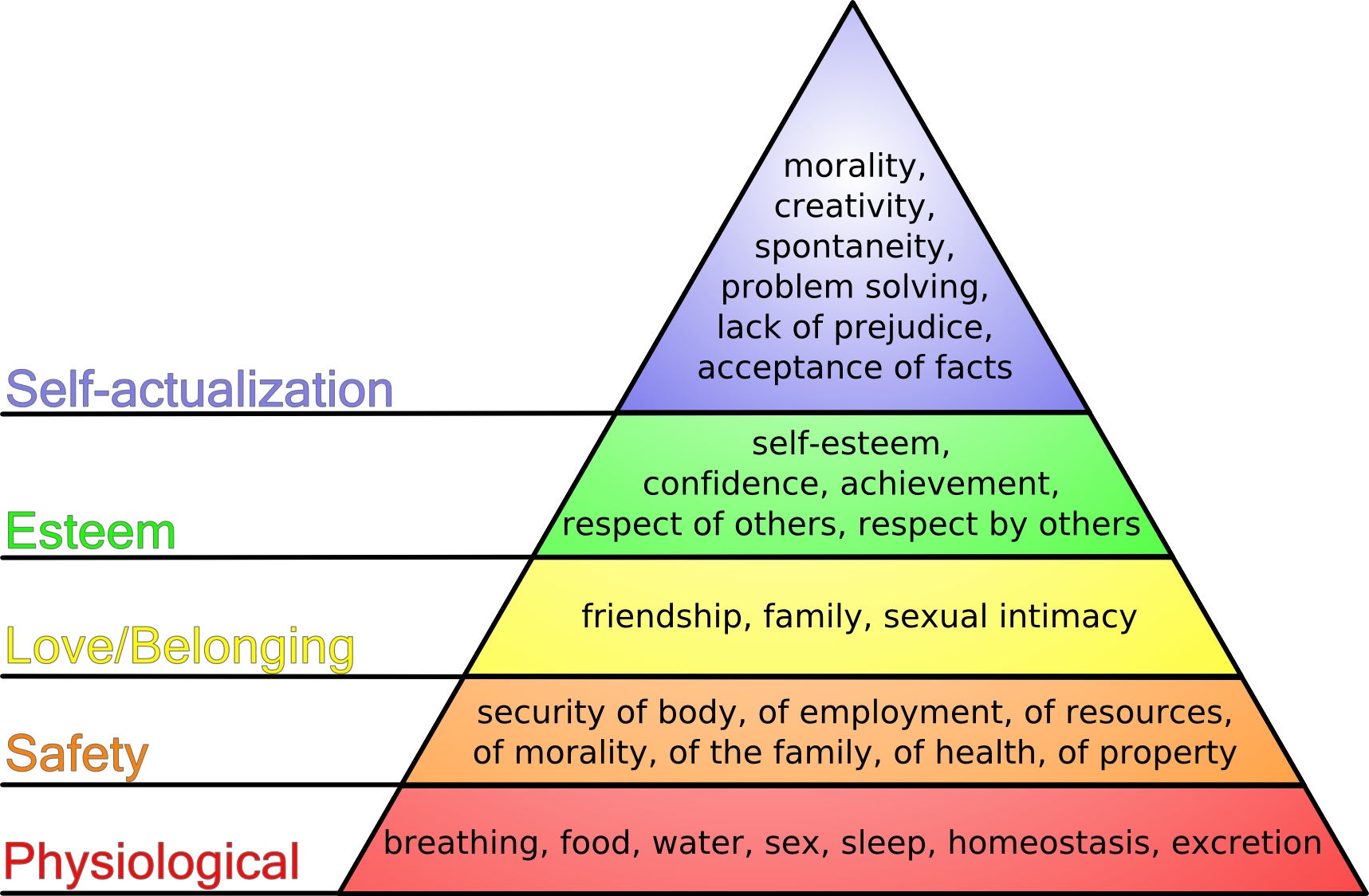
Back in college I was assigned a psychology class project. It was supposed to demonstrate Maslow’s hierarchy of needs. Maslow insisted that most people are focused on basic needs, fewer are able to move up to higher level needs, and the rarest make it to what he called self-actualization.

I designed my project to be simple and get me a good grade. I also hoped that it would disprove Maslow just a bit. I had nothing against the guy, I’m just not fond of stuffing people in categories. And besides, I already I knew people whose most basic needs were barely met, but were damn close to the top of the scale. They not only cared deeply but consistently reached out to help others. Or they worked tirelessly for a greater good without ever seeking acclaim. Or they lived creatively and according to their own unique vision, inspiring others by example.

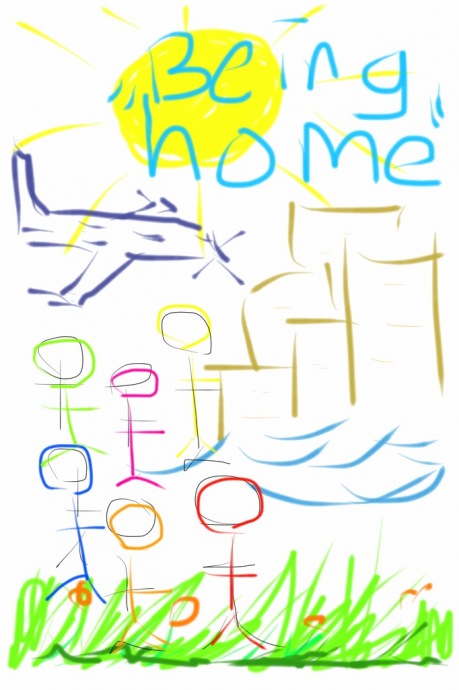
My project was easy. I asked people to make a quick sketch of something important to them. I asked college students, people on the bus, neighbors, strangers in coffee shops, college professors. Invariably they insisted they couldn’t draw. (Neither can I.) At least a third of the people I asked turned me down. Drawing is apparently pretty threatening. Or short blonde college students are, not sure which. But those who did participate created pretty interesting results. I got the expected number of humorous liquor and sex-related drawings from guys, shopping and chocolate drawings from girls. (These were hardly character-defining, after all, it was a spur-of-the-moment request.)

Many more drawings focused on subjects like family, educational goals (probably related to the preponderance of college students in my project), and activities of all kinds.

A surprising number of people drew something less tangible. Love, compassion, happiness, making a difference, God, higher consciousness. These were represented by abstract drawings or symbols.

The majority of people weren’t content to let the images speak for themselves. They also used words. They added labels, explanations, entire sentences—seeking to make their meaning clear.

Back then, I presented my project as evidence that Maslow’s hierarchy wasn’t proof positive that we’re all pedaling along on different tracks. I postulated that we operate across many levels depending on all sorts of variables. That assertion annoyed my professor, who was not amused by a student who dared question an icon in the field and who did so in a paper filled with drawings. He wrote nasty remarks all over my paper (right over the drawings I collected) even though I closed with a lovely quote by Maslow.

“The concept of creativeness and the concept of the healthy, self-actualizing, fully human person seem to be coming closer and closer together, and may perhaps turn out to be the same thing.” Abraham Maslow

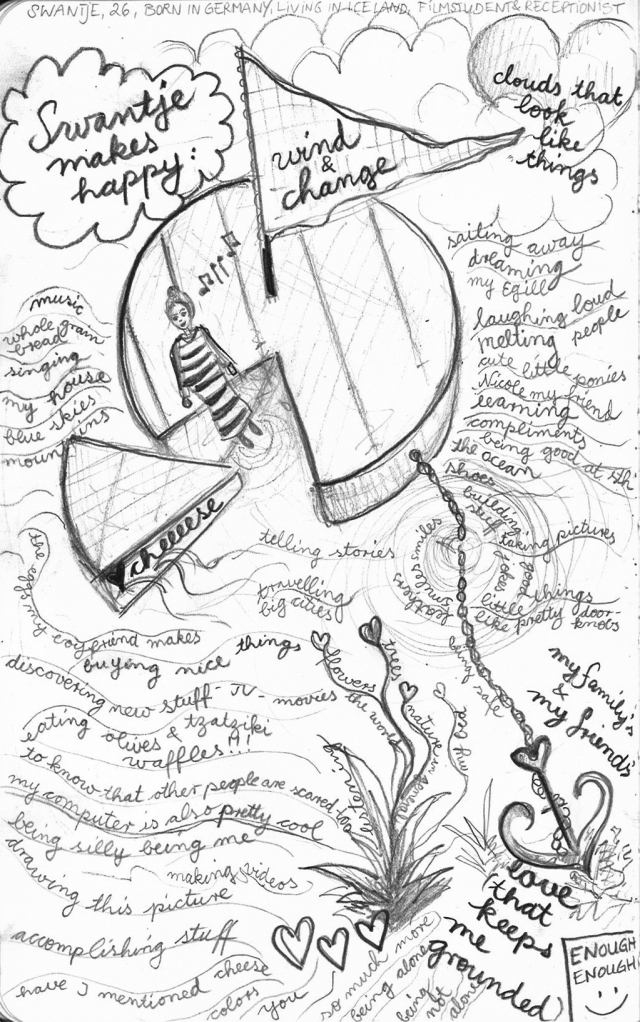
The range of images drawn for my college paper were very similar to those collected in a project by Catherine Young for the Schoolof Visual Arts MFA Interaction Design Program. Catherine explored how people around the world represent what makes them happy.  The response to Draw Happy  was so great that the project remains ongoing, with hundreds of participant’s drawings.

Canada drawhappy.wordpress.com

Germany drawhappy.wordpress.com

Portugal drawhappy.wordpress.com

I have no beef with Maslow. But I’m still interested in what drawing does for us as whole beings. Those of us who aren’t artists might consider drawing as an unexplored avenue. Down this particular road are new ways to express ourselves, expand our creativity, and take a break from our relentless multitasking.

I harbor fantasies of indulging in illustrated journals and like to pore over an enticing selection of books on the topic but the fact is, I don’t even write in a journal. And my vows of sitting down to sketch at least once a week have never taken hold.

But there are much easier ways to spur ourselves to draw.

How can you add some non-threatening sketch time to your life?

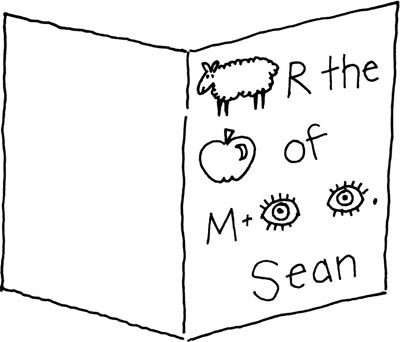
Draw rebus pictures     Chances are you don’t write to-do lists out by hand. And most people text rather than write notes (let alone postcards). Try this. Occasionally write these things longhand using rebus pictures. You’ll inject some personality in a fun, cartoonish way. Rebus, if you don’t remember from preschool, are simple pictures used to replace words. Even a quickly rendered image is pretty easy to recognize.

tlc.howstuffworks.com


Draw studies     Keep a supply of blank note cards or a tiny sketchbook for this project. You might choose to draw only saltshakers, or lamps, or shoes. DaVinci did all sorts of studies of this sort. He drew page after page of noses, bird’s wings, running water. This is a daydreamy exercise that invites you to find all sorts of nuances in your subject. You may not only become proficient in drawing saltshakers, but may notice saltshakers wherever you go.

drawing as self-discovery,

Draw the same thing repeatedly     Draw something you regularly encounter. Draw the tree in your back yard as it appears in different seasons and times of day. Draw that souvenir bottle on your windowsill–in light and shadow, surrounded by clutter, filled with flowers. Draw the same scene over and over from different angles, as it might have appeared a hundred years ago, as it might look to a creature that sees only in temperature, or from a worm’s eye view.

drawing to release stress,

autumnwhisper.deviantart.com

Draw your feelings     We don’t have a lot of creative outlets to express reactions to bad news, personal disappointments, big changes, grief, haunting regrets. Our feelings don’t go away while surfing the net. Whip out some colored pencils to illustrate your fervent opinion in satisfyingly jagged lines. Render your angst in exactly the right shade of gray, magenta, and orange. Or pull together your fractured ideals in a twisting vine that reaches across a wall you’ve drawn brick by brick. Chances are your mood will lift. Drawing might just empower you to take bolder action.

sketch your way to peace,

Marendo Müller

Draw on memories     The past continually inhabits the present. Try bringing it forth non-verbally by sketching it. Draw a favorite toy from childhood, the necklace your mother used to wear every day, your view of the chalkboard back in fifth grade, the door of your first apartment. You’ll be surprised what these drawings evoke.

drawing memories, drawing feelings,

molicalynden.deviantart.com

Draw abstractly     Take away the burden of recreating representational images. Draw a favorite smell, a new idea, a mood, a strong impression left when waking from a dream already forgotten, a taste, a laugh.

sketch your way to relaxation

Alfons Anders “Begegnung”

Doodle  Doodling is great practice for those of us who don’t want to call what we’re doing “drawing.”  And this non-directed activity is a great way to allow your brain to idle while creative impulses emerge.

“A drawing is simply a line going for a walk.”  Paul Klee

Resources

Drawing Lab for Mixed-Media Artists: 52 Creative Exercises to Make Drawing Fun

Keeping a Nature Journal: Discover a Whole New Way of Seeing the World Around You

The Creative License: Giving Yourself Permission to Be The Artist You Truly Are

How The Secret Garden Saved Me

inner life of children, kids' religious worries, what kids hide from their parents,

My mother gave me an old clothbound book when I was nine years old.  It was her childhood copy of The Secret Garden by Frances Hodgson Burnett.  I felt a sudden tug of connection to the little girl my mother once was, especially when I found her name carefully penciled on the inside cover.  Right away, I signed my name under hers.

Although written in 1911 and clotted with Yorkshire dialect, that book became an essential nutrient to me.  It told the story of orphaned Mary Lennox who was sent to live with her silent brooding uncle on the English moor. Little Mary had no lessons imposed on her and was given the opportunity to explore.  I envied her freedom.  A character named Dickon befriended animals so easily that they gathered at his feet and ate from his hand. I, too, liked to go in the forest behind our house in hopes that woodland creatures there would come to accept me.  And I understood Mary’s response when her uncle inquired if she wanted anything. He suggested toys or dolls.  Instead she asked, “Might I have a bit of earth?”

More than my favorite book, The Secret Garden provided comfort at a time when I could find no other solace.  The year I received my mother’s copy was also the year that one after another of my grandparents succumbed to long, painful illnesses. By the time I turned ten, all my grandparents had died.

I’d watched them struggle for each breath but it hadn’t occurred to me that they wouldn’t get better. That’s what doctors and medicine were for. That’s what prayer was for. Now we would never have Sunday dinner together again. The seasons would come and go without canning applesauce or planting bulbs or going to the lake with my grandparents as we always did. I couldn’t stop thinking about death.

children's literature and positive mental health, saved by a book, children find meaning in fiction,

Other children probably weather grief with more resilience but that year was a dividing line for me. The blithe happiness of my childhood came to a halt. I couldn’t bear the idea that everyone I loved would die some day—my pet rabbits, my friends, and worst of all, my parents. My mother assured me that God simply called people home to heaven when it was their time. I kept asking why, if God were all-powerful, would He allow people like my grandparents to suffer so horribly before they died. She said His wisdom was beyond our understanding. Her answers left me with more and more questions. I could see asking them only intensified the sorrow she felt. So I tried to keep my worries to myself.

Now added to my fear of this unknown thing called death a new bleakness was added. Where I once prayed and worshipped without doubts, I was set adrift somewhere beyond my parents’ beliefs. Religion seemed piteously small when confronted with bigger dilemmas. And more of them occurred to me each day. What was the purpose of existence in a universe of unimaginably vast time and space? How did everything start when it had to come from somewhere? How did our tiny lives matter? I didn’t like the thought that adults believed in something that made no sense. I felt I was standing in a blizzard outside the warmth of answers that faith provided. It was lonely.

I tried to reconstruct my comfortably safe worldview with the tools I’d been taught were the most powerful: good behavior and prayer. I knew I wasn’t really the good girl I seemed to be. I was a picky eater, I argued with my sister, and I was lazy about chores. So I tried hard to be better, to be so worthy that no one else I loved would be taken away. The effort was a useful distraction from my preoccupation with big questions about death, meaninglessness, and infinity.

And I prayed, fiercely and in my own way, using pictures in my head and silent words. It was a gamble because I was no longer sure that God existed or if He did how on the job He was, but I had to do my best to keep my family alive. Here’s how my keep-them-alive game worked. If I thought of people I loved I had to pray for them. This was somewhat less burdensome at school because I was busy. It was overwhelming when my parents went out for the evening. I thought of my mother and father constantly, each time silently praying that they would come home safely. I summoned up images of my parents driving, chatting with their friends, driving home, then walking in the door. My whole body could feel the relief of their imaginary return. But as the evening wore on my prayers got more fervent and I took up a position watching cars go down the street. Their return was always later than I expected, probably because I was constantly willing them home. As soon as their car pulled in the driveway I ran to bed, feeling a sense of blessed completeness I couldn’t explain. They were back. Everything was okay.

It was exhausting.

importance of stories to girls, what books mean to kids,

I couldn’t imagine how but my parents weren’t fooled by the cheery act I put on. My mother told me that sometimes people need more help getting over their grief. She made an appointment for me to see a psychotherapist. I knew full well what this meant. I’d read my share of children’s books where unfortunate characters are locked up in institutions or sent away for their own good. It rarely went well for them. I was determined to act as un-crazy as possible. The day of my first appointment my mother made me wear a summer dress, sweater, and saddle shoes—the clunkiest fashion statement imaginable even to my ten-year-old sensibilities.

My mother usually stayed with me in the pediatrician’s office so I expected the same. Instead I was ushered in to see the doctor by myself. An older lady sat behind a large desk. She asked me to sit facing her in a chair much too large for me. I sat, my throat clenched with so much tension that it was hard to swallow. She asked me how I felt about coming in. I knew it wasn’t polite to admit my true feelings. Kids constantly have to filter what they do and say to please adults. So even though I feared and despised everything about the appointment I told her I was fine and didn’t need to be there and I was perfectly happy except for the embarrassing outfit I was wearing. I said it nicely. In fact I thought my comment about the outfit was a light-hearted joke. The doctor turned it into the topic of a lengthy question and answer session. She seemed to think I hated my mother for making me wear clothes I didn’t like. I couldn’t imagine that she’d had a mother recently or she would know that mothers make you do all sorts of things you don’t want to do. Eat all your dinner, clean your room, write thank you notes, well the list was endless. Frankly a dorky outfit was the least of it. Clearly I would have to filter what I said even more carefully.

Next she got out a series of large black and white photographs. She said it was a fun kind of test. I always got good grades on tests at school but the rules were pretty flimsy for this one. All I had to do was look at the pictures and tell her a story about what was happening. That included what happened right before the picture was taken and what would happen immediately afterwards. The first picture showed a dark-haired woman walking by herself on a beach. She didn’t look all that happy.Right behind her was a man with his arms reaching up in such a way that he seemed ready to choke her. The look on his face was creepy as well as dangerous. But I put the lightest tone possible in my voice and told the doctor that it was the woman’s birthday and she didn’t know her friend had come to surprise her. He was going to put his hands over her eyes and ask her to guess who and she’d be delighted. Nearly every picture was equally disturbing. I churned through them with Pollyanna-ish stories in my attempt to demonstrate just how mentally healthy I could be.

Next she brought up my grandparents’ deaths. The questions she asked were so upsetting and intrusive that I couldn’t answer. I shouldn’t have been shocked but I was. Having a stranger try to get me to tell her things about those who were dead alarmed my whole body. I could feel every inch of the chair touching me. The smell of the office, dusty and airless, made me want to choke. Although I willed them away, tears kept springing up in my eyes, and I set my mouth as tightly closed as I could.

The doctor changed her tactics back to the earlier conversation about my mother. I tried to unlock my mouth into a polite smile but I desperately wanted to run out the door. I knew my mother would be waiting and ready with a comforting hug. All I needed to do was just hold on until the appointment was over. Then the doctor made a statement so insane that it seemed whole adult world might be slipping away on a raft built without logic. She said I was upset because I wanted my mother dead.

That was it. I was willing to sacrifice the time I’d invested in good girl behavior but I would never go back there. I would do whatever it took. I would throw fits if necessary but I would not speak to that doctor again. On the drive home and all through supper I tried to figure out how to best make my stand. I decided to be logical and calm, although I wanted more than anything else to climb into my mother’s lap. That evening I sat with my mother, the person I prayed for most often, and lost my struggle to keeping from crying. I told her the unspeakable thing the doctor had said. My mother was gratifyingly appalled. She hugged me for a long time and then we talked as if we were on one side and the doctor on the other. It was delicious.

My mother called the doctor the next day and afterwards confirmed that I was a good judge of character. I would not have to go back. I overheard her telling my father that the doctor “didn’t have her head screwed on tight.” But my mother did think the doctor was right about one thing. I wasn’t getting over my grandparents’ deaths.

That wasn’t it. The loss of my grandparents had tossed me into a realm of questions I couldn’t ask and worries that faith couldn’t explain. I knew my parents were concerned about me so I ramped up the cheerful act. Masking my fears actually helped, at least during the day. But at night I couldn’t sleep. If I didn’t work hard to steer my mind relentlessly toward peaceful thoughts I’d feel as if I were falling into dark nothingness. The galaxies we learned about in fourth grade, black and endless, seemed like a void that would swallow up everything I knew. On the worst nights I could feel the fabric of the ordinary world stretched thin over a much larger unknown. Then I couldn’t even cry myself to sleep.

So I resorted to the distraction of reading. As soon as the rest of my family went to bed I turned my light back on. Most often I chose The Secret Garden. I turned to the same passages over and over. I read about the garden that seemed dead in the early spring chill until Mary cleared away branches and leaves to find tender green sprouts in the soil. I read about the crippled boy whose limitations Mary refused to accept and of his triumphant recovery in that garden. I read about her sorrowful uncle who awakened to joy after years of despair. Then I could sleep.

~

I don’t regret the fears and doubts of my childhood. They set me on a richly rewarding lifelong path of seeking answers to big questions. But I didn’t realize why I turned to The Secret Garden until I found the book years later. I opened it to see two childish signatures, my mother’s and my own. Rereading it, I recognized the passages that sustained me when I felt most lost. Each one was about about redemption, nature’s wisdom, and offered what I needed most of all, simple hope.

If I could meet a person from history I’d choose Frances Hodgson Burnett. I now know about the losses she suffered, the despair she fought, and the writing that was her life’s work. I’d tell her, a bit shyly, that I make a living as a writer too. I don’t think I could express how profoundly her book calmed a little girl too upset to sleep but I’d want her to know that her words were a soothing balm during those dark nights.

And I’d tell her that The Secret Garden didn’t just save me, it also shaped my future. Today I live on a small farm where my children have no lessons imposed, just like Mary. The animals here eat from my hand, as those in the book did from Dickon’s hand. Maybe I’d simply say, “Frances, our land is named after lines you wrote. We call it Bit of Earth Farm.”
Laura Grace Weldon