Family Stories Form Us

My mother kept family stories alive by folding them into our lives as we grew up. She’d remark, “This would have been your Uncle John’s birthday,” and then she’d tell us something about him. Like the time he taught her how bad cigarettes were. That day he took her behind the garage and let her smoke until she was sick. (She was four years old.) Or how he skipped out on his college scholarship and pretended he didn’t have a bad back so he could sign up for the Air Force. His plane was shot down on his 47th mission, his body never found.

She told us about a great-great-grandfather, left to take a nap under a shade tree as a baby. He was taken by passing Native Americans, who may very likely have thought the tiny boy was abandoned. His parents didn’t go after him with guns, they brought pies and cakes to those who’d taken him to ask for him back.

She told us about a tiny great grandmother who expected other people to meet her every need, but when a candle caught the Christmas tree on fire that same helpless little grandmother immediately picked it up and threw it out the plate glass window to keep the house from burning down.

She told us about her Swedish grandmother who was widowed not long after coming to this country, but kept the family together by taking in laundry. And about the only son growing up in that family who ran away as a teen. They didn’t hear from him till he’d made a new life under a new name, years later.

My mother didn’t just talk about long-gone family members. She told us about people in our everyday lives too. She talked about dating our father, saying he was still the most wonderful man she ever met. She told us about meeting his sister and her husband for the first time—they were on the roof of the house they were building together, hammering down shingles. And she shared inspiring stories from friends, neighbors, and people she’d only read about. She never said it aloud, but her stories gave me the sense that I too had within me the sort of mettle and courage to handle whatever came my way.

Turns out there’s more value to stories than my mother might have imagined.

1. Child development experts say young children who know family stories have fewer behavior problems, less anxiety, more family cohesiveness, and stronger internal locus of control. When mothers were taught to respond to their preschool-aged children with what researchers call elaborative reminiscence, their children were better able to understand other people’s people’s ideas and emotions—a vital skill at any age.

2. Family storytelling provides remarkable benefits as children get older. Preteens whose families regularly share thoughts and feelings about daily events as well as about recollections showed higher self-esteem. And for teens, intergenerational narratives help them to shape their own identity while feeling connected

3. Researchers asked children 20 questions on the Do You Know Scale, such as:

  • Do you know where your grandparents grew up?
  • Do you know some of the lessons that your parents learned from good or bad experiences?
  • Do you know the story of your birth?

Results showed that the most self-confident children had a sturdy intergenerational self, a sense they belonged and understood what their family was about. This sense of belonging was called the best single predictor of children’s emotional health and happiness.”

(Here are some ways to naturally incorporate family stories into your children’s lives.)
I’ll admit, the stories my mother told throughout my childhood didn’t skimp on tragedy but always highlighted positive character traits. It wasn’t until I was much older that more shadowed family tales slipped out—stories of mental health problems, alcoholism, and lifelong rifts. Those stories are just as important.

Our family tales are simply stories of humanity. All stories help to remind us what it means to be alive on this interconnected planet.  Every day that passes gives us more stories to tell. Even better, more to listen to as well.
family stories, tell children family stories, share family history, family history stories,

image: Navanna

A Free Guide to Being Human

fun expert, make life fun, fun at work,

This volume should really be titled A Guide to Being Human. I recommend you read only a page or two at a time. Let it sink in. Apply it. Revel in it.

It’s authored by game designer and deep fun theorist Bernie DeKoven. I got the chance to interview Bernie last year and immediately found myself wishing he were my next door neighbor. (I still do.) For 40-something years Bernie has been promoting playfulness. He was instrumental in the New Games movement and a pioneer in computer game design. He’s developed games for the likes of Lego, Ideal Toy Company, Mattel Toys, and Children’s Television Workshop. He’s collected little-known games, created new ones, researched the value of fun, and organized all sorts of play events.

The book is actually titled A Playful Path and it’s jam-packed with awesomeness. It’s made up of tools and ideas to inspire the possibility-building, wide-open glory of playfulness. DeKoven writes,

Fun is at the heart of things—of things like family, marriage, happiness, peace, community, health; things like science and art, math and literature; like thinking and imagining, inventing and pretending.

Sure, the playful path can enhance relationships, advance careers, and  promote health. It can also help us deepen into who we truly are, beyond the limits of rules and score-keeping. As DeKoven calls it, becoming “embiggened.”

For adults, following a playful path is a practice, something you put into practice, and then practice some more. When you were a kid, it wasn’t a practice. It was what you did, always. You had to be reminded not to be playful. And you were. O, yes, you were. But now that you have become what you, as a kid, called “an adult,” you find that play is something you have to remind yourself to do, playful is something you have to allow yourself to be.

And once you again take up that playful path you knew so well, you discover that it’s different, you’re different. You can play much more deeply than you could before. You are stronger, you understand more, you have more power, better toys. You discover that you, as a playful being, can choose a different way of being. A way of being as large as life. A way of being you, infinitely.

Written in short one to two page segments, A Playful Path is perfect to read on an as-needed basis, sort of an antidote to all the not-fun that drags us down.  A Playful Path is an entertaining book. It’s also wise, true, and entirely useful. Just like play. Get your copy in paperback or as a free e-book.

For more Bernie in your life you can keep up with him on G+ and Facebook, stay current with his blog. and read MIT Press’ re-release of his groundbreaking book, The Well-Played Game: A Player’s Philosophy. Oh, and be sure to bookmark his collection of games!

Bernie DeKoven, A Playful Path,

Play is how we have learned to learn. Instructions? We don’t need no stinkin’ instructions.  Bernie DeKoven

Recognizing Each Child’s Particular Genius


Free Range Learning, children's gifts,

A child’s gifts can be difficult to recognize, perhaps because they tend to unfold in mysterious ways. What we might consider idiosyncrasies or problems may very well indicate a child’s strengths. Oftentimes we can’t see the whole picture until long after the child has grown into adulthood. It’s worth remembering we can’t easily see our own gifts either, even though they have whispered to us of destiny or wounded us where they were denied.

A little girl creates chaos with her toys. She won’t put blocks away with other blocks nor put socks in her dresser drawer. As a preschooler she creates groupings that go together with logic only she understands. One such collection is made up of red blocks, a striped sock, spoons, and marbles. She sings to herself while she rearranges these items over and over. The girl is punished when she refuses to put her puzzles away in the correct box or her tea set dishes back together. She continues making and playing with these strangely ordered sets but hides them to avoid getting in trouble. This phase passes when she is about nine years old. Now an adult, she is conducting post-doctoral studies relating to string theory. She explains her work as a physicist has to do with finding common equations among disparate natural forces.

A young boy’s high energy frustrates his parents. As a preschooler he climbs on furniture and curtain rods, even repeatedly tries to scale the kitchen cabinets. When he becomes a preteen he breaks his collarbone skateboarding. He is caught shoplifting at 13. His parents are frightened when he says he “only feels alive on the edge.” Around the age of 15 he becomes fascinated with rock-climbing. His fellow climbers, mostly in their 20’s, also love the adrenaline rush that comes from adventure sports but help him gain perspective about his responsibility to himself and other climbers. His ability to focus on the cliff face boosts his confidence on the ground. At 19 he is already certified as a mountain search and rescue volunteer. He is thinking of going to school to become an emergency medical technician.

James Hillman explains in his book, The Soul’s Code,

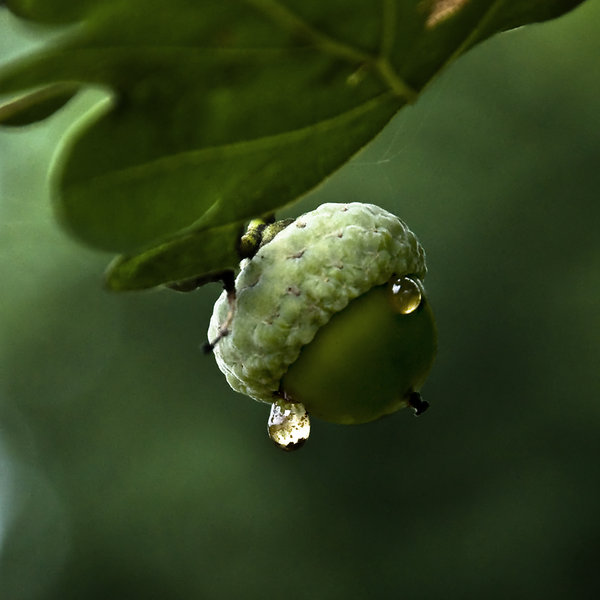
I want us to envision that what children go through has to do with finding a place in the world for their specific calling. They are trying to live two lives at once, the one they were born with and the one of the place and among the people they were born into. The entire image of a destiny is packed into a tiny acorn, the seed of a huge oak on small shoulders. And its call rings loud and persistent and is as demanding as any scolding voice from the surroundings. The call shows in the tantrums and obstinacies, in the shyness and retreats, that seem to set the child against our world but that may be protections of the world it comes with and comes from.

Yehudi Menuhin, one of the preeminent violinists of the 20th century, became fascinated when he heard classical music on the radio as a three year old. He wanted to feel the same rich notes coming out of a violin in his hands. His parents lovingly presented him with a toy fiddle. He drew the bow across the strings and was horrified at the cheap squawk the toy made. Enraged, he threw the instrument across the room and broke it. His imagination had already taken him to the place in himself where beautiful music was made and he was unable to bear that awful sound. We normally call that behavior a “tantrum.”

Then there’s R. Buckminster Fuller, whose young adult years were marked with struggle. As a college student he hired an entire dance troupe to entertain a party, and in that one night of excess he squandered all the tuition money his family saved to send him to school. In his 20’s he was a mechanic, meat-packer, and Navy commander before starting a business that left him bankrupt. After his daughter died of polio he began drinking heavily. By conventional wisdom he’d be considered a total failure at this point. But while contemplating suicide, Fuller decided instead to live his life as an experiment to find out if one penniless individual could benefit humanity. He called himself Guinea Pig B. Without credentials or training Fuller worked as an engineer and architect, inventing such designs as the geodesic dome and advancing the concept of sustainable development. He wrote more than 30 books and registered dozens of patents. Fuller once said, “Everybody is born a genius. Society de-geniuses them.”

Few young people have clear indications of their gifts. Most have multiple abilities. A single true calling is rarely anyone’s lot in life as it is for a legendary artist or inventor. Instead, a mix of ready potential waits, offering a life of balance among many options. When we emphasize a child’s particular strengths we help that child to flourish, no matter if those gifts fall within mainstream academic subjects or broader personal capacities. Traits such as a highly developed sense of justice, a way with animals, a love of organization, a contemplative nature, the knack for getting others to cooperate—-these are of inestimable value, far more important skills than good grades on a spelling test.

Free Range Learning, all kids geniuses,

Although society confuses genius with IQ scores, such scores don’t determine what an individual will do with his or her intelligence. In fact, studies have shown that specific personality traits are better predictors of success than I.Q. scores. Genius has more to do with using one’s gifts. In Roman mythology each man was seen as having a genius within (and each woman its corollary, a juno) which functioned like a guardian of intellectual powers or ancestral talent.

What today’s innovators bring to any discipline, whether history or art or technology, is a sort of persistent childlike wonder. They are able to see with fresh eyes. They can’t be dissuaded from what they want to do and often what they do is highly original. Sometimes these people have a difficult personal journey before using their gifts. Their paths are not easy or risk-free, but the lessons learned from making mistakes can lead to strength of character.

We must leave ample space for these gifts to unfold. This takes time and understanding. The alternative deprives not only the child, it also deprives our world of what that child might become.

Acknowledging that each person is born with innate abilities waiting to manifest doesn’t imply our children are destined for greatness in the popular sense of power or wealth. It means that children are cued to develop their own personal greatness. This unfolding is a lifelong process for each of us as we work toward our capabilities for fulfillment, joy, health, meaning, and that intangible sense of well-being that comes of using one’s gifts.


This article is an excerpt from the book Free Range Learning. It was also published in Life Learning Magazine

Leaving Little Love Letters

mother's love notes,

Image: Ebineyland

My mother regularly wrote little love letters to her children.  They started appearing on our pillows when we could first read, at least one every month or so. Sometimes her notes would reference something we did or said but mostly they simply gushed with affirmation. Her standard ran along the lines of, “You are the nicest, most wonderful seven-year-old in the whole world.”

Her one or two sentence notes were usually written on a scrap of paper. My mother made “scratch” paper out of junk mail and school fliers. She tore paper on the fold lines, getting three pieces out of a standard letter-sized sheet. This made the flip side of her little love letters unintentionally quirky, with references to bank policy or reminders about choir practice. My brother and sister got their own notes but we never mentioned them to each other. They were a private and cherished connection between mother and child.

By the time I was nine or ten years old I wrote little love letters to her too, hiding my notes in her shoe or tucked into her jewelry box. It was easy to tell when she’d found one. She’d dole out a big hug and whisper a line I’d written back to me.  It seems these notes meant as much to her as they did to me. After she died I ran across some of them stuffed into her favorite cookbook, effusive words penciled in my best handwriting.

I know all too well that family life sometimes scrapes us like sandpaper against those closest to us. We don’t talk enough about what amuses or delights us because we’re busy saying that the towels aren’t hung up, shoes are blocking the door, and food is left out on the counter. We may also be dealing with doubts kindled by worry and annoyances that can spark into anger.

Sure, we linger over tender moments that we wish could last forever. We praise the effort (as all those relationship experts tell us to do). But there’s something special when we take the time to write down our very best feelings for one another.  A note is a tangible expression unlike any other.

I won’t kid myself that I’ll ever write as many tiny love letters as my mother wrote in her life. But today I’ll be writing a few sentences to my loved ones and hiding those notes where they’ll find them. I know there’s a sense of completion when we say what’s in our hearts.

Decision To Make? Ask Your Body

I tend to fuss over decisions, considering all possible options while weighing the benefits and risks for everyone involved. Sometimes I choose the most difficult path even when it clashes with my admittedly Hobbit-like nature, in part because I have the annoying idea that growth comes from taking on new challenges.

Unfortunately the process of logical decision-making tends to wedge us into what we intellectually determine is best even if it doesn’t feel right. (I’ve gotten myself into plenty of tough situations doing exactly that.) Many of us tap into our intuition as well, but we usually give much more weight to what reason has to say.

These days I’m trying to rely less on my head and more on gut feelings for decisions large and small. It doesn’t take much to realize the glad expansiveness in my chest is a “yes” while a heavy clenched feeling in my throat is a “no.”

I don’t always succeed at this. Recently I agreed to give a series of talks and already dread them. The process of trying to be more aware of what’s authentically right for me is gradual. (NOT public speaking, my body retorts.) I suspect many of us push ourselves until our bodies force us to start paying attention….

Let’s remember, each one of us is a whole person with intelligence coming from our hearts, our guts, maybe all of our cells. But our culture teaches us from our earliest years to be in our heads while ignoring, even shutting off inner knowing. When inner promptings are so strong they override the left hemisphere of the brain, children are often labeled something else entirely—-lazy, reluctant, stubborn, headstrong, picky, anxious, timid, fussy. In reality, our bodies are telling us we need:

1. time to process or time do things at a pace natural to us

2. to step away from a particular person/situation/food/obligation

3. to honor the voice inside that already knows the answer

This is the kind of awareness that people have used since the beginning of humankind to make decisions fully, in ways we rarely access in today’s world.

Here’s a recent example of what can happen through listening to body wisdom. I have poor posture. I fight it, when I think about it, by holding my head up straight for as long as I can remember and more recently, by learning to practice natural posture. But when I’m working at the computer my head tends to sink forward until I’m hunched like a half-conscious orangutan. I know that listening to the body means, in part, paying attention to the body’s messages. So one afternoon I stopped resisting, just for a few minutes.

I listened to what my slumped posture had to tell me. It didn’t say “sit up straight!” It said go with the slump. Feeling a little silly, I let my head sink forward to a ridiculously exaggerated degree. Instantly I recognized in my body the way my father slouched when he was sad, the way my mother’s head jutted forward and down with disappointment. Their postures are in me, speaking to me. I didn’t analyze this, I just sat with it, paying attention to my body in that posture. Strangely I felt relief, even comfort, as my upper body curled like a fetus.

Then I tried the opposite. I pulled my head up into rigid “good posture”and was surprised when tears came to my eyes. My throat felt vulnerable and exposed, as it did when I was a little girl and couldn’t sleep unless my throat was covered. Again, I didn’t analyze right away, I just sat with it.

The whole process took about three minutes. Yet afterward I felt a wonderful strength up my spine. My posture felt buoyantly upright. The feeling lasted all afternoon. It was astonishing to get so much benefit from such a short body-awareness experience.

What I am saying is that your internal guidance system is there, ready to be accessed. You possess logic, which is invaluable as you consider variables and imagine outcomes. You have remarkably instructive emotions—you may feel excited, a little scared, a little eager, and pretty relieved when you imagine yourself going forward with one decision while you may feel let down, hesitant, and resistant when you imagine going forward with a different decision. Just past logic and emotion are actual body sensations. You may feel tightness in your jaw or churning in your stomach or tension in your back. You might feel the urge to stretch or dance or take a deep breath.

Simply remember, when you have a decision to make, consult your thoughts and emotions and body wisdom. The answer is there, waiting for you to pay attention.

For more on this, check out:

7 Ways To Access Your Body’s Unique “Knowing”

Free Fix For What Troubles Us

The Little Trick To Make Any Moment Better

body wisdom, gut feeling, body intelligence,

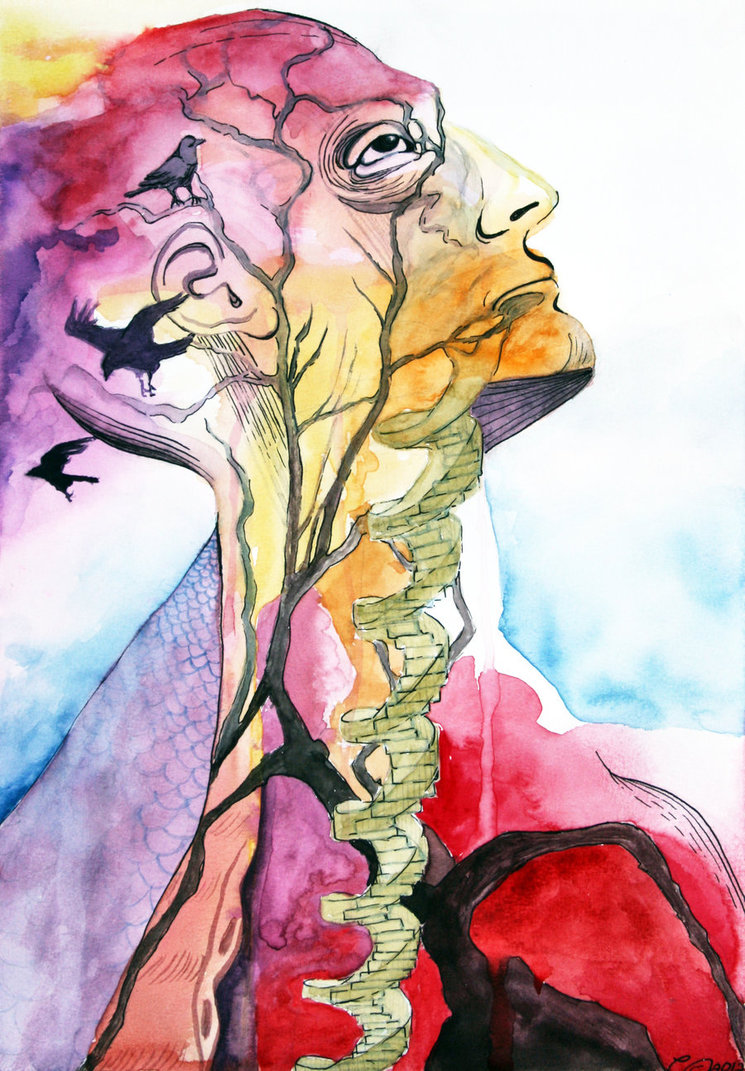
Inner Cosmos by memzu.deviantart.com

My New Book is Out!

Tending rises from my life on the farm and my fascination with the world at large. Informed by quietly ordinary days, these poems look into the nature of things with questions that circle the stars. I’m thrilled that the cover photo is by talented artist (and my sister) Cynthia Piper.


“Laura Grace Weldon employs radical empathy to enter into the hidden lives of rutabaga, cows, the neighborhood bully, and the beating heart of life itself.  Playful, curious, sensual, she aims to open the reader’s eyes and heart.”

Alison Luterman, author of See How We Almost Fly  and The Largest Possible Life.


“Laura Grace Weldon’s poems remind us that our world’s necessary brushes between nature and technology, human and animal, are not necessarily ones of friction. Instead, Weldon sees these moments as truly wondrous ones, available to us not only on the farm, but also in the back pocket of a window washer, swinging among the skyscrapers.”

Brad Ricca, author of American Mastodon and Super Boys.


“Memory, faith, and the natural world as both witness to the cycle of human life and healer to a questioning heart are at the core of this lovely and lyrical collection of poems. The weather changes, people come and go from cities and towns, babies are born, grow up and depart from their parents’ arms, but still, the countryside and its rituals sustain the people and creatures who know how to read the signs of the seasons. In these pages, Laura Grace Weldon shares those signs with us; her poems are the fruit of a wonderful harvest.”

Eleanor Lerman, author of The Sensual World Re-emerges: Poems and Mystery of Meteors.


“Laura Grace Weldon’s poems are concrete, allusive, and rich.”

 Diane Kendig, author of The Places We Find Ourselves.


“These are calming poems, set deep in the specifics of this life.”

David Budbill, author of Moment to Moment: Poems of a Mountain Recluse
and Happy Life.


Published by Aldrich Press. Order HERE.

(My friend Penny, from Dubai, suggests I share a sample. Here’s a poem from the first section, one no journal accepted although there are so few odes to root vegetables…)

Rutabaga

You darken as my knife slices

blushing at what you become.

I save your thick leaves

and purple skin

to feed the cows. 


A peasant guest at any meal

you agree to hide in fragrant stew

or gleam nakedly

in butter and chives.


Though your seeds are tiny

you grow with fierce will

grateful for poor soil and dry days,

heave up from the ground

under sheltering stalks

to sweeten with the frost.


Tonight we take you into our bodies

as if we do you a favor—

letting your molecules

become a higher being,

one that knows music and art.


But you share with us

what makes you a rutabaga.

Through you we eat sunlight,

taste the soil’s clamoring mysteries,

gain your seed’s perfect might. 

Laura Grace Weldon 

peace in tragedy, energy fingerprint, what we leave behind, act in crisis,

Image:andrewpoison.deviantart.com

No Parrots Here

free range parenting, kids different than parents, children's interests, selfhood,

Image CC by 2.0 Ajari

Parenting would be easier if my children wanted to learn about the same things that I happen to love.

I once had the naive assumption that they would naturally develop my passion for environmentalism, muckraking journalism, anthropology, applied ethics, messy art, alternative medicine, and satire.  I knew these passions weren’t genetic, my parents were into playing bridge and visiting historical sites.  But I figured my children would absorb my fascination by osmosis.

Nope. More like reverse osmosis. They seem to feel that just living
with me is exposure enough to those topics.  More than enough.

I play tapes of peace songs and world music despite their feigned death throes.  I take them, all right, drag them, to tiny art galleries, odd ethnic restaurants, wildlife sanctuaries and community service projects. They point out that they’ve never owned hand held video games and on that basis alone could be considered culturally deprived.

I occasionally read periodicals aloud hoping to discuss important issues with them, which has caused them to say, “She’s ranting again.”  My grandiose art schemes, such as building a catapult to fling paint onto huge canvases, ala Jackson Pollack, are met with rolled eyeballs.  I only need to look serious a brief moment before my daughter alerts her siblings, with warnings like, “Oh no, mom’s launching into another sermon.  I think she’s on number 127, the Deeper Meaning of Things.”  I concoct homemade tinctures of herbal remedies which admittedly aren’t taste treats, but aren’t cause enough for them to call the kitchen Mom’s Evil Laboratory.  You get the idea.

They are certainly their own people.  They seem instinctively drawn to what I’m not. I can almost hear the screech as my brain cells are continually forced to expand to include their interests.

Several of them actually like organized activities like scouts and 4-H.  This requires meetings where I have to sit in a folding chair and behave myself.  I prefer spontaneous, free form events, like “Hey, lets paint a mural on that wall.”

I hide it well, but secretly I’m squeamish.  Naturally they bring me snakes, toads, beetles, spiders, and slugs.  They expect me to fawn over them.  I can only do a passable faux fawn.

I like safety precautions like helmets, seat belts, and peace accords.  My 10-year-old son adores skateboards, stunt biking, and tree climbing.  He plans to be a pilot. He talks to me about airfoils and ailerons.  I’d only fly if I were being awarded the Nobel Prize. Even then I’d probably ask if it could be delivered.

I’m a vegetarian.  Naturally, my daughter is smitten with dissecting.  She wants to be a forensic pathologist.  Supportively, I’ve purchased poor innocent creatures floating in formaldehyde, procured eyeballs and hearts from the butcher shop, even taken pictures of the gore she calls anatomy.  She proudly showed her grandmother the virtual autopsy web site.  My mother was intrigued.  I restrained myself from asking, “What happened to playing bridge?”

I have trouble with technical details.  I even require assistance getting film in and out of our vintage 35 mm camera.  I finally recognized this as an immutable fact after indulging myself in a few temper tantrums over broken film. Of course my oldest is a ham radio operator, builds authentic model railroad layouts, fixes our 1949 tractor, and stuns his boss into silence with his ability to fix highly exacting equipment. When he was six he patiently explained to me how to program the clock in our car.  I forgot what he said AS he was saying it.

I’ve been known to slip into situational ethics from my pillar of universal truths at times, but I’m always caught by my youngest.  “Why do you talk about cherishing all life if you want to get rid of the wasp nest in the attic?” he’ll say sweetly with seven-year-old logic.  “Why do you let the phone go to voice mail?  Isn’t that like lying?” Okay, maybe they are learning what I have to say, but I wish they wouldn’t use it against me.

Occasionally I’ll get their grudging admiration for silly feats, like my useless mental compendium of decades-old song lyrics or my willingness to sass authority figures. But more and more often we find that our interests intersect.  I can’t help but be awed by the uniqueness of what they find fascinating, and they can’t help but understand what I thrive on.  Best of all, we laugh together.

Parenting would be easier if they parroted my interests, but that would be indoctrination instead of exploration.  I’m glad they are their own people.  We all lean toward what helps us grow, like eager plants inclining towards sunlight even if it shines from different windows.

reprint from Home Education Magazine

We Need Hidden Worlds

room of one's own, hidden worlds, secret places,

When I was very small I liked to climb what I called a tree. It was actually a sturdy shrub. I sat between branches less than a foot off the ground, sure I was hidden, feeling mysterious as creatures that speak without words. I also used to retreat to the coat closet with my younger brother. We sat companionably in the dark under heavy coat hems, talking or just enjoying the quiet together. And we made pillow forts, draped sheets over furniture, and played under the folded leaves of the dining room table.

My favorite hidden place was in the woods behind our house. There was a small rise no bigger around than two desk tops. Tall trees grew at either side and a creek bed, dry most of the year, ran along one side. The whole area was covered with leaves. I tried to walk there soundlessly, as I fancied Native Americans walked, not cracking a twig or rustling the underbrush. I tried to identify plants I could eat or use if I lived in the woods, as the boy did in My Side of the Mountain . I’d sit alone in completely silence, hoping if I did so long enough the woodland creatures might forgot about me, might even come near. I snuck food out of the house to make that place a haven, as I’d read about in Rabbit Hill but I always came back to find the iceberg lettuce and generic white bread I left were still untouched.

Once I became a preteen I found a hidden world right outside my bedroom window. I climbed on a chair and hoisted myself up on the gently sloping roof that faced the back yard. When I started college at a large urban university I’d just turned 17. My hermit soul craved time to be alone and still. The only place I found was in a bathroom on the upper floor of the oldest building on campus. I’d retreat behind a heavy wooden stall door, close the antique latch, and meditate on the wood grain of that door until I felt restored. A necessary refuge, although hardly ideal.

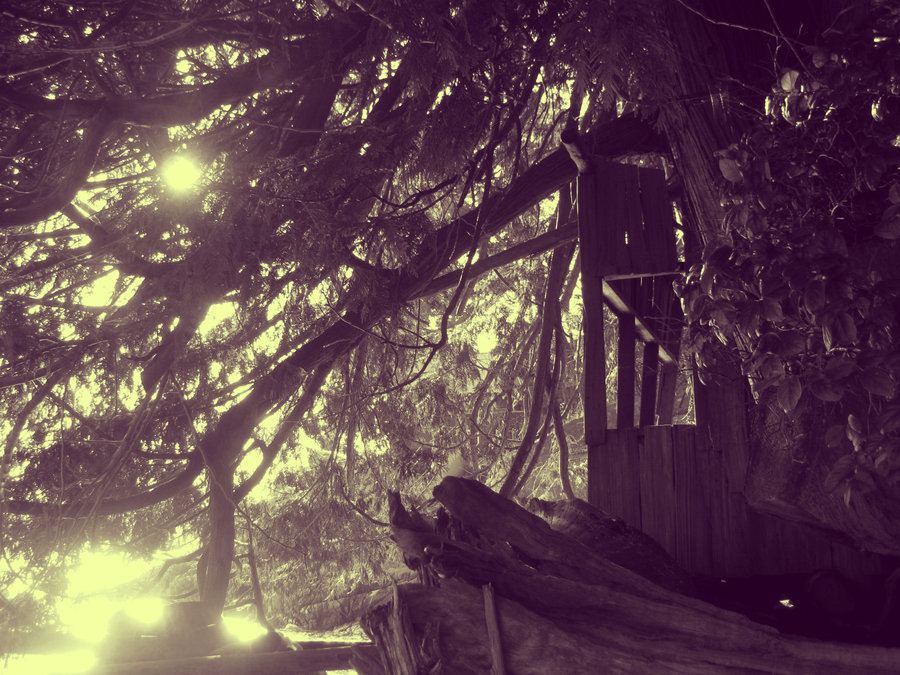
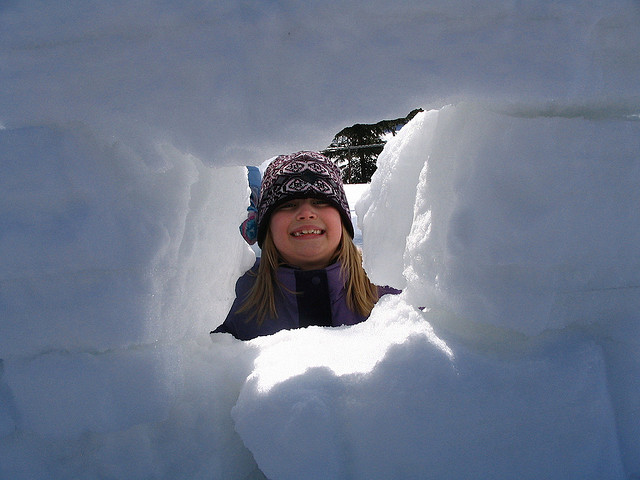
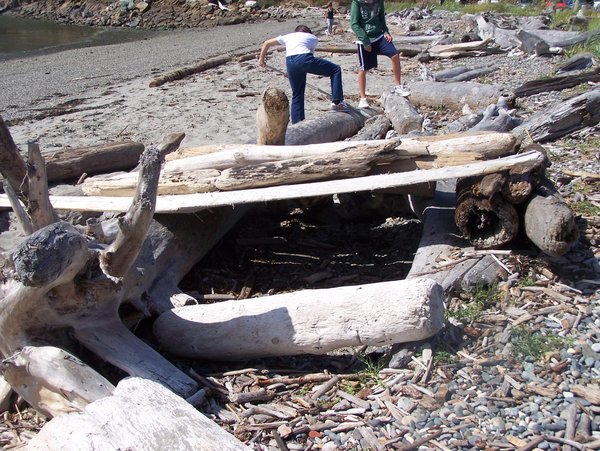
Most children seek out small places to make their own. They find secret realms in couch blanket forts, behind furniture, and in outdoor hideaways. There they do more than play. They command their own worlds of imagination away from adult view, often listening to silence by choice.

a

Perhaps retreating somewhere cozy harkens back to our earliest sense memories, first in the sheltering confines of the womb and then in the security of loving arms. Yet at the same time, hidden worlds are also a way of establishing our independence. Children have surely always slipped out of sight in the cool shadows of tall cornstalks, the flapping shapes of sheets hung on clotheslines, the small spaces under back steps, behind furniture, and inside closets.

There are all sorts of tiny retreats that can be purchased for kids. Plastic structures made to look like ships or cabins, tiny tents, pre-made playhouses. These things lose their allure. Children want to discover hidden places on their own or to create them out of materials they scavenge like fabric, cardboard, scrap wood, whatever is handy. (The benefits of this play is described in the “theory of loose parts.”) These places tend to be transitory, lasting for a short time or changing into something else. They’re special because they’re unique to the child. These places contain the real magic of secret places.

Hidden worlds are made with blankets, indoors

a

or outdoors.

a

They’re found in cardboard boxes

a

snow

a

driftwood

natural play place, loose parts play,

and under trees.

a

They’re made out of old logs

a

old plywood

a

or branches.

a 

The hidden worlds I cherish these days have more to do with a quiet sense of peace found in moments of solitude. What’s paradoxical, these are also times when I most often feel the oneness that connects everything.

Maybe growing up with the freedom to retreat within hidden worlds, no matter what was going on, helped me to access this in myself. Hurray for blanket tents, for treehouses and spaces under tables, for all hidden worlds that let us gather up what is fragmented in ourselves and feel whole again.

How do you make time, and space, for hidden worlds in your child’s life and in your life?

a

Politeness Recovery In Progress


politeness recovery, good girl syndrome, kind versus nice,

deskridge.deviantart.com

Politeness is the dodo bird of our times. No one is quite sure what killed off civility but it’s obvious that two-year-olds aren’t growing out of tantrums or a sense of entitlement. Instead they just get bigger, becoming toddler adults. They drive like idiots, foster workplace stress, simultaneously overindulge and ignore their own kids, feed on the negative energy of angry pundits, and blame everyone else for their own problems. They need to learn a little empathy, or at least the rudiments of feigned empathy we call politeness.

But some of us are way on the other side of the spectrum. We’re so empathetic that we tremble with concern for the feelings of other people. And animals. And plants. (I even tremble with empathy for spiders.) It wouldn’t occur to us to put ourselves first or to act rudely (although my good intentions may come across as annoying, just ask my family).

Some may have been hardwired this way from birth. The rest of us were trained to be too polite for our own good. Right around the time we started crawling we were taught to be respectful and considerate at all times. No exceptions. If asked how we are, we learned the answer should always be affirmative followed by a kindly inquiry about the other person. Never mention any peril you may be in, the object is to focus on others. This means if you’re bleeding, you deny there’s any real problem (oh it’s nothing), don’t bleed conspicuously, and God forbid, don’t complain about whatever caused you to bleed. If you are offered a favor, graciously decline. Even if it’s chocolate. If someone is actively causing you difficulty, either put up with it without complaint or extricate yourself in a way that doesn’t embarrass the other person.

Maintaining this level of politeness rarely leads to an authentically lived life. It’s more like an affliction. We do our best to avoid winning games, getting the best grades, pushing ahead at work, sticking up for ourselves, saying what we mean unless it’s “nice.”  Being too polite actually put me in dangerous situations more than once. Nice at all costs has got to go. Kind, yes. Honest, yes. Nice, not always.

Politeness recovery is a slow process and often difficult. It’s complicated because I’m naturally opinionated, sardonic, and forthright. And sometimes silly. Suppressing that side of myself has never been easy. But I’m not giving up my polite side by any means. Politeness is essential if we’re to live together in any kind of harmony. I’ve found genuine politeness has a surprising way of bringing out the best in other people. It presumes they are basically good (a core principle of non-violence) and many times, that’s all that required. (Now, if only that principle were applied on talk radio and in snarky web threads.)

More importantly, I want to be authentic. Treating people with respect and understanding simply feels right. It comes from true compassion, far richer than any thin soup of poor self-worth. The generosity and love of kindness stimulates more of the same.

I aim to give up only the parts of my Good Girl upbringing that hold me back from my eventual goal of becoming a rowdy old lady. My politeness recovery is still ongoing but my friends are amazing role models. They’re well ahead, evolving before my eyes. Some days I’m swimming in the muck, other days I join them on land. I’m often awkward, occasionally splattering mud as I go, but I’m a creature in progress trying to be polite as well as real, empathetic as well as centered, serious but silly too. Like a dodo bird who hasn’t given up on her wings.


Why You Care About (insert celebrity here)

celebrity obsession, fans, reality tv, media hypervigilance, celebrity worship, celebrity idols,

The distance between a baby in arms and nursing mother is eight to 15 inches, perfect for the focusing ability of a newborn. Even the youngest babies speak with their eyes. They hunger for eye contact and tell us how to respond to them by looking delighted, looking away, watching intently, or drifting off to sleep. When babies are cared for by people who are nurturing and responsive they learn to trust.

When a baby is a few months old,  he or she is held upright in a parent’s arms, still in close facial range. Such young children, still new to speech, pay close attention to a parent’s expression especially in new or unsettling situations. Eye contact is paired with the comfort of close body proximity. The child’s nerve endings continually input the sensation of being held safely but gently while correlating movement, smells, tastes, and sounds they experience.

celebrity worship explained, eye contact through tv screen, depression linked to tv, relationships versus tv, screens and mental health,  Close proximity to loved ones. (dhgoodman's flickr photostream)

Close proximity to loved ones. (dhgoodman’s flickr photostream)

As children get older they still are in close proximity to caregivers and family members, but also become close to friends. Face to face contact is likely with a few close friends as the child matures, and perhaps some face time with a disciplining teacher or coach also makes a pretty strong impact.

I’m not heading in the direction you suspect. This isn’t about growing up with insufficient eye contact, although when everyone is distracted by handheld screens this may be an increasingly sorrowful issue.

There are cultural variations in personal space as we become adults but in general, close personal contact has a lot to do with close emotional connections. We care about the people we’re closest to, literally, and our emotional health hinges on whether they care about us. In fact, two studies showed that strangers who were asked to maintain eye contact for two full minutes reacted by not only liking the other person but feeling “passionate love” for that person. Talk about the power of eyes, up close!

We also have, whether we recognize it or not, close associations between their facial expressions and our own self image. Closeness to another person’s face also means sensory experiences—smell, touch, taste, and movement that helps us continually form a sense of ourselves in relation to other people. That may be why brief sexual encounters and bad relationships are so emotionally damaging, not enough time spent looking with affection at one another’s faces along with insufficient eye contact. We’re left feeling as if we aren’t fully ourselves in the relationship, we’re not SEEN for who we are. That may be the case in unhealthy family dynamics too—-not enough face time or face time associated with unresponsive nurturing (either inattentive or intrusive). And inappropriate facial closeness, a screaming boss or threatening bully or dangerous intruder, can strip away this very essential boundary we establish early on that only welcomes those people who nurture us in some way to get that close.

How many people have you been in close facial proximity to over and over, so many times that their faces are more known to you than your own face? I’m guessing not that many. In childhood it was likely your parents, maybe a grandparent, and a close sibling or two. In adulthood it may be a partner (or several partners over time) and your own children. Tally that up. Perhaps a dozen people in total?

proximity and relationships, eye contact effects, eye contact affection,

I know, I’m slow getting around to my point but here it is. We are primed to care about and expect reciprocal caring from people whose faces we regularly see up-close, to know we have a place in each other’s lives. Screens change all that.

Movies, television, videos, and some video games bring other faces into personal range. You aren’t nose to nose with the screen but zoom shots bring those expressive lips and eyes up close, letting our brains experience an intimacy that isn’t there.  That’s the only way acting and filming techniques work, when viewers suspend reality by believing what’s on the screen. These screens have been around a scrap of time in the long expanse of human history. We’ve evolved to care intensely for and do everything we can to stay in touch with to those who have been repeatedly in close eye contact with us. They are, our bodies and minds believe, the core members of our tribe. Now there’s a good chance you see close-up faces of broadcasters, movie stars, and sports figures at least as many hours a day, probably more, than you do your close friends and family.

alienation tv, eye contact essential,

Feel connected? ( Bludgeoner86 flickr photostream)

I deeply appreciate the way technology allows us to learn and connect. I’m also a movie-watcher and fan of several TV series, so I’m not pointing any fingers. But I am intrigued about the way technology intersects with, perhaps intrudes upon, the unspoken essence of loving connection.

I wonder if this explains obsession with celebrities and absorption with lives of reality TV participants. I wonder if this relates to widespread problems in sustaining relationships, to general malaise, and to the fact that ten times more people are suffering major depression than than during World War II. (Yes, there are other factors.)

If we expect reciprocal attention and care from those whose faces are close to us, yet those faces can’t see us, it may very well reinforce a sense of loneliness and misery. It would drive us back to those screens, to look again and again at eyes that for the moment seem so close.

The concept seems laughable, but still I wonder. What do you think?