Post Amusement Park Visit Syndrome

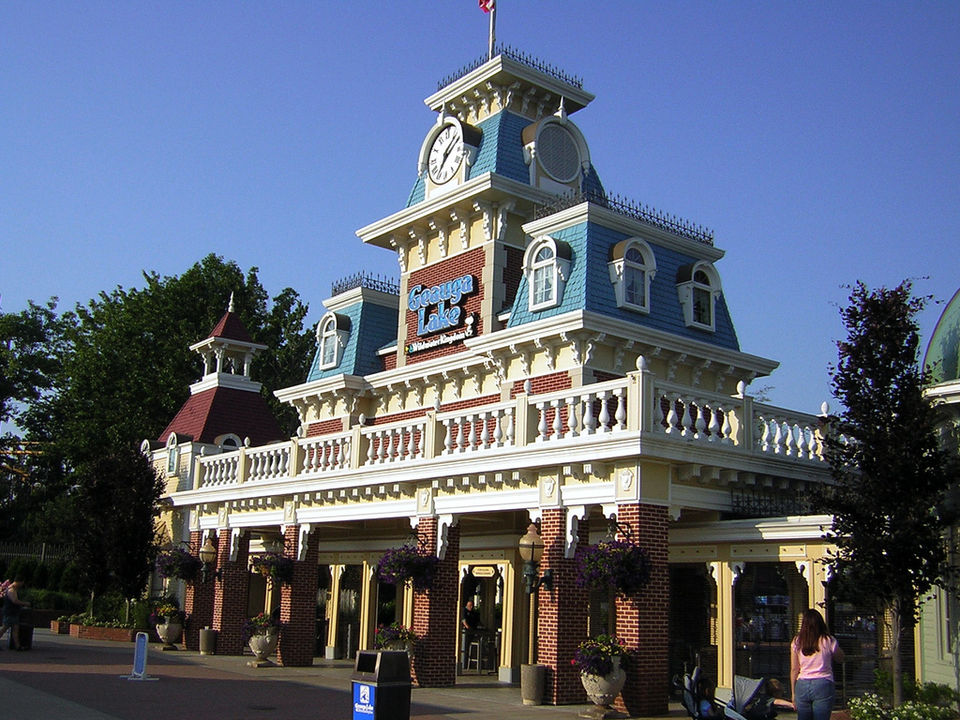
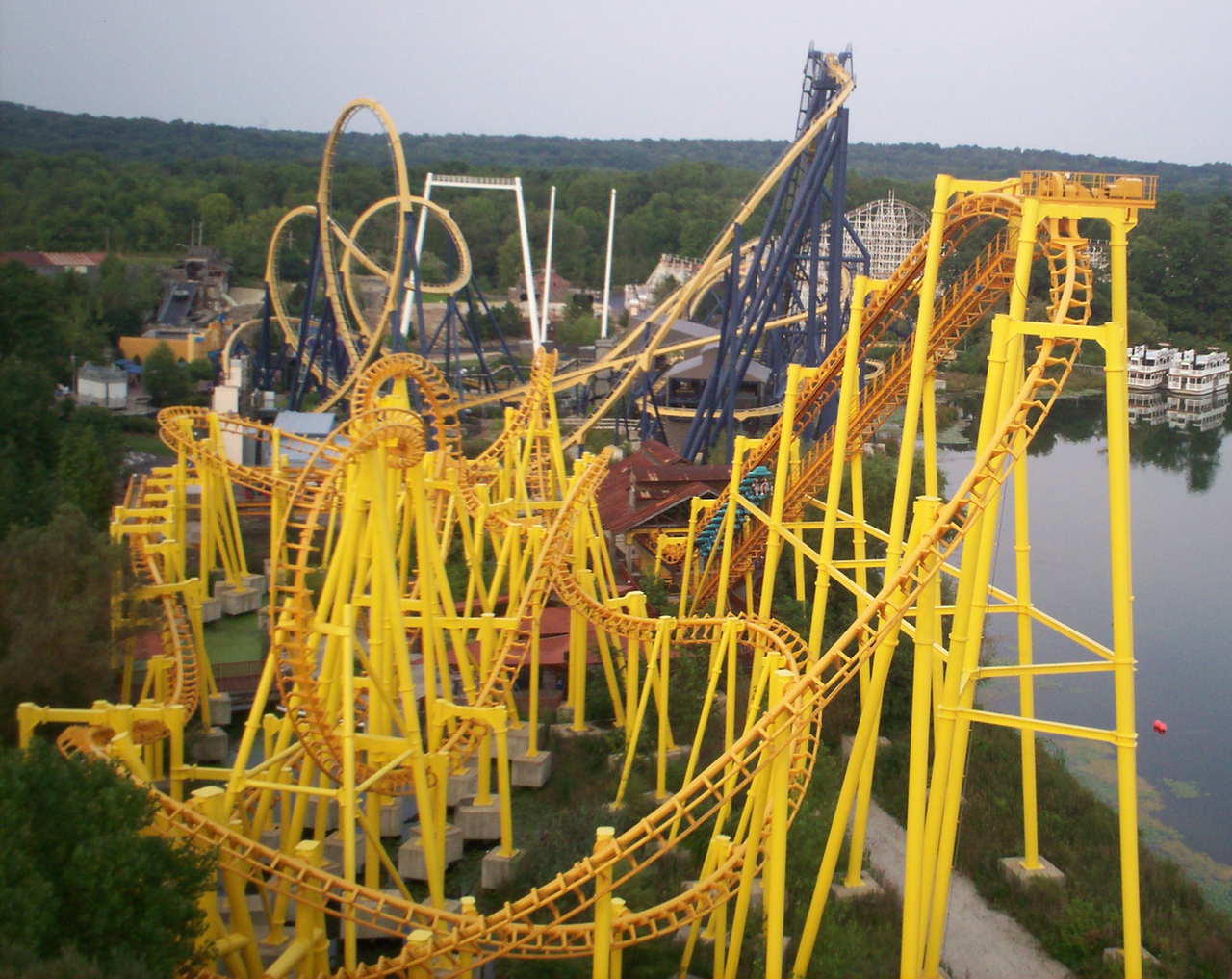
Once each summer, I’d take my four kids to Ohio’s Geauga Lake, a now-closed amusement park. The park put out entrance fee coupons that made it almost affordable. They also permitted visitors to bring in their own food, unlike the more enticing (and expensive) Cedar Point. I’d drag our red wagon behind me packed with food, diaper bag, cooler of drinks, and whoever was a toddler at the time. When we finally got home I’d hustle them through a quick scrub, pull on their pajamas, and shorten our evening sing together time so they could get to bed well past their usual bedtime.

I was in my 20s, then my 30s, energetic enough to leap up each morning toward whatever the day held. But every summer, after our amusement park visit, I found myself beyond exhausted. My whole being simply on the fritz. I had no idea what the problem might be. I gradually realized it was overwhelm. A long day of constant vigilance at a crowded venue keeping my kids in view. A long day of noise without a moment’s peace to sit somewhere quiet for a spell. A long drive there and back.

I learned to avoid planning anything the next day or two after our annual amusement park visit. It wasn’t just me. The kids needed time to chill out too. They’d lie on the couch reading or play in the backyard or draw pictures while listening to audiobooks. They didn’t want to go anywhere, didn’t want friends over, they just needed to BE. We were like those creatures from Dr. Seuss’ Sleep Book, the Collapsible Frinks.

That’s what this year has felt like to me. Like post amusement park visit syndrome. Every day’s news packed with atrocities committed in our names against people around the world and people down the street. Gut-punch news about this administration’s war against the environment, healthcare, education, civil rights, even civility. Nearly everyone I know is beyond overwhelm, no matter if they voted for or against. I’ve barely been able to write this year— no essays published and only a few poems. To close, here’s one of those poems, this one published in One Art: a journal of poetry:

I DREAM OF HUBBLE’S LAW

I’m standing in front of my mother, head tugged
while she braids my hair as she does every morning.
I am seven years old, she must be mid-30s.
Her lipstick is bright red, her hair nearly black.
Taster’s Choice freeze-dried coffee in her cup,
Cleveland news and weather on the radio.
My baby brother bangs his spoon,
smile-flinching each time it strikes.  
My sister and father are at the table, all of us
unaware we’re in my dreamworld,
unaware we are inexorably moving away
from each other the way stars grow more distant.
Stand still she says as she fastens a tiny rubber band
at the bottom of each braid so I don’t turn around
to hug her as I long to in my dream. I want to hang on
for dear life as galaxies move apart ever faster
in a universe widening toward absolute zero.

Roller coasters are fun, unless you can’t find a way to get off.

Honoring The Impulse To Thrive

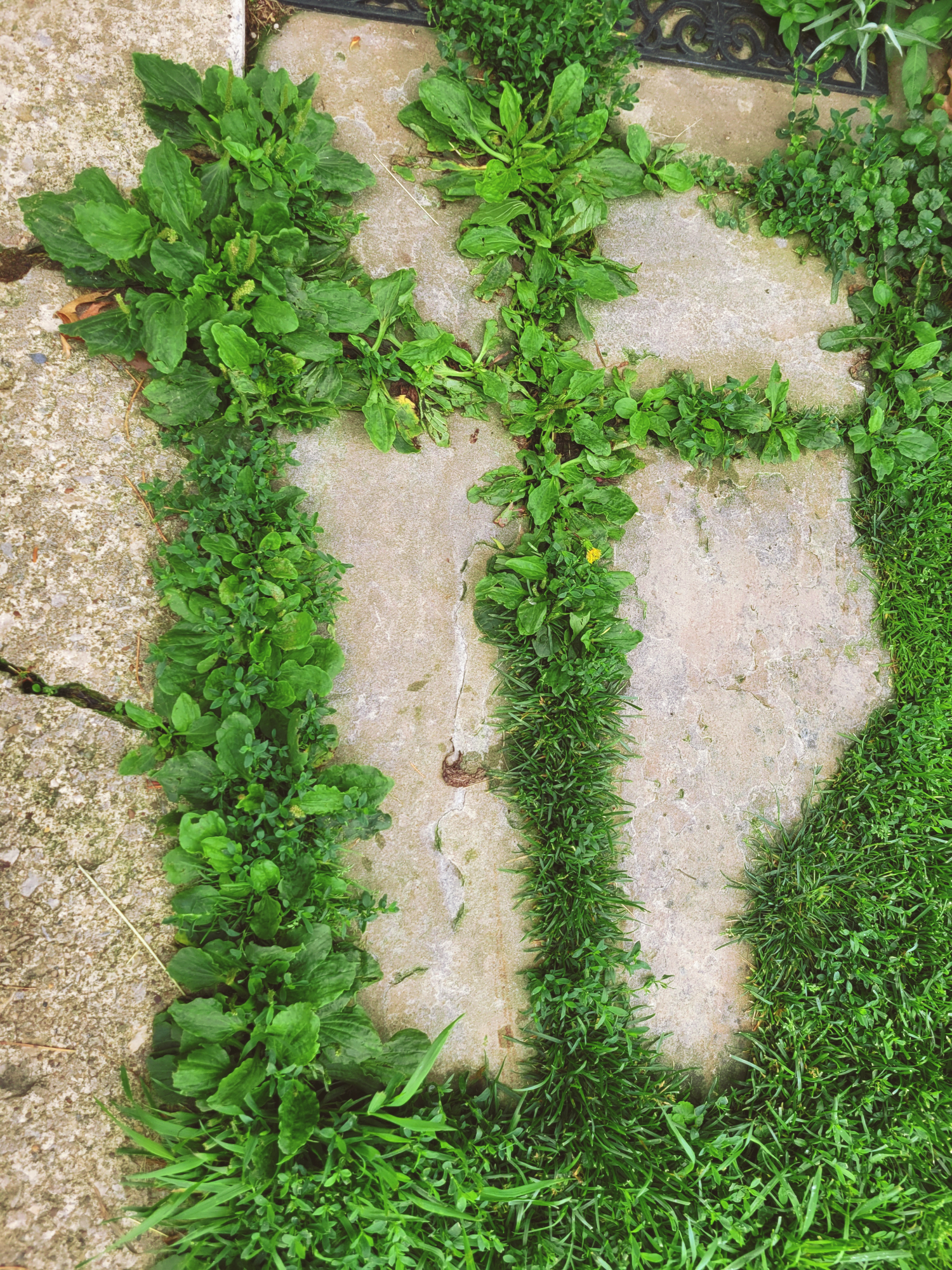
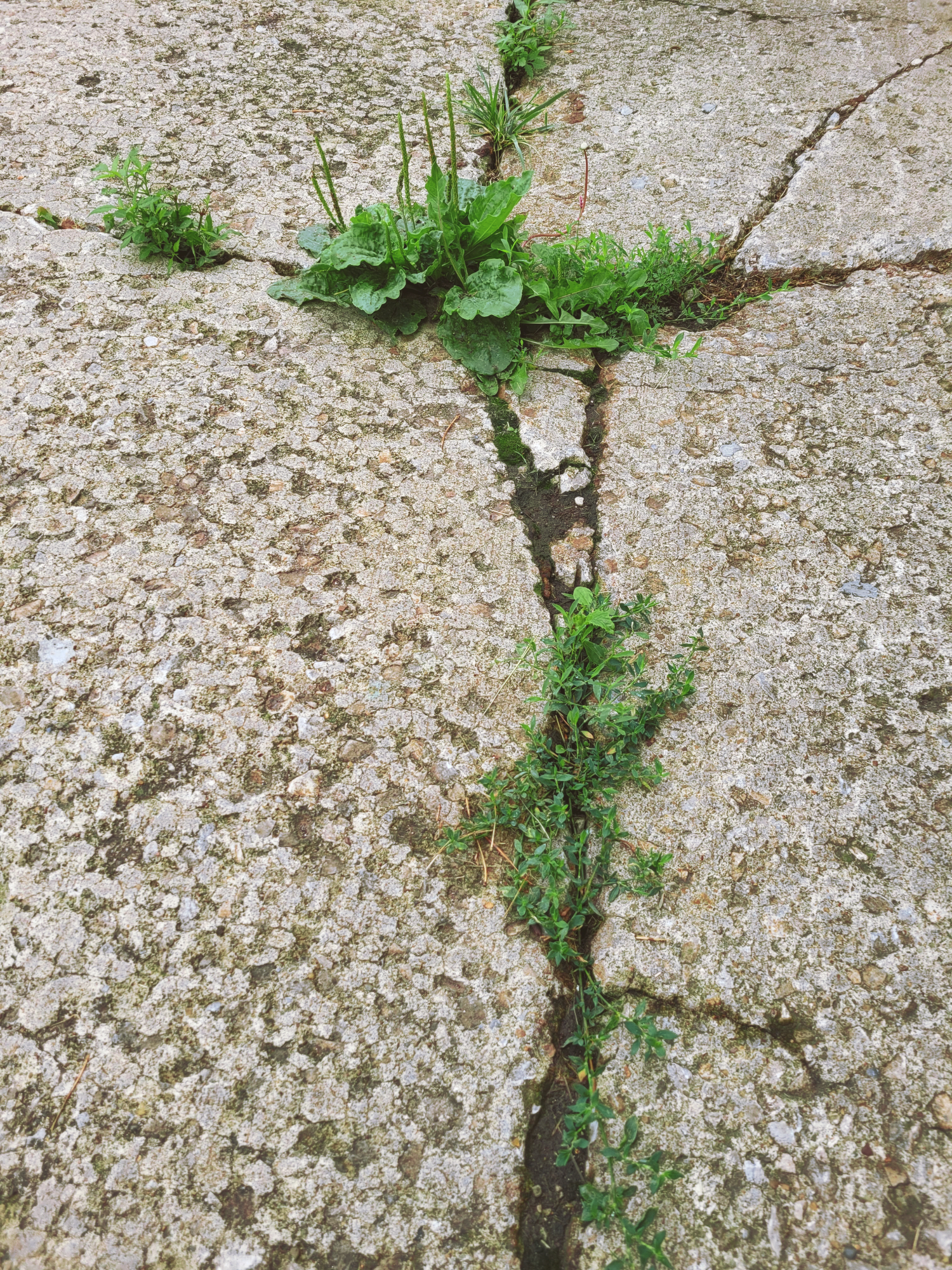
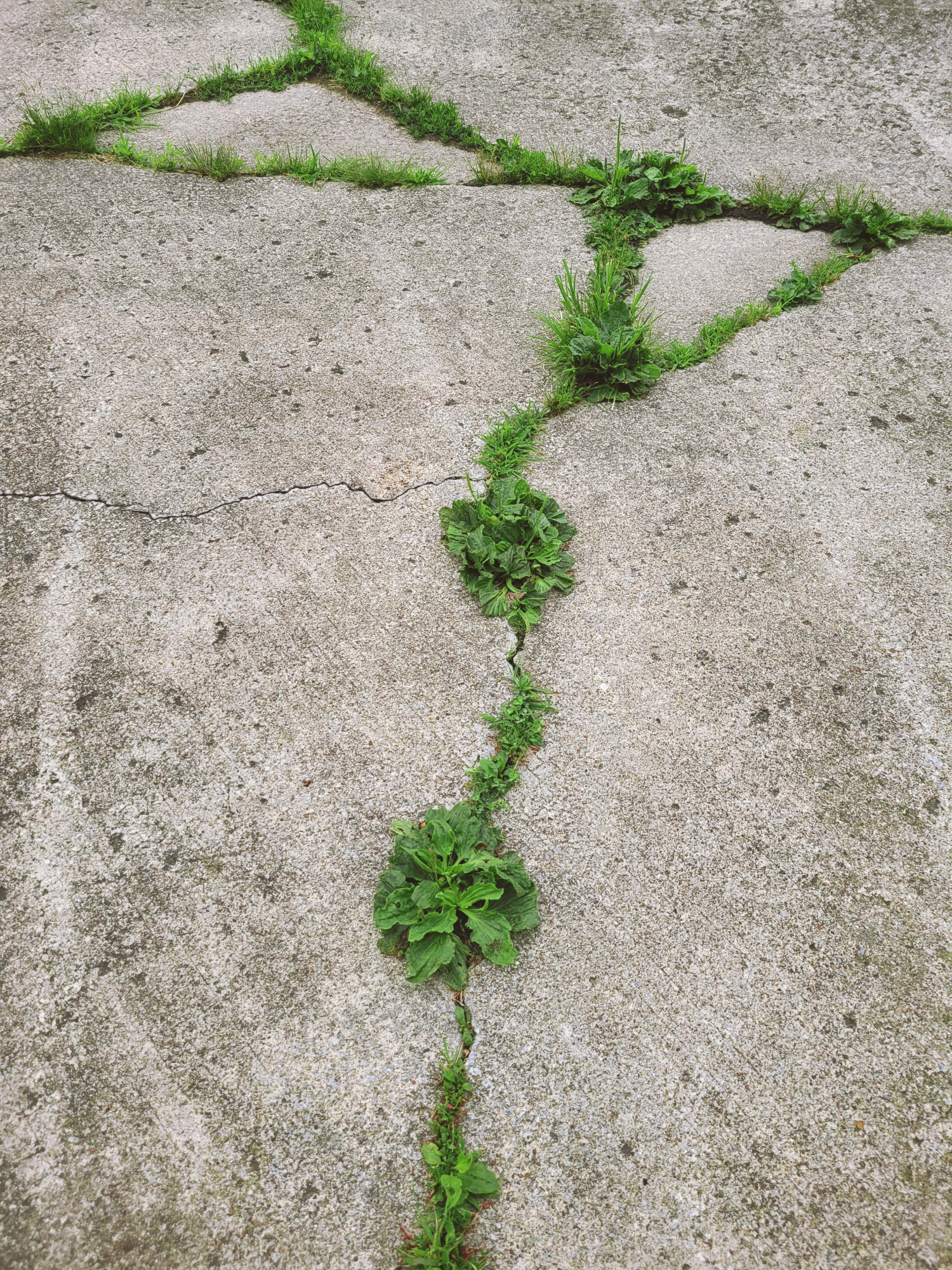
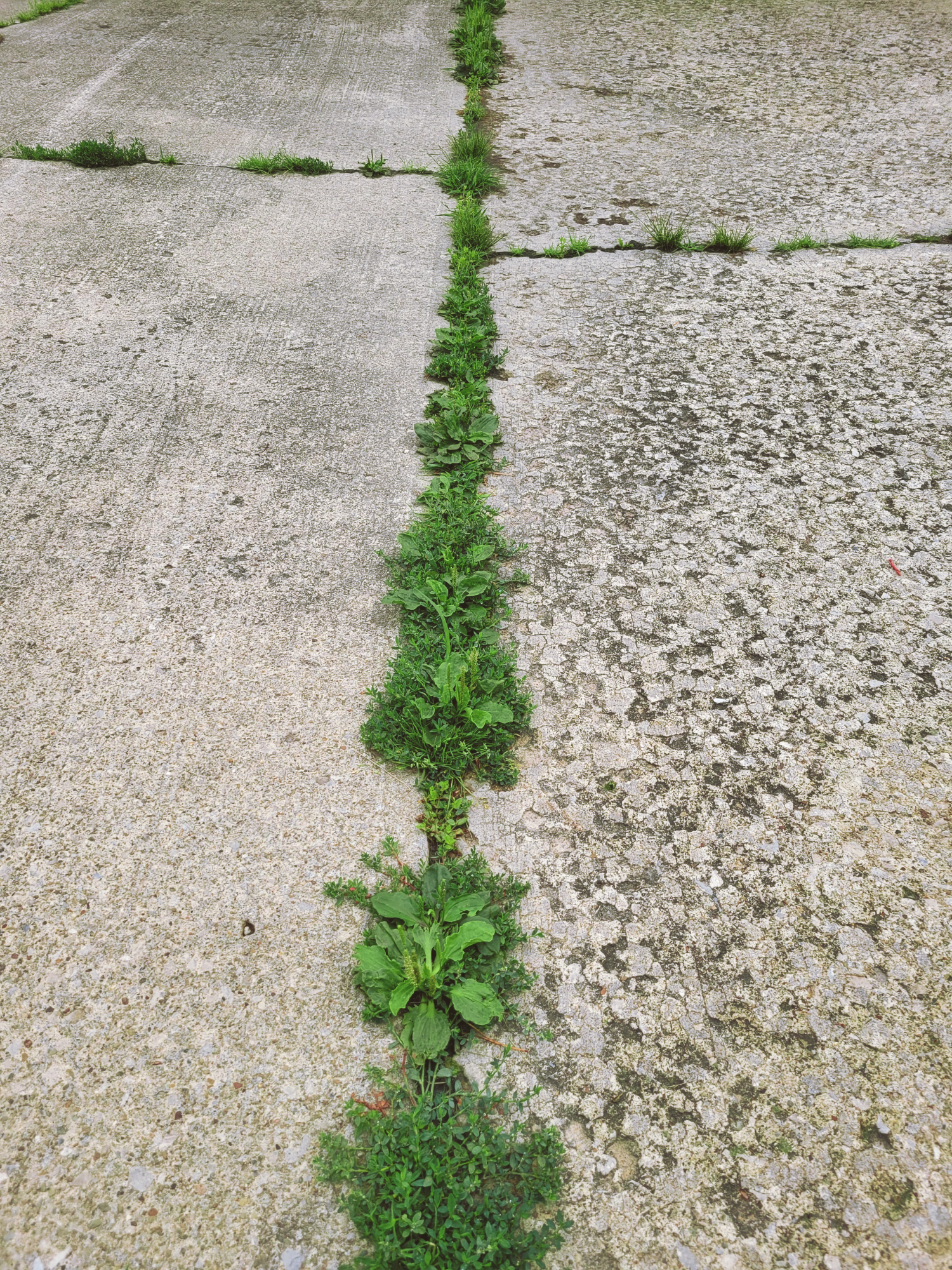
Our driveway is crazed with cracks. I can’t help but appreciate plants springing up through these narrow possibilities. These are native plants, many with health-enhancing properties as human food, but also exquisitely cued to the lifecycles of crawling, flying, hopping creatures reliant on them. All these lifeforms follow nature’s essential precepts of diversity, adaptability, balance, and interdependence. Although our driveway does not, it’s heartening to see how easily life takes over.

I used to wonder about the soil under the sidewalk where I trudged to school each day. What happened when graders and rollers and cement trucks imprisoned it? Did all the life in that soil perish without sunlight and oxygen? How could any living thing survive so much pressure and heat? What would happen if we paved over too much of Earth’s surface? I was a child who Worried About Things.

These plants springing from cracked pavement remind me of nature’s beautiful impulse for life. It restores my hope everywhere I find it. A handful of dry lentils taken from my cupboard, after a few days of soaking and draining, grow into cheery little sprouts I can use in salads, or feed to the chickens, or plant to grow into another generation of lentils. Seeds brought from Cyprus decades ago, shared by a friend, grow each year into giant hardy winter squash that keeps well until late winter –providing nourishing meals along with more seeds to save and share. Organic potatoes in my pantry wrinkle around tiny rosettes and from them, pale tendrils fragile with new life reach out in search of sunlight. I plant these eyes two or three times each season, from late March to late August, for fresh harvests of tender heirloom potatoes.

Life’s impulse can’t always survive what we humans are doing to this planet. As a direct result of human activity, the rate of species extinction is up to 10,000 times higher than the natural, historical rate. Research published in the journal Proceedings of the National Academy of Sciences shows ocean heating is equivalent to between three and six 1.5 Hiroshima-size atomic bombs per second. The UN says “climate change is out of control” and experts in Earth’s climate history are convinced this current decade of warming is more extreme than any time since the last ice age, about 125,000 years ago. It’s exhausting to think about, let alone act on, this spiraling disaster.

We need new stories that reawaken us to the lived wisdom of this planet’s First Peoples and lead us to the most ethical, scientifically grounded regenerative lifeways going forward. It helps when we recognize nature isn’t just what sprouts from cracked pavement. It isn’t confined to wild places we long to visit. We are nature, right down to the life processes of every cell. It helps when our new stories speak to our descendants. It helps when they answer our ancestors.

HOPEFUL RESOURCES

books

Nurturing Our Humanity: How Domination and Partnership Shape Our Brains, Lives, and Future (indie link) Riane Eisler and Douglas P. Fry

Active Hope (revised): How to Face the Mess We’re in with Unexpected Resilience and Creative Power (indie link) Joanna Macy

Restoring the Kinship Worldview: Indigenous Voices Introduce 28 Precepts for Rebalancing Life on Planet Earth (indie link) by Wahinkpe Topa and Darcia Narvaez

The Evolved Nest: Nature’s Way of Raising Children and Creating Connected Communities  (indie link) Darcia Narvaez and G.A. Bradshaw

Why the World Doesn’t End, Tales of Renewal in Times of Loss  Michael Meade

We Are the Middle of Forever: Indigenous Voices from Turtle Island on the Changing Earth (indie link) by Dahr Jamail and Stand Rushworth

Breaking Together: A freedom-loving response to collapse   Jem Bendell

Living Resistance: An Indigenous Vision for Seeking Wholeness Every Day (indie link) Kaitlin B. Curtice

Mystical Activism: Transforming A World In Crisis (indie link) by John C. Robinson

Local Voices, Local Choices: The Tacare Approach to Community-Led Conservation (indie link) by the Jane Goodall Institute

Becoming Kin: An Indigenous Call to Unforgetting the Past and Reimagining Our Future (indie link) Patty Krawec

organizations

Transition Network

Deep Adaption Forum

Work That Reconnects

Black Earth Institute

I’d love to hear what books, organizations, and other resources can help us all reawaken to and bring about these new stories.

Finding Solace In Poetry

“In the end we go to poetry…so that we might more fully inhabit our lives and the world in which we live them, and that if we more fully inhabit these things, we might be less apt to destroy both.” ~Christian Wiman

How are you holding up? What is bringing you hope in these chaotic times?

Poetry is one thing I rely on for a handhold. Some poems sink in so deeply I feel I’m walking with the poets. Their words accompany me, opening me to see more and feel more. Sometimes comprehend more too. When the world’s anger and despair loom over me, poetry offers solace.

Lately I’ve turned to old favorites, each one a nature-drenched poem. Sharing a few in hopes they might help hold you up too.   

In “Life On Earth,” Dorianne Laux reminds us how outlandish it is to be here at all. “The odds are we never should have been born.”

Diane Ackerman’s “School Prayer,” offers a solemn pledge of a poem worthy of chanting each morning upon waking. “I swear I will not dishonor/my soul with hatred,/ but offer myself humbly…” 

Another chant-worthy poem is “A Charm Against The Language Of Politics” by Veronica Patterson, who reminds us to repeat the names of things. “Dig deep, pronounce clearly, pull the words/ in over your head.” 

Rosemerry Wahtola Trommer describes her practice of carrying the world’s beauty with her in “Why I Smile At Strangers,” writing, “I carry these things in my heart,/ more certain than ever that one way/ to counteract evil is to ceaselessly honor what’s good…” 

Poetry can offer us hope, but the poems that come alive for me aren’t a spoonful of sugar. They offer lasting nourishment. 

We cannot bring about a more regenerative and compassionate future using the same language that got us here– the kind churned out by advertisers, pundits, and politicians. Poetry calls us to make big world-restoring decisions by listening to voices wilder and wiser than our own. What does sea ice say? How about honeybees, gray whales, storm clouds, bonobos, leatherback turtles? What do our ancestors, leading all the way back to the First Mother, have to tell us? What do the smallest children want us to know? The oldest people? Poetry doesn’t offer answers, it simply helps to tune our capacity to see, hear, and be. That’s a start.

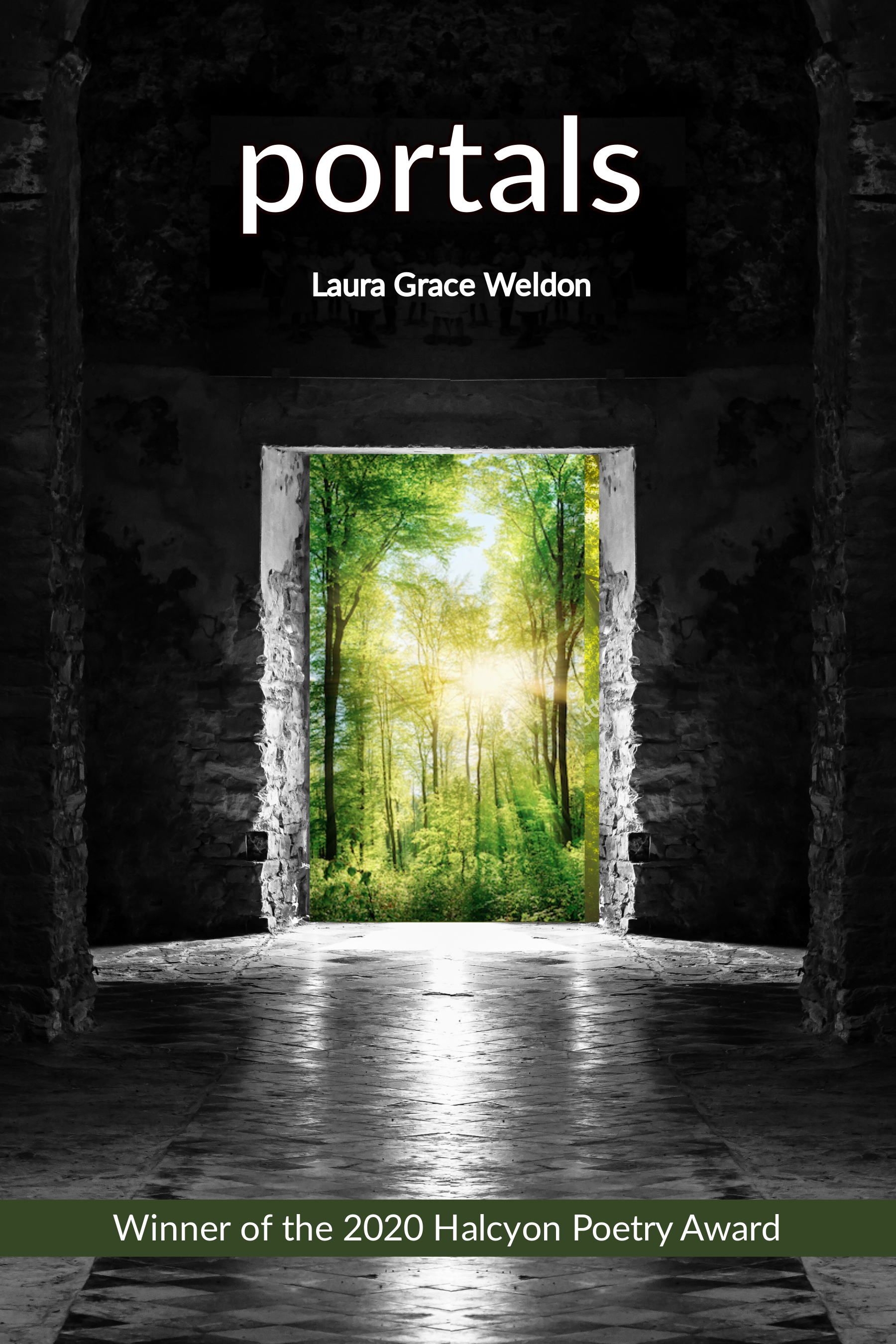
Portals: My Newest Book!

portals cover

An amazing thing happened.

Last fall I sent a pile of newer poems to Middle Creek Press, hoping I might salvage something out of what little I wrote during our ongoing pandemic misery. Turns out that collection, titled Portals, won the 2020 Halcyon Poetry Prize. Wild, right?

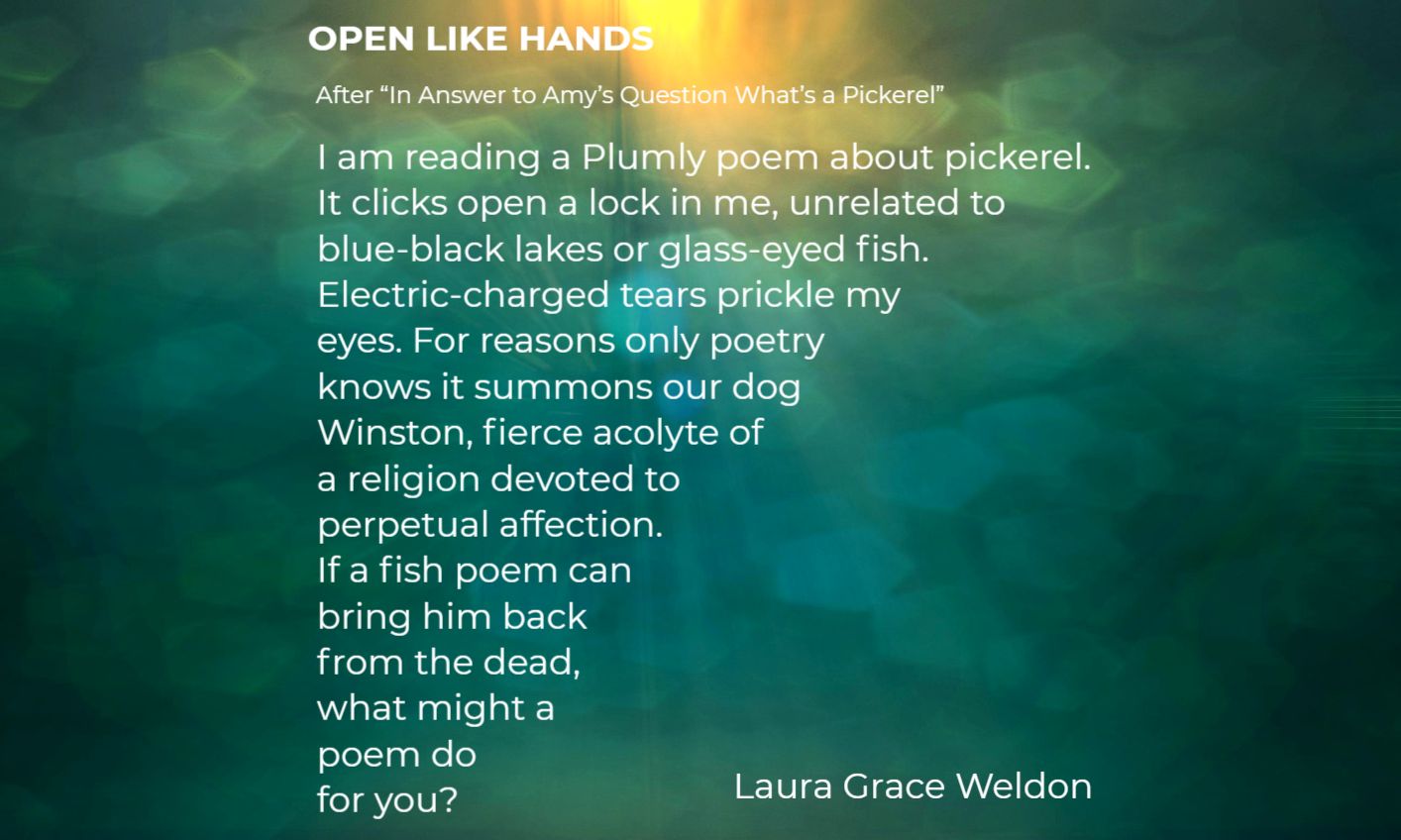
What an honor to have Middle Creek publisher David Anthony Martin select my manuscript. This collection is packed with poems about sycamore leaves, gut bacteria, quicksand, protests, yeast, talking peonies, insects, inflation, and consequential strangers. Here’s a sample: 

portals open like hands

People seem to think a writer writes in isolation, pulled only by some invisible drive to assemble words into form. For years I felt that isolation acutely. Heck, I didn’t even admit I was writing and publishing poems until my first collection, Tending, was accepted by a small poetry press. All that time the work of other poets pulled me onward. Their poems nourished me and helped me recognize poetry is in us all.

When the publisher of my first collection told me to solicit blurbs by reaching out to poets I admired, the task seemed unimaginable. Approach a busy stranger, someone I’d deeply respected from a distance, then ask for a favor? A distinctly time-consuming favor? I was appalled. Maybe my book could be published with a blank back cover. Maybe I could pretend the blankness was some kind of artistic choice. Turns out that wasn’t necessary. Every poet I contacted was gracious, even the poets who turned me down. Their kindness introduced me to the kindness of the writing community. (There are unkind pockets too, but I’m too small potatoes to be affected.)

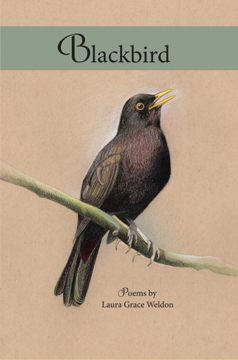
My next collection, Blackbird, continued to teach me just how beautiful the writing community can be. Writers go out of their way to amplify the work of other writers. They mentor, they share, they podcast, they teach.  Many dedicate their time to make literary journals, literary organizations, and literary events possible.

I am the recipient of these kindnesses and more. I am endlessly grateful for Rosemerry Wahtola Trommer’s bountiful forward and for generous blurbs by James Crews, Donna Hilbert, and Phyllis Cole-Dai. Many thanks to Middle Creek publisher David Anthony Martin; it is a delight to work with a press dedicated to growing a “mycelial network of artists and readers.” Thank you to the poetry editors who published many of these poems in print and online journals. Much appreciation to the poets from our 811s poetry critique group who helped reshape these poems: Laurie Kincer, Diane Kendig, Roberta Jupin, Geoff Polk, and Richard Ferris. Appreciation to my longstanding writers’ group: Connie Gunn, Sarah Vradenburg, and Margaret Swift.  Endless thanks to poetry readers who share my work – you truly light the way for every poet. Most of all, thank you to my family who have held it all together during these surreal and humbling times.

Portals is now available from the publisher. You can also request it at your local library, favorite indie bookstore, or indie-bookstore based Bookshop.org. And you can also get it via Amazon

Now, Reality Is Surreal

Ostranenie  

Stare at any one thing
long enough
it recedes into form
without meaning.
Roof edge beyond the window
becomes a floating angle, abstract
against cloud-clotted background,
rain layered foreground.

Say anything over and over,
word you love or word you loathe
it reduces to sound,
to nonsense.
As a meditation,
this nudges us
closer to edges,
toward wilder realms rarely visited.

But be wary of ideas
ranted over and over.
They lose something too,
lose the softness of grass on bare feet,
of hand touching hand. They become
strictures against the way rain speaks,
barriers to what nourishes
the ground we are.

Laura Grace Weldon

First published in Sisyphus Literary Magazine, issue 6.3

“Ostranenie” is a literary term coined by Russian writer and critic Viktor Shklovsky to describe how art takes reality out of context, making the ordinary seem strange.

Ohio Poet of the Year 2019


I got a suspicious email back in August. It alleged I’d won a statewide contest. I am not so easily fooled. I wrote back:

“In case you are a wealthy foreign prince, I have nothing to extort. I’m a friendly hermit who drives a  rusty 2004 Honda and wears worn out shoes.”

The emailer responded with contact info for the Ohio Poetry Day Association (OPD), which has awarded Ohio Poet of the Year since 1938.  He said he wasn’t affiliated with the organization, but was helping out since they had trouble getting in touch with me. He asked me to call Amy Jo Zook, contest chairperson for Ohio Poetry Day and coordinator for Poet of the Year. He explained the organization is run by such a venerable board that they only operate by phone and mail.

Suspicious indeed. But I investigated.

I googled Amy Jo Zook and discovered she has a doctorate in English, won the Ohio Poet of the Year award herself back in 1988, and has volunteered for literary causes for decades. I reverse-searched the number I was given and it matched up with her name.

Hmm. Could this be a real thing? My publisher had sent my book off for several awards…

A Nigerian prince  seemed a more likely possibility than my winning anything. Rather than think about it, I went back to editing manuscripts. When that distraction didn’t work, I took a bucket of kitchen scraps out to the chickens, picked some green beans, and watered our mulberry saplings. I still couldn’t muster up the courage to make the phone call. Maybe it was the memory of my mother listing among a woman’s sins the attitude, “she certainly thinks highly of herself.”

That evening, bolstered by two substantial glasses of Merlot, I finally called Dr. Zook. She explained that books are nominated by publishers, literary groups, libraries, and other independent sources — self-nominations are not accepted. No list of nominees is released. The choices are narrowed down to eight or fewer books, which the OPD judges then compare individually before voting.

She told me about the history of the award.

Back in 1938, the State of Ohio set the third Friday of every October as Ohio Poetry Day. This was the first poetry day established by a state government in the United States, thanks to Tessa Sweazy Webb who spent thirteen months lobbying the Ohio General Assembly. She argued, ‘For each living reader a living poet, for each living poet a living reader.’

And Dr. Zook told me about her years handling the details of Ohio Poetry Day and its publications, all proudly done without email or internet. She said the annual OPD event takes place the weekend of October 18-19th at the Troy Hayner Cultural Center in Troy, Ohio with workshops, readings, and all OPD awards.  (She mentioned Mary Oliver was Ohio Poet of the Year in 1980!)

All this to say, I was indeed voted Ohio Poet of the Year on the strength of my newest collection, Blackbird

My impostor syndrome is now in full flare. Vast appreciation for Tessa Sweazy Webb, Ohio Poetry Day board and judges, and my wonderful publisher at Grayson Books, Ginny Connors. Also, vast shock at finding myself in any category that includes luminaries such as these recent Ohio Poet of the Year winners: Susan Glassmeyer, Kathy Fagan, and Maggie Smith. Sometimes good news IS real.

Pinch me when you see me.

“Poetry is more a threshold than a path.” Seamus Heaney


My New Book!

The container of my life has been extra full these last few years — some startling lows but also some immense joys. As I said to a friend during these zigzags, I am practically a parasite on hope.

Still, I am downright startled when something amazing happens to me. And something amazing has indeed happened.

Last autumn I pulled together a manuscript of poems written since my first collection was published. I know it takes a long time to find a home for a book of poetry. And since I can’t afford to submit it to publishing houses that charge reading fees or contest entry fees, the list of publishing houses I might approach is smaller. But I pulled up my optimism socks and sent it to my first choice, Grayson Books. This is the publishing house that included one of my poems in their beautiful Poetry of Presence anthology last year.

Their submission guidelines warn they only publish a few books each year, so I expected to send the manuscript along to another publisher after I got the inevitable rejection. I didn’t even open their emailed response right away in order to postpone the disappointment.

Instead I got an acceptance! (I’m pretty sure I heard trumpets.)

I am strange about my own good news, suddenly more shy, and have only told a few people since signing the book contract back in October. Each step of the process —- editing, choosing a title, approving art commissioned for the cover — has been a testament to the professionalism and patience of Grayson Books publisher Ginny Connors. I still cannot believe my good fortune.

My good fortune doesn’t stop there. Four wonderful poets agreed to write back cover blurbs. Here they are, overflowing with the kindest words imaginable.

I admire and learn from Laura Grace Weldon’s writing. Her poems blossom from an inherent curiosity and grow strong under her compassionate treatment of the subject matter. Such fresh images and heartfelt insights move me to be a better writer.

Susan F. Glassmeyer, author of Invisible Fish and 2018 Ohio Poet of the Year

These poems touch me so deeply because they bring me home to the marvelous sacraments of the ordinary: a coyote howl at midnight, a bean in its fuzzy pod, water in a forest stream that “moves in patterns more ancient than philosophy.” When I take a few moments to read a Laura Grace Weldon poem, the sun comes out in my heart, and I know that the earth, for all its pain, is bathed in goodness.

Alfred K. LaMotte, author of Wounded Bud and Savor Eternity One Moment at a Time

Laura Grace Weldon invites us to engage our third eye, to truly examine “light in a window/ laundry flapping defiantly on the line.” Her words so intimate and lush, she guides us to spaces we pass by, take for granted, overlook in our super-charged lives. Without reprimand or judgment, Laura Grace ever so deftly reveals the secret: “it’s a matter of walking/ inside to out with someone capable of truly seeing… wakening skin and gut, summoning/ the long kinship we share with everything.”

Kari Gunter-Seymour, author of Serving and Poet Laureate of Athens, Ohio

On each surface our fingerprints linger.

They are too light to pack

too heavy to carry.

These lines from Laura Grace Weldon’s “Moving Day” remind us that the miraculous, the heartbreaking, the beautiful are always right in front of us, disguised as the daily messiness of our lives. I finished Blackbird and took a long winter walk through the park, seeing the world with fresher, keener eyes, and a feeling of gratitude.

George Bilgere, author of Blood Pages, Imperial, and The White Museum

I am endlessly grateful to these gracious poets, to my wonderful publisher, and to the dear writer friends who helped me workshop these poems: Laurie Kincer, Diane Kendig, Connie Gunn, Sarah Vradenburg, Margaret Swift, Patrick Davis, Roberta Jupin, Geoff Polk, and Virginia Douglas.

My book will be available at Cleveland’s Loganberry Books this spring or ask your local independent bookstore to order it. It can also be pre-ordered on Amazon or Barnes & Noble. Or you can get a copy from me at one of my upcoming readings (so far, Loganberry Books on 5/19 at one pm and the Wm. N. Skirball Writer’s Center on 6/2 at two pm).

A portion of all book royalties will be donated to the Medina Raptor Center, a non-profit center in Spencer, Ohio which rescues, rehabilitates, and releases injured and orphaned birds.


Transmuted

Compost Happens

Nature teaches nothing is lost.
It’s transmuted.

Spread between rows of beans,
last year’s rusty leaves tamp down weeds.
Coffee grounds and banana peels
foster rose blooms. Bread crumbs
scattered for birds become song.
Leftovers offered to chickens come back
as eggs, yolks sunrise orange.
Broccoli stems and bruised apples
fed to cows return as milk steaming in the pail,
as patties steaming in the pasture.

Surely our shame and sorrow
also return,
composted by years
into something generative as wisdom.

Laura Grace Weldon

Originally published in Canary: A Literary Journal of the Environmental Crisis.  Find more poems in my collection, Tending.

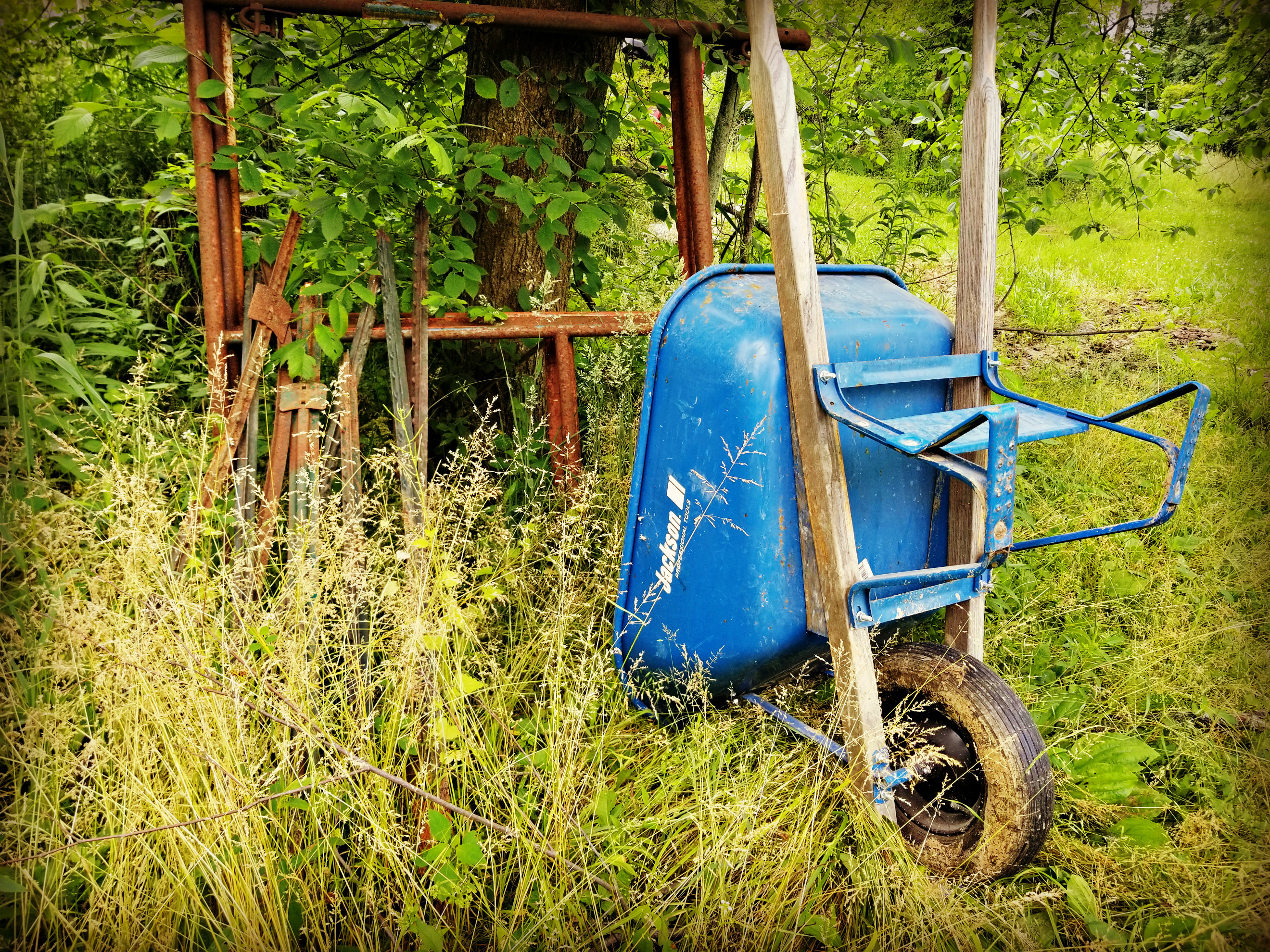
Battered Blue Wheelbarrow

What It Carries, Still

Your father, whose voice scared me,
whose head loomed a full 14 inches over my mine,
bought us our only housewarming gift;
a bright blue, six cubic foot wheelbarrow.
We laughed at its size, laughed as you gave me
a bumpy ride over the first lawn
we giddily called our own.

He seemed to believe our future
would be one of Paul Bunyan-sized loads.
It was.

In it we hauled firewood, dirt, rocks,
crinkled leaves topped with squealing toddlers.
It held a big block Dodge engine.
It toted rolls of fencing, chicken feed, cow manure.
It carried trays of tender seedlings
out to the garden, waiting
as I blessed each one into soft earthen beds.

Today you mend the rusted body
of our battered blue wheelbarrow.
I wish your father lived to see
its wooden handles smoothed from use
and what it carries, still
on that one sure wheel.

Laura Grace Weldon

Originally published in The Moon Magazine. Find more poems in my collection, Tending.

Photoautotrophic Wisdom

Weed I Won’t Pull


Some hardship curved it into

a green ampersand. Tendrils sprout

along a resolute stem.

I want to lean close, ask

for some photoautotrophic wisdom.

Listen to the soil’s bacterial choir.

Convert to the worship

plants have practiced since the Beginning.

Laura Grace Weldon

Originally published in The Moon Magazine. Find more poems in my collection, Tending.