I am sitting on the sand while my three beloved grandchildren run in and out of Lake Erie’s waves at Cleveland’s Huntington Beach. I’ve taken the day off work to savor our time together. I never even think to open the book I brought. Instead I am watchful while at the same time caught up in my own wonderings, the way elders have surely been for millennia.
From even a short distance every wet head bobbing up in the water is dark, every happy shout is unintelligible. Time shifts the way it sometimes does. This scene could just as easily be 100 years ago, when Cleveland Metroparks made this beach a public recreation area and summer-weary families came here to cool down. This could be hundreds of years ago, the shoreline rimmed by huge sycamore trees, land crisscrossed by bison trails, with the Erie peoples’ large palisaded villages a short walk away. This could be a thousand years ago, another grandmother sitting near the water’s edge.
I’m reminded how fully alive each person is in each era in every part of the world. A prehistoric teenaged boy proudly shared his first big kill with his tribe, strutting just a little as he went to sit by the fire with a full belly. A pregnant Norte Chico woman leaned back gratefully to let others braid her hair in what we now call Peru. Old men gossiped about their neighbors as they relaxed near a fountain in ancient Beijing. A Berber trader worried his load of goods might fetch less than the expected price when he reached the marketplace. A little Victorian-era girl gleefully tattled on her brother for cursing.
It seems strange that we don’t see our lives as an unbroken continuum with everyone who ever lived or will live. It seems impossible we aren’t fully aware that the person behind us in line at the store or the person continents away knows same thirst and same hunger we do; feels the same emotions as we do; wants to have a life of meaning as we do. Well into a future I hope is a kind and healthy one, people will surely be sitting in this same spot savoring a summer day.
Right now sunlight glints off the water. A line of ducks passes in a perfect procession. When the kids come to towel off I tell them I’m thinking this scene could be from any era — just happy people playing as people like to do. I am brought back from my musings by a child. This one points to the teenagers who just arrived and says, “It couldn’t be any moment in history, Nana, because they brought Super Soakers.”
“Listen patiently, quietly and reverently to the lessons, one by one, which Mother Nature has to teach, shedding light on that which was before a mystery, so that all who will, may see and know.” ~Luther Burbank
It has been a very hot summer, one that ramps up my concern for this lovely planet’s future. The heat also makes it miserable to do much in our gardens other than admire weeds as they flourish. But, then, co-existence with weeds is the way we do things around here.
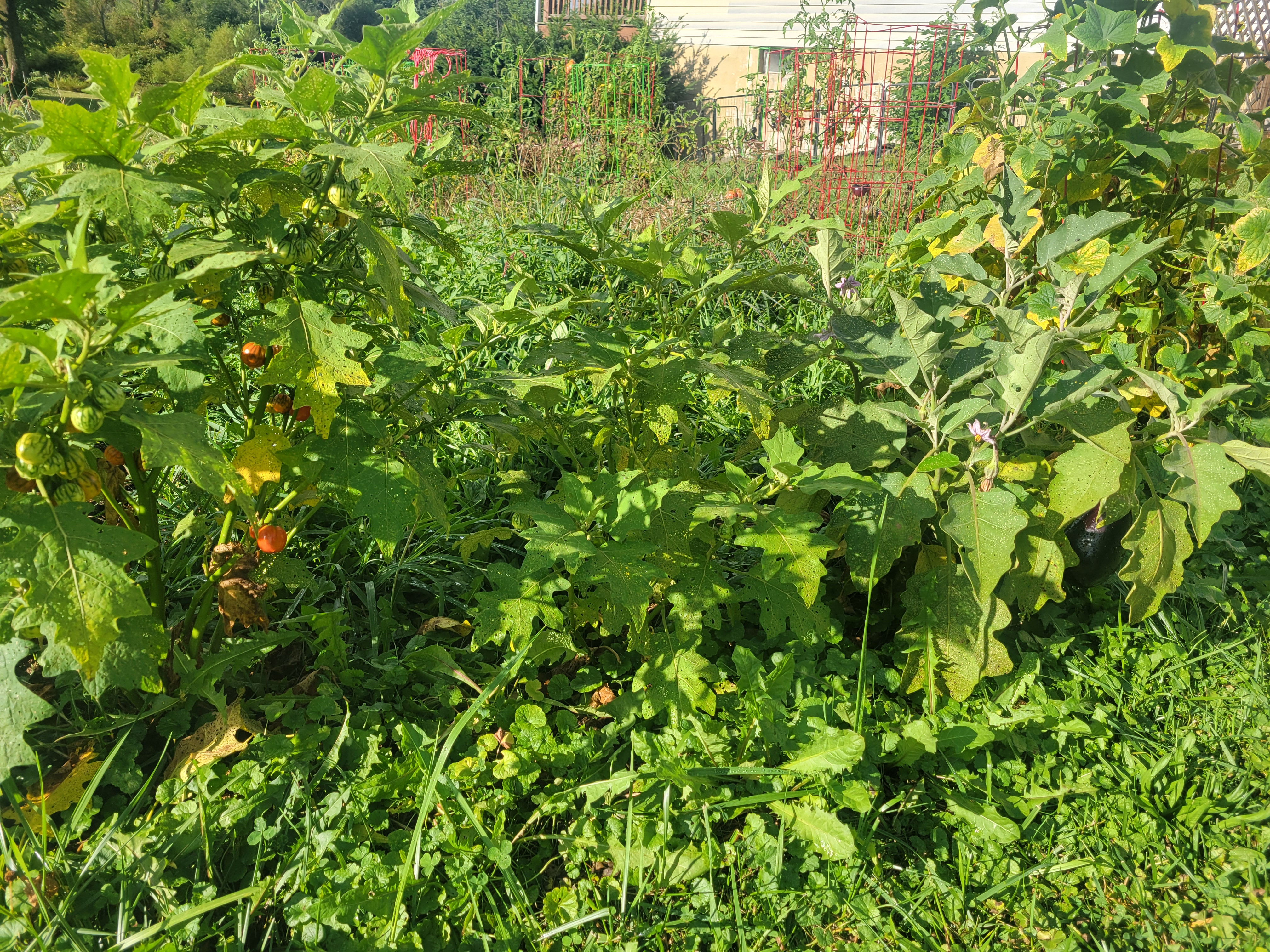
We are in full harvest mode, which means wading into the thrum of green toward the bright lure of purple eggplant, red tomatoes, yellow squash, pink grapes, peppers of many hues. Everything is alive and beautiful, weeds included.
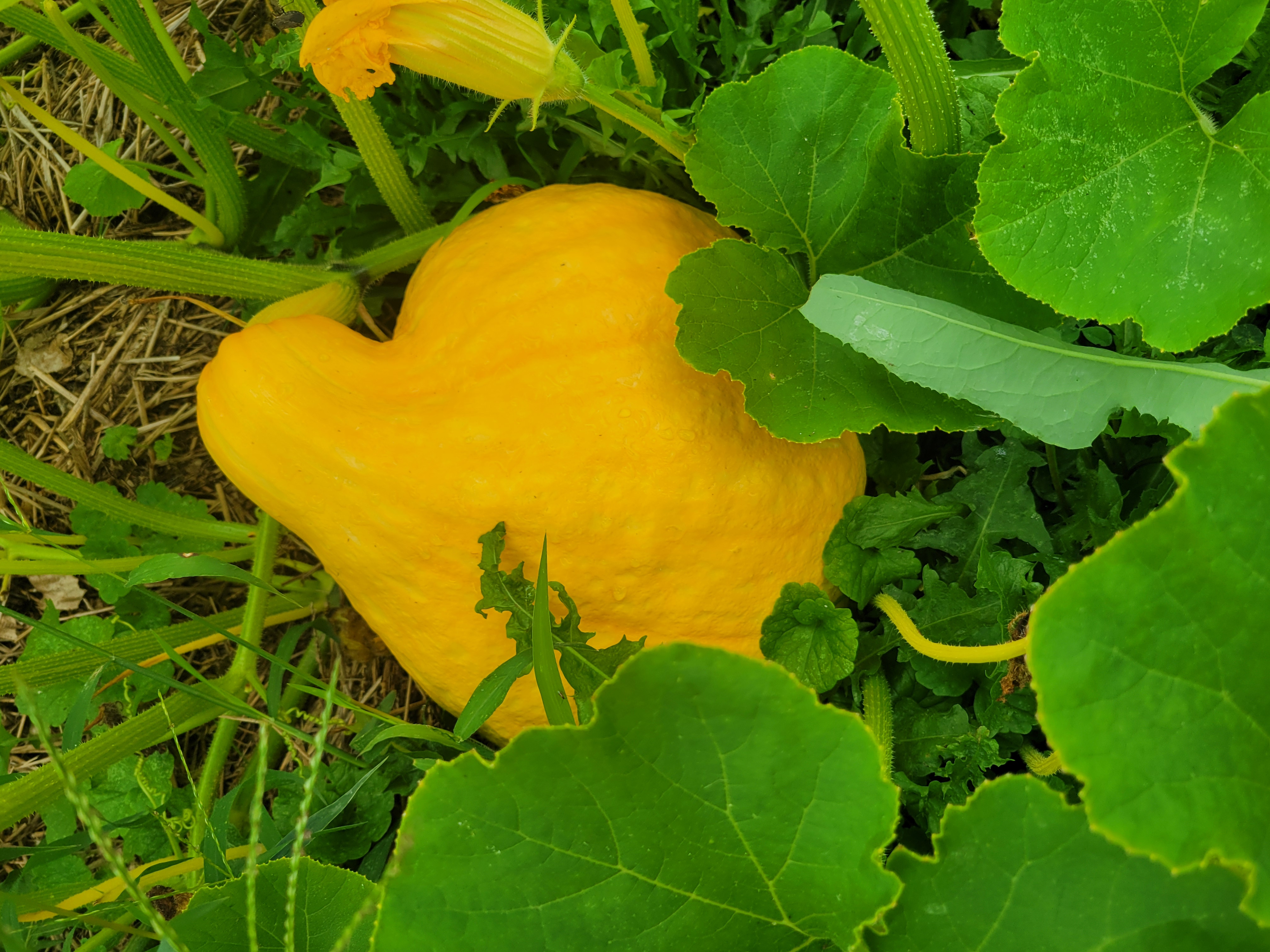
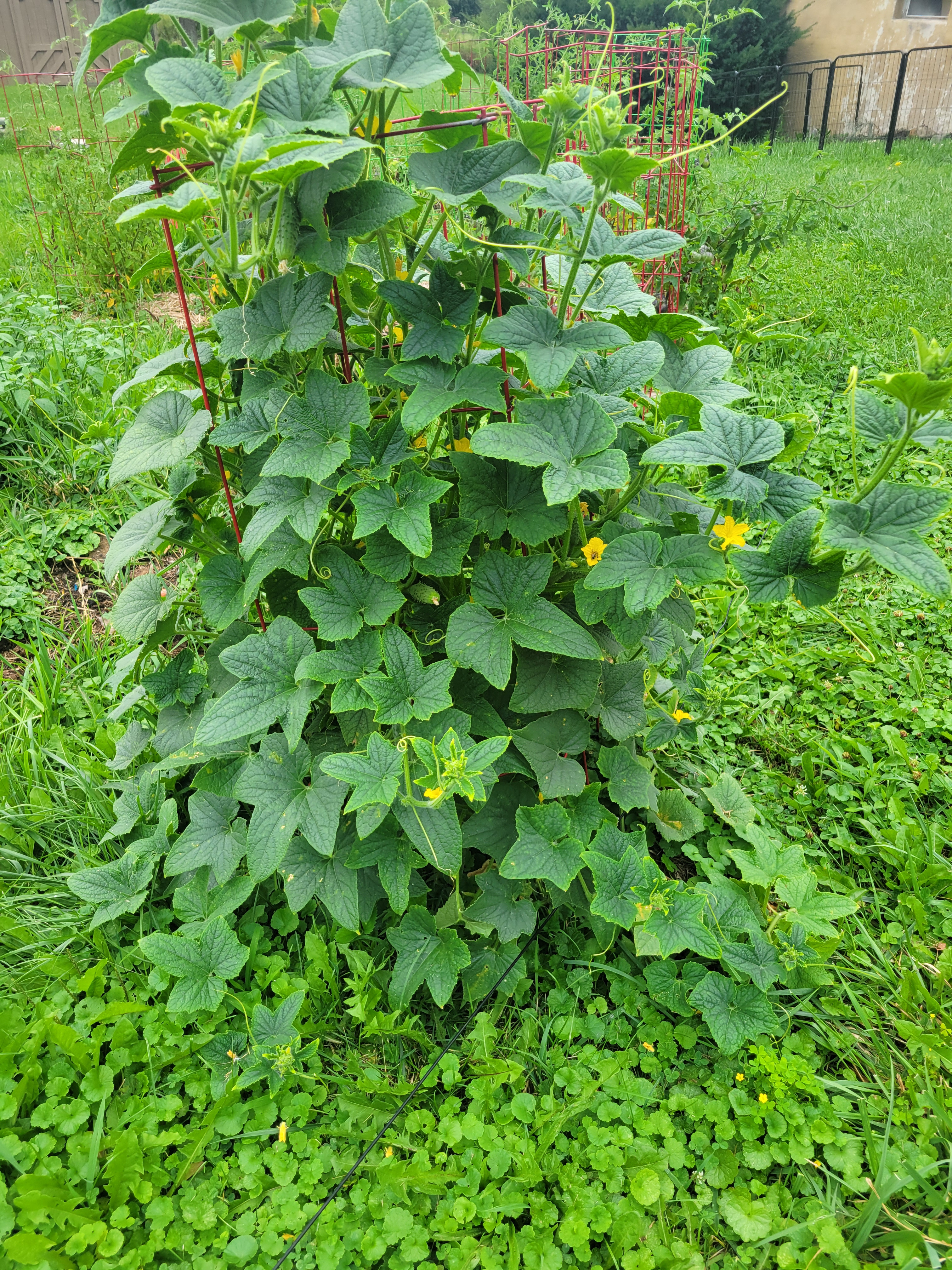
I keep finding more squash! So. Many. Cucumbers. Most days I pick three or four. Yesterday I discovered a few giant ones lurking in the weed-enhanced foliage. They were given to the chickens.
I’ve never had much success at conventional gardening with its orderly plantings surrounded by bare soil. Bare soil, in nature, is unnatural. And, honestly, I always felt sorry for the vibrant healthy plants I pulled up simply because I deemed them weeds, like some kind of vegetal colonizer. I often apologized as I did. It eased my conscience a bit to haul these stacks of dying weeds off to feed cows or chickens.
Mostly I’ve avoided pulling up much of anything. That’s why, for years, I tried all sorts of weed suppression ideas.
The strangest was the spring I covered rows by laying down long strips cut from worn out jeans I’d been saving to make a jeans quilt. The sturdy denim fabric held up beautifully through the entire growing season and into the next. Eventually it decayed back into dirt, which is what I’d hoped for, but not without leaving behind long sturdy fibers that could unintentionally trap, injure, or even cause the death of birds and small animals. It was an arduous process to pull them all out. It’s been about 25 years since then and while those fibers are gone I still, on occasion, run across a jeans rivet when I’m planting.
Before that I tried carpet discards, an approach suggested in a long-ago Mother Earth News article. It assured me that decades-old carpet was safe. (I suspect that advice was, well, suspect.) It needed to be pulled up at the end of the growing season and I was troubled by how much biomass was pulled up too, impoverishing rather than helping the soil.
The worst was the year we got leftover landscape “fabric” free from a friend’s market garden business. You’ve seen the stuff: black water-permeable plastic material that’s held down with stakes or clips or mulch. It’s commonly used on all sorts of farms, from small to large, conventional to organic. I pulled it up that year after the last harvest and was appalled to see our normally friable soil hard and dead-looking. We never used it again.
We now know sheet mulches, like the ones I mentioned (as well as astroturf, plastic mulch, and other so-called weed solutions) suppress the development of mycorrhizal fungi so essential to plant health. They also wreck the habitat for beneficial soil-dwelling creatures, overheat the ground, prevent organic matter from being incorporated into the soil, and impede the health of plant roots. Their presence wrecks the necessary carbon dioxide and oxygen exchange between soil and air—essentially suffocating the soil. If that’s not alarming enough, landscape fabric contains petrochemicals which break down into toxic substances including microplastics. (You know, the microplastics known to increase the severity of heart disease, cause arterial damage and strokes, harm hormone and reproductive systems, disrupt gut biome, lower fertility, cause premature births, impair learning and memory,) One analysis shows that three feet of landscape fabric can release hundreds of millions of microplastic particles.
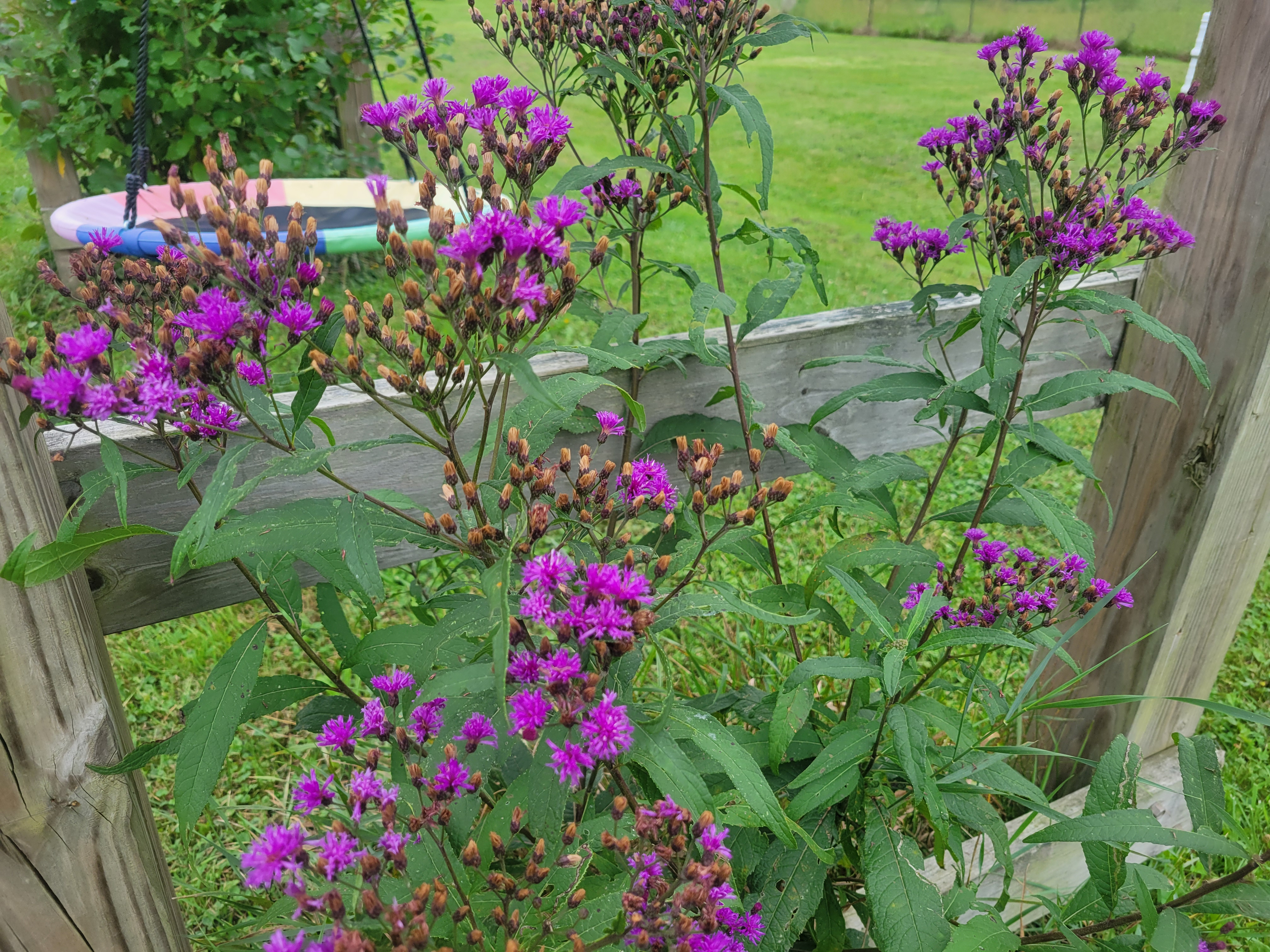
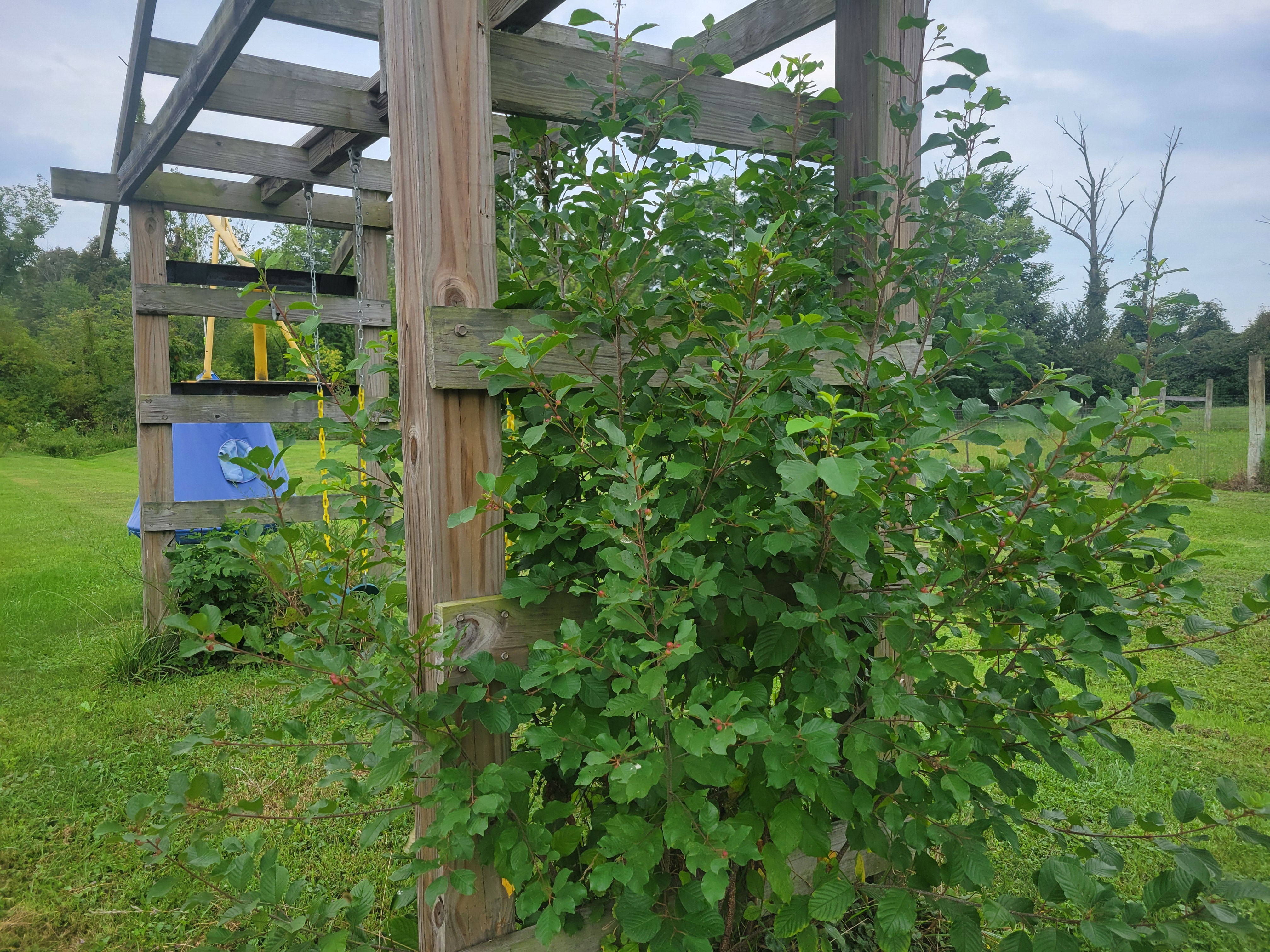
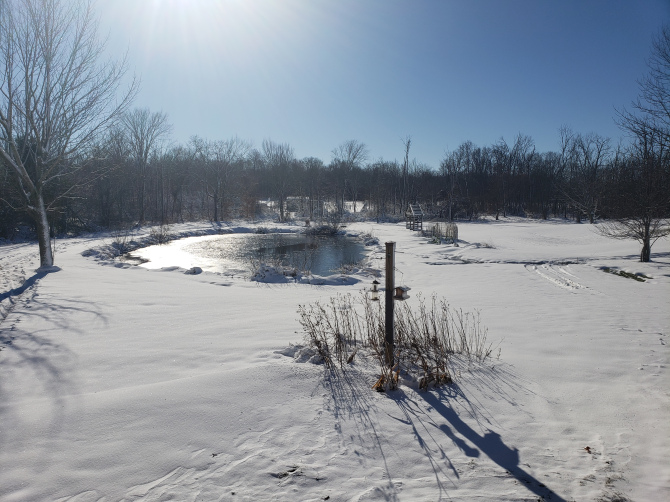
Ironweed sprouts up by the pond and here around our former kiwi arbor, now a swing set. Their bright flowers offer late-season nectar for bees, butterflies, hummingbirds, and other creatures.Here’s another swing set volunteer. I haven’t ID’d the plant but trust it has a reason for growing here.
I have since learned how fully the native plants we call weeds improve the soil, support pollinators, and nourish myriad life forms necessary for a balanced ecosystem. Perfect weedless plantings now look wrong to me.
Yes, seedlings need protection from weeds in their earliest weeks of life. I start hundreds of seeds under the fancy grow light table my husband built. These babies, even after hardening off, need space and light in the garden. The system we’ve evolved takes some labor when planting, but is kind to the soil and kind to our backs. Best of all, it frees us to do little more than water and harvest throughout the growing season. There are two main aspects to our method.
One, we leave wide rows where grass, clover, and other green life springs up of its own accord as nature intended. Every now and then my husband runs the push mower along these rows. In narrower patches, he or I run the weed whacker. These plants function as green ground cover. I see them as naturally occurring companion plants. By this time of year we don’t bother mowing them at all, although it would look more tidy. Instead we brave the knee-high jungle to pick flowers and vegetables from amongst their lively blooming weed cohabitators.
Two, we barely disrupt the ground for planting. No rototilling, no hoeing. We move a trowelful or two of dirt for each plant, then we augment the opening with rotted manure or compost. We fold thick overlapping layers of the New York Times (or saved, tape-free cardboard) around each plant after it has been tucked into the soil. Probably a foot or less on all sides. We top this newspaper mulch with well-rotted straw that spent the winter stacked around the chicken coop. (One could use grass clippings or fresh straw instead.) It’s important to water the plant and its surrounding paper/straw immediately not only for the plant’s health but also to prevent any slight breeze from spreading newspaper sections around the neighborhood. (Yes, I’ve been spotting running after newspaper sections gusting across the yard.) The newspaper and straw break down by the end of the growing season, effectively becoming dirt by the next spring when we do the same thing all over again. It also brings me a measure of peace to tuck awful headlines around tender little seedlings, as if something good can come from all that bad news.
A side benefit to our weedy gardens? They’re busy with bees, butterflies, hummingbirds, and other pollinators. Plus, we don’t lose a lot of our vegetables to neighborhood rabbits, deer, woodchucks, etc. (Okay, except for the Night of the Marauding Raccoons in our hoop house.) I see rabbits in our side garden every evening, oftentimes they hang out there for hours. They’ve chomped down a few tender shoots of spinach and chard, but they mostly eat what’s most tantalizing to them–weeds!
The biggest relief is how much the garden doesn’t need me. My ministrations are marginal, hardly necessary next to nature’s real magic. Sure, we water pretty diligently in the hot weather. I even pull a few weeds when they’re taking over a plant’s space. But I’m not remotely responsible for the riot of life growing around me. The flowers, vegetables, and every one of the weeds are beautiful.
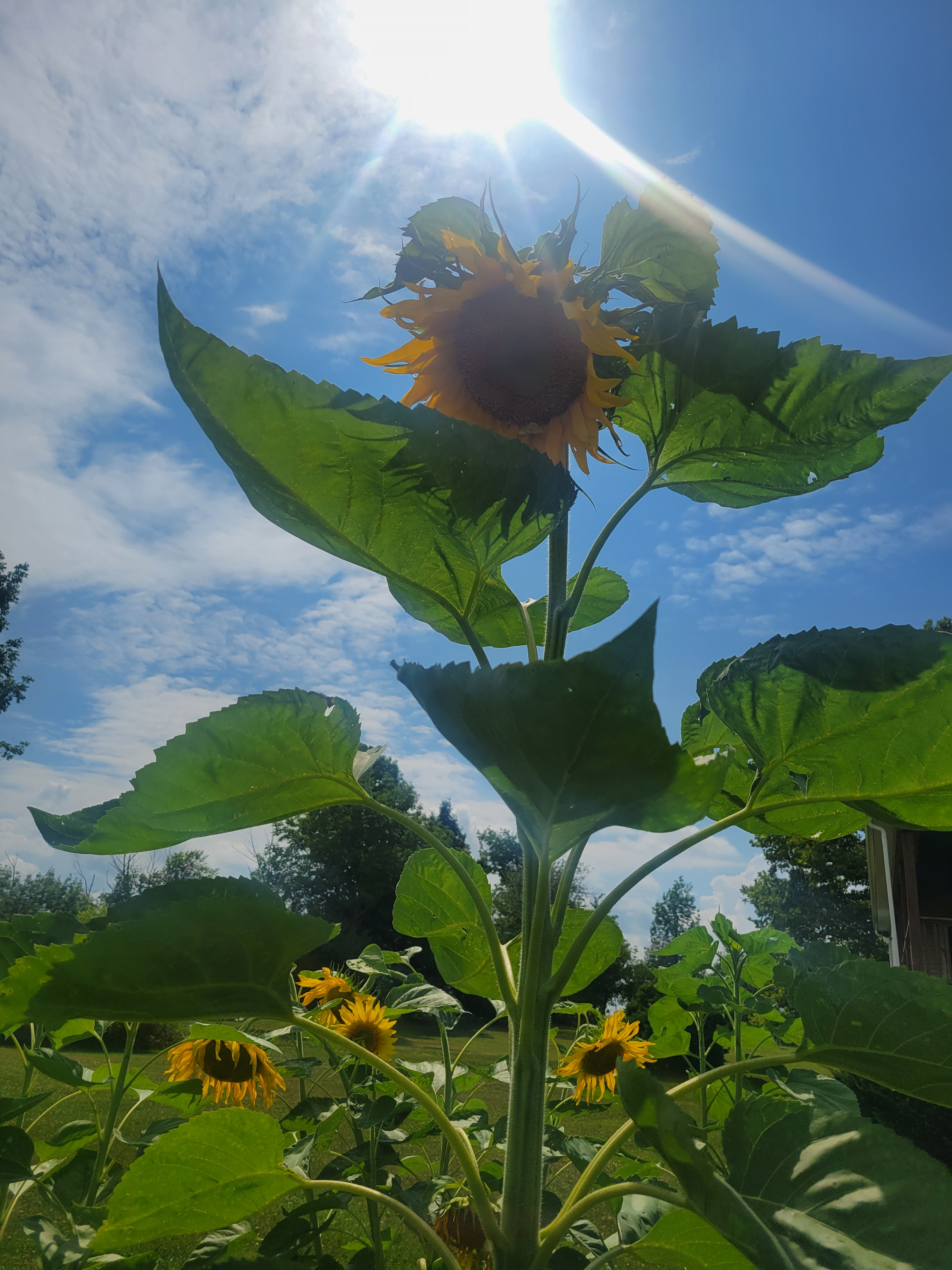
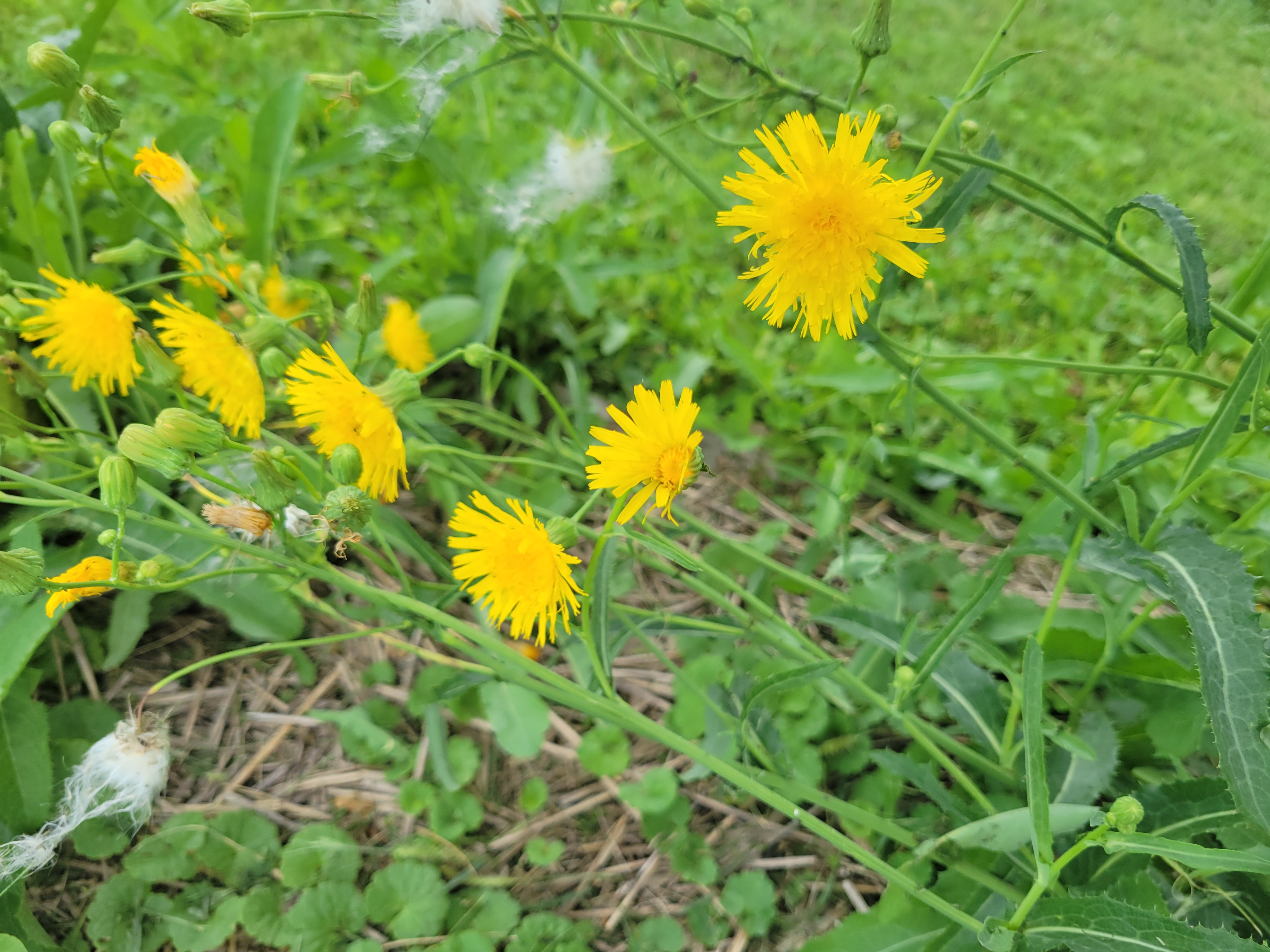
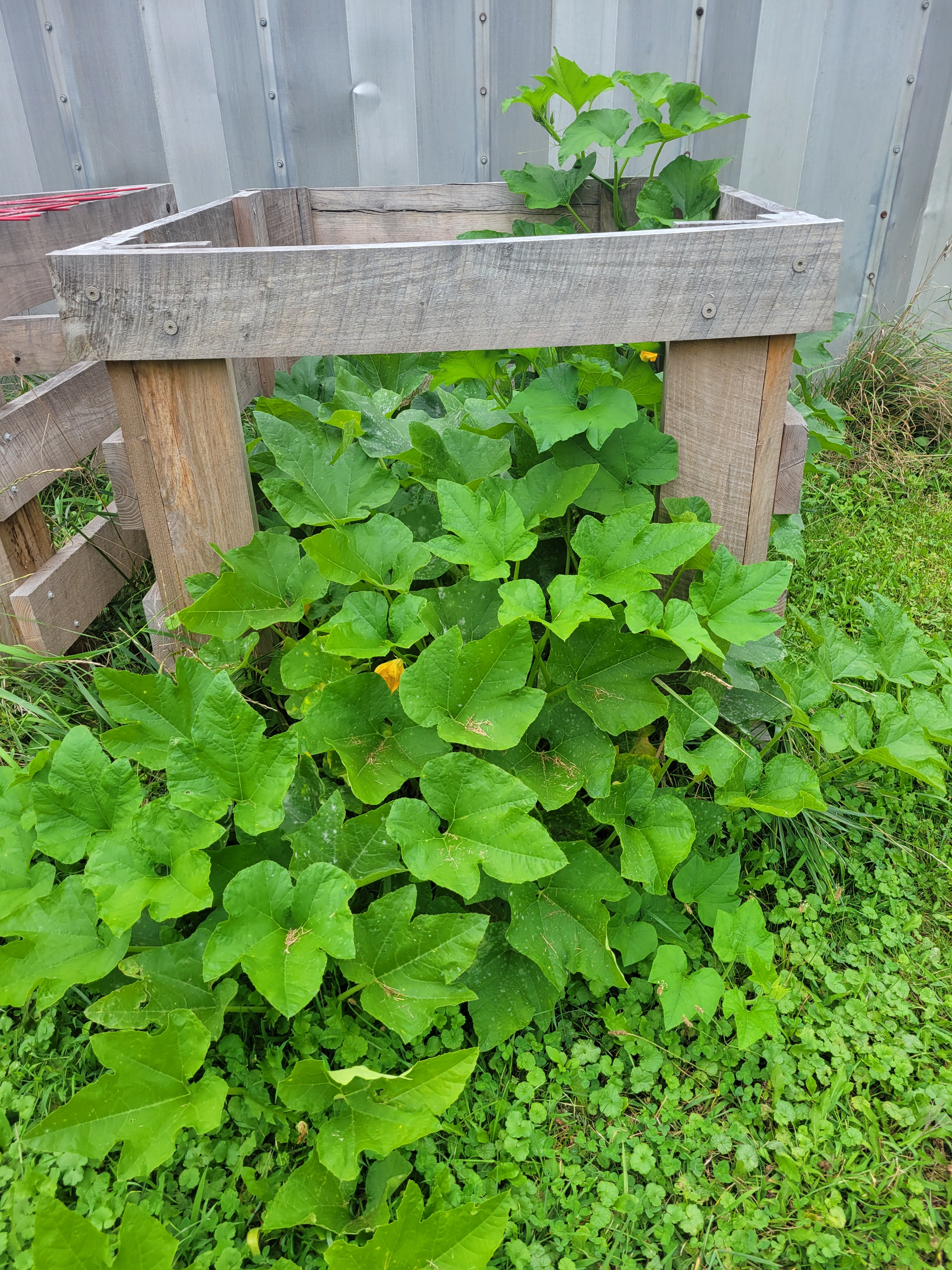
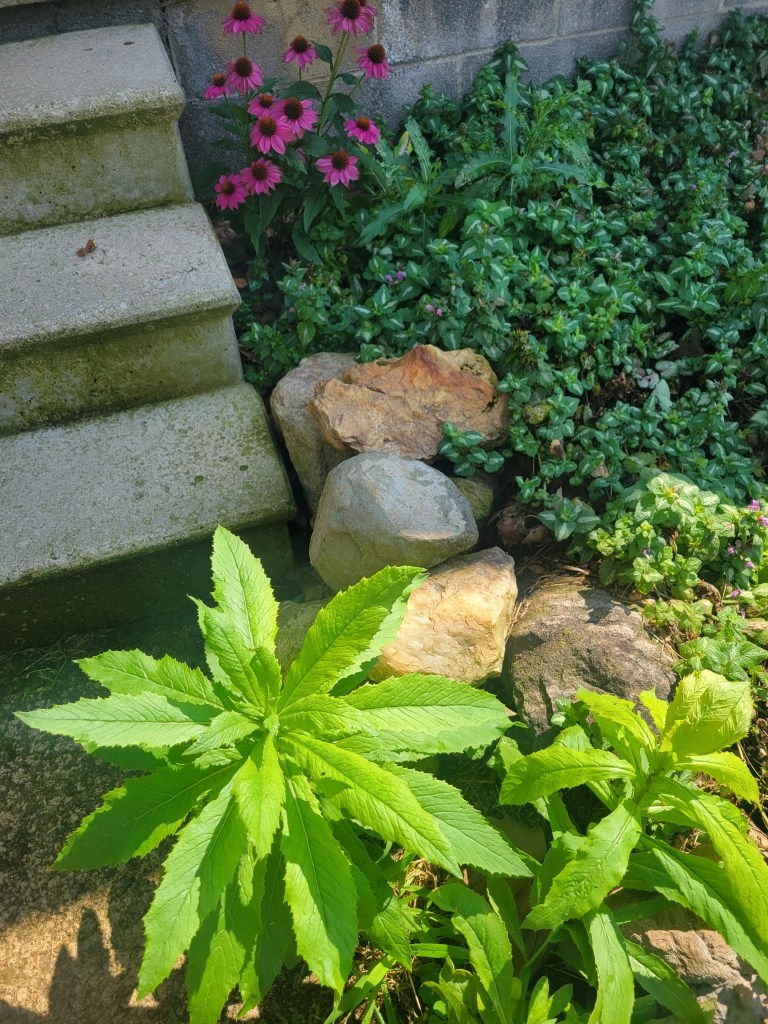
This appears to be sow thistle, which popped up after I harvested onions. An old herbalist teaching is what we need to heal grows at our feet. Maybe these plants are telling me something. Healthy squash volunteers sprout in one of the compost bins.These plants by our front steps are so full of greenly health that I’ve let them stay. I think they are burnweed, aka as pilewort, which is apparently an aromatic herb also grown for medicinal use. I’m not confident enough in my plant ID to use it, but I do enjoy its cheerful nature.By September having given up on mowing rows, this garden patch is a weed-tastic morass still brimming with harvest-ready produce.
We remove cucumber, melon, and gourd plants as soon as they’re done producing to prevent future plants from dealing with pests and diseases common to cucurbits. But that’s it. I no longer bemoan a messy garden. No longer judge myself for my failure to keep up with standard gardening practices. Perhaps my lazy-forward methods mean I gather a little less produce. (Or maybe not.) But I gather more peace from our feral gardens than I ever did in years of trying to keep up. The appearances-at-all-costs thing feels oppressive to me, whether it refers to our bodies or our possessions or our social status. That doesn’t mean I don’t see the beauty of a fashionably dressed person or a perfectly tended garden, it’s just never been for me.
As autumn folds into winter each year, the weeds remain. It feels right to learn what I can from our plant elders. All winter, I notice birds and other creatures feed on seedheads and dried fruits. I see them find shelter in the dry stalks. I pay attention to the patterns snow and wind make in this gone-wild space. I take heart in the way these plants bend, then lie down as they give what’s left of themselves back to the dirt.
Weed I Won’t Pull
Some hardship curved it into a green ampersand. Tendrils sprout along a resolute stem.
I want to lean close, ask for some photoautotrophic wisdom.
Listen to the soil’s bacterial choir.
Convert to the worship plants have practiced since the Beginning.
I was on my way home after a medical appointment, wrapped the quiet sort of reverie that comes from driving a long-familiar route. The car ahead of me applied its brakes and went around a slow-moving obstacle just over a rise in the road. I expected a farm tractor, bicyclist, or carcass of an unfortunate deer but couldn’t confirm till I made it over that hill. When I did, I saw what I could only describe as a contraption. It looked like the square hood of an Amish buggy (common sight around here) stretched over a small metal frame. Attached to the back was a hand-lettered sign with words nearly too faded to read.
Blinkers on, I passed carefully on the 55-mph road, trying to decipher the sign. It said something like “Walking To California.” And there, pulling the cart, was a man. I didn’t get a good glimpse, but enough to see he looked dusty and road-weary. He had at least another 45 minutes of walking before he’d get to a place where he might buy food or drink. If he stayed on this route he’d have many days of walking a two lane road passing little more than farms, struggling businesses, and homes built on former farmland.
“Pull over,” my heart told me.
There wasn’t any place to pull over. I drove on slowly, waiting for a turnoff where I might wait for him to catch up. But then what? I wanted to ask if he’d like a homecooked meal and a shower. Surely his cart could fit in my trunk. My husband was home, so I didn’t pause to worry about the lone woman and strange man thing, instead I thought about what I had in the refrigerator.
As I looked for a place to stop, half of me argued with the other half. My heart told me it takes rare courage to do what this man is trying to do. I wondered what fueled his quest. Maybe a pilgrimage of sorts, or an outgrowth of loss, or a creative venture, or a personal challenge. Maybe a quest to answer for himself what Einstein called the most important question facing humanity, “Is the universe a friendly place?”
“Pull over!” my heart kept saying.
But my mind’s voice reminded me this traveler might also be carrying Covid-19.
My husband and I have medical conditions that make us more vulnerable to the virus. We continue to be careful during a pandemic that has not gone away. Although media and government sources assure us it’s safe to get back to normal, stats show the last seven days there were nearly three thousand Covid deaths in the U.S., a 911-level loss of life per week. As of September 18th, there are now 464 deaths per day, which will move the weekly toll even higher. These numbers can’t possibly hint at the suffering and grief on a planet that has lost 6.53 million souls to this disease since early 2020.
In the last two and a half years, my husband and I have lost irreplaceable time with family members. We have not hosted our beloved house concerts here, or eaten once inside a restaurant together, or gone into any building without a mask. That is, until last week. All this time I’ve been completing editing jobs at home and teaching writing classes via Zoom. But my newest series of classes are, per the regulations of the institution offering them, in person. I walked in the first day wearing my KN95 mask. I set up the room and greeted the first few students. But about ten minutes before class started, two older students told me they couldn’t hear me with my mask on. I dithered for a moment (dithering is one of my most practiced abilities), then took off my mask. I reasoned I could leave the doors open for ventilation and the classroom, posted as large enough to hold 100 people while we were only 20, was roomy enough to confer extra protection. I’d also gotten the most recent bivalent booster. We’ll all be safe, I told myself. I’m still not sure about that.
Now I was considering this additional risk.
I thought of pulling over to offer this man help that didn’t involve an invitation to our home. I could offer him whatever I had in my wallet, although a quick assessment showed I had only two dollars. Okay, I could ask him if he’d share his story and a cell number so I could offer to call local media to help him get coverage. And contact area churches to see if they might want to alert congregations along the way who might host him. Heck, I could simply say hello, welcome him to this part of Ohio, and listen to what he had to say. By this time I was nearly home. I decided to brainstorm solutions with my husband, then drive back along the same route until I spotted the man.
I was convinced at this point that I had a soul-deep need to respond to this traveler. This urge, as I understand it, is deeply embedded in who we are as a species. I mean, come on, it’s there in belief systems around the world.
“Do not neglect to show hospitality to strangers, for thereby some have entertained angels unawares.” Christianity. Hebrews 13.1
“The husband and wife of the house should not turn away any who comes at eating time and asks for food. If food is not available, a place to rest, water for refreshing one’s self, a reed mat to lay one’s self on, and pleasing words entertaining the guest–these at least never fail in the houses of the good.” Hinduism. Apastamba Dharma Sutra 8.2
“One should give even from a scanty store to him who asks.” Buddhism. Dhammapada 224
“You shall not wrong a stranger or oppress them, for you were strangers in the land of Egypt” Judaism, Exodus 22:20
“Serve Allah, and join not any partners with Him; and do good – to parents, kinsfolk, orphans, those in need, neighbors who are near, neighbors who are strangers, the companion by your side, the wayfarer (ye meet) and what your right hands possess: For Allah loveth not the arrogant, the vainglorious.” Islam. Quran 4:36
“Charity—to be moved at the sight of the thirsty, the hungry, and the miserable and to offer relief to them out of pity—is the spring of virtue.” Jainsim/Kundakunda, Pancastikaya 137
“The heavenly food is needed successively; be thou a server of the food and direct thou the people of the world to present themselves at that table and guide them to partake thereof.” Baha’I (Abdu’l-Baha)
“A traveler through a country would stop at a village and he didn’t have to ask for food or for water. Once he stops, the people give him food, entertain him.” Nelson Mandela, discussing the southern Africa tradition of Ubuntu.
But, despite my strong conviction, my husband informed me I was nuts. He made rather pointed arguments to support his contention that one does not stop to talk to strangers on the side of the road, let alone bring them home, pandemic or no pandemic. I briefly wondered if I’d married the wrong man, although our differences make our lasting partnership work. Maybe he was right. Maybe it was foolhardy hubris for me to think I should do anything other than let a stranger live his life while I live mine. I didn’t get in the car and head back to greet the traveler.
I believe there are essential friendships never made and significant soul promptings never answered because we don’t make time, or don’t feel ready, or harbor fear, or simply let life’s everydayness block us from what might be. We never find out how these unexplored connections might answer one another’s deepest questions. I still regret not listening to my heart.
“Hope sleeps in our bones like a bear waiting for spring to rise and walk.” ~Marge Piercy
People used to ask “what’s new?” or “how’s work?” or “what’s the family up to?” but this year’s standard inquiry seems to be “how are you holding up?”
I don’t know about you, but the holding and the up both are pretty tenuous. Every day seems to pose a more serious threat to democracy, the environment, to justice. This week we are breaking records for Covid-19 hospitalizations and deaths, with experts warning of a “dire winter.” I know people who are currently suffering with Covid-19. I know people who have died. I also know people who say concern over the virus is “overblown” and continue to go to the gym and to large gatherings although we’ve now hit daily death tolls exceeding those on 9/11.
Sometimes it feels like I’m polishing every splinter of hope I can find. But when I pay closer attention to what’s holding me up, I find a vast scaffolding. Here are a few rungs on this month’s ladder.
An ash tree in our yard continues to thrive despite invasive ash borers. I greet this tree every time I walk past. Like the sycamore, dogwood, hawthorn, and maple trees around our house I consider this tree a friend. It’s the first tree I see when I look out our back windows, its branches almost always full of twittering birds. I know ash trees are in serious decline. Millions of U.S. ash trees have already died due to the invasive ash borer, including hundreds of trees in the woodland part of our property. But some trees continue to thrive. They’re called “lingering ash.” Somehow these trees, untreated by insecticides, carry on. Their genes seem to resist predation. Science hopes resistant ash can perpetuate the species. This tree’s resistance to annihilation can’t help but inspire me. Let’s hope we can be the lingering best versions of our own species.
Out here, although you can’t see him, Boris the Duck and his unnamed friend paddle around in peace. Boris is flightless due to a healed broken wing. I look for him many times a day and each time his presence amplifies the peace I feel here. Whether making coffee near dawn or washing dishes near dusk, seeing Boris settles something in me.
I love teaching, even via Zoom. I never thought we could achieve a strong sense of connection by screen, but it’s possible. The magic of writing and sharing our work isn’t as high wattage as in-person classes but it’s remarkable. I come away from each class entirely nourished.
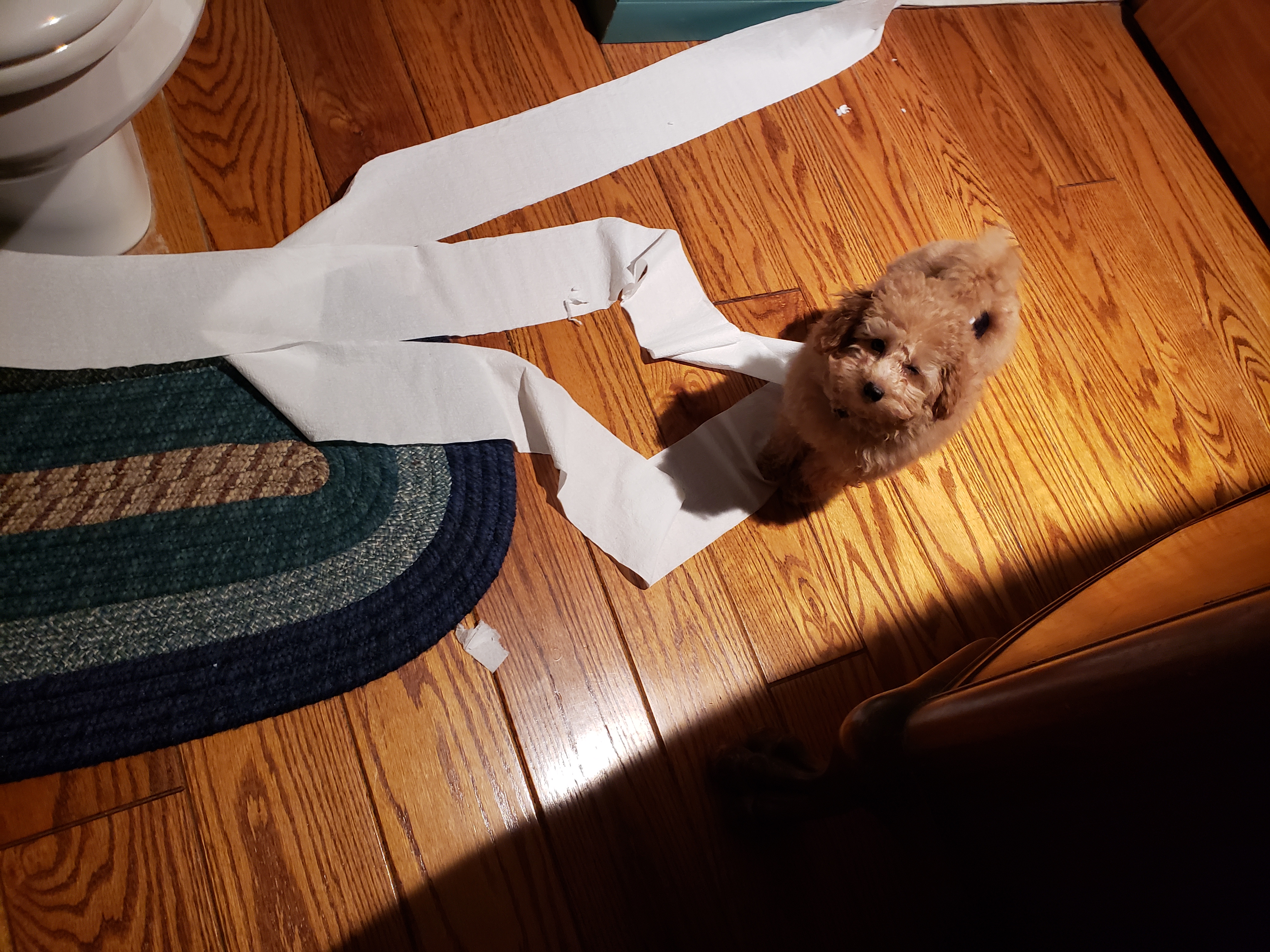
And of course there’s the new puppy. Imagine the joy Festus feels right now. Despite his considerable shortness, he discovered the magic of unrolling, carrying, and decorating. May your day hold at least that much happiness.
“A lie travels round the world while truth is putting her boots on.” French
“A society grows great when old men plant trees whose shade they know they shall never sit in.” Greek
“The big thieves hang the little ones.” Czech
“What you see in yourself is what you see in the world.” Afghan
“If you sit in a hot bath, you think the whole town is warm.” Yiddish
“Keep a green tree in your heart and perhaps a singing bird will come.” Chinese
“What you give you get, ten times over.” Yoruban
“Sometimes I go about pitying myself, and all the time I am being carried on great wings across the sky.” Ojibway
A long-forgotten adage can rise into our awareness at an opportune moment and we hear it as if for the first time. Please share sayings that have stuck with you in the comments.
“Portrait of a Young Woman Reading a Letter” unsigned
A Letter to the Most Illustrious the Contessina Allagia degli Aldobrandeschi
written Christmas Eve
Anno Domini 1513
I salute you. I am your friend, and my love for you goes deep. There is nothing I can give you which you have not. But there is much, very much, that, while I cannot give it, you can take. No heaven can come to us unless our hearts find rest in it today. Take heaven! No peace lies in the future which is not hidden in this present little instant.
Take peace! The gloom of the world is but a shadow. Behind it, yet within our reach, is joy. There is radiance and glory in darkness, could we but see. And to see, we have only to look. I beseech you to look!
Life is so generous a giver. But we, judging its gifts by their covering, cast them away as ugly or heavy or hard. Remove the covering, and you will find beneath it a living splendor, woven of love by wisdom, with power. Welcome it, grasp it, and you touch the angel’s hand that brings it to you. Everything we call a trial, a sorrow or a duty, believe me, that angel’s hand is there. The gift is there and the wonder of an overshadowing presence. Your joys, too, be not content with them as joys. They, too, conceal diviner gifts.
Life is so full of meaning and purpose, so full of beauty beneath its covering, that you will find earth but cloaks your heaven. Courage then to claim it; that is all! But courage you have, and the knowledge that we are pilgrims together, wending through unknown country home.
And so, at this time, I greet you, not quite as the world sends greetings, but with profound esteem and with the prayer that for you, now and forever, the day breaks and shadows flee away.
Fra Giovanni Giocondo
Over 500 years ago, Giovanni Giocondo wrote this letter to a dear friend. He was 80 years old at the time and had already lived a full life as a teacher of Latin and Greek, a Franciscan priest, archaeologist, translator of ancient manuscripts, architect, and engineer. Many of his designs still stand including Loggia del Consiglio in Verona, Fondaco dei Tedeschi in Venice, and the Pont Notre-Dame bridge in Paris. Works he translated went on to advance architecture, medicine, and theology. Yet these sentiments shared with a friend are his most personal legacy. Although authorship can’t be verified with complete certainty, it doesn’t really matter. What does matter how touched the Contessina must have been to receive it 503 years ago. We have no way of knowing what cast shadows in her life, but it’s easy to imagine her unfolding the page to read again and again, until each word was committed to memory. All these centuries later, the letter still has the power to nourish hope in our hearts. May it do so for you too, my friend.
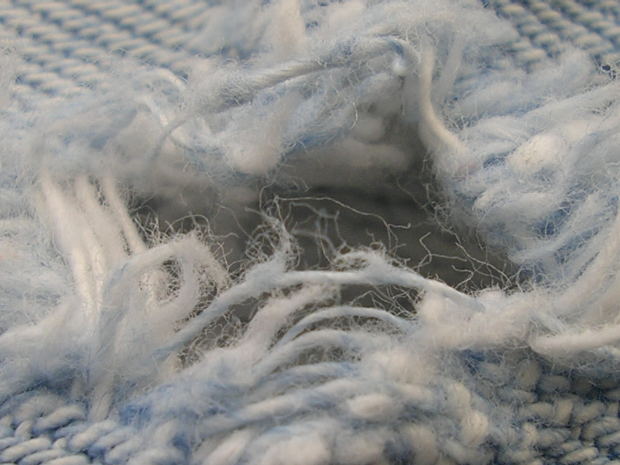
The garment is worn out. There are only a few stalwart threads stretched across, warp without woof, and its fibers are surely too frazzled to hold up.
A reasonable person would have tossed it out or torn it into rags. But here I am, strangely peaceful as I thread the needle hoping to weave these strands back into a whole fabric.
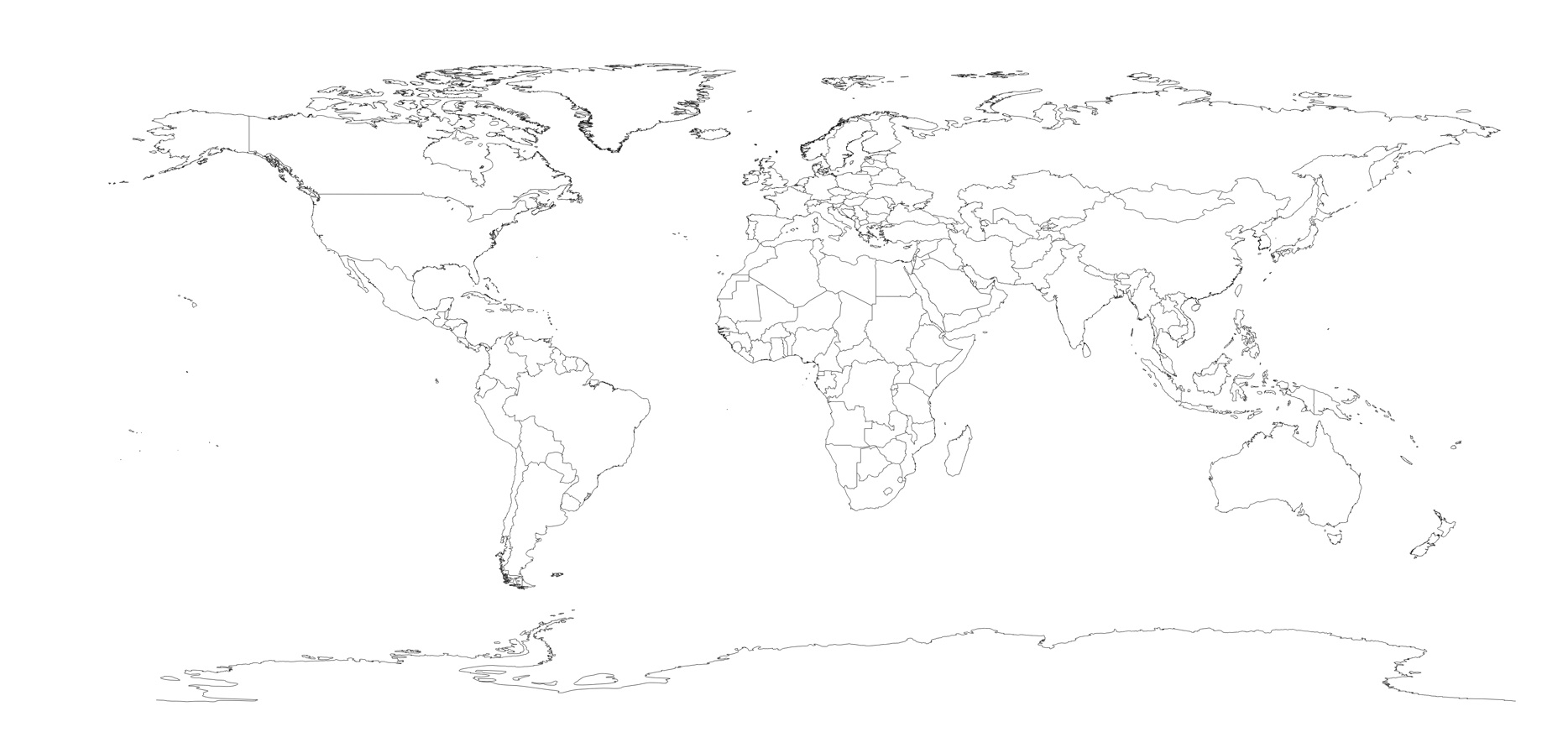
Before drawing my stitches across the expanse I realize its boundaries must be reinforced. I sew a merry line around the edge, reinforce it with another line of stitching and then another. The jagged edge looks a bit like the borders around a state or map of a continent. Sewing is a contemplative endeavor and this small task gets me thinking.
I’ve never been great at establishing boundaries. By the time I was nine years old I read every newspaper and magazine that entered our house. My parents cancelled news magazine subscriptions because my childish reaction to what I saw on those pages was too raw. I still read about suffering in the morning newspaper. I still asked questions about war, poverty, prejudice, cruelty, and greed — unsatisfied with answers like “God’s ways are mysterious.” I wanted to understand how grown-ups could let these things happen, how they couldn’t see. I wanted to understand all the way down to the mystery itself.
As a much smaller child I had a recurring nightmare. The dream was too large to describe, but I’ll try. In it could see life on Earth from a vantage point far above. Cars hurried along on roads, people lived in closed-off rectangles, everyone urged onward by a desperation that — from my dream vantage point — was tragic and absurd. They couldn’t hear me but I wanted to shout “It’s not real!” I’d wake up nearly gasping with horror.
Slowly I’d muster up the courage to run through the dark hallway to my parent’s room. My mother slept through any disturbance. Only my father would wake. He’d get up quietly, take me to the bathroom, and tuck me back into bed. On the nights when my misery wouldn’t go away, I’d brave that dark hallway again and my dad would let me sleep between them. Their bodies, heavy with sleep, helped to calm me.
Sometimes my father would try to parse the dream by asking me about it. I’d cry, “Everybody thinks it’s real, but it’s not.” And he’d try to explain it away, the way he did with my zoo dream, where animals burst from their cages to live behind garages and in back yards —- sadly unable to get back to their real homes. “Their cages are strong,” he’d say. “And they’re more afraid of you than you are of them.” His words didn’t help. His presence did.
I’ve been a grown-up for a long time now. I spend too much time rushing around in my car and busy in my own rectangle as if this is what’s important, no greater perspective in sight.
But my task right now is to stitch across the threads. Draw what’s pulled apart back together. Appreciate the needle’s strength and the thread’s purpose. Imagine it can be made a whole fabric. In a larger sense, there’s no other choice.
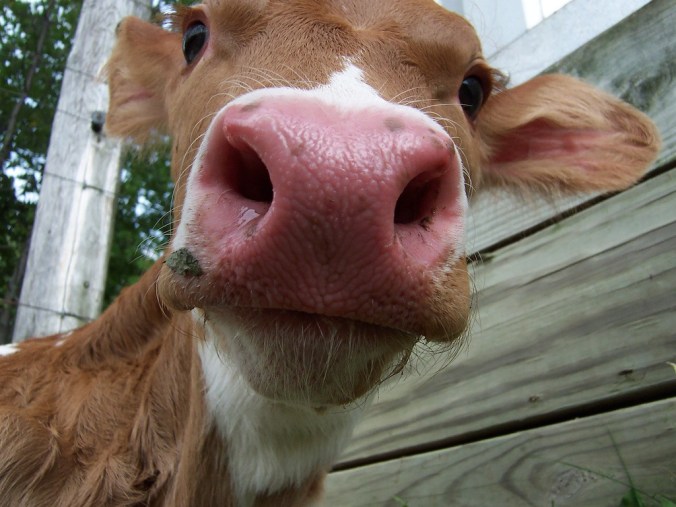
I’m standing at the kitchen counter rolling out crust to make an entrée my son wants for his birthday. Beef pies. They won’t be filled with just any beef, but the tender flesh of a two-year-old steer named Clovis who spent his whole life on our little farm. It’s hard to reconcile my feelings with the facts. Right now I’m dicing the brisket, a place where Clovis liked to be scratched.
Years ago my daughter made an excellent case for raising a dairy cow as a learning experience for her and homegrown way for us to procure healthy grassfed milk we could turn into yogurt, kefir, and cheese. On her birthday we gave her a red halter and soon after we got a lovely Guernsey. Isabelle changed her life. All our lives
The spring that Isabelle gave birth to her first bull calf was another game-changer. Initially I tried to delude myself that little Dobby could be trained to work as an ox or that we could find him a place in some farm animal sanctuary. Delusions they were indeed. Our only option was to raise him for a year or two, knowing all our hand-fed carrots and apples couldn’t forestall his eventual fate.
When he was small my daughter halter-trained him, leading him out the pasture gate to fresh grass. Even later, at 1,600 pounds, he followed her just as future steers would do. Long before they had to leave, she wisely insured they’d be calm and unafraid for the day they’d be led to the truck taking them away.
It’s a hard truth indeed to realize that calves who love to be brushed, calves who cavort in exultation when the gate to a fresh pasture is opened, calves who are clearly attached to the mother who birthed them and continues to care for them, cannot live out their natural lifespans. We consoled ourselves knowing that at least here our steers lived every day of their lives with their mother, grazing and nursing in peace until the last day they breathed. And that Isabelle could live out her natural lifespan, more than three times longer than dairy cows are typically permitted in the U.S. This is rare, almost unheard of, on today’s farms.
But I veer from my point. (This veering is a chronic problem of mine.)
My scruples once ruled. My children were raised on vegetarian food made from scratch. I used to be pretty darn strident about this. Heck, I used to be pretty strident about all sorts of things, from education to politics. My scruples haven’t changed, at least I think they haven’t, but my ability to live with dichotomy has.
Maybe it was precipitated by that not-so-great dinner of bean patties with buckwheat groats and mushroom gravy, but at this point three out of four of my offspring now include meat in their diets. (Yes friends, it’s true, our dictates don’t inform our kids’ choices. ) My husband once ate meat only at restaurants and other people’s houses because I couldn’t bear to have the flesh of once-living creatures in our home. Then he became a hunter. People dear to me quite happily flourish on the opposite end of the political spectrum and I do my (sometimes faltering) best to establish common ground, because really, every one of us wants the same things —-among them the freedom to live in safety, do what enhances our lives, and find meaning in our everyday activities. People dear to me also raise their children very differently than I’ve chosen, from sleep training to stringently academic schooling to tough love.
Every year I’ve learned more about accepting, even embracing, differing viewpoints. It’s not easy. There’s plenty of kvetching, from me and surely from the people who do their best to put up with me. This is a very big deal. It’s the foundation of peace, the only possible way forward for our species.
I slice up the very flesh I once lavished with rubs and scratches, then I roll out dough (yes, with whole grain flour) because my son hopes I’ll try the Cornish Pasty recipe he showed me. (For vegetarian family members, I make spinach pies that are refreshingly free of contradictions.)
I have no philosophy that fully explains this contradiction. But I try to stay awake and aware as I make food for someone I love out of the flesh of an animal I once loved. I reflect sorrowfully that, since last spring, we have no cattle at all on our back pasture. I’m sure I miss those mindful beings far less than my daughter must.
I wash the wooden cutting board, wipe the counters, and consider how complicated and paradoxical life is. We live on life, pass from life, and life goes on. I don’t know what to make of it except to rationalize a second glass of wine.
Tipping over in 1, 2, 3. vintag.es/2015/02/a-list-of-donts-for-women-on-bicycles.html
Several very large deadlines lurk on my horizon. Instead of clicking into high gear to get going I’m barely pedaling fast enough to keep from tipping over. The more I excoriate myself for falling behind, the farther I fall behind. I could easily blame this on chronic insomnia or existential angst or a nasty case of what-the-hell-did-I-get-myself-into. Blame, however, is useless for motivation purposes.
I was raised with the Puritan ethic: work hard, be polite at all costs, and avoid the unspeakably vile sin of laziness. Yet I’ve come to believe it’s in our do-nothing moments, like lying in the grass watching the clouds stroll by, that we most truly inhabit our lives. This probably explains why two tigers, named Full Tilt and Full Stop, tend to snarl at each other in my mind. I compromise to keep those tigers at bay.
I do this by letting myself be lured by the call of other things I want to do, things that suddenly seem delightful in comparison to the things I have to do. Here are a few examples.
When I agreed to help a non-profit streamline their mission statement, I stalled by reorganizing kitchen cupboards.
When I committed to editing a dissertation on organizational differences in international companies, I put it off by planting a few dozen strawberry plants and weeding the asparagus bed.
Heck, a few years ago when I was supposed to be editing an anthology, I dawdled by writing poetry. That turned into a whole poetry collection!
This, my friends, is what I call Sideways Procrastination.
The practice is weirdly energizing. For rationalization purposes, I tell myself that by doing something amusingly unrelated I’ll return to the task I’m avoiding with a fresh outlook and enhanced enthusiasm. I’m not sure it works that way, but it’s my operating excuse.
Here are three of my recent Sideways Procrastination endeavors.
One
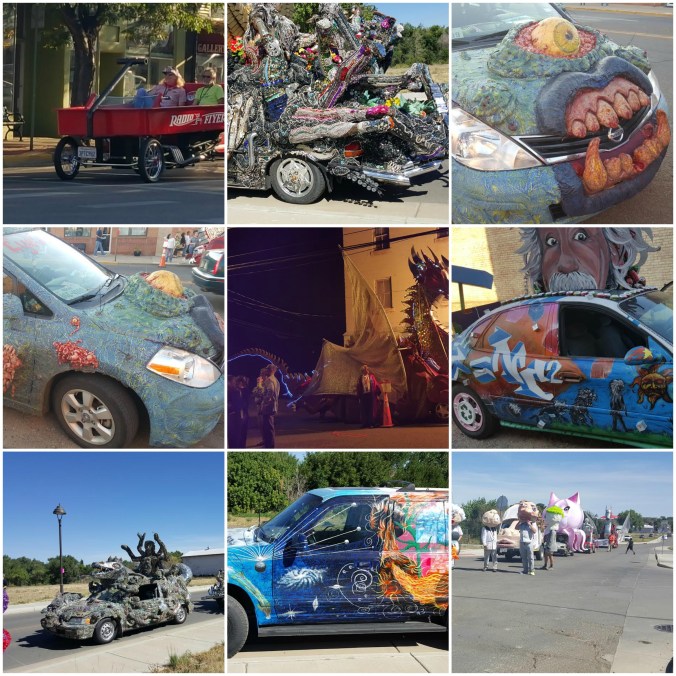
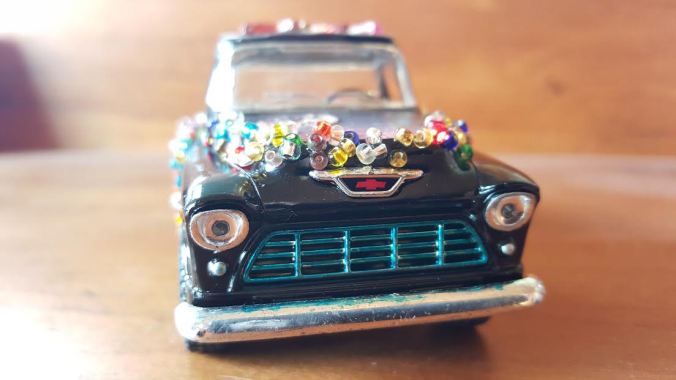
My dear friend and filmmaker Susan took me along on her latest adventure, filming Artocade in Trinidad Colorado.
Here are a few of the amazing entries in Artocade 2015.
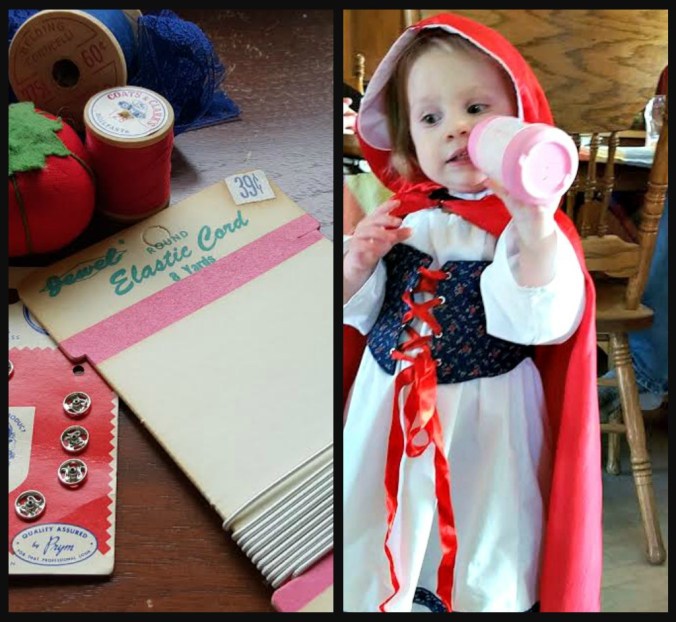
I dug around in the sewing supplies left to me by my mother and grandmother for a project. I turned an unused piece of red satin, an old white sheet, and lots of vintage notions into a Red Riding Hood costume for Liv. It was challenging (especially turning a tiny scrap of quilted fabric into a vest) and it was fun.
Three
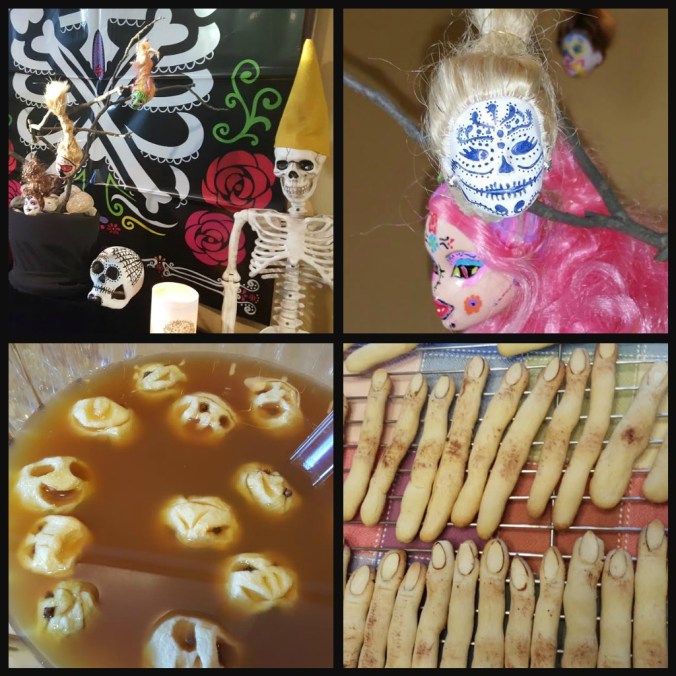
My daughter and I invited a few arty friends over for a Day of the Dead art party complete with skull painting, Barbie head alterations, finger cookies, and shrunken head punch. Preparations were a blast, the event was even blastier. ((I know “blastier isn’t a word but it should be.)
Many people seem to be great at focusing, but I’m not. I’ve got to sidle up to a task, peek around, and then break in burglar-style. Sometimes that approach works and the marvelous state of flow settles over me. Often it doesn’t and I find myself escaping into more Sideways Procrastination.
Chances are good that right now I’m in the kitchen concocting something fussy for dinner, or outside hauling something around in our old blue wheelbarrow, or curled on the couch reading a book I promised to review. I’m doing this even though I should be at my desk clattering away on the keyboard. What can I say? It’s just what Sideways Procrastinators do.
When people tell me their largest stories I am helpless as a page under pen.
A woman told me how, as a child of 11, she struck out when her grandparents were ignored rather than served at a restaurant in the deep South. Her anger was so heated that she used the restaurant’s complementary matches to start the place on fire.
It wasn’t entirely the content of the memory or the force in her voice. It was the way she strung words together; spare yet detailed. She talked about her grandmother’s arthritic hands picking up and putting down a salt shaker. She described her grandmother’s dark green dress and sensible heels, the patient smile she wore even though no one came to take their order. Before this raised-up-North granddaughter could utter a word of complaint she was shushed by her grandmother’s stern look. As her grandparents stood to go the girl ducked into the cloakroom and in seconds set to smoldering the hair oil soaked fedoras left there by white gentlemen. Of the fire she said little, except that the restaurant was forced to turn everyone away that day.
A teen described how, when he was a small child, his mother got so strung out that she’d leave him alone for days at a time.
He ended most sentences with “you hear me” and “wasn’t nothing” as he talked about licking his fingers before running them along the insides of drawers and cupboards to find crumbs. He said his mother got angry if she caught him sleeping curled next to the apartment door. She’d yell “I didn’t raise no dog.” When his story ended a refrain continued. He said “wasn’t nothing” four times, each repetition softer until his moving lips made no sound at all.
An elderly woman recounted the story of union busters coming by their cabin at supper time to beat up her father, who’d been organizing his fellow coal miners.
She didn’t recognize her own family any longer but vividly remembered this tale from her earliest years. Her words were impressions. I saw her mother standing fearfully at the door insisting her husband wasn’t home, children clustered behind her wide-mouthed with alarm. I envisioned this little girl with the presence of mind to hide her father’s dinner dishes. “Just laid em in the stove with a cloth over,” she said. When the men barged in they found only enough place settings for mother and children on the table. They left, never looking under the porch where her father hid. She had no other stories left to tell. This one was large enough for a lifetime.
Not only do I feel what they’re saying, I’m awestruck byhowthey say it.
When people talk about extremes they’ve experienced they speak as poets do. They rely on verbal shorthand made up of sensory description and metaphor. They drift from past to present, change viewpoints, dip into myth and scripture. Often they end abruptly, as if what they’re trying to say can’t truly be said. Their stories, powerful already, gain a sort of beauty that sends ordinary language aloft. It’s truth that trembles. To me, it’s poetry.


 “Do a good deed and throw it into the sea.” – Egyptian
 “The death of an elder is like a burning library.” Ivorian
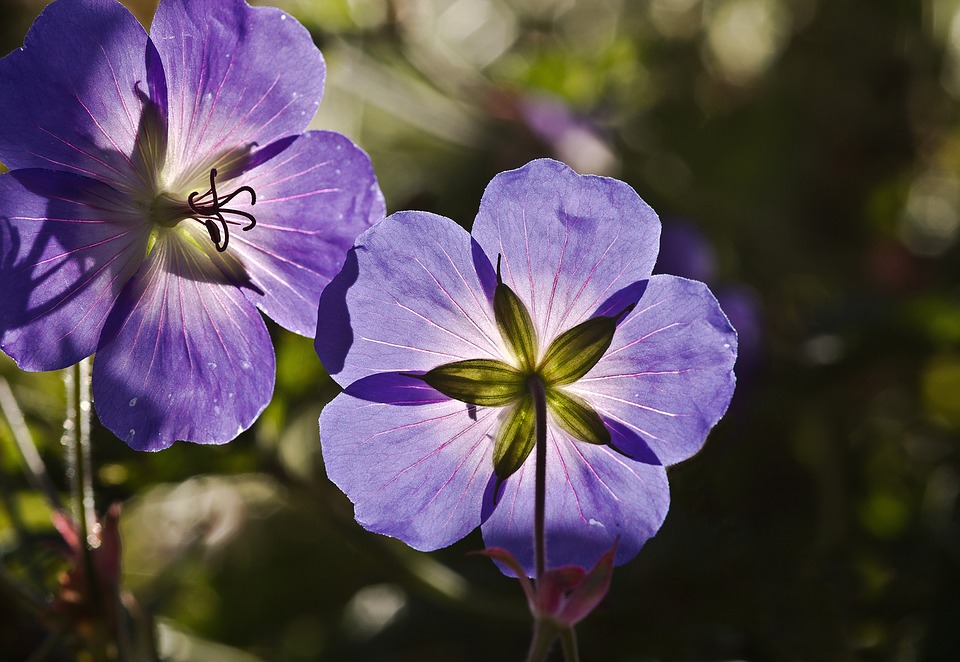 “A book is like a garden carried in the pocket.” Arabic
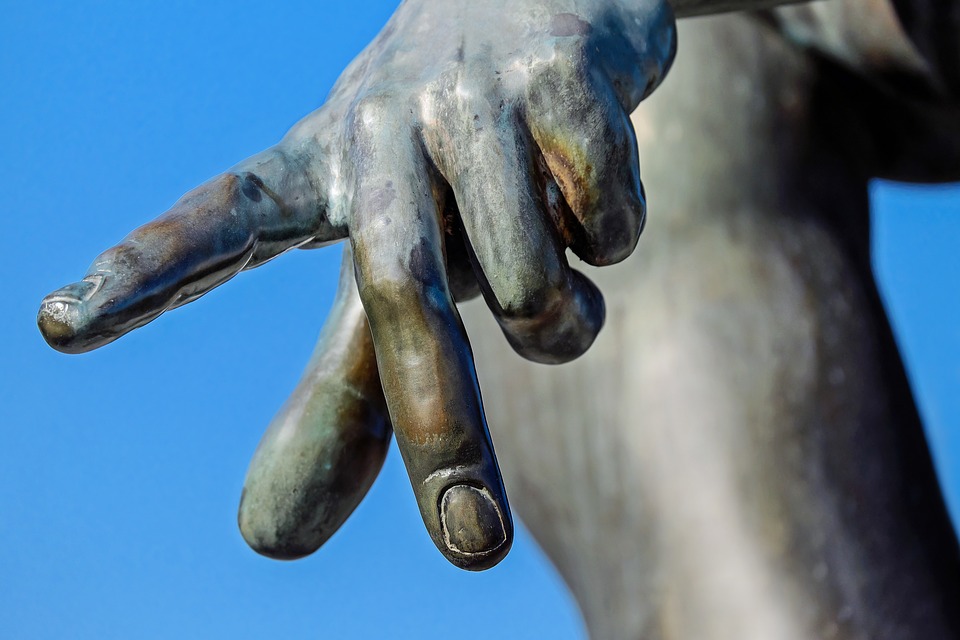 “A thief believes everybody steals.” unknown origin
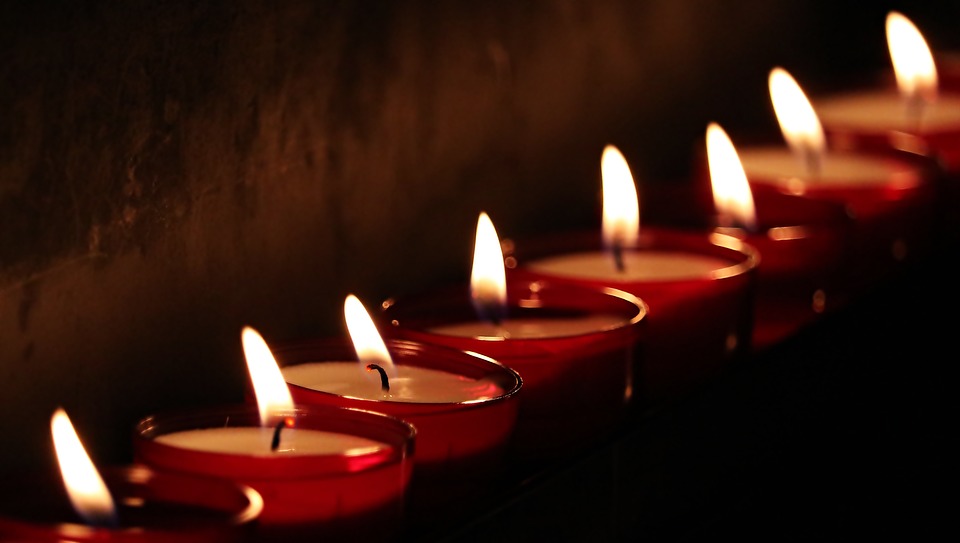 “A clear conscience is a soft pillow.” German
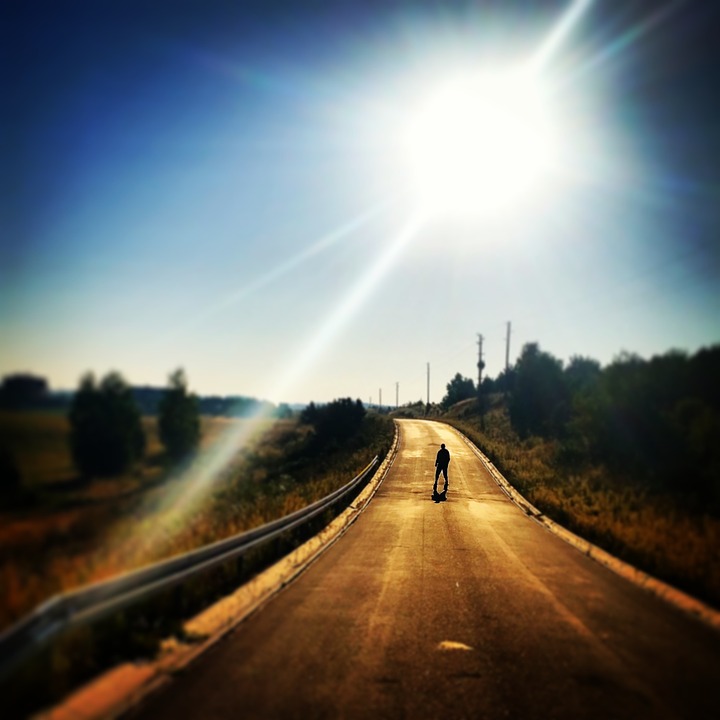 “A lie travels round the world while truth is putting her boots on.” French
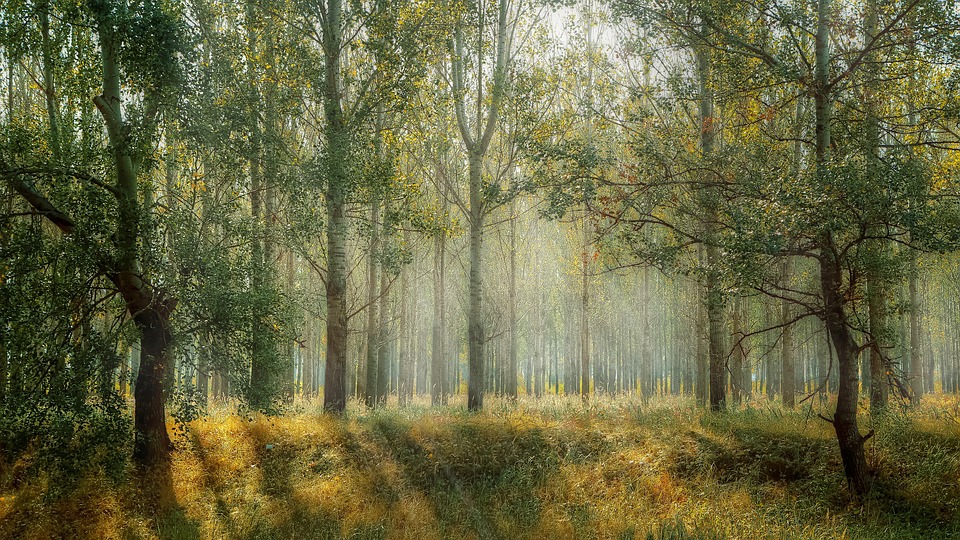 “A society grows great when old men plant trees whose shade they know they shall never sit in.” Greek
 “The big thieves hang the little ones.” Czech
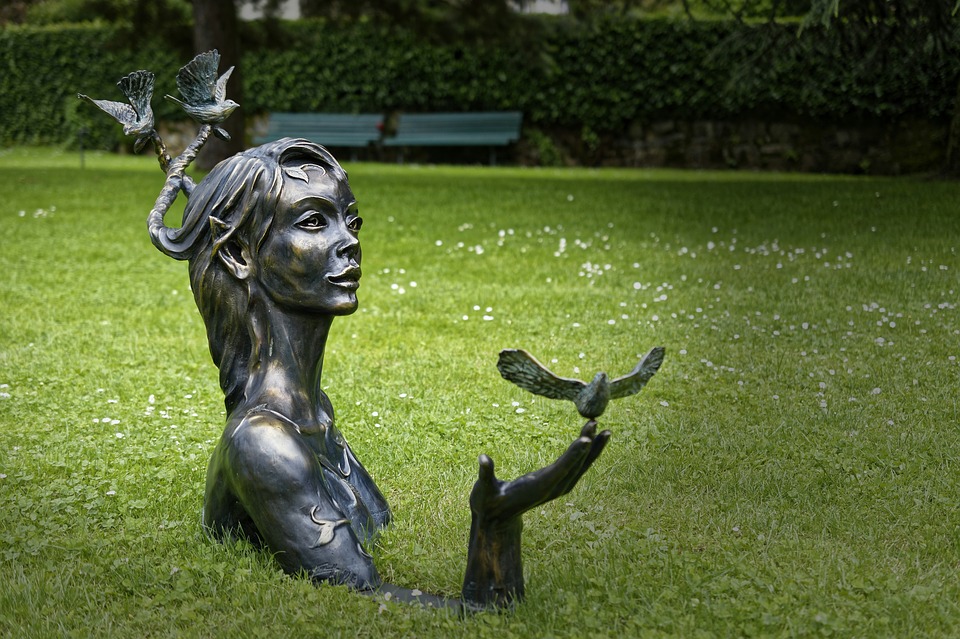 “What you see in yourself is what you see in the world.” Afghan
 “If you sit in a hot bath, you think the whole town is warm.” Yiddish
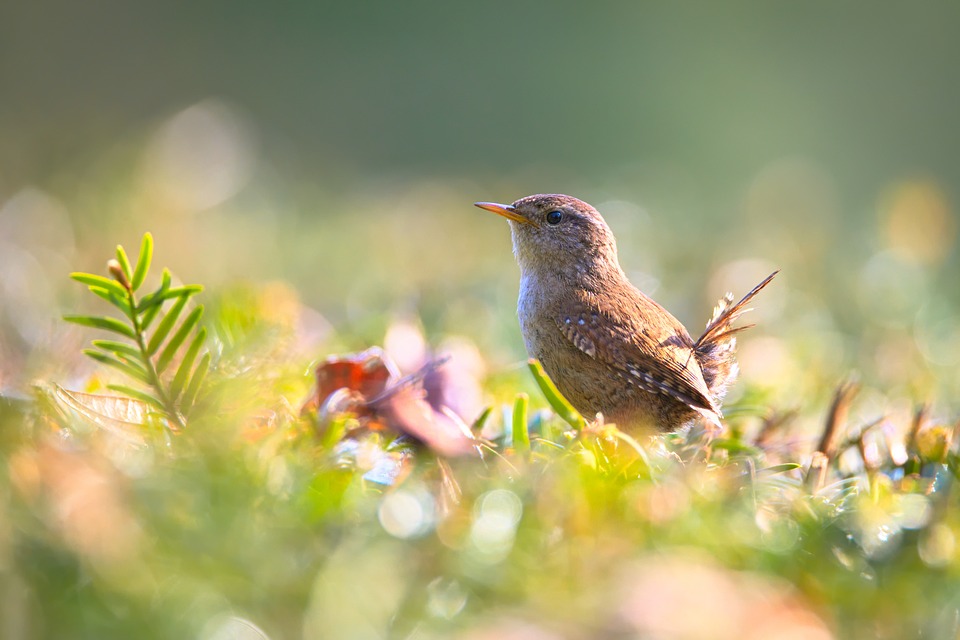 “Keep a green tree in your heart and perhaps a singing bird will come.” Chinese
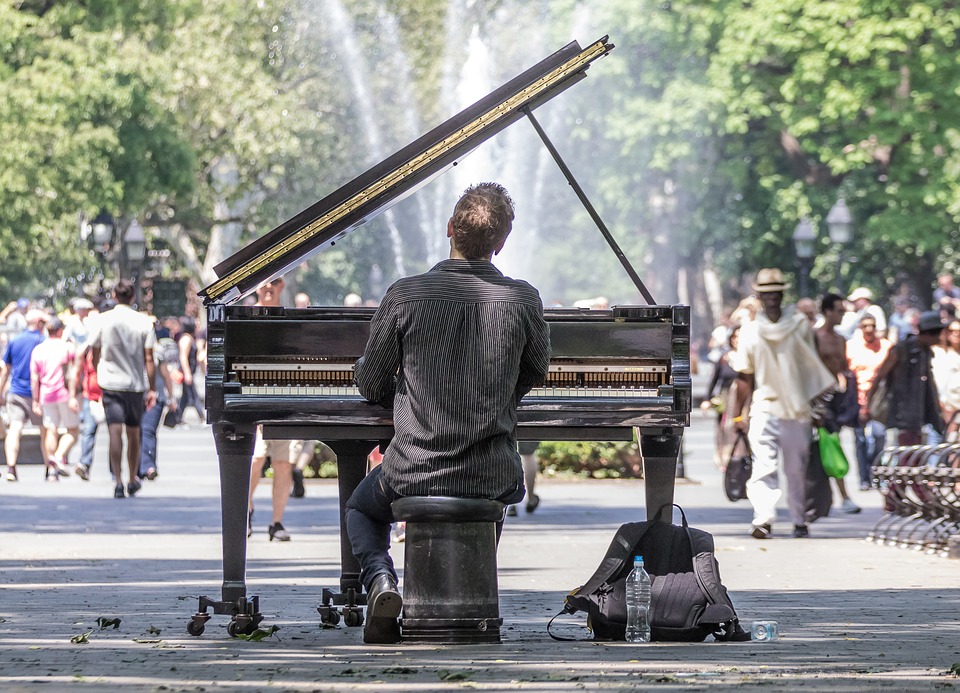 “What you give you get, ten times over.” Yoruban
 “Sometimes I go about pitying myself, and all the time I am being carried on great wings across the sky.” Ojibway

 !
!
 Laura Grace Weldon