
Apparently there’s a newish fad in the horticulture world called “chaos gardening.” This is described in UK’s House and Garden as “inspired by the unruly growth of nature and a whiff of rebellion against the control and neatness of traditional horticulture.”
Oh honey, many of us have been chaos gardening for a very long time.
I’ve never had the energy, money, or interest to maintain neatly weeded and mulched gardens. The last time we spread mulch was at least eight years ago. It was free municipal mulch which I discovered to my discomfort, less than a day after spreading it, was full of chopped up poison ivy.
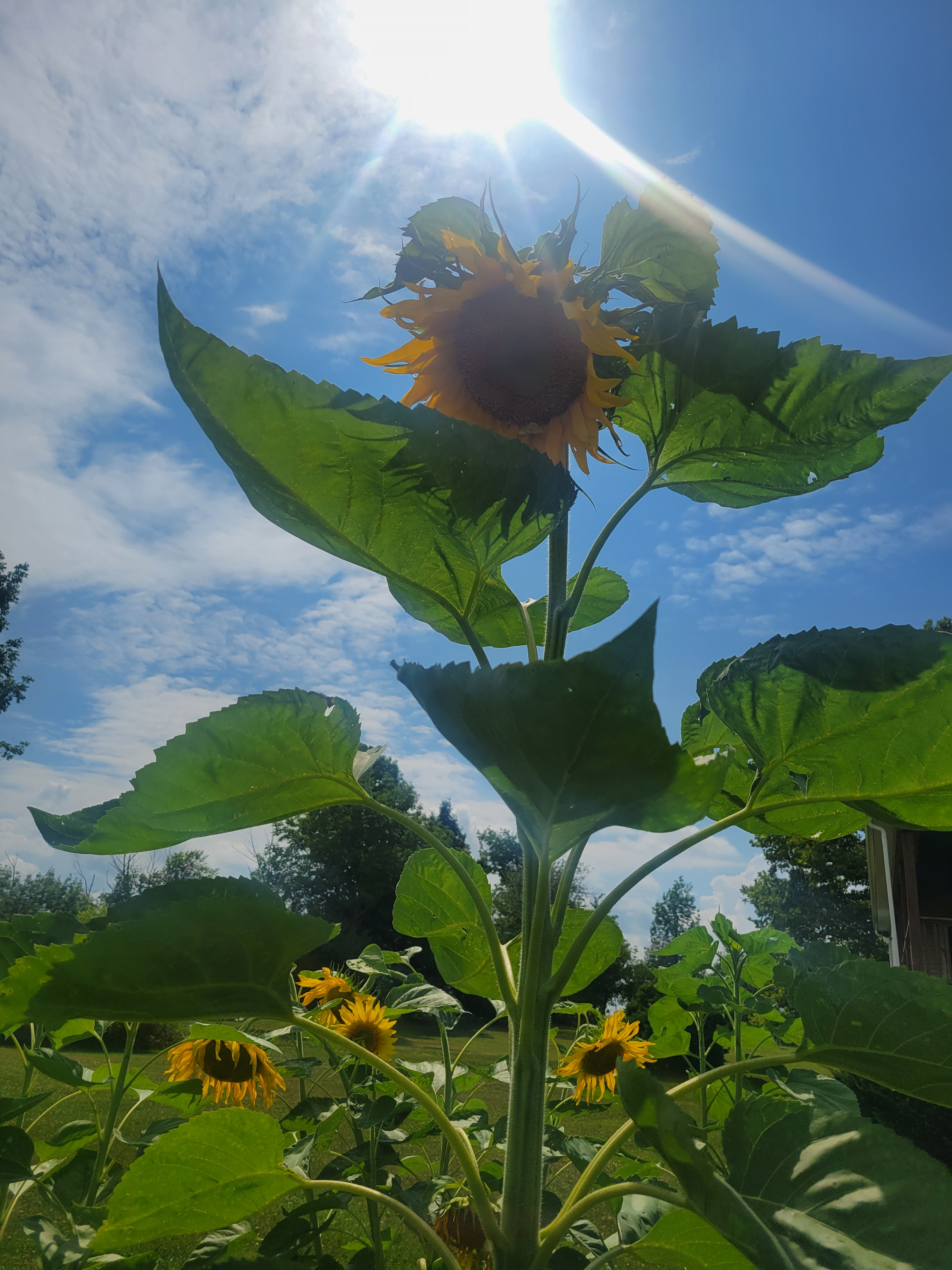
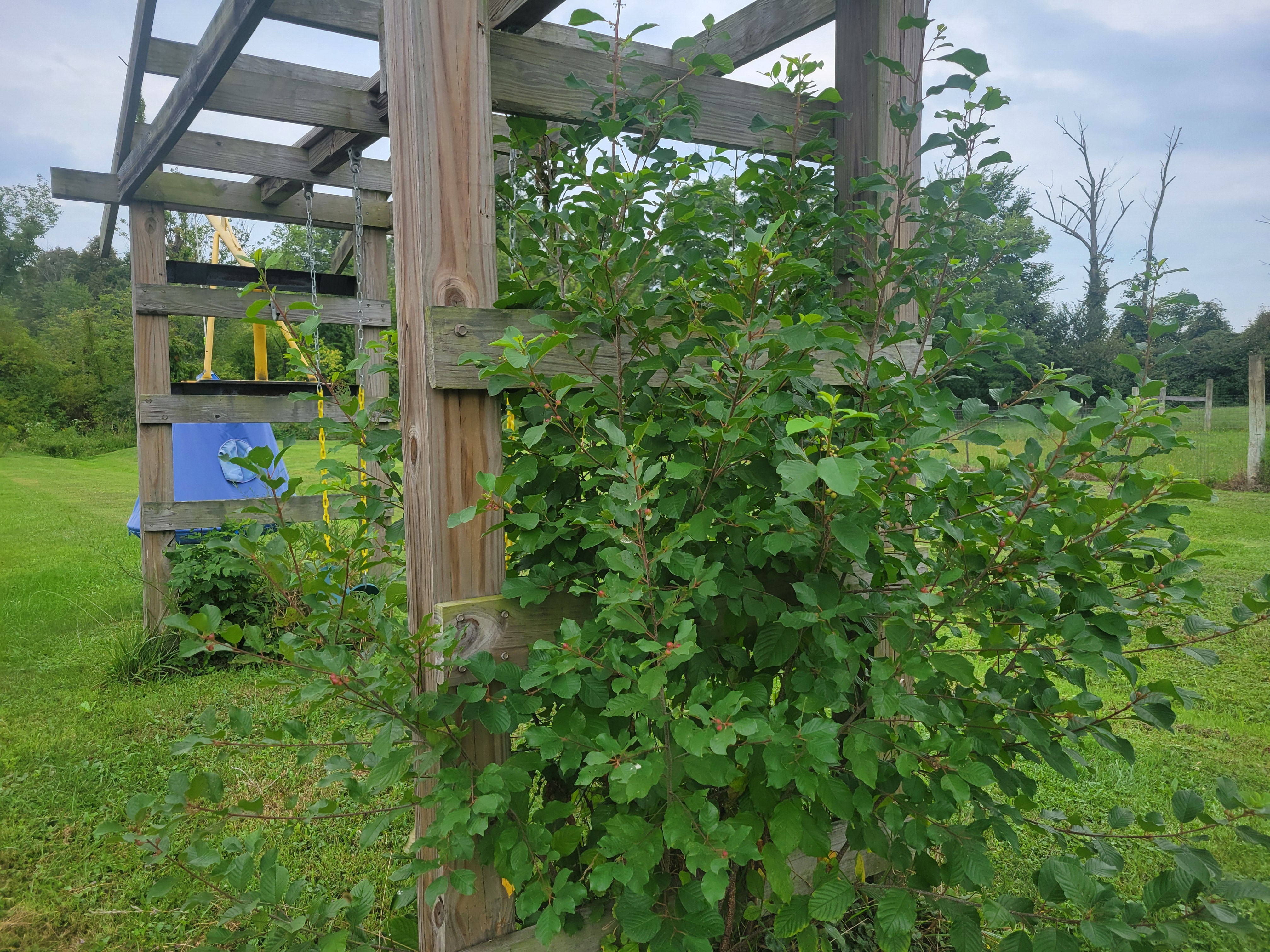
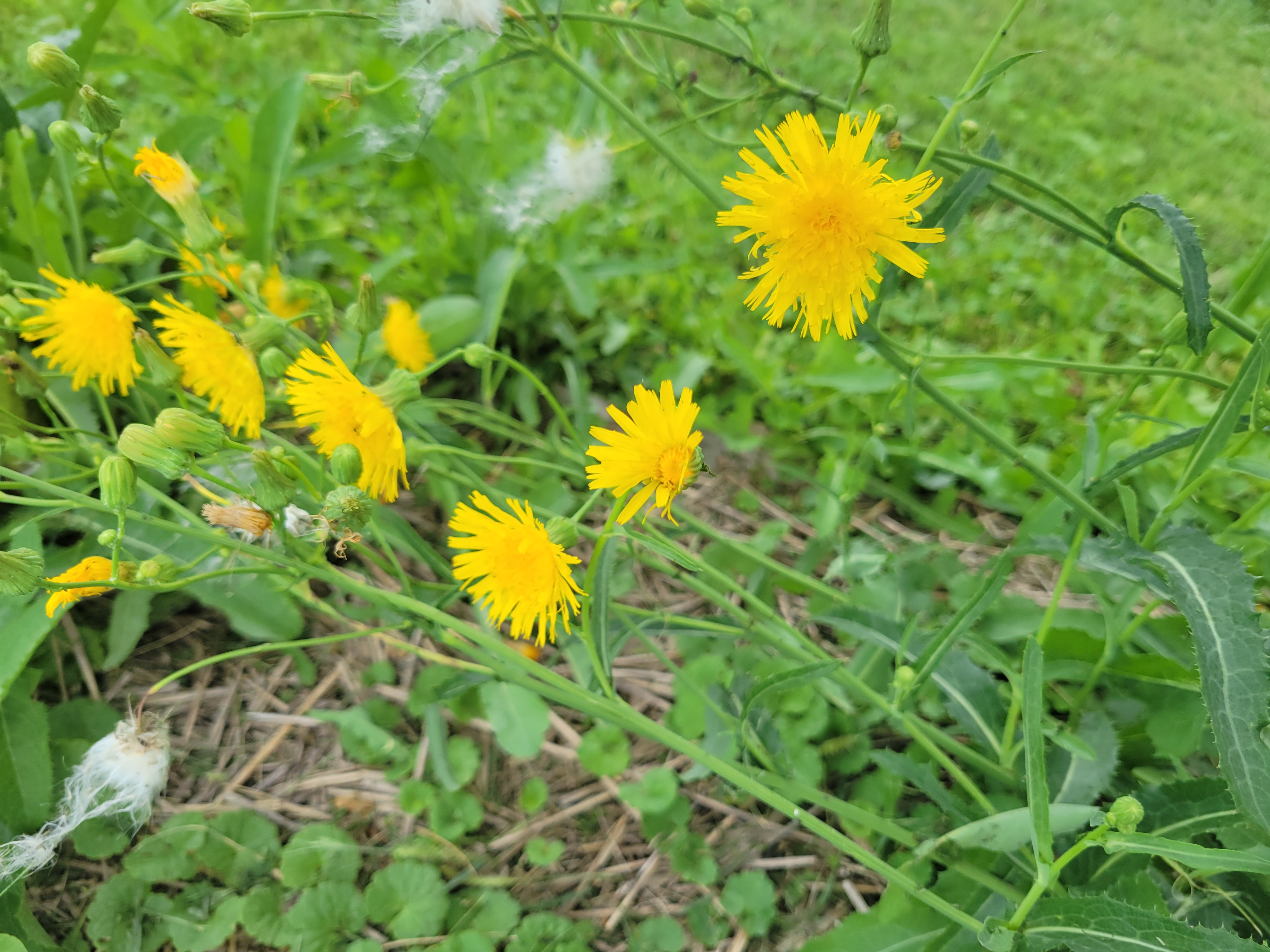
I have no garden beds in straight lines by choice. No plantings in straight rows either. I commonly don’t remember what I’ve planted until it grows. I’ve attempted to keep up on the weeding side of things, but have always failed. Laziness, mostly, but also a quiet delight in the marvelous plants we call weeds. (Well, it took me a long time to admit a grudging respect for thistles but I’m mostly there now.)

My husband and I have developed a nearly effort-free method of weed control that uses newspaper and the occasional tape-free stretch of cardboard between plants, with wide rows left free to grow vegetation we occasionally mow. By “occasionally” I mean we keep the growth low when young plants are establishing themselves. Then the weather gets too hot and we get too lazy to mow. By late August it’s a wildly alive mess of feral loveliness.
I’ve gardened since I was 18. (One of my first crops were apparently mistaken for magic mushrooms….) The obligation to keep up with the maintenance necessary for typical gardening used to slurp the joy right out for me. Instead I’ve learned to appreciate how perfectly the land cares for itself in concert with wildlife and weather and seasons. And yes, I’ve gone more and more toward the chaos end of things.
This year, however, I’m well beyond chaos gardening.

One side of the house is planted with bulbs, sedum, hydrangeas, and other perennials but is currently nearly overwhelmed by strawberries that self-seeded from pots on a nearby porch.
Another side of the house has struggled to grow almost anything. I finally discovered after years of trying to establish an herb bed that the problem was due to deeply embedded landscape “fabric” put down by the former owner. As I’ve written elsewhere, products like landscape fabric, plastic mulch, astroturf, and other so-called weed solutions suppress the development of mycorrhizal fungi essential to plant health. They also wreck the habitat for beneficial soil-dwelling creatures, overheat the ground, prevent organic matter from being incorporated into the soil, and impede the health of plant roots. Their presence wrecks the necessary carbon dioxide and oxygen exchange between soil and air—essentially suffocating the soil. If that’s not alarming enough, landscape fabric contains petrochemicals which break down into toxic substances including microplastics. One analysis shows that three feet of landscape fabric can release hundreds of millions of microplastic particles. I think we’ve dug up all that awful plastic, it’s long past time to haul compost from out back to spread over the bed and start over next spring.

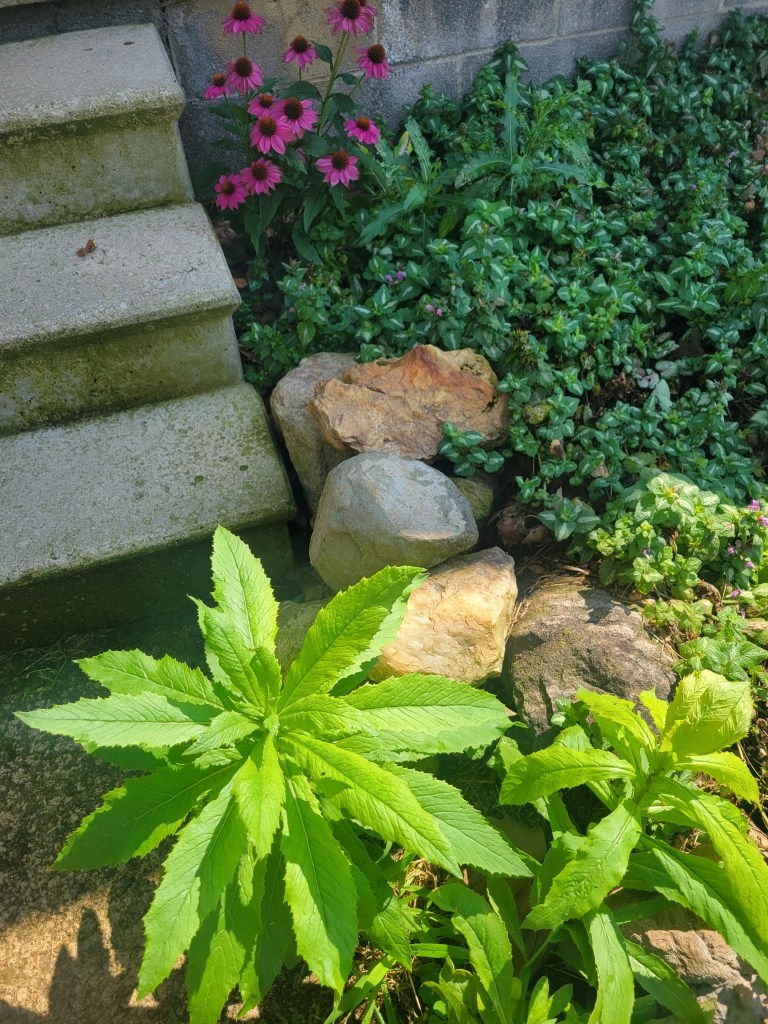
The front garden bed I established using soil dug up for septic repair remains a flourishing mess. Ancient pine trees at either side of the bed grow a bit more brown every years. Clematis does its best to climb up the moon mosaic. Lamb’s ear spreads from its spot under the trumpet man sculpture to pop up everywhere (no surprise, as it’s related to mint). Most of the rest are weeds I’ve come to consider friends.
Then there are our vegetable gardens. The asparagus patch, by this time of year, is a towering mass of vegetation. It offers a marvelous hiding place for all sorts of creatures and I’m pretty sure a nesting site for various sparrows as well as the Eastern meadowlark family we’ve seen all summer.

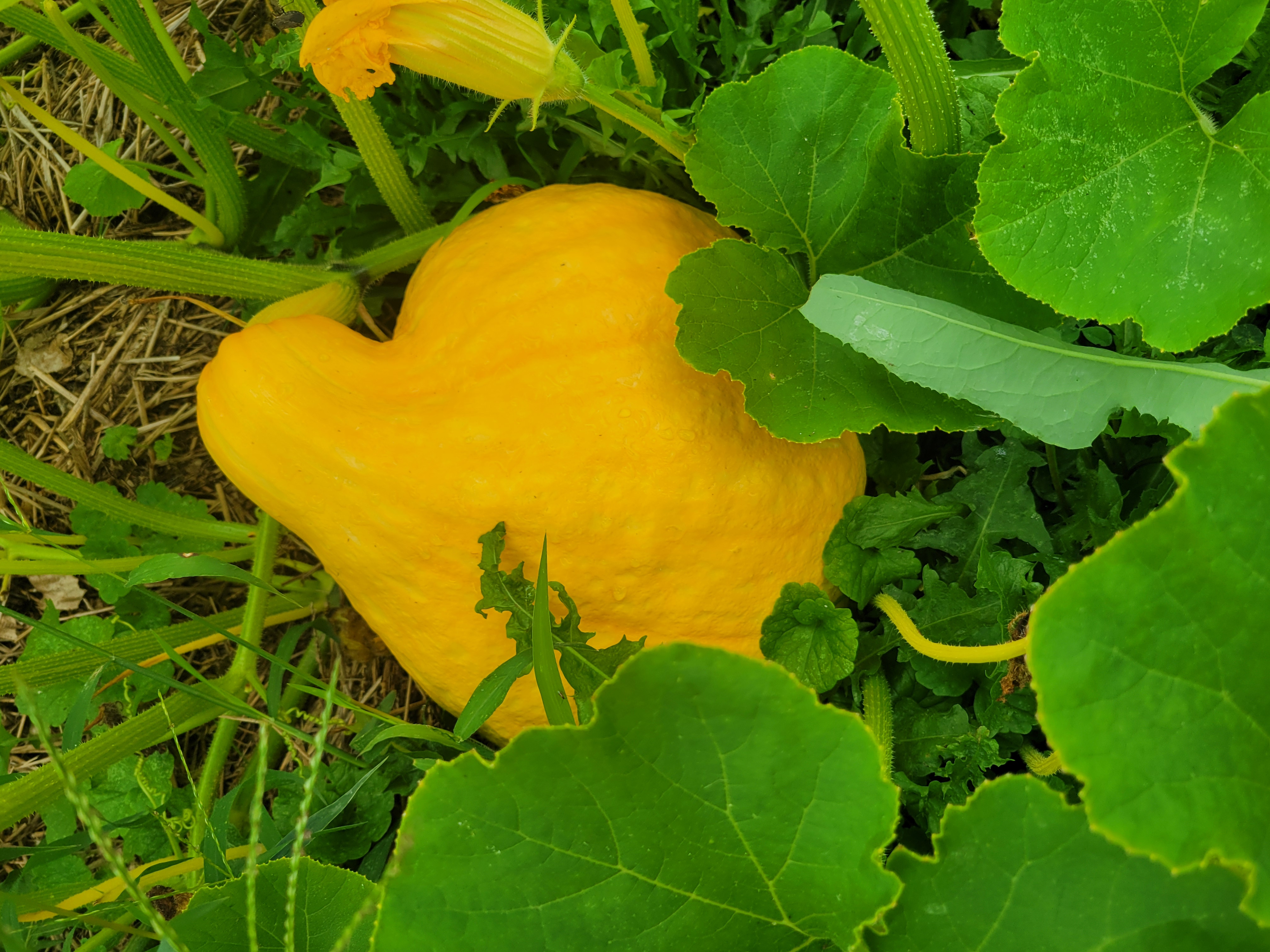
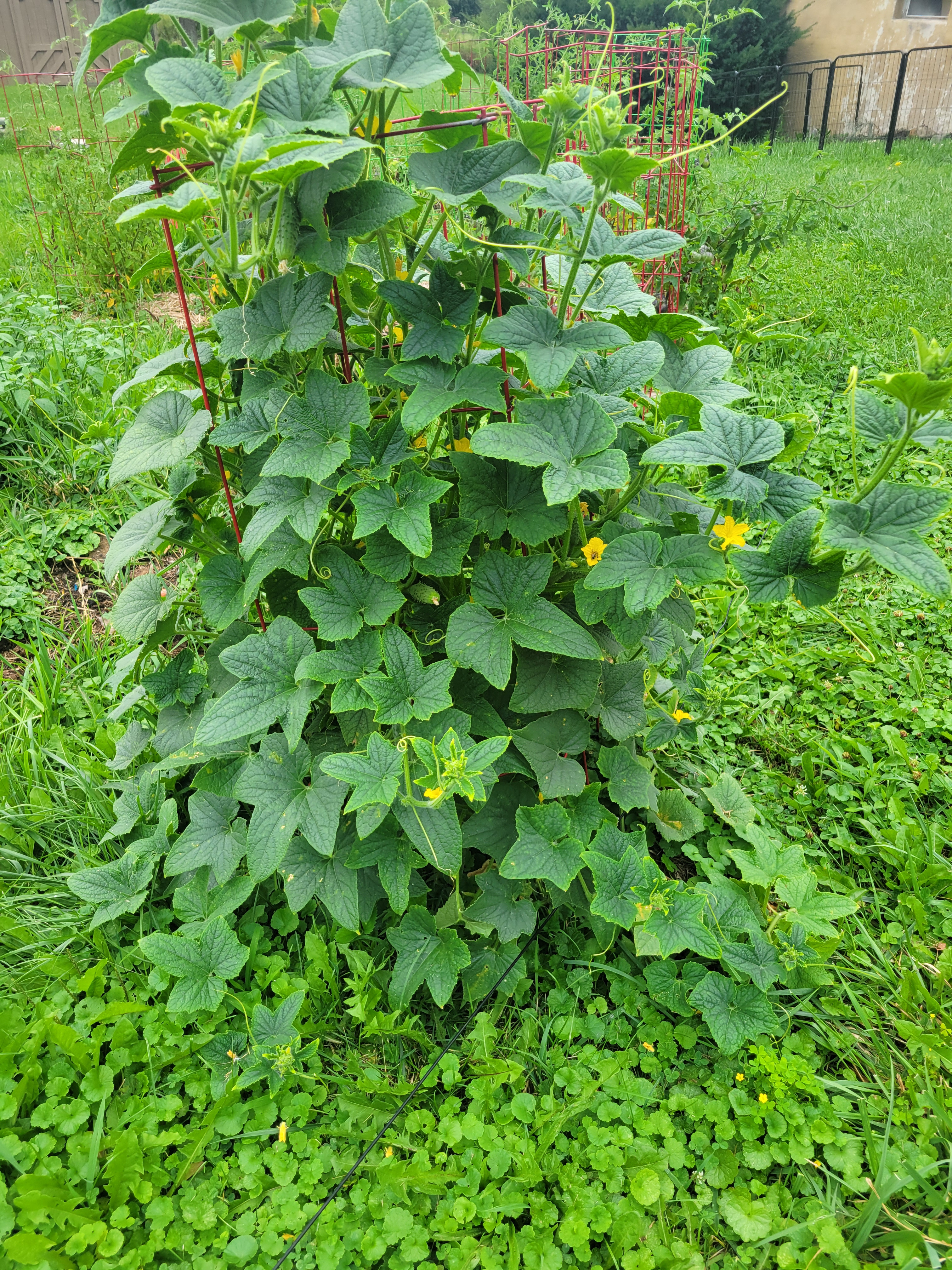
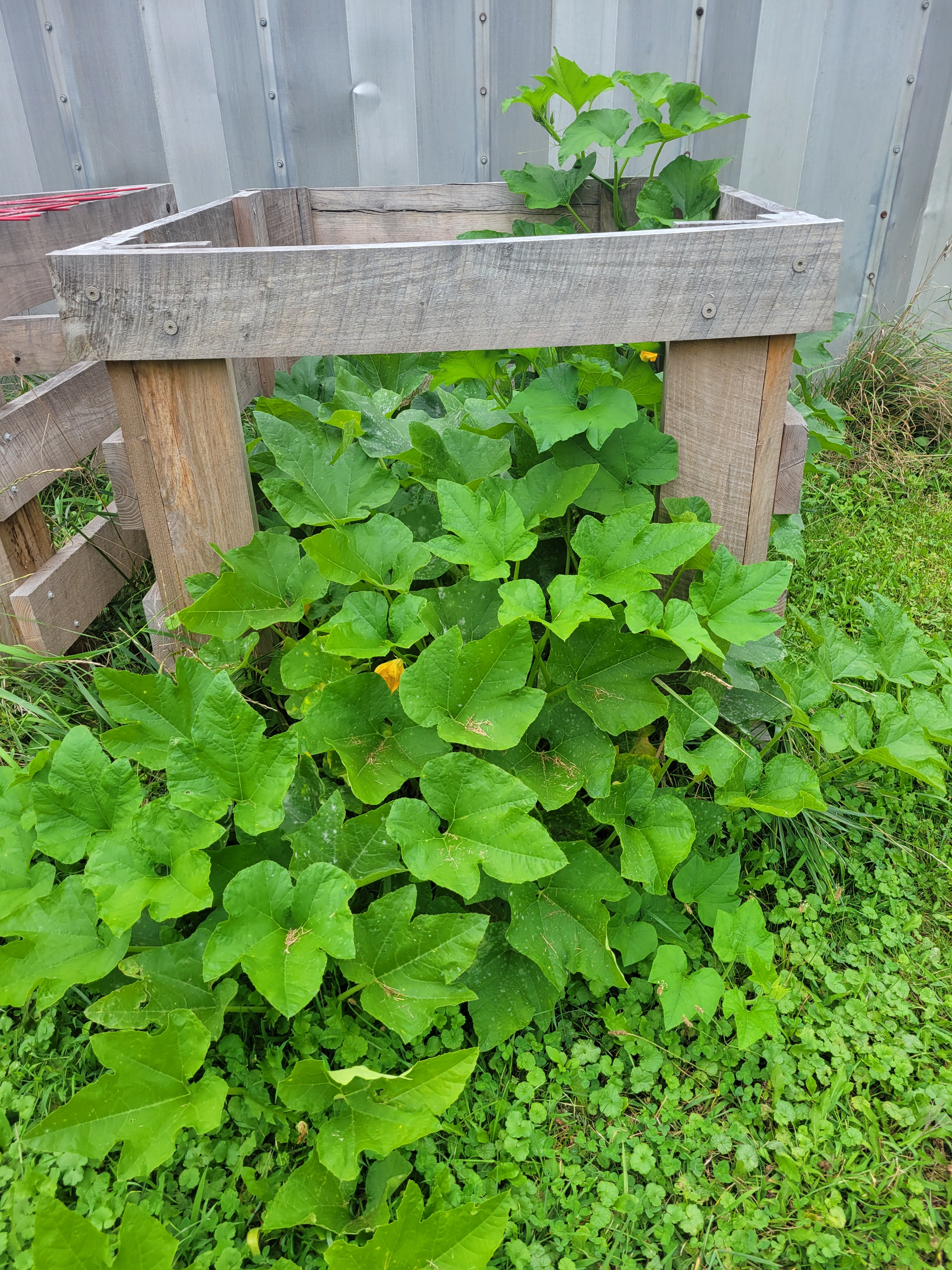
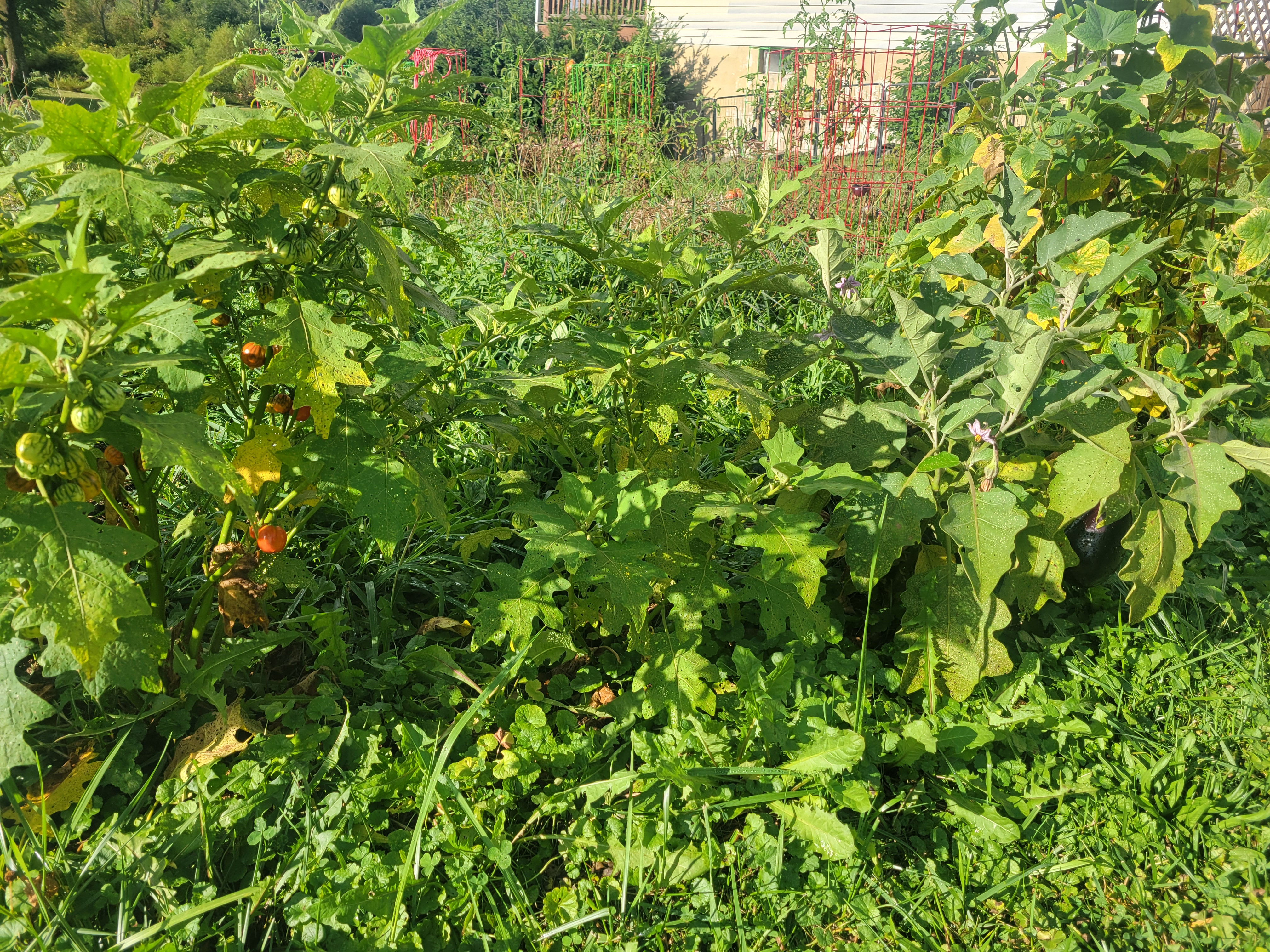
The side vegetable patch is a productive jumble. I wade in to pick tomatoes, eggplant, peppers, cucumbers, chard, leeks, and other delights. Each step brings up a rustle of butterflies, crickets, and other creatures.
And our hoop house out back hasn’t had its rows mowed in many weeks. There, too, are heavy harvests of tomatoes and peppers, but mostly grapes. We have picked at least four five-pound pails of grapes the last few weeks and are so weary of canning juice that I’ve been giving grapes away.

The pasture where our cows once grazed, where I’d hoped we might have a herd of sheep or a few donkeys, is now a meadow of its own making.

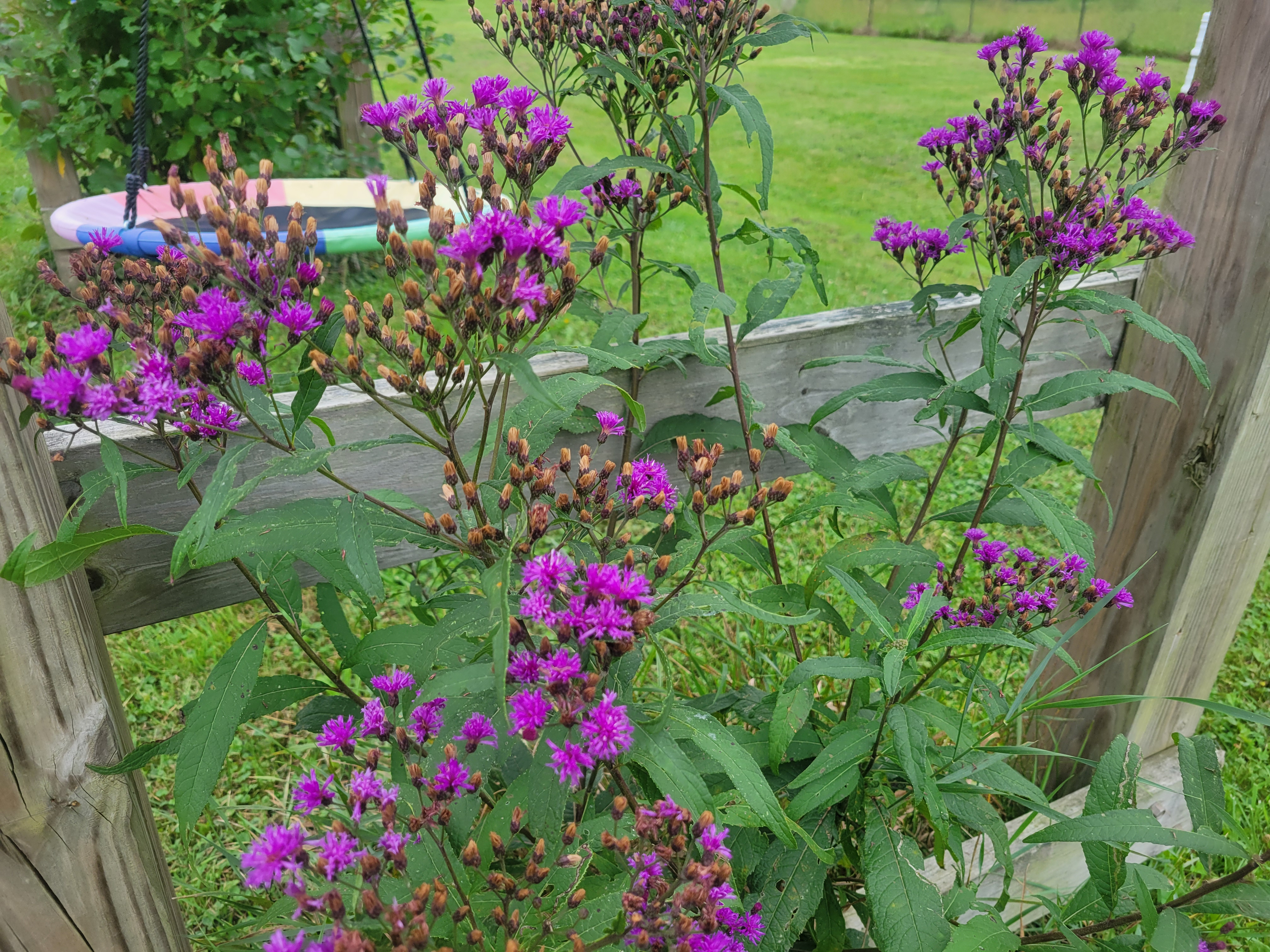
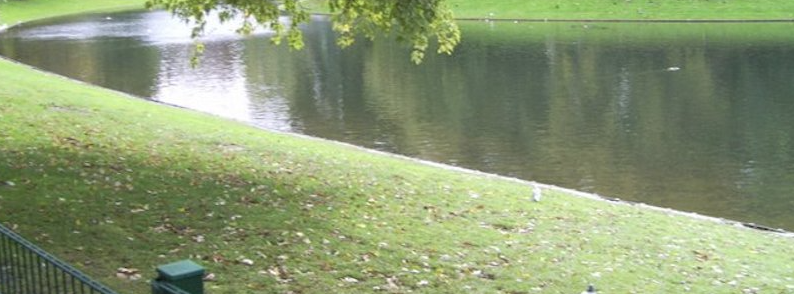
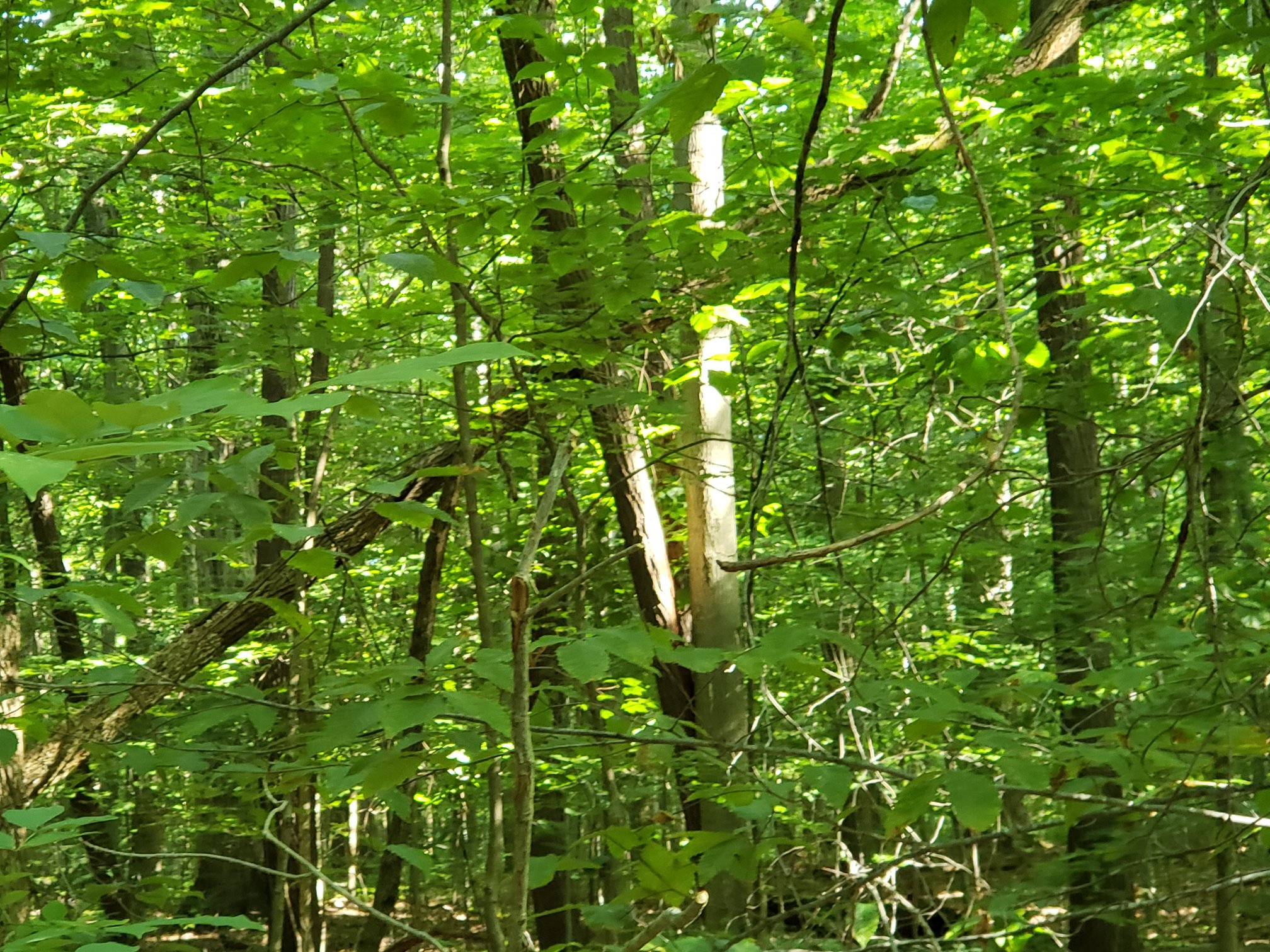
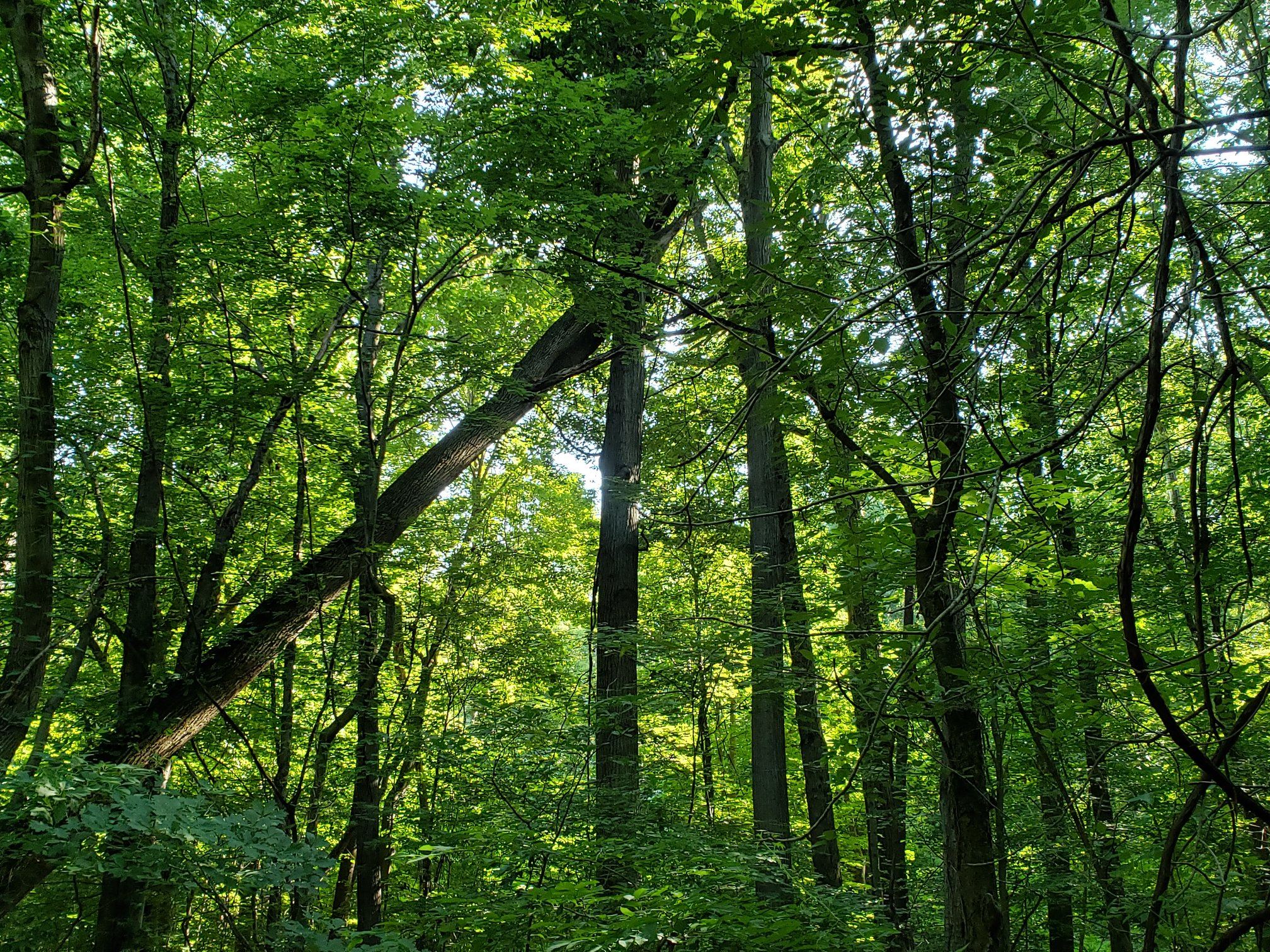
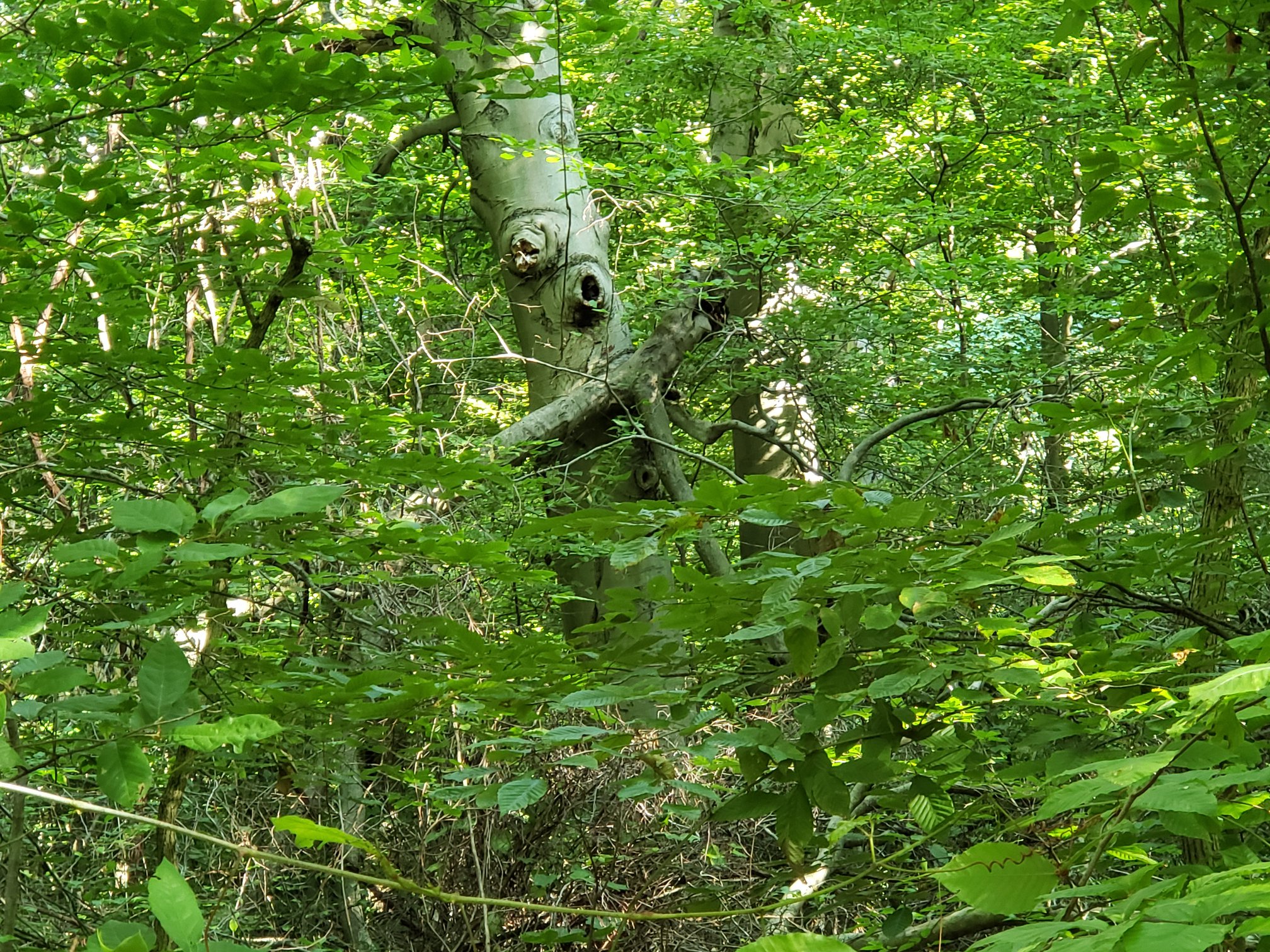
The sides of our pond and creeks have always been left unmowed, growing only with what naturally wants to grow. Our wooded acres are riddled with fallen ash and beech trees quietly fostering new life. All of these places are beautifully alive.

I’m mostly at peace with the chaos here, although my better self would like to tend more closely to our gardens. But my husband and I just don’t have the gumption right now to do more. We are exhausted by a country in chaos. Democracy is being undermined by well-funded extremists, authoritarianism is marching in, inequality is compounded, genocide not only ignored but fostered, and all the while the climate every life form relies on to survive is being sacrificed for profit.
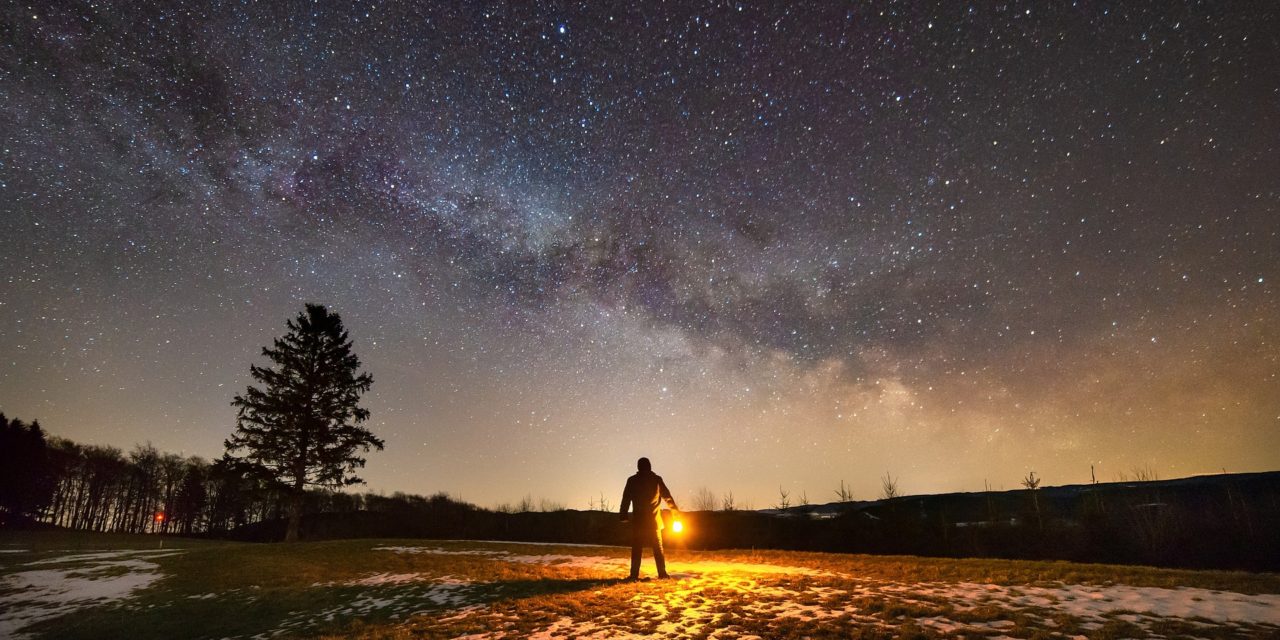
Chaos, I’m reminded by evolutionary cosmologist Brian Swimme, is one of the powers of the universe. We’re here thanks to the cataclysmic death of stars. Their explosions provided the iron circulating in our blood, the calcium making up our bones, the oxygen we inhale. Cataclysms on our planet have caused five major extinctions. (We humans are causing the sixth.) We have endured many other catastrophes including wars, famine, plagues. And yet, from the cataclysmic death of stars, we get to live on a planet graced by orioles, humpback whales, monarch butterflies, sunsets, tides, elephants, newborn humans. We are all part of one another, composed of star stuff.
May long and gentle rains like this one fall on every parched landscape. May beauty pair with chaos and peace rise from cataclysm.
amen







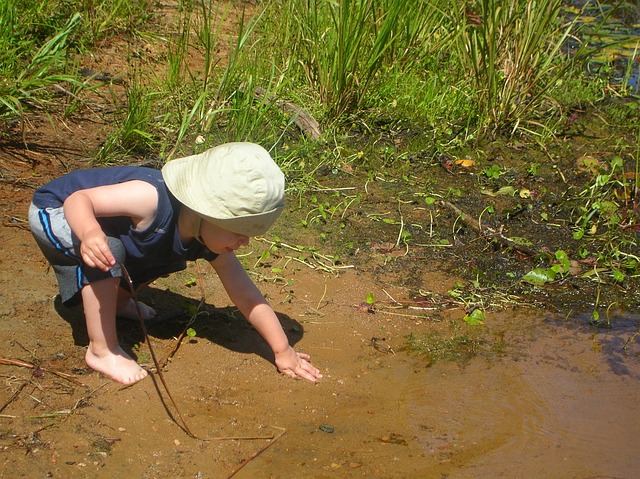







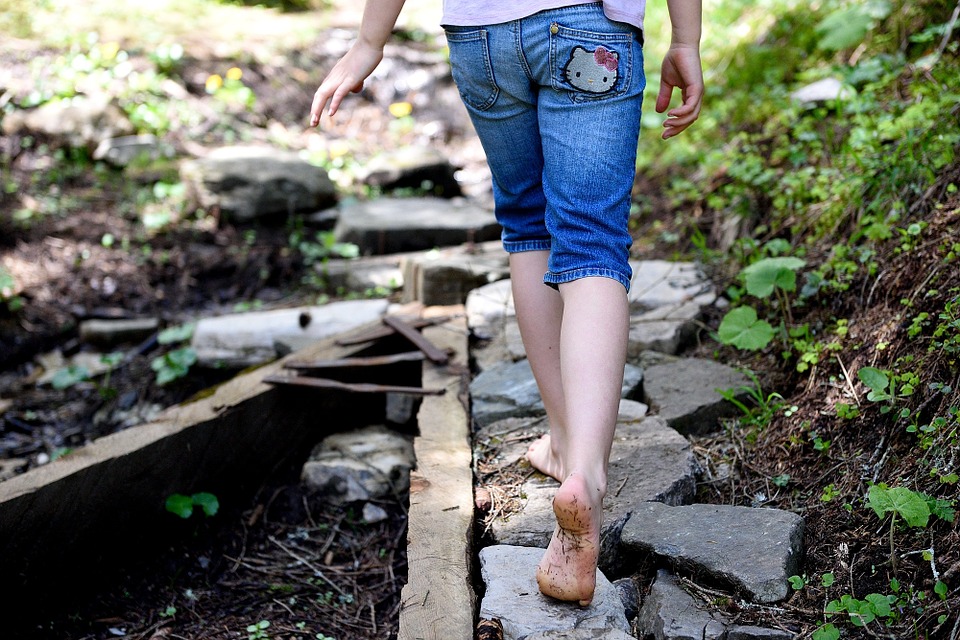
 , even small natural areas are better than playgrounds and manicured parks. They call up a more resilient and engaged way of being. When children spend time in natural areas their play is more creative and they self-manage risk more appropriately. They’re more likely to incorporate each other’s ideas into expressive make-believe scenarios using their dynamic surroundings—tall grasses become a savanna, tree roots become elf houses, boulders become a fort. Their games are more likely to incorporate peers of differing ages and abilities. Such outdoor experiences not only boost emotional health, memory, and problem solving, they also help children learn how to get along with each other in ever-changing circumstances.
 Laura Grace Weldon