Why Learning Must Be Hands-On


hands-on learning, hands-on education, hand and brain connection, direct learning,

images: morguefile

Children are drawn to explore the world through their senses. (We all are, at any age.) When they are fully involved, what they learn is entwined with the experience itself. A child’s whole being strains against the limitations of curricula meant only for eyes and ears, or that assigns closed-ended tasks.

A typical school or school-at-home lesson intended to teach a child about worms may have diagrams of a worm’s body to label and a few paragraphs about the importance of worms, followed by comprehension questions. If the child musters up enthusiasm to learn more about worms despite this lackluster approach, there’s no time to do so because directly after the science lesson the child must go on to the next subject. When education is approached in this disconnected manner, the brain doesn’t process the information in long-term storage very effectively. It has no context in the child’s experience and no connection to the child’s senses.

On the other hand, a child encountering a worm while helping in the garden gains body memories to associate with the experience. The heft of a shovel, sun on her face, fragrant soil on her knees, and the feel of a worm in her hands provide her with sensory detail. She also encodes the experience with emotion. Her father likes to read books about soil health and sometimes she looks at the pictures. When she asks about worms he answers the few questions she has. And when she is satisfied he doesn’t go on to give her more information than she can handle. Next time they go to the library or get online they may decide to find out more about worms. She may be inspired on her own to draw worms, save worms from the sidewalk after the next rain, or otherwise expand on that moment in the garden. She is much more likely to retain and build on what she has learned.

The difference between these two approaches is worlds apart. Separating children from meaningful participation, as in the first example, doesn’t simply impair comprehension. It changes the way learning takes place. The child is made a passive recipient of education designed by others. Then the excitement of learning is transformed into a duty.

Education that treats the brain apart from the body will ultimately fail. Our senses cannot be denied. They inform the mind and encode memory. We must see, hear, smell, touch and, yes, taste to form the kinds of complex associations that make up true understanding. We humans are direct hands-on learners.

Brain development and hand use are inextricably intertwined. When neurologist Frank R. Wilson interviewed high achievers to understand this connection, he found that people credit their success to attributes learned through hands-on activities.  In The Hand: How Its Use Shapes the Brain, Language, and Human Culture Wilson writes:

I was completely unprepared for the frequency with which I heard the people whom I interviewed either dismiss or actively denounce the time they had spent in school. Most of my interview subjects, although I never asked them directly, said quite forcefully that they had clarified their own thinking and their lives as a result of what they were doing with their hands. Not only were most of them essentially self-taught, but a few had engineered their personally unique repertoire of skills and expertise in open retreat from painful experiences in a school system that had dictated the form and content of their education in order to prepare them for a life modeled on conventional norms of success.

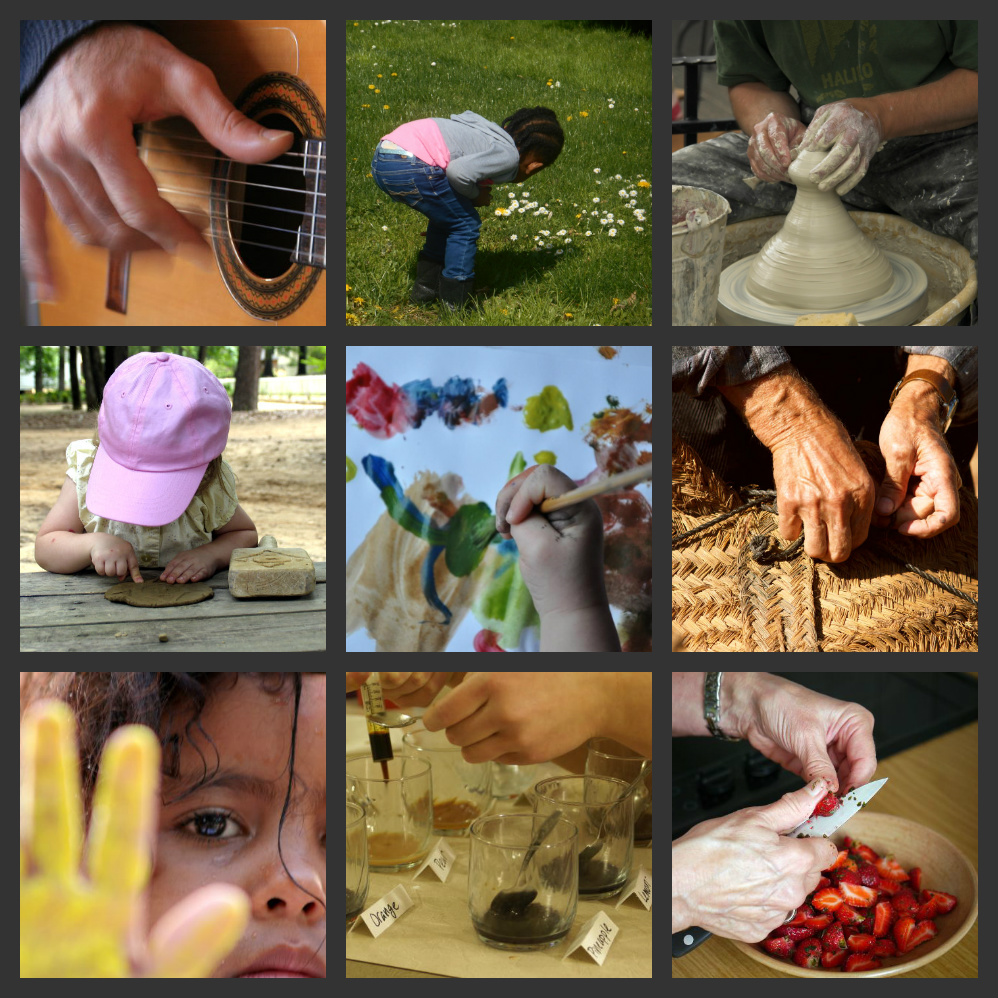
Hands-on experience makes learning come alive. For example, principles of geometry and physics become apparent while children work together figuring out how to stack firewood. They develop multiple layers of competence as they solve tangible problems. Their bodies are flooded with sensation, locking learning into memory. Such experiences develop a stronger foundation for working with abstract postulates, theorems, and formulas later on. (Household responsibilities are actually a vital way to incorporate more hands-on experience, with amazing long-term benefits.)

When we’re engaged hands-on something greater can come into being. We gain a sense of effortlessness, of becoming one with the movement. Then it seems we’re longer working with things, but with material partners in a process of co-creation. Work and play are one, we are whole within it.

direct learning, hands-on learning, hand and brain connection,

image: morguefile

Portions of this article excerpted from Free Range Learning.


Raising Media Aware & Current Events Savvy Kids: 21 Resources

critical thinking for kids, current events for kids, think for yourself,

Critical thinking without media overload. It’s possible. (image: Kids in America)

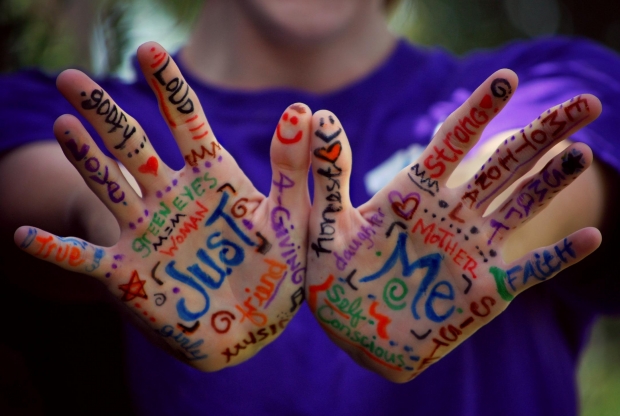
We want to raise kids to be informed and active citizens without subjecting them to an information overload or current events-related despair. Here some activities and resources to make that easier.

1. Let current events become a regular topic. Just as you’d bring up any other subject that interests you, talk about topical issues in front of your kids. This is easy to do informally while driving or sitting around the dinner table.

2. Welcome their interests and opinions without trying to push your point of view. As they get older, help them see that using facts to bolster their talking points helps to convince others.

3. Model civil discourse. When people who disagree can engage in conversations with respect and integrity, they’re on the way to creating solutions. This is true in backyard squabbles, regional disputes, and diplomatic negotiations. A key is finding common ground. That happens after every person involved has access to the same information and feels that their input is understood. This is a critical skill to practice. Make it a part of your daily life for smaller issues so you can more easily use it when harder issues arise. Notice it in use by individuals and groups around the world.

4. Emphasize accurate and varied information sources so kids are equipped to think for themselves rather than led by popular opinion.

5. Hang a laminated world map on the wall. Notice where news happens and where friends travel. Mark places you’d like to go. Whiteboard markers wipe off this surface, so it’s easy to write directly on oceans and continents. This is also a subversive way to advance geographical knowledge.

6. Make timelines of your lives. Once kids have added details to their timelines such as when they lost the first tooth, got a dog, and moved into a new neighborhood help them go back to add events and discoveries that happened the same time. Continue the timeline on toward the future, speculating where you will live, what you will do, and what will be happening in the world around you. Getting kids to predict the future gives a lot of insight into their worldview.  You can also make a timeline for a grandparent, filling in newsworthy events, particularly those impacting the person’s life.

7. Get to know logical fallacies like guilt by association, appeal to fear, or red herring. By avoiding fallacies you can craft well-reasoned opinions while pointing out fallacies to deconstruct faulty arguments. Write some of the most common fallacies on place mats you use everyday or hang a list on the refrigerator to defuse squabbles. Get everyone involved by playing Logic Shrink, an entirely free game you can enjoy as you choose (basically everyone shouts out logical fallacies as they notice them committed by politicians, pundits, and others). Enjoy Ali Almossawi’s wonderful book An Illustrated Book of Bad Arguments, free online and also available hardcover or audio format.

8. Pay attention to positive news. Don’t let the family news diet center heavily on the negative. Subscribe to high quality children’s magazines such as MuseSkipping StonesOdysseyNew Moon Girls, and Kazoo. Get updates from KarmaTube and Good News Network. Talk about what kids have seen or heard that makes them feel optimistic.

9. Find age-appropriate news sources. Try Scholastic NewsDoGo News, and the similarly named GoGo NewsKid’s Post (offered by The Washington Post), National Geographic KidsNews-o-Matic, and Time for Kids. Teens are likely to enjoy the news-based wit of The Daily Show  and Last Week Tonight.

10. Understand media input. There’s a heavy emphasis on celebrity worship, superficial attractiveness, material possessions, and violent use of power. As much as possible, counteract this through wise use family policies and a regular technology sabbath. There are excellent sources of information on media literacy including Campaign for a Commercial Free ChildhoodMedia SmartsCenter for Media Literacy, and National Association for Media Literacy Education.

11.Talk about the impact of marketing on daily decision-making. Point out product placements in movies, video games, and television shows. Notice how ads are targeted to specific markets. Talk about the way attractiveness is portrayed and the effect on self-image. Find out how marketing information is gathered on potential customers. Read Made You Look: How Advertising Works and Why You Should Know by Shari Graydon (for kids) and Can’t Buy My Love: How Advertising Changes the Way We Think and Feel by Jean Kilbourne.

12. Analyze the news. Check out the same story from different information outlets, maybe a major television station, a major newspaper, an alternative newspaper or site, social media, or blog commentary.  Notice what angles are reflected differently and what’s missing from a single news source. Is the media the message? Is there a commercial slant? Find out what’s behind the reporting with Source Watch which tracks the people and organizations shaping our public agenda and PR Watch which exposes public relations spin and propaganda.

13. Open up to reporting and commentary from other countriesPEARL World Youth News is an online international news service managed by students from around the world. OneWorld is a global information network designed to link people who see and share the news. Survival International and Cultural Survival are organizations sharing news about and advocating for the rights of indigenous peoples around the world. And check out links to dozens of links to far-flung news sources.

14. Play video games. Socially responsible games combine challenges with real life lessons about current situations. (Some are pretty heavy on the message.) Check out listings at Games for Change.

15. Report your own news. Capture the sights and sounds of your family, neighborhood, or travels in a family newspaper, blog, or video diary.

16. Consider the source. Watch the same topics covered in different news shows, such as conservative Fox and Friends versus liberal Rachel Maddow. Weigh assertions made by leaders in politics or business against historical example. Look up what a politician or pundit said on the topic years ago compared to now.

17. Look at coverage. Why are some stories headliners, others barely covered, and still others never reported? You might consider immediacy, negative impact (“bad” sells better than good), celebrity connection, and surprise factor.  What about stories Project Censored claims aren’t covered by mainstream outlets?

18.Think globally. Notice where toys, clothing and other household purchases are made, perhaps locating the country of origin on a map. Focus your interest on an area in the world, paying attention to the news, weather, and celebrations taking place there.  Put into place suggestions found in Growing Up Global: Raising Children to Be At Home in the World by Homa Sabet Tavangar and consider changes suggested in The New Global Student by Maya Frost. Check out the information shared by the United Nations Cyber School Bus.

19. Connect with people around the world.  Talk about issues with people on forums and social media. Pose and answer questions on Dropping Knowledge, an incredible resource where there are dozens of current discussions such as, “Why don’t schools teach us to form our own opinions?” and “Would a universal language help us get along?”

20. Compete. Student Cam is C-SPAN’s annual documentary competition for young people. We The People hosts competitions for middle school and high school students. Do Something honors young volunteers. Academic WorldQuest is a team game testing competitors’ knowledge of international affairs, geography, history, and culture.

21. Host an international visitor. (Here’s what happened when we did just that.) You might welcome an exchange student through well-established programs such as American Field ServiceYouth for UnderstandingRotary Youth Exchange, or World Exchange. A short-term stay by a visiting professional might be more convenient, through Fulbright Scholar Program or National Council for International Visitors.

This is an excerpt from Free Range Learning

current events kids, teach critical thinking, teach media awareness,

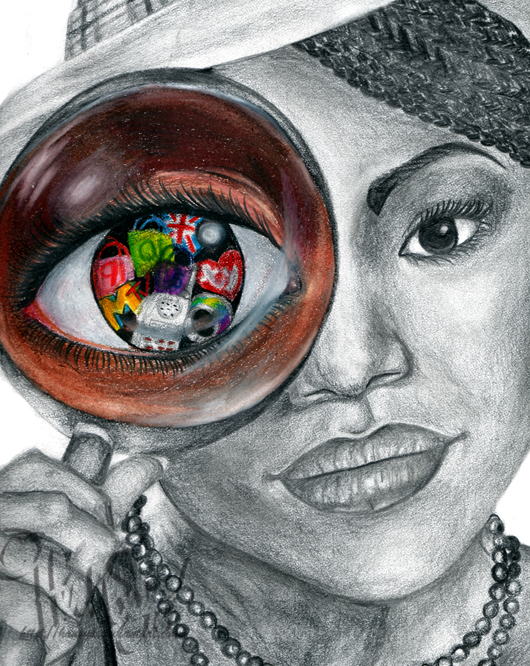
Look beyond. (image: Valley Magnification)

Free Range Chickens & Free Range Learning

free range learning, captive kids, natural learning, confined chickens,

“Don’t help, Mom,” Claire says as I go to pick up the three-day-old chick. So I watch instead. It’s peeping helplessly at the side of the ramp leading up to the chicken coop. The mother hen and her other chicks are already at the top but this chick can’t find the way. The hen answers each of its cheeps of distress with distinctive low clucks. After repeated attempts to hop directly up to its mother the chick turns and scurries back, finds the bottom of the ramp, and hurries to the comfort of her waiting wings.

“See?” Claire says. “It’s already learning.”

I’m amazed that a chick that tiny could learn to go away from the sound of its mother’s voice in order to find her, but it did. I guess I still need to trust that things tend to work out fine without well-intended intervention.

Reams of instructional books once languished on our shelves. Shiny packaged educational programs with CDs sat waiting for my children to learn foreign language, history, and math. But they always had better things to do. Sometimes that looked a lot like reading a book on the couch, looking things up on the net, or lying by the pond with the dogs. Other times that looked like gathering oddities from the dusty basement for an experiment. Or like all of us hustling off to a field trip with friends. The textbooks came in handy as references; the fussier educational materials were packed away in boxes to pass along. We knew another new homeschooler would need to go through the same ritual of grumbling over them.

My children have ample opportunities to explore their interests out here in the country. Currently Ben restores old farm equipment in anticipation of running his own farm some day. He’s so busy that some of his projects have become long-term decor out near the beehives. Flowering vines decorate hay rake tines and birds nest atop a combine. Right now he’s making a custom desk out of a circular saw blade for a friend. The garage glows as he welds, one of the many skills he taught himself.

Claire observes everything with a scientist’s eye. She journals about her hikes in the woods, her daily farm chores, and her volunteer work rehabilitating birds of prey. One summer she made a practice of examining a dead muskrat as the decomposition process reduced it to a skeleton. Her descriptions of it (yes, at the dinner table) clearly demonstrated how wondrous she found the natural world, even though her age group is depicted as finding more meaning at the shopping mall.

When Kirby isn’t playing his guitar or bagpipes or computer games, he likes to stroll around with a camera. His photos show that he sees things in a different light. He’s interested in the science and art of sound, and using the money he earned from cleaning stalls at local horse farms he’s made his bedroom into a recording studio. Friends come to record their music. He can edit out the laughter.

Sam, who was once the master of finding snakes and toads everywhere on our property, is now intrigued with greater feats than grabbing hapless creatures. He investigates the engineering behind propulsion systems and then conducts his own experiments. This involves shooting tennis balls, potatoes, or pumpkins long distances (often in collusion with his brothers). He’s been talking about designing advanced fuel systems for cars. And he’s started restoring a vintage Opel he bought with his own savings although he’s not old enough to drive.

While Claire and I watch chickens, she points out how the newly hatched chicks are perfectly suited to learn naturally. Days old, these tiny fluff balls listen and respond to different sounds from their mother which clearly tell them where to find food and when to run for cover under her wings. They range across our property while staying close to their mother. They locate each other through the underbrush, ramble into the pasture under the cow’s feet safely, and come into the coop at dusk as the older chickens do.

“Compare them to chicks we bought from the hatchery,” Claire says.

I see what she means.

Many times we have purchased a batch of day-old chicks and kept them in a large indoor pen. We brought them out of the house each day to a grassy enclosure so they could forage, but the chicks raised for their first two months with their age-mates were very different from the chicks hatched by their mothers and raised with the flock. The confined chicks were more sickly, panicked easily, and were more overtly aggressive or passive. Even after they were released out with the flock it took them quite a while to catch up. They didn’t problem-solve as easily. And it took them longer to react naturally, such as taking flight and roosting in low branches when sensing danger. Overall they were less likely to survive.

Interestingly, agricultural extension offices and poultry manuals insist that the treatment we’ve given the confined chicks is the only correct way. Their expert advice includes maintaining them on a diet of protein-enhanced feed, keeping them under warming lights, and watching over them carefully for their own good. Not being hatched by and raised by a hen.

Aside from small family farms like ours there are few chickens living in natural conditions—roaming freely in pastures and woods without fences, choosing their own food and affiliation groups, living with mixed age flock. (Right now we have 30 laying hens, five  roosters, three chicks, a few geriatric hens.) Even chickens described as “free range” are left inside with a small door open to a cramped outdoor pen to meet that definition. This door can be a single opening inaccessible to the hundreds of chickens in the flock.

Claire, who has experienced both schooling and homeschooling, can’t help but see a comparison. “Doesn’t that remind you of how people treat children? Experts supposedly know what’s right for them. I mean, how can anyone learn if they’re stuck in the same situation all the time? You learn as things come up.”

Confinement education, especially when based on tactics that feel like coercion to students, isn’t a whole education. Children thrive as free-range learners. They want to be a meaningful part of family and community, aware of their place as both givers and receivers. They’re cued to advance the growth of their minds, bodies, and spirits in ways unique to them. Their curiosity prompts them to explore and challenge themselves, gradually integrating what they’ve learned to advance their own possibilities. Although there are worlds of difference between raising children and raising chickens, we can trust that learning freely comes naturally to them both.

free range kids, free range learning,

Image: superfry

This is a throwback post, originally published in Home Education Magazine

Recognizing Each Child’s Particular Genius


Free Range Learning, children's gifts,

A child’s gifts can be difficult to recognize, perhaps because they tend to unfold in mysterious ways. What we might consider idiosyncrasies or problems may very well indicate a child’s strengths. Oftentimes we can’t see the whole picture until long after the child has grown into adulthood. It’s worth remembering we can’t easily see our own gifts either, even though they have whispered to us of destiny or wounded us where they were denied.

A little girl creates chaos with her toys. She won’t put blocks away with other blocks nor put socks in her dresser drawer. As a preschooler she creates groupings that go together with logic only she understands. One such collection is made up of red blocks, a striped sock, spoons, and marbles. She sings to herself while she rearranges these items over and over. The girl is punished when she refuses to put her puzzles away in the correct box or her tea set dishes back together. She continues making and playing with these strangely ordered sets but hides them to avoid getting in trouble. This phase passes when she is about nine years old. Now an adult, she is conducting post-doctoral studies relating to string theory. She explains her work as a physicist has to do with finding common equations among disparate natural forces.

A young boy’s high energy frustrates his parents. As a preschooler he climbs on furniture and curtain rods, even repeatedly tries to scale the kitchen cabinets. When he becomes a preteen he breaks his collarbone skateboarding. He is caught shoplifting at 13. His parents are frightened when he says he “only feels alive on the edge.” Around the age of 15 he becomes fascinated with rock-climbing. His fellow climbers, mostly in their 20’s, also love the adrenaline rush that comes from adventure sports but help him gain perspective about his responsibility to himself and other climbers. His ability to focus on the cliff face boosts his confidence on the ground. At 19 he is already certified as a mountain search and rescue volunteer. He is thinking of going to school to become an emergency medical technician.

James Hillman explains in his book, The Soul’s Code,

I want us to envision that what children go through has to do with finding a place in the world for their specific calling. They are trying to live two lives at once, the one they were born with and the one of the place and among the people they were born into. The entire image of a destiny is packed into a tiny acorn, the seed of a huge oak on small shoulders. And its call rings loud and persistent and is as demanding as any scolding voice from the surroundings. The call shows in the tantrums and obstinacies, in the shyness and retreats, that seem to set the child against our world but that may be protections of the world it comes with and comes from.

Yehudi Menuhin, one of the preeminent violinists of the 20th century, became fascinated when he heard classical music on the radio as a three year old. He wanted to feel the same rich notes coming out of a violin in his hands. His parents lovingly presented him with a toy fiddle. He drew the bow across the strings and was horrified at the cheap squawk the toy made. Enraged, he threw the instrument across the room and broke it. His imagination had already taken him to the place in himself where beautiful music was made and he was unable to bear that awful sound. We normally call that behavior a “tantrum.”

Then there’s R. Buckminster Fuller, whose young adult years were marked with struggle. As a college student he hired an entire dance troupe to entertain a party, and in that one night of excess he squandered all the tuition money his family saved to send him to school. In his 20’s he was a mechanic, meat-packer, and Navy commander before starting a business that left him bankrupt. After his daughter died of polio he began drinking heavily. By conventional wisdom he’d be considered a total failure at this point. But while contemplating suicide, Fuller decided instead to live his life as an experiment to find out if one penniless individual could benefit humanity. He called himself Guinea Pig B. Without credentials or training Fuller worked as an engineer and architect, inventing such designs as the geodesic dome and advancing the concept of sustainable development. He wrote more than 30 books and registered dozens of patents. Fuller once said, “Everybody is born a genius. Society de-geniuses them.”

Few young people have clear indications of their gifts. Most have multiple abilities. A single true calling is rarely anyone’s lot in life as it is for a legendary artist or inventor. Instead, a mix of ready potential waits, offering a life of balance among many options. When we emphasize a child’s particular strengths we help that child to flourish, no matter if those gifts fall within mainstream academic subjects or broader personal capacities. Traits such as a highly developed sense of justice, a way with animals, a love of organization, a contemplative nature, the knack for getting others to cooperate—-these are of inestimable value, far more important skills than good grades on a spelling test.

Free Range Learning, all kids geniuses,

Although society confuses genius with IQ scores, such scores don’t determine what an individual will do with his or her intelligence. In fact, studies have shown that specific personality traits are better predictors of success than I.Q. scores. Genius has more to do with using one’s gifts. In Roman mythology each man was seen as having a genius within (and each woman its corollary, a juno) which functioned like a guardian of intellectual powers or ancestral talent.

What today’s innovators bring to any discipline, whether history or art or technology, is a sort of persistent childlike wonder. They are able to see with fresh eyes. They can’t be dissuaded from what they want to do and often what they do is highly original. Sometimes these people have a difficult personal journey before using their gifts. Their paths are not easy or risk-free, but the lessons learned from making mistakes can lead to strength of character.

We must leave ample space for these gifts to unfold. This takes time and understanding. The alternative deprives not only the child, it also deprives our world of what that child might become.

Acknowledging that each person is born with innate abilities waiting to manifest doesn’t imply our children are destined for greatness in the popular sense of power or wealth. It means that children are cued to develop their own personal greatness. This unfolding is a lifelong process for each of us as we work toward our capabilities for fulfillment, joy, health, meaning, and that intangible sense of well-being that comes of using one’s gifts.


This article is an excerpt from the book Free Range Learning. It was also published in Life Learning Magazine

Welcome Kids Into The Workplace More Than One Day A Year

role models, peer segregation, children in workplace, take your child to work day,

Finding out about real world work. (Clarkston SCAMP)

Twenty-some years ago, a radical idea was launched. One day out of the year take girls out of school and bring them to work for Take Our Daughters To Work Day. The practice was intended to give girls a glimpse into possible careers and break down barriers to success. From the start many parents brought both boys and girls. Then the project was officially expanded to include boys. Today it’s wildly popular. Last year 37 million people participated in the U.S. alone.

It’s hard to know how much impact one day a year has on a child’s career aspirations, let alone determine if it breaks down any barriers. According to the National Committee on Pay Equity,

The wage gap persists at all levels of education. In 2011, the typical woman in the United States with a high school diploma working full time, year round was paid only 74 cents for every dollar paid to her male counterpart. Among people with a bachelor’s degrees, the figure was also 74 cents…A typical woman who worked full time, year round would lose $443,360 in a 40-year period due to the wage gap. A woman would have to work almost 12 years longer to make up this gap.

Inequality remains firmly in place for women in business and the sciences. There are larger issues going on here, but spending more than one day a year observing the real world of work might help.

Throughout nearly all of their childhood and teen years our kids are segregated in day care, school, sports, and other activities. Even when they benefit from the very best programs, if they’re restricted to the company of same-aged peers they are deprived of the riches found through fully engaging in the larger community.

This subverts the way youth have matured throughout most of human history, when children learned right alongside people of all ages as they gathered food, built shelters, and performed every other skill necessary to sustain a community. Young people learned more than carving spears and tanning hides, they picked up character traits that would hold them in good stead through life.

Today’s kids still have the age-old desire to gain mastery in areas of interest and to model themselves after those they admire. There’s nothing like being exposed to people engaged in meaningful and useful activities to spark those desires. That’s why I’ve made a point of making sure my kids get the chance to see as much of the working world as possible. Along with members of our homeschool groups and 4-H club, my kids and their friends have gotten the chance to see, up close, the work of chemists, wood carvers, bankers, blacksmiths, forensic investigators, geologists, boomerang athletes, farmers, engineers, chefs, potters, horse trainers, entrepreneurs, and many other adults who are passionate about what they do.

Interestingly, when I’ve asked for our kids’ groups to observe or even take part in the work-a-day world people rarely turn us down. Perhaps the desire to pass along wisdom and experience to the next generation is encoded in our genes.

Age segregation goes both ways—adults are separated from most youth in our society too. After an afternoon together we’ve gotten the same feedback again and again. These adults say they had no idea the work they do would be so interesting to kids. They marvel at the questions asked, observations made, and ideas proffered by youth that the media often portrays as disaffected or worse. They shake hands with young people who a few hours ago were strangers and say, “Come back in a few years, I’d like to have you intern here,” or “We could use an engineer who thinks the way you do. Think about going into the field,” or “Thanks for coming. I’ve never had this much fun at work.”

If you want to help your kids benefit this way, here’s how to activate your knowledge networks and reconnect kids with the larger community.

A Slanty Line Approach To Learning

slanty line principle, Bernie DeKoven,

Image: feigenfrucht.deviantart.com)

 Playfulness guru Bernie DeKoven is an amazing guy. His new book A Playful Path brims with wisdom and an irrepressible spirit of delight. It’s so good I think everyone needs a copy as a reference book on How To Be Human. 

He cheerfully agreed to let me publish this guest post. Thanks Bernie! 

Bernie DeKoven wonders if you’re having fun (deepfun.com)

Bernie suggests having fun (deepfun.com)

There’s an elegant model, called the “Slanty Line” principle, developed by physical educator Muska Mosstonxiv that puts the concept of individually negotiable challenge very clearly into practice.

If you’re a Phys Ed teacher, one of the things you do with kids is help them develop their high-jumping skills. In “non-adaptive” Phys Ed, the way you did this was to hold jumping contests. You’d hang a high bar horizontal to a certain height and everybody would have to take a turn jumping over the high bar. If they succeeded, they’d get to the next round, and the high bar would be raised. The contest would continue until only one person was left. That person would be lavishly praised as the one who established the high jump record for the class.

The problem with this kind of competitive incentive structure is that the kids who need the most practice are the kids who get to jump the least often. The worse they are at jumping, the sooner they’re out of the game.

Try this. Make the high bar diagonal rather than parallel to the ground. This lets everybody jump over any part of the high bar and take as many turns as they want. And what do you get?

Instead of the teacher, each kid sets his/her own challenge. The jumpers who are not so good at jumping can still jump across the high bar as many times as anyone else, they just cross at a lower point. And, when they feel the need to increase the challenge they can just station themselves at a higher part of the high bar.

No one is eliminated. No one is given prizes. Everyone wins. Repeatedly.

Slant the high bar and the authority rolls right out of the hands of the teacher, out of, actually, any one body’s hands, into everybody’s. The challenge (jump as high as you can, and then jump higher) remains the same, but the challenger has changed. It’s not the Phys Ed instructor who increases the challenge, it’s the kids, themselves: the kids as a group, and the kids, individually.

A challenge that is determined by the individual player is more complex, because it requires “reflective action.” The player must evaluate not only his or her own success, but also the success of the challenge. And even though kids can get very competitive, the challenge is ultimately self-selected, ultimately guided by sheer fun.

Without an external evaluator, each kid can devise and revise the challenge. Of course, evaluation is going on, and whether the competition is inner-directed or outer-directed, the fact is that the teacher, your fellow jumpers (both higher and lower), your inner referee; somebody is evaluating your performance, challenging you to challenge your self.

Ideally, each kid should be seeking out his/her personal level of flow, driven by the natural desire for complexity into a deeper and healthier engagement with the relationships between the human body and gravity. But, in fact, there’s still something about the way the task is framed that draws the kids apart.

Even though nobody’s eliminated, even though everyone’s free to increase or decrease the challenge, even though you don’t even have to take turns, the fact is that the challenge is directed towards the individual. With the focus on individual performance, on how high who jumps; the relationship is fundamentally the same.

And what’s worse (or more complex), someone might be attaching meaning to your performance, as if how high you can jump says something about your character!

So, what if we completely redirected the challenge, away from the individual and towards the group? What if the entire class tried to jump holding hands? Or with their arms around each other’s shoulders? Or each other’s waist?

Shifting the focus of the game away from what they can do individually (ME), we focus, also, on what the kids can do together (WE) – on collective as well as individual performance.

To jump the Slanted Bar together, we need to make sure that each individual kid is going to make it. Even though the challenge is to the group, there are still plenty of challenges to the individual player. Each has to be stationed at the appropriate part of the high bar: too high and you might not get over, too low, you might make it harder for someone else. Each has to be able to ask for help, and provide help. Preparing for the big jump, synchronizing the preparatory, simultaneous squat, each individual is doubly challenged. And yet, not competing. Same slant, same task, but fundamentally shifted experience.

Raising the high bar, you intensify the competitive relationship between the diminishing few. The game, internally and externally, becomes one of increasingly isolated MEs (the “winners”) against an increasingly disempowered WE.

Slant the High Bar, and the relationship relaxes, becomes supportive, empowering, healthy, ME\WE.

self-regulating learning,

Image: excess1ve.deviantart.com

Help Kids Learn About Business & Finance: 60+ Resources

money smart kids, teaching kids about money, finance education, financial literacy, young entrepreneurs,

“Money often costs too much.”—Ralph Waldo Emerson

 Our society is preoccupied with money, but on the most superficial level. The meaning underlying monetary choices is rarely discussed. Still, right now, we have a profound impact on our children’s attitudes about finances and spending. It’s useful to take a close look at the wisdom behind the choices we demonstrate to them.

Do our spending decisions reflect our values?

Do our careers foster our own abilities?

Who are our financial role models?

What does it mean to have enough?

Do we have ample time for our families, for activities we enjoy, for quiet reflection?

In Your Money or Your Life, authors Joe Dominguez and Vicki Robin redefine a transaction we take for granted, working. They describe it as trading life energy for money. That life energy is subtracted from the hours we have to live. The same goes for spending. If money represents hours of life energy expended, our use of money also expresses how we choose to literally “spend” our time. Not everyone would agree with the authors’ valuation. But most of us recognize the peace that comes of living in harmony with our own priorities.

Here are dozens of ideas and resources to help you raise money-wise young people.

Start budgeting and personal finance early. Some parents prefer to have all family members involved in running the household economy. They draw up a budget, talk over expenses, and pay bills together. This way children come to know what terms like “interest,” “finance charge,” and “invest” mean as they take part in this family chore, even if at a young age they are only putting stamps on envelopes and discussing what charities to support. Involved children are also less likely to wheedle for purchases because they understand exactly what it takes to save for longer-term goals such as a family vacation. And they see how personal decisions impact financial security.

Use real money. Adding up purchase prices, figuring percentages off, comparing costs, and calculating change make more sense using actual money. Practice at home, then empower children to use these new skills at the bank, farmer’s market, and movie theater.

Learn about economics through picture books. Check out  If the World Were a Village by David J. Smith, , Bananas: From Manolo to Margie by George Ancona,  A New Coat for Anna by Harriet Ziefert, Sam and the Lucky Money by Karen Chinn, How to Make an Apple Pie and See the World by Marjorie Priceman,  Abuela’s Weave by Omar Castaneda, Alexander, Who Used to Be Rich Last Sunday by Judith Viorst, One Hen: How One Small Loan Made a Big Difference by Kate Smith Milway, and Pigs Will Be Pigs: Fun with Math and Money by Amy Axelrod.

Tour local businesses. Field trips open a child’s sense of possibility in their own career aspirations.

Host an entrepreneurial fair. Invite children to create a product to sell. This may be a craft, service, invention, edible item, or work of art. Provide an area to promote and display their wares at a group meeting or public venue. They should have sufficient supplies of their product to meet demand, but as with any business the exact number is an educated guess. You may choose to have start-up meetings beforehand to discuss product development, displays, and other details. Encourage each child to keep track of expenses so they can evaluate the business potential of their product afterwards. Promote the fair to the public, invite extended family, and encourage your group to support the efforts of their youngest business people. Have a follow-up meeting with participants to talk about their earnings in relation to the time and expense of making their product.

Involve young people in a family business. Whether a small-scale Etsy business or a full time company, children can provide valuable assistance while learning what it takes to find customers, keep track of expenses, pay taxes, and build a strong business.

Seek learning relationships with adults who have careers or skills of interest through your own knowledge networks as well as person-to-person learning networks.

Have fun. Invent a new form of currency. Learn about bartering, then try it. Save up for a family adventure by selling things on Craigslist or eBay Turn lunch at home into a restaurant meal complete with menu listings, service, and bill. Write up movie descriptions with viewing times and prices for family video night.

Play board games such as The Farming GameThe Construction GameMonopolyPay DayThe Game of LifeLawsuit, and CASHFLOW for Kids

Teach kids to budget. Ensure that children make regular monetary decisions. Talk about needs versus wants, perhaps consulting Jennifer Larson’s book, Do I Need It? or Do I Want It?: Making Budget ChoicesAs with other learning experiences, young people need the opportunity to think through their choices, make mistakes, and try again.

You might choose to create three budget categories (long-term savings, short-term savings, donations) with your child. Between you, decide on a percentage of money for each category. If your child decides to change the percentage or the amount when his or her income fluctuates, recalculate.

Encourage budding enterprises before your children reach a typical hiring age. They might mow lawns, walk dogs, help parents entertain young children, sell homemade goodies, help with yard sales, assist with computer service, remove pet waste in yards, move garbage cans from house to street and back, rake leaves, be a child-minder during meetings, weed garden beds, set up/explain electronics, help with holiday decorations, watch pets, sell crafts, etc.

Hold a garage sale or charity fund-raiser. Involve children in all phases from planning to follow-up.

Learn how you vote with your dollars. Research products according to health value, corporate responsibility and other standards using Good Guide. Check out how those statistics are gathered and how ethical shopping choices can make an impact.

Invest. With your child, sign up for a joint account on e-Trade or other low minimum investment company. Choose stocks together and watch what happens.

Track mock Investments. Build a mock investment portfolio with your children. Have them list several companies they choose (perhaps related to their interests or favorite products). Help them locate ticker symbols and current stock prices. Every week, help them record the latest prices along with the date. Calculate the gains or losses. These are short-term fluctuations, so talk about longer term trends as well.

You might start a investment club. Using hypothetical funds, members research stocks and returns, competing for the best results. They may wish to use online stock market simulation sites or register for The Stock Market Game (which charges fees). 

Build skills and experience through community service. Here are 40 ways kids can volunteer.

Seek out finance lessons. Companies dealing in finance such as banking institutions, insurance companies, and brokerage firms may happily offer a speaker for a group meeting or materials for a class. As with any curricula offered by a business, be aware that there may be implied advertising for the company’s services or tendency to advance the company viewpoint. It’s often eye-opening to discuss this aspect with your children.

Make connections with area businesses. Find responsive businesses and career-related clubs willing to offer programs, workshops, classes, and volunteer opportunities for area youth. Your librarian as well as your local Chamber of Commerce can guide you to organizations, clubs and programs. Again, be wary of educational offerings for kids that are thinly disguised promotions.

Look at the larger economic picture (and remember that economic theory is just that, theoretical). Check out the financial platforms of different political parties. Explore how different countries handled the finance sector failures of 2008 (comparing US to Iceland is particularly interesting). Look at measures of income inequality in different countries. Learn about GNP, GDP, and Gross National Happiness.

Pay attention to the news with an eye to the impact on business and the economy. Talk about differing theories on what factors create high prices, inflation, unemployment, and more. Teens may enjoy Economics for the Impatient by C.A. Turner as well as The Cartoon Introduction to Economics: Volume One: Microeconomics
and The Cartoon Introduction to Economics: Volume Two: Macroeconomics both by Yoram Bauman.

Guess where income tax dollars are spent. Draw a pie chart and allocate resources where you think they are spent or where you think they should be spent. Then compare your chart to data based on actual government spending by searching online for “U.S. federal discretionary spending pie chart.”

Draw up a “flying the nest” budget. Ask teens where they’d like to live and what work they’d like to do in a few years. Your son wants to live on a boat and lead adventure tours? Check out houseboat rental costs and what income he might expect as a guide, as well as regular expenses like food, insurance, and phone coverage.

Take a clear look at college and college alternatives.

Participate in the collaborative consumption movement. It’s about sharing knowledge, skills, and resources. This trend not only helps save money and preserve resources, it connects us to people in meaningful ways. It’s part of what’s often called a gift economy. Teens and up can learn more about this by reading Charles Eisenstein’s wonderful book. Sacred Economics: Money, Gift, and Society in the Age of Transition.

De-emphasize the importance of “stuff.” There’s strong evidence that the more materialistic young people are, the unhappier they tend to be. Research shows that people who hold materialistic values are more likely to suffer from a whole dumpster load of problems. This includes aggressive behavior, insecurity, depression, low self -esteem, narcissism, even physical maladies. And when people place high value on material aims, they’re prone to have trouble with interpersonal relationships and intimacy. Materialism is also related to less independent thinking and lower value placed on being “true to oneself.” That’s a festering mess we’d like to avoid. (For more information and useful ideas, check out Five Ways Frugal Living Benefits Kids.)


Educational Game Resources

The Bakery Shop is a business game for young children, letting them decide what ingredients, baking mitts, and bakers will keep customers happy.

Coffee Shop is a business game for kids 8 and up. Players need to factor in variables including supplies, recipes, past sales, even weather predictions. Find many more math games at Cool Math.

Sense & Dollars is a set of games challenging kids on what they know about earning, spending, and saving money. Charge, for example, lets students choose luxury objects and pick a payment plan.  It then calculates the object’s real, eye-opening cost once credit card interest is calculated.

International Racing Squirrels provides amusing financial literacy through the trials of managing a team of racing squirrels.

The Great Piggy Bank Adventure lets players pursue goals through smart saving tactics.

Heifer International enables players to create sustainable solutions to poverty.

Sweatshop provides a wealth of real world moral dilemmas as players work to please bosses in the fashion industry.

ARGUS DIGITAL CAMERA

Online Resources

PBS Kids Don’t Buy It has a wealth of resources about advertising tricks, the effect of commercials on buying habits, and how to determine what a product is really worth.

The Story of Stuff Project offers programs and resources as well as highly informative videos including The Story of Stuff, The Story of Bottled Water, and The Story of Cosmetics.

Institute of Consumer Financial Education offers quizzes, tips and facts in the “Children and Money” section of the website. 

Interactive Mathematics Money Math lets young people find out what a $1,000 credit card debt looks like over time, how long it takes to double money based on the interest rate, and other personal finance calculations.

Junior Achievement (JA) provides volunteers from the business community to present JA curriculum to groups of students. Junior Achievement Student Center is a teen-friendly site geared to help explore careers, learn how to start up a business, and prepare for higher education.

Young America’s Business Trust is a non-profit established as an outreach effort of the Organization of American States.

Econedlink provides classroom style economic and personal finance resources for learning.

Foundation for Teaching Economics offers resources like videos made by kids, easily accessed benchmarks for the US economy, and teaching resources.

HiP provides tips to help entrepreneurs attract new consumers and organizations interested in supporting, investing, and buying from a new business. (Thanks Nick!)

Print Resources

Beyond the Traditional Lemonade Stand: Creative Business Stand Plans for Children of All Ages by Randi Lynn Millward

Money Sense for Kids by Hollis Page Harman

The Complete Guide to Personal Finance: For Teenagers by Tamsen Butler

~~~~~

Portions of this post excerpted from Free Range Learning.

finance, teaching about finances, money smart kids,

Image: kkart.deviantart.com

It’s About Reading For Pleasure

One week during the summer I was twelve, I had a crisis.

I ran out of library books.

Sure I rode my bike, went swimming with friends, and listened to music trying to figure out what the lyrics meant but I also indulged in hours of reading every day. Books transported me. My mother would call me to dinner and I’d look up, astonished to find I wasn’t a wolf on the tundra but a girl in shorts lying on the carpet. Or someone would knock on the bathroom door and I’d remember that I was soaking in the tub, not eluding soldiers in a medieval battle.

My parents supported reading, but they had no problem saying “get your nose out of that book and go outside.” They didn’t take us to the library more than two or three times a month, so the stack of books each of us brought home had to last.

When I realized I was bookless, I turned in desperation to a volume my older sister read as a class requirement. It had tiny print and a not-too-inspiring title, The Scarlet Letter. “It’s too hard,” she told me. “It’s a classic.”

I didn’t know “classic” meant it was good for me, like a bitter vitamin tablet. I insisted I was out of other options.

I promptly fell into Nathaniel Hawthorne’s words. They were exquisite in a way I’d never experienced, centered on the inner life and all its convolutions, something I already knew well but didn’t have the sophistication to express. I wasn’t aware such books existed. Instead of racing through it, as I did with every other book, I savored it. It felt as if I could run my fingers over the page and feel the texture of shame and longing. When I finished I was newly in love with the idea of classics, so I got books by Charles Dickens out of the library. I worked my way through two of them that summer although they didn’t live up to my great expectations. I thought Dickens droned and was nothing like Hawthorne.

Several years later I had to read The Scarlet Letter for English class. Everyone grumbled when assigned more pages to read. Those piercing insights, when listed in bullet points on the board, didn’t sink into my heart. Lectures and assignments obscured the book’s beauty. I didn’t read it with a cloak thrown over my head or the prick of a rose thorn in my skin. It lay dead, like a victim on the autopsy table.

Then I realized that my love of books had developed entirely outside of the classroom. I’d never really fallen in love with any of the books assigned in school, although the ones our teachers read aloud after recess, a few pages a day or an entire chapter on special days, still stood out in my mind. Reading, for me, was about pleasure. It was more than a habit, it was an integral part of my being. The books I read helped form my outlook and character. I dare say that many of us, if we look back, will find that favorite books from childhood have a surprising link to who we are today.

If I could, I’d reclaim reading for all of us, from earliest childhood on, as pleasure first and foremost. Turning to the written word for information and edification then becomes a pleasure too.

Five Ways to Transcend the School Mindset

child

School-like instruction has been around less than a fraction of one percent of the time we humans have been on earth. Yet humanity has thrived. That’s because we’re all born to be free range learners. We are born motivated to explore, play, emulate role models, challenge ourselves, make mistakes and try again—continually gaining mastery. That’s how everyone learns to walk and talk. That’s how young people have become capable adults throughout history. And that’s how we have advanced the arts, sciences, and technology. In the long view, school is the experiment.

But it’s hard to see beyond the school mindset because most of us went to school in our formative years. So when we think of education, we tend to view school as the standard even if we simultaneously realize that many parts of that model (found also in daycare, preschool, kids’ clubs, and enrichment programs) aren’t necessarily beneficial. Narrowing the innate way we learn can interfere with the full development of our gifts.

Here are five ways to get past the school mindset.

build divergent thinking, creative children, more imagination, creativity builds leaders, nurture divergent thinking,

Welcome divergent thinking

In today’s test-heavy schools the emphasis is on coming up with the correct answer, but we know that the effort to avoid making mistakes steers children away from naturally innovative perspectives. Divergent thinking generates ideas. It’s associated with people who are persistent, curious, and nonconforming. Research going back to the 1970’s shows that this generation of children are less imaginative and less able to produce original ideas. An extra whammy may very well be coming from increased participation in organized sports: more than a few hours a week appears to lower a child’s creativity.

This is dire news, because creativity is actually much more closely linked to adult accomplishment than IQ. In fact, 1,500 CEO’s listed creativity as the leading indicator of “leadership competency.

We don’t have to instruct kids in divergent thinking, just nurture it. Children are naturally inclined to question and explore. Remain open to their enthusiasms, encourage them to identify and solve problems no matter how unusual, and welcome the learning power of mistakes.

exercise and learning, overtaxed impulse control, full body learning, sensory education,

Value full body learning

School-like learning emphasizes the brain over the body. It narrows from there, emphasizing one hemisphere of the brain over the other with its focuses on left-brain analytical thinking. But children don’t learn easily when they spend so much time sitting still, eyes focused on a teacher or lesson or screen, their curiosity silenced and their movements limited. Children ache for more active involvement.

Research shows us that the rules necessary to keep a classroom full of kids in order all day, like being quiet and sitting still, can overtax a child’s ability to resist other impulses. The mismatch between school-like expectations and normal childhood development has resulted in millions of children being diagnosed with ADHD. (One of those kids was my third child, whose “symptoms” disappeared once we took him out of school and figured out how to homeschool such an active child.) 

What we need to remember is that the mind and body are exquisitely tuned to work together. Movement allows sensory input to stimulate the brain as it absorbs a flood of information. This is the way the brain builds new neural pathways, locking learning into memory. (Check out A Moving Child Is a Learning Child by Gill Connell and Cheryl McCarthy, Balanced and Barefoot by Angela Hanscom, as well as Spark by John J. Ratey for more on this.) Active, talkative, curious children aren’t “bad.” They’re normal.
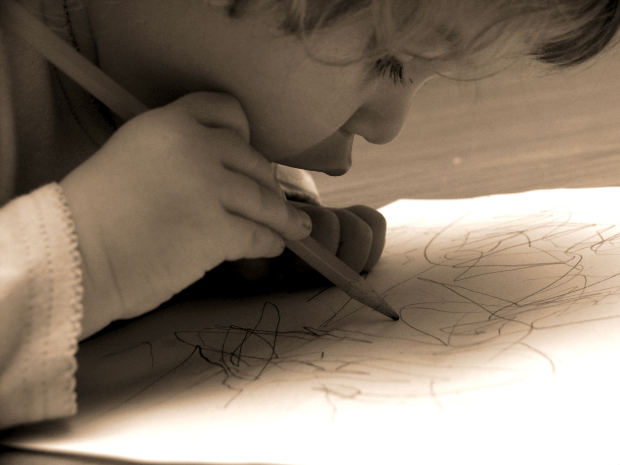
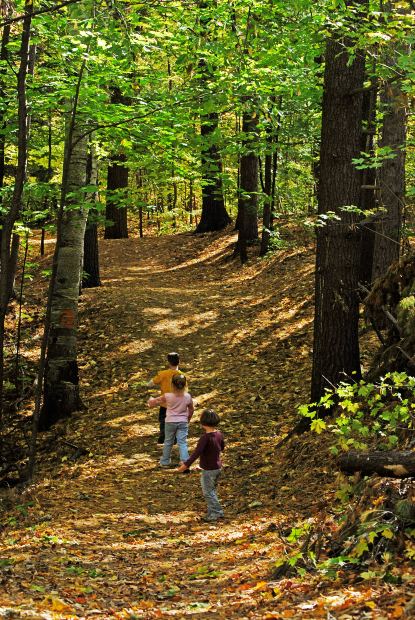
If we look at movement we realize that even a very brain-y activity, reading, has to do with the body. Young children develop reading readiness in a variety of ways, including conversation and being read to, but also through physical activities that help their neurological pathways mature. These are activities children will do whenever given the opportunity, like swinging, skipping, climbing, walking, and swimming.

All the relentless activity of early childhood may very well be a sort of intrinsic wisdom built into them, because movement is key to keeping an active brain. Children who are more physically active actually increase the areas of their brains necessary for learning and memory. That doesn’t mean the antidote to the school mindset is a constant frenzy of activity. It does mean that children tend to self-regulate within loving safeguards. Every child needs to balance physical activity with other essentials like snuggling, daydreaming, and sufficient sleep. We simply need to remember that movement isn’t an enemy of education.

goldilocks effect, individualized education,

Build on the “Goldilocks effect”

This term came from researchers who demonstrate that we are cued to ignore information that’s too simple or too complex. Instead we’re drawn to and best able learn from situations that are “just right.” Sort of like the educational equivalent of Goldilocks on a porridge-testing quest.

The Goldilocks effect means you are attracted to what holds just the right amount of challenge for you right now.  Usually that means something that sparks your interest and holds it close to the edge of your abilities, encouraging you to push yourself to greater mastery. That’s the principle used to hold a player’s attention in video games. That’s what inspires artists, musicians, and athletes to ever greater accomplishments. That’s how kids who follow a passion of their own tend to learn and retain more than any prepared lesson could teach them.

Our kids tell what they’re ready to learn. They tell us through what bores them and fascinates them, what they’re drawn to and what they resist. They’re telling us that, until they’re ready, learning doesn’t stick.

 too much adult-run learning, stubborn kids, child-led learning, natural learning,

Diminish the focus on instruction

The school mindset leads us to believe that children benefit from lessons, the newest educational toys and electronics, coached sports at an early age, and other adult-designed, adult-led endeavors. Well-intentioned parents work hard to provide their children with these pricey advantages. We do this because we believe that learning flows from instruction. By that logic the more avenues of adult-directed learning, the more kids will benefit. But there’s very limited evidence that all this effort, time, and money results in learning of any real value. In fact, it appears too many structured activities diminish a child’s ability to set and reach goals independently. 

When we interfere too much with natural learning, children show us with stubbornness or disinterest that real education has very little to do with instruction. Learning has much more to do with curiosity, exploration, problem solving, and innovation. For example, if baby encounters a toy she’s never seen before, she will investigate to figure out the best way or a number of different ways to use it. That is, unless an adult demonstrates how to use it. Then all those other potential avenues tend to close and the baby is less likely to find multiple creative ways to use that toy.

Studies show that “helpful” adults providing direct instruction actually impede a child’s innate drive to creatively solve problems. This experience is repeated thousands of times a year in a child’s life, teaching her to look to authorities for solutions, and is known to shape more linear, less creative thinking.

This isn’t to say that all instruction is bad, by any means. It does mean that six long hours of school-based instruction plus afterschool adult-organized activities in sports or recreation or screen time supplants the kind of direct, open-ended, hands-on activity that’s more closely associated with learning. Most of the time this kind of learning is called play.

free play benefits, play versus learning, chores, self-regulation,

Recognize free play is learning 

Before a young child enters any form of schooling, his approach to as much of life as possible is playful. A walk is play, looking at a bug is play, listening to books being read is play, helping with chores is play. The school mindset separates what is deemed “educational” from the rest of a child’s experience. It leads us to believe that learning is specific, measurable, and best managed by experts.

A divide appears where before there was a seamless whole. Playful absorption in any activity is on one side in opposition to work and learning on another. This sets the inherent joy and meaning in all these things adrift. The energy that formerly prompted a child to explore, ask questions, and eagerly leap ahead becomes a social liability in school. But play is essential for kids, for teens, for all of us. (For more check out these two marvelous and very different books: Free to Learn by Peter Gray and A Playful Path by Bernie DeKoven.)

Free play promotes self-regulation and this is a biggie. It means the ability to control behavior, resist impulse, and exert self-control  —all critical factors in maturity. Play fosters learning in realms such as language, social skills, and spatial relations. It teaches a child to adapt, innovate, handle stress, and think independently. Even attention span increases in direct correlation to play.

That doesn’t mean a child’s entire day must be devoted to free play. There’s also a great deal to be learned from meaningful involvement in household responsibilities as well as community service.

why homeschool, democratic schools, raise successful children,

I want to nurture my children in such a way that they define success on their own terms. I hope that means they craft a life based on integrity, one that brings their unique gifts to the world. Homeschooling, for my family, gives us the freedom to go beyond narrow roads to success. (Democratic schools can also provide that freedom.) This is the way young people have learned throughout time. I’ve come to trust the way it works for my family.

Portions of this post excerpted from Free Range Learning.

For A Fresher & Juicier Experience, Mix It Up!

This doesn’t bode well. I’ve been talked into a day-long workshop and I don’t know where to go.

There are two large conference rooms at the Cleveland Marriott. Their doors open across the hall from each other. There are also two different groups convening today, but someone has neglected to post signs at either one.

Now, to figure out which group is mine.

On one side waiters roll in carts of muffins, fresh fruit, and coffee. A tray of bright red strawberries passes tantalizingly close to me. I long to taste just one from the tray, but show uncharacteristic restraint due to the press of people entering that conference. Through those doors walk people who are impeccably dressed. Not only suits on the men but shined shoes, not only dresses on the women but elaborate hats. The attendees are all African-American.  I spy a few Bibles.  Seems to be an evangelical gathering of some sort.

On the other side there’s a lone table with water pitchers and glasses.  Folks are moseying in slowly. Their clothing is more diverse than their skin tone.  I spot Indonesian, African, and Japanese prints.  In front of me a man with long gray hair in a pony tail is saying something to a companion about “passing through a portal of enhanced energy.” I assume he is making an ironic comment about walking through such a blandly generic doorway, but he goes on to remark that this was the name of a workshop he’d attended in Phoenix recently.  Yup, this is my side of the hallway.

I find the friends who invited me and silently promise myself to sit still. (I’m not much for staying put.) Music starts, we sing, and I’m ready to have my consciousness raised.

I’ll give her this, the speaker is interesting.  She sets off my “Oh sheesh” meter a few times thanks to her quasi-scientific quantum physics references, but I already agree with what she’s saying. Each of us can be light workers who spread hope, and ultimately greater peace, through our daily words and actions.  We participate in group meditations, activating ourselves to take on greater responsibilities for uplifting others.  While not new, her message is certainly valuable.

But all that time we’re stuck in a meeting room. I don’t know how anyone can sit that long. I tend to wiggle and my mind wanders when my body is uncomfortable. I wonder how our brethren across the way are faring. When the fidgets get the best of me I excuse myself for a hallway ramble. I notice through open doors on the other side of the hall that those participants are also chair-bound, staring straight ahead with the glazed look that comes from hours of immobility.  Likely we are gathered in both conferences for similar purposes—-to enliven our spiritual lives and bring greater harmony to our bit of the planet.  And surely the experience is enriching.  But both meetings could be so much more if only we weren’t locked into a school-like format.

We humans learn as we make discoveries and face challenges. We learn by translating our experiences into story, song, art, into something created.  We learn through the wisdom of our bodies. We don’t learn as fully when passively sitting still and shutting up for long periods of time indoors. Opening conferences (and any educational venture) to more direct involvement lets the lessons sink in deeper, making whatever we’ve learned more easily applied in our real lives.

I’ve worked for years teaching non-violence techniques to teachers and community groups (and I hope making the workshop experience a lively one).  A key ingredient is finding common ground with those you perceive as dissimilar to yourself.  Connecting with others leads to rich possibilities.  The new combinations can be awesome.

Returning to my chair I can’t help but remember an old 80’s advertisement for candy.  Chocolate and peanut butter collide and find that together they are more delicious, creating a whole new confection that the world loves.

I imagine the doors to both conference rooms bursting wide open and the participants merging. Meditations combining with prayers.  Affirmations mixing with hymns. Our mutual dislike of sitting too long in these chairs turning into a joyous celebration that dances beyond the doors.  How much we all have to share with each other.

And yes, maybe I do imagine tasting those strawberries at last.

child