Dancing Babies & World Peace

dancing for peace, babies smile to music, net and music, research babies and music,

The magnificent blues guitarist Robert Lockwood, Jr., performed regularly not far from my childhood home. But the divides of race and radio kept me from hearing him play until I was an adult. Even when I started spending my babysitting money on music I was limited to what was available in stores within walking distance. Just like everyone else born before the net, my musical ear was limited to narrow channels of exposure.

As I got older and discovered what to me was new music, I felt my smaller world crack open. Music pours in past filters. Music, perhaps more than any other form of art, evokes a personal response. Unique as it may be to each musician, it’s also an expression of our shared humanity.

Turns out we’re born to be more receptive to music than to speech. According to a recent study babies respond to music, even regular drumbeats, with increased smiling. Even more surprising, this research shows that babies correlate their movements with the tempo and rhythm. They dance! And music gets a much greater response than spoken words. No wonder adults all over the world naturally engage babies in a sort of singsong-like call and response. We’re translating our language into one that is more evocative.

That’s what music does. It makes us known to one another.

Music is used to lull small ones to sleep, rouse teams to competition, woo lovers, worship, commemorate solemn occasions and celebrate. In some parts of the world music is a medium to intentionally and peacefully resolve conflicts. Through music we more fully grasp that all of us feel grief, love, fear, injustice, joy and moments of transcendence.

My children enjoy wider access to music of all kinds. They’ve seen Chinese opera, Tibetan throat singing, Lakota flute playing, Balinese gamelan and much more. They know more than I ever will as they seek out and share music across a huge range of styles. Entranced I wander upstairs to my daughter’s room, lured by the sounds of Le Mystere des voix Bulgares. I pay attention as my son enthuses about Inon Zur, composer of the orchestral music for inCrysis.

Theirs is the first generation to have the full advantage of the net and other music sharing technology. Across all divides, music can be a peacemaker. It can let us slide past cultural differences and language barriers to a place of mutual understanding.  It can let our children keep on dancing and smiling as they were born to do.

*

*

*

*

Little Girl Dancing courtesy of James Lee

Singing From the Inside Out

I can’t sneeze in a roomful of my friends without hitting a number of talented singer-songwriters who’d love to make a living through music. (Yes, a metaphorical sneeze.) Yet nearly every gifted artist any of us know has to ignore his or her gifts in order to make a living.

What cultural transformation might we see if those drawn to poetry, sculpting, composing, painting or other mediums of expression had some hope of living by their art?

Well here’s some hope.

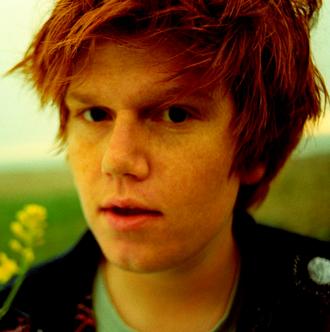
A homeschooled guy who chose to help out with a worthwhile project now appears with John Mayer, Sheryl Crow and the Dave Matthews Band. His songs are heard on House and Ugly Betty. And more importantly, he sings about what matters to him.

See if the questions posed by this deceptively beautiful piece, “Ain’t No Reason,” resound long after the music is over.

Brett Dennen grew up in rural California, homeschooled along with his brother and sister. In an interview with Frank Goodman for Puremusic.com Dennen describes his mother’s homeschooling approach as “experiential.”  He says, “…so she rarely had a lesson plan or anything like that. She would give us books, and we would read the books. And we did a lot of gardening, and we did a lot of science education through being outside. We took camping trips with other kids who were homeschooled. And when we were out camping, we learned about rivers and forests and mountains and geology. We’d take books out camping with us, and we’d read about it, and we’d look for what we’d read about. Experiential education basically means instead of being in a classroom and being taught or told something, to actually go out and see it, and see how it works and learn through experiencing it instead of learning through being taught or told it. And that was really valuable to me.”

Dennen took the same approach when learning music. As he says in the same interview, “Because of the way I was homeschooled, I got into the idea of trying to learn how to do things my own way. And so when I started playing guitar, I taught myself. I took lessons for a while, but I lost interest in them because I think I just didn’t like going to my lessons, I didn’t like my teacher, I didn’t like what I was learning. So then I quit. And after I quit, then I really started to learn.”

He went to college planning to become a teacher. While a student, Dennen met Lara Mendel at a wilderness-safety class and the two of them wrote a humorous song about backwoods diarrhea for a class assignment. Mendel happened to be developing a powerful hands-on program for children, one that tackles intolerance and violence head on. She named it The Mosaic Project. Dennen wrote songs to reinforce the activities. Now his music and her project teach hundreds of California children about acceptance, friendship and peace in each session of The Mosaic Project.

The creative and independent spirit of Dennen’s homeschooling background hasn’t left him. Goodman’s interview opens with these comments. “He’s like a new kind of human being to me, this Brett Dennen. After spending time with him this week, I feel that way even stronger than after the positively confounding impression that his new CD, There’s So Much More, left on me. If he’d said that he was an alien, I could have swallowed that; it would even have made sense to me. Because I’m simply not accustomed to meeting and spending time with people that appear to be so incorruptible, so odd and yet so self-assured; so, uh, enlightened and inner-directed, if I might venture all that.”

I don’t know if Dennen’s life up to this point says more about homeschooling or about doing the work of one’s heart. I do know there’s no separating the two.

Confession of a Journal Slacker

unused journal

Beautiful blank journals await my pen. These ornate books with their untouched pages seem too daunting to open let alone abuse with my prose.

I write all the time. I scribble ideas on envelopes and the backs of receipts. At a stoplight I might excavate my purse for a piece of paper to write an idea, still writing as the light turns green and my eyes are on the road (which accounts for the barely readable appearance of my notes).

non-journal method of journaling

This method gives me results—articles, poems, and an upcoming book. Still I continue to hope that I’m a journaling sort of person.

Some of my well behaved writer friends swear by a method called “morning pages” popularized by Julia Cameron’s in The Complete Artist’s Way: Creativity as a Spiritual Practice.

Every morning before doing anything else, the writer produces three handwritten pages. This is supposed to spark creativity. These friends fill journal after journal with rants, wonderings, hopes, and big ideas. I don’t kid myself. I’m pretty proud that I manage to floss my teeth but that’s it for daily rituals. Okay, I lied, I don’t even get around to flossing daily.

I’m particularly interested in arty journaling. I can slap together a collage and that gives me the silly idea that I could (in the optimistic land of Some Day) create some kind of visual journal. Hah. Mostly I savor the beautiful journals shared by folks online. Go ahead, search using terms like “visual journal” or “art journal” to sink into some pure aesthetic pleasure.

I also keep accumulating books that inspire. Most of them are much too daunting, with artistry well beyond the hopes of a simple cut and paste girl like me. But I have to admit I find three books particularly accessible. How to Make a Journal of Your Life by Dan Price, Everyday Matters by Danny Gregory, and An Illustrated Life: Drawing Inspiration from the Private Sketchbooks of Artists, Illustrators and Designers also by Danny Gregory.

My newest journal-related idea? I’m envisioning a get-together with fellow journal slackers. We can bring our sadly unused journals and pent-up verbal sneezes. We can bring every bit of ephemera that might be fun to cut, paste, and color onto the pages. And then we can turn the quiet, reflective practice of journaling on its head while we scribble and talk and laugh and collaborate and finally, journal.

Got a better remedy for a journal slacker?

*

*

*

Creative Commons image credits

leather journal

art page 1

art page 2

art page 3