The Beauty of Ordinary People

“Not everything that can be counted counts, and not everything that counts can be counted.”

Einstein

*

*

*

*

The world is full of ordinary, wonderful people.

Ever since I learned about Randy Stang in Regina Brett’s Plain Dealer column his example of casual grace has helped me see greatness in a new way. Those who bring out the best in themselves have a way of doing that.

Most people who get media attention are nothing like us. They’re obnoxiously wealthy, phenomenally talented or otherwise good at accumulating fame.

A great deal of publicity is also devoted to those who bring out the worst in themselves. They commit crimes or wreak havoc more acceptably, perhaps as scornful political pundits.

Occasionally attention shines on people who devote themselves to a cause in ways we can’t imagine doing or who risk their lives to save a stranger. True heroes. We may marvel at their efforts but end up feeling worse about our own choices. Who can imagine sacrificing as these selfless people do?

But Randy Stang was not the sort of man who attracted attention. He lived with his family right by Bradley Park in Bay Village, Ohio. Tall lights lit up his yard till late at night. Enthusiastic yelling from nearby soccer, basketball and baseball games made for a noisy home. When Randy Stang heard about a proposed biking and skateboard park he decided to attend the public hearing. So did many of his neighbors.

He waited for his chance to talk holding three pages of notes. A middle school teacher spoke about the six years of resistance the skate park had already faced, saying Bradley Park was likely the last hope for local bikers and skateboarders. Residents also spoke, saying the noise and inconvenience of a skate park was unacceptable. They liked the idea of teens gathering somewhere but preferred that place be far from their backyards.

Finally it was Randy Stang’s turn to talk. He explained what it was like to live near the park. He mentioned the noise and lights. He noted that his garage had been broken into just two days before the public hearing.  Then he gave his opinion.

“I’m in favor of a skate and bike park in Bay Village in Bradley Park. I am wondering if the citizens against the park have no grandchildren, no children, or are not a child themselves.”

He finished, saying, “You want to put it just to the north of that baseball diamond there, probably about 50 feet from my yard.”

Then Randy Stang collapsed. A nurse and doctor performed CPR to no avail. But his efforts were not in vain. It looks like Bay Village will be building The Stang Memorial Skate and Bike Park.

People who are acclaimed every day in the media don’t exemplify us. It’s the uncelebrated lives of ordinary, wonderful people who form the bedrock of human existence. These people are next to you and across the world. Chances are they won’t gain notice unless they perish dramatically while simply being themselves.

Unselfish acts performed a million times a minute weave us together as a caring species. We tend to the helpless, comfort the sorrowful, share knowledge and create happiness. It happens most often in small, unnoticed ways. This is why I know humanity has every hope of skating ahead toward the very best possibilities.

*

*

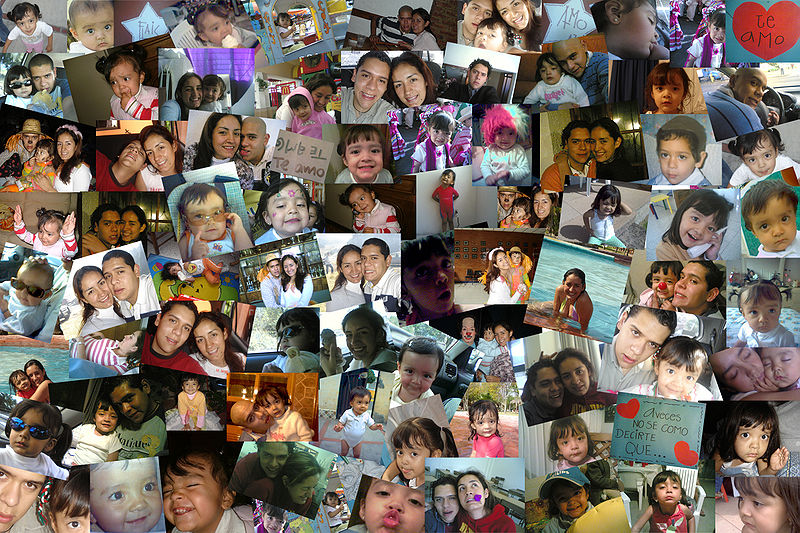
Creative Commons photo collage


Our Kid’s Pursuits Are Their Own

Snake wrangler, computer geek, vintage auto restorer. These are a few of the identities one of my sons tries on as he masters areas of interest to him.

He used to patiently stalk alongside our creek and behind the woodpile to find snakes. He didn’t hurt them or even keep them for more than a few minutes. I’m not sure even now what the object was other than a pursuit of something that fascinated him. He brought many of his captives up to the house where we marveled at them before he released them. Personally I prefer to marvel at snakes from a healthy distance but I can squelch the shivers when necessary. He didn’t just wrangle snakes, he also studied huge reference books about snakes, drew pictures of snakes, talked about snakes. Then one day he moved on to other interests.

Mostly out of necessity he put together his first computer from cast-off parts. That started a new obsession: bettering computer operations. He became particularly intrigued by the cooling systems. I listened, or at least kept my head swiveled in his direction, as he gave excruciatingly in-depth explanations about cooling system modifications and the resultant effect on computer efficiency. He taught himself so well that he’s still paid to fix our friend’s computer problems, both software and hardware. Sometimes he shakes his head sadly at how poor cooling compromises these systems.

He became interested in auto restoration before he was old enough to drive. Using money earned by shoveling manure from horse stalls, he bought a 1973 Opel GT. He clearly relished the time and mess it took to carefully tear nearly everything out of the car. Now he is in the rebuilding phase, his progress limited to what parts he can afford.  He shares details with us at the dinner table and tracks each step with friends on forums. The day his little Opal is roadworthy I know that acclaim will come from friends, family and forum pals all over the world.

My husband owned his own computer business and has always fixed our cars, but he recognizes (sometimes to his chagrin) that our son prefers to go his own way as much as possible. In fact, when a question about computers or cars comes up it doesn’t always stay in the realm of consultation. It’s just as likely to become a spirited debate. That’s the nature of young people as they prove themselves, and we try to understand. (That is, as long as the tools are put away.)

We’ve noticed that eager parental encouragement doesn’t always translate to more eagerness on the part of our kids. Sometimes we like a hobby, lesson or interest much more than our kids do. Sometimes, even when they’re winning awards, they don’t want to continue. Or perhaps our excitement has put a damper on the pursuit. As our kids get older this becomes more evident.

We’ve learned our kids’ interests are their own. There’s no real value in forcing, cajoling or otherwise pressuring a young person to stay with an endeavor that has lost its allure. Kids in our house have to stick with chores and other work obligations, not interests.

Child development expert David Elkind notes in The Power of Play: Learning What Comes Naturally it’s a misconception that children should “stick” to a pursuit once they’ve started in order to build better staying power for adult challenges. As Elkind writes, “The common assumption that commitment transfers from one activity to another is wrong.”

Making sure that a young person pursues interests for his or her own reasons, not the parent’s, keeps motivation alive and passion genuine. Research backs this up.

Sure, we can foster our children’s enthusiasm with our approval and guidance when necessary. But we can also show them by example. We can pursue our own interests with the kind of joy and fervor that can’t help but inspire. That’s my newest excuse for my own art projects. I’m not making a mess, I’m providing a good example!

Don’t Bother Mom, She’s Blogging About Motherhood

child

Motherhood is oriented to firsts.

Our   baby’s first smile,

first step,

first word.

After the baby is born,

some firsts seem to take forever.

First smile, first tooth,

first time mom can have an uninterrupted conversation

or read a book and remember the contents.

The only hint that it’s

not all about firsts

comes from older women.

enjoy them while they're young,

They fuss over our darling babies with delight.

When they do,

our traitorous babies make liars of us:

cooing back as if they don’t have colic and diaper rash

and the incessant ability to dominate our lives.

These older women speak

in some kind of code

known only to those

whose babies are long grown up.

(Maybe a secret society.)

The way they operate is so

consistent that clearly

it’s a ritual of some kind.

child

There’s always a pause

in their baby chortling.

They look us in the eye

to say some version

of the very same thing.

“They’re little for such a short time.” Or,

“These years go by so fast.” Or,

“Enjoy every moment.”

They want us to know something they didn’t know,

that no one really knows fully

until their babies are grown


Despite the exhaustion and sleepless nights

and the loss of one’s free time

to the cutest loud smelly creature ever,

the earliest years

are packed with heart-filling wonder.

When our babies grow up

we see

motherhood is also

filled with lasts.

The last time we’ll change

a diaper is worthy of a

celebration, true.

There’s also a last

time holding a little

hand to cross a street,

the last tucking into bed,

the last book read aloud,

the last

of many

blessedly ordinary

expressions of love

once enfolded

into daily

life with a child.

Such “lasts” line the

way toward our child’s

adulthood. They

remind us to cherish

every moment.

As a mother who is now shorter

(okay, much shorter) than each of her four children,

I claim the right to coo over babies

and tell new mothers in all seriousness,

“these years go by so fast.”

I haven’t been invited into the secret society yet.

I hope there’s not a dress code.

I’m NOT wearing any damn red hat.

*

*

*

Creative Commons image credits

Baby hand http://www.flickr.com/photos/andrewmalone/1114928353/

Woman and baby  picasaweb.google.com/…/9NX5sOZc8XwaveIURkiqGw

Eye flickr.com/photos/43927576@N00/531269809

Woman and baby flickr.com/photos/jm_photos/2057212651/sizes/z/in/photostream/

Woman and baby flickr.com/photos/iandeth/1949150981/sizes/l/in/photostream/

Angel girl  flickr.com/photos/tianderson/286211866/

Baby  flickr.com/photos/50824868@N00/197011571

Little girl flickr.com/photos/40379737@N00/3812002166/

Boys in street flickr.com/photos/mcsimon/1266570816/

Reading aloud flickr.com/photos/j_regan/8197734711/sizes/c/in/photostream/

Boy in tree http://www.flickr.com/photos/takile/5809992860/sizes/z/in/photostream/

What Do You Do Every Day?

What do you do every day?

That’s what people wonder about homeschoolers. Sometimes they ask us point blank, “Okay you homeschool, but what do you DO every day?”

It seems like a huge mystery that we self-compose our days, living and learning without the structure school imposes. And yes, sometimes we ask each other too because it’s too easy to get in a rut, especially when we operate from a limited concept of what it means to educate.

It’s a blessed relief to happen upon accounts of other family’s homeschooling days in Home Education Magazine as well as books such as Real Lives: Eleven Teenagers Who Don’t Go to School Tell Their Own Stories by Grace Llewellyn, Homeschooling: A Patchwork of Days: Share a Day With 30 Homeschooling Families
by Nancy Lande and Homeschool Open House by Nancy Lande. Our grasp of the possibilities expand as we read each person’s perspective. We see that every homeschooling family flourishes somewhat differently. That is a freeing revelation.

The blog Homeschooling is Freedom is another place to glimpse tantalizingly different answers to “What do you do every day?” Here you can find new and archived interviews with homeschooling families. Through four simple questions, Debbie H.’s blog highlights the wonderfully flexible and enjoyable ways we learn in our own ways. Click here for some appalling revelations about the Weldon family.

*

*

Creative Commons image from Sean Dreilinger’s Flickr photostream

Confession of a Journal Slacker

unused journal

Beautiful blank journals await my pen. These ornate books with their untouched pages seem too daunting to open let alone abuse with my prose.

I write all the time. I scribble ideas on envelopes and the backs of receipts. At a stoplight I might excavate my purse for a piece of paper to write an idea, still writing as the light turns green and my eyes are on the road (which accounts for the barely readable appearance of my notes).

non-journal method of journaling

This method gives me results—articles, poems, and an upcoming book. Still I continue to hope that I’m a journaling sort of person.

Some of my well behaved writer friends swear by a method called “morning pages” popularized by Julia Cameron’s in The Complete Artist’s Way: Creativity as a Spiritual Practice.

Every morning before doing anything else, the writer produces three handwritten pages. This is supposed to spark creativity. These friends fill journal after journal with rants, wonderings, hopes, and big ideas. I don’t kid myself. I’m pretty proud that I manage to floss my teeth but that’s it for daily rituals. Okay, I lied, I don’t even get around to flossing daily.

I’m particularly interested in arty journaling. I can slap together a collage and that gives me the silly idea that I could (in the optimistic land of Some Day) create some kind of visual journal. Hah. Mostly I savor the beautiful journals shared by folks online. Go ahead, search using terms like “visual journal” or “art journal” to sink into some pure aesthetic pleasure.

I also keep accumulating books that inspire. Most of them are much too daunting, with artistry well beyond the hopes of a simple cut and paste girl like me. But I have to admit I find three books particularly accessible. How to Make a Journal of Your Life by Dan Price, Everyday Matters by Danny Gregory, and An Illustrated Life: Drawing Inspiration from the Private Sketchbooks of Artists, Illustrators and Designers also by Danny Gregory.

My newest journal-related idea? I’m envisioning a get-together with fellow journal slackers. We can bring our sadly unused journals and pent-up verbal sneezes. We can bring every bit of ephemera that might be fun to cut, paste, and color onto the pages. And then we can turn the quiet, reflective practice of journaling on its head while we scribble and talk and laugh and collaborate and finally, journal.

Got a better remedy for a journal slacker?

*

*

*

Creative Commons image credits

leather journal

art page 1

art page 2

art page 3

Going to Hope in a Handbasket


“Not only is another world possible, she is on her way. On a quiet day, I can hear her breathing.”             Arundhati Roy

*

*

*


Fear sells. Blood and guts sell even better. What really grabs our attention? Out and out panic. That largely explains today’s so-called news channels, talk radio, actually much of commercial media. The worse it sounds, the greater audience share they grab and the more money they make. Trouble is, they also make up minds and harden hearts and plant misery where optimism could so easily flourish.

But they’re wrong.

Sure, it seems we’re in big trouble. Structures we count on to be stable are crumbling—finance, health care, education, consumption driven economies, us versus them mentalities, you name it.

Remember the parable of the mighty oak and thin reeds? The oak boasted of his immense girth and height, mocking the reeds all around him for their weaknesses. But the reeds could withstand wind, lightening and the weight of snow. The oak succumbed while the reeds survived, stronger than the oak in their ability to bend and stand again. Big institutions are fighting transparency, reform or annihilation with everything they’ve got, believing that strength means rigidity. Meanwhile a shift is happening on the grassroots level, as flexible and self-correcting as reeds in the wind.

Times of change are destabilizing and difficult, but ultimately valuable. After all, what’s broken, corrupt or simply no longer workable must be fully revealed before it’s healed or transformed into something much better.

Look more closely. Things are getting better all the time. In fact amazing evidence shows that we’ve long been on the path to health and harmony. Here are a few examples.

~

We’re Smarter.

Intelligence continues to increase from generation to generation. In fact, to accommodate continuously increasing intelligence the IQ test must be renormalized (standardized to keep the average test results at the 100). This is called the Flynn Effect.

Between 1932 and 1978, mean IQ scores in the U.S. rose 13.8 points. If your grandparent received IQ score results of 98 back in 1932 they’d have been deemed of average intelligence. That same grandparent, if administered today’s tests, would be considered to have a borderline mental disability by current scoring standards. IQ scores have risen even higher in some other countries: 27 points in the UK between 1942 to 1992. Of late, developing countries seem to be experiencing the biggest surge.

Many explanations have been proposed, but the increase can’t be definitively pinned on genetic improvements, improved nutrition, greater familiarity with testing or better schooling.

According to Cornell professor Stephen J. Ceci, the most direct gains are not in subjects that are taught (math, vocabulary) but are shown in parts of the test that seem unrelated to schooling (matrices, detecting similarities). In fact, test gains have been enormous in areas requiring the child to apply his or her own reasoning, such as arranging pictures to tell a story or putting shapes in a series. Although teaching children does return positive results, what a child learns through the natural stimulation of everyday life has a more profound effect. For example, a study to determine the effect of schooling on rural children in India found that the increase in overall intelligence from a year of age is twice the increase from that of attending a year of school.

IQ test scores don’t relate to what truly provides satisfaction in life. But the Flynn Effect is intriguing. Factors we can’t completely explain are giving us the intellectual capacities to deal with a ever more challenging world.

~

We’re Healthier.

Studies conducted by Robert W. Fogel, a Nobel laureate and economic historian at the University of Chicago, show that in a few hundred years human biology has changed in startling ways. We are more resistant to ill health, more likely to recover when faced with disease and less likely to live with chronic disability. We are also smarter and live longer. Fogel calls this radical improvement “technophysio evolution.”

An interview in the University of Chicago Magazine quotes Fogel as saying, “The phenomenon is not only unique to humankind, but unique among the 7,000 or so generations of human beings who have inhabited the earth.”

Fogel doesn’t necessary attribute the changes to genetic shifts.  Improvements in medical care, nutrition, sanitation and working conditions may cause epigenetic changes.  These are shifts in gene expression that can last through many generations without altering underlying DNA.

Information amassed by Fogel indicates that chronic diseases such as arthritis, heart disease and lung ailments are occurring 10 to 25 years later in life than they did 100 or 200 years ago. Interestingly, well-being may be more strongly affected by conditions each individual faces in utero and during the first few years of life than previously suspected.

Fogel’s most dramatic proof of technophysio evolution was found by comparing Civil War veterans to subsequent generations. Researchers examined health and longevity data of 45,000 Union Army veterans, including over 6,000 black soldiers. Military records revealed that young American men of that era commonly suffered debilitating health conditions. Approximately 65 percent of men from 18 to 25 years of age volunteered for the Union Army. But arthritis, tuberculosis, cardiovascular disease and blindness disqualified a quarter of them. And the military of that era wasn’t choosy. Incontinence and blindness in one eye didn’t disqualify a recruit. Even the youngest men lived with chronic disabilities. Fully one-sixth of volunteers between 16 to 19 years of age were rejected for serious health conditions.

By the time Civil War vets passed the age of 65, 68 percent of them suffered from arthritis, 76 percent from heart disease and over 50 percent from back problems. World War II veterans at the same age, in contrast, counted among their ranks 48 percent as arthritis sufferers, 39 percent with heart disease and 30 percent with back problems.

These remarkable health gains don’t diminish our current struggles with cancer, diabetes, Alzheimer’s disease, autism and other serious health conditions on the increase. Despite the blessing of bodies more resilient and healthy than those of our ancestors of just 150 years ago we suffer the effects of environmental toxins and nutritionally squalid diets. To fully accept the gift of health and energy from our ancestors, it seems we must expand our awareness to make positive changes here and now. That way our choices continue to benefit our descendants.

~

We’re More Peaceful.

We function best through cooperation and harmony. Even our body systems are in greatest sync when we are peaceful, according to studies at the Heart Math Institute. It may be taking us quite a while, as a species, to get accustomed to living in larger settled groups but it seems we’ve come a long way in the last few centuries.

And peace is how our species has come this far, despite what history tells us. According to anthropologist Douglas Fry, evidence shows that for 98 percent of human existence on earth we lived in small nomadic bands that thrived precisely because warfare was avoided. He presents compelling proof in his book, Beyond War: The Human Potential for Peace
along with the message that human beings have highly developed capacities to seek and maintain peace.

Psychologist Steven Pinker points out in an essay titled “A History of Violence” that public cat burnings were a popular form of entertainment in the sixteenth century.  Although we pay more attention to atrocities now than ever before, the horrors of slavery, genocide, barbaric punishment and vigilante justice were accepted as commonplace a little more than a century ago.

Empathy for people of another race or class? Not a typical attribute even a few generations ago. Pinker notes, “Conventional history has long shown that, in many ways, we have been getting kinder and gentler.”

As Pinker cites specific data, the good news gets better. For example, the homicide rate has declined from a rampant 24 murders per 100,000 Englishmen in the 14th century to 0.6 per 100,000 in the 1960’s (5.4 per 100,000 in the U.S. in 2008).

No matter what the angle, the view is good when we look at more recent U.S. history through this lens as well. Despite what ranting pundits and blaring news promos may indicate, crime rates have been steadily dropping per capita since the 1970’s.  Some analysts say by as much as 50 percent in 15 years.  Despite staggering economic losses, crime has continued to decline recently.

The ecumenical organization Project Ploughshares reports,  “Peacebuilding efforts do work. Although one conflict is too many for those being killed and wounded, there has been a significant decrease in the number and intensity of armed conflicts over the past 10 years.”

We’ve come a long way without direct efforts to educate each person in the ways of negotiation, mediation, intervention, reconciliation, heck, even listening skills. Imagine turning our attention toward cooperation and mutual respect. Surely acknowledging the human tendency toward peace welcomes greater possibilities for harmony in the years to come.

~

We Care.

Never before in history have so many people worked tirelessly and selflessly to benefit others. Paul Hawken writes in Blessed Unrest: How the Largest Social Movement in History Is Restoring Grace, Justice, and Beauty to the World
that the abolitionist movement was the first major movement by human beings to advocate on behalf of others without seeking advantage for themselves or their particular social or political group.  Since that time, such efforts have grown with astonishing vigor.

There are now over a million organizations on the planet working for environmental stewardship, social justice, the preservation of indigenous cultures, and much more.  These groups don’t seek wider acclaim, they seek to make a difference for the greater good.

Artist Chris Jordan has made a mandala of the names of those million-plus organizations.  His work is inspiring—-make sure you look at the images up close as well as the whole picture.

It’s time to turn our attention away from doom-shrieking media. While it’s valuable to be informed, such knowledge is useful only to the extent that it motivates us to turn more consciously in a positive direction.

A heavy heart, or worse, a hardened heart, makes it nearly impossible to raise a child or plant a garden or grow a benevolent future.

*

*

Creative Commons image

All Day Every Day Video Game Learning

All day, every day video game based schooling. Great.

A Popular Science article (print version, Jan 2010) extolls the virtues of a recently opened school in Manhattan designed around a  spanking new videogame curricula. Called Quest to Learn (Q2L) the school is heavily funded by interests (such as Intel) outside the NYC school district. And yes, every subject is taught via the medium of video games.

Another oh-gosh-isn’t-this-fabulous article appeared in the mass market magazine Parade and the flurry of media attention continues to accelerate. Soon every school child will be agitating to replace the boredom of classwork with the excitement of gaming.

Their eagerness will be nothing compared to the frenzy of those who make Big Decisions in education. Anything having to do with technology seems to make these folks feel they’re finally hip. Actually, they toss money at any curricula that promises to keep the little darlings quiet, busy and able to pass proficiency tests. In a few years you won’t be able to spit without hitting a school district boasting a version of this all day, every day video game schooling. Just great.

Q2L sounds impressive. Designed by the (soon to be rolling in bucks) Institute of Play, its curricula isn’t structured around ordinary educational games. Learning is integrated between subjects, offers hands-on components and promises to put the student in charge of his or her education. Q2L promotional materials assure parents their kids won’t be glassy-eyed screen droolers. But, and this is a huge but, it’s all day, every day.

Research tells us that high quality video games are known to promote rapid decision-making, logic, visual-spatial skills, risk assessment and intense focus. Author Steven Johnson notes in Everything Bad is Good for You that today’s technologies offer complex intellectual challenges that engage students in ways never before seen. All great. Except for a little thing we call balance.

Candy substituted for every meal, even with all the required vitamins, fiber and omega 3 fatty acids packed into it by a clever non-profit candy making institute, may make kids wildly happy but it still isn’t a real meal. An all day video gaming educational model may be new, shiny and sound perfectly thrilling but without balance it’s simply another way to train the next generation of workers to ignore the vital need for balance in their lives.

A truly balanced education is one that can’t be prescribed or predetermined by any curricula developer because each child is different. That’s that beauty of Democractic Schools, relaxed styles of homeschooling and unschooling. Those of us who educate this way know from experience that children, when raised in an atmosphere of loving trust and fully involved in the life of the community around them, tend naturally toward balance.

Video games may indeed be a wonderful way to learn but not all day, every day. They can be part of a wider concept of education.  It would be wonderful to see schools reverse the trends that have segregated and stymied the maturation of young people ever since modernization forced them into mandatory schooling.

For starters, today’s students could use a whole lot more of these missing elements to restore balance in each educational day.

Play. Not the sort of play that happens on carefully designed liability-friendly playgrounds or within the limits of       supervised games, but unstructured free play.  This sort of fun is actually essential for the development of imagination and innovative thinking as well as social and cognitive maturation.

Creative, hands-on engagement in open-ended work. The high scoring Icelandic and Finnish schools that keep our educational Big Deciders in a jealous froth aren’t test happy. Instead they include daily arts such as knitting, woodwork and felting while U.S. school kids rarely get to work with metal or wood in shop class let alone have the opportunity to paint at an easel.

Pursuit of interests. There may be no greater motivator than the ability to engage in one’s interests for hours, days, weeks or longer plus the freedom to move on when those interests are depleted.

Community involvement. Schools segregate young people from vibrant adults in the community precisely at the developmental stages when kids are primed to imitate, help and adhere to role models. No rote field trip or Skype interview can come close to collaboration and engagement in the real world around them.

Nature. People of all ages are missing out on the invigorating and focusing effects of spending regular time in nature.  Most of us suffer from Nature Deficit Disorder without recognizing how much is missing from our lives.  Even our eyes indicate that we’re intrinsically structured to be outdoors. New research indicates children who spend more time outdoors are much less likely to need eyeglasses. Something about the intensity of sunlight or the benefits of looking across wide open spaces seems to be a protective factor.

All day, every day video game based schooling. Another example of an educational trend taken too far in one direction. How great is that?

*

*

Creative Commons image credit http://www.glyphjockey.com/pix2/nsg2.jpg


Materialism: What’s With Wanting So Much Stuff Anyway?


“You can’t have everything. Where would you put it?” Steven Wright


When times are hard, my husband and I tend to quote a few lines from an old movie called “The Jerk.”  Lines like, “All I need is this lamp and this chair, that’s all I need.”  Or, “It’s not the money, it’s the stuff.”  We chortle like merry imbeciles at our bad Steve Martin and Bernadette Peters impressions but really, materialism itself is pretty ridiculous.  What’s with wanting so much stuff anyway?

Accumulating material goods, past the point of sustaining a reasonably enjoyable and healthy lifestyle, is ironic if you think about it.  The simple equation of working for wages means that each expenditure represents more hours of life that you have to trade in to buy them.  You also require an ever larger space to store what you own.  If you run out of living quarters and garage space, you’ll wind up filling storage space too, then devote more working hours to paying rent on that.  Silly.

Sure, I hanker to own beautiful things. I particularly adore buying original art. That way I get the excuse of supporting someone else’s creative process while adding some beauty to my home.  I haven’t hung a new painting on our walls for too long because there are pesky bills to pay, but I still buy artwork to give as gifts.

Fortunately I’m twisted enough to get a kick out of frugality. For example, my husband and I still refuse to replace the last blanket we received as a wedding gift. It’s pretty tattered, but there’s something about waking up with our toes in blanket holes that strikes us funny.

We’ve also spared our kids indulgences like fancy toys, designer clothes or the thrill of being ferried around in a late model car.  For the first eight or so years of their lives they weren’t exposed to commercial television (except those glimpses at grandma’s house) and we didn’t make shopping a recreation, so they didn’t notice any painful contrast. Judging by peace they show now with worn jeans and scuffed shoes, they still don’t care too much.

There are reasons why some kids are more materialistic than others. A fascinating post on Half Full: Science for Raising Happy Kids explains,

“Turns out that there are two things that influence how materialistic kids are. The first is obvious: Consciously or not, we adults socialize kids to be materialistic. When parents—as well as peers and celebrities—model materialism, kids care more about wealth and luxury. So when parents are materialistic, kids are likely to follow suit. Same thing with television viewing: The more TV kids watch, the more likely they are to be materialistic.

The less obvious factor behind materialism has to do with the degree to which our needs are being filled. When people feel insecure or unfulfilled—because of poverty or because a basic psychological need like safety, competence, connectedness, or autonomy isn’t being met—they often to try to quell their insecurity by striving for wealth and a lot of fancy stuff. Because of this, relatively poor teenagers ironically tend to be more materialistic than wealthy ones. And less nurturing and more emotionally cold mothers tend to have more materialistic offspring.”

Yikes.

I can’t help but wonder if, metaphorically, this says something about our larger cultural obsession with stuff.  Are we as a people suffering from insecurity?  Sure.  And the more we listen to political pundits, the more insecure we feel.  Is there something about this current time that causes us to have unfilled needs for connectedness?  Having read Bowling Alone : The Collapse and Revival of American Community I’d have to agree with this too.

Materialism may feel good ever so briefly. Maybe seeking out, buying and bringing home the goods stimulates some primal instinct to hunt and gather. Maybe owning things makes us feel safe from deprivation (even while it increases our debt). Or it maybe it makes us feel worthwhile, at least on a superficial level.

Let’s face it, mindless consumption isn’t great for the planet. The developing world can’t live as we do in the U.S. without critically depleting what’s left of global resources. A shift of priorities is in order, one that asks us to be less selfish. Really, how hard can it be to give up lifestyles based on driving to big box stores in gas guzzlers to buy too much crap, then never paying off the resulting credit card debt? Better for us, better for the planet. Yet research indicates that people with the most materialistic attitudes care less about the environment than folks with stronger value systems.

Interestingly, materialistic attitudes aren’t good for individuals either. Studies have repeatedly found that the more a person focuses on the accumulation and ownership of stuff the less happy they are. They are more likely to suffer from depression, narcissism, low self-esteem, antisocial behavior and substance abuse. They’re also more likely to have health problems including headaches, backaches and digestive disorders. Clearly the gimme gimme approach doesn’t do squat for happiness. And really, whether we raise our children in a grand mansion or a small apartment the factors that go into making a family have very little to do with the things money can buy.

Happiness can be as simple as waking up next to someone you love, laughing because the blanket covering you is riddled with holes. What else do you need? Okay, maybe a lamp. And a chair.

Research cited from the following books:
Simple Prosperity: Finding Real Wealth in a Sustainable Lifestyle
The High Price of Materialism,
Less is More: Embracing Simplicity for a Healthy Planet, a Caring Economy and Lasting Happiness

Getting and Giving, Big Time

We haven’t gotten this far through brutal force or greed.

Nope. It has taken cooperation, curiosity and cleverness.

Ninety-nine percent of our time on earth as a species has been spent as hunter-gatherers. Our ancestors wouldn’t have survived without collaborating to find food, raise children and stay safe from large predators.

This is still true now no matter what 24 hour news channels tell us. Each moment of the day we’re more likely to react with compassion, calm interest or cleverness than with any form of overt negativity.

Cooperative efforts abound all around us. Perhaps we simply need to look at life-enhancing innovations we take for granted in a new way. Consider these examples.

Want to travel the world finding friendly strangers offering you a place to sleep for free? You can through CouchSurfing. Their motto encourages everyone to “Participate in Creating a Better World, One Couch at a Time.”  Started in 2004, this non-profit network has connected travelers with locals in 232 countries. This has resulted in nearly 3 million positive experiences, almost 2 million reported as friendships. People who never would have met are connecting, sharing experiences and developing greater cultural understanding.

How about Freecycle? Nearly 7 million members across the world make up this grassroots, non-profit movement of people who give and get goods for free in their own communities. The Freecycle Network, which started humbly in 2003, says, “Our mission is to build a worldwide gifting movement that reduces waste, saves precious resources & eases the burden on our landfills while enabling our members to benefit from the strength of a larger community.”

Or consider books set free to find new readers. Since 2001, BookCrossing members in more than 130 countries have shared millions of books with strangers. They’ve also enjoyed the treasure-hunt pleasure of finding books they want to read. It’s all part of an innovative network linking books and readers.  More local book-sharing concepts are springing up everywhere. Recently a small town in the UK transformed an unused phone booth into a book exchange. They outfitted the booth with shelves and waited to see if anyone would participate. Residents continue to share books and movies anonymously at the booth, which is always open.

Maybe you need a bigger example. There’s always the Internet. Harvard Law professor Jonathan Zittrain notes in a TED talk that the net itself is built by millions of “disinterested acts of kindness” and based on trust, curiosity and reciprocity.

Giving and collaborating seem to be an intrinsic part of human nature. That may be why people freely share their expertise by editing Wikipedia entries, providing support online or otherwise helping people they’ll never meet via the net. That may be why giving inspires people to greater heights of generosity or creative expression, even when the act remains anonymous. The blogosphere abounds with art, craft and music exchanges.  Increasingly this is taking place IRL more often too.  In October an art collective calling themselves the Future Machine transformed an unused newspaper box into a “Stranger Exchange.”  Located in Boston, the box features simple instructions on the side.

1. Leave an item; 2. Take an Item and 3. Don’t be a Stranger.

Their website offers a simple way to link people who give and take items in the box.  Items in the box have included a map of Luxembourg, AA batteries and an invitation to a long ago New Year’s Eve party. They’ve also included projects created specifically for Stranger Exchange such as artwork and a mix tape made in response to another mix tape found in the box.

A post about this phenomenon by Rachael Botsman noted, “Interestingly, the early ‘members’ of the Stranger Exchange seem be participating for similar intrinsic motivations that are fueling the open peer-to-peer movements such as Flickr, Wikipedia, BitTorrent, BePress and so on. For these systems to keep flourishing, people need to “give before they get,” a dynamic that is built on a new kind of trust, trust in people you don’t know or are not even friends with.

This in turn reinforces certain behaviors—collaboration, kindness, openness and honor—that are critical for sharing to happen between strangers. What’s interesting is that once people participate in these exchanges, they experience the proverbial “warm inner glow” and they crave that experience again. In other words, the altruistic action and indirect reciprocity becomes self-reinforcing.”

Botsman is co-author of a book coming out next fall titled What’s Mine is Yours: The Rise of Collaborative Consumption. I’m looking forward to what the book will tell us about the rise in sharing, trading, gifting and swapping in communities around the world. I suspect it will have to do with the cooperation, curiosity and cleverness—-the foundations of our early survival and the building blocks of our shared future.

Creative Commons photo courtesy of Erica Reid’s Flickr photostream

Crazy Busy

simplify holidays, crazy busy, holiday frenzy solutions,

Orin Zebest’s work on Flickr

Who isn’t busy all the time? But around the holidays we’re crazy busy. At least women are, and those lights in our lives we call children make the pace even more frantic.

Sure we make all sorts of efforts to simplify and de-stress but for most of us the joys of holiday shopping, gifting, cooking, decorating, visiting, hosting, and merrymaking have to fit right into our regular (overburdened) schedules.

It’s not like we can make more time where there is none. Well, maybe we can. Or at least use our time differently. I confess to the Crazy Busy Syndrome but I fight back with these tactics.

Renounce the How-Does-She-Do-It-All Disease. You know the symptoms. You show excessive responsible because you’re sure no one else will do it (or do it right). You uphold traditions your family counts on. You pay close attention to get just the right gifts. You worry about money more than usual. You try to keep the focus on intangibles like faith and togetherness. When the frenzy is over you end up with an empty feeling. I’m the first to stand and admit that I’m still in recovery from this disease.

The cure? Talk to your loved ones about what means the most to them, then slice away the rest. If there’s disagreement, slice anyway.

Shun Those Voices. They’re everywhere around the holidays. They seem so genuine and alluring but their sole aim is to make you feel insufficient. They speak to you from TV, magazines, websites, blogs, store displays— let’s admit they’re ubiquitous. These voices tell you that you’re not enough. To compensate you must do more. Dress beautifully, make elaborate meals, buy lavish gifts and wrap them more ingeniously.

This is the only diet you need to go on. Don’t watch a single cooking show, don’t open one slick women’s magazine, stay away from Pinterest, and avoid stores as much as possible. You’ll have a lot more time, plus you won’t have to reassemble what’s left of your self esteem.

Screw Tradition. No, I don’t mean avoiding your house of worship or shunning Grandma’s house. I do mean it’s possible to celebrate the season without so much of the heavy Gotta Do It weight hanging over you.

Some of my most memorable holidays have actually been those that veered wildly from tradition. My family will not forget a holiday dinner at Rebecca’s house complete with walls of wet paint, an oven on fire, and a dog getting sick everywhere. The zinger, she was eager to show foreign guests how we celebrate here in the U.S!

If you’ve always gone to the movie theater to see the newest holiday releases after a day of shopping, skip both and go to a play at your community theater. If you’ve accepted every holiday invitation despite the costs of babysitters and lost sleep, limit your yes RSVPs to those events that are the most warm and wonderful. If you’ve always accommodated your kids’ requests for gifts because it’s Christmas or Hanukkah or Kwanzaa, put new limits on materialism —try emphasizing non-toy gifts or give four gifts in the categories of Want, Need, Wear, Read. If you’ve always driven around to see the holiday lights, instead go outside on a frosty night to sing together (even if only to a lone tree lit by moonlight). You’ll not only save time and money, you’ll also create new traditions.

Rethink Gift-Giving. Things have gotten out of hand. Children in this country once looked forward to a fresh orange, maybe a piece of candy and if they were lucky a toy or useful gift like a pocketknife or sewing kit. Historian Howard Chudacoff writes in Children at Play: An American History that most toys co-opt and control a child’s play. They’re better off with free time and objects they can use to fuel their imaginations (yes, a cardboard box).

I admit things got out of hand in my own house. In a quest for meaning (let’s rephrase that to my quest for meaning) we’ve always had handmade holidays. Yes, I’m one of those annoying people….. Meals from scratch, homemade organic cookies, handmade gifts. Each of my four children made gifts for everyone every year, gifts that took substantial effort such as woodworking, felting, and ceramics. My teens still make some of the gifts they give although thankfully I’m not the one coming up with the ideas and supervising the process. The last few years economic realities have made hand made gifts ever more necessary, for other gifts I turn to non-profit and artisan sources. Try products offered by non-profits you support, works of art sold at local galleries, and these resources for simple holiday giving.

Last Resort. This tactic is heavy duty, the one I bring out when I start to feel sorry for myself. Because we’re not crazy busy in comparison to women throughout history. We think we’re stressed? Our foremothers hauled water; carded, spun and sewed clothes; chopped firewood and maintained the stove they cooked on; ground grain and made bread each day; planted and weeded gardens, then canned or dried the harvest; stretched limited food reserves with careful planning to last until the next harvest; cared for babies, children and the elderly with no professional help; treated the sick, stitched wounds and prepared the dead for burial; well, you get the idea.

Worse, many many women in the world still do this sort of grinding labor each day. Typically, women in developing countries work 17 hours a day.  Our sisters receive a tenth of the world’s income while performing two-thirds of the world’s work. These harsh realities put any concept of busy or stressed right out of my head. For more information and ways to help, check out the wonderful book Half the Sky: Turning Oppression into Opportunity for Women Worldwide.

So fight the Crazy Busy Syndrome with all you’ve got. Remember to count your blessings, including the joy of not eating my homemade buckwheat cookies!