Lament of an UnNerd

*

Gray-haired guys in line ahead of me at the coffee shop text with casual ease, order fabulously complicated drinks and manage to pay in one smooth motion.

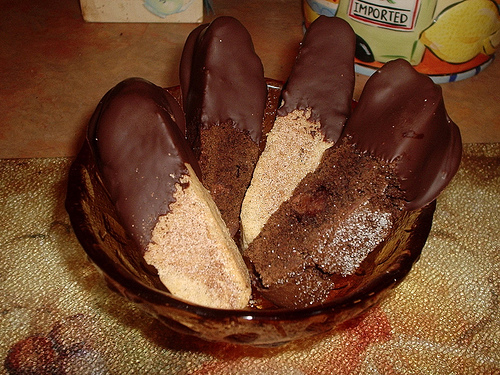
I’m too cheap to have texting as an option on my phone and too clumsy to text anyway. I’m not confessing anything about dropping change I meant to put in the tip jar or knocking over biscotti on display (although really, that display was clogging up counter space).

The upside of no texting? I read and write unimpeded at that same coffee shop while all around me tiny rectangles brrrr and thumbs tat in a display remarkably similar to old sci fi versions of humans controlled by robotic forces. The downside of no texting? I’m forced to leave voice mails on my cell phone. According to the hilarious (frightening) site How Not To Act Old leaving voice mail decidedly marks a person as well beyond their 20’s. Not a problem, the casual observer could tell that about me from my boring hair and tendency to knock over biscotti.

*

My son’s 80-something bagpipe instructor pirates and shares music.

I still buy CD’s and don’t own an iPod. I’m glad that wind through the trees is the soundtrack to my daily walk, but really, if I got around to gathering music in handy digital form I’d spend forever assembling it. I’d cheerfully search out lost tracks from vastly unappreciated musicians like Frazier & Debolt. I’d linger over the task while choosing a ridiculous array of opera, Scandinavian folk and Mongolian throat singing. Then with my short attention span I’d probably weary of each piece after one listen.

Wind in the trees is free.

*

And one last lament. Thank Gawd I live with tech support. I happen to love these people but their presence here is also vital to my work life. If I don’t get immediate help when trying to deal with simple problems like unzipping old files sent by certain maniacal interview subjects I tend to shriek at the blameless screen.

That scares the dogs sprawled at my feet, which activates my ever-ready guilt, forcing me right out of the house and off for a walk with wind as my soundtrack or, if the tech problem is really serious, off to a coffee shop where an innocent display is just waiting to tip over. Perhaps it’s a message that I should develop a taste for biscotti.

*

*

*

*

Creative Commons images

texting thumbs courtesy of TheKat11 http://thekat11.deviantart.com/art/Texting-100020644

pirate image courtesy of mrs.mcD’s photostream flickr.com/photos/cordandme/492100572/

biscotti image courtesy of La Mia Cucina’s photostream  flickr.com/photos/25901168@N00/313577580/

How to Raise Global Learners

raising global learners

Living on a farm we don’t have the time or the means to travel. But we want our children to be global citizens. We want them to truly understand how fully they are linked to their fellow beings on this beautiful blue green planet.

When they were small we read stories, ate the foods, played the games and celebrated festivals from far-off lands. As they got older we paid close attention to a rich variety of in-depth materials that helped us discover the global fibers that run through history, art, science, literature, really through any field of interest.

More than any materials we introduce, the connections my kids find most pivotal are those they make on their own, person-to-person across any distance. For example, one of my musician sons got interested in acoustics. He joined special interest forums to talk with fellow aficionados around the world about technical details of repairing historic microphones, the artistic nuances of found sound recordings, and other topics. Friendships developed. Now they converse about everything from politics to movies. Some day, when he travels overseas, he plans to take them up on their offers to stay in New Zealand, Finland, Brazil and elsewhere. Already he’s visited friends made online in the U.S., finding the rapport they developed holds fast in person as well.
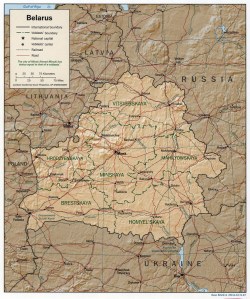
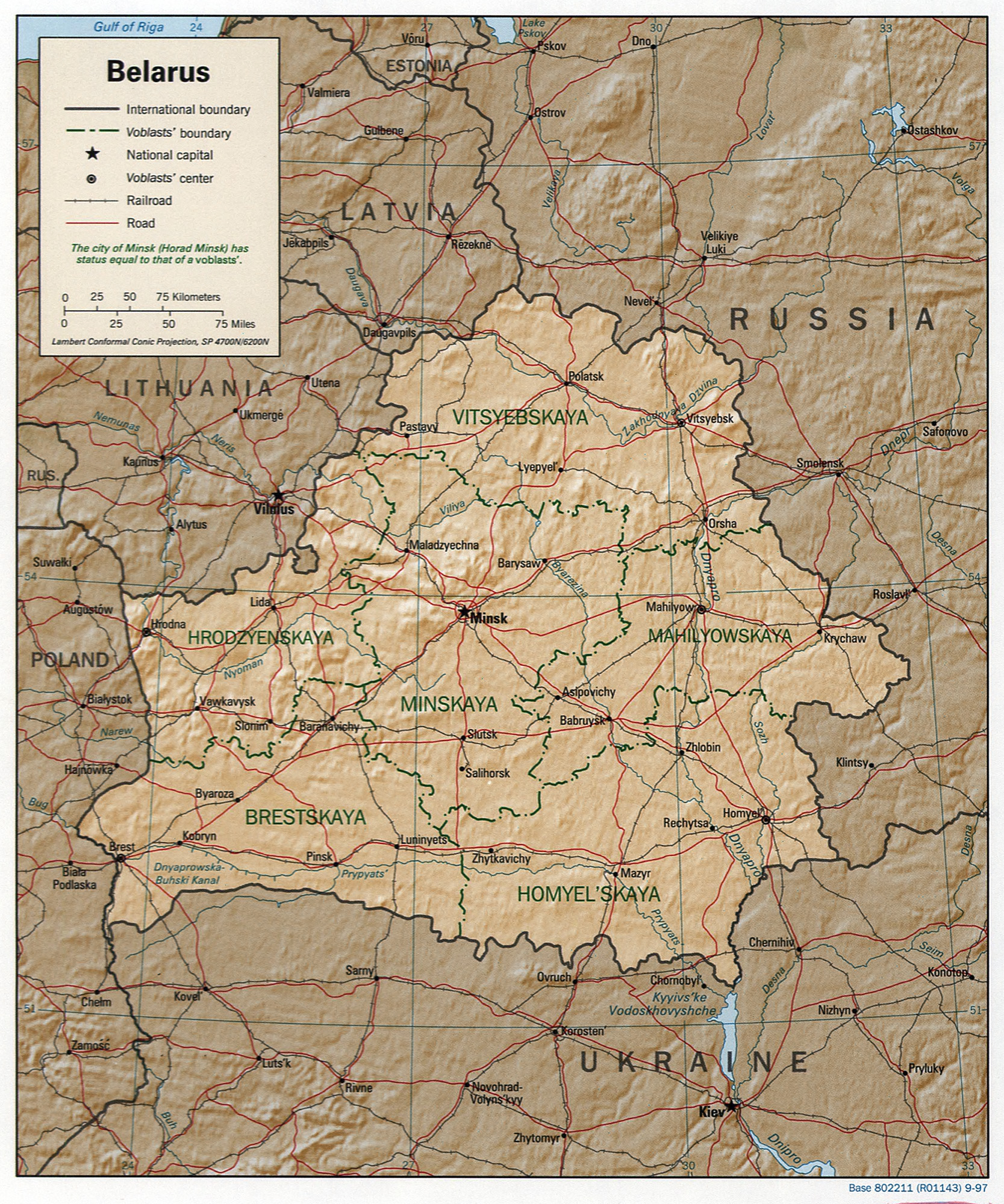
Perhaps the most important connections any of us can make are lasting, caring relationships with people who live far away. For our family, one of the most enduring relationships we made was with an effervescent girl from Belarus named Tatiana. She came as part of the medical program Children of Chernobyl. Even in her first week here, the strength of her personality more than made up for the few words of English she knew and our poor pronunciation of Russian words we thought we knew. Tatiana was horrified by my vegetarian meals, refused to participate in the activities my outdoor-loving children preferred and let us know that she hadn’t traveled so far to live like a peasant. She wanted to be entertained! Like anthropologists to our own culture, we explored shopping malls and tourist sites, we bought kids’ fast food meals for the prizes and went to amusement parks rather than wilderness areas. Tatiana displayed her brilliance in many ways, typically beating any of us at board games we’d played for years and she’d just learned. Tatiana lived with us for five summers. She became a member of our family, a family which feels to us as if it extends to Belarus.

Each connection made of understanding and caring warms our planet—but in a good way. Which leads me to recommend two new books about raising global citizens.

Growing Up Global: Raising Children to Be At Home in the World by Homa Sabet Tavangar is packed with enrichment ideas, games, service activities and resources to help raise children with the world in mind. Here are five great ideas from Tavangar’s book:

*Boost cultural understanding and fun by listening to pop music from around the world.  (I suggest using online translation to figure out the lyrics.)

*Talk about the origins and trading routes of products used every day in your home. Try tracing back a chocolate bar or t-shirt.

*Discover what foods are said to heal common health conditions. Lime juice in armpits is recommended in Paraguay to solve odor, ginger and green onion tea is recommended in China to cure a cold.

*Learn about practices for welcoming newborn babies into the family and community. Consider adapting customs to commemorate a new arrival in your family.

*Make humanitarian work a family affair. It’s possible to extend benevolent choices even to the search engine you use. Try http://www.ripple.org where 100% of search revenues help alleviate urgent global issues.

And for a vigorous “go there” perspective, give The New Global Student: Skip the SAT, Save Thousands on Tuition, and Get a Truly International Education by Maya Frost a read. A cure for any but the worst helicopter parents, Frost shows how learning in other countries best prepares today’s teens for the real global workplace. That means choices resulting in self-reliant, confident and bold adults.

Here are five great perspectives from Frost’s book.

*Stories throughout by young people who live and study abroad. Frost calls them “bold statements” and they offer invigorating examples of what travel can provide.

*Why Rotary International Youth Exchange program www.rotary.org offers the best exchange programs. Frost says it has to do with the network of volunteers around the globe providing support to families and students, the affordable price and the commitment to humanitarian work.

*The stage of life between fifteen and twenty, when pivotal life skills are being developed, the reach of our young people tends to be limited. As Frost writes, “They zero in on the fit of their jeans rather than on the fit of a cultural identity within a larger population, and they devote hours to enhancing the clarity of their skin instead of the clarity of their thinking. They are digging into a plate of pettiness because that is precisely what we’ve served them. They deserve–and are ready for–so much more.”

*How to arrange study abroad credits outside of university affiliated programs for more freedom and frugality.

*Ways to connect with helpful people in countries around the world.

*

May your children become global learners. May our shared home be one of peace and goodwill.
Spreads Like Butter But No Calories: Kindness

No matter how many times someone claims that humans are naturally selfish and aggressive, they’re wrong.

We’re constructed for compassion.

It’s easy to tell. Our bodies function best when we’re in a state of cooperation and caring. Research shows this in our skin, our brains, nervous systems, our hearts. Research also proves this whether looking for physical, emotional or social benefits.

Kindness, generosity and compassion not only keep us healthy as individuals, they bind us together in networks of family, friends, neighbors and co-workers. These networks spread across the globe for many of us, drawing us in close circles of caring despite distance.

As we grow up we learn to emphasize some behaviors over others, but it appears we speak an innate language of kindness before we speak in words. Hard to believe? Take a look at babies. As reported in, Why We Cooperate (Boston Review Books), studies of babies between one to two years of age show them remarkably eager to help, share and cooperate. Not true of our ape friends. Similar studies of chimpanzees show them to be selfish, particularly when they can get more food for themselves.

James Fowler and Nicholas Christakis, authors of Connected: The Surprising Power of Our Social Networks and How They Shape Our Lives write that cooperative behavior is not only natural, it’s contagious. When people benefit from the kindness of others they go on to spread the compassion. The tendency to “pay it forward’ influences dozens more in an enlarging network of kindness. And even more heartening, the effect persists. Kindness begats more kindness, blotting out previously selfish behavior.

These findings amplify what anthropologists are now saying (see Beyond War: The Human Potential for Peace), that the long progress of humanity has been made possible through generosity and cooperation.

Christakis says, “Our work over the past few years, examining the function of human social networks and their genetic origins, has led us to conclude that there is a deep and fundamental connection between social networks and goodness. The flow of good and desirable properties like ideas, love and kindness is required for human social networks to endure, and, in turn, networks are required for such properties to spread. Humans form social networks because the benefits of a connected life outweigh the costs.”

*

*

*

“If there is anything I have learned about men and women, it is that there is a deeper spirit of altruism than is ever evident.

Just as the rivers we see are minor compared to the underground streams, so, too, the idealism that is visible is minor compared to what people carry in their hearts unreleased or scarcely released.”

Dr. Albert Schweitzer

*

*

*

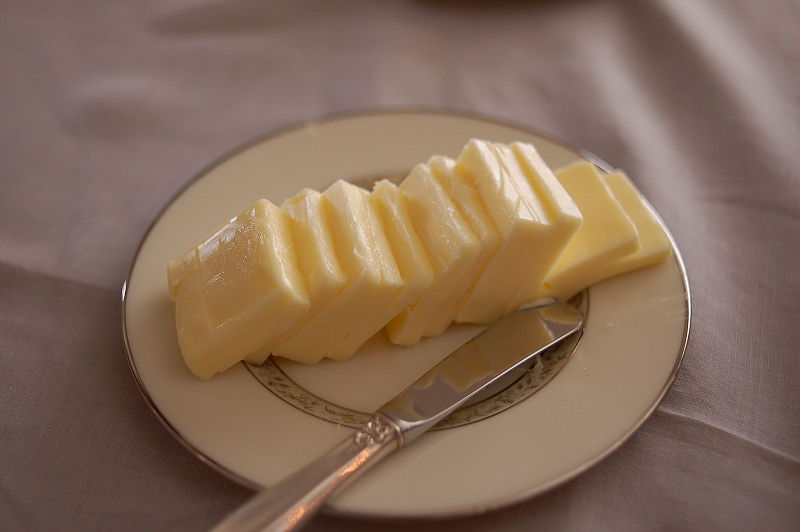
Butter image Creative Commons.  Children holding hands image thanks to Bill Gracey’s Flickr photostream.

Singing From the Inside Out

I can’t sneeze in a roomful of my friends without hitting a number of talented singer-songwriters who’d love to make a living through music. (Yes, a metaphorical sneeze.) Yet nearly every gifted artist any of us know has to ignore his or her gifts in order to make a living.

What cultural transformation might we see if those drawn to poetry, sculpting, composing, painting or other mediums of expression had some hope of living by their art?

Well here’s some hope.

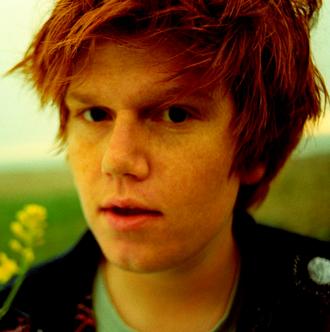
A homeschooled guy who chose to help out with a worthwhile project now appears with John Mayer, Sheryl Crow and the Dave Matthews Band. His songs are heard on House and Ugly Betty. And more importantly, he sings about what matters to him.

See if the questions posed by this deceptively beautiful piece, “Ain’t No Reason,” resound long after the music is over.

Brett Dennen grew up in rural California, homeschooled along with his brother and sister. In an interview with Frank Goodman for Puremusic.com Dennen describes his mother’s homeschooling approach as “experiential.”  He says, “…so she rarely had a lesson plan or anything like that. She would give us books, and we would read the books. And we did a lot of gardening, and we did a lot of science education through being outside. We took camping trips with other kids who were homeschooled. And when we were out camping, we learned about rivers and forests and mountains and geology. We’d take books out camping with us, and we’d read about it, and we’d look for what we’d read about. Experiential education basically means instead of being in a classroom and being taught or told something, to actually go out and see it, and see how it works and learn through experiencing it instead of learning through being taught or told it. And that was really valuable to me.”

Dennen took the same approach when learning music. As he says in the same interview, “Because of the way I was homeschooled, I got into the idea of trying to learn how to do things my own way. And so when I started playing guitar, I taught myself. I took lessons for a while, but I lost interest in them because I think I just didn’t like going to my lessons, I didn’t like my teacher, I didn’t like what I was learning. So then I quit. And after I quit, then I really started to learn.”

He went to college planning to become a teacher. While a student, Dennen met Lara Mendel at a wilderness-safety class and the two of them wrote a humorous song about backwoods diarrhea for a class assignment. Mendel happened to be developing a powerful hands-on program for children, one that tackles intolerance and violence head on. She named it The Mosaic Project. Dennen wrote songs to reinforce the activities. Now his music and her project teach hundreds of California children about acceptance, friendship and peace in each session of The Mosaic Project.

The creative and independent spirit of Dennen’s homeschooling background hasn’t left him. Goodman’s interview opens with these comments. “He’s like a new kind of human being to me, this Brett Dennen. After spending time with him this week, I feel that way even stronger than after the positively confounding impression that his new CD, There’s So Much More, left on me. If he’d said that he was an alien, I could have swallowed that; it would even have made sense to me. Because I’m simply not accustomed to meeting and spending time with people that appear to be so incorruptible, so odd and yet so self-assured; so, uh, enlightened and inner-directed, if I might venture all that.”

I don’t know if Dennen’s life up to this point says more about homeschooling or about doing the work of one’s heart. I do know there’s no separating the two.

Dear Cleveland

*

*

*

Dear Cleveland,

*

What’s with the lonely sidewalks? You’ve got so much to offer. No, I’m not saying that because I feel sorry for you. You have a great personality and a good heart, that’s what matters.

Wipe that look off your face right now. How many times have you been told to stop putting yourself down? I don’t care who called you America’s Most Miserable City. Someone didn’t raise those name callers right. That’s right, you laugh it off.

You don’t need to prove yourself with casinos or a med mart or port development just because everyone else is doing it. Stop comparing yourself to all those other cities.  It’s how you treat one another that counts.

You know you can sing and dance with the best, and that’s after you beat them all in science class. If no one asks you to play, don’t think about it another minute. You already know how to party hearty don’t you Cleveland?

When you feel small, know that’s because the bounteous arms of Sister Erie embrace you and the blessed skies look upon you. So clean that grime from your windows. Smile at the weather, greet your neighbors and tell your stories.  Remember, you are wise as your oldest people and lively as your newest baby.

You’ll always be my Cleveland. Don’t you forget that.

*

Love,

Laura

*

*

*

Photo courtesy of ifmuth’s Flickr photostream

Real Action Footage Hard to Find: World’s Most Powerful Force Rarely Filmed

*

*

*

*

*

*

*

*

Few talk about it. Fewer know much about its principles or how to apply them. Yet it has a profound impact, a long history and a reach nearly as wide as heaven. I’m talking about non-violence.

Sure, we know a bit about the civil rights movement and a bit about Mahatma Gandhi, but not much. Mainstream media focuses on the changes wrought by violence.

Pacifism is confused with those who are passive. Nothing could be further from the truth.

Consider Liberia. This nation was birthed by colonization and racism. It existed in oppression for over 150 years. A few years ago Liberia was a land torn apart. Dictator Charles Taylor’s reign imposed hunger and brutal killings on Liberia’s people. The rise of rebel groups made the situation worse. Children were forced to become soldiers. They roamed the countryside stealing, raping and killing. Villages were burned. Brutalized refugees crowded the cities. No one was safe. No one knew where to turn. The only answer lay in the powerful force of love in action, non-violence.

By 2003 women began gathering at their own risk to demand peace. They wore white and sang in the marketplace. They called themselves Women of Liberia Mass Action for Peace. Their numbers grew. Against tradition, Christian and Muslim women worked together—singing, praying, planning and insisting on love. They held signs as truckloads of soldiers drove past, the same men and boys who terrorized them. Their signs said, “We love you. Put down your guns.”

Ignored at first, their numbers grew. As peace marchers walked past, other women joined in from the streets. Children sang along. Women of Liberia Mass Action for Peace tactics included passive resistance, withholding sex (in part to avoid birthing children who would later be raped, killed or forced to become soldiers) and insisting on reconciliation. Finally they forced a meeting with President Taylor, where they made him promise to attend peace talks in Ghana. Then they bravely met with representatives of the rebel faction, who also agreed to attend the peace talks.

A delegation of Liberian women went to the talks in Ghana at their own expense. They waited outside the hotel where negotiations were held, wearing white as reminding presence. The men stayed in luxury, stalling as they attempted to get more and more power for themselves without agreeing to more rights for the citizenry. After weeks of these fruitless talks the women learned that an embassy in Liberia had been bombed and war there had intensified. Afraid for the families they’d left behind, they took another risk. Entering the hotel, one hundred women linked arms outside the doors of the negotiating hall. They intended to force the men to stay without food and water, privations Liberian refugees knew well, until they had reached an agreement. Guards threatened them. One of the rebels kicked at them.

Leymah Gbowee, a leader of Women of Liberia Mass Action stood. She began to take off her clothing. This was a last resort. It is taboo to see one’s sister, mother or grandmother unclothed. The guards backed down. Two weeks later an agreement was signed.

When Liberia held landmark elections, Ellen Johnson-Sirleaf became the African continent’s first elected female head of state. Yet look around. The extraordinarily brave, powerfully liberating work by Liberian women went largely unnoticed by major news organizations.  Heck, even the Liberia page on Wikipedia doesn’t cite their involvement. Stephen Colbert’s interview with Leymah Gbowee promos the sex strike angle.

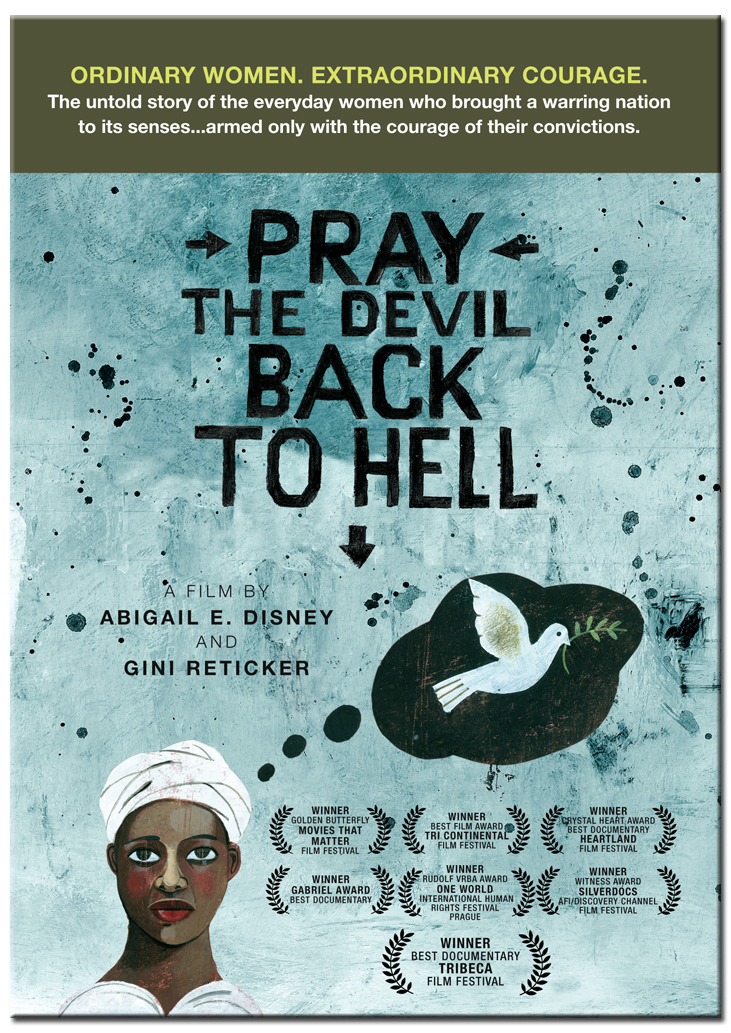
An extraordinary documentary about Women of Liberia Mass Action, called Pray the Devil Back to Hell came out in 2008.  Producer Abigail E. Disney couldn’t rely on footage shot by news organizations. They barely cover non-violence. Instead she managed to find three years of material on the peace movement that shifted the course of history from “private individuals who just happened to be there with cameras.”

We can do more than thank goodness.

We can use non-violence so that goodness is a force for change.

The Beauty of Ordinary People

“Not everything that can be counted counts, and not everything that counts can be counted.”

Einstein

*

*

*

*

The world is full of ordinary, wonderful people.

Ever since I learned about Randy Stang in Regina Brett’s Plain Dealer column his example of casual grace has helped me see greatness in a new way. Those who bring out the best in themselves have a way of doing that.

Most people who get media attention are nothing like us. They’re obnoxiously wealthy, phenomenally talented or otherwise good at accumulating fame.

A great deal of publicity is also devoted to those who bring out the worst in themselves. They commit crimes or wreak havoc more acceptably, perhaps as scornful political pundits.

Occasionally attention shines on people who devote themselves to a cause in ways we can’t imagine doing or who risk their lives to save a stranger. True heroes. We may marvel at their efforts but end up feeling worse about our own choices. Who can imagine sacrificing as these selfless people do?

But Randy Stang was not the sort of man who attracted attention. He lived with his family right by Bradley Park in Bay Village, Ohio. Tall lights lit up his yard till late at night. Enthusiastic yelling from nearby soccer, basketball and baseball games made for a noisy home. When Randy Stang heard about a proposed biking and skateboard park he decided to attend the public hearing. So did many of his neighbors.

He waited for his chance to talk holding three pages of notes. A middle school teacher spoke about the six years of resistance the skate park had already faced, saying Bradley Park was likely the last hope for local bikers and skateboarders. Residents also spoke, saying the noise and inconvenience of a skate park was unacceptable. They liked the idea of teens gathering somewhere but preferred that place be far from their backyards.

Finally it was Randy Stang’s turn to talk. He explained what it was like to live near the park. He mentioned the noise and lights. He noted that his garage had been broken into just two days before the public hearing.  Then he gave his opinion.

“I’m in favor of a skate and bike park in Bay Village in Bradley Park. I am wondering if the citizens against the park have no grandchildren, no children, or are not a child themselves.”

He finished, saying, “You want to put it just to the north of that baseball diamond there, probably about 50 feet from my yard.”

Then Randy Stang collapsed. A nurse and doctor performed CPR to no avail. But his efforts were not in vain. It looks like Bay Village will be building The Stang Memorial Skate and Bike Park.

People who are acclaimed every day in the media don’t exemplify us. It’s the uncelebrated lives of ordinary, wonderful people who form the bedrock of human existence. These people are next to you and across the world. Chances are they won’t gain notice unless they perish dramatically while simply being themselves.

Unselfish acts performed a million times a minute weave us together as a caring species. We tend to the helpless, comfort the sorrowful, share knowledge and create happiness. It happens most often in small, unnoticed ways. This is why I know humanity has every hope of skating ahead toward the very best possibilities.

*

*

Creative Commons photo collage


Our Kid’s Pursuits Are Their Own

Snake wrangler, computer geek, vintage auto restorer. These are a few of the identities one of my sons tries on as he masters areas of interest to him.

He used to patiently stalk alongside our creek and behind the woodpile to find snakes. He didn’t hurt them or even keep them for more than a few minutes. I’m not sure even now what the object was other than a pursuit of something that fascinated him. He brought many of his captives up to the house where we marveled at them before he released them. Personally I prefer to marvel at snakes from a healthy distance but I can squelch the shivers when necessary. He didn’t just wrangle snakes, he also studied huge reference books about snakes, drew pictures of snakes, talked about snakes. Then one day he moved on to other interests.

Mostly out of necessity he put together his first computer from cast-off parts. That started a new obsession: bettering computer operations. He became particularly intrigued by the cooling systems. I listened, or at least kept my head swiveled in his direction, as he gave excruciatingly in-depth explanations about cooling system modifications and the resultant effect on computer efficiency. He taught himself so well that he’s still paid to fix our friend’s computer problems, both software and hardware. Sometimes he shakes his head sadly at how poor cooling compromises these systems.

He became interested in auto restoration before he was old enough to drive. Using money earned by shoveling manure from horse stalls, he bought a 1973 Opel GT. He clearly relished the time and mess it took to carefully tear nearly everything out of the car. Now he is in the rebuilding phase, his progress limited to what parts he can afford.  He shares details with us at the dinner table and tracks each step with friends on forums. The day his little Opal is roadworthy I know that acclaim will come from friends, family and forum pals all over the world.

My husband owned his own computer business and has always fixed our cars, but he recognizes (sometimes to his chagrin) that our son prefers to go his own way as much as possible. In fact, when a question about computers or cars comes up it doesn’t always stay in the realm of consultation. It’s just as likely to become a spirited debate. That’s the nature of young people as they prove themselves, and we try to understand. (That is, as long as the tools are put away.)

We’ve noticed that eager parental encouragement doesn’t always translate to more eagerness on the part of our kids. Sometimes we like a hobby, lesson or interest much more than our kids do. Sometimes, even when they’re winning awards, they don’t want to continue. Or perhaps our excitement has put a damper on the pursuit. As our kids get older this becomes more evident.

We’ve learned our kids’ interests are their own. There’s no real value in forcing, cajoling or otherwise pressuring a young person to stay with an endeavor that has lost its allure. Kids in our house have to stick with chores and other work obligations, not interests.

Child development expert David Elkind notes in The Power of Play: Learning What Comes Naturally it’s a misconception that children should “stick” to a pursuit once they’ve started in order to build better staying power for adult challenges. As Elkind writes, “The common assumption that commitment transfers from one activity to another is wrong.”

Making sure that a young person pursues interests for his or her own reasons, not the parent’s, keeps motivation alive and passion genuine. Research backs this up.

Sure, we can foster our children’s enthusiasm with our approval and guidance when necessary. But we can also show them by example. We can pursue our own interests with the kind of joy and fervor that can’t help but inspire. That’s my newest excuse for my own art projects. I’m not making a mess, I’m providing a good example!

Don’t Bother Mom, She’s Blogging About Motherhood

child

Motherhood is oriented to firsts.

Our   baby’s first smile,

first step,

first word.

After the baby is born,

some firsts seem to take forever.

First smile, first tooth,

first time mom can have an uninterrupted conversation

or read a book and remember the contents.

The only hint that it’s

not all about firsts

comes from older women.

enjoy them while they're young,

They fuss over our darling babies with delight.

When they do,

our traitorous babies make liars of us:

cooing back as if they don’t have colic and diaper rash

and the incessant ability to dominate our lives.

These older women speak

in some kind of code

known only to those

whose babies are long grown up.

(Maybe a secret society.)

The way they operate is so

consistent that clearly

it’s a ritual of some kind.

child

There’s always a pause

in their baby chortling.

They look us in the eye

to say some version

of the very same thing.

“They’re little for such a short time.” Or,

“These years go by so fast.” Or,

“Enjoy every moment.”

They want us to know something they didn’t know,

that no one really knows fully

until their babies are grown


Despite the exhaustion and sleepless nights

and the loss of one’s free time

to the cutest loud smelly creature ever,

the earliest years

are packed with heart-filling wonder.

When our babies grow up

we see

motherhood is also

filled with lasts.

The last time we’ll change

a diaper is worthy of a

celebration, true.

There’s also a last

time holding a little

hand to cross a street,

the last tucking into bed,

the last book read aloud,

the last

of many

blessedly ordinary

expressions of love

once enfolded

into daily

life with a child.

Such “lasts” line the

way toward our child’s

adulthood. They

remind us to cherish

every moment.

As a mother who is now shorter

(okay, much shorter) than each of her four children,

I claim the right to coo over babies

and tell new mothers in all seriousness,

“these years go by so fast.”

I haven’t been invited into the secret society yet.

I hope there’s not a dress code.

I’m NOT wearing any damn red hat.

*

*

*

Creative Commons image credits

Baby hand http://www.flickr.com/photos/andrewmalone/1114928353/

Woman and baby  picasaweb.google.com/…/9NX5sOZc8XwaveIURkiqGw

Eye flickr.com/photos/43927576@N00/531269809

Woman and baby flickr.com/photos/jm_photos/2057212651/sizes/z/in/photostream/

Woman and baby flickr.com/photos/iandeth/1949150981/sizes/l/in/photostream/

Angel girl  flickr.com/photos/tianderson/286211866/

Baby  flickr.com/photos/50824868@N00/197011571

Little girl flickr.com/photos/40379737@N00/3812002166/

Boys in street flickr.com/photos/mcsimon/1266570816/

Reading aloud flickr.com/photos/j_regan/8197734711/sizes/c/in/photostream/

Boy in tree http://www.flickr.com/photos/takile/5809992860/sizes/z/in/photostream/

What Do You Do Every Day?

What do you do every day?

That’s what people wonder about homeschoolers. Sometimes they ask us point blank, “Okay you homeschool, but what do you DO every day?”

It seems like a huge mystery that we self-compose our days, living and learning without the structure school imposes. And yes, sometimes we ask each other too because it’s too easy to get in a rut, especially when we operate from a limited concept of what it means to educate.

It’s a blessed relief to happen upon accounts of other family’s homeschooling days in Home Education Magazine as well as books such as Real Lives: Eleven Teenagers Who Don’t Go to School Tell Their Own Stories by Grace Llewellyn, Homeschooling: A Patchwork of Days: Share a Day With 30 Homeschooling Families
by Nancy Lande and Homeschool Open House by Nancy Lande. Our grasp of the possibilities expand as we read each person’s perspective. We see that every homeschooling family flourishes somewhat differently. That is a freeing revelation.

The blog Homeschooling is Freedom is another place to glimpse tantalizingly different answers to “What do you do every day?” Here you can find new and archived interviews with homeschooling families. Through four simple questions, Debbie H.’s blog highlights the wonderfully flexible and enjoyable ways we learn in our own ways. Click here for some appalling revelations about the Weldon family.

*

*

Creative Commons image from Sean Dreilinger’s Flickr photostream