Courage & Vision

“The children almost broken by the world become the adults most likely to change it.”   ~Frank Warren

In this heartbreakingly beautiful and suffering world, I am still full of hope. There are many reasons why. One  of them is the newest generation of teens and young adults. I may be a worn out almost-activist, but I’ve put enough time in meetings, marches, petition drives, and workshops over the years to know I’ve never encountered more informed, passion-fueled people than those who are currently aged 14 to 30-something.  

The pressures on young people over the last few decades have been intense and continue to worsen. Here in the U.S. they have been raised with active shooter drills and horrific mass shootings, crushing student loan debt, rapidly increasing wage disparity, ongoing prejudice, ever-escalating climate catastrophe, and the belligerent ignorance that fuels rapacious capitalism. They are furious and they are doing something about it.

We’re talking a lot of people, well past the number necessary to serve as a tipping point for large-scale social change.

The most sizeable age group in the country right now is made up of adults aged 25 to 29. Add in those 15 to 25, and 29 to late 30s, and we’re talking a substantial portion of the population. A recent Deloitte survey of those in the Gen Z and Millennial age range show the majority hold themselves and others accountable for profound change. This includes a commitment to regenerative environment/climate solutions, recognizing and addressing systemic racism in society and its institutions, dealing with income inequality, and demanding greater access to affordable housing and healthcare. They are taking action in myriad ways:  

  • choosing experiences over products
  • using second-hand and recycled items
  • prioritizing downtime over workaholic schedules
  • demanding inclusive policies in academic, media, and workplace
  • volunteering and/or setting up businesses to realize their goals
  • expecting sustainable policies from source to sales in what they buy
  • pressuring employers to upgrade and act on environmental. social justice policies
  • participating in protests, boycotts, and other ongoing actions
  • voting in record numbers
  • running for office in record numbers      

Maybe that’s why so many who want to stay the (rapidly failing) course would rather marginalize the energy and vision of today’s youth. But if ever a country needed the courage of fresh ideas, it’s now.

We can work forward while looking back to find what history can teach us – without romanticizing mistakes of the past. This is especially true when a well-funded segment of society is dedicated to dragging us back into past mistakes.

Since these particular dinosaurs insist they know precisely what the founding fathers meant when they established a new country, lets consider a few stories of the many young people who were involved in the formation of the United States. How old were they on July 4th, 1776?

15 years old: Deborah Sampson had been bound as an indentured servant when she was 10 years old. By the age of 18, the self-educated young woman was free of her indenture and worked as a teacher as well as a weaver. With the Revolutionary War raging in 1782, she disguised herself as a man and joined the war effort. She took on dangerous assignments which included working as a scout to assess British buildup, leading expeditions, and taking part in raids. To keep her gender hidden, Deborah even dug a pistol ball from her thigh when she was shot. It was only when she fell ill during an epidemic that her identity was outed. She received an honorable discharge.

15 years old: Sybil Ludington was the daughter of a New York militia officer. When a messenger alerted her father that Governor William Tryon’s forces had attacked Danbury, Connecticut she leaped on a horse to ride through the night, during a thunderstorm, nearly 40 miles in all, to sound the alarm. Danbury was the location where munitions and stores for the entire region’s militia were stored. British troops destroyed tons of meat, flour, and grain as well as tents and other supplies. They set fire to homes, businesses, and a church but spared Tory homes. The brutality of their attack led thousands of men to join the Connecticut Army of Reserve. Sybil was unaccompanied on her ride, unlike the more famous Paul Reverse. She also rode twice as far, was half his age, and was not arrested as Revere had been. A grateful General George Washington came to her home to thank Sybil for her heroic ride. 

16 years old: James Armistead Lafayette was an enslaved teenager when he was permitted to enlist in the French Allied unit. The army sent the young man (acting as a runaway slave) to General Cornwallis’ British headquarters. James was welcomed thanks to his extensive knowledge of the terrain. He became a remarkably successful spy for America’s cause. He relayed essential information to Marquis de Lafayette (who was himself only 19 years old in 1776). His intelligence provided information critical to victory in the Battle of Yorktown. Despite his service, James was forced to return to enslavement after the war’s end. For several years he petitioned Congress for his freedom under the Act of 1783 without success. When Lafayette learned of his old comrade’s struggle, he wrote a letter to Congress on his behalf. James Armistead added “Lafayette” to his name in honor of his friendship with General Lafayette.     

21 years old: Nathan Hale was a captain of the 19th Regiment of the Continental Army when General George Washington asked if anyone would volunteer to gather information from the enemy. Nathan stepped forward. He slipped behind British lines disguised as a schoolmaster and gathered information throughout the next few weeks. During this time, the British invaded the island of Manhattan. Nathan was captured carrying documents while crossing back into American-controlled territory and was executed the next morning.

21 years old: Alexander Hamilton was orphaned at age 13 and immigrated to America at age 15. He wrote a series of anonymous pamphlets about Britain’s control of the colony and in 1775 formed a volunteer militia with fellow college students. He worked on General George Washington’s staff until the two had a falling-out. Alexander is known as a framer of the U.S. Constitution, co-author of The Federalist Papers, and the nation’s first Secretary of the Treasury.

24 years old: Betsy Ross, aka Elizabeth Griscom Ross, was raised by a Quaker family and became a skilled seamstress. She defied her family by eloping with John Ross despite being warned her family and Quaker community would shun her for marrying a non-Quaker. She and her husband established an upholstery business. John joined the Pennsylvania militia and was killed in an explosion. A few months after being widowed, Betsy met with a secret committee from the Continental Congress who asked her to create a flag that might unite their various militias. She completed the flag shortly before the Declaration of Independence was read aloud in July 1776.  Betsy’s part in the independence movement was unknown by the British, who a few months later forced her to house occupying British soldiers in her home. When they left she wove cloth pouches to hold gunpowder for Continental soldiers. After the revolution, Betsy made U.S. flags for over 50 years.  

Overall, the average age for Declaration of Independence signers was 44, with more than a dozen 35 or younger.

This isn’t a time to step back, expecting teens and the youngest adults to clean up the mess we’ve made. It’s time to step up our support for their vision of a regenerative, inclusive, wildly beautiful future. Starting now.

Bread & Roses

The last few days my main earworm has been a song I used when I led nonviolence workshops. I usually played it for one of our last sessions, after we’d learned about the inner work of nonviolence, then moved onto the interpersonal, then the community level, and ending with the global — all inextricably intertwined. The song is so illuminating to me because it makes clear peaceful change can’t help but benefit more than the intended group.

“Bread & Roses” was first a poem written in 1911 by James Oppenheim, who was himself inspired by a speech by factory inspector and women’s suffrage campaigner Helen Todd. During a speech Todd called out “bread for all, and roses too!” Her 1910 speech said, in part,  

“…woman is the mothering element in the world and her vote will go toward helping forward the time when life’s Bread, which is home, shelter and security, and the Roses of life, music, education, nature and books, shall be the heritage of every child that is born in the country, in the government of which she has a voice.”

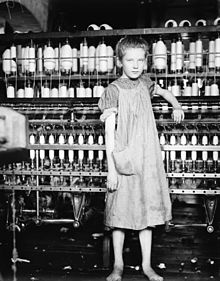
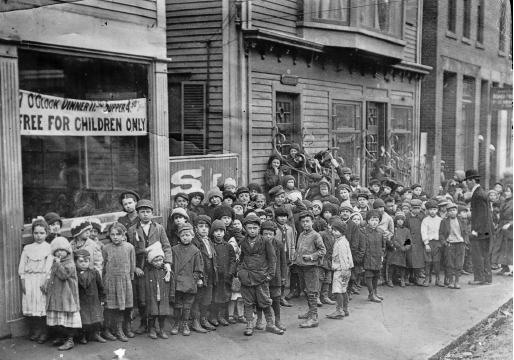
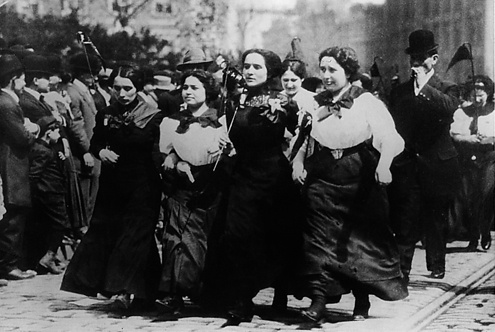
The phrase became a rallying cry during the 1912 women’s millworker strike in Lawrence, Massachusetts. Women were fighting for fair wages, child labor laws, overtime pay, and fair working conditions. Part of their strike proclamation read:

“We, the 20,000 textile workers of Lawrence, are out on strike for the right to live free from slavery and starvation; free from overwork and underpay; free from a state of affairs that had become so unbearable and beyond our control, that we were compelled to march out of the slave pens of Lawrence in united resistance against the wrongs and injustice of years and years of wage slavery.”

As the Zinn Education Project notes, 

The 1912 Bread and Roses Strike in Lawrence, Mass., was one of the most significant struggles in U.S. labor history due to its level of organization and collaboration across ethnic and gender lines. Thousands of largely female workers engaged in a lengthy, well-organized, and successful walkout, standing firm against an entrenched group of mill owners and their hundreds of militia and police. Workers maintained soup kitchens and nurseries for children. Meetings were simultaneously translated into nearly 30 languages. Representatives from every nationality formed a 50-person strike leadership group.

The song “Bread & Roses” speaks of the deep human desire, not merely for the necessities of life, but for the creation of, and participation in a community cognizant of beauty.    

I’m sure this song has set up camp in my head because of my deepening despair over recent Supreme Court rulings, so many of which trample precedent while tearing down some of democracy’s foundation stones.

  • Only a few weeks after the tragic and preventable slaughter of schoolchildren and teachers in Uvalde, the court ruled against the long-established rights of states to place their own restrictions on guns.
  • In a two-strike blow against separation of church and state, the court ruled that religious schools must receive state tuition money and that public teachers/coaches have the right to pray with students
  • In a damaging blow against the First Amendment, the court ruled the government was not required to disclose information about a Guantanamo Bay detainee’s torture.   
  • The court overturned Roe v Wade, with serious consequences not only for health, privacy, self-determination, and equality — it also opens the way for draconian “bounty” laws setting Americans against one another for profit like those already enacted in Texas.
  • Just weeks after the UN’s Intergovernmental Panel on Climate Change released a report saying we’re in a state of “code red for humanity,” the court ruled against the EPA’s ability to regulate emissions across the energy sector (the sector primarily responsible for escalating climate damage).
  • Next week the court is set to rule on Moore v Harper, an appeal advocating for extreme interpretation of the Constitution that could make it easier for state legislatures to suppress the vote, draw unfair election districts, and enable partisan interference in ballot counting.

I tremble for our democracy. My greatest hope rests in what Helen Todd showed us. We create peace by advocating for all of us. And doing so peaceably is the most powerful way forward. History shows nonviolent protests are twice as likely to succeed as armed conflicts, and can’t help to succeed once such protests have engaged 3.5% of the population.

Lets get out there and sing.

BREAD & ROSES 

As we go marching, marching
In the beauty of the day
A million darkened kitchens
A thousand mill lofts gray

Are touched with all the radiance
That a sudden sun discloses
For the people hear us singing
Bread and roses, bread and roses

As we go marching, marching
We battle too for men
For they are women’s children
And we mother them again

Our lives shall not be sweated
From birth until life closes
Hearts starve as well as bodies
Give us bread, but give us roses

As we go marching, marching
Unnumbered women dead
Go crying through our singing
Their ancient call for bread

Small art and love and beauty
Their drudging spirits knew
Yes, it is bread we fight for
But we fight for roses too

As we go marching, marching
We bring the greater days
For the rising of the women
Means the rising of the race

No more the drudge and idler
Ten toil where one reposes
But the sharing of life’s glories
Bread and roses, bread and roses

Our lives shall not be sweated
From birth until life closes
Hearts starve as well as bodies
Bread and roses, bread and roses

Finding Solace In Poetry

“In the end we go to poetry…so that we might more fully inhabit our lives and the world in which we live them, and that if we more fully inhabit these things, we might be less apt to destroy both.” ~Christian Wiman

How are you holding up? What is bringing you hope in these chaotic times?

Poetry is one thing I rely on for a handhold. Some poems sink in so deeply I feel I’m walking with the poets. Their words accompany me, opening me to see more and feel more. Sometimes comprehend more too. When the world’s anger and despair loom over me, poetry offers solace.

Lately I’ve turned to old favorites, each one a nature-drenched poem. Sharing a few in hopes they might help hold you up too.   

In “Life On Earth,” Dorianne Laux reminds us how outlandish it is to be here at all. “The odds are we never should have been born.”

Diane Ackerman’s “School Prayer,” offers a solemn pledge of a poem worthy of chanting each morning upon waking. “I swear I will not dishonor/my soul with hatred,/ but offer myself humbly…” 

Another chant-worthy poem is “A Charm Against The Language Of Politics” by Veronica Patterson, who reminds us to repeat the names of things. “Dig deep, pronounce clearly, pull the words/ in over your head.” 

Rosemerry Wahtola Trommer describes her practice of carrying the world’s beauty with her in “Why I Smile At Strangers,” writing, “I carry these things in my heart,/ more certain than ever that one way/ to counteract evil is to ceaselessly honor what’s good…” 

Poetry can offer us hope, but the poems that come alive for me aren’t a spoonful of sugar. They offer lasting nourishment. 

We cannot bring about a more regenerative and compassionate future using the same language that got us here– the kind churned out by advertisers, pundits, and politicians. Poetry calls us to make big world-restoring decisions by listening to voices wilder and wiser than our own. What does sea ice say? How about honeybees, gray whales, storm clouds, bonobos, leatherback turtles? What do our ancestors, leading all the way back to the First Mother, have to tell us? What do the smallest children want us to know? The oldest people? Poetry doesn’t offer answers, it simply helps to tune our capacity to see, hear, and be. That’s a start.

Hate Is Biodegradable

I know a woman who once hated her ex with such fury that she soothed herself by imagining all the ways she might kill him. She and he did the acrimony dance through lawyers long after their finances were left in ruins. Somehow they both believed they spared their daughter, having agreed to remain cheerful in her presence. The girl surely saw the grimaces inside their smiles.

Their loathing simmered for years until their child, at nine, was diagnosed with cancer. Both parents went to her appointments and treatments. They cried and prayed and hoped together. Their daughter survived. She grew up smart and strong. She recently got engaged.  

My friend is happily remarried and her ex lives with a much adored life partner. The two couples have been vacationing together for years. They laugh, they reminisce, they dance in ways that give each couple space. They talk about buying a big house or property with two homes so the four of them can move in together. They imagine a backyard roomy enough for their daughter’s wedding. Imagine it scattered with trees perfect for their someday grandchildren to climb. They message each other real estate listings all the time.

I think of countries around the world that were once at war, but are now on friendly terms. They read each other’s literature, savor each other’s cuisines, celebrate each other’s accomplishments. Tourists visit parks where war memorials stand under flowering trees. Suffering and loss can decompose over time into something nourishing, as nature so patiently shows us.  

This isn’t a perfect analogy in a time of division, especially when so many refuse to look at longstanding structural inequities and ongoing injustices. And trauma needs time and acknowledgement to start healing. But there’s hope. My friend just texted me a picture of a listing the four of them are considering. “It isn’t perfect,” she writes, “but its got so many possibilities!”

Backtalk

I was told little girls don’t howl like banshees. They don’t go around with messy hair and dirty ragamuffin faces. They say please and thank you. They keep their elbows off the table.

I heard for goodness’ sake, stop harping about not being hungry. There are plenty of children in the world who would be happy for what you’ve got. Don’t get smart with me, you know you can’t share your supper with them. You will clean your plate, missy, before going back outside. No need to panic because your friends are waiting. And no hiding food in your napkin. If you think that will work you’ve got another think coming. That’s quite enough backtalk from you.  

Not till I’m grown do I learn:

Banshee comes from my Irish kin, meaning a female fairy or woman of the elves.

Ragamuffin comes from Ragamoffyn, the name of a demon in a 14th century poem.

To harp comes from harpies, winged half-human half-bird creatures in Greek mythology representing hungry wind spirits who steal food.

Happy comes from my Nordic kin, from heppinn (fortunate) and hap (luck).

Panic is related to sudden terror when woodland god Pan lets loose fierce cries, causing enemies to flee and saving his embattled friend.

I am glad to live for goodness’ sake. But hair messy, elbows on the table, I fly beyond what I used to call remembery, toward a world where another think is, indeed, coming.

Worldplay Creates The Future

“Play is the exultation of the possible.”  Martin Buber  

When we were five years old, my friend Kim and I created a secret realm. It was ruled by a fearsome Queen named Calavina. To escape her evil magic we’d ride a rocking horse wildly, then fling ourselves into hiding places where we whispered desperate warnings to each other. Even when we weren’t playing, we honored that noble toy horse with a royal cape (a small blanket) draped over its back. We kept Calavina’s queendom alive for several years. Then one day we tried to enter her world of adventure and peril but found we were only acting. The enchantment had lifted.

Although the imaginary realms of my childhood weren’t very complex, some children create elaborate domains featuring backstories, unique customs, and made-up words where they propel characters through all sorts of dramatic events.

That’s true of 9 year old Cameron. Under his bed is another dimension.

The world he created rests on a sheet of cardboard cut from a refrigerator box. Some days Cameron spends hours playing with it. The ocean is aluminum foil raised in permanently cresting waves, inhabited by an exotic array of marine creatures made from clay. Forests filled with bright trees and plants are constructed from painted cotton balls, balsa, toothpicks, and wrapping paper.

Dotted between the Seuss-like trees are tiny shelters, each a different shape. This world is populated by creatures made out of beads, pipe cleaners, and fabric. They’re named Implas and their dramas keep Cameron busy. His mother says she has to remind herself that Cameron is the one changing it all the time, that his creation isn’t really growing.

Imaginary worlds like Cameron’s are called paracosms and this form of play is termed worldplay. Such worlds are as varied as children themselves. A child may document the statistics of an imaginary team, write and illustrate the adventures of traveling elves, create maps and translations for an alien planet, dream up magical messages hidden in the designs of a Persian rug, draw pictures illustrating a space family’s dramas. Some paracosms have no outer trappings at all, taking place entirely within a child’s mind.

Worldplay represents the apex of childhood imagination, according to expert Michele M. Root-Bernstein. She notes in the book Inventing Imaginary Worlds that worldplay is distinguished from more ephemeral make-believe play by its persistence over time, its congruence with the child’s sense of logic, its elaborative nature, and its personal significance to the child. A number of eminent individuals have revealed that worldplay was part of their formative years. A short list includes:

  • composer Wolfgang Amadeus Mozart and his sister Nannerl
  • writers Robert Louis Stevenson, the Bronte siblings, Anthony Trollope, C.S. Lewis, W.H. Auden, and Jack Kerouac
  • physicist David Lee
  • psychiatrist C. J. Jung
  • actor Peter Ustinov
  • sculptor Claes Oldenburg
  • astrophysicist Gregory Benford
  • philosopher Friedrich Nietzsche and his sister Elizabeth
  • paleontologist Nathaniel Shaler
  • zoologist Desmond Morris
  • neurologist Oliver Sacks

These worlds are often incredibly detained and time consuming. For example, Charlotte Brontë, along with her brother Branwell, created tiny hand-lettered and hand-bound books out of scrap paper. Each one was no bigger than one inch by two inches. These books expanded on the imaginary world they called the Glass Town Confederacy, populated by Branwell’s tiny toy soldiers which were both the audience for and protagonists in miniature books filled with stories, songs, maps, poems, illustrations, building plans, and dialogue.  

We’re probably underestimating how many children actually engage in worldplay. Consider playmates who return again and again to favorite, ever more complex make-believe scenarios. Or children whose imaginary friends persist in intricate parallel existences for years. And professionals who work with kids on the autism spectrum tell me that, at least among children they know well, many create detailed fantasy worlds.

Back in 1907, pioneering psychologist G. Stanley Hall studied the child’s mind at play. He reflected on two brothers who, over the course of several summers, created an imaginary world in a sand pile near their home. Hall declared that their play was the equivalent to months of regular schooling, a form of self-tutoring that taught them self-discipline, hands-on skills, and social collaboration.

In fact, researchers find that creative adults are much more likely to have engaged in worldplay as children. Interviews with ninety MacArthur Genius fellows found more than a quarter of them remembered creating intricate imaginary worlds in childhood while another 20 percent of the fellows report engaging in somewhat less elaborate worldplay. This is twice as high as the average population. It makes sense that childhood experiences of worldplay translate into adult creativity. More than half of the MacArthur fellows told researchers their current careers had to do with imaginary worlds. Scientists, inventors, composers, writers, and other innovators advance their fields by visualizing and creating beyond existing cultural paradigms.

Worldplay, like all make-believe, arises from self-directed play. Make-believe can’t be assigned. It’s a product of fallow time, even of boredom, and is more likely to happen when children have no other distractions.

As psychologists Dorothy Singer and Jerome Singer write in The House of Make-Believe, children who have plenty of time for free play are more imaginative and creative, have more advanced social skills, and are actually happier as they play. The Singers contrast two children who are given free-form playthings like dolls or building blocks. The child who has had plenty of experience with daydreaming and make-believe is comfortable coming up with pretend scenarios, and can easily find inventive ways to play with these toys. The child who has not had much experience with make-believe or daydreaming may find little engaging about the toys after a short time —- in other words, he gets bored quickly.  The imaginative “muscles” built by daydreaming, make-believe, and downtime simply haven’t developed.  

Make-believe, from the simple to the elaborate, is generated by the fun-powered creative genius native to every child. As children engage in make-believe they shape themselves as individuals while practicing the “what if” thinking so necessary for later decision-making. Yet fantasy doesn’t easily survive scrutiny, especially as children get older. It thrives in solitary play or with a few close companions where it’s safe from interference and judgment. Even when others overhear or know some elements of the imaginative play, secrecy allows children to preserve a personal space where their own sense of order can prevail.

Special powers are bestowed on all inhabitants of childhood. They slip easily into alternative realities with each other, in thrall with a world where they’re omnipotent. Through play they teach themselves to handle life’s larger terrors and triumphs, its injustices and rewards.

The way we raise children can preserve or dull a child’s capacity for imagination. Too often these capacities seem distant from our adult preoccupations and sadly, many of us still struggle to re-inhabit our own imaginations. Yet the world we call real is remade by each generation. What children do when they pretend actually broadens possibilities for the future they’ll grow up to create.

Do we leave room in children’s days for extended periods of fantasy? Do we allow them the freedom of make-believe without questions and scrutiny? Do we preserve the joys of imagination in our own lives? As Cameron’s mother says, “It’s the kids allowed to be their own quirky selves who grow up strong enough to be whoever they want to be.”

This post is one of many originally meant to appear in a book of my essays. That publisher is no longer in business. If anyone knows of a publishing company that might be interested, please let me know.

Peace In Action

This comes from my nonviolence workshop days.

Each week we talk about how to recognize and respond to the earliest hints of conflict, from the interpersonal to the global. We begin to see myriad creative, collaborative ways to respond. We also begin to recognize some of the things we’ve heard about, witnessed, or done ourselves have actually been examples of nonviolence. At the end of each session, I ask participants to share stories of peace in action. These stories strengthen our bones, build our world anew.

One day a woman describes driving home when she comes across three young teens hunched with menace over a fourth. One holds a length of wood at his side and it appears he’s used it on that boy. She finds herself pulling the car over, standing at her door, yelling leave him alone.

All four look up, incredulous. Why you stop for him? one boy jeers. She comes closer till the cowering boy stands up straight, his face impassive, and walks away.

She says, Does it matter who I stop for? Next time it might be you.

Same

I haven’t seen my favorite eight-year-old since Christmas Eve. Her parents are, again, being careful because of Covid case counts in our area. Although I miss her and her younger siblings so much I feel tearful writing this sentence, our occasional phone call lets me talk one-on-one with her in a way we rarely get to do during visits.

Today, our nearly 90 minute call started with guessing games. What Am I Thinking is her favorite. Some of today’s correct guesses turned out to be ladybugs, clouds, and atoms. Then we played Would You Rather, which simply consists of taking turns making up questions like, “Would you rather travel by hot air balloon or sailboat?” and “Would you rather be an elephant or a whale?” but she’s so darn mature these days that she tends to say, “I’d like to experience both.” This lasts until our questions get much sillier, like “Would you rather eat worms or garbage?”

She switched screens to show me her room which she recently cleaned and organized. Her large stuffed bear, who she’s named Friendly Bear, holds its own toy animal pal under one arm and a book under another. “I know you’ll like this,” she said, “because books are your favorite thing.”

We discussed which superpowers we’d choose. I said healing, so I could help heal the world. She said she’d like to be able to fly. “I’d fly over right now to hug you.”

We discussed what it’s like to talk to animals and trees. She and I agreed, they are very good listeners. “Especially when you’re sad,” she said. I told her I don’t hear dogs or trees answer in a way I can hear with my ears, but I sometimes I feel what they say inside of me. “Me too!” she said, “We’re just the same!”

Then she talked about how her mind likes to go so wild that she doesn’t notice time passing. She said, “I look around and say to myself, ‘How is this real? How am I real?”” I said, “Me too! We’re just the same!”

Where I’m Finding Delight This Week

****

I’m thrilled to be leading a free online workshop with the Ohio Arts Council, in partnership with Riffe Gallery’s newest exhibition. We’ll be writing about beauty, anger, despair, and the vital role of art in changing our world. It’s coming up this Thursday (Feb 3rd). If you’re interested, sign up here.

***

I adore Cremaine Booker’s exquisite recording of Faure’s “Pavane.” It’s heavenly in every way – from production values to his expressive interpretation. Pretty sure I’ve listened to this a dozen times. It’s currently my main earworm.   

  ***

This morning I learned that 65 species of animals laugh. A few years ago I wrote Are You An Anthropocentrist? with examples of our fellow creatures making tools, doing math, demonstrating altruism, and so much more. Pretty sure laughter is just the iceburg edge of what we don’t yet recognize…

***

I’m still thinking about a recent conversation with my friend Margaret. We discovered we’re both feeling the same exhaustion, confusion, and awe as if we’ve been communing on some nearby yet intangible realm. “It seems to me,” she said, “as if we’re all experiencing what the other experiences on some level.”

I told her that gave me a leap of hope. We as a global community are going through every bit of this together – disease, personal upheaval, uncertainty, and the ever-increasing perils of climate change – even if some are suffering far much more acutely than others. Maybe the anger and selfishness that’s so often in the news these days are coping mechanisms some people resort to when they’re trying to put boundaries between themselves and the sheer weight of compassion that’s trying to force its way in.     

***

I’ve been in a writer’s slump lately, so it’s a delight to have a poem published in Stirrings as well as a poem in As It Ought To Be.

***

I’m gratefully distracted by a stack of wonderful library books including Ari Honarvar’s A Girl Called Rumi, Joanna Macy’s memoir Widening Circles, and Barbara Brown Taylor’s An Altar In The World.

***

Another song in my head lately is the beautifully honest “Hope Comes” by Abigail and Shaun Bengson. As Abigail sings, “Hope comes from the center of the hurt.” Yes, yes indeed.

Darkness

Darkness

“Darkness deserves gratitude. It is the alleluia point at which we learn to understand that all growth does not take place in the sunlight.” ~Joan Chittister

“The moon is a loyal companion.

It never leaves. It’s always there, watching, steadfast, knowing us in our light and dark moments, changing forever just as we do. Every day it’s a different version of itself. Sometimes weak and wan, sometimes strong and full of light.

The moon understands what it means to be human. Uncertain. Alone. Cratered by imperfections.”

~ Tahereh Mafi

“When we open to the pain of our world, we discover our interconnectedness in the web of life. This is the gift of dark and dangerous times: to find again our mutual belonging.” –Joanna Macy

“Logic and sermons never convince,
The damp of the night
drives deeper into my soul.”
~Walt Whitman

“Meditating under the solemnity of the night sky… a mysterious transaction between the infinity of the soul and the infinity of the universe.”    ~Victor Hugo

“i want to be
in love with you

the same way
i am in
love with the moon

with the light
shining
out of its soul.”
~Sanober Khan

“Night is purer than day; it is better for thinking, loving, and dreaming. At night everything is more intense, more true. The echo of words that have been spoken during the day takes on a new and deeper meaning.”   ~Elie Wiesel

“There are stars whose radiance is visible on Earth though they have long been extinct. There are people whose brilliance continues to light the world though they are no longer among the living. These lights are particularly bright when the night is dark. They light the way for humankind.”    ~Hannah Senesh

“I don’t think existence wants you to be serious. I have not seen a serious tree. I have not seen a serious bird. I have not seen a serious sunrise. I have not seen a serious starry night. It seems they are all laughing in their own ways, dancing in their own ways. We may not understand it, but there is a subtle feeling that the whole existence is a celebration.”   ~Osho

“I often think that the night is more alive and more richly colored than the day.”    ~Vincent Van Gogh

“The world rests in the night. Trees, mountains, fields, and faces are released from the prison of shape and the burden of exposure. Each thing creeps back into its own nature within the shelter of the dark. Darkness is the ancient womb. Nighttime is womb- time. Our souls come out to play. The darkness absolves everything; the struggle for identity and impression falls away. We rest in the night.”    ~John O’Donohue

Originally appeared in Braided Way: Faces & Voices of Spiritual Practice