How The Secret Garden Saved Me

inner life of children, kids' religious worries, what kids hide from their parents,

My mother gave me an old clothbound book when I was nine years old.  It was her childhood copy of The Secret Garden by Frances Hodgson Burnett.  I felt a sudden tug of connection to the little girl my mother once was, especially when I found her name carefully penciled on the inside cover.  Right away, I signed my name under hers.

Although written in 1911 and clotted with Yorkshire dialect, that book became an essential nutrient to me.  It told the story of orphaned Mary Lennox who was sent to live with her silent brooding uncle on the English moor. Little Mary had no lessons imposed on her and was given the opportunity to explore.  I envied her freedom.  A character named Dickon befriended animals so easily that they gathered at his feet and ate from his hand. I, too, liked to go in the forest behind our house in hopes that woodland creatures there would come to accept me.  And I understood Mary’s response when her uncle inquired if she wanted anything. He suggested toys or dolls.  Instead she asked, “Might I have a bit of earth?”

More than my favorite book, The Secret Garden provided comfort at a time when I could find no other solace.  The year I received my mother’s copy was also the year that one after another of my grandparents succumbed to long, painful illnesses. By the time I turned ten, all my grandparents had died.

I’d watched them struggle for each breath but it hadn’t occurred to me that they wouldn’t get better. That’s what doctors and medicine were for. That’s what prayer was for. Now we would never have Sunday dinner together again. The seasons would come and go without canning applesauce or planting bulbs or going to the lake with my grandparents as we always did. I couldn’t stop thinking about death.

children's literature and positive mental health, saved by a book, children find meaning in fiction,

Other children probably weather grief with more resilience but that year was a dividing line for me. The blithe happiness of my childhood came to a halt. I couldn’t bear the idea that everyone I loved would die some day—my pet rabbits, my friends, and worst of all, my parents. My mother assured me that God simply called people home to heaven when it was their time. I kept asking why, if God were all-powerful, would He allow people like my grandparents to suffer so horribly before they died. She said His wisdom was beyond our understanding. Her answers left me with more and more questions. I could see asking them only intensified the sorrow she felt. So I tried to keep my worries to myself.

Now added to my fear of this unknown thing called death a new bleakness was added. Where I once prayed and worshipped without doubts, I was set adrift somewhere beyond my parents’ beliefs. Religion seemed piteously small when confronted with bigger dilemmas. And more of them occurred to me each day. What was the purpose of existence in a universe of unimaginably vast time and space? How did everything start when it had to come from somewhere? How did our tiny lives matter? I didn’t like the thought that adults believed in something that made no sense. I felt I was standing in a blizzard outside the warmth of answers that faith provided. It was lonely.

I tried to reconstruct my comfortably safe worldview with the tools I’d been taught were the most powerful: good behavior and prayer. I knew I wasn’t really the good girl I seemed to be. I was a picky eater, I argued with my sister, and I was lazy about chores. So I tried hard to be better, to be so worthy that no one else I loved would be taken away. The effort was a useful distraction from my preoccupation with big questions about death, meaninglessness, and infinity.

And I prayed, fiercely and in my own way, using pictures in my head and silent words. It was a gamble because I was no longer sure that God existed or if He did how on the job He was, but I had to do my best to keep my family alive. Here’s how my keep-them-alive game worked. If I thought of people I loved I had to pray for them. This was somewhat less burdensome at school because I was busy. It was overwhelming when my parents went out for the evening. I thought of my mother and father constantly, each time silently praying that they would come home safely. I summoned up images of my parents driving, chatting with their friends, driving home, then walking in the door. My whole body could feel the relief of their imaginary return. But as the evening wore on my prayers got more fervent and I took up a position watching cars go down the street. Their return was always later than I expected, probably because I was constantly willing them home. As soon as their car pulled in the driveway I ran to bed, feeling a sense of blessed completeness I couldn’t explain. They were back. Everything was okay.

It was exhausting.
importance of stories to girls, what books mean to kids,

I couldn’t imagine how but my parents weren’t fooled by the cheery act I put on. My mother told me that sometimes people need more help getting over their grief. She made an appointment for me to see a psychotherapist. I knew full well what this meant. I’d read my share of children’s books where unfortunate characters are locked up in institutions or sent away for their own good. It rarely went well for them. I was determined to act as un-crazy as possible. The day of my first appointment my mother made me wear a summer dress, sweater, and saddle shoes—the clunkiest fashion statement imaginable even to my ten-year-old sensibilities.

My mother usually stayed with me in the pediatrician’s office so I expected the same. Instead I was ushered in to see the doctor by myself. An older lady sat behind a large desk. She asked me to sit facing her in a chair much too large for me. I sat, my throat clenched with so much tension that it was hard to swallow. She asked me how I felt about coming in. I knew it wasn’t polite to admit my true feelings. Kids constantly have to filter what they do and say to please adults. So even though I feared and despised everything about the appointment I told her I was fine and didn’t need to be there and I was perfectly happy except for the embarrassing outfit I was wearing. I said it nicely. In fact I thought my comment about the outfit was a light-hearted joke. The doctor turned it into the topic of a lengthy question and answer session. She seemed to think I hated my mother for making me wear clothes I didn’t like. I couldn’t imagine that she’d had a mother recently or she would know that mothers make you do all sorts of things you don’t want to do. Eat all your dinner, clean your room, write thank you notes, well the list was endless. Frankly a dorky outfit was the least of it. Clearly I would have to filter what I said even more carefully.

Next she got out a series of large black and white photographs. She said it was a fun kind of test. I always got good grades on tests at school but the rules were pretty flimsy for this one. All I had to do was look at the pictures and tell her a story about what was happening. That included what happened right before the picture was taken and what would happen immediately afterwards. The first picture showed a dark-haired woman walking by herself on a beach. She didn’t look all that happy.Right behind her was a man with his arms reaching up in such a way that he seemed ready to choke her. The look on his face was creepy as well as dangerous. But I put the lightest tone possible in my voice and told the doctor that it was the woman’s birthday and she didn’t know her friend had come to surprise her. He was going to put his hands over her eyes and ask her to guess who and she’d be delighted. Nearly every picture was equally disturbing. I churned through them with Pollyanna-ish stories in my attempt to demonstrate just how mentally healthy I could be.

Next she brought up my grandparents’ deaths. The questions she asked were so upsetting and intrusive that I couldn’t answer. I shouldn’t have been shocked but I was. Having a stranger try to get me to tell her things about those who were dead alarmed my whole body. I could feel every inch of the chair touching me. The smell of the office, dusty and airless, made me want to choke. Although I willed them away, tears kept springing up in my eyes, and I set my mouth as tightly closed as I could.

The doctor changed her tactics back to the earlier conversation about my mother. I tried to unlock my mouth into a polite smile but I desperately wanted to run out the door. I knew my mother would be waiting and ready with a comforting hug. All I needed to do was just hold on until the appointment was over. Then the doctor made a statement so insane that it seemed whole adult world might be slipping away on a raft built without logic. She said I was upset because I wanted my mother dead.

That was it. I was willing to sacrifice the time I’d invested in good girl behavior but I would never go back there. I would do whatever it took. I would throw fits if necessary but I would not speak to that doctor again. On the drive home and all through supper I tried to figure out how to best make my stand. I decided to be logical and calm, although I wanted more than anything else to climb into my mother’s lap. That evening I sat with my mother, the person I prayed for most often, and lost my struggle to keeping from crying. I told her the unspeakable thing the doctor had said. My mother was gratifyingly appalled. She hugged me for a long time and then we talked as if we were on one side and the doctor on the other. It was delicious.

My mother called the doctor the next day and afterwards confirmed that I was a good judge of character. I would not have to go back. I overheard her telling my father that the doctor “didn’t have her head screwed on tight.” But my mother did think the doctor was right about one thing. I wasn’t getting over my grandparents’ deaths.

That wasn’t it. The loss of my grandparents had tossed me into a realm of questions I couldn’t ask and worries that faith couldn’t explain. I knew my parents were concerned about me so I ramped up the cheerful act. Masking my fears actually helped, at least during the day. But at night I couldn’t sleep. If I didn’t work hard to steer my mind relentlessly toward peaceful thoughts I’d feel as if I were falling into dark nothingness. The galaxies we learned about in fourth grade, black and endless, seemed like a void that would swallow up everything I knew. On the worst nights I could feel the fabric of the ordinary world stretched thin over a much larger unknown. Then I couldn’t even cry myself to sleep.

So I resorted to the distraction of reading. As soon as the rest of my family went to bed I turned my light back on. Most often I chose The Secret Garden. I turned to the same passages over and over. I read about the garden that seemed dead in the early spring chill until Mary cleared away branches and leaves to find tender green sprouts in the soil. I read about the crippled boy whose limitations Mary refused to accept and of his triumphant recovery in that garden. I read about her sorrowful uncle who awakened to joy after years of despair. Then I could sleep.

~

I don’t regret the fears and doubts of my childhood. They set me on a richly rewarding lifelong path of seeking answers to big questions. But I didn’t realize why I turned to The Secret Garden until I found the book years later. I opened it to see two childish signatures, my mother’s and my own. Rereading it, I recognized the passages that sustained me when I felt most lost. Each one was about about redemption, nature’s wisdom, and offered what I needed most of all, simple hope.

If I could meet a person from history I’d choose Frances Hodgson Burnett. I now know about the losses she suffered, the despair she fought, and the writing that was her life’s work. I’d tell her, a bit shyly, that I make a living as a writer too. I don’t think I could express how profoundly her book calmed a little girl too upset to sleep but I’d want her to know that her words were a soothing balm during those dark nights.

And I’d tell her that The Secret Garden didn’t just save me, it also shaped my future. Today I live on a small farm where my children have no lessons imposed, just like Mary. The animals here eat from my hand, as those in the book did from Dickon’s hand. Maybe I’d simply say, “Frances, our land is named after lines you wrote. We call it Bit of Earth Farm.”
Laura Grace Weldon

The Power of Story: Augusta Speaks

immigrant story, building strength through stories,

Image courtesy of eliq.deviantart.com

“All sorrows can be borne if you put them in a story or tell a story about them.” Isak Dinesen

The woman wrapped blankets around her children, a small boy and a smaller girl. The little ones clamored for their nightly story. It didn’t seem to matter to them that they huddled in what was left of their home. They didn’t seem disheartened after spending another day searching for food. Their mother began the story as she always did, “Not far from here and not long ago.”

The children stepped into the story.

Some of her stories ended the same night they began. Most went on night after night. Each story started with some kind of yearning that turned into a quest. Many times the characters in the story had to step aside to wait or go another way before continuing on. They were confronted by danger, hunger, and riddles. The characters learned to be patient and clever.

Sometimes decisions they made earlier came back to help them or hinder them. In one story they were grateful to find humble roots growing along their path. Weak from starvation the characters dug them up, rinsed them in a nearby stream, and boiled them over a tiny fire. Just as they were finally about to eat some fellow travelers came by asking if they had food to share.

“Careful,” the boy and girl’s mother interrupted the story. “Notice the travelers’ eyes and their hands. Are they thieves? You must show them your strength as well as your kindness. What would you do?”

The boy and girl said they would share. As the story went on these same thieves protected the characters from an enemy but later stole the only stone that warded off a trickster’s wicked prank. When the boy and girl exclaimed that it wasn’t fair their mother explained that the characters saved four lives by sharing the food, which was good, but they’d forgotten thieves could never be trusted. The children nodded as their mother went on with the story.

The characters in the story were always a mother with her boy child and girl child. They weren’t always people. Sometimes they were animals searching for their rightful place in the world. Or elf-like creatures seeking to restore lost magical powers. Or a queen traveling with the prince and princess, gathering clues to unlock a mystery. Often they were joined in their quest by other characters. Some of these characters had wisdom to offer. Others tricked and cheated them. Others ignored them entirely.

healing through stories, helping children with stories, trauma eased by stories,

Image courtesy of eliq.deviantart.com

The children protested each night when their mother’s voice grew increasingly hoarse and she finally told them it was time for sleep. They felt as if they’d fallen from the story world. But she always promised there would be more to tell the next evening.

The family spent years waiting. For what, exactly, the children weren’t sure. A better home awaits us, their mother assured them, but it’s a long way away and not all will be easy once we arrive. During the daytime she taught them to speak a language no one else knew. It sounded like birds chirping and scratching on the roofline. Sometimes she taught them songs while they ground grain or chopped vegetables for stew. Mostly she taught them to be wary and watchful. The little ones barely noticed as they got taller except that it was a struggle to keep them in clothes that fit. They rarely had jackets or shoes. Sometimes they had no food either.

The nightly stories grew longer. Sometimes it took weeks to finish one tale. The story’s characters found many obstacles in their way and often, just when the troubles were unendurable and the characters ready to give up, the story would change in ways they couldn’t have imagined. The only thing that seemed to matter was that the characters didn’t lose heart.

Then everything changed. The mother showed the boy and girl a packet she had carefully hidden in the folds of her sweater. “Passports and documents,” she whispered. That very day the family left on their own journey away from the place they’d lived their whole lives. The children had never before encountered such hurry and so many crowded places. They stayed close to their mother as they waited in lines, were scrutinized by men behind tall counters, and had papers stamped. Before long they were strapped into seats on a huge craft. As it began to move the mother told a story. They didn’t know it would be her last.

There were three characters, a mother wolf traveling with a female pup and a male pup nearly as large as his mother. Although they lived in a land filled with sunsets that inspired beautiful wolf songs to rise from every hilltop, they were driven away by something worse than hunger. Their journey took them to a bridge so long they couldn’t see the other side. Behind them were wolves like themselves, thin and desperate. They weren’t sure what kind of creatures lived on the other side of the bridge but still, they were determined to get there. Suddenly in front of them loomed a fearsome beast with no eyes but many claws. He made the bridge shake so hard that they tumbled off, all except for the young male wolf who clung to the underside. He tried to pull himself up as he challenged the beast to fight. The beast loomed over him, roaring loudly with breath that crackled and smoked. Still the young wolf struggled to get back on the bridge. Then he felt something grab his feet from below. He kicked with all his strength but couldn’t loosen the hold. It wasn’t until he looked down that he saw his mother and sister wolves pulling his feet. They hadn’t fallen far. Just below the bridge was a forest of fruit and nut trees with branches reaching nearly to him. But he wouldn’t let go. He hauled himself up for battle. Just then the huge creature stomped down on his paw. His leg curled up at the monster’s touch as if scorched by fire and the wolf fell down, down, down to land on his mother wolf and sister wolf where they crouched in a tree. When he opened his eyes his mother was unable to speak and his sister unable to hear and his leg was twisted.

The story went on through the night. The boy and girl sat enraptured as their mother unfolded a tale rich as legend. The wolf characters trekked through strange forests finding nourishment that slowly began to heal them. Brightly colored birds taught them to fly. When the rocks under their feet started to crumble the wolf family lifted in the air, soaring toward mirrored mountains that appeared in the distance. The mother wolf could now speak in a whisper, the female pup could hear loud sounds, and the nearly grown male pup’s leg was nearly straight. Their fur prickled in fear but their journey had made them powerful in ways they were only now beginning to recognize. By the time they landed they knew that together they were invincible.

The story ended as the craft came to a halt. The girl held back, looking out the window at the unfamiliar surroundings. The mother stood, taking the boy and girl’s hands. “We have arrived,” she said. “No more of my stories. It is time for you to tell stories to me.”

Passengers streamed past them, people whose clothes and skin looked as foreign as mythical creatures. Most of them looked straight ahead but some of them smiled at the family. Their mother said to her children in a voice fierce with pride, “Always remember the word “immigrant.” It means you are one of the strong.”

immigrant strength, story of immigrant courage,

Image courtesy of eliq.deviantart.com

We Are One Being

We are one being, linked in profound and essential ways even though we rarely pause to consider them.

The surface of Earth is seventy percent water just as we are made up of seventy percent water. This is the same water that has been on Earth for four and a half billion years. It flows in and out of each one of us. In cycles too infinite to imagine this water has been drawn up in plant cells, swirled in oceans, circulated in bloodstreams, sweated, excreted, wept out tearfully, drunk up thirstily, formed into new life, risen into vapor, and locked into ice. The saliva in your mouth is made of water molecules intimately shared with beings that lived long ago and will be shared with all who come after us.

We breathe about 600 million breaths in a lifetime. The air we rely on is a balance of nitrogen, oxygen, argon, carbon dioxide, and a dozen or so other gases perfect suited to our existence. It circulates through endless forms and uses, moved by the wind of our planet and by each exhale of living beings—-trees, crows, humpback whales, and newborn babies. It recycles just as the calcium in your jawbone may well have been quicklime poured on a criminal’s grave, a garnet on a nobleman’s finger, cheese carried by a nomadic herder, and a coral reef in a tropical ocean.

Nothing about our bodies is separate from what’s around us. We are nourished by what has grown from the sun’s energy and we remake ourselves constantly, replacing millions of cells every second using only the materials that have been on this planet for millennia.

Quantum physics tells us the principle of entanglement explains how particles, once linked, can remain connected even when physically separated by vast distances, possibly even by time. Entanglement occurs between living beings as well, both human and animal, indicating a greater connection same call a morphic field and others call a holographic universe.

On this planet we are linked to every particle and every life form so intimately that science is beginning to echo what poets and sages have been saying for thousands of years. We. Are. One.

Each person is truly your kin. Our human connection begins with common ancestors. Genealogist Gary Boyd Roberts estimates that everyone on the planet is at least a 40th cousin. That’s because the family tree expands as each generation traces back. You have eight great-grandparents. Their parents had 16 parents. Go back 40 generations and you’d find a trillion grandparents at a time when there were fewer than 15 million people on the planet. That means we share 40th great-grandparents. In that way you are connected to eighty percent of the people on this planet. That includes the guy driving the delivery truck right outside your window and the woman thousands of miles away struggling to find water in a drought.

The smallest children seem to recognize that existence is an “alive poem.” They find kinship with rocks, animals, as well as people. Our human family, built on kindness and cooperation, helps one another heroically. We are waking to the ways our Earth sustains us, working harder than ever to restore justice and ecological balance. We are reaching out to share, laugh, explain, and find kinship with one another.

We are entangled in a universe so holographic that we can’t help but sense the oneness that has been there all along.

Guerrilla Encouragement Efforts

random acts of encouragement, small children can volunteer, guerrilla encouragement,  spreading happiness with kids,

Image courtesy of drillina.deviantart.com

Chances are at some point in your life you’ve received encouragement from someone you didn’t know well or even know at all. It may have been a tiny gesture but it came at the right time.

~Maybe a note left in a library book serendipitously answered a question you’d been mulling over.

~Maybe a store clerk commented on how wonderfully inquisitive your child was just when you were despairing of her constant questions.

~Maybe something as simple as a stranger’s thoughtful compliment boosted your flagging spirits.

Such instances feel as if they’re meant to happen, stretching our perspective beyond the ordinary and helping us pause, contemplate, and renew the way we see our lives. Often they inspire us to spread the same feeling of encouragement to others.

I’ve had plenty of those moments. That’s why when my kids were very small we had a secret indulgence—-guerrilla encouragement efforts. Let’s call these GEE for short. They’re similar to the widely known Random Acts of Kindness but for us GEE were specifically focused on encouragement.  Here’s how we proceeded.

The easiest GEE are letting people know the job they do is appreciated. Since my kids were too little to write at that time, occasionally they dictated gratitude notes, like the one my oldest insisted on writing to a particular nurse’s aide he saw each week during nursing home visits. My kids gave homemade cookies to firefighters and freshly picked strawberries to librarians. A few times we were driving through a slow intersection at just the right pace for us to roll down the car window and give a cold bottle of water to a traffic cop. Handing over GEE offerings requires little more than simply saying, “thanks for what you do.” The look on our recipients’ faces filled us with expansiveness, as if the air suddenly became lighter. My kids liked to talk about these moments again and again.

Their favorite GEE giveaway involved grocery store popsicles, a treat normally illicit in our annoyingly make-it-from-scratch household. I let my little ones stand out front with a box of these popsicles. They could barely stand the excitement as the garbage truck rumbled closer and closer. Patiently they waited until the workers had finished upending our garbage cans, then they held out the popsicles shouting “thank you” over the roar of the truck’s grinder.  The guys were more thrilled than any of us anticipated, waving all the way down the street as they hung on the truck with purple, orange and red popsicles in their mouths.

What kept us talking and thinking much longer were GEE for people we would never meet. One time we decorated little film canisters with tiny sticker letters spelling out “treasure” or “for you.” We rolled up fortunes we’d made inside, then filled the canisters with nickels, dimes and quarters. We put them in the diaper bag planning to tuck them out-of-the-way spots for strangers to find. I thought it would take us weeks to locate perfect drop off places but the kids made a quest out of hiding every one the first time we went out. Our canisters ended up at the library, health food store, and park. For weeks afterward my kids speculated about who might have found these little treasures and they told each other stories about the outcomes they envisioned. My daughter announced one could have been found by a lady who needed exactly that amount to buy a kitten (my daughter named the kitten and recounted its adventures as she imagined the scenario). My son decided it one could have been found by a boy who needed to buy a compass to draw maps (and then my son promptly drew a whole series of maps). Although they asked to do this project over and over again, we only did it that once. Secretly I was concerned that the canisters would be tossed as junk before anyone ever opened them. I also had come to rely on household change for necessities, so that moment of largesse was a one time sacrifice.

Another GEE that really captured our imaginations? Talking stones. We were walking along Lake Erie and spied quite a few flat water-washed stones. Perfect surface for an encouraging note. The kids ran around the beach collecting the largest stones. They carefully washed the sand off at the water’s edge and set them out on our beach towel to dry in the sun. I used a permanent marker (although a finer point marker would have let me squeeze more words on each stone). Our plan was to write something encouraging on one side, then leave the stones scattered well above the high tide line. We came up with messages like “you rock” and “everything is just fine” and “be tender.” Schmucky, but it’s hard to think with preschoolers clamoring to redistribute stones in a gleeful reverse scavenger hunt. The kids liked the idea of leaving them for strangers to find and chortled over the idea of stones “talking.” We left that day happily speculating about who might find a stone and what it might mean to them. Quite possibly nothing. Or who knows, one of our stones might have spoken to just the right person.

With all that’s going on in the world, guerilla encouragement efforts seem strange, funny, and innocently optimistic. But each child is born to dance on this beautiful planet that’s turning, turning, turning toward greater hope. GEE, why not?

“As far as we can discern, the sole purpose of human existence is to kindle a light in the darkness of mere being.”    Carl G. Jung

Ask The Most Powerful Question

wisdom of elders, ask the most powerful question, what should I know, is there something you want to tell me,

Image courtesy of dimkatm.deviantart.com

“I ask once or twice a year,” she told me. “But it’s a powerful question. It should only be used wisely.”

I was interviewing a woman I’ll call Ms. C. for an article on faith and spirituality. She was truly an elder. I don’t mean age-wise, although she appeared to be in her mid-seventies or beyond. By elder I mean the sort of person who lives deeply and gladly passes along what she has learned.

Ms. C. dressed up for our meeting. She wore a navy blue suit and dazzlingly patterned silk shirt, a tiny hat perched on her elaborately coiffed hair, and bright red lipstick that made her dark skin glow. The pants and sweater I’d tossed on looked pretty casual by comparison.

Ms. C talked about seeing the divine in all things. She spoke precisely, with poetic imagery, but also slid easily into humorous retorts. I felt a wondrous enlargement of spirit in her presence and was, frankly, reluctant to end our interview.

Then she mentioned that she employed the most powerful question of all.

I waited to find out what that might be.

She told me that it should be asked only when the questioner felt strong and ready for the answers. And it should only be asked of those who loved you and could be trusted to tell the truth.

She told me she asked her husband (of 42 years) every now and then. She also asked her sisters and close friends, usually when she felt prompted by some unknown impulse.

The question seems simple: “Is there something I should know?”

She said the answers it evokes are rarely simple.

When Ms. C. kept receiving important and sometimes surprising answers to that question it inspired her friends to take up the question too. She gave me a few examples.

~A neighbor was told by everyone she asked that she needed to seek medical help for a condition she thought was under control.

~A friend was advised to stop wearing clothes that were too tight and too young for her.

~A fellow churchgoer found out that his son was back on drugs.

~One person was informed that a long-standing habit of his infuriated his best friend.

~A former co-worker learned that she came across as haughty and cold, and needed to learn how to get past her shyness to let people see her warmth.

~A friend was told that a secret he thought had been buried long ago was out but no one had wanted to break the news to him.

Ms. C. says that she mostly listens to what the Quakers call the “small still voice” inside her but she has one ear open to what else she might need to know.

I tend to think there’s peace right beyond the need of answers but I won’t deny that Ms. C’s question has its uses. Nor will I deny that truth-telling feels wonderfully liberating.

Do you have a truth just itching to get free, if only a certain person would ask you?

And what about truth seeking? Will you be asking the most powerful question?

Non-Stylish Woman Wears Blog

no style sitting at the computer, blog hag,

Image: charizard110011.deviantart.com

Stylish? Nope. Nothing about me qualifies.

My presence makes people who are fashion backward and technologically inept feel much better about themselves. Clearly there are perks for hanging out with me.

But my friend Linda Dobson who authors the wonderfully useful site Parent at the Helm has bestowed the Stylish Blogger Award on me anyway. Maybe she’s decided that my endless quest for meaning counts as style. Thank you Linda, I’m surprised and grateful.

The “rules” that accompany this honor are to divulge seven things about myself, and then pay the Stylish Blogger Award forward to fifteen other blogs. Linda and I read some of the same blogs so to avoid overlap I’ll gladly bestow the award on other worthy winners.

Seven Random Things About Me List

1. I want to do everything. I tend to have trouble fitting my chosen everything into that container called my life.

2. I can find a positive angle just about anywhere. Sometimes I have to use my optimism-tuned crowbar.

3. My ideal breakfast involves lots of onions, homemade paneer, curry spices, and any vegetables that show themselves.

4. After a youth misspent being painfully polite I’m developing minimal impulse control. When my youngest offspring wondered what it would be like to frisbee a tortilla, I tossed it for him. We ended up flinging it up the stairs, at each other, and at his sister. (This is VERY fun.) The dog disciplined us by eating the tortilla.

5. Deep sighs activate the vagus nerve, making one feel calm and relaxed. I admit I should join Vagus Overusers Anonymous.

6. I’m still afraid of the dark. Actually, that there will be no more light.

7. Told too many times by too many formative people that I had so much potential, I began to see my Better Self taunting me from a far distance. I renounce that pressure. Hereby I rename that Better Self by the more apt initials, BS, and accept my own flawed and tender self.

Newest Stylish Blog Winners
From Skilled Hands

The Contrary Farmer

The Chatelaine’s Keys

Campaign for the American Reader

The Committed Parent

Food Renegade

Humane Connection

Math Mama Writes

The Unschooler Experiment

Living Peacefully With Children

The Parenting Passageway

Post In Space

Robinsunne

Balzer Designs

*

blog walk,

Image: hiilda.deviantart.com

Now it’s your turn. Take a stroll through these blogs. Enjoy the the wealth of content and uniqueness of vision you find there. Now that’s stylin’.

Confessions of a Subversive Cook

subversive cooking, sustainable household, inventive cooking, creative ingredient substitution,

It’s a family joke that I am unable to follow a recipe. Not a funny joke but completely true.

I can’t help myself. I tweak the kind of flours and fats, ramp up the spices, toss in a few extra ingredients, adjust the methods used. Yes this approach alters a recipe beyond recognition. But my family will admit the end result usually tastes good even if they like to ask, “Okay, now tell us what’s really in here.” That’s because I’ve been known to put chard in popsicles, beets in dip, and beans in brownies.

Sometimes I try, really try, to follow a recipe to the letter. There’s the real joke. Because when I do the results are awful. The casserole is tasteless, the biscuits are scratchy, and the cookies slump into pools of goo. Clearly improvising is the best route for me.

What I really like about improvisation is facing the challenge our great grandparents faced as they ran frugal households. The same challenge accepted by cooks every day all over the world. Very simply, to use everything well while wasting nothing. This is more about necessity than anything else. It means the cook knows what is in the garden, pantry, and refrigerator at all times. She knows a hard frost is coming, so the rutabagas can stay in the ground but the green tomatoes must be picked. She remembers that the potatoes in the pantry are starting to soften and must be used right away. She knows the lentils made two days ago have to be served or frozen.  She finds ways to use carrots going limp and cheese getting dry. She purees leftover soup to make sauce for an entrée and turns yesterday’s roast chicken into today’s enchiladas. In our current economy it’s not a game for many of us. This real life pursuit is more interesting and more rewarding than any competition faced on Top Chef.

I find the creative aspect downright addictive. So tonight, when our dinner guests called to say they were running late I realized I had time to make another dip to serve alongside our homemade salsa. I turned up the music and started pulling out potential leftovers. A few ounces of cream cheese abandoned when the asymmetrical but tasty homemade bagels ran out, a few spoonfuls of leftover canned chile in adobo sauce, a large cooked sweet potato. Probably doesn’t sound like a dip. Except to this recipe heretic.

I warm the cream cheese a little, then mash half the sweet potato with a fork and mix in a bit of the chile in adobo sauce. The texture is awful and the taste is nothing like dip. So I toss it in the blender. Nope, it’s too thick to blend. I add a dollop of sour cream. Blend. Oh, nice orange-y color. Taste? Needs something. I toss in a pinch of dry chipotle powder and a dash of salt. Blend. Taste. Needs more heat so I add a bit more chile in adobo sauce. Blend. Taste. It needs some freshness. I have green tomatoes, tomatillos, and peppers but I don’t think I’m aiming for a raw element. Instead I pour off a tiny bit of the liquid from the salsa we canned. Blend. Oooh, it’s good. Still needs something to round off the strong edge. Hmmm. Maybe this sort of spicy will benefit from a little sweetness. I think about putting in applesauce but first try drop of our honey. I give the blender another whirl. Perfect!

The doorbell rings, the dogs bark, and our friends come in bringing lively conversation. My improvised dip is there on the table next to the salsa, waiting to be scooped up with blue chips. The colors are an aesthetic delight and the use of leftover ingredients satisfies my frugal heart. But what’s really a pleasure is watching the whole bowl emptied by friends who rave over the taste even after I confess that it’s made out of sweet potato. In a heavenly kitchen somewhere I hope those great grandmothers nod their approval.

*

Subversive Cook is now the title of my next book. I’m slow at work on it. See how you can contribute at subversivecook.com or get in touch with me using this site’s contact form. 

Mine Is The Wrong Kind Of Lust

don't make me travel, why I stay put,

Image: babyoctopuss.deviantart.com

Let me explain.

My schoolteacher father had summers off, so my parents made the best use of that time. That meant teaching their children geography and history through travel. Each winter my mother started planning our frugal summer trips. She sat at the kitchen table with maps and guidebooks arrayed in front of her as she carefully plotted a route that maximized educational stops along the way. Old battlegrounds, restored villages, and scenic natural wonders were her priority. The other priority? No admission fees.

*

why I don't travel,

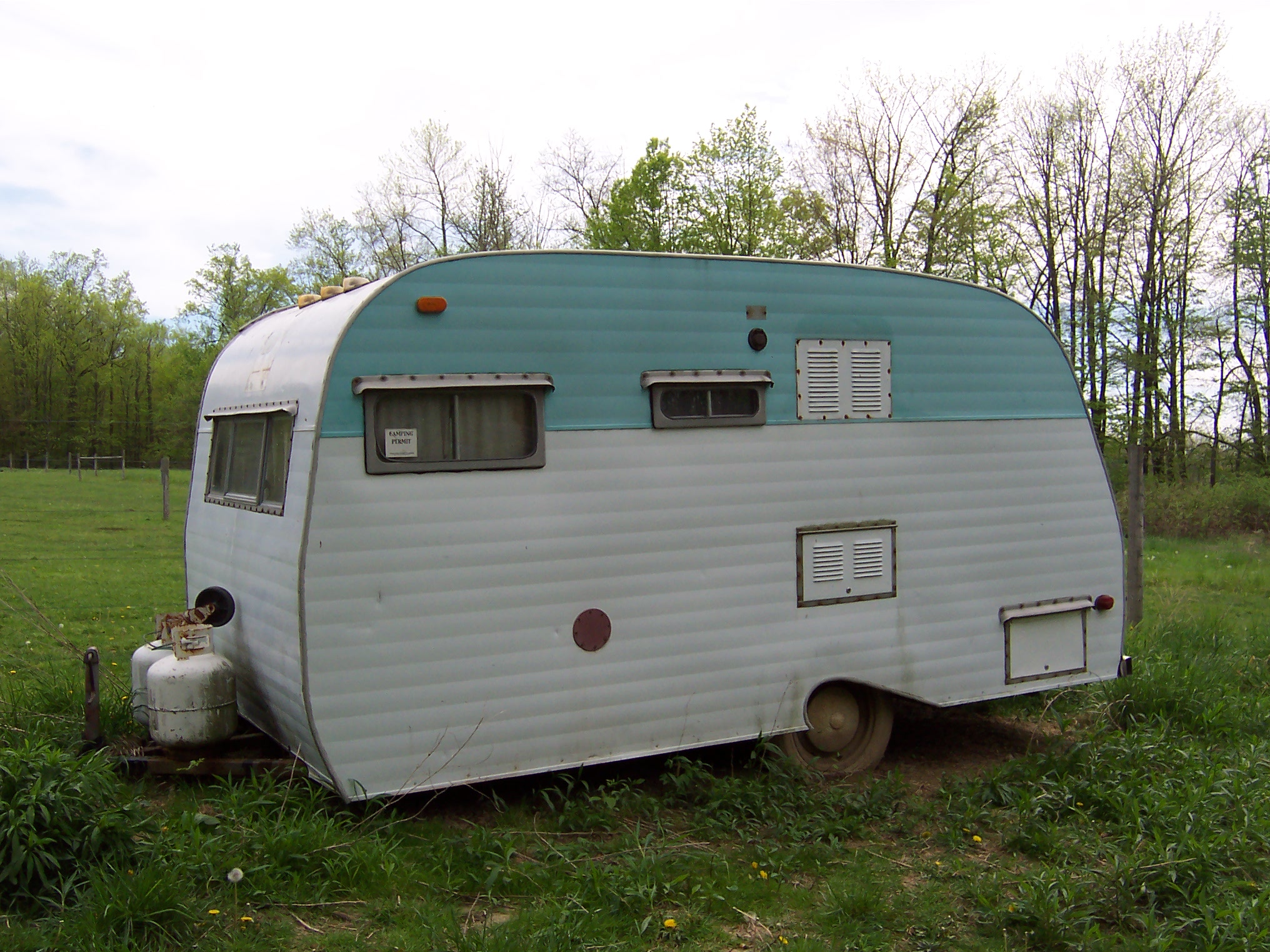
One summer we traveled over 6,000 miles. Most days we had an early breakfast, drove for six hours, spent the late afternoon sightseeing in the steamy heat, then went on to a trailer park where our 15 foot Scotty was invariably the smallest trailer around. Other folks in these places looked like there were staying a few days. They sat in lawn chairs and chatted around campfires. My parents meant business. Ours was a carefully planned agenda which meant we kids showered soon after supper in those ubiquitous cement block restrooms and went to bed early, usually lying awake in the hot metal trailer listening to other families laugh and talk under the trees.

*

why I don't travel,

Our trips were strictly no-frills in every way. My parents spent as little as possible on food—we never had fast food or restaurant meals while we traveled. I ate a peanut butter minus jelly sandwich chased by Tang every day at lunchtime. They scouted out the cheapest gas and took only the most carefully considered photos in those pre-digital days. Miraculously they maintained family peace in very close proximity for weeks on end, although we kids found minor parental spats over directions and mileage calculations secretly hilarious.

Don’t get me wrong, my parents had wonderful motives. They piled three kids in a small car and showed us the country. But I was a lethargic and grumpy traveler. Hurtling down the highway with windows open (air conditioning allegedly reduced fuel economy) only aggravated my asthma and hay fever, plus I suffered with relentless headaches and nausea from car sickness. Yet I wasn’t sufficiently self-aware to let anyone know that I felt dizzy, woozy, and short of breath. I longed for the comforts of home: library books, a familiar bathtub, my trusty bike, and some control over my own life. As soon as my mother got out the maps to start planning I felt nothing but dread, which I masked with a facade of eager anticipation lest I be called “ungrateful.” But every minute our car headed farther away from home seemed wrong somewhere in the center of my being. Until we returned I felt suspended from my own completeness—a weary, one-dimensional version of myself.

*

I refuse to travel,

Perhaps these long yearly trips, taken when I was unwell and unwilling, served to inoculate me against travel. As an adult I still struggle to feel wholly myself when I’m away. That marks me as seriously maladjusted. Wanderlust, or at least the urge to get away, is the norm. All sorts of well-meaning people mock non-travelers as people with no sense of adventure.

Oh sure, I long to go places. I’ve even traveled of my own volition. But I rail against the backward century in which I’ve been born, or perhaps the backward planet I’ve been born on, because I can’t adjust to the concept that it’s not possible to mosey over to Belarus or Uruguay or Finland this afternoon, have a wonderful lunch, meet some new friends and assure them that I’ll stop by next Friday. The problem isn’t the destination, it’s getting there. I know poets and sages say it’s all about the journey. I’ve journeyed, believe me. I say all of life is a journey, every single moment that we’re wide awake and fully participating in the process of living.

hermit's rationale, staying home, peace in place,

Besides, aren’t poets and sages all about being true to oneself? Being true to myself means giving in to the lust to stay rooted.

I experience a kind of delicious completion as I perform the simple rituals of life right here every day. I make cheese from our cow’s milk, walk the dogs, chop vegetables, work at my desk—-all in view of the fields and trees that sustain me season after season with their subtle, incremental changes.

I hope those of us who are truly rooted have something to offer this ever faster world. Our insights may be simple. I pay attention to the vegetable gardens, the beehives, to blackbirds convening in a clamor across the treetops. Changes I see are those that take place slowly and noticing them is part of the pleasure I find in being fully here. To me there’s soul-drenching nourishment that comes of contemplation, quiet, and service. Thank goodness we can fulfill the desires we choose, leaning eagerly toward the excitement of travel or to answering longings that serve a quieter nature.

You know where to find me. I’m right here.

*

staying home, anti-traveler, delights of home,

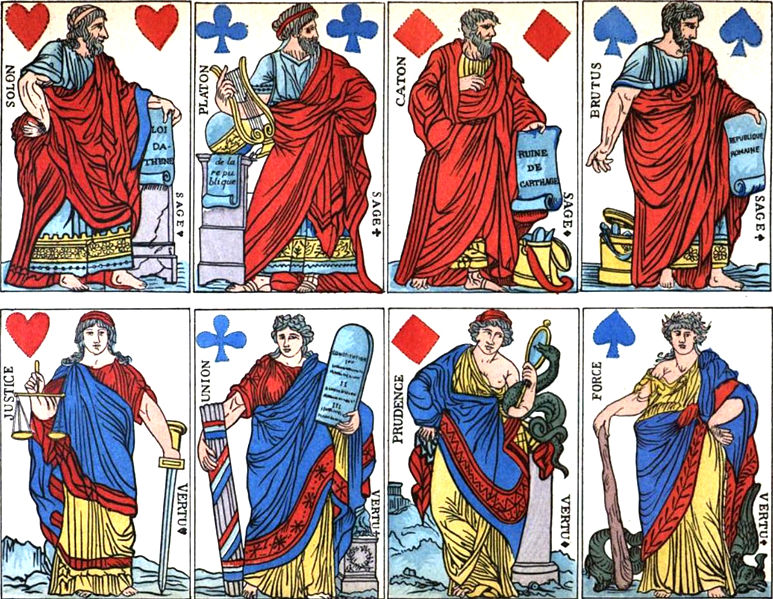
What the French Revolution Can Teach Us About Parenting

A Deck of Cards Dating Back to the French Revolution Where Kings Have Been Replaced With Wise Men (Solo, Plato, Cato, & Brutus), and Queens With Virtues (Justice, Union, Prudence, & Force) La Bibliofilia

The parent I would become was changed by history. Or at least by revelations history can offer.

At 18, I signed up for a college history course simply to fulfill a requirement.  Although I’ve forgotten the professor’s name, I’ll never forget the man. He was oddly proportioned with a short round body that didn’t match his oversized head. His florid face, full lips, and bulging eyes gave the impression that he was continually strangled by an unseen hand. Stadium seating in our introductory history class of nearly 100 students made him look even more foreshortened as he stood below us at the front of the room. He used no visual aids, no videos, only an occasional map that he drew himself on the board. He spoke without notes about a subject that impassioned him. As he lectured his voice started to quaver, his hands trembled in front of him, and he leaned forward looking at us with red-rimmed eyes. He was overwhelmed with the task. His lessons had to sink in.

That lesson was the same no matter what era we studied. He taught us to look at all of history using one pivotal question.

What happens when people are deprived of (or otherwise separated from) the consequences of their words and actions?

We studied the elite in various societies throughout history who were insulated from the consequences of their actions, even if the working poor around them suffered more and more from decisions made by the elite. We analyzed the larger impact this had on the culture over time. Then we narrowed it down. We looked at rulers who were typically brought up with all the advantages of privilege. Those who rarely experienced the consequences of their actions from childhood on tended to make decisions that resulted in tragedy, sometimes immediately, sometimes in ways that resounded for generations.

Any time we stumble on truth we see how it interconnects with larger truths. That was the case with my history professor’s question. I saw that theme, consequences, everywhere I looked—- in literature, in politics, and in the news being reported each day. I saw it in relationships around me. And on weekends, while volunteering with a project that offered services to teen addicts, I saw it there too.

So I vowed to use what I’d gained from my history professor when I became a parent. When my toddlers made a mess, even spilling a drink, I offered them a rag and some assistance cleaning it up but I didn’t do it for them. That work was their own. As they got older I expected them to give me three reasons when they wanted to do something outside our normal rules. They learned impeccable logic in the service of their own interests. And when they were teens I didn’t keep them from taking reasonable risks, knowing that they had developed a fine awareness of their own abilities.  I certainly suffer at times from parenting this way.  My kids expect ME to deal with the consequences of my own words and actions.  I can’t rant about an idiot driver on the road without one of my kids telling me it’s an opportunity to practice inner peace. That’s what happens when my words come back to bite me.

Too many kids are deprived of the consequences on a small scale. When parents help a child on and off playground equipment for fear of falls, the child is taught she can’t trust her own body. If a parent takes over building a model when the child becomes frustrated, the child is taught he is incompetent. If a parent refuses to let a child take the blame after hurting another child, she is being taught to avoid responsibility (and empathy). These aren’t the messages parents intend to convey. They’re hoping to make things safer, easier, and happier for their children. But frustration, embarrassment, even a few bruises are important parts of the maturing process. Attempts to make childhood frictionless are misguided. Worse, the consequences of words and actions on a larger scale may be much harder for these children to understand. At least that’s what history tells us.

Maria Theresa of Savoy, comtesse d’Artois

10 Reasons to Try This Natural Cure-All

positive thinking, health effects of smiling, good attitude,

I was brought up to be so damn polite that I smiled right through humiliation, pain, even crimes committed against my person. Not healthy. I renounced the whole Good Girl burden long ago. Getting past it isn’t speedy process, although I do aspire to be a badly behaved old lady some day. (My kids insist I’m veering off the mark, heading directly toward strange.)

I may be seeking greater authenticity but I still recognize smile power. I’ve smiled, by choice, despite problems too awful to send to your screen. I’m smiling right now as my family moves on from recent difficulties. The heavy sorrow of losing loved ones is rounding into grateful memory, our falling down house is getting fixed, and my husband has gotten a job after two and a half years of unemployment. Smiling got us through. Plus plenty of snuggling and silliness and resolutely looking at the Big Picture.

Nobody likes to be told to cheer up and put on a happy face. But there’s a lot to be said for the curative powers of a big toothy smile.

1. A genuine smile is easy to identify. Kids as young as six can tell when you’re faking it. A real smile is known as a Duchenne smile, named after 19th century French doctor Guillaume Duchenne. He noted that such smiles engage specific muscles around the mouth as well as those around the eyes. Non-Duchenne smiles (fake smiles) don’t indicate true emotion since people have little control over the outer portion of their eye muscles. It’s not easy to come up with a genuine smile when you don’t feel like it. But the humor found in surprise or the laughter of others can jolt us right into real smiles.

2. When we witness a fleeting smile, even one so rapid we don’t consciously recognize it, our zygomatic major muscles (used in smiling) move in response. We’re biologically primed to mimic the facial expressions we see.

smiling and health, smiling and mental health, smiling and outlook,

3. Mirror neurons deep in our brains activate when we watch someone else, just as if we are doing or experiencing what they are. This mirroring process surely helps us learn as well as empathize. It also indicates that the examples around us are phenomenally powerful. We can’t help but mirror the emotions of people who are angry, cynical, or miserable any more than we can pick up on and experience for ourselves the emotions of those who are enthusiastic, compassionate, or happy.  As Marco Iacoboni writes in Mirroring People: The Science of Empathy and How We Connect with Others,  “Mirror neurons are brain cells that seem specialized in understanding our existential condition and our involvement with others. They show that we are not alone, but are biologically wired and evolutionarily designed to be deeply interconnected with one another.”

4. We’re not only wired to respond and take on the moods of others, it’s nearly impossible to keep a straight face around people who are grinning. Acts of kindness are contagious too.

smiling and positive outlook, good mood, why smile,

5. Another person’s smiling face doesn’t just affect our feelings. Seeing a smiling face, even in a photo, has a powerful cognitive impact. It cues us to higher level, more abstract thinking.

6. According to neurologists, the regular practice of smiling strengthens the brain’s ability to maintain a positive outlook, actually interrupting mood disorders. Smiling also activates brain circuitry that boosts empathy and promotes social interaction.

real smile vs. fake smile, genuine smile, positive outlook, 7. A smile makes a great first impression. Smiling makes us seem more attractive to others. That’s in part because the smile muscles lift our faces but also because people are drawn to positive expressions.

8. People prefer women without make-up who smile over the same women in make-up who don’t smile.

shift into positive mode, smile and change, 9. When we smile, our bodies release endorphins, the natural “all is good” neurotransmitter.

10. A genuine smile is linked to happy marriages and life satisfaction. It’s also linked to a much longer life —seven years in one study. (Even a fake smile gives a boost of five years over non-smilers.)

smile for a long life, smiling and health,

Pro-smiling evidence doesn’t mean any of us should suppress our true feelings. But I’ve discovered a smile and a positive outlook eases those unavoidable miseries life tosses my way. Besides, it’ll confuse people as I advance my plot to become a badly behaved old lady.