Learning. It’s Not About Education

free range learning, holistic education, natural learning,

Learning is a whole experience of mind, body, and self in relation to the world

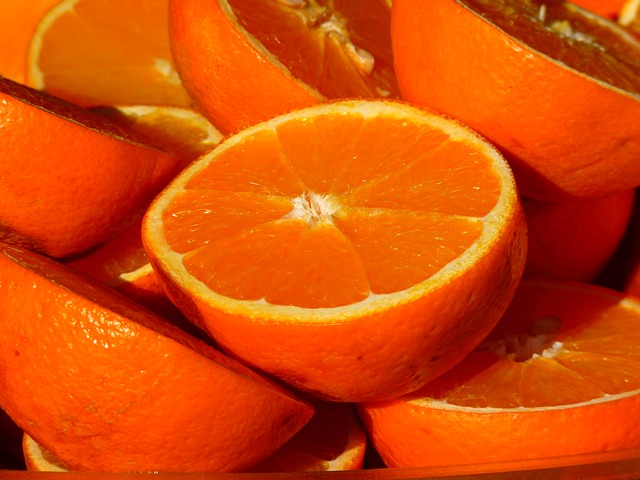
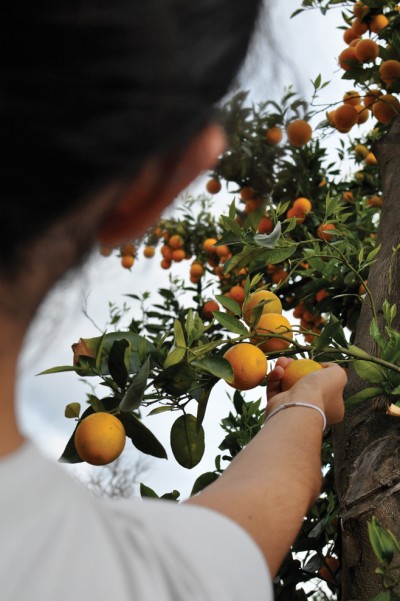
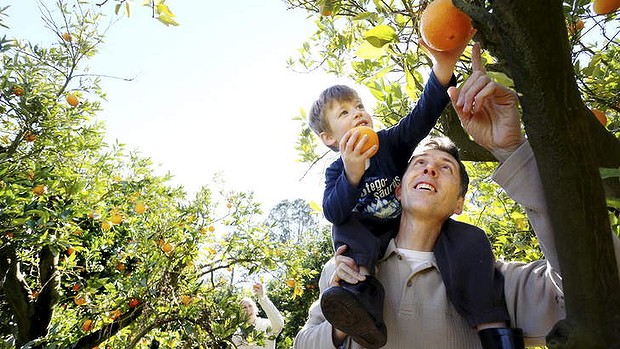
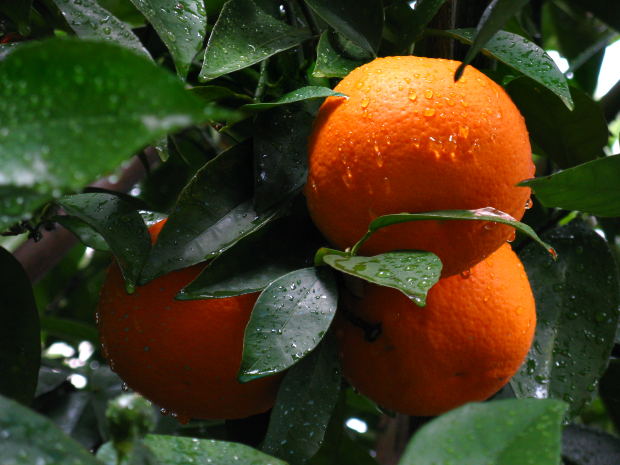
When you pick up an orange you feel its texture and weight in your hand. You breathe in scent emitted by the brightly colored rind. If you’re hungry, you peel and section it to savor piece by piece. A fresh orange has phytonutrients, fiber, minerals, and vitamins that promote health. And it tastes wonderful.

It’s possible to purchase the separate nutritional components of an orange. You simply buy vitamin C, vitamin A, flavonoids, B-complex vitamins, fiber, potassium, and calcium in pill form. Of course replacing an orange with supplements is ridiculously expensive compared to the cost of consuming the fruit itself. And isolated compounds don’t work as effectively in the body as the whole fruit. Besides, where is the sensation of biting into an orange bursting with juice? Lost. Divided into a fraction of the experience.

Imagine being told in your earliest years that pills were superior to food and should replace it as often as possible. Even if handfuls of supplements were deemed more valuable than food by every adult in your life you’d still clamor to eat what you found appetizing. If meal-substitution pills became mandatory for children once they turned five years old, you’d never relate to food (or its replacement) the same way again. The body, mind, and spirit reject what diminishes wholeness.

natural learning, education as a pill,

Don’t argue. Just take it.

Yet that’s an apt analogy for heavily structured education, where learning is set apart from the threads that connect it to what has meaning and purpose for the learner. Conventional education separates learning into thousands of measurable objectives. It has very little to do with a child’s hunger to master a particular skill or thirst to pursue an area of interest, in fact such appetites tend to interfere with institutional requirements. It’s not designed for the whole child but aimed at one hemisphere of the brain, doled out in pre-determined doses and repeatedly evaluated. The most gifted, caring teachers are stuck within systems that don’t acknowledge or understand natural learning. In fact, most of us believe, however grudgingly, that schooling is necessary for learning without recognizing that damage is done.

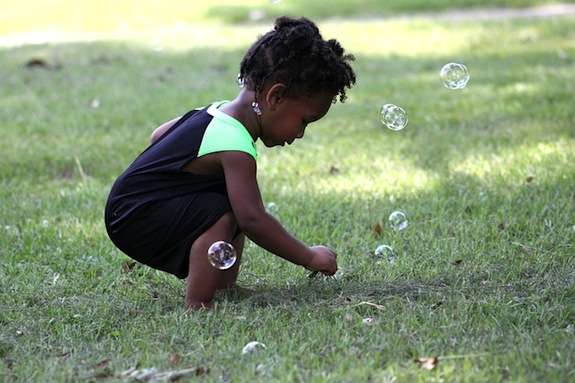
For the very youngest children, learning is constant. Their wondrous progress from helpless newborn to sophisticated five-year-old happens without explicit teaching. They explore, challenge themselves, make mistakes, and try again with an insatiable eagerness to learn. Young children seem to recognize that knowledge is an essential shared resource, like air or water. They demand a fair share. They actively espouse the right to gain skills and understanding in a way that’s useful to them at the time.

Although we have the idea that learning flows from instruction, when we interfere with natural learning children show us with stubbornness or disinterest that it has nothing to do with coercion. Children often ignore what they aren’t ready to learn only to return to the same concept later, comprehending it with ease and pleasure.  What they do is intrinsically tied to why they do it, because they know learning is purposeful. They are curious, motivated, and always pushing in the direction of mastery.

Learning is a hunger too.

Learning is a hunger too.

But schooling irrevocably alters the natural process of learning for every single child.

  • The very structure of school makes children passive recipients of education designed by others. They cannot charge ahead fueled by curiosity, pursuing interests wherever they lead.  Although interest-driven learning results in high level mastery, the top priority in school is completing assignments correctly and scoring well on tests. Despite what individual children want to learn, value is given to what can be evaluated.
  • Segregated by age, children are limited to examples of behavior, reasoning, and ability from those at a similar level of maturity. They have little exposure to essential adult role models and minimal engagement in community life.  They’re also deprived of the opportunity to practice the sort of nurturance and self-education that happens when children interact in multi-age settings.  Even collaboration is defined as cheating.
  • A child’s natural inclination to discover and experiment is steered instead toward meeting curricular requirements. Gradually the child’s naturally exploratory approach is supplanted by less meaningful ways of gathering and retaining information.
  • The mind and body are exquisitely cued to work together. Sensory input floods the brain, locking learning into memory. Movement is essential for learning. The emphasis in school, however, is almost entirely static, and almost entirely focused on left-brain analytical thinking. Many children ache for more active involvement, but their attempts to enliven the day are labeled behavior problems. The mismatch between school-like expectations and normal childhood behavior has resulted in millions of children being diagnosed with ADHD.
  • Coming up with the correct answer leaves little room for trial and error. Thinking too carefully or deeply may result in the wrong answer. The right answer from a child’s personal perspective may actually be the opposite of the correct answer, but to get a good mark the child cannot be true to his or her experience. The grade becomes more important than reality.
  • Emphasis on the correct answer squeezes out unconventional thinking. The fear of making mistakes squelches creativity and innovation. After years of being taught to avoid making mistakes, the child has also learned to steer clear of originality.
  • Readiness is pivotal for learning, particularly in reading. In school, reading is used to instruct in every other subject, so the child who doesn’t read at grade level quickly falls behind. The subject matter in school, even when taught well, isn’t necessarily what the child is ready to learn. The way it is presented tends to be indirect, inactive, and irrelevant to the child. Schoolwork repeatedly emphasizes skill areas that are lacking rather than building on strengths, or goes over skills already mastered with stultifying repetition. Neither approach builds real learning
  • The desire to produce meaningful work, the urge to make contributions of value, the need to be recognized for oneself, and other developmental necessities are undercut by the overriding obligation to complete assignments.
  • Conventional education takes the same approach to a six-year-old and an 18-year-old: assignments, grades, tests. Self-reliance and independence doesn’t easily flourish in such a closed container.
  • Children must hurry to do the required work, then change subjects. The information is stuffed into their short-term memories in order to get good grades and pass tests, even though such tests tend to measure superficial thinking. In fact, higher test scores are unrelated to future accomplishments in such career advancement, positive relationships, or leadership. Students aren’t learning to apply information to real life activities nor are they generating wisdom from it. The very essence of learning is ignored.
  • Schoolwork clearly separates what is deemed “educational” from the rest of a child’s experience. This indicates to children that learning is confined to specific areas of life. A divide appears where before there was a seamless whole. Absorption and play are on one side in opposition to work and learning on another. This sets the inherent joy and meaning in all these things adrift. The energy that formerly prompted a child to explore, ask questions, and eagerly leap ahead becomes a social liability. Often this transforms into cynicism.
  • When young people are insufficiently challenged or pushed too hard, they do learn but not necessarily what they’re being taught. What they learn is that the educational process is boring or makes them feel bad about themselves or doesn’t acknowledge their deeper gifts. They see that what they achieve is relentlessly judged. They learn to quell enthusiasm and suppress the value-laden questions that normally bubble up as they seek to grow more wholly into themselves. Gradually, their natural moment-to-moment curiosity is distorted until they resist learning anything but what they have to learn. This is how the life force is drained from education.

We’re so committed to structured, top-down instruction that we impose it on kids beyond the school day. Young people are relentlessly shuttled from the classroom to enrichment activities to organized sports and back home to play with educational toys or apps when there’s very little evidence that all this effort, time, and money results in learning of any real value.

Many of us think that education has always been this way—stuffing information into young people who must regurgitate it back on demand. Based on dropout numbers alone, this approach doesn’t work for at least a quarter of U.S. students. So we advocate copying Finland or Singapore, using the newest electronics, taking away testing, increasing testing, adding uniforms or yoga or chess or prayer. We’ve been reforming schools for a long time without recognizing, as Einstein said, “You cannot solve a problem from the same consciousness that created it.”
free range learning,

Figuring something out is itself a delight.

Structured education is actually very new to the human experience. Worse, it actually undermines the way children are primed to advance their abilities and mature into capable adults. That’s because most of the time humanity has spent on Earth has been as nomadic hunter-gatherers, before the advent of agriculture. This time span comprises approximately 98% of human history. Although our culture and lifestyle have changed considerably, our minds and bodies have not. Like our earliest ancestors we are still tuned to nature’s rhythms, cued to react quickly to danger, desire close interdependence with a cohesive group of people, and need in our earliest years highly responsive nurturing that gradually fosters our abilities.

Studies of isolated groups who continue to live in hunter-gatherer ways have shown us that during this era (and throughout most time periods afterward) babies are breastfed and remain in close contact with their mothers for the first few years. This results in securely attached infants who are more likely to grow up independent, conscientious, and intellectually advanced.

Their children play freely in multi-age groups without overt supervision or direction by adults. Such free play promotes self-regulation (ability to control behavior, resist impulse, and exert self-control) which is critical for maturity. Play fosters learning in realms such as language, social skills, and spatial relations. It teaches a child to adapt, innovate, handle stress, and think independently. Even attention span increases in direct correlation to play.

Playfulness can’t be separated from learning. Children watch and imitate the people around them. The child’s natural desire to build his or her capabilities doesn’t have to be enforced. Instruction happens when the child seeks it. The learning environment is particularly rich when young people are surrounded by adults performing the tasks necessary to maintain their way of life. Children naturally learn as they playfully repeat what they see and begin to take part in these real life tasks. Mastering all the skills for self-reliance isn’t easy. Hunger-gatherer children must recognize thousands of species of plants and animals as well as how to best obtain, use, and store them. They must know how to make necessary items such as nets, baskets, darts, carrying devices, clothing, and shelter. They need to learn the lore of their people and pass along wisdom through story, ritual, and art. And perhaps most importantly, they need to be able to cooperate and share in ways that have allowed humanity to thrive. In such cultures, children learn on their own timetables in ways that best use their abilities.
free range learning

It’s about curiosity and awe.

We don’t have to live as hunter-gatherers do to restore natural learning to children’s lives. Homeschoolers and unschoolers have been doing this, quite easily, for a very long time. Our children learn as they are ready and in ways that augment strong selfhood. They stay up late to stargaze or make music or design video games, knowing they can sleep late the next morning. They may fill an afternoon reading or actively contribute to the community. They have time to delve into topics of interest to them, often in much greater depth and breadth than any curriculum might demand. They explore, ask questions, volunteer, hang out with friends of all ages, take on household responsibilities, daydream, seek challenges, make mistakes and start over. They’re accustomed to thinking for themselves and pursuing their own interests, so they’re more likely to define success on their own terms. Because homeschooing/unschooling gives them the freedom to be who they already are, it pushes back against a world relentlessly promoting narrow definitions of success.

This kind of natural learning isn’t just an antidote to the soul crushing pressure of test-happy schools. It’s the way young people have learned throughout time.

Let children sleep in. Let them dream. Let them wake to their own possibilities.
free range learning, holistic learning, effect of school, school mindset,

This is an excerpt from Free Range Learning: How Homeschooling Changes Everything.

Links & Updates 3-3-15

great linksEven the date is wrong on this post, because I clicked “publish” before changing the date from two months ago when I thought I’d publish it.

I thought I’d do an update every other month, but I tend to be fueled by many delusions. One is that I’ll magically become more organized and productive any day now. So far this has not happened, as the teetering stacks of Very Important Papers on my desk attests. Heck, I’ve been on the planet quite awhile now and I still don’t manage to behave. Here are a few recent examples.

My hand is on the door to let the dogs out. I just so happen to be belting out Ode to Joy with spontaneous lyrics lauding joys of peeing in the snow. This was meant to encourage canines to go out (perhaps to escape my singing). Unbeknownst to me, an innocent FexEd guy is on the other side of the door, finger poised to ring the doorbell.
I hope this qualifies him for trauma-related workman’s comp.
Learning never ends. I just learned that one should not, when needing an extra hand, grab a corner of packing tape in one’s mouth. That is, unless you’re seeking traumatic lip exfoliation.
We’re trying to teach the dogs to stop barking when someone’s at the door. To do that we brandish a squirt bottle. (No need to actually spray the water, they get the idea.)
Yesterday the doorbell rings. I grab the squirt bottle on my way to answer it. Immediately it starts slipping out of my grasp. I tighten my grip and, in doing so, squirt myself right in the eye. Yes, I was holding it backwards. Yes, I did one of my hyena laughs.
I pity the poor innocents who don’t realize they’re ringing the bell at Awkward House.
 

And then there’s this.

My loved ones and I are enjoying the blue skies and longer days that hint at spring. I’ve been planting seeds in little pots under grow lights with vegetable garden-sized enthusiasm. It’s all fun and games till I’m yanking out weeds on muggy 95 degree August days. On to some links!

A Few Writerly Updates

My short story “Everywhere Stars” was included in Cleveland Scene Magazine’s fiction issue: full text.

My poem “Survivors of Child Abuse Support Group” was published in Literary Mama: full text.

My poem “Fog as Visible Dreams” was published (full text )in the recent edition of Shot Glass Journal  along with a second poem, “What the Onion Teaches:” full text.

My poem “2:37 am” was published in Mothering:  full text.

My poem “Failure Too” was published this month in the print journal Mom Egg Review, issue 13.

I had the pleasure of being featured on Coffee with a Canine, a site for dog-loving writers. Here’s the recent interview and my last one, five years ago when our German shepherd was still with us.

And I had the honor of talking about the books I’ve been reading on Campaign for the American Reader, which was also published on America Reads.

Amusements

If you haven’t seen the way Mallory Ortberg of The Toast re-captions art, you should. See if you don’t smirk at Women Having A Terrible Time At Parties In Western Art History and Women Listening To Men Play Music At Them In Western Art History. Here’s a taste:

a.jp.jp

the-toast.net/2014/10/28/women-terrible-time-parties-western-art-history

get up
it’s weird to lie down when nobody else is lying down
sit up
i’ll sit up when I see something worth sitting up for

If you write, try out the Rejection Generator.  As the folks at The Stoneslide Corrective explain,

The Rejection Generator has helped thousands of established, emerging, and aspiring writers by preemptively exposing them to the pain of rejection, making all subsequent rejection less painful. Now, for the first time, The Generator has been tuned to provide highly personalized pain. Answer a few questions about your writing, and get a rejection letter tailored just for you—instilling maximum healthful preemptive suffering.

a.jp.jp

Day Brighteners

How people are stepping up to undo environmental damage in the YES! magazine article, “Depaving Cities, Undamming Rivers.”

A way to purchase bookish delights while helping to build libraries in Ethiopia, made possible by a wonderful volunteer-run site.

What to do when you’re having a crappy day.

Ethical investors around the world are shifting their money out of fossil fuel. Divestment is happening at colleges, churches, pension funds, and other organizations–effectively rerouting more than 50 billion away from the coal, oil, and gas industry.

Science-y Fascinations

Researcher and intrepid person Jeff Leach is spending a year trying to acquire the healthiest possible gut microbiome. Pretty fascinating and entirely relevant for all of us.

A new documentary on how birth “seeds” us with essential bacteria, and how we can assure every baby benefits whether naturally or surgically born. Here’s more about the film Microbirth.

Information is passed from plant to seed using memory of seasonal fluctuations. Find out more in the (not very scientifically titled) article “How Mom Plants Teach Seeds When to Grow.”

And how great is this? The risk of coming down with the common cold is reduced by hugs.

Learning

A Thousand Rivers: What the modern world has forgotten about children and learning” is, without a doubt, the best essay I’ve ever read about learning. Long, insightful, and worth reading every word. It’s by Carol Black, maker of the must-see documentary film Schooling the World

The Importance of Ancestral Knowledge in the Modern World” is a wonderful article by Neal Ritter in the recent Holistic Parenting Magazine.

What do you do all day? is a question faced by many homeschooling families. Here are all sorts of ways to answer that question.

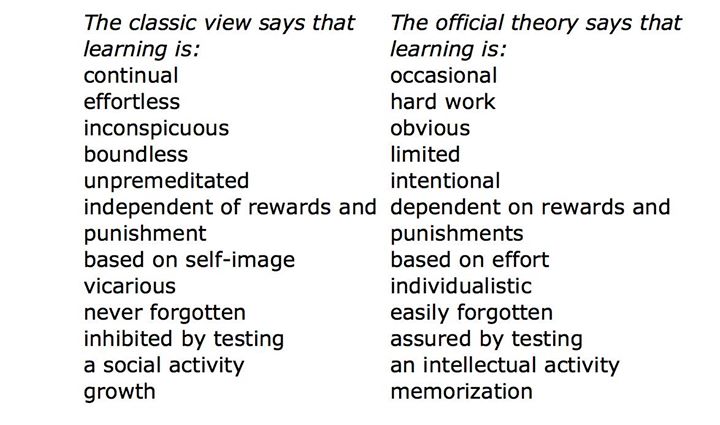
In what’s now a classic, The Book of Learning and Forgetting, Frank Smith explains how our culture systematically obstructs the powerful inherent learning abilities of children, creating handicaps that often persist through life. The author eloquently contrasts a false and fabricated “official theory” that learning is work (used to justify excessive regulation and massive testing) with a correct but officially suppressed “classic view” that learning is a social process that can occur naturally and continually through collaborative activities. Here’s a chart from the book.
child 2

Visual & Auditory Yes

Ophir Kutiel, who goes by Kutiman, is a musician and editor who took lots of YouTube clips of amateur music performances, from different people, different years, different places, and different songs, and edited them together into a new song. The vocals are by KarMaRedd, singing a cappella. Kutiman listed the source videos at the YouTube page.

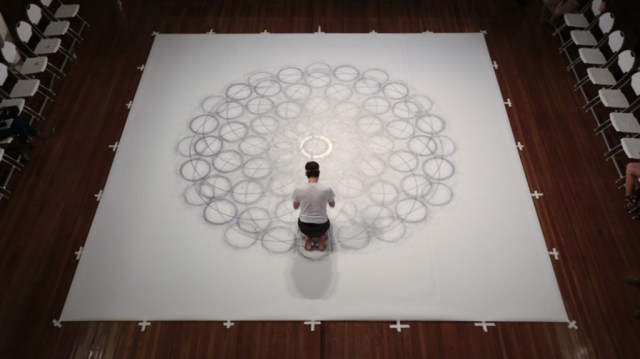
Tony Orrico has been called a “human spirograph” but his work is much more. He is a visual artist and performer who uses his own body to inscribe geometries on paper. Through physically exhausting performances involving highly choreographed motions, Orrico creates works of visual art that record his own motion.

a

This poem was featured at the opening of the Climate 2014 summit in NYC. The poem was written and read by Kathy Jetnil-Kijiner, a 26-year-old native of the Marshall Islands. It was spoken as a promise to her new baby, a commitment to create a just and sustainable world. After her recitation in front of 120 heads of state, her daughter and husband joined her on stage, to a standing ovation. An official U.N. Twitter account said many world leaders were moved to tears.

And here’s a new piece by Michael Franti.

Superstupiditis, philosophies that divide us.
Keep us in fear from one another
so we can’t recognize a brother from another mother.
No way, we can’t live this way,
that’s why so many people stand up and say:
One love, one blood, one heart, one soul and
one drum and only one rhythm,
One tribe and all of us singing.


Making Memories Through Music

image: pixabay.com

image: pixabay.com

Do you attach any significance to songs that start playing in your mind? I do. Maybe that’s because they often get stuck, becoming earworms that loop around for what seem like hours. Sometimes they even wake me in the middle of the night.

I can’t help but wonder why the underpinning of my consciousness loads a particular piece of music. Sometimes it’s easy to figure out because my husband was whistling it or it was playing at a restaurant or I heard a slice of it when a car stopped next to me at a traffic light. Most of the time it seems too random to be chance. So I try to figure out what the song tells me in lyric or mood or memory.

Today, simply walking into a room, my mind’s playlist came up with a tender song I haven’t heard in decades, “Never My Love.”

It took me right back to my childhood home. Most evenings my schoolteacher father sat in an armchair grading papers. I liked to sit on the floor with my back against his chair reading a library book in the same warm circle of lamplight. On those nights he played music like  “Only You” by The Platters, “Cherish” by The Association, “Both Sides Now” by Judy Collins, “So Far Away” by Carole King, “Close to You” by the Carpenters, and just about anything by Burt Bacharach.

My father loved all kinds of music. In college he was nicknamed “Pitch Pipe” – a play on his surname Piper and an homage to his perfect pitch. When my siblings and I were tiny he’d turn the stereo up so we could dance to big band music, the score from a musical, or a classical standard. He’d sing along, harmonizing against the melody. Without a shred of self-consciousness he’d lift up his arms to conduct a particularly tantalizing portion of Bach or Mozart. And sometimes after dinner a song would come on the radio and he’d dance with my mother, both of them smiling as they swooped around the kitchen linoleum.

My father’s father died when my dad was only five years old. The only thing my dad owned of his father’s was a guitar, which he taught himself to play. Supervising little kids’ baths was one of his chores in the parental division of duties, so he’d sit on the toilet lid singing and strumming that guitar while we played in the tub. My splashy siblings and I sang right along with him to tunes like “You Are My Sunshine” and “Let Me Call You Sweetheart.” We also sang songs he remembered from his college days, lyrics edited for little ears.

I don’t know what it means that I’m hearing “Never My Love.” Most likely something below the surface of my awareness triggered a childhood memory. But I prefer to think it’s a form of connection that lasts even when death separates us.

I’m singing it aloud Dad. I’m singing it for you.

Poet Seeks Words

Unraveling Y, acrostic poet, Amy Heath,

Amy Heath. Sojourner, tinker, acrostic poet.

Amy Heath is a writer, poet, and artist. The past few years she’s lived a somewhat nomadic life, exploring ways to sustain herself while being true to her spirit.

I met Amy when she was a children’s librarian and children’s book author, back when I spent a lot of time in the picture book section with my four kids.  I was drawn to her friendly blue eyes and gentle manner. I cherished our brief, always lively conversations. I’d walk away thinking how much I’d like us to be friends but I was too shy to ask if we could get together because she was vastly cooler and far more fascinating than I’d ever be. Fast forward to the last few years, when Amy befriended me. I’m giddy about it in a can’t-believe-my-luck sort of way.

One of the many things Amy is up to lately is a poetic challenge. About a year ago she decided she’d write an acrostic poem a day. Being Amy, she amped up the challenge by making a rule for herself that the acrostics must be composed around words chosen at random from a book or words others chose for her.

a·cros·tic   (ə-krô′stĭk, ə-krŏs′tĭk) n.
1. A poem or series of lines in which certain letters, usually the first in each line, form a name, motto, or message when read in sequence.

“The main point of this project was to play with words every day until I reach 60,” she says. “Until that idea struck me, I had been writing acrostics in a more serious vein, on words like mindfulness, anxiety, patience, empathy. I have seen many people approach the Big 6-0 with trepidation. Well, I would play my way there!”

And no matter what, she vowed to post each piece on her blog, Unraveling Y. She says, “After reading the book Show Your Work by Austin Kleon, I decided that if I blogged these short daily creations I would feel somehow more accountable to my intention. My wordplays would be out there. And being fairly sure that very few people would read them, I felt liberated to do my best without worrying about what anyone thought of them. That’s good practice anyway. Worrying about what other people think is trespassing in their heads. Not cool.”
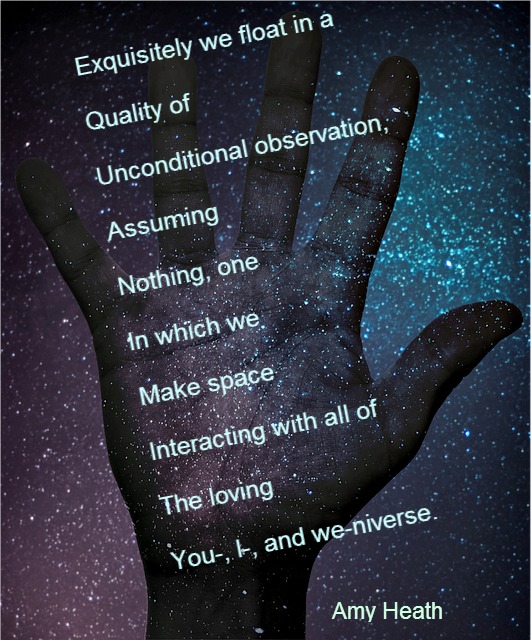
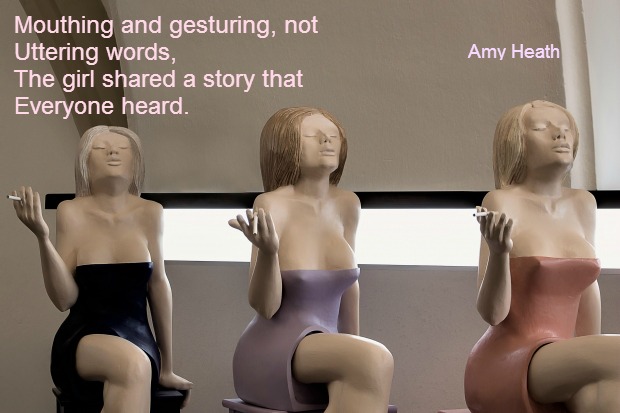
Amy’s poems find an inner presence in words, making each one into something so alive we can feel it breathe, as she does with equanimity.

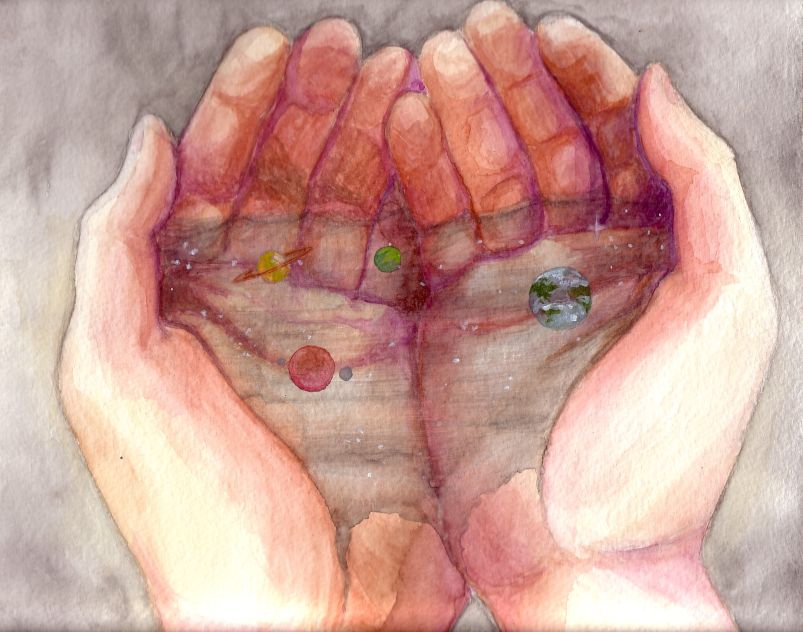
Amy Heath, acrostic poem, pixabay.com/en/space-sky-hand-fingers-paint-636894/

Even in the space of a few syllables.

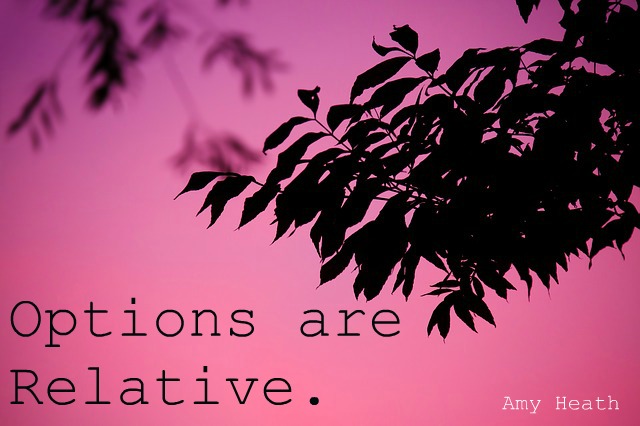
acrostic poem, Amy Heath, pixabay.com/en/background-branch-dusk-evening-20862/

She turns a word into a tale that leaves us wondering.

acrostic poem, Amy Heath, morguefile.com/archive/display/890638

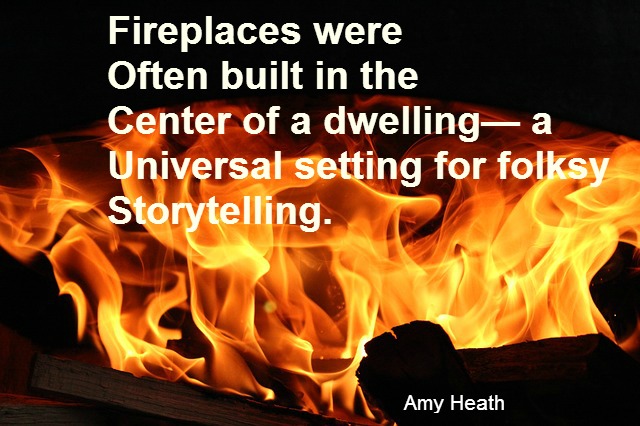
She helps us understand why the Latin word for hearth has come to mean “center of activity.”

Amy Heath, Unraveling Y, acrostic poem, pixabay.com/en/fire-heiss-fireplace-cozy-heat-266093/

Amy Heath, Unraveling Y, acrostic poem, pixabay.com/en/fire-heiss-fireplace-cozy-heat-266093/

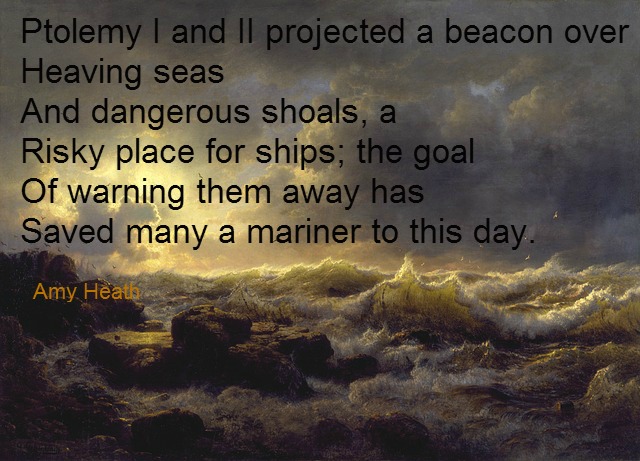
She shares little known history, explaining in her blog entry: “The lighthouse built by Ptolemy I Soter and completed by his son Ptolemy II Philadelphus was a prototype for subsequent structures. Pharos, a small island, ultimately the tip of a peninsula near Alexandria, became the root word in many languages for lighthouse.”

Andreas Achenbach, Pharos, Amy Heath, pixabay.com/en/andreas-achenbach-sea-ocean-water-85762

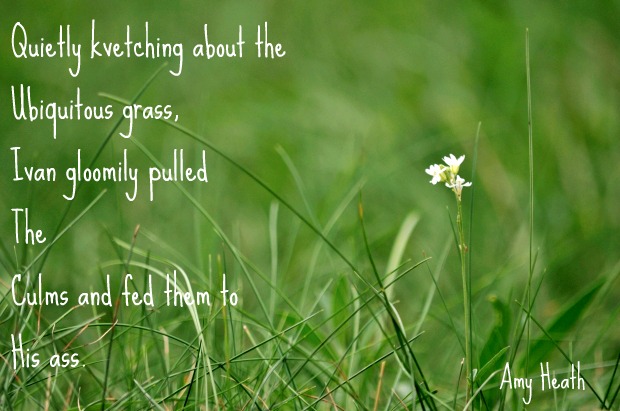
She’s undaunted when faced with a word like quitch.

acrostic poem, Amy Heath, morguefile.com/archive/display/951061

Among my favorites is a poem she composed around the word orenda, which is defined as “a supernatural force believed by the Iroquois to be present, in varying degrees, in all things and all beings, and to be the spiritual force underlying human accomplishment.”

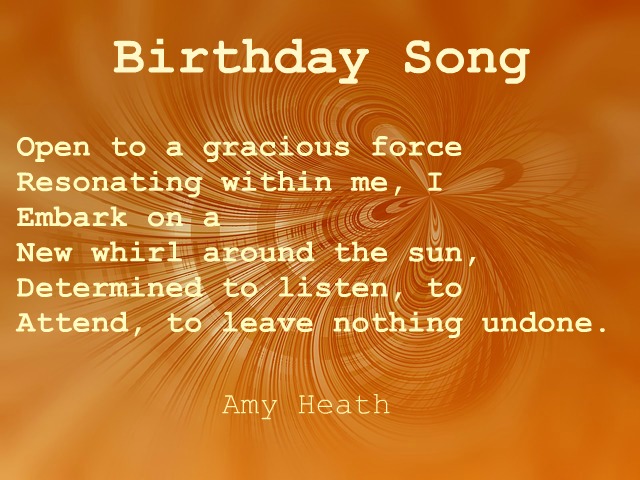
Amy Heath, acrostic poem, birthday poem, orenda, pixabay.com/en/background-gold-golden-texture-630417/

Amy is brimming with acrostic-related ideas. She may write a book on a single theme or compose a children’s story using words for various literary devices. She may illustrate her poems using paint or yarn or glass. The future is open for my playfully creative friend.

What is she seeking right now?

Words.

She’s continuing her daily acrostic challenge and invites you to send her a word which she’ll gladly transform into a poem. Her email is unravelingy@gmail.com

While you’re at it, I suggest you:

visit her blog Unraveling Y 

read her memoir I Pity The Man Who Marries You

share her poems on social media

contact her to let her know how much you enjoy her work

consider embarking on a challenge of your own!

Keeping Creativity Alive

dbz-obsessed.deviantart.com/art/Creation-19299077

dbz-obsessed.deviantart.com/art/Creation-19299077

“The world is but a canvas to the imagination.”—Henry David Thoreau

Imagination springs from nowhere and brings something new to the world—games, art, inventions, stories, solutions. Childhood is particularly identified with this state, perhaps because creativity in adults is considered to be a trait possessed only by the artistic few.

baleze.deviantart.com/art/Playing-with-Shadows-61984249

baleze.deviantart.com/art/Playing-with-Shadows-61984249

Nurturing creativity in all its forms recognizes that humans are by nature generative beings. We need to create. The best approach may be to get out of one another’s way and welcome creativity as a life force.

pixabay.com/en/image-painted-colorful-color-247789/

pixabay.com/en/image-painted-colorful-color-247789/

If we are familiar with the process that takes us from vision to expression, we have the tools to use creativity throughout our lives. When we welcome the exuberance young children demonstrate as they dance around the room, talk to invisible friends, sing in the bathtub, and play made-up games we validate the importance of imagination.

pixabay.com/en/males-art-drawing-creativity-fig-391346/

pixabay.com/en/males-art-drawing-creativity-fig-391346/

When we encourage teens to leave room in their schedules for music or game design or skateboarding or whatever calls to them, we honor their need for self-expression. Young people who are comfortable with creativity can apply the same innovative mindset to their adult lives.

raj133.deviantart.com/art/Creativity-128976659

raj133.deviantart.com/art/Creativity-128976659

Creativity is necessary when dealing with an architectural dilemma, new recipe, marketing campaign, environmental solution, or personal relationship. In fact, it’s essential.

waterpolo218.deviantart.com/art/no-creativity-346991145

waterpolo218.deviantart.com/art/no-creativity-346991145

Imagination and inspiration have fueled human progress throughout time. Creative powers have brought us marvels and continue to expand the boundaries. The energy underlying the creative act is life-sustaining and honors the work of others.

pixabay.com/en/users/johnhain-352999/

pixabay.com/en/users/johnhain-352999/

But there’s a caveat. Creativity isn’t always positive, visionaries aren’t always compassionate, and progress isn’t always beneficial. After all, a clever mind is required to craft a conspiracy as well as to negotiate a peace accord.

raj133.deviantart.com/art/Creativity4-128977034

raj133.deviantart.com/art/Creativity4-128977034

Creativity is a life force when it arises as a healing impulse, as a truth-telling impulse, as an impulse to approach mystery.

mrcool256.deviantart.com/art/Basking-in-Creativity-22613894

mrcool256.deviantart.com/art/Basking-in-Creativity-22613894

Tomorrow’s possibilities call out to our inventive, imaginative selves. Let’s answer.

flora-silve.deviantart.com/art/Terre-104561782

flora-silve.deviantart.com/art/Terre-104561782

Portions of this post were excerpted from Free Range Learning.

The Ache to Make

My daughter needs a new pair of pants hemmed. I dig through a jumbled box of vintage thread for the right color. I find it, gray the color of a mourning dove, wrapped on a wooden spool. I cut a length, thread a needle, and stitch at a backslash angle. I hope I’m also sewing some love into the hem.

I eagerly take refuge in tasks like hemming pants or pulling weeds or chopping onions, probably because what I do to earn money requires no movement other than typing and no strain other than the effort to keep my wandering mind on the screen.

My life would be unimaginable to most of our planet’s previous generations. Our ancestors lived by the work of their hands. They hunted and hoed. They cut stone to line wells, make fences, and build cathedrals. They turned trees into wagon wheels, bridges, and ships. Nearly everything they wore and ate came from their hands and the hands of people known to them.

Our hands do much less than theirs. I’m typing this on a comfortable chair in a warm house in the middle of a life much easier than my forbears could have dreamed for themselves. Yet I know my worst insomnia happens on deadline nights after I’ve made myself stay at the screen hour after hour. And sitting too long at the computer doing nothing more strenuous than moving ideas to documents makes me feel like a suitcase crammed with stuff, straining at the hinges and ready to burst. I want to MAKE something.

So, even though I’ve got another deadline looming and a community action meeting tonight, I’m going to get up from this desk to go do something with my hands.

As fiber artist Renate Hiller says, “our destiny is written in the hand.” I like what she has to say about the ache to make.

What hands-on work are you drawn to do?

Sprouting Plant Advocates

Every growing season our four children choose which crop will be theirs to plant and tend in our vegetable garden. It doesn’t make my work easier. But this tradition helps them understand how intrinsically connected we all are to sunlight, soil, and the lives of growing things.

Claire always insists on sugar snap peas. They grow quickly enough to gratify her restless nature and besides, they’re fun to eat fresh from the vine. Her three brothers aren’t as opinionated. They choose something different each year. Last year Benjamin had a great crop of sweet corn, buzzing with honeybees and taller than his pre-teen shoulders. Little Samuel’s green peppers struggled—perhaps too close to the shadowing tomato plants, but still they produced a gratifying harvest, heavy and large in his preschooler’s hands. Only Kirby’s chosen crop, watermelons, disappointed. He’d picked them out of the seed catalog based on claims of huge size and juicy red flesh. He took personal pride in the resulting vines stretching vigorously across the garden. Yet the flowers never fruited. Instead they turned brown and curled up.

This winter, before we’ve even ordered our spring seeds, Kirby’s second-grade class begins a unit on botany. He comes home and tells us that everyone got to write his or her name on a Styrofoam cup. Then they filled the cups with potting soil and each planted one white bean. Although he’s seen this miracle happen over and over at home he’s excited about the project at school. Daily he supplies progress reports while unloading his book bag containing carefully drawn worksheets with terms like root, stem, leaves, pistol, and stamen.

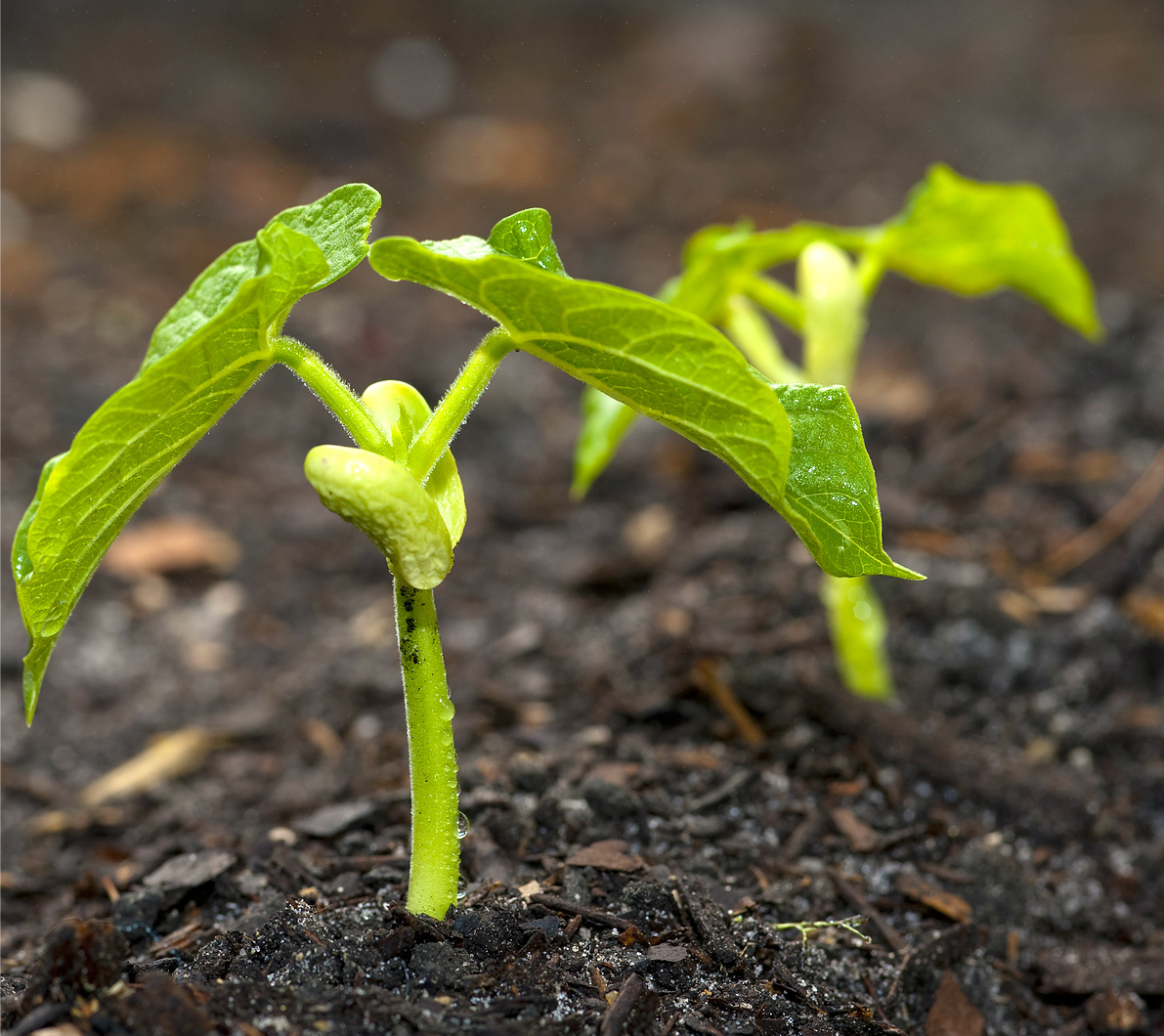
For nearly a week the cups show only dirt. Then one day Kirby eagerly hurries from the bus with wonderful news. A bean has sprouted! Emily’s cup is the first to show life. “It’s like a little bent green rubber band,” he exclaims.

Every day he reports whose cups are bursting with growth. It has become a competition. Emily’s plant, at first the class wonder, is now no longer the tallest. For a few days Jason’s plant is the tallest, then Kerri’s, then Christoper’s plant takes the lead. Only a few cups show no visible progress. Kirby’s cup is one of those. His enthusiasm is not diminished. He’s seen what happens when a seed awakens, splits its shell, pushes through the dirt, and stands upright. He trusts in the life force of each seed.

That Friday there’s a teacher study day. A three-day weekend with no one at school to water those little cups. I find myself wondering about the tender green beans lined up in the cold window, dry and struggling to live. I’m almost afraid to send my trusting son off to school on Monday.

But Kirby returns home with a shy grin, as if he can hardly believe a long-awaited hope has come true. “It’s this big!” he says, stretching his thumb and forefinger apart. Apparently his little plant mustered up some courage during the long weekend alone. Not only has it burst through the soil, it’s already competing with older seedlings in height.

A few days later I volunteer in the classroom and notice the progress of the seedlings. Standing up from cups – children’s names scrawled proudly across the front – they appear to have identities of their own. But they’re getting gangly, leaning on the window or neighboring plants. They need to be put into bigger pots or, if only they’d been planted at the right time, into a garden. It seems an ill-timed project.

The next day, coming in from errands, I’m disconcerted by a terse phone message from Kirby’s teacher. Something about non-compliance. The teacher wants me to call back to help her determine an appropriate punishment. I can’t imagine what might have gone wrong. I start to call her back, but then I hear the school bus rounding the corner. I’ll wait to hear what Kirby has to say first.

There’s a look children get that’s hard to describe. They appear so full they may burst, but they don’t know if they can let out what has them so overwhelmed. The adult world has them confounded. That’s the look Kirby wears. Misery, anger, guilt, petulance, and defiance as well.  There’s so much emotion on his face that I can only give him a big hug and ask him to tell me.

He can’t sit. He paces as he starts to explain. Today in class his teacher had each pupil take his or her plant, sit at their desks and…. for a minute he can’t go on. He tries again. Finally I understand. The ultimate purpose of the seedling is to serve as an example of plant anatomy. “She wanted me to kill it Mom!” he said, wide-eyed at the injustice of it.

It seems Kirby took the plastic knife he was given but just sat there. He wouldn’t take his plant out of the dirt, he wouldn’t cut it apart. While the other children followed instructions on their worksheets the teacher scolded Kirby.  Then took his plant and put it back on the windowsill where it sat alone, nearly tipping over without other seedlings to lean on. My son waited, knowing he’d done something wrong.

It’s too soon to plant the bean plant in the garden. Repotting might not give it a strong chance either. I have to tell him the truth about his plant’s chances. But I explain that I’m proud of him for doing what he thought was right. The world needs more people who listen to their hearts.

I call his teacher. I try to explain that my kindhearted son felt he was sticking up for a friend of his, that sometimes following the rules doesn’t always serve the higher good. The teacher doesn’t agree. The next day Kirby is punished. He is learning that rules, even the ones we feel are wrong, bear consequences.

Although his bright green plant isn’t likely to survive, I suspect that, this year, Kirby will decide to plant green beans in our garden. He’ll grow them in memory of his friend and of the fallen green comrades who gave their lives for second-grade science.

First published in Green Prints, a loooong time ago!

11 Reasons Sing-Songy Names and Rhymes Are Important

benefits of nursery rhymes, chants for preschoolers,

We make up silly songs and even sillier rhymes in my family. Mostly it’s for fun, but I notice that it ushers in all sorts of other positives. It eases tension and creates fond memories. Sometimes it’s even a strangely effective method of shorthand communication.

You probably do this too without even noticing. Maybe you call your partner and kids nonsense names. Maybe you naturally make up tunes to ease a frustrating experience. Maybe you recite the same chants you learned as a child. Here are some reasons why this is so beneficial.

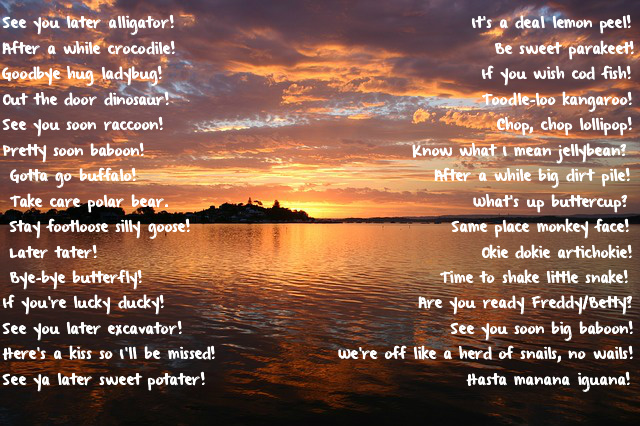
1. Sing-songy names and rhymes span generations. Your great-grandmother may have said “See you later alligator” when she was a girl. She probably also played finger games like “Itsy Bitsy Spider.” Passing along these traditions preserves a language of play shared from oldest to youngest.

2. They are a form of cultural literacy. Many of these simple refrains are hundreds of years old, nearly identical to those recited in Shakespeare’s time. As children get older they’ll will be surprised to learn the historical roots of nursery rhymes like “Ring Around the Rosy” and “Humpty Dumpty.”

3. Playground rhymes and chants are part of what sociologists call “folkways.” Even when children don’t know one another, they know how to settle who goes first using “Rock, Paper, Scissors” or “Eenie Meenie Miny Mo.” These classics have surprising staying power and become norms in a child’s world.

4. Hand-clapping rhymes and songs not only promote motor skills and coordination, they’re also linked to academic skills. Research demonstrates that young children who take part in hand-clapping chants become better spellers, have neater handwriting, and better overall writing skills. A round of “Say, Say, Oh Playmate” anyone?

5. Nursery rhymes, songs, and clapping games can advance social skills and confidence. Young children feel comfortable with patterned singing, dancing, and playing because these activities proceed with a predictable sequences of words and actions.

6. Rhyming ditties can teach basic skills (such as “One, Two, Buckle My Shoe”) and reinforce positive attitudes (such as “Row, Row, Row Your Boat”).

7. Rhymes help young children expand their vocabularies, become familiar with grammatical structure, and use sound patterns such as alliteration. The rhyming words themselves foster understanding of word families—groups of words with different beginning letters but the same ending letters. When children already know that “ball” rhymes with “call” they quickly recognize that “wall,” “fall,” and “small” also rhyme. This establishes a groundwork for later spelling and reading. 

8. Action rhymes like “Head, Shoulders, Knees, and Toes” or “London Bridge is Falling Down” foster full body movement, always a good way to expend energy.

9. Rhymes aid in establishing routines, from clean-up songs to “Teddy Bear Say Good Night.” Familiar tunes and cadences ease transitions from one activity to another in a comfortably upbeat manner.

10. Rhymes are easily customized to fit the moment. Lyrics for “Wheels on the Bus” can be expanded to include such amusements as exhaust on the bus, clown on the bus, and so on. “This Little Piggy Went to the Market” can be played with toes that instead are destined to go to the park where they swing on swings, slide down the slide, drink from the water fountain, and whatever else the child likes to do at the park. The next time it might be played as “This Little Piggy Went to the Beach.” Personalized hand-clapping games, rhymes, and names make play meaningful and memorable.

11. Songs and chants are so essential to our development that we’re coded to recognize them in utero.  Start singing!


Originally published in Holistic Parenting

Public domain image, pixabay.com

Public domain image, pixabay.com


I Can’t Hear You, I’m Reading

can't hear when I read, lost in reading, unreachable reader,

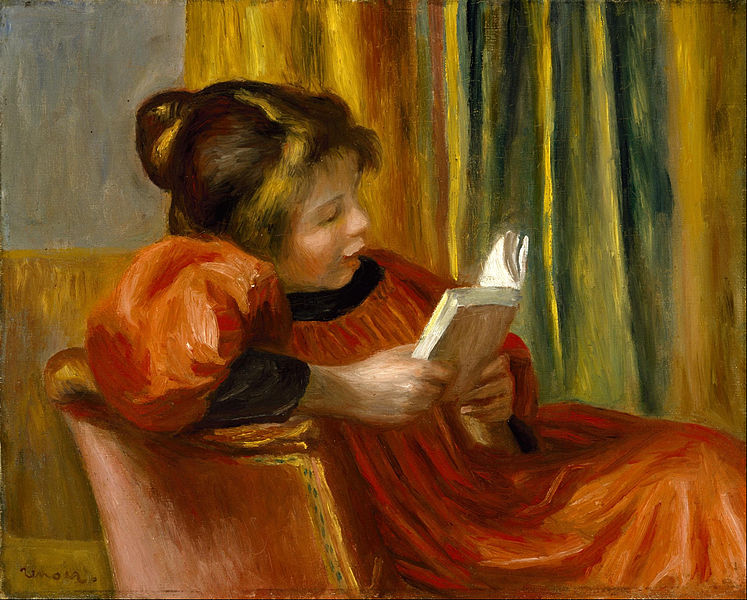
“Girl Reading” Pierre-Auguste Renoir (public domain)

I don’t simply get lost in books. When I read, I am unreachable.

Getting too absorbed in reading was a problem when I was a kid. I didn’t notice if I’d been reading in the tub so long the water turned cold. I didn’t notice the lamp I surreptitiously turned on after bedtime was still illuminating my page close to midnight. I didn’t hear my mother tell me to “get your nose out of that book and go outside” or hear her call me for dinner. I wasn’t trying to disobey. When you’re swooping aloft on the air currents of a story it’s hard to notice what’s happening back on Earth.

The problem was worse in school. I’d get done with some inane social studies assignment and sneak a library book from my desk. Soon I’d lift off, finding myself in the howling winds of a Siberian blizzard or the scorching plains of Africa. Eventually the poke of a classmate’s finger would rouse me. I’d look up to an odd silence only to realize the class had moved on to math and the teacher had called on me.

I got lost in more than books. I started reading daily newspapers when I was ten or eleven years old. (Trying to figure out the nonsensical world of grown-ups, something I’m still trying to do.) My younger brother tells me I was entirely unreachable behind the paper. He had repeated nightmares that he ran into the room yelling, “Dad has been kidnapped!” only to hear my preoccupied “uh huh.”

When I became a mother I didn’t let myself read for fear of ignoring my babies. Okay, that’s a lie. I read when they were asleep or safely occupied. (Surely they needed a break from my constantly loving gaze and all those vocabulary-enhancing conversations.) I took my babies out twice a day in any weather passable enough for a jaunt, often walking with a book propped on the stroller handle. (This was possible only because there was no traffic in my neighborhood.) I also read while nursing, peeled potatoes with a book on the counter, read well into wee hours of the night despite chronic new mom exhaustion. Admitting this to people unafflicted with a library addiction as severe as mine feels uncomfortably revealing.

I thought my lost-in-books-syndrome had eased somewhat by now. That is, until I missed a flight because I was reading.

I rarely fly, so I’m super responsible about the details. I print out copies of my flight information for my family, compact everything I need in a small carry-on, take healthy snacks, and arrive at the airport ridiculously early. Apparently what’s really irresponsible is allowing myself to take reading materials.

Last time I had to fly I was heading home from San Francisco. My fellow homebodies will understand why I chose a non-direct flight, one that stopped in a small Texas airport, simply because it departed earlier in the day and let me get home sooner. I had almost two hours between connecting flights but didn’t waste a moment getting to the the departure area. In this not-so-big airport with its small departure gates I couldn’t find a seat unencumbered by people or their luggage or their Cinnabun bags. So I sat on the carpet, my back against the wall, and started reading The Kitchen House by Kathleen Grissom. I made sure I was no more than 10 feet from the desk to ensure I’d hear them call my flight.

I repeatedly looked up to check the clock until I lifted off into the book, becoming lost to linear concepts like time. When I looked up again (after what seemed like only moments) the area was empty.

A plane was taxing away from the window.

I wasn’t on it.

A bored employee assured me the flight had been called several times. They saw me sitting there but I didn’t look up. There were no flights heading north or west after mine till the next morning.

I got to spend the entire night on a hard plastic airport bench. The lights were dimmed but informational announcements about keeping your luggage secure played every 15 minutes. All. Night. Long.

I finished my book. I read everything on my Kindle. I memorized the posters on the wall. I thought bitterly about living on a backward planet where transporter beams are not yet a reality.

Perhaps I should start a support group. Hello, my name is Laura. I’m an Unreachable Reader.

Evoking the State of Flow

state of flow, Mihaly Csikszentmihalyi, rapt absorption, learning through flow, advance learning with flow,

CC by 2.0 Jonf728’s flickr photostream

Flow is “a state in which people are so involved in an activity that nothing else seems to matter; the experience is so enjoyable that people will continue to do it even at great cost, for the sheer sake of doing it.”   ~ Mihaly Csikszentmihalyi

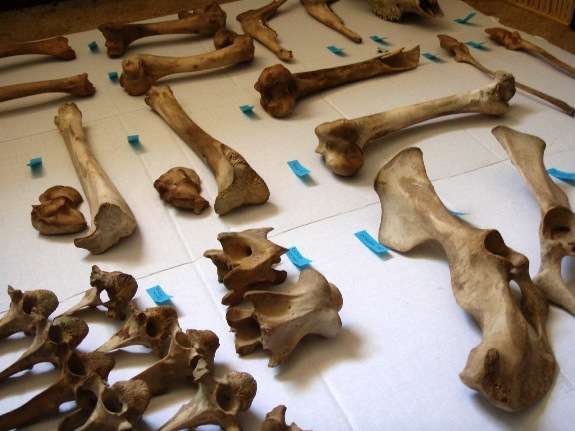
My daughter spent much of this week with a deer skeleton she found in the woods.

As she searched the site she was thrilled to find most bones intact. My only involvement was providing toothbrushes and bleach to clean them.

Today she’s reassembling the skeleton in the driveway. She shows me how the back legs fit into the hip sockets, giving the deer power to leap and run while the front legs are mostly held on by bone and connective tissue.

She points out that the spine is somewhat similar to a human spine in the lower thoracic and upper lumbar regions, but very different where the large cervical vertebrae come in.

I know so little about this topic that I forget what she’s telling me while she speaks.

Handling the bones carefully, she faithfully reconstructs the skeleton. She’s so deeply engrossed in the project that she hasn’t come in for lunch or bothered to put on a jacket to ward off the chill.

Her interests are far different than mine, but I know what it’s like to be this captivated.

You know the feeling too. You become so absorbed in something that time scurries by without your notice. Your whole being is engrossed by the project. You feel invigorated.

Skiers call it becoming “one with the mountain.” Athletes call it being in the “zone.” Psychologist Mihaly Csikszentmihalyi has termed it the “state of flow.”

In this marvelous state the boundaries between you and your experience seem fluid, as if you are merging with what you’re doing. The more opportunities any of us have to immerse ourselves in activities we love, especially those that stretch us to our full capacities, the more capable and centered we feel in other areas of our lives.

Photo by Claire Weldon

Children, especially the youngest ones, slide into flow effortlessly. While playing they concentrate so fully that they lose sense of themselves, of time, even of discomfort. They’re inherently drawn to full-on engagement. As Csikszentmihalyi explains in Flow: The Psychology of Optimal Experience,

Contrary to what we usually believe, moments like these, the best moments in our lives, are not the passive, receptive, relaxing times—although such experiences can also be enjoyable, if we have worked hard to attain them. The best moments usually occur when a person’s body or mind is stretched to its limits in a voluntary effort to accomplish something difficult and worthwhile. Optimal experience is thus something that we make happen.

For a child, it could be placing with trembling fingers the last block on a tower she has built, higher than any she has built so far; for a swimmer, it could be trying to beat his own record; for a violinist, mastering an intricate musical passage. For each person there are thousands of opportunities, challenges to expand ourselves.”

Kids demonstrate flow when they’re eagerly drawing, building, climbing, pretending, reading, exploring—-however rapt involvement captures them. Their intent focus makes a mockery of what is supposedly a child’s developmental handicap — a short attention span.

Flow truly puts a person in the moment. No wonder it can be hard for our kids when we call them away from what they’re doing to what we deem more important. No wonder they might be more enthusiastic about playing with Legos than taking part in a structured geometry lesson.

Imposing too many of our grown-up preoccupations on kids can teach them to block the experience of flow.

What do we need to remember about this state?

Flow is typically triggered:

  1. when a person’s abilities are stretched nearly to their limits
  2. during a self-chosen pursuit
  3. when they are looking to accomplish something worthwhile to them.

These characteristics are also the way we’re primed to learn from infancy on. It’s been called the Goldilocks Effect. This means we are attracted to what holds just the right amount of challenge for us. Not too big a challenge, not too little, but something that sparks our interest and holds it close to the edge of our abilities, moving us toward greater mastery.

That’s pretty much the way science, art, and other major human endeavors happen too. Flow may indeed be our natural state.

Public domain by Cheryl Holt.

How do we encourage flow?

It doesn’t have to be complicated. Here are some ways to allow more flow in your kids’ lives (and yours too!).

  • Foster a calm, relaxed environment.
  • Engage in what brings out delighted fascination. If you’re not sure what that is, fool around with something hands-on. Tinker, paint, write, sculpt with clay, take something apart, dance, experiment—-whatever feels enticing.
  • Let go of worry and pressure.
  • Welcome mistakes as well as challenges.
  • As much as possible, don’t interrupt.
  • Remember that flow isn’t really separate from play.

The outcome of flow?

  • Deepened learning and stronger confidence.
  • A drive toward complexity, luring us to increase challenges, broaden our range of abilities, even face anxiety and boredom as we access an ever more profound state of engagement. (As A Playful Path author Bernie DeKoven explains here.)
  • Dr. Csikszentmihalyi’s work tells us achieving the flow state regularly is a key component of happiness.

That’s vital, even if it means you end up with a deer skeleton in your driveway.

Portions of this post are excerpted from Free Range Learning