Last year I had the pleasure of interviewing innovative math educator and founder of Natural Math, Maria Droujkova, in “Math is Child’s Play” where she talks about learning math through free play in the context of families and communities. More recently, she and I were talking via social media when she mentioned magic circles. I was instantly intrigued and asked her to explain. She wrote:
One of my consulting topics is game/experience design. One of my favorite design concepts is magic circle: a playspace co-created by the participants, where they suspend their disbelief and behave as if they inhabit another world. I’ve been collecting tools for building cool magic circles from all creative fields, from writing to engineering. Tools like pretend-play, problem-posing, or name-giving. Math circles are magic circles. The maker goal: learn to pop up constructive, emotionally secure, creative spaces wherever we go.
I had to know more. My questions to her turned into this interview.

What was your first experience with a magic circle?
That feeling when an activity is the thing and the whole of the thing? When the rest of the world and the rest of me pretty much disappears? I’ve been experiencing that for as long as I remember. Early on, at three or four, I rearranged stones to make tiny spring snowmelt creeks gurgle merrier. I made canals, dams, and waterfalls till my hands grew red and numb. I remember long pretend-play with my mom, dad, and my imaginary friends, like the red velvet bow that was a fire-butterfly who’d gently land on my hand to play with me. Or the friend called Reflection who could escape its mirror, turning invisible. In another couple of years, there were elaborate handicrafts, hours in the making, while my grandpa was meticulously arranging his stamp collection in hand-crafted albums. He worked at the same table, and my crafts only happened if he started his. There was a very different energy, but some of the same timeless feeling, when me and other rough neighbor kids let go of our constant low-key fighting for living as action heroes in one of the traditional games, also rough, like “Cossacks and robbers.”
Once again, it was a different energy and a very recognizable feeling when I started to spend long hours solving delicious problems before my first Math Olympiad.
I don’t think I can live for long without the magic circle experience. It’s somewhere between water and food on the hierarchy of needs. Yet when I first read Flow: The Psychology of Optimal Experience I felt uneasy about the authors’ claims that there are people of the flow, and communities of the flow, maybe even nations of the flow, while other people and groups are not.
Am I doing enough of immersive, productive, joyful work? Are my communities? I’d had none of these worries between building elaborate snowmelt waterworks and making up fantastic worlds for fire butterflies.

How did you imagine its benefits might be useful in other situations?
For the task in hand, a magic circle gives us immersive, focused, joyful motivation. We feel less tired while accomplishing more. Isn’t that dreamy? And also, we feel balanced and peaceful. That’s dreamy too, especially in troubled times. These feelings, in turn, can increase well-being, productivity, and teamwork.
But these feelings can also run amok or be co-opted. They can make us workaholics, media addicts, or viciously competitive. The weekend I played World of Warcraft so long I lost the sight in one eye for a few scary hours? The magic circle had been real! Gamers’ farewell: “It’s been real.” The weekend when I told my husband I’d be there for breakfast after a few minutes of writing? I resurfaced when the manuscript was finished. It was nearly dark by then, and I’d fasted through the day, though my husband kept bringing me water, which I drank but failed to notice. It’s been real, it’s been magic, I still like what I wrote back then, but if I keep doing something like that for several days in a row I get sick.
Some people of the flow have bad health statistics, such as computer coders with their famously long, immersive work-hours.

What “tools” do you use to build magic circles?
I have been collecting toolsets far and wide. One of my favorites is pretend-play: be a character in a different world. Instant immersion! Characters also provide emotional security: if something goes wrong, it’s not me, it’s some other persona who messed up. Sometimes clothes or accessories help to get into character: dress for the job you want, right? I have a collection of math t-shirts that set the mood when I give a talk or run an event. GMs (game masters) of Dungeons and Dragons have a lot of casual roleplay tools to quickly transport the group into the world of play, from evocative sound effects in their phones to action figurines in their pockets.
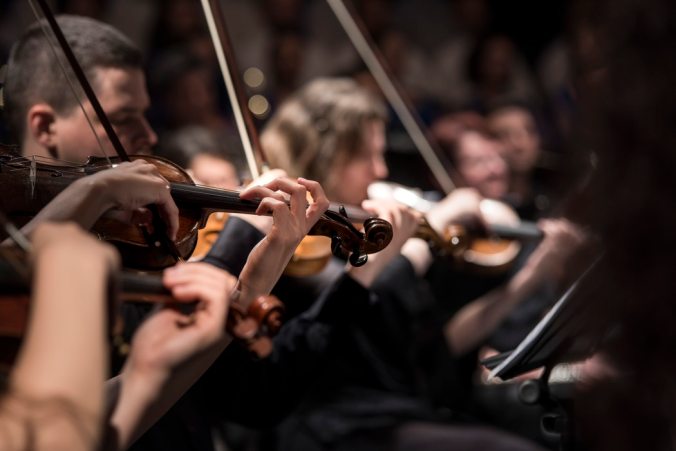
What does an orchestra, an improv group, and a math circle have in common? They do a warm-up before the main play. Tune the instruments, do a quick skit, solve a puzzle: these are threshold activities for when a group is liminal between our world and its magic circle.
There are many jokes, not always kind, about the stereotypical scientist, mathematician, and engineer clueless about the bigger picture. In reality, magic circles can break from context-switching. A programmer who says, “Hi, how are you?” to a colleague might remain measurably distracted from coding for the next quarter hour or so. As such, STEM professions have developed big toolsets for keeping focus.
Some of these STEM tools for tuning out the world backfire in funny or sad ways. Archimedes running naked through the city shouting his “Eureka!” is still cute to us. Social threats, such as being reminded that you are an oppressed minority or that your job is in jeopardy (or that your clothes or lack of them matter), tend to break magic circles. Yet the habit of tuning out all social issues causes systematic problems in STEM fields. “Oops, this AI is sexist because we never gave gender a single thought while designing it.” That’s one of the forces behind many cultural troubles exemplified by the Silicon Valley.
I like magic circle tools from professions and serious hobbies. Each profession has its way for creating magic circles, but most professionals don’t realize that’s what they are doing. Like speaking a native language, we don’t think about its grammar. Writers talk about their process a lot, because notice-wonder-describe is a part of their trade. Some managers reflect on how they manage. In general, when I want to explore a new field, I go straight for teacher materials. Doctors, mathematicians, or car mechanics may not reflect on their process, but their teachers surely do.
Most recently, I’ve been exploring storytelling communities. Some of those focus on speech games, such as Toastmasters, One Million Cups, or Pechakucha. They have a common toolset, such as format-based stories. For example, One Million Cups has a 5-7 minute story about a startup that must contain certain elements, such as an elevator speech intro and a particular ask of what others can do for the company. The time-tested format helps newbies learn from similarly structured examples. It also gives a checklist for what’s important in business and in business presentations. Checklists and canvases are magic circle tools.
Pechakucha is a rhythm game: a presentation where 20 slides advance automatically every 20 seconds. That deceptively simple storytelling device makes people mindful of their phrases, because they have to write and practice speeches, because it’s impossible to improvise that precisely! The prep provides many hours of a solo magic circle. When the group event comes, the fast Pechakucha rhythm generates high energy in the room, keeping the group magic circle going.
Fanfiction networks gather storytellers who focus on written stories in particular imaginary worlds. The non-profit Organization for Transformative Works has a good amount of peer-reviewed articles and essays published about fanfiction. One of my favorite fanfic tools is a prompt or gift exchange. Imagine a little creative task, a quest if you will, given to the author by someone who shares the author’s love of a particular imaginary world. That person is eagerly awaiting whatever the author makes, and then cheers the gift, gives thanks, and provides content feedback. And maybe there are other peers who admire the creation as well, and leave comments. In any case, the author is guaranteed at least one eager receiver of that gift. Now imagine a homework exercise designed that way: personally requested, anticipated, and loved by at least one like-minded person. Wouldn’t that be a magic circle experience?
Where did this concept originate?
The term “magic circle” as I use it comes from game design. It is also used in gamification and experience design. In a good game, players suspend their disbelief and quit their daily grind to be immersed in the game’s world. They enter the magic circle to start playing, then leave it behind to return to the regular world.
There used to be social stigma against adult play and adult gamers. Talk about work as a game, and you are immature, or else scheming, even Machiavellian. About ten years ago, the average age of a computer gamer grew over thirty. As gamers grow up, gaming is normalized. Now we see a lot of game design tools in the workplace. Naturally, some are used in scary ways, such as workers being nudged to skip breaks by tracking their relative progress on a public display. Magic circles can mutate into harsh competitive prisons. We have to be aware of that.
Where can magic circles happen?
Magic circles happen in the mind. Our actions can help to focus the mind. The activity that invites a magic circle can be shared, creating the sense of oneness with other participants.
A related question: are there places or situations where magic circles cannot happen? What prevents them, what stops them? Can we have magic circles while tired, sick, or scared? What social or mental conditions hinder us, like having a new baby or having ADHD?
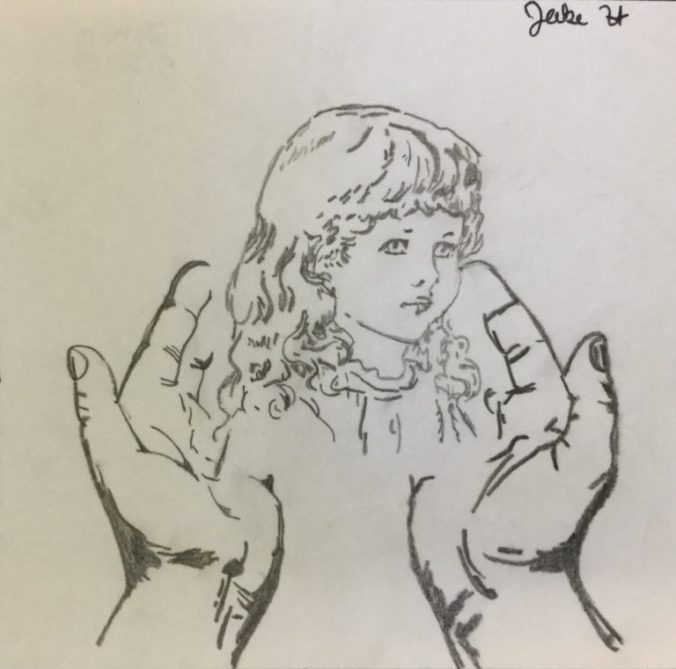
I didn’t use the term back then, but I found my first systematic descriptions of creating magic circles with and for children in Janusz Korczak’s books. I’ve read and re-read them as a kid, teen, and adult. “The Child’s Right to Respect” became a motto. “Playful Pedagogy” is still relevant after eighty years in publication. Doctor by calling, Korczak was the founder of one of the first Democratic schools in the world, in a poor Jewish children’s orphanage. It had a children’s parliament and a child-run newspaper. His magic circle tools are based on helping troubled kids find their voice, grow in agency and autonomy, build equality, and care for one another in kindness.
The orphanage was in Warsaw. It was ended by force in 1942. Yet this story is about light, inspiration, and hope. Korczak and his children kept up their classes, their play, their newspaper and their democratic meetings. In troubled times, they had the power to maintain their magic circles.
korczakusa.com
Do you have any resources you’ve written that people can access on this?
I write about a specific type of magic circles, called math circles. The company I direct, Natural Math publishes books for math circle leaders. These circles are designed with the purpose of every participant saying enthusiastic “Yes!” to mathematics. [Laura’s note: Maria’s Natural Math site also offers a newsletter, blog, courses, and FB group 1001 Math Circles.]
The term “math circle” in its modern sense originated in the Eastern Europe in 1960s. I loved math circles as a child, and they helped to define my career. A few years ago, I interviewed some Western math circle leaders to edit and expand the Wikipedia article on math circles. Now it has a more inclusive definition and a big list of math circle types, such as project-centered clubs and guided exploration circles.
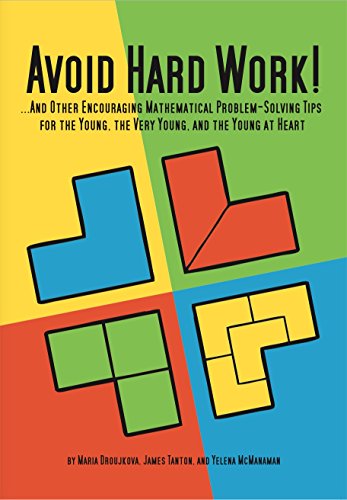
The latest book I co-authored, called Avoid Hard Work, is about kind, accessible, and deep problem-solving. It has ten chapters for ten problem-solving principles. They are tools for creating the math magic, such as the tongue-in-cheek titular slogan: to replace the mindless grind with attentive search for patterns. The book starts with a sample of what hundreds of parents and teachers say when asked, “When it comes to children and mathematics, what are your dreams?” For example, some people dream of math that is friendly, that invites curiosity, that makes sense. These math dreams can be used for value affirmation, for remembering who you are and what you want. Value affirmation is an emotional tool: it combats anxieties, puts us in the right mood for creativity, and makes our circles more robust. There is also a list of teaching techniques, such as moving beyond snap judgment of right-wrong answers to explore the “Why?” behind student reasoning.
(I am attaching these lists from the book, which is published with the Creative Commons open license, so people are welcome to share with attribution.)
Do you have some very basic suggestions about creating circumstances conducive to magic circles happening naturally, such as in the home and community?
Love this question! Balance is the key. Here is what I mean.
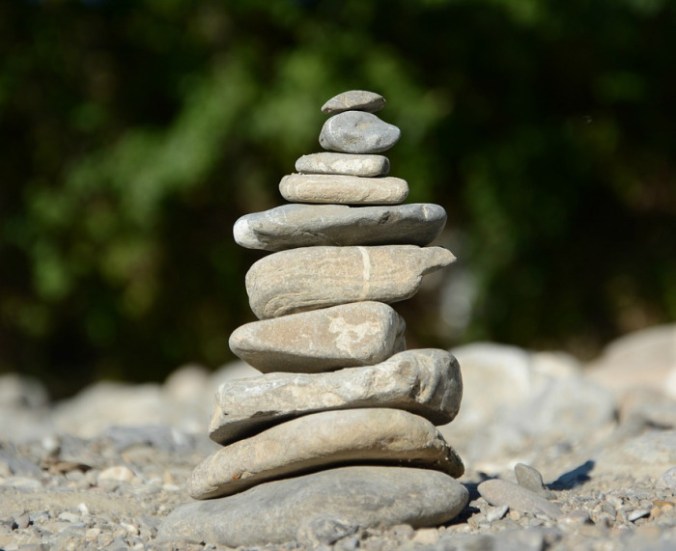
- The first balance: self with adventure.You do you – a step aside from your normal routines. A circle becomes magical if it takes you away from the daily. Choose to make something you don’t normally make: a paper snowflake, a stacked rock sculpture, or a diamante poem. Look up how others make those, try their way, then do it your way. Add a bit of your style. What if you fold the paper differently before you cut the snowflake? What if you stack rocks three by three instead of one by one? What if you shape your poem like a pear rather than a diamond? Seek more and more of these interesting choices to try. Since your project is outside of your life, making a mess of it will impact nothing serious. You can be a bit braver, a bit stronger, a bit more adventurous than your daily self. Yet it’s still you.
- The second balance: inspiration with ease. Do something special – while staying casual. What if it’s hard to feel brave and strong, to shift your focus away from the daily concerns? Children put on cat ears or superhero capes when they have their special play. Adults can also try play-acting and special clothes. Think of a ritual to set the mood. Strike a gavel, play a favorite theme song, or pass treats around. Add something quirky, spicy, or charming as you prepare. Go beyond the bare necessities. Yet keep your prep light so that your circle is easy to start. The feeling of magic is in trying new actions, not in blockbuster-quality props. It’s okay to use a curtain for your cape and pillows for your fort.
- The third balance: invitation with consent.One of the main difference between a circle and the ordinary life is agreement. There is a whole lot of have-to in life. Obligations and needs, rules and laws dictate what must be done and how, whether we like it or not. Do establish basic safety and well-being rules for your circle. And then, make the magic. Aim for enthusiastic “Yes!” to every choice, big and small. You can invite, entice, and advertise. But don’t force, dictate, or coerce, neither other participants nor yourself. It’s lovely to point out that you are making amazing seven-sided snowflakes. It’s okay to invite children to count the sides – but only for pleasure. To keep the magic in, leave your worries about math tests out of your circle. This is not the kind of story where a reluctant hero can’t refuse a call to action. Everything’s optional. Don’t push.
What are your favorite tools for building magic circles? I’d love to hear stories and compare notes.
Resources
Maria offers a list of teaching techniques, such as moving beyond snap judgment of right-wrong answers to explore the “Why?” behind student reasoning. (She offers these lists from the book in a free download here:
Avoid Hard Work, which is published with a Creative Commons open license, so people are welcome to share with attribution.)
1001 Math Circles: Facebook group to share and discuss math circle activities
Natural Math site
Natural Math books to spark enthusiasm and deeper learning. They include Moebius Noodles, with math explorations for children as young as three, Playing with Math: Stories from Math Circles, Homeschoolers, and Passionate Teachers for young people eight and older.
Avoid Hard Work free excerpt
“Natural Math: 100 Activities & Resources”
“Kids Build Together: Math Readiness in Early Childhood”
“Playing With Math: How Math Circles Bring Learners Together For Fun”
“The Benefits of Natural Math”
“Math Instruction vs Natural Math: Benezet’s Example”
“Math is Child’s Play” Previous interview with Dr. Droujkova
National Association of Math Circles
Julia Robinson Mathematics Festival



 The nose pad on my glasses snapped off as I left

 I am particularly fortunate, because my wonderful publisher, Ginny Connors, of
  It did not work out well. I got so frustrated that my more patient spouse took over the project. He tried adhering the images with glaze, applying a layer over the top when it dried. The paper buckled and colors bled. He tried spraying clear coat on both sides of the image to seal it before adhering to the tray. It didn’t buckle, but the colors bled with the top coat of glaze. No matter what he tried, the image bled or the top layer (of glaze or Mod Podge) turned cloudy. (Actual photos of the cover probably would have worked better, but we had tiny images copied at Staples.)

 What makes us into who we are? I wondered about that early on, thanks to four rows of biographies in the children’s section of Porter Public Library. They were shelved separately from other books, even other biographies, in the