I write to my elected officials, I donate when I can, I hold a sign at rallies, I feel helpless.
After reading for a few hours, most nights I still lie awake trying to keep my mind from heading back to poet and activist June Jordan’s question, “How many gentle people have I helped to kill just by paying my taxes?”
Often I resort to a simple calming practice I began many years ago. It’s a sort of embodied metta or lovingkindness prayer. It all began with cattle.
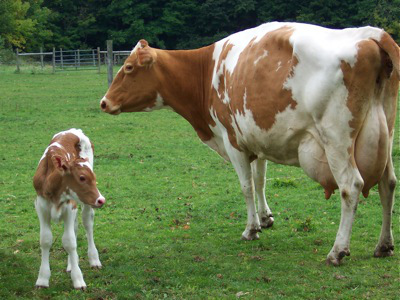
Thanks to my four handworking offspring, particularly my daughter’s dedication, we enjoyed nearly two decades with an intelligent, forthright, entirely marvelous Guernsey named Isabelle along with her adorable, equally forthright calves. Everything about the way our bovines lived was contrary to current agricultural practices. Here’s an excerpt of what I explain more fully here,
Most dairy calves are separated from their mothers soon after birth. It’s considered more cost-effective to isolate calves, feeding them “calf milk replacer.” This white fluid resembles cow milk only to lab analysts, as the ingredients may include wheat, soy, lard, fish, and animal plasma (often from pig blood).
When we were new to farming, everything we read warned that a calf left with its mother to nurse freely was likely to develop scours, a potentially fatal condition. We couldn’t imagine that nature had it wrong and agriculture manuals had it right. Besides, we had no intention of separating mother from calf. A little research showed that experts were looking at it the problem upside down. Scours is more likely to happen in calves taken from their mothers so soon that they’re deprived of sufficient antibody-rich colostrum that flows from their mothers’ udders right after birth.
Isabelle is an attentive mother. She teaches with nudges, head movements, and a variety of vocalizations. She stands still when her calves choose to nurse, moving no more than her tail to flick away flies. When a young calf wanders away, she hauls herself up with a bovine “ooof” to keep watch the way attentive parents do.
Each of Isabelle’s calves has been significantly bigger than the average for her breed, with no medical problems. And we’ve always had more than enough milk for our human family while she nurses a calf or two for a year.
On our farm, the bond we witness between cow and calf forces us to recognize the toll taken by standard agricultural practices. One day, we were at a nearby dairy when farmhands came to take a day-old calf from its mother. As the men approached, a dozen other cows in the pen formed a circle against them, keeping the mother and calf in the center. After losing the struggle to protect one of their own, the cows began bawling, and soon the cows in the other buildings joined in. We could hear them as we drove away.
All around us, dairy farms isolate calves in “calf huts,” where they’re fed calf milk replacer. Most often, their mothers live confined indoors, their sensitive noses smelling their own calves and green grass, both forever beyond their reach.
Our veterinarian tells us that in 26 years, he’s never seen dairy calves raised alongside their mothers except on our little homestead. He remains astonished by what he regards as the uncharacteristic size and robust health of the calves here.
Just around the corner from us was a large dairy operation. Every day I walked our dogs close to that farm. In spring we could hear the cows calling and the calves crying out for their mothers. It grieved me terribly, yet there was not a thing I could do about it. The way I can’t change much of anything about what my country is doing both within our borders and around the world. My grief over those confined cows would follow me home and linger so long that it was sometimes hard to get myself out the door the next day. When I walked near that dairy farm or drove near others, I began to remind myself of the natural tranquility of our cows out on their green pasture. I let the peace of their contented chewing and the calves’ happy gamboling fill me completely, right down to my inhales and exhales, until I was entirely peace. Then I sent that deep peace out to every confined creature. I knew it didn’t help any animal directly, although I imagined that in some energetic or spiritual way it was maybe possible.
I expanded on the practice and still do. At night when I’m in despair I fill myself with the grateful contentment of being wrapped in my weighted blanket, safe and warm next to the sleeping form of the man I love. I let that feeling expand in me until I am nothing but that safety, that warmth, feeling it all the way to my spine. Then I send it out beyond me wishing every person might know such comfort and peace.
When I’m driving to meet friends, troubled by yet another horror show news report, I let myself fill completely with the joyful connection I savor with friends of many years, feel it in the lightness of my heart and the smile already on my face, fill myself completely to bursting with this, then send it out with the force of prayer to everyone who despairs.
When I’m cooking for a gathering, intensely aware of hunger and suffering elsewhere, I summon appreciation for the abundant food in my cupboards, refrigerator, and garden that I am transforming into meals, along with gratitude for the people I love who will come to share it with us. I fill myself completely with these feelings, sense it most completely in my chopping-cooking-stirring hands, then send this fullness out to everyone who hungers for food and companionship.
I don’t pretend this does anything but calm my own despair. But despair doesn’t help anyone. I try to remember, everywhere around us there are people building a better future right now. They are taking part in community gardens and worker co-ops, starting mutual aid groups, expanding shareable neighborhoods, fundraising to pay off strangers’ medical debt, creating art with kids, standing up for others’ rights, sharing skills with the next generation, singing their resistance, living in communal arrangements, welcoming immigrants, developing buy-nothing lifestyles, listening to people across all sorts of divides, and so much more. There are as many reasons for hope as there are people.
“The way you look at things is not simply a private matter. Your outlook actually and concretely affects what goes on. When you give in to helplessness, you collude with despair and add to it. When you take back your power and choose to see the possibilities for healing and transformation, your creativity awakens and flows…” ~ John O’Donohue
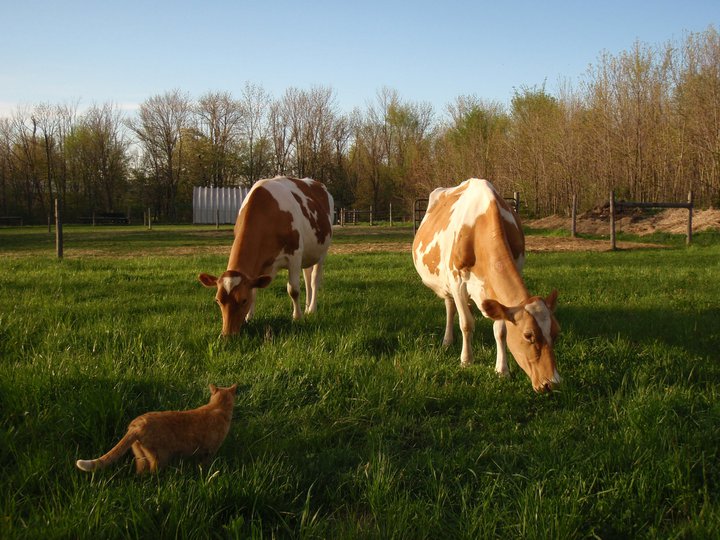
photos by Claire Weldon

 Laura Grace Weldon