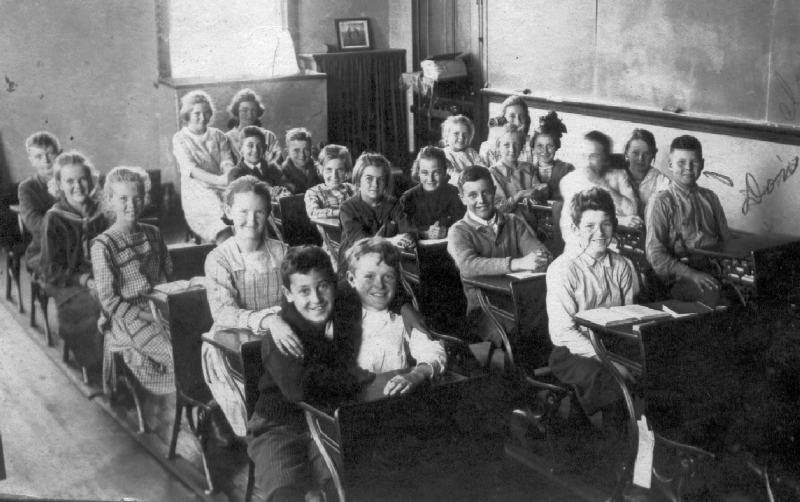
1930’s classroom (forestpark4.wikidot.com)
Children are intrinsically eager and able to learn. If we step back from our limiting preconceptions about education, we discover learning flourishes when we facilitate it rather than try to advance it through force, intimidation, and coercion.
Over 85 years ago a pioneering educator proved that delaying formal instruction, in this case of mathematics, benefits children in wonderfully unexpected ways. Louis P. Benezet, superintendent of the Manchester, New Hampshire schools, advocated the postponement of systematic instruction in math until after sixth grade. Benezet wrote,
I feel that it is all nonsense to take eight years to get children thru the ordinary arithmetic assignment of the elementary schools. What possible needs has a ten-year-old child for knowledge of long division? The whole subject of arithmetic could be postponed until the seventh year of school, and it could be mastered in two years’ study by any normal child.
While developing this rationale, Benezet spoke with eighth-grade students. He noted they had difficulties putting their ideas into English and could not explain simple mathematical reasoning. This was not only in his district; he found the same results with fourteen-year-old students in Indiana and Wisconsin. Benezet didn’t blame the children or teachers, he blamed introducing formal equations too early. So he began an experiment, abandoning traditional arithmetic instruction below the seventh grade.
In the fall of 1929 I made up my mind to try the experiment of abandoning all formal instruction in arithmetic below the seventh grade and concentrating on teaching the children to read, to reason, and to recite – my new Three R’s. And by reciting I did not mean giving back, verbatim, the words of the teacher or of the textbook. I meant speaking the English language.
To start, he picked out five classrooms, choosing those districts where most students were from immigrant homes and the parents spoke little English. Benezet knew that in other districts the parents with greater English skills and higher education would have vehemently objected, ending the experiment before it started.
In the experimental classrooms, children were exposed to what we’d call naturally occurring math. They learned how to tell time and keep track of the date on the calendar. The students played with toy money, took part in games using numbers, and when dimension terms such as “half” or “double” or “narrower” or “wider” came up incidentally, they were discussed. Instead of math, the emphasis was on language and composition. As Benezet describes these children,
They reported on books that they had read, on incidents which they had seen, on visits that they had made. They told the stories of movies that they had attended and they made up romances on the spur of the moment. It was refreshing to go into one of these rooms. A happy and joyous spirit pervaded them. The children were no longer under the restraint of learning multiplication tables or struggling with long division.
At the end of the first school year, Benezet reported that the contrast between the experimental and traditionally taught students was remarkable. When he visited classrooms to ask children about what they were reading, he described the traditionally taught students as “hesitant, embarrassed and diffident. In one fourth grade I could not find a single child who would admit that he had committed the sin of reading.” Students in the experimental classrooms were eager to talk about what they’d been reading. In those rooms, an hour’s discussion went by with still more children eager to talk.
Benezet hung a reproduction of a well-known painting in the classrooms and asked children to write down anything the art inspired. Another obvious contrast appeared. When he showed the ten best papers from each room to the city’s seventh-grade teachers, they noted that one set of papers showed much greater maturity and command of the language. They observed that the first set of papers had a total of 40 adjectives such as nice, pretty, blue, green, and cold. The second set of papers had 128 adjectives, including magnificent, awe-inspiring, unique, and majestic. When asked to guess which district the papers came from, each teacher assumed that the students who wrote the better papers were from schools where the parents spoke English in the home. In fact, it was the opposite. Those students who wrote the most masterfully were from his experimental classes.
Yet another difference was apparent. It was something that Benezet had anticipated. He explained, “For some years I had noted that the effect of the early introduction of arithmetic had been to dull and almost chloroform the child’s reasoning faculties.” At the end of that first year, he went from classroom to classroom and asked children the same mathematical story problem. The traditionally taught students grabbed at numbers but came up with few correct results, while the experimental students reasoned out correct answers eagerly, despite having minimal exposure to formal math.
Based on these successes, the experiment expanded. By 1932, half of the third- to fifth-grade classes in the city operated under the experimental program. Due to pressure from some school principals, children in the experimental classrooms were back to learning from a math book in the second half of sixth grade. All sixth-grade children were tested. By spring of that year all the classes tested equally. When the final tests were given at the end of the school year, one of the experimental groups led the city. In other words, those children exposed to traditional math curricula for only part of the sixth-grade year had mastered the same skills as those who had spent years on drills, times tables, and exams.
In 1936, the Journal of the National Education Association published the final article by Benezet. His results showed the clear benefits of replacing formal math instruction with naturally occurring math while putting a greater emphasis on reading, writing, and reasoning. The journal called on educators to consider similar changes.
As we know, schools went in the opposite direction.
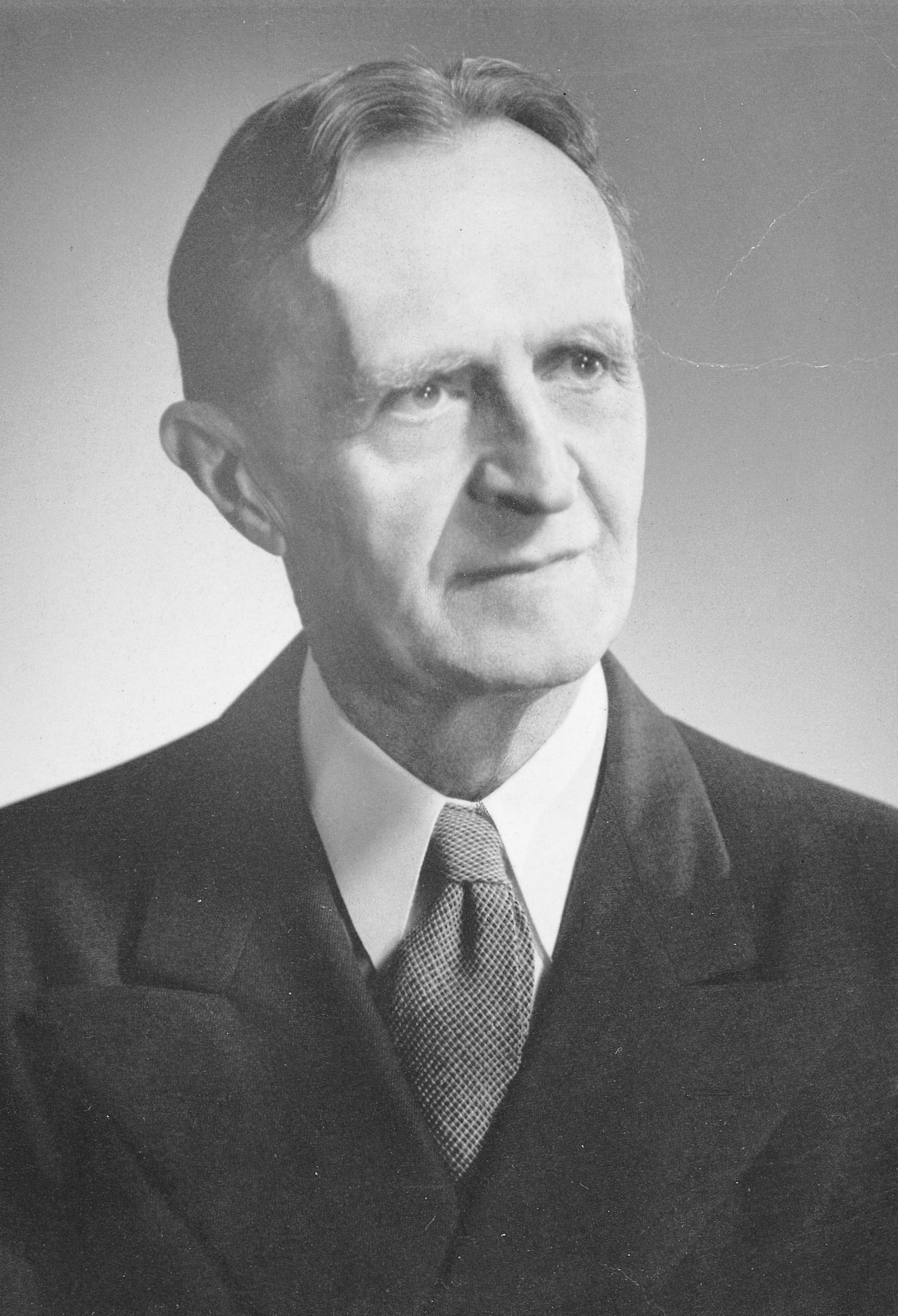
Louis Paul Bénézet
 . (Next post, the
  Laura Grace Weldon