On Living Happily with Less

living on less, the shift, RFK, gross national product,

My husband is the bee inspector for two counties. He meets interesting people every time he goes out to another apiary. If he lingers after the heavy work of opening hives, the conversation invariably heads in the direction of self-reliance. People tend to talk about making home and equipment repairs, canning and freezing a garden’s bounty, earth-respecting ways of farming, living on less. It seems everywhere around us people are doing what they can to save. They’re also working harder to connect with others who have experience and talents to offer.

After two years of searching for full-time work my husband is well acquainted with these topics, but also because we’ve spent decades trying (sometimes with slapstick results) to live well on less. We make do, repurpose, and enjoy frugality without making a fuss about it. It’s a work in progress, as we’re still trying to gain reasonable proficiency in skills our great grandparents took for granted.

The times we live in are tossing millions of people in this direction whether they go willingly or scream all the way. It isn’t easy. It probably isn’t fair either. Our current economic downturn came after a long slide of wealth slipping from middle class hands into the tight grip of the wealthy. Nearly 8 million jobs are gone, many possibly for good. Yet the richest among us have actually increased their holdings.

Some of us have lost the illusion of security. Some of us have lost much more—jobs, health care, pension funds, and homes. All of us have been forced to grow a little. That’s part of a larger shift. Insecurity pushes us to pay closer attention to our core values. We’re recognizing that purchases don’t really buy happiness and as a result, saving more than we have in decades. We’re doing more for ourselves and still reaching out to help others.  We’re as ingenious, adaptable and happy as we choose to be.

The shift is even more noticeable when we see certain long-established structures around us breaking apart, with more cracks appearing every day. Just look at what’s happening to prescribe-and-placate medical models, inflexible financial institutions, condemning religious frameworks, and rigid corporations.

But these current conditions of breakup, economic chaos, and environmental decline are exactly those which are (slowly) leading to beneficial change. Collectively we’re waking up to the weakness of limited thinking and short-term fixes. Hopefully we’re also waking up to the reality that we’re in this together—rich and poor, developed and developing nations, young and old, left and right.

We see in our own lives that what’s important can’t be measured by dollars alone. Things like good health, supportive relationships, a vital ecosystem as well as economic security. Even the word “wealth” is derived from the Old English term “weal” which means “well-being.”

Less than two months before he was assassinated, RFK said in a speech,

“…America is deep in a malaise of spirit:  discouraging initiative, paralyzing will and action, and dividing Americans from one another, by their age, their views and by the color of their skin and I don’t think we have to accept that here in the United States of America.”

He went on to say,

“For too long, we seemed to have surrendered personal excellence and community values in the mere accumulation of material things…  The Gross National Product counts air pollution and cigarette advertising, and ambulances to clear our highways of carnage.  It counts special locks for our doors and the jails for the people who break them.  It counts the destruction of the redwood and the loss of our natural wonder in chaotic sprawl.  It counts napalm and counts nuclear warheads and armored cars for the police to fight the riots in our cities.  It counts Whitman’s rifle and Speck’s knife, and the television programs which glorify violence in order to sell toys to our children.”

“Yet the gross national product does not allow for the health of our children, the quality of their education or the joy of their play.  It does not include the beauty of our poetry or the strength of our marriages, the intelligence of our public debate or the integrity of our public officials.  It measures neither our wit nor our courage, neither our wisdom nor our learning, neither our compassion nor our devotion to our country, it measures everything in short, except that which makes life worthwhile.”

redefine the GDP, frugal living,

Time to clarify what we mean by well-being—for ourselves, our economy and our future.

*

*


*


Patchwork Living Bee post*

One with the Universe courtesy of Suvetar

Together courtesy of Morfa9977

Dancing Babies & World Peace

dancing for peace, babies smile to music, net and music, research babies and music,

The magnificent blues guitarist Robert Lockwood, Jr., performed regularly not far from my childhood home. But the divides of race and radio kept me from hearing him play until I was an adult. Even when I started spending my babysitting money on music I was limited to what was available in stores within walking distance. Just like everyone else born before the net, my musical ear was limited to narrow channels of exposure.

As I got older and discovered what to me was new music, I felt my smaller world crack open. Music pours in past filters. Music, perhaps more than any other form of art, evokes a personal response. Unique as it may be to each musician, it’s also an expression of our shared humanity.

Turns out we’re born to be more receptive to music than to speech. According to a recent study babies respond to music, even regular drumbeats, with increased smiling. Even more surprising, this research shows that babies correlate their movements with the tempo and rhythm. They dance! And music gets a much greater response than spoken words. No wonder adults all over the world naturally engage babies in a sort of singsong-like call and response. We’re translating our language into one that is more evocative.

That’s what music does. It makes us known to one another.

Music is used to lull small ones to sleep, rouse teams to competition, woo lovers, worship, commemorate solemn occasions and celebrate. In some parts of the world music is a medium to intentionally and peacefully resolve conflicts. Through music we more fully grasp that all of us feel grief, love, fear, injustice, joy and moments of transcendence.

My children enjoy wider access to music of all kinds. They’ve seen Chinese opera, Tibetan throat singing, Lakota flute playing, Balinese gamelan and much more. They know more than I ever will as they seek out and share music across a huge range of styles. Entranced I wander upstairs to my daughter’s room, lured by the sounds of Le Mystere des voix Bulgares. I pay attention as my son enthuses about Inon Zur, composer of the orchestral music for inCrysis.

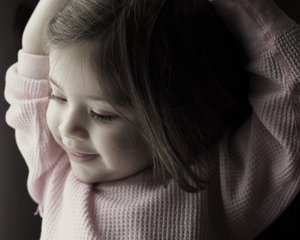
Theirs is the first generation to have the full advantage of the net and other music sharing technology. Across all divides, music can be a peacemaker. It can let us slide past cultural differences and language barriers to a place of mutual understanding.  It can let our children keep on dancing and smiling as they were born to do.

*

*

*

*

Little Girl Dancing courtesy of James Lee

How to Raise Global Learners

raising global learners

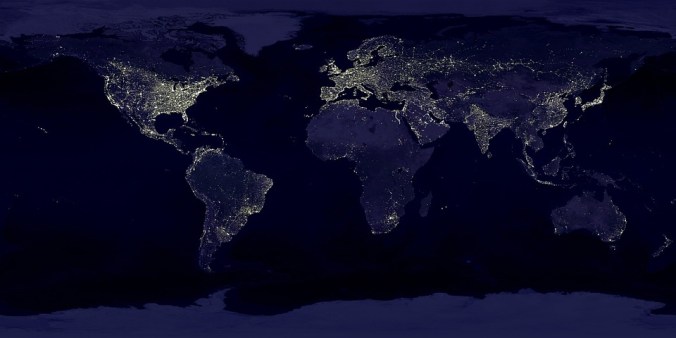
Living on a farm we don’t have the time or the means to travel. But we want our children to be global citizens. We want them to truly understand how fully they are linked to their fellow beings on this beautiful blue green planet.

When they were small we read stories, ate the foods, played the games and celebrated festivals from far-off lands. As they got older we paid close attention to a rich variety of in-depth materials that helped us discover the global fibers that run through history, art, science, literature, really through any field of interest.

More than any materials we introduce, the connections my kids find most pivotal are those they make on their own, person-to-person across any distance. For example, one of my musician sons got interested in acoustics. He joined special interest forums to talk with fellow aficionados around the world about technical details of repairing historic microphones, the artistic nuances of found sound recordings, and other topics. Friendships developed. Now they converse about everything from politics to movies. Some day, when he travels overseas, he plans to take them up on their offers to stay in New Zealand, Finland, Brazil and elsewhere. Already he’s visited friends made online in the U.S., finding the rapport they developed holds fast in person as well.

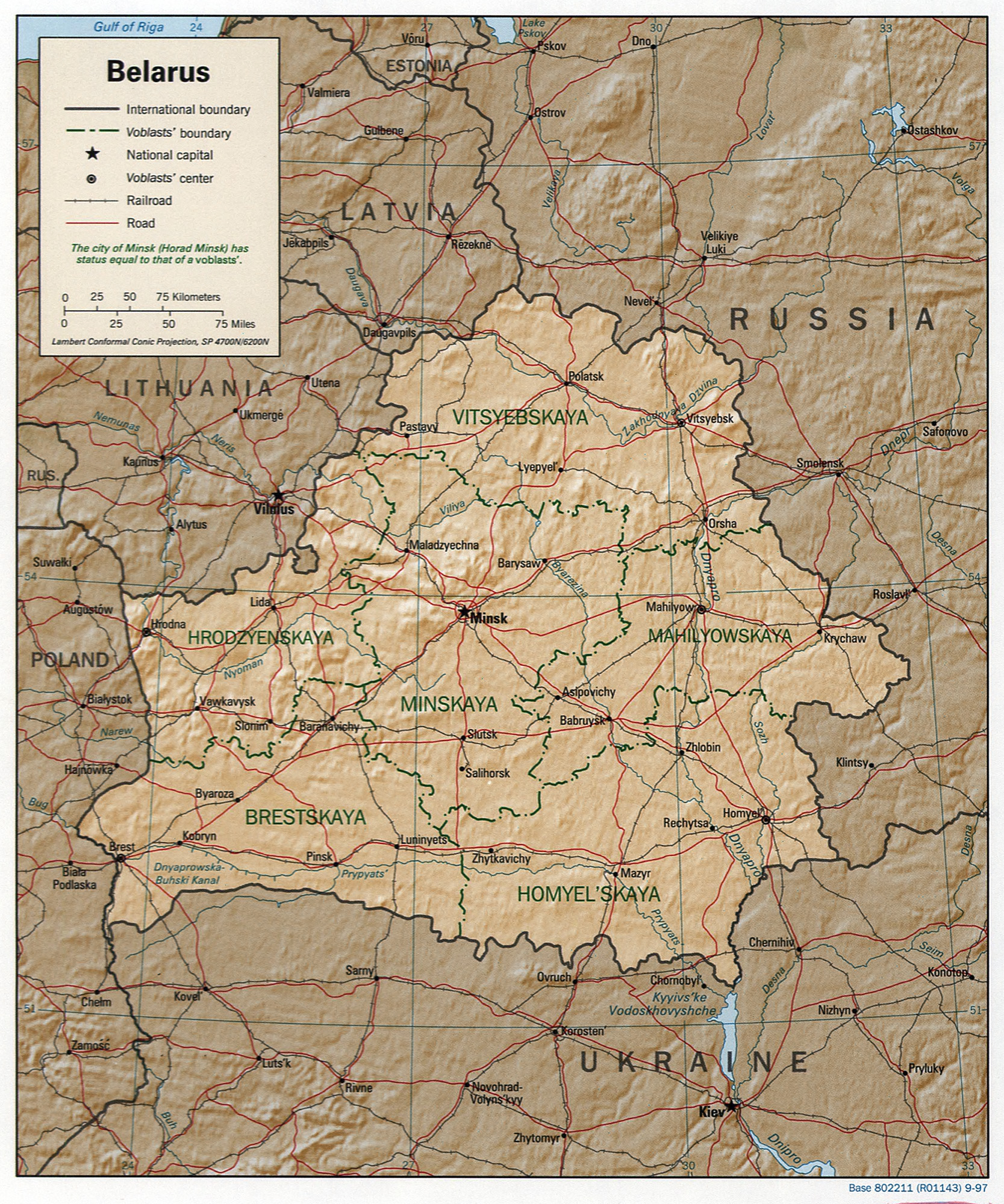
Perhaps the most important connections any of us can make are lasting, caring relationships with people who live far away. For our family, one of the most enduring relationships we made was with an effervescent girl from Belarus named Tatiana. She came as part of the medical program Children of Chernobyl. Even in her first week here, the strength of her personality more than made up for the few words of English she knew and our poor pronunciation of Russian words we thought we knew. Tatiana was horrified by my vegetarian meals, refused to participate in the activities my outdoor-loving children preferred and let us know that she hadn’t traveled so far to live like a peasant. She wanted to be entertained! Like anthropologists to our own culture, we explored shopping malls and tourist sites, we bought kids’ fast food meals for the prizes and went to amusement parks rather than wilderness areas. Tatiana displayed her brilliance in many ways, typically beating any of us at board games we’d played for years and she’d just learned. Tatiana lived with us for five summers. She became a member of our family, a family which feels to us as if it extends to Belarus.

Each connection made of understanding and caring warms our planet—but in a good way. Which leads me to recommend two new books about raising global citizens.

Growing Up Global: Raising Children to Be At Home in the World by Homa Sabet Tavangar is packed with enrichment ideas, games, service activities and resources to help raise children with the world in mind. Here are five great ideas from Tavangar’s book:

*Boost cultural understanding and fun by listening to pop music from around the world.  (I suggest using online translation to figure out the lyrics.)

*Talk about the origins and trading routes of products used every day in your home. Try tracing back a chocolate bar or t-shirt.

*Discover what foods are said to heal common health conditions. Lime juice in armpits is recommended in Paraguay to solve odor, ginger and green onion tea is recommended in China to cure a cold.

*Learn about practices for welcoming newborn babies into the family and community. Consider adapting customs to commemorate a new arrival in your family.

*Make humanitarian work a family affair. It’s possible to extend benevolent choices even to the search engine you use. Try http://www.ripple.org where 100% of search revenues help alleviate urgent global issues.

And for a vigorous “go there” perspective, give The New Global Student: Skip the SAT, Save Thousands on Tuition, and Get a Truly International Education by Maya Frost a read. A cure for any but the worst helicopter parents, Frost shows how learning in other countries best prepares today’s teens for the real global workplace. That means choices resulting in self-reliant, confident and bold adults.

Here are five great perspectives from Frost’s book.

*Stories throughout by young people who live and study abroad. Frost calls them “bold statements” and they offer invigorating examples of what travel can provide.

*Why Rotary International Youth Exchange program www.rotary.org offers the best exchange programs. Frost says it has to do with the network of volunteers around the globe providing support to families and students, the affordable price and the commitment to humanitarian work.

*The stage of life between fifteen and twenty, when pivotal life skills are being developed, the reach of our young people tends to be limited. As Frost writes, “They zero in on the fit of their jeans rather than on the fit of a cultural identity within a larger population, and they devote hours to enhancing the clarity of their skin instead of the clarity of their thinking. They are digging into a plate of pettiness because that is precisely what we’ve served them. They deserve–and are ready for–so much more.”

*How to arrange study abroad credits outside of university affiliated programs for more freedom and frugality.

*Ways to connect with helpful people in countries around the world.

*

May your children become global learners. May our shared home be one of peace and goodwill.

Real Action Footage Hard to Find: World’s Most Powerful Force Rarely Filmed

*

*

*

*

*

*

*

*

Few talk about it. Fewer know much about its principles or how to apply them. Yet it has a profound impact, a long history and a reach nearly as wide as heaven. I’m talking about non-violence.

Sure, we know a bit about the civil rights movement and a bit about Mahatma Gandhi, but not much. Mainstream media focuses on the changes wrought by violence.

Pacifism is confused with those who are passive. Nothing could be further from the truth.

Consider Liberia. This nation was birthed by colonization and racism. It existed in oppression for over 150 years. A few years ago Liberia was a land torn apart. Dictator Charles Taylor’s reign imposed hunger and brutal killings on Liberia’s people. The rise of rebel groups made the situation worse. Children were forced to become soldiers. They roamed the countryside stealing, raping and killing. Villages were burned. Brutalized refugees crowded the cities. No one was safe. No one knew where to turn. The only answer lay in the powerful force of love in action, non-violence.

By 2003 women began gathering at their own risk to demand peace. They wore white and sang in the marketplace. They called themselves Women of Liberia Mass Action for Peace. Their numbers grew. Against tradition, Christian and Muslim women worked together—singing, praying, planning and insisting on love. They held signs as truckloads of soldiers drove past, the same men and boys who terrorized them. Their signs said, “We love you. Put down your guns.”

Ignored at first, their numbers grew. As peace marchers walked past, other women joined in from the streets. Children sang along. Women of Liberia Mass Action for Peace tactics included passive resistance, withholding sex (in part to avoid birthing children who would later be raped, killed or forced to become soldiers) and insisting on reconciliation. Finally they forced a meeting with President Taylor, where they made him promise to attend peace talks in Ghana. Then they bravely met with representatives of the rebel faction, who also agreed to attend the peace talks.

A delegation of Liberian women went to the talks in Ghana at their own expense. They waited outside the hotel where negotiations were held, wearing white as reminding presence. The men stayed in luxury, stalling as they attempted to get more and more power for themselves without agreeing to more rights for the citizenry. After weeks of these fruitless talks the women learned that an embassy in Liberia had been bombed and war there had intensified. Afraid for the families they’d left behind, they took another risk. Entering the hotel, one hundred women linked arms outside the doors of the negotiating hall. They intended to force the men to stay without food and water, privations Liberian refugees knew well, until they had reached an agreement. Guards threatened them. One of the rebels kicked at them.

Leymah Gbowee, a leader of Women of Liberia Mass Action stood. She began to take off her clothing. This was a last resort. It is taboo to see one’s sister, mother or grandmother unclothed. The guards backed down. Two weeks later an agreement was signed.

When Liberia held landmark elections, Ellen Johnson-Sirleaf became the African continent’s first elected female head of state. Yet look around. The extraordinarily brave, powerfully liberating work by Liberian women went largely unnoticed by major news organizations.  Heck, even the Liberia page on Wikipedia doesn’t cite their involvement. Stephen Colbert’s interview with Leymah Gbowee promos the sex strike angle.

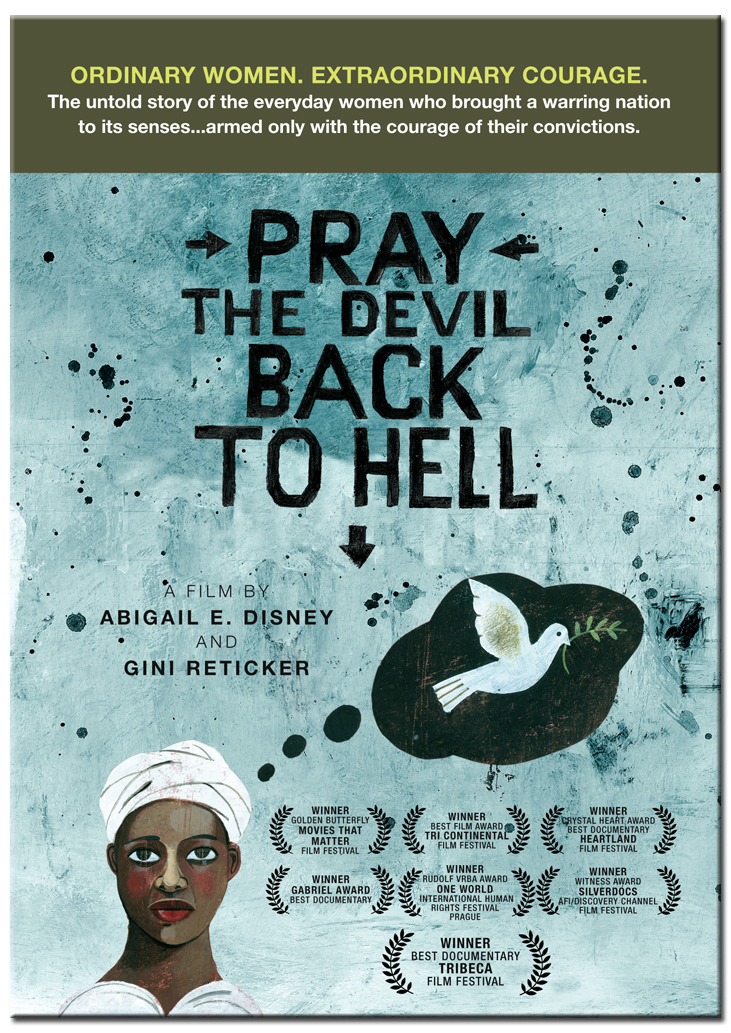
An extraordinary documentary about Women of Liberia Mass Action, called Pray the Devil Back to Hell came out in 2008.  Producer Abigail E. Disney couldn’t rely on footage shot by news organizations. They barely cover non-violence. Instead she managed to find three years of material on the peace movement that shifted the course of history from “private individuals who just happened to be there with cameras.”

We can do more than thank goodness.

We can use non-violence so that goodness is a force for change.

Going to Hope in a Handbasket


“Not only is another world possible, she is on her way. On a quiet day, I can hear her breathing.”             Arundhati Roy

*

*

*


Fear sells. Blood and guts sell even better. What really grabs our attention? Out and out panic. That largely explains today’s so-called news channels, talk radio, actually much of commercial media. The worse it sounds, the greater audience share they grab and the more money they make. Trouble is, they also make up minds and harden hearts and plant misery where optimism could so easily flourish.

But they’re wrong.

Sure, it seems we’re in big trouble. Structures we count on to be stable are crumbling—finance, health care, education, consumption driven economies, us versus them mentalities, you name it.

Remember the parable of the mighty oak and thin reeds? The oak boasted of his immense girth and height, mocking the reeds all around him for their weaknesses. But the reeds could withstand wind, lightening and the weight of snow. The oak succumbed while the reeds survived, stronger than the oak in their ability to bend and stand again. Big institutions are fighting transparency, reform or annihilation with everything they’ve got, believing that strength means rigidity. Meanwhile a shift is happening on the grassroots level, as flexible and self-correcting as reeds in the wind.

Times of change are destabilizing and difficult, but ultimately valuable. After all, what’s broken, corrupt or simply no longer workable must be fully revealed before it’s healed or transformed into something much better.

Look more closely. Things are getting better all the time. In fact amazing evidence shows that we’ve long been on the path to health and harmony. Here are a few examples.

~

We’re Smarter.

Intelligence continues to increase from generation to generation. In fact, to accommodate continuously increasing intelligence the IQ test must be renormalized (standardized to keep the average test results at the 100). This is called the Flynn Effect.

Between 1932 and 1978, mean IQ scores in the U.S. rose 13.8 points. If your grandparent received IQ score results of 98 back in 1932 they’d have been deemed of average intelligence. That same grandparent, if administered today’s tests, would be considered to have a borderline mental disability by current scoring standards. IQ scores have risen even higher in some other countries: 27 points in the UK between 1942 to 1992. Of late, developing countries seem to be experiencing the biggest surge.

Many explanations have been proposed, but the increase can’t be definitively pinned on genetic improvements, improved nutrition, greater familiarity with testing or better schooling.

According to Cornell professor Stephen J. Ceci, the most direct gains are not in subjects that are taught (math, vocabulary) but are shown in parts of the test that seem unrelated to schooling (matrices, detecting similarities). In fact, test gains have been enormous in areas requiring the child to apply his or her own reasoning, such as arranging pictures to tell a story or putting shapes in a series. Although teaching children does return positive results, what a child learns through the natural stimulation of everyday life has a more profound effect. For example, a study to determine the effect of schooling on rural children in India found that the increase in overall intelligence from a year of age is twice the increase from that of attending a year of school.

IQ test scores don’t relate to what truly provides satisfaction in life. But the Flynn Effect is intriguing. Factors we can’t completely explain are giving us the intellectual capacities to deal with a ever more challenging world.

~

We’re Healthier.

Studies conducted by Robert W. Fogel, a Nobel laureate and economic historian at the University of Chicago, show that in a few hundred years human biology has changed in startling ways. We are more resistant to ill health, more likely to recover when faced with disease and less likely to live with chronic disability. We are also smarter and live longer. Fogel calls this radical improvement “technophysio evolution.”

An interview in the University of Chicago Magazine quotes Fogel as saying, “The phenomenon is not only unique to humankind, but unique among the 7,000 or so generations of human beings who have inhabited the earth.”

Fogel doesn’t necessary attribute the changes to genetic shifts.  Improvements in medical care, nutrition, sanitation and working conditions may cause epigenetic changes.  These are shifts in gene expression that can last through many generations without altering underlying DNA.

Information amassed by Fogel indicates that chronic diseases such as arthritis, heart disease and lung ailments are occurring 10 to 25 years later in life than they did 100 or 200 years ago. Interestingly, well-being may be more strongly affected by conditions each individual faces in utero and during the first few years of life than previously suspected.

Fogel’s most dramatic proof of technophysio evolution was found by comparing Civil War veterans to subsequent generations. Researchers examined health and longevity data of 45,000 Union Army veterans, including over 6,000 black soldiers. Military records revealed that young American men of that era commonly suffered debilitating health conditions. Approximately 65 percent of men from 18 to 25 years of age volunteered for the Union Army. But arthritis, tuberculosis, cardiovascular disease and blindness disqualified a quarter of them. And the military of that era wasn’t choosy. Incontinence and blindness in one eye didn’t disqualify a recruit. Even the youngest men lived with chronic disabilities. Fully one-sixth of volunteers between 16 to 19 years of age were rejected for serious health conditions.

By the time Civil War vets passed the age of 65, 68 percent of them suffered from arthritis, 76 percent from heart disease and over 50 percent from back problems. World War II veterans at the same age, in contrast, counted among their ranks 48 percent as arthritis sufferers, 39 percent with heart disease and 30 percent with back problems.

These remarkable health gains don’t diminish our current struggles with cancer, diabetes, Alzheimer’s disease, autism and other serious health conditions on the increase. Despite the blessing of bodies more resilient and healthy than those of our ancestors of just 150 years ago we suffer the effects of environmental toxins and nutritionally squalid diets. To fully accept the gift of health and energy from our ancestors, it seems we must expand our awareness to make positive changes here and now. That way our choices continue to benefit our descendants.

~

We’re More Peaceful.

We function best through cooperation and harmony. Even our body systems are in greatest sync when we are peaceful, according to studies at the Heart Math Institute. It may be taking us quite a while, as a species, to get accustomed to living in larger settled groups but it seems we’ve come a long way in the last few centuries.

And peace is how our species has come this far, despite what history tells us. According to anthropologist Douglas Fry, evidence shows that for 98 percent of human existence on earth we lived in small nomadic bands that thrived precisely because warfare was avoided. He presents compelling proof in his book, Beyond War: The Human Potential for Peace
along with the message that human beings have highly developed capacities to seek and maintain peace.

Psychologist Steven Pinker points out in an essay titled “A History of Violence” that public cat burnings were a popular form of entertainment in the sixteenth century.  Although we pay more attention to atrocities now than ever before, the horrors of slavery, genocide, barbaric punishment and vigilante justice were accepted as commonplace a little more than a century ago.

Empathy for people of another race or class? Not a typical attribute even a few generations ago. Pinker notes, “Conventional history has long shown that, in many ways, we have been getting kinder and gentler.”

As Pinker cites specific data, the good news gets better. For example, the homicide rate has declined from a rampant 24 murders per 100,000 Englishmen in the 14th century to 0.6 per 100,000 in the 1960’s (5.4 per 100,000 in the U.S. in 2008).

No matter what the angle, the view is good when we look at more recent U.S. history through this lens as well. Despite what ranting pundits and blaring news promos may indicate, crime rates have been steadily dropping per capita since the 1970’s.  Some analysts say by as much as 50 percent in 15 years.  Despite staggering economic losses, crime has continued to decline recently.

The ecumenical organization Project Ploughshares reports,  “Peacebuilding efforts do work. Although one conflict is too many for those being killed and wounded, there has been a significant decrease in the number and intensity of armed conflicts over the past 10 years.”

We’ve come a long way without direct efforts to educate each person in the ways of negotiation, mediation, intervention, reconciliation, heck, even listening skills. Imagine turning our attention toward cooperation and mutual respect. Surely acknowledging the human tendency toward peace welcomes greater possibilities for harmony in the years to come.

~

We Care.

Never before in history have so many people worked tirelessly and selflessly to benefit others. Paul Hawken writes in Blessed Unrest: How the Largest Social Movement in History Is Restoring Grace, Justice, and Beauty to the World
that the abolitionist movement was the first major movement by human beings to advocate on behalf of others without seeking advantage for themselves or their particular social or political group.  Since that time, such efforts have grown with astonishing vigor.

There are now over a million organizations on the planet working for environmental stewardship, social justice, the preservation of indigenous cultures, and much more.  These groups don’t seek wider acclaim, they seek to make a difference for the greater good.

Artist Chris Jordan has made a mandala of the names of those million-plus organizations.  His work is inspiring—-make sure you look at the images up close as well as the whole picture.

It’s time to turn our attention away from doom-shrieking media. While it’s valuable to be informed, such knowledge is useful only to the extent that it motivates us to turn more consciously in a positive direction.

A heavy heart, or worse, a hardened heart, makes it nearly impossible to raise a child or plant a garden or grow a benevolent future.

*

*

Creative Commons image

Getting and Giving, Big Time

We haven’t gotten this far through brutal force or greed.

Nope. It has taken cooperation, curiosity and cleverness.

Ninety-nine percent of our time on earth as a species has been spent as hunter-gatherers. Our ancestors wouldn’t have survived without collaborating to find food, raise children and stay safe from large predators.

This is still true now no matter what 24 hour news channels tell us. Each moment of the day we’re more likely to react with compassion, calm interest or cleverness than with any form of overt negativity.

Cooperative efforts abound all around us. Perhaps we simply need to look at life-enhancing innovations we take for granted in a new way. Consider these examples.

Want to travel the world finding friendly strangers offering you a place to sleep for free? You can through CouchSurfing. Their motto encourages everyone to “Participate in Creating a Better World, One Couch at a Time.”  Started in 2004, this non-profit network has connected travelers with locals in 232 countries. This has resulted in nearly 3 million positive experiences, almost 2 million reported as friendships. People who never would have met are connecting, sharing experiences and developing greater cultural understanding.

How about Freecycle? Nearly 7 million members across the world make up this grassroots, non-profit movement of people who give and get goods for free in their own communities. The Freecycle Network, which started humbly in 2003, says, “Our mission is to build a worldwide gifting movement that reduces waste, saves precious resources & eases the burden on our landfills while enabling our members to benefit from the strength of a larger community.”

Or consider books set free to find new readers. Since 2001, BookCrossing members in more than 130 countries have shared millions of books with strangers. They’ve also enjoyed the treasure-hunt pleasure of finding books they want to read. It’s all part of an innovative network linking books and readers.  More local book-sharing concepts are springing up everywhere. Recently a small town in the UK transformed an unused phone booth into a book exchange. They outfitted the booth with shelves and waited to see if anyone would participate. Residents continue to share books and movies anonymously at the booth, which is always open.

Maybe you need a bigger example. There’s always the Internet. Harvard Law professor Jonathan Zittrain notes in a TED talk that the net itself is built by millions of “disinterested acts of kindness” and based on trust, curiosity and reciprocity.

Giving and collaborating seem to be an intrinsic part of human nature. That may be why people freely share their expertise by editing Wikipedia entries, providing support online or otherwise helping people they’ll never meet via the net. That may be why giving inspires people to greater heights of generosity or creative expression, even when the act remains anonymous. The blogosphere abounds with art, craft and music exchanges.  Increasingly this is taking place IRL more often too.  In October an art collective calling themselves the Future Machine transformed an unused newspaper box into a “Stranger Exchange.”  Located in Boston, the box features simple instructions on the side.

1. Leave an item; 2. Take an Item and 3. Don’t be a Stranger.

Their website offers a simple way to link people who give and take items in the box.  Items in the box have included a map of Luxembourg, AA batteries and an invitation to a long ago New Year’s Eve party. They’ve also included projects created specifically for Stranger Exchange such as artwork and a mix tape made in response to another mix tape found in the box.

A post about this phenomenon by Rachael Botsman noted, “Interestingly, the early ‘members’ of the Stranger Exchange seem be participating for similar intrinsic motivations that are fueling the open peer-to-peer movements such as Flickr, Wikipedia, BitTorrent, BePress and so on. For these systems to keep flourishing, people need to “give before they get,” a dynamic that is built on a new kind of trust, trust in people you don’t know or are not even friends with.

This in turn reinforces certain behaviors—collaboration, kindness, openness and honor—that are critical for sharing to happen between strangers. What’s interesting is that once people participate in these exchanges, they experience the proverbial “warm inner glow” and they crave that experience again. In other words, the altruistic action and indirect reciprocity becomes self-reinforcing.”

Botsman is co-author of a book coming out next fall titled What’s Mine is Yours: The Rise of Collaborative Consumption. I’m looking forward to what the book will tell us about the rise in sharing, trading, gifting and swapping in communities around the world. I suspect it will have to do with the cooperation, curiosity and cleverness—-the foundations of our early survival and the building blocks of our shared future.

Creative Commons photo courtesy of Erica Reid’s Flickr photostream

Sock Monsters Take On The World

Okay, maybe not the world, but these guys are trying.

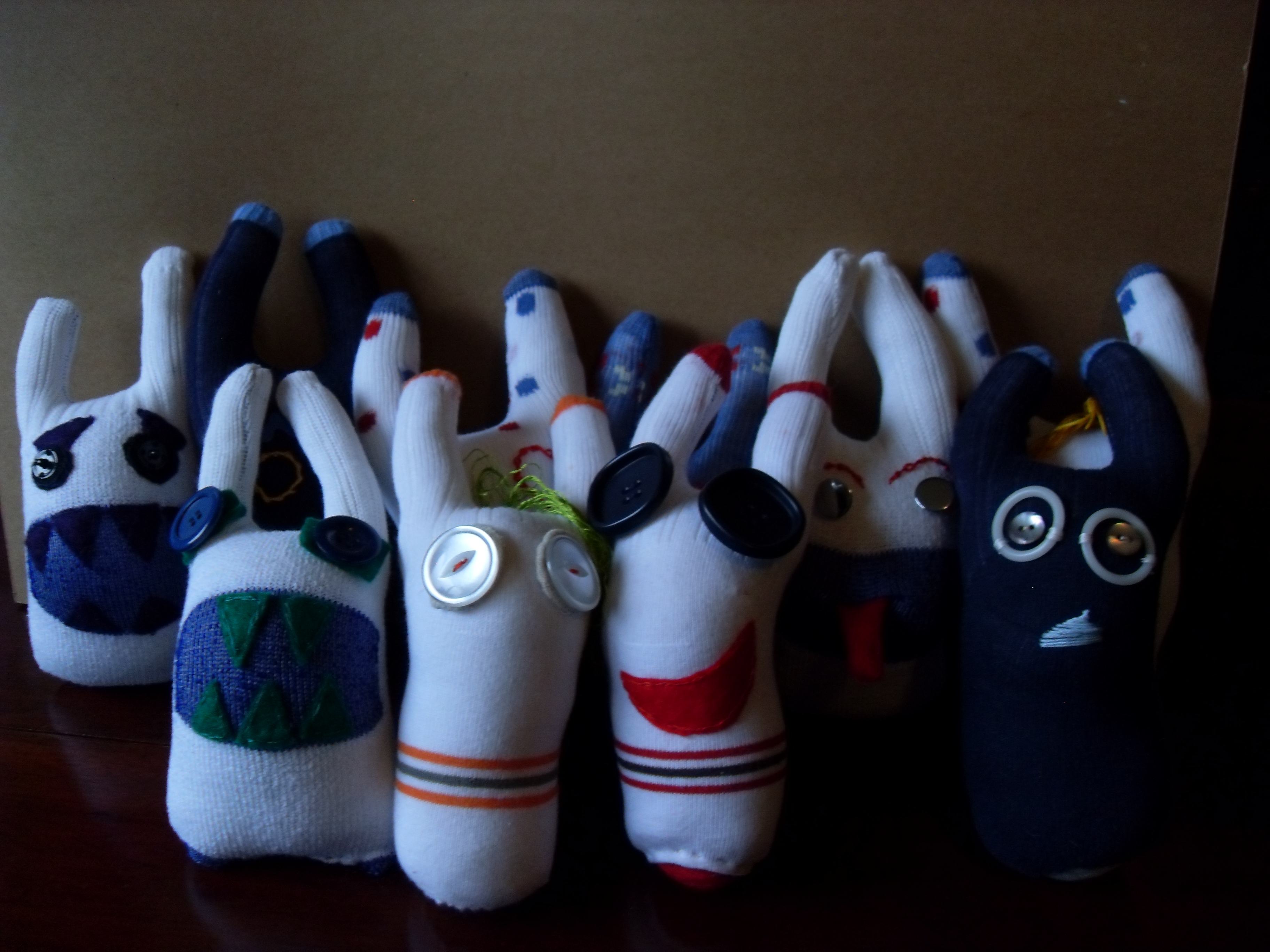
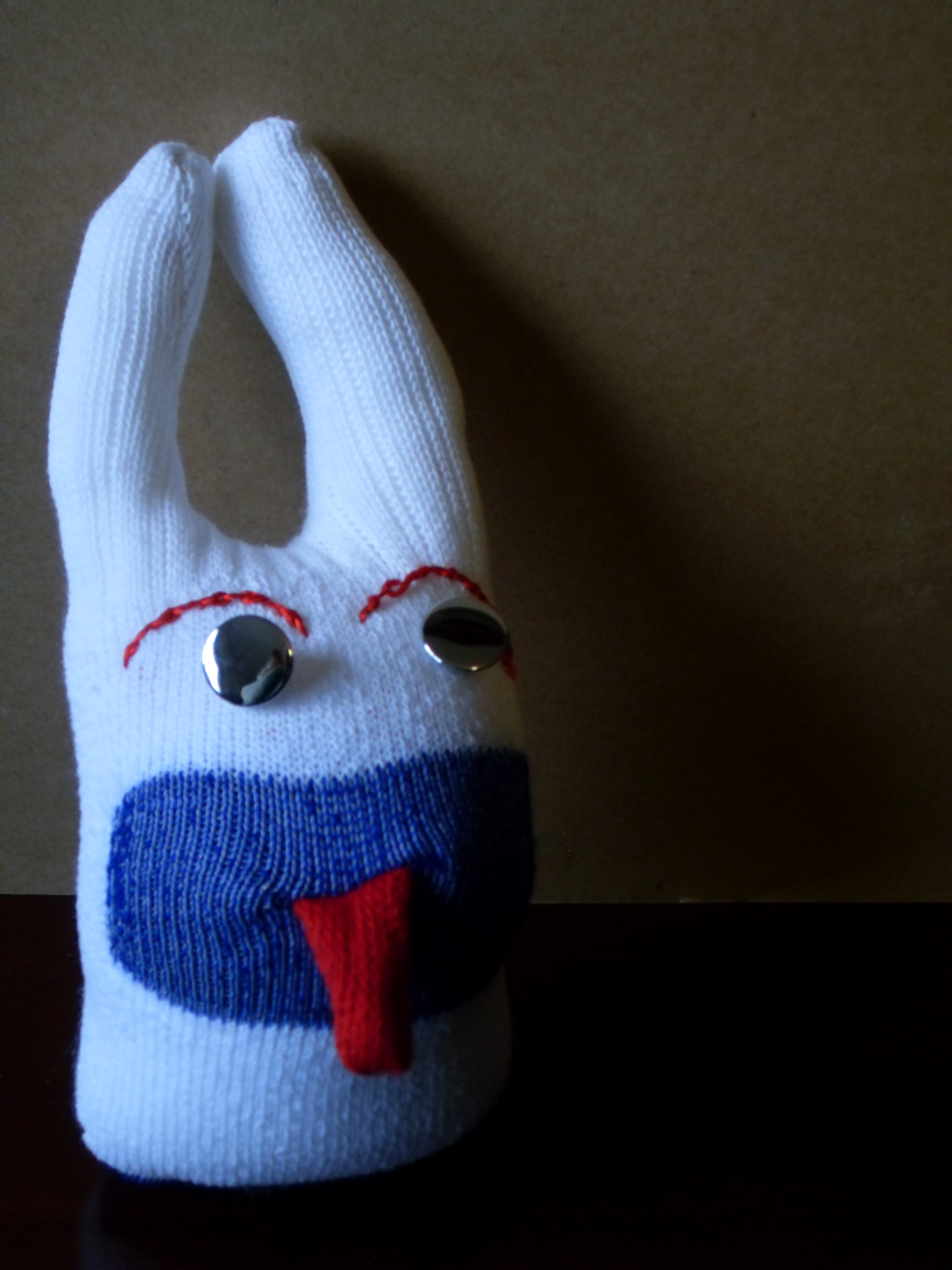
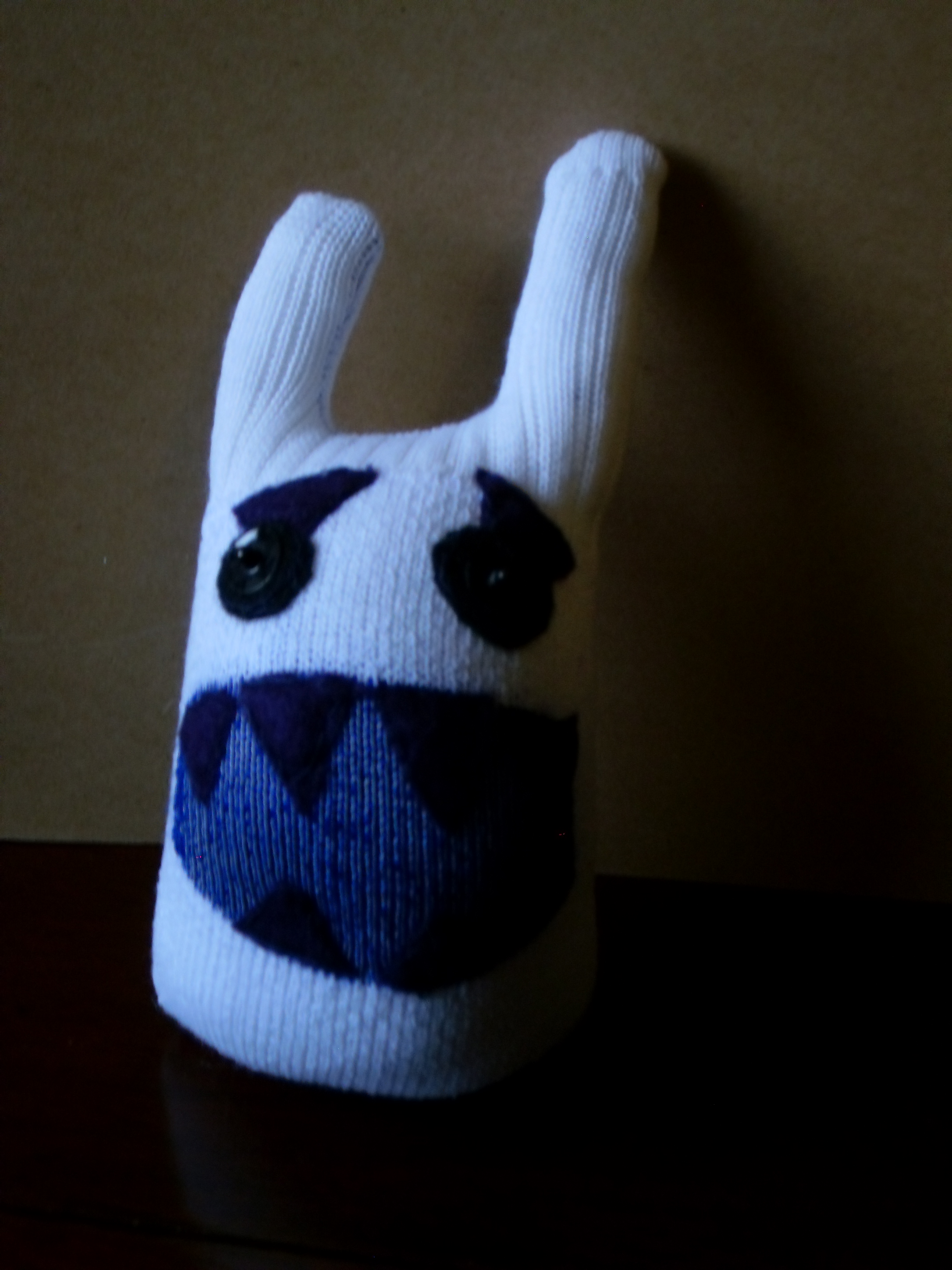
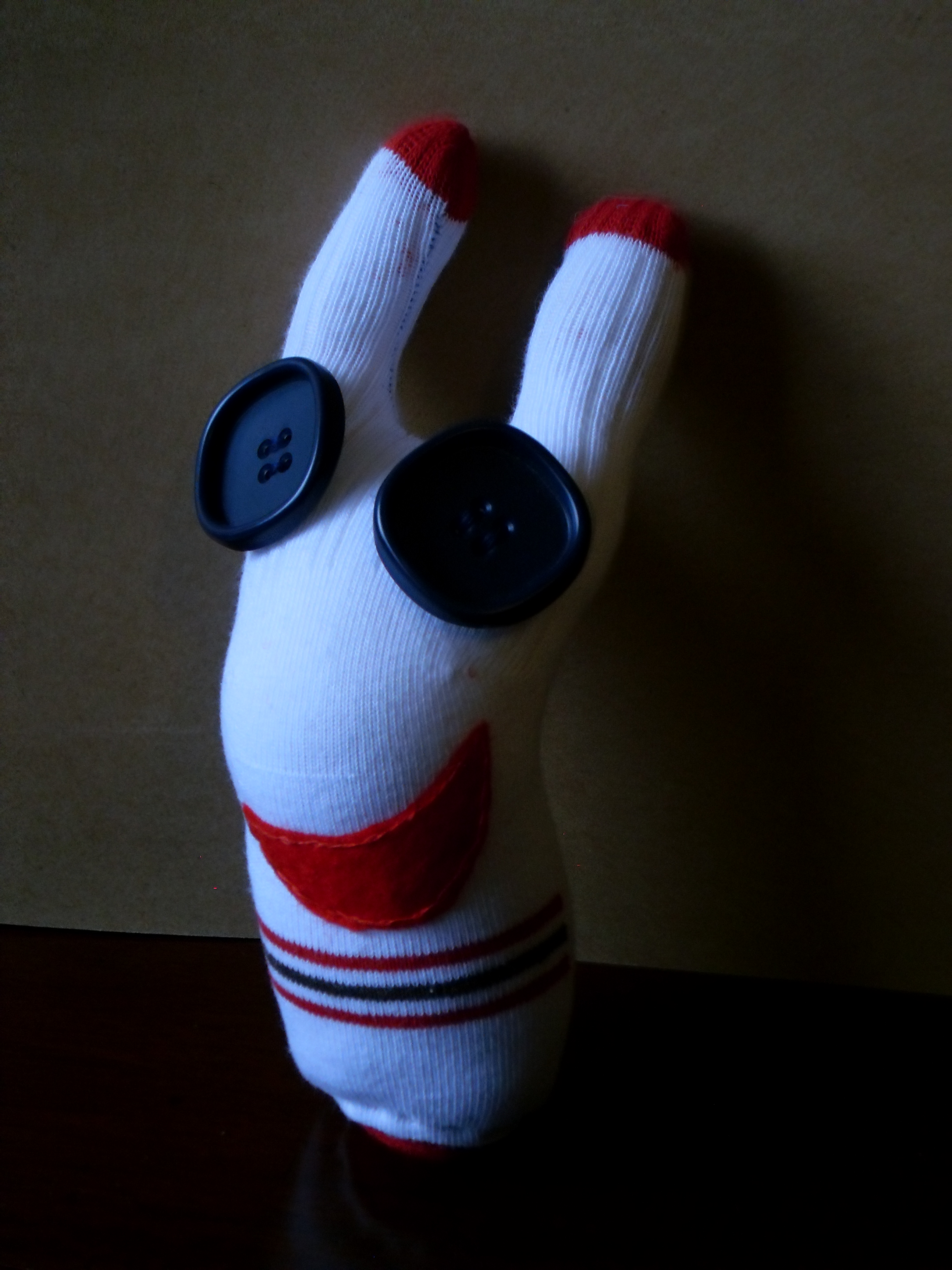
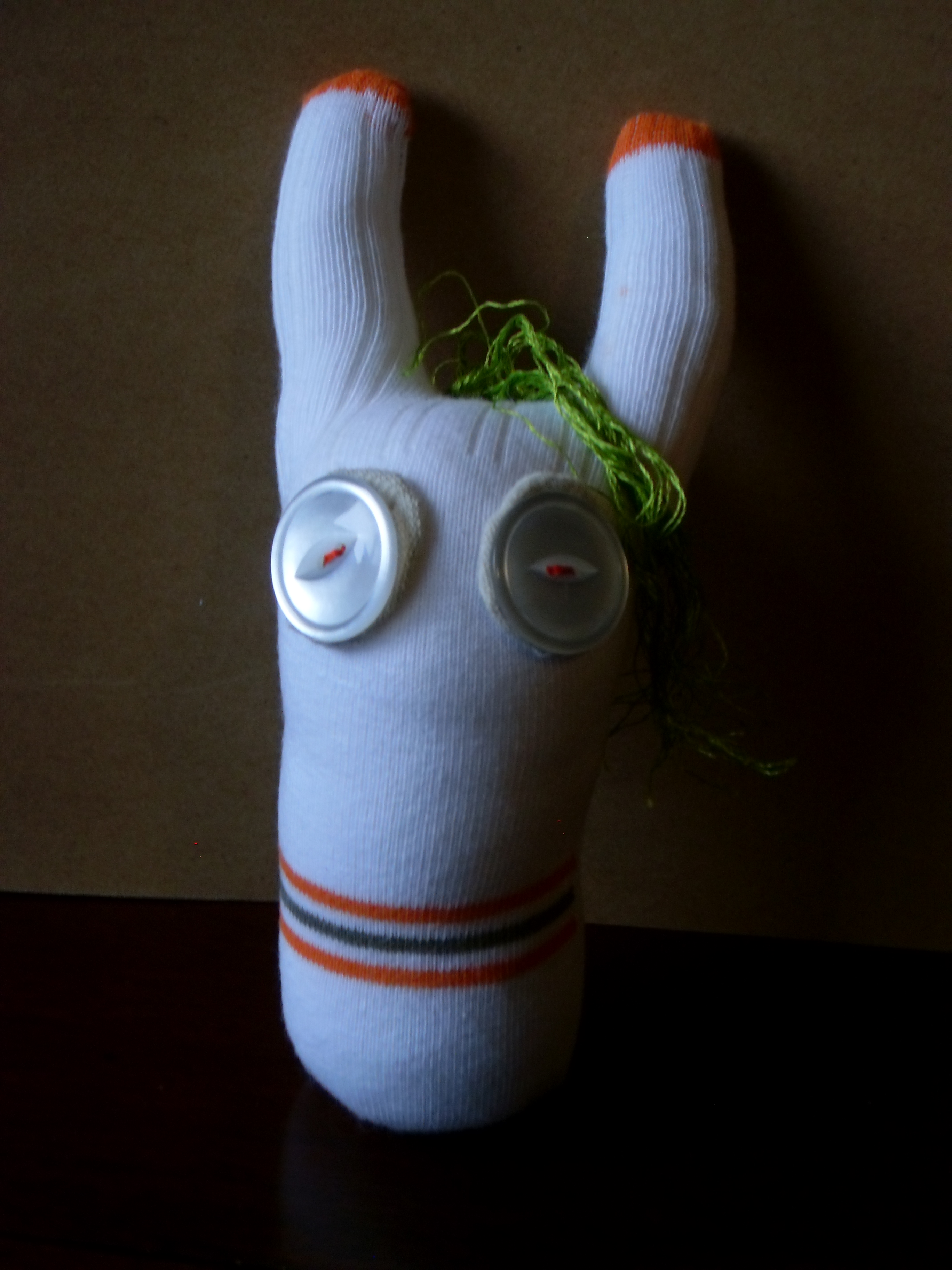
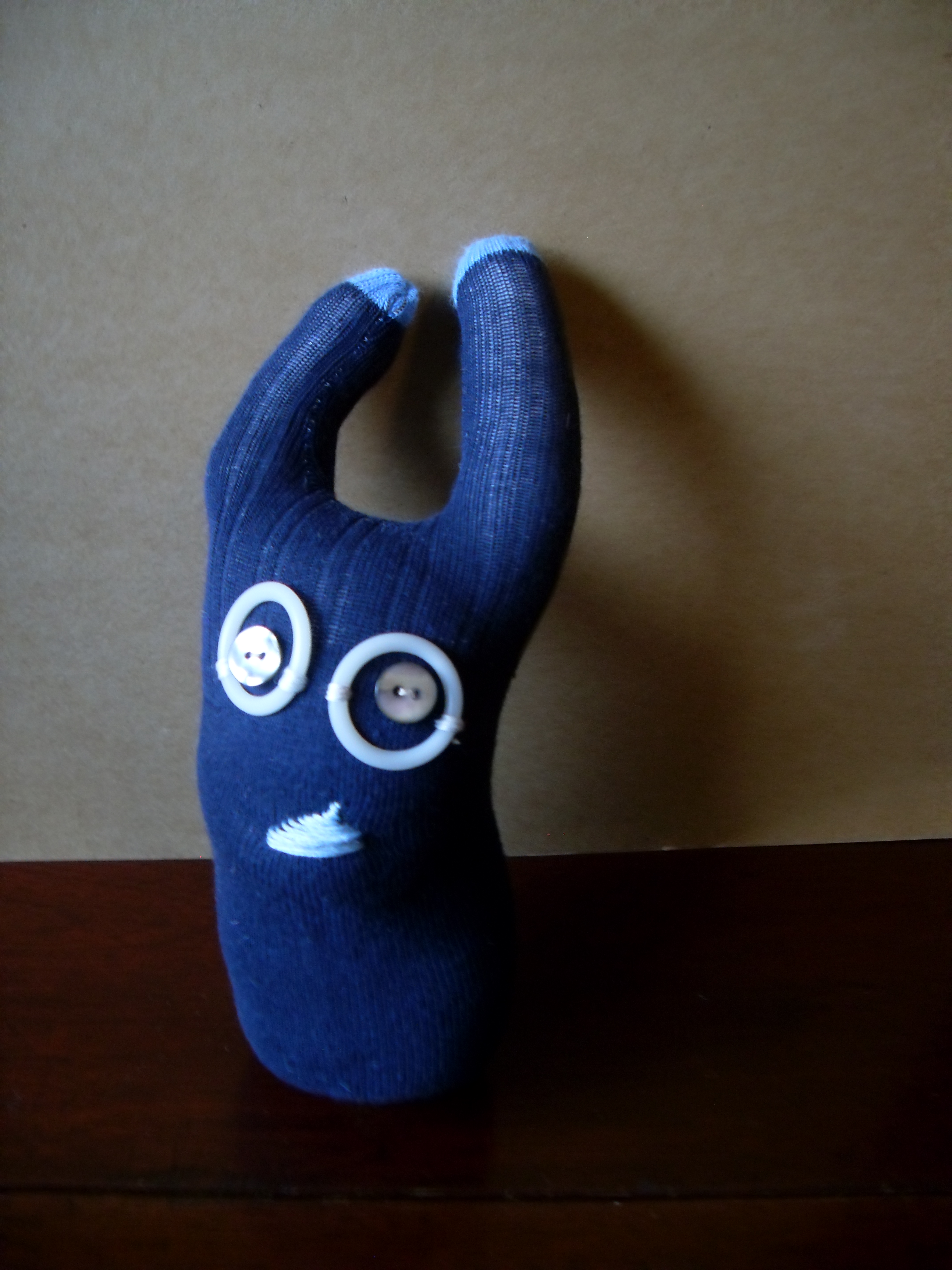
I started making sock monsters a few weeks ago in hopes of earning some money for the holidays. The monsters require little in the way of new materials other than stuffing and socks. Their features are created out of vintage buttons, embroidery floss, rick rack, even thread so old it’s wrapped around wooden spools. This makes them extra special because these notions were left to me by my mother and grandmother. It’s also, frankly, necessary frugality. I’m grateful every day to be writing and living on our little farm especially when others have greater struggles. But I do notice that smaller portions of bliss pie are particularly sweet, perhaps because each morsel is savored.

As I stitch odd little ears, embroider asymmetrical eyes, string bright tufts of hair and appliqué teeth on these monster faces my thoughts keep turning to a woman I’ve recently begun corresponding with, a woman whose selfless actions call out the best in others.

Her name is Sasha Crow. Back in the autumn of 2005 she read an article about an Iraqi ambulance driver who had been killed during a U.S. bombing raid while trying to rescue the injured. Survivors included his young widow with six small children. Sasha had a moment of connection reading the names of those children. She managed to contact the journalist to see what she might do to help the family. Finally the answer came back. The widow needed a quarter acre of land, two cows and some sheep. Sasha hadn’t expected this request, but mustered up a fundraiser among her Seattle friends to provide the struggling Iraqi family with some assurance of security.

After that Sasha was more crucially aware of the needs of Iraqi refugees, the largest Christian diaspora of our time. The slogan “Not In Our Name” suddenly took on many real faces. And Sasha’s life changed.

Now with activist Mary Madsen and other dedicated volunteers, Sasha runs a shoestring charity based in Jordan which provides direct relief to Iraqi refugees. Innocent civilians, described dispassionately as “collateral damage” in wartime, have inspired her to call the non-profit organization Collateral Repair Project (CRP).

Here I sit in my comfortable house night after night leaning close to a gooseneck lamp as I stitch soft toys. My dogs sleep on the rug nearby. I listen, as long as the Internet connection is good, to podcasts on science or philosophy or spirituality. When my kids come in the room I solicit their ideas for the next sock monster’s face. I hear wind picking up enough to give a delightful feeling of contrast: cold outside, warm inside. I know that my heart won’t let me keep any money I might make by selling these monsters.

Sasha and I have been corresponding in particular about a project she’s struggling to get off the ground. Iraqi refugees in Jordan are not permitted, by law, to work. Before being displaced by war they were teachers, engineers, business owners—-never expecting to lose everything. Now they try to live on small assistance checks while waiting to see what the future might bring. Sasha realized with horror that many of the babies in these families are sickly and malnourished. Their mothers have been separated from close extended family ties, traumatized by war, and too often are unable to breastfeed. Without this vital source of nourishment Sasha knows the infants suffer from the lack of nutrients at this formative stage.  When there’s no money for milk let alone formula, what little milk there is gets watered down. Or worse, families must resort to feeding their babies sugar water. Sasha has tried promoting projects to advance the cause of breastfeeding through peer-to-peer relationships, like Le Leche League, but there’s insufficient funding. Right now she’s simply trying to provide formula and milk to babies in need. But no one, not one major relief agency, will partner with CRP’s Milk Fund because it’s a global goal to advance breastfeeding (a cause she supports, but logic dictates that formula is also needed in this situation). Even older children are not getting the nutrients they need. Hence, the project has to be funded directly.

All proceeds earned by these sock monsters will go to CRP. This first batch will be sold at Elements Gallery, run by artists Steve and Debra Bures. Then, if I’m weary of monster making I’ll come up with something else. Maybe an online art challenge with all works sold to benefit CRP. Or a big mid-Eastern feast this winter, all proceeds going to CRP. Any other ideas? I’d love to hear them.

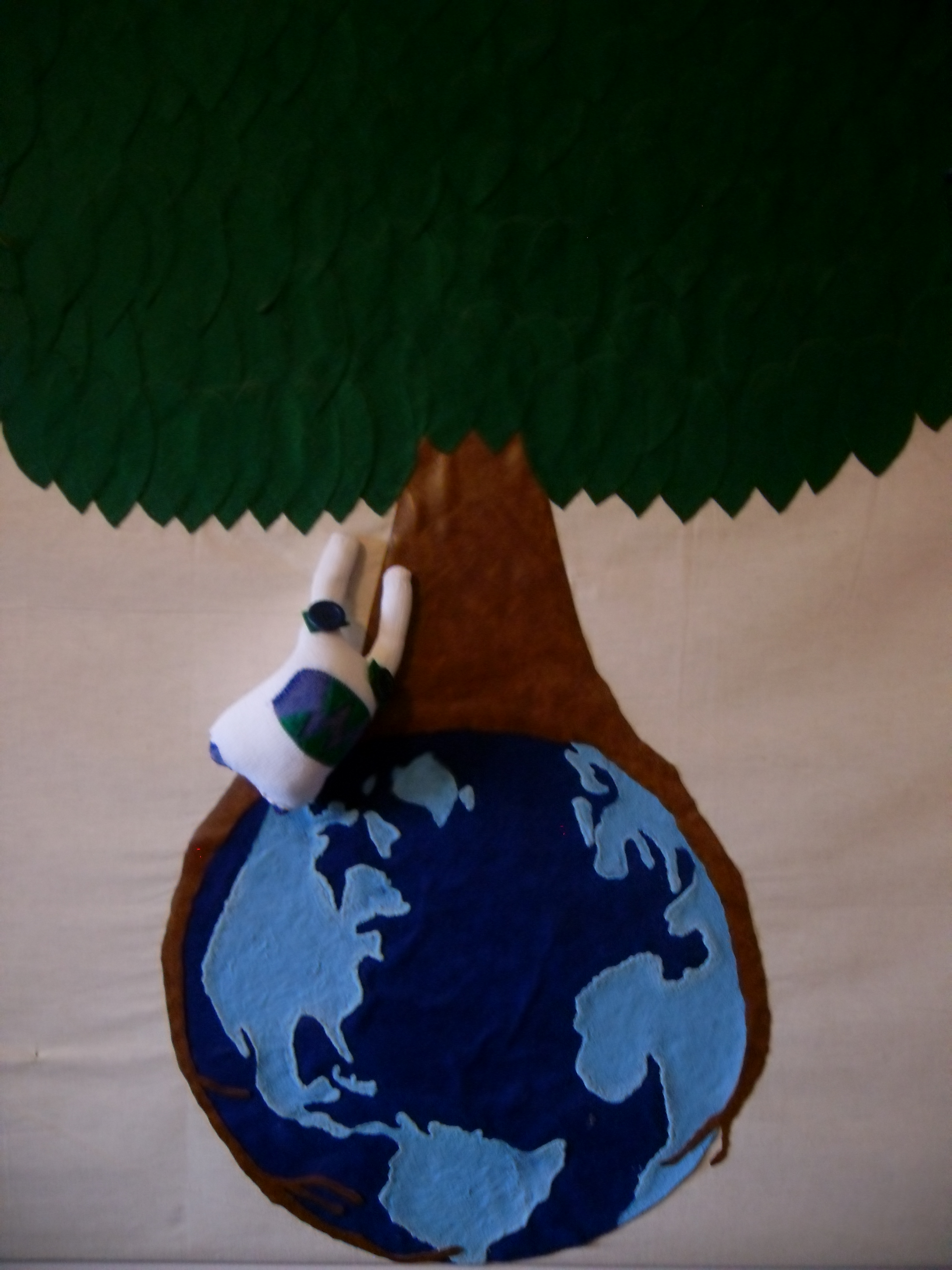
Wind may be howling outside, but here the monsters are soft and made with love.  In a small way they’re taking on the misery created by larger monsters.

How to Get Involved With CRP

Take a look at CRP Projects


How to Make Sock Monsters

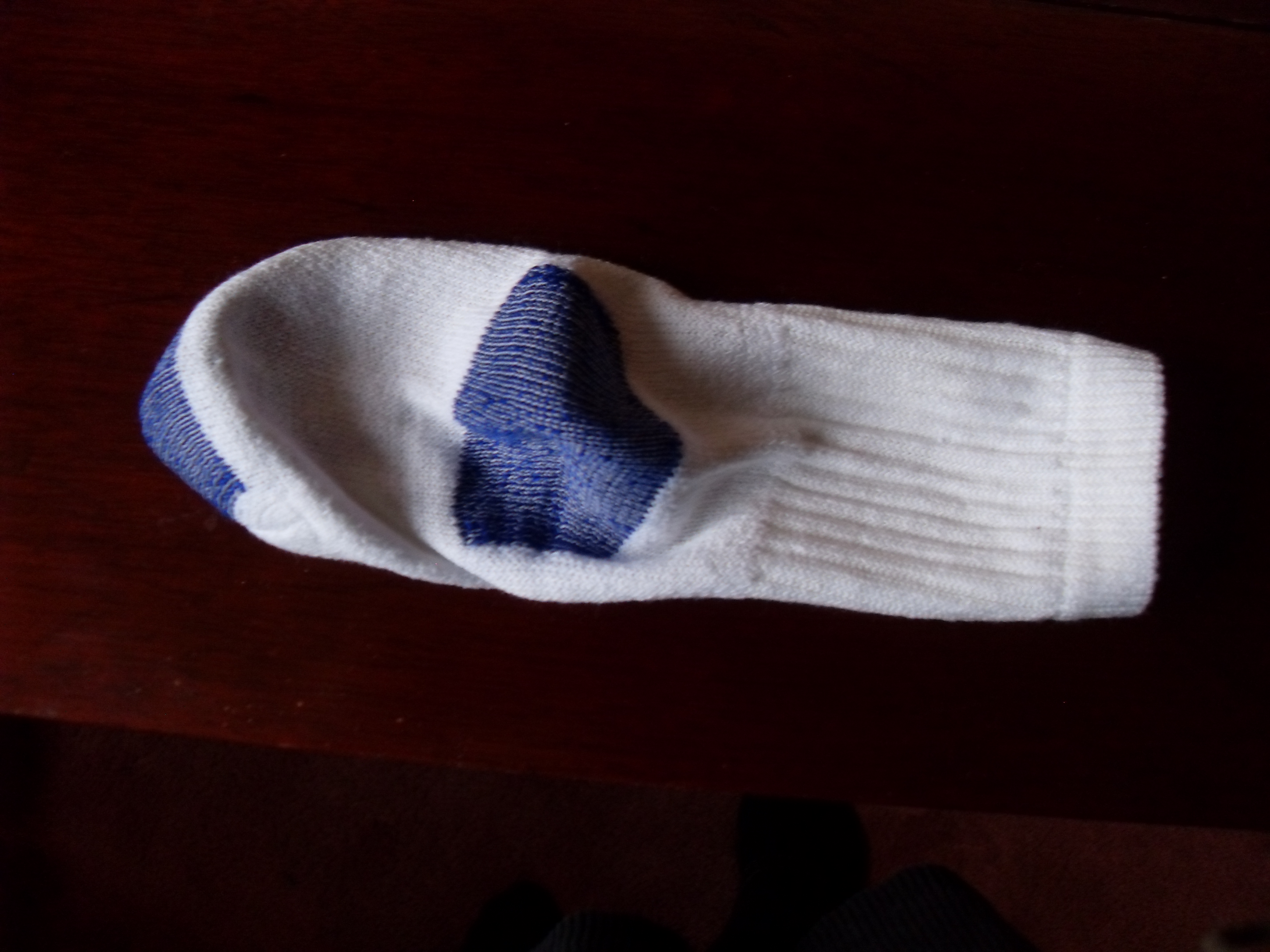
Select a baby or toddler-sized sock.

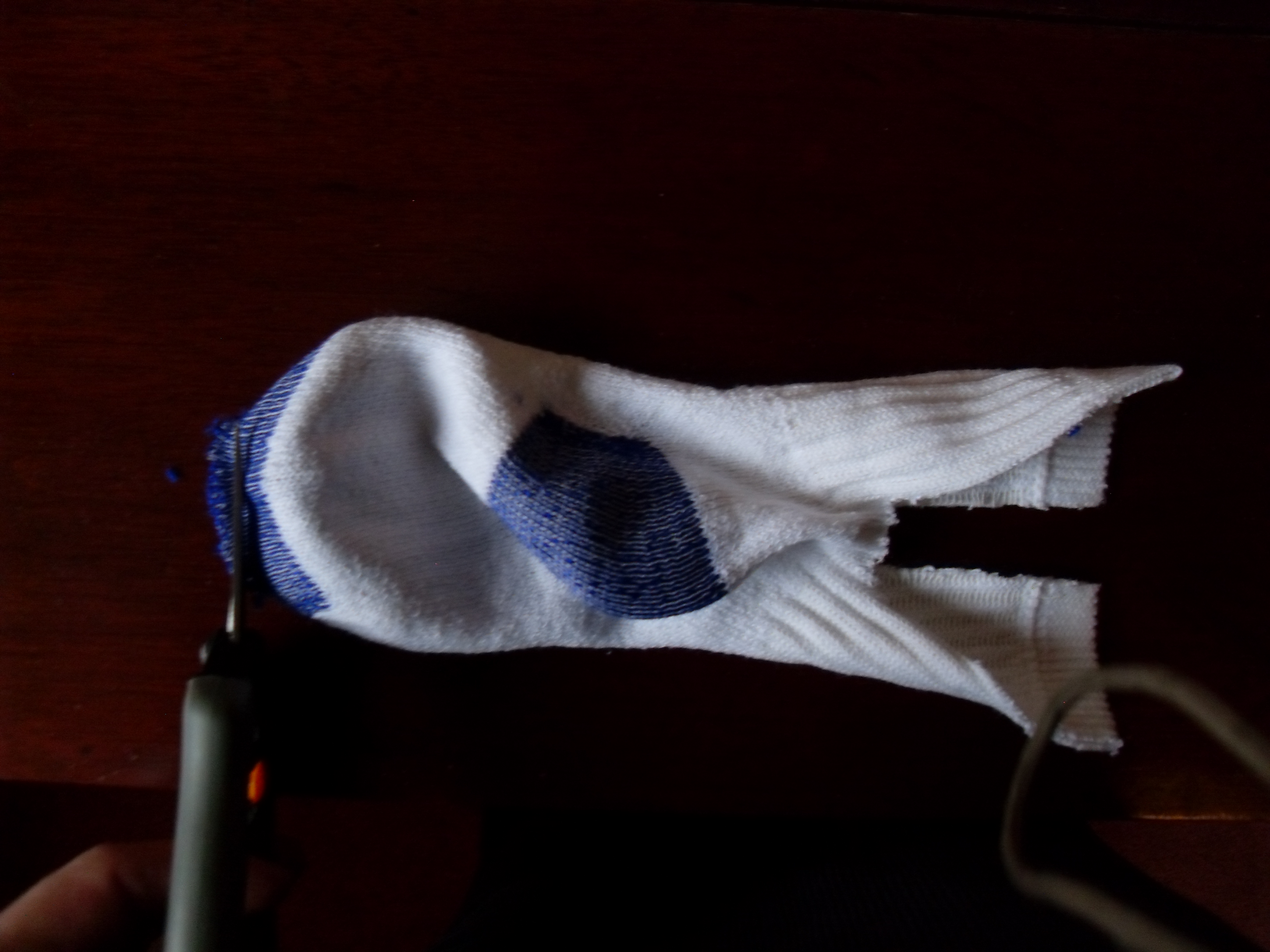
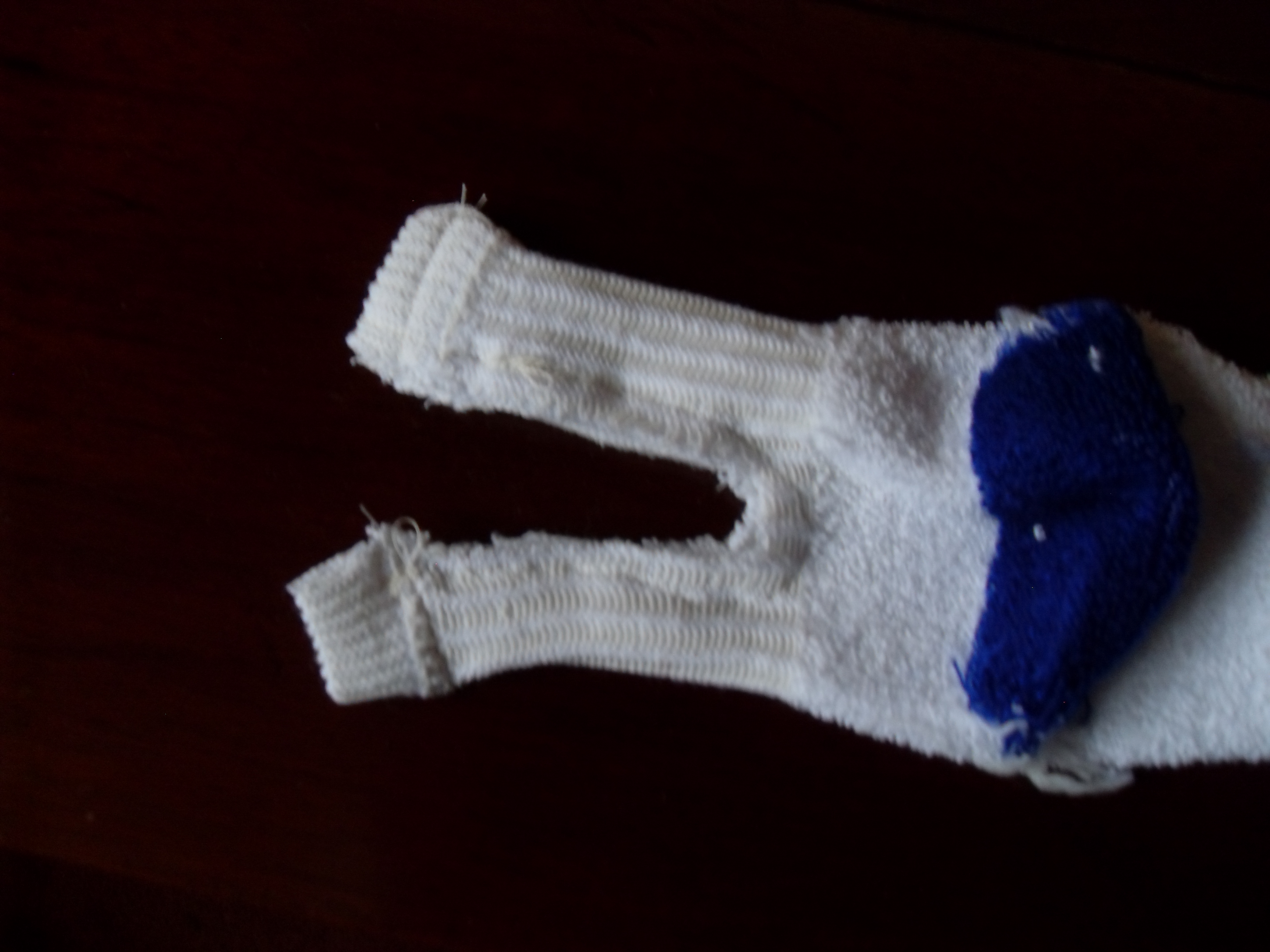
Remove an inch or so strip from the open end of the sock. Snip open a small space at the toe.  If you choose, make a small slit at the heel where you can sew in a tongue or tasty morsel the monster might want to chew on.

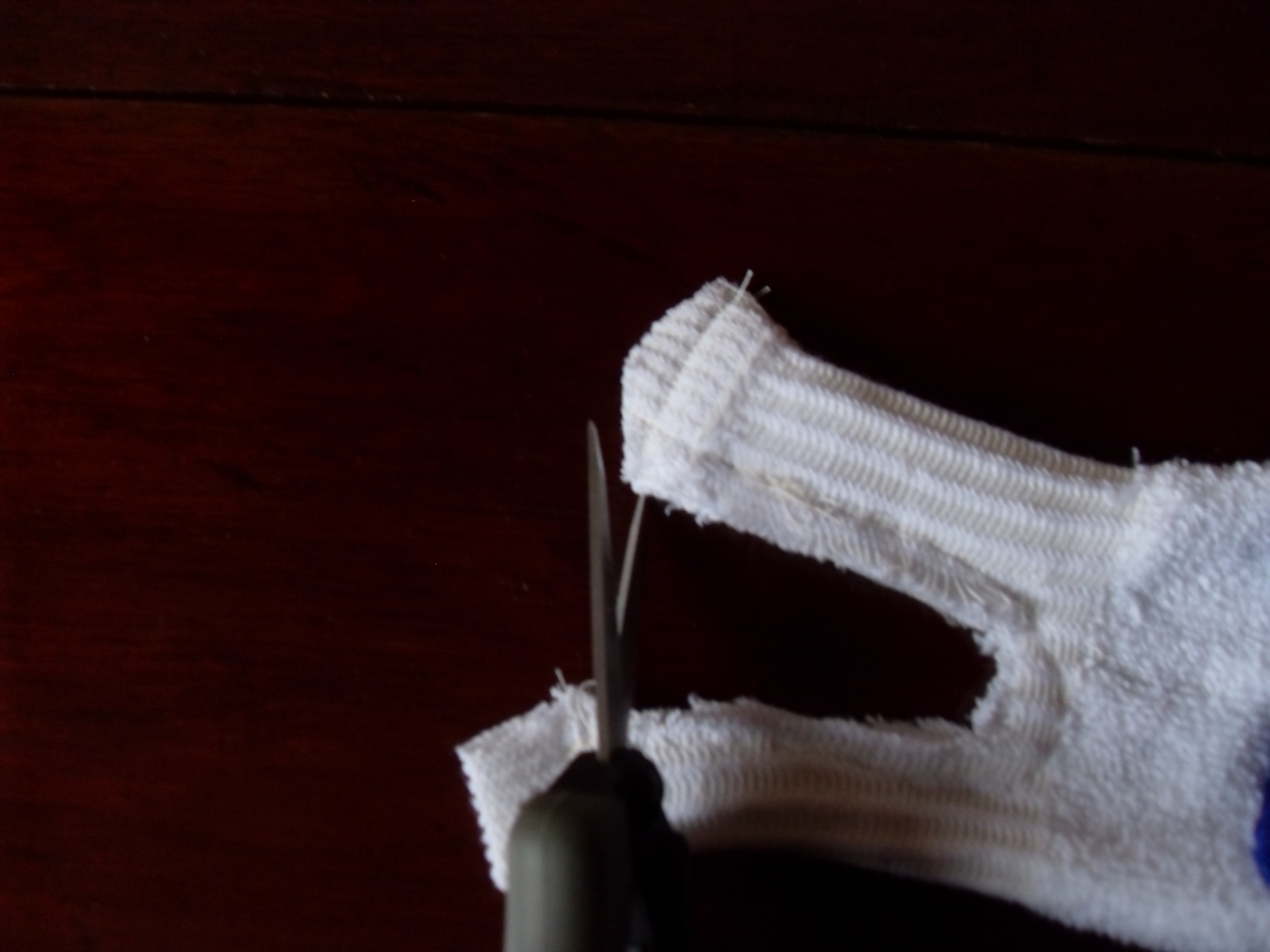
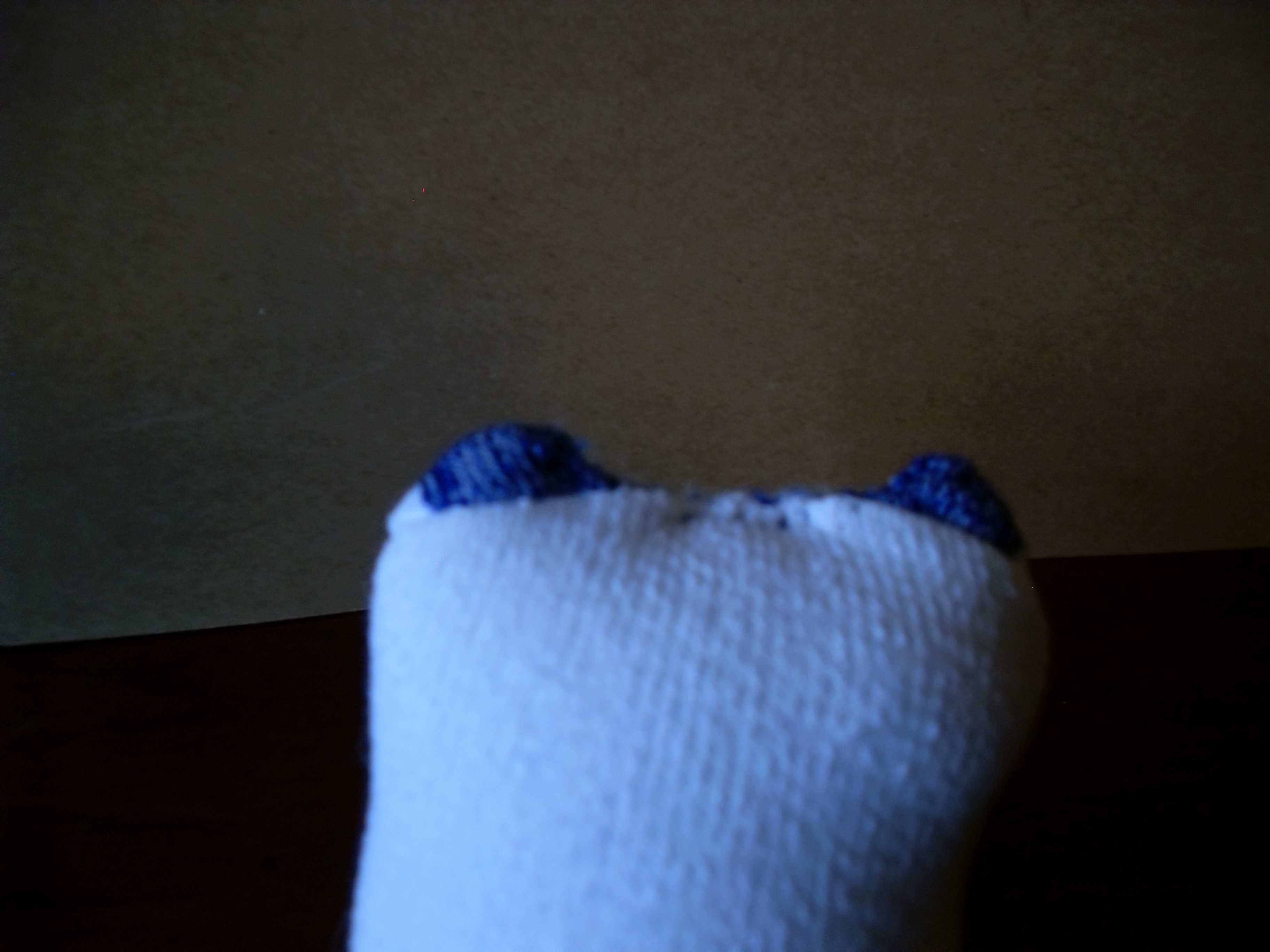
Then turn the sock inside-out. Sew the ends and sides of the ears closed in a continuous seam. Try making one shorter than the other.

Trim the seam.

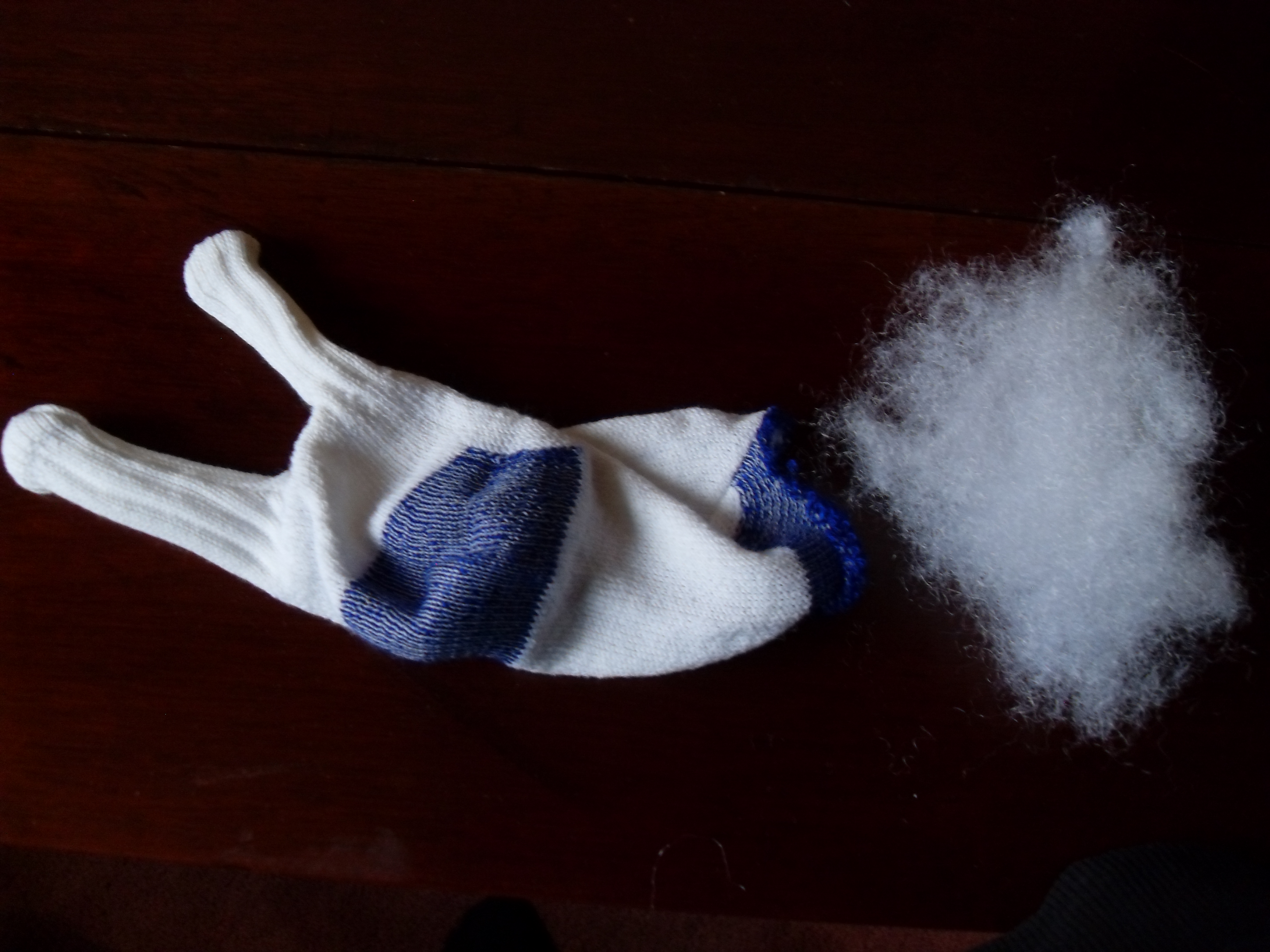
Stuff the sock tightly with polyfill or old pillow contents or dryer lint or whatever you’ve got. Start with the ears and work your way down.  Leave the bottom end open for now, as you may want to stitch through this opening as you add features.

Now it’s time to add personality. Remember if you’re making a sock monster for a baby, the safest features are those drawn or embroidered on.

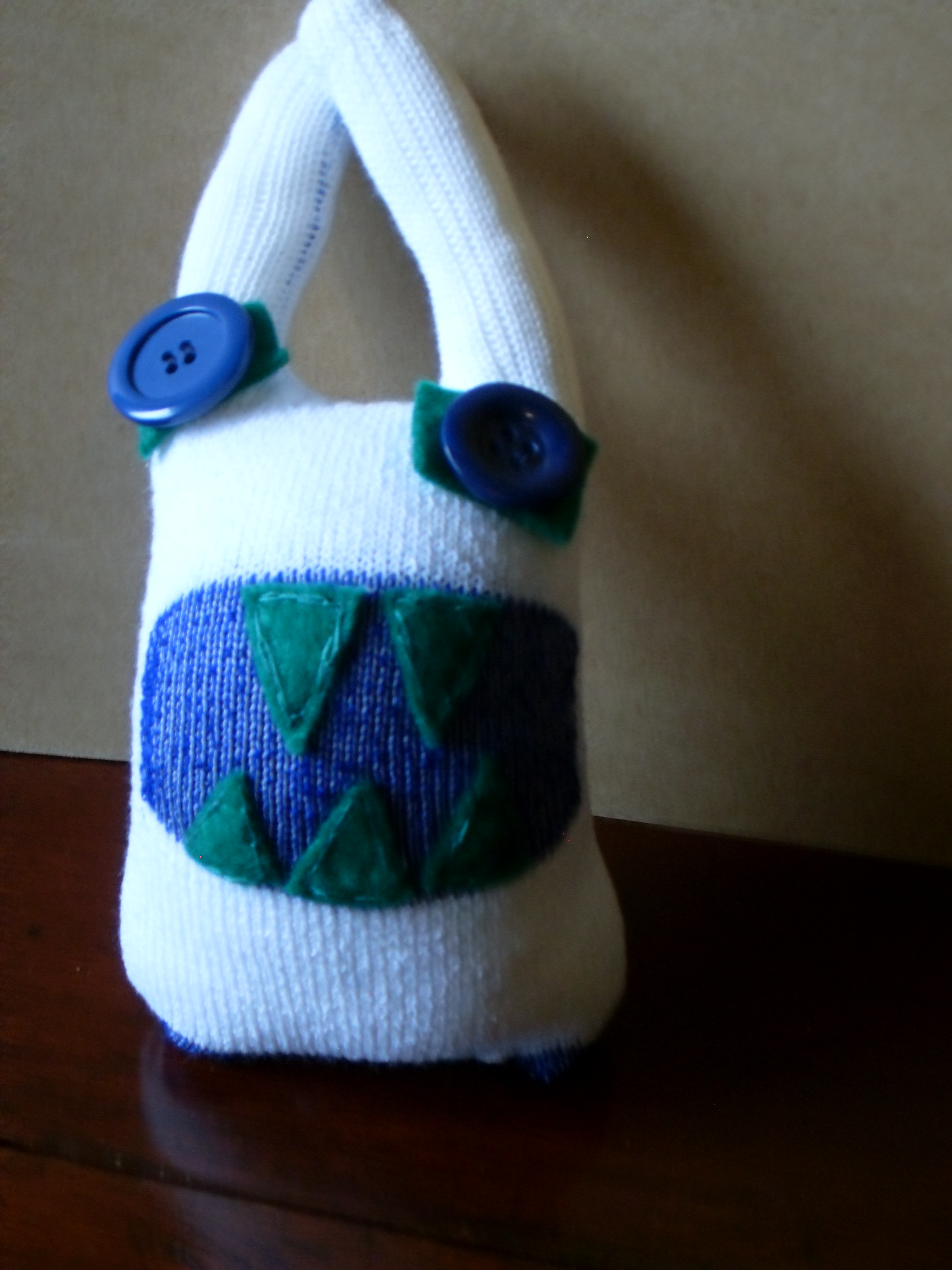
Try some scary felt teeth.

A tongue made from left over bits of sock (yes, monster surgery).

Layered eyes of notions like snaps and binding.

A silly sideways felted mouth and giant button eyes.

Perhaps a bright patch of embroidery floss hair.

Or ring glasses.

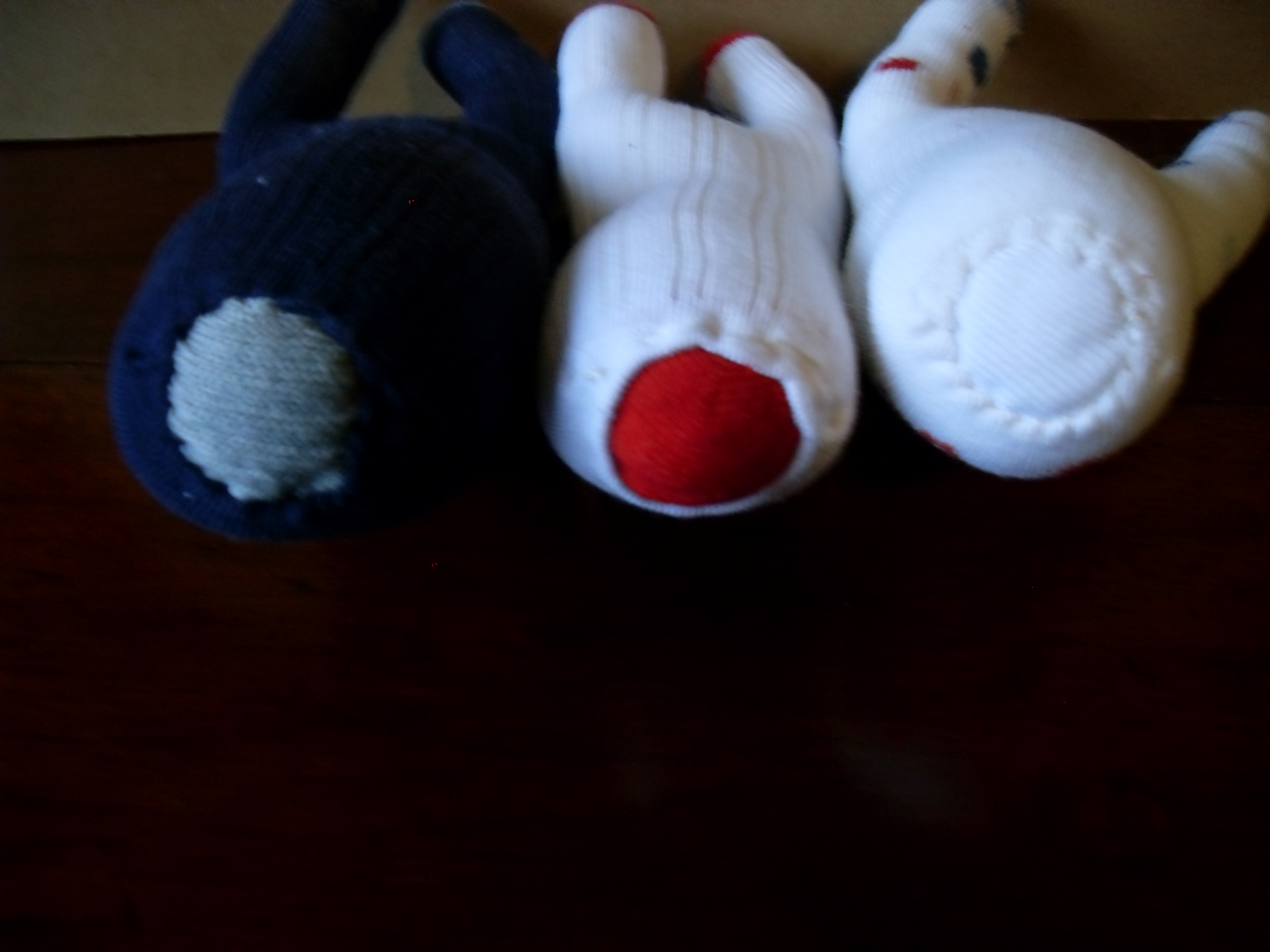
Then sew the toe opening (monster rear) closed. You may choose to seam the sides together for a simple bottom, which looks like toes on this head-standing sock monster.

Or insert a bit of sock fabric and sew the opening shut, making a somewhat more stable monster  (standing-wise, not necessarily emotionally).

I’ve been experimenting with feet, hands and wings on my next monsters.  Sock monsters are much more forgiving than actual monsters, thank goodness.