Thanks To Mom, We Tried Turkey Farming

I offered to host Thanksgiving year after year. My mother turned me down each time. She liked hosting the family get-together even though her kids and grandkids lived close enough to visit weekly. She preferred her wedding china and linens to my mismatched dishes and homespun tablecloth. Mostly she wanted to ensure that the meal featured homemade white crescent rolls and a large Butterball turkey filled with her own stuffing recipe. She was afraid that her annoyingly whole foods vegetarian daughter might prepare something horribly non-traditional, like nutloaf with chestnut wild rice dressing instead of turkey. Valid point.

But her health kept declining. I took to coming over early on Thanksgiving Day to stuff the turkey with her and hoist it in the oven. We all came back a few hours later with side dishes. I always brought homemade crescent rolls that looked suspiciously brown and healthy. Our meals continued to be lively events and we worked hard to make sure my mother didn’t notice how much we all helped out.

I knew she’d reached a new low in her energy level when she offered to let me host Thanksgiving a few years ago. She said I had to agree to one condition. I had to make a real turkey (not a Tofurky, she hastened to add) and stuff it with her stuffing recipe. I had to promise. I wanted to cry, knowing that she was much sicker than she let on. I promised.

But there was no way I was going to cook a typical grocery store turkey. I know these birds spend their short lives in tightly confined spaces, eating foods that aren’t natural to them. We raise pastured livestock on our little farm, so we drove nearly an hour to buy a similarly pastured turkey directly from the farmer. I felt particularly solemn as I prepared that first Thanksgiving meal at our house, knowing it was difficult enough for my mother to get from the car to the house so she could spend the day with us. At least the turkey was a hit. According to the meat-eaters in the bunch, it was the best they’d ever had. It was also so juicy that it overflowed the pan. That’s something grocery store birds don’t do, even though they’re injected with a “7% solution containing water, salt, modified food starch, sodium phosphate and natural flavors.”

But that pastured turkey was astonishingly expensive. We thought we might be able to raise a flock of our own more cheaply. We were wrong. But I’m getting ahead of myself.

Nearby farmers gently told us that we were foolhardy. They warned us to keep turkeys “on wire,” indoors, and away from what they said were the disease-carrying dangers of grass. They said our plan to avoid feed pumped up with medications and synthetic vitamins would leave us with a dying flock. Online articles repeated these woeful predictions.

Still, the next spring we bought turkey chicks. They were raised in the warmth of an Amish kitchen until they were old enough to live outdoors.

On our place they lived in what’s called a “tractor.” This is a moveable coop, allowing the birds access to fresh areas to forage. My husband and oldest son built it with roosts and feeders. We soon learned turkeys toss food from feeders and don’t like to roost. Out came both of those modifications. Then to forestall problems with predators we added a moveable electric fence.

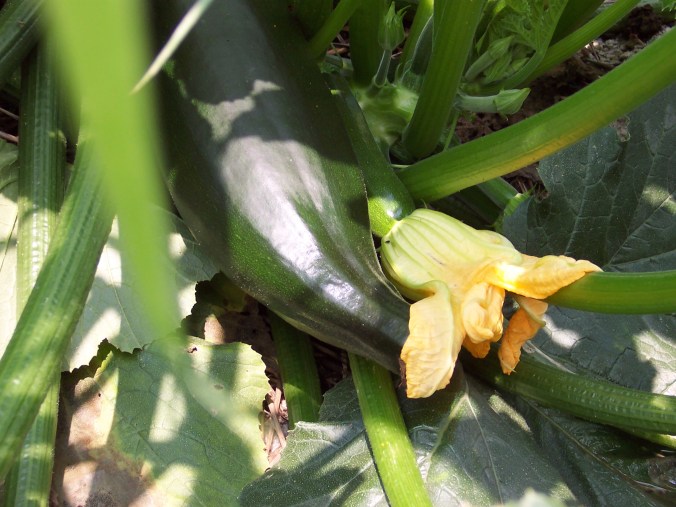
How much our rapidly growing chicks ate surprised us. In addition to the roots, grasses, leaves, and bugs they scratched up on their own we provided them with a locally grown and ground mix of seeds and grain. And we gave them fresh organic produce from the garden each day. They had strong preferences. One day they might eagerly eat cucumbers and squash, the next day they refused to eat those veggies but enjoyed tomatoes. They turned up their beaks at plenty of other treats, like broccoli and rutabagas.

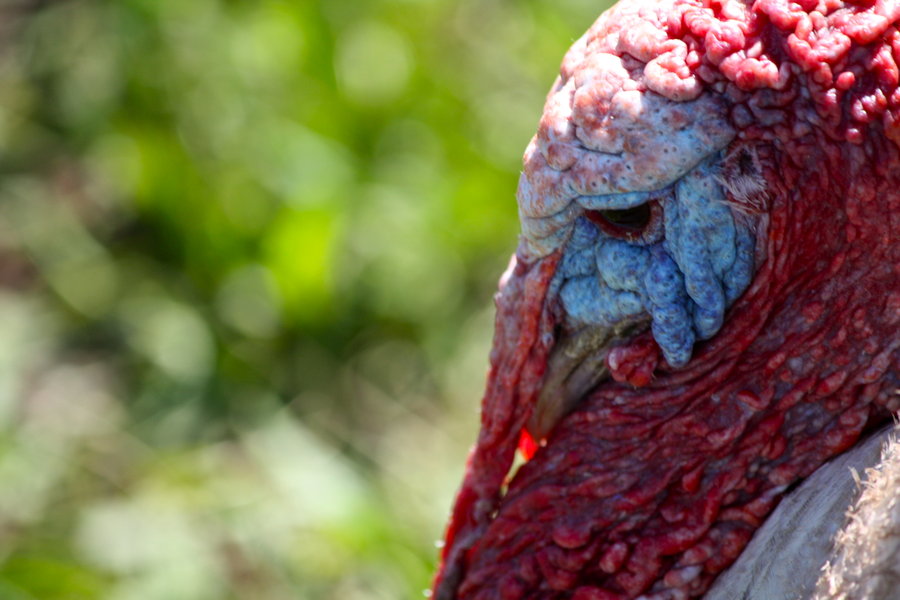
We found turkeys quite interesting. When they’re young they peep and squawk. Then the gobble develops, something we found relentlessly amusing. Hens don’t gobble. They chirp and cluck in their own quiet manner while the toms are prone to showy displays of exaggerated feather fluffing. The toms gobbled at any noisy airborne attraction including Canada geese, crows, and helicopters. When annoyed, their heads turned iridescent blue and sometimes they engaged in snood-grabbing jousts. Our dogs were fascinated by the turkeys, but the turkeys showed little interest in creatures beyond their own genus.

All day, every day the flock had a visitor. A little brown hen moseyed up from the back of our property to visit her fowl friends. She stayed close. She pecked at grass and bugs, sometimes a few feet away and sometimes a few inches away. When we gave the turkeys a treat from the garden like a monster zucchini she’d cluck at me, waiting for her own piece. Quite often the turkeys, in their zucchini-enhanced exuberance, tossed flecks of what they were eating almost as if to share. Their friend the hen was right there waiting for those offerings. I never saw the turkeys peck at her.

What we learned about turkeys wasn’t entirely charming. Full grown turkeys are huge. Some of ours were over 80 pounds. Their poo, I’m sorry to say, was also huge. I never realized just how foul it was until I slipped and fell in it. And despite the overall health and vitality of our flock, once we factored in all the expenses there wasn’t any profit at all. Plus, after feeding and chatting with them for six months, it felt like a horrible betrayal to take them to the butcher.

This year we let the turkey farming venture go. We’re gratefully buying a pastured turkey, knowing that it’s worth the cost. It’ll be cooked with my mother’s stuffing recipe. I’ll also be using my mother’s china and linens. We’ll sit here at a table filled with friends and family, fully aware that our blessings include those made of memory.

I’ll smile this Thanksgiving at all who are here with me. I’ll leave the sob in my throat, choosing instead to share fond and funny stories of my parents who I miss every day. I realize now why every generation goes on celebrating even after the elders who made the traditions meaningful have gone. Holidays are a sort of bridge between past and future, a way of steadying ourselves with the idea that some things stay the same. When the time comes for me to pass along the honor of hosting Thanksgiving dinner, I’ll try passing along my mother’s stuffing recipe too.
honoring memories at Thanksgiving, how to raise pastured turkeys, small farm turkey story, missing mom at Thanksgiving,

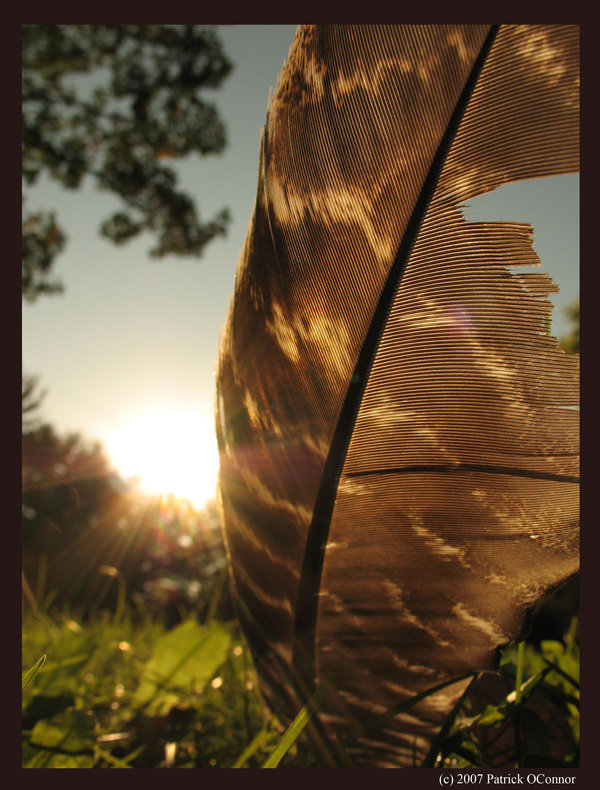
Image: Karuntribs


Hay Now

soil health, grassfed, pastured, sustainability, family farm, ethical land use,

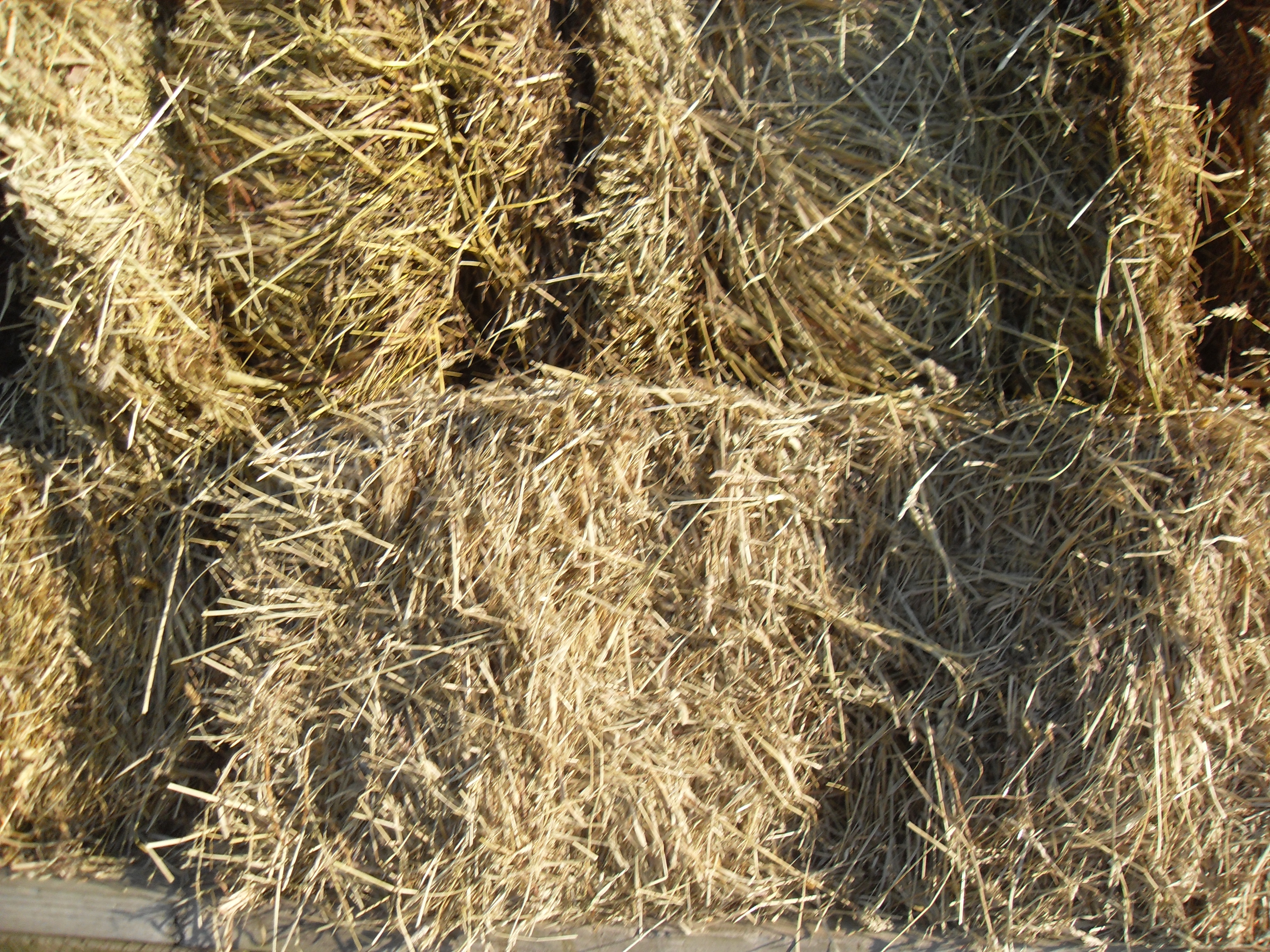
This summer’s first cutting of hay is stacked in the barn. Seventeen acres of grasses transformed into golden squares, storing sun and soil’s energy for the winter ahead.

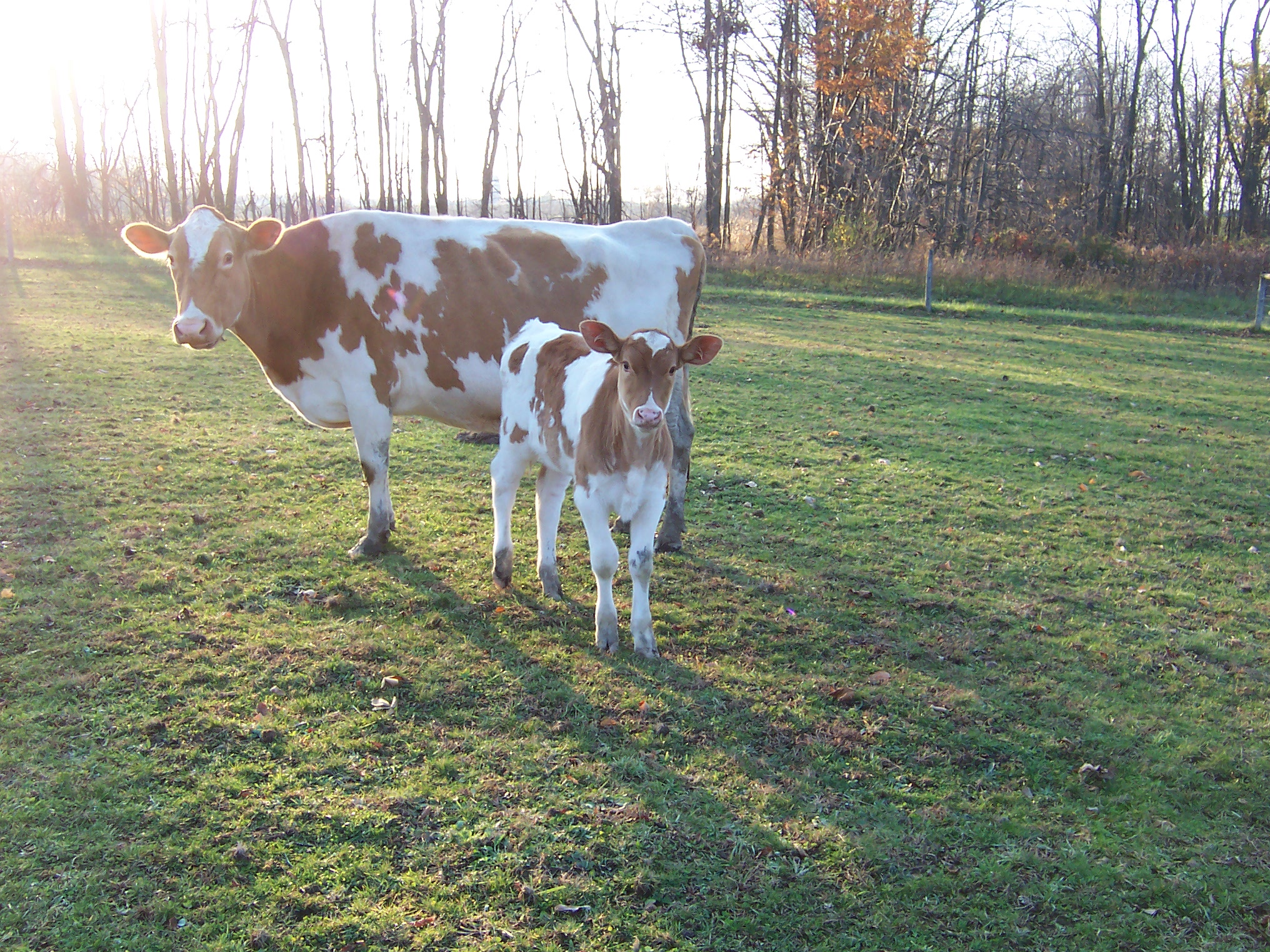
The unsung miracle of grass is a beautiful illustration of nature’s wisdom. Cows eating only grass flourish, turning these coarse blades, inedible to humans, into rich high-protein milk. This benefits the environment as well as the health of people drinking the milk of grassfed cows. To me, fields devoted to hay and pasture make sense while factory farms make no sense at all.

Hay isn’t a fancy crop.

It doesn’t bring much in the way of money. Some years we scramble because there’s too much rain and not enough time to harvest. But this perennial doesn’t just nourish a few of our favorite ruminants. It helps preserve topsoil.

The loss of soil to water erosion, called sedimentation, is measured in tons of soil loss per acre per year. This runaway soil clogs waterways, smothering aquatic life and affecting navigation. The denuded land left behind is robbed of fertility.

The importance of topsoil can’t be underestimated. According to Out of the Earth: Civilization and the Life of the Soil, the decline and fall of civilizations are based on soil fertility.

Nearly everything we eat relies on healthy soil, yet it takes 500 years for nature to produce an inch of topsoil. Current farming techniques increase soil erosion 10 to 40 percent greater than the rate nature can replace it. We’re running out of the very dirt our lives depend on.

The living skin of our Earth is thin, wildly complex and more interconnected than we might imagine. That’s why, when I look out over the woodlands on our land, the pastures our cattle graze on, the hayfields—I am reassured. The continuous ground cover of pasture or forest protects the soil. Perennial hay fields, pastures and woodlands allow organic matter to build naturally.

I have just a beginning grasp of the vital interplay between amoebae, fungi, bacteria, arthropods and plant roots in soil, enough to sense those bags of “sterilized potting mix” found in every big box store are a mockery of the lessons to be found in nature. I do grasp that we survive, in large part, through the life-giving nutrients of what has died. Organic material of all kinds decays into humus and that makes soil a story of resurrection, writ large.

*

*

books worth reading

Dirt: The Ecstatic Skin of the Earth by William Bryant Logan

Life in the Soil: A Guide for Naturalists and Gardeners by James B. Nardi

Teaming with Microbes: The Organic Gardener’s Guide to the Soil Food Web, Revised Edition by Jeff Lowenfels and Wayne Lewis

The Secret Life of Plants by Christopher Bird and Peter Tompkins
Me, a Radical Homemaker?

radical homemaker, frugal, simplicity, homeschool, farm, peace,

Okay, radical sounds hip. I can live with that. But homemaker?  The last few decades that word has been a synonym for drudgery. Besides, ask my kids who really does the dusting and vacuuming around here. They do.

What’s radical homemaking? Shannon Hayes wrote a wonderful book called Radical Homemakers: Reclaiming Domesticity from a Consumer CultureYes, I thought when I heard the term. Naming something gives it momentum. And the lifestyles of people defining for themselves what The Good Life is all about haven’t gone unnoticed so much as undefined. It doesn’t seem radical in the slightest to many of us who try to live simply, it just makes sense.
Thankfully Shannon pulls the pieces together. As she writes,

…each of us has a calling or right livelihood that enables us to serve the common good, and in finding this calling, we will be most happy. Few, if any spiritual teachings call us to seek the accumulation of money, stuff, power, or other purely selfish interests.  Further, in a life-serving economy, we individually accept responsibility for creating our own joys and pleasures.  We do not rely upon corporate America to sell us these things.  We take personal and collective responsibility for supplying many of our needs.  In taking these steps, we discover that true economic assets, unlike money, are intangible.

There’s nothing new about this. Most of our foremothers and fathers upheld frugality and scorned excess. Throughout history people have been growing and preserving food, making gifts, providing hands-on care for the young and old, repurposing materials, and finding meaning in pleasures that aren’t necessarily linked to spending money.

This sort of lifestyle simmers along quietly and purposefully while consumer culture runs at a full boil, generating heat over every new trend and news flash.

Somehow, in a world bristling with radical homemakers, I’ve been outed as one of the representatives. “A poster child,” claimed the journalist who trekked out to our little farm with her notebook in hand last week. I’m more comfortable interviewing others rather than being interviewed, but I put my trust in her expertise. I thought it wouldn’t be too difficult to talk about trying to place our interests beyond the shallow values of appearance as I sat there wearing a thrift shop shirt that had to be 20 years old. Well, until the photographer showed up. Judging by the anxiety that generated I’m still the product of an appearance-indicates-worth society. The irony wasn’t lost on me. I gave up all hope of looking 20 pounds lighter or remotely put together and kept talking.

And laughing. Her questions struck me funny. In fact, she came right out and asked, “Don’t people treat you as if you’re odd?”

Maybe they do but I always thought that’s because I’m sarcastic and tend to sing songs with made-up lyrics.

I told her about homeschooling and the intrinsic value of meaningful learning. I told her about our local food co-op, about making homemade tinctures and about using things until they wear out.

I tried to explain why I preferred to make sandwich buns over the weekend for a party here rather than buy them. “Was it part of your philosophy?” she asked. “Was it cheaper?”

I haven’t priced such buns at a store, I told her. I ground the grain, used eggs from our chickens, milk from our cow, and honey from our bees, then kneaded the dough and baked them that morning. It cost almost nothing in ingredients and very little in time. Yet it had more to do with deeper choices. But don’t write about the buns, I said, it makes me sound really annoying.

I’m sure I’m annoying (just ask my kids) but also I’m pretty relaxed. I’m comfortable with weeds in the garden (nature doesn’t like bare dirt anyway) and stacks of reading material everywhere. I make homemade pizza all the time but that doesn’t mean we don’t occasionally succumb to the greasy allure of what my kids call “real pizza” from a little carry out nearby. We don’t have money for things like vacations or video games, we do have time to sit around talking long after dinner is over.

When I was fresh out of college I planned to save the world. I’m beginning to see it’s possible to do so, simply by saving what’s important right in front of us.

*

Postscript: Thankfully I’m a small part of the finished article.  After the other radical homemaker piece I’ve been interviewed for in Ladies Home Journal, I’m saying no to future interviews. Why? Because it’s titled “Extreme Housewives.” (The promo reads, “A small but passionate group of women across America have embraced the kind of back-to-basics homemaking our grandmothers did-from scratch, by hand, grown in the backyard. And they’ve never been happier.” Oy vey.

Edible Knowledge

cherrytomatoes Living on a farm we can’t help but be connected to the food on our table. We’re by no means perfect when it comes to eating locally. We’ll never come close unless chocolate and coffee start sprouting up in Ohio.

While more of us are paying attention to adopting better habits for our own health and planetary health, it’s easy to overlook the vital and wondrous learning that is directly related to food. For my family, those lessons often have to do with shared experiences.

~Many years we head out to pick apples together on a bright fall day. After an indulgent week of eating and baking with as many apples as possible, we devote a day to applesauce. We cook the remaining bushels of fruit down, cranking Grandma’s Victorio strainer that pushes with sauce out one side and pulp out the other (pulp eagerly eaten by the chickens), then can jars of applesauce to eat all winter long.

~We have encouraged each child to choose his or her own “crop” to plant and tend in the vegetable garden. Harvesting and sharing the bounty of one’s own fresh green beans teaches the satisfaction of work right along with lessons in botany and soil health.

~We try recipes from around the world, not only while learning about other cultures, but also because we freely trade garden bounty with friends, and have to do something with unfamiliar herbs, roots and fruits.

~We visit nearby farms. Observation and conversations with those who live on the land have been instructive, teaching us practices we want to emulate and those we hope to avoid.

~We eat meals together every day. Cooking frugally by choice as well as necessity has brought us myriad conversations about health, trends, politics and defining worth for ourselves. Of course our meals also precipitate family humor related to home ground grains that result in breads darker than wet cardboard and yes, we’ve had one or two loaded spatula chases around the kitchen. Oh wait, that didn’t involve the kids, just me thinking it might be funny to fling frosting at my husband.

~Unintentionally we learn by making plenty of mistakes. Ordering 25 pounds of organic buckwheat from the food co-op before knowing if anyone would eat it, raising our first flock of turkeys on faith more than fact, repeatedly attempting to make cheddar cheese although we can’t maintain the temperature needed to age it, well, this list could go on.

10 Things We Should Teach Every Kid About Food, recently posted on Every Kitchen Table, offers a handy list of important food-related categories to explore with our children.  The ideas are important and too often overlooked, such as the precepts of the industrial food system and the insidious effect of food advertising.

Here are some related resources:

Improve School Lunches With Locally Grown Food This article offers information plus strategies to bring positive change to your school district, whether you have children in school or not.

Don’t Buy It A non-profit site with learning games to help kids evaluate and analyze media messages.

I Buy Different A website sponsored by New Dream and World Wildlife Fund with tools to help tweens and teens be, live, and buy differently to make a difference.

Roots, Shoots, Buckets & Boots: Gardening Together with Children

I Love Dirt!: 52 Activities to Help You and Your Kids Discover the Wonders of Nature

What are some ways that learning, growing and eating work best in your family?100_5960