Ancestors Live On in Our Lives

ancestry, emotional resonance, quantum physics, consciousness, celebration,

We all grow up with the weight of history on us. Our ancestors dwell in the attics of our brains as they do in the spiraling chains of knowledge hidden in every cell of our bodies.

~Shirley Abbott


When my east coast cousin visited she asked for updates on our extended family. I told her about surgery an uncle had on a drooping eyelid.  She was intrigued because her doctor recommended she have surgery for the same thing. He told her the problem came from stretching tender skin around her eyes as she put in contacts.  How could she have known the tendency ran in the family?  Later, as we looked through old photographs we saw the same prematurely sagging eyelids in a few of our ancestors.  Orphaned children, stoic immigrants who left loved ones behind, farmers who’d lost their land shared this feature—-they looked as if they’d stopped fully opening their eyes.  She and I considered the emotional resonance.  When she left she was still mulling over what it might mean in her own life.

There are many traits passed down in families.  We’re familiar with inheritance of physical features but it seems that other tendencies run through the generations as well.  In my family we’re prone to heart palpitations, stomach problems, anxiety.  We error on the side of caution.  We tend to make a living as teachers, clergy, academics, scientists.  This is true of the living and those long gone.  Such facts can be easily traced.

Some things are less easily traced but just as pronounced. When I was a new parent, the legacy from my ancestors rarely occurred to me. I saw my newborns as wondrously made beings with talents and personalities that would unfold in time. But as I held, nursed and rocked my babies I found in myself certain ingrained beliefs that surely had passed to me through bloodlines or through ways of thinking that were tight as hidden stitching.

My parents were warm and loving with their children, but they also fought against a palpable sense of worthlessness that pervaded their daily lives. As a child I sensed this in my mother’s suppressed anger and in my father’s hidden sorrow. My father whistled as he worked on chores and hugged us each night before bed, but his posture often showed sorrow. My mother read to us, played games with us and wore bright red lipstick but she was on guard against a hard world. When my children were babies my own feelings of worthlessness came out in me full force. By what means had these feelings become mine?

Then I remembered how fully I identified with my parents. My father’s frugality was learned during a difficult childhood and was passed on to help his own children learn economy. But his despair had an exaggerated effect on me, in fact I felt unworthy when given praise or gifts. I’d absorbed my father’s childhood pain.

My mother emphasized her sacrifices on behalf of others, hoping for enough appreciation to fill hungry gaps in her life. I learned to sacrifice as quietly as possible so that I would gather no perfunctory gratitude, absorbing her childhood misery without the redemption she sought.

These were not healthy adaptations, yet I’ve come to believe children take on the angst of those who are close to them as if by osmosis. My parents overcame the painful realities of their early years through hard work, faith and loving attention to people around them. But they also took on the stories of their own parents and grandparents. Of course we are strengthened by adversity, but when we repress the hidden impact of generational suffering it’s more difficult to heal and grow.  That I was raised in a happy home yet felt this pain makes this obvious.

It is one of the tasks of humanity to steer one’s tribe toward the light of greater understanding. The legacy of sorrow and suffering we take on can be overcome, and in some way the overcoming is not only a victory for ourselves but also a triumph for our ancestors. Each generation can heal not only itself but ancestral pain as well. Changing the energy around who we are affects who our loved ones have been. The more I learn about quantum physics the more I understand this to be possible.

It’s not all about overcoming difficulty. It’s also about living out the gifts passed on by those who have gone before us. Those abilities and interests we call our own, so often are legacies from those long gone. As my children get older I find something ‘clicks’ when I notice attributes in them that were present in their relatives. I see these traits all the time. My research-minded, highly technical grandfather would recognize these traits manifested abundantly in my sons. A grandmother and great-great uncle who taught Latin and the classics would find kinship with my daughter. I see myself in relatives who wrote, searched for spiritual meaning and had highly idealistic views of the future. Even in day-to-day preferences I see commonality. My own mother loved mysteries, scorned shoes in favor of sandals and adored rich desserts much like my daughter. My husband’s grandfather was always tinkering with equipment much like my sons.

When I come across things these relatives left behind I give them to my children. A ring, a book, a pair of binoculars once owned by long-gone relatives carry meaning, especially because I tell my children what they have in common with the people who used them. I also try to keep alive the stories of their relatives’ lives as best I can. In this way we retain the living memory of those who have gone before us. We learn from the pain, celebrate the gifts and hold their light aloft for future generations.

To be aware of this is to consciously carry forward what we choose from our rebellious, curious, compassionate, inventive, wild, spirited, loving, angry and freedom-seeking ancestors. That we exist at all is a testament to their endurance. Who we are is a choice, made in the context of many who lived so very fully before us.

*

*

*

In memory of my gentle father, who left us 7-26-2010. Too soon.
Transferring Enthusiasm

transferring enthusiasm, infectious energy, alternative education, natural learning, community education, mentoring, entrepreneurship,

There is something vitally important transmitted when one person’s enthusiasm sets off a spark in others. This sort of spirit can’t be reproduced in any curriculum. That’s why, whenever possible, we learn from people who are passionate. Potters, chemists, bird watchers, dairy farmers, blacksmiths, historians, wildlife rehabilitators, wood carvers, entrepreneurs, air traffic controllers, geologists, musicians, engineers, chefs, astronomers, you name it.

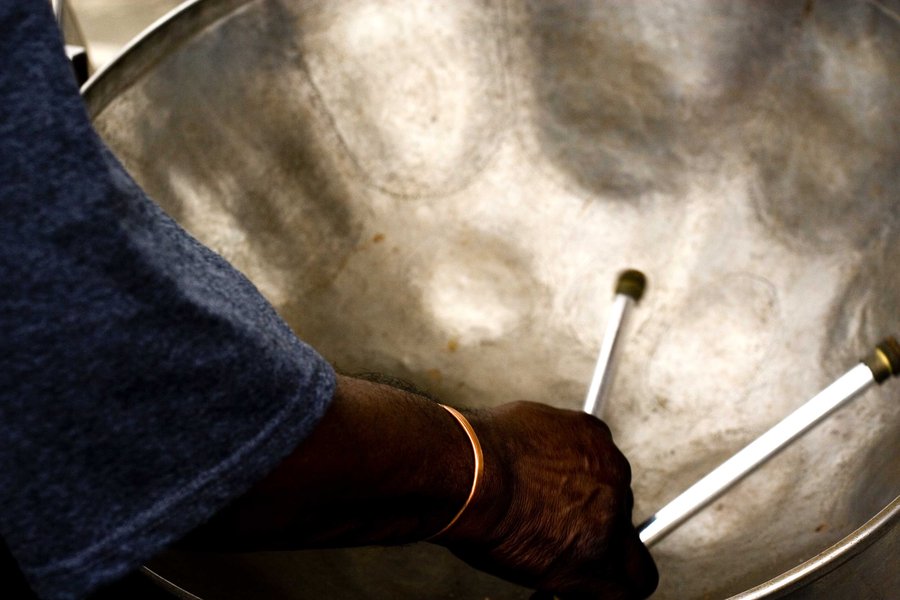
One time we drove to a part of town where we’d never gone. The address didn’t seem right, but around us friends were parking for a tour and discussion we’d scheduled at a local business. So we piled out and knocked at what looked like an abandoned warehouse. The door was pulled open by a man who welcomed us to his steel drum company. He seemed powered by perpetual gusto as he talked about the history of steel drums and his desire to preserve the music, factors which became the motivating force behind his company. He told about the shoestring nature of his own start-up and multiple problems with initial designs—- illustrating his tales with diagrams, tools and testimony from guys in the shop.

Our time there stretched out wonderfully as we played many different drums, including some extremely valuable models, and listened to recordings made in a studio he built on site. There’s no telling what particular element of that afternoon made an impression on the children and teens there. What he transmitted encompassed history, music, engineering, entrepreneurship, character-building, collaboration—all with an infectious energy.

Through any deep exploration we can uncover ever widening avenues of discovery, whether we search in archeology, cake decorating or steel drums. There are lessons to be learned that awaken us to greater wonders.

When we get a glimpse of those wonders through the eyes of others we’re not only learning. We’re sharing a source of pleasure. Asking people to impart some of what they’ve discovered and how they do it, well, that’s a gift because it lets them give us a taste of what, to them, has real sustenance.

That spark, carried from generation to generation, is how we humans have always built the future. As Antoine de Saint-Exupery wrote. “If you want to build a ship, don’t herd people together to collect wood and don’t assign them tasks and work but rather, teach them to long for the endless immensity of the sea.”

*

*

*

Steel Drum image courtesy of Michael Halley

Learning from Wisdom of Elder Farmers

100_8204

The sight of Ron’s farm is like a quiet blessing. I wait for my first glimpse of it over the rise of a hill each time I take the dogs for a walk down our street. The house and several outbuildings are in shambles, but that’s because Ron puts his energy into keeping his small dairy farm going.

His herd of around fifty Ayrshire, Holstein, Guernsey and Brown Swiss graze on pasture so lush that the grasses sway in the wind. Many of the old fence posts surrounding the fields are wire-wrapped osage orange and hickory trunks, since farmers a few generations ago knew these durable woods would serve while alive and long after.

Ron puts his cows out on pasture each spring by a calculation that remains a mystery to me, something to do with phases of the moon. He adheres to other timeworn methods that aren’t fancy enough to be termed eco-friendly or green. For example, Ron drives his old car back to the hayfield before it’s time to cut. He walks through the field handpicking weeds that aren’t good for his cows. He doesn’t confine his cows year round, dose them with production-boosting hormones or follow any other agricultural trends.

Ron’s back is bent; his face is weathered and creased into a permanent smile. Already he looks like his father, Herb, who died a few years ago, probably already in his nineties. We asked Herb’s advice back when we first started farming. Herb told us he’d walked over to see our cows a few times, meaning he’d hiked through fields and woods to reassure himself that all was well.

How many of us can still benefit from the benevolent instinct of a neighboring farmer? How many are lucky enough to learn from examples of those who are deeply rooted, as Lisa Hamilton’s wonderful new book Deeply Rooted: Unconventional Farmers in the Age of Agribusiness is aptly named?

Dairy farms all over the country are selling cows, selling land and going out of business. The price they are being paid is about the same as it was in the 1970’s, although feed and fuel is much higher.  Government aid under consideration for small farms is steered to prompt farmers into selling cows, meaning even more milk will come from huge confinement agricultural operations. Losing small farms also means that the wisdom of farmers like Ron will be left behind at an ever faster pace. This includes specific wisdom about the land and wider wisdom about ways to live.

True connection to the land is so easily crushed beneath the weight of society’s pressing demand for immediate gratification and quick profits. But then, much is lost. As Pierre Teilhard de Chardin said, “This palpable world, which we are used to treating with the boredom and disrespect with which we habitually regard places with no sacred association, is a holy place.”

Perhaps most obviously, common sense is lost. Small farms are actually more efficient. The Institute for Food and Development Policy amassed available data from every country to compare productivity of smaller farms versus larger farms (total output of agricultural products per unit area — per acre or hectare.)  Their research showed that smaller farms are anywhere from 200 to 1,000 percent more productive.

Ron’s son-in-law and grandson help on the farm, but his family talks to him about getting out of the business. They know he’s losing money. Ron says that he watched his father go through hard times and he learned that the way you stay farming is to hang on. So he’s hanging on.

Ron’s rootedness to his farm and his land is part of who he is, like the farmer Gene Logsdon describes in a recent blog post “…he is a last member of an ancient tribe—the genuine traditional farmers who committed themselves lovingly to a piece of land and husbanded it from generation to generation, carrying in their memories a lifetime of their own experiences and that of their fathers and grandfathers on that land.”

So today I will walk in his direction, grateful for Ron’s farm. I’ll pay attention to the sight of cows resting in tall grass and the sound of a slack board on the house creaking in the breeze, hoping perhaps each thing we look upon with love somehow is more likely to endure.