“It is becoming increasingly clear through research on the brain, as well as in other areas of study, that childhood needs play. Play acts as a forward feed mechanism into courageous, creative, rigorous thinking in adulthood.” ~ Tina Bruce
Nine-year-old Charlotte has one hand slung around a utility pole as she slowly twirls, her head tipped to watch the upper floors of her Cleveland apartment building circle past. Her mother is unloading groceries and chides her daughter, “Stop playing around!”
Charlotte actually has very little time to play. Her days are tightly woven as the dozens of perfectly tended braids in her hair. She’s in the gifted stream at school, participates in swim team and basketball team, takes clarinet lessons, and attends a computer-oriented STEM program on Saturdays.
“I had more of a Little Rascals childhood,” Charlotte’s mother says. “My girlfriends and I would use sheets hanging on the clothesline as curtains to perform Michael Jackson hits or I’d ride bikes with my brothers down dirt piles pretending to be Evel Knievel. It was a lot of fun but Char has more advantages than I could have dreamed of.”
Charlotte’s mom needs to get the groceries unpacked before heading back out. She’ll drop Charlotte off at basketball practice, then buy craft supplies her daughter needs to make a school project. “It’s endless,” she says. “We’re running all the time.”
Although she’s in a hurry, she has more to say about play. “The other day Char had friends over,” she says. “They were whispering and giggling. I felt bad that I had to barge in and tell the girls their playdate was over because we had to leave. I know they need more time to just be silly.”
She’s right.
Most adults don’t hesitate to interrupt play with an activity they assume is more important or to halt play they deem too loud, messy, or rough. And they don’t see a problem with corralling children’s leisure time in ways that remove most aspects of “free” from play. Dismissing what kids do as “just” play also denies what makes us fully ourselves.
There’s no definitive description of free play, but as author and play advocate Bob Hughes wrote back in 1982, it’s behavior that is “freely chosen, personally directed, and intrinsically motivated, i.e. performed for no external goal or reward.”
Psychiatrist Stuart Brown, founder of the National Institute for Play, expands on this. He says play basics include purposeless, repetitive, pleasurable, spontaneous actions. Play takes many forms. Sometimes this is driven by curiosity and the urge to discover. Sometimes it’s imaginative play driven by an internal narrative. Sometimes it’s rough and tumble play, the kind that necessarily puts the player at risk and involves anti-gravity moves such as jumping, diving, and spinning.
Picture the wildly free play of puppies and kittens as they wrestle and explore; that’s what he is describing. As Dr. Brown writes, “The urge to play is embedded within all humans, and has been generated and refined by nature for over one hundred million years.”
Ever taller stacks of research demonstrate that free play is critical for development. It fosters problem-solving, reduces stress, enhances learning, and boosts happiness.
Make-believe games go a long way toward helping kids develop self-regulation, including reduced aggression, ability to delay gratification, and advancing empathy. One form of make-believe, more common in children who have lots of minimally unsupervised free time, is called worldplay. This is considered the apex of childhood imagination and is linked with lifelong creativity,
Preliminary studies indicate the less structured time in a child’s day, the better their ability to set goals and reach those goals without pressure from adults. Childhood play is even correlated with high levels of social success in adulthood.
And, as if we didn’t already know this, free play generates sheer joy. The BBC series “Child of Our Time” studied play. They found the more children engaged in free play, the more they laughed, particularly when playing outside. The kids who played the most laughed up to 20 times more than kids who played less. This is surely the best reason of all to play.
But then it strikes us. Suddenly, with the same horrified expression mad scientists wear in sci fi movies while uttering the lines, “What have we done?” we realize that we’ve squeezed nearly all the free play out of childhood. If there are monsters in this scenario, they come disguised as tighter safety restrictions, more adult-run activities, insufficient recess at school, and the lure of screens. Since the 1970’s children have 25 percent less time to play, with 50 percent less time in unstructured outdoor play. In the 1980’s, school-aged children spent 40 percent of the day, on average, engaging in free play. By 1997, that average had dwindled to a mere 25 percent and continue to decline. A recent report notes that American kids, on average, spend about four to seven minutes a day playing outside but over seven hours a day in front of screens. Even when kids do have time to play freely, it’s now common for adults to supervise.
This is particularly true in educational settings. Play is a buzzword for educators, but as Elizabeth Braue wrote in a journal article titled “Are We Paving Paradise?” — “What counts as play in many classrooms are highly controlled situations that focus on particular content labeled as ‘choice’ but that are really directed at capturing a specific content-based learning experience, such as number bingo or retelling a story exactly as the teacher told it on a flannel board.” Free play, particularly the more emotionally expressive and physically active forms, are also squeezed out of daycare and afterschool programs in favor of planned activities.
It’s not just a U.S. thing. A structured and heavily supervised childhood is becoming more prevalent globally. When thousands of mothers around the world were asked about their children’s activities, they tended to agree that a lack of free play and experiential learning was eroding childhood. At the same time, they listed their children’s main free-time activity as watching television. This held true for children growing up in North and South American, Europe, Asia, and Africa. The researchers, writing in the American Journal of Play, made clear their surprise at what they called a “homogenization of children’s activities and parents’ attitudes.”
Marketing messages are so ever-present that they’ve reshaped the norms for raising children. Those messages lead us to believe that good parents heavily supervise children, keeping them busy with purchased playthings and pricey programs starting in toddlerhood or earlier. Such opportunities, we’re told, are found in specialized toys, educational apps, adult-run programs and lessons, gym and fitness sessions, organized sports, and extra-curricular activities. This presumes the kind of spending power and free time that’s entirely out of reach for most US parents. The cost is greater than money because they also lose family time, relaxation, and free play.
That’s not to say a child shouldn’t take drum lessons, go to the rock climbing gym, or participate in scouts. The difference between an overscheduled child and a child who’s eager to take on more activities has to do with each child’s unpressured choices, balanced with what’s best for the family as a whole. It’s also worth remembering that shuttling our kids around for enrichment activities is not necessarily correlated with later success.
Play is a constant in the life of young children. When we formalize it with too many activities that turn play into a tool for academic or physical advancement, we lose sight of play for play’s sake.
This is an important consideration, because the short and long-term consequences of too little free play are more serious than most of us imagine. Play deprivation (yes, it’s a term) has been linked to significant problems. At the most extreme is the potential for increased criminal behavior. Dr. Brown has studied the topic for 47 years, conducting something like six thousand individually conducted play histories. He was initially drawn to learn more when he looked for common backgrounds among men convicted of felony drunk driving and men convicted of homicide. To his surprise, he found these individuals shared a background of severe, sustained, long-term play deprivation. More recent studies have identified play deprivation as a factor in violent crimes committed by juveniles.
Overscheduled kids aren’t more likely to commit crimes, by any means. Much more research needs to be done to establish a causal link. But we do know that too little free play is serious problem. Youth mental health continues to worsen—with particularly stark increases in problems among teen girls. Nearly 1 in 3 girls seriously considered attempting suicide—up nearly 60% from a decade ago. Across all racial and ethnic groups teens are experiencing increasing rates of persistent sadness or hopelessness.
Over 20 years ago, David Elkind wrote in The Hurried Child: Growing Up Too Fast Too Soon, that overscheduled children and teens are more likely to show signs of stress, anxiety, and depression. It’s thought that free play and quality family time are a protective effect, helping children work through and manage such feelings.
Peter Gray finds it logical that a decline in play might result in increased emotional and social disorders. He writes in Free To Learn, “Play is nature’s way of teaching children how to solve their own problems, control their impulses, modulate their emotions, see from others’ perspectives, negotiate differences, and get along with others as equals. There is no substitute for play as a means of learning these skills.”
Physical play is critical in maintaining good mental health and a useful intervention when young people suffer from depression. A recent study found physical activity at least three times a week resulted in a significant reduction in depression symptoms. The effect was greatest “when the physical activity was unsupervised than when it was fully or partially supervised.”
Play is humanity’s spark plug. It connects us to a current that exists within us and around us, an aliveness that runs on fun. This is how we make scientific advances; how we develop products that were once in the realm of fantasy; how we create music, books, movies, games, and art; how we laugh with friends, build community, and come up with solutions. It’s no wonder all of us need more play.
When Charlotte notices her mother is caught up in conversation with me, she runs up the staircase outside their apartment and slides her backpack down the railing, then tries to scurry down the steps fast enough to catch it. When she succeeds on the second try, she boosts the challenge by running down the mulched dirt on the outside of the steps. An elderly man approaches the steps. She pauses, perhaps wary of his disapproval. Instead he playfully slides the backpack back up just as she nears the bottom. Charlotte’s mother turns around when she hears her daughter’s giggle join the older man’s hearty laugh. It’s a lighthearted moment of connection for all four of us, brought into being through playfulness. “That’s the great thing about kids,” she says. “They can turn anything into play.”
So can we all. I don’t think anyone says it better than games expert and play advocate Bernie DeKoven, who wrote inA Playful Path,
“Playfulness is a gift that grants you great power. It allows you to transform the very things that you take seriously into opportunities to shared laughter; the very things that make your heart heavy into things that make you rejoice, it turns junk into toys, toys into art, art into celebration. It turns walking into skipping, skipping into dance. It turns problems into puzzles, puzzles into invitations to wonder.”
“What children need is not new and better curricula but access to more and more of the real world; plenty of time and space to think over their experiences, and to use fantasy and play to make meaning out of them; and advice, road maps, guidebooks, to make it easier for them to get where they want to go (not where we think they ought to go), and to find out what they want to find out.” –John Holt
Miss Gribbon set up a new teaching prop at the front of our first grade classroom — three stick figures made of metal with round blank faces and oversized magnetic hands. Each figure was about the size of a toddler, although she referred to them as “men.” She said the first figure’s name was Ones. The next, to our right, she named Tens. The last in the row she named Hundreds. She added two bright red magnetic fingers to each figures’ hands. Then she announced that One’s fingers were worth two, Ten’s were worth 20, and Hundred’s were worth 200.
I could NOT understand how identical magnetic people could have fingers worth different amounts. The hundreds man wasn’t taller than the tens man or the ones man. Their fingers were the same size. So I watched carefully as she stood them up the next day, hoping to figure out what distinguished them. Nothing. The Ones man from yesterday might be today’s Hundreds man. Their value wasn’t intrinsic to who they were. I struggled mightily to understand how one man could be worth more than another. (Story of my political confusion, even now.)
Each time Miss Gribbon rearranged the characters’ fingers she asked a different student, “What number do you see?” If they got it wrong, she asked again in a louder voice before reluctantly providing the answer. To me, math lessons seemed very similar to playing an unfamiliar game with kids who owned the game. They’d always say, “You’ll figure out the rules as we play.” By the time I did, they always won.
We continue to advance in our comprehension almost entirely through hands-on experience. Math is implicit in play, music, art, dancing, make-believe, building and taking apart, cooking, and other everyday activities. Only after a child has a strong storehouse of direct experience, which includes the ability to visualize, can he or she readily grasp more abstract mathematical concepts. As Einstein said, “If I can’t picture it, I can’t understand it.”
Yet right around the time formal instruction starts, children increasingly report that they worry about and fear math. Math anxiety, even in first and second graders, disproportionally affects children who have the most working memory. These are the very children most likely to show the highest achievement in math. But stress can disrupt working memory and undermine performance. Otherwise successful children with high degrees of math anxiety fall about half a school year behind less anxious students. In a study of 154 young students, about half had medium to high math anxiety.
Early math anxiety can intensify, leading to increased math avoidance and lowered competence. Over 60 years of research show that positive attitudes toward math tend to deteriorate as students move through school. More than half the adult population in the U.S. is said to suffer from math anxiety, some with math avoidance so extreme that it has the potential to damage financial decisions and careers.
Is math instruction to blame?
Innovative math educator Maria Droujkova says, in an Atlantic article titled “5-Year-Olds Can Learn Calculus,” that math instruction typically follows a hierarchical progression starting with counting, then addition and subtraction, then multiplication and division, onward to fractions, algebra, and so on. Unfortunately, she says, this approach has “… nothing to do with how people think, how children grow and learn, or how mathematics is built.” She and other math educators around the world say the standard curriculum that begins with arithmetic is actually more difficult for children than play-based activities related to more advanced fields of mathematics. As Dr.Droujkova writes, “Calculations kids are forced to do are often so developmentally inappropriate, the experience amounts to torture.”
That torture is compounded by the way math is taught. Extensive research demonstrates that kids readily understand math when they develop the ability to use numbers flexibly, what’s called a “number sense.” Number sense is fundamental to all higher-level mathematics. This does not develop through memorization but instead from relaxed, enjoyable exploratory work with math concepts. In fact, math experts repeatedly point out that math education standbys — flash cards, repetitive worksheets, and timed tests — are not only unhelpful but actually damaging. These common methods discourage number sense, setting young people off in the wrong direction. In fact doing math under pressure impairs the working memory students need to access what they already know. Pressure also leads to math anxiety. There’s no educational reason to use these tactics in the classroom or at home. Greater math ability has nothing to do with working quickly nor does quick recall of math facts relate to fluency with numbers.
Add to this the burden of grades and test scores. Students today deal with a heavy load of standardized tests across all major subjects, plus tests in math class as often as every few days. They quickly learn math has to do with performance, not with usefulness and certainly not with beauty or mystery.
As mathematics educator Jo Boaler writes in Mathematical Mindsets, it’s well known that grades and test scores damage motivation and result in limiting self-labels in high, middle, and low-achieving students. Research consistently shows that alternatives to grading are far more beneficial. One study compared the way teachers responded to math homework in sixth grade. Half the students were graded, the other half were given diagnostic comments without a grade. Students who got only comments learned twice as fast as the graded group, attitudes improved, and any achievement gap between male and female students disappeared.
Dr. Boaler writes about another study in which fifth and sixth grade students were assessed three different ways. Some students received only grades, some only comments, and some both grades and comments. The students who achieved at significantly higher levels were those who were given comments only. Those who got any grade at all, with or without comments, did poorly. This was true for students across the spectrum of ability. Further research found that students only needed to believe they were being graded to lose motivation and achieve less.
Studies continue to show that students given positive feedback and no grades are more successful as they continue through school. There’s a strong relationship between teachers’ assessment practices and students’ attitude about their own potential. Unfortunately teachers give less constructive feedback as students get older and students’ belief in their own chance of improving also declines steadily from upper elementary grades through high school and beyond. Even at the university level, teaching and testing has a tendency to undermine sense-making. Students are likely to limit themselves to rigid sets of rules and procedures while lacking the relational understanding to correctly apply or adapt those algorithms to the problem at hand.
What happens when students aren’t assessed?
Dr. Boaler followed teenagers in England who worked on open-ended math projects for three years. These students were not graded or tested, and only given information about their own learning, even though they faced national standardized tests at the end of that period. A few weeks before the test they were given practice exams to work through. Although they were largely unfamiliar with exam questions or timed conditions, when tested these students scored at a significantly higher level than students who had gone through standard math classes with frequent tests similar to the national exam questions.
What happens when math instruction is even more limited?
Back in 1929, pioneering educator Louis P. Benezet, superintendent of the Manchester, New Hampshire schools, wrote, “The whole subject of arithmetic could be postponed until the seventh year of school, and it could be mastered in two years’ study by any normal child.” He began an experiment. In five classrooms, children were exposed only to naturally occurring math like telling time and playing games, while in other classrooms children received typical math lessons.
At the end of the first year differences were already apparent between students exposed to these two different approaches. When children were asked the same mathematical story problem, the traditionally taught students grabbed at numbers but came up with few correct results, while the experimental students reasoned out correct answers eagerly, despite having minimal exposure to formal math. Based on these successes, the experiment expanded. By 1932, half of the third- to fifth-grade classes in the city operated under the experimental program. After several years, the experiment ended due to pressure from some principals. Children in the experimental classrooms went back to learning from a math book in the second half of sixth grade. All sixth-grade children in the district were tested and in the spring of that year all the classes tested equally. When the final tests were given at the end of the school year, one of the experimental groups led the city. In other words, those children exposed to traditional math curricula for only part of the sixth-grade year had mastered the same skills as those who had spent years on drills, times tables, and exams. Even more remarkably, the students in the experimental classrooms were from the most poverty-stricken neighborhoods where poor school performance was common. The Journal of the National Education Association published the last of Mr.Benezet’s articles in 1936, calling on educators to replace formal math instruction with naturally occurring math.
What happens when there’s no math instruction by trained educators?
Homeschooling and unschooling families around the world devote much less, if any, time to formal mathematics instruction. There are significant limitations to research of homeschooled and unschooled youth for a variety of reasons, including a self-selecting population, so findings are interesting but inconclusive.
Multiple studies indicate homeschooling offers significant academic advantages, regardless of the parent’s educational attainment. Those tested in the last two years of homeschooling, what would be a schooled student’s junior and senior years, statistically score in the 86th to 92nd percentile. The percentage of homeschooled students who complete college far exceeds the rate of public school students.
Studies show homeschoolers taking the SAT tend to score significantly above average in all areas except math where their scores are still above average. The most recent College Board stats show mean scores for all college-bound seniors were 497 in critical reading, 487 in writing, and 513 in mathematics. For the 13,549 homeschooled seniors who took the test that year, means scores were 567 in critical reading, 535 in writing, and 521 in mathematics.
It’s hard to wade through research comparing math achievement of homeschooled versus conventionally schooled young people because much of the research includes as “homeschooled” those students who are educated using district or state sponsored programs which provide conventional-style math instruction to be done at home, which largely replicates the problems of conventional classroom instruction.
Still, several informal surveys show disproportionate number of homeschool and unschool adults working in STEM careers. And it seems that a significant number of today’s high-achievers in technology, science, and math have emerged from the homeschooling community. Their numbers include:
Erik Demain — professor of theoretical computer science at MIT and named “one of the most brilliant scientists in America” by Popular Science
Ruth Elke Lawrence-Naimark — researcher in knot theory and algebraic topology,
Francis Collins — geneticist and director of the National Institutes of Health, Samuel Chao Chung Ting — physicist and Nobel Prize recipient,
Phillip Streich — holder of numerous patents and co-founder of nanotechnology company making him a multimillionaire by the time he entered Harvard,
Arran Fernandez — youngest mathematician with sequences published in Encyclopedia of Integer Sequences,
Willard Boyle — physicist, co-inventor of charge-coupled device and Nobel Prize winner.
Alison Beth Miller — first American woman to win gold at the International Mathematical Olympiad.
What happens when there’s no math instruction other than what young people request?
Democratic schools exist at the opposite end of the spectrum from conventional schooling. Students are not segregated by age and each student has one vote, just as staff members do, to democratically run the community. All young people are trusted to choose their own activities and no classes are mandatory, making these schools a collectively managed and open setting for self-directed learning.
Psychologist Peter Gray surveyed graduates of one such school, Sudbury Valley School (SVS) in Framingham Massachusetts. He found that young people who were not mandated to follow curricula, take tests, and receive grades “…have gone on to good colleges and good jobs…They are taking responsible positions in business, music and art, science and technology, social services, skilled crafts, and academia.” Dr. Gray notes that employers are rarely concerned about a prospective employee’s grades in algebra. Instead the traits for career success are those that graduates say were fostered by their time at SVS, such as “…a strong sense of responsibility, an ability to take initiative and solve problems, a desire and ability to learn on the job, an ability to communicate effectively, and perhaps most of all, a high interest in and commitment to the field..”
And there’s this anecdote, shared by teacher Daniel Greenberg in his book Free At Last. A group of students at the Sudbury Valley School approached him saying they wanted to learn arithmetic. He tried to dissuade them, explaining that they’d need to meet regularly and do homework. The students agreed to do so. In the school library, Greenberg found a math book written in 1898 that was perfect in its simplicity. Memorization, exercises, and quizzes were not ordinarily part of the school day for these students, but they arrived on time, did their homework, and took part eagerly. Greenberg reflects, “In twenty weeks, after twenty contact hours, they had covered it all. Six year’s worth. Every one of them knew the material cold.” A week later he described what he regarded as a miracle to a friend, Alan White, who worked as a math specialist in public schools. White wasn’t surprised. He said, “…everyone knows that the subject matter itself isn’t that hard. What’s hard, virtually impossible, is beating it into the heads of youngsters who hate every step. The only way we have a ghost of a chance is to hammer away at the stuff bit by bit every day for years. Even then it does not work. Most of the sixth graders are mathematical illiterates. Give me a kid who wants to learn the stuff — well, twenty hours or so makes sense.”
These examples aren’t meant to be anti-teaching, they are meant to broaden our understanding about when instruction is most useful and effective. That happens less often than we’d think — when the learner seeks guidance, demonstration, resources, or help. Learning that’s sought out sticks with the learner. It promotes curiosity, persistence, passion, and deep inquiry — exactly what’s needed to dig into the fathomless depths of mathematics or any other pursuit.
Math as it’s used by the vast majority of people around the world is actually applied math. It’s directly related to how we work and play in our everyday lives. In other words it’s useful, captivating, and often fun.
Interestingly, people who rely on mental computation every day demonstrate the sort of adroitness that doesn’t fit into conventional models of math competence. In a New York Times article titled “Why Do Americans Stink at Math,” author Elizabeth Green (who defines the term “unschooled” as people who have little formal education) writes,
Observing workers at a Baltimore dairy factory in the ’80s, the psychologist Sylvia Scribner noted that even basic tasks required an extensive amount of math. For instance, many of the workers charged with loading quarts and gallons of milk into crates had no more than a sixth-grade education. But they were able to do math, in order to assemble their loads efficiently, that was “equivalent to shifting between different base systems of numbers.” Throughout these mental calculations, errors were “virtually nonexistent.” And yet when these workers were out sick and the dairy’s better-educated office workers filled in for them, productivity declined.
The unschooled may have been more capable of complex math than people who were specifically taught it, but in the context of school, they were stymied by math they already knew. Studies of children in Brazil, who helped support their families by roaming the streets selling roasted peanuts and coconuts, showed that the children routinely solved complex problems in their heads to calculate a bill or make change. When cognitive scientists presented the children with the very same problem, however, this time with pen and paper, they stumbled. A 12-year-old boy who accurately computed the price of four coconuts at 35 cruzeiros each was later given the problem on paper. Incorrectly using the multiplication method he was taught in school, he came up with the wrong answer. Similarly, when Scribner gave her dairy workers tests using the language of math class, their scores averaged around 64 percent. The cognitive-science research suggested a startling cause of Americans’ innumeracy: school.
And Stanford mathematician Keith Devlin explains in The Math Gene that we’re schooled to express math in formal terms, but that’s not necessary for most of us — no matter what careers we choose. People who rely on mental math in their everyday lives are shown to have an accuracy rate around 98 percent, yet when they’re challenged to do the same math symbolically (as in standardized tests) their performance is closer to 37 percent.
One of the most widely held misconceptions about mathematics is that a math problem has a unique correct answer…
Having earned my living as a mathematician for over 40 years, I can assure you that the belief is false. In addition to my university research, I have done mathematical work for the U. S. Intelligence Community, the U.S. Army, private defense contractors, and a number of for-profit companies. In not one of those projects was I paid to find ‘the right answer.’ No one thought for one moment that there could be such a thing.
So what is the origin of those false beliefs? It’s hardly a mystery. People form that misconception because of their experience at school. In school mathematics, students are only exposed to problems that
are well defined,
have a unique correct answer, and
whose answer can be obtained with a few lines of calculation.
How can we translate all these findings into math education?
We not only need to drop flashcards, timed tests, and rote worksheets. We need to emphasize math as meaningful, useful, and connected.
A. The most statistically significant predictors of long-term math achievement, according to a study that tracked children from age three to age 10, had very little to do with instruction. Instead the top factors were the mother’s own educational achievements and a high quality home learning environment. That sort of home environment included activities like being read to, going to the library, playing with numbers, painting and drawing, learning letters and numbers, singing and chanting rhymes. These positive effects were as significant for low-income children as they were for high income children. Children who attended highly effective preschools (but not moderately effective programs) also benefited. Understanding numbers as meaningful and fun is important from the earliest years.
B. Technology innovator Conrad Wolfram says we need to go beyond computation. He suggests these four steps:
Pose the right question about an issue
Change that real world scenario into a math formulation
Compute
Turn the math formulation back into a real world scenario to verify it
C. Barnard College president Sian Beilock president says math is best learned as storytelling and done so by incorporating the body, the way children naturally absorb real world math. As neuroscientists map the brain, they find humanity evolved skills that overlaid onto areas of the brain that control the body. Math doesn’t sink in when confined to the intellect. It is drawn in through the body. We see this in studies showing babies who are able to move and explore more freely learn more quickly. “Math, Dr. Beilock says, “is a very recent cultural invention.” The part of the brain used for numerical representation is related to finger motion, demonstrating exactly why children best learn by counting on their fingers. Hand movement all the way up to full body engagement, such as walking while thinking, are actually more valuable than speech in comprehending everything from early computation to abstract concepts in physics. Dr. Beilock also emphasizes the benefits of time in nature to refresh one’s attention, leading to greater focus and comprehension.
D. Dr. Droujkova adds to this by emphasizing richly social math experiences that are both complex (able to go in a variety of directions) and simple (open to immediate play). She says any branch of mathematics offers both complex and simple ways in. It is best, she explains, to keep from chaining kids into formal equations early on. There’s an informal level where kids play with ideas and notice patterns. Then comes a more formal level where kids can use abstract words, graphs, and formulas. But it’s best if a playful attitude is kept alive, because what mathematicians do at the highest level is play with abstract ideas.
Dr. Droujkova notes that the community she founded called Natural Math is essentially a “freedom movement.” She explains: “We work toward freedom at many levels — the free play of little kids, the agency of families and local groups in organizing math activities, the autonomy of artists and makers, and even liberty for us curriculum designers…. No single piece of mathematics is right for everyone. People are different, and people need to approach mathematics differently.” Although we’ve been schooled to believe that math must be taught in a structured way by professionals, Dr. Droujkova continues to establish lively and engaging community-based, open-learning math circles that can be led by any adult. She and her colleagues make their materials open under Creative Commons license and offer online hubs with courses and resources for parents, teachers and teenagers who want to lead local groups. (See naturalmath.com) As Dr. Droujkova says in a recent interview, “math circles are magic circles.”
School-like instruction has been around less than a fraction of one percent of the time we humans have been on earth. Yet humanity has thrived. That’s because we evolved as free range learners gaining mastery as we explore, play, emulate role models, challenge ourselves, make mistakes and try again. That’s how everyone learns to walk and talk. That’s how young people have become capable adults throughout history. And that’s how innovation happens in the arts, sciences, and technology. In the long view, school is the experiment.
For many it’s hard to see beyond the school mindset because most of us went to school. So when we think of education, we view school as the standard even if we simultaneously realize that many parts of that model (also found in daycare, preschool, kids’ clubs, sports, and enrichment programs) aren’t necessarily beneficial. Narrowing the innate way we learn can unintentionally narrow enthusiasm, creativity, persistence, and the desire to dive deeply into any pursuit. It can interfere with the full development of our abilities.
My first grade math lessons taught me to equate math with fear. I went on to get good grades in the subject, but by high school my math anxiety led me to give up hopes of working in a science field. Math misery doesn’t have to be imposed on the next generation.
It’s time to free ourselves from the assumption that math instruction is a painful necessity. Approaching math in ways that are disconnected from a child’s life subtracts the meaning and the joy. It multiplies fear. Data shows and experience proves that real learning flows from the learner’s consent and the learner’s interest. We can offer math as an enlivening, beautiful tool to the next generation as soon as we free ourselves from the limitations of the school mindset.
As a writer, I get my share of rejection letters. (As an editor, I write my share of rejection letters too.) I’m occasionally heartened by a kind word or two, indicating a publication would like to see more of my work or letting me know a piece of mine made it to the final round. It’s not the same as an acceptance, but it helps.
There’s actually a bit of relief in rejection. It usually comes after waiting months, when likelihood of acceptance already seems nil, and I can say to myself, Okay, I no longer have to pin my hopes in this direction. This frees a little unpopped kernel of aspiration to go back on another burner. (Because you must always, always try again.)
Sometimes, however, it takes much longer than a publication claims is necessary for them to review queries or submissions. When there’s no response I assume their editors are working long hours for low pay and preoccupied by other pressing matters. (At least that’s what being an editor is like for me.) But over a year? That’s ghosting. So I ask for a rejection letter. At this stage there’s not much to lose. I simply want to know. And maybe have some fun asking.
Here’s one such message I sent a while back.
Greetings *unnamed little literary print magazine,*
I can take rejection, really. But it’s nice to finally get rejected. I sent a creative non-fiction piece titled _____ on _____. I know, I know, I should have given up by now but hope is a feisty creature, not easily strangled by silence.
In case the clarity and understated wit of my piece knocked an editor to the floor, unintentionally hurtling my submission under a desk, I’ve included my cover letter and submission again. Less dusty this way.
ever optimistically,
Laura Weldon
Turns out they were in the process of going out of business and wouldn’t even be publishing previously accepted pieces. Their website said nary a word about this.
Here’s another such message, sent after a longer wait.
Ahem, Under the Slush Pile, You There!
Enclosed are copies of a cover letter and book proposal sent to you over 16 months ago. I received acknowledgement that you were in receipt of these materials on ________.
I am a busy writer and editor involved in a number of projects and only recently noticed just how long the interval has been. Now I’m concerned. Even at the rate of a single word per day, surely you would have completed reading my one-page book proposal quite some time ago. Something must be amiss.
Should I offer my editing services, as it’s apparent _______ Press is completely bogged down by unread manuscripts?
Should I consider a rescue effort, breaking down the doors blocked by stacks of paper in order to liberate your staff?
Or am I to assume that you are in the business of collecting SASEs while never intending to use them? I’m enclosing yet another in hopes of getting a response. This time, do tell.
most sincerely, Laura Weldon
They sent me a form rejection.
My absolutely favorite rejection letter was one I got after applying for a job around the time I graduated from college. I had volunteered and interned, doing my best to enter the professional world with relevant experience, and it appeared I met the job requirements. The rejection letter I got back was so short and to-the-point that I still remember it verbatim:
We do not now, nor do we ever anticipate, having a position for which you are qualified.
I wish I’d framed it!
But the best rejection letter I’ve ever seen is one sent to a New Zealand writer nearly 90 years ago. It was shared recently by Letters of Note.
Did this poet give up? No. The fervent F. C. Meyer went on to publish this volume.
It’s a testament to his ambition that he persisted, since his poetry appears to have been as bad as that rejection letter indicated. His verse was quoted in a Scoop article about candidates for“Poet Nauseate.”
I think – I understand thee well,
Rub my nose now for a spell!
couplet from”Maori Maiden”
Pluto! come here my dearest little dog,
Don’t get mixed up with every rogue,
And do not run into a fog…
from “My Pet Dog”
If you’re a writer, keep pressing on. The publications rejecting you aren’t where you’re meant to be right now. Let each rejection motivate you to send out three more submissions. To inspire you, here are some authors who kept going despite rejection.
“[Your poems] are quite as remarkable for defects as for beauties and are generally devoid of true poetical qualities.” Rejection received by Emily Dickinson.
“An irresponsible holiday story that will never sell.” Rejection of Kenneth Grahame’s The Wind In The Willows, which went on to sell25 million copies.
“Too different from other juveniles on the market to warrant its selling.” Rejection letter sent to Theodor Geisel, whose rhyming books went on to sell 300 million copies under the pen name Dr. Seuss.
“We are not interested in science fiction which deals with negative utopias. They do not sell.” Stephen King ignored this rejection letter and found another publisher for Carrie, which sold 1 million copies the first year.
“Hopelessly bogged down and unreadable.” Rejection letter to Ursula K. Le Guin. That book, The Left Hand of Darkness , went on to become the first of her many award-winning books.
“We suggest you get rid of all that Indian stuff.” Rejection letter advice to Tony Hillerman, about work that later became his series of best-selling Navajo Tribal Police mystery novels.
“Too radical of a departure from traditional juvenile literature.” Rejection sent to L. Frank Baum. The author persisted, finally getting a publishing house to take on the book only when the Chicago Grand Opera House manager committed to making The Wonderful Wizard of Oz into a musical stage play to publicize the novel.
“He hasn’t got any future.” Rejection of the first novel by David Cornwell, retired spy from the British Security Service, MI5. Yet, the author kept submitting. Publication of that novel, The Spy Who Came in From the Cold, under the pen name John le Carré, launched his second career as writer of international best-sellers.
“I haven’t the foggiest idea about what the man is trying to say. Apparently the author intends it to be funny.” One of 21 rejections for Joseph Heller’sCatch-22, which is said to have gotten its title at a “yes” by the 22nd publisher. The book has sold over 10 million copies.
“Stick to teaching.” Louise May Alcott was told by a dismissive publisher, who said she should give up writing. She went on to see Little Women published. It is still in print 150 years later.
“The girl doesn’t, it seems to me, have a special perception or feeling which would lift that book above the ‘curiosity’ level.” One of the 15 publishers who didn’t think The Diary of Anne Frank had literary merit.
What’s the difference between David Hahn and Taylor Wilson’s pursuit of science?
Back when the boys in our regular book club were preteens and young teens, one of the books that really caught their attention wasThe Radioactive Boy Scout: The Frightening True Story of a Whiz Kid and His Homemade Nuclear Reactorby Ken Silverstein. It’s the true tale of David Hahn, a very gifted teen who became obsessed with learning everything he could about nuclear energy. Hahn gathered materials for experiments in all sorts of enterprising ways, even getting his hands on reactor plans. His father and stepmother forbade him from doing further experiments in the house after his efforts resulted in several chemical spills and small explosions. So he moved in with his mother and used her backyard potting shed for a hugely ambitious endeavor: building a model breeder nuclear reactor. His reactor hadn’t reached critical mass when evidence of his project was discovered during a routine traffic stop. That potting shed was deemed a Superfund site and cleaned up by the EPA in 1995.
Something astonished the boys in our group more than Hahn’s extraordinary project. They couldn’t understand why no one reached out to foster Hahn’s powerful intellect nor guided him to adult scientists who could have more safely helped him explore his interests. Maybe the boys in our group were so surprised because, as homeschoolers, we’d been accustomed to folding science interests into our days as naturally as we ate when hungry. And we’d had great success asking experts to share what they know with interested kids.
Hahn grew up, but didn’t go on to get advanced degrees or research grants. Instead he’s served in the military, been arrested for stealing smoke detectors (a source of the radioactive substance americium), struggled with mental health problems, and still does what he can to pursue his science passions with math skills he says are limited.
Hahn’s experience is radically different from that of another extraordinarily gifted teen who started investigating all things radioactive at an even younger age.
Digging up yellowcake. (image permission: Tom Clynes/ Houghton Mifflin Harcourt)
Taylor Wilson, at 14 years old, became “one of only thirty-two individuals on the planet to build a working fusion reactor.”
What’s the difference?
Do scientifically gifted kids advance due to sheer curiosity alone? Or is it absolutely essential to have parents and other adults who foster that curiosity as far as those kids want to go?
The book can be alarming, especially with the danger inherent in Taylor’s early pyrotechnic and later radioactive projects.
But it’s more alarming to consider how many children are unable to explore their gifts as Taylor and his brother did through their growing up years. The National Association for Gifted Children estimates there are three to five million gifted school aged children in the U.S. That’s about six to 10 percent of the population. And even in prestigious gifted programs, the emphasis is on college prep, giving very few young people the freedom to explore unusual interests. As Clynes warns,
Everyone’s heard the bright-kid-overcomes-all anecdotes. But the bigger picture, based on decades of data, shows that these children are the rare exceptions. For every such story, there are countless nonstories of other gifted children who were unnoticed, submerged, and forgotten in homes and schools ill-equipped to nurture extraordinary potential.
The book is also inspiring. That’s not due to Taylor’s accomplishments alone. It includes his parents and many other adults who have done everything possible to advance his interests. It’s true, few of us have the business and social connections Taylor’s father could access. He made a few calls to have a full-sized construction crane brought for Taylor’s sixth birthday party and spoke to a senator in order to get his 11-year-old son a tour of a shut-down nuclear reactor.
His parents were also able to connect Taylor with expert mentors. That’s pivotal when most high-achieving adults say having a mentor was vital to their success, yet meaningful mentorship opportunities are scarce in today’s educational environments.
The overall approach Taylor’s parents took is exactly what gifted education specialists prescribe. As Clynes writes, this has to do with “staying involved and supportive without pushing them, letting them take intellectual risks, and connecting them with resources and mentors and experiences that allow them to follow and extend their interests.”
We’ve found that supporting a child’s fascination with science (and every other subject) is about saying yes. It has little to do with spending money, more to do with putting time into expanding on a child’s interests without taking over. Clynes agrees, reminding parents that they play a pivotal role.
…We parents believe our own children deserve exceptional treatment. And the latest science actually supports our intuition that our children are gifted. A growing body of academic research suggests that nearly all children are capable of extraordinary performance in some domain of expertise and that the processes that guide the development of talent are universal; the conditions that allow it to flourish apply across the entire spectrum of intellectual abilities. Parents, the primary creators of a child’s environment, are the most important catalysts of intellectual development. While there’s no single right way to rear a gifted kid, talent-development experts say there are best practices for nurturing a child’s gifts in ways that lead to high achievement and happiness.
Here are some of those best practices.
Starting young, expose children to all sorts of places. “Early novel experiences play an important role in shaping the brain systems that enable effective learning, creativity, self-regulation, and task commitment.” (It’s notable that Taylor’s experiences were nearly all hands-on, especially in his early years.)
Pay attention to signs of strong interest, then offer the freedom to explore those passions. Studies show strong interests are often fleeting windows of opportunity for talent development that may fizzle if the child doesn’t have opportunities to cultivate them. “Don’t be afraid to pull your kids out of school to give them an especially rich and deep learning experience, especially when it relates to something they’re curious about.”
Don’t worry if strong passions don’t develop early on. The learning process has a way of taking off on its own whenever kids find a passion.
The major role for parents of children with intellectual or other passions is to facilitate, not push, by connecting them with resources that continue to expand on that interest. Emphasize opportunities for hands-on experience.
Taylor has gone on to develop a prototype that can more inexpensively produce isotopes for medical use and a radiation detector that will more easily secure borders against nuclear terrorists. He was a recipient of a two-year Thiel Fellowship and is a member of the Helena Group, a think tank of global leaders focused on world-improving projects. Taylor’s personal site is here.
Clynes closes the last page with this reminder.
Whether we use it or not, we have the recipe…parents who are courageous enough to give their children wings and let them fly in the directions they choose; schools that support children as individuals; a society that understands the difference between elitism and individualized education and that addresses the needs of kids at all levels.
Flow is “a state in which people are so involved in an activity that nothing else seems to matter; the experience is so enjoyable that people will continue to do it even at great cost, for the sheer sake of doing it.” ~ Mihaly Csikszentmihalyi
My daughter spent much of this week with a deer skeleton she found in the woods.
As she searched the site she was thrilled to find most bones intact. My only involvement was providing toothbrushes and bleach to clean them.
Today she’s reassembling the skeleton in the driveway. She shows me how the back legs fit into the hip sockets, giving the deer power to leap and run while the front legs are mostly held on by bone and connective tissue.
She points out that the spine is somewhat similar to a human spine in the lower thoracic and upper lumbar regions, but very different where the large cervical vertebrae come in.
I know so little about this topic that I forget what she’s telling me while she speaks.
Handling the bones carefully, she faithfully reconstructs the skeleton. She’s so deeply engrossed in the project that she hasn’t come in for lunch or bothered to put on a jacket to ward off the chill.
Her interests are far different than mine, but I know what it’s like to be this captivated.
You know the feeling too. You become so absorbed in something that time scurries by without your notice. Your whole being is engrossed by the project. You feel invigorated.
Skiers call it becoming “one with the mountain.” Athletes call it being in the “zone.” Psychologist Mihaly Csikszentmihalyi has termed it the “state of flow.”
In this marvelous state the boundaries between you and your experience seem fluid, as if you are merging with what you’re doing. The more opportunities any of us have to immerse ourselves in activities we love, especially those that stretch us to our full capacities, the more capable and centered we feel in other areas of our lives.
Photo by Claire Weldon
Children, especially the youngest ones, slide into flow effortlessly. While playing they concentrate so fully that they lose sense of themselves, of time, even of discomfort. They’re inherently drawn to full-on engagement. As Csikszentmihalyi explains in Flow: The Psychology of Optimal Experience,
Contrary to what we usually believe, moments like these, the best moments in our lives, are not the passive, receptive, relaxing times—although such experiences can also be enjoyable, if we have worked hard to attain them. The best moments usually occur when a person’s body or mind is stretched to its limits in a voluntary effort to accomplish something difficult and worthwhile. Optimal experience is thus something that we make happen.
For a child, it could be placing with trembling fingers the last block on a tower she has built, higher than any she has built so far; for a swimmer, it could be trying to beat his own record; for a violinist, mastering an intricate musical passage. For each person there are thousands of opportunities, challenges to expand ourselves.”
Kids demonstrate flow when they’re eagerly drawing, building, climbing, pretending, reading, exploring—-however rapt involvement captures them. Their intent focus makes a mockery of what is supposedly a child’s developmental handicap — a short attention span.
Flow truly puts a person in the moment. No wonder it can be hard for our kids when we call them away from what they’re doing to what we deem more important. No wonder they might be more enthusiastic about playing with Legos than taking part in a structured geometry lesson.
Imposing too many of our grown-up preoccupations on kids can teach them to block the experience of flow.
What do we need to remember about this state?
Flow is typically triggered:
when a person’s abilities are stretched nearly to their limits
during a self-chosen pursuit
when they are looking to accomplish something worthwhile to them.
These characteristics are also the way we’re primed to learn from infancy on. It’s been called the Goldilocks Effect. This means we are attracted to what holds just the right amount of challenge for us. Not too big a challenge, not too little, but something that sparks our interest and holds it close to the edge of our abilities, moving us toward greater mastery.
That’s pretty much the way science, art, and other major human endeavors happen too. Flow may indeed be our natural state.
It doesn’t have to be complicated. Here are some ways to allow more flow in your kids’ lives (and yours too!).
Foster a calm, relaxed environment.
Engage in what brings out delighted fascination. If you’re not sure what that is, fool around with something hands-on. Tinker, paint, write, sculpt with clay, take something apart, dance, experiment—-whatever feels enticing.
A drive toward complexity, luring us to increase challenges, broaden our range of abilities, even face anxiety and boredom as we access an ever more profound state of engagement. (As A Playful Path author Bernie DeKoven explains here.)
Dr. Csikszentmihalyi’s work tells us achieving the flow state regularly is a key component of happiness.
That’s vital, even if it means you end up with a deer skeleton in your driveway.
Math as it’s used by the vast majority of people around the world is actually applied math. It’s directly related to how we work and play in our everyday lives. In other words it’s useful, interesting, even fun.
We now know babies as young as five months old show a strong understanding of certain mathematical principles. Their comprehension continues to advance almost entirely through hands-on experience. Math is implicit in play, music, art, dancing, make-believe, building and taking apart, cooking, and other everyday activities. Only after a child has a strong storehouse of direct experience, which includes the ability to visualize, can he or she readily grasp more abstract mathematical concepts. As Einstein said, “If I can’t picture it, I can’t understand it.”
As parents, we believe we’re providing a more direct route to success when we begin math (and other academic) instruction at a young age. Typically we do this with structured enrichment programs, educational iPad games, academic preschools, and other forms of adult-directed early education. Unfortunately we’re overlooking how children actually learn.
Real learning has to do with curiosity, exploration, and body-based activities. Recent studies with four-year-olds found, “Direct instruction really can limit young children’s learning.” Direct instruction also limits a child’s creativity, problem solving, and openness to ideas beyond the situation at hand. Studies show kids readily understand math when they develop a “number sense,” the ability to use numbers flexibly. This doesn’t come from memorization but instead from relaxed, enjoyable exploratory work with math concepts. In fact, math experts tell us methods such as flash cards, timed tests, and repetitive worksheets are not only unhelpful, but damaging. Teaching math in ways that are disconnected from a child’s life is like teaching music theory without letting them plunk piano keys, or instructing them in the principles of sketching without supplying paper or crayons. It simply makes no sense.
One study followed children from age three to age 10. The most statistically significant predictors of math achievement had very little to do with instruction. Instead the top factors were the mother’s own educational achievements and a high quality home learning environment. That sort of home environment included activities like being read to, going to the library, playing with numbers, painting and drawing, learning letters and numbers, singing and chanting rhymes. These positive effects were as significant for low-income children as they were for high income children.
There’s another key difference between kids who excel at math and kids who don’t. It’s not intelligence. Instead it’s related to what researcher Carol Dweck terms a growth-mindset. Dweck says we adopt certain self-perceptions early on. Some of us have a fixed mindset. We believe our intelligence is static. Successes confirm this belief in our inherent ability, mistakes threaten it. People with a fixed mindset may avoid challenges and reject higher goals for fear of disproving their inherent talent or intelligence. People with a growth mindset, on the other hand, understand that intelligence and ability are built through practice. People with this outlook are more likely to embrace new challenges and recognize that mistakes provide valuable learning experience. (For more on this, read about the inverse power of praise.)
Rather than narrowing math education to equations on the board (or worksheet or computer screen) we can allow mathematics to stay as alive as it is when used in play, in work, in the excitement of exploration we call curiosity. Math happens as kids move, discuss, and yes, argue among themselves as they try to find the best way to construct a fort, set up a Rube Goldberg machine, keep score in a made-up game, divvy out equal portions of pizza, choreograph a comedy skit, map out a scavenger hunt, decide whose turn it is to walk the dog, or any number of other playful possibilities. These math-y experiences provide instant feedback. For example, it’s obvious cardboard tubes intended to make a racing chute for toy cars don’t fit together unless cut at corresponding angles. Think again, try again, and voila, it works!
As kids get more and more experience solving real world challenges, they not only begin to develop greater mathematical mastery, they’re also strengthening the ability to look at things from different angles, work collaboratively, apply logic, learn from mistakes, and think creatively. Hands-on math experience and an understanding of oneself as capable of finding answers— these are the portals to enjoying and understanding computational math.
Unfortunately we don’t have a big data pool of students who learn math without conventional instruction. This fosters circular reasoning. We assume structured math instruction is essential, the earlier the better, and if young people don’t master what’s taught exactly as it’s taught we conclude they need more math instruction. (“Insanity: doing the same thing over and over again and expecting different results.”)
But there are inspiring examples of students who aren’t formally instructed yet master the subject matter easily, naturally, when they’re ready.
3. Democratic schools where children are free to spend their time as they choose without required classes, grades, or tests. As teacher Daniel Greenberg wrote in a chapter titled “And ‘Rithmetic” in his book Free at Last, a group of students at the Sudbury Valley School approached him saying they wanted to learn arithmetic. He tried to dissuade them, explaining that they’d need to meet twice a week for hour and a half each session, plus do homework. The students agreed. In the school library, Greenberg found a math book written in 1898 that was perfect in its simplicity. Memorization, exercises, and quizzes were not ordinarily part of the school day for these students, but they arrived on time, did their homework, and took part eagerly. Greenberg reflects, “In twenty weeks, after twenty contact hours, they had covered it all. Six year’s worth. Every one of them knew the material cold.” A week later he described what he regarded as a miracle to a friend, Alan White, who had worked as a math specialist in public schools. White wasn’t surprised. He said, “…everyone knows that the subject matter itself isn’t that hard. What’s hard, virtually impossible, is beating it into the heads of youngsters who hate every step. The only way we have a ghost of a chance is to hammer away at the stuff bit by bit every day for years. Even then it does not work. Most of the sixth graders are mathematical illiterates. Give me a kid who wants to learn the stuff—well, twenty hours or so makes sense.”
We know all too well that students can be educated for the test, yet not understand how to apply that information. They can recite multiplication tables without knowing when and how to use multiplication itself in the real world. Rote learning doesn’t build proficiency let alone nurture the sort of delight that lures students to higher, ever more abstract math.
One of the most widely held misconceptions about mathematics is that a math problem has a unique correct answer…
Having earned my living as a mathematician for over 40 years, I can assure you that the belief is false. In addition to my university research, I have done mathematical work for the U. S. Intelligence Community, the U.S. Army, private defense contractors, and a number of for-profit companies. In not one of those projects was I paid to find “the right answer.” No one thought for one moment that there could be such a thing.
So what is the origin of those false beliefs? It’s hardly a mystery. People form that misconception because of their experience at school. In school mathematics, students are only exposed to problems that (a) are well defined, (b) have a unique correct answer, and (c) whose answer can be obtained with a few lines of calculation.
Interestingly, people who rely on mental computation every day demonstrate the sort of adroitness that doesn’t fit into our models of math competence. In a New York Times article titled “Why Do Americans Stink at Math?” author Elizabeth Green (who defines the term “unschooled” as people who have little formal education) writes,
Observing workers at a Baltimore dairy factory in the ‘80s, the psychologist Sylvia Scribner noted that even basic tasks required an extensive amount of math. For instance, many of the workers charged with loading quarts and gallons of milk into crates had no more than a sixth-grade education. But they were able to do math, in order to assemble their loads efficiently, that was “equivalent to shifting between different base systems of numbers.” Throughout these mental calculations, errors were “virtually nonexistent.” And yet when these workers were out sick and the dairy’s better-educated office workers filled in for them, productivity declined.
The unschooled may have been more capable of complex math than people who were specifically taught it, but in the context of school, they were stymied by math they already knew. Studies of children in Brazil, who helped support their families by roaming the streets selling roasted peanuts and coconuts, showed that the children routinely solved complex problems in their heads to calculate a bill or make change. When cognitive scientists presented the children with the very same problem, however, this time with pen and paper, they stumbled. A 12-year-old boy who accurately computed the price of four coconuts at 35 cruzeiros each was later given the problem on paper. Incorrectly using the multiplication method he was taught in school, he came up with the wrong answer. Similarly, when Scribner gave her dairy workers tests using the language of math class, their scores averaged around 64 percent. The cognitive-science research suggested a startling cause of Americans’ innumeracy: school.
And Keith Devlin explains in The Math Gene that we’re schooled to express math in formal terms, but that’s not necessary for most of us—no matter what careers we choose. People who rely on mental math in their everyday lives are shown to have an accuracy rate around 98 percent, yet when they’re challenged to do the same math symbolically their performance is closer to 37 percent.
We have the idea that memorizing, practicing, and testing is the only way to higher achievement. It’s hard to imagine why we still believe that when studies show that high test scores in school don’t correlate with adult accomplishments (but do line up with interpersonal immaturity).
There are all sorts of ways to advance mathematical understanding. That includes, but isn’t limited to, traditional curricula. It’s time to broaden our approach. Let’s offer the next generation a more intrinsically fascinating, more applied relationship to math. Let’s foster analytical and critical thinking skills across all fields. The future is waiting.
This article is one in a series of three on natural math.
Unable to find a job in my field after college, I ended up working as a nursing home activity director. It was the best job in the place. Unlike overworked staff in other departments, I had time to form real relationships with the residents. Our 100 bed unit was brimming with people too frail to care for themselves but most were otherwise mentally acute.
These elders were in their 80’s and 90’s, born around the 1900’s, and always happily reminisced with someone willing to listen. They were extraordinary teachers and gave me perspectives I could have encountered nowhere else. One angle new to me was how differently childhood was viewed by adults back when they were growing up.
Kids worked hard then. They were expected to do heavy chores at home as well as work on the family farm or family business. Some even held jobs in factories. But when their obligations were over they were entirely free. They roamed the streets or woods with their peers, improvised games, put on their own skits and plays, made playthings like twig whistles and soapbox cars, built forts, swung from vines into swimming holes, and indulged in make-believe well into their early teens. They skirted around the adult world in a realm of their own, as children have done throughout human history.
I’m not implying that childhood was remotely easy back then. Aside from hard work there seemed to be very little recognition of a child’s emotional needs. Worse, it was a time of blatant racial, gender, ethnic, and class discrimination. But I’d like to point out that when these elders were kids back in 1910’s and 1920’s many of them caused real trouble. Here are a few of the more extreme stories they told me.
Halloween was a holiday with no real adult involvement or interest. That night kids of all ages went out trick-or-treating, knowing they weren’t likely to get a treat (cookie or apple) from most neighbors. Preteens or teens often played tricks to retaliate. Soaping windows was the mildest trick they described. Most were much worse. Wooden steps were pulled away from doors, gravestones left in yards, pigs let out of pens, fires set in dry cornfields ready for harvest, water pumped into basements. One man told me he and his friends put an elderly widow’s buggy on top of her back porch roof. It wasn’t till a few days later that her plight was noticed and someone strong enough to help could get it down. A common Halloween prank was lifting an outhouse a foot or so to the side. In the dark, an unsuspecting person heading out to use it was likely to fall into the hole.
A 14-year-old stole whiskey from a bootlegger and got shot at as he ran off. Another bootlegger was blamed and never seen again.
A 15-year-old took her older sister’s papers booking passage on a ship to the U.S., saying her sister could better look after their family back home. Once she arrived, she worked as a cook for a family that paid for the ticket, answered to her sisters name, married under that name, and gained citizenship under that name. Her sister used the same name back in Ireland all that time.
There were plenty of other stories. Public drunkenness, fist fights that turned into brawls, runaways who rode the rails and runaways who got married against their parents’ wishes, shoplifting, breaking into school offices to change grades and steal tests, and one story of a school riot over a change in dismissal time.
These people suffered no appreciable consequences from authorities.
Not. One. Of. Them.
Their parents were certainly angry if they found out. The usual punishment? More chores. If police were informed they gave the kids a talking to, in the most extreme cases put them in the back of a squad car for a more serious talking to at the police station. No charges. No jail time. No record of their misdeeds beyond a local cop’s memory. Back then, it was assumed that kids would grow out of it.
All of these people grew up to work stable jobs and own homes. Most were married until death parted them from their spouses. One was a judge, one a career military officer, several were in the skilled trades, several others were business owners, many were homemakers and tireless volunteers, nearly all were proud parents of highly accomplished children, grandchildren, and great-grandchildren.
Yet today’s kids are being criminalized.
I’m not for a moment defending any young person’s impulse to wreak mayhem at home or in the community. I am saying that today’s response to (far less drastic) behaviors common during any child’s growing up years is appalling.
These days armed officers roam schools in thousands of districts. Studies show their presence doesn’t actually improve safety. Instead, children are often treated like criminals for common disciplinary issues such as yelling, swearing, or pushing. Here are a few of the more extreme examples.
A seventeen-year-old girl spent 24 hours in jail for truancy. This honors student works two jobs to help support her family and can’t always get to school.
A six-year old boy and avid Cub Scout was suspended for five days after bringing to school his Cub Scout eating utensil containing a fork, spoon, and knife. Due to public pressure, the school board voted to spare him the other punishment he’d received: 45 days in reform school.
A thirteen-year-old boy was handcuffed, arrested, and transported from school to a Juvenile Detention Center although his parents weren’t notified. His crime? He “burped audibly” in gym class.
A twelve-year-old girl was arrested for doodling on a desk with a green marker.
A seventeen-year-old boy who broke up a fight between two girls was shot with a taser by a deputy on duty at the school. The young man suffered a brain hemorrhage, spent 67 days in intensive care, and remains brain injured. The officer wasn’t charged due to lack of evidence.
…most schools do not face any serious threat of violence and police officers patrolling the corridors and canteens are largely confronted with little more than boisterous or disrespectful childhood behavior.
What we see often is a real overreaction to behavior that others would generally think of as just childish misbehavior rather than law breaking,” said Fowler. Tickets are most frequently issued by school police for “disruption of class,” which can mean causing problems during lessons but is also defined as disruptive behavior within 500 ft of school property such as shouting, which is classified as “making an unreasonable noise.”
In some states tickets are issued, even in primary grades. These citations may compel the student to appear in court to face sentences including fines, court costs, and mandatory participation in remedial programs. This means the child is now entered into the judicial system, with police or court records that may or may not be sealed. If students don’t appear or their families can’t afford the fines, an arrest warrant may automatically be issued when they turn 17. This means childish misbehavior can follow young people into their adult lives. There’s a common question on applications for college, the military, and employment “Have you ever been charged with a crime?” The answer, for these kids, is “yes.”
Heavy-handed tactics used against children may get worse very soon. School districts in 22 states including Texas, California, Florida, Kansas, and Utah are participating in a federal program which provides military surplus to local law enforcement organizations. We’re talking gear like assault rifles, extended magazines, military vehicles, and other weapons intended for combat.
What happened to free range childhood? Why do we act as if every choice a child makes must be the correct one? That risks are always too risky? That freedom of any kind equals danger?
The goal of creating high-achieving young people through unremitting scrutiny, at times backed up by force, is wrong. But today’s treatment of young people isn’t even based on evidence. Ask any high-achieving adult about their youthful high jinks. Better yet, ask the oldest people still left to us. A long look back may be the cure we need.
“We live in a decaying age. Young people no longer respect their parents. They are rude and impatient. They frequently inhabit taverns and have no self-control.” inscription in an Ancient Egyptian tomb
“I see no hope for the future of our people if they are dependent on frivolous youth of today, for certainly all youth are reckless… When I was young we were taught to be discreet and respectful of elders, but the present youth are exceedingly unwise and impatient.” -Hesiod, 8th century BC
“The world is passing through troublous times. The young people of today think of nothing but themselves. They have no reverence for parents or old age. They are impatient of all restraint. They talk as if they knew everything and what passes for wisdom with us is foolishness with them. As for the girls, they are forward, immodest, and unladylike in speech, behavior, and dress.” -Peter the Hermit, sermon preached 1274 AD
A child’s gifts can be difficult to recognize, perhaps because they tend to unfold in mysterious ways. What we might consider idiosyncrasies or problems may very well indicate a child’s strengths. Oftentimes we can’t see the whole picture until long after the child has grown into adulthood. It’s worth remembering we can’t easily see our own gifts either, even though they have whispered to us of destiny or wounded us where they were denied.
A little girl creates chaos with her toys. She won’t put blocks away with other blocks nor put socks in her dresser drawer. As a preschooler she creates groupings that go together with logic only she understands. One such collection is made up of red blocks, a striped sock, spoons, and marbles. She sings to herself while she rearranges these items over and over. The girl is punished when she refuses to put her puzzles away in the correct box or her tea set dishes back together. She continues making and playing with these strangely ordered sets but hides them to avoid getting in trouble. This phase passes when she is about nine years old. Now an adult, she is conducting post-doctoral studies relating to string theory. She explains her work as a physicist has to do with finding common equations among disparate natural forces.
A young boy’s high energy frustrates his parents. As a preschooler he climbs on furniture and curtain rods, even repeatedly tries to scale the kitchen cabinets. When he becomes a preteen he breaks his collarbone skateboarding. He is caught shoplifting at 13. His parents are frightened when he says he “only feels alive on the edge.” Around the age of 15 he becomes fascinated with rock-climbing. His fellow climbers, mostly in their 20’s, also love the adrenaline rush that comes from adventure sports but help him gain perspective about his responsibility to himself and other climbers. His ability to focus on the cliff face boosts his confidence on the ground. At 19 he is already certified as a mountain search and rescue volunteer. He is thinking of going to school to become an emergency medical technician.
I want us to envision that what children go through has to do with finding a place in the world for their specific calling. They are trying to live two lives at once, the one they were born with and the one of the place and among the people they were born into. The entire image of a destiny is packed into a tiny acorn, the seed of a huge oak on small shoulders. And its call rings loud and persistent and is as demanding as any scolding voice from the surroundings. The call shows in the tantrums and obstinacies, in the shyness and retreats, that seem to set the child against our world but that may be protections of the world it comes with and comes from.
Yehudi Menuhin, one of the preeminent violinists of the 20th century, became fascinated when he heard classical music on the radio as a three year old. He wanted to feel the same rich notes coming out of a violin in his hands. His parents lovingly presented him with a toy fiddle. He drew the bow across the strings and was horrified at the cheap squawk the toy made. Enraged, he threw the instrument across the room and broke it. His imagination had already taken him to the place in himself where beautiful music was made and he was unable to bear that awful sound. We normally call that behavior a “tantrum.”
Then there’s R. Buckminster Fuller, whose young adult years were marked with struggle. As a college student he hired an entire dance troupe to entertain a party, and in that one night of excess he squandered all the tuition money his family saved to send him to school. In his 20’s he was a mechanic, meat-packer, and Navy commander before starting a business that left him bankrupt. After his daughter died of polio he began drinking heavily. By conventional wisdom he’d be considered a total failure at this point. But while contemplating suicide, Fuller decided instead to live his life as an experiment to find out if one penniless individual could benefit humanity. He called himself Guinea Pig B. Without credentials or training Fuller worked as an engineer and architect, inventing such designs as the geodesic dome and advancing the concept of sustainable development. He wrote more than 30 books and registered dozens of patents. Fuller once said, “Everybody is born a genius. Society de-geniuses them.”
Few young people have clear indications of their gifts. Most have multiple abilities. A single true calling is rarely anyone’s lot in life as it is for a legendary artist or inventor. Instead, a mix of ready potential waits, offering a life of balance among many options. When we emphasize a child’s particular strengths we help that child to flourish, no matter if those gifts fall within mainstream academic subjects or broader personal capacities. Traits such as a highly developed sense of justice, a way with animals, a love of organization, a contemplative nature, the knack for getting others to cooperate—-these are of inestimable value, far more important skills than good grades on a spelling test.
Although society confuses genius with IQ scores, such scores don’t determine what an individual will do with his or her intelligence. In fact, studies have shown that specific personality traits are better predictors of success than I.Q. scores. Genius has more to do with using one’s gifts. In Roman mythology each man was seen as having a genius within (and each woman its corollary, a juno) which functioned like a guardian of intellectual powers or ancestral talent.
What today’s innovators bring to any discipline, whether history or art or technology, is a sort of persistent childlike wonder. They are able to see with fresh eyes. They can’t be dissuaded from what they want to do and often what they do is highly original. Sometimes these people have a difficult personal journey before using their gifts. Their paths are not easy or risk-free, but the lessons learned from making mistakes can lead to strength of character.
We must leave ample space for these gifts to unfold. This takes time and understanding. The alternative deprives not only the child, it also deprives our world of what that child might become.
Acknowledging that each person is born with innate abilities waiting to manifest doesn’t imply our children are destined for greatness in the popular sense of power or wealth. It means that children are cued to develop their own personal greatness. This unfolding is a lifelong process for each of us as we work toward our capabilities for fulfillment, joy, health, meaning, and that intangible sense of well-being that comes of using one’s gifts.
School-like instruction has been around less than a fraction of one percent of the time we humans have been on earth. Yet humanity has thrived. That’s because we’re all born to be free range learners. We are born motivated to explore, play, emulate role models, challenge ourselves, make mistakes and try again—continually gaining mastery. That’s how everyone learns to walk and talk. That’s how young people have become capable adults throughout history. And that’s how we have advanced the arts, sciences, and technology. In the long view, school is the experiment.
But it’s hard to see beyond the school mindset because most of us went to school in our formative years. So when we think of education, we tend to view school as the standard even if we simultaneously realize that many parts of that model (found also in daycare, preschool, kids’ clubs, and enrichment programs) aren’t necessarily beneficial. Narrowing the innate way we learn can interfere with the full development of our gifts.
Here are five ways to get past the school mindset.
Welcome divergent thinking
In today’s test-heavy schools the emphasis is on coming up with the correct answer, but we know that the effort to avoid making mistakes steers children away from naturally innovative perspectives. Divergent thinking generates ideas. It’s associated with people who are persistent, curious, and nonconforming. Research going back to the 1970’s shows that this generation of children are less imaginative and less able to produce original ideas. An extra whammy may very well be coming from increased participation in organized sports: more than a few hours a week appears to lower a child’s creativity.
This is dire news, because creativity is actually much more closely linked to adult accomplishment than IQ. In fact, 1,500 CEO’s listed creativity as the leading indicator of “leadership competency.”
We don’t have to instruct kids in divergent thinking, just nurture it. Children are naturally inclined to question and explore. Remain open to their enthusiasms, encourage them to identify and solve problems no matter how unusual, and welcome the learning power of mistakes.
Value full body learning
School-like learning emphasizes the brain over the body. It narrows from there, emphasizing one hemisphere of the brain over the other with its focuses on left-brain analytical thinking. But children don’t learn easily when they spend so much time sitting still, eyes focused on a teacher or lesson or screen, their curiosity silenced and their movements limited. Children ache for more active involvement.
What we need to remember is that the mind and body are exquisitely tuned to work together. Movement allows sensory input to stimulate the brain as it absorbs a flood of information. This is the way the brain builds new neural pathways, locking learning into memory. (Check out A Moving Child Is a Learning Child by Gill Connell andCheryl McCarthy, Balanced and Barefootby Angela Hanscom, as well as Spark by John J. Ratey for more on this.) Active, talkative, curious children aren’t “bad.” They’re normal.
If we look at movement we realize that even a very brain-y activity, reading, has to do with the body. Young children develop reading readiness in a variety of ways, including conversation and being read to, but also through physical activities that help their neurological pathways mature. These are activities children will do whenever given the opportunity, like swinging, skipping, climbing, walking, and swimming.
All the relentless activity of early childhood may very well be a sort of intrinsic wisdom built into them, because movement is key to keeping an active brain. Children who are more physically active actually increase the areas of their brains necessary for learning and memory. That doesn’t mean the antidote to the school mindset is a constant frenzy of activity. It does mean that children tend to self-regulate within loving safeguards. Every child needs to balance physical activity with other essentials like snuggling, daydreaming, and sufficient sleep. We simply need to remember that movement isn’t an enemy of education.
Build on the “Goldilocks effect”
This term came from researchers who demonstrate that we are cued to ignore information that’s too simple or too complex. Instead we’re drawn to and best able learn from situations that are “just right.” Sort of like the educational equivalent of Goldilocks on a porridge-testing quest.
The Goldilocks effect means you are attracted to what holds just the right amount of challenge for you right now. Usually that means something that sparks your interest and holds it close to the edge of your abilities, encouraging you to push yourself to greater mastery. That’s the principle used to hold a player’s attention in video games. That’s what inspires artists, musicians, and athletes to ever greater accomplishments. That’s how kids who follow a passion of their own tend to learn and retain more than any prepared lesson could teach them.
Our kids tell what they’re ready to learn. They tell us through what bores them and fascinates them, what they’re drawn to and what they resist. They’re telling us that, until they’re ready, learning doesn’t stick.
Diminish the focus on instruction
The school mindset leads us to believe that children benefit from lessons, the newest educational toys and electronics, coached sports at an early age, and other adult-designed, adult-led endeavors. Well-intentioned parents work hard to provide their children with these pricey advantages. We do this because we believe that learning flows from instruction. By that logic the more avenues of adult-directed learning, the more kids will benefit. But there’s very limited evidence that all this effort, time, and money results in learning of any real value. In fact, it appears too many structured activities diminish a child’s ability to set and reach goals independently.
When we interfere too much with natural learning, children show us with stubbornness or disinterest that real education has very little to do with instruction.Learning has much more to do with curiosity, exploration, problem solving, and innovation. For example, if baby encounters a toy she’s never seen before, she will investigate to figure out the best way or a number of different ways to use it. That is, unless an adult demonstrates how to use it. Then all those other potential avenues tend to close and the baby is less likely to find multiple creative ways to use that toy.
This isn’t to say that all instruction is bad, by any means. It does mean that six long hours of school-based instruction plus afterschool adult-organized activities in sports or recreation or screen time supplants the kind of direct, open-ended, hands-on activity that’s more closely associated with learning. Most of the time this kind of learning is called play.
Recognize free play is learning
Before a young child enters any form of schooling, his approach to as much of life as possible is playful. A walk is play, looking at a bug is play, listening to books being read is play, helping with chores is play. The school mindset separates what is deemed “educational” from the rest of a child’s experience. It leads us to believe that learning is specific, measurable, and best managed by experts.
A divide appears where before there was a seamless whole. Playful absorption in any activity is on one side in opposition to work and learning on another. This sets the inherent joy and meaning in all these things adrift. The energy that formerly prompted a child to explore, ask questions, and eagerly leap ahead becomes a social liability in school. But play is essential for kids, for teens, for all of us. (For more check out these two marvelous and very different books: Free to Learnby Peter Gray and A Playful Path by Bernie DeKoven.)
Free play promotes self-regulation and this is a biggie. It means the ability to control behavior, resist impulse, and exert self-control —all critical factors in maturity. Play fosters learning in realms such as language, social skills, and spatial relations. It teaches a child to adapt, innovate, handle stress, and think independently. Even attention span increases in direct correlation to play.
I want to nurture my children in such a way that they define success on their own terms. I hope that means they craft a life based on integrity, one that brings their unique gifts to the world. Homeschooling, for my family, gives us the freedom to go beyond narrow roads to success. (Democratic schools can also provide that freedom.) This is the way young people have learned throughout time. I’ve come to trust the way it works for my family.
When I was in the fourth grade, my teacher often assigned a game. We were challenged to make as many different words as we could using the letters found in a word or phrase. Around President’s Day we’d have to use “George Washington.” When studying botany, we were given “photosynthesis,” and so on. Each time, my classmates groaned. I loved it. As the teacher wrote our contributions on the board I’d stay quiet until everyone else ran out of ideas. Then, even though it defined me as a word nerd, I raised my hand to add a few more (or ten more).
A few months into the school year the teacher came up with the idea of using a student’s name on his or her birthday. It was an awful idea. Anatomy and body function words popped up easily using names like Samantha, Christopher, and Stephanie. Some of those names, silly or gross, stuck on the playground too.
Names are so personal that we actually prefer the individual letters in our names. It’s called the name-letter effect. Research shows when asked to pick several favorite letters from the alphabet, people invariably pick letters found in their names. They also prefer brands that start with the same letters as their initials. This has a far-reaching effect. Studies show that people are disproportionately likely to work in careers matching their name initials or that sound like their names. They’re also more likely to live in a city with a name similar to their own first or last name.
Names have an impact on how others perceive us. For example, names expose us to racial profiling. In a study titled, “Are Emily and Brendan More Employable than Lakisha and Jamal?” it was shown that job applicants with white-sounding names were 50 percent more likely to get an interview than those with names perceived as African-American. The best resumes offered little help. Applicants with high quality resumes and white-sounding names got 30 percent more interview callbacks than those with lower-quality resumes. But for applicants with African-American names, the same credentials bump only gave them a nine percent boost over lower quality resumes.
Racial profiling may have spread to Google, perhaps reflecting bias in society. A 2013 study of advertisements appearing on Google in relation to name searches showed certain names were 25 percent more likely to return results advertising criminal record sites. For example, searching for a news story about a school athlete with a name commonly perceived as African-American was much more likely to appear with results displaying ads with the child’s first name and the word “Arrested?”—Yes, really.
Unusual names are certainly popular with celebrities. Witness Jamie Oliver’s kids: Petal Blossom Rainbow, Daisy Boo Pamela, Poppy Honey Rose, and Buddy Bear Maurice. Or, David Duchovny and Tea Leoni’s son, Kyd. Or, Ashlee Simpson’s son, Bronx Mowgli. Or, Nicolas Cage’s son, Kal-El. You know I could go on. High status may easily make up for an unusual name, although in general, oddly spelled or atypical names tend to cause problems. That means you, parents who call your babies Siri, Mac, and other technology names.
According to Freakonomics, first names gradually move down in social class. Upper classes adopt newer names initially (according to the book, the wealthy launched names like Amber, Brittany, and Crystal). Once those names enter common usage, the upper classes shift their preferences to other first names. But overall, the wealthy are very conservative about name choices, particularly avoiding odd or creatively spelled names. (Check out name popularity over time in the U.S. using BabyNameWizard or the Social Security site.)
And a new study determined that people with easy-to-pronounce names are judged more positively. They’re more likely to get special treatment from teachers and employers. This means better grades, easier hires, and faster job promotions.
It’s not just the name itself, it’s where the name falls in the alphabet. Economists looked to find a relationship between last names and academic prominence. They discovered people with surnames close to the beginning of the alphabet were much more likely to have upper level positions, even more likely to win a Nobel Prize. This may have something to do with the way names are listed on many academic papers: alphabetically. Attention may fall disproportionately on the first name or two rather than equally on all co-authors. People with names earliest in the alphabet may also be accustomed to being first in line at school and first to be called for job interviews. It was noted that, of the 15,000 people in the study, the farther down in the alphabet their surname appeared the less likely they were to be successful.
It might be easy to blame a few of my career disappointments on the alphabetical position of my surname, down at the bottom with the W’s. But as the studies predict, I’m actually quite fond of ”W” and “L.” Also, perhaps because my name is rich in vowels, I happen to adore them. I see vowels as letters brimming with potential. (That doesn’t stop me from an ongoing practice of making up a name when asked to leave a name for a restaurant reservation.)
Maybe that’s why I also get a kick out of anagrams. They remind me of those long-ago classroom exercises. Do you want to see how many words can be made out of your full name? Maybe read some deeper meaning into them? Try the Internet Anagram Server. And tell us the strangest results in the comments. It’s like yelling strange names on the playground, only this time we’re laughing together.


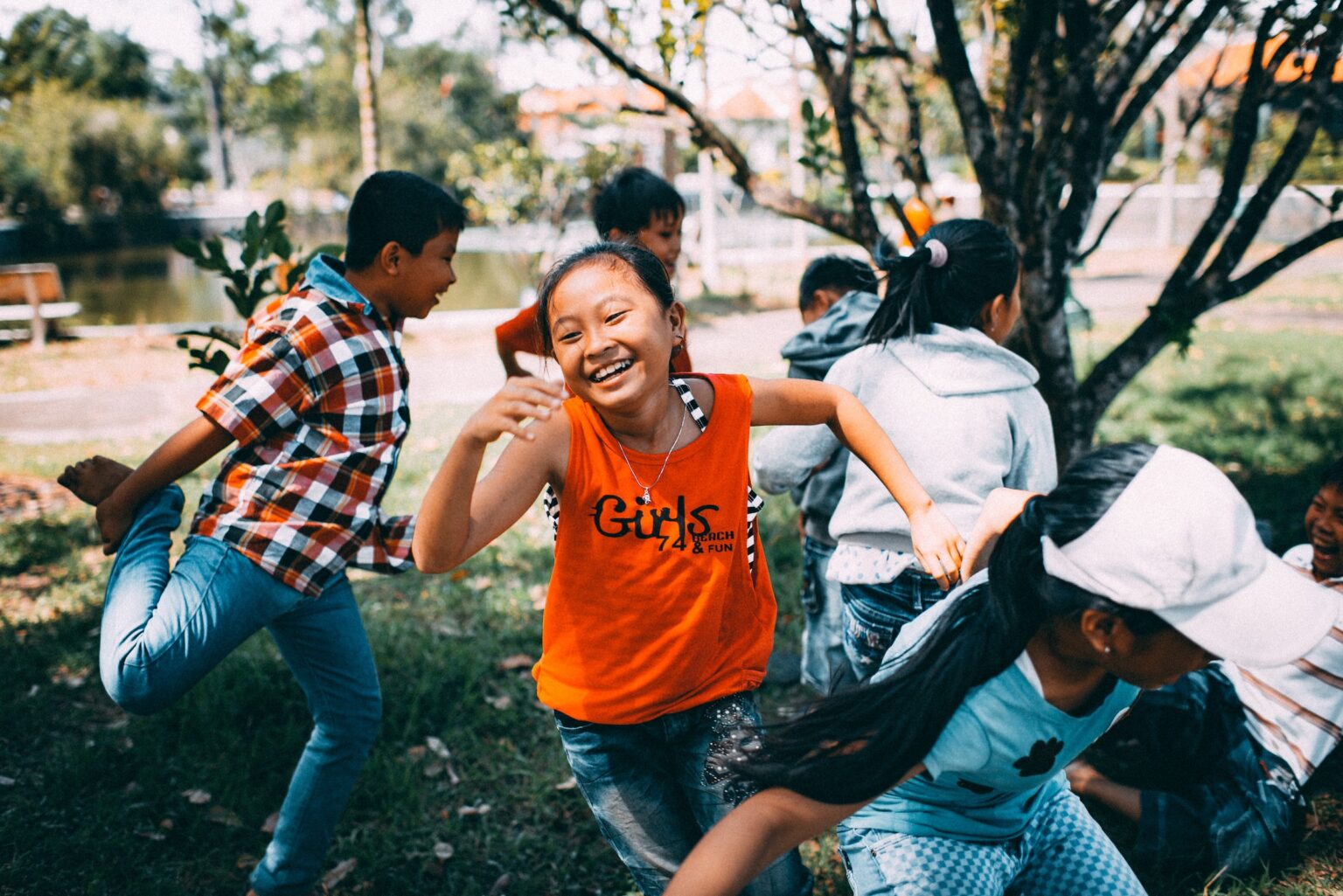
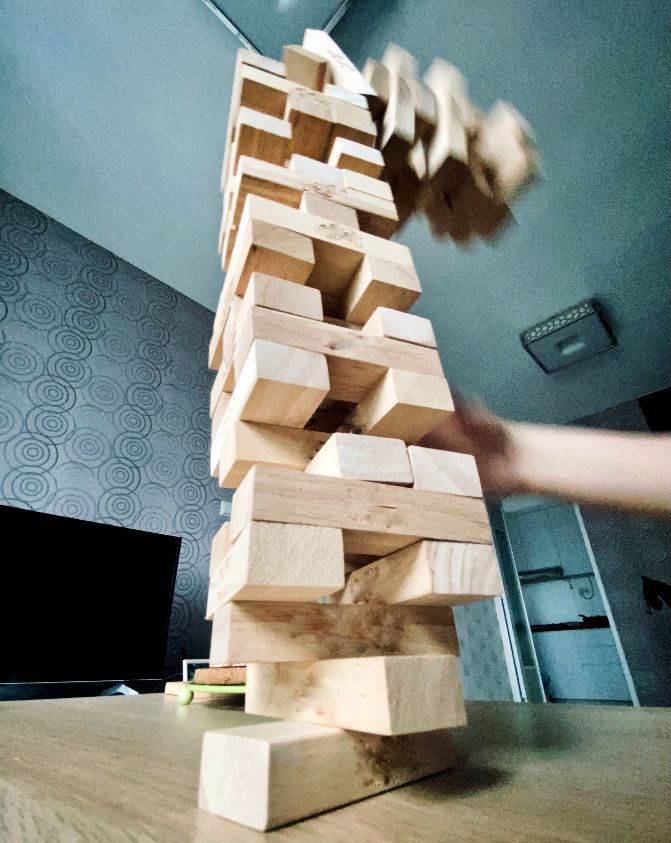

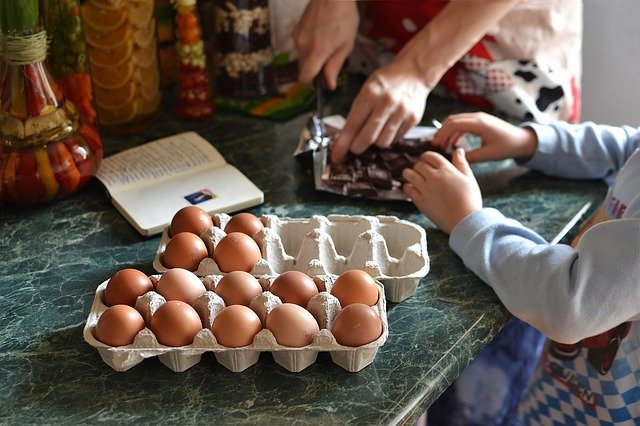

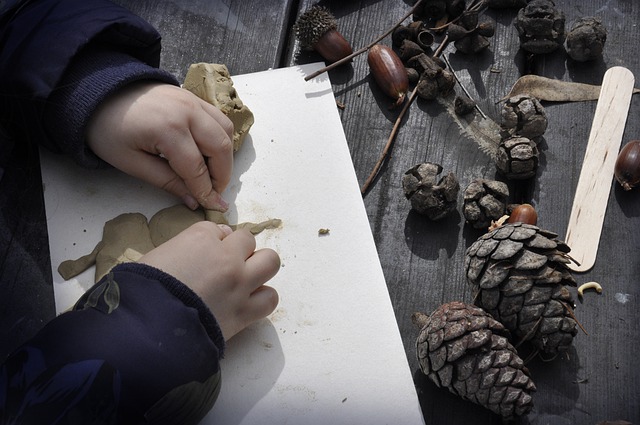

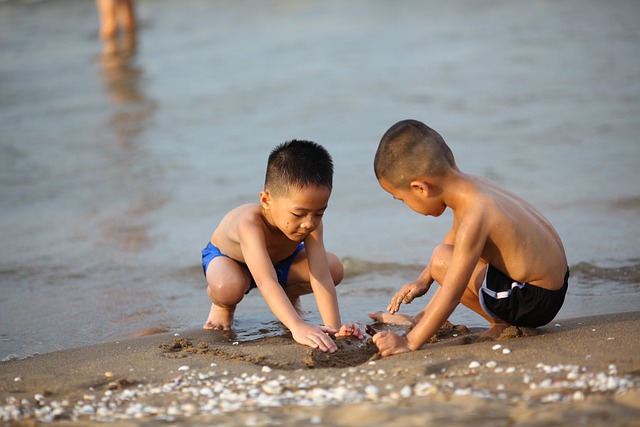


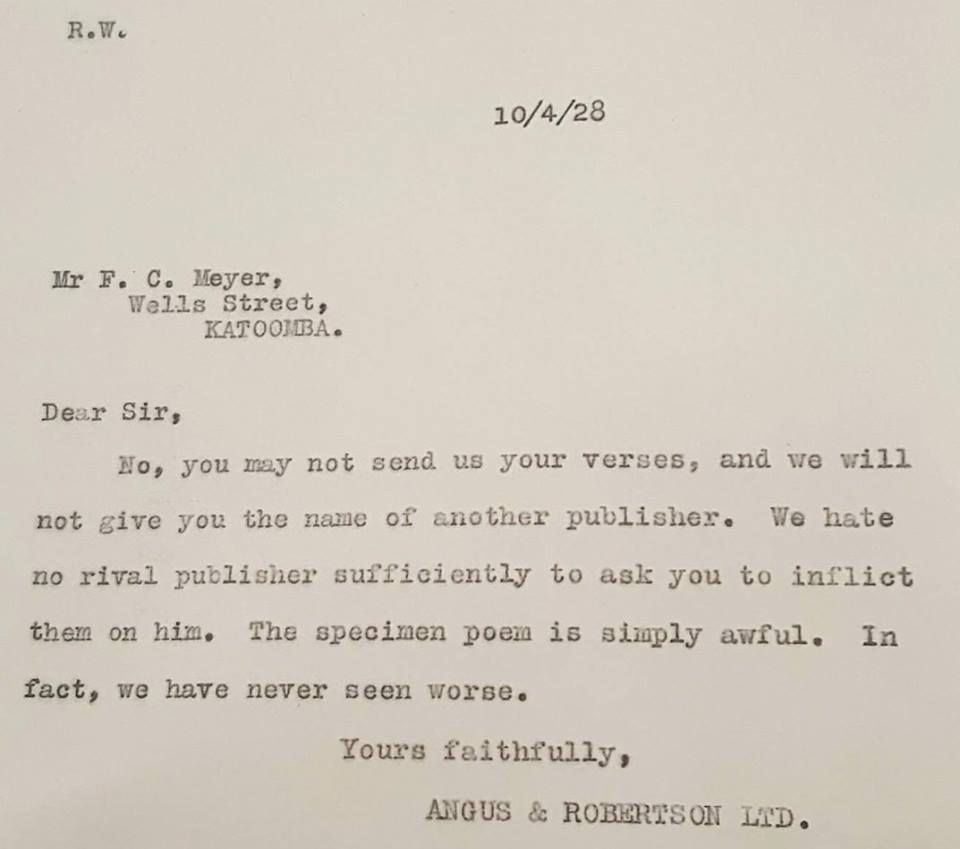

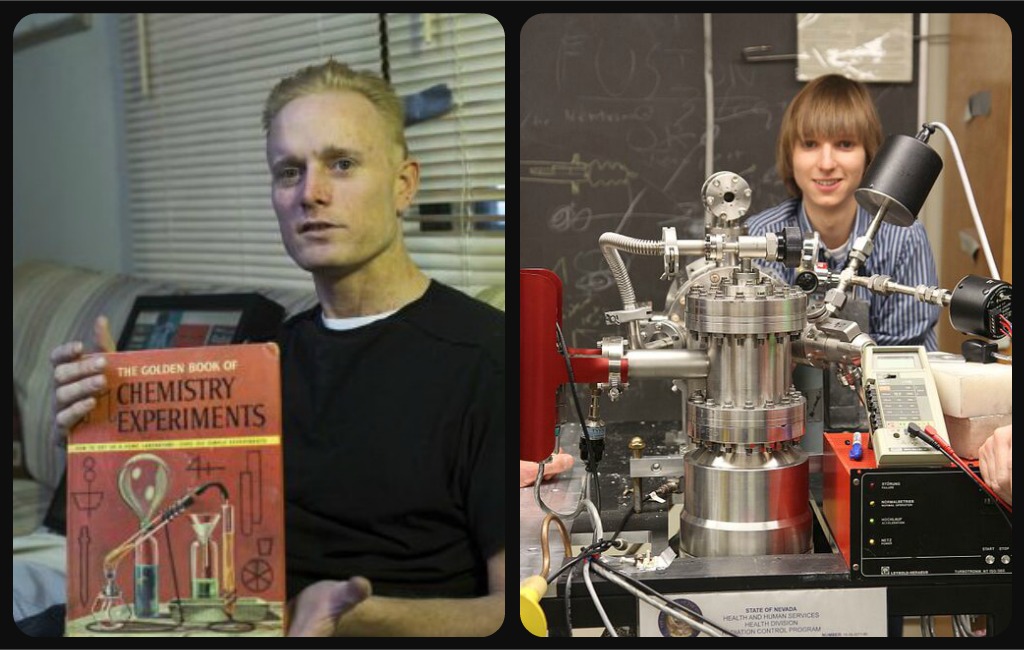
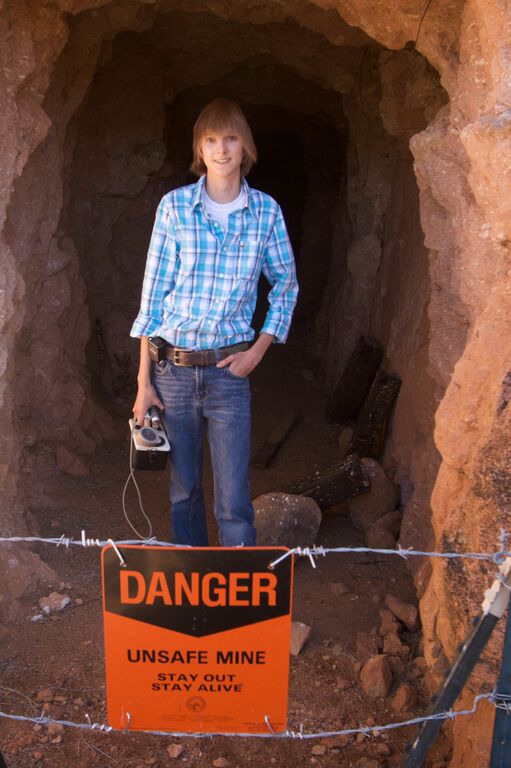
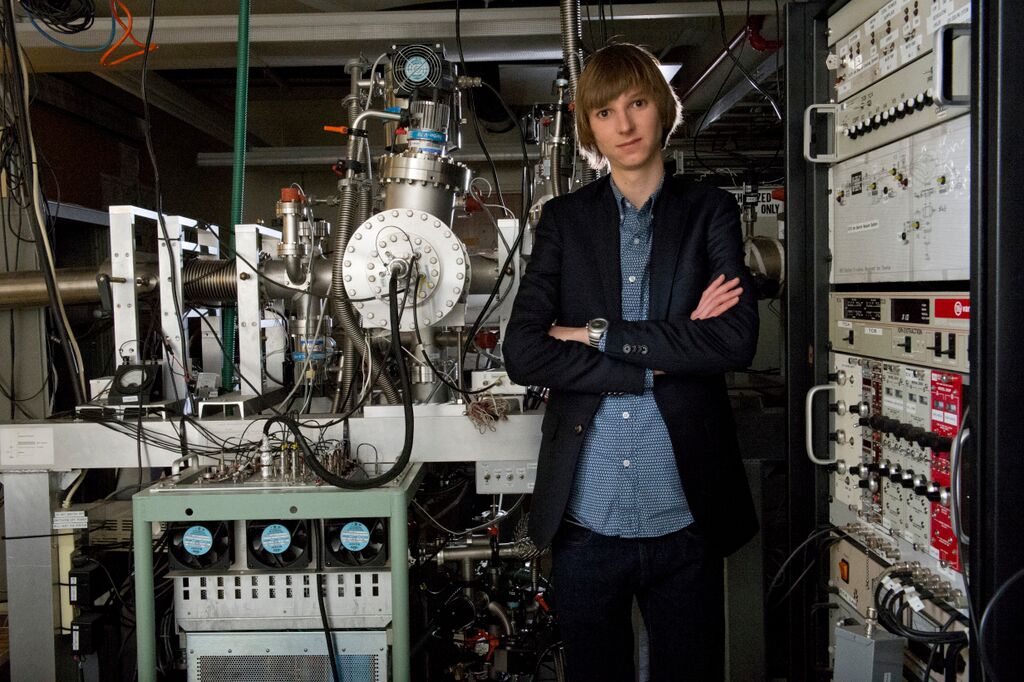

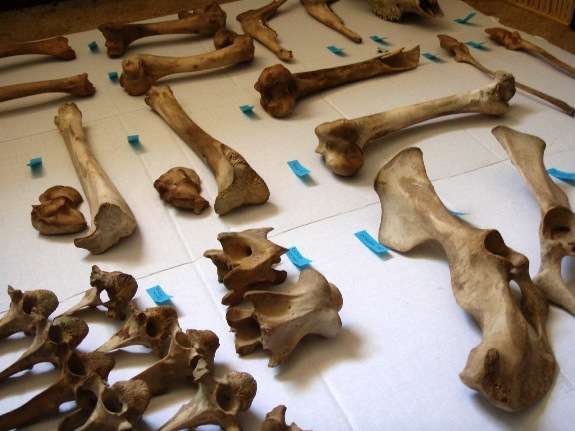
 ,
,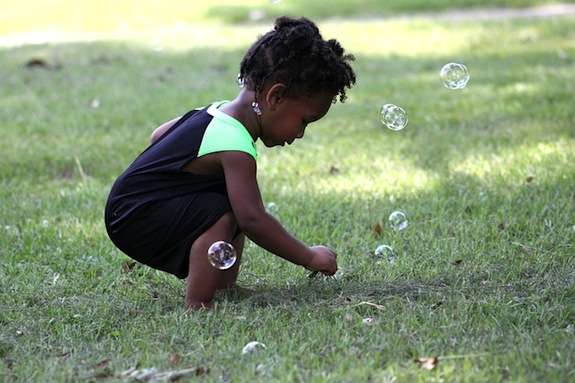


 , a group of students at the Sudbury Valley School approached him saying they wanted to learn arithmetic. He tried to dissuade them, explaining that they’d need to meet twice a week for hour and a half each session, plus do homework. The students agreed. In the school library, Greenberg found a math book written in 1898 that was perfect in its simplicity. Memorization, exercises, and quizzes were not ordinarily part of the school day for these students, but they arrived on time, did their homework, and took part eagerly. Greenberg reflects, “In twenty weeks, after twenty contact hours, they had covered it all. Six year’s worth. Every one of them knew the material cold.” A week later he described what he regarded as a miracle to a friend, Alan White, who had worked as a math specialist in public schools. White wasn’t surprised. He said, “…everyone knows that the subject matter itself isn’t that hard. What’s hard, virtually impossible, is beating it into the heads of youngsters who hate every step. The only way we have a ghost of a chance is to hammer away at the stuff bit by bit every day for years. Even then it does not work. Most of the sixth graders are mathematical illiterates. Give me a kid who wants to learn the stuff—well, twenty hours or so makes sense.”
 that we’re schooled to express math in formal terms, but that’s not necessary for most of us—no matter what careers we choose. People who rely on mental math in their everyday lives are shown to have an accuracy rate around 98 percent, yet when they’re challenged to do the same math symbolically their performance is closer to 37 percent.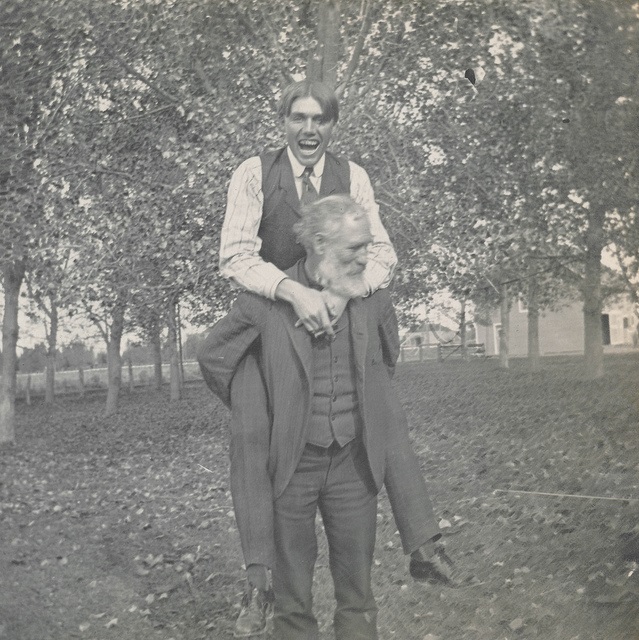


 ,
,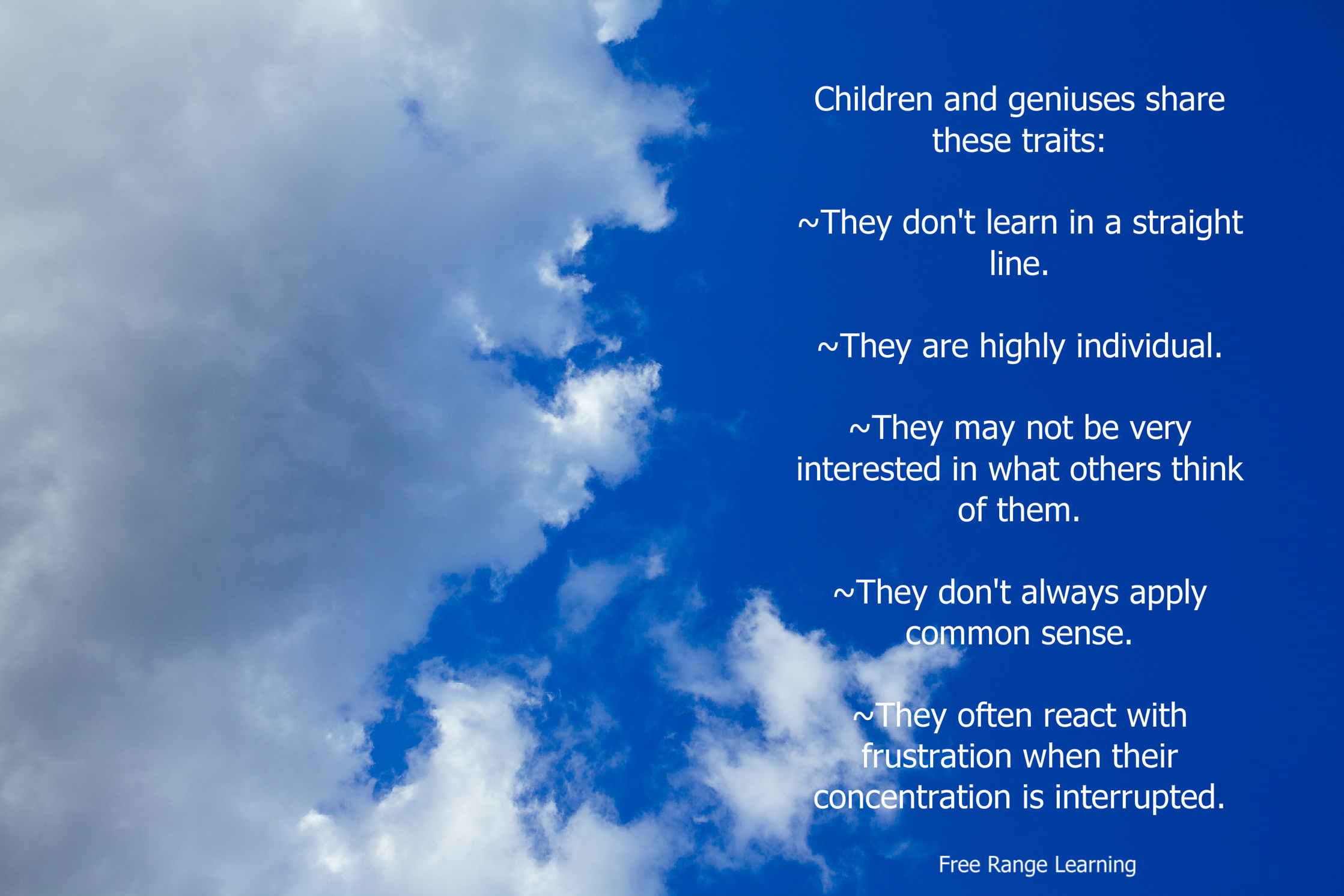

 by
by  by John J. Ratey for more on this.) Active, talkative, curious children aren’t “bad.” They’re normal.
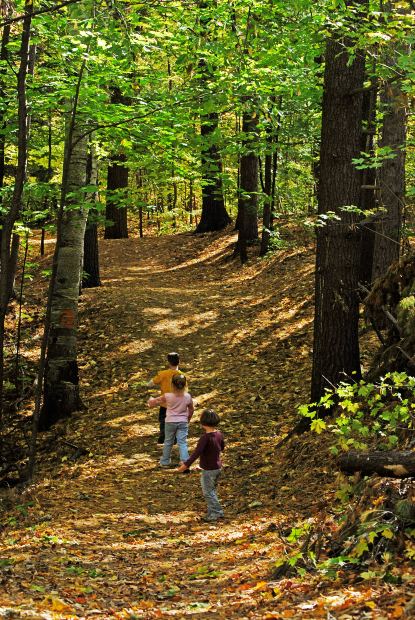

 by Peter Gray and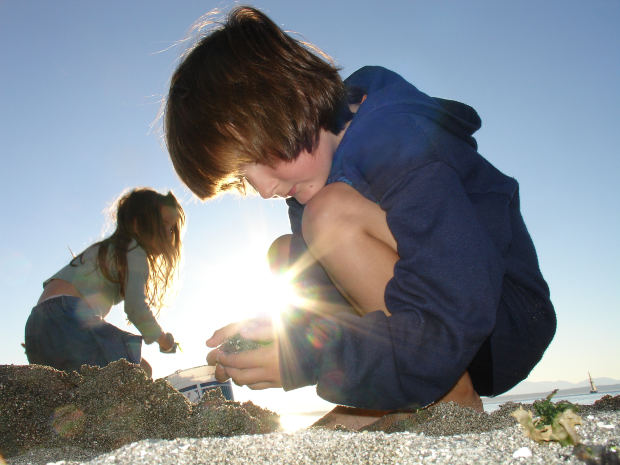

 , first names gradually move down in social class. Upper classes adopt newer names initially (according to the book, the wealthy launched names like Amber, Brittany, and Crystal). Once those names enter common usage, the upper classes shift their preferences to other first names. But overall, the
 Laura Grace Weldon