Don’t Sit Up Straight: Why Natural Posture May Be Better

natural posture, don't sit up straight, stress relief, trauma relief, body wisdom,

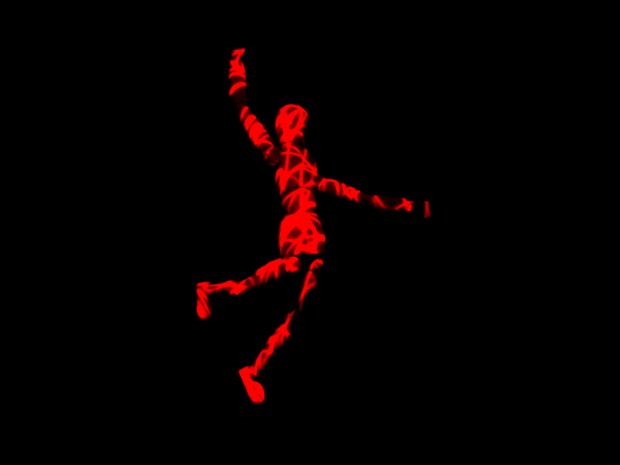
Pondering the skeleton within (Image CC by 2.0 Dreaming in the deep south)

I come from a family of slouchers and after a typical day at the computer I have ample reason to worry I’ll develop the dowager’s hump my grandmother had by the time she was in her late 50s. Worse, my husband recently required back surgery due to longstanding problems after a car accident.

That’s why I’m on a quest to find out all I can about our spines and our posture. It has taken me in some unexpected directions. Here are some crumbs along this trail.

First off, don’t sit or stand up straight. At least not the way we think is correct, with our shoulders back and chins held high. That, my friends, is not remotely natural no matter what your mother or your gym teacher or your fitness coach told you. I learned this from a book with gorgeous photographs of people all over the world engaged in often strenuous tasks, yet moving with posture that is graceful and perfectly supported — 8 Steps to a Pain-Free Back: Natural Posture Solutions for Pain in the Back, Neck, Shoulder, Hip, Knee, and Foot. The title doesn’t hint at how important this book is for those of us who don’t have back pain, but nonetheless plan to continue using our spines. The author, Esther Gokhale, teaches what she calls “primal posture.” Her book is packed with more than inspiring images. It explains how we can sit, stand, walk, and lie down in ways that contribute to our overall health and well-being. For example, by using a postural method she calls “stretch sitting.” She gives a brief intro in the following video, instruction starts about 4:20.

Next, all the fuss about building muscle doesn’t get to the core of the issue. Toned abs can’t replace strong, well-aligned bones. I learned more about this from another amazing book Natural Posture for Pain-Free Living: The Practice of Mindful Alignment by Kathleen Porter Ms. Porter explains that children in the non-industrialized world naturally sit and stand with aligned posture they maintain their entire lives without the neck, spine, and leg problems that plague people in the developed world. She also contends that a child’s posture and body awareness supports learning.

Why do we have so many slumped kids and achy adults in industrialized countries? Our fixation on TV and computer screens may be part of the problem. But Ms. Porter thinks it starts earlier. She notes that the design of car seats, strollers, and baby seats work against an infant’s developing posture. (She offers one solution, called a Baby Wedgie.)

I suspect it has something to do with how little free play today’s kids enjoy, a time when they can engage in brain-boosting and spine stretching movement. A recent study of 4 million U.S. preschool-aged children found that almost half were not taken outdoors to play on a daily basis, probably because we’re busy carting those kids around in car seats that incorrectly position their spines. Ms. Porter explains how to raise kids with healthy posture in her book Sad Dog, Happy Dog: How Poor Posture Affects Your Child’s Health and What You Can Do About It. The following video does a good job of showing how to grow up with naturally aligned posture.

And finally, it’s worth considering how our bodies react to strong emotion.

During frightening, painful, or otherwise highly stressful experiences our bodies are flooded with chemicals preparing us to react physically. Most often our response, in today’s world, is not physical. We aren’t running away from or fighting off predators as our ancient ancestors did, although our bodies respond in the same way (the “fight or flight” response). We staunch our physical impulses and sit still during all sorts of stressors, remaining immobile during a painful medical procedure, while the boss politely tells us we’re going to be laid off, or when our car is nearly hit on the highway. Experts in trauma tell us that mentally processing a frightening or powerfully upsetting experience doesn’t always resolve it. The bodily movements we wanted to take, but didn’t, are still locked within. There they can cause all sorts of long-term problems, including back pain. (Check out what movement can help alleviate this stress.)

I’m still learning about this as I read remarkable books by Peter A. Levine. The first one I waded through is geared more toward physical therapists and psychotherapists, but still highly relevant for the layperson. I stumbled on it initially because I loved the title’s implication, In an Unspoken Voice: How the Body Releases Trauma and Restores Goodness. It’s one of those books to read with a highlighter in hand. Now I’m reading one of his far more accessible books, Trauma-Proofing Your Kids: A Parents’ Guide for Instilling Confidence, Joy and Resilience, which I heartily recommend. It casts a bright light on experiences adults may consider average, but which can turn into long-term trouble for kids (masquerading as behavior problems, hyperactivity, anxiety, or depression) unless we know how to help them deal with it.

I love the way seeking out information tends to lead us in new, unanticipated directions. I’m still on the lookout for what I can learn about natural posture. And I’m working on sitting as if I had a tail, one that is behind and not under me. I swear this effort makes me look taller than my almost five foot three inch height. See, another unexpected perk!

stress relief, trauma relief, don't sit up straight, natural posture,

Originally published in Wired.

A New Curse Word

 relax your words,

We hear it all the time. Chances are we say it all the time.

I swear (hah!) it’s the curse of our era.

What’s up with you?

Busy

How’s work?

Busy

How are the kids?

Busy

What was your vacation like?

Busy

What’s next week like for you?

Busy

Ack!

We are busy, pulled in so many directions that we don’t have words powerful enough to describe how time starved we feel. Swamped, hectic, rushed, hurried, slammed, or crazy busy can’t come close.

I suspect that we aren’t busier, in terms of obligations using up our time, than someone our age might have been 100 years ago. Chances are those folks kept the house warm with coal shoveled into a furnace; worked long hours for poor pay in factories, mines, slaughterhouses or worse; traveled at low speeds to get where they were going; struggled to stay healthy in a population easily ravaged by flu, tuberculosis, polio, and other diseases; and put a lot of hands-on hours looking after their homes and families. Talk about busy.

But there’s something going on, because so many of us are constantly overwhelmed. I planned to have some handy studies to cite but the books I meant to consult, The Distraction Addiction and Time Warped were overdue before I’d gotten more than a few chapters in. (Partially the fault of more alluring library books like Someone, The Name of the WindAnd the Mountains Echoed.) And I was busy!

Since the sun’s magnetic field is about to flip, I’d be happy to blame our time hunger on a wavering magnetic sheet and extra cosmic rays but science tells us there’s not a noticeable effect.

Mostly, I’m tempted to point the finger at all those things fracturing our attention. I’m pretty sure that ample time for daydreaming and contemplation is essential to a sense of peace, no matter what’s going on in our lives.

Which gets me back to the curse word of our times, busy. I’ve decided that using it is a form of negative self-talk. So I’m not saying it anymore. It is banished from my vocabulary.

My friend Margaret is sure that our perception of time will slow down to a more manageable pace if we replace frantically busy words with words that describe a slower, more relaxed attitude. Maybe then our lives will slow down too. She suggests words like,

meander

amble

mosey

saunter

dawdle

You may be flinging yourself from store to store to get errands done. But consider describing it to yourself as strolling through stores, pondering some purchases, relaxing in check-out lines. A time-shift may just happen.

But give that attitude shift time, lots of room-to-stretch time.

no time, slow vocabulary, slow conversation, self-talk

Vagus Overusers Anonymous


vagus nerve peace, vagus nerve calm, vagus nerve relaxation, sigh for relaxation,

moonglowlilly.deviantart.com

sigh

There I go again, sighing. Most of the time I don’t know I’m doing it but thanks to my family I’m aware that I emit plenty of audible exhales.

My grandmother was a chronic sigher.  Each time she sat down, air rushed out of her mouth. It just seemed like an intrinsic part of her mechanism. A decade or two later my mother became a sigher as well. I should have realized the same fate would eventually strike me. I persist in thinking it’s a phase. Surely the women in my line sighed for the same reasons everyone else does—blowing off stress, expressing relief, giving in to exhaustion. Maybe they just had more than their fair share of sigh-worthy burdens.

There are good body-based reasons to sigh. When we’re stressed or fatigued our breathing is less variable. That’s not healthy. Our lungs, like the rest of our bodies, operate best dynamically. Our respiratory function becomes less efficient if we breathe in one state too long. A deep sigh resets breathing, loosening the lung’s air sacs and providing a feeling of relief.

More importantly, a deep sigh also stimulates the vagus nerve. We know all about the flight-or-flight response, which is controlled by the parasympathetic nervous system. In that state our stress hormones are turned way up. We’re jittery, impulsive, and cued to react to stress. When we are relaxed, the opposite system, the parasympathetic nervous system is active. The vagus nerve is a primary stimulator of this feel-good nervous system, operating via the neurotransmitter acetylcholine. This neurotransmitter promotes relaxation and a feeling of well-being. That’s why good deep breaths are linked to the stress-quelling results found with the Relaxation Response as well as more traditional meditation. Acetylcholine also has to do with learning, memory, even reduced inflammation. So stimulating your vagus nerve is great for brain AND body.

Not ready to sigh just yet?

Well, Dacher Keltner, psychology professor and Director of the Greater Good Science Center says that the vagus nerve is responsible for much more. Biggies like empathy and who we are as a species. In his book, Born to Be Good: The Science of a Meaningful Life* he explains that the vagus nerve,

…resides in the chest and, when activated, produces a feeling of spreading, liquid warmth in the chest and a lump in the throat.  The vagus nerve…originates in the top of the spinal cord and then winds its way through the body…, connecting up to facial muscle tissue, muscles that are involved in vocalization, the heart, the lungs, the kidneys and liver, and the digestive organs. In a series of controversial papers, physiological psychologist Steve Porges has made the case that the vagus nerve is the nerve of compassion, the body’s caretaking organ.

…Porges notes that the vagus nerve innervates the muscle groups of communicative systems involved in caretaking – the facial musculature and vocal apparatus. In our research, for example, we have found that people systematically sigh – little quarter-second, breathy expressions of concern and understanding – when listening to another person describe an experience of suffering. The sigh is a primordial exhalation, calming the sigher’s flight/flight physiology, and a trigger of comfort and trust, our study found, in the speaker. When we sigh in soothing fashion, or reassure others in distress with our concerned gaze or oblique eyebrows, the vagus nerve is doing its work, stimulating the muscles of the throat, mouth, face, and tongue to emit soothing displays of concern and reassurance.

Second, the vagus nerve is the primary brake on our heart rate.  Without activation of the vagus nerve, your heart would fire on average at about 115 beats per minute, instead of the more typical 72 beats per minute. The vagus nerve helps slow the heart rate down. When we are angry or fearful, our heart races, literally jumping five to ten beats per minute, distributing blood to various muscle groups, preparing the body for fight or flight. The vagus nerve does the opposite, reducing our heart rate to a more peaceful pace, enhancing the likelihood of gentle contact in close proximity with others.

Third, the vagus nerve is directly connected to rich networks of oxytocin receptors, those neuropeptides intimately involved in the experience of trust and love. As the vagus nerve fires, stimulating affiliative vocalizations and calmer cardiovascular physiology, presumably it triggers the release of oxytocin, sending signals of warmth, trust, and devotion throughout the brain and body, and ultimately, to other people.

Finally, the vagus nerve is unique to mammals…as caretaking began to define a new class of species – mammals – a region of the nervous system, the vagus nerve, emerged evolutionarily to help support this new category of behavior.

I’m sticking with what the body knows. I’ll be activating my vagus nerve, feeling calm and relaxed. Vagus Overusers Anonymous here I come. sigh

*Portions quoted from pages 228-230 of Keltner’s wonderful book. Read the whole thing!


Escaping Into Novels

good novels, book addict, library addict, book zombie, novel recommendations,

fictionchick.deviantart.com

Books have been my escape mechanism ever since I started reading as a child. I’d load up with all the books I could carry from the library with absolute glee, launching into the first one in the backseat on our drive home. I couldn’t wait for the power of a story to overtake me.  While reading I was completely oblivious of my surroundings, caught up in another world entirely. This got me into trouble at school plenty of times. I’d read after getting an assignment done, never noticing as the class moved on to spelling or math or even lunch. That’s the down side to being what I call a book zombie.

I continue to have a pretty advanced case of library addiction and plunder the stacks on a weekly basis. Unlike my earliest years, I mostly read non-fiction. I don’t know why I’ve come to associate facts with the reading equivalent of a meal, necessary and good for me in a way that dessert is not. That doesn’t mean I don’t indulge in novels. In my reading-intensive life I usually stuff in a novel a week, plus several non-fiction books (and lots of online reading).

But this week I haven’t opened a single non-fiction book. I’m in complete escape mode—all dessert. That’s because my beloved husband has been in the hospital for some extensive spinal surgery. That first day I relied on a stack of novels to transport me away from his nearly seven hour surgery plus many more hours of waiting for him to get out of recovery. The next few days I found that, between visits, I didn’t have much gumption to get my work done. Okay, no gumption whatsoever. I kept sneaking back into novels where I lingered quite happily for hours. Thank goodness I stocked up. It’s like having a whole pantry full of goodies.

Here are a few I’ve been reading that you might enjoy.

Mr. Penumbra’s 24 Hour Bookstore by Robin Sloan is a clever and mysterious book. It’s a quick read but not remotely fluffy. On the surface it’s about the way the love of books intersects with the might of today’s computing power. But it’s also about magic, mystery, the awesomeness of Google, and the singular meaning of real relationships.  (Five stars!)

Truth in Advertising by John Kenney is sharp and funny. It’s follows a man whose current challenge is producing a diaper commercial, whose personal life is barely perceptible, and who takes a sardonic view of anything remotely sentimental. The passages skewering corporate absurdities and fast forward trendiness are delicious. That the story ends on a sentimental note provides a perfect balance. (Five stars!)

Tell the Wolves I’m Home by Carol Rifka Brunt. Set in the late 1980′s, this book is told through the eyes of an adolescent girl who had a close relationship with an uncle who recently died of AIDS. A few days after his funeral she receives a strange package, an artful teapot she and her uncle always used when they got together. It was sent by a mysterious man who asks to be her friend. And so begins an unusual relationship that teaches the girl, her family, and this man more than they might have imagined about forgiveness, love, adventure, and being true to oneself. Compellingly written and insightful, this story lingers. I can’t remember loving characters as much as I loved this girl’s uncle and the man who becomes her friend.  (Five stars!)

The 100-Year-Old Man Who Climbed Out the Window and Disappeared by Jonas Jonasson is translated from the Swedish language and has sold three million copies. As the title suggests, the tale has to do with an elderly gent who runs away. His life story happens to interconnect with major political happenings around the world, Forrest Gump-style, although this main character is far less innocent especially where explosions are concerned.   It’s a bit of a history lesson, entirely beyond credulity, but nonetheless entertaining. I’m guessing a movie will be forthcoming. (Four stars)

The House at Tyneford by Natasha Solomons isn’t my usual read. I am allergic to most anything with “romance” as a major plot point. But I read a review noting that this is the book for Downton Abbey fans and couldn’t resist. This is meatier, in some ways, than Downton Abbey. The main character is the daughter of a wealthy, cultured Viennese family who seeks asylum in 1938. She ends up in England as a servant. Her culture shock and class shock are interesting, so is life in the remote coastal area that has a unique historic angle. (Four stars)

The Red House by Mark Haddon (author of the absolutely wonderful The Curious Incident of the Dog in the Night-Time) is about family relationships, all happening within a holiday week. The style is faintly jarring, flitting from one point of view to another, sometimes in the space of two paragraphs, but it’s also full of the moments a reader waits for, those quiet but significant insights that are illuminating. (Four stars)

Maybe I’m working my way toward a more balanced reading diet. I still don’t have the slightest urge to pick up a non-fiction books, even the ones I’m supposed to be reviewing. It feels decadent and delightful, like skipping the salad and going right for the chocolate. In a few minutes I’ll be leaving to pick my husband up from the hospital. On the way I’ll be getting his prescriptions, a shower chair, and maybe, if there’s time, books I ordered that are in at the library.

Tell me what YOU are reading so I have more reasons to indulge.

Free Fix For What Troubles Us

walking cures trauma, right way to walk, walk for inspiration, body-based trauma recovery, trauma recovery, depression recovery,

jodicox.deviantart.com

Most of my adult life I’ve taken a daily walk. A lot of those walks took place while pushing a stroller or hurrying behind tricycles. Now I walk while holding the leashes of three dogs on a rural road where vehicles are rare (when they pass they do so at high dog-frightening speeds). I try to use walks as a way of decompressing while paying attention to the moment I’m in rather than mulling over my current worries.

Apparently I could be getting much more from my walks. So could you.

I learned this in a roundabout way. I’ve been reading a lot the last few years about how we humans process trauma. What we perceive as traumatic can be any experience of fear or pain in which we feel helpless. This happens more often than we might imagine, particular in our earliest years. Consider being held down for a medical procedure as a small child. People loom over us, their words barely understood because we’re afraid or hurting, and we’re completely vulnerable. Trauma can be entirely emotional in nature too— sudden job loss or betrayal by a loved one or any of life’s common cruelties.

Normally, the support of people who care about us helps to ease trauma we’ve experienced, particularly if we’re free to exhibit shakiness and sighing along with other necessary bodily reactions. Plus, truly restful sleep helps to cool the heat of most traumas. As we enter the REM state of sleep, when our eyes zip back and forth under our eyelids, we’re processing stressors while refreshing ourselves for the upcoming day. (Even the happiest people have more negative than positive dreams, indicating that the dream state is a natural time to work through stressors.) Those who suffer from depression or PTSD often have disrupted sleep, leaving them with a build-up a unrelieved stress and trauma.

Talk therapy for trauma is important, yet research shows us that it’s not all in our heads. Trauma lodges in our subconscious and our bodies as well. That’s why innovative therapies such as Somatic ExperiencingEFT, and EMDR are so helpful.

As biologist Robert Sapolsky pointed out in Why Zebras Don’t Get Ulcers , despite constant vigilance, zebras still witness members of their herd, at times their own young, being torn apart and eaten by predators. Although animals are regularly exposed to such traumatic events, they don’t suffer from the health effects of chronic stress as humans do.   Are humans weaker? Hardly. We’re as self-healing as any other creature. Nature’s wisdom allows us to recover quite nicely from illness and injury. Nearly every generation of our ancestors have overcome hunger, disease, accidents, and yes, psychological trauma too. Chances are in the hunter-gatherer era, which made up 99 percent of human history, people could count on rituals to ease psychological trauma after getting through a famine, an attack, or an accident. Those rituals often involved dancing and drumming. And that’s where I get back to walking, because I discovered the mention of drumming and dancing as trauma-recovery methods in a book with an unfortunately self-help-y title, Walking Your Blues Away by Thom Hartmann.

Hartmann points out that such rituals are bilateral activities. So are many of the body-based trauma healing methods I mentioned. These methods all use bilateral movement while evoking what distresses us, dissipating the strong “charge” associated with trauma throughout the mind/body. Hartmann explains that bilateral movement (even of the eyes) is a fundamental and elegant mechanism for healing trauma.

In its simplest form, this mechanism involves rhythmic side-to-side stimulation of the body. This side-to-side motion, or bilateral movement, causes nerve impulses to cross the brain from the left hemisphere to the right hemisphere and back at a specific rate or frequency. This cross-patterning produces an organic integration of left-hemisphere “thinking” function with right-hemisphere  and brain-stem “feeling” functions. This integration is a necessary precursor to emotional and intellectual healing from trauma.

Hartman says that the rhythmic left-right-left-right of walking, paired with a visual/mental process, also stimulates this internal integration. Which makes sense. Because until relatively recently in the long span of history people spent a lot of time walking. Walking away from the hunt, the battle, or any misery helped our ancestors process trauma. Even long after mankind began using the wheel, people walked a good distance every day. Walking is just one of the many ways that a more active, collaborative way of life once entirely natural to our kind helped us to operate with both hemispheres of the brain fully engaged without significant hemispheric dominance. (Check out The Whole-Brain Path to Peace for more on this.)

Hartmann writes about a way of walking that helps to release emotional charge, even reawakens motivation and inspiration. It relies on simply walking with your arms freely moving as your legs stride forward. Not talking, window shopping, listening to music through earbuds, or walking with arms restricted (by strollers, leashes, carried items). Here’s the general method.

1. Define an issue that troubles you, even something small. If there’s no issue, then select an optimal future state for yourself and visualize it.

2. While walking, bring up the story around your issue and frame it in a few words or sentences. Notice the strength of your emotions around that story. Give it a number on a scale of 0 (don’t care) to 100 (extremely intense).  If instead you are taking an optimal future sort of walk, while holding your visualization also remember times in the past when you accomplished or felt something similar. Allow the emotional state of those positive memories to suffuse the hoped-for future state.

3. While walking, gently keep your attention on the issue or visualization/memories you’ve chosen. Walk at a relaxed speed, for about a half hour.

4. Notice how the issue changes. The charge around it may begin to fade, the memory remaining but in perspective. Let the process continue until you notice a shift in feeling. Retell the story to yourself, and again rate your emotions on a scale of 0 to 100. (For the story to become more useful and less painful, several walks may be required.) Whether taking an issue walk or optimal future state walk, allow yourself to feel the positive changes you’re incorporating. Stand up straighter, breathe deeply, experience the pleasure of your stride.

5. Anchor this new state by observing the new internal story and new feelings. Think of ways your new perspective is helpful to you, perhaps even framing how you might tell the story or see the future differently. You may want to create a gesture, word, or sound to anchor it further as you finish your walk. You may also want to talk to someone about it, or sketch, write a journal entry, or in other ways help yourself more firmly hold this expanded awareness.

Walking for our own peace of mind and to create new inspiration sounds wonderful. I may not be ready to give up walking with my dogs, but I’ll be out there swinging my leash-holding arms while envisioning a world of greater hemispheric balance.  What does walking or other body-based practice do for you?

resources

Walking Your Blues Away: How to Heal the Mind and Create Emotional Well-Being by Thom Hartmann

Any books by Peter Levine. The first one I read, In an Unspoken Voice: How the Body Releases Trauma and Restores Goodnesswasn’t aimed at the layperson but I was still captivated by its brilliance.

Somatics: Reawakening The Mind’s Control Of Movement, Flexibility, And Health by Thomas Hanna (his discussion of red light, green light response is illuminating) and the organization Somatic Experiencing

Focusing by Eugene Gendlin and The Focusing Institute

The EFT Manual by Gary Craig as well as the EFT organization 

Getting Past Your Past: Take Control of Your Life with Self-Help Techniques from EMDR Therapy by Francine Shapiro as well as EMDR Institute

Scared Sick: The Role of Childhood Trauma in Adult Disease by Robin Karr-Morse

Hope For Humanity: How understanding and healing trauma could solve the planetary crisis by Malcolm Hollick

The Antidote Is Awe

cure for stress, coffee ritual, easing worry, finding peace,

My husband and I seek refuge on the porch each afternoon in a ritual known simply as “time for coffee.” Somehow just out the door we’re a step away from the pull of obligations and worries. Here we feel centered by the light through the trees or the sounds of birds or the strange lumbering grace of a bumblebee in the flowers.

Our lives, and yours too, are twisted into knots so complicated we can’t see where they start or end. Those complications are made of bills to be paid, old arguments that didn’t heal, long hours and too little sleep, by endless political bluster and the fallout it causes. It’s good to let go of those tangles, even for a while.

Today on the porch we watched an insect we’d never seen before. It skittered without visible wings, its body open like the spokes on a wheel or the arms of a star. It looked improbable as an undersea creature swimming in the air. We gaped in quiet wonder until it was out of sight.

A few moments of awe are all it takes to remind us that our lives aren’t about those knots. We are pulsing, breathing wonders ourselves in a world bursting with miracles.  It takes looking closely at only one thing to see those miracles, whether watching a spider spin her web or looking at fungi that seemed to spring up overnight.  We exist for so short a time on this beautiful planet. We clamor over concerns when our lives may be better measured by how much awe we allow ourselves.

I have things to do, but it’s time for coffee. I’m heading for the porch. Hope you do the same.

We are, perhaps, uniquely among the earth’s creatures, the worrying animal. We worry away our lives, fearing the future, discontent with the present, unable to take in the idea of dying, unable to sit still.   Lewis Thomas 

Reprint from my farm site Bit of Earth Farm

Staring Down Worry

mystical experience of fear, metaphysical encounter with darkness, overcoming evil, facing worry, staring at Satan, prince of darkness in my room,

Image courtesy of pitrisek.deviantart.com

Something happened the night Worry appeared to me.

Some of us are chronic worriers. There’s probably an adaptive reason for this, since humans who envisioned potential dangers would be more likely to survive and pass on their genes. But saber-toothed tigers aren’t lurking by our front doors these days. I know for a fact that worry generates misery while producing absolutely no benefit. Giving it up, however, isn’t an easy matter. Worry runs in our heads like movies of disaster to come, unbidden yet powerful, making some of us wary of the smallest choices.

I worried from the earliest time I can remember. It may have an adaptive start in my life too. As a tiny child I spent many nights struggling to breathe through asthma attacks. When I was five years old I got a bit of food lodged in my esophagus. When my worried mother called the doctor he said it couldn’t possibly still be stuck hours later, I was just overreacting. I stayed awake all night spitting my saliva into a bowl, since even a moment’s inattention caused it to run down my windpipe and sent me into fits of choking. The next morning my parents took me to the ER where a surgeon removed a very stuck bit of food. The year I turned nine my grandparents all died, catapulting me into years of obsessive worry that everyone else I loved would die too. I was assaulted by an adult when I was 13, telling no one until years later. The focus of my worry widened as I spent years searching for the causes of evil and suffering. Worry continued to be my companion when I hit my 20’s. Each of my babies were born with medical problems. The unknown dangers threatening even the most innocent lives suddenly resided in my house. Chances are my chronic insomnia has roots in all this worry.

One night as I lay awake worrying, I had an experience that profoundly changed me. That night I had plenty of things to worry about: serious concerns about my children’s health, our finances, and other problems. Normally I fought off worry with gratitude—focusing on the comfort of my family sleeping safely nearby and the many blessings in my life. But worry was there haunting my mind and hollowing my body.

Sudden as a car crash, something happened.

I know it sounds bizarre but it was as real as the lamp on my desk is now. I became aware of a huge black column next to my bed. It was comprised of the most immense energy I’d ever experienced. It was dark and powerful with a presence that seemed alive and completely aware of my thoughts.

I had the sense that it was of such infinite size and strength that it went through the floor and out the roof, stretching far in both directions. I should have been more frightened, but the moment this column appeared I realized, as if the message hit all my cells at once, that I had summoned this darkness.

It was born of my own intense worry. It was a profound lesson that went through me the way wisdom does, filling not just our brains but also our bodies and souls. Lying there, I resolved to bring forth every ounce of light I could muster.

The instant I thought to do this, whatever that column was disappeared.

I woke my husband to tell him. He kindly assured me that I was nuts. Until this post I’ve only told one other friend. But in today’s atmosphere of worry, I wanted to share this image—of fear so huge that it manifests next to you. It taught me that worry is a kind of unintentional evil. It presupposes things will go wrong. It’s the opposite of faith.

I’m not entirely cured of worrying nor would I ever change those earlier years of worry. They’ve made me stronger, more open to the beauty found just beyond despair, and left me with a positive quest. But ever since that moment, years ago, I have made a conscious effort to reorient myself.

Ironically, my family has been through times more difficult than I could have imagined back when this happened—crime, financial hardship, loss, and grief. But I know the antidote—to shine forth with all the light I can. Some days I’m practically optimism’s parasite.

But really, if all my moments of hope coalesce into some kind of vision, I can’t wait to see it.

metaphysical experience of evil, starting at evil, facing Satan, summoning fear, transcending worry, transcending fear, overcoming worry, renewing optimism,

Image courtesy of m0thyyku.deviantart.com

Healing The Next Generation

reducing parental stress, epigenics, improving the future,

Image courtesy of corazondedios.deviantart.com

The science of epigenetics shows that the choices we make today will resonate in the minds and bodies of our grandchildren.

How? Each of us has biochemical markers that signal our genes in response to input such as nutrients, toxins, even behavior. As a result potential gene expression is switched on or off.

epigenic healing, epigenics and society, parental stress and children,

Nucleosome Wikipedia

These epigenetic changes persist well after the original stimulus for change is gone. Some of them pass on through generations like biologic memories of what our ancestors ate and breathed, as well has how they felt about their experiences. This also means that our personal choices today can become a living inheritance sent on to those we won’t live to see.

As Duke University genetics researcher Randy Jirtle, Ph. D recently commented,

We can no longer argue whether genes or environment has a greater impact on our health and development, because both are inextricably linked. Each nutrient, each interaction, each experience can manifest itself through biochemical changes that ultimately dictate gene expression, whether at birth or 40 years down the road.

epigenic changes, effects of parental nurturance,

Image courtesy of corazondedios.deviantart.com

Much of the research about epigenetics correlates to earlier studies showing that parental stress has a negative and long-lasting effect on their children, often well into adulthood. That’s true of the effect of prenatal stress, parental stress during early childhood,  parental depression, conflict in the home, unemployment, poverty, and homelessness. Epigenetics may, in part, explain the strong correlation between these stressors and resulting poor mental and physical health in the next generation.

But there’s good news too. Studies have shown that early nurturance can flip “dimmer switches” on genes related to stress, permanently shaping offspring to be calmer and better able to handle new situations. Healthier too.

healing generational depression, healing generational anxiety,

Chances are good that I was born with genes predisposing me to anxiety or depression.  My sorrowful grandmother nurtured my own mother as best she could despite very stressful circumstances. In turn, I was lovingly nurtured and well attached to my parents. As a result, these predispositions were more likely to be dimmed or switched off in me. I hope to carry on this legacy of positive epigenetic changes by gently parenting my children. Epigenetics show us that grandparents and parents can bless children to come (including foster children and adopted children) even if they don’t live to see those children.

As a society, we’ve known for a long time that serious parental stress leaves a legacy of pain into the next generation. Maybe the science of epigenetics will be enough to convince us that parental support and nurturance doesn’t just benefit the child. It also benefits society as a whole.

healing future generations,

Image courtesy of corazondedios.deviantart.com

Additional resources

Epigenetics: The Ultimate Mystery of Inheritance by Richard C. Francis

The Genie in Your Genes by Dawson Church

The Genius in All of Us: New Insights into Genetics, Talent, and IQ by David Shenk

Healing Power of a Good Snort

end despair now, silly cure for bad mood, cure depression,

"Nimm dich selbst bei der Nase" ("take yourself by your nose")

 No one is upbeat all the time. Well, there are a few people but clearly they are NOT paying much attention to what’s going on around them. And admit it, none of us like their ridiculously peppy good cheer. I realize I have a lot to say about  listeningappreciating the dark stuff, the influence of our perceptions, the curative power of smiling, and dealing with life’s crap. But even the most dedicated optimist falls into a pit of despair occasionally. I’m assuming this is normal. After all, the human experience is all about contrast. Joy/pain. Elation/dread. Hope/trepidation. And we don’t come equipped with mood jumper cables to recharge us.
*

Or do we? Because I’ve discovered a cure for this common malaise. 

Don’t get me wrong. I know a positive attitude takes work. But sometimes all the saintly effort in the world can’t ease melancholy. And just past melancholy lurks despair. I don’t know about you, but I fall into that dreaded Pit of Futility on occasion. My efforts seem useless, my energy sapped, the meaning of life comes up for serious questioning.  I was there recently.  This was not a chuckhole of depression.  This was a pit. Until I was cured in an instant. Let me explain.


I was sliding down a precipice without the resolve to help myself.  I went on for days wearing a fake smile and false enthusiasm to cover my wretchedness.  I was so weary that I accomplished little.  I longed for a dark cave to crawl into, but found myself dragging the cave along as I went through the day’s tasks.

Then it happened.

I was out to do errands on a Tuesday in my usual hurry. The streets near our home were clogged with workers spreading that toxic stench known as asphalt. While waiting for the flagman to wave me on I developed an asphalt-related headache. I dragged through my stops without my usual energy, mentally lashing myself for not being more efficient. To top it off I forgot something on the way home and had to stop at one of those Waystations of Overpayment, the convenience store. Another confirmation that I couldn’t get my sh*t together. Great. At the convenience store I grabbed what I needed. Yes, it was toilet paper. Of course I’d forgot to order from the co-op, forcing me to buy the evil non-recycled version in a multi-pack appropriately giant sized to deal with our large household.

After my purchase was completed I began to walk out of the door. I was carrying my overstuffed purse plus the large bag with my purchase. As I stepped to cross the threshold an older gentleman hustled up in a hurry to do a kindness. He stopped directly in the doorway, awkwardly attempting to hold the door open for me from within the entranceway. That left his body in the way of my body which was already encumbered by aforementioned purse and large shopping bag.

Stepping past him involved a bit of reconfiguring. Instead of the normal space between strangers, this doorway maneuver placed our faces a few short inches apart from one another. I composed a grateful expression and prepared to deliver my depressed person’s falsely perky “thank you” when he said something.

It was a sentence, but I didn’t catch a word of it. Maybe it was garbled, maybe accented, maybe my hearing was addled by a crinkling 12 pack of toilet paper.

So I overcompensated.

I nodded and tried to look grateful while adding a cheery but short laugh to my intended “thank you.” (That cheery laugh was supposed to indicate comprehension.) I was also simultaneously turning sideways to accommodate him, my bag, my purse and myself in the door.

Somehow this was all too complicated in my low ebb state. I was performing too many exhale efforts without inhaling at the right moment. My words and my laugh got tangled. Saliva threatened to roll out. I made an effort to keep from drooling while smiling, still attempting to toss that “thank you” out.

While my facial and verbal contortions were getting mixed up, my body insisted on breathing. That inhale was unexpectedly violent.

Inches away from this elderly man’s kindly face I SNORTED. Not a delicate snort. It was a huge unintended nasal vibration with the typical horse-y sort of snort-related facial expression. It was so loud it seemed everything around me shuddered. If there were a Richter scale for vocalizations, this sound was at least a 6.9 in the scale of damage potential.

Shocked, I skittered away to my car without seeing his reaction to my nose-related doorway thuggery. I barely got the car door closed before I let loose with hysterical laughter. Tears burst out and sprung over my smile-stretched cheeks. I imagined snort echoes still reverberating in the small store. I pictured the cashier shaking her head in consternation. I practically heard this gentleman return home saying, “Mavis, the strangest thing happened…”

Urged by my imperiled continence I started the car and headed home.  I drove past the construction site braying with laughter.  The flagman waved me on with a curious look at my wide-mouthed glee.

Strangely, I felt great. The weight of angst had completely lifted. Everyone I told the story of my depression-curing snort felt great too, probably out of relief that they weren’t along on that fateful Tuesday.

It’s absurd.   Sure we grow in strength and character from our crises, but sometimes we have to shed our pretensions of strength and act like a character.  I’m telling you, there are untapped healing powers in a finely tuned snort.


Letting Beauty Go

Beauty rarely shows herself nowadays.

It’s been years since I thought I owned her, but I remember our time together well. At first she was small, shy, and had more in common with cuteness than Beauty. Yes, I coddled her. I lavished hours on Beauty and the attention showed.

“Best not get attached to Beauty,” I was warned by people older and wiser. They told me the day would come when ordinary measures wouldn’t be enough to control her. They also told me that there was nothing I could do to change fate. Eventually Beauty and I would be parted forever.

I tried to deny it when the first chin bristles showed up. I pretended the increasing girth didn’t put me farther from Beauty. I ignored other tendencies like messy habits and gleeful snorting.

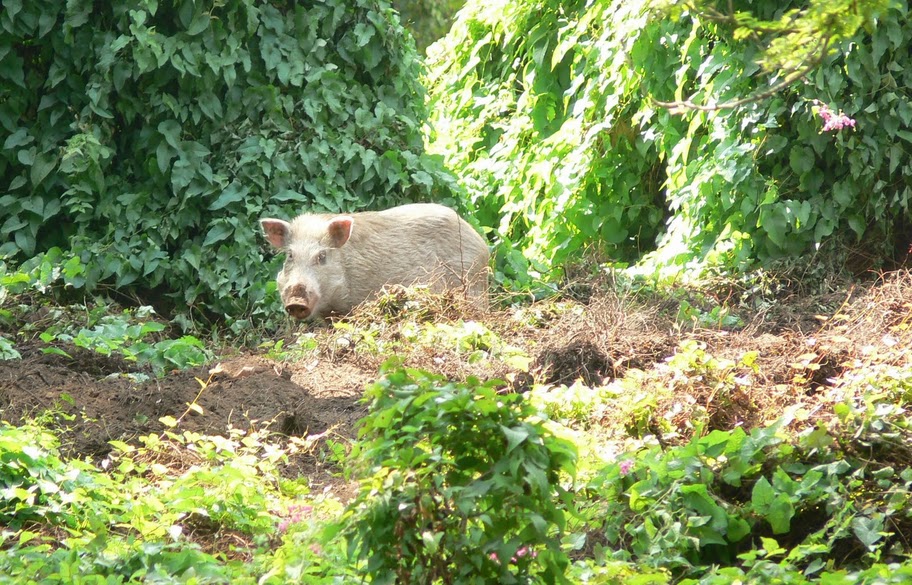
Time passed. Beauty was well on the other side of cute and would soon be taken from me for good. So I did what no one I know has ever done. I opened the gate to her pasture and made a path to the woods with apples, corn, and banana bread. Beauty was wary but followed her appetite. When she was well into the forest she heeded her instincts and kept walking toward freedom.

I don’t often get a glimpse of her these days. When Beauty shows herself I see that she is huge, bristled, her snout trembling as she smells the air. She seems gloriously happy. Let Beauty go. You’ll both be free.

*

*


Recommended post When Girls Think Their Looks Mean Everything

Woman and Pig by Wade Schuman

Free Pig