Ask The Most Powerful Question

wisdom of elders, ask the most powerful question, what should I know, is there something you want to tell me,

Image courtesy of dimkatm.deviantart.com

“I ask once or twice a year,” she told me. “But it’s a powerful question. It should only be used wisely.”

I was interviewing a woman I’ll call Ms. C. for an article on faith and spirituality. She was truly an elder. I don’t mean age-wise, although she appeared to be in her mid-seventies or beyond. By elder I mean the sort of person who lives deeply and gladly passes along what she has learned.

Ms. C. dressed up for our meeting. She wore a navy blue suit and dazzlingly patterned silk shirt, a tiny hat perched on her elaborately coiffed hair, and bright red lipstick that made her dark skin glow. The pants and sweater I’d tossed on looked pretty casual by comparison.

Ms. C talked about seeing the divine in all things. She spoke precisely, with poetic imagery, but also slid easily into humorous retorts. I felt a wondrous enlargement of spirit in her presence and was, frankly, reluctant to end our interview.

Then she mentioned that she employed the most powerful question of all.

I waited to find out what that might be.

She told me that it should be asked only when the questioner felt strong and ready for the answers. And it should only be asked of those who loved you and could be trusted to tell the truth.

She told me she asked her husband (of 42 years) every now and then. She also asked her sisters and close friends, usually when she felt prompted by some unknown impulse.

The question seems simple: “Is there something I should know?”

She said the answers it evokes are rarely simple.

When Ms. C. kept receiving important and sometimes surprising answers to that question it inspired her friends to take up the question too. She gave me a few examples.

~A neighbor was told by everyone she asked that she needed to seek medical help for a condition she thought was under control.

~A friend was advised to stop wearing clothes that were too tight and too young for her.

~A fellow churchgoer found out that his son was back on drugs.

~One person was informed that a long-standing habit of his infuriated his best friend.

~A former co-worker learned that she came across as haughty and cold, and needed to learn how to get past her shyness to let people see her warmth.

~A friend was told that a secret he thought had been buried long ago was out but no one had wanted to break the news to him.

Ms. C. says that she mostly listens to what the Quakers call the “small still voice” inside her but she has one ear open to what else she might need to know.

I tend to think there’s peace right beyond the need of answers but I won’t deny that Ms. C’s question has its uses. Nor will I deny that truth-telling feels wonderfully liberating.

Do you have a truth just itching to get free, if only a certain person would ask you?

And what about truth seeking? Will you be asking the most powerful question?
When Girls Think Their Looks Mean Everything

lookism, girls who hate their looks, moms helping girls love themselves, mean girls, geek girls,

As little girls, Elissa’s friends were rambunctious and wholly themselves. They pursued their own interests with no concern for other people’s opinions. They drew comics featuring hilarious dialogue, danced and laughed simultaneously until they fell down in breathless mirth, conducted basement science experiments, and pretended they had super powers. Their mothers talked about how freely their girls expressed themselves, grateful to have strong daughters.

Then it started.

Like a relentless viral infection, one by one these girls succumbed to our appearance-obsessed culture. Elissa watched angrily as her friends were laden with heavy new concerns. They worried about what they looked like and what others thought of them. By 11, 12, or 13 years old they hid their unique interests and suppressed their considerable talents. Instead they maintained a near constant awareness of hair, make-up, clothes, body shape, who said what, and how everyone else reacted.

Threats, screaming outbursts, bleak despair became common. And that was just their mothers’ reaction to their daughters’ behavior. Helplessly witnessing what has become a female ritual of relentless self-scrutiny causes many of us to lose it.  We know all too well that the effort to constrict oneself into a mold is exhausting.

But who can blame our girls, let alone the adult women who continue to suffer painful confidence wounds, when impossible standards are the norm?  It’s almost as if we females are set up to fail at this appearance game. Oh wait, we are. Even the Beautiful People aren’t beautiful enough.

photoshopping, mena suvari, celebrity photoshop, teen beauty,

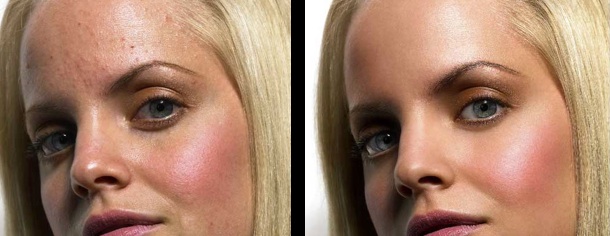
Celebrities “fail” too. Take a look at the already lovely Mena Suvari, model and actress whose acne is removed, pores eliminated, eyes brightened and skin smoothed.

Check out the before-photoshop pics of women like Kirsten Dunst, Alicia Silverstone, Christina Ricci, and others. Until they’re rendered plastic smooth and Barbie thin, they look somewhat like ordinary people.

And let’s not forget, reality shows have made transformation from ordinary to perfect an entertainment phenomenon in a society where make-overs for little girls and high heels for babies aren’t out of the question.

Image after image through their young lives, girls absorb an ever present lesson that females aren’t good enough as they are. Such lessons aren’t confined to images. Girls and women portrayed in movies are typically clad in sexualized clothes and lead one-dimensional lives.

What’s the effect?

Devastating, according to the American Psychological Association. Shame, anxiety, eating disorders, and depression. Girls judge their bodies harshly as young as the age of five.  No wonder a girl might choose keep the vitality of her true self hidden.

But there’s another side, often overlooked. Because Elissa and a few of her friends didn’t suffer (at least fully) the perils of lookism. They barreled through their pre-teen and teen years fueled by interests strong enough to hold them steady. Elissa poured her energy into a number of pursuits. She was a docent at the zoo, raised white rats, studied an ever increasing range of scientific interests, and moderated an online forum. One of her friends took up photography, becoming proficient in pinhole camera techniques and making albumen prints, while also advancing in a hockey league. Elissa noticed that girls who didn’t engage in the looks-first game were often ostracized by their more mainstream peers, but they also had strong friendships beyond school. Elissa, homeschooled through highschool, was one of those friends. She says she felt freer to follow her own interests without the pressures of school culture and advocated individuality to others.

As a teen, Elissa was angry at the influences that swayed so many of her other girlhood friends. She scorned their preoccupation with boys, clothes, body image, and interpersonal drama. But now Elissa is in her early 20’s. She’s reconnected with many of these same friends and learned a little about the adversity they suffered as they made their way through adolescence different than hers. One of her childhood friends became a mother at 15, another made multiple suicide attempts, still another struggles with bulimia. Elissa is sure the strengths from girlhood are still with all of them. She just doesn’t know how to let them know that their looks don’t define them.

Here are a few resources to light the way.

About Face

Adios Barbie

All Made Up: A Girl’s Guide to Seeing Through Celebrity Hype to Celebrate Real Beauty

Body Drama: Real Girls, Real Bodies, Real Issues, Real Answers

Body Outlaws: Rewriting the Rules of Beauty and Body Image

Can’t Buy My Love: How Advertising Changes the Way We Think and Feel

Mothers for a Human Future

New Moon Girls

Packaging Girlhood

Pink Stinks

Resolving the Confidence Crisis

Teen Voices

The Body Project: An Intimate History of American Girls

101 Ways to Help Your Daughter Love Her Body

*

*

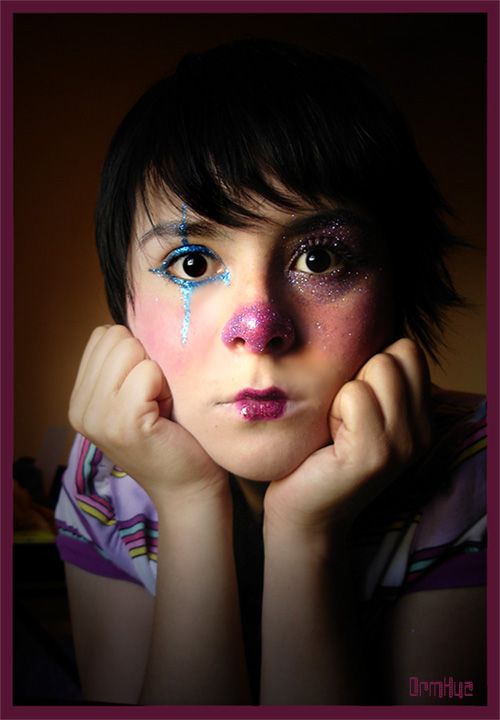
Trying to Be Happy courtesy of Orm Huz