Reading Readiness Has To Do With The Body

reading readiness, kids sit too much,

Today’s kids sit more than ever. Babies spend hours confined in car seats and carriers rather than crawling, toddling, or being carried. As they get older their days are often heavily scheduled between educational activities and organized events. Children have 35 percent less time for free play than they did a generation ago, and that’s before factoring in distractions like TV or video games.

Left to their own devices, children move. They hold hands and whirl in a circle till they fall down laughing. They beg to take part in interesting tasks with adults. They want to face challenges and try again after making mistakes. They climb, dig, and run. When they’re tired they like to be rocked or snuggled. According to the authors of A Moving Child Is A Learning Child, stifling these full body needs actually impairs their ability to learn.

Large muscle activities like climbing, running, lifting, carrying, rolling, jumping, throwing, and balancing not only build strength and coordination, they are also critical for reading and writing readiness since they develop proximal muscles (including trunk and upper arms). This in turn helps develop distal muscles in hands and fingers. Efficient coordination of large muscles progresses to the elbow, then wrist, then hand — making writing and drawing possible.

We know that our little ones walk and talk on their own timetables. No rewards or punishments are necessary to “teach” them. Yet children are expected to read, write and spell starting at five and six years old as if they develop the same way at the same time. Academics are pushed on young children with the assumption this will make them better students. This approach is not only unnecessary, it may be contributing to problems such as learning disorders, attention deficits, and long term stress.

Studies contrasting reading instruction at age five compared to instruction at age seven find earlier lessons may damage reading development. By the time children reach the age of 11, students who were instructed earlier show poorer text comprehension and less positive attitudes toward reading than children whose instruction started later.

Literacy isn’t easy. It requires children to decode shapes into sounds and words, to remember these words correctly in written and spoken form, and to understand their meaning. Allowing reading to develop naturally or teaching it later tends to create eager, lifelong readers. Why?

why pushing school-like lessons hinders learning,

Children pushed to read early (not those who naturally pick it up) tend to rely on right brain processes because that area matures more quickly. These early readers are likely to guess at unknown words using clues such as appearance, context, beginning and ending letters. Their main tactic is memorizing sight words. These are valuable methods but not a balanced approach to reading. Such children may quickly tire after reading short passages or read smoothly but have difficulty deriving meaning from what they read. The procedure they use to decode words can make the content hard to comprehend. These reading problems can persist.

On the other hand, children benefit when they learn to read naturally or are taught later. That’s because, as the left brain matures and the pathway between both hemispheres develops, it becomes easier for them to sound out words, to visualize meanings, and mentally tinker with abstractions. They memorize short sight words but sound out longer words, an approach that is less taxing. As they incorporate more words into their reading vocabulary they more easily picture and understand what they are reading.

developing eager readers,

In order for children to read, write and spell they must be developmentally ready. Some are ready at the age of four or five, some not for many years later. This readiness includes complex neurological pathways and kinesthetic awareness. It includes the proprioceptive sense developed through sensory receptors in the muscles, joints, and tendons: a form of maturation essential for a physical sense of self (even essential for learning how to modulate one’s voice and to hold objects carefully).

Such readiness isn’t created by workbooks or computer programs. It’s the result of brain maturation as well as rich experiences found in bodily sensation and movement.

These experiences happen as children play and work, particularly in ways that cross the midline. They includes expansive movements such as climbing, jumping, digging, swimming, playing hopscotch and catch, riding bikes, sweeping, running. They also include fine movements such as chopping vegetables, drawing, building, playing rhyming and clapping games, using scissors, and playing in sand. And of course there’s the essential growth that comes from snuggling, listening to stories, singing, trying new tastes,  enjoying make believe. Children are drawn to such experiences. Without these bodily experiences, warns pediatric occupational therapist Angela Hanscom,  they won’t have a strong foundation for learning. (Find out more in her book Balanced and Barefoot: How Unrestricted Outdoor Play Makes for Strong, Confident, and Capable Children.)

how to boost reading readiness,

These activities stimulate the child’s brain to develop new neural pathways. Such activities also build confidence, smooth sensory processing, and create a bank of direct experience that helps the child visualize abstract concepts. Well-intended adults may think a good use of a rainy afternoon is a long car ride to an educational exhibit. A young child is likely to derive more developmental value (and fun) from stomping in puddles and digging in mud followed by play time in the tub.

There are many other factors contributing to reading readiness. Perhaps most important is a supportive family life where play, reading, and conversation are an enjoyable part of each day. But it helps to remember that young children want to participate in the purposeful work of making meals, fixing what’s broken, and planting the garden. They also need free time without the built-in entertainment of specialized toys, television, or video games. Their development is cued to movement. These bodily experiences prepare children for the magic found when shapes become words, words become stories, and they become readers.

raising eager readers,

Portions of the post excerpted from Free Range Learning.
Book Zombie

zone out while reading, reading addict, can't stop reading, staying up late to read, tune out the world when reading,

L.G. Weldon, book zombie

book [book]  noun
1. a work of fiction or nonfiction bound within covers or digital version
zom·bie  [zom-bee] noun
1. a person whose behavior or responses are wooden, inanimate, remote
 2. an eccentric or peculiar person.


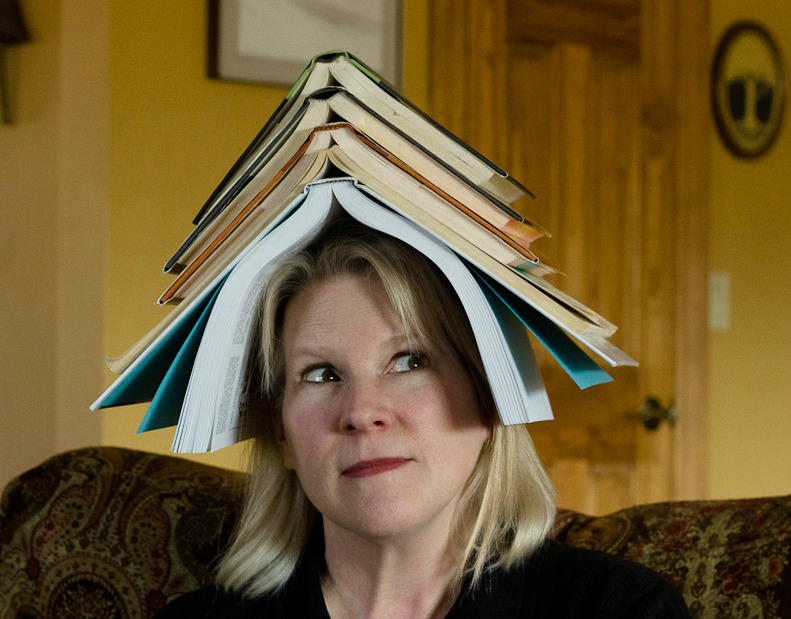
I stayed up past two a.m. last night happily churning through a book. Reading seems timeless to me, a book-related fugue state that got me in trouble in elementary school.  Many days the class moved on from reading time to math while I remained completely absorbed in a book. I’d look up to find I’d been called on to answer an equation. My brain would scramble to move from The Wolves of Willoughby Chase’s18th century manor house to third grade long division, the plight of children dealing with villians more real than dreary numbers chalked on the board.

This still causes me trouble. I have no idea how many minutes or hours have elapsed when I finally lift my eyes from the page. That’s not helpful. At night I tuck into an enticing stack of books, often enjoying non-fiction for a few hours and then finishing up with a long indulgent dessert of fiction. The evening me doesn’t care about the morning me, she unpages chapter after chapter oblivious of the clock’s reality. But no matter how late she stays up reading there’s still an early start. When the morning me looks at the stack of books she isn’t bitter. She may sigh, but she also looks forward to reading some more.

When my kids were tiny I only let myself read when they were asleep or nursing. Okay, I also read while they were safely strapped in the stroller, pushing it with a book propped against the handle. I hoped this would keep them safe from their mother’s zombie reading state. It didn’t. Now they’re zombies when they read. Or maybe they pretend to be, the better to filter out reminding parental voices.

I can’t recall a fraction of all the marvelous books, essays, poems, and articles I’ve read over the years. But I’m convinced that they’re in there, ready to provide a bit of insight or wisdom I might call on when the need arises. They are a part of who I am as surely as the experiences that make up my life.

Yes, today I feel pretty zombified with only a few hours of sleep due to the magical novel, The Night Circus. But if my schedule allowed I wouldn’t wait until this evening to finish it.

Perhaps because I’m tired, it occurs to me that books lure us into this zombification. Think about it. Close scrutiny of readers reveals that we willingly zone out, only our eyes moving in oddly repetitive back and forth motions. While reading we are out of our own minds, happily roaming through the imaginings of someone else’s. Perhaps our beloved books build brains to feed on them. If that were true I’d say, “Nosh away my dear books. Make a buffet of my mind. I am your happy zombie.”

Are you a fellow book zombie? If so, what are you reading lately? And if not, does something else cause you to zombie-out?

How The Secret Garden Saved Me

inner life of children, kids' religious worries, what kids hide from their parents,

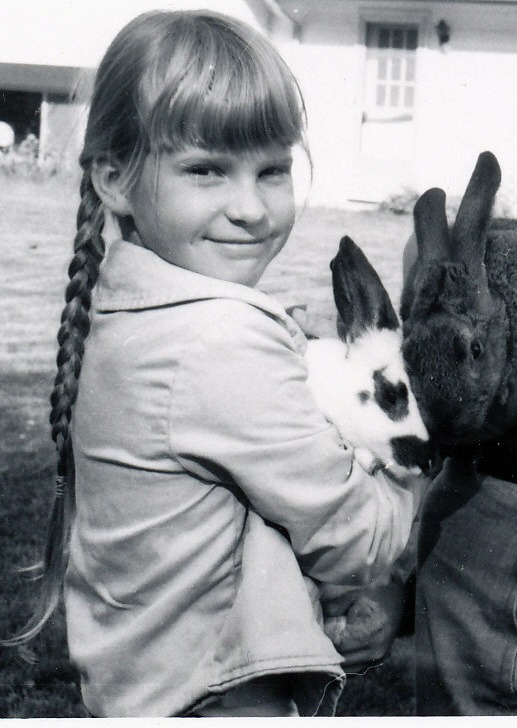
My mother gave me an old clothbound book when I was nine years old.  It was her childhood copy of The Secret Garden by Frances Hodgson Burnett.  I felt a sudden tug of connection to the little girl my mother once was, especially when I found her name carefully penciled on the inside cover.  Right away, I signed my name under hers.
Although written in 1911 and clotted with Yorkshire dialect, that book became an essential nutrient to me.  It told the story of orphaned Mary Lennox who was sent to live with her silent brooding uncle on the English moor. Little Mary had no lessons imposed on her and was given the opportunity to explore.  I envied her freedom.  A character named Dickon befriended animals so easily that they gathered at his feet and ate from his hand. I, too, liked to go in the forest behind our house in hopes that woodland creatures there would come to accept me.  And I understood Mary’s response when her uncle inquired if she wanted anything. He suggested toys or dolls.  Instead she asked, “Might I have a bit of earth?”

More than my favorite book, The Secret Garden provided comfort at a time when I could find no other solace.  The year I received my mother’s copy was also the year that one after another of my grandparents succumbed to long, painful illnesses. By the time I turned ten, all my grandparents had died.

I’d watched them struggle for each breath but it hadn’t occurred to me that they wouldn’t get better. That’s what doctors and medicine were for. That’s what prayer was for. Now we would never have Sunday dinner together again. The seasons would come and go without canning applesauce or planting bulbs or going to the lake with my grandparents as we always did. I couldn’t stop thinking about death.

children's literature and positive mental health, saved by a book, children find meaning in fiction,

Other children probably weather grief with more resilience but that year was a dividing line for me. The blithe happiness of my childhood came to a halt. I couldn’t bear the idea that everyone I loved would die some day—my pet rabbits, my friends, and worst of all, my parents. My mother assured me that God simply called people home to heaven when it was their time. I kept asking why, if God were all-powerful, would He allow people like my grandparents to suffer so horribly before they died. She said His wisdom was beyond our understanding. Her answers left me with more and more questions. I could see asking them only intensified the sorrow she felt. So I tried to keep my worries to myself.

Now added to my fear of this unknown thing called death a new bleakness was added. Where I once prayed and worshipped without doubts, I was set adrift somewhere beyond my parents’ beliefs. Religion seemed piteously small when confronted with bigger dilemmas. And more of them occurred to me each day. What was the purpose of existence in a universe of unimaginably vast time and space? How did everything start when it had to come from somewhere? How did our tiny lives matter? I didn’t like the thought that adults believed in something that made no sense. I felt I was standing in a blizzard outside the warmth of answers that faith provided. It was lonely.

I tried to reconstruct my comfortably safe worldview with the tools I’d been taught were the most powerful: good behavior and prayer. I knew I wasn’t really the good girl I seemed to be. I was a picky eater, I argued with my sister, and I was lazy about chores. So I tried hard to be better, to be so worthy that no one else I loved would be taken away. The effort was a useful distraction from my preoccupation with big questions about death, meaninglessness, and infinity.

And I prayed, fiercely and in my own way, using pictures in my head and silent words. It was a gamble because I was no longer sure that God existed or if He did how on the job He was, but I had to do my best to keep my family alive. Here’s how my keep-them-alive game worked. If I thought of people I loved I had to pray for them. This was somewhat less burdensome at school because I was busy. It was overwhelming when my parents went out for the evening. I thought of my mother and father constantly, each time silently praying that they would come home safely. I summoned up images of my parents driving, chatting with their friends, driving home, then walking in the door. My whole body could feel the relief of their imaginary return. But as the evening wore on my prayers got more fervent and I took up a position watching cars go down the street. Their return was always later than I expected, probably because I was constantly willing them home. As soon as their car pulled in the driveway I ran to bed, feeling a sense of blessed completeness I couldn’t explain. They were back. Everything was okay.

It was exhausting.

importance of stories to girls, what books mean to kids,

I couldn’t imagine how but my parents weren’t fooled by the cheery act I put on. My mother told me that sometimes people need more help getting over their grief. She made an appointment for me to see a psychotherapist. I knew full well what this meant. I’d read my share of children’s books where unfortunate characters are locked up in institutions or sent away for their own good. It rarely went well for them. I was determined to act as un-crazy as possible. The day of my first appointment my mother made me wear a summer dress, sweater, and saddle shoes—the clunkiest fashion statement imaginable even to my ten-year-old sensibilities.

My mother usually stayed with me in the pediatrician’s office so I expected the same. Instead I was ushered in to see the doctor by myself. An older lady sat behind a large desk. She asked me to sit facing her in a chair much too large for me. I sat, my throat clenched with so much tension that it was hard to swallow. She asked me how I felt about coming in. I knew it wasn’t polite to admit my true feelings. Kids constantly have to filter what they do and say to please adults. So even though I feared and despised everything about the appointment I told her I was fine and didn’t need to be there and I was perfectly happy except for the embarrassing outfit I was wearing. I said it nicely. In fact I thought my comment about the outfit was a light-hearted joke. The doctor turned it into the topic of a lengthy question and answer session. She seemed to think I hated my mother for making me wear clothes I didn’t like. I couldn’t imagine that she’d had a mother recently or she would know that mothers make you do all sorts of things you don’t want to do. Eat all your dinner, clean your room, write thank you notes, well the list was endless. Frankly a dorky outfit was the least of it. Clearly I would have to filter what I said even more carefully.

Next she got out a series of large black and white photographs. She said it was a fun kind of test. I always got good grades on tests at school but the rules were pretty flimsy for this one. All I had to do was look at the pictures and tell her a story about what was happening. That included what happened right before the picture was taken and what would happen immediately afterwards. The first picture showed a dark-haired woman walking by herself on a beach. She didn’t look all that happy.Right behind her was a man with his arms reaching up in such a way that he seemed ready to choke her. The look on his face was creepy as well as dangerous. But I put the lightest tone possible in my voice and told the doctor that it was the woman’s birthday and she didn’t know her friend had come to surprise her. He was going to put his hands over her eyes and ask her to guess who and she’d be delighted. Nearly every picture was equally disturbing. I churned through them with Pollyanna-ish stories in my attempt to demonstrate just how mentally healthy I could be.

Next she brought up my grandparents’ deaths. The questions she asked were so upsetting and intrusive that I couldn’t answer. I shouldn’t have been shocked but I was. Having a stranger try to get me to tell her things about those who were dead alarmed my whole body. I could feel every inch of the chair touching me. The smell of the office, dusty and airless, made me want to choke. Although I willed them away, tears kept springing up in my eyes, and I set my mouth as tightly closed as I could.

The doctor changed her tactics back to the earlier conversation about my mother. I tried to unlock my mouth into a polite smile but I desperately wanted to run out the door. I knew my mother would be waiting and ready with a comforting hug. All I needed to do was just hold on until the appointment was over. Then the doctor made a statement so insane that it seemed whole adult world might be slipping away on a raft built without logic. She said I was upset because I wanted my mother dead.

That was it. I was willing to sacrifice the time I’d invested in good girl behavior but I would never go back there. I would do whatever it took. I would throw fits if necessary but I would not speak to that doctor again. On the drive home and all through supper I tried to figure out how to best make my stand. I decided to be logical and calm, although I wanted more than anything else to climb into my mother’s lap. That evening I sat with my mother, the person I prayed for most often, and lost my struggle to keeping from crying. I told her the unspeakable thing the doctor had said. My mother was gratifyingly appalled. She hugged me for a long time and then we talked as if we were on one side and the doctor on the other. It was delicious.

My mother called the doctor the next day and afterwards confirmed that I was a good judge of character. I would not have to go back. I overheard her telling my father that the doctor “didn’t have her head screwed on tight.” But my mother did think the doctor was right about one thing. I wasn’t getting over my grandparents’ deaths.

That wasn’t it. The loss of my grandparents had tossed me into a realm of questions I couldn’t ask and worries that faith couldn’t explain. I knew my parents were concerned about me so I ramped up the cheerful act. Masking my fears actually helped, at least during the day. But at night I couldn’t sleep. If I didn’t work hard to steer my mind relentlessly toward peaceful thoughts I’d feel as if I were falling into dark nothingness. The galaxies we learned about in fourth grade, black and endless, seemed like a void that would swallow up everything I knew. On the worst nights I could feel the fabric of the ordinary world stretched thin over a much larger unknown. Then I couldn’t even cry myself to sleep.

So I resorted to the distraction of reading. As soon as the rest of my family went to bed I turned my light back on. Most often I chose The Secret Garden. I turned to the same passages over and over. I read about the garden that seemed dead in the early spring chill until Mary cleared away branches and leaves to find tender green sprouts in the soil. I read about the crippled boy whose limitations Mary refused to accept and of his triumphant recovery in that garden. I read about her sorrowful uncle who awakened to joy after years of despair. Then I could sleep.

~

I don’t regret the fears and doubts of my childhood. They set me on a richly rewarding lifelong path of seeking answers to big questions. But I didn’t realize why I turned to The Secret Garden until I found the book years later. I opened it to see two childish signatures, my mother’s and my own. Rereading it, I recognized the passages that sustained me when I felt most lost. Each one was about about redemption, nature’s wisdom, and offered what I needed most of all, simple hope.

If I could meet a person from history I’d choose Frances Hodgson Burnett. I now know about the losses she suffered, the despair she fought, and the writing that was her life’s work. I’d tell her, a bit shyly, that I make a living as a writer too. I don’t think I could express how profoundly her book calmed a little girl too upset to sleep but I’d want her to know that her words were a soothing balm during those dark nights.

And I’d tell her that The Secret Garden didn’t just save me, it also shaped my future. Today I live on a small farm where my children have no lessons imposed, just like Mary. The animals here eat from my hand, as those in the book did from Dickon’s hand. Maybe I’d simply say, “Frances, our land is named after lines you wrote. We call it Bit of Earth Farm.”

Laura Grace Weldon