Spreads Like Butter But No Calories: Kindness

No matter how many times someone claims that humans are naturally selfish and aggressive, they’re wrong.

We’re constructed for compassion.

It’s easy to tell. Our bodies function best when we’re in a state of cooperation and caring. Research shows this in our skin, our brains, nervous systems, our hearts. Research also proves this whether looking for physical, emotional or social benefits.

Kindness, generosity and compassion not only keep us healthy as individuals, they bind us together in networks of family, friends, neighbors and co-workers. These networks spread across the globe for many of us, drawing us in close circles of caring despite distance.

As we grow up we learn to emphasize some behaviors over others, but it appears we speak an innate language of kindness before we speak in words. Hard to believe? Take a look at babies. As reported in, Why We Cooperate (Boston Review Books), studies of babies between one to two years of age show them remarkably eager to help, share and cooperate. Not true of our ape friends. Similar studies of chimpanzees show them to be selfish, particularly when they can get more food for themselves.

James Fowler and Nicholas Christakis, authors of Connected: The Surprising Power of Our Social Networks and How They Shape Our Lives write that cooperative behavior is not only natural, it’s contagious. When people benefit from the kindness of others they go on to spread the compassion. The tendency to “pay it forward’ influences dozens more in an enlarging network of kindness. And even more heartening, the effect persists. Kindness begats more kindness, blotting out previously selfish behavior.

These findings amplify what anthropologists are now saying (see Beyond War: The Human Potential for Peace), that the long progress of humanity has been made possible through generosity and cooperation.

Christakis says, “Our work over the past few years, examining the function of human social networks and their genetic origins, has led us to conclude that there is a deep and fundamental connection between social networks and goodness. The flow of good and desirable properties like ideas, love and kindness is required for human social networks to endure, and, in turn, networks are required for such properties to spread. Humans form social networks because the benefits of a connected life outweigh the costs.”

*

*

*

“If there is anything I have learned about men and women, it is that there is a deeper spirit of altruism than is ever evident.

Just as the rivers we see are minor compared to the underground streams, so, too, the idealism that is visible is minor compared to what people carry in their hearts unreleased or scarcely released.”

Dr. Albert Schweitzer

*

*

*

Butter image Creative Commons.  Children holding hands image thanks to Bill Gracey’s Flickr photostream.

Singing From the Inside Out

I can’t sneeze in a roomful of my friends without hitting a number of talented singer-songwriters who’d love to make a living through music. (Yes, a metaphorical sneeze.) Yet nearly every gifted artist any of us know has to ignore his or her gifts in order to make a living.

What cultural transformation might we see if those drawn to poetry, sculpting, composing, painting or other mediums of expression had some hope of living by their art?

Well here’s some hope.

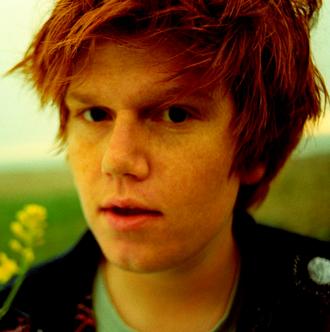
A homeschooled guy who chose to help out with a worthwhile project now appears with John Mayer, Sheryl Crow and the Dave Matthews Band. His songs are heard on House and Ugly Betty. And more importantly, he sings about what matters to him.

See if the questions posed by this deceptively beautiful piece, “Ain’t No Reason,” resound long after the music is over.

Brett Dennen grew up in rural California, homeschooled along with his brother and sister. In an interview with Frank Goodman for Puremusic.com Dennen describes his mother’s homeschooling approach as “experiential.”  He says, “…so she rarely had a lesson plan or anything like that. She would give us books, and we would read the books. And we did a lot of gardening, and we did a lot of science education through being outside. We took camping trips with other kids who were homeschooled. And when we were out camping, we learned about rivers and forests and mountains and geology. We’d take books out camping with us, and we’d read about it, and we’d look for what we’d read about. Experiential education basically means instead of being in a classroom and being taught or told something, to actually go out and see it, and see how it works and learn through experiencing it instead of learning through being taught or told it. And that was really valuable to me.”

Dennen took the same approach when learning music. As he says in the same interview, “Because of the way I was homeschooled, I got into the idea of trying to learn how to do things my own way. And so when I started playing guitar, I taught myself. I took lessons for a while, but I lost interest in them because I think I just didn’t like going to my lessons, I didn’t like my teacher, I didn’t like what I was learning. So then I quit. And after I quit, then I really started to learn.”

He went to college planning to become a teacher. While a student, Dennen met Lara Mendel at a wilderness-safety class and the two of them wrote a humorous song about backwoods diarrhea for a class assignment. Mendel happened to be developing a powerful hands-on program for children, one that tackles intolerance and violence head on. She named it The Mosaic Project. Dennen wrote songs to reinforce the activities. Now his music and her project teach hundreds of California children about acceptance, friendship and peace in each session of The Mosaic Project.

The creative and independent spirit of Dennen’s homeschooling background hasn’t left him. Goodman’s interview opens with these comments. “He’s like a new kind of human being to me, this Brett Dennen. After spending time with him this week, I feel that way even stronger than after the positively confounding impression that his new CD, There’s So Much More, left on me. If he’d said that he was an alien, I could have swallowed that; it would even have made sense to me. Because I’m simply not accustomed to meeting and spending time with people that appear to be so incorruptible, so odd and yet so self-assured; so, uh, enlightened and inner-directed, if I might venture all that.”

I don’t know if Dennen’s life up to this point says more about homeschooling or about doing the work of one’s heart. I do know there’s no separating the two.

Real Action Footage Hard to Find: World’s Most Powerful Force Rarely Filmed

*

*

*

*

*

*

*

*

Few talk about it. Fewer know much about its principles or how to apply them. Yet it has a profound impact, a long history and a reach nearly as wide as heaven. I’m talking about non-violence.

Sure, we know a bit about the civil rights movement and a bit about Mahatma Gandhi, but not much. Mainstream media focuses on the changes wrought by violence.

Pacifism is confused with those who are passive. Nothing could be further from the truth.

Consider Liberia. This nation was birthed by colonization and racism. It existed in oppression for over 150 years. A few years ago Liberia was a land torn apart. Dictator Charles Taylor’s reign imposed hunger and brutal killings on Liberia’s people. The rise of rebel groups made the situation worse. Children were forced to become soldiers. They roamed the countryside stealing, raping and killing. Villages were burned. Brutalized refugees crowded the cities. No one was safe. No one knew where to turn. The only answer lay in the powerful force of love in action, non-violence.

By 2003 women began gathering at their own risk to demand peace. They wore white and sang in the marketplace. They called themselves Women of Liberia Mass Action for Peace. Their numbers grew. Against tradition, Christian and Muslim women worked together—singing, praying, planning and insisting on love. They held signs as truckloads of soldiers drove past, the same men and boys who terrorized them. Their signs said, “We love you. Put down your guns.”

Ignored at first, their numbers grew. As peace marchers walked past, other women joined in from the streets. Children sang along. Women of Liberia Mass Action for Peace tactics included passive resistance, withholding sex (in part to avoid birthing children who would later be raped, killed or forced to become soldiers) and insisting on reconciliation. Finally they forced a meeting with President Taylor, where they made him promise to attend peace talks in Ghana. Then they bravely met with representatives of the rebel faction, who also agreed to attend the peace talks.

A delegation of Liberian women went to the talks in Ghana at their own expense. They waited outside the hotel where negotiations were held, wearing white as reminding presence. The men stayed in luxury, stalling as they attempted to get more and more power for themselves without agreeing to more rights for the citizenry. After weeks of these fruitless talks the women learned that an embassy in Liberia had been bombed and war there had intensified. Afraid for the families they’d left behind, they took another risk. Entering the hotel, one hundred women linked arms outside the doors of the negotiating hall. They intended to force the men to stay without food and water, privations Liberian refugees knew well, until they had reached an agreement. Guards threatened them. One of the rebels kicked at them.

Leymah Gbowee, a leader of Women of Liberia Mass Action stood. She began to take off her clothing. This was a last resort. It is taboo to see one’s sister, mother or grandmother unclothed. The guards backed down. Two weeks later an agreement was signed.

When Liberia held landmark elections, Ellen Johnson-Sirleaf became the African continent’s first elected female head of state. Yet look around. The extraordinarily brave, powerfully liberating work by Liberian women went largely unnoticed by major news organizations.  Heck, even the Liberia page on Wikipedia doesn’t cite their involvement. Stephen Colbert’s interview with Leymah Gbowee promos the sex strike angle.

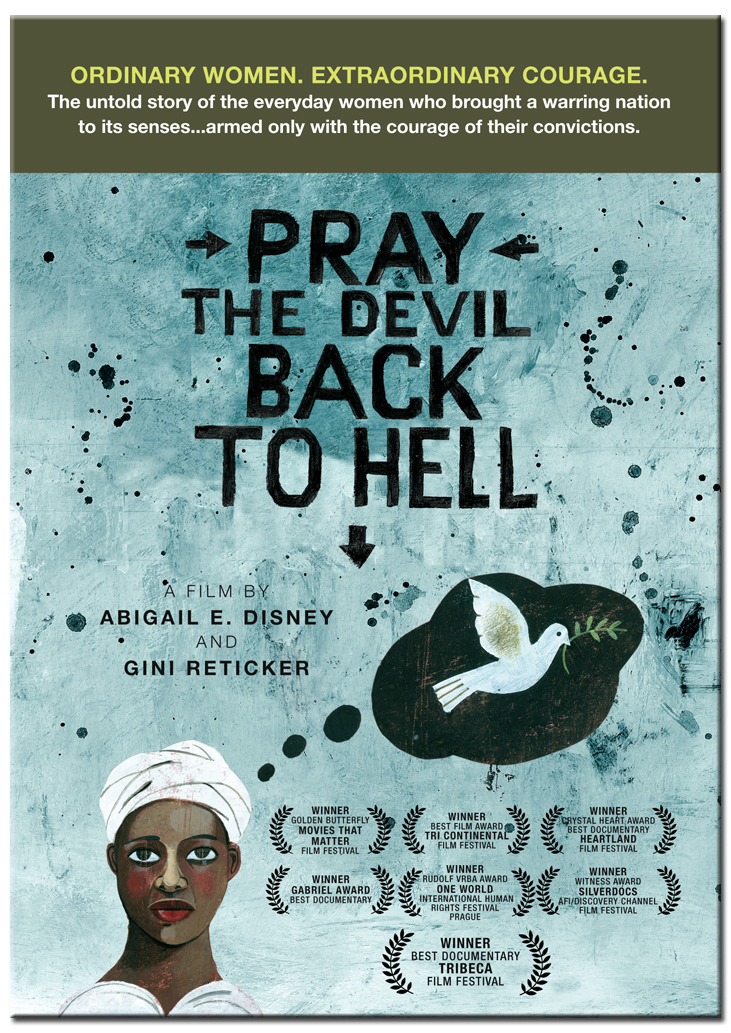
An extraordinary documentary about Women of Liberia Mass Action, called Pray the Devil Back to Hell came out in 2008.  Producer Abigail E. Disney couldn’t rely on footage shot by news organizations. They barely cover non-violence. Instead she managed to find three years of material on the peace movement that shifted the course of history from “private individuals who just happened to be there with cameras.”

We can do more than thank goodness.

We can use non-violence so that goodness is a force for change.

The Beauty of Ordinary People

“Not everything that can be counted counts, and not everything that counts can be counted.”

Einstein

*

*

*

*

The world is full of ordinary, wonderful people.

Ever since I learned about Randy Stang in Regina Brett’s Plain Dealer column his example of casual grace has helped me see greatness in a new way. Those who bring out the best in themselves have a way of doing that.

Most people who get media attention are nothing like us. They’re obnoxiously wealthy, phenomenally talented or otherwise good at accumulating fame.

A great deal of publicity is also devoted to those who bring out the worst in themselves. They commit crimes or wreak havoc more acceptably, perhaps as scornful political pundits.

Occasionally attention shines on people who devote themselves to a cause in ways we can’t imagine doing or who risk their lives to save a stranger. True heroes. We may marvel at their efforts but end up feeling worse about our own choices. Who can imagine sacrificing as these selfless people do?

But Randy Stang was not the sort of man who attracted attention. He lived with his family right by Bradley Park in Bay Village, Ohio. Tall lights lit up his yard till late at night. Enthusiastic yelling from nearby soccer, basketball and baseball games made for a noisy home. When Randy Stang heard about a proposed biking and skateboard park he decided to attend the public hearing. So did many of his neighbors.

He waited for his chance to talk holding three pages of notes. A middle school teacher spoke about the six years of resistance the skate park had already faced, saying Bradley Park was likely the last hope for local bikers and skateboarders. Residents also spoke, saying the noise and inconvenience of a skate park was unacceptable. They liked the idea of teens gathering somewhere but preferred that place be far from their backyards.

Finally it was Randy Stang’s turn to talk. He explained what it was like to live near the park. He mentioned the noise and lights. He noted that his garage had been broken into just two days before the public hearing.  Then he gave his opinion.

“I’m in favor of a skate and bike park in Bay Village in Bradley Park. I am wondering if the citizens against the park have no grandchildren, no children, or are not a child themselves.”

He finished, saying, “You want to put it just to the north of that baseball diamond there, probably about 50 feet from my yard.”

Then Randy Stang collapsed. A nurse and doctor performed CPR to no avail. But his efforts were not in vain. It looks like Bay Village will be building The Stang Memorial Skate and Bike Park.

People who are acclaimed every day in the media don’t exemplify us. It’s the uncelebrated lives of ordinary, wonderful people who form the bedrock of human existence. These people are next to you and across the world. Chances are they won’t gain notice unless they perish dramatically while simply being themselves.

Unselfish acts performed a million times a minute weave us together as a caring species. We tend to the helpless, comfort the sorrowful, share knowledge and create happiness. It happens most often in small, unnoticed ways. This is why I know humanity has every hope of skating ahead toward the very best possibilities.

*

*

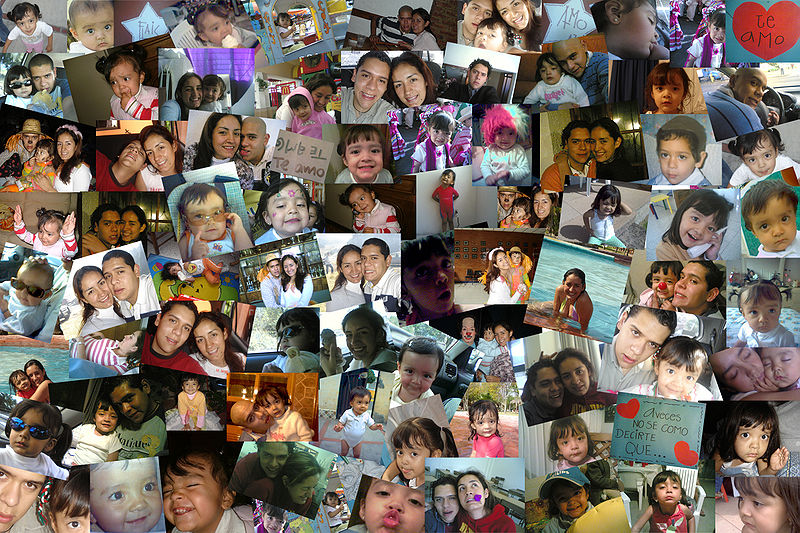
Creative Commons photo collage