We Have Room


refugee children, host border children, welcome the stranger, angels unaware,

All images thanks to wikimedia commons.

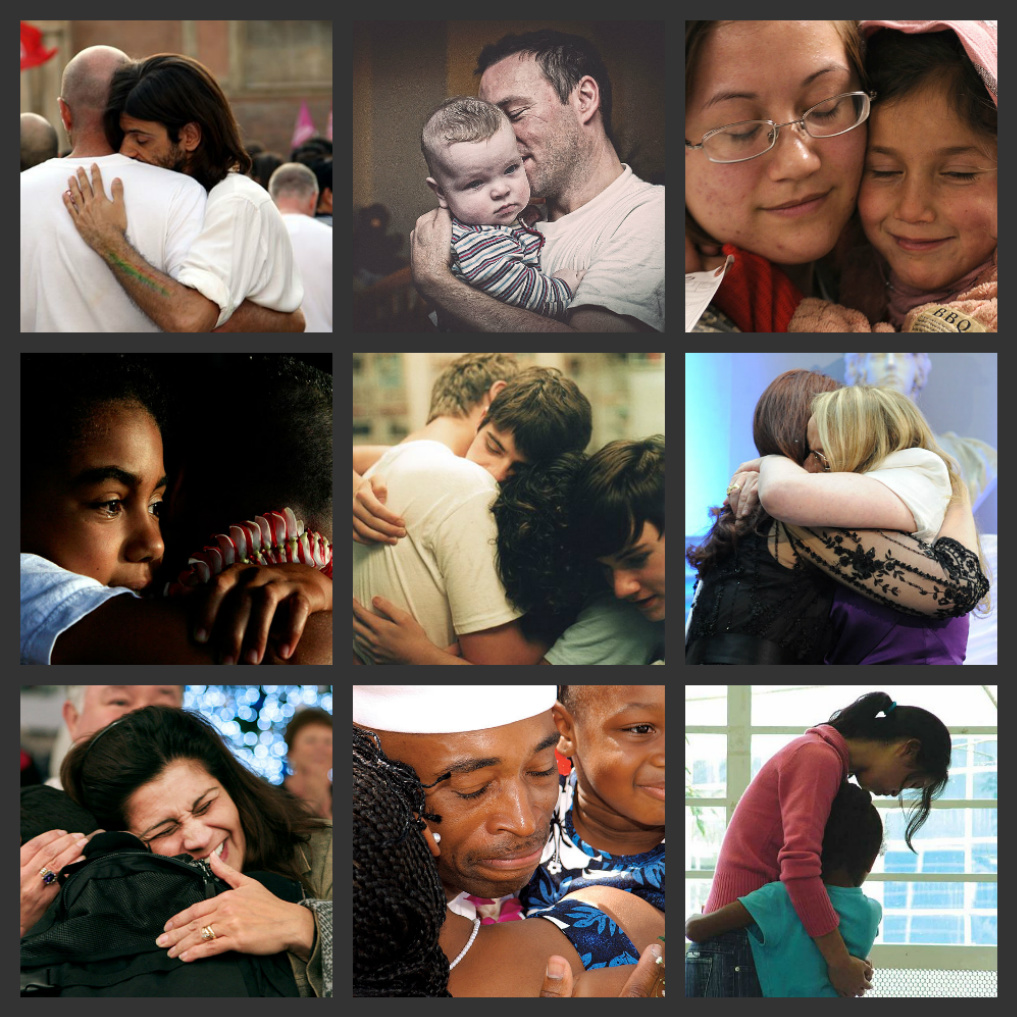
There may be no more powerful image in art, no more important message in scripture, than open arms. Welcoming the stranger is a basis of civilization, especially if that stranger is a refugee and always if that stranger is a child.

“You shall love the stranger, for you were once strangers in the land of Egypt.” Christianity, Deuteronomy 10: 19

“Charity—to be moved at the sight of the thirsty, the hungry, and the miserable and to offer relief to them out of pity—is the spring of virtue.” Jainsim/Kundakunda, Pancastikaya 137

“When the Holy One loves a man, He sends him a present in the shape of a poor man, so that he should perform some good deed to him, through the merit of which he may draw a cord of grace.” Judaism. Zohar, Genesis 104a

“One should give even from a scanty store to him who asks.” Buddhism. Dhammapada 224

“Do not neglect to show hospitality to strangers, for thereby some have entertained angels unawares.” Christianity. Hebrews 13.1

“Serve Allah, and join not any partners with Him; and do good – to parents, kinsfolk, orphans, those in need, neighbors who are near, neighbors who are strangers, the companion by your side, the wayfarer (ye meet) and what your right hands possess: For Allah loveth not the arrogant, the vainglorious.”  Islam. Quran 4:36

“A traveler through a country would stop at a village and he didn’t have to ask for food or for water. Once he stops, the people give him food, entertain him. That is one aspect of Ubuntu.” Nelson Mandela, discussing the southern Africa tradition of Ubuntu

“See to it that whoever enters your house obtains something to eat, however little you may have. Such food will be a source of death to you if you withhold it.” Native American religions. A Winnebago Father’s Precepts

“`0 Ke aloha Ke Kuleana o kahi malihini. Love is the host in strange lands.”  Hawaiian saying

Relieve people in distress as speedily as you must release a fish from a dry rill [lest he die]. Deliver people from danger as quickly as you must free a sparrow from a tight noose. Be compassionate to orphans and relieve widows. Respect the old and help the poor. Taoism. Tract of the Quiet Way


child 2

“Give me your tired, your poor,
Your huddled masses yearning to breathe free,
The wretched refuse of your teeming shore.
Send these, the homeless, tempest-tost to me,
I lift my lamp beside the golden door!”

Whether scripture or statue inscription, we all know it’s easier to state our principles than adhere to them. I’m as weak as the next person in actually living up to what I believe.

I’ve vowed to keep politics out of this site, so I won’t be talking about lies fostered by divisive media or shockingly cruel attitudes toward refugees of any age. I’ll only say that it takes an extraordinary act of love to scrape together the coyote fees to send one’s child away in hopes of a safe haven. It takes inestimable courage for that child to walk through deserts, ride the tops of trains, and face down thieves along the way in hopes of real freedom.

My husband and I did some soul-searching. We talked to our kids. And we decided we cannot stand by while refugee children turn themselves in at the border only to be treated like criminals. We have room to host refugee children.

We applied to the Lutheran Immigration and Refugee Service. We were told placements might be for a few months or they might be permanent. So we re-imagined our lives. Now that our kids are college students and young adults we thought we were done raising children, but we can go back to homemade popsicles and toys on the floor and books read aloud. We have our own problems with unemployment and a not-remotely-profitable small farm, but what we have can always stretch. There’s a place in our home and our hearts.

That doesn’t mean we have a greeting card view of this. These children will be traumatized, experience culture shock, and face learning a new language. We’ll have plenty of adapting to do as well.

Lately before falling asleep, I look ahead to rows of family pictures stretching into the future. Those pictures seem to hold two dark-haired faces newly dear to me, and eventually, more of their relatives joining them and becoming part of our extended family, on for generations, with babies in arms growing to stand tall, my husband and me fading into old age and beyond. It’s a good vision.

Right now it looks like that vision won’t come true. I just got an email from Lutheran Immigration and Refugee Service. It said, in part, 

After exploring the nationwide LIRS foster care program network, I am sorry to share with you that LIRS does not have a foster care program in the geographic area that you are located. If at a future time an opportunity arises, we will reach out to you at that time.

I wrote back, asking if there was some way I could help set up a program in our area. Apparently the only option is applying for a grant through the U.S. Department of Health & Human Services Office of Refugee Resettlement, which I admit is probably past me. So now I’m applying to other agencies.

I only mention our quest in hopes that someone out there may qualify even if we don’t. Here are resources to investigate.

Office of Refugee Resettlement

Lutheran Immigration and Refugee Service

United States Conference of Catholic Bishops

Bethany Refugee Care

Texas Interfaith Center
refugees, host border children,


Angry Stranger’s Gift

angry stranger, gift of impatience, tolerance, soul moment,

Years ago I waited in a convenience store line in complete desperation. I was still bleeding after giving birth to my daughter and needed pads. The customer ahead of me was working her way into a snit because the store was out of an item she wanted. She refused to buy similar products the clerk offered. I stood behind this customer trying to keep from judging her (and failing). She was middle-aged or older, wearing expensive clothes and fussily styled hair, but what really defined her was the kind of self-absorption that turns a minor inconvenience into a personal offense. She demanded someone check the back room where she was sure the product languished due to employee laziness. She demanded to see the manager, who wasn’t there. She. Wouldn’t. Leave.

I was so exhausted that I simply wanted to curl up on the floor. It was the first time I’d left my baby’s hospital bed for more than a few minutes. My newborn suffered from a serious malady that hadn’t yet been diagnosed. She was increasingly losing weight and vigor. All the while I missed my three-year-old fiercely. I hadn’t seen him for days aside from brief hugs in the parking lot. I spent all my time by my baby’s side. It was a triumph when I could get her to nurse for a few moments. Sleep deprived and terrified for my baby girl, I clung onto hope like a parasite.

The customer ahead of me was now yelling. I assumed she’d had no greater trouble in her life than being deprived of a convenience store product. I realized that she may have been older than my own mother, but she had less maturity than my firstborn who knew enough to respect other people and more importantly, to care about them.

I’d been in the hospital environment for so many days that simply driving to the store was a sensory overload. Bright sunlight, traffic, people engaged in daily activities were all so overwhelming that I felt like a tourist visiting for the first time. Maybe that’s why I felt a sudden tenderness for the customer ahead of me. It was as if some surface reality melted away to expose this woman’s beautiful soul. I didn’t know if she was going through a difficulty that left her frantic to have her needs, any needs, recognized. Or if she had experienced so few difficulties that she hadn’t developed any tolerance for disappointment. It didn’t matter. I saw her as utterly perfect. In that moment I felt nothing less than love.

Just then she whirled around and left. I exchanged a look of solidarity with the clerk, made my purchase, and drove back to the hospital. That encounter not only gave me a powerful surge of energy, it also boosted my spirits in a way I can’t explain. It was a boost that lasted. All these years later I remain grateful.

Witty Bitching

witty bitching, creative complaining, complaint choirs,

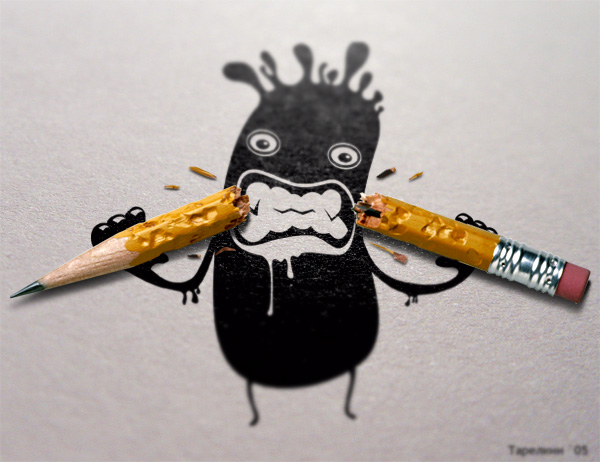
Image: tarelkin

I write a lot about mindfulness and gratitude. These are survival skill for many of us. I’m all about being positive, but I like to kvetch as much as the next person. It’s cathartic, necessary, and downright fun as long as it’s done with good humor.

Witty bitching, expressed with some measure of sensitivity, is actually one of the many ways nonviolence works. It’s a creative way to ease tension. More importantly, it humanizes us to whoever is annoying us while not denigrating the annoying person.

Let’s start with the easiest method—swearing. Apparently swearing is a good idea. Studies show that it can help relieve pain, but only for those of us who don’t swear often. It can also reduce stress, elevate endorphins, even promote group solidarity

I don’t swear often. I lean more toward creative cursing, you know, when you string together words that don’t usually go together for a specific-to-the-situation denunciation. Better yet are those phrases unique to your friends and family, memes within boundaries of shared experience, that are not only inside jokes but useful forms of communication. We have dozens of them. “You no see big thing like train?” is one. I’ll explain.

A friend drove a truck for a business started by an immigrant whose English wasn’t easy to understand. The business made money mostly because of the owner’s extreme frugality — he barely even maintained the truck. One day the friend was making a delivery when the truck’s brakes failed. Unfortunately they failed as he was approaching railroad tracks where a train was stopped. It was a heavily loaded truck and much as he tried he only managed to slow down. He crashed into the train. He was fine, the truck was not. He called his boss to explain. The boss yelled, “What, you no see big thing like train?” This line has proven itself handy in many circumstances, thankfully none involving real trains or failed brakes.

benefits of swearing, why swear,

Then there are written forms of bitching. I indulge in it regularly. For example, a few years ago a publication that had asked me to submit an article didn’t respond. It’s hard to remonstrate the very people who are supposed to pay you. So this is what I emailed.

Dear ___,

I can take rejection, really. But it’s nice to finally get rejected. I sent as requested  _________ on ________. I know, I know, I should have given up by now but hope is a feisty creature, not easily strangled by silence.

In case the clarity and understated wit of my piece knocked an editor to the floor, unintentionally hurtling my submission under a desk, it is attached again for your perusal.  Less dusty this way.

ever optimistically, Laura Weldon

They sent a very charming response that didn’t end up quite as I hoped. Turns out they were going out of business. (Story of what I call my writing career…)

Kvetch notes can be used to great effect on a neighbor’s door, the office coffeepot, and elsewhere.

kvetch, funny complaint, witty bitching,

Then there’s singing. In my family we tend to burst into spontaneous songs with made-up-in-the-moment lyrics. A mini opera about dog poo on the floor, a whining country-ish ditty when someone uses up the milk, a warbling ode to overflowing laundry baskets. Even Mozart wrote satirical tunes, including “Leck Mich Im Arsh” which, if you can’t tell, translates to something like “Lick my ass.”

The pinnacle of witty bitching? Complaint Choirs. The concept was dreamed up by Finnish artists Oliver Kochta-Kalleinen and Tellervo Kalleinen. Now people all over the world are putting their daily grievances to music. Their collaborative performances aren’t just hilarious, they build a sense of community. 

It’s all too easy to get mired in life’s minor irritations. A little witty bitching helps us move through them. That’s a survival skill too.

Hijab Games & Pink Shirt Days

bystander effect, stand up for others, hijab soccer, pink shirt day, anti-bullying,

“Whenever one person stands up and says, “Wait a minute, this is wrong,” it helps other people do the same.”  Gloria Steinem

A high school soccer referee barred Samah Aidah from her March 12th game because she wore a hijab, even though the association that governs soccer internationally had already lifted rules preventing players from wearing head covers.

Samah’s teammates responded. At their next game, every single girl wore a hijab in playful solidarity with her.

bystander effect,

Samah Aidah and her teammates smiling together at Overland High School in Denver, Colorado
(aquila-style.com)

These girls took action rather than letting oppression go without comment. Whether they knew it or not, they followed a basic principle of nonviolence— that problems are most easily reversed at the early stages. If ignored, issues can become progressively more difficult to stop as they spiral to ever more intense levels. That’s the case whether we’re talking about so-called non-physical forms of violence such as humiliation, harassment, and prejudice. It’s also the case with physical forms of violence, from domestic abuse to war.

When people don’t intervene, assuming others will step in, they become bystanders who “permit” violence to happen. Studies show if an emergency unfolds before a group of people they’re less likely to take action, basing their decisions on the behavior of those around them. This is called “diffusion of responsibility.” If that same emergency presents itself in front of one person, that person is more likely to take action. We’ve all heard of these situations precisely because they’re so heinous.

Social scientists who study intervention in violent situations know that when others object or actively get involved their efforts tend to slow or stop the violence. Dr. Ervin Staub, who survived under Nazi rule, reports in The Roots of Evil that genocide perpetrated by the Khmer Rouge in Cambodia and the Nazis in Germany started with prejudicial statement and small acts of repression. Oppressors test the response, only escalating to greater atrocities once they determine that bystanders will allow to them continue. It requires the willingness of uninvolved people to step in, advocating for the victim or victims, in order to halt the escalation of violence and to uphold the common good. Such actions empower the victim and reduce the power of the aggressor.

We tend to believe that we’ll have the moral courage to speak up and help when someone is suffering. But when something happens we usually have only an instant to respond, either we listen to our doubts and turn away or step outside our comfort zone to intervene. What makes it more likely that we will help?

1. A sense of commonality with people who are unlike us is important, letting us see beyond “us versus them” and prompting us to act with empathy.

2. Past experience reacting positively in a crisis leads people to do so in the future. In that case, the girls wearing the hijab to support their teammate not only made the current situation better but also primed themselves to act compassionately next time it’s necessary.

3. People who feel freer to defy the norms and who are able to think for themselves are more likely to help. Pluralistic ignorance (going along with the crowd) dampens a person’s compassionate response.

That’s why learning about nonviolence is so important, because it gives us a background on which to base our actions.  For examples of individual bystanders who stepped up to make a difference, check out the heartening real-life examples in this piece:

How To Get Involved When It’s None of Your Business

And let’s enjoy another example of young people choosing to go beyond being bystanders.

A few years ago a new freshman arrived at a Nova Scotia high school on the first day back to class. He was wearing a pink shirt. Several students mocked him and threatened to beat him up.  No one intervened. But two senior boys heard about it and decided to respond. They bought dozens of pink shirts at a discount store, emailing their friends to let them know they’d be handing them out the next day. The news spread and hundreds of students showed up the next morning already wearing pink shirts.  The bullying stopped and now Pink Shirt Days are held yearly in many schools to spread awareness about bullying.


Resources

books

Above All, Be Kind: Raising a Humane Child in Challenging Times by Zoe Weil

Keeping the Peace: Practicing Cooperation and Conflict Resolution with Preschoolers by Susanne Wichert 

The Bully, the Bullied, and the Bystander: From Preschool to HighSchool–How Parents and Teachers Can Help Break the Cycle by Barbara Coloroso

Why Good Kids Act Cruel: The Hidden Truth about the Pre-Teen Years by Carl Pickhardt

Born to Be Good: The Science of a Meaningful Life by Dacher Keltner

Calm and Compassionate Children: A Handbook by Susan Dermond

books for kids

Bystander Power: Now with Anti-Bullying Action  by Phyllis Kaufman Goodstein

Just Kidding by Trudy Ludwig

My Secret Bully by Trudy Ludwig

Stand in My Shoes: Kids Learning About Empathy by Bob Sornson

Speak Up and Get Along!: Learn the Mighty Might, Thought Chop, and More Tools to Make Friends, Stop Teasing, and Feel Good About Yourself by Scott Cooper

other resources

Erase Bullying videos

Stop Bullying site


Lale Labuko: Cultural Superhero

Omo children, Lale Labuko, infanticide,

Images: omochild.org

An ancient tribal practice has killed tens of thousands of children over the centuries. I’m working to make sure my generation brings an end to it forever. —Lale Labuko

Lale Labuko was the first person from the Omo Valley to attend school. Each time he left his village for boarding school he walked 65 miles through desert wilderness, leaving a culture without written language in order to fulfill his father’s wish that he learn to read and write.

When Labuko was 15 years old, on a visit home, he witnessed an elder grab a two-year-old girl from her weeping mother’s arms. The elder hurried away toward the river and returned alone. Labuko asked his mother to explain. It was the first time he heard the word mingi. It was also the first time he learned that he had two sisters, both deemed mingi, who were killed before he was born.

Mingi is a term used by many tribes of the Omo River Valley in southwestern Ethiopia. It labels certain young children carriers of a curse. Babies can be deemed mingi for one of several reasons: they’re born out of wedlock, their married parents have not received the necessary three blessings by elders, or their top teeth come in before their bottom teeth.

Ancient traditions dictate that grievous harm will come to the village unless the mingi dies.

Labuko pledged to end this tradition. He’s doing so with respect for tribal culture while also changing ingrained fears. Several years ago he convinced elders to “Let me be the bush” as an alternative to leaving little ones in the bush, where they die of starvation and exposure.

Although a number of tribes continue to carry out the practice, Labuko’s tribe, the Kara, officially banned mingi in a 2012 ceremony. It’s said that if rains fall after any ceremony, the gods have bestowed their blessings. After this ceremony the rains were bountiful. And when the sun came out a rainbow appeared over the Kara village.

Labuko is now co-founder of Omo Child which works to end the horrific practice of mingi. His organization also rescues and cares for mingi children. So far they have saved 37 babies from death.  These children are being raised in a safe home and receiving an education.

http://www.youtube.com/watch?v=scDrDtER72o

National Geographic bio of Lale Labuko

Images of Omo children by photographer Steve McCurry

Get involved in the work of Omo Child

School Violence Led Us To Homeschooling

bullying leads to homeschooling, school violence, guns in school,

We became homeschoolers suddenly. One morning my oldest son, a freshman in an award-winning suburban high school, called home right before the first class of the day. The teen who’d been harassing him had just showed him a gun, saying it would be his last day to live.

“Get out now,” I said. “Run home.”

I phoned the principal to tell him about the gun. I insisted that he not call the teen to the office on the intercom but remove him directly from his classroom. “Please,” I begged. “I’m worried about every other child still in the building.”

Throughout the school year my son told us what he heard about this youth and a few other kids. They’d sexually assaulted a girl in the school bathroom, broken the arm of a student’s father when he tried to reason with them, fought a gang-style skirmish near the football field with the assistance of older relatives. When I asked school officials about these allegations they scoffed. I assumed they were baseless.

My son’s situation was pretty standard. Honors student versus tough kid. My son used sarcasm as his defensive weapon. A few days earlier he’d retorted back to the taunting with, “Bad mood? Drug dealer not giving you credit?”

That morning the principal seemed only mildly perturbed by my frantic call. I insisted my son told me these kids stashed weapons in their cars. He seemed more interested in containing what he called a “rumor.” When the principal didn’t get back to me, my husband and I called the police. Detectives sat at our table and confirmed every story. The girl assaulted, the father’s arm broken, the gang fight. In fact area businesses had been warned to notify police immediately if groups of teens assembled, in case another gang fight was brewing. Parents were not informed.

I’d assumed that police had been called to the school after my report of a student with a gun. They weren’t. Instead, the student in question was summoned to the office on the intercom. Other students said he went outside to the trunk of his car before heading to the office.

I met with the superintendent the next day. In my work life I taught non-violence to community groups, including school systems. I told him I’d teach this program free of charge to staff and students in our district. The superintendent turned me down, admitting that it might be safer if we homeschooled. My son never returned to school.

I’d always been committed to the idea of public schools. I believed it was not only right but necessary to work within systems to improve them. Plus, I had plenty of misconceptions about homeschooling. Yet I realized that school had never really “worked” for my kids. Our four-year-old already knew how to read but had to practice sight words in pre-school anyway. Our sweet but inattentive second-grader was deemed a good candidate for Ritalin by his teacher. Our fifth-grader could do college level work, but due to cuts in the gifted program had to follow grade level curriculum along with the rest of her class. And our freshman detested the rote tasks that filled his days and the hours of homework each night.

Overnight, I faced homeschooling kids who were eager to learn on their own terms. I learned right along with them. I learned how essential imagination is to innovative thinking, how freedom to play is vital for creativity (and fun!), and how pursuing their own interests can translate into advanced comprehension across a range of subjects. I learned how they sought out challenges and insisted on meaningful involvement. I saw what they gained from daily activities at home and how easily they could learn directly from people of all ages right in our community.

The ADD symptoms my third child exhibited at school were no longer present once we began homeschooling. The hurry-up days that roped my kids in from morning bus to evening homework were gratefully left behind. Instead we read books for hours, indulged in long-term science projects, went on adventures with friends, found role models in all sorts of fields, and let real learning unfold. The crisis that hurled my children out of school created a way of being far richer life than any of us could have imagined.

suddenly homeschooling, school versus homeschool, school violence,

(Image: artamusica.deviantart.com)

This piece originally appeared on Wired.

Politeness Recovery In Progress


politeness recovery, good girl syndrome, kind versus nice,

deskridge.deviantart.com

Politeness is the dodo bird of our times. No one is quite sure what killed off civility but it’s obvious that two-year-olds aren’t growing out of tantrums or a sense of entitlement. Instead they just get bigger, becoming toddler adults. They drive like idiots, foster workplace stress, simultaneously overindulge and ignore their own kids, feed on the negative energy of angry pundits, and blame everyone else for their own problems. They need to learn a little empathy, or at least the rudiments of feigned empathy we call politeness.

But some of us are way on the other side of the spectrum. We’re so empathetic that we tremble with concern for the feelings of other people. And animals. And plants. (I even tremble with empathy for spiders.) It wouldn’t occur to us to put ourselves first or to act rudely (although my good intentions may come across as annoying, just ask my family).

Some may have been hardwired this way from birth. The rest of us were trained to be too polite for our own good. Right around the time we started crawling we were taught to be respectful and considerate at all times. No exceptions. If asked how we are, we learned the answer should always be affirmative followed by a kindly inquiry about the other person. Never mention any peril you may be in, the object is to focus on others. This means if you’re bleeding, you deny there’s any real problem (oh it’s nothing), don’t bleed conspicuously, and God forbid, don’t complain about whatever caused you to bleed. If you are offered a favor, graciously decline. Even if it’s chocolate. If someone is actively causing you difficulty, either put up with it without complaint or extricate yourself in a way that doesn’t embarrass the other person.

Maintaining this level of politeness rarely leads to an authentically lived life. It’s more like an affliction. We do our best to avoid winning games, getting the best grades, pushing ahead at work, sticking up for ourselves, saying what we mean unless it’s “nice.”  Being too polite actually put me in dangerous situations more than once. Nice at all costs has got to go. Kind, yes. Honest, yes. Nice, not always.

Politeness recovery is a slow process and often difficult. It’s complicated because I’m naturally opinionated, sardonic, and forthright. And sometimes silly. Suppressing that side of myself has never been easy. But I’m not giving up my polite side by any means. Politeness is essential if we’re to live together in any kind of harmony. I’ve found genuine politeness has a surprising way of bringing out the best in other people. It presumes they are basically good (a core principle of non-violence) and many times, that’s all that required. (Now, if only that principle were applied on talk radio and in snarky web threads.)

More importantly, I want to be authentic. Treating people with respect and understanding simply feels right. It comes from true compassion, far richer than any thin soup of poor self-worth. The generosity and love of kindness stimulates more of the same.

I aim to give up only the parts of my Good Girl upbringing that hold me back from my eventual goal of becoming a rowdy old lady. My politeness recovery is still ongoing but my friends are amazing role models. They’re well ahead, evolving before my eyes. Some days I’m swimming in the muck, other days I join them on land. I’m often awkward, occasionally splattering mud as I go, but I’m a creature in progress trying to be polite as well as real, empathetic as well as centered, serious but silly too. Like a dodo bird who hasn’t given up on her wings.


Who We Are In A Crisis

how people act in disaster, survivor, true survivor behavior,

Versions of Survivor are watched all over the world. Forty-five countries have pitted contestants against the odds and shows are still filmed in Denmark, Croatia, Italy, Norway, Serbia, France, India, Israel, Spain, Sweden, Turkey, and the U.S. These series drop people in inhospitable places with minimal resources and ask them to cope successfully with unexpected challenges. It’s called “reality” television, although people in the real world face harder challenges every day.

Survivor shows have to be carefully structured with authoritarian rules and imposed competition. Otherwise contestants might resort to a very natural state. Not Lord of the Flies levels of cruelty and exclusion. No, something far worse for ratings. Cooperation.

In our non-reality TV lives we don’t live as separate entities battling for limited resources like wanna-be stars on an island bristling with cameras. We humans are wired to live in interdependent networks of people based on mutual support and compassion. Ninety-nine percent of humanity’s time on earth took place while we lived as nomadic hunter-gatherers, a time when we did not make war against each other. Anthropologists tell us that our species never would have survived without structuring our lives around sharing food and resources. This responsive caring is basic to who we are.

But somehow, after years of schooling where collaboration is redefined as cheating and recreation where play is turned into supervised competition, we adopt the idea that people are essentially selfish. Popular culture feeds this concept by elevating what’s superficial and materialistic, the better to shape us into perpetual consumers. Worse, we seem to think that selfishness can easily erupt into brutally dangerous behavior when disaster strikes. According to a remarkable book, A Paradise Built in Hell: The Extraordinary Communities That Arise in Disaster, the opposite is true.

Author Rebecca Solnit takes a close look at disasters including earthquakes, floods, and explosions. She finds tragedy and grief, but something else too, something rarely noticed. During and after these horrific crises there shines from the wreckage something extraordinary. People rise up as if liberated, regardless of their differences, to act out of deep regard for one another. They improvise, coordinate, create new social ties, and pour themselves into work that has no personal gain other than a sense of meaning. Such people express strangely transcendent feelings of joy, envisioning a greater and more altruistic community in the making. Even those suffering the most horrific misfortune often turn around to aid others and later remember it as the defining moment of their lives. This is a testament to the human spirit, as if disaster cracks us open to our better selves. As Solnit says, “The possibility of paradise is already within us as a default setting.”

Disaster is often compounded by those who believe that human nature is selfish and cruel. In many cases this is the drumbeat sounded by the media and acted on by authorities. An analysis of disasters shows that official efforts to deal with disaster tend to focus on this aspect, suppressing the efforts of ordinary people to help one another while increasing militaristic control. This deprives people of helping one another and compounds the crisis.

Solnit says that the enlivening purpose that truly comes to the fore as a result of disasters tells us something about ourselves. “Each of us enlarges the world by idealistic passion and engagement. Meaning must be sought out; it is not built into most people’s lives. The tasks that arise in disaster often restore this meaning.”

No one wants their blessedly ordinary lives wiped away by something unimaginably horrible. But it’s good to know, as Solnit says, who we are in a crisis gives us a “glimpse of who else we ourselves may be and what else our society could become.”

who we are in a crisis, humanity at its best in crisis,

This article first published in Wired

Natural Antidote To Bullying

antidote to bullying, free play prevents bullying, bullies made by restrictions, nature prevents bullies,

Wikimedia Commons

Children are drawn to challenge themselves. They need to take risks of all kinds—physical, social, emotional, intellectual—in order to grow into mature self-reliance.

Where do such challenges most naturally occur? Outdoors. As detailed in Last Child in the Woods, when children spend time in natural areas their play is more creative and they self-manage risk more appropriately. They’re more likely to incorporate each other’s ideas into expressive make-believe scenarios using their dynamic surroundings—tall grasses become a savannah, tree roots become elf houses, boulders become a fort. Their games are more likely to incorporate peers of differing ages and abilities. Regular outdoor experiences not only boost emotional health, memory, and problem solving, they also help children learn how to get along with each other in ever-changing circumstances. Free outdoor play with others, especially when it’s not hampered by adult interference, teaches kids to interact with others while also maintaining self-control. Otherwise, no one wants to play with them. It’s the best sort of learning because it’s fun. Sounds like the perfect way to raise bully-proof kids doesn’t it?
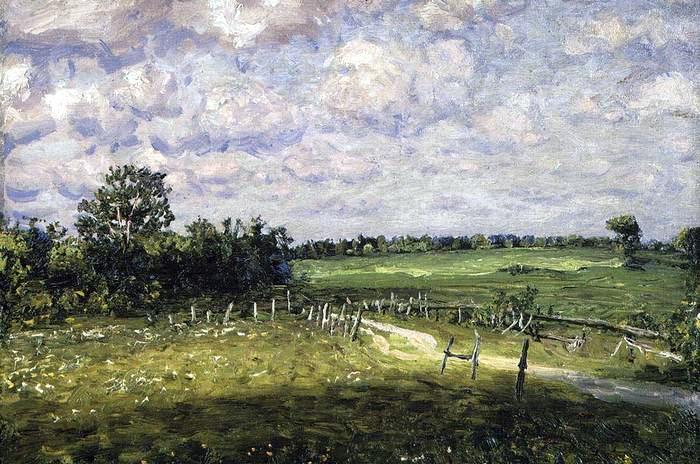
But the opportunity for free play and risk is funneled into very narrow options for today’s children. They are shuttled from one adult-run activity to another. Time between these obligations is often spent indoors. And children’s outdoor play is restricted by excessive rules designed to keep them safe from dangers out of proportion to any real safety issue.

So kids don’t get natural challenges like climbing trees, exploring fields, building forts. They are deprived of the rich lessons of cooperation and self-control found in free play. And they don’t develop biophilia, that essential sense of connection with nature. Then we expect them to get along and recognize real risk. Any wonder that bullying is a growing problem?

Here are examples of playground designs that, in institutions like schools and daycare programs, foster free play using natural materials. Sensory play, places for solitude, and opportunities for physical risk are built in and, no surprise, children get along better.

It’s a step in the right direction. A few steps farther and we’ll let kids back in nature herself, playing in woods and fields and beaches. Too bad all the money thrown at anti-bullying programs aren’t used to fling open the doors to the natural world. “Go out and play,” may very well be the best anti-bullying advice yet.

Newcomers To God’s Country

move to country bad idea, angry rural neighbors, rural life hilarity, rural living problems, religion as a weapon, angry Christians, We left behind gangs and sexual predators when we moved to the country. After city living, settling our family on a small farm seemed like coming to the Promised Land. Even the weather was welcoming as we made more and more repairs to the house we could barely afford. No matter. We hiked through the woods and crouched by the pond, watching frogs, fish, and goggle-eyed insects with a sense of gratitude that felt as solid as a good decision.

Then we got to know our neighbors.

Though we’d moved less than an hour away it seemed we’d crossed an unmarked border. Lovely pastoral stillness was regularly broken by target shooting, 4-wheelers careening around pastures, and barking from what sounded like a dog breeding operation. Some neighbors chose to burn garbage rather than pay the requisite fee for trash pickup, which explained the toxic stench of burnt plastic that sometimes hung in the air. And we quickly learned that some neighbors didn’t talk to other neighbors due to longstanding feuds. Allegedly these conflicts had escalated to bodily harm, lawsuits, and the biggest threat — eternal damnation.

This was the most overtly foreign to us, religion right out front as a beacon or bludgeon. Religious paraphernalia was evident everywhere; on bumper stickers, yard signs, and lapel pins. “Where do you go to church?” was the question people typically asked upon meeting us, right after “Where are you from?”

Realizing the only correct answer would be the exact denomination of the questioner, I gave vague relies. If pressed I said truthfully that we headed back north each Sunday to go to our old church before spending the afternoon visiting relatives. Then I quickly changed the subject. This conversational maneuver seemed to leave my new neighbors unsure of whether to save my soul or shun me. Left in the dreaded middle ground, many of them parted with helpful advice about sins I should take care to avoid.

“Don’t vote for the library levy, because you know the library is an agent of Satan. It has that Internet thing.”

“Don’t celebrate Halloween. That pleases the devil’s minions.”

But we couldn’t remain anonymous for long. Our children ventured down the street to scout out playmates. They returned quickly. Apparently the neighborhood children posed a single-question quiz before agreeing to make friends with newcomers. When our children didn’t know the answer to “Are you born again?” they weren’t allowed to stay.

Soon after we arrived, I was invited by a neighbor to her home. I brought muffins. She nodded as I handed them to her, saying, “God told me not to bake.” While ranging around her kitchen swatting flies and yelling at her children, this woman crisply explained why those who didn’t ascribe to her exact version of Christianity were destined for hell. With joyous fervor she started listing houses on the street by the sins of the occupants, from her next door neighbor (“She’s a Catholic, you know, one of those so-called Christians.”) to the woman who lived at the end of the street (“Don’t talk to her, she uses a hyphenated name. Probably a feminist.”) 

I demurred, saying something about seeing the light in each person. She swiveled her full attention in my direction, fly swatter in hand, and asked me where I went to church. No middle ground left, I told her that I attended a Unitarian Universalist fellowship.

She was shocked.

“Oh, you people believe anything goes,” she gasped.

“Not intolerance,” I said.

She kicked me out of her house.

It seemed that my admission branded me, and not in the correct tattoo-for-Christ way. Word spread quickly. A man who lived a few doors down called soon after. When I answered the phone he asked to speak to my husband.

“Let your wife know she shouldn’t be hiking in the woods,” he said before adding gruffly, “I target shoot there and I don’t look first.”

I hoped school presented better possibilities.

Our children were assigned to two different rural elementary schools, miles apart. I picked our kindergartner up every day at lunchtime. Other parents also waited in the school hallway. It was immediately apparent that two factions leaned against opposite walls. This presented a difficult choice. If I spoke to the woman with frosted lipstick and tight shirt who stood on the less populated side, the woman with the heavy necklace and shag haircut on the other side would glare at me. And vice versa.

Frosted Lipstick talked to me more often. She told me about her well-muscled prayer partner and how she felt called to meet with him alone even though this made her husband jealous. She told me that Jesus gave her too many challenges. She told me I would be cuter if I wore lipstick.

Shag Haircut was more interesting, or maybe I just enjoyed her sardonic commentary. One day Shag Haircut told me what was behind the hallway glaring. A group of mothers were trying to remove Frosted Lipstick from membership in the school’s parent/teacher organization over a dispute concerning craft supplies. Ribbon and scissors worth something like $36 had not been returned. Shag Haircut and her cohorts considered Frosted Lipstick a thief.

I made what I hoped were reasonable suggestions to solve the problem. No luck.

I’ve taught conflict resolution for years but apparently peace wasn’t nearly as enticing as the entertainment value of scandal. A few weeks later the superintendent acted. Weary of the dispute, he threatened to eliminate the entire parent/teacher organization. Both sides of the hallway were deliciously shocked.

Frantically, Frosted Lipstick asked me to babysit after kindergarten so she could meet with him and solve the problem. I was relieved that she seemed to be taking my advice about talking the issue over, finding common ground, and healing the breach. I agreed to babysit, but explained that I needed to pick up my third-grader at the other school by three-thirty for a dentist appointment.

I assumed that she would drop off her kindergartner to play with my child. I was wrong. She appeared at my door with three additional boys. When she saw my surprise she said, “Everyone knows I operate a home daycare business.”

Everyone but the newcomer.

She went back to her minivan and returned with a woman she called Grandma. This woman was not her relative. Frosted Lipstick was branching out in the daycare business and had taken in an elderly confused person who needed supervision. Frosted Lipstick left quickly after I reminded her I needed to leave at three sharp. I made additional places at the table and invited these guests to lunch.

It became apparent that the boys were not accustomed to eating while sitting or eating without throwing food. They also used God’s name in vain frequently, surely a habit they didn’t indulge in while in the care of a woman who talked so much about her prayer life. I gave up the silly idea of showing them how to make sandwich shapes with cookies cutters and simply tried to impose order. It wasn’t working well.

Grandma wouldn’t sit. She smelled as if she might have damp undergarments but her waistband was fastened with some kind of dementia-proof catch. I couldn’t figure the thing out.

The afternoon deteriorated rapidly. My five-year-old normally enjoyed eating while I read to him, then he played Legos after lunch, but these boys were only amused by diversions such as hitting each other and slamming themselves into furniture. Grandma sidled along the walls with her hands up touching everything as if she read a form of Braille expressed in window frames and light switches. At one point she nearly escaped through the locked front door. Like hostages, my son and I exchanged repeated sympathy glances at each other as the home invasion dragged on.

Despite the chaos around me I was cheered by the knowledge that a greater good was being served — the conflict was being talked out at the superintendent’s office. In fact I was beginning to feel a sense of peace about the whole ordeal. Three o’clock was approaching. Frosted Lipstick would ring the doorbell and then I’d be free to retrieve my third grader. By now my son had retreated completely from the boys, who were bouncing around in a frenzy like ping pong balls. I couldn’t imagine the inner clamor their behavior was expressing. I also felt a generous amount of sorrow for Grandma, left here with strangers when she’d already lost so much.

Three o’clock got closer and closer. Frosted Lipstick still didn’t arrive. My smug sense of peace was evaporating. A few minutes after three, she called. Her tone was casual. She said she couldn’t get to my house but had made other arrangements. I was to drop off the kids and Grandma at the school’s aftercare program, she knew everyone there.

I had no time to express my indignation. I loaded the boys and Grandma in the van, checked seat belts, and turned onto the road. In moments the boys had taken off their seat belts and were beginning to crawl over the seats. That did it. I pulled over, trucks hurtling past, and told the boys to get their seat belts on using the slow dispassionate voice that my own children know indicates true rage. As I merged back into traffic I realized my vindictive thoughts were an indicator of how far I had to go before calling myself a pacifist.

In moments I was hurrying across the school parking lot holding many hands at once. We crammed into the tiny school office. I stood at the counter assuring the secretary that arrangements had been made for the boys to stay in the aftercare program. She seemed entirely unaware of such arrangements. Then I uttered Frosted Lipstick’s name. The school secretary’s face slackened into disgust. I leaned over the counter, trying to hear her response but the boys were arguing and shoving the hard-backed chairs back and forth on the linoleum. Grandma was running her hands along the corporate-sponsored posters on the walls. Clearly none of us wanted to be in this office but my own child was waiting miles away and I needed to assert some control over the situation. A chair tipped over, one boy slapped another.

I turned to the boys, hissing furiously over the din, “Stop it right now or I’ll tie you to those chairs!” Unfortunately just at that moment the principal came through the door with what appeared to be a new family. Upon seeing her, the boys stopped their noise immediately. Sudden silence turned my threat into a broadcast. Grandma strolled right into the principal, her upraised hands roaming across the guests’ bodies, along the door hinge, and onto the next wall. I’d been in the township less than two months and now was heard threatening to use restraints on a confused woman and three disorderly little boys.

The secretary said there was no protocol for leaving the boys without parental consent slips, and of course the elderly woman whose name I didn’t know could not stay. Trying to keep from hyperventilating, I asked the secretary to call the other school about my child, now surely left in the office. She tried. She told me no one was answering, Her tone assured everyone in the room that I was indeed a bad mother.

I did what I had to do. I subdued my hysteria, gathered my charges, and walked down the hall to the aftercare program. Both women working there said they knew the boys and the Grandma, as most people in the township seem to know everyone else. I informed them that Frosted Lipstick had told me to leave them for just a few minutes till she got back.

“Even the old lady?” asked one of the aides.

I nodded, wishing I had never stopped in the school office.

“Okay,” said the other aide. The first woman looked skeptical, but the moment the word “okay” left the mouth of a human being able to watch these four I took my son’s hand and ran from the building—past a janitor, several parents, and a blur of faces in the school office. I wondered if I abandonment charges were possible.

We pulled out of the parking lot and almost immediately found ourselves behind a line of traffic on the way to the other school. Cars, vans, trucks, and at the front, a school bus. It takes a single school bus to clog a rural road for miles. Worse, directly in front of us was a tractor pulling a manure spreader. Dark clumps fell onto the road and the heavy odor drifted in through our closed windows.

That drawn-out stinky scene wasn’t the final act of our little drama. Nor was it the sight of my third grader waiting for me in front of his school building, his face confident but his backpack sagging. No, it was the phone call from Frosted Lipstick later that evening. At the sound of her voice I was confident I would hear that the day’s calamities had been for a good cause.

“So did you resolve your differences?” I asked her.

“I went there to serve them with papers,” she said. “I’m suing the superintendent, the school, and the officers of the parent/teacher organization. God told me to seek vengeance.”