Chronically Awkwards Anonymous

chronically awkward, klutz, oops,

Technically it’s not possible for those of us who are chronically awkward to remain anonymous. It’s not something we can easily hide. I know this for a fact.

As a child I had a brief taste of popularity. Then I walked into a giant concrete post.

As a teen my life was changed when I fell headlong into the locker of a boy I had a crush on.

As a young adult I accidentally committed a vast rudeness in reaction to a gentleman’s politeness.

As a working professional I was attacked by rampant vegetation disguised as a salad.

These aren’t the only incidents. Oh no. I’ve finally given up all hope that someday I’ll be naturally graceful or at least gifted with the wisdom to know when to shut up. I try to console myself that living beyond humiliation is a spiritual quest. That doesn’t always work. What does work is knowing there are other chronically awkward people out there who, like me, go forth with the best intentions but somehow manage to mangle language or misunderstand gravity. They are my kinfolk.

I talked with someone recently who also claims chronically awkward status. Jessie is smart, funny, and adorable so I was skeptical. She and I were attending a mutual friend’s birthday party. I’d gotten there early on a steaming hot afternoon to carry chairs out of the house and set up tables. As people arrived I arranged potluck offerings on tables. I was happy to stand around chatting by the time Jessie arrived.

She and I shared a few of our awkward stories. She told me about having to attend a swanky fundraiser where she felt overdressed and out of place. Introduced to her husband’s boss for the first time, she blurted out a political observation that (she recognized immediately) was the opposite of his stance. I laughed too hard in sympathy (another of my awkward traits*). I shared the horrible thing I accidentally said to my neighbor when we first moved here. It’s far too awful to put in print but Jessie kindly laughed too hard in response. Even though I wasn’t convinced she was truly awkward, we chortled about forming an awkwards-only organization.

A tall woman arrived with a beautiful wooden tray of artfully arranged olives and squares of goat cheese, all sprinkled with fresh herbs. Perched on the tray was a tiny olive fork, the sort of thing gentlefolk use to deposit a single olive on their plates. I gestured to the table where she could set down the tray. She offered an olive to me.

Only after I stuck out my hand to seize one did I realize I wasn’t within immediate range of the olive tray. I propelled one foot forward while saying “Oooh, olives,” as if to prove I’m unable to engage in clever repartee.

I should have taken two short steps to be close enough but instead I lurched at her in one giant orangutan-ish* move. At the same time I lifted my arm way up, as short people have to do, in order to grab an olive. The approach of a middle-aged barbarian clearly alarmed her. She quickly lowered the tray in deference to my height and obvious clumsiness just as I reached up with thumb and finger in olive-gripping mode. The force I’d deemed necessary to lift one gleaming brown fruit was too much. My hand hit the tray. At least a dozen olives shot scattered. One lump of goat cheese thwacked wetly on the table next to me.

In my defense, I have an essential tremor that’s much worse after I’ve held anything heavy, so maybe I can blame the olive debacle on my post-chair-carrying hands. Probably not. I think is has more to do with my veeery slow adjustment to the physics on this planet.

From the corner of my eye I noticed that Jessie didn’t know whether to rush over to help pick up olives or pretend she didn’t know me. Aaaaakwaaard. I guess she’s kin to me after all.
awkward, klutz,

*I promise to laugh way too long if you share an awkward story.

*No besmirching of orangutan gracefulness intended.

Angry Stranger’s Gift

angry stranger, gift of impatience, tolerance, soul moment,

Years ago I waited in a convenience store line in complete desperation. I was still bleeding after giving birth to my daughter and needed pads. The customer ahead of me was working her way into a snit because the store was out of an item she wanted. She refused to buy similar products the clerk offered. I stood behind this customer trying to keep from judging her (and failing). She was middle-aged or older, wearing expensive clothes and fussily styled hair, but what really defined her was the kind of self-absorption that turns a minor inconvenience into a personal offense. She demanded someone check the back room where she was sure the product languished due to employee laziness. She demanded to see the manager, who wasn’t there. She. Wouldn’t. Leave.

I was so exhausted that I simply wanted to curl up on the floor. It was the first time I’d left my baby’s hospital bed for more than a few minutes. My newborn suffered from a serious malady that hadn’t yet been diagnosed. She was increasingly losing weight and vigor. All the while I missed my three-year-old fiercely. I hadn’t seen him for days aside from brief hugs in the parking lot. I spent all my time by my baby’s side. It was a triumph when I could get her to nurse for a few moments. Sleep deprived and terrified for my baby girl, I clung onto hope like a parasite.

The customer ahead of me was now yelling. I assumed she’d had no greater trouble in her life than being deprived of a convenience store product. I realized that she may have been older than my own mother, but she had less maturity than my firstborn who knew enough to respect other people and more importantly, to care about them.

I’d been in the hospital environment for so many days that simply driving to the store was a sensory overload. Bright sunlight, traffic, people engaged in daily activities were all so overwhelming that I felt like a tourist visiting for the first time. Maybe that’s why I felt a sudden tenderness for the customer ahead of me. It was as if some surface reality melted away to expose this woman’s beautiful soul. I didn’t know if she was going through a difficulty that left her frantic to have her needs, any needs, recognized. Or if she had experienced so few difficulties that she hadn’t developed any tolerance for disappointment. It didn’t matter. I saw her as utterly perfect. In that moment I felt nothing less than love.

Just then she whirled around and left. I exchanged a look of solidarity with the clerk, made my purchase, and drove back to the hospital. That encounter not only gave me a powerful surge of energy, it also boosted my spirits in a way I can’t explain. It was a boost that lasted. All these years later I remain grateful.

Poetry’s Origin Story or Why Drink Skáldskapar Mjaðar

I have never heard the Norse version of how poetry was created. But thanks to Sam, who is reading The Prose Edda for the sheer pleasure of it, I now know about Skáldskapar Mjaðar: the Mead of Poetic Inspiration.
origins of poetry, Norse study, homeschooling,

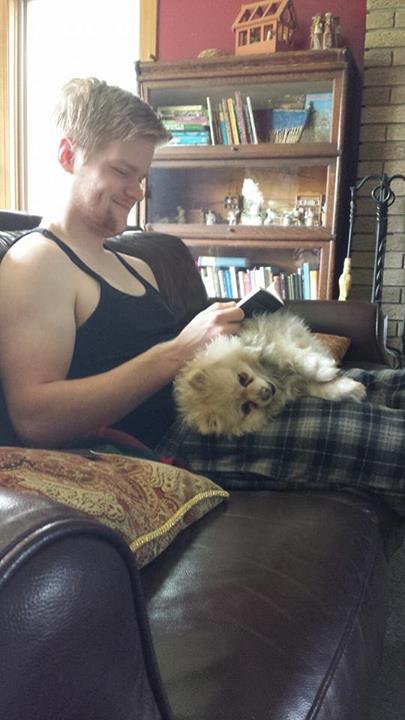
Sam reading The Prose Edda using a Pomeranian bookrest.

Here’s the story as I understand it.

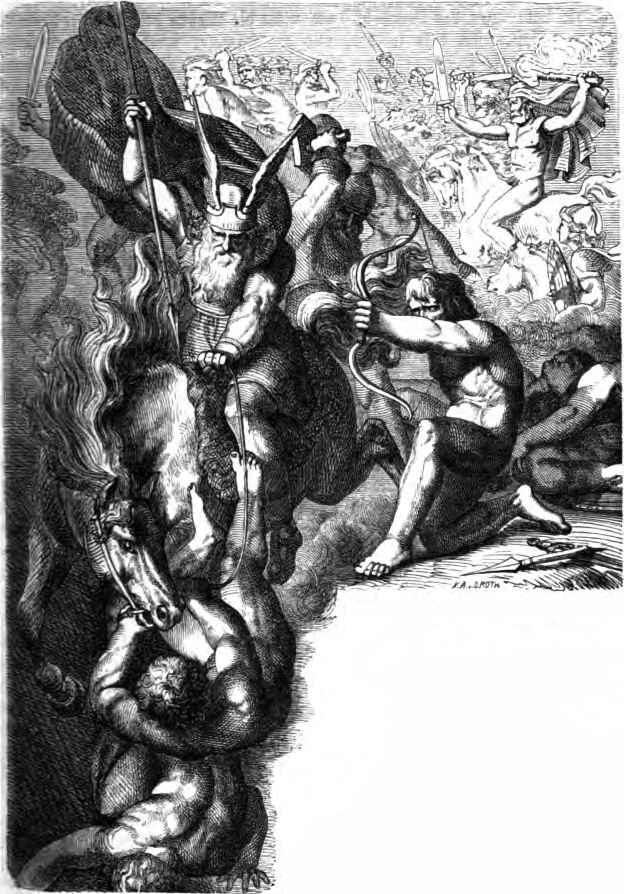
The Æsir Against the Vanir (wikimedia.org)

The Æsir Against the Vanir (wikimedia.org)

Groups of warmongering Norse gods, Vanir and Æsir, agreed to a truce after a long and bitter battle. Each side spat in a vat to preserve the peace.  The gods decided to keep the agreement safe by shaping their spittle into the form of a man they named Kvasir.

Kvasir was the wisest man on earth. He traveled the world— teaching, spreading knowledge, and correctly answering every question posed to him. (A lesson on the benefits of peace…)

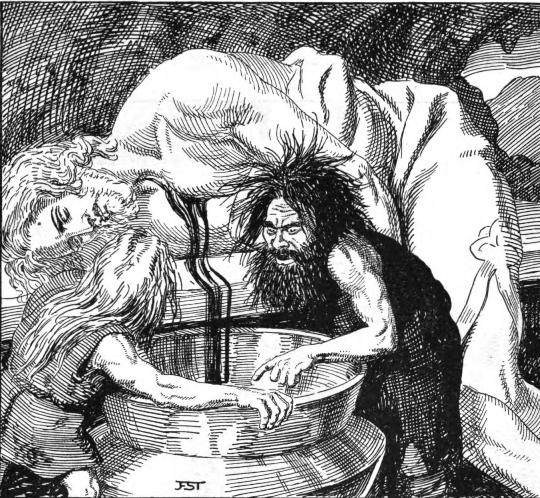
But alas, evil dwarves Fjalar and Galar murdered Kvasir. They drained his blood and distilled it in Odhrǫrir, the magic caldron. (Apparently smarts are a downfall. The dwarves told the gods that Kvasir’s intelligence had suffocated him.)

Draining Kvasir's blood. ( germanicmythology.com)

Draining Kvasir’s blood. ( germanicmythology.com)

Kvasir’s blood was mixed with honey to create the Mead of Poetic Inspiration. Poetry had once been the province of gods. But this drink held the power to turn all who imbibed it into skalds (poets) and blessed them with wisdom. Thus, skaldship spread.
child 2

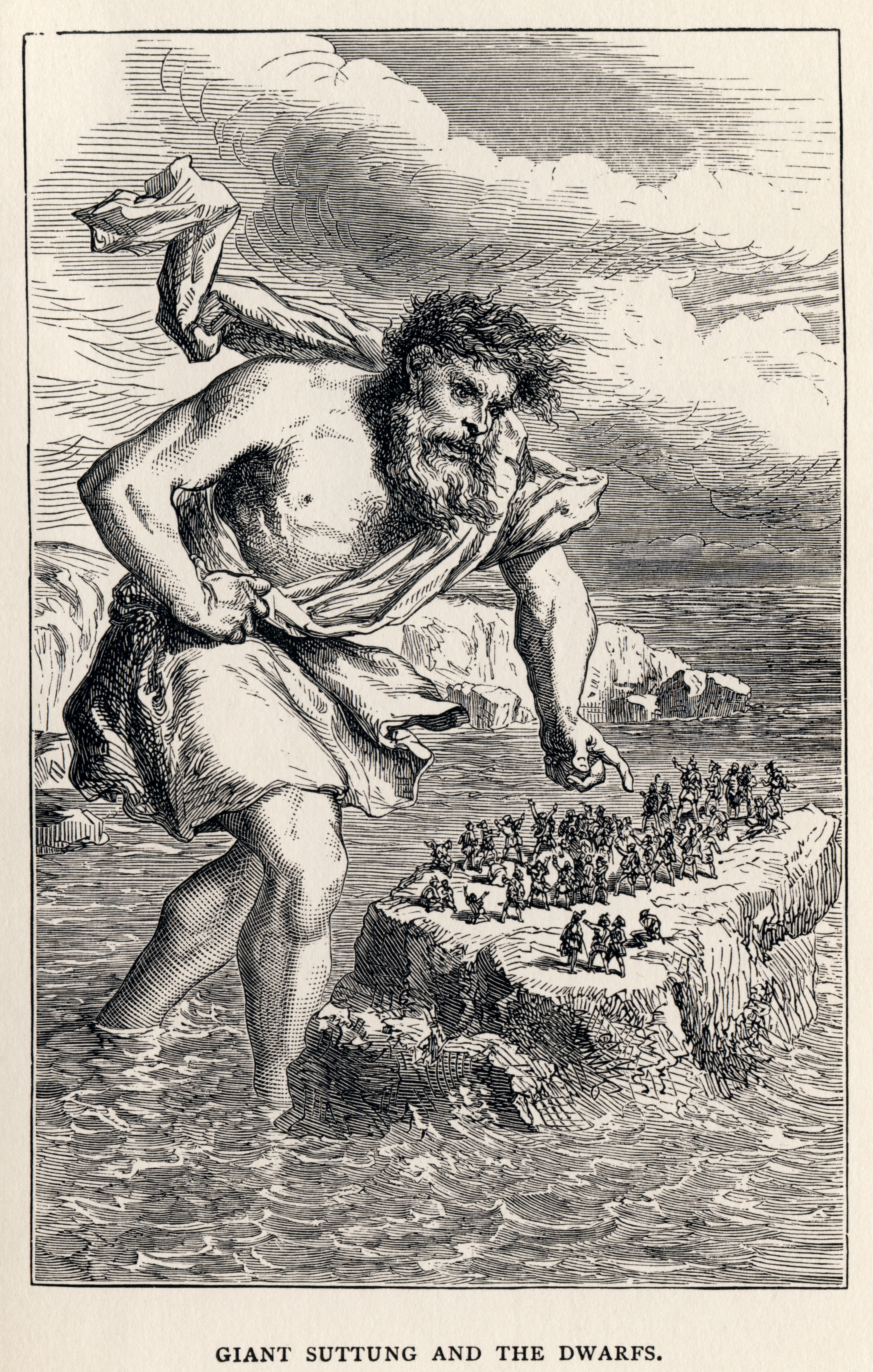
Along came the giant Suttung. He sought revenge on the dwarves because they had killed his father, the giant Gilling, for sport. Suttung seized their precious mead and hid it in the center of a mountain with his daughter Gunnlöð standing guard.

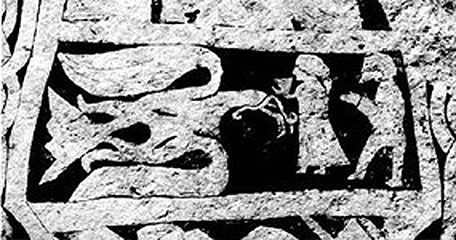
Gunnlöð (wikimedia.org)

Gunnlöð (wikimedia.org)

But Óðin (a.k.a. Odin) was displeased that so vital a nectar was hidden in a remote cavern. Óðin was a biggie in the Norse pantheon. He was known as King of Asgard, ruler of the Aesir, father of the thunder god Thor and associated with battle, victory, death, wisdom, prophecy, and the hunt.

Òðinn (no.wikipedia.org)

Òðinn (no.wikipedia.org)

So Óðin disguised himself as a man and wooed Gunnlöð. After three nights of sex he got her to agree to offer him three sips of the mead. But he tricked her (or by some accounts she succumbed entirely to his charms). He emptied the first vessel with his first sip. His second swallow emptied the second vessel. His last swallow emptied the last vessel. Holding all the divine mead in his mouth, Óðin changed into an eagle and headed back to Asgard.

Óðin as an eagle. (norse-mythology.org)

Óðin as an eagle. (norse-mythology.org)

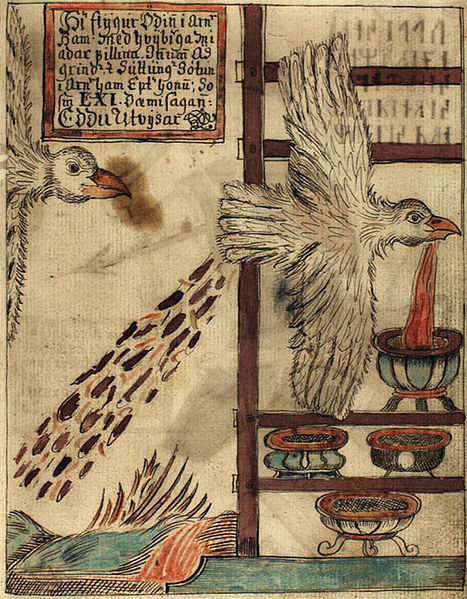
Suttung transformed into an eagle as well and gave chase. Óðin hurtled over the mountains. His people saw him coming and put out vessels in the courtyard. Óðin swooped low and spat the blessed mead into those containers. In the frenzy of the pursuit some of the mead came out “backwards.”

Yes, Óðin shat it.

Anyone that wants it can take that portion. It’s called skáldfífla hlutr, the rhymester’s share. It’s the portion for inferior poets.

Óðin pursued by Suttung, both in eagle form. Note the Mead of Poetic Inspiration being spat into vessels, with the mead for inferior poets coming out the other end. (en.wikipedia.org)

Óðin pursued by Suttung, both in eagle form. Note the Mead of Poetic Inspiration being spat into vessels, with the mead for inferior poets coming out the other end. (en.wikipedia.org)

Hey, I’ll take whatever portion I can get.


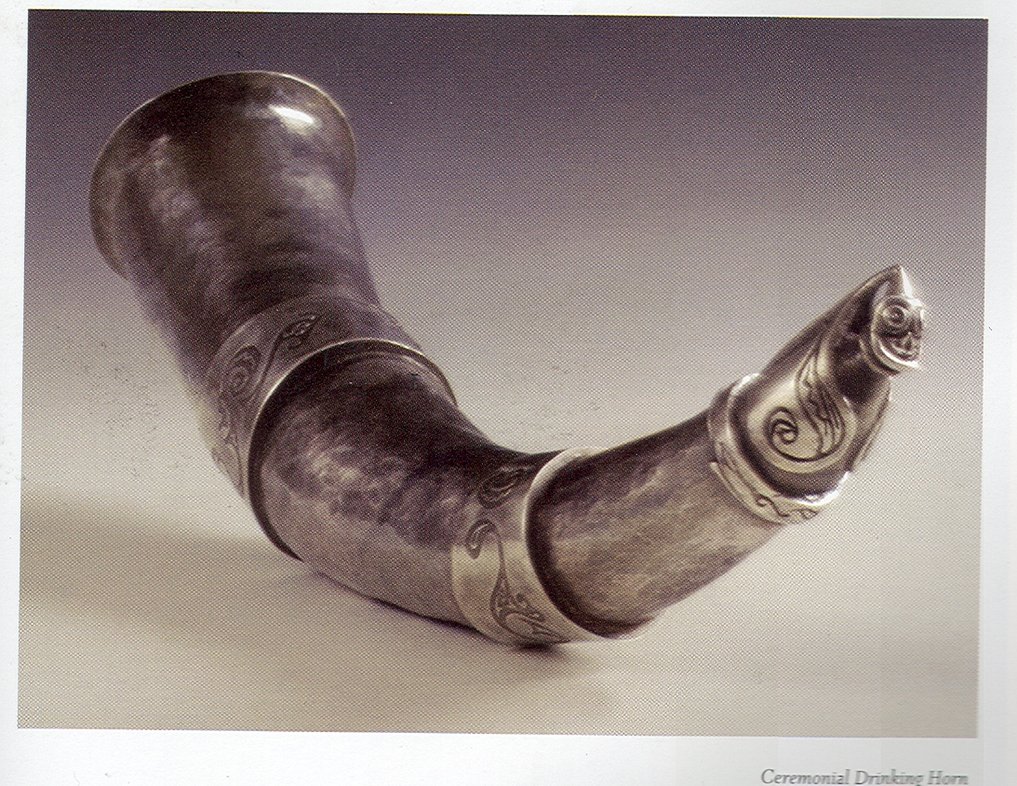
Ceremonial drinking horn. (smithing-chick.deviantart.com)

Ceremonial drinking horn. (smithing-chick)

Free Range Chickens & Free Range Learning

free range learning, captive kids, natural learning, confined chickens,

“Don’t help, Mom,” Claire says as I go to pick up the three-day-old chick. So I watch instead. It’s peeping helplessly at the side of the ramp leading up to the chicken coop. The mother hen and her other chicks are already at the top but this chick can’t find the way. The hen answers each of its cheeps of distress with distinctive low clucks. After repeated attempts to hop directly up to its mother the chick turns and scurries back, finds the bottom of the ramp, and hurries to the comfort of her waiting wings.

“See?” Claire says. “It’s already learning.”

I’m amazed that a chick that tiny could learn to go away from the sound of its mother’s voice in order to find her, but it did. I guess I still need to trust that things tend to work out fine without well-intended intervention.

Reams of instructional books once languished on our shelves. Shiny packaged educational programs with CDs sat waiting for my children to learn foreign language, history, and math. But they always had better things to do. Sometimes that looked a lot like reading a book on the couch, looking things up on the net, or lying by the pond with the dogs. Other times that looked like gathering oddities from the dusty basement for an experiment. Or like all of us hustling off to a field trip with friends. The textbooks came in handy as references; the fussier educational materials were packed away in boxes to pass along. We knew another new homeschooler would need to go through the same ritual of grumbling over them.

My children have ample opportunities to explore their interests out here in the country. Currently Ben restores old farm equipment in anticipation of running his own farm some day. He’s so busy that some of his projects have become long-term decor out near the beehives. Flowering vines decorate hay rake tines and birds nest atop a combine. Right now he’s making a custom desk out of a circular saw blade for a friend. The garage glows as he welds, one of the many skills he taught himself.

Claire observes everything with a scientist’s eye. She journals about her hikes in the woods, her daily farm chores, and her volunteer work rehabilitating birds of prey. One summer she made a practice of examining a dead muskrat as the decomposition process reduced it to a skeleton. Her descriptions of it (yes, at the dinner table) clearly demonstrated how wondrous she found the natural world, even though her age group is depicted as finding more meaning at the shopping mall.

When Kirby isn’t playing his guitar or bagpipes or computer games, he likes to stroll around with a camera. His photos show that he sees things in a different light. He’s interested in the science and art of sound, and using the money he earned from cleaning stalls at local horse farms he’s made his bedroom into a recording studio. Friends come to record their music. He can edit out the laughter.

Sam, who was once the master of finding snakes and toads everywhere on our property, is now intrigued with greater feats than grabbing hapless creatures. He investigates the engineering behind propulsion systems and then conducts his own experiments. This involves shooting tennis balls, potatoes, or pumpkins long distances (often in collusion with his brothers). He’s been talking about designing advanced fuel systems for cars. And he’s started restoring a vintage Opel he bought with his own savings although he’s not old enough to drive.

While Claire and I watch chickens, she points out how the newly hatched chicks are perfectly suited to learn naturally. Days old, these tiny fluff balls listen and respond to different sounds from their mother which clearly tell them where to find food and when to run for cover under her wings. They range across our property while staying close to their mother. They locate each other through the underbrush, ramble into the pasture under the cow’s feet safely, and come into the coop at dusk as the older chickens do.

“Compare them to chicks we bought from the hatchery,” Claire says.

I see what she means.

Many times we have purchased a batch of day-old chicks and kept them in a large indoor pen. We brought them out of the house each day to a grassy enclosure so they could forage, but the chicks raised for their first two months with their age-mates were very different from the chicks hatched by their mothers and raised with the flock. The confined chicks were more sickly, panicked easily, and were more overtly aggressive or passive. Even after they were released out with the flock it took them quite a while to catch up. They didn’t problem-solve as easily. And it took them longer to react naturally, such as taking flight and roosting in low branches when sensing danger. Overall they were less likely to survive.

Interestingly, agricultural extension offices and poultry manuals insist that the treatment we’ve given the confined chicks is the only correct way. Their expert advice includes maintaining them on a diet of protein-enhanced feed, keeping them under warming lights, and watching over them carefully for their own good. Not being hatched by and raised by a hen.

Aside from small family farms like ours there are few chickens living in natural conditions—roaming freely in pastures and woods without fences, choosing their own food and affiliation groups, living with mixed age flock. (Right now we have 30 laying hens, five  roosters, three chicks, a few geriatric hens.) Even chickens described as “free range” are left inside with a small door open to a cramped outdoor pen to meet that definition. This door can be a single opening inaccessible to the hundreds of chickens in the flock.

Claire, who has experienced both schooling and homeschooling, can’t help but see a comparison. “Doesn’t that remind you of how people treat children? Experts supposedly know what’s right for them. I mean, how can anyone learn if they’re stuck in the same situation all the time? You learn as things come up.”

Confinement education, especially when based on tactics that feel like coercion to students, isn’t a whole education. Children thrive as free-range learners. They want to be a meaningful part of family and community, aware of their place as both givers and receivers. They’re cued to advance the growth of their minds, bodies, and spirits in ways unique to them. Their curiosity prompts them to explore and challenge themselves, gradually integrating what they’ve learned to advance their own possibilities. Although there are worlds of difference between raising children and raising chickens, we can trust that learning freely comes naturally to them both.

free range kids, free range learning,

Image: superfry

This is a throwback post, originally published in Home Education Magazine

Living Beyond Boundaries Thanks To Dad

couldn't have done it without you. Father's Day, father's support, thanks Dad,

Image: Florian K

Living beyond the boundaries of streetlights, I often drive on dark country roads where fog hides in the hillsides. Sometimes only tendrils of mist reach up from the ground. More often I’m engulfed in clouds so heavy that the road is obscured. Straining to see the turns on these narrow lanes, I’m not stressed. I smile. I’m thinking of my father.

“People call this kind of heavy fog ‘pea soup,’” my father had explained to me when I was a first grader.

Although he leaned intently over the steering wheel, he easily kept up our conversation. “But it doesn’t look like soup to me,” he asked. “What would you call it?”

Beyond our windshield it looked like a white wall as our headlights reflected off the water vapor. His voice remained cheerful. He told me about being a radar man in the Navy and described the sound of foghorns.

“What we’re going to do, Honey, is blow the car horn to let other cars know we’re coming. It’ll be our foghorn. That way we can navigate our way past the fog.”

We drove on through the dark, he and I, talking and laughing and pretending we were piloting a ship through the waves. Before each bend he gave a blast on the car horn. It was delicious to me—my daddy taking part in a giant game of pretend. And better yet, engaging in the forbidden act of making noise, waking up the night to say we’re here.

My father never let on that the ride that night was dangerous or that the prattling of a little girl was hard on his concentration.

Although his own childhood was marred by the early death of his father, his mother’s chronic illness, and the hard work that comes with poverty, he overcame those limitations. He went on to a career as a public school teacher where he helped hundreds of other children find the best in themselves.

I know he had a way of making me feel important, no matter the task. On our camping trips he assigned me the job of signaling as he backed up the trailer. At home I got to help with all sorts of repairs. Once when I wanted to help him install a hot water tank he didn’t let on that an eight-year-old would be in the way. Instead he said what he really wanted was for me to read him some poetry because that would make a difficult job more pleasant. He put me safely on a stool a few feet away where I read aloud from a junior book of verse while he wrestled with the chore. Occasionally he sat back on his heels in appreciation at the end of a poem. He talked about discovering the great poets when he got to college, even described the large brown book he’d saved from a literature class for his own children to enjoy some day. When he was done, he said he couldn’t have done it without me, the same thing he always said.

He never found that big book of poetry he’d hoped to share. But my father gave me something more precious.  Complete acceptance. And when a girl has that kind of love from her father she carries with her the self-assurance to transcend any boundaries.

My dad always shrugged off praise and begged his kids not to bother giving him gifts. So each year when Father’s Day rolled around I bought a blank card. Inside I wrote him a fond memory of my childhood and how that resonated in my sometimes challenging life.

This is my fourth Father’s Day without my dad. If I could I’d tell him, “I couldn’t have done it without you.”

thanks Dad, dad as lighthouse,

Originally published on Wired

Idleness Is Not The Devil’s Workshop

wive's tales, idleness is the devil's workshop, parent bad example,

Workshop? What workshop?

Portuguese  Cabeça vazia é oficina do diabo (An empty head is the devil’s workshop)

French “L’oisiveté est la mère de tous les vices” ( Idleness is the mother of all vices )

Egyptian Arabic
الإيد البطّالة نجسة el-eed el-baTTaala negsa   (roughly translated: the idle hand is impure)

Finnish   Laiskuus on kaikkien paheiden äiti.  (Laziness is the mother of all the vices)

Spanish  “La pereza es la madre de todos los vicios” (“Laziness is the mother of all vices”)

Italian “L’ozio è il padre dei vizi” (Idleness is the father of the vices)

When I was growing up my mother used to say, “idleness is the devil’s workshop.” Apparently this is one powerful saying, because variations of the same adage can be found in Finland, China, France, Italy, Egypt, Portugal—actually in nearly every country. Hearing this must have affected my character development. If I have a few spare moments I can’t rest until I find something useful to do.

Well, that is, until a few years ago. My husband and I were meeting friends for dinner in about an hour. I figured I could finish the plantings for our back balcony if I hurried. I carried a nearly empty bag of potting soil from the shed. On second thought, I dragged a heavy new bag just in case I needed more. My youngest, Sam, who was 8 at the time, offered to help. Together we scooped soil into the pots and spoke companionably to the seeds and plants as we tucked them in, introducing them to their new homes and pot-mates.

We tamped the dirt down, watered each from our iron-rich rusty sprinkling can and stood back to admire our work. The pots offered plenty of space for the plants to fill in yet already they were abundantly textured with greenery and blooms. Our large back balcony would be graced with color. As soon as I got the pots up there.

“Are we going to carry all of these through the house?” Sam asked doubtfully.

“Good question,” I said.

The balcony has no stairs. Carrying the muddy pots through the house, past a jumping dog, and out on the balcony didn’t seem like the most reasonable idea. I thought of an easier method. Our house is built into a gentle slope, so the balcony is almost low enough for me to hoist the pots above my head and onto the balcony floor. Afterwards I could walk through the house unimpeded to arrange them as I pleased.

When I announced this plan to Sam he didn’t seem convinced. He was downright alarmed when I pulled a chair directly under the balcony’s edge.

“Mom, isn’t that the chair you got from the garbage?”

“Yes, someone it threw out, but it’s still perfectly good,” I told him. “Remember? We’re going to sand and paint it. It’ll look great outside.”

“But you’re not going to stand on it now are you?” he asked.

“It’s fine, see?” I stood on it to demonstrate the chair’s worthiness. It held as firm as a rickety discarded wooden dining room chair could.

“Now hand me the first pot, Honey,” I said confidently. “I’ll just scoot it up on the porch.”

“That’s not safe Mom.”

“Come on, it’ll be fine,” I told him. “You’ve gotta try new ideas sometimes.” Clearly I wasn’t passing along my mother’s time-honored adages. Ones like, “Pride goeth before a fall” or “Better safe than sorry.”

He handed me the first pot. I wasn’t quite as steady as I’d expected and the pot was a lot heavier than I thought it was, but I was determined to be a good example for my little boy. I hoisted the pot up and onto the balcony floor just slightly over my head. I didn’t even make too many “ooof” noises in the process.

“See,” I said, somewhat euphoric with success, “it’s not hard at all.”

Sam continued handing the newly planted pots up to me as I smiled encouragingly down at his trusting blue eyes. When the last of the plants were finally lined up above us, I smugly explained to Sam from my lofty perch on the chair that it’s important to trust ourselves. After all, I said, how would anything ever get done except the same old way?

Just about to hop down from the chair, I noticed the unopened bag of potting soil. That would be handy to have in the house. I could repot some houseplants in the laundry tub without making a mess.

He hauled the heavy bag from the ground and, with some effort, hoisted it up to me. I grabbed it. It was much heavier than the pots and worse yet wobbly as soil shifted inside the plastic. I reached up, extending my arms as far as I could reach. I still couldn’t get the bag quite high enough to slide onto the balcony floor. I stood on my tiptoes, the bag teetering above my head.

The unusual pressure on the potting soil bag took its toll.

The bag split wide open.

Keep in mind that some reactions are beyond our control. So when my eyebrows tensed and my mouth opened in an involuntary expression of surprise and dismay, it just so happened that this took place at the exact second that the bag’s contents sprung free. It emptied in a sudden rush, piles of dirt cascading in my hair, down my collar, and directly into my open mouth.

I jumped off the chair and did an improvised dance to shake potting soil from my hair and clothes, spitting dirt and laughing while I whirled around the backyard. Sam, bless his heart, never said, “I told you so.”

Later that evening as we enjoyed dinner with friends (my hair still wet from a hurried scrub) I realized the old adage about idleness and the devil didn’t really suit me. I’m giving up the tendency to fill each moment with a useful task. When I have a little time a-wasting I remind myself that all work and no play makes a woman spit dirt.

bad example, kid's common sense, lack of common sense,

An old story from our farm site

Interrogation Tips

lying kids, getting truth from kids, parent humor,

Image: anndoing

My daughter is a feisty, fervent 9-year-old. An astrologist friend calls her a true Scorpio. I mostly call her bluff.

A few months ago Claire cut off her bangs. Bangs she had been trying to grow out. They were in her way, so she dealt with them in her way. She snipped them right up to her scalp. They looked ridiculous but she didn’t mind at all.

Growing them out seemed to take forever, but gradually the strands were long enough to pull back with clips. Soon I knew they’d merge into her ponytail. Finally, an end to the shorn look!

But this morning while Claire read a library book and I started brushing her hair, there they were again. What were once her bangs stuck out on the sides of her beloved face, blunt stubs obvious as badly trimmed shrubs flanking a front door. I called attention to it, rather casually I thought.

She said belligerently, “I didn’t do it!”

Oh no. Once a child’s untruth crosses the lips it tends to be repeated like a mantra.

“Maybe just a little snip?”

“I didn’t do it.”

“You could say, ‘I was just trying to cut one hair and the scissors slipped.'”

“I didn’t do it!”

“Okay, you didn’t do it today. How about yesterday?”

“I didn’t do it!”

“You didn’t do it with scissors. Maybe you did it with nail clippers?”

“I didn’t.”

“A knife? A hatchet?”

“I did not!”

Her tone was increasingly strident but her face couldn’t cover waves of conflicting feelings.

“You shut the door too quickly and your hair got sheared off?”

“Mom!”

“Crocodiles chewed it up?”

“MOM!”

“The lawnmower ran over it?”

“I. Did. Not. Do. It!”

I plucked the library book from her unsuspecting grip and said in a dramatic accent, “No books until we get to the real story.”

I knew it was the cruelest threat to a reader. But once a parental declaration is made, the line of hard-to-go-back is drawn. I reviewed my Tell The Truth Guidelines— “You know that if you tell the truth I won’t get mad and yell.”

“I didn’t do it and you are mean!”

I flapped her book pages enticingly, so close but still so unreadable. “Come on, yonder words beckon…”

I knew the hair had been cut since I had tucked her in bed last night. I was pretty sure Bad Haircut Fairy hadn’t visited. I gave it another try.

“When I was a kid, I’d tell a lie and I’d nearly believe it myself. I’d moan to my mother, ‘You don’t believe me.’ I could even make myself cry. My mother was fierce when she launched one of her inquisitions, yet here I am, annoyingly cheerful, just asking how your hair got cut.”

You’d think she would be a little less obvious but Claire squeezed out a few tears and insisted, “I don’t know how it happened but I didn’t do it!”

She pulled away from my ponytail-making and stomped off to the bathroom. She was gone a long time. Of course I thought she was hiding from my queries. “Are you planning to come out in time to leave?”

“I have diarrhea.”

Ever the persistent prosecutor, I said to the door, “Your body trying to get something out of its system?”

No answer.

I provided a few plausible excuses, “Gee Mom, I just remembered that I did cut it,” or “Oh yeah, I cut it but I was too embarrassed to tell you.” Claire emerged from the bathroom. I tried one last phrase, delivered in crisp Shakespearean tones, “Peace comes to she who confesses, yes I cut my lovely tresses.”

She rolled her eyes. “You are not being fair. You can’t take away all my library books. I’ll hide them. You can’t make me say I cut my hair.”

“Think of it. Years and years of watching the rest of us reading happily while you suffer.” Just then I spied the book I’d removed from her hand now cleverly tucked in her backpack.

“Aha!” I plucked it from her bag. At least she wasn’t practiced enough at deceit to hide it more effectively. I had only minutes before she’d be out the door. “You’ll feel better when you confess, and I’ll try to keep myself from jumping up and down saying, ‘I was right, nah nah nah boo boo!'”

She zipped up her coat and smiled despite herself. With no drum roll, no explanation why it took her so long to tell the truth, she said simply: “I did it.”

I jumped up and down singing, “I was right! Nah nah nah boo boo!”

She kissed me goodbye on one of my down jumps, stuffed the book back in her bag, and went out the door. Her hood couldn’t staunch the glow from her bright face, illuminated by truth and flanked by bristles of stubby hair.


This is a throwback post, published long ago on Errant Parent


Leaving Little Love Letters

mother's love notes,

Image: Ebineyland

My mother regularly wrote little love letters to her children.  They started appearing on our pillows when we could first read, at least one every month or so. Sometimes her notes would reference something we did or said but mostly they simply gushed with affirmation. Her standard ran along the lines of, “You are the nicest, most wonderful seven-year-old in the whole world.”

Her one or two sentence notes were usually written on a scrap of paper. My mother made “scratch” paper out of junk mail and school fliers. She tore paper on the fold lines, getting three pieces out of a standard letter-sized sheet. This made the flip side of her little love letters unintentionally quirky, with references to bank policy or reminders about choir practice. My brother and sister got their own notes but we never mentioned them to each other. They were a private and cherished connection between mother and child.

By the time I was nine or ten years old I wrote little love letters to her too, hiding my notes in her shoe or tucked into her jewelry box. It was easy to tell when she’d found one. She’d dole out a big hug and whisper a line I’d written back to me.  It seems these notes meant as much to her as they did to me. After she died I ran across some of them stuffed into her favorite cookbook, effusive words penciled in my best handwriting.

I know all too well that family life sometimes scrapes us like sandpaper against those closest to us. We don’t talk enough about what amuses or delights us because we’re busy saying that the towels aren’t hung up, shoes are blocking the door, and food is left out on the counter. We may also be dealing with doubts kindled by worry and annoyances that can spark into anger.

Sure, we linger over tender moments that we wish could last forever. We praise the effort (as all those relationship experts tell us to do). But there’s something special when we take the time to write down our very best feelings for one another.  A note is a tangible expression unlike any other.

I won’t kid myself that I’ll ever write as many tiny love letters as my mother wrote in her life. But today I’ll be writing a few sentences to my loved ones and hiding those notes where they’ll find them. I know there’s a sense of completion when we say what’s in our hearts.

Dreaming of Halos

what's a halo mean, auras,

Louis Welden Hawkins – The Haloes, 1894

Dreams are a stairway to what’s beyond our ordinary awareness. That’s true of daytime dreams—aspirations that become more achievable as we help each other make our wishes come alive.  But here I mean dream dreams, you know, ones the dictionary defines as a “series of images, ideas, emotions, and sensations occurring involuntarily in the mind during certain stages of sleep.”

Some of us more easily recall dreams than others. Apparently this has to do with reactivity in certain regions of the brain, although experts insist we can train ourselves to more effectively remember dreams.

No matter the facts, I like to talk about dreams. I’m fascinated by cultures where dreams are discussed and used as a way of tapping into a stream of wisdom that’s forgotten in so-called advanced societies.

And I love to get together with friends for dreamwork sessions where we share and investigate our dreams, something we do far too infrequently but always find illuminating.

If I had better follow-through for this passion I’d be one of those people who keep illustrated dream journals where the guidance found in dreams is recognized. Alas, I’m not. I only write down dreams when they linger in my head long after I’ve woken, in a not-remotely-arty Word doc.  Though I started this particular doc back in 2000, I’ve recorded only a few dreams each year. Most of the time they ramble along in weirdly disjointed anti-logic, as dreams tend to do. But several feel like teachings. Here’s one from August 2007 that stays with me.

~~~~~~~~~~~~~~

A dark-haired child in medieval dress, somewhere between five and eight years old and with a wise aspect, was my guide in this brief dream.

She showed me a number of different paintings. They rose up before me from nowhere with complete darkness around them. Most were icons or close-ups of religious paintings, all with halos around people’s heads.

I thought to myself that the halos seemed like auras, trying to notice which were painted with solid lines and which were more diffuse. The moment I tried to apply logic the pictures stopped.

The child explained. She used words that were simple, beautiful, and had the resonance of the ages behind them. I cannot recall most of what she said, as it was well beyond my understanding, but I’ve retained the following meaning.

The accepted beliefs and worldview of an era form a sort of perimeter around each person. This is the way of people. Those who have been called mystics and saints are people who perceive what’s beyond these boundaries. This perception, this apprehension of something greater, causes the perimeter itself to glow. The breaching of what’s closed is powerful energy.

I wish I could express it better. In the dream I could feel what pulsed at the juncture of small human reality and larger Truth as a kind of electricity or creative force. It emitted light. The energy was generative and alive with possibility. I was awed to glimpse it, even as dream material.

The dream is the small hidden door in the deepest and most intimate sanctum of the soul, which opens to that primeval cosmic night that was soul long before there was conscious ego and will be soul far beyond what a conscious ego could ever reach. Carl Jung

~~~~~~~~~~~~~~~~~

Resources for those of you fascinated by the dream wisdom accessible to us all.

Original Wisdom: Stories of an Ancient Way of Knowing by Robert Wolff

anything by Carl Jung, such as The Essential Jung

anything by pioneer of Active Dreaming, Robert Moss

The Wayfinders: Why Ancient Wisdom Matters in the Modern World by Wade Davis

The Mind at Night: The New Science of How and Why We Dream by Andrea Rock

The Kin of Ata Are Waiting for You by Dorothy Bryant (sci-fi world where reality is shaped by dreams)
energy of halos,

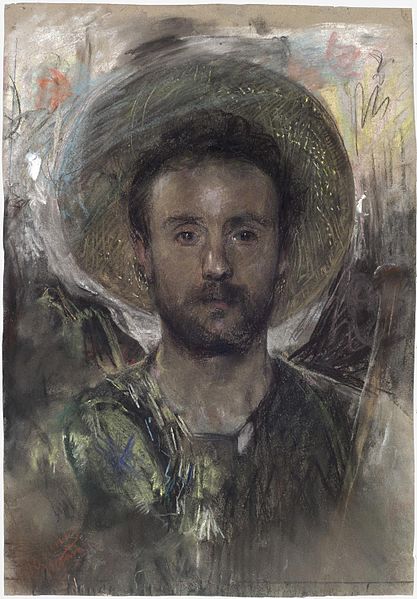
Antonio Mancini- Self-Portrait, 1883

It’s About Reading For Pleasure

One week during the summer I was twelve, I had a crisis.

I ran out of library books.

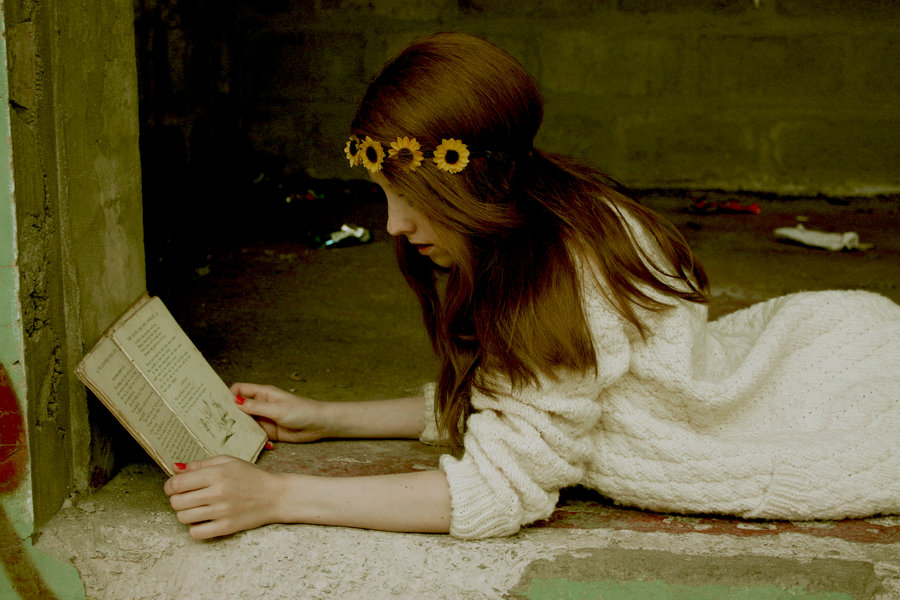
Sure I rode my bike, went swimming with friends, and listened to music trying to figure out what the lyrics meant but I also indulged in hours of reading every day. Books transported me. My mother would call me to dinner and I’d look up, astonished to find I wasn’t a wolf on the tundra but a girl in shorts lying on the carpet. Or someone would knock on the bathroom door and I’d remember that I was soaking in the tub, not eluding soldiers in a medieval battle.

My parents supported reading, but they had no problem saying “get your nose out of that book and go outside.” They didn’t take us to the library more than two or three times a month, so the stack of books each of us brought home had to last.

When I realized I was bookless, I turned in desperation to a volume my older sister read as a class requirement. It had tiny print and a not-too-inspiring title, The Scarlet Letter. “It’s too hard,” she told me. “It’s a classic.”

I didn’t know “classic” meant it was good for me, like a bitter vitamin tablet. I insisted I was out of other options.

I promptly fell into Nathaniel Hawthorne’s words. They were exquisite in a way I’d never experienced, centered on the inner life and all its convolutions, something I already knew well but didn’t have the sophistication to express. I wasn’t aware such books existed. Instead of racing through it, as I did with every other book, I savored it. It felt as if I could run my fingers over the page and feel the texture of shame and longing. When I finished I was newly in love with the idea of classics, so I got books by Charles Dickens out of the library. I worked my way through two of them that summer although they didn’t live up to my great expectations. I thought Dickens droned and was nothing like Hawthorne.

Several years later I had to read The Scarlet Letter for English class. Everyone grumbled when assigned more pages to read. Those piercing insights, when listed in bullet points on the board, didn’t sink into my heart. Lectures and assignments obscured the book’s beauty. I didn’t read it with a cloak thrown over my head or the prick of a rose thorn in my skin. It lay dead, like a victim on the autopsy table.

Then I realized that my love of books had developed entirely outside of the classroom. I’d never really fallen in love with any of the books assigned in school, although the ones our teachers read aloud after recess, a few pages a day or an entire chapter on special days, still stood out in my mind. Reading, for me, was about pleasure. It was more than a habit, it was an integral part of my being. The books I read helped form my outlook and character. I dare say that many of us, if we look back, will find that favorite books from childhood have a surprising link to who we are today.

If I could, I’d reclaim reading for all of us, from earliest childhood on, as pleasure first and foremost. Turning to the written word for information and edification then becomes a pleasure too.