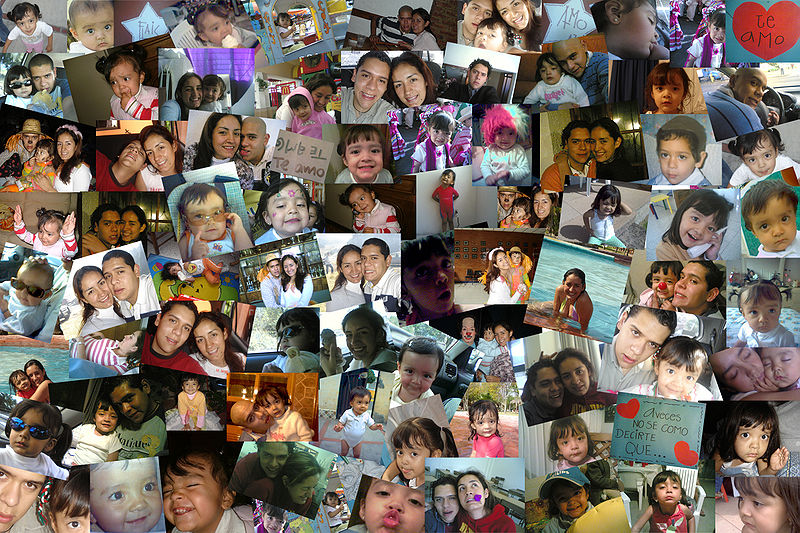
We Are One Being

We are one being, linked in profound and essential ways even though we rarely pause to consider them.

The surface of Earth is seventy percent water just as we are made up of seventy percent water. This is the same water that has been on Earth for four and a half billion years. It flows in and out of each one of us. In cycles too infinite to imagine this water has been drawn up in plant cells, swirled in oceans, circulated in bloodstreams, sweated, excreted, wept out tearfully, drunk up thirstily, formed into new life, risen into vapor, and locked into ice. The saliva in your mouth is made of water molecules intimately shared with beings that lived long ago and will be shared with all who come after us.

We breathe about 600 million breaths in a lifetime. The air we rely on is a balance of nitrogen, oxygen, argon, carbon dioxide, and a dozen or so other gases perfect suited to our existence. It circulates through endless forms and uses, moved by the wind of our planet and by each exhale of living beings—-trees, crows, humpback whales, and newborn babies. It recycles just as the calcium in your jawbone may well have been quicklime poured on a criminal’s grave, a garnet on a nobleman’s finger, cheese carried by a nomadic herder, and a coral reef in a tropical ocean.

Nothing about our bodies is separate from what’s around us. We are nourished by what has grown from the sun’s energy and we remake ourselves constantly, replacing millions of cells every second using only the materials that have been on this planet for millennia.

Quantum physics tells us the principle of entanglement explains how particles, once linked, can remain connected even when physically separated by vast distances, possibly even by time. Entanglement occurs between living beings as well, both human and animal, indicating a greater connection same call a morphic field and others call a holographic universe.

On this planet we are linked to every particle and every life form so intimately that science is beginning to echo what poets and sages have been saying for thousands of years. We. Are. One.

Each person is truly your kin. Our human connection begins with common ancestors. Genealogist Gary Boyd Roberts estimates that everyone on the planet is at least a 40th cousin. That’s because the family tree expands as each generation traces back. You have eight great-grandparents. Their parents had 16 parents. Go back 40 generations and you’d find a trillion grandparents at a time when there were fewer than 15 million people on the planet. That means we share 40th great-grandparents. In that way you are connected to eighty percent of the people on this planet. That includes the guy driving the delivery truck right outside your window and the woman thousands of miles away struggling to find water in a drought.

The smallest children seem to recognize that existence is an “alive poem.” They find kinship with rocks, animals, as well as people. Our human family, built on kindness and cooperation, helps one another heroically. We are waking to the ways our Earth sustains us, working harder than ever to restore justice and ecological balance. We are reaching out to share, laugh, explain, and find kinship with one another.

We are entangled in a universe so holographic that we can’t help but sense the oneness that has been there all along.

10 Reasons to Try This Natural Cure-All

positive thinking, health effects of smiling, good attitude,

I was brought up to be so damn polite that I smiled right through humiliation, pain, even crimes committed against my person. Not healthy. I renounced the whole Good Girl burden long ago. Getting past it isn’t speedy process, although I do aspire to be a badly behaved old lady some day. (My kids insist I’m veering off the mark, heading directly toward strange.)

I may be seeking greater authenticity but I still recognize smile power. I’ve smiled, by choice, despite problems too awful to send to your screen. I’m smiling right now as my family moves on from recent difficulties. The heavy sorrow of losing loved ones is rounding into grateful memory, our falling down house is getting fixed, and my husband has gotten a job after two and a half years of unemployment. Smiling got us through. Plus plenty of snuggling and silliness and resolutely looking at the Big Picture.

Nobody likes to be told to cheer up and put on a happy face. But there’s a lot to be said for the curative powers of a big toothy smile.

1. A genuine smile is easy to identify. Kids as young as six can tell when you’re faking it. A real smile is known as a Duchenne smile, named after 19th century French doctor Guillaume Duchenne. He noted that such smiles engage specific muscles around the mouth as well as those around the eyes. Non-Duchenne smiles (fake smiles) don’t indicate true emotion since people have little control over the outer portion of their eye muscles. It’s not easy to come up with a genuine smile when you don’t feel like it. But the humor found in surprise or the laughter of others can jolt us right into real smiles.

2. When we witness a fleeting smile, even one so rapid we don’t consciously recognize it, our zygomatic major muscles (used in smiling) move in response. We’re biologically primed to mimic the facial expressions we see.

smiling and health, smiling and mental health, smiling and outlook,

3. Mirror neurons deep in our brains activate when we watch someone else, just as if we are doing or experiencing what they are. This mirroring process surely helps us learn as well as empathize. It also indicates that the examples around us are phenomenally powerful. We can’t help but mirror the emotions of people who are angry, cynical, or miserable any more than we can pick up on and experience for ourselves the emotions of those who are enthusiastic, compassionate, or happy.  As Marco Iacoboni writes in Mirroring People: The Science of Empathy and How We Connect with Others,  “Mirror neurons are brain cells that seem specialized in understanding our existential condition and our involvement with others. They show that we are not alone, but are biologically wired and evolutionarily designed to be deeply interconnected with one another.”

4. We’re not only wired to respond and take on the moods of others, it’s nearly impossible to keep a straight face around people who are grinning. Acts of kindness are contagious too.

smiling and positive outlook, good mood, why smile,

5. Another person’s smiling face doesn’t just affect our feelings. Seeing a smiling face, even in a photo, has a powerful cognitive impact. It cues us to higher level, more abstract thinking.

6. According to neurologists, the regular practice of smiling strengthens the brain’s ability to maintain a positive outlook, actually interrupting mood disorders. Smiling also activates brain circuitry that boosts empathy and promotes social interaction.

real smile vs. fake smile, genuine smile, positive outlook, 7. A smile makes a great first impression. Smiling makes us seem more attractive to others. That’s in part because the smile muscles lift our faces but also because people are drawn to positive expressions.

8. People prefer women without make-up who smile over the same women in make-up who don’t smile.

shift into positive mode, smile and change, 9. When we smile, our bodies release endorphins, the natural “all is good” neurotransmitter.

10. A genuine smile is linked to happy marriages and life satisfaction. It’s also linked to a much longer life —seven years in one study. (Even a fake smile gives a boost of five years over non-smilers.)

smile for a long life, smiling and health,

Pro-smiling evidence doesn’t mean any of us should suppress our true feelings. But I’ve discovered a smile and a positive outlook eases those unavoidable miseries life tosses my way. Besides, it’ll confuse people as I advance my plot to become a badly behaved old lady.


Fostering the Flip Side of Gratitude

dark side of gratitude, responding to nay-sayers, when those in authority predict doom, when doctors are wrong, when teachers are wrong, when therapists are wrong,

Cajoled into seeing a friend’s obstetrician, the one she praised so highly, I came prepared with a list of questions folded in my jeans pocket. But I didn’t get a chance to ask about a doula, the Leboyer method, or anything else. The doctor walked in, greeted me and looked me over without performing an exam. Then he announced with certainty that I had “insufficient pelvic capacity.” He assured me that my petite size meant I would never be able to deliver a full-term baby.

“What do you mean?” I gasped.

“It’s nothing to worry about,” he said. “It just means you’ll require a Cesarean.”

I was six weeks pregnant.

I may have been young and expecting my first child, but I dared to question his judgment. He became indignant. A lecture followed about the number of babies he’d delivered. He went on about anoxia and brain damage, then intoned the words that surely convinced legions of women before me, “Do you want to endanger the life of your baby?”

That was all it took.

I never returned.

But how was this self-satisfied man to know if his assertion turned out to be valid?  I didn’t get back to him. Nor did I refute the next obstetrician whose office I also left after he told me my vegetarian diet would result in a sickly, underweight baby.

Although these physicians never knew if their dire predictions came true, I went on to deliver a 9 lb, 10 oz baby quite naturally. In subsequent years I had three more sizeable vegetarian-grown babies.

On behalf of each of my children I learned to speak up–forcefully and often. This pushed me right past the shyness I thought was an indelible part of my personality. Once I became comfortable speaking up I felt empowered to assert my feelings of gratitude as well.

According to Thanks!: How Practicing Gratitude Can Make You Happier and Living Life as a Thank You: The Transformative Power of Daily Gratitude, regularly practicing gratitude boosts our health and well-being. Small acts of kindness also create a ripple effect, generating more compassion in others. Sometimes it’s easier to thank those who are close to us but it’s powerful to acknowledge people who are consequential strangers or people we’ve never met but whose efforts make a difference.
My gratitude practice often takes the form of appreciative letter to strangers. I leave a note for a waitress whose cheery demeanor has healed me of some common sadness. I send a letter to a nursing home administrator describing the tender affection I witnessed an aide show a patient. I send written kudos to the cast of a locally produced play. They don’t take long to write although occasionally I have to make an effort to find out where to send one.

Not long ago I was delighted to finally locate the address of a local school bus driver. I regularly wait in my car as he stops on a 55 mph road and in only a few moments backs into a narrow entry way with the grace and dexterity of a ballroom dancer. So I wrote a letter to explain that seeing him drive with such skill gave me the sense one day I too might develop true mastery in my line of work.

I never sign my name. I think it’s better to write “your customer” or “fellow traveler” or whatever fits the situation. That way it isn’t about me, it’s about a wider sense of appreciation. Although I have to admit, I benefit too. Looking for the good in a situation changes my energy in a positive way.

But really, paying attention only to sweetness and light ignores the shadow. People in positions of authority need to know when their judgments or actions are harmful. All of us can learn from mistakes, unless somehow we’re deprived of the consequences of our words or actions. Today, many professionals are well insulated from those consequences unless they reach litigation.

I don’t advocate griping or threatening. I’m talking about communication that fosters understanding. A simple letter can spare future clients, students or patients the same struggles your family may have endured. Of course this isn’t necessary when the situation can be handled right away. But how many of us have faced long term predictions of doom? A family bed is nothing but bad parenting.  Without this surgery you’ll end up crippled. Homeschool and you’ll have a maladjusted child on your hands. Ritalin is the only solution for that behavior. After years of hearing such pronouncements I have come to realize that updating a professional on his or her assessment is another form of kindness. It’s the flip side of gratitude.

If you choose to get in touch with someone for these same reasons, here are guidelines that have worked for me.

1. Be clear about your own goals before writing that letter or email. Wait until you can proceed without anger. The person you are contacting will be unlikely to learn anything unless you maintain a positive and respectful tone throughout.

2. Refresh the recipient about your situation as it was when you were last in contact.

3. State clearly and kindly that (as a physician, teacher, therapist) he or she is in a position to help many people. You assume that as a matter of professional interest it would be helpful to know about the outcome of a situation he/she assessed.

4. Sticking only to the facts, explain how in your situation their judgment or actions were misguided. Then update with pertinent details.

5. If relevant, include research or other data which the professional can use to gain insight.

6. Wish this person well. Don’t expect or ask for follow up contact.

The highest response to nay-sayers is to flourish joyfully in our choices. So I respond  to those who predicted doom for my children who were held long and nursed often, to those who judged our learning and lifestyle choices harshly—we are well. For that I’m endlessly appreciative.

Lets try, whenever possible, to find the freedom right beyond the boundaries of old ideas. To do that we need to share the insight that comes from experience. There, even the flip side of gratitude turns toward wisdom.

when professional advice is wrong, shadow side of gratitude, finding peace rather than revenge, gratitude's underbelly,

A version of this piece first appeared in the Sept/Oct 2010 issue of Natural Life magazine

Writing Hands image courtesy of Jggy

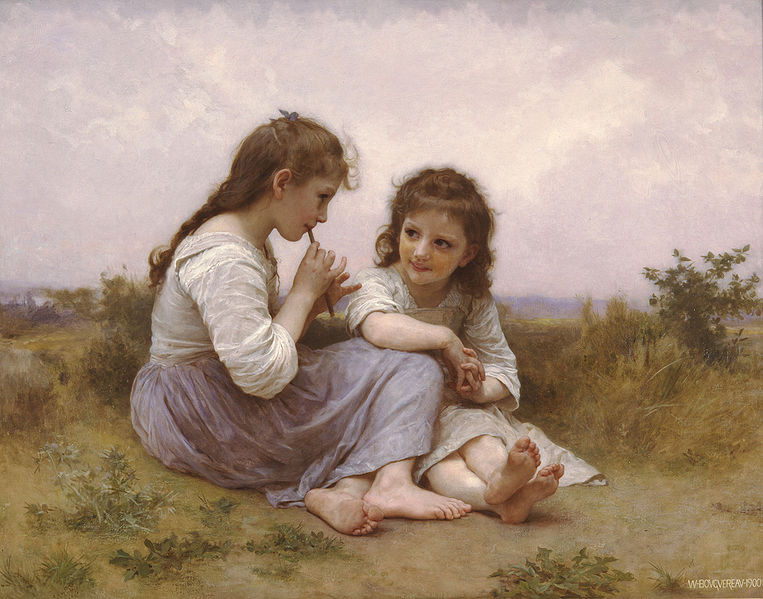
A Childhood Idyll by William-Adolphe Bouguereau

When Girls Think Their Looks Mean Everything

lookism, girls who hate their looks, moms helping girls love themselves, mean girls, geek girls,

As little girls, Elissa’s friends were rambunctious and wholly themselves. They pursued their own interests with no concern for other people’s opinions. They drew comics featuring hilarious dialogue, danced and laughed simultaneously until they fell down in breathless mirth, conducted basement science experiments, and pretended they had super powers. Their mothers talked about how freely their girls expressed themselves, grateful to have strong daughters.

Then it started.

Like a relentless viral infection, one by one these girls succumbed to our appearance-obsessed culture. Elissa watched angrily as her friends were laden with heavy new concerns. They worried about what they looked like and what others thought of them. By 11, 12, or 13 years old they hid their unique interests and suppressed their considerable talents. Instead they maintained a near constant awareness of hair, make-up, clothes, body shape, who said what, and how everyone else reacted.

Threats, screaming outbursts, bleak despair became common. And that was just their mothers’ reaction to their daughters’ behavior. Helplessly witnessing what has become a female ritual of relentless self-scrutiny causes many of us to lose it.  We know all too well that the effort to constrict oneself into a mold is exhausting.

But who can blame our girls, let alone the adult women who continue to suffer painful confidence wounds, when impossible standards are the norm?  It’s almost as if we females are set up to fail at this appearance game. Oh wait, we are. Even the Beautiful People aren’t beautiful enough.

photoshopping, mena suvari, celebrity photoshop, teen beauty,

Celebrities “fail” too. Take a look at the already lovely Mena Suvari, model and actress whose acne is removed, pores eliminated, eyes brightened and skin smoothed.

Check out the before-photoshop pics of women like Kirsten Dunst, Alicia Silverstone, Christina Ricci, and others. Until they’re rendered plastic smooth and Barbie thin, they look somewhat like ordinary people.

And let’s not forget, reality shows have made transformation from ordinary to perfect an entertainment phenomenon in a society where make-overs for little girls and high heels for babies aren’t out of the question.

Image after image through their young lives, girls absorb an ever present lesson that females aren’t good enough as they are. Such lessons aren’t confined to images. Girls and women portrayed in movies are typically clad in sexualized clothes and lead one-dimensional lives.

What’s the effect?

Devastating, according to the American Psychological Association. Shame, anxiety, eating disorders, and depression. Girls judge their bodies harshly as young as the age of five.  No wonder a girl might choose keep the vitality of her true self hidden.

But there’s another side, often overlooked. Because Elissa and a few of her friends didn’t suffer (at least fully) the perils of lookism. They barreled through their pre-teen and teen years fueled by interests strong enough to hold them steady. Elissa poured her energy into a number of pursuits. She was a docent at the zoo, raised white rats, studied an ever increasing range of scientific interests, and moderated an online forum. One of her friends took up photography, becoming proficient in pinhole camera techniques and making albumen prints, while also advancing in a hockey league. Elissa noticed that girls who didn’t engage in the looks-first game were often ostracized by their more mainstream peers, but they also had strong friendships beyond school. Elissa, homeschooled through highschool, was one of those friends. She says she felt freer to follow her own interests without the pressures of school culture and advocated individuality to others.

As a teen, Elissa was angry at the influences that swayed so many of her other girlhood friends. She scorned their preoccupation with boys, clothes, body image, and interpersonal drama. But now Elissa is in her early 20’s. She’s reconnected with many of these same friends and learned a little about the adversity they suffered as they made their way through adolescence different than hers. One of her childhood friends became a mother at 15, another made multiple suicide attempts, still another struggles with bulimia. Elissa is sure the strengths from girlhood are still with all of them. She just doesn’t know how to let them know that their looks don’t define them.

Here are a few resources to light the way.

About Face

Adios Barbie

All Made Up: A Girl’s Guide to Seeing Through Celebrity Hype to Celebrate Real Beauty

Body Drama: Real Girls, Real Bodies, Real Issues, Real Answers

Body Outlaws: Rewriting the Rules of Beauty and Body Image

Can’t Buy My Love: How Advertising Changes the Way We Think and Feel

Mothers for a Human Future

New Moon Girls

Packaging Girlhood

Pink Stinks

Resolving the Confidence Crisis

Teen Voices

The Body Project: An Intimate History of American Girls

101 Ways to Help Your Daughter Love Her Body

*

*

Trying to Be Happy courtesy of Orm Huz

On Living Happily with Less

living on less, the shift, RFK, gross national product,

My husband is the bee inspector for two counties. He meets interesting people every time he goes out to another apiary. If he lingers after the heavy work of opening hives, the conversation invariably heads in the direction of self-reliance. People tend to talk about making home and equipment repairs, canning and freezing a garden’s bounty, earth-respecting ways of farming, living on less. It seems everywhere around us people are doing what they can to save. They’re also working harder to connect with others who have experience and talents to offer.

After two years of searching for full-time work my husband is well acquainted with these topics, but also because we’ve spent decades trying (sometimes with slapstick results) to live well on less. We make do, repurpose, and enjoy frugality without making a fuss about it. It’s a work in progress, as we’re still trying to gain reasonable proficiency in skills our great grandparents took for granted.

The times we live in are tossing millions of people in this direction whether they go willingly or scream all the way. It isn’t easy. It probably isn’t fair either. Our current economic downturn came after a long slide of wealth slipping from middle class hands into the tight grip of the wealthy. Nearly 8 million jobs are gone, many possibly for good. Yet the richest among us have actually increased their holdings.

Some of us have lost the illusion of security. Some of us have lost much more—jobs, health care, pension funds, and homes. All of us have been forced to grow a little. That’s part of a larger shift. Insecurity pushes us to pay closer attention to our core values. We’re recognizing that purchases don’t really buy happiness and as a result, saving more than we have in decades. We’re doing more for ourselves and still reaching out to help others.  We’re as ingenious, adaptable and happy as we choose to be.

The shift is even more noticeable when we see certain long-established structures around us breaking apart, with more cracks appearing every day. Just look at what’s happening to prescribe-and-placate medical models, inflexible financial institutions, condemning religious frameworks, and rigid corporations.

But these current conditions of breakup, economic chaos, and environmental decline are exactly those which are (slowly) leading to beneficial change. Collectively we’re waking up to the weakness of limited thinking and short-term fixes. Hopefully we’re also waking up to the reality that we’re in this together—rich and poor, developed and developing nations, young and old, left and right.

We see in our own lives that what’s important can’t be measured by dollars alone. Things like good health, supportive relationships, a vital ecosystem as well as economic security. Even the word “wealth” is derived from the Old English term “weal” which means “well-being.”

Less than two months before he was assassinated, RFK said in a speech,

“…America is deep in a malaise of spirit:  discouraging initiative, paralyzing will and action, and dividing Americans from one another, by their age, their views and by the color of their skin and I don’t think we have to accept that here in the United States of America.”

He went on to say,

“For too long, we seemed to have surrendered personal excellence and community values in the mere accumulation of material things…  The Gross National Product counts air pollution and cigarette advertising, and ambulances to clear our highways of carnage.  It counts special locks for our doors and the jails for the people who break them.  It counts the destruction of the redwood and the loss of our natural wonder in chaotic sprawl.  It counts napalm and counts nuclear warheads and armored cars for the police to fight the riots in our cities.  It counts Whitman’s rifle and Speck’s knife, and the television programs which glorify violence in order to sell toys to our children.”

“Yet the gross national product does not allow for the health of our children, the quality of their education or the joy of their play.  It does not include the beauty of our poetry or the strength of our marriages, the intelligence of our public debate or the integrity of our public officials.  It measures neither our wit nor our courage, neither our wisdom nor our learning, neither our compassion nor our devotion to our country, it measures everything in short, except that which makes life worthwhile.”

redefine the GDP, frugal living,

Time to clarify what we mean by well-being—for ourselves, our economy and our future.

*

*


*


Patchwork Living Bee post*

One with the Universe courtesy of Suvetar

Together courtesy of Morfa9977

What To Expect From A Load of Crap

optimism, bad day, negativity,

I’ve had one of those days. A steaming pile of crap sort of day. You know how it is.

We all have them. When the morning starts out with headache, an angry tailgater or the continuation of some tough circumstances the bad mood usually isn’t far behind. This has a ripple effect. We complain to others, tipping conversational topics toward what grinds and grates. And somehow that negative outlook sets our personal radar to scan for more difficulty on the horizon. Those days rarely improve.

Some of us hold out a little longer. We work hard at emphasizing the positive, which is handy because moods are downright contagious. Studies show an individual’s emotions can influence entire groups (families, playgrounds, workplaces). Positive contagion leads to more cooperation and less conflict. Negative contagion, well, you know how fun that can be. Apparently moods stick like that pink goo from The Cat in the Hat Comes Back.

No one is upbeat all the time. Besides, constantly perky people inspire loathing. But I keep learning the necessity of choosing the way we experience life’s ups and downs. You know how easy it is to focus on five minutes of difficulty rather than the smooth progress of the day. We do it all the time. A child’s angry outburst overshadows hours of sunny cooperation. A colleague’s late return from lunch somehow reflects badly on a week’s worth of work. Or a whole slew of minor problems start to look like a steaming pile.

I’ve discovered while reading Buddha’s Brain: The Practical Neuroscience of Happiness, Love, and Wisdom that we’re fighting a hard-wired tendency. Our brains pay more attention to the negative than the positive. That was probably helpful when saber-toothed tigers threatened our early ancestors. Not so helpful these days.

Fortunately I live on a small farm where the cows produce loads of actual crap. So I know what to expect from it. Whether mixed in to the garden beds or left in a heap, eventually it bursts into flower.

The same potential lies dormant in our worst days. No matter what, we’re still in charge of our own attitudes. Because “sh*t happens” is only one way to look at it. “Compost happens” too.

*

*

*

Dirt in hand photo courtesy of Tea Cupie

Flower in hand photo courtesy of Prismes

The Beauty of Ordinary People

“Not everything that can be counted counts, and not everything that counts can be counted.”

Einstein

*

*

*

*

The world is full of ordinary, wonderful people.

Ever since I learned about Randy Stang in Regina Brett’s Plain Dealer column his example of casual grace has helped me see greatness in a new way. Those who bring out the best in themselves have a way of doing that.

Most people who get media attention are nothing like us. They’re obnoxiously wealthy, phenomenally talented or otherwise good at accumulating fame.

A great deal of publicity is also devoted to those who bring out the worst in themselves. They commit crimes or wreak havoc more acceptably, perhaps as scornful political pundits.

Occasionally attention shines on people who devote themselves to a cause in ways we can’t imagine doing or who risk their lives to save a stranger. True heroes. We may marvel at their efforts but end up feeling worse about our own choices. Who can imagine sacrificing as these selfless people do?

But Randy Stang was not the sort of man who attracted attention. He lived with his family right by Bradley Park in Bay Village, Ohio. Tall lights lit up his yard till late at night. Enthusiastic yelling from nearby soccer, basketball and baseball games made for a noisy home. When Randy Stang heard about a proposed biking and skateboard park he decided to attend the public hearing. So did many of his neighbors.

He waited for his chance to talk holding three pages of notes. A middle school teacher spoke about the six years of resistance the skate park had already faced, saying Bradley Park was likely the last hope for local bikers and skateboarders. Residents also spoke, saying the noise and inconvenience of a skate park was unacceptable. They liked the idea of teens gathering somewhere but preferred that place be far from their backyards.

Finally it was Randy Stang’s turn to talk. He explained what it was like to live near the park. He mentioned the noise and lights. He noted that his garage had been broken into just two days before the public hearing.  Then he gave his opinion.

“I’m in favor of a skate and bike park in Bay Village in Bradley Park. I am wondering if the citizens against the park have no grandchildren, no children, or are not a child themselves.”

He finished, saying, “You want to put it just to the north of that baseball diamond there, probably about 50 feet from my yard.”

Then Randy Stang collapsed. A nurse and doctor performed CPR to no avail. But his efforts were not in vain. It looks like Bay Village will be building The Stang Memorial Skate and Bike Park.

People who are acclaimed every day in the media don’t exemplify us. It’s the uncelebrated lives of ordinary, wonderful people who form the bedrock of human existence. These people are next to you and across the world. Chances are they won’t gain notice unless they perish dramatically while simply being themselves.

Unselfish acts performed a million times a minute weave us together as a caring species. We tend to the helpless, comfort the sorrowful, share knowledge and create happiness. It happens most often in small, unnoticed ways. This is why I know humanity has every hope of skating ahead toward the very best possibilities.

*

*

Creative Commons photo collage