Life Lists

life lists, journaling, paying attention,

What do you want to remember?

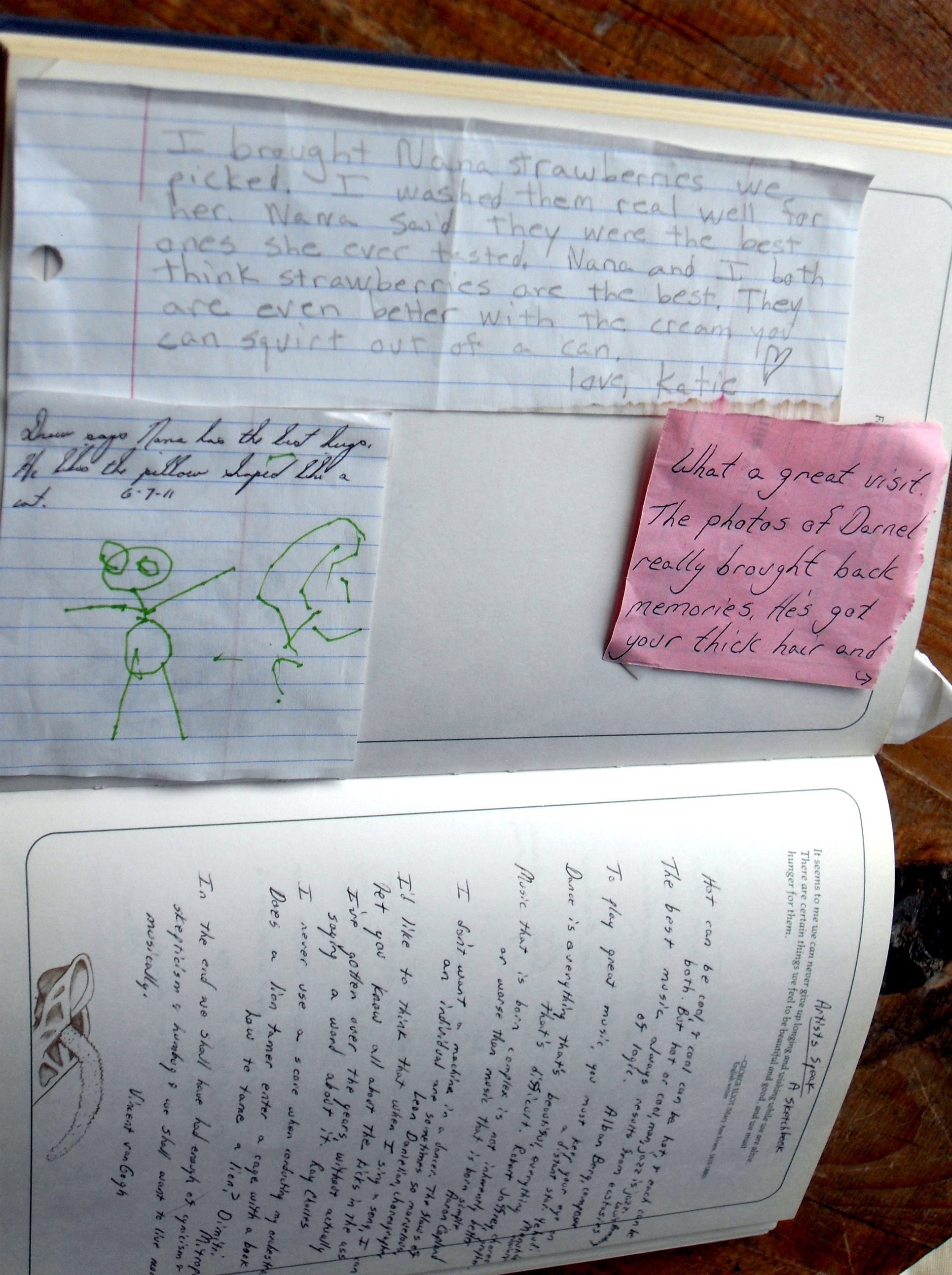
The most avid bird watchers keep Life Lists, tracking the first time they sight a bird. They write down information like order, genus, and species. Usually they note much more. Things like date and place the bird was spotted. The more detail, the more a birder’s Life List becomes something greater than a factual log of avian sightings. Years later the pages can return that person to an afternoon standing in the dappled sunlight of a New England forest when a blue, orange, and yellow flash heralded the arrival of a Painted Bunting. It can evoke a remarkable trip to Mexico where along a riverbank three distinctive wavery notes of a Great Tinamou were heard, and all the rest of that day bird after bird was sighted until darkness arrived. It can bring back time spent with dear friends in whispered conversation waiting hours for a glimpse of a single Black-Capped Vireo.

I’m no birder. I appreciate but know next to nothing about our feathery friends. But I am intrigued by the Life List concept. Life Lists keep birders motivated. The lists also alert them to a wavelength most of us ignore. A wavelength sensitive to birdsong, flight, and the faint hush of a wings on a nearby branch. Keeping track of any one thing is entirely unnecessary but such lists cue us to a chosen frequency.

What do you want to notice and cultivate in your life? Here are some possible Life Lists to consider.

Books That Made A Difference   I’ve often thought of books that changed my worldview or opened doors inside me with their insights. Do I remember the titles and authors? Only sometimes. I truly believe there are pivotal books that make us who we are. I started such a list years ago but let it lapse.

If you keep such a list, add more than title and author. Include a quote or two, some quibbles you have with the text, questions you’d like to ask the author, why this book came at the right time for you, where you were when you read it, what it means to you. Many people are keeping their book lists on GoodReads and Library Thing.

Wildlife Seen  Like a hugely expanded birder’s list, this could be open to all species or your own particular fascination, perhaps spiders (that would keep you busy with something like 38,000 species). And like a birder’s list, you could note species, location, description, your impressions, and much more.

Trips Taken  My mother made an effort to write about the long summer trips my family took, filling spiral notebooks with destinations and mileage and her impressions. I cherish them now, even if those trips left me with the wrong kind of lust.

If you keep such a list, fill it with photos and memorabilia. Make notes about your expectations and how they were fulfilled, about sights and sounds and tastes, about conversations and funny moments.

Favorite Movies (or Movies Seen)  This can be remarkably helpful if, like me, you find yourself starting to watch a movie that sounds good only to realize you’ve seen it. A list of movies seen, with details about favorites, is something I marginally keep up on Netflix just to keep myself from re-watching something I didn’t enjoy in the first place. I have friends who attend yearly film festivals, keeping extensive notes that they share with non-festival goers like me when those movies are released. Again, the more details the better. Write down who you were with when you saw the movie, where you saw it, snippets of meme-worthy dialogue, your favorite scene, actors you predict will go places, and your review.

People Who Have Influenced You  So many people flit in and out of our lives. Sometimes we don’t realize their impact until years later when we see they served as role models (like the woman I met during my brief espionage career) or anti-role models (a surprisingly important motivator). This is one of the few lists that can be made retroactively. Think of neighbors, friends, classmates as well as public figures. Note what they did and said along with behaviors that contributed to that influence. Once you start writing these observations down you may be more attuned to daily influences of people in your life, from the spirit-lifting cheer of a clerk to the resolutely calm example of a friend in trouble.

Dream List  Sure, you could write a bucket list and cross off each experience. But I’m talking about keeping a list of dreams you remember. I’ve written down only my most memorable and startling dreams for years, usually the ones that refuse to leave my mind. There are potent messages in dreams, coming to us from deep places where wisdom waits to inform us. If you want to more fully remember your dreams, try this. Before falling asleep, remind yourself to remember and understand your dreams. As you waken, pull the threads of your dreams into your conscious awareness. Whenever possible, write them down. It helps to take the images in the dream (ladder, teacher, highway, blue car) and note what each means to you. Look back at your dream list every now and then, you may find themes unspooling into new awareness.

Paths Hiked  There’s something about coming upon new vistas along the trail that prompt reflection. Those musings might be interesting to record along with hike data like location, distance traveled, terrain, weather, and date. Note who you hiked with and maybe what you talked about or laughed over. Include photos. Some folks contribute their photos and thoughts on Tumblr sites or blogs.

Words That Cut To The Center   This is a list I’ve kept on and off since I was a teenager. I find a quote or poem that distills meaning to the essence and write it in a journal (or now, on a Word doc). I’ve lost several of these lists, only to find them years later and catch a glimpse of what occupied my heart during those times. I’ve also found such lists remarkably useful, perfect when I want to share a poem or quote with a friend.

Gratitude List    This is a popular one, even recommended by mental health experts. I’ve learned it’s possible to look past what we label “good” and “bad” to appreciate mistakes, doubt, and crisis. I’m sure a gratitude list filled with sweetness and light can lift a mood. But I suspect a gratitude list more fully fleshed out might lift our spirits into a realm of blessed understanding.

Belly Laughs, Inside Jokes, Made-Up Words  Laughter is good for us, but we rarely remember what caused us to laugh ourselves into tears. I wish I’d started a list years ago with just a few notes about who, where, and particularly what we found so funny. I suspect I’d laugh all over again.

I’d also love a list of all the inside jokes and words unique to my family and friends. Some trigger us to laugh, some promote a feeling of solidarity because they remind us of shared experiences. How easily we forget.

Here’s one my family still uses, “You no see big thing like train?”  A friend drove a truck for a business started by an immigrant whose English wasn’t easy to understand. The business made money in part because of the owner’s extreme frugality, he barely even maintained the truck. One day the friend was making a delivery when the truck’s brakes failed. Unfortunately they failed as he was approaching railroad tracks where a train was stopped. It was a large truck and much as he tried, he only managed to slow down. He crashed into the train. He was fine, the truck was not. He called his boss to explain. The boss yelled, “What, you no see big thing like train?” This line has proven itself handy in many circumstances, thankfully none involving real trains or failed brakes.

Tastings  Savoring the good things is a tasty reason to start a list.  Consider wines, beer, cheeses, chocolate, or heck, start a list of Chomping Something From Every Street Cart I Can Find. Take notes on subtle flavors, good pairings, and circumstances such as where you were and who you were with. Highlight the very best. Hmmm, I like that street cart idea…

Perfect Moments   We live in a happiness-chasing culture, perhaps because advertisers tell us in every possible way that it’s easily purchased. But if we pay attention we find that perfect moments happen all by themselves. It’s a father rocking a baby to sleep, a calf taking first tottering steps in a pasture, a turn on the dance floor made of movement and beat and sheer exuberance.  These moments aren’t easily remembered. They enlarge our lives only briefly before drifting into fragments of memory. Taking time to sketch a perfect moment is an unexpectedly rich way to capture it (try these drawing hacks for non-artists). You might also draw a mind map or write a poem. Who said lists have to be list-like?

Juncture List  You know those junctures when a decision is made that shifts the course of your life. Sometimes we realize something big is about to happen: picking which college to attend or starting a job or ending a relationship.  Sometimes the choices seem minor at the time, like not answering the phone or telling a white lie or ignoring a symptom. This is another list that is more easily written while looking back. It may not seem valuable to parse out where things changed, but it helps us see larger patterns, feel synchronicity’s strange power, and appreciate the mysterious paths we’ve taken to arrive at this moment.
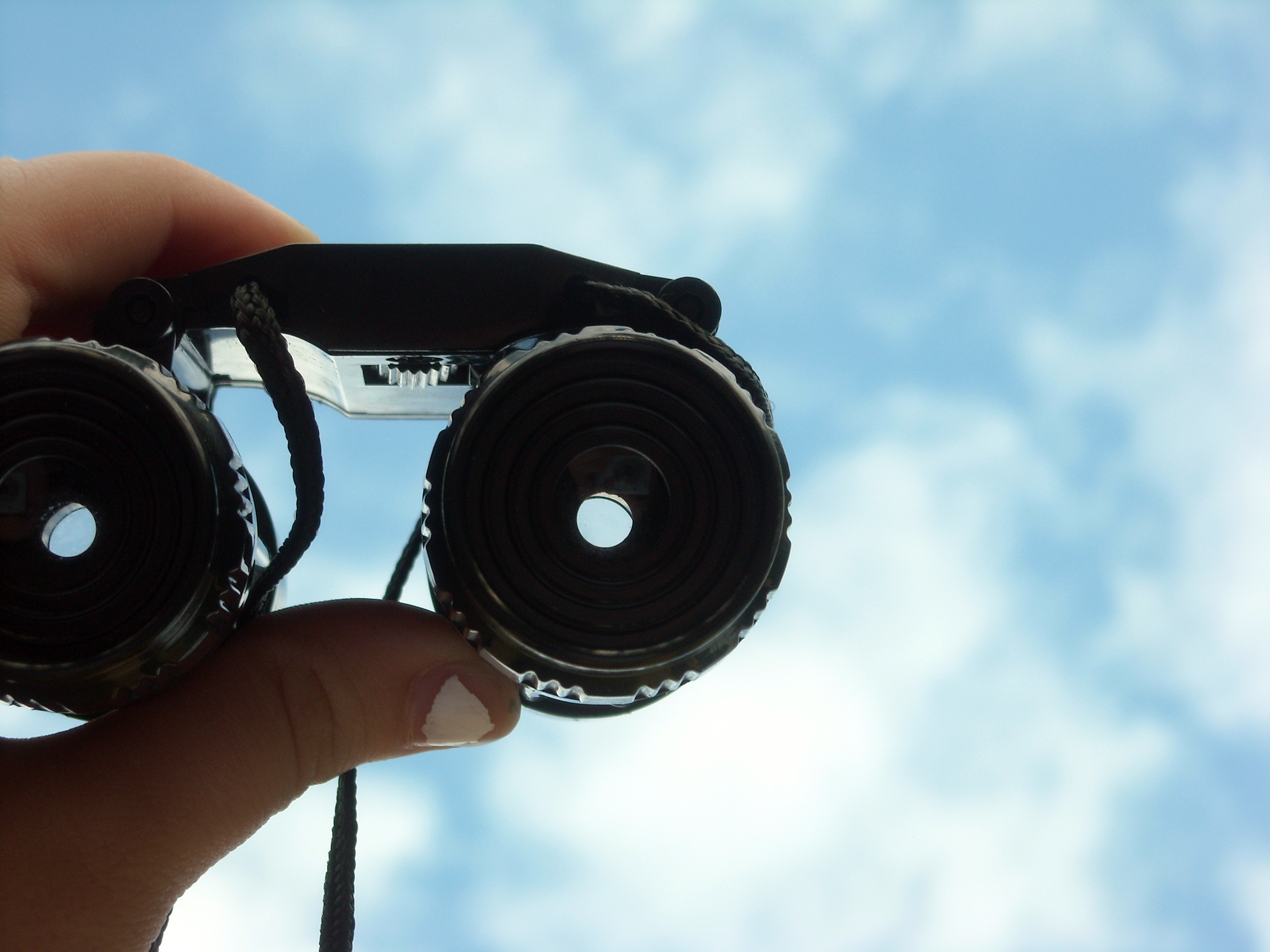
It's about paying attention.

The Antidote Is Awe

cure for stress, coffee ritual, easing worry, finding peace,

My husband and I seek refuge on the porch each afternoon in a ritual known simply as “time for coffee.” Somehow just out the door we’re a step away from the pull of obligations and worries. Here we feel centered by the light through the trees or the sounds of birds or the strange lumbering grace of a bumblebee in the flowers.

Our lives, and yours too, are twisted into knots so complicated we can’t see where they start or end. Those complications are made of bills to be paid, old arguments that didn’t heal, long hours and too little sleep, by endless political bluster and the fallout it causes. It’s good to let go of those tangles, even for a while.

Today on the porch we watched an insect we’d never seen before. It skittered without visible wings, its body open like the spokes on a wheel or the arms of a star. It looked improbable as an undersea creature swimming in the air. We gaped in quiet wonder until it was out of sight.

A few moments of awe are all it takes to remind us that our lives aren’t about those knots. We are pulsing, breathing wonders ourselves in a world bursting with miracles.  It takes looking closely at only one thing to see those miracles, whether watching a spider spin her web or looking at fungi that seemed to spring up overnight.  We exist for so short a time on this beautiful planet. We clamor over concerns when our lives may be better measured by how much awe we allow ourselves.

I have things to do, but it’s time for coffee. I’m heading for the porch. Hope you do the same.

We are, perhaps, uniquely among the earth’s creatures, the worrying animal. We worry away our lives, fearing the future, discontent with the present, unable to take in the idea of dying, unable to sit still.   Lewis Thomas 

Reprint from my farm site Bit of Earth Farm

Staring Down Worry

mystical experience of fear, metaphysical encounter with darkness, overcoming evil, facing worry, staring at Satan, prince of darkness in my room,

Image courtesy of pitrisek.deviantart.com

Something happened the night Worry appeared to me.

Some of us are chronic worriers. There’s probably an adaptive reason for this, since humans who envisioned potential dangers would be more likely to survive and pass on their genes. But saber-toothed tigers aren’t lurking by our front doors these days. I know for a fact that worry generates misery while producing absolutely no benefit. Giving it up, however, isn’t an easy matter. Worry runs in our heads like movies of disaster to come, unbidden yet powerful, making some of us wary of the smallest choices.

I worried from the earliest time I can remember. It may have an adaptive start in my life too. As a tiny child I spent many nights struggling to breathe through asthma attacks. When I was five years old I got a bit of food lodged in my esophagus. When my worried mother called the doctor he said it couldn’t possibly still be stuck hours later, I was just overreacting. I stayed awake all night spitting my saliva into a bowl, since even a moment’s inattention caused it to run down my windpipe and sent me into fits of choking. The next morning my parents took me to the ER where a surgeon removed a very stuck bit of food. The year I turned nine my grandparents all died, catapulting me into years of obsessive worry that everyone else I loved would die too. I was assaulted by an adult when I was 13, telling no one until years later. The focus of my worry widened as I spent years searching for the causes of evil and suffering. Worry continued to be my companion when I hit my 20’s. Each of my babies were born with medical problems. The unknown dangers threatening even the most innocent lives suddenly resided in my house. Chances are my chronic insomnia has roots in all this worry.

One night as I lay awake worrying, I had an experience that profoundly changed me. That night I had plenty of things to worry about: serious concerns about my children’s health, our finances, and other problems. Normally I fought off worry with gratitude—focusing on the comfort of my family sleeping safely nearby and the many blessings in my life. But worry was there haunting my mind and hollowing my body.

Sudden as a car crash, something happened.

I know it sounds bizarre but it was as real as the lamp on my desk is now. I became aware of a huge black column next to my bed. It was comprised of the most immense energy I’d ever experienced. It was dark and powerful with a presence that seemed alive and completely aware of my thoughts.

I had the sense that it was of such infinite size and strength that it went through the floor and out the roof, stretching far in both directions. I should have been more frightened, but the moment this column appeared I realized, as if the message hit all my cells at once, that I had summoned this darkness.

It was born of my own intense worry. It was a profound lesson that went through me the way wisdom does, filling not just our brains but also our bodies and souls. Lying there, I resolved to bring forth every ounce of light I could muster.

The instant I thought to do this, whatever that column was disappeared.

I woke my husband to tell him. He kindly assured me that I was nuts. Until this post I’ve only told one other friend. But in today’s atmosphere of worry, I wanted to share this image—of fear so huge that it manifests next to you. It taught me that worry is a kind of unintentional evil. It presupposes things will go wrong. It’s the opposite of faith.

I’m not entirely cured of worrying nor would I ever change those earlier years of worry. They’ve made me stronger, more open to the beauty found just beyond despair, and left me with a positive quest. But ever since that moment, years ago, I have made a conscious effort to reorient myself.

Ironically, my family has been through times more difficult than I could have imagined back when this happened—crime, financial hardship, loss, and grief. But I know the antidote—to shine forth with all the light I can. Some days I’m practically optimism’s parasite.

But really, if all my moments of hope coalesce into some kind of vision, I can’t wait to see it.

metaphysical experience of evil, starting at evil, facing Satan, summoning fear, transcending worry, transcending fear, overcoming worry, renewing optimism,

Image courtesy of m0thyyku.deviantart.com

Book Zombie

zone out while reading, reading addict, can't stop reading, staying up late to read, tune out the world when reading,

L.G. Weldon, book zombie

book [book]  noun
1. a work of fiction or nonfiction bound within covers or digital version
zom·bie  [zom-bee] noun
1. a person whose behavior or responses are wooden, inanimate, remote
 2. an eccentric or peculiar person.


I stayed up past two a.m. last night happily churning through a book. Reading seems timeless to me, a book-related fugue state that got me in trouble in elementary school.  Many days the class moved on from reading time to math while I remained completely absorbed in a book. I’d look up to find I’d been called on to answer an equation. My brain would scramble to move from The Wolves of Willoughby Chase’s18th century manor house to third grade long division, the plight of children dealing with villians more real than dreary numbers chalked on the board.

This still causes me trouble. I have no idea how many minutes or hours have elapsed when I finally lift my eyes from the page. That’s not helpful. At night I tuck into an enticing stack of books, often enjoying non-fiction for a few hours and then finishing up with a long indulgent dessert of fiction. The evening me doesn’t care about the morning me, she unpages chapter after chapter oblivious of the clock’s reality. But no matter how late she stays up reading there’s still an early start. When the morning me looks at the stack of books she isn’t bitter. She may sigh, but she also looks forward to reading some more.

When my kids were tiny I only let myself read when they were asleep or nursing. Okay, I also read while they were safely strapped in the stroller, pushing it with a book propped against the handle. I hoped this would keep them safe from their mother’s zombie reading state. It didn’t. Now they’re zombies when they read. Or maybe they pretend to be, the better to filter out reminding parental voices.

I can’t recall a fraction of all the marvelous books, essays, poems, and articles I’ve read over the years. But I’m convinced that they’re in there, ready to provide a bit of insight or wisdom I might call on when the need arises. They are a part of who I am as surely as the experiences that make up my life.

Yes, today I feel pretty zombified with only a few hours of sleep due to the magical novel, The Night Circus. But if my schedule allowed I wouldn’t wait until this evening to finish it.

Perhaps because I’m tired, it occurs to me that books lure us into this zombification. Think about it. Close scrutiny of readers reveals that we willingly zone out, only our eyes moving in oddly repetitive back and forth motions. While reading we are out of our own minds, happily roaming through the imaginings of someone else’s. Perhaps our beloved books build brains to feed on them. If that were true I’d say, “Nosh away my dear books. Make a buffet of my mind. I am your happy zombie.”

Are you a fellow book zombie? If so, what are you reading lately? And if not, does something else cause you to zombie-out?

Let The Youngest Teach You Mindfulness

child-paced, slow down, slow to appreciate,

Image from jesse.millan’s Flickr photostream

Ask any child. When adults meet them for the first time, standard questions include, “What do you want to be when you grow up?” right after classics like, “What grade are you in?” and “What’s your favorite subject?”

Such questions, unintentionally, gauge a child’s progress toward adulthood. That’s because adults tend to be future oriented. We’re distracted from the present moment by the need to plan and work toward any number of goals—what to do about dinner, how to juggle next week’s schedule, when bills can be paid. These distractions take our attention away from what is in the here and now. When we think ahead so often we have less time to notice, let alone appreciate, what makes up our lives minute by minute.

What is impatience except denying the value of the present moment? The watercolor effect of rain on the window, the meandering quality of a child’s conversation, the long wait for a pot to boil—these can be occasions to experience impatience or opportunities to breathe deeply and be present, gratefully.

Leaning so often toward the future unconsciously demonstrates to our children that later is more important than now. Yet as we know, later never comes. As long as we’re alive there’s always “later” to strive toward. Worse, we are surrounded by advertiser-driven messages telling us that we aren’t there yet, that we need to do more or become something more in order to have friends, be successful, find love.

The nature of early childhood is the perfect antidote to this hurry-up attitude. That is, if adults truly pay attention to the lessons the youngest model for us. Young children who are not yet pulled by the adult world’s messages are oriented to the present moment. When forced to disregard what is vital to their bodies and spirits—pretending, daydreaming, playing, snuggling—they rebel. They are who they are, where they are. They’re not caught up in the future tense which dimishes the here and now. They demonstrate the oldest way of knowing.

Pay close attention to the youngest children in your life. Let them help you learn solutions to our cultural overdrive.

As we slow down we have time to truly know each other and to truly know ourselves. We’re more aware of the messages our bodies send us and can act on those signals before they become symptoms. We have time to reflect. Time to remember our dreams when we awaken. After all, time is the only true wealth we have to spend.

slowing down, slow movement, child-pace, mindfulness, mindful living, mindful parenting,

Image from kla!’s Flicrk photostream

Fun Theory

I’m not aware of any official Fun Theory in the field of learning. But fun shimmers under the surface of motivation and focus like a very big fish. And the fish named Fun shouldn’t be ignored.

I lifted the term Fun Theory from an old Volkswagen campaign. One of their videos shows busy commuters choosing an escalator instead of a staircase. People are rarely motivated to do otherwise. But when the same stairs were transformed into a giant electronic piano sixty-six percent more people chose to hop, dance and run up those musical steps. Fun works. (It also sends the Volkswagen logo around the world in a great example of viral marketing.)

It’s no surprise that pleasure is motivating, although what one person finds enjoyable may not be remotely engaging for the next person.

That’s the key. Fun is highly individual. It can’t be easily pre-packaged, even though promoters of textbooks, curricula, and enrichment programs assert their products do just that.

You can tell when educational materials and experiences don’t engage the young people in your life. They exhibit, shall we say, obvious symptoms. I won’t list them here. These symptoms tend to cause us all kinds of angst.

A child’s stubborn insistence that learning be meaningful and interesting is actually a sign of positive selfhood. We need to pay close attention to each child to really see what sparks enthusiasm, evokes awe, sharpens focus, builds on interests, and challenges abilities. That’s what advances learning.

The elements that make an activity or interest compelling for any one person can’t be neatly summed up, nor should they. A person is too complex to reduce to a List of Handy Motivators. But you might want to consider such factors if you’d like to understand why your child prefers to do things his or her way, or why some enriching activities “work” and others don’t. Below you’ll find brief notes about some of the factors that make learning intrinsically pleasurable and interesting. Think of your child as you read over the list. Think of yourself too. You’ll recognize many unique ways that lively, engaged learning happens quite naturally.

                Trial and Error 

Learning is fun when errors don’t feel like failures. Watch a group of friends figure out what tools and design elements they’ll use to make bracelets from a cast-off metal objects. Their initial results will likely be both positive and negative. Their mistakes will help to guide and refine their progress. Thomas Edison said of trial and error, “Results! Why man, I have gotten a lot of results. I know several thousand things that won’t work.”

When your child is building a fort out of branches she may experiment with several approaches. This open-ended process allows her to repeat successes and learn from errors, getting ever closer to the desired result. Trial and error often pulls the learner forward to greater mastery. It’s also tremendously enjoyable.

                 Meaning  

Full engagement in any pursuit that is meaningful to the individual may not sound like a prescription for fun. But it is, because it tends to lead to what is called flow:  a sense of focusing so fully that we lose sense of time, discomfort, even self.

Artists and athletes aren’t the only ones who experience flow, children easily merge into this state. A child may experience flow while engaging in make-believe, drawing, swinging on a backyard swing, playing the guitar, fixing a bicycle, even organizing a shelf.

You may not be able to predict what has meaning for your child, but chances are it fuels learning. Your daughter’s fascination with horses may lead her to equine-related mathematics, history and science. Her learning is enlivened with wonder and purpose. That absorption is also fun.

                Discovery/Exploration    

Discovery is highly motivating and feels quite a bit like fun. It lures babies to put everything into their mouths. It propels us to try new music, peer around forbidden corners, travel to distant places.

When a friend brings up an obscure bit of information, your preteen may check it out later only to find an unexpectedly engaging exploration through subjects that never interested her before. Or perhaps your son’s curiosity is piqued by a new venture he wants to try like making homemade cheese. The project opens up to ever wider explorations such as homesteading skills, the claims of raw milk advocates, and recipes using artisan cheeses. For most of us independent discovery has the greatest allure.

                Novelty

What is new and unexpected heightens attention and activates all kinds of interest. That’s why marketers are constantly coming out with newer versions of the same thing. Novelty leads readily to exploration or play. By itself, novelty wears off quickly. (Those commuters will tire of the musical stairs and probably go back to using the escalator.)

You can rely on something new to stimulate interest. Just remember that too much reliance on novelty doesn’t help children build their own deeper resources of attention and interest.

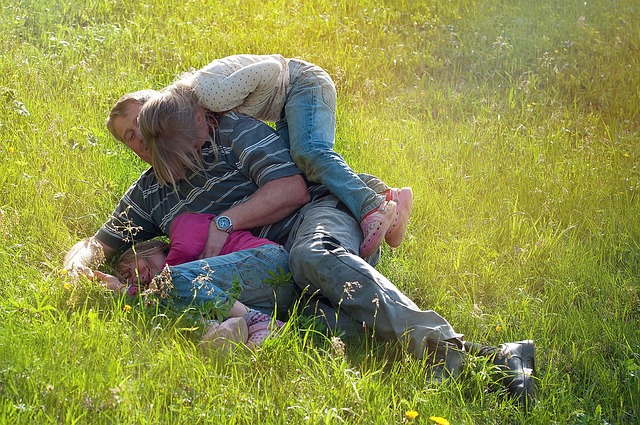
                Play

Play isn’t “just” for fun. It’s an essential component of learning. Stuart Brown, author of Play: How It Shapes the Brain, Opens the Imagination, and Invigorates the Soul said in an interview, “…evidence continues to accumulate that the learning of emotional control, social competency, personal resiliency and continuing curiosity plus other life benefits accrue largely through rich developmentally appropriate play experiences.”  Unstructured free play is particularly important. We already know it’s fun.

                Direct Experience

Hands-on efforts make learning come alive with pleasure and satisfaction. Frank R. Wilson notes in  The Hand: How Its Use Shapes the Brain, Language, and Human Culture that brain and hand use have always been connected. When a young child is put in charge of preparing vegetables for a stir fry dinner his efforts may not be entirely helpful, but the sensory experience of washing, chopping, and tasting offer him much more than growing competence in meal preparation. The sensory experiences enhance comprehension and lock in learning. When a child expresses interest in puppetry she may want the opportunity to make puppets, stage puppet shows, and go to puppet guild meetings. The more fully involved a child can be the more direct (and lasting) his or her learning will be.
                Challenge 

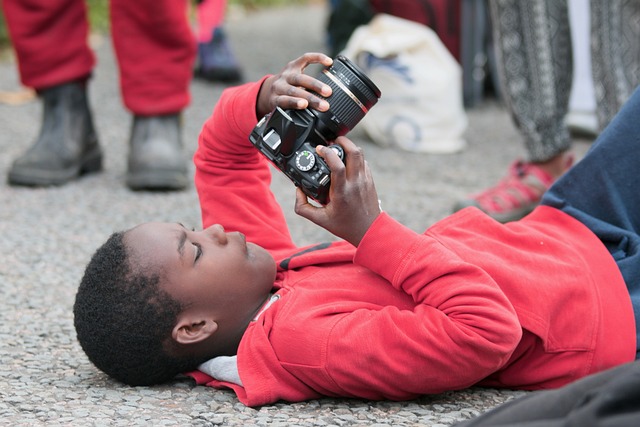
Challenges are fun as well as educational because they keep us right at the edge of our competence, pushing us on to the next level (exactly why video games are so compelling). A ten-year-old may enjoy the logical challenge of debating his older brother, the practical difficulties of planning and filming his own scary movie, the physical and social risks of showing off at the skating rink. These self-selected activities push him to advance a whole range of abilities. Challenges keep us too absorbed to grin but for our own good reasons.

There are plenty of other “fun in learning” factors such as relationship development, collaboration, sensory pleasure—surely you can think of more. All these elements are intertwined so completely that they only make sense when we see them as connected.

I think that’s why we need to pay attention to what’s fun about learning. Yes it’s different for each person. But what’s universal is that each of us is capable of fascination, excitement, and wonder. Why fish around for methods to motivate and sustain a child’s attention when joy is right there, showing us the way?

Portions of this post excerpted from Free Range Learning.

How To Time Travel

time travel, memory is time travel, storing memory, preserving memory,

Wikimedia Commons

My oldest is getting married. Yes, that outs me as old enough to have become a mother the year I graduated from college.

That itself seems strange, because I feel pretty much the same as I did at 14, back when I used to sneak out of the house wearing a halter top under whatever mom-approved top I wore over it. It’s such a distinct feeling that when I walk past my reflection in a store window I don’t instantly recognize the person hustling along, the woman carrying my purse and wearing my jacket. I have to remind myself, that’s me. My skinny insecure 14-year-old self is history.

Why can I access that time in my life so easily? Because I really remember being 14. Everything was new. Testing out the forbidden, suffering daily angst, uncovering adult hypocrisy, lying on my bedroom floor memorizing music lyrics. And vivid memory is the key to time travel.

In essence, our lives are made from what we notice and remember. When you look back at any particular phase of your life what you recall is constructed from what captured your attention, particularly those times when your emotions as well as your senses were engaged.

It’s a nasty surprise to realize how few truly full memories we manage to form. That’s because we only efficiently latch on to memories when we pay attention. We’re more likely to do so when the experience is new. That’s probably why we seek out emotionally charged thrills (roller coasters or white water rafting), get so much out of travel, and remember firsts like our first kiss or first attempt driving a stick shift.

The emotional and sensory experience of one’s first baby makes for lasting memories. Ordinary moments remain imprinted on my body as well as my mind from my son’s early years: a newborn slumped against me in sleep, a toddler crouching on sturdy legs to watch a beetle, an inquisitive child taking everything apart. As I watch this tall and capable young man go through the many rituals surrounding his upcoming wedding, I feel as if I exist in multifaceted time, sensing the layers of his childhood simultaneously with the present.

I know it’s easy to miss the simple grandeur all around us. I do it all the time. I get distracted, I multitask, I’m too busy to make eye contact and when I do I might very well be thinking of something else. But we have to live in the fullness of our lives right now. That means engaging in the sights, sounds, tastes, thoughts, and feelings unique to our own experience.

This moment, this day is yours to remember. Pay attention in such a way that you can time travel back to visit it.

And if you’d care to, describe in the comments the sights, sounds, and feelings of a memory that lets you travel in time.

Save Moments In A Memory Jar

make a memory jar, how to save family memories,

Today is a wonderfully ordinary day. Lots of laughter and no squabbles. Will we remember any of it? Probably not.

It’s hard to understand why we hang on to some memories but not others. The process isn’t about how much effort or money we expend trying to make something memorable.

Long-term retrievable memories are built by what we notice, fully notice, with our minds as well as our bodies. (They aren’t made when we multitask.) Look back at any particular memory. What you recall is constructed from the sights, sounds, tastes, thoughts, and feelings unique to your experience. The way you pay attention to those elements forms your memories. The shocking part? Looking back and realizing how few rich and full memories we really form.

That’s because we only really latch on to memories when we pay attention. When we’re engaged in the moment. Recall the last really memorable meal you had. It probably wasn’t one you ate in the car or standing at the kitchen counter. It was one you savored with full awareness of flavor, texture, scent. Most likely there were other important elements as well. Perhaps it was a meal shared with a new friend or made from a challenging cookbook. Perhaps it was a last meal you had before a loved one passed away, a meal you now try reconstruct in detail.

Emotion plays a part in memory formation. And our five senses are integral when forming strong memories. Particularly smell, perhaps because the olfactory bulb is closely connected to the hippocampus (related to learning) and the amygdale (related to emotion).

For years I’ve encouraged my family to take “sensory snapshots.” We may be standing out back together, having just finished stacking firewood (because togetherness on our little farm often has to do with work) and I urge them to remember the moment in their bodies as well as their minds. We notice the scent of blackberry and milkweed blossoms, listen to frogs croaking in the pond, feel the evening’s coolness on our skin, look at the fireflies beginning to arc through the dusky sky. I don’t just want the moment to linger, I want to be able to retrieve it long after today. I want to hang on to our easy banter and feeling of shared accomplishment.

That’s where memory-storing traditions come into play. Yes, it’s easier than ever to take photos and videos. But there’s something about writing down our impressions that augments the process of locking them into place.

hang on to memories, write down family memories, unique memory traditions,

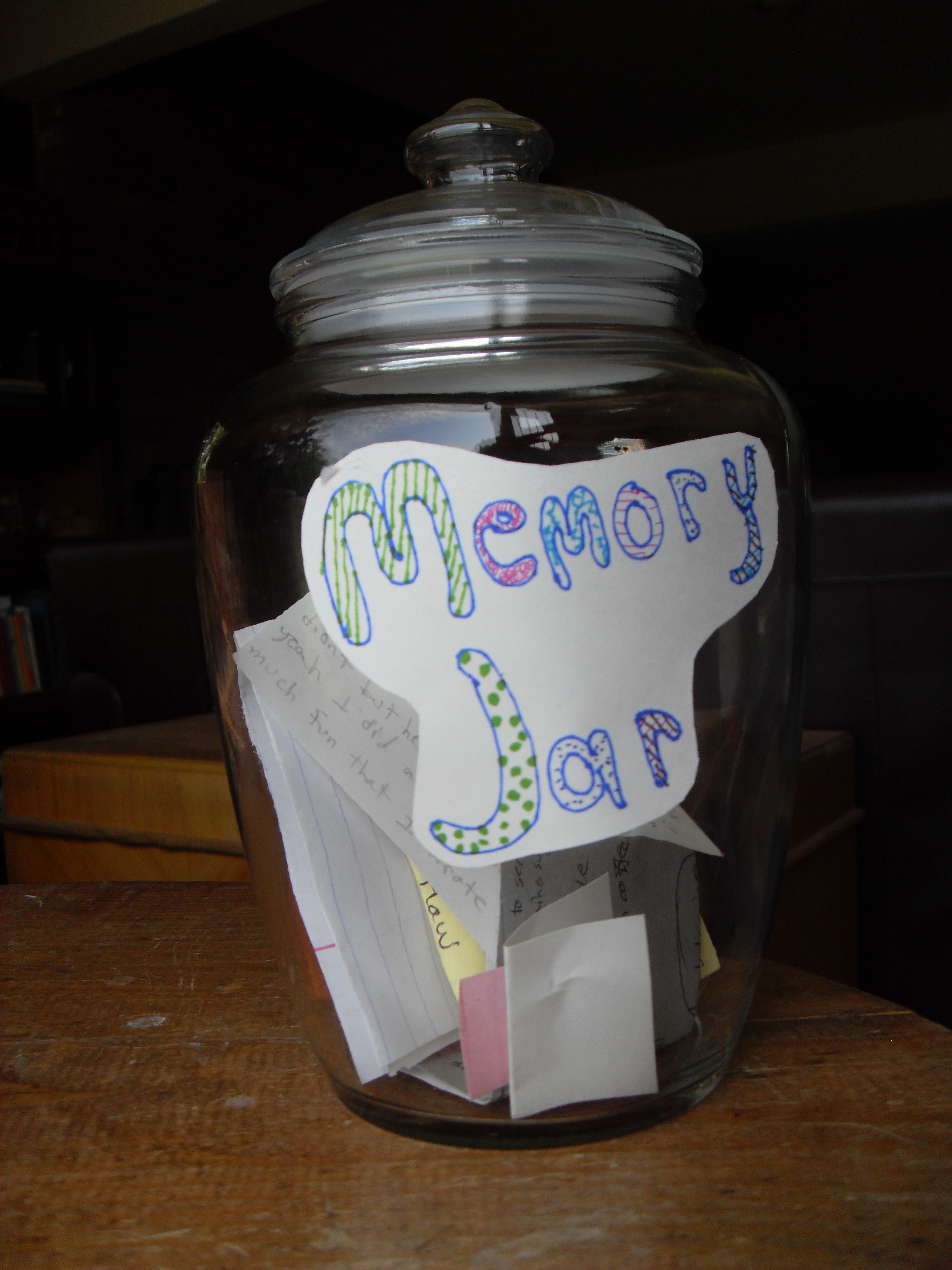
One tradition you might want to start in your family is a memory jar. Grab any jar, name it the Memory Jar, and keep it in an accessible place. Filling it is pretty easy. Encourage your family members to scrawl memories on any piece of paper, sign their names, add a date if they can, and stuff these memory scraps in the jar. Let the youngest ones dictate their memories to you and pop them in as well.

You’ll be interested to note what different family members regard as significant enough for the memory jar. Good grades on a test probably won’t get in. Watching the neighbor’s puppies born probably will. Your five year old may stuff in a new memory each day, your teenager may add one only at your prompting, you may tend to write down funny things the kids say. But if they’re not noted and saved, chances are they’re lost.

It’s helpful to have a “no grudge” rule. Memories don’t have to be happy, of course. The most powerful are probably those that aren’t. Your daughter may write,

“I was really scared when Max fell off the slide. We went right from the park to the hospital. We waited a long time and I fell asleep watching a TV high on the wall. Max got a green cast on his arm and I was first to sign it. I was mad my name didn’t come out too good because it’s not easy writing on a cast. The letters are kinda bumpy. We were so hungry Mom stopped for ice cream on the way home. I got peach, Max got chocolate chip, Mom got a smoothie. I think it would be fun to have a cast too but I don’t want to fall off a slide to get it.”

There are plenty of options that go along with opening and sharing the tidbits from your Memory Jar. You might choose to have a memory ceremony once a year. That’s a day when the jar is opened and the memories are read. You might want to do this on Thanksgiving, New Year’s Day, or every July 13th because that’s your family’s yearly Dad Finished His Tour of Duty party.

And you’ll want to store these memories safely. It’s easiest to start a new jar every year. Label last year’s jar and tuck it in the back of your closet. If you’re ambitious, carefully scrapbook each slip of paper next to photos or turn them into a photo collage to hang on the wall. Or, your family may prefer to keep adding to a collective jar of memories without going over the contents together, happy to make the jar a sort of time capsule to be opened well into their adult years.

While a memory jar is well-suited for family use, there are other great ways to use this random-memories-on-scraps-of-paper approach.

how to hang on to memories, memory-making for couples

For couples, why not start a Memory Bank? This is best made with an opening no bigger than a piggybank. This way the memories each of you contribute can’t be fished out and read in private. It’s a way of noting little tidbits about your lives together without the pressure to contribute. Of course a “no grudge” rule is still important. And when a Memory Bank is shared by a couple, it’s best to make it a long-term project. Vow to keep it sealed until your 25th anniversary or some other far off date. By then neither of you will care if she contributed 95% of the memories, you’ll both simply have fun going over recollections you thought were long gone.

Perhaps the best impetus for storing and retrieve memories is in partnership with the oldest members of the family. On each Father’s Day card I used to share a reminiscence about my childhood to let my Dad know how much he factored into my happiness then and my resilience now. I thought I was doing it for him but I know now that sharing these memories was one way I strengthened a link with someone so dear to me.

preserve memories with your elders, keep a memory book, daily log book for seniors,

You can keep track of up-to-date memories with the elders in your family using a Memory Book, one that’s always open. A large format blank book is especially good for this purpose. With each visit write down a recollection (old or new) to paste in the log book. Add drawings and photos. If you’ve exchanged memorable phone calls, texts, and other communications remember to add notes about them when you visit. The Memory Book is a warm reminder of your affection. It’s also helpful if your loved one is in an assisted living facility or nursing home because other visitors can flip through the pages, starting conversations by talking about these and other memories while making new ones.

Thinking about the ways we form and hold on to memories is inspiring me to have more fun with my family than stacking firewood!

7 Ways To Access Your Body’s Unique “Knowing”

developing body based awareness, raising consciousness, paying attention,

Ever notice that the smallest children seem to be one with their bodies? Unlike us, they don’t value their thoughts over their senses. They also don’t get caught up in ruminating about what isn’t directly part of the moment. Past or future: irrelevant. Other people’s opinions of their appearance: irrelevant. They are tuned to the sensory world around and within them.

This state of awareness may be similar to the state that was essential for our earliest ancestors, whose attention to the here-and-now ensured survival. Eons ago, hunter-gatherers had to be alert for scents, sights, and sounds of potential food or danger. Chances are this alertness included respect for the body’s way of knowing—unease felt in the belly, anticipation in the throat, restlessness in the limbs—signaling awareness transcending overt indicators. And they had to be able to respond appropriately and meaningfully in an instant. Pausing to consider their options would have let the antelope get away or given the bear time to attack. The people who were most attuned to their body’s perceptions (inner as well as outer) were more likely to live, passing along those abilities to the next generation. We have the same capacities today although typically they’re pushed well below our awareness.

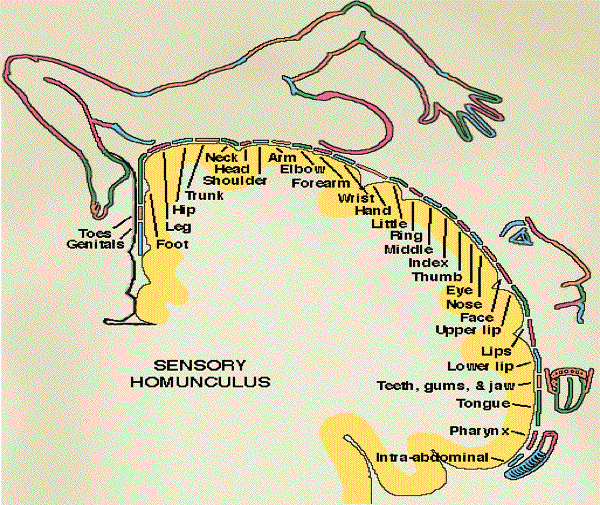
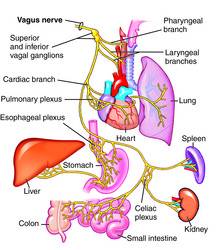
Powerful nerves connect our brains with our digestive system, heart, lungs, and other organs. And this communication is sensory. It isn’t top down, with our brains bossing around our bodies. Instead 90 percent of the information goes the other way, with the gut informing the brain.  The network of nerves along our digestive system is so significant that researchers call it the enteric brain.

Our impulses and emotions are influenced (perhaps generated) by the nerves in our gut. Our brains then work to logically explain the emotion, as Candace Pert explains in her groundbreaking book, Molecules Of Emotion.

Our intuition and reasoning is also influenced by our enteric brain. This ability to know without thinking about it is what Malcolm Gladwell termed “adaptive unconscious” in his bestseller Blink. We constantly process data from all around us (as well as within us) below the level of conscious awareness. Accessing and understanding this information is part of what makes us safe and happy.  What we call feeling good is a sense of accord with this innate bodily knowing, transmitted to us directly as a visceral sensation.

We drive ourselves and our children away from this awareness when we emphasize head over body, when we value thoughts but dismiss that knowing  in our very cells. We worsen the problem when we adopt the standard practice of valuing one hemisphere of the brain over the other.

So what are some ways to tune ourselves to this bodily knowing? 

1. Notice how the youngest children perceive reality. They have an innate ability to assign unique meanings and interpret creatively. They haven’t yet learned the boundaries of acceptable/unacceptable forms of knowing. Simply watching, listening to, and living within the reality of a very young child can stretch your perceptions and re-awaken your awareness.

2. Avoid the distraction of multitasking. This fractures your attention into tiny (often useless) pieces.

3. Devote time each day to simple practices which cultivate awareness. Daydream. Contemplate a flame, or the evening sky, or a tree. Meditate. Take a walk that’s focused entirely on sensation—-the feeling of your feet as they touch and push away from the ground with each step, the whoosh of air in and out of your lungs, the temperature of the outdoor air as it contacts your exposed skin. Eat slowly. Look into a loved one’s eyes.

4. Practice using your intuition. With regular use, your gut sense and intuitive hunches will become more reliable. Try using the classic Intuition Workout by Nancy Rosanoff.

5. Check out what Eugene Gendlin calls focusing.   We’ve been talking about the feeling of knowing that lies deep in us, related to the way our bodies carry concerns or life situations. According to Gendlin’s book Focusing, these perceptions can be accessed using specific steps of clear bodily attention. This opens up knowingness as it is “felt” and garners direct information that comes from the center of one’s being.
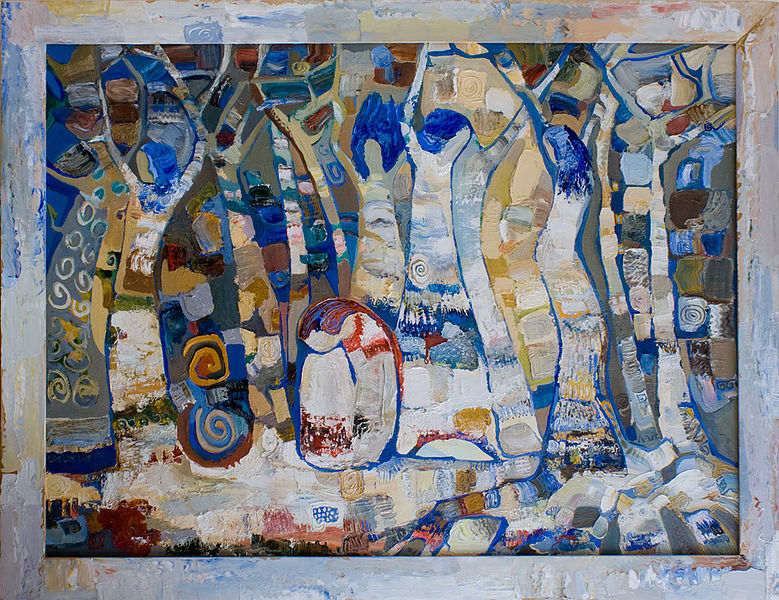
6. Pay attention to your dreams. When you waken, spend a few moments relishing the feelings and images you just experienced in the dreamworld. Let them enter your waking body and waking consciousness. They are specific to you, and have unique purpose that transcends analysis. They are another form of direct knowing.

7. Ask your body questions and “listen” as answers arrive in the form of images, physical sensations, memories, or emotions. You may want to ask a headache why it’s occurring or ask your throat why it feels tight. Learn to recognize metaphors in your body’s answers.

“My belief is in the blood and flesh as being wiser than the intellect. The body-unconscious is where life bubbles up in us. It is how we know that we are alive, alive to the depths of our souls and in touch somewhere with the vivid reaches of the cosmos.” D.H. Lawrence 


How To Listen & How To Be Heard

what's real listening, are you listening, how to pay attention, being ignored,

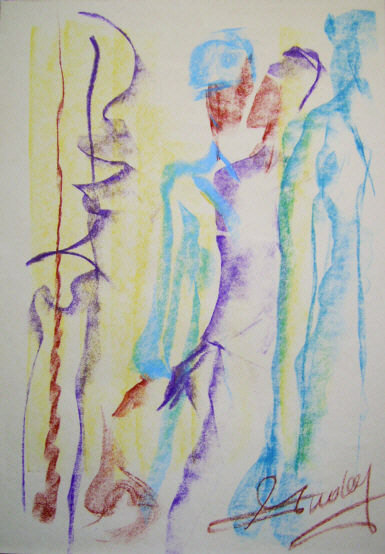
Katerina Omelchuk “Beginning”

“Do you really want a dead cat on your desk?”

When a teacher took a parent’s phone call at the end of another busy school day, she was taken aback by the question. She couldn’t figure out why a first grader in her class came home telling his mother that their recently deceased family pet had to be on the teacher’s desk the next morning.

Then she realized what must have happened. At the beginning of each school day, children clustered around her desk in the few minutes available before the bell rang. They were all eager to talk.

“Fish sticks are yucky so I want to change my lunch ticket.”

“Want to see me do jumping jacks?”

“This picture of me and my bike is for you.”

“Here’s a note from my mom.”

Any of us would suffer from limited focus if we tried to listen to kids clamoring for attention while also monitoring a classroom. To compensate, this teacher tended to look only briefly at the child doing the talking. She often told them to put whatever they had to offer on her desk. Thinking back, she realized she never even heard the little boy say that that his cat had died. She just gave him an automatic response. “Put it on my desk.”

It doesn’t feel good to be disregarded. It shuts us down, diminishes our sense of worth, even leads to misunderstandings that can be epic in scale.

And you know when you aren’t being really heard.

It goes both ways. We may not be heard often or heard well. We also may not be very good listeners.

Like that teacher, we’re often wedged into circumstances that aren’t conducive to listening. The potential distractions are greater than ever. Ear buds in, smart phones on, screens blaring in all but a few restaurants and waiting rooms, we multitask our way to fractured attention. And limited listening. As a result we don’t hear, really hear. And we don’t feel heard.

We can consciously enhance listening skills. It’s about paying attention, tuning in to others, and limiting distractions. That helps us to hear and to be heard.

Psychiatrist Daniel N. Stern is an expert on attunement, particularly as it develops in infancy. And Dr. Stern’s research has led to this resounding conclusion. When a child or adult doesn’t give as well as receive sufficiently empathic responses they tend to resort to less healthy methods of filling their needs.

A woman who took one of my non-violence workshops turned in a paper containing an excerpt from the book Soul Work: A Field Guide for Spiritual Seekers, which explored Stern’s work. I take the liberty of including a passage here. Check yourself against Stern’s scale of attuned responses in your interactions with your partner, co-workers, children, extended family, and friends.
Scale of Attuned Responses

Beyond Unresponsive: The person you are talking with interrupts you in the middle of your sentence and shifts to a different topic.

Unresponsive: The person obviously isn’t listening, only waiting for you to stop talking. When you finish, the person shifts to an entirely different topic.

Indirectly Unresponsive: The other person says or implies, “Well, you shouldn’t feel that way.”

Self-Referential Free Association: The person says something like, “Oh yeah, that reminds me of the time when I…” or “Well you think you had it bad—listen to what happened to me,” and makes no other reference to anything you have said.

Free Association: The person responds to your statement by going off on a tangent and making only an indirect reference to what you said.

Impersonal/Nonnurturing: The person indicates she has heard you but offers no sympathetic or empathic response. Basically her stance is, “That’s the way the cookie crumbles.”

Superficial: Although the person responds by saying, “Yeah I know what you mean,” she does not sound sincere or empathic.

Adequate: The person shows evidence that he heard what you said but does not show interest or follow up your statement by encouraging you to expand upon it.

Responsive: The person not only hears what you said but also inquires further so that you can elaborate. He asks questions that demonstrate interest.

Resonant: The person indicates that she emotionally resonates with what you have said by responding with statements that show she is trying to imagine what you are experiencing (e.g., “I can imagine that you feel terrible…”).

Really listening and really being heard. It spares us from more than a dead cat on the desk. It’s an eyes open, hearts open path to wholeness.

Half Life

We walk through half our life
as if it were a fever dream

barely touching the ground

our eyes half open
our heart half closed.

Not half knowing who we are
we watch the ghost of us drift
from room to room
through friends and lovers
never quite as real as advertised.

Not saying half we mean
or meaning half we say
we dream ourselves
from birth to birth
seeking some true self.

Until the fever breaks
and the heart can not abide
a moment longer
as the rest of us awakens,
summoned from the dream,
not half caring for anything but love.

Stephen Levine, from Breaking the Drought: Visions of Grace


how to listen, how to know if you are heard, attuning yourself to real responses, what it means to listen,

Alfons Anders “Begegnung”