Today I’m making food for tomorrow’s family gathering. Cooking for people I cherish is a deep pleasure. I hope love transfers into the dough I knead, the sauces I stir, the spices I grind. Outside the rain is relentless, rain I wish came to us instead as the soft snow we might expect in February. But then, these are not normal times.
I am in a warm house on a quiet day aware of the suffering in Yemen, Syria, Darfur, the Congo, and what clutches me most of late, Gaza. How is it possible the children I adore are safe when children just as beautiful and just as precious are exiled, starved, shot, bombed, buried under rubble? Many survivors are left with the world’s newest horrific acronym WCNSF: wounded child no surviving family. I know a moment’s trauma can take a lifetime to heal. I cannot imagine the relentless ongoing trauma for people in Gaza.
I am fortunate to host family Sundays here. Each week I plan out the day’s breakfast and lunch, making as many dishes as possible in advance so I can play with children and follow conversations on the day itself. This week I’m using beans I canned in September and the remaining potatoes harvested in October. I’m using pear sugar I made last summer and hot sauce I made last fall. I use eggs from our chickens, jam from our elderberries, tomatoes canned from our garden. There’s deep satisfaction in nourishing others with the food we’ve grown. Food, in nearly every spiritual tradition, is sacred and meant to be shared. Yet legacy olive groves are relentlessly bulldozed in Gaza. (Since 1967, more than eight hundred thousand Palestinian olive trees have been illegally uprooted by Israeli authorities and settlers.) Gaza’s orchards, greenhouses, crops, and fishing fleets are intentionally destroyed. And the nourishment lost, too, when libraries, universities, and museums are bombed into dust.
One child suffering is too much. The news that over 12,660 Palestinian children have been killed and more than one million displaced from their homes is impossible to imagine. The suffering too, of the 36 Israeli children killed by Hamas and the child hostages Hamas still imprisons. Each number represents a whole person, as unique and amazing as a child you love, as the child you yourself once were.
This month I’m beginning to pull together the mess from a file marked “taxes.” I work for myself as a writer, book editor, and educator in what’s lightly called the “gig economy’ –a term that encompasses all of us who work without an employer paying our healthcare, social security, or any benefits at all. This means I fully fund my taxes. My taxes pay for the bombs dropping on Gaza. (As of last month a reported 65,000 tons of munitions) My taxes finance weapons used to shoot civilians fleeing an endangered hospital, wandering sheep, ambulance drivers, journalists, fathers seeking safe passage for their families.
Armed conflict and war massively increase profits for a whole slew of companies. In my country, courts have ruled that money is free speech and that corporations deserve some of the same rights as people.
My country has repeatedly been the lone vote againsta ceasefire in this ongoing colonizer vs colonized struggle — a struggle that resounds down through the centuries into today as if we must replay our ancestors’ traumas until we finally wake up to our oneness on this beautiful endangered planet.
Not one of my sputtering letters to legislators, no vigil I’ve attended, no boycott I follow or money I donate makes a molecule’s worth of difference for the people who are right now being bombed in the places where they were told to seek refuge.
Tomorrow my children and their children will come to eat the food I’m making, to talk and laugh and relax together. This is a joy every family deserves, everywhere. More than a joy. It’s a right that none of us have the right to take away.
My breakfast is invariably a mess of vegetables over brown rice or quinoa, topped with the spirited zing of fermented hot sauce. I’m pretty sure this hot sauce goes with everything. If my allergies would let me eat ice cream, I suspect it would enhance a hot fudge sundae too.
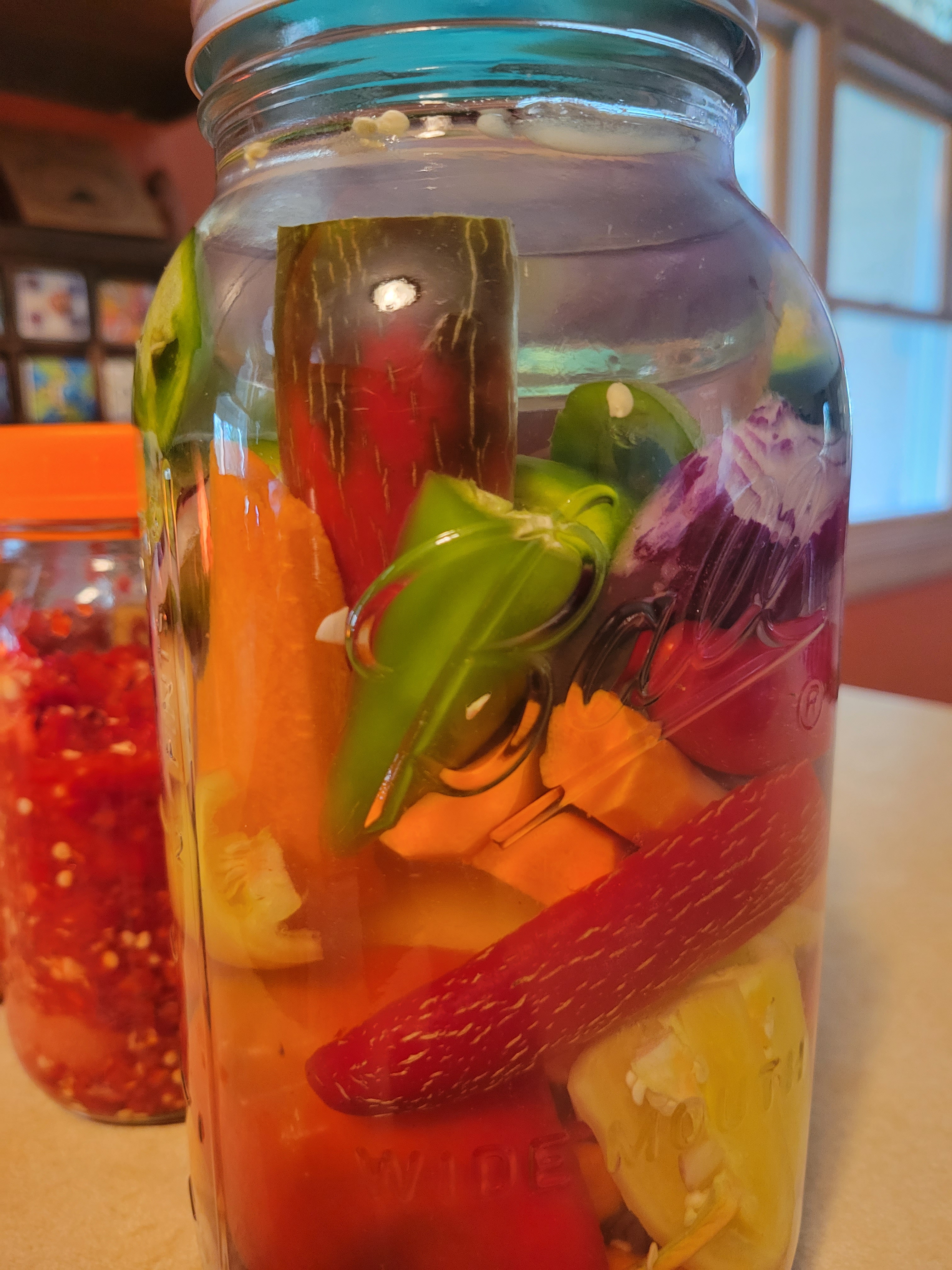
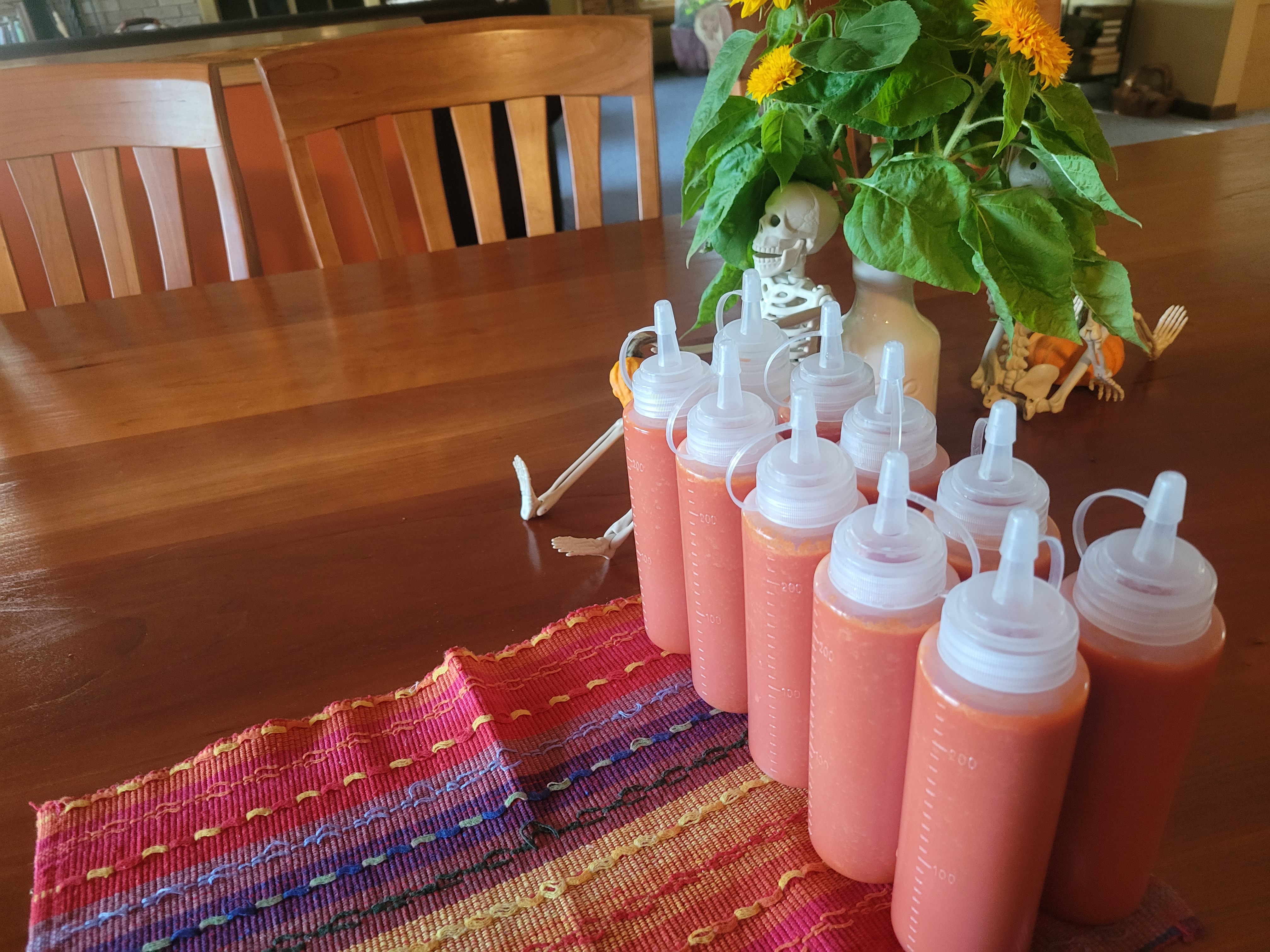
I make gallons of the stuff every year, starting in August and ending whenever the pepper harvest ends, usually early October. Each batch is different. (Here’s a general idea of the recipe.) I always use a variety of peppers from our gardens, along with carrot, garlic, maybe some onion, and whatever else I’m inspired to toss in. Some batches have a lot of heat, at least to my tongue. A single habanero in a half gallon jar is quite enough for me along with all the jalapenos, serrano, buena mulata, datil peppers and whatnot in there.
But this fall, after canning dozens of jars of salsa and more jars of zacusca, then freezing several large bags of peppers to use all winter, I realized we were close to the end of the pepper harvest. I only had one half gallon of hot sauce fermented. That wouldn’t last me more than a few months. My husband attempted to buy some from farm stands, but Amish farms and other local producers around here are more likely to grow sweet peppers. I called a few other places to see if I could get hot peppers in bulk. No luck. So in early October I put a plea out on our township’s Facebook page.
Our garden didn’t produce enough peppers this year for me to make our year’s supply of hot sauce. Crisis! Is anyone selling a peck basket or half bushel of jalapenos or other hot peppers?
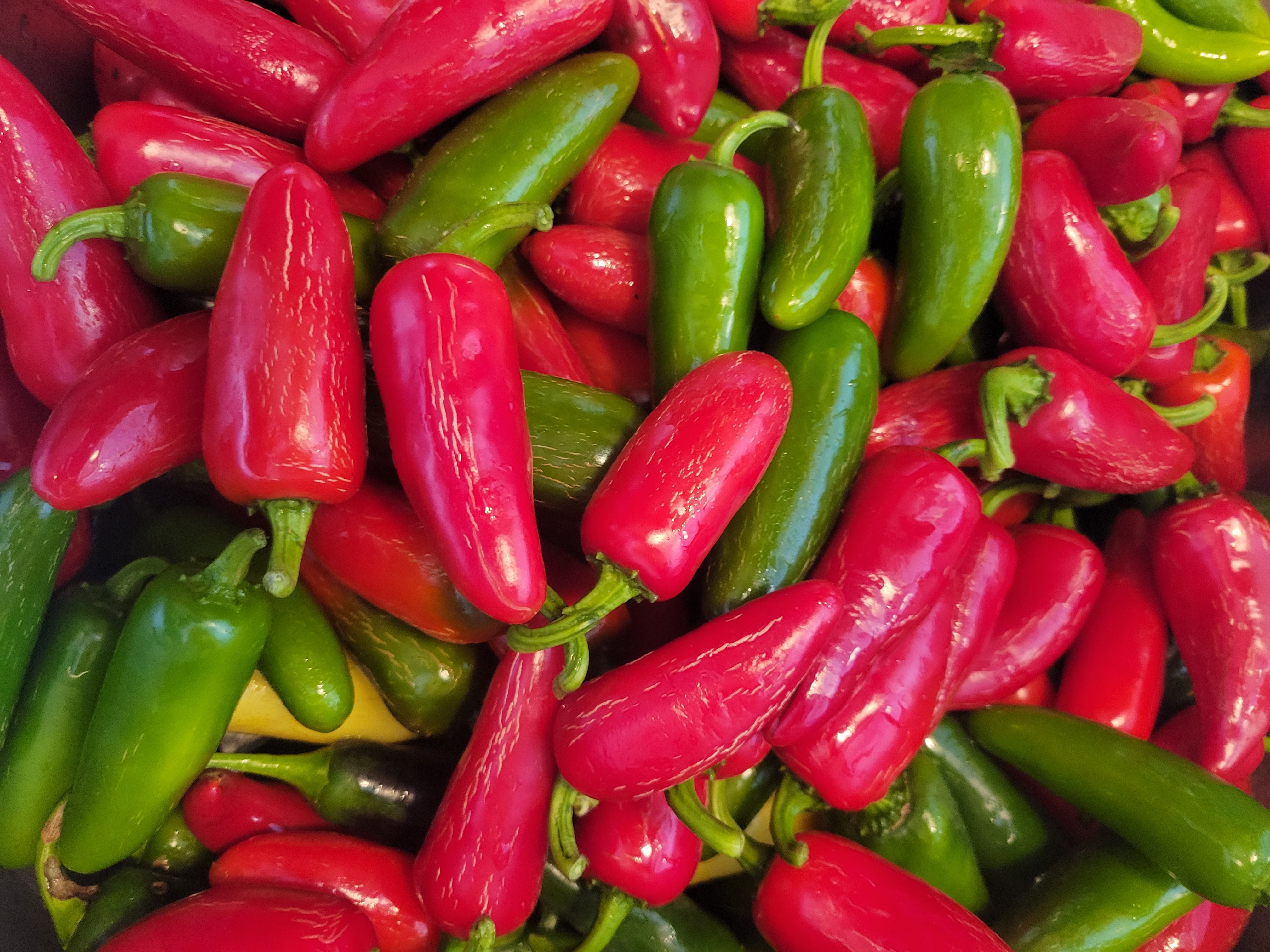
Although I’ve lived in this rural township for a long time, I still feel like an outsider. So it was truly heartening to get responses from people who were happy to offer peppers. Some said to just come and pick them from their gardens. Some said they’d be glad to trade for any produce we had. In total, we ended up with well more than a half bushel of beautiful mixed hot peppers.
These are my giving away jars of sauce, from October.
And the fermented sauce I made? It’s SO good. Hot sauce made with these freely given peppers warms me more than any I’ve ever made. Kindness tastes restorative. It lingers on the tongue. I am SO grateful.
~
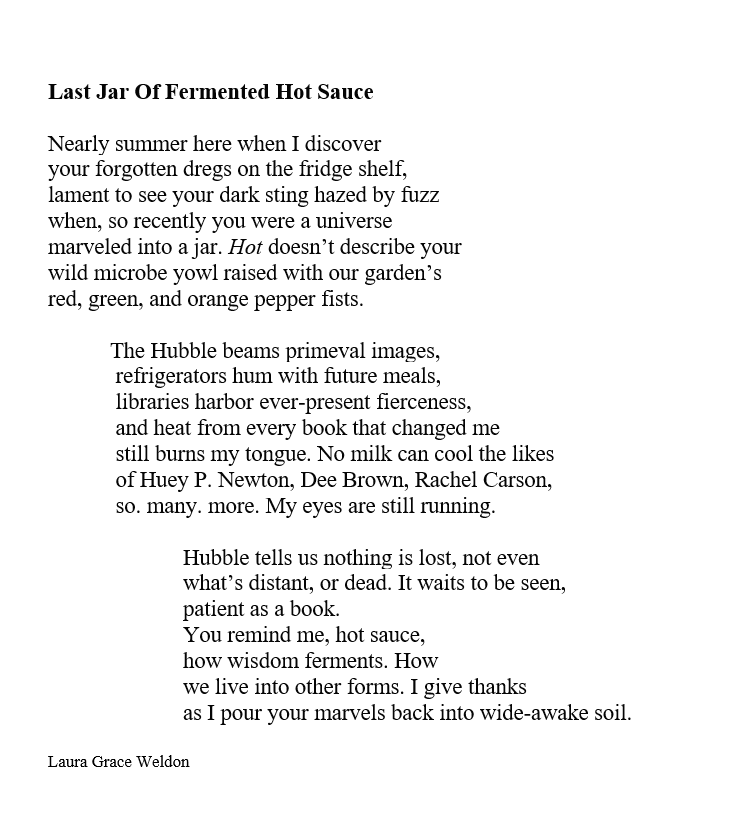
Here’s a poem I wrote to the last dregs of last year’s hot sauce, published in The MacGuffin.
What a year. I hope these last twelve months have been gentle on your health and kind to your peace of mind. I have much to say about all that’s going on, but I write my sputtering outrage and grief for the world in other places. In the spirit of sharing good things, here are some joys and wonders I’ve encountered in these last 12 months.
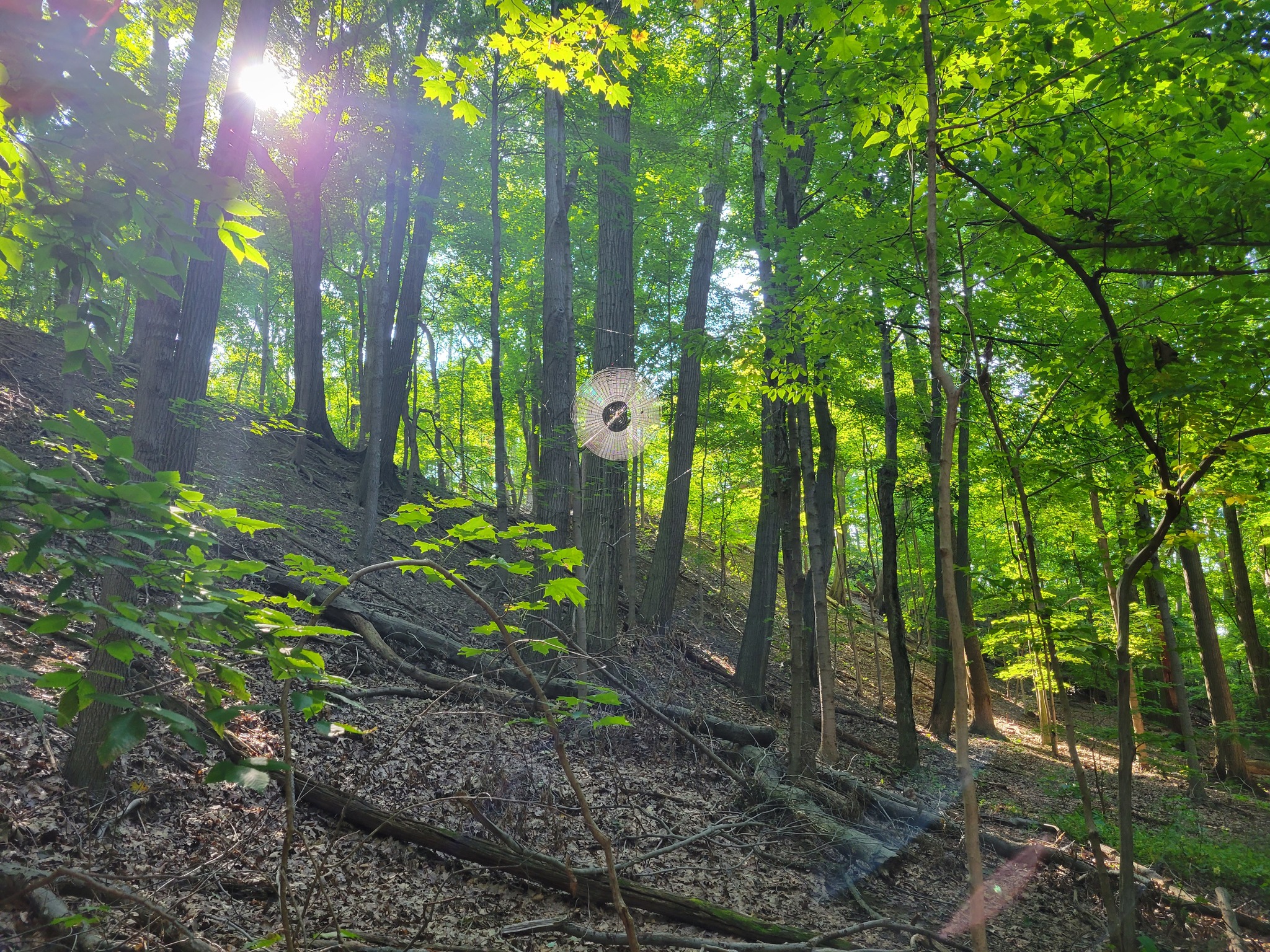
~Magical walks each week with people I love. (The picture, above, is from one such walk. No filters, I’m too lazy for photo fussing.)
~I savor our family Sundays with games and food and conversation and silliness and extra dogs and the people who willingly take leftovers home. I keep those who are missing from our gatherings in my heart.
~I’m incredibly lucky people continue to put up with my ongoing covid restrictions. They agree to get together for a walk rather than out for coffee, hold meetings in the park or on a patio, take covid tests before coming to my house, and endure zoom rather than in-person classes.
~One of my life’s deepest joys come from teaching writing classes, particularly memoir classes. It’s a privilege to witness the incredible connecting power of shared stories. At the close of each 6 or 8 week session of memoir classes I encourage writers to continue on as a group. I am thrilled so many have done so. One group of writers has been meeting 11 years, another for seven years, others are in their first few years of supporting one another’s writing.
~My favorite job ever continues to be serving as editor of Braided Way: Faces & Voices of Spiritual Practice. It’s here on the web and here on Facebook. Here are this year’s nominees for writing awards:
~I also continue to work with wonderful writers as a book editor. I’m in the background, a sort of labor coach, as their new creations are readied to enter the world. Each birth is a thrill.
~It may seem odd to include this as a wonder, but our elder dog lived well into his 17th year. He continued to enjoy his food, his outings, and his snuggles right up to the end. Thank you for all our years together Cocoa Bean.
~I’m grateful to have poems and essays published this year. Several are in wonderful anthologies including The Wonder of Small Things: Poems of Peace & Renewal edited by James Crews and Poetry of Presence II: More Mindfulness Poems edited by Phyllis Cole-Dai and Ruby Wilson. Here are a few of the online offerings:
~So. Many. Good. Books. My goodness, I feel richer than any billionaire thanks to the wealth of library books available from Medina County District Library. Here are titles of a few of my very favorite reads this year. (I try to keep an up-to-date list on Goodreads, mostly to spare myself from forgetting titles I’ve already read.)
Immersive and amazing nonfiction read this year includes:
Cosmogenesis: An Unveiling of the Expanding Universe by Brian Swimme
Becoming Animal: An Earthly Cosmology by David Abram
Master Slave Husband Wife: An Epic Journey from Slavery to Freedom by Ilyon Woo
We Are The ARK: Returning our Gardens to Their True Nature Through Acts of Restorative Kindness by Mary Reynolds
Awe: The New Science of Everyday Wonder by Dacher Keltner
The Black Friend: On Being a Better White Person by Frederick Joseph
The Escape Artist: The Man Who Broke Out of Auschwitz To Warn the World by Jonathan Freedland
Light the Dark: Writers on Creativity, Inspiration, and the Artistic Process edited by Joe Fassler
Take Back the Magic: Conversations with the Unseen World by Perdita Finn
Four Thousand Weeks: Time Management for Mortals by Oliver Burkeman
The School That Escaped the Nazis: The True Story of the Schoolteacher Who Defied Hitler by Deborah Cadbury
Life at the Edge of Sight: A Photographic Exploration of the Microbial World by Scott Chimileski
All the Ways Our Dead Still Speak: A Funeral Director on Life, Death, and the Hereafter by Caleb Wilde
The Green Boat: Reviving Ourselves in Our Capsized Culture by Mary Pipher
Play, Make, Create: A Process-Art Handbook by Meri Cherry
Bittersweet: How Sorrow and Longing Make Us Whole by Susan Cain
A Walking Life by Antonia Malchik
Immersive and amazing memoirs read this year include:
The Wild Boy by Paolo Cognetti
The Salt Path by Winn Raynor
Tasting the Sky: A Palestinian Childhood by Ibtisam Barakat
Balcony on the Moon: Coming of Age in Palestine by Ibtisam Barakat
A Place Called Home by David Ambroz
We Are Bridges by Cassandra Lane
Dreams of Trespass: Tales of a Harem Girlhood by Fatema Mernissi
You Could Make This Place Beautiful by Maggie Smith
How To Say Babylon by Safiya Sinclair
Colored People by Henry Louis Gates
Girl Factory by Karen Dietrich
A Childhood: The Biography of a Place by Harry Crews
Immersive and amazing novels read this year include:
Go As a River by Shelley Read
At Hawthorn Time by Melissa Harrison
Cloud Cuckoo Land by Anthony Doerr
Evidence of Things Unseen by Marianne Wiggins
The Glass Chateau by Stephen Kiernan
Alchemy of a Blackbird by Claire McMillan
To Cook A Bear by Mikael Niemi
You Are Here by Karin Lin-Greenberg
Take What You Need by Idra Novey
Now Is Not The Time To Panic by Kevin Wilson
The Storied Life of A.J. Filkry by Gabrielle Zevin
The Silver Star by Jeannette Walls
We The Animals by Justin Torres
Happiness Falls by Angie Kim
The Vaster Wilds by Lauren Groff
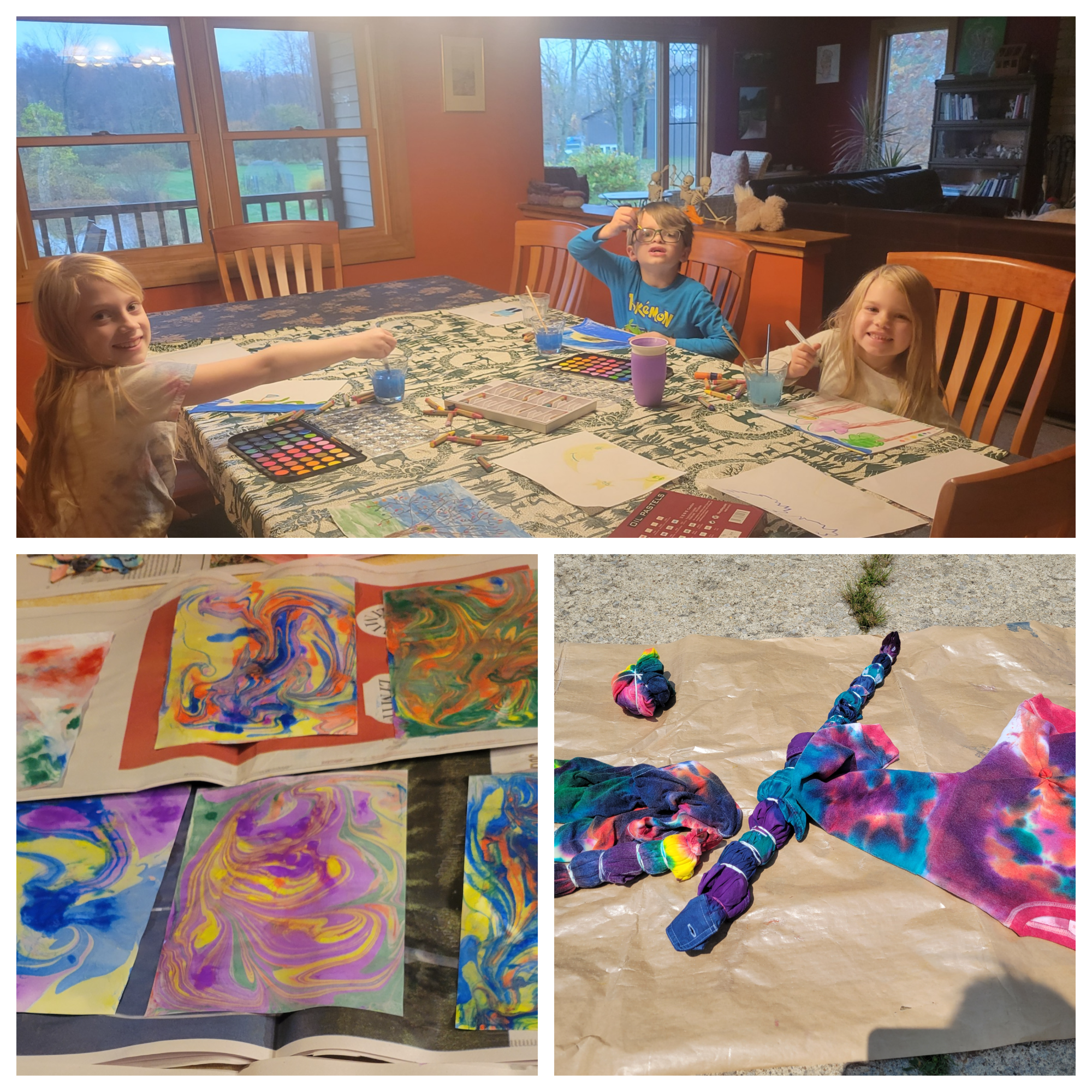
~We still aren’t back to the joys of hosting potlucks, house concerts, or art parties here. Damn covid again. But art with these co-collaborators is an immeasurable delight.
I hope 2024 brings you wonder, meaning, playfulness, and love. May this beautiful world of ours begin to heal.
I don’t know what to say or do in this current world of crisis. No vigil I’ve attended, none of the sputtering letters I’ve written to decision-makers, can stop the atrocities causing immense suffering at this moment. I feel even more disempowered recognizing that defense-related firms heavily influence US elections as well as foreign policy itself, weaponizing our tax dollars for their profit regardless of the toll. I contribute to reputable charities when I can, including Doctors Without Borders, Oxfam, and World Central Kitchen (as well as Move To Amend, which works to limit corporate influence in politics). I read about and sometimes write about structural change needed to grow a more just, regenerative, collaborative society. But mostly, I feel helpless.
Here are some peace-embodying reflections that help me in these times.
“The eyes of the future are looking back at us and they are praying for us to see beyond our own time. They are kneeling with hands clasped that we might act with restraint, that we might leave room for the life that is destined to come. To protect what is wild is to protect what is gentle. Perhaps the wilderness we fear is the pause between our own heartbeats, the silent space that says we live only by grace. Wilderness lives by this same grace. Wild mercy is in our hands.” ~Terry Tempest Williams
~
“Did I offer peace today? Did I bring a smile to someone’s face? Did I say words of healing? Did I let go of my anger and resentment? Did I forgive? Did I love? There are the real questions. I must trust that the little bit of love that I sow now will bear many fruits, here in this world and the life to come.” ~Henri Nouwen
~
“Here’s to the bridge-builders, the hand-holders, the light-bringers, those extraordinary souls wrapped in ordinary lives who quietly weave threads of humanity into an inhumane world. They are the unsung heroes in a world at war with itself. They are the whisperers of hope that peace is possible. Look for them in this present darkness. Light your candle with their flame. And then go. Build bridges. Hold hands. Bring light to a dark and desperate world. Be the hero you are looking for. Peace is possible. It begins with us.” ~L.R. Knost
~
“Receive the light. When the darkness gathers around you, when you grow weary, when your soul aches for the peace of years gone by, when you are afraid we have lost the trail and are walking deeper into the woods: that is exactly the time you need to receive the light. Don’t hesitate. Don’t doubt that it is there for you. Don’t convince yourself that this darkness will be an endless night. It will not. Remember a lesson you learned in your own experience: It is when things are darkest that light shines most brightly. Even an ember at midnight holds the promise of the dawn to come. Receive the light. It will restore you. It will heal you. It will empower you to welcome a new day. And even if that day has its own struggles and tests, it will be lived in the light, where we can see one another, trust one another, and do what must be done to reconcile this moment to the history we are making. Do not be afraid. Receive the light.” ~ Rt. Rev. Steven Charleston, Choctaw
~
“Our individual consciousness reflects the collective consciousness. Each of us can begin right now to practice calming our anger, looking deeply at the hatred and violence in our society and in our world. In this way, peace and understanding within the whole world is increased day by day. Developing the nectar of compassion in our own heart is the only effective spiritual response to hatred and violence.” ~Thich Nhat Hanh
~
“In a time of destruction, create something. A poem. A parade. A community. A school. A vow. A moral principle. One peaceful moment.” ~Maxine Hong Kingston
~
“The most valuable possession you can own is an open heart. The most powerful weapon you can be is an instrument of peace.” ~ Carlos Santana
~
“I swear I will not dishonor my soul with hatred, but offer myself humbly as a guardian of nature, as a healer of misery, as a messenger of wonder, as an architect of peace.” ~Diane Ackerman
“The purpose of listening across lines of difference is not agreement or compromise. It is understanding.” ~Valarie Kaur
The Bundle of Sticks is a perpetually useful fable passed down to us by Aesop. If you don’t remember it, here’s a quick retelling.
A father was distressed that his many sons were forever quarreling among themselves. No words he could say did the least good, even when he was nearing his final days. He cast about in his mind for an example that could show them the folly of their discord, until finally he happened upon an idea.
He presented his sons with a bundle of sticks. Handing the bundle to each in turn, he asked them to break it. Although each one tried his best, none was able to do so.
Then the father untied the bundle and gave individual sticks to his sons. They broke them easily.
“My sons,” said the father, “do you see if you agree with each other and help each other, it will be impossible for your enemies to injure you? But if you are divided among yourselves, you will be no stronger than a single stick in that bundle.”
I thought about that fable today when I read a Facebook post by Kris Bordessa. She was a colleague of mine back when we both were senior editors for a Wired blog called GeekMom. Kris is smart, funny, resourceful, and deeply committed to practical solutions. She wrote a fantastic handbook called Attainable Sustainable: The Lost Art of Self-Reliant Living. (I’ve given quite a few copies as gifts.) Kris also offers a popular website and social media presence under the same name, both packed with entirely useful information. Here’s what she posted:
Let’s talk. I presume if you’re following me here, you’re interested in the idea of stepping with a lighter footprint on this earth. Making a difference, somehow, some way in how you eat or acquire things or spend your time.
Can we acknowledge that this will look different for each of us? We are all at different stages, each taking baby steps to improve our self-reliance. My goal is to introduce you all to different possibilities.
The man who called me “pathetic” for sharing a recipe with all-purpose flour? He didn’t get that. (Oh, I get messages, friends!
You might think some of the recipes I share have too much sugar. That I shouldn’t share recipes with meat. Or dairy. Or that they are not “healthy enough.”
But think for a minute. If a family is used to buying, say, store-bought cookies (in a plastic clamshell container and filled with preservatives), making cookies at home – even if there is more sugar than you think is reasonable – is an improvement. Maybe their *next step will be to make cookies with less sugar and whole wheat flour. If a family regularly dines out, counting on fast food or restaurants to fill their bellies, learning to cook meals at home is an improvement, even if the ingredients included might not pass muster in *your household. Others aren’t there yet, you know?
Once upon a time, I relied on some of those “instant” boxes of rice. They were cheap, I was busy. Over the years, I decided that wasn’t for me. Because I’ve learned how to make my own, I won’t ever need to rely on those boxes again. One successful, small change.
The beauty of this page is that you can take what you need, learn from it, improve yourself. Good, better, best.
What’s one small change YOU’VE made in how you do things at home?
I get a lot of criticism on social media sites I manage too, especially the FB page I started back in 2010 when my bookFree Range Learning came out. Most of the time it’s a supportive group, but whew, sometimes people turn on each other over things like how babies are raised (breast or bottle, responsive parenting or cry-it-out, full-time parent or employed parent), over how kids learn (public school, charter, homeschool, unschool, Montessori, Waldorf), over how they’re raised (screens or no screens, supervised activities vs free play). Lately there’s been significant pushback on my (admittedly regular) posts about the danger of book bans. I get very angry DMs accusing me of advocating for books that damage children. Really?
I get angry denunciations in response to articles I write too. Of course I’ve got a poem about this….
“Raising Children Tenderly” Article’s Online Comments
You’re a spare-the-rod moron writes blessedamny82. How to raise whiney assholes christernanplumbingsupply posts three times in a row. This crap makes me sick complains finsterseventeen.
Knee deep in affection’s sacrifices, I simply hold up a creased map of my own wrong turns. Got lost here. Crashed there.
We’re all souls packed by glory into cells for this short sojourn. I don’t mean to offend but chances are I’ll do it again tomorrow.
Angry accusations and finger-pointing takes place on a much larger scale. Those with the most money and the most power must delight in fomenting divisions between people who need each other. How can we head in regenerative environmental directions when advocates are pitted against each other about the wisest solutions? How can we bring forth the next generation of political leaders when they may have said or done something that doesn’t fit in the narrow definition of a movement’s ideology? Such “purity tests” are not helpful.
It’s disheartening to look at each day’s news. Worse, many of us are experiencing its effects— in the weather, on our health, in the collapse of once-trusted systems, and through injustices perpetrated on us or on people we love. We need each other. We need to listen, to care, to consider our planet’s fellow inhabitants in our decisions.
I particularly appreciate the way Kris gently told folks that they don’t need to be cast apart by a culture of individualism grown toxic, but can support each other. I love that her last line drew people back in, asking them to share a small change they’ve made that might inspire others. This is how we bundle ourselves back together. This is the way forward.
“The scarcest resource is not oil, metals, clean air, capital, labour, or technology. It is our willingness to listen to each other and learn from each other and to seek the truth rather than seek to be right.” ~Donella H. Meadows, environmental scientist and systems thinking educator
I always enjoyed a friendly chat with the nice people at our library check-out desk. Depending on who was doing the checking out, I knew to ask one person about her garden, to exchange sarcastic asides with another, and to alert a third about a novel I was sure she’d like. But a few years ago our library system installed self-checkout stations. At first they didn’t work all that well, often refusing to deal with books I’d put on order, so I’d have to go to the counter anyway. When I did, the people I’d long considered part of my life seemed impatient at having to check out the one or two books that wouldn’t go through. They’d repeat a sentence that was probably assigned to them—“Can I direct you to our self-checkout stations?”—even though I used those stations week after week. I’m sure they were assigned many more tasks to fill the time they used to spend dealing with patrons’ checkouts too. I don’t know if this change took away some of their workday variety. I do know I still miss our brief but lively conversations.
This sort of change happens so quickly that we can’t help but notice. But many changes – huge ones – are so incremental that we don’t readily see their significance. That’s true for individuals as well as entire societies.
We think we’re attuned to change, but even a silent minute-long scene can confound our noticing skills.
Did anything change? (I thought I was paying attention but didn’t do too well on this.)
Even close observers find it hard to discern changes around them when those changes are gradual. In the real world our attention is far more distracted. We miss subtle differences, even though noticing something “ordinary” as the sky impacts (and reflects) our mood and attitude.
Consider most people in human history. Chances are they were good at noticing. When a person spends time gathering food, hunting for game, weaving baskets, or engaged in myriad other hands-on tasks their minds have plenty of time to wander, wonder, and notice. It’s likely they were tuned to sights and sounds and changing seasons, connected to (and sometimes buffeted by) history’s encroachments. It would have been the same for those living 10 generations before them as it would continue to be for 10 generations after them.
In contrast, we’re tuned to a far more frenetic pace, so much so that with each screen scroll and each multitask we wire our brains to expect more distraction. To need more distraction. How do we use our in-between moments, those times when we might wonder and notice? We distract ourselves. People get out phones when standing in line, put a movie on for kids in the car, go for a walk or run with earbuds in, scroll social media while hanging out with friends or family. These behaviors are ubiquitous yet also significant changes to the norm from just a generation ago.
Talk about a norm change—those of us who are Gen Y or older remember how slow dial-up connections could be.
Now a few seconds’ delay in loading a site is exasperating, as if we’ve forgotten how mind-blowing it is we’re online at all.
There are consequential norm changes everywhere we look.
Farmers from the beginning of pastoral times followed time-honored, mostly regenerative ways. They saved seed from the harvest’s best to replant the next year, rotated and interplanted crops, left wild places like hedgerows and creeks, pastured animals where trees offered shelter, let fields go fallow. When my great-grandfather farmed they shared equipment and helped one another with harvest. They stood up for one another against bankers. They couldn’t have imagined today’s monoculture crops, intensive livestock practices, agricultural monopolies, and prosecutions for seed saving. Each change was considered progress until the baseline norms shifted so far that they were largely forgotten.
Working-class people of the 1960’s could commonly count on healthcare, pension plans, and paid vacations. They could typically buy a home and car while raising a family on one salary whether they were postal carriers, factory workers, airport employees, retail assistant managers, or worked in other fields. Their children could attend state colleges on what they’d saved from a teen’s summer job. This doesn’t account for significant limiting factors like racism or sexism, but it’s notable how much the norm has shifted. Many families rely on overtime or multiple jobs burdened by student loans, healthcare, and housing expenses without an assured path to retirement. One reason for this difference is the ratio of CEO to typical worker compensation. In 1965 that ratio was 20 to 1. In 2021 the ratio exploded with a ratio of 399 to 1. That has become our norm.
Children’s play was, until the last generation or so, largely generated by children themselves with minimal or no supervision. Children’s make-believe, for example, flourishes when kids have the time and freedom for self-directed play. Pretending develops creativity and fosters the sort of what-if thinking that helps kids mature into good decision-makers. Self-directed play includes sports of all kinds, which were mostly kid-run and unsupervised instead of of adult-run until young people reached their teen years. And children were typically free to play outside –in the neighborhood, at local parks, and in nature areas. This started young. A checklist taken from the 1979 book Your Six-Year-Old by child development expert Louise Bates Ames was meant to help parents determine if a child is ready for first grade. It includes a dozen questions including the following: Can he travel alone in the neighborhood (four to eight blocks) to store, school, playground, or to a friend’s home? The norm has shifted significantly. Many parents feel trapped by expectations that they monitor children’s play, enroll them in sports and enrichment programs from their earliest years, and keep them in sight for safety reasons. The range children are allowed to travel, on their own, has shrunk from six blocks to barely out the front door— although crime against children (and US crime in general) is far lower than it was in the 1970s and 80s. Children, on average, spend four to seven minutes outdoors in unstructured play, with one in five playing outside once a week or less. This too has become a norm.
(These are quick, nuance-free examples. They aren’t meant, for a moment, to cast earlier decades as good old days. Many aspects of these eras were oppressive and unjust. Many norms that have changed since are for the better including rights, access, information sharing, transparency, and other progressive improvements.)
In science, norm changes are sometimes called shifting baselines. That’s because we tend to measure a system against our own reference points. The term was popularized by fisheries scientist Daniel Pauly who noticed experts in his own field failed to identify how abundant fish species were (baseline population size) before human exploitation. Instead, they considered what fish population norms were at the beginning of their careers. They unconsciously shifted the baseline.
We do too. It may have been expected for our parents’ generation to settle in neighborhoods made lively by children playing outdoors from dawn to dusk during summers when birdsong was loud. That baseline shifted as adults worked longer hours, children stayed indoors, and the bird population dropped by 30 percent.
The term appears most often in conservation fields. Here’s how writer Jeremy Hance explains it in a Mongabyarticle. “If legendary conservationist John Muir returned to Northern California today there is no doubt that he would believe much of the wilderness he loved to be terribly, hopelessly altered: dams, roads, suburbs, etc. However, a native Californian may see parts of their landscape as perfectly natural: National Parks are often view by Americans as the emblem of nature—even with roads running through them clogged with traffic. This type of altered perception of nature occurs with each succeeding generation.”
Shifting baselines are both individual and generational. They happen to us all, often below our awareness. Small gradual changes around us happen all the time. Added work responsibilities without additional pay, the friend who seems withdrawn, more extreme weather.
I saw the video opening this post thanks to Rob Walker, author of a marvelous book: The Art of Noticing: 131 Ways to Spark Creativity, Find Inspiration, and Discover Joy in the Everyday. He writes, “Small change, and the ability to spot it, matters. These small changes, over time, often turn out to be a lot more important than today’s flashy distraction. What’s the smallest change you can notice this week?”
“The world is mud-luscious and puddle-wonderful.” ~e.e. cummings
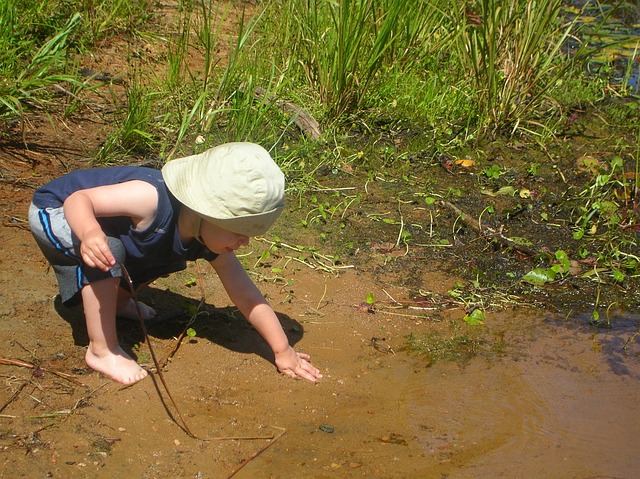
One street over in the neighborhood where I grew up was a small pond where ducks congregated. The ducks lifted from the water with reluctant quacks when we showed up. Despite summer’s heat, the pond was always cool. Aquatic plants waved their greenish fronds just below the surface and the bottom was lined with a thick layer of muck. My sister, a budding naturalist, speculated that the muck was made up of decayed plant matter. When we waded in, our feet sunk into that thick layer of soft goo, a squishy delight for our toes.
It might occur to you that we were standing in duck poo. You would be right.
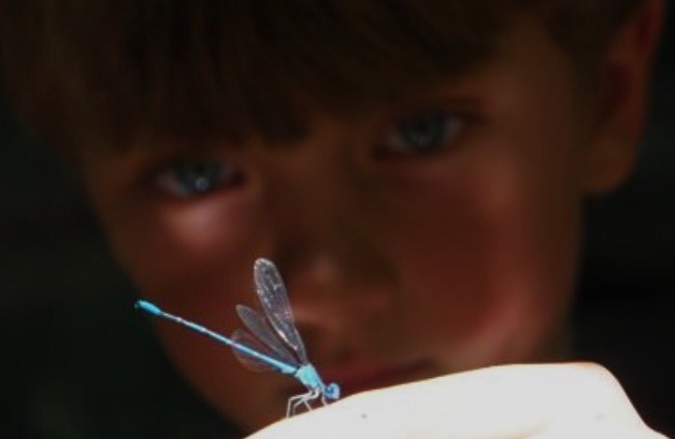
It smelled a bit when the water was stirred up, but that didn’t bother us. My sister and I would crouch near the edge watching insects. Water striders scurried on the surface. Each of their steps made a faint impression in the water as if they walked on gel. Beetles, ants, and the creatures my sister called by the fairytale name nymphs scampered through pondside plants. She liked to let insects climb up her arms. I was impressed, but too squeamish to copy her. Most magical of all were the dragonflies, their huge eyes looking back at us as they hovered on iridescent wings. This seemed like a separate world.
Eventually we had to return home. Our mother, a registered nurse who strictly adhered to standards like rigorous hand washing and early bedtimes, didn’t miss what we’d been up to. We came home spattered and stinky. But her only rule was that we strip off our clothes and scrub ourselves. She’d call from somewhere in the house, “be sure to use the nail brush!” She didn’t seem to mind that we’d walked a block away to play in a bacteria-infested pond as long as we scrubbed away all traces afterwards.
My mother was on to something.
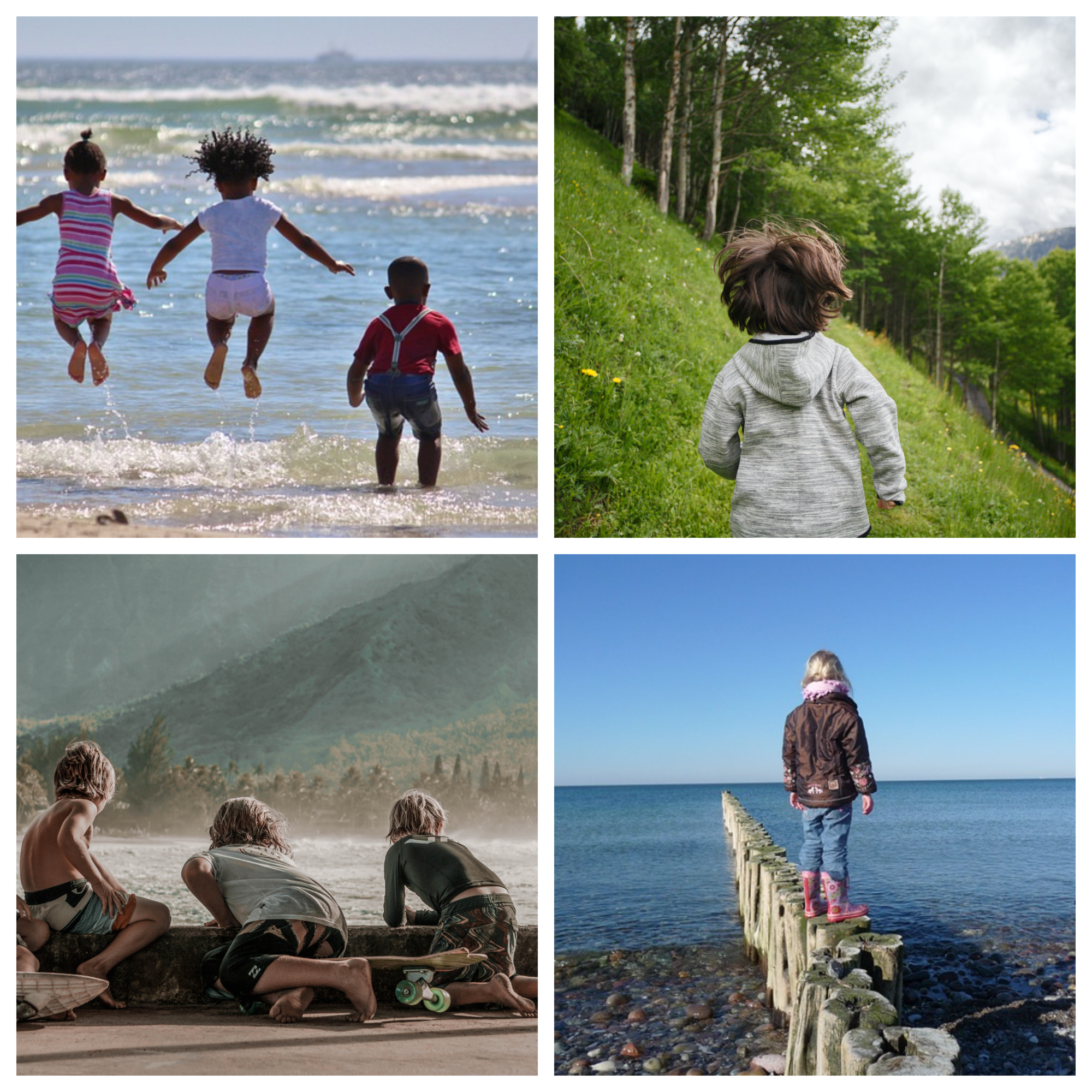
In her book Balanced And Barefoot, pediatric occupational therapist Angela Hanscom writes about teachers, parents, and medical professionals who are alarmed by ever-growing numbers of children who can’t sit still or pay attention; who have trouble with coordination, balance, or sensory processing; who are fearful, easily frustrated, or act aggressively. She explains that these problems can be connected to an overly contained childhood, one that has become the norm. Restrictions begin in the earliest months, when babies spend hours each day strapped into strollers, car seats, and baby seats. As they get older their movements are curbed by passive indoor activities. Even outdoors, kids are often limited to low-challenge play areas or to prescribed movement in adult-structured programs.
The push for academics, often starting in preschool, strips even more time from active free play, while elementary schools are increasingly limiting or eliminating recess. This is profoundly counterproductive. Reading readiness is strongly influenced by physical movement. So is grasping and using mathematical concepts.
It helps to understand just how closely movement and sensory input is related to development. In the first year of a baby’s life, her brain doubles in size. It reaches 80 percent of its adult volume by age three. Babies are born with vast numbers of neuronal links in their brains and spines, primed to be shaped by what they encounter. Unused networks are not activated and disappear. This is what neuroscientists call “experience-dependent plasticity.” Early experiences rich in movement (plus the nurturance and emotional warmth that set the foundation for learning) activate a wider range of neural connections. This is nature’s wisdom at work, shaping a child’s brain through experience so they develop what they’ll need for the world they’re born into.
Your baby squirms and cries after a few minutes in the high chair. He can be placated with a new food or a spoon to bang on the tray, but only for a few minutes. He wants to get to work on crawling. Your toddler resists being put in her car seat and sometimes cries until she exhausts herself. She wants to run, climb, and play. They’re both responding to an inborn need to learn through movement.
Gill Connell and Cheryl McCarthy, authors ofA Moving Child is a Learning Child, clarify. They write that neural pathways developed in the first years of life,
“determine how a child thinks and learns, but more importantly, they will shape who she becomes… her passions and pursuits, triumphs and challenges, inner reflections, outer reactions, and outlook on life…all flowing through the neural network built by her earliest physical and sensory experiences.
With breathtaking simplicity, nature has created this move-to-learn process to be both dynamic and self-perpetuating, building the body and brain simultaneously. As such, the more a child moves, the more she stimulates her brain. The more the brain is stimulated, the more movement is required to go get more stimulation. In this way, nature gently coaxes the child to explore beyond her current boundaries toward her own curiosity to acquire new capabilities.”
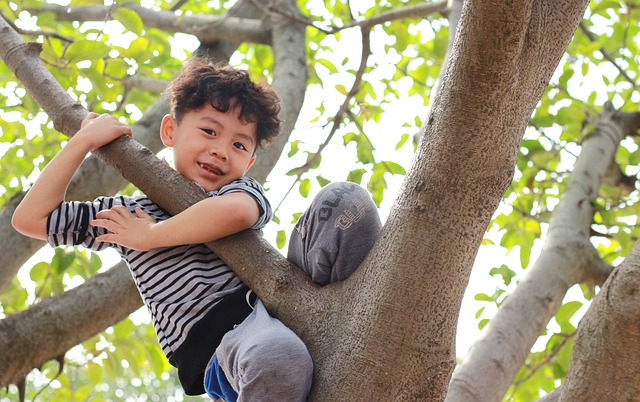
Overall, today’s kids show decreasing core strength and flexibility compared to averages in the 1980’s.”The more we restrict children’s movement and separate children from nature,” Angela Hanscom explains, “the more sensory disorganization we see.” That’s why she advocates sensory-rich, movement-based outdoor free play. Chasing, rolling down slopes, climbing trees, playing with nature’s play-perfect loose parts like leaves and sticks — these and other experiences build spatial awareness, balance, fine motor skills, and bodily control.
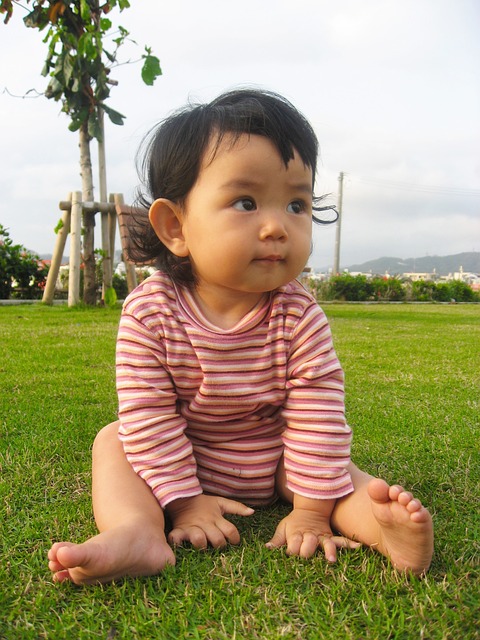
Let’s hone in on one sensory-rich experience; going barefoot. Madeline Avci, an Australian pediatric occupational therapist, explains that walking on grass, stones, and sand develops body awareness, called proprioception. Nerve endings in the feet and toes promote the development of sensory pathways, building functional movement patterns while helping children move with a sense of their body in space. When we wear shoes, the quality of sensory information is diminished. A paper published in Podiatry Management details all sorts of ways shoes, including those with flexible soles, interfere with a child’s gait, development, and posture. Walking barefoot also promotes better biomechanics, a more natural gait, and less pressure on our feet. Bones in the feet are not fully ossified until the late teen years, so the more barefoot time possible, the more naturally the foot’s shape can develop. Of course few of us are raising our families in a beachside hut where walking barefoot makes sense year-round. But Katy Bowman, author of Move Your DNA, suggests that all of us try to walk on natural surfaces like sand, rocks, grass, or wood for 10 to 20 minutes a day whenever possible, and to go barefoot at home.
Neurobiologist Gerald Hüther notes that “the most important learning experiences come to us, essentially, by way of our bodies — which means that learning is always an experience of the whole body. At the same time, every learning experience involves emotions. We are only able to learn when the so-called emotional centers in the brain are activated. These centers release neuroplastic messenger substances enabling what has been learned to become anchored in the brain ….[via] emotional activation. The most enjoyable activation we know of is ‘enthusiasm.'”
It’s ridiculous that we need science to confirm the value of enthusiasm. This is the energy each child brings fresh to the world. What they’re able to explore and experience with the whole of themselves, magnified by the capacity for awe, remains with them.
Dr. Hüther gives an example,
“Children living in the Amazon forests learn 120 different shades of green and can name them all, using 120 different terms. Potential of that kind is either used in practice or is little used. Children here can at best distinguish light green, green, and dark green. How far a potential is actually used depends on how important it is .. in a given culture…The result is that what was once a possibility, this potential, …if not used, will just wither away.”
Enthusiasm goes a long way toward explaining why children and nature go together so well. Children are themselves magic — able to shape shift into a toad or hawk, to feel what it’s like to hop nearly hidden under leaves or to glide on the air’s invisible currents. While imagination is alive everywhere, it can’t help but flourish when surrounded by aliveness. The more natural an area, the more kids have a chance to have meaningful encounters with the life around them. In fact, kids play differently in a park with play structures compared to more natural areas like an overgrown field, a row of trees, or a small creek.
As Richard Louv details inLast Child in the Woods, kids confined to structured play areas have poorer balance and agility than those who play in unpaved areas. The social dynamic changes too. Older and physically larger kids dominate on playgrounds but in more natural areas, it’s the creative kids who act as leaders. In wild places, even an overgrown lot, kids are more likely to incorporate each other’s ideas into expressive make-believe scenarios using their dynamic surroundings—tall grasses become a savannah, tree roots become elf houses, pine cones become treasure. The essence of the child comes alive. Outdoor play in natural areas is more likely to include peers of differing ages and abilities. Regular outdoor experiences not only boost emotional health, memory, and problem solving, they also help children learn how to get along with each other.
Outdoor free play also inspires kids to challenge themselves. They are things to climb on and places to explore. In pursuit of fun, kids ignore minor annoyances like cold fingers, sharp briars, stumbles. Kids face and overcome fears. Such play is linked to greater social skill, resilience, and creativity.
And if you’re interested in academic test results, time outdoors has an impact there too. Here are a few encouraging studies.
Kids exposed to more nature had higher scores of working memory than kids who did not.
Simply going for a walk in a nature area, in any weather, can significantly improve memory and attention spans improved by 20 percent after people spent an hour interacting with nature.
If pre-college test results perk up your interest, the children most connected to nature are also most likely to score well in tests including the SAT.
We also know exposure to bacteria can be a good thing. Certain bacteria found in soil, Mycobacterium vaccae, have been found to boost the release of serotonin, a neurotransmitter linked to positive mood and enhanced learning.
Dirt may improve our health too. For example, children who grow up exposed to a greater range of soil microorganisms have been found, in some studies, to have a lower incidence of asthma. Heck, even common bacteria on our skin have been shown to cut down on rashes and reduce inflammation when we’re cut or bruised. A child’s exposure to dirt is part of the body’s education, microbiologist Mary Ruebush explains inWhy Dirt Is Good, “allowing his immune system to explore his environment.” (She adds a caveat, saying that the soil in some urban areas may be contaminated with heavy metals such as lead. That is indeed a wakeup cry. Soil is the structure we need to feed ourselves. When it’s poisoned, so is life.)
The importance of outdoor free play is getting a lot of attention these days. Playground designers, schools, and daycare programs are far more open to the benefits of outdoor free play with natural materials. It’s no surprise that children do better with natural sensory play, places for solitude, and opportunities for self-chosen challenge. This is a step in the right direction. A few steps farther and we’ll let kids back in nature herself to play in woodlands, fields, and beaches as well as back lots, mud puddles, and all the nature around us. It’s a step in the direction of wonder and delight, maybe even in the muck of a duck pond.
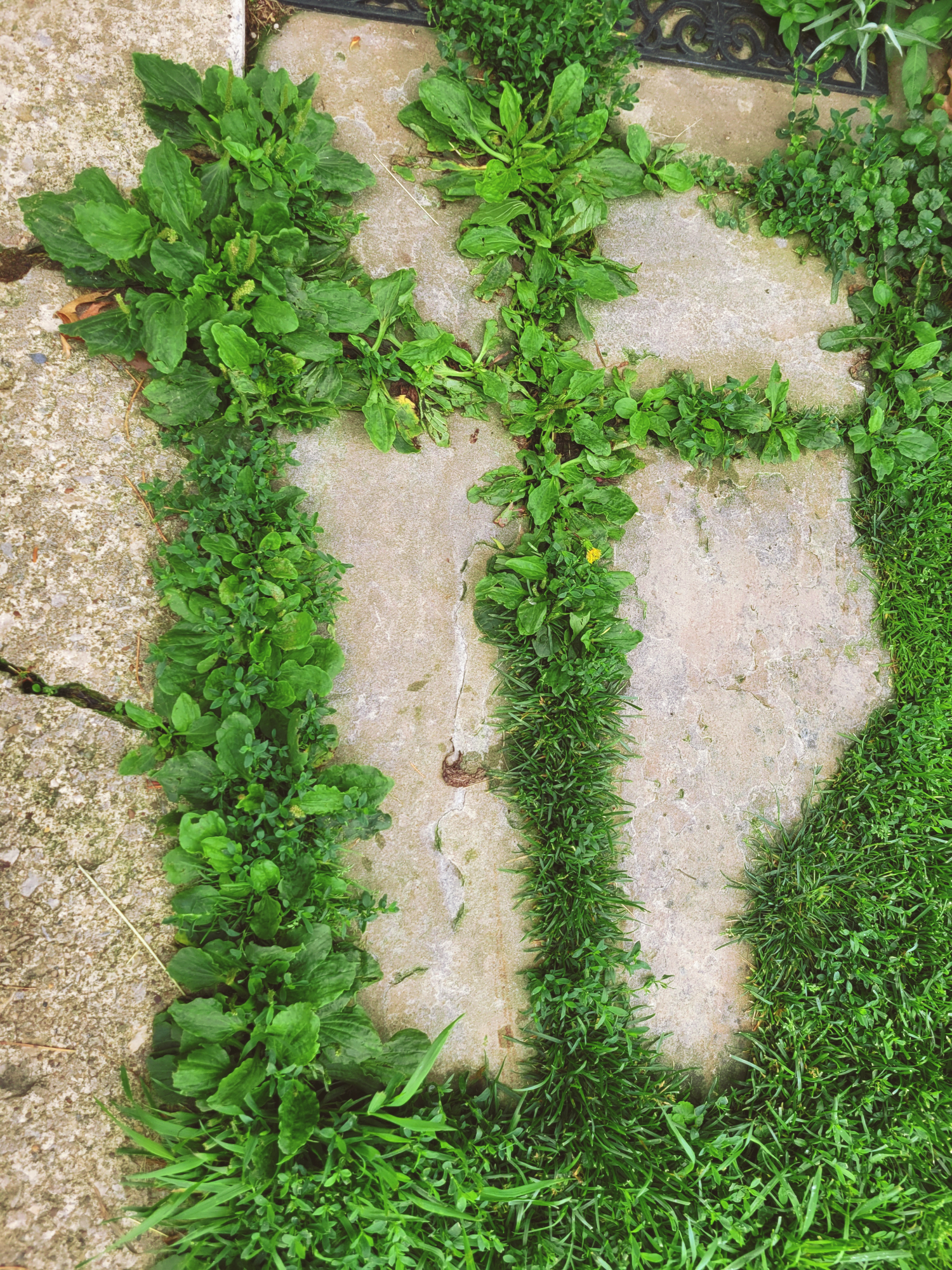
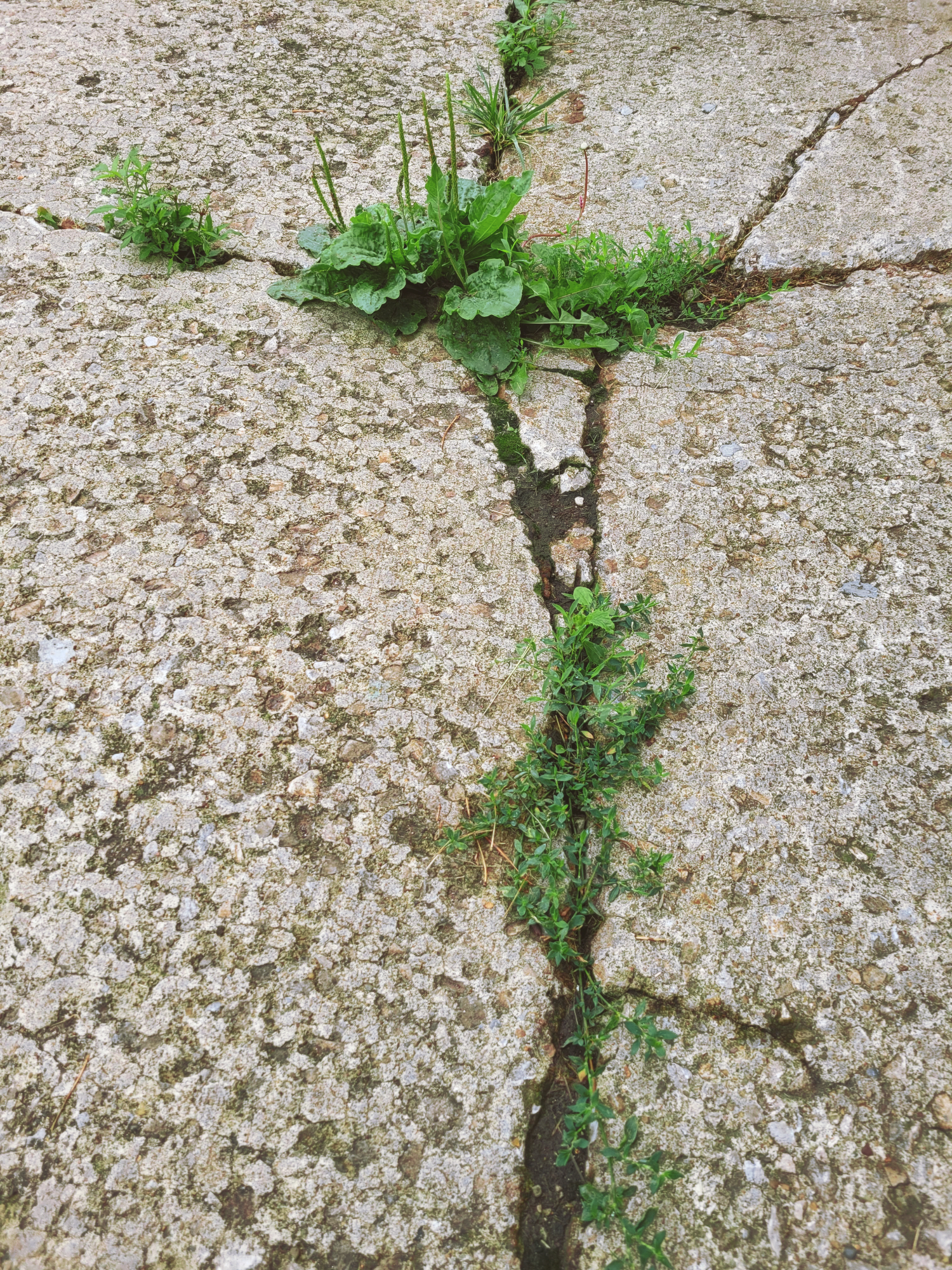
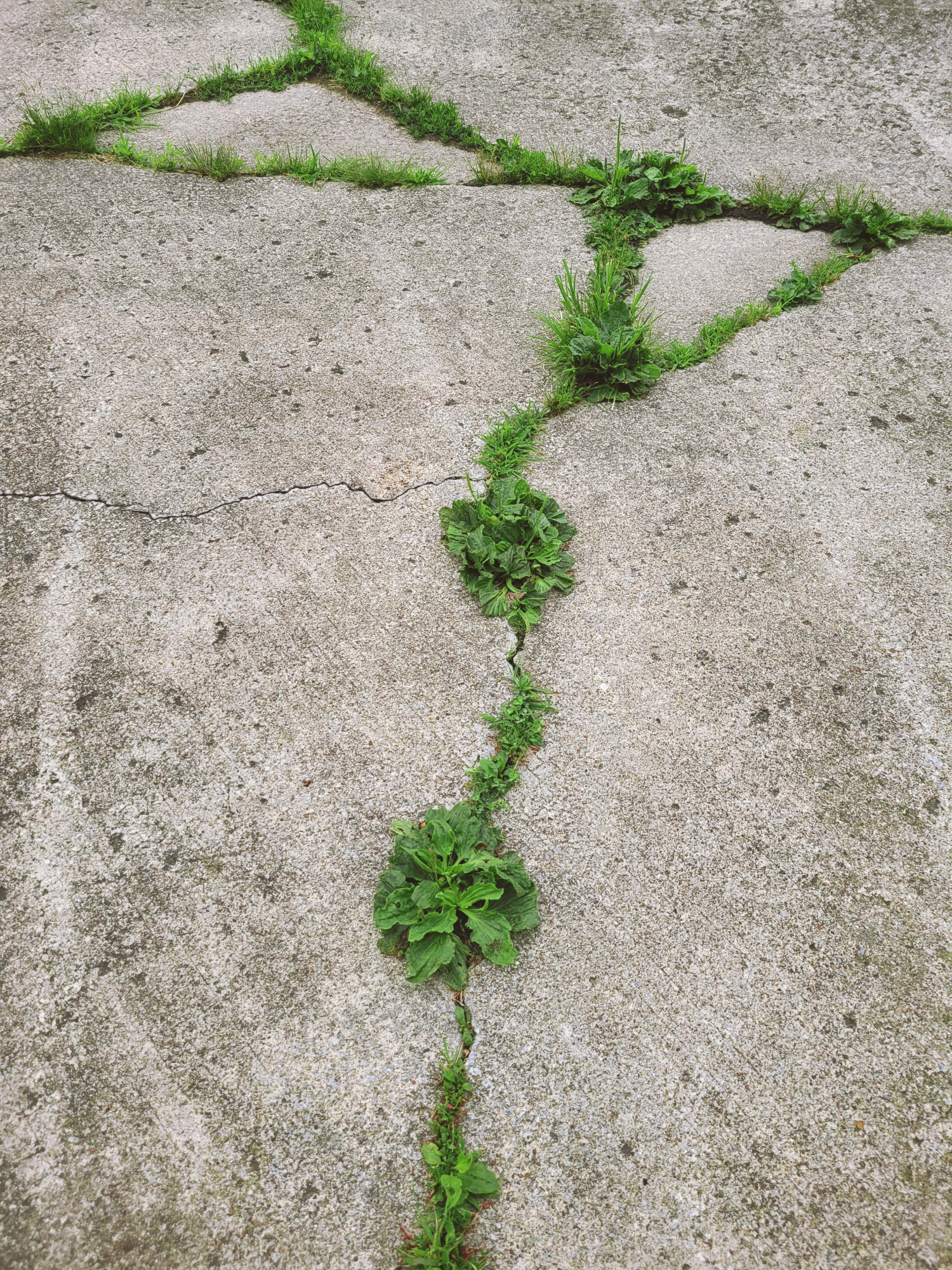
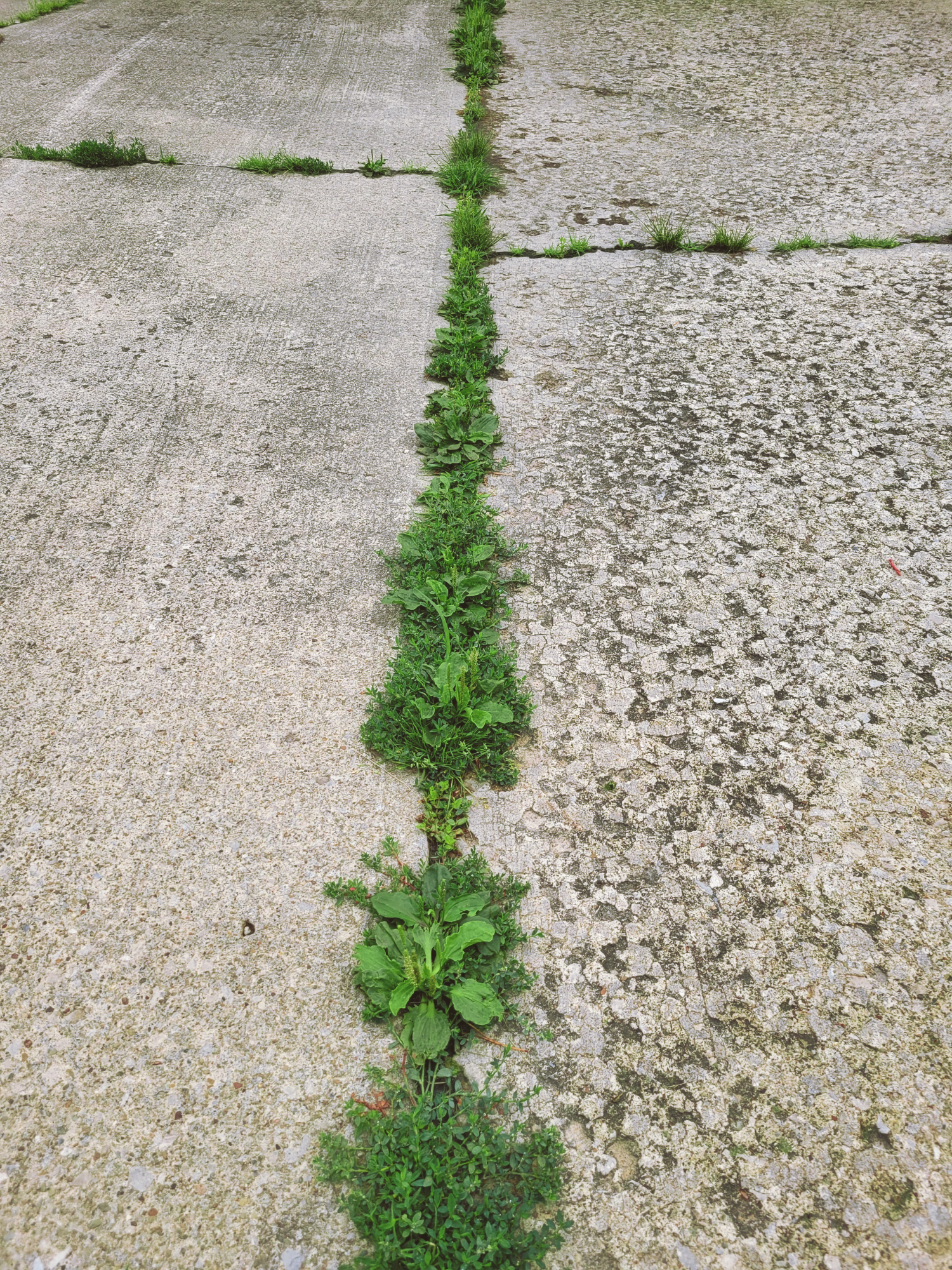
Our driveway is crazed with cracks. I can’t help but appreciate plants springing up through these narrow possibilities. These are native plants, many with health-enhancing properties as human food, but also exquisitely cued to the lifecycles of crawling, flying, hopping creatures reliant on them. All these lifeforms follow nature’s essential precepts of diversity, adaptability, balance, and interdependence. Although our driveway does not, it’s heartening to see how easily life takes over.
I used to wonder about the soil under the sidewalk where I trudged to school each day. What happened when graders and rollers and cement trucks imprisoned it? Did all the life in that soil perish without sunlight and oxygen? How could any living thing survive so much pressure and heat? What would happen if we paved over too much of Earth’s surface? I was a child who Worried About Things.
These plants springing from cracked pavement remind me of nature’s beautiful impulse for life. It restores my hope everywhere I find it. A handful of dry lentils taken from my cupboard, after a few days of soaking and draining, grow into cheery little sprouts I can use in salads, or feed to the chickens, or plant to grow into another generation of lentils. Seeds brought from Cyprus decades ago, shared by a friend, grow each year into giant hardy winter squash that keeps well until late winter –providing nourishing meals along with more seeds to save and share. Organic potatoes in my pantry wrinkle around tiny rosettes and from them, pale tendrils fragile with new life reach out in search of sunlight. I plant these eyes two or three times each season, from late March to late August, for fresh harvests of tender heirloom potatoes.
Life’s impulse can’t always survive what we humans are doing to this planet. As a direct result of human activity, the rate of species extinction is up to 10,000 times higher than the natural, historical rate. Research published in the journal Proceedings of the National Academy of Sciences shows ocean heating is equivalent to between three and six 1.5 Hiroshima-size atomic bombs per second. The UN says “climate change is out of control” and experts in Earth’s climate history are convinced this current decade of warming is more extreme than any time since the last ice age, about 125,000 years ago. It’s exhausting to think about, let alone act on, this spiraling disaster.
We need new stories that reawaken us to the lived wisdom of this planet’s First Peoples and lead us to the most ethical, scientifically grounded regenerative lifeways going forward. It helps when we recognize nature isn’t just what sprouts from cracked pavement. It isn’t confined to wild places we long to visit. We are nature, right down to the life processes of every cell. It helps when our new stories speak to our descendants. It helps when they answer our ancestors.
I’m standing in line at my usual Ohio-owned grocery. There are so many people in each register line that we’ve threaded ourselves into the aisles, people saying “I’m behind you” as they jockey their carts into place, with everyone leaving the center lane clear for shoppers still trying to finish shopping. Among people who don’t have their phones out, brief conversations pop up here and there over little things like the weather or an interesting item found in the clearance section. And then That Guy enters the line. Actually, cuts in the line until it’s pointed out to him that the line starts (hands waving) back there.
He’s an older man, maybe early 70s, hearty-sized in body and voice. He says a small aside to the woman he finds himself waiting behind, something about the long lines, and she briefly commiserates. That’s all it takes to get him started.
“Looks like nobody wants to work anymore,” he announces to everyone in the front of the store. “Bunch of losers these days,” he says, then looks around with pride as if his opinion sparkles.
I’m nearly to the register. The person waiting in front of me is a 20-something guy I’d insisted go ahead because he had only two items – a bouquet of flowers and a package of hot dog buns. He turned around at the commotion and we rolled our eyes at each other.
“Maybe he should apply to work here,” the younger guy says quietly.
While we two are snarking, I realize the people now in line behind him as well as the woman in front of him are not snarking. “I worked 35 years. I earned my retirement,” he says. “I shouldn’t have to stand here like this.”
“The lines are moving pretty fast,” says the woman who had previously commiserated.
“What the hell is taking so long?” His voice goes up in volume. “Pardon my French, but all we’re trying to do is give this store our hard-earned money.” I think about all the checkout clerks whose difficult jobs are made worse by loud-mouths like him. About record-setting corporate profits driving inflation. About divisiveness stoked by pundits.
“I’m old,” he says. “I could die right here in line.”
A woman, probably about his age, is trying to get her cart past his to head down the cereal aisle. “I’m a retired EMT, one of the first females to qualify in the state,” she says. “You won’t die as long as I’m here.”
I want to cheer at her take-no-crap kindness.
A couple sporting Cleveland Guardians hats are blocked as they try to pass. They stop for a moment, their round generous faces giving him the attention he so clearly needs. “I’m going to be retiring in a few years,” says the man. “Any advice?”
That Guy pauses in his general announcement-style monologue to give it a thought. “Yeah,” he says gruffly. “Don’t let your wife die before you do.”
Everyone seems to be listening now. The baseball fan woman rattles a jar in her cart. “Vitamins. I plan to stick around for a while.”
That Guy wishes them luck as they move on. His sadness briefly revealed, he gets back to his protective covering of bluster.
I just witnessed a lot more kindness than the zero kindness my thoughts showed this man. I know kindness is contagious. I know simply reflecting on our own gratitude can help others through the magic of heartbeat entrainment. It’s just not easy.
As I leave I see he is parked one car over from me. He shoves his cart over to the side, as if he isn’t planning to push it over to the cart carrel. “Want me to take that back for you?” I ask, fully expecting a snarl for an answer. “Naw, I got it, he says. “Here, let me take yours.”
“Thanks,” I tell him. “That’s really nice of you.”
He smiles, actually smiles back at me.
I’m going to try harder to see beyond behavior that rankles. And I’m going to keep fighting against every single thing his hateful bumper stickers proclaim.
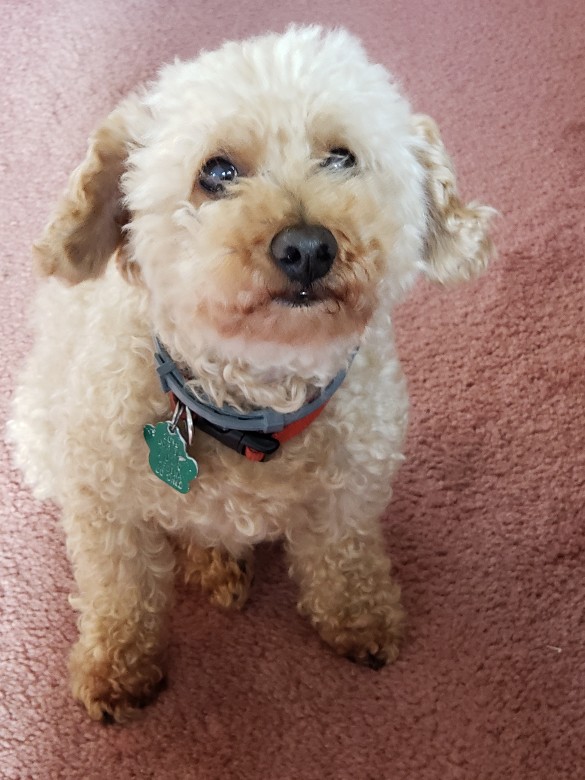
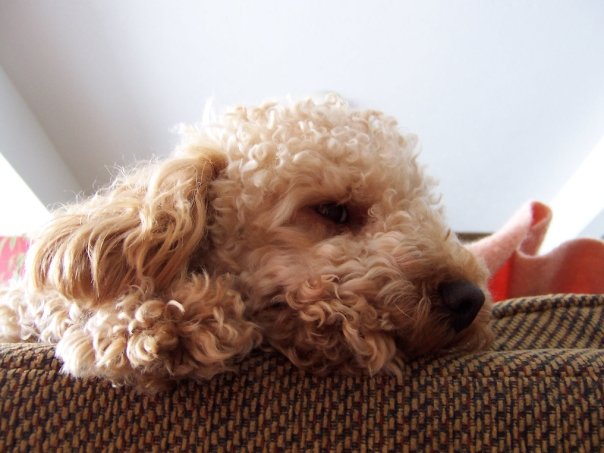
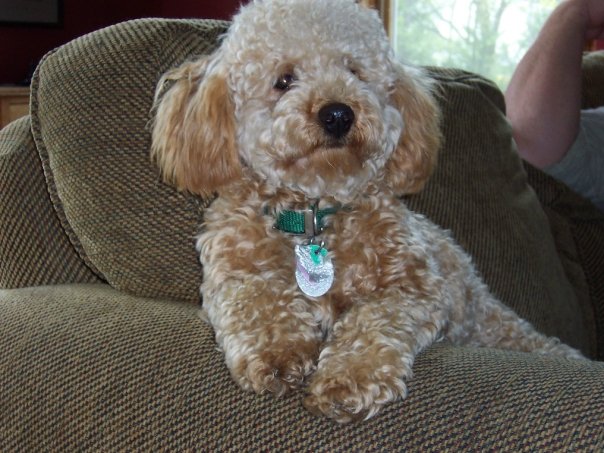
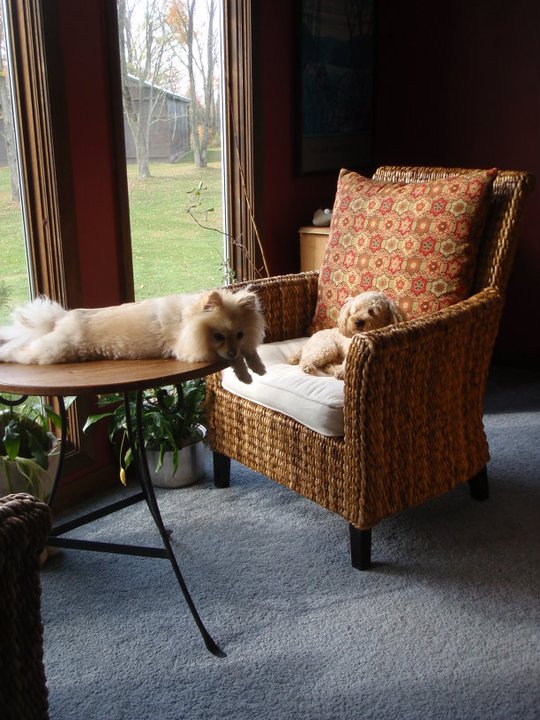
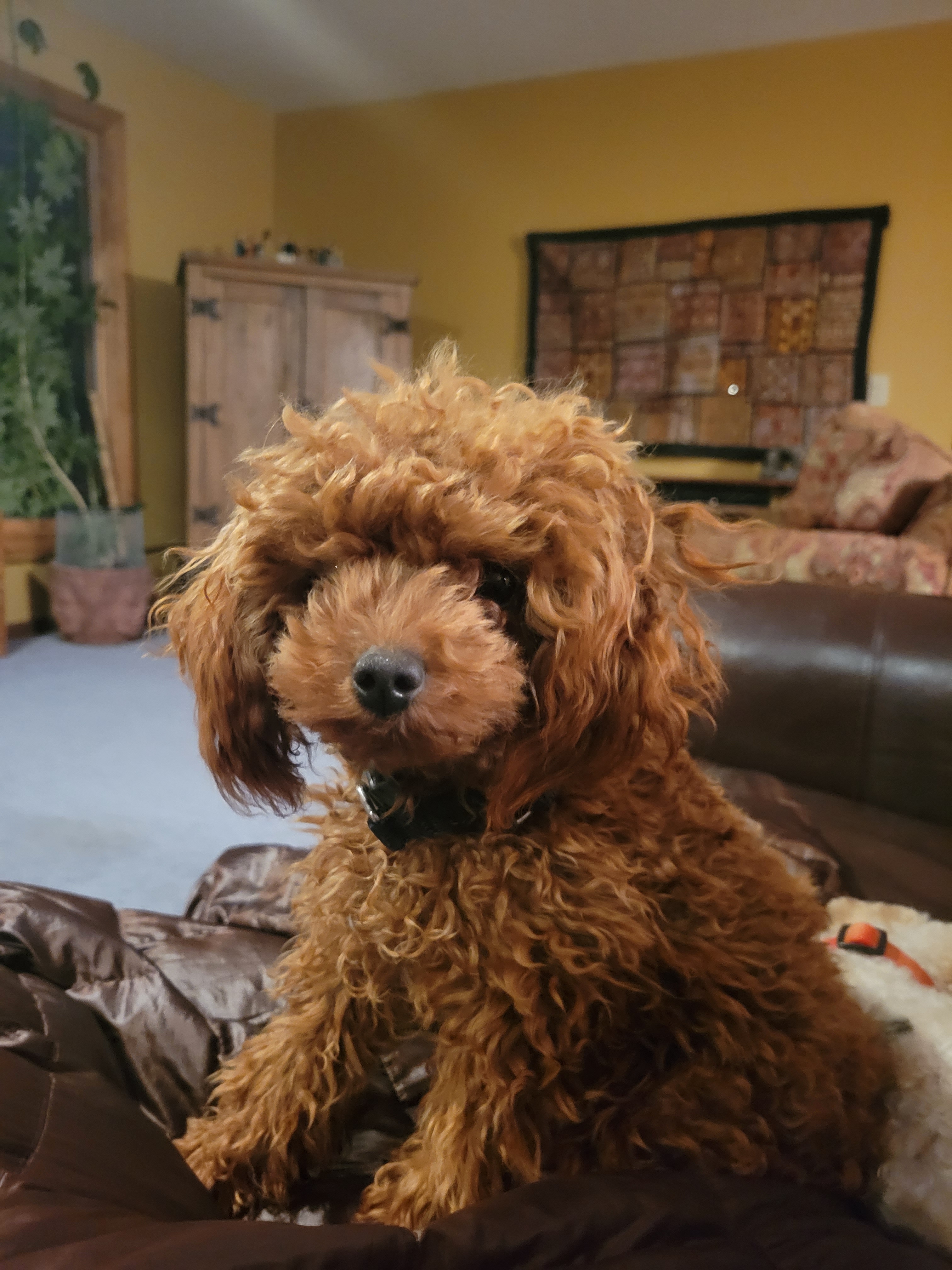
This is Cocoa Bean. He’s approaching his 17th birthday.
He detests having his picture taken almost as much as I do. He loathes car rides (even to the park) and shrunkles into a shadow of himself at the vet’s office. When I go out to the barn my family reports that he lifts his chin and howls. If I leave, he positions himself on the top of the couch to watch the driveway for hours. Let me hasten to add, his life truly isn’t stressful. He’s treated with warm affection and, because I mostly work from home, has near-constant companionship. While I work he sleeps in his chosen lair under my desk. His favorite thing, which he delights in more than he does eating, is playing outside. He’s especially joyous when I’m gardening, which gives him plenty of time to investigate scents and bark at ducks on the pond.
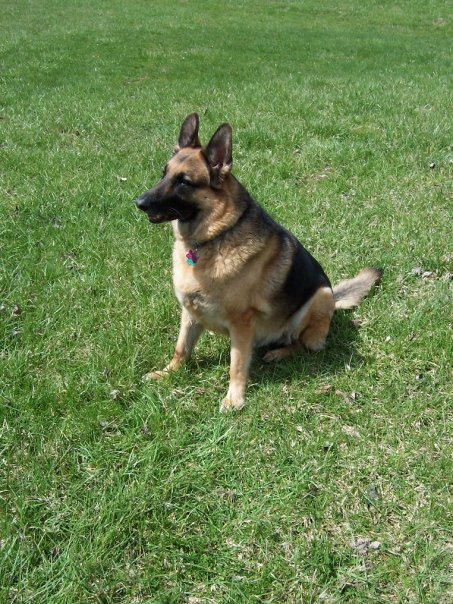
Cocoa Bean came to us in a complicated way, involving his person’s deportation with all the accompanying injustices and miseries. We were, at the time, German shepherd people. We’d had a few mixed-breed dogs as well, but were on our fourth German shepherd—a noble creature named Jedi Moon who also answered to a half-dozen other names of endearment.
We’d never had a small dog. Cocoa Bean, a toy poodle, joined our family when he was around five months old. He was what my mother called “a nervous wreck” – barking at the slightest thing and only able to sleep if one of our two younger children let him stay in their bedrooms, which they did every night. I wasn’t all that interested in having another dog. My mother’s health was failing, I was working whatever writing gigs I could get. And we were engaged in homeschooling that seemed to involve more away than home.
Jedi Moon wasn’t all that interested in having another dog either. He managed to avoid looking directly at the puppy for the first few months, although he did tolerate the little dog snuggling against him for naps, and eventually tolerated his antics with an elder statesman’s patience. I learned to manage two dogs for daily walks on our sidewalk-free 55 mph rural road. Jedi Moon would stroll along with dignity while Cocoa Bean zigzagged like exuberant golden rickrack against green grass. His enthusiasm for every sight and smell eased my weary heart. Not long after my mother died, my husband lost his job. When my husband came along for dog walks I tried to impose be-here-now conversation about what we saw around us, but he inevitably got back to grim topics like politics or our finances. Here’s an account of one such walk.
Why We Walk the Dogs
Yawning, you say you’re too tired yet we can’t refuse brown-eyed pleading at the door.
Away from these walls we more easily silence sorrow, hardship, loss by looking, only looking.
Cows in the lower pasture raise their heads as we pass. A Baltimore oriole alights on a hickory fencepost twined with yellow flowers. The sun stretches generous arms of light cloud to cloud.
The old dog walks alongside, as the puppy bounds through ditches up hillsides, joyously muddy collecting scents for his dreams.
When grief or fear catches in my throat I remember to look at the sky letting higher possibilities hover over our steps.
Then through evening brightness dozens of blue and green dragonflies swoop around us in some unknown ritual. We wonder which of nature’s perfect gestures— migration, mating, defense—this may be. Standing in the middle of our complicated lives, we feel a lift of hope requiring no effort and turn toward home, wide awake.
Soon, Cocoa Bean’s life changed.
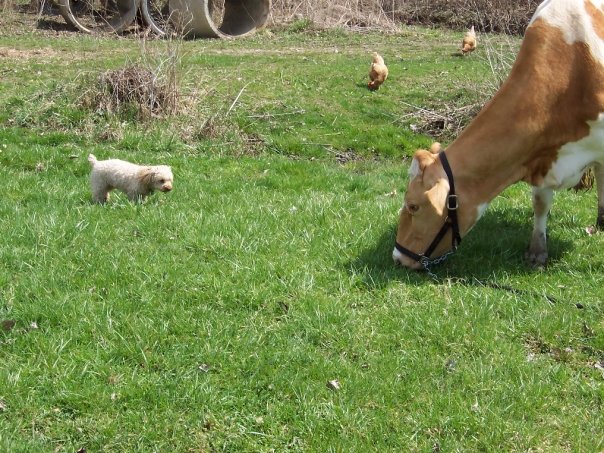
He’d been the only small dog in the family. He had the run of the house and commanded the farm. He chatted up chickens, faced down cows, and scared away invisible badgers.
He and his friend Jedi Moon went on great adventures. Afterwards they took long naps. In the evenings Jedi Moon snoozed while Cocoa Bean snuggled with the people, played in blankets, and bounded from couch to couch.
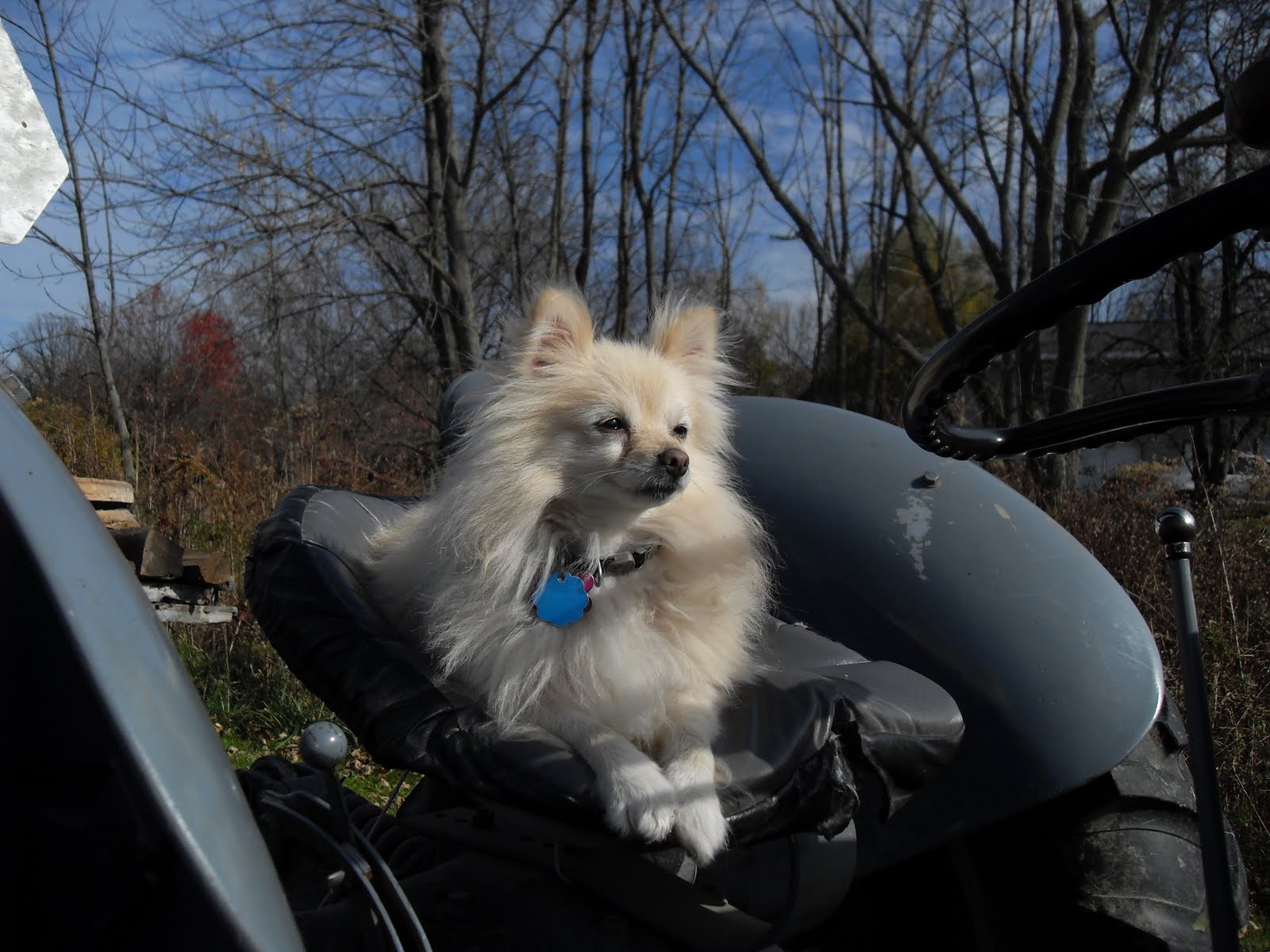
Until a small fluffy creature was adopted. It snuggled with people, played in blankets and bounded on couches. They named this interloper Winston and discussed his sad backstory: injured and abandoned as a small puppy.
When the interloper poohed on the floor the people just cleaned it up. Cocoa Bean had some plotting to do. Stealthily, he snuck his own poo on the floor just where this creature had gone. Success, the creature was blamed! Cocoa Bean did it again, and again, and again. Such joy.
Until the day Cocoa Bean was discovered in an incriminating crouch. His plot was foiled. He tried to hold his head up while all around him people were laughing. He was seen plotting with the cat, but nothing came of it. The interloper was here to stay.
Eventually they became fast friends.
Jedi Moon and Winston both lived long, high personality, much loved lives before they left us. Cocoa Bean is still here.
I started writing poetry not long after he came to live with us. Here’s one he inspired.
Calling the Dog
Following messages left in leaves soil air he wanders too far. When I call he pauses quickening to hurl fullness and glory ahead of the self like whales breach tigers lunge hawks soar. There’s nothing but an arc between hearing his name and springing toward the one who named him.
I want this completeness. I want to feel 100 trillion cells spark from this body in answer to what we call spirit. I want to taste the shimmering voltage course from every rock tree star.
A moment before reaching me he unsprings back to golden fur and brown eyes arriving tongue first.
I don’t just write the occasional dog-inspired poem. I also have, well, powers. My family calls me a canine “butt psychic” for the way I know when they need to go out and for the occasional opinions dogs like to share via telepathy. If I translate for the humans around me, 100% of the time those humans make fun of me. Here’s an example. Years ago Cocoa Bean suffered a grand mal seizure. It was horrifying. Then he had one a few hours later, also horrifying. This happened on a Sunday evening, no vet available, so I went to bed planning to make an appointment first thing in the morning. I couldn’t sleep. A while later I heard scrabbling in the carpet by our bedroom door. I was sure the poodle was having another seizure. He wasn’t, but I couldn’t go back to bed. I sat on the floor holding him and crying quiet tears, unable to imagine going on without this friend of mine. Then Cocoa Bean’s thoughts came through. He said he was upset by how upset I was. He had no way of understanding I was upset on his behalf. He was completely right. I calmed down, breathed deeply, and concentrated on sending love from my being to his being. When I finally went to bed I told my husband what the dog had said. My husband informed me I was completely nuts. But I told him Cocoa’s perspective hadn’t occurred to me until he shared it with me.
Both are exuberant, uniquely engaging creatures who have helped soften our days even while the world’s crises rage around us. It seems we are now, officially, People With Small Dogs. I’m grateful for many aspects of having animal companions in my life. One is the way they get me outside at all hours and in all weather where I remember to breathe and be present.
Thursday Morning At Dawn
Darkness frees me to stand nightgowned on the porch, watch the dogs merge into shadow, snuffle, pee, reappear.
I stretch, inhale summer’s warm weight, imagine staying in this spot while what has to be done swirls by undone.
I imagine a taproot growing down my spine, out my feet, through the porch floor and deep underground, rootlets reaching all directions.
Imagine remaining here so long I fade from sight, although everyone crossing this portal pauses as they pass through my arms.