Bits of Joy List

Bits of Joy list, five minutes to happiness,

I was spawned by list makers. My mother made grocery lists, task lists, correspondence lists, and gratitude lists. My father, an elementary school teacher, made lists of students who needed individualized attention. He made lists of household chores. He kept lists of conversational topics he wanted to bring up with his kids and, later, lists of things to do with his grandchildren . When he got older he used to write “Hello Earl” at the top of his lists. As he pointed out, lists were a way of talking to his future self so he might as well say “hi.”

I’m convinced we can use out-of-the-ordinary lists to enhance our lives. I have all sorts of suggestions to create Life Lists unique to us and I’m following through on a few goals on my Delights To Cultivate list.

Recently I heard about Bit of Joy lists. These are lists to post somewhere in view. Maybe on the fridge door. Maybe as a screen saver. That way whenever a bit of time opens up we’re prompted to devote it to something we find wonderful rather than whatever has become our default activities (ahem, like checking our phones).

How to consciously savor life’s random free moments? Hmmm. As I scribble down ideas I wonder why oh why don’t I let myself do these things more often? That’s exactly how a Bits of Joy list can be so useful. What would you put on your list?

When I Have Five Minutes

Go outside. Take some deep breaths, look at the sky, notice sounds. Unpleasant weather? Do it anyway.

Balance on one foot, then the other, in an impromptu tree pose.

Hug someone I adore.

Indulge in the reverie kids know as “pretending.”

Donate to a good cause.

Smile at someone for all of the following reasons.

Read just one poem (perhaps “I Confess” by Alison Luterman). This is a very good reason to keep poetry books nearby and to bookmark poetry sites.

Contemplate my blessings.

Make plans to do something with someone dear to me.

Hug a tree.

Sing. Made up lyrics a plus.

Dance, especially to the music stuck in my head.

Click over to Light Weaver for interactive mandalas plus music.

Meditate or (as I practice it, sit quietly and hope this has some meditative effect).


When I Have A Half Hour

Take a walk, which may be the best problem-solving method around.

Read a book on the porch.

Garden.

Clean out a drawer or clean out a computer file. Very small increments of de-cluttering are allegedly fun.

Play the piano (which I never do, but tell myself I will).

Write an actual written-on-paper letter to a friend. Or mail something weirder.


When I Have An Afternoon

Go outside with a notebook and good pen, sit somewhere lovely, and write.

Play a game new to me from Bernie DeKoven’s master list of games.

Do one of the hundreds of projects I’ve saved on Pinterest.

Wander through shops that entice me. I’m not a shopper. I run to the market, grab what we need, and get out. I haven’t been to a mall in over a decade. But there are places that entice me. I know of a dollhouse shop about 40 minutes from here where I’d love to linger. (I’ve nearly convinced my husband to cut a hole in the wall and install a dollhouse-sized door and window, into which I can arrange a miniature scene. This WILL happen.) I love art galleries, import shops, odd niche stores, and of course bookstores.

Sew.

Go to an art museum. My favorite see-it-in-an-afternoon museum is Oberlin’s Allen Memorial Art Museum.

Attend a noontime concert. Many of these are free and hosted in beautiful old churches.

Learn something. This is another list but there’s so much I want to learn. No time like the present.



Bonfire Revelations

parents are people, kids recognizing parents as people,

Every evening at church camp was the same. We tidied up our cabins and then met back at the lodge. There we were taught songs and led in quiet games. Ours was a reserved sort of Christianity. The Presbyterian church  I was raised in proffered no talk of hell or being saved, no witnessing. The congregation was friendly in a formal sort of way. (Even so, I don’t think they entirely deserved the denomination’s nickname—“God’s Frozen Chosen.”)

I was nine years old that summer. My father had volunteered to serve as one of the camp counselors and bunked halfway up the hill in a cabin with the older boys. I was assigned a cabin at the bottom of the hill with the younger girls.

On our last evening of the week-long camp we were called out of the lodge after the final song. There stood our recently ordained young minister. He held flaming torches in his upraised hands like some illustration from a storybook. He passed them out to the counselors and told us to follow.

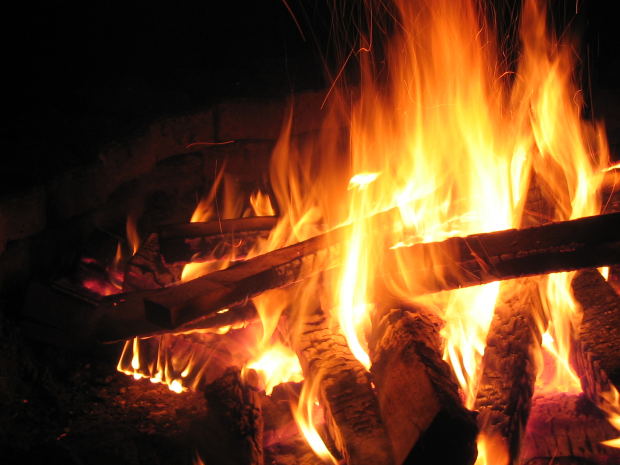
This was highly irregular. Fire? Hiking after dark? Staying up past bedtime? Our speculative whispers were unsuccessfully hushed by the grown-ups. We arrived at the clearing where morning worship services were held. It looked different at night. Shadowy trees loomed over the ring of log seats. Adults leaned their torches toward a dark stack of wood until a bonfire flared.

The minister offered a prayer and then talked about faith. I was so caught up in this out-of-the-ordinary moment that I didn’t pay close attention to his words. Who would? Kids know grown-ups like to go on and on about things. It’s best to let them. Meanwhile, I was mesmerized by the flames and how different our faces looked in the firelight.

Then the minister asked a question, something about our relationship with God. Silence settled over our group. None of us were familiar with faith discussed in such personal terms. The pastor looked around the circle with an expression kids know all too well. It’s the look teachers get when they are going to call on someone.

I was so timid that I tended to blush even for other people. One day in school, after his family had vacationed in Hawaii, Doug Bloomfield brought a grass skirt to Show & Tell. He cheerfully clicked on a cassette of exotic music, pulled the skirt over his pants, and demonstrated a hula dance. He didn’t seem at all embarrassed. In my third row seat I blushed a red so deep that kids actually looked away from the hula spectacle to stare at me.

Until now I’d liked this strange after-dark event. The cool night air scented with burning wood felt magical. But I was pretty sure asking people to talk about their own religious experiences was rude. Already I felt flustered on behalf of whoever might have to answer. The minister stopped waiting for one of us to volunteer. He chose someone.

The person he asked was my father.

My dad, a quiet and low-key man, wasn’t one to speak up in front of others. There was a long pause. I was sure I could feel his distress. Then my father spoke. He talked a little about growing up in the country where he spent time in the woods and fields. He said he still felt closest to God not in church, but when he was out in nature. He finished by saying he liked silence and that was a way of praying too.

A moment comes when a child begins to see a parent as a separate person. This was such a moment. I knew my father was drawn to the outdoors. He took us hiking, showed us how to skip stones across the water, let us get muddy. But this was a larger context. I saw he had his own reasons to spend time outside. I recognized my father as a man whose life was bigger than I’d imagined.

Although this was my first glimpse of him as a person in his own right, I also I felt closer to him. That’s because what he spoke was my truth too. In the little forest behind our house I liked to go to a particular spot by myself. I didn’t have the words for it, but when I sat quietly there I had a sense of being in a sacred place. I looked across the circle at my father and loved him more than ever. He looked back at me. His face was luminous in the firelight.

This appears in the anthology  How to Pack for Church Camp.

Are You Eccentric?

Being yourself. (image: Irish_Eyes)

Being yourself. (image: Irish_Eyes)

I met Betty years ago when I moved to a place teeming with all sorts of progressive people. Still, Betty stood out. She was a large lady dressed in layers of brightly colored clothes who walked with the help of a carved walking stick. Because her eyesight was so poor she often asked for help reading street signs. I was the lucky person she asked one day.

We hit it off immediately, riffing on words and laughing wryly about politics. But when I made a banal comment (probably about the weather or something equally trite) Betty wanted none of it. She asked why I bothered to say it. While I was busy thinking about her question she moved on to far more fascinating topics. Her honestly was more overt than the huge pendant dangling around her neck. I admired her for it. I was newly married at 18, attending college full time, plus working and volunteering. Sometimes I felt as if I were playacting in all these unfamiliar roles. Simply by example Betty made it clear that playacting didn’t cut it.

Until her last days Betty was a fascinating woman. She could talk knowledgeably about religion, politics, and literature as well as motorcycle racing and vintage cars. She read avidly even though her poor eyesight forced her to hold a book inches away from her face. Known in the area as a white witch, she cast spells for many notable people and organizations. (Her attempts on behalf of the Cleveland Indians to lift the Curse of Rocky Colavito weren’t one of her successes.) In the early 2000’s the city of Lakewood asked her to clean up what they considered an overgrown yard. When an inspector showed up she walked him through her herb gardens, explaining what each plant could cure. Perhaps she was never cited for those unruly gardens because she gave him a homemade insomnia remedy.

The truly eccentric people I know don’t try to stand out. They don’t affect certain behaviors, clothes, or interests in order to be seen as non-conformists. They do their best to live in a world of conventions while simply being themselves.

We live in a marvelous time, when we’re far freer to be who we are than perhaps in any other time in history. That’s great for us as individuals but also great for humanity, since eccentrics seem to play a larger role than others in advancing exploration, the arts, and sciences. Their differences stretch the possibilities for all of us.

In Eccentrics: A Study of Sanity and Strangeness,  psychiatrist David Weeks explains that eccentrics are physically healthier and significantly happier than “normal” people. He notes that eccentrics are wildly diverse yet share common characteristics. Here are his 25 descriptors of eccentricity, listed in descending order of importance. (Dr. Weeks says the first five are the most significant characteristics.)

  • Enduring non-conformity
  • Creativity
  • Strongly motivated by an exceedingly powerful curiosity and related exploratory behavior
  • An enduring and distinct feeling of differentness from others
  • Idealism
  • Happily obsessed with a number of long-lasting preoccupations (usually about five or six)
  • Intelligent, in the upper fifteen per cent of the population on tests of intelligence
  • Opinionated and outspoken, convinced of being right and that the rest of the of the world is out of step with them
  • Non-competitive
  • Not necessarily in need of reassurance or reinforcement from the rest of society
  • Unusual eating habits and living arrangements
  • Not particularly interested in the opinions or company of other people, except perhaps in order to persuade them to their contrary point of view
  • Possessed of a mischievous sense of humor, charm, whimsy, and wit
  • More frequently an eldest or an only child
  • Eccentricity observed in at least 36% of detailed family histories, usually a grandparent, aunt, or uncle. (It should be noted that the family history method of estimating hereditary similarities and resemblances usually provides rather conservative estimates.)
  • Eccentrics prefer to talk about their thoughts rather than their feelings. There is a frequent use of the psychological defense mechanisms of rationalization and intellectualization.
  • Slightly abrasive
  • Midlife changes in career or lifestyle
  • Feelings of “invisibility” which means that they believe other people did not seem to hear them or see them, or take their ideas seriously
  • Feel that others can only take them in small doses
  • Feel that others have stolen, or would like to steal, their ideas. In some cases, this is well-founded.
  • Dislike small talk or other apparently inconsequential conversation
  • A degree of social awkwardness
  • More likely to be single, separated, or divorced, or multiply separated or divorced
  • A poor speller, in relation to their above average general intellectual functioning

See yourself here? A family member or friend?

The documentary “A Different Drummer” highlights people more overtly unusual than Betty. In fact, Dr. Weeks claims only one in 10,000 people are truly eccentric. I suspect the number is much higher.

Sure, some eccentrics are more flamboyant than others but I think the Bettys of the world qualify. So does a toddler obsessed with vacuums who grew into a little boy driven to fix broken appliances and equipment he rescued from the trash. So does a girl so fascinated by forensics that she spent weeks sketching the decomposition of a muskrat and recently assembled an entire deer skeleton in the driveway. So do many of the interesting people around all of us. My family tree is well leafed out with eccentrics and my friends are orchards of eccentricity. Maybe I’m eccentric too. How about you?

are you eccentric?

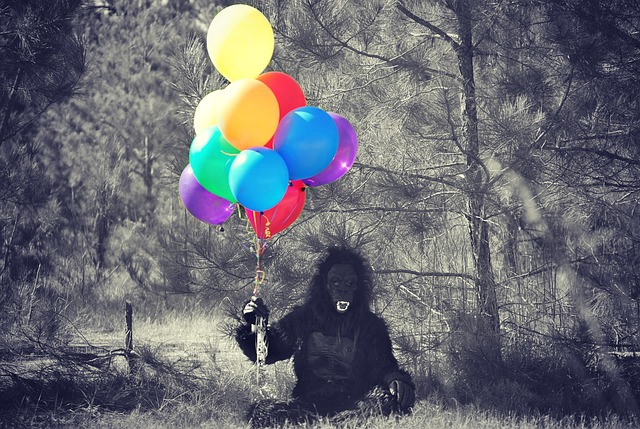
What gorilla suit? (image:Greyerbaby)

Making Space for Stillness


Let the waters settle and you will see the moon and the stars mirrored in your own being.–Rumi

Parents naturally recognize that a long bath settles a restless toddler, that snuggle time is a necessary oasis in a child’s day. We notice when children have solitary moments they tend to daydream, a natural form of meditation. We see even the most active kids settle into stillness, quietly swaying on a backyard swing or humming while looking out the window, entirely at peace until a new idea grabs them or (more frequently) someone interrupts them to do something.

Everyone needs time to simply “be.” In stillness we’re fully present all way to the the quiet center of our being. (The vital counterpoint to this, being energized to the center of ourselves, is the blissful state of flow.) Constant activity can easily crowd our awareness into a jumble of surface impressions. Even when we are mindful of the need to downshift, obligations and diversions intrude. Yet we know contemplation flourishes best in stillness.

For some of us, a specific place helps us to gather what is fragmented in ourselves. We might be drawn to sit on the porch step each evening and watch dusk turn to darkness, we may make a ritual of drinking tea in a certain comfortable chair each morning, we may notice that time alone in nature strengthens our spirits. Many children like making their own hidden realms under blankets, behind furniture, in an outdoor hideout, wherever they can listen to silence by choice. And many families incorporate daily rituals of prayer or meditation that, in addition to a spiritual purpose, also teach children to connect with an essential wisdom within.

That inner wisdom provides important information none of us should ignore. Often the information is coded into physical impressions or sensitivities. Children may have difficulty coping with overstimulation, they may object to certain foods, or they may refuse to play at a new friend’s house. These sensitivities or inclinations aren’t wrong. They are among the many indicators of a wordless knowing. In a world that unrelentingly pushes us to fit in by denying our feelings, a measure of stillness and acceptance at home leaves the child space to know him- or herself. By reacting mindfully we draw the child’s conscious awareness to these differences.

Many of us were taught as children to ignore our inner promptings. We may have felt instinctive revulsion when served particular foods, but were told we had to clean our plates. We may have known that we weren’t ready to practice math facts over and over, but found if we didn’t comply we’d be shamed by bad grades. We may have heard a small voice inside warning us to stay away from a particular person, but were told to do what grown-ups said.

Instead we want our children to recognize that they have an internal system of communication known as intuition. They can tune in to their own impressions, perhaps learning that they get grouchy when they are thirsty or feel a stomachache coming on when they aren’t being true to themselves. They can use these signs when making decisions. The child whose gut feelings are taken seriously will learn to respond to the form his intuition takes.

Paying attention to inner promptings can be crucial. As security expert Gavin de Becker explains in Protecting the Gift: Keeping Children and Teenagers Safethis is imperative for safety because intuition is a hardwired trait warning us of danger. If the child is aware of his inner warning system he will trust himself well enough to recognize the indicators that something is wrong. As de Becker says, this can save a child’s life.
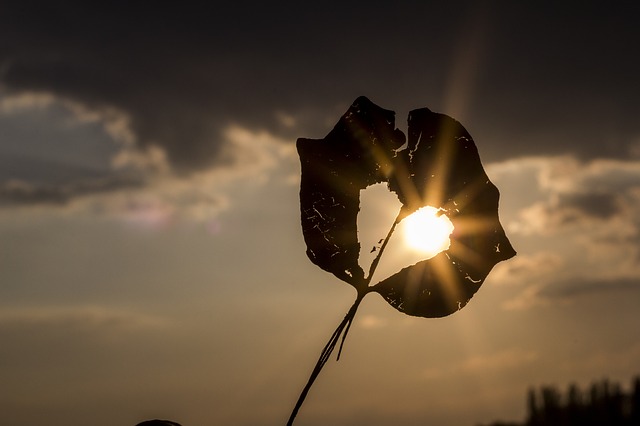
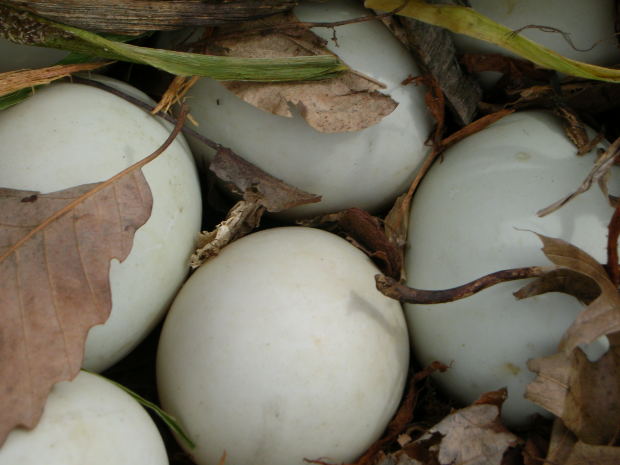
Incorporating tranquil interludes into our daily lives is an important way to nurture a connection to inner wisdom. In good times as well as difficult times, that connection gives us a sense of self and the inner reserves found in stillness.

This post is an excerpt from Free Range Learning.

Most Of Us Are Ugly Ducklings

Our early hatching is lauded, our late hatching a reason for worry.

We’re expected from our earliest years be like the other ducklings. (Well, better than others but not stuck up about it.)

If we keep flying when it’s time to swim there’s medication to calm our out-of-bounds impulses. If we like to sing but can’t quack there’s a star chart to reinforce more appropriate sounds.

We’re graded on the dexterity we demonstrate when curling our beaks under our wings at nap time, tested on our ability to dip our heads under water, judged by our willingness to stay in line. Poor results means doing these things over and over again until we thoroughly detest ourselves for not measuring up.

When we don’t do as well as expected we’re told we just need to try harder to be the very best duckling we can be. We’re told that we aren’t living up to our potential. We’re told we need to get our priorities straight (or a growth mindset, or grit, or an attitude adjustment).

Ducklings from more affluent families might be enrolled in perfect-your-waddle coaching camps. Their preening may be assisted and their diets enhanced with imported bugs. Less fortunate ducklings may just get some quack tutoring.

When we’re still not like other ducklings most of us try even harder to be normal. Remember those reindeer who wouldn’t let someone different play their reindeer games? Yeah, peer culture is harsh that way, especially when we’re segregated with our age-mates rather than interacting with many fowl sorts in the larger community.

As adults, we measure our own success against the most attractive and capable ducks. That’s painful, but it’s what we learned from our earliest days on.

This isn’t to besmirch ducks. Ducks are great, particularly at being ducks. But some of us

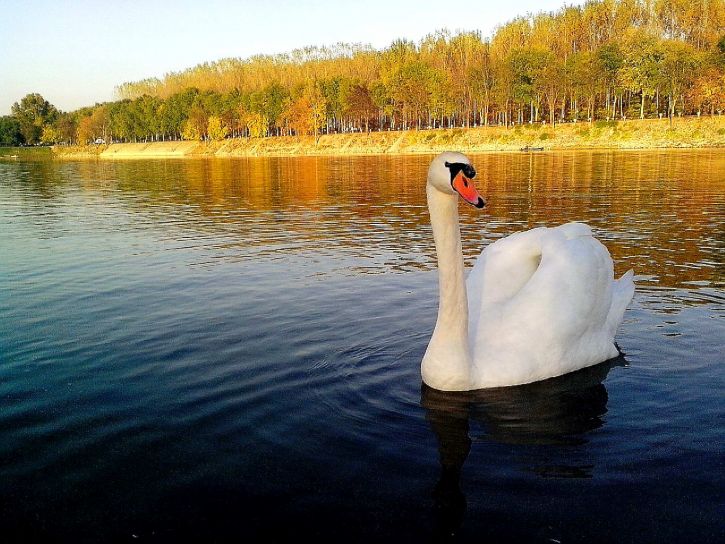
are swans,

a

or storks,

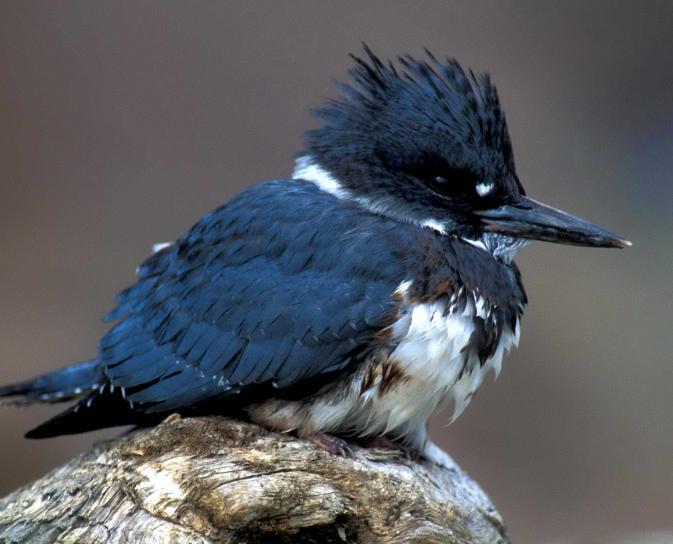
or kingfishers,

or great blue herons.

Some of us aren’t birds at all.

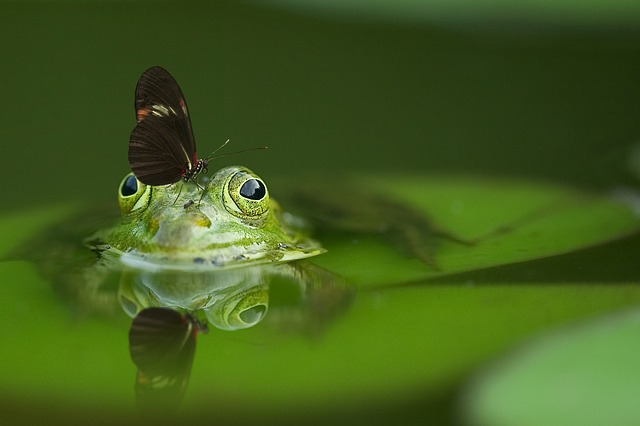
 We’re frogs,

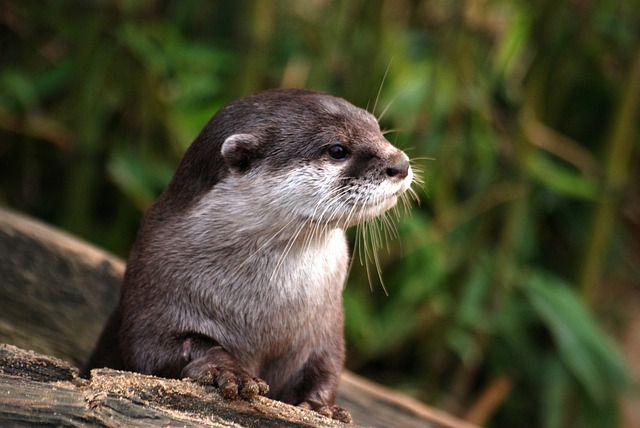
otters,

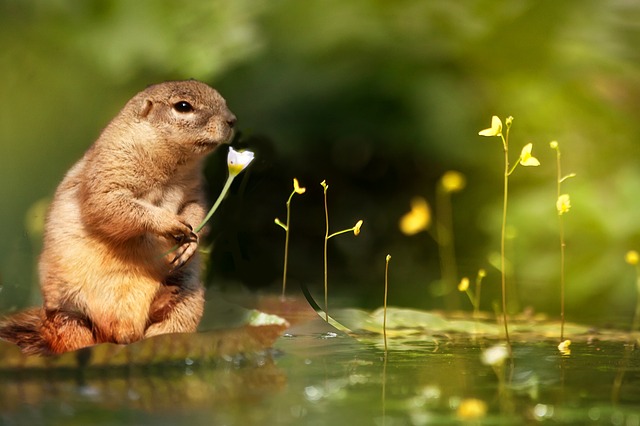
squirrels,

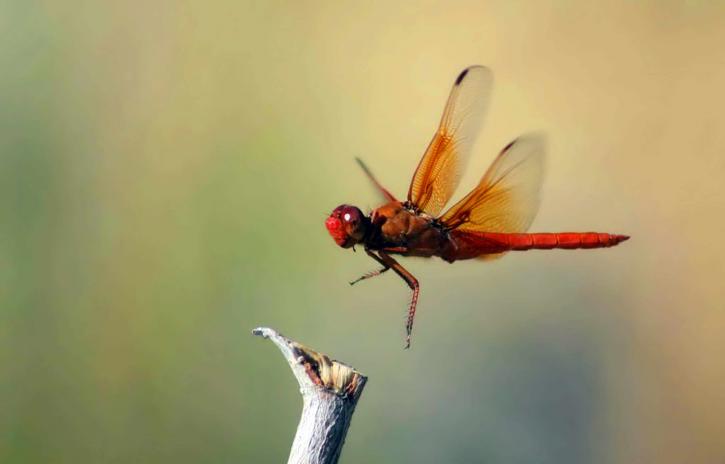
or dragonflies.

Every creature in and around the pond is necessary. Each is integral to the larger ecosystem’s wisdom.

We have to be extraordinarily stubborn day after day, year after year, in order to be ourselves.

The ugly ducklings of this world, the ones who still aren’t who they’re “supposed” to be, are the ones with the vision big enough to create a future for us all.

All images in the public domain. 

How Do You Introduce A Friend?

Years ago, a family new to our area came to an enrichment program my kids and I were attending. Someone said, “Oh you’ve got to meet Beth, she dragged roadkill to the back of her yard so her kids could observe the process of decomposition.”

I knew immediately that Beth and her kids were our kind of strange. Every member of her family is clever in charmingly different ways and they quickly became integral to our lives. I don’t need to introduce her with that roadkill story because I have so many other Beth stories by now.

I don’t know about you, but I’m uncomfortable with the usual what-this-person-does-for-a-living introduction. Your friend may be amazing at her job, but she’s more than that. I’d rather introduce people by what they mean to me.  “I’d like you to meet Margaret, who is truly the most unique person I know,” or “This is Leslie, who has helped me out of more more scrapes than you can imagine,” or “I’d like you to meet Mark, an amazingly open-hearted man who also tends to make scatological jokes.”

Or introduce them by something they do that brings them joy. “I’d like you to meet David, who is a reading buddy with kids in an inner city school,” or “This is Amy, who has challenged herself to write an acrostic poem every single day,” or “This is Cynthia, who has such attuned vision in nature that she can see what most people never notice.”

Or, as in the case of Beth, to introduce someone with a story.

I suspect most of us feel awkward in a group of strangers at a party, reception, or stalled elevator. Oftentimes a conversation starts more naturally by simply sharing an observation (“I hope elevator cables only snap in the movies,” might not be the right one. Which means I’d probably say it…)

Or asking a more essential question that might lead to real connection. Maybe, “What’s capturing your attention lately?” or “What do you like to do that you don’t have to do?” (Yeah, lame. I told you I’m awkward.)

And whatever we do, by really listening to the answers.

I ran across this wonderful poem by a fellow Ohioan, Susan Glassmeyer. She says it all, perfectly.

INTRODUCTIONS

Let’s not say our names
or what we do for a living.
If we are married
and how many times.
Single, gay, or vegan.

Let’s not mention
how far we got in school.
Who we know,
what we’re good at
or no good at, at all.

Let’s not hint at
how much money we have
or how little.
Where we go to church
or that we don’t.
What our Sun Sign is
our Enneagram number
our personality type according to Jung
or whether we’ve ever been
Rolfed, arrested, psychoanalyzed,
or artificially suntanned.

Let’s refrain, too, from stating any ills.
What meds we’re on
including probiotics.
How many surgeries we’ve survived
or our children’s children’s problems.
And, please—
let’s not mention
who we voted for
in the last election.

Let’s do this instead:
Let’s start by telling
just one small thing
that costs us nothing
but our attention.

Something simple
that nourishes
the soul of our bones.
How it was this morning
stooping to pet the sleeping dog’s muzzle
before going off to work.

Or
yesterday,
walking in the woods
spotting that fungus on the stump
of a maple
so astonishingly orange
it glowed like a lamp.

Or just now,
the sound
of your
own breath
rising
or sinking
at the end
of this
sentence.

— Susan Glassmeyer

The Wearing of Nostril Straws


straw up nose, kids wearing straws, toddler humor,

I don’t buy straws.

Yeah, I’m cheap, but I prefer to believe I’m making an ethical stand.

Straws have one purpose: to spare us the workout of lifting a drink to our lips while tilting the glass slightly.

Each of these miniature plastic pipes are used for a few minutes, then discarded to burden the environment for decades. I think they should only be sold as medical supplies for people who physically cannot perform the lifting/tilting maneuver.

Naturally, straws fascinate my children. Their grandmother, who thinks I’m an extremist for picking up crying babies and limiting screen time, keeps several jumbo packages of straws in a low cupboard where my children can get them any time they choose. Because she lives with us, that’s all the time.

This afternoon two-year-old Sam ran full speed from grandma’s cupboard with not one, but two straws.  I might have paused to wonder what lesson on physics my darling could learn while trying to get a drinkable airlock around both straws, but my attention was diverted because this precious child was wearing the straws shoved mightily up his nostrils.

Such behavior might be funny among a certain type in college. Not so much by a running toddler. I picture a fall drastic enough to force the straws up into his frontal lobes. Doctors would shrug sadly and comment on how the child would now be among those who cannot physically perform the lifting/tilting maneuver.

I believe parents can make stuff up if it’s for a good cause. So I grab the straws and say in a melodramatic you-scared-Mama voice, “Oh no!  If you fell, these straws could get stuck in your nose!”

Unconcerned, he countered, “I like to put things up my nose.”

“You do? What things do you put in your nose?”

“I put food in my nose all the time.”

Now I’m thinking major medical. Is he the child I hear snoring at night? Is there a lima bean acting like a flapping valve cover in some inner chamber of his respiratory system? What kind of traumatic scope-down-the-nose emergency room procedure might have to be imposed to discover this?

I ask sweetly, “Why would you put food in your nose?”

He says, “Horses live in my nose. They get hungry.”

Clearly there is a kid rule; they can make stuff up if it’s for a good cause. Anything to avoid hearing mom’s philosophy about straws.

I’ll raise a glass to his nose horses as I practice some lifting/tilting maneuvers of my own this evening.


A post from the wayback machine. 

Say Yes to Your Weirdness

We tend to suppress certain aspects of ourselves in order to fit in. (Although when we display whatever weirdness is ‘in” I think that’s also a sort of conformity too.)

When I was growing up I did everything I could to hide what was odd and different in myself, letting out the funnier aspects in measured doses with my friends but keeping most tucked tightly in some inner compartment of my being. (To some extent I still do. You probably do too.)

I hope my kids have felt freer to express their own weirdness whether an early fascination with vacuum cleaners, a passion for forensic pathology, or unstoppable investigations of science-related oddities but I know for sure they are far more complex beings than their mother imagines.

Looking up the word “weird,” I see that its original meanings have to do with living out our uniqueness.

  • wyrd (fate or personal destiny)
  • wurđízwurd, wurt, urðr, worden (to become)
  •  wert (to turn, rotate)
  • wirþ, weorþan (to come to pass, to become)
  • weorþ (origin, worth)

Mythologist Michael Meade, founder of Mosaic Voices, says has plenty to say about that in an interview,

When I work with youth, I try to assist them in discovering their own unique essence. The sad fact is that everything in this culture is working against that essence. Mass culture is opposed to the uniqueness of individuals. Young people, whose job it is to become themselves, are walking into a culture whose goal is to turn them into everybody else. What I try to do is help young people realize who they already are inside. American culture says that you must make something of yourself, but the mythological understanding is that everybody already is someone. They have a seeded self at birth. As soon as young people are aware of the uniqueness inside them, they can begin to manifest the stories they’re carrying.

Meade’s comments echo a remarkable book, The Soul’s Codeby the late James Hillman. Hillman described each of us as coming into the world with a uniqueness that asks to be lived out, a sort of individual destiny which he termed an “acorn.” It’s a remarkable lens to view who we are. A child’s destiny may show itself in all sorts of ways: in behaviors we call disobedience, in obsession with certain topics or activities, in a constant pull toward or away from something. Rather than steering a child to a particular outcome, Hillman asks parents to pay closer attention to who the child is and how the child shows his or her calling. He also asks each of us, at any age, to listen to our weirdness. It’s integral to who we are on this moment-to-moment path of becoming.

What makes YOU weird?

Here are a few more thoughts on the matter.

“Whatever makes you weird, is probably your greatest asset.” Joss Whedon

There’s a whole category of people who miss out by not allowing themselves to be weird enough. ~ Alain de Botton

If you think people in your life are normal, then you undoubtedly have not spent any time getting to know the abnormal side of them. ~Shannon L. Alde

It ‘s weird not to be weird. ~ John Lennon

Blessed are the weird people – poets, misfits, writers, mystics, painters & troubadours – for they teach us to see the world through different eyes. ~ Jacob Nordb

 “Be daring, be different, be impractical, be anything that will assert integrity of purpose and imaginative vision…” ~Cecil Beaton
“There is no such thing as a weird human being. It’s just that some people require more understanding than others.” ~Tom Robbins
“It’s not so much what you have to learn if you accept weird theories, it’s what you have to unlearn.” ~ Issac Asimov

“Human salvation lies in the hands of the creatively maladjusted.” ~Martin Luther King, Jr

All images courtesy of pixabay.com.

Who Are You When The Power Goes Out?

contemplation time, power outage, technology dependence,

Over a decade ago a power outage started in Ohio, rapidly spreading to four other states and parts of Canada. In some places power wasn’t restored for days. For a time, systems with backup generators continued working but only as long as those generators had fuel. ATM machines couldn’t be accessed, gas stations couldn’t pump gas, phone service was disrupted, and water systems lost pressure.

When it started, my parents checked in with a neighbor who was home alone next door. My mother told the 14-year-old girl if she needed something she only had to ask. “I’m fine,” the girl assured her.

About an hour later the (now distraught) girl rang my parent’s doorbell. “I don’t know what to do!” she said.

“What’s wrong?” my alarmed mother asked her, “Are you okay?”

It turned out no particular thing was wrong, exactly. But this girl was close to panic. She couldn’t get online. She couldn’t recharge her phone. She couldn’t turn on the TV.  Tired of her iPod and without other familiar diversions she was left to her own devices.

She. Didn’t. Know. What. To. Do.

Maybe we’ve unlearned how to be with ourselves, perhaps for the first time in history. Our ancestors, whether hunting or hoeing, had hours each day to think their own thoughts. They had time to notice nuances in the natural world. They had time to know themselves. Those previous eras weren’t all golden by any means, but our ancestors probably couldn’t have imagined a future generation populated by people who would suffer when left without moment-to-moment diversions.

What are we diverting ourselves from, exactly?

My friend Urmila, who lives in India, tells me that we most fully inhabit our lives when we’re not doing but being. She says there’s a big different between her culture and ours. In the West believe a good day is spent getting a lot accomplished. Our spare minutes are filled with distractions, our vacations are way to check items off our bucket lists, and family time needs to be fit into a schedule.

To her a good day is one of daydreams, contemplation, meditation, a quiet walk—simply experiencing the flow of time.

(Urmila has motivated me to stop uttering what I think is the curse word of our time.)

Which brings me to a relevant study. Researchers performed brain scans on rats as they went through a maze and again afterwards. They found rats, given a chance to relax, showed enhanced learning and memory retention compared rats who were not. The scientists noted that human experiences also require periods of quiet wakeful introspection to make sense of them.

What we experience is just raw data until we feel it, think about it, and weave it into our personally tapestry. Relaxing and reflecting lets us find meaning in our experiences. That sounds like a life more fully lived, whether the power is on or not.

technology addiction, introspection, studies of memory,

Grateful For The Dark Stuff Too

A handmade Gratitude Tree has hung in our hallway for years. We keep the tree lively by writing on leaves made of brightly colored paper, then tape them to the tree. It’s usually filled with life affirming reminders like hugs from Daddy, going to the library, bike rides, playing cards with Grammy, and yes, winning arguments.  The year my youngest son Sam was six, he got so inspired that he said he was grateful for a hundred things. A bit dubiously I offered to type the list while he dictated. I was astonished as he kept going until the list numbered 117.

Listing what we’re grateful for is increasingly popular. Studies show that those who practice gratitude are healthier, happier, more helpful to others, and even more likely to reach their goals. People post gratitude lists on Facebook and on their blogs, keep gratitude journals, and pray in gratitude each morning. This is undeniably wonderful. Orienting ourselves toward what works in our lives is perpetually rejuvenating.

But perhaps we’re limiting ourselves to a childlike version of gratitude. Are we grateful only for what we deem good and ungrateful for all the rest?

I’m all about emphasizing the positive—heck, I’m pretty sure we amplify what we pay attention to. But that doesn’t mean that the darker sides of our lives aren’t a source of blessings as well. It’s one thing to be grateful for a disease in remission, a distant friend’s visit, or a new job, but there’s much to be grateful for right in the heart of what we consider the worst of times, the worst in ourselves. Maybe mining these experiences for gratitude can get us past the need to separate our lives into good and bad, putting us right into the seamless whole of a fully lived life. Here are a few to consider:

Mistakes

I’m not talking about the little mistakes we make each day, but those big, honking mistakes all of us who are honest with ourselves can admit we’ve made—errors that damaged relationships or changed the future we anticipated. Some of these mistakes were well-intended, while others were careless or downright stupid. 

It’s quite possible to be grateful for what we call mistakes. If nothing else, our fallibility demonstrates the foolishness of being self-righteous about others. Hopefully we learn even more. Our mistakes give us a depth of experience, a dose of humility, and the beginnings of wisdom.

Beware people who claim they have not made significant mistakes—either they haven’t stepped out the door yet, or what they hide from themselves is too dark to be claimed.  Our mistakes are a wonderful part of who we are. Thank goodness for our mistakes in all their falling down, awkward, forgiveness-hungry glory.

Doubt

While doubt seems ruinous, it can actually be a gift. We may doubt choices we’ve made, relationships we’re in, or the faith we have practiced all our lives. Doubt is a powerful motivator. When we look at doubt, using our heads and our hearts, we may not like what we see. It may take us years to find answers. This forces us to tell the truth to ourselves, and that process makes us stronger. Sure it’s painful, but it also leaves us much to be grateful for.

The harsh light cast by doubt can lead, after a time, to a much brighter path. We may find ourselves in stronger relationships and making more conscious choices. We may end up with deeper faith or accept that we don’t know the answers, but that we love the search all thanks to our friend, doubt.

Crisis

I don’t mean to minimize the impact of crisis. Like almost everyone, I’ve been at the mercy of crime, grief, and pain. But no matter the crisis, we have a choice. We can choose which attitude to take, and that alone is worthy of some gratitude.

Beyond that, many people find blessings of all sorts hidden in experiences that, on the surface, seem starkly horrible. They say that cancer woke them up to truly living, or they say that losing everything in a fire helped them choose more authentic priorities. Some people dedicate their energy to helping those who have suffered as they once suffered, thereby transforming their own crisis into a blessing for others.

Throughout history, cultures around the world have told folk tales that not only entertain, but also teach values while offering lessons on growing through difficulty. Too often, we’ve replaced these stories with weaker parables found in popular entertainment. Consider the following:

A man was given a strong horse. Many came to admire it, telling him he was the luckiest man around. He replied, “We’ll see.” A few days later the horse ran away and the neighbors came to console him. “How terrible!” they said. The man replied, “We’ll see.” The next week the horse returned. Following him were six wild horses. The neighbors congratulated him, saying, “You are richer than any of us now.” The man replied, “We’ll see.” When his son tried to train one of the wild horses, it threw him and the young man broke his leg. “Oh, what bad luck,” his neighbors said. The man only replied, “We’ll see.” Then an army swept through the village and conscripted all able-bodied young men, leaving only the man’s son with the broken leg. The neighbors told him how fortunate he was. The man only replied, “We’ll see.”

The next time crisis looms chances are you will stumble, get up, cry, laugh, protest, and argue. But you may also be aware just how grateful you are to be here and living life with all it has to offer. And, as the farmer in the story did, you may step back from your predicament and say to yourself, “We’ll see.”

We don’t bother to give thanks for many aspects of our lives, from the face in the mirror each morning to the minor frustrations of the day. Look again at your mistakes, your doubts, and your crises to see the richness that lies waiting to be discovered. I’ll be doing the same.

It’s not my practice to make gratitude lists, especially one as long as six-year-old Sam’s list of 117 items. If I did, I admit it would include many more of the “easy” ones—birdsong, a bountiful garden, finding a lost book. But I’m inclined to see gratitude as a tree—it not only grows upward with bright leaves, it also grows deep roots in dark soil.

Originally published in Lilipoh.