
2019 seems to have stomped by in adjective-defying ways, with giant lows and highs. And that’s just my own life.
I don’t make resolutions or choose a word for the coming year, valuable as those traditions may be for others. But I do have a ritual for the end of the year. I take down my old wall calendar (where a Luddite like me keeps track of life) and refer to it as I enter birthdays and anniversaries into the new calendar. There are plenty of digital solutions that would relieve me of this task, but I like going back over the last 12 months. Each day is scribbled with names, places, and events. As I write important dates in next year’s calendar, here are some of my 2019’s most memorable contents, randomly ordered.
~~~~~~~~~~
Long walks with people dear to me, including one recent wintry stroll when I mimicked a fake fall on ice right before actually falling on it. Living example of the old “pride goeth” thing.
Shorter walks with small dogs. On our street we’re likely to hear braying donkeys, yelling goats, and neighing horses. We’re likely to be passed by pickup trucks, school buses, tractors, and the occasional Amish buggy. Occasionally our walks are entirely quiet except for wind in the trees.
Teaching creative writing classes for Cuyahoga County Public Library, Literary Cleveland, and other community-based organizations. I never imagined I’d get to do something I love SO MUCH.
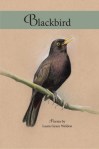
Grayson Books publishing my poetry collection Blackbird. I am forever grateful for publisher Ginny Connors.
Watching my husband lift off in a helicopter from our small town hospital, headed for a big city hospital’s neuro ICU. The 50 minutes it took me to drive there, unsure if he would be alive when I arrived, was the longest trip of my life. Affirmations and prayer couldn’t staunch my full scale weeping, and I needed to see in order to drive. What really propped me up was talking directly to him as if he could hear me. “You’re fine,” I told him over and over. “You are fine. Everything is going to be fine.” He was. It was.
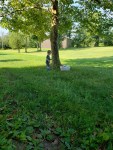
Doing art with little kids. A recent project was painting trees. Not painting representations of trees on paper, I mean using paintbrushes and washable tempera to paint on sycamore, maple, and ash tree bark.
A group of six intrepid poet friends who gather monthly. They tell me how screwed up my poems are and I tell them how screwed up their poems are. Essential. We go by the name 811s, named for where in the Dewey Decimal system poetry books are shelved. (Name suggested by brilliant poet librarian Laurie.)
My longstanding book group, full of smart interesting people who make me read books I’d normally ignore.
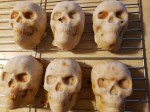 Cooking weird things. These are stuffed enchilada skulls, with the filling showing through just enough to look thrillingly like decomposition. The most recent birthday cake I made featured gummy teeth. I cannot be stopped.
The utter delight of seeing out-of-town friends and family.
Books! With insomnia like mine, I get through a lot of books in a week. Some of my nonfiction favorites this year have been Nature, Love, Medicine: Essays on Wildness and Wellness edited by Thomas Lowe Fleischner, The Mystery of the Exploding Teeth by Thomas Morris (more medical history than you wanted to know, amusingly told), The Wisdom Way of Knowing by Cynthia Bourgeault, It Didn’t Start With You by Mark Wolynn, A God In the House: Poets Talk About Faith edited by Ilya Kaminsky and Katherine Towler, The Etymologicon by Mark Forsyth, and Lynne McTaggart’s The Power of Eight, which inspired several of us to start a focused intention group. I was also lucky enough to get an advance copy of Mystical Activism by my friend John C. Robinson, who is a contemporary of Robert Bly, Michael Meade, and James Hillman. I’m talking real wisdom in usable form. Read this!
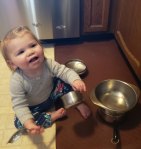
The newest kitchen wench in training.
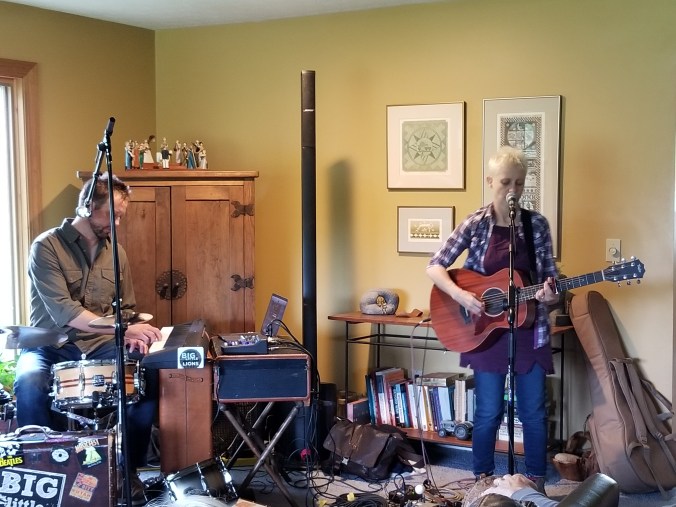
Hosting house concerts. Excellent live music in an intimate venue, a true delight.
Being interviewed by Dan Poletta. My squawky voice on NPR!
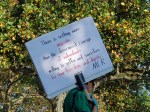 Vigils, rallies, marches. Fewer this year than last because I simply feel broken by all that’s going on, although what needs to change is ever more urgent. And I am ever more likely to cry at these things. Tears are not a useful measure because I also tear up at musical performances, fire trucks hurtling by, and any act of kindness.
Wonderful opportunities to read poetry at Loganberry Books, Wm. Skirball Writing Center, Lit Youngstown, Visible Voice Books, Wick Poetry Center, Ohio Poetry Day Association, Second Sunday Poets, and Literary Cleveland.
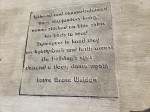
The incredible honor of having an excerpt from one of my poems stamped in a public sidewalk, thanks to Lit Youngstown.
Audiobooks, which turn a long drive into an enchanted journey. My favorite this year was The Highland Witch by Susan Fletcher (originally carrying the much better title, Corrag). There’s unforgettably pure vision in this historic story, made real by narrator Rosalyn Landor. Other gems include Remarkable Creatures by Tracy Chevalier, Never Home Alone by Rob Dunn, and Once Upon a River by Diane Setterfield.
Podcasts. I used to listen to NPR while cooking and doing projects, but the last few years I’ve had to limit my news intake to an early morning deep read of the NYT and Washington Post lest I fall into ever deeper weltschmerz. The rest of the day its music, podcasts, or sweet sweet silence. I mostly listen to science podcasts but my newest delight is Emerging Form, a podcast about the creative process with poet Rosemerry Wahtola Trommer and science writer Christie Aschwanden.
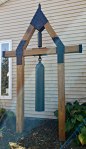
The amazing garden bells my husband makes. He kept this one for us.
A poetry appreciation group called Flat Tire Poetry Society, so-named because the idea for the group came about when four of us were stranded late at night somewhere in Cleveland on our way home from a poetry workshop. In the hour it took for a tow truck to arrive we talked about poetry that had changed our lives and decided we wanted to do this more often. Not the stranded part but the poetry discussion part. Now we meet seasonally with whoever of 20-some members can make it.
Two different women’s spirituality groups, one that digs deep into study and practice and another that dives deep into support. Both are lifeblood.
Dear friends who tell me when my work isn’t working and who support my writing no matter what.
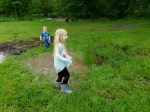
Indulging in puddle delight.
Apollo’s Fire which enlivens even my pores. Alan Choo doesn’t plan violin so much as radiate music from his whole being and Amanda Powell’s voice makes any space sacred. We manage to afford two concerts a year and they tide us over.
Violating basic gardeners’ rules by planting seeds directly into hot compost, nearly all of it chicken coop bedding. Result? The most massive heirloom squash plants and fruits we’ve ever seen.
 Putting up food from our gardens. This year we canned somewhat less than usual, but still put up well over 100 jars of salsa, sauces, jam, and syrups. This melange was photographed in our five gallon pot.
Binge-watching, because retreating from reality restores me enough to face it again the next day. We don’t have cable, so our binges are limited to Netflix and series we can order from the library. This year our binges included The Kominsky Method, Occupied, One Strange Rock, Happy Valley, Grand Designs (our favorite episode was the handcrafted timber house in Herefordshire, from the 2017 season), the requisite Great British Baking Show, and the simple comfort of Father Brown.
Going through volunteer training so I can run writing workshops at a local domestic violence shelter. A lot of training…
Three Pushcart nominations this year thanks to Grayson Books, Gyroscope Review, and Typehouse Magazine.
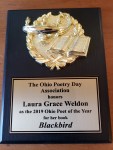
Being named Ohio Poet of the Year 2019. I am still astonished.
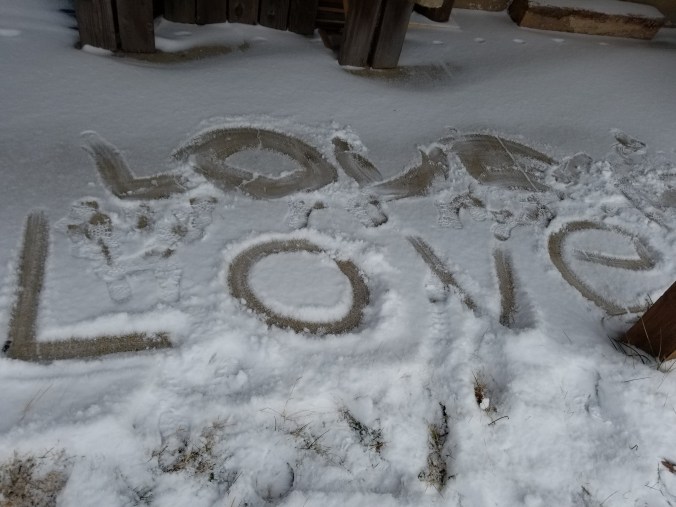
Teaching one of my favorite small people the most important word.

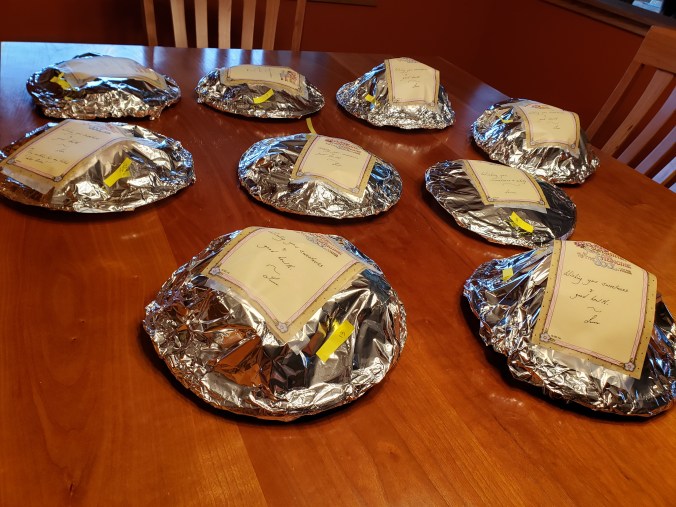
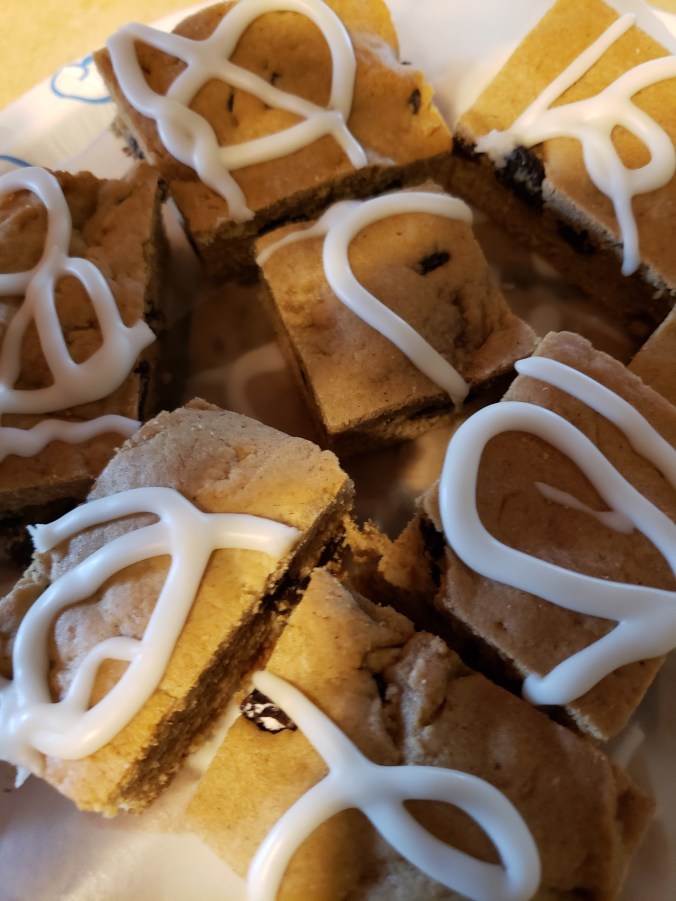 Butter and sugar combine quickly in the vintage Kitchen Aid mixer that once belonged to my mother. I drizzle in molasses, drop in cinnamon and allspice, add eggs one at a time. I’m making four batches, 140 cookies in total, for this week’s porch drop-off. I’ve never made Hermit Bars before and admit to choosing the recipe solely for its name. I am intrigued to learn it may have originated 150 years ago in New England, even more intrigued to find it may instead hark back to
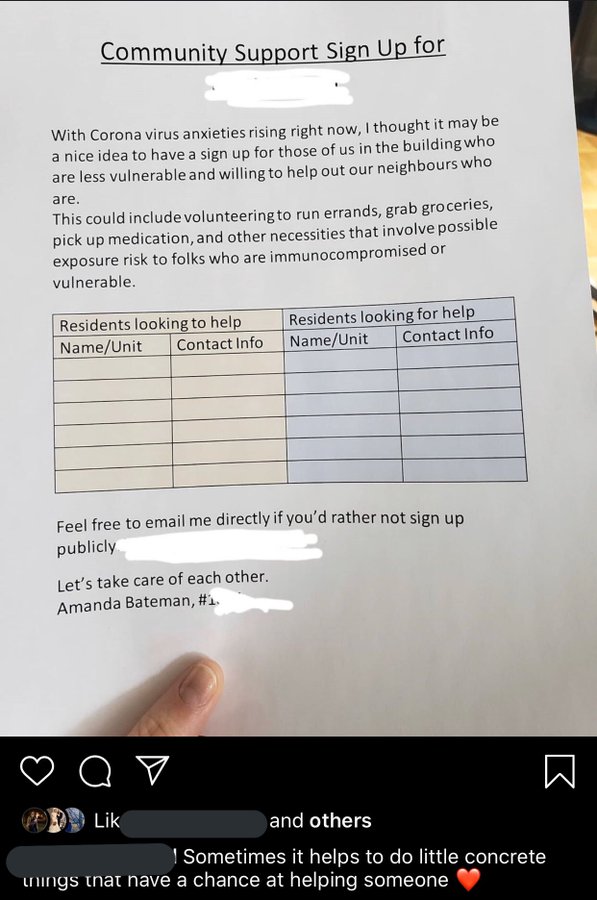
 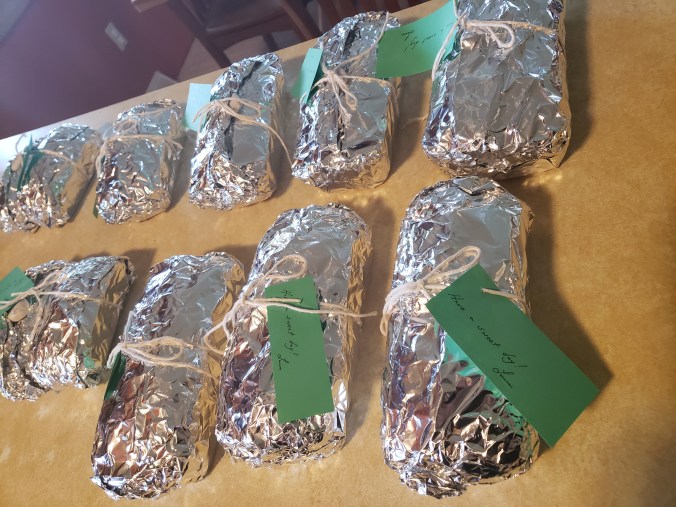 Although we’ve lived in this township for nearly 23 years, we simply haven’t gotten to know many people. Perhaps it’s because the houses are farther apart than in our previous neighborhoods. Perhaps because we homeschooled. Perhaps because of other encounters in our first few months here that made us wary,
  I’ve also gotten some perspective on despair after talking with my friend Maureen. She told me she’s been inert and ineffectual, retreating into herself. She also said she was feeling on a deeper level all the loss she’s been through in the past few years while at the same time feeling guilty about her grief because so many people are going through far worse.



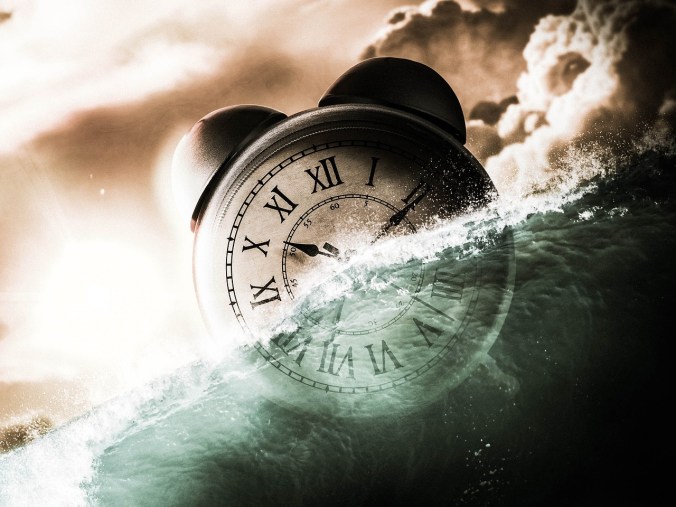
 I’m afraid I’ve forgotten how to write non-political poems and some recent essays I turned in were just a few degrees shy of ranting. Over the last few years my usual peace/love/humor social media feed on Facebook and Twitter has started to read more like a women trying to jump higher than despair. Every morning it takes strength just to face the news. This isn’t who I want to be. Isn’t who I think we are.
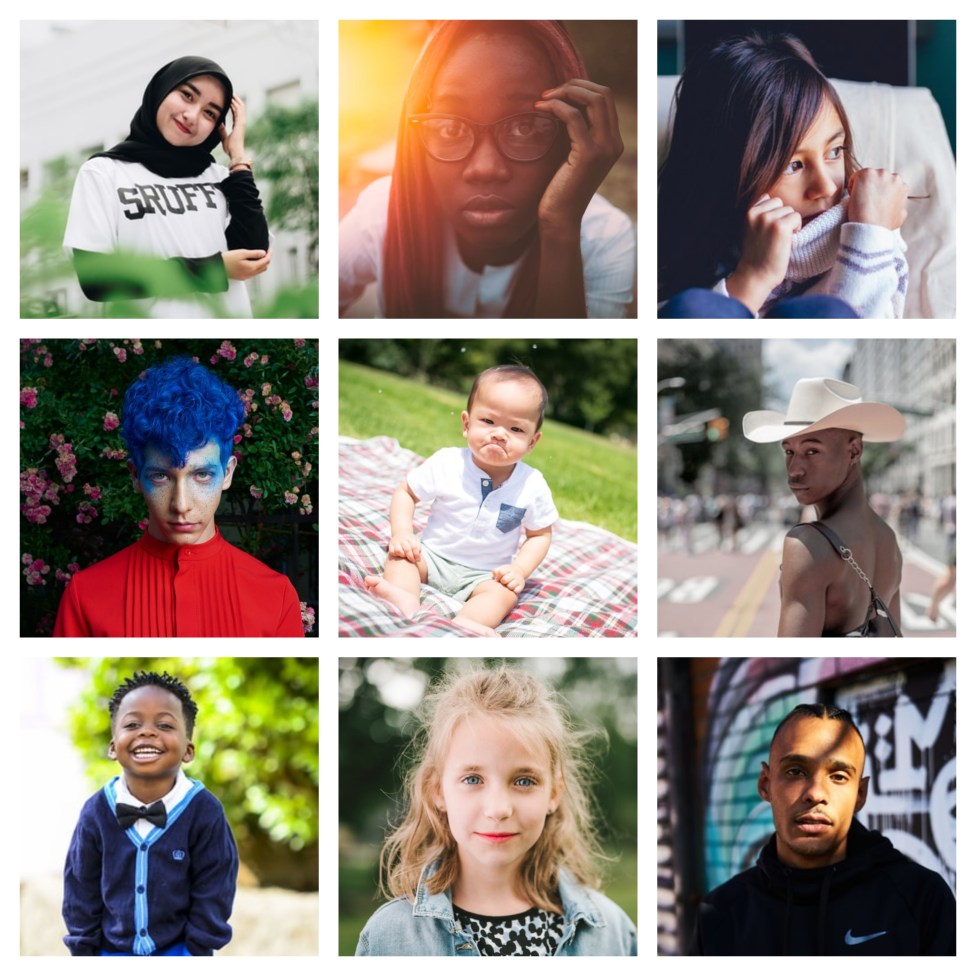 What society seems to favor in young people — obedience, popularity, good school behavior, robust mental health, plus good grades and test scores — doesn’t necessarily build on their inborn strengths. In fact the very things we define as problems are vital aspects of human diversity. Suppressing them hinders a young person’s full development into who they are.



 Laura Grace Weldon