I Want You To Meet Kathy Ceceri


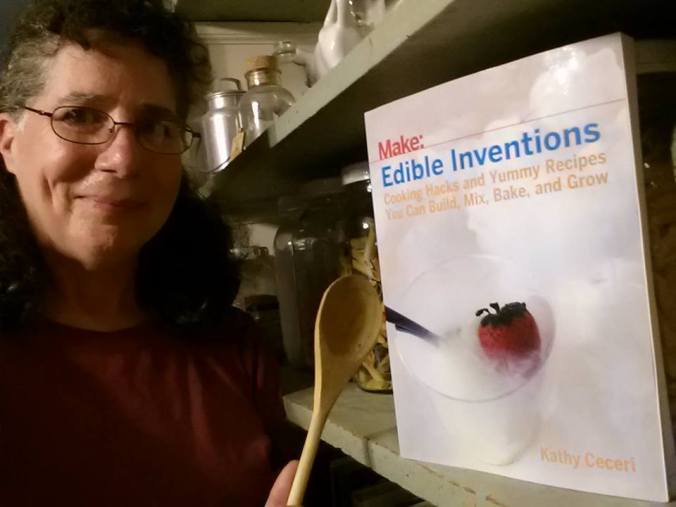
Kathy with one of her newest books.  Photo provided by Kathy Ceceri.

Educator and author Kathy Ceceri  and I have been colleagues on and off for nearly 15 years, writing for some of the same publications and collaborating on projects. Kathy has always been an inspiration to me — focused and innovative with a powerful can-do approach. It’s not just me. Her work inspires kids, parents, and educators every day.

Kathy has written nearly a dozen books and kids in her hands-on workshops make fascinating things. Really fascinating — like a hydraulic Lego 3D food printer, solar baked oatmeal cookies, a light-up paper cat, or a swarm of gliding vibrobots. Better yet, her goal is getting them to come up with their own creations.

I suspect all of us would like to know more about Kathy. I was thrilled when she agreed to an interview.

Tell us a little bit about your background.

My background is in journalism, although my training was all “on-the-job,” writing news reports, lifestyle and art features, and investigative pieces for newspapers, magazines, and websites.

My training in education was all “on-the-job” as well — I homeschooled my two sons from kindergarten up until college. I have written about kid-friendly hands-on learning projects for Family Fun and Wired.com, and as the “Homeschooling Expert” (yes, that was really my title) for About.com. I currently produce books and articles for Make Magazine and other publishers and lead workshops for kids, families, and educators.

How does starting out as a writer and artist lead to a quest to advance STEAM and Maker learning?

STEAM stands for “Science, Technology, Engineering, Art, and Math,” and the Maker Movement is about building, inventing, and exploring in the physical realm (as opposed to creating software). Both these educational trends excite me because as a kid I was always creating homes, environments, and accessories for my dolls and recycling materials into playthings. I was also very crafty, trying a little bit of everything that came along from stained glass to candlemaking to macrame. And my favorite type of reading was fantasy and science fiction.

I studied some art in college but never really applied it until I discovered ways to incorporate it into projects that involved engineering and science. Today design and technology is an area of concentration in many art programs, but not when I was in school! Making robotic systems out of cardboard and duct tape is a perfect expression of everything I enjoy. And it seems to appeal to an audience of teachers and students who want to get started but don’t know where to dive in (or don’t have the resources to start big).

Can you share a project or two in depth? (including a link to instructions?)

Sure! This Tin Can Cooker project from my latest book Edible Inventions dates back to my days at Girl Scout camp.

And these recipes for Refrigerator PIckles and Yogurt in a Mug are family standards.

You can find links to more projects from my books at my website Crafts for Learning.

Are your projects do-able for people who don’t have much in the way of DIY experience.

Definitely. I describe my projects as “low tech/no tech” and I design them to draw on skills and materials that most people already have. As I always say, “If I can do it, you can do it.”

Can you share a story of how hands-on projects can empower kids?

My favorite stories are the parents who come back and say, “He spent the whole weekend working on making his robot better,” or “She went home and taught her sister how to make that project.”  If nothing else, kids who try my books and workshops come away knowing how to troubleshoot, and have a little more confidence about trying something to see where it leads. The nice thing about Maker projects is there’s no one right answer. Unlike math worksheets, there are many ways to set out, and many different directions you can go in. That’s something kids don’t get enough of nowadays.

You are making a difference. Can you give us some encouragement to follow our own passions? 

That’s very nice of you to say! If I’ve followed my passion, it’s because it was the path that best fit the life I had at that moment. I guess my advice is don’t be afraid to promote yourself and your particular strengths and talents. If you’re passionate, sooner or later you’ll find someone who responds to that energy and will open up new ways to channel it that you might not have imagined.

Kathy’s book titles include:

And her newest, due out in March 2017.

Check out Kathy’s site Crafts for Learning for low-tech projects, her workshop schedule, and Makerspace suggestions. Thanks Kathy!

Photo permission by Kathy Ceceri.

Photo permission by Kathy Ceceri.

Leftovers As Love

why we cook for people we love

Ingredients? I’ve got the stinking ingredients.  (Painting by Joachim Beuckelaer, 1564)

“It seems to me that our three basic needs, for food and security and love, are so mixed and mingled and entwined that we cannot straightly think of one without the others. So it happens that when I write of hunger, I am really writing about love and the hunger for it, and warmth and the love of it and the hunger for it… and then the warmth and richness and fine reality of hunger satisfied… and it is all one.” ~M.F.K. Fisher

I’m scooping Thanksgiving leftovers into containers with tears in my eyes. Mashed potatoes, turkey, wild rice stuffing, cranberry pomegranate sauce, Aunt Tricia’s pecan bars and her pumpkin parfait are packed into a cooler along with mason jars of peach jam, applesauce, and salsa. They’re for one of my sons, who has a full day of driving to get back to his regularly scheduled life a few states away. He’s got a fantastic career, wide-ranging hobbies, and wonderful friends. I’m entirely happy for him and don’t for a moment want to hold him back. There’s just something about feeding him into the next week that gets to me in a tear-inducing way. I suspect it’s more than a mom thing.

There are names for people like me in nearly every language, some of them not very flattering. We lavish attention on people we love, in part, by cooking for them. We’re the ones foisting leftovers on you as you try to leave. We’re the ones who do our best to have (what we believe are) your favorites available when you visit — even if you last said you couldn’t get enough bean pate back in the 90’s. We’re the ones who hardly taste the food we serve, our senses already full from making it. We can be annoying. We can’t help it.

Speaking for myself, it’s not entirely about the people I cook for.* It’s about me too.

I can ignore serious pressing deadlines without a sideways glance when it’s time to cook for our weekly Sunday extended family get-togethers. For a few glorious hours on Saturday I make dishes for two meals the next day, sometimes happily getting up before dawn on Sunday to knead dough or roll out pie crust to complete those meals. I can also ignore my deadlines when we host one of our regular potlucks or, as we did last month, have a house concert here. Actually, I can rely on the Feeding People Excuse pretty much every day, whether I’m working in the garden or harvesting produce from that garden to make a pot of soup. Chopping vegetables is, for me, a more reliable way to enter that lovely state of flow than clattering at a keyboard, although I wouldn’t give up writing any more than I’d give up cooking.

All this time spent in the kitchen hasn’t made me more accomplished than anyone else. I have serious faults that include broiling when I shouldn’t broil, horrendous knife skills, an overly casual approach to measuring, and chronic delight in using strange ingredients when normal ones would have worked better. I’m also (rightly) accused of making enough food for a lumberjack camp. Which gives me all those leftovers to send with you…

But I can say this. The cells of our bodies are built by the air we breathe as well as by the food and drink we ingest. To grow that food, to cook that food, is to be part of nourishing life in those we cherish. This, to me, is one of the most basic ways to demonstrate love.


*Yes I ended a sentence with a preposition. I’m breaking rules outside of the kitchen too. 

Dinner To Bring a Nation Together

a

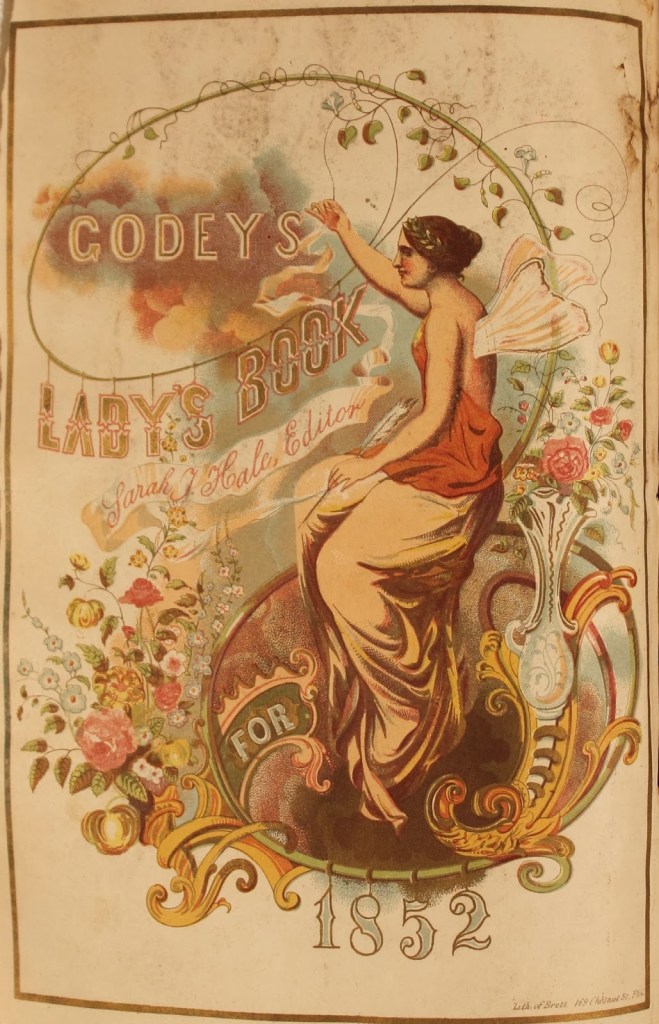
This is Sarah Josepha Hale. You may know her as the author of Mary Had a Little Lamb. Don’t let the demure smile fool you, this woman leaned in.

She was born in 1788 to parents so shockingly progressive that they believed in equal education for boys and girls. Sarah was homeschooled and didn’t marry until she was well over the hill for her era — all of 25. Nine years after their marriage, her husband died of pneumonia while she was pregnant with their fifth child.

This aspiring author and newly single mother sold hats to make money and wrote at night after the children were in bed. A few years later, her novel decrying slavery was published (25 years before the more widely known Uncle Tom’s Cabin appeared in print). On the strength of that novel, she was offered the editor’s job at Ladies’ Magazine, a periodical that later merged with  Godey’s Lady’s Book. While other publications of the era packed their pages with reprinted British articles, Sarah insisted this magazine would be written by American authors as much as possible. Early on that sometimes meant she wrote much of the content herself. She worked as editor until she was nearly 90, also finding time to write close to 50 books.

Her position at the only major women’s magazine in the country gave her a powerful platform — imagine Oprah Winfrey and Beyoncé’s influence combined. Sarah’s tastes affected everything from the nation’s literature to its architecture. Although she accepted the era’s norms when it came to gender roles, she used her influence for profound social change. Sarah pushed for children’s rights, women’s education, and the abolition of slavery between pages of fashion, homemaking advice, and recipes.

Sarah Hale, Thanksgiving

As tensions built in pre-Civil War America, she took on another cause.  At the time, the holiday we call Thanksgiving was held at different times in different jurisdictions on any date between October and January in the United States. Or not at all. And in the South the holiday was largely unknown.

Starting in 1846, Hale used the magazine to push for a national day of gratitude. She hoped such a holiday would help to unify the North and South, even prevent a Civil War.  Year after year she wrote editorials asking the nation’s leaders to declare the last Thursday in November a national holiday–Thanksgiving Day. In November 1857 she wrote,

Consecrate the day to benevolence of action, by sending good gifts to the poor, and doing those deeds of charity that will, for one day, make every American home the place of plenty and rejoicing. These seasons of refreshing are of inestimable advantage to the popular heart; and, if rightly managed, will greatly aid and strengthen public harmony of feeling. Let the people of all the States and Territories set down together to the “feast of fat things” and drink, in the sweet draught of joy and gratitude to the Divine giver of all our blessings, the pledge of renewed love to the Union, and to each other; and of peace and good-will to all the world.

Marketing wizard that she was, Sarah didn’t stick to editorials. She shifted popular public opinion by promoting Thanksgiving recipes (including the now traditional roast turkey and pumpkin pie) along with sentimental poems, stories, and drawings of families gathered around the Thanksgiving table. She also wrote hundreds of letters to governors, presidents, and secretaries of state as part of her campaign.

Seventeen years later, in the midst of the Civil War, Abraham Lincoln issued a presidential proclamation that Thanksgiving Day be celebrated as a national holiday. He recommended his fellow citizens, “…reverently humble themselves in the dust and from thence offer up penitent and fervent prayers and supplications to the Great Disposer of Events for a return of the inestimable blessings of peace, union, and harmony throughout the land…”

No, it didn’t help to unify a nation that year. Frankly that’s asking a lot out of dinner.

It also did nothing to help people recognize the effects of colonization on the Wampanoag Indians at the time of the first Thanksgiving or to the native population as a whole in the following years. (Consider these eight ways to decolonize and honor native peoples this Thanksgiving.) This year and every year, let’s do our best to sit down at the table together in the spirit of peace, union, and harmony. And then, with a nod to Sarah’s enviable energy, let’s get back up to work for profound social change.

Ways of Speaking

faith like a spider


Ways of Speaking


I’m weary of those who talk

in slogans stamped and packed

by someone else, like

long distance truckers paid to drive

without knowing the weight

hauled onto that dark highway.


I want to walk, instead

where I can read the body’s slow knowing.

Where each thing watched long speaks aloud.


A spider tossed by the breeze reaches one strand

thin as faith. As it takes hold she dances between twigs

and waits within a design both beginning and end.

When the web breaks she begins again

tiny legs speaking in ways

we’re meant to hear.


Laura Grace Weldon

Find this and other poems in my collection, Tending. 


House Undivided

political opposites get along

This isn’t an accurate representation of the house I’m describing! CC by 2.0, photo by Michal Osmenda

When I drive into town, I go past a house that never fails to interest me. The house itself is entirely ordinary. I’ve never met the inhabitants. What’s fascinating is the dichotomy on display out front.

Take the driveway. Most evenings a pickup truck with mud streaks from off-roading is neatly parked next to a fuel-efficient hybrid.

Or take the landscaping. For over a decade and a half, the garden bed under the front window has sported a perennial planting — two equally large logos for rival teams Ohio State Buckeyes and University of Michigan Wolverines. This is a brave statement here in Ohio.

But the lawn is my favorite. Each presidential election season a competition is waged right there on the grass. A regular-sized Gore/Lieberman sign appeared close to the street in early autumn of 2000. The next time I drove by, a Bush/Cheney sign was placed directly in front of that sign. As weeks went by the signs were moved like two parrying chess pieces until a much larger Bush/Cheney sign appeared. That was followed by a larger Gore/Lieberman sign. A similar dance of political signs took place for the Kerry vs Bush race, the Obama vs McCain race, and the Obama vs Romney race. (This year, two very small signs….)

The couple in this house surely eat at the same table, sit on the same couch, flush the same toilet, and sleep in the same bed. They’ve managed to live together all these years while holding widely differing opinions. I thought I lived in a household of contradictions but these two are an inspiring example of publicly embracing their differences.

We’re told we live in an ever more divisive country. We tend to choose news sources that amplify our own worldviews. We tend to delete social media friends who don’t share our opinions. We tend to live in areas and move in social circles with people very similar to us. Yet insulating ourselves from those who are different just strengthens the perception that we’re irreconcilably different.

Research shows us that diversity sparks more innovative and energizing approaches to building strong communities and successful businesses.  Diversity can lead to some invigorating soul-searching  and growth on a personal level too. One of the main principles of nonviolence is finding common ground with each other. Across all so-called divides, we truly want the same things. Things like safety, freedom, individual purpose, a sense of belonging, hope for the future, a say in decisions that affect us. We may believe there are different routes to achieve these goals, but the goals are darn similar. That’s common ground.

This house reminds me we can express our differences and still laugh.  We can challenge each other and in doing so, learn from each other. We can get beyond the urge to assert the superiority of our viewpoints by respecting each other, helping each other, and collaborating with each other. This house is who we really are as a nation. May it be so.

“Society evolves not by shouting each other down, but by the unique capacity of unique, individual human beings to comprehend each other.” ~Lewis Thomas

Playing With Logical Fallacies

Heated political rhetoric is everywhere. It sets us apart from one another and erodes what’s left of civil discourse. It grinds the worthy concept of logic into dust. Not any more. Not when we fight back with a game I’m calling Logic Shrink.

I’m not selling a thing. You don’t need an app, a console, even a board. It’s entirely your game. Play a solitary version. Play it during a get-together with your extended family. Play it with kids, especially teens. Bring it to the classroom, assisted living center, or secret Super PAC meeting. It will entertain.

Afterwards, when the lively score-keeping has ended there will be something new in the room. It may be unfamiliar at first. It’s a state of being that requires no name calling, no slippery slope.  It’s logical thinking.

Now just envision the game being played over and over, from living rooms to sports bars, spreading this thing called logic across all so-called divisions. Even if every snarky pundit huffed off the airwaves the game wouldn’t have to end. We’d just spread nice thick layers of logic in plenty of other places.

How To Play Logic Shrink

The general idea is to watch or listen to two sides of an issue as presented by pundits, politicians, or other talking heads. Using a guide to logical fallacies, players call out any errors they perceive. The first person to call out a fallacy that at least a third of other players agree is correctly identified, gains points. Players who correctly estimate in advance how many fallacies will be committed by each side gain points too.

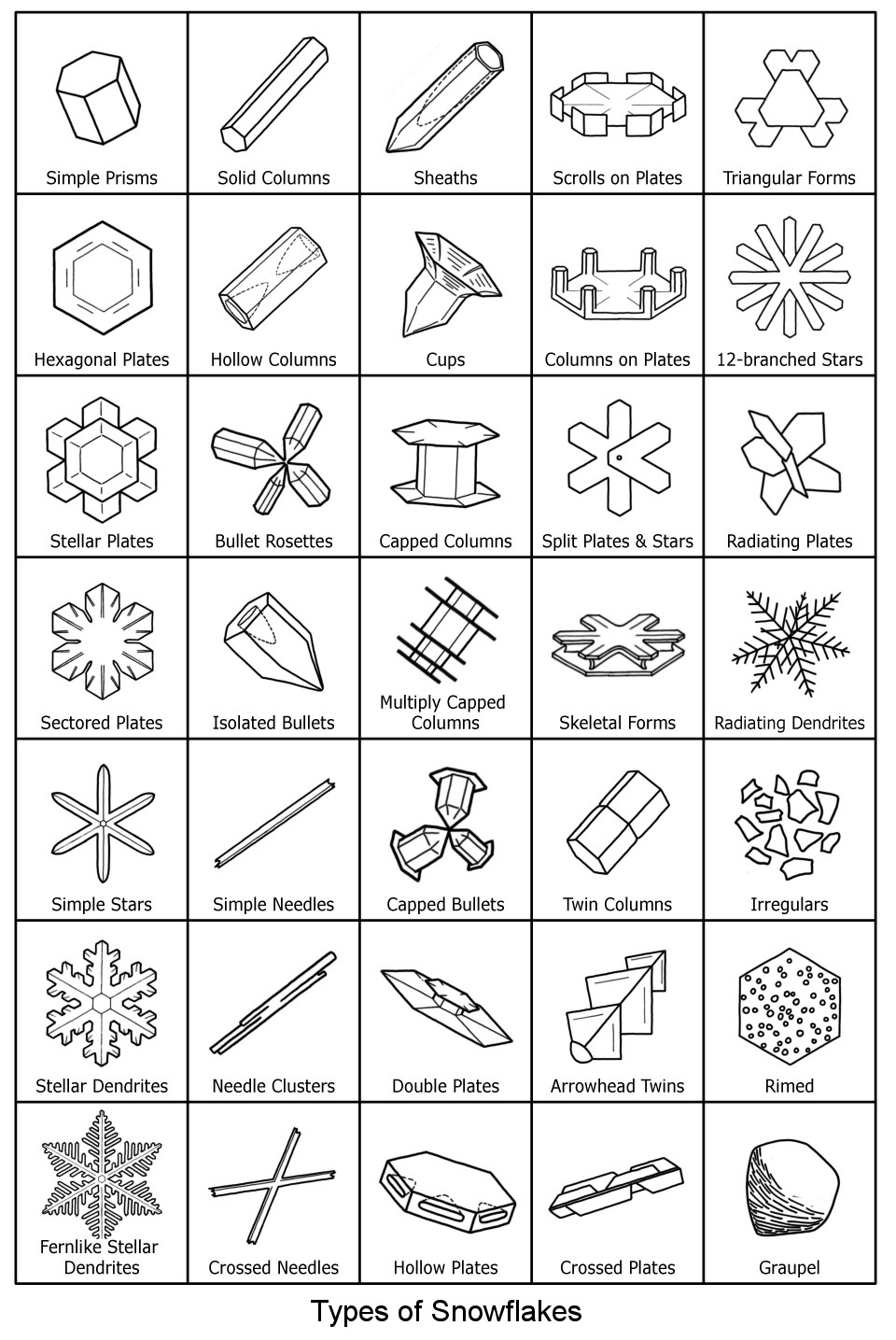
1. First, print out or otherwise make available a list of logical fallacies. (Here’s a pretty comprehensive one and here are the most commonly used) but you can find many online or use the graphic heading this post.) As with any game, the players won’t be immediately familiar with all of these fallacies nor the names they’re commonly called. Shorten the list to fewer fallacies for new players or younger kids. Give a little time in advance of each game for players to go over the list. It seems dull now, but it won’t when players use the list to score points. Liven up the logical fallacy list any way you like, perhaps giving an introduction to each as a stand-up comedy routine or asking each player to offer an example of a logical fallacy they’ve heard recently or challenge each other to find video clips illustrating some fallacies.

2. Locate competing sources. That might be right (Glenn Beck, Tomi Lahren, Fox & Friends) versus left (Rachel Maddow, Thom Hartmann, Heather Cox Richardson). It might be a political debate. It might be two podcasters squaring off on an inflammatory issue. It’s best if the sources are taped or otherwise turn-off-able, because you’ll be stopping them a few times. Start with no more than ten minutes of each. Maybe five.

2.  Scoring. This is your game so you may keep score any way you choose. Here are my suggestions. At the beginning of each game, guess the number of fallacies each different segment will provide and put that number at the top of your list or other scoring method. Then keep track of fallacies outed. The easiest way? Provide two different colored pencils to each player (helpful for designating which source committed which fallacy), then let players check off each fallacy on the list they hear. They must be the first to call out the fallacy aloud to earn points. You can get more high tech if you’d like, there are all sorts of student response systems (SRS), audience response systems (ARS), and personal response systems (PRS) available for smart phones and tablets. Or hell, make a wall-sized board that lights up when players touch a remote. This game is ripe for geekifying.

3. Disputing scores. This is where it gets, shall we say, energized. Stick to the statements heard and the way those statements fit on the list of logical fallacies.  The goal of the game is only to discover illogical rhetoric. Be the first to call out a logical fallacy, you get five points if at least a third of other players agree by a quick show of hands. Other players can dispute the exact fallacy you claim or that any fallacy exists. (The recording will need to be turned off or backed up a few times.) Everyone should add the agreed-upon fallacies to their overall score sheet, seeing who gets closest to their pre-game estimates. At the end, the closest overall estimator gets 25 points. Also add up scores earned during the game. Grand total wins, although we all know, logic is the true champion.

To recap

  • Pass out list of logical fallacies.
  • Go over them together.
  • Explain scoring.
  • Start the show or podcast, stopping when necessary to sort out all the yelling and raised hands.
  • Finish by adding up scores.
  • Cheer for the elevation of reason and logic.

Tell me how you play, and improve on, Logic Shrink. If you come up with a great app or device to use with Logic Shrink, feel free to give me a cut. So far, tirelessly advancing good causes hasn’t paid me a nickel.

thethinkingshop.org