“All the soarings of my mind begin in my blood.” Rainer Maria Rilke
I was called a “fidget” and a “wigglewump” when I was growing up. I was told to sit still and pay attention. I had no problem paying attention to library books I picked out, happily swinging my legs from a chair as I read for hours. But sitting in school or worship services made my whole body feel like a coiled spring. I behaved, but it took a lot of effort. This made it even harder to understand what the adult at the front of the room was droning on about. Long car rides were even worse. I thought everyone felt headachy and nauseated while traveling, so it didn’t occur to me to report this to a grown-up. All I knew is that I wanted the car to stop moving so I could be the one to move.
We aren’t a still sort of species. Even in utero our bodies receive changing stimuli constantly. Our mother’s movements rock us in a watery world. Her footsteps send thud-like vibrations through us. Her heartbeat, along with our far faster fetal heartbeat, sets up a percussive syncopation. Her breath, speech, and digestion, plus sounds from outside her body add to this ever-changing symphony. Sound pairs with sensation, over and over, throughout prenatal development linking movement with meaning.
Within seconds of being born, a newborn will reflexively grasp a finger and turn her head to find a nipple. Within a few months she will teach herself to grab objects, roll over, and stand with support. These aren’t just motor skills; each movement builds ever more complex neural pathways in her growing brain. As Hungarian pediatrician Emmi Pikler advocated back in 1946, babies do best when given freedom of movement. In an article titled “Exercise Affects Baby Brains,” Janet Lansbury writes,
[Dr. Pikler] “studied the contrasts between the children who had been taught, propped, positioned and restricted in devices like infant seats, walkers and bouncers, and those who were given freedom of movement and allowed to develop at their own rate. Dr. Pikler found that the natural approach not only affected the quality of motor skills, but also influenced ‘all other areas of growth – social, emotional, cognitive – and even character development.’ Pikler babies, as the children in her practice were known, could be easily distinguished at the parks in Budapest, because they were ‘poised and graceful, alert and friendly, and so confidently independent.’”
Babies expend effort comparable to world-class athletes as they master new abilities. Child development expert Karen Adolph describes, in a journal article titled “What Changes in Infant Walking and Why,” what it takes the average baby to teach himself to walk.
“Walking infants practice keeping balance in upright stance and locomotion for more than 6 accumulated hours per day. They average between 500 and 1,500 walking steps per hour so that by the end of each day, they may have taken 9,000 walking steps and traveled the length of 29 football fields…. Albeit intense, infants’ practice regimen is not like an enforced march of massed practice where walking experiences are concentrated into continuous time blocks. If practice were massed, the sheer amounts of daily practice would be even more astounding (the average cadence for a 14-month-old toddler walking over the laboratory floor, for example, is 190 steps per minute). Rather, infants’ walking experience is distributed throughout their waking day, with short periods of walking separated by longer rest periods where infants stand still or play….”
It seems exhausting, yet this is what natural learning looks like. The same extraordinary level of motivation continues as the growing child teaches herself, on her own timetable and in ways best for her, a whole spectrum of abilities through direct, real world experiences. That is the way we humans learn best.
Our brains evolved to help us confront and solve problems. We can’t separate learning from the rest of the body, or from the context of an individual life, yet that’s how we expect education to work. Despite the most caring and dedicated staff, the very structure of most schools is top-down, so lessons address students’ brains (mostly left brain) rather than their whole beings. This approach rewards only those students who can most easily narrow their full-body need to DO. Replacing traditional instruction with technology doesn’t make school any more physically engaging.
Learning sticks when our emotions and senses are active because, as psychologist Louis Cozolino explains, “visual, semantic, sensory, motor, and emotional neural networks all contain their own memory systems.”
For example, studies show we don’t master a foreign language best by studying grammar and memorizing words, nor by speaking it before we feel comfortable. Instead we learn most easily and effectively when we are interested in the message it conveys, like trying to decipher music lyrics or follow an instructional video in a different language. We learn better when we have IRL experiences to pair it with, like ethnic food eaten with native language speakers. And we learn better when our bodies are active, even more easily remembering foreign words when we learn them while making gestures.
Research shows that movement, even as small as hand movement, helps people unfamiliar with difficult subjects like organic chemistry understand and remember complex topics.
Those of us constitutionally less able to sit still and remain focused on material of little interest to us are pathologized as “suffering” from ADHD. We’re urged to take powerful pharmaceuticals to better help us sit still and focus. This is effective in the short term, which isn’t surprising, as amphetamines have long been used to get through boring tasks. The main long-term result of using such meds in childhood is growing up about an inch shorter than those who were not taking them. People with ADHD tend to be particularly creative. The very things we define as problems are instead vital aspects of human diversity
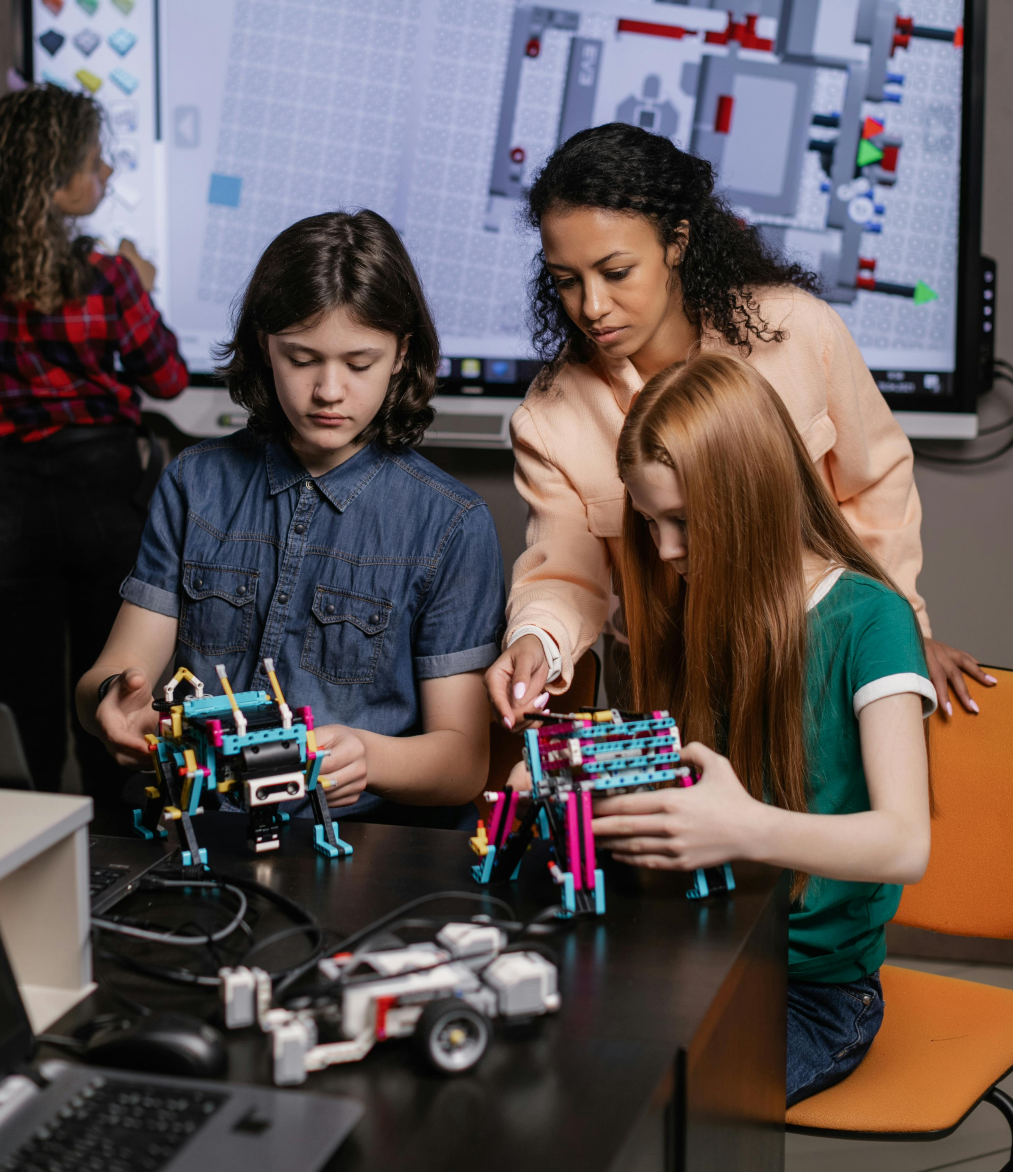
All of us learn best, from basic skills to academic subjects, when mind, body, and emotions are involved. Such experiences help to inform later understanding. Consider an introductory physics lesson aimed only at the brain. A student is presented with a concept, perhaps on the page or by online tutorial or lecture, and then must complete comprehension questions for a grade. Contrast this with learning that’s encoded through movement, as happens in play. That same student may already have discovered the principle herself, perhaps learning about centripetal force and acceleration by whirling a bucket of water in a full circle fast enough to keep the water contained or by discovering how fast a toy car needs to go around an upside down loop without falling. These play experiences make her much more likely to retain and build on what she has learned, and more likely to understand principles when they are more formally presented.
This kind of learning sticks with us. That’s what neurologist Frank Wilson noticed when he asked people at the top of their careers about their early experiences. Musicians, mathematicians, surgeons, engineers, artists, and architects all talked about formative hands-on experiences in childhood that were entirely unrelated to formal instruction. What they gained through play and doing chores became so integral to their later success that they recalled it many decades afterwards.
The problem is, kids are immobile for much of the school day. They sit through the journey to and from school. They sit doing homework. And many times they sit through what free time they have left. The average child spends just 4-7 minutes in outdoor free-play every day. All this sitting doesn’t help to develop the vestibular system. Muscle sensors (proprioceptors) react to input from this system to tell the body where it is in space. When the vestibular system isn’t developing properly a child may seem uncoordinated, resist trying new things, be afraid of crowds, bump into people, seem inattentive, have difficulty controlling impulses, or have trouble with reading and other academics.
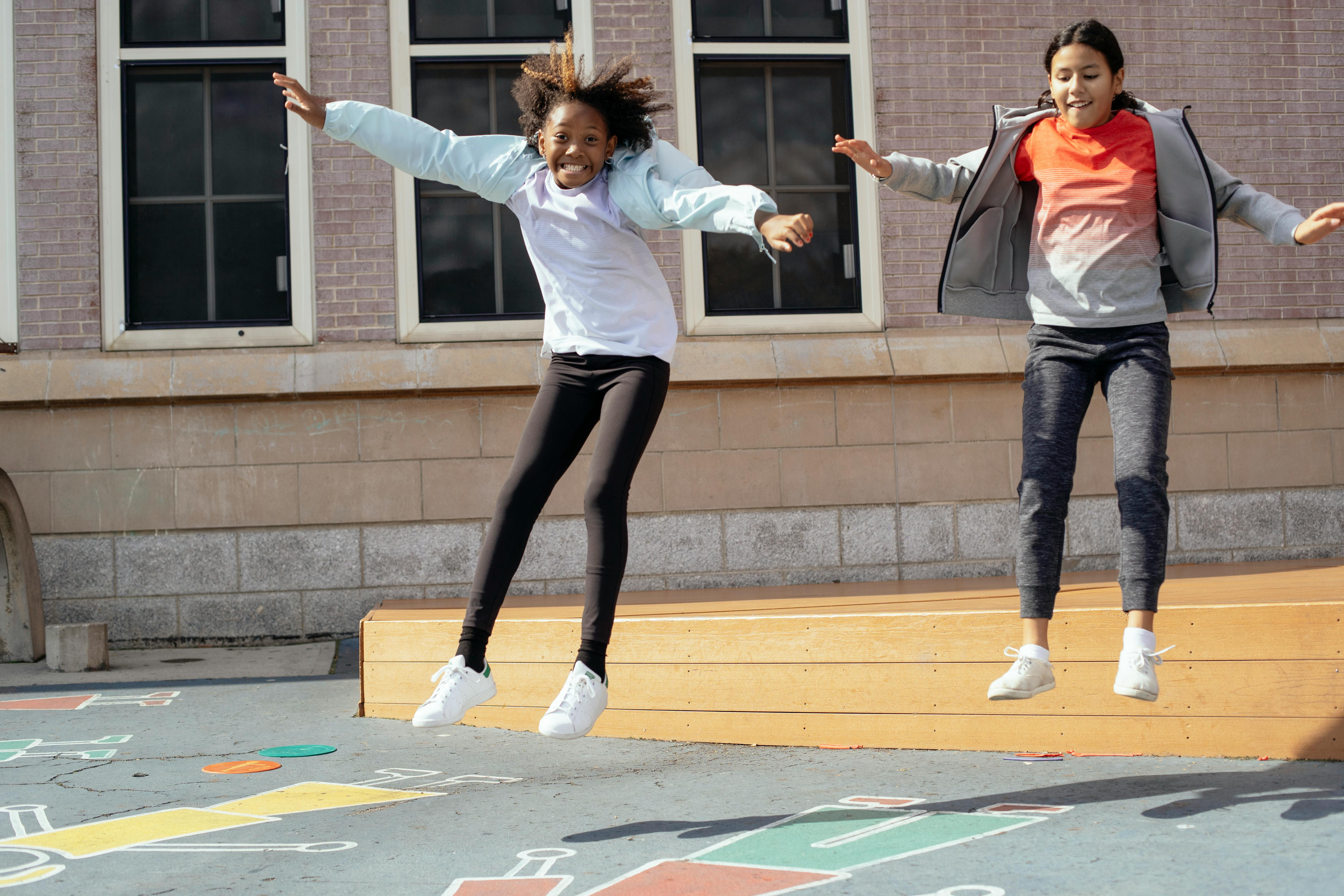
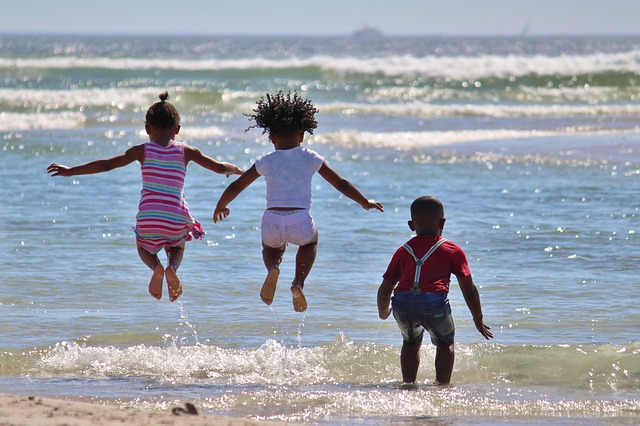
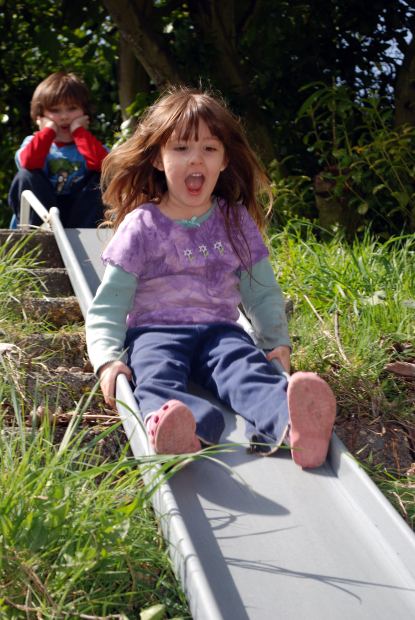
To develop a strong vestibular system, kids need plenty of time every day to run, jump, climb, balance on uneven surfaces, and otherwise happily move their bodies in all directions. This is important. A developed vestibular sense supports spatial awareness, focus, self-regulation, and other abilities necessary for learning. And sports practice or gym class a few times a week isn’t enough, nor do adult-run programs offer the full-body freedom necessary for this development.
Pediatric occupational therapist Angela Hanscom writes in her book Balanced and Barefoot,
“As adults, we may feel that we always know what is best for our children. A child’s neurological system begs to differ. Children with healthy neurological systems naturally seek out the sensory input they need on their own. They determine how much, how fast, and how high works for them at any given time. They do this without even thinking about it. If they are spinning in circles, it is because they need to. If they are jumping off a rock over and over, it is because they are craving that sensory input. They are trying to organize their senses through practice and repetition.”
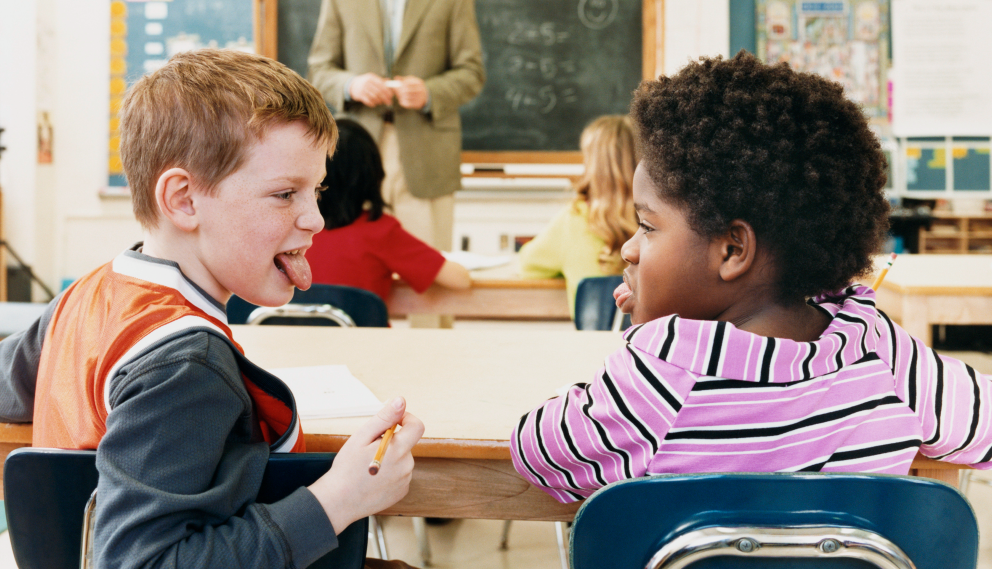
In an article titled “Why Children Fidget,” Ms. Hanscom writes about observing a fifth grade classroom near the end of their school day. She saw kids so desperate for movement that they were tilting their chairs, rocking their bodies, chewing on pencils, lightly smacking their heads. She tested the kids and found most had poor balance and core strength.
“In fact, we tested a few other classrooms and found that when compared to children from the early 1980s, only one out of twelve children had normal strength and balance. Only one! Oh my goodness,I thought to myself. These children need to move!
Children are going to class with bodies that are less prepared to learn than ever before. With sensory systems not quite working right, they are asked to sit and pay attention. Children naturally start fidgeting in order to get the movement their body so desperately needs and is not getting enough of to ‘turn their brain on.’ What happens when the children start fidgeting? We ask them to sit still and pay attention; therefore, their brain goes back to ‘sleep.’”
Research continues to indicate that movement is intrinsically linked to healthy development and learning in powerful ways.
Vigorous movement stimulates the birth of new neurons and is correlated with greater brain volume in the hippocampus, which plays a part in short and long-term memory.
Exercise boosts neurotransmitters necessary for attention, positive mood, and learning. It also produces proteins necessary for higher thought processes.
Studies show the sweet spot for kids is somewhere between 40 to 70 minutes of active movement a day for improved executive function, focus, and cognitive flexibility.
One study showed that after just two hours of playful activities like climbing trees, balancing on uneven surfaces, and navigating obstacles people temporarily increased their working memory capacity by 50 percent.
Overall, 60 years of research shows physical activity has overwhelmingly positive effects on kids’ mental health, cognitive abilities, and school achievement. The most fit kids are most likely to be the highest academic achievers.
Some kids can sit still and pay attention longer than others, but that’s not how we’re wired to learn best. In fact some educators point to research saying that after 20 minutes of inactivity, the neural communication networks in our brains function less effectively. And an analysis of nine studies indicate that the more time kids spend sitting, the more anxiety they are likely to experience.
Research shows kids actually fidget in order to better focus on complicated intellectual tasks. This is more noticeable in kids said to have ADHD, but it’s likely that foot-tapping and chair-scooting actually helps most kids store and process information. That’s why they are more likely to be restless working on math problems but relaxed while watching a movie or playing video games.
And several studies show that high levels of physical energy, a.k.a psychomotor overexcitability, is not only common but can be expected in highly intelligent children.
Some kids may grow out of the “fidget” and “wigglewump” stage, but I never did. I can’t even easily sit through a restaurant meal without stifling the urge to misbehave. My kids have blackmail-worthy stories about this. (Fortunately we can’t afford many restaurant meals.) Writing this essay required lots of breaks to walk the dogs, make a snack, do barn chores, talk with dear ones, and otherwise distract myself. If only today’s students were equally free to get out of their seats and move.
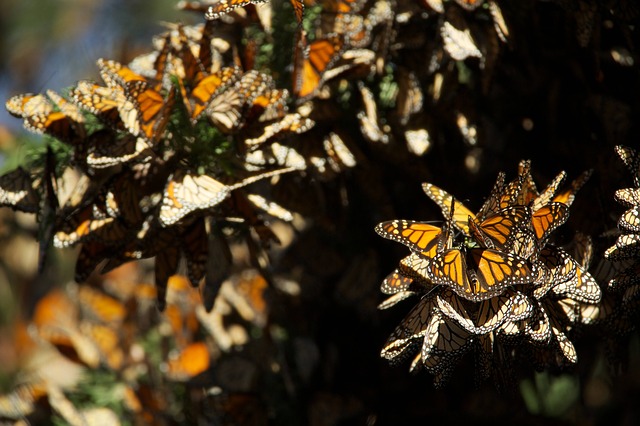
Nature operates complex systems with awe-inspiring success. We see such systems in Monarch butterfly migration, spotted hyena hunting behavior, the day-to-day life of a honeybee colony, everywhere in nature.
The science of complexity tells us these systems cannot be fully understood when examined in isolation because they function as part of a larger whole. Perhaps surprising to us, complex systems flourish right near the edge of chaos. That’s how nature works.
Any self-organizing system, including a human being, is exquisitely cued to maintain equilibrium. Yet that equilibrium can’t hold for long. That’s a good thing. Consider the pulse fluttering in your wrist. The heart rates of healthy young people are highly variable while, in contrast, the beat of a diseased or very elderly heart is much more regular. An overly stable system is rigid, unchanging, and eventually collapses.
We are attuned to minute fluctuations in our bodies as well as in the world around us and are capable of almost infinite responses to regain balance. Some of these responses occur at a level we can’t consciously detect. Change or disturbance at any level functions as a stimulus to create new options.
Each time we are destabilized, these elegant and complex processes at our disposal give us ways to regain balance. The more potential responses we have, the greater our adaptability.
To me, this has everything to do with education. It tells me that we’re perfectly suited to expand our learning infinitely outward as long as we are not confined by sameness, limited variables, and inflexibility.
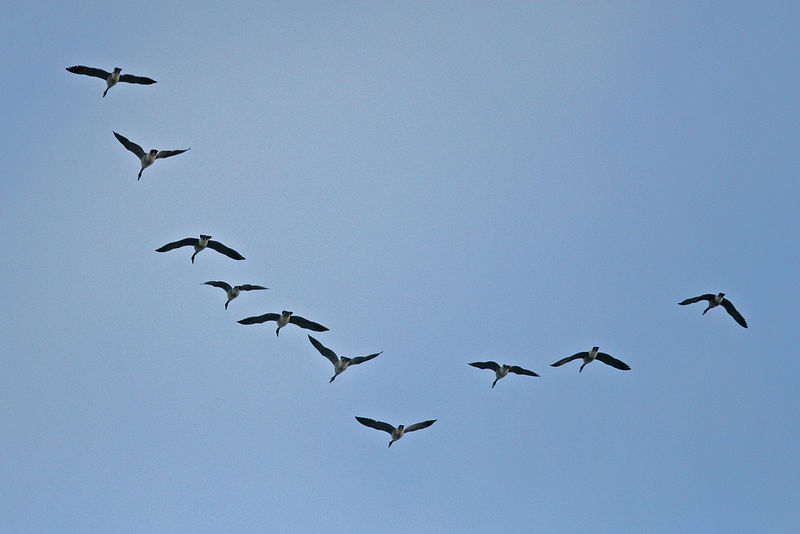
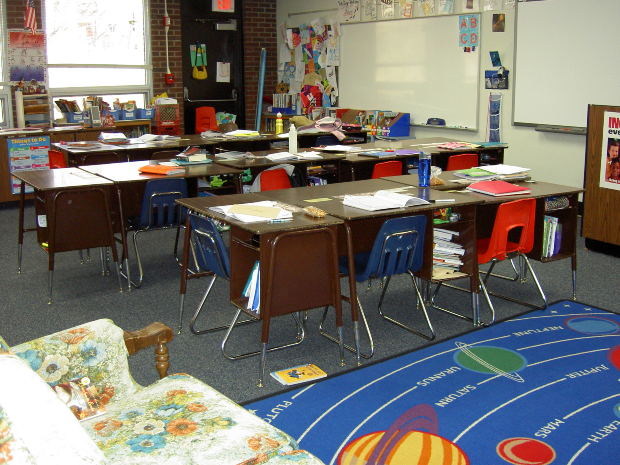
As an example, lets compare a curriculum used in a second grade classroom to a flock of Canada geese migrating north. It seems obvious that the geese are all the same species heading in the same direction, surely far less complex than an up-to-date curriculum supported by all sorts of educational resources and a well-trained teacher. But lets look more closely. Geese are self-organized into a highly adaptive system while the curriculum is not. The geese choose to migrate based on a number of factors. Unlike curricula, geese don’t operate by standardized data nor is there any flock leader telling them when it’s time to leave.
Geese fly in V-shaped formations. Flying together is far less physically stressful than flying alone. Each bird flies slightly ahead of the next bird so there’s substantially less wind resistance. Because they’re flying in formation, their wings need to flap less frequently and their heart rates stay lower, helping them conserve energy for the long flight. Flying in formation helps the birds communicate and follow the route more efficiently. They also take turns leading at the head of the V, the most difficult position. Each lead goose is smoothly replaced by another member of the flock after a short turn. That way no single goose is more essential than any other for the flock’s migration. The entire flock is able to respond and adapt to a whole range of conditions.
In contrast, that second grade curriculum is tightly structured and largely inflexible. It was written thousands of miles away, far removed from the day-to-day interests and concerns of the students or their teacher. Each lesson is broken down into rubrics to better measure adherence to specific standards and is mandated by lawmakers who are heavily influenced by the $81,523,904 spent by industry lobbyists in one year. Students and their teacher are judged by tests put in place by education corporations, even though improved test scores are not associated with success in adulthood. Learning cued to real world uses, learning that is based on readiness rather than rigid timetables, is real learning.
Nearly every variable is limited by the curriculum and overall school structure. The most enthusiastic and dedicated teacher is afforded no real time to let students explore subjects in greater depth or to try innovative educational approaches. The fewer potential variables, the more it adaptability is diminished. Remember, an overly stable system is rigid, unchanging, and eventually collapses.
School-like instruction has been around less than a fraction of one percent of the time we humans have been on earth. Yet humanity has thrived. That’s because we’re all born to be free range learners. We are born motivated to explore, play, emulate role models, challenge ourselves, make mistakes and try again—continually gaining mastery. That’s how everyone learns to walk and talk. That’s how young people have become capable adults throughout history. And that’s how we have advanced the arts, sciences, and technology. In the long view, school is the experiment.
But it’s hard to see beyond the school mindset because most of us went to school in our formative years. So when we think of education, we tend to view school as the standard even if we simultaneously realize that many parts of that model (found also in daycare, preschool, kids’ clubs, and enrichment programs) aren’t necessarily beneficial. Narrowing the innate way we learn can interfere with the full development of our gifts.
Here are five ways to get past the school mindset.
Welcome divergent thinking
In today’s test-heavy schools the emphasis is on coming up with the correct answer, but we know that the effort to avoid making mistakes steers children away from naturally innovative perspectives. Divergent thinking generates ideas. It’s associated with people who are persistent, curious, and nonconforming. Research going back to the 1970’s shows that this generation of children are less imaginative and less able to produce original ideas. An extra whammy may very well be coming from increased participation in organized sports: more than a few hours a week appears to lower a child’s creativity.
This is dire news, because creativity is actually much more closely linked to adult accomplishment than IQ. In fact, 1,500 CEO’s listed creativity as the leading indicator of “leadership competency.”
We don’t have to instruct kids in divergent thinking, just nurture it. Children are naturally inclined to question and explore. Remain open to their enthusiasms, encourage them to identify and solve problems no matter how unusual, and welcome the learning power of mistakes.
Value full body learning
School-like learning emphasizes the brain over the body. It narrows from there, emphasizing one hemisphere of the brain over the other with its focuses on left-brain analytical thinking. But children don’t learn easily when they spend so much time sitting still, eyes focused on a teacher or lesson or screen, their curiosity silenced and their movements limited. Children ache for more active involvement.
What we need to remember is that the mind and body are exquisitely tuned to work together. Movement allows sensory input to stimulate the brain as it absorbs a flood of information. This is the way the brain builds new neural pathways, locking learning into memory. (Check out A Moving Child Is a Learning Child by Gill Connell andCheryl McCarthy, Balanced and Barefootby Angela Hanscom, as well as Spark by John J. Ratey for more on this.) Active, talkative, curious children aren’t “bad.” They’re normal.
If we look at movement we realize that even a very brain-y activity, reading, has to do with the body. Young children develop reading readiness in a variety of ways, including conversation and being read to, but also through physical activities that help their neurological pathways mature. These are activities children will do whenever given the opportunity, like swinging, skipping, climbing, walking, and swimming.
All the relentless activity of early childhood may very well be a sort of intrinsic wisdom built into them, because movement is key to keeping an active brain. Children who are more physically active actually increase the areas of their brains necessary for learning and memory. That doesn’t mean the antidote to the school mindset is a constant frenzy of activity. It does mean that children tend to self-regulate within loving safeguards. Every child needs to balance physical activity with other essentials like snuggling, daydreaming, and sufficient sleep. We simply need to remember that movement isn’t an enemy of education.
Build on the “Goldilocks effect”
This term came from researchers who demonstrate that we are cued to ignore information that’s too simple or too complex. Instead we’re drawn to and best able learn from situations that are “just right.” Sort of like the educational equivalent of Goldilocks on a porridge-testing quest.
The Goldilocks effect means you are attracted to what holds just the right amount of challenge for you right now. Usually that means something that sparks your interest and holds it close to the edge of your abilities, encouraging you to push yourself to greater mastery. That’s the principle used to hold a player’s attention in video games. That’s what inspires artists, musicians, and athletes to ever greater accomplishments. That’s how kids who follow a passion of their own tend to learn and retain more than any prepared lesson could teach them.
Our kids tell what they’re ready to learn. They tell us through what bores them and fascinates them, what they’re drawn to and what they resist. They’re telling us that, until they’re ready, learning doesn’t stick.
Diminish the focus on instruction
The school mindset leads us to believe that children benefit from lessons, the newest educational toys and electronics, coached sports at an early age, and other adult-designed, adult-led endeavors. Well-intentioned parents work hard to provide their children with these pricey advantages. We do this because we believe that learning flows from instruction. By that logic the more avenues of adult-directed learning, the more kids will benefit. But there’s very limited evidence that all this effort, time, and money results in learning of any real value. In fact, it appears too many structured activities diminish a child’s ability to set and reach goals independently.
When we interfere too much with natural learning, children show us with stubbornness or disinterest that real education has very little to do with instruction.Learning has much more to do with curiosity, exploration, problem solving, and innovation. For example, if baby encounters a toy she’s never seen before, she will investigate to figure out the best way or a number of different ways to use it. That is, unless an adult demonstrates how to use it. Then all those other potential avenues tend to close and the baby is less likely to find multiple creative ways to use that toy.
This isn’t to say that all instruction is bad, by any means. It does mean that six long hours of school-based instruction plus afterschool adult-organized activities in sports or recreation or screen time supplants the kind of direct, open-ended, hands-on activity that’s more closely associated with learning. Most of the time this kind of learning is called play.
Recognize free play is learning
Before a young child enters any form of schooling, his approach to as much of life as possible is playful. A walk is play, looking at a bug is play, listening to books being read is play, helping with chores is play. The school mindset separates what is deemed “educational” from the rest of a child’s experience. It leads us to believe that learning is specific, measurable, and best managed by experts.
A divide appears where before there was a seamless whole. Playful absorption in any activity is on one side in opposition to work and learning on another. This sets the inherent joy and meaning in all these things adrift. The energy that formerly prompted a child to explore, ask questions, and eagerly leap ahead becomes a social liability in school. But play is essential for kids, for teens, for all of us. (For more check out these two marvelous and very different books: Free to Learnby Peter Gray and A Playful Path by Bernie DeKoven.)
Free play promotes self-regulation and this is a biggie. It means the ability to control behavior, resist impulse, and exert self-control —all critical factors in maturity. Play fosters learning in realms such as language, social skills, and spatial relations. It teaches a child to adapt, innovate, handle stress, and think independently. Even attention span increases in direct correlation to play.
I want to nurture my children in such a way that they define success on their own terms. I hope that means they craft a life based on integrity, one that brings their unique gifts to the world. Homeschooling, for my family, gives us the freedom to go beyond narrow roads to success. (Democratic schools can also provide that freedom.) This is the way young people have learned throughout time. I’ve come to trust the way it works for my family.


 .
.
 by
by  by John J. Ratey for more on this.) Active, talkative, curious children aren’t “bad.” They’re normal.

 by Peter Gray and
 Laura Grace Weldon