It’s About Reading For Pleasure

One week during the summer I was twelve, I had a crisis.

I ran out of library books.

Sure I rode my bike, went swimming with friends, and listened to music trying to figure out what the lyrics meant but I also indulged in hours of reading every day. Books transported me. My mother would call me to dinner and I’d look up, astonished to find I wasn’t a wolf on the tundra but a girl in shorts lying on the carpet. Or someone would knock on the bathroom door and I’d remember that I was soaking in the tub, not eluding soldiers in a medieval battle.

My parents supported reading, but they had no problem saying “get your nose out of that book and go outside.” They didn’t take us to the library more than two or three times a month, so the stack of books each of us brought home had to last.

When I realized I was bookless, I turned in desperation to a volume my older sister read as a class requirement. It had tiny print and a not-too-inspiring title, The Scarlet Letter. “It’s too hard,” she told me. “It’s a classic.”

I didn’t know “classic” meant it was good for me, like a bitter vitamin tablet. I insisted I was out of other options.

I promptly fell into Nathaniel Hawthorne’s words. They were exquisite in a way I’d never experienced, centered on the inner life and all its convolutions, something I already knew well but didn’t have the sophistication to express. I wasn’t aware such books existed. Instead of racing through it, as I did with every other book, I savored it. It felt as if I could run my fingers over the page and feel the texture of shame and longing. When I finished I was newly in love with the idea of classics, so I got books by Charles Dickens out of the library. I worked my way through two of them that summer although they didn’t live up to my great expectations. I thought Dickens droned and was nothing like Hawthorne.

Several years later I had to read The Scarlet Letter for English class. Everyone grumbled when assigned more pages to read. Those piercing insights, when listed in bullet points on the board, didn’t sink into my heart. Lectures and assignments obscured the book’s beauty. I didn’t read it with a cloak thrown over my head or the prick of a rose thorn in my skin. It lay dead, like a victim on the autopsy table.

Then I realized that my love of books had developed entirely outside of the classroom. I’d never really fallen in love with any of the books assigned in school, although the ones our teachers read aloud after recess, a few pages a day or an entire chapter on special days, still stood out in my mind. Reading, for me, was about pleasure. It was more than a habit, it was an integral part of my being. The books I read helped form my outlook and character. I dare say that many of us, if we look back, will find that favorite books from childhood have a surprising link to who we are today.

If I could, I’d reclaim reading for all of us, from earliest childhood on, as pleasure first and foremost. Turning to the written word for information and edification then becomes a pleasure too.

Talking During Recess

childhood lies, teacher punishment, child's honestly, truth and lies in childhood, second grade punishment,

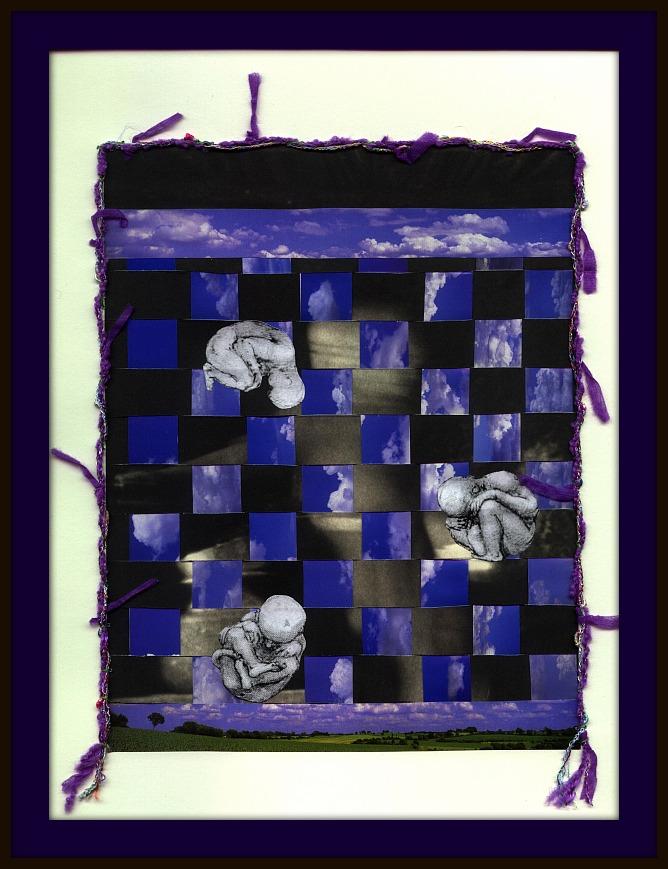
collage by L.G. Weldon

“That’s not true,” the girl behind me said in a singsong voice. “You’re lying.”

I turned around and shook my head, hoping she wouldn’t attract the teacher’s attention. Judy’s hair was unkempt and dirty. Maybe her mother didn’t love her enough to take good care of her. I knew I should feel sorry for her, but Judy was as nasty as she smelled.

Rain rolled down the windows during indoor recess. Our second grade classroom was a neat rectangle except for the jutting wall where the door fit in. I preferred symmetry. At seven years of age, my mother’s mindset formed neat geometric spaces in my head. I adhered to her categories: clean and dirty, right and wrong, bad people and good people, truth and lies. Well, I had some trouble with the truth.

My mother often said that she loved us more than any words could say. She told us no one tried harder to have children than she did. Then she would tell us how many babies she had lost in order to have us.

Lost. The word resounded throughout my body.

When I was very small I worried that I too would be lost, as I often was in the grocery store. When I understood that her babies had died before they were born it didn’t help. My mother talked about the lost babies to express her love for us. She went through eleven pregnancies to have a family with three living children. I did the math. My brother, sister and I were conceived because those babies died. I tried talking to my sister about it once but she didn’t understand.

“They weren’t even people yet,” she told me. “They were probably smaller than a minnow. Don’t get all weird about it.”

But they were people to my mother. And to me.

Sitting at our desks during indoor recess, vying for attention, I casually mentioned to my friends, Jennifer and Stephanie and Julie, that I would have had a big family but lots of the babies died. I knew this wasn’t really true. My parents planned to have three kids, they just wouldn’t have had me. I also knew it was wrong to make family grief into a public tale even if it gave me momentary thrill of popularity.

“Oh, the poor babies,” Jennifer said.

“How many babies?” Stephanie wanted to know.

“Lots,” I said. “Eight babies.” I knew I’d gone too far.

Judy overheard, and she piped up, “I’m telling Mrs. Lauver.”

I felt my fate as tightly sealed as the braids my mother lovingly bound in colors to match my dress. I was in trouble.

After the tattletale got to her, Mrs. Lauver called me up to her desk. My knees trembled when she paid attention to me. I was a good student, but sometimes my teacher called me names and then pointed out that I was blushing. We had moved the year before and rules from my last school, such as rising when called upon, had been hard for me to break for the first week. Mrs. Lauver called me a “jumping jack” and punished me when I didn’t stop standing up right away. That started it. It seemed she was always after me.

But this time I’d brought it on myself.

Everyone watched as I walked up to the front of the room. No one got called up to the teacher’s desk during indoor recess. The teacher normally had that time off, sitting with her friends in the smoke-filled lounge, so she tended to ignore us and read a thick paperback at her desk, her chair turned slightly away from the class as if we weren’t her responsibility. We honored that inattention by keeping the hubbub down. After recess she would read a chapter of Charlotte’s Web to us.  She always threatened that if we got too loud she might deny us that privilege and go right to social studies.

I went up to Mrs. Lauver’s desk as slowly as possible. Anxiety made my senses acute. I could smell the awful geraniums she kept on the windowsill, their brown sickly leaves rotting away. I could feel my classmates’ eager curiosity—-cartoon watchers waiting for the silly wabbit to be shot. As I got closer I could see where the teacher’s too tight sleeveless dress cut into her flesh, the frighteningly hard texture of her hair and the orange-hued makeup on her face. I wanted my mother badly. Her dresses were loose, her hair soft, her face never anything like my teacher’s.

I should have been planning what to say, but a liar sticks to the story, sometimes makes it worse. I made it worse. I stood at the desk, unsure of what to do with my hands that twisted the ends of my braids. I insisted that our family did have lots of children once but they died.

“Oh, and how did that happen?” She had a tight smile on her face.

I thought about it.

I saw them inside my head, my unknown brothers and sisters. They would have been older than me. If they had lived, I would not have been born. To me, their deaths felt like a gift and a burden. Standing there at Mrs. Lauver’s desk I saw their lives pass without breath in the darkness of water, waves breaking over their heads in the distance. I could almost see their faces. So I said simply, “They drowned.”

Despite further questions I couldn’t get another word out.

“I’m calling your mother,” the teacher said. “We’ll see what she has to say .”

That awful outcast’s land. Wanting one’s mama, but being in trouble. Now how could I rush home to a welcoming hug when I would encounter anger? My stomach folded up and I had to remember what my face was supposed to look like the rest of the afternoon.

After school there was a scene. My mother said that only bad people were liars. Liars grow up to commit crimes and go to jail. Over and over she asked, “Just tell me, why would you make up such an awful story?

All I could answer was, “I don’t know.”

I didn’t. What I said about the lost babies couldn’t be explained. I took my spanking and went to my room. My parents had a conversation later and came up with a punishment—write an apology to my teacher for lying. My notebook paper was filled with carefully printed words, but they were just shapes. I didn’t feel anything I’d written.

When I stood there in front of Mrs. Lauver that afternoon I was being honest. I told her what I saw. A child may not have words for what she knows even on the day she begins to understand that there are no neat categories for truth and lies.

I haven’t forgotten those lost babies. I hope I live as a testament to the joys they never knew, like telling stories true as our shared DNA.
Peace Meeting Disrupted By Vegetation Attack

bad behavior at restaurant, eating fail, FML meeting, peace meeting screw-up, gagging in front of people,

Image metaloxide.deviantart.com

I once worked for a peace organization headed by a man I regard as close to sainthood. I have no saintly aspirations of my own, but when I was anywhere near John I wanted to live up to his example or, at least behave myself.

John and I met at an eco-conscious lunch spot to discuss a new project. There I drank coffee stronger than I’d ever tasted in a mug larger than I’d ever seen. Too late I remembered that caffeine gives me the jitters.

A third person joined us for the meeting. John was effusive in his praise for my accomplishments as he introduced me to this older gentleman.  Way too effusive. It’s hard to live up to such superlatives, especially while trying to keep one’s hands from caffeine-related jitters.

The men ordered soup and sandwiches. I quickly ordered the first salad listed and turned my attention back to the meeting. When my meal arrived I was alarmed. Dark, unfamiliar vegetation loomed over the plate. The leaves looked quite a bit like invasive weeds. I dug in bravely, hoping that once I’d gotten some nourishment the coffee shakes would wear off.

My tablemates had charming manners. They took small bites, wiped their mouths carefully, and added wonderful insights to the conversation only after swallowing. In the meantime I discovered the giant plants on my plate couldn’t be cut in pieces with ordinary tableware. Instead I had to bend them in half with my fork and hope that dressing didn’t dribble on the table, my clothes, or chin as I drove each bite resolutely into my mouth. To cope, I listened intently and kept my comments to a minimum.

Just as I was inserting a neatly folded plant leaf in my mouth John addressed a question to me. A serious, lengthy reply sort of question. I was in trouble. Not because I had no response. No, because the process of shoveling in a huge bent leaf took longer than a sip of soup or bite of sandwich ever could.

Worse yet, the leaf was larger than my coffee-addled brain anticipated. As it headed toward my lips it seemed to grow. Because the food was already partway in my mouth it was too late to throw the whole action in reverse. So I shoved the rest of it in, afraid that I looked like one of those mulching machines grinding a tree branch.

A conversational pause developed around the table as my lunch companions politely waited for me to answer. I hurried, hoping after a few quick chewing motions I’d be able to respond.

No such luck. As I pulled the fork out of my mouth the unexpected happened.

That hulking leaf unfolded. Like an angry vegetable on a rampage it sprung fully open and leaped to the back of my throat, instantly triggering a gag reflex.

There was nothing I could do.  Reflexes do not respect politeness nor honor the presence of a saint. My eyes widened in horror as my mouth involuntarily flung open. The entire lettuce leaf emerged at top speed from my gaping maw right onto the plate.  Gag related tears sprung to my eyes and gag related saliva hovered with great drool potential on my lower lip.

It is a testament to the training of those involved in the peace movement that my companions didn’t bolt from the table.  They didn’t even blink.

John looked at me kindly. As if his wording had caused me some discomfort, he said without a hint of irony, “Let me rephrase the question.”

Mine Is The Wrong Kind Of Lust

don't make me travel, why I stay put,

Image: babyoctopuss.deviantart.com

Let me explain.

My schoolteacher father had summers off, so my parents made the best use of that time. That meant teaching their children geography and history through travel. Each winter my mother started planning our frugal summer trips. She sat at the kitchen table with maps and guidebooks arrayed in front of her as she carefully plotted a route that maximized educational stops along the way. Old battlegrounds, restored villages, and scenic natural wonders were her priority. The other priority? No admission fees.

*

why I don't travel,

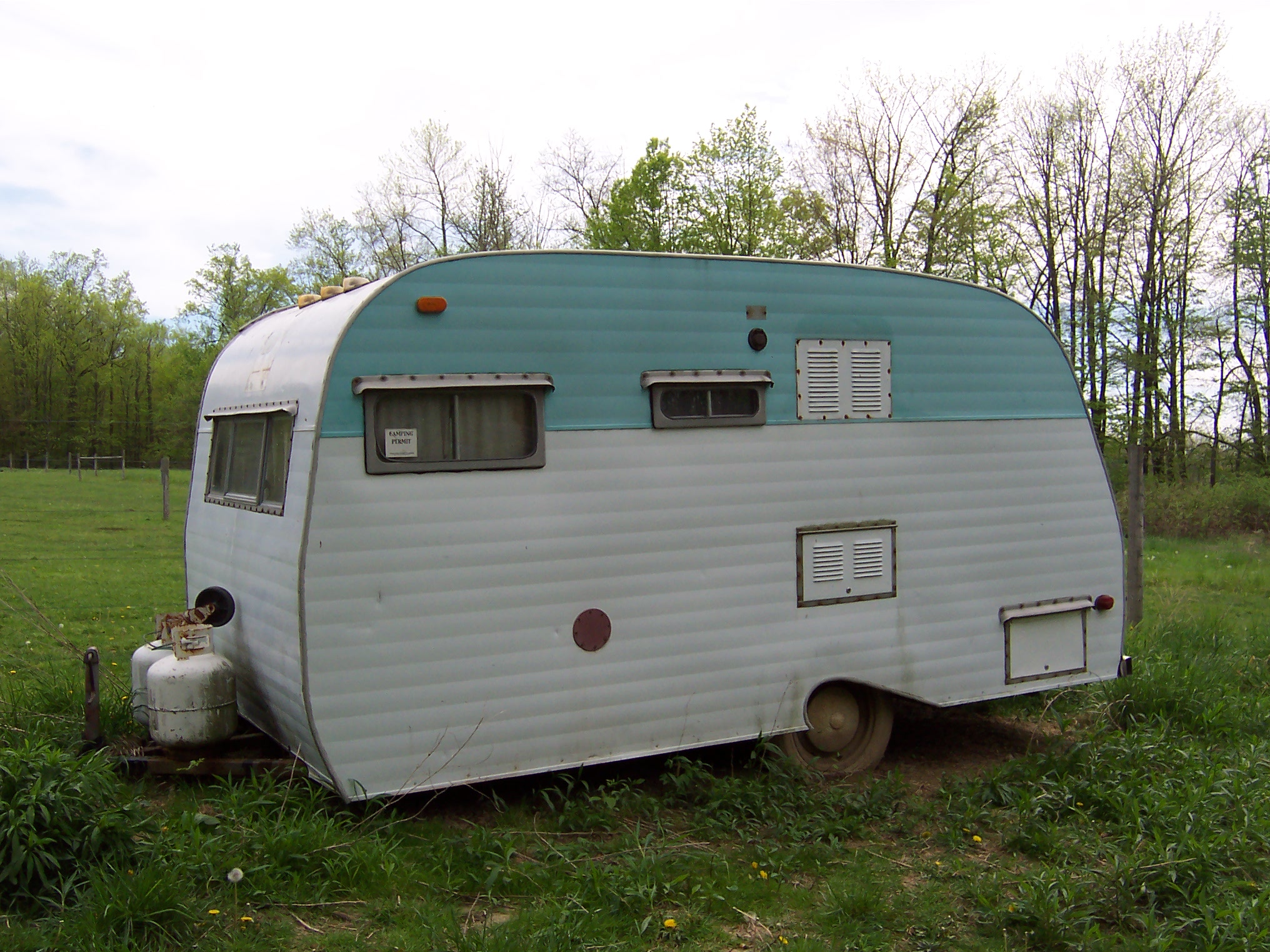
One summer we traveled over 6,000 miles. Most days we had an early breakfast, drove for six hours, spent the late afternoon sightseeing in the steamy heat, then went on to a trailer park where our 15 foot Scotty was invariably the smallest trailer around. Other folks in these places looked like there were staying a few days. They sat in lawn chairs and chatted around campfires. My parents meant business. Ours was a carefully planned agenda which meant we kids showered soon after supper in those ubiquitous cement block restrooms and went to bed early, usually lying awake in the hot metal trailer listening to other families laugh and talk under the trees.

*

why I don't travel,

Our trips were strictly no-frills in every way. My parents spent as little as possible on food—we never had fast food or restaurant meals while we traveled. I ate a peanut butter minus jelly sandwich chased by Tang every day at lunchtime. They scouted out the cheapest gas and took only the most carefully considered photos in those pre-digital days. Miraculously they maintained family peace in very close proximity for weeks on end, although we kids found minor parental spats over directions and mileage calculations secretly hilarious.

Don’t get me wrong, my parents had wonderful motives. They piled three kids in a small car and showed us the country. But I was a lethargic and grumpy traveler. Hurtling down the highway with windows open (air conditioning allegedly reduced fuel economy) only aggravated my asthma and hay fever, plus I suffered with relentless headaches and nausea from car sickness. Yet I wasn’t sufficiently self-aware to let anyone know that I felt dizzy, woozy, and short of breath. I longed for the comforts of home: library books, a familiar bathtub, my trusty bike, and some control over my own life. As soon as my mother got out the maps to start planning I felt nothing but dread, which I masked with a facade of eager anticipation lest I be called “ungrateful.” But every minute our car headed farther away from home seemed wrong somewhere in the center of my being. Until we returned I felt suspended from my own completeness—a weary, one-dimensional version of myself.

*

I refuse to travel,

Perhaps these long yearly trips, taken when I was unwell and unwilling, served to inoculate me against travel. As an adult I still struggle to feel wholly myself when I’m away. That marks me as seriously maladjusted. Wanderlust, or at least the urge to get away, is the norm. All sorts of well-meaning people mock non-travelers as people with no sense of adventure.

Oh sure, I long to go places. I’ve even traveled of my own volition. But I rail against the backward century in which I’ve been born, or perhaps the backward planet I’ve been born on, because I can’t adjust to the concept that it’s not possible to mosey over to Belarus or Uruguay or Finland this afternoon, have a wonderful lunch, meet some new friends and assure them that I’ll stop by next Friday. The problem isn’t the destination, it’s getting there. I know poets and sages say it’s all about the journey. I’ve journeyed, believe me. I say all of life is a journey, every single moment that we’re wide awake and fully participating in the process of living.

hermit's rationale, staying home, peace in place,

Besides, aren’t poets and sages all about being true to oneself? Being true to myself means giving in to the lust to stay rooted.

I experience a kind of delicious completion as I perform the simple rituals of life right here every day. I make cheese from our cow’s milk, walk the dogs, chop vegetables, work at my desk—-all in view of the fields and trees that sustain me season after season with their subtle, incremental changes.

I hope those of us who are truly rooted have something to offer this ever faster world. Our insights may be simple. I pay attention to the vegetable gardens, the beehives, to blackbirds convening in a clamor across the treetops. Changes I see are those that take place slowly and noticing them is part of the pleasure I find in being fully here. To me there’s soul-drenching nourishment that comes of contemplation, quiet, and service. Thank goodness we can fulfill the desires we choose, leaning eagerly toward the excitement of travel or to answering longings that serve a quieter nature.

You know where to find me. I’m right here.

*

staying home, anti-traveler, delights of home,

Naked With My Editor

I’m not well-behaved or well-dressed enough for most careers. That may be what led me to cobble together enough freelance gigs to call myself a writer. It doesn’t pay quickly or pay well. In fact, I earn less than in my former occupation, social work, and that’s saying something.  But freelancing suits me.

Well, except for that episode of nudity with my editor.

Perhaps I should explain.

Years ago I secured a job writing a column for a newspaper. I worked after the kids were in bed and I e-mailed the first piece just before the midnight deadline in a sleepy haze.

The next morning was typical. I unloaded the dishwasher, explained long division, feigned patience while listening to a child’s original knock knock jokes, discussed the ethics of phone screening with my eight-year-old (who considered it a politeness violation to let it ring), and took photographs of my daughter dissecting a sheep eyeball for a biology project.

It was mid-morning before I had time to shower.  Because I’m efficient (lazy) I wear whatever comes out of the dryer.  It spares me the effort of putting away my own laundry.  I don’t mind monotonous outfits in the service of convenience.

When I got out of the shower I grabbed a towel for my usual mad dash to the dryer and on the way was handed the phone by my eight-year-old.  It was the newspaper editor. He wanted me to add a few sentences to my column.  He expected me to do this off the top of my head, over the phone, immediately.

While he was telling me this I realized my 11-year-old son had opened the front door, inviting in his pubescent pals.  They were chatting eagerly as they headed toward me on their way to the kitchen.  There was no way I could get to our dryer, handily located on the first floor, unless I ran directly into these youths and knocked them over like baggy-pants’d bowling pins.  I didn’t want to expose these poor youngsters to my not-supermodel flesh at their impressionable ages so I took the kindest course of action possible. I retreated down the basement steps, towel clutched in one hand and phone in the other.

Although I had no chance of sounding professional on the phone, I went on talking to my editor, giving him the lines he needed. He asked if he could edit them to fit.  “Sure,” I told him. He’s a writer too, I thought, it’ll be fine. He chatted away as if we were old friends—-he surely sitting in a comfortable chair at his desk, me a semi-naked freelancer huddled in the basement.

I stayed trapped in that basement long enough to meditate on the beauty of cobwebs and the interconnection of all life.  Long enough to get really cold in my small wet towel.

When my column was published, I saw that my editor had rearranged my few sentences into a nonsensical word soup.  It took a lot of self control to keep myself from going into a  sheep eyeball tossing snit. But just then my check arrived in the mail. It was larger than I’d expected. I felt like dancing right out the door to celebrate, but I couldn’t. That’s because I’m a freelance writer and of course, I wasn’t dressed yet.