Making Peace With Weeds

“Listen patiently, quietly and reverently to the lessons, one by one, which Mother Nature has to teach, shedding light on that which was before a mystery, so that all who will, may see and know.” ~Luther Burbank

It has been a very hot summer, one that ramps up my concern for this lovely planet’s future. The heat also makes it miserable to do much in our gardens other than admire weeds as they flourish. But, then, co-existence with weeds is the way we do things around here.

We are in full harvest mode, which means wading into the thrum of green toward the bright lure of purple eggplant, red tomatoes, yellow squash, pink grapes, peppers of many hues. Everything is alive and beautiful, weeds included.
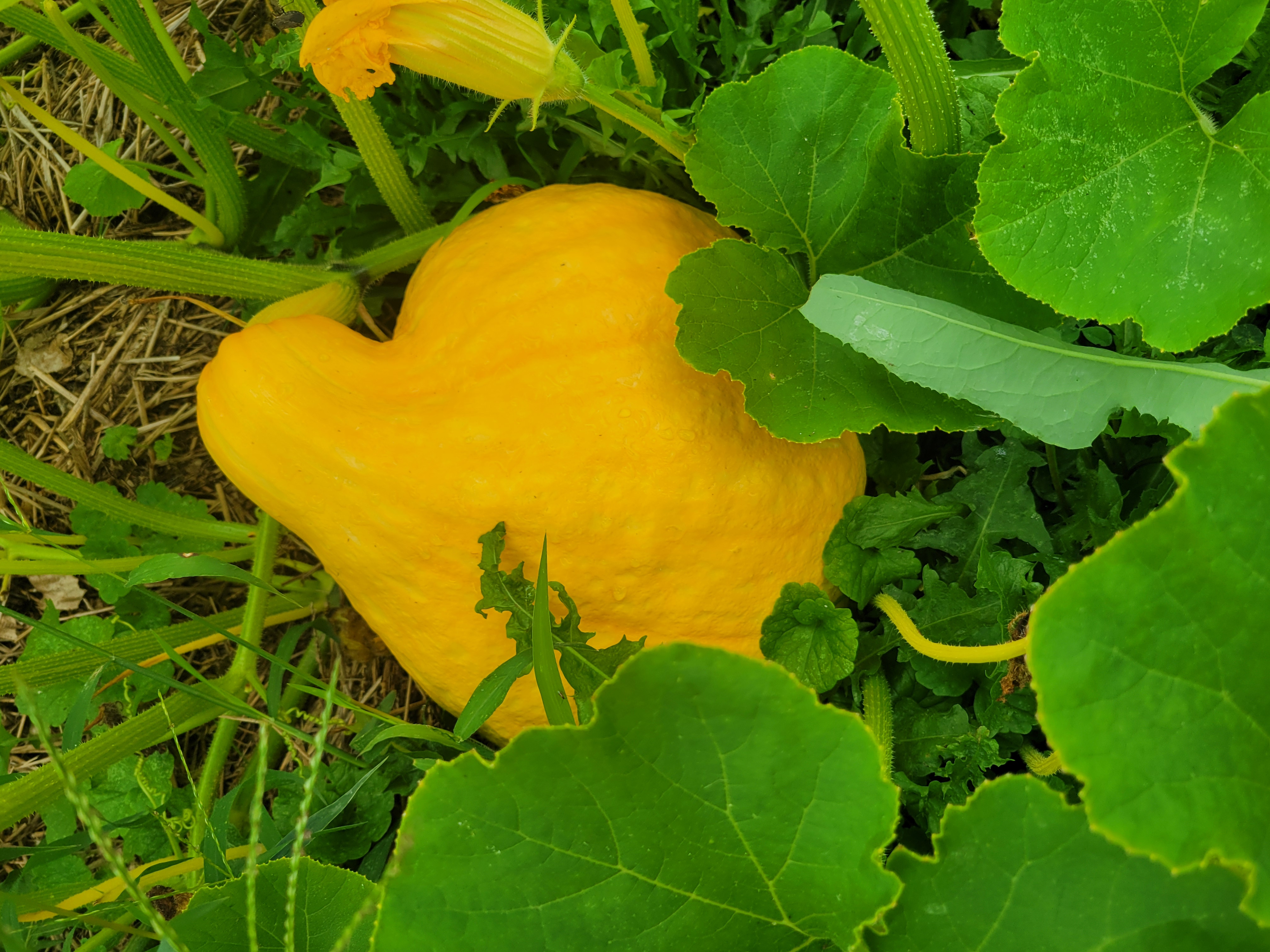
I keep finding more squash!

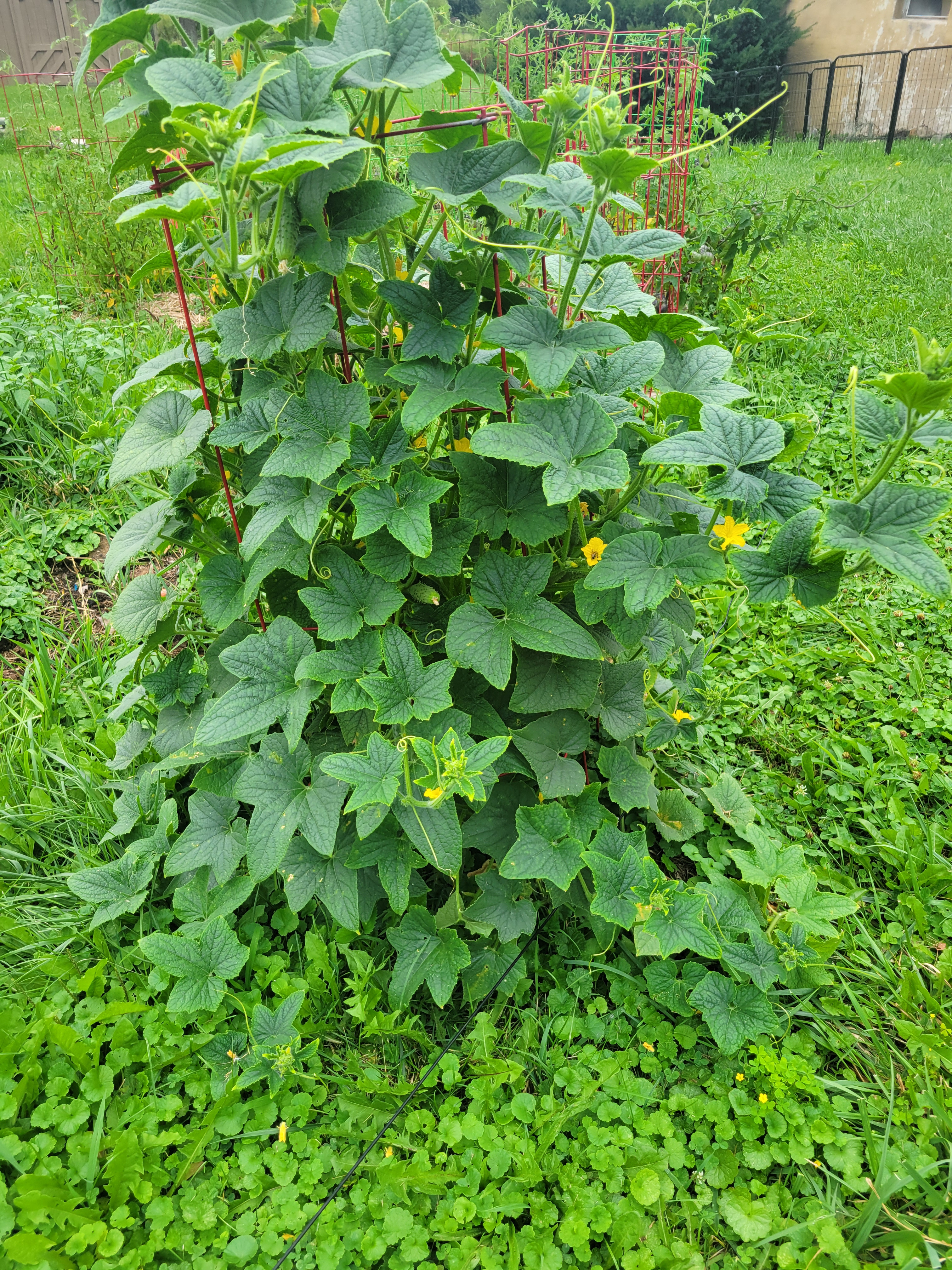
So. Many. Cucumbers. Most days I pick three or four. Yesterday I discovered a few giant ones lurking in the weed-enhanced foliage. They were given to the chickens.

I’ve never had much success at conventional gardening with its orderly plantings surrounded by bare soil. Bare soil, in nature, is unnatural. And, honestly, I always felt sorry for the vibrant healthy plants I pulled up simply because I deemed them weeds, like some kind of vegetal colonizer. I often apologized as I did. It eased my conscience a bit to haul these stacks of dying weeds off to feed cows or chickens.

Mostly I’ve avoided pulling up much of anything. That’s why, for years, I tried all sorts of weed suppression ideas.

The strangest was the spring I covered rows by laying down long strips cut from worn out jeans I’d been saving to make a jeans quilt. The sturdy denim fabric held up beautifully through the entire growing season and into the next. Eventually it decayed back into dirt, which is what I’d hoped for, but not without leaving behind long sturdy fibers that could unintentionally trap, injure, or even cause the death of birds and small animals. It was an arduous process to pull them all out. It’s been about 25 years since then and while those fibers are gone I still, on occasion, run across a jeans rivet when I’m planting.

Before that I tried carpet discards, an approach suggested in a long-ago Mother Earth News article. It assured me that decades-old carpet was safe. (I suspect that advice was, well, suspect.) It needed to be pulled up at the end of the growing season and I was troubled by how much biomass was pulled up too, impoverishing rather than helping the soil.

The worst was the year we got leftover landscape “fabric” free from a friend’s market garden business. You’ve seen the stuff: black water-permeable plastic material that’s held down with stakes or clips or mulch. It’s commonly used on all sorts of farms, from small to large, conventional to organic. I pulled it up that year after the last harvest and was appalled to see our normally friable soil hard and dead-looking. We never used it again.

We now know sheet mulches, like the ones I mentioned (as well as astroturf, plastic mulch, and other so-called weed solutions) suppress the development of mycorrhizal fungi so essential to plant health. They also wreck the habitat for beneficial soil-dwelling creatures, overheat the ground, prevent organic matter from being incorporated into the soil, and impede the health of plant roots. Their presence wrecks the necessary carbon dioxide and oxygen exchange between soil and air—essentially suffocating the soil. If that’s not alarming enough, landscape fabric contains petrochemicals which break down into toxic substances including microplastics. (You know, the microplastics known to increase the severity of heart disease, cause arterial damage and strokes, harm hormone and reproductive systems, disrupt gut biome, lower fertility, cause premature births, impair learning and memory,) One analysis shows that three feet of landscape fabric can release hundreds of millions of microplastic particles

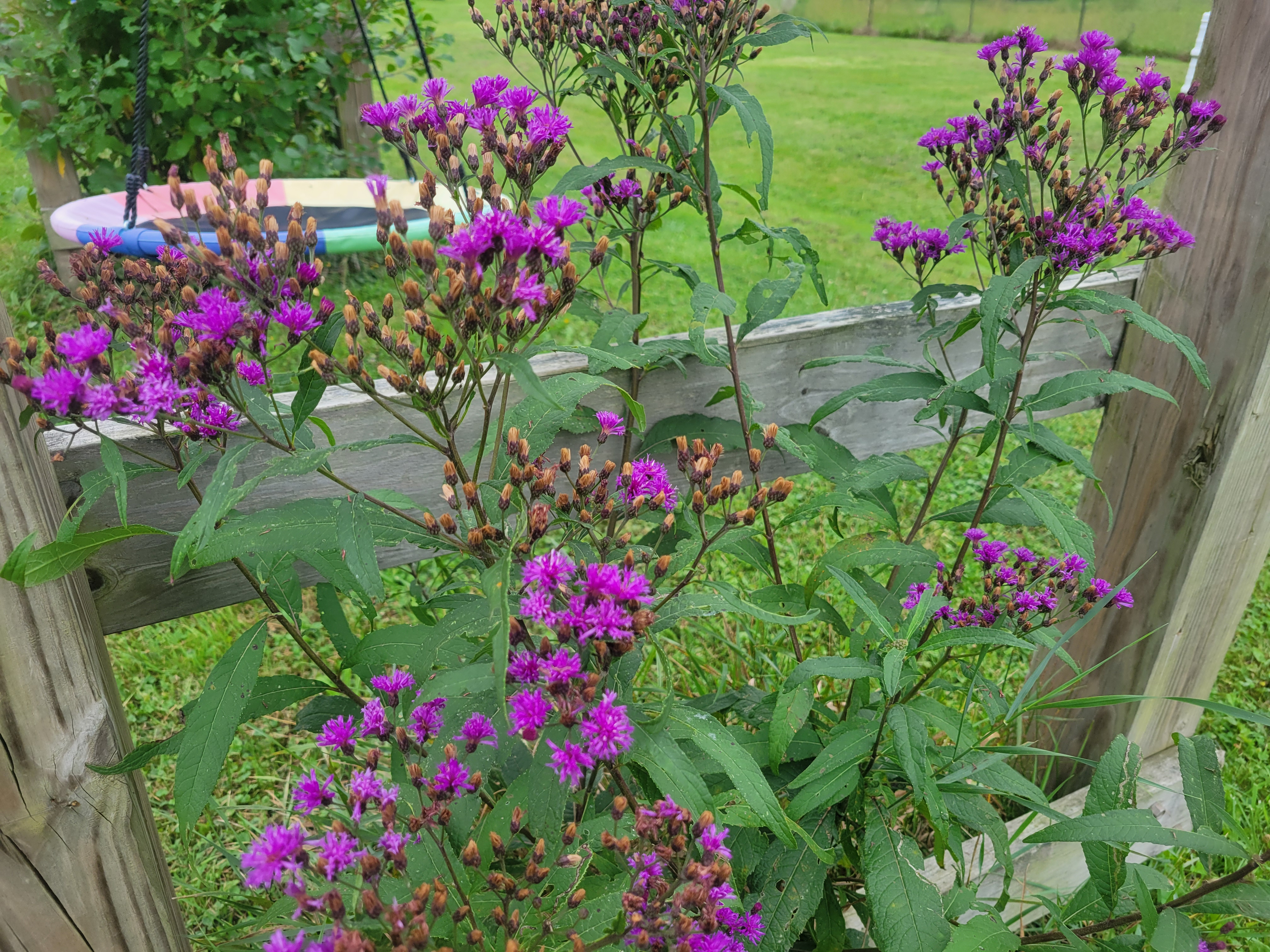
Ironweed sprouts up by the pond and here around our former kiwi arbor, now a swing set. Their bright flowers offer late-season nectar for bees, butterflies, hummingbirds, and other creatures.
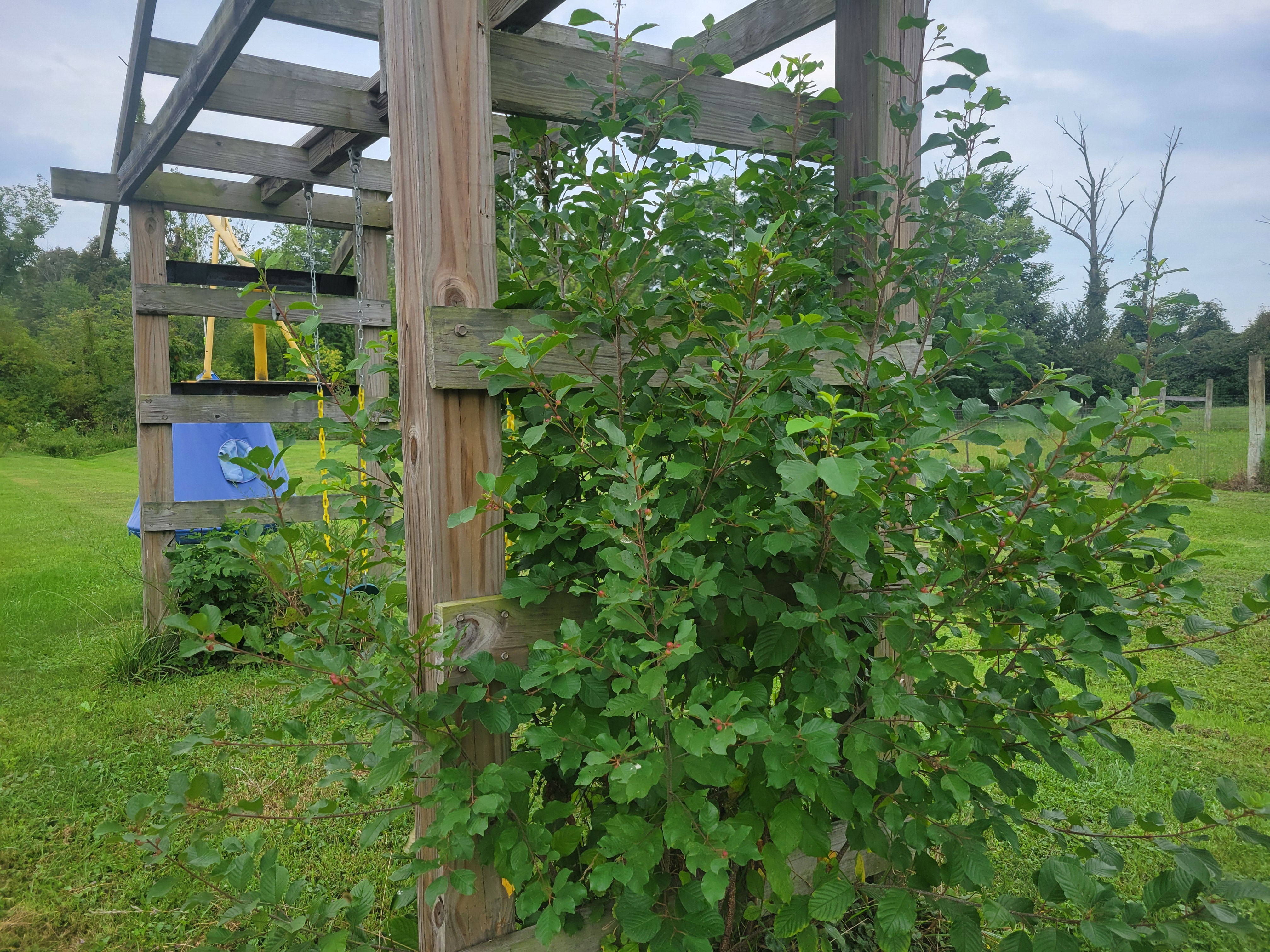
Here’s another swing set volunteer. I haven’t ID’d the plant but trust it has a reason for growing here.

I have since learned how fully the native plants we call weeds improve the soil, support pollinators, and nourish myriad life forms necessary for a balanced ecosystem. Perfect weedless plantings now look wrong to me.

Yes, seedlings need protection from weeds in their earliest weeks of life. I start hundreds of seeds under the fancy grow light table my husband built. These babies, even after hardening off, need space and light in the garden. The system we’ve evolved takes some labor when planting, but is kind to the soil and kind to our backs. Best of all, it frees us to do little more than water and harvest throughout the growing season. There are two main aspects to our method.

One, we leave wide rows where grass, clover, and other green life springs up of its own accord as nature intended. Every now and then my husband runs the push mower along these rows. In narrower patches, he or I run the weed whacker. These plants function as green ground cover. I see them as naturally occurring companion plants. By this time of year we don’t bother mowing them at all, although it would look more tidy. Instead we brave the knee-high jungle to pick flowers and vegetables from amongst their lively blooming weed cohabitators.

Two, we barely disrupt the ground for planting. No rototilling, no hoeing. We move a trowelful or two of dirt for each plant, then we augment the opening with rotted manure or compost. We fold thick overlapping layers of the New York Times (or saved, tape-free cardboard) around each plant after it has been tucked into the soil. Probably a foot or less on all sides. We top this newspaper mulch with well-rotted straw that spent the winter stacked around the chicken coop. (One could use grass clippings or fresh straw instead.) It’s important to water the plant and its surrounding paper/straw immediately not only for the plant’s health but also to prevent any slight breeze from spreading newspaper sections around the neighborhood. (Yes, I’ve been spotting running after newspaper sections gusting across the yard.) The newspaper and straw break down by the end of the growing season, effectively becoming dirt by the next spring when we do the same thing all over again. It also brings me a measure of peace to tuck awful headlines around tender little seedlings, as if something good can come from all that bad news.

A side benefit to our weedy gardens? They’re busy with bees, butterflies, hummingbirds, and other pollinators. Plus, we don’t lose a lot of our vegetables to neighborhood rabbits, deer, woodchucks, etc. (Okay, except for the Night of the Marauding Raccoons in our hoop house.) I see rabbits in our side garden every evening, oftentimes they hang out there for hours. They’ve chomped down a few tender shoots of spinach and chard, but they mostly eat what’s most tantalizing to them–weeds!

The biggest relief is how much the garden doesn’t need me. My ministrations are marginal, hardly necessary next to nature’s real magic. Sure, we water pretty diligently in the hot weather. I even pull a few weeds when they’re taking over a plant’s space. But I’m not remotely responsible for the riot of life growing around me. The flowers, vegetables, and every one of the weeds are beautiful.
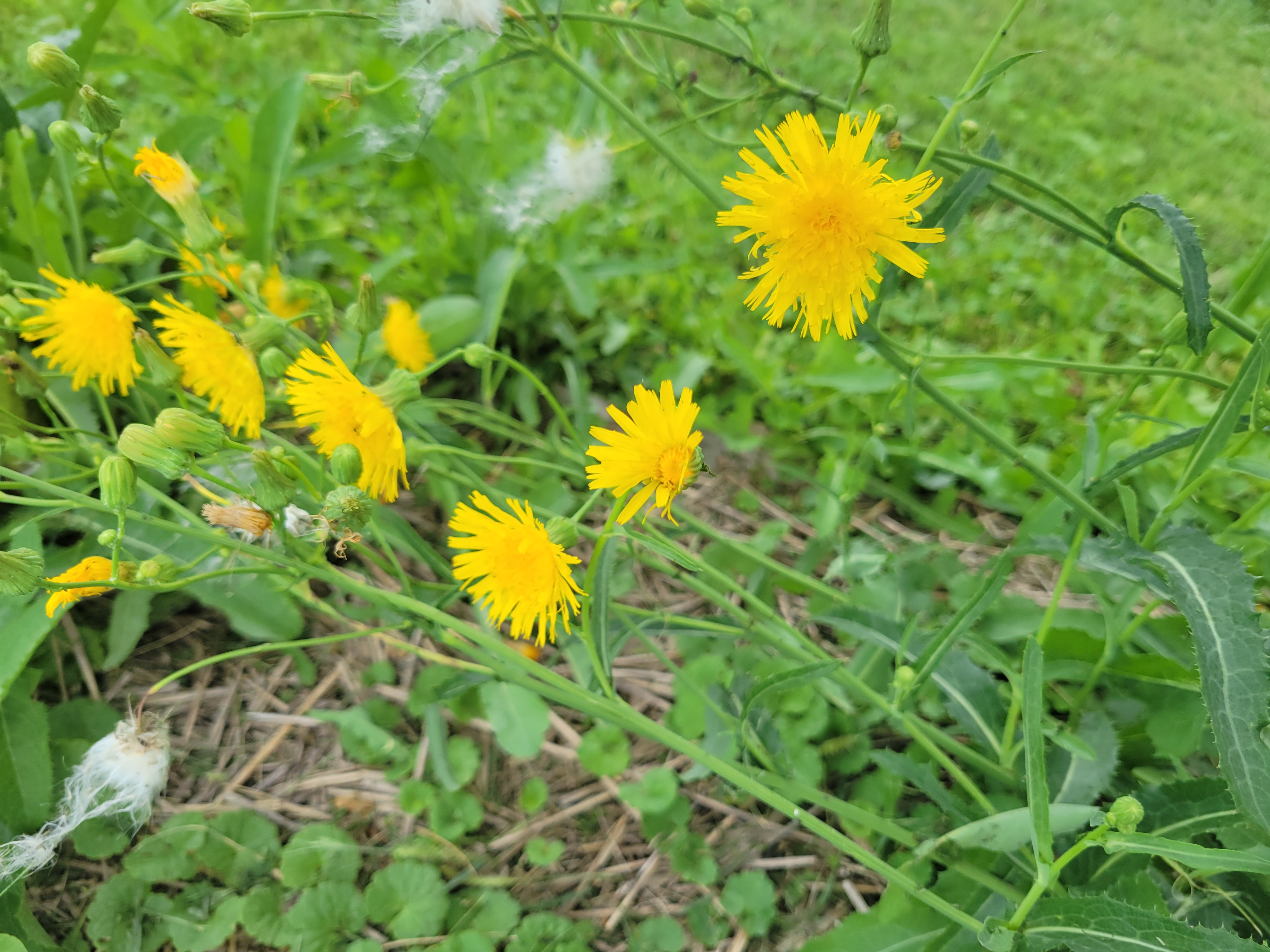
This appears to be sow thistle, which popped up after I harvested onions. An old herbalist teaching is what we need to heal grows at our feet. Maybe these plants are telling me something.

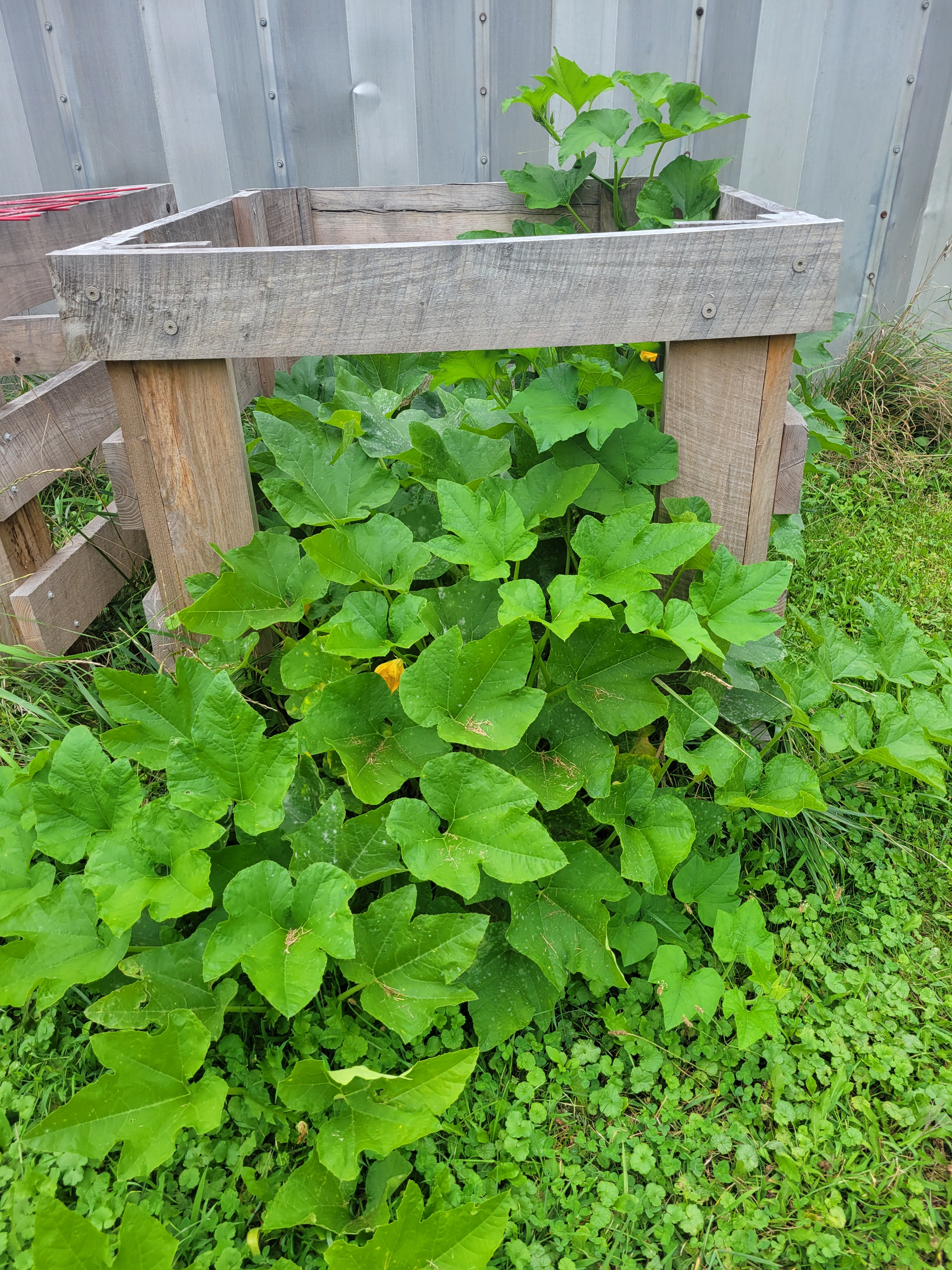
Healthy squash volunteers sprout in one of the compost bins.

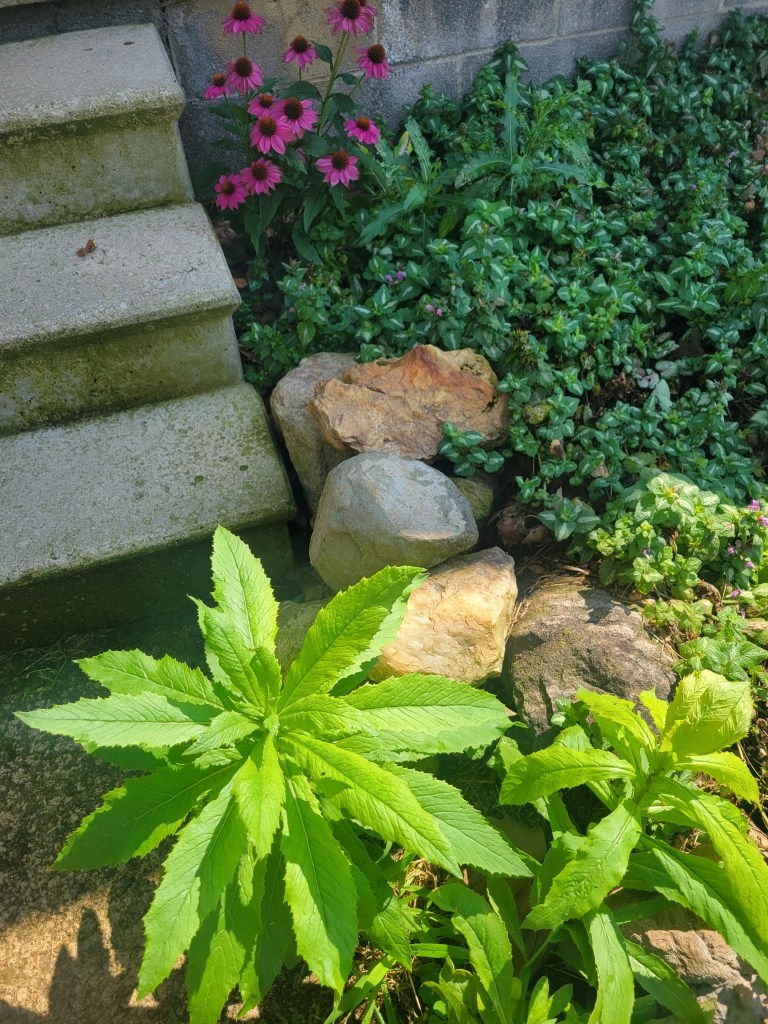
These plants by our front steps are so full of greenly health that I’ve let them stay. I think they are burnweed, aka as pilewort, which is apparently an aromatic herb also grown for medicinal use. I’m not confident enough in my plant ID to use it, but I do enjoy its cheerful nature.

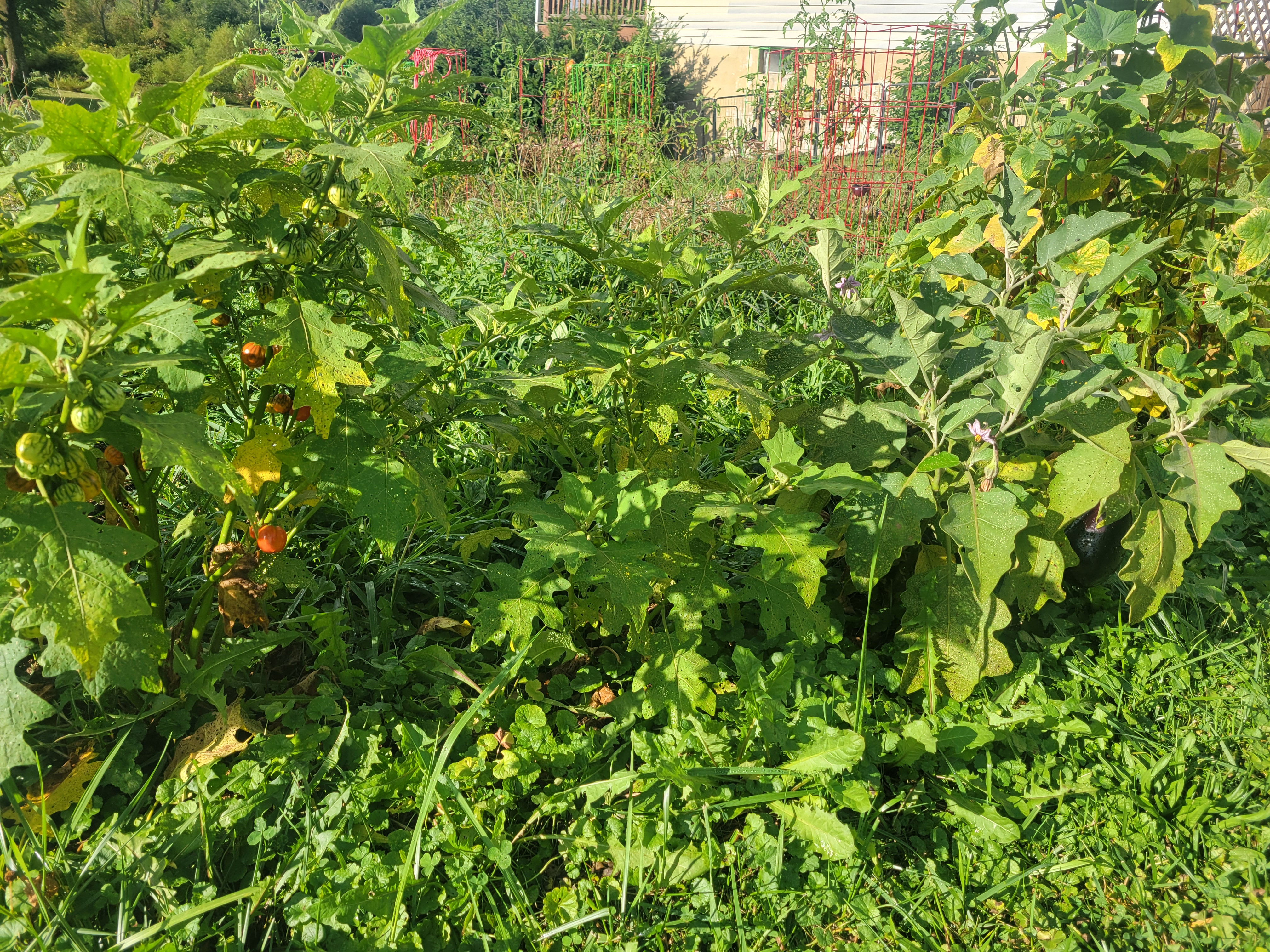
By September having given up on mowing rows, this garden patch is a weed-tastic morass still brimming with harvest-ready produce.

We remove cucumber, melon, and gourd plants as soon as they’re done producing to prevent future plants from dealing with pests and diseases common to cucurbits. But that’s it. I no longer bemoan a messy garden. No longer judge myself for my failure to keep up with standard gardening practices. Perhaps my lazy-forward methods mean I gather a little less produce. (Or maybe not.) But I gather more peace from our feral gardens than I ever did in years of trying to keep up. The appearances-at-all-costs thing feels oppressive to me, whether it refers to our bodies or our possessions or our social status. That doesn’t mean I don’t see the beauty of a fashionably dressed person or a perfectly tended garden, it’s just never been for me.

As autumn folds into winter each year, the weeds remain. It feels right to learn what I can from our plant elders. All winter, I notice birds and other creatures feed on seedheads and dried fruits. I see them find shelter in the dry stalks. I pay attention to the patterns snow and wind make in this gone-wild space. I take heart in the way these plants bend, then lie down as they give what’s left of themselves back to the dirt.

Weed I Won’t Pull

Some hardship curved it into
a green ampersand. Tendrils sprout
along a resolute stem.

I want to lean close, ask
for some photoautotrophic wisdom.

Listen to the soil’s bacterial choir.

Convert to the worship
plants have practiced since the Beginning.

Laura Grace Weldon

Blessed By Weeds

natural weed control methods, benefits of weeds

Nature doesn’t appreciate the bare earth method we call “weeding.” The soil we count on to grow food and flowers isn’t just a blank medium for our use. It’s a fragile, complex, living system that’s home to bacteria, fungi, and other life forms busy beneath our feet.

Left alone, nature brings forth plants of all kinds that improve the soil’s ability to foster life. We call them weeds. They seem to spring up without reason other than to frustrate us. But nature has her reasons.

~Many of these plants boost the presence of mycorrhiza.  This beneficial fungi massively improves a plant’s ability to use the soil’s water and nutrients while providing protection from certain pathogens. Mycorrhizas are found in more than 90 percent of plant families but their presence is inhibited by too much fertilizer and can be destroyed by excessive digging, tilling, and soil compaction.

~Many of these plants help to break up heavy soil with strong root systems, aerating and improving drainage. This makes the ground a better home for the plants we prefer to grow.

~Many of these plants improve soil fertility. Two common categories of weeds are dynamic accumulators and nitrogen fixers. Nitrogen fixers are able to capture atmospheric nitrogen, and due to a symbiotic relationship with soil bacteria, these plants “fix” critically important nitrogen in the soil. Dynamic accumulators draw trace elements and other nutrients from deep underground and transport them closer to the surface

In places where soil is poor, the right plants to correct those particular deficiencies tend to spring up. In fact, botanists know that weeds are an indicator of soil properties such as pH and mineral levels. That’s nature’s wisdom at work.

Then we come in, gardeners and farmers, doing our darndest to get down to bare ground between rows of plants. Bare soil isn’t a natural state. The eroding effects of wind, water and sunlight wreak havoc on naked dirt. That’s where weeds pitch in, acting as protective ground cover by holding moisture and preventing topsoil loss. Think of weeds as self-appointed caretakers for vulnerable humus.

Weeds benefit more than the soil.

~In bloom, they attract natural pollinators such as bees, moths, and butterflies. They also provide habitat for many other helpful insects which balance out the pests you don’t want in your garden. Nature likes diversity.

~Plants we call weeds have been used for eons for food, oils, herbs, seasonings, and medications. Might as well celebrate dandelion season by frying up some dandelion flowers or making dandelion lemonade.  And during most of the growing season you can pluck some lambsquarters, plantain, purslane, chickweed, or other edible weeds to incorporate in your meals. (Identify them carefully and only pick plants that are not exposed to herbicides.) These foods are highly nutritious, and free for the picking. Weeds are the ultimate way to eat locally.

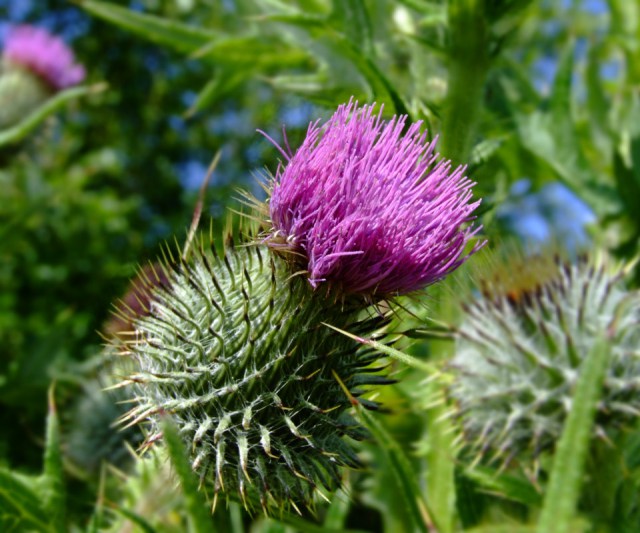
I want to understand the weeds that nature bestows on me. For example, I’ve learned to respect the fierce tenacity of thistles. Around here they can quickly grow taller than I am. And I can’t help but adore the beauty of those delicate flowers atop such a prickly stem.

They’ve visited most fiercely in our front flower bed, one that was mounded up from subsoil left when our septic system was excavated. Nature knows the soil there isn’t very hospitable to life. That’s exactly why thistles flourished there. I’ve augmented that bed with cow manure dragged from out back, stacked it with layers of straw and mulch, and pulled out as many thistles as  I can before my strength gives out.

Thistles are dynamic accumulators that work to bring up deep nutrients and their long roots break up poor soil.  Because they’re been actively improving the soil, fewer thistles appear in that bed every year, as if they’re completing a job started nearly 19 years ago. Other weeds are now taking their place, surely just as necessary.

But respect for weeds goes only so far. It’s not possible to grow peas, lettuce, and other delicate plants in a jungle of weeds. Besides, I am a low energy lazy gardener. Once summer heat rolls in I’m more inclined to hide in the shade with a book than sweat with Puritan righteousness in the sun.

So I have lots of experience with weed control methods.  (Other than chemical. I don’t go there.) Here are some thoughts on the matter.

  Hoeing. I’m not good at hoeing, although that may have something to do with using an antique implement that probably hasn’t been sharpened for decades. My hoeing technique also probably leaves something to be desired. Finally, the whole hoeing experience is impaired by having dogs out with me, dogs that like to dash after each other in wild canine exuberance which puts them right in the way of my hoe.

 Weeding. I’m not good at pulling weeds either but that’s the method I use most often. As I pull weeds, I lay their still-green bodies between the rows as a natural mulch. I tend to sit on the ground as I hand weed, and I happen to like how close that puts me to the smell of growth and the sight of tiny insects and an overall greater awareness of what’s going on in the garden. The size of my various gardens makes it impossible to do this well unless I want to spend many many hours a week on my butt pulling weeds, which I do until the blazing heat hits. Then I do so fewer hours with greater grumpiness.


 Landscape fabric or carpet discards. We were given reams of landscape fabric by a friend of a friend who used to run a greenhouse. It wasn’t easy to get between the rows and batten down with clips, but I covered it with heavy layers of grass clippings and it looked great. I was thrilled. It worked well until I pulled it off at the end of the growing season. The soil looked awful, cracked and strange as if it had boiled under all that black fabric. Rather than being soft and friable it was hard. I wanted to beg the dirt’s forgiveness. I was also rather bitter, as this was easy to use. It also has to be pulled up every year or it’ll accumulate so much biomass on its surface that plants will simply grow on top of it.

Years ago we tried using strips of discarded carpeting. I know, strange, but I read this back in some organic gardening magazine years ago. They claimed that carpet old enough to be torn out of a house doesn’t really have toxins to leach. Carpet kept down 100% of the weeds and, especially if it’s a bright color, gives your garden a Dr. Seuss sort of vibe. It was pretty darn amazing. But again, it has to be pulled up. And like landscape fabric, a great deal of biomass clings to the carpet and ends up being thrown out rather than becoming part of the soil.  Worse, I suspect it’s not really all that non-toxic…


 Newspapers and straw, or feed bags and straw. I read about the newspaper and straw method many years ago in Mother Earth News, and have been doing it on and off ever since. Basically you layer heavy, overlapping newspaper sections between the rows covered by straw or grass clippings. By the end of the growing season it’s largely biodegraded, becoming dirt by the next spring. I have a love/hate thing going with this method, probably because I’ve made all the mistakes possible. Too little newspaper, straw so flimsy that it doesn’t break into sections that firmly hold anything down. And the worst, trying to put down newspaper when there’s any breeze at all. One year I laid down quite a few rows and got the straw nicely set atop those papers but didn’t dampen it with rain barrel water because the sky threatened rain within minutes. Bad idea. That rain appeared only after heavy gusts of wind, meaning I was running around the yard trying to catch wind borne newspaper and stomping my feet in Rumpelstiltskin fits of frustration.

The past few years I’ve used heavy paper feedbags  which are even better than newspapers. We save livestock feed bags and also have our feed mill save us bags. Just cut open, spread out, cover with straw, and water. (Be careful to avoid feedbags with plastic lining! ) Unfortunately our feed mill is using mostly plastic bags, so I’ll be back to newspaper.


VLUU L200 / Samsung L200 Jeans, yes jeans. This is one of my stranger innovations. I got into the pile of jeans I’ve been saving to make a quilt (the kind perfect to keep in a car trunk for impromptu picnics). I slashed them apart, laid them between rows of emerging garlic plants while my kids laughed at crazy mom, then covered them with straw. They stay put well and biodegrade in about two years, although some heavy seams can be found here and there. Probably best to use between perennials. If you run across a cheap bolt of burlap or cotton fabric that should work too.


Garden, hopeful whack version. Weed whacking. I’ve been hankering after a small weed whacker for some time. I have a dreamy hope that, if I plant rows far enough apart, I can just cut weeds down to a reasonable height. I picture lawn-like strips between rows of gorgeous vegetables.  I haven’t tried this yet. Let me add that I have no known weed whacking skills. Chances are I’d accidentally decapitate innocent broccoli plants on my first try.

Thank you weeds. You haven’t forgotten your true value in our teeming, complex ecosystem.  As Ralph Waldo Emerson wrote, a weed is simply, “a plant whose virtues have not yet been discovered.”

What do YOU do to live with and live without weeds?


An earlier version of this post appeared on our farm site