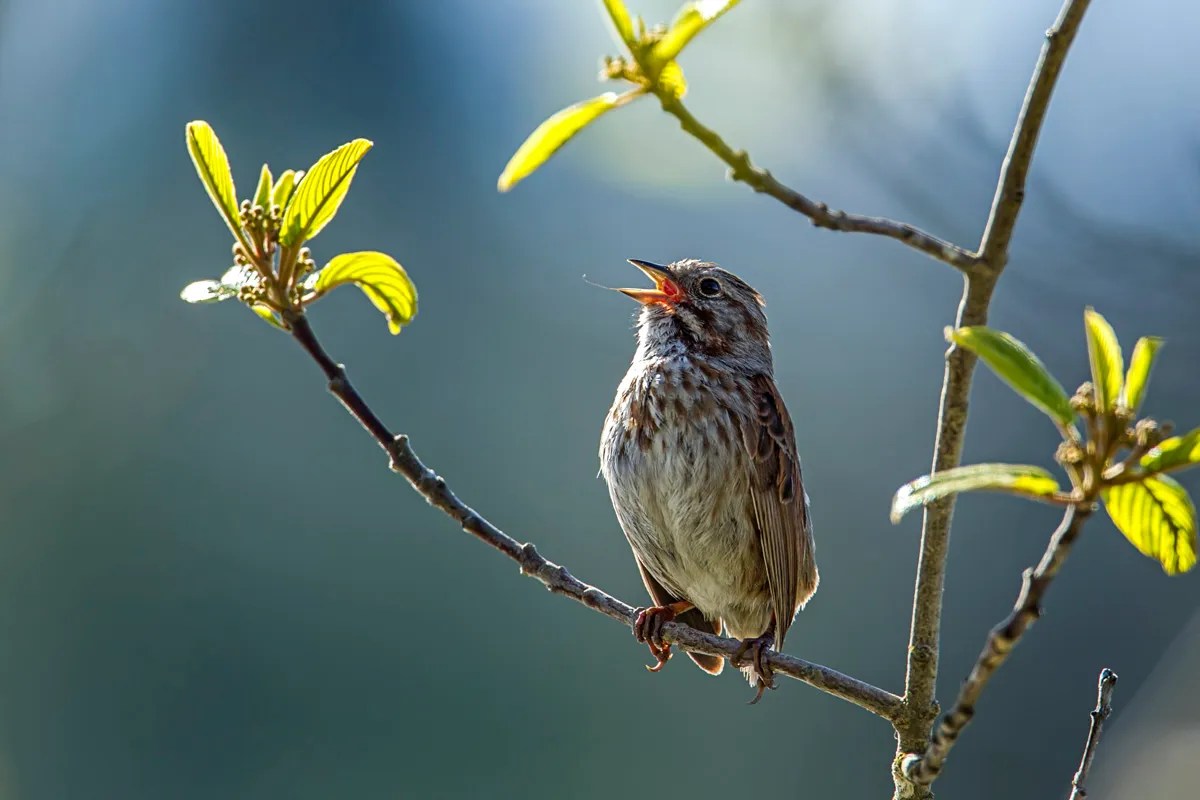
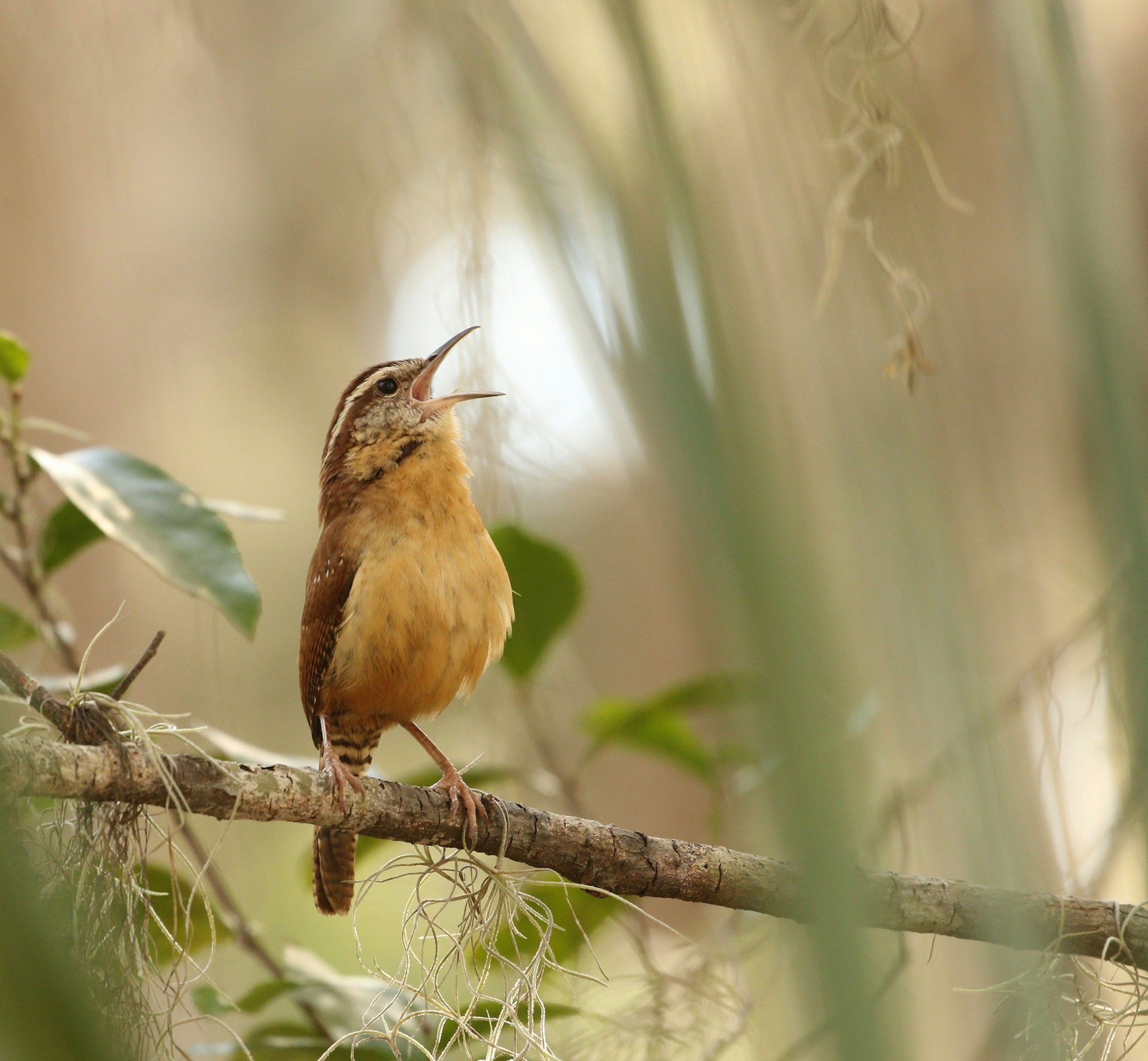
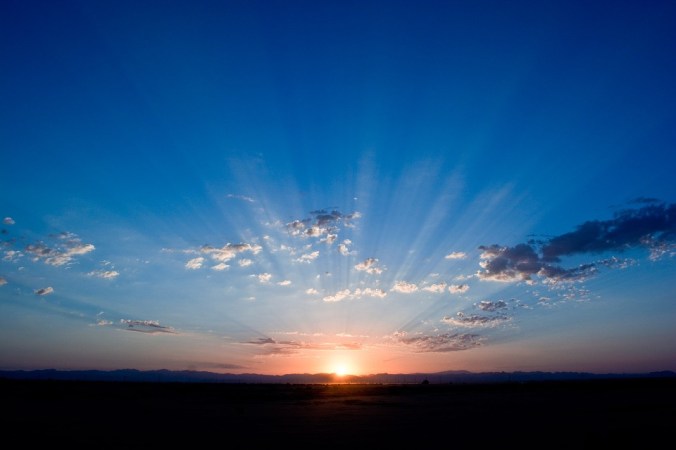
Listening to birdsong reduces cortisol, slows your heart rate, and triggers parasympathetic calm. Why? Because for eons your ancestors knew that singing birds meant you were safe. Your body still remembers.
Everyone I know is overwhelmed. It feels bizarre to go on running errands and making weekend plans while simultaneously carrying the weight of today’s world. How are we supposed to be fully present in our own lives while also aware of rampant corruption, violent injustice, oligarchy’s ever tightening grip on power, the insanity of unregulated AI with its evil data centers, plus the horrifying loss of birds and forests and whales while weather intensity increases due to a climate we are pushing beyond tipping points?
A single day’s happenings from any of the last 10 years or so would, a generation ago, have been the top news for weeks. Likely months. Now whatever fractures our sense of humanity this morning will likely be compounded by some other horror later the same day.
Our grief, despair, fury, and sense of helplessness are entirely sane reactions to these times. Joanna Macy, who left our planet last year after a deeply loving lifetime, wrote in Coming Back to Life, “It is no longer appropriate to think only in terms of my nation or my country, let alone my village. If we are to overcome the problems we face, we need… a sense of universal responsibility rooted in love and kindness for our human brothers and sisters. In our present state of affairs, the very survival of humankind depends on people developing concern for the whole of humanity, not just their own community or nation.”
(I would add a sense of universal responsibility for all of us breathers— redwood trees, bats, lions, sap beetles, manatees, sunflowers, every living being.)
I don’t have any remedies, but can share what helps me: Push against the disconnect that’s imposed on us. Hug whenever possible. Hang out with small children. Pay attention to your senses. Tend to something that grows – a plant, an idea, a relationship. Be creative in whatever way calls to you. Let yourself be playful. Believe in miracles of all sizes. Listen to the birds. And when you can, envision the future you hope to bring into being. See it, feel it, let yourself believe in it. Here’s what I envision.
ALL OUR DESCENDANTS
I see a dark-haired child grasp another’s arm to watch bright blue/orange African pygmy kingfishers whistle-sing in the branches.
See children roll down a grassy hillside flecked with violet Karvi flowers, running back up to roll again and again in spring’s warm welcome.
See children whisper thanks as they gather herbs and roots the way they learned from their elders, leaving enough to regrow as people have done from earliest times.
See children dive into pristine fjords, climb into welcoming arms of ancient trees, play under colorful quilts hung in the sunshine.
All of them as far as I can vision are strong-limbed, well-nurtured, with the open curious gaze of beings who know they belong.
These children are born 80 or so years beyond us. I send love on ahead to them. They are who we march for, vote for, sing for, change for, plant and pray for.
I wake this morning to soft rain and lie there a few extra moments grateful that our flower and vegetable gardens are drinking in this blessing, until I remember horrific flooding going on right now in Pakistan with 33 million affected and over a thousand dead. In just the last few weeks torrential rains have killed people in Afghanistan, Sudan, China, Yemen, and South Korea. At the same time, others suffer mightily with drought including other areas of China, countries in the Horn of Africa, two-thirds of Europe, and nearly half of the U.S. All is this is brought on or intensified by climate change and about to get worse. A new study in Nature Climate Change says it’s now inevitable that 110 trillion tons of ice will melt in Greenland. This would cause a foot of sea-level rise. This doesn’t even include additional sea-rise from melting ice in Antarctica. Worse yet, the study doesn’t “factor in any additional greenhouse gas emissions” so it’s actually a current best-case scenario. Already we’re experiencing catastrophic storms, floods, and droughts worse than what climate models predicted. That foot high sea-rise could end up as a 20-foot rise if we don’t turn things around very, very quickly.
I get up to let out the dogs and make coffee. I quietly appreciate my dear spouse who kneels on the kitchen floor trying to entice our 16-year-old dog to eat a few morsels of meat which my husband regularly buys and cooks for him. I look out the window, delighted to spot a great blue heron in the pond.
I try to stay in the moment, just watching this creature’s prehistoric-looking countenance and admirable patience as it waits to spear a fish, but here it comes again, my awareness of what we’re doing to this beautiful planet. Nearly half the world’s bird species are in decline due to degradation of their habitats as well as to climate change. In North America alone the bird population has dropped by nearly three billion birds, a decline of 29 perfect since 1970.
Okay, I’m going to stop with the reality overflow. I simply want to acknowledge this is how the day goes for many of us. We’re fully enmeshed in our ordinary lives — getting to work on time, stopping at the grocery store, making supper, keeping up with family and friends, trying to pay bills, hoping to get a better night’s rest than the night before. At the same time we carry the weight of guilt and anxiety over the state of the planet.
E.B. White, author of much beloved books such as Charlotte’s Web and Stuart Little, as well as The Elements of Style co-author, once said, “I arise in the morning torn between a desire to improve (or save) the world and a desire to enjoy (or savor) the world. This makes it hard to plan the day.” I have to disagree with the late Mr. White. I don’t think we can save it without truly, wholeheartedly savoring it.
Savoring, for me, is about awe. It’s about seeing relationships between what is and sensing the expansiveness of what’s just beyond our rational minds. It’s about connection. It’s about what my friend John C. Robinson calls partnering with Creation.
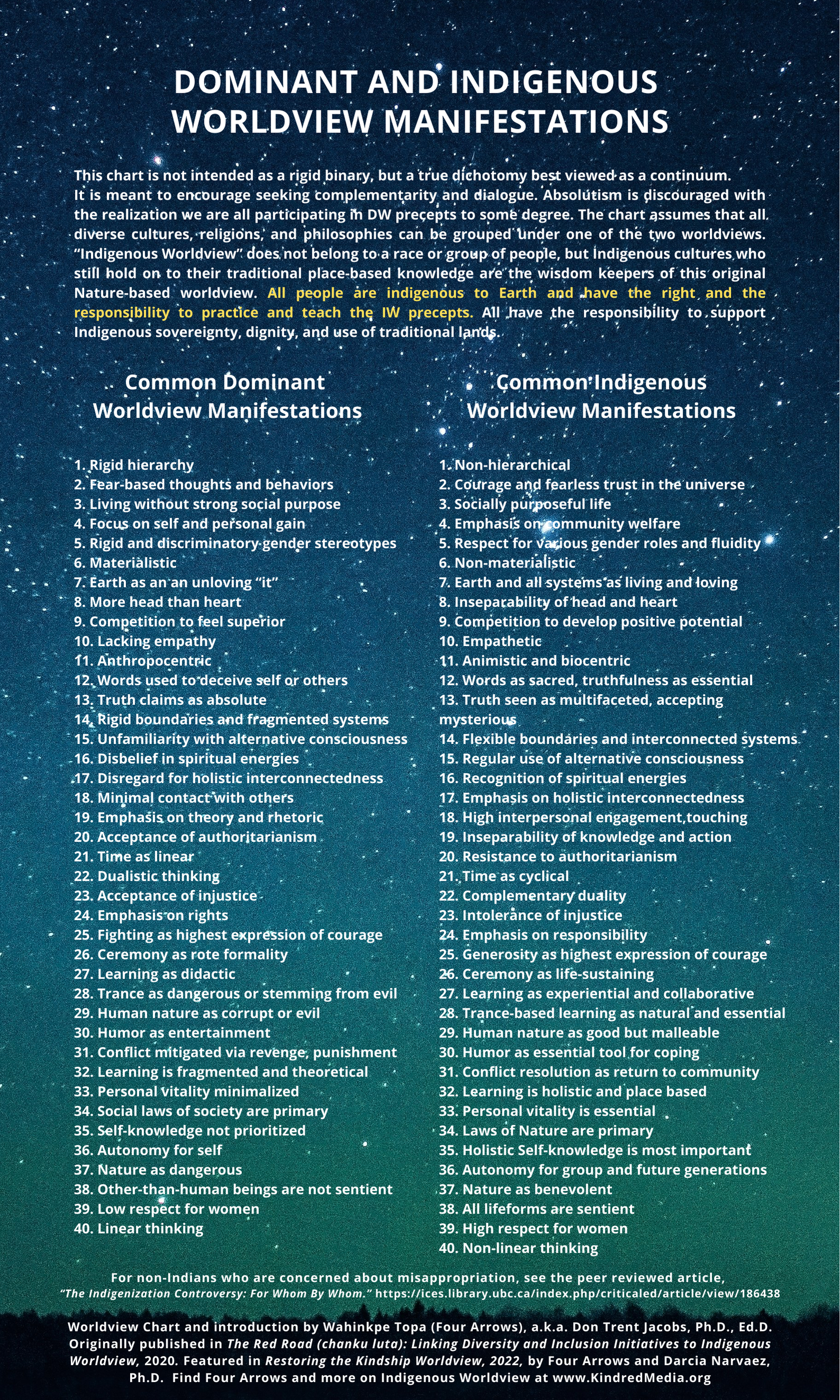
For many, many generations we humans have been told we are separate from our past, our bodies, our communities, our inner promptings. Even more unbelievably, we’re told we are separate from Earth itself. We’re told its normal on this planet to extract what we want from the labor of others, even from the natural resources essential for future generations. We’re told life is a competition, a constant struggle to ensure our needs are met. Maybe we’re also told we should advocate for others, typically those so similar to us that they share a religion or a language or zipcode. The materialistic “needs” of some impair the very essential needs of others for food, water, shelter, medical care, and justice. This spoken and unspoken worldview is pressed into our awareness from the time we are small children. It doesn’t have to be this way.
And this offering of this poem of mine about connection, recently published inAbout Place Journal.
SNIPPING PARSLEY
“Language is a tailor’s shop where nothing fits.” – Rumi
I can’t fit words around a feeling I carry sweeter than sadness sliding past the shape of questions. As I snip parsley from its blue pot I consider how each injury a leaf suffers triggers an electric charge, the way an alarm flashes as a building is breached.
When very young I knew for sure everything was its own kind of awake. Honeysuckle vine and bees visiting it. Air trapped in a room, the room itself. Dark watchful eyes of animals, wild speech of water, still presence of stone. Everything, far into unseen universes, awake beyond our small knowing.
Although thank is too weak a word I want to thank this parsley plant. Is it enough to notice each leaf’s symmetry before the soft green shush under my scissors? Is it enough to taste the transfiguration we call photosynthesis? I can’t put it into words, but can almost summon lost memories of an original language we once held in common.
I sat at the small table by the kitchen window this morning thinking about hope. The news was bad. Again. Acres of majestic trees destroyed by fire, hurricane devastation, floods and loss, missiles and political misfires. So many people in need of each other, divided by both real and imagined borders. Yet in that quiet moment as my children still slept, I felt a strong pull to lean into the beauty around me, the calm, to focus on the small acts of kindness that don’t always get talked about and believe in their power. Did I have a right to be hopeful when the world was so clearly hurting?
If you’re deep ecologist Joanna Macy, and others like her, the answer is yes. Not only do you have a right to be optimistic, but an obligation to unearth that hope, spread it around like topsoil, and help something infinitesimal or resplendent grow. I stumbled upon an article recently by Macy about the book, Stories of the Great Turning, which helped validate my stubborn penchant for hope. It celebrates the ever-growing movement of individual action through a collection of stories about grassroots activism taking place around the world.
A few days later, my family and I watched the French documentary Demain (available with English subtitles as Tomorrow) by Cyril Dion and actress Mélanie Laurent. It takes us all over the world to introduce us to people who are finding creative solutions to the world’s problems and putting them into action on an individual and community level. The film shows us the positive global strides that are being made in the areas of agriculture, energy, economy, democracy, and education. The examples convey the idea that, while we cannot deny the global problems we’re facing, we can choose to focus on the change that is already in motion.
These aren’t merely messages of hope. Neither are they a call to action. Both Stories of the Great Turning and Demain are telling us something we deeply suspect but desperately need to know — that all over the world, in hidden corners and small enclaves, people from all walks of life are already creating lasting positive change.
Because these thinkers and doers of seemingly small acts are not celebrities, politicians, or industry giants; we may not hear about them in the mainstream media. In fact the gentle propagation of these tales usually gets done the old-fashioned way — by word of mouth, or as my daughter says, “on the wings of dragonflies” — which is testament itself to what Macy calls the “remarkable expansion of allegiance beyond personal or group advantage.”
In other words, we lead, or participate, or engage, or invent, or inspire without caring if we ever get recognition or reward. We do it because we feel in our very souls that it’s the right thing to do. Even if our efforts ultimately fail, the lesson lies in the attempt.
Joanna Macy writes in her introduction,
“This wider sense of identity is a moral capacity more often associated with heroes and saints; but it now manifests everywhere on a practical and workaday plane. From children restoring streams for salmon spawning, to inner-city neighbors planting community gardens, from forest defenders perched high in trees marked for illegal logging, to countless climate actions to limit greenhouse-gas emissions, an undreamt-of wave of human endeavor is under way . . . (The Great Turning’s) three main dimensions include actions to slow down the destruction wrought by our political economy and its wars against humanity and Nature; new structures and ways of doing things, from holding land to growing food to generating energy; and a shift in consciousness to new ways of knowing, a new paradigm of our relation to each other and to the sacred living body of Earth.”
All this just makes me want to run outside and whoot with joy! But for most of us it’s hard to dig our teeth into the potential collective outcome of all these scattered individual efforts. Especially when we are bombarded on a daily basis with mindless listicles on one hand and horrific world news on the other. At any moment the global bubble of doom and fear might pop right over our heads. Can we really make a difference?
Well, yes, especially when “we” becomes “WE,” which happens quite naturally when individuals come together to provide support, collaborate, share resources, and work as a unit while maintaining individuality.
The paradigm of positive change taking place isn’t just about the environment. It’s about accepting the notion that in anything in life that’s worthwhile, there exists polarity. It’s about accepting and embracing each other’s differences. It’s about mutual respect and compassion. It’s about taking risks and daring to think differently. And it’s about learning differently. I can’t help making this leap because it’s really only a small stepping stone from one to the other. How can we distinguish between the consciousness we hope to awaken on behalf of a suffering planet and the world we want to open up for our children? They are the same.
Which is why those of us who foster interest-led learning, who have lived through learning and learned through living, need to keep sharing our individual and collective tales as part of this Great Turning. And we don’t need to shout. As it is, many of these stories naturally intertwine children’s exploration with a love and respect for Nature. They demonstrate the innate consciousness that children have toward creatures and the compassion they hold for others. Many homeschooling families are already living with “our sacred living body of Earth” in mind through lifestyle choices. Sharing these tales is not about bashing the institution of school or judging parents and children who choose to attend, and it’s not about imposing or insisting on change.
If I understand it correctly, this movement, which Macy calls “the essential adventure of our time,” is about individuals inspiring change through positive action and example. And sharing our stories of gratitude and hope. The shift may come about slowly. But it’s coming. I can hear the wings beating.
Ellen Rowland is the author of Everything I Thought I Knew, a collection of essays about living, learning, and parenting outside the status quo.
Her writing has appeared in Life Learning Magazine, The Homeschooler Post, Otherways Magazine, The Washington Post online, More Magazine, and Natural Life Magazine.
After spending 15 years in New York City, where she built a career in art and design and met her French-born husband, she and her family moved to Senegal, West Africa when her children were three and four years old. They built an earth house, lived off-the-grid, grew their own vegetables, and began the journey of learning through living. She and her family currently reside on a small island in Greece where they plan to restore a goat barn and call it home.
Click here for more information or to purchase a copy of Everything I Thought I Knew.