My last few minutes have been immersive and joyful (synonyms!). It began with this hurdy-gurdy video.
I clicked on it partly out of curiosity and partly to override the moment’s earworm. While it played I looked up how much a used hurdy-gurdy costs and where I might find hurdy-gurdy lessons. I imagined myself playing in a quiet part of a Renaissance faire in a long period dress I made myself, or maybe playing between the readings of tolerant poets. John Holt’s bookNever Too Latecame to mind. He wrote about learning to play the cello at age 40, putting it down, then taking it up again more seriously at 50. This would be good for me, I told myself, then immediately recalled other good-for-me schemes I’ve never hatched due to bare-bones frugality and my roller coaster-shaped motivation
A moment came to mind. It was in Cleveland’s downtown district and I was five years old. There on a sidewalk I saw what my grandmother told me was an organ grinder. The man played music by turning a crank on a clever device. He was wearing an old-fashioned vest and hat. Attached to him with a rope was a small monkey wearing a tiny version of the same vest, holding out a tiny hat for people’s coins. I was pretty sure I’d stepped into magic for real this time. My mother wouldn’t give me anything to put in its hat and quickly pulled us away from “that filthy animal.” I’d already watched long enough to see the man had a dour expression and the monkey’s eyes were sad. I asked a lot of questions about that monkey, until grown-ups got tired of answering. Then I thought many more questions silently.
This reminded me of a picture book I used to read to my kids, Perfect The Pig, where a darling flying pig is captured by a man who makes him perform. That book ends well, probably far better than that long-ago monkey’s fate. My mind inexorably shifted to the plight of the smart, intelligent creatures we confine in crates on massive pig farms so I did what I could for animals in my care by letting the dogs out.
I did so while singing them an impromptu version of Lennon’s Let It Be, which easily lent itself to new lines in a rendition most accurately titled, Let Us Pee. While waiting on the porch I listened to birds and wondered if we’d seen the last oriole, at least until next spring. I imagined the fortitude it takes to fly 1,000 or more miles and sighed for my lack of comparable tenacity. Still waiting for the dogs’ perambulations to end, I deadheaded some flowers wet with dew. Their dampness led me to consider how all the water on Earth has been here since the planet’s birth, meaning these drops of water have been dinosaur blood, ocean waves, rain, tears, and thunderstorms. This led me to wonder, as I occasionally do, about quantum entanglement. I’m fascinated by so much of what I don’t understand, which means just about everything seems fascinating to me. I dearly want to ask an expert if every particle isn’t already entangled with every other particle.
On the way back in with the dogs a spam call jingled my phone. I made myself a second cup of coffee, decaf thanks to cardiac issues. (Caffeinated sympathy welcome.) I told myself “This will be a day of accomplishment,” which is my usual 7 am delusion. I reviewed my wildly optimistic to-do list, fully aware I couldn’t possibly catch up with manuscripts to review, emails to answer, submissions to read, and classes to plan on top of non-work things like tending our vegetable gardens and giant hoop house verdant with plants I started under grow lights back in early April’s optimism. (I love to-do lists even if mine aren’t all that interesting compared to, say, DaVinci‘s.) I do not have time to fritter away, although I do fritter. Within a few minutes, my desktop had 11 tabs open.
This is a typical ten-minute span of my life. I was never in any danger of taking up the hurdy-gurdy.
I was told I had attention deficit hyperactivity disorder (ADHD) by the psychologist interviewing my then seven-year-old son quite some time ago. (It appears a third to a half of children with ADHD have at least one parent with it too). Although teachers and other authorities treated his diagnosis as a problem, I explained to my son his was a different way of being, explaining that humanity has always benefitted from the gifts now labeled a “deficit.”
In deep history, our species thrived, in part, because some people in their tribes were drawn to closely observing/predicting patterns— in weather and environment, plant and animal behavior, signs of conflict in the group –people uniquely attentive to detail yet attuned to the bigger picture. The “wanderlust gene” drd4/7r is associated with ADHD and, in our long human history, may have driven cultural change as this subset of people were drawn to new ideas, different solutions, and new areas to explore. This gene regulates traits such as motivation, thrill-seeking, and risky behavior. It’s also related to a longer lifespan.
As reported in Scientific American, forty-plus years of research have identified:
22 reoccurring personality traits of creative people. This included 16 “positive” traits (e.g., independent, risk-taking, high energy, curiosity, humor, artistic, emotional) and 6 “negative” traits (e.g., impulsive, hyperactive, argumentative). In her own review of the creativity literature, Bonnie Cramond found that many of these same traits overlap to a substantial degree with behavioral descriptions of Attention Deficit Hyperactive Disorder (ADHD)– including higher levels of spontaneous idea generation, mind wandering, daydreaming, sensation seeking, energy, and impulsivity.
Research since then has supported the notion that people with ADHD characteristics are more likely to reach higher levels of creative thought and achievement than people without these characteristics… Recent research by Darya Zabelina and colleagues have found that real-life creative achievement is associated with the ability to broaden attention and have a “leaky” mental filter– something in which people with ADHD excel.
Recent work in cognitive neuroscience also suggests a connection between ADHD and creativity… Both creative thinkers and people with ADHD show difficulty suppressing brain activity coming from the “Imagination Network“
Yet we’ve pathologized this way of being, largely because it doesn’t fit as well in the narrow model of school or workplace. The very things we define as problems are instead vital aspects of human diversity
I thought of my own probable diagnosis as little more than a funny way to explain my messy desk and tendency to take on too many project. The few times I read about adult ADHD or clicked online “do you have ADHD?” self-tests, I didn’t fit into many of their problem behavior lists. I’ve made the bed every morning since I was very young. Other than my desk, my home is pretty neat. I put laundry away and make regular healthy meals and water my plants on a schedule. I assumed I didn’t have it after all. Then, a few years ago, a doctor confirmed I indeed had ADHD– the inattention type. “I can recognize it,” she said, “almost immediately. There’s a different energy in the room, a brightness, not to mention how you bring in so many aspects of a topic.” I liked having this called “a brightness.” (I have never before or since been affirmed for bringing in so many aspects of a topic.)
I recently learned that ADHD is related to my laughable clumsiness. I’ve lived in the same place for 24 years yet still stub my toes on furniture, catch my sleeves on door handles, knock books on the floor. I have so many stories of my clumsiness that my memoir, if I write one, should include the word “awkward” in the title. ADHD is related to my spatial reasoning issues, which explains why I try my darnest yet still can’t reliably transfer leftovers to an appropriately sized container and has to do with why I so easily get lost.
ADHD (and introversion) likely have to do with why I’m too jazzed up to sleep after even the mildest social event. It probably explains how energized I am by conversations, brainstorming, reading, and teaching. These are flow states for me. I focus relentlessly when reading and, when I’m lucky, writing. This isn’t well-regulated attention, but differently-regulated attention. I was the kid who read so intently she often didn’t notice the class had moved from free-reading time to math. I’m the adult who missed a connecting flight because of a good book.
I don’t have the high energy characteristic of the “hyperactive” part of this diagnosis, even though my mother called me a “wigglewump” when I was a child and my kindie report card gave me all smiles except one no-smile for “sits still.” These last few years of Skype calls and Zoom meetings have truly outed me. Now I’m forced to see myself as others see me. I itch, I shift, I look away, I drink water, I make more dramatic facial expressions than those who more calmly inhabit their virtual squares. I work hard to keep myself still. What helps me do that is movement no one can see —a foot rotating in a figure eight under the desk, lifting my legs from the chair, tightening and releasing my muscles — all to keep me present. That said, I have no trouble teaching via Zoom, especially teaching memoir writing. I can focus all day without a problem because I find people and their stories endlessly fascinating.
Emotional dysregulation can be a part of ADHD. I don’t suffer from rages or meltdowns, but whew, I’ve struggled my whole life to manage how fully my body floods with emotion while those around me seem fine. Girls and women with ADHD often mask by teaching themselves to downplay their emotions as well as minimize their movements to more acceptable ones—they chew gum, fuss with their hair, twist a ring, change posture—while boys and men are less inhibited, move more openly, and express (at least negative) emotion more freely.
I’ve been trying to fix these aspects of myself for decades. I’ve had dozens of articles published about mindfulness and adopted (then dropped) all sorts of practices to help me slow down my busy mind. I do inhabit my moments, often get immersed in my moments, but it’s a comfort to know that my skittering mind isn’t something in need of repair. It is the way I’m made. Non-linear attention lets me see all sorts of interrelationships between disparate ideas. This can’t help but show me paradoxes and patterns that help me generate new approaches. The drawback is this doesn’t lead to a clear path forward and it can really antagonize those firmly in the doing-things-the-way-they’ve-always-been-done camp. It probably explains my weird sense of humor. It’s also why I have started dozens of writing projects that, with some sustained focus, could be finished – yet instead my focus drifts to ever-newer projects.
I can only speak for myself, but all the charts, apps, and other attention hacks don’t help me. Instead they handcuff me to the stress-inducing norms of a commodified culture, where productivity and not character are the measure of a life. My son’s ADHD, by the way, didn’t impair his learning in any way once we took him out of school. In fact, it likely enhanced it.
There are other issues associated with ADHD including recklessness and addiction, but I wonder how much of this is the result of schools and workplaces poorly designed for anyone but some mythical standard person. Those who fit in, who are able to mirror back preferences held by those in charge, are “normal” while those of us who are different are expected to deal with our “disorder” or “deficit” by fixing ourselves. Yet, diversity is a bedrock of compassionate, innovative communities. All living beings on this planet demonstrate that biodiversity is essential for life to survive and flourish. Australian sociologist Judy Singer, who describes herself as one of the many women in her family somewhere on the autism spectrum, was first to call this neurodivergence — a term that beautifully acknowledges there are many different, necessary, and valid ways of being.
Salif Mahamane explains it well in this 13 minute TED talk, a talk I adore but had to watch in increments because, well, attention span.
Many evenings I look up from my spot on the couch where I’m reading, comforted by the music of snoring dogs around me, only to notice my husband staring at the opposite wall. I immediately feel guilty for ignoring him. So I put my book down and ask what he’s thinking. “Nothing,” he says, “just relaxing.” I’ve learned he means this and nothing more. Being me, I’ve wondered if he’s actually upset about something I said. Or if he’s sitting there in regret, wondering where he might be now if he’d just made a different choice? Or if he’s imagining something he plans to build or fix or do? Or if he effortlessly enters the Zen state I experience in briefs chunks when I meditate? What is he actually doing? I easily travel all sorts of mental loops rather than believe he’s really not thinking? Maybe he’s…. normal. I can’t imagine.
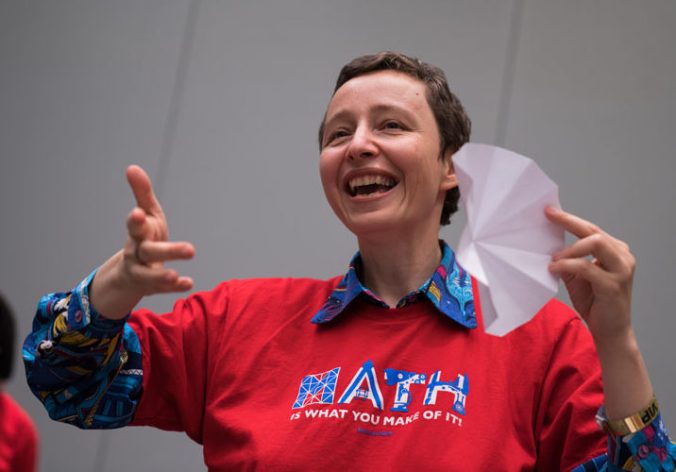
Last year I had the pleasure of interviewing innovative math educator and founder of Natural Math, Maria Droujkova, in “Math is Child’s Play” where she talks about learning math through free play in the context of families and communities. More recently, she and I were talking via social media when she mentioned magic circles. I was instantly intrigued and asked her to explain. She wrote:
One of my consulting topics is game/experience design. One of my favorite design concepts is magic circle: a playspace co-created by the participants, where they suspend their disbelief and behave as if they inhabit another world. I’ve been collecting tools for building cool magic circles from all creative fields, from writing to engineering. Tools like pretend-play, problem-posing, or name-giving. Math circles are magic circles. The maker goal: learn to pop up constructive, emotionally secure, creative spaces wherever we go.
I had to know more. My questions to her turned into this interview.
What was your first experience with a magic circle?
That feeling when an activity is the thing and the whole of the thing? When the rest of the world and the rest of me pretty much disappears? I’ve been experiencing that for as long as I remember. Early on, at three or four, I rearranged stones to make tiny spring snowmelt creeks gurgle merrier. I made canals, dams, and waterfalls till my hands grew red and numb. I remember long pretend-play with my mom, dad, and my imaginary friends, like the red velvet bow that was a fire-butterfly who’d gently land on my hand to play with me. Or the friend called Reflection who could escape its mirror, turning invisible. In another couple of years, there were elaborate handicrafts, hours in the making, while my grandpa was meticulously arranging his stamp collection in hand-crafted albums. He worked at the same table, and my crafts only happened if he started his. There was a very different energy, but some of the same timeless feeling, when me and other rough neighbor kids let go of our constant low-key fighting for living as action heroes in one of the traditional games, also rough, like “Cossacks and robbers.”
Once again, it was a different energy and a very recognizable feeling when I started to spend long hours solving delicious problems before my first Math Olympiad.
I don’t think I can live for long without the magic circle experience. It’s somewhere between water and food on the hierarchy of needs. Yet when I first read Flow: The Psychology of Optimal Experience I felt uneasy about the authors’ claims that there are people of the flow, and communities of the flow, maybe even nations of the flow, while other people and groups are not.
Am I doing enough of immersive, productive, joyful work? Are my communities? I’d had none of these worries between building elaborate snowmelt waterworks and making up fantastic worlds for fire butterflies.
How did you imagine its benefits might be useful in other situations?
For the task in hand, a magic circle gives us immersive, focused, joyful motivation. We feel less tired while accomplishing more. Isn’t that dreamy? And also, we feel balanced and peaceful. That’s dreamy too, especially in troubled times. These feelings, in turn, can increase well-being, productivity, and teamwork.
But these feelings can also run amok or be co-opted. They can make us workaholics, media addicts, or viciously competitive. The weekend I played World of Warcraft so long I lost the sight in one eye for a few scary hours? The magic circle had been real! Gamers’ farewell: “It’s been real.” The weekend when I told my husband I’d be there for breakfast after a few minutes of writing? I resurfaced when the manuscript was finished. It was nearly dark by then, and I’d fasted through the day, though my husband kept bringing me water, which I drank but failed to notice. It’s been real, it’s been magic, I still like what I wrote back then, but if I keep doing something like that for several days in a row I get sick.
Some people of the flow have bad health statistics, such as computer coders with their famously long, immersive work-hours.
What “tools” do you use to build magic circles?
I have been collecting toolsets far and wide. One of my favorites is pretend-play: be a character in a different world. Instant immersion! Characters also provide emotional security: if something goes wrong, it’s not me, it’s some other persona who messed up. Sometimes clothes or accessories help to get into character: dress for the job you want, right? I have a collection of math t-shirts that set the mood when I give a talk or run an event. GMs (game masters) of Dungeons and Dragons have a lot of casual roleplay tools to quickly transport the group into the world of play, from evocative sound effects in their phones to action figurines in their pockets.
What does an orchestra, an improv group, and a math circle have in common? They do a warm-up before the main play. Tune the instruments, do a quick skit, solve a puzzle: these are threshold activities for when a group is liminal between our world and its magic circle.
There are many jokes, not always kind, about the stereotypical scientist, mathematician, and engineer clueless about the bigger picture. In reality, magic circles can break from context-switching. A programmer who says, “Hi, how are you?” to a colleague might remain measurably distracted from coding for the next quarter hour or so. As such, STEM professions have developed big toolsets for keeping focus.
Some of these STEM tools for tuning out the world backfire in funny or sad ways. Archimedes running naked through the city shouting his “Eureka!” is still cute to us. Social threats, such as being reminded that you are an oppressed minority or that your job is in jeopardy (or that your clothes or lack of them matter), tend to break magic circles. Yet the habit of tuning out all social issues causes systematic problems in STEM fields. “Oops, this AI is sexist because we never gave gender a single thought while designing it.” That’s one of the forces behind many cultural troubles exemplified by the Silicon Valley.
I like magic circle tools from professions and serious hobbies. Each profession has its way for creating magic circles, but most professionals don’t realize that’s what they are doing. Like speaking a native language, we don’t think about its grammar. Writers talk about their process a lot, because notice-wonder-describe is a part of their trade. Some managers reflect on how they manage. In general, when I want to explore a new field, I go straight for teacher materials. Doctors, mathematicians, or car mechanics may not reflect on their process, but their teachers surely do.
Most recently, I’ve been exploring storytelling communities. Some of those focus on speech games, such as Toastmasters, One Million Cups, or Pechakucha. They have a common toolset, such as format-based stories. For example, One Million Cups has a 5-7 minute story about a startup that must contain certain elements, such as an elevator speech intro and a particular ask of what others can do for the company. The time-tested format helps newbies learn from similarly structured examples. It also gives a checklist for what’s important in business and in business presentations. Checklists and canvases are magic circle tools.
Pechakucha is a rhythm game: a presentation where 20 slides advance automatically every 20 seconds. That deceptively simple storytelling device makes people mindful of their phrases, because they have to write and practice speeches, because it’s impossible to improvise that precisely! The prep provides many hours of a solo magic circle. When the group event comes, the fast Pechakucha rhythm generates high energy in the room, keeping the group magic circle going.
Fanfiction networks gather storytellers who focus on written stories in particular imaginary worlds. The non-profit Organization for Transformative Works has a good amount of peer-reviewed articles and essays published about fanfiction. One of my favorite fanfic tools is a prompt or gift exchange. Imagine a little creative task, a quest if you will, given to the author by someone who shares the author’s love of a particular imaginary world. That person is eagerly awaiting whatever the author makes, and then cheers the gift, gives thanks, and provides content feedback. And maybe there are other peers who admire the creation as well, and leave comments. In any case, the author is guaranteed at least one eager receiver of that gift. Now imagine a homework exercise designed that way: personally requested, anticipated, and loved by at least one like-minded person. Wouldn’t that be a magic circle experience?
Where did this concept originate?
The term “magic circle” as I use it comes from game design. It is also used in gamification and experience design. In a good game, players suspend their disbelief and quit their daily grind to be immersed in the game’s world. They enter the magic circle to start playing, then leave it behind to return to the regular world.
There used to be social stigma against adult play and adult gamers. Talk about work as a game, and you are immature, or else scheming, even Machiavellian. About ten years ago, the average age of a computer gamer grew over thirty. As gamers grow up, gaming is normalized. Now we see a lot of game design tools in the workplace. Naturally, some are used in scary ways, such as workers being nudged to skip breaks by tracking their relative progress on a public display. Magic circles can mutate into harsh competitive prisons. We have to be aware of that.
Where can magic circles happen?
Magic circles happen in the mind. Our actions can help to focus the mind. The activity that invites a magic circle can be shared, creating the sense of oneness with other participants.
A related question: are there places or situations where magic circles cannot happen? What prevents them, what stops them? Can we have magic circles while tired, sick, or scared? What social or mental conditions hinder us, like having a new baby or having ADHD?
I didn’t use the term back then, but I found my first systematic descriptions of creating magic circles with and for children in Janusz Korczak’s books. I’ve read and re-read them as a kid, teen, and adult. “The Child’s Right to Respect” became a motto. “Playful Pedagogy” is still relevant after eighty years in publication. Doctor by calling, Korczak was the founder of one of the first Democratic schools in the world, in a poor Jewish children’s orphanage. It had a children’s parliament and a child-run newspaper. His magic circle tools are based on helping troubled kids find their voice, grow in agency and autonomy, build equality, and care for one another in kindness.
The orphanage was in Warsaw. It was ended by force in 1942. Yet this story is about light, inspiration, and hope. Korczak and his children kept up their classes, their play, their newspaper and their democratic meetings. In troubled times, they had the power to maintain their magic circles.
korczakusa.com
Do you have any resources you’ve written that people can access on this?
I write about a specific type of magic circles, called math circles. The company I direct, Natural Math publishes books for math circle leaders. These circles are designed with the purpose of every participant saying enthusiastic “Yes!” to mathematics. [Laura’s note: Maria’s Natural Math site also offers a newsletter, blog, courses, and FB group 1001 Math Circles.]
The term “math circle” in its modern sense originated in the Eastern Europe in 1960s. I loved math circles as a child, and they helped to define my career. A few years ago, I interviewed some Western math circle leaders to edit and expand the Wikipedia article on math circles. Now it has a more inclusive definition and a big list of math circle types, such as project-centered clubs and guided exploration circles.
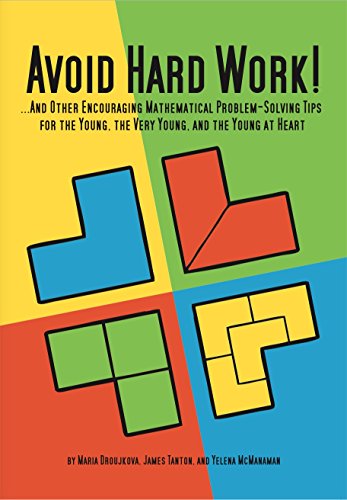
The latest book I co-authored, called Avoid Hard Work, is about kind, accessible, and deep problem-solving. It has ten chapters for ten problem-solving principles. They are tools for creating the math magic, such as the tongue-in-cheek titular slogan: to replace the mindless grind with attentive search for patterns. The book starts with a sample of what hundreds of parents and teachers say when asked, “When it comes to children and mathematics, what are your dreams?” For example, some people dream of math that is friendly, that invites curiosity, that makes sense. These math dreams can be used for value affirmation, for remembering who you are and what you want. Value affirmation is an emotional tool: it combats anxieties, puts us in the right mood for creativity, and makes our circles more robust. There is also a list of teaching techniques, such as moving beyond snap judgment of right-wrong answers to explore the “Why?” behind student reasoning.
(I am attaching these lists from the book, which is published with the Creative Commons open license, so people are welcome to share with attribution.)
Do you have some very basic suggestions about creating circumstances conducive to magic circles happening naturally, such as in the home and community?
Love this question! Balance is the key. Here is what I mean.
The first balance: self with adventure.You do you – a step aside from your normal routines. A circle becomes magical if it takes you away from the daily. Choose to make something you don’t normally make: a paper snowflake, a stacked rock sculpture, or a diamante poem. Look up how others make those, try their way, then do it your way. Add a bit of your style. What if you fold the paper differently before you cut the snowflake? What if you stack rocks three by three instead of one by one? What if you shape your poem like a pear rather than a diamond? Seek more and more of these interesting choices to try. Since your project is outside of your life, making a mess of it will impact nothing serious. You can be a bit braver, a bit stronger, a bit more adventurous than your daily self. Yet it’s still you.
The second balance: inspiration with ease. Do something special – while staying casual. What if it’s hard to feel brave and strong, to shift your focus away from the daily concerns? Children put on cat ears or superhero capes when they have their special play. Adults can also try play-acting and special clothes. Think of a ritual to set the mood. Strike a gavel, play a favorite theme song, or pass treats around. Add something quirky, spicy, or charming as you prepare. Go beyond the bare necessities. Yet keep your prep light so that your circle is easy to start. The feeling of magic is in trying new actions, not in blockbuster-quality props. It’s okay to use a curtain for your cape and pillows for your fort.
The third balance: invitation with consent.One of the main difference between a circle and the ordinary life is agreement. There is a whole lot of have-to in life. Obligations and needs, rules and laws dictate what must be done and how, whether we like it or not. Do establish basic safety and well-being rules for your circle. And then, make the magic. Aim for enthusiastic “Yes!” to every choice, big and small. You can invite, entice, and advertise. But don’t force, dictate, or coerce, neither other participants nor yourself. It’s lovely to point out that you are making amazing seven-sided snowflakes. It’s okay to invite children to count the sides – but only for pleasure. To keep the magic in, leave your worries about math tests out of your circle. This is not the kind of story where a reluctant hero can’t refuse a call to action. Everything’s optional. Don’t push.
What are your favorite tools for building magic circles? I’d love to hear stories and compare notes.
Resources
Maria offers a list of teaching techniques, such as moving beyond snap judgment of right-wrong answers to explore the “Why?” behind student reasoning. (She offers these lists from the book in a free download here: Avoid Hard Work, which is published with a Creative Commons open license, so people are welcome to share with attribution.)
1001 Math Circles: Facebook group to share and discuss math circle activities
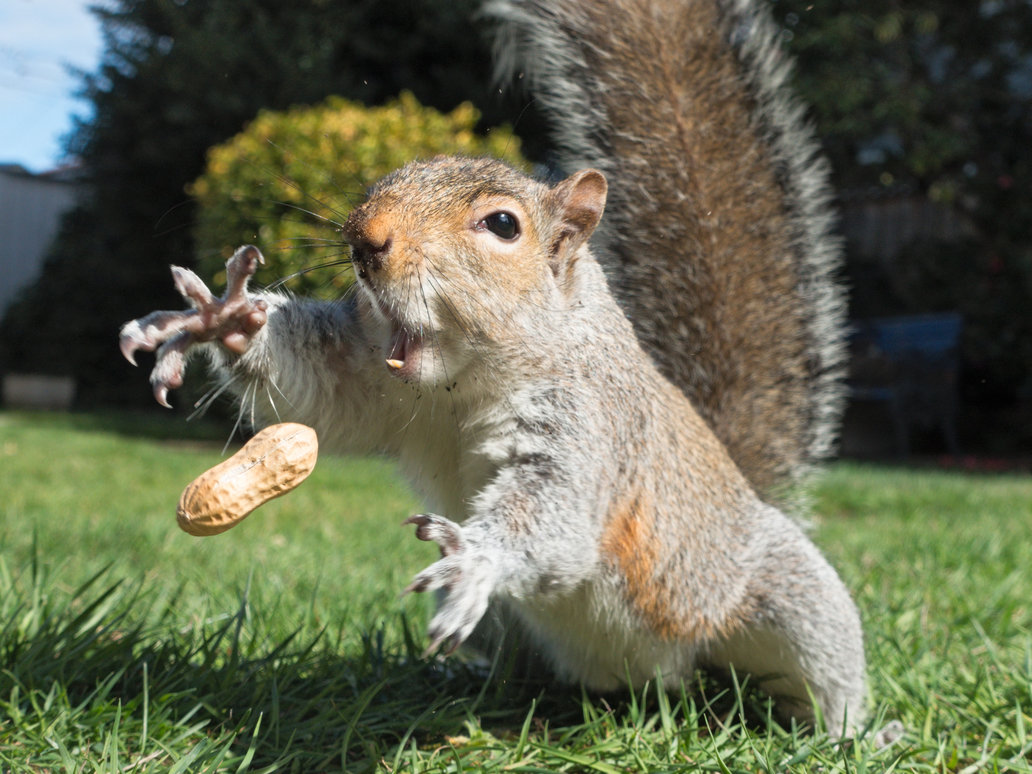
Eric* and I knew we could teach a squirrel to do tricks.
First, get it to eat food we’d thrown.
Then, get it to eat from our hands.
Next, train it to come when called.
Ultimately, get it to wear a costume and ride a squirrel-sized bicycle.
We talked about this at length, interrupting each other eagerly as new thoughts occurred to us. I was so thrilled at the prospect that my spine seemed to jingle with sparks.
Eric and I didn’t normally play together. We didn’t normally speak to each other. Boys and girls almost never hung out together in my neighborhood, and besides, he was going into fourth grade that fall while I’d only be a third-grader.
But Eric and I were united by a vision. Sitting in his front lawn, grass bristling against our legs, we bragged about how much animals liked us. Eric said he could whistle and a bird would land on his arm. He didn’t offer to demonstrate that skill right then. I implied I was some kind of mystic who could hear animals talk to each other. I was pretty sure I could hear that squirrel, sitting on its haunches in a nearby tree, practically begging us to be its friend.
All our efforts to lure it closer failed, so we reluctantly decided to build a squirrel trap. Not that we were the trapping sort of kids, but we’d make it up to the squirrel once we’d captured him.
Enthralled, we didn’t pay any attention to the likelihood of our vision becoming a reality. The moment was everything. We were in the powerful state of flow. You know what this feels like — invigorating, enlivening, wholly absorbing.
Process actually has more to do with our happiness than outcome, according to some psychologists. Maybe this is what happens when highly successful people don’t appear all that blissful once they’ve gotten to the top of their fields. Celebrities, sports figures, and others sometimes reach what seems to be the pinnacle of wealth and status only to self-destruct. Eric and I weren’t likely to reach the pinnacle of squirrel training, but we didn’t care.
We rustled up some scrap wood, a hammer, and nails. Squatting on a driveway too hot to sit on, we tried to transform small and oddly shaped plywood pieces into the trap of our dreams. When that failed we simply tried to build some kind of 3-D shape. We failed, failed again, failed a few more times, then resorted to something else. A cardboard box.
This material was easier to handle but not easy enough. The dull mat knife we were allowed to use barely sawed through the cardboard. Our attempts at making a door we could shut from a distance gave us several quite painful rubber band-related injuries. We slowed down as we realized our grand plans might not be workable. Not because it wasn’t a great idea, we agreed, but due to our construction skill deficits.
Both of us still loved the vision of that squirrel becoming our friend. Even if he didn’t wear a costume and learn to ride a squirrel-sized bicycle, we were happy there in the driveway where we’d realized magic was just a little too hard for us to build right then. There was awkward silence.
Thankfully, two bigger boys rode by on their bikes and mocked Eric for playing with a girl. Relieved, we took this as an excuse to go our separate ways, completely satisfied with our attempts. That squirrel never knew how close it was to fame.
*Name changed just in case Eric is now a squirrel whisperer.
Flow is “a state in which people are so involved in an activity that nothing else seems to matter; the experience is so enjoyable that people will continue to do it even at great cost, for the sheer sake of doing it.” ~ Mihaly Csikszentmihalyi
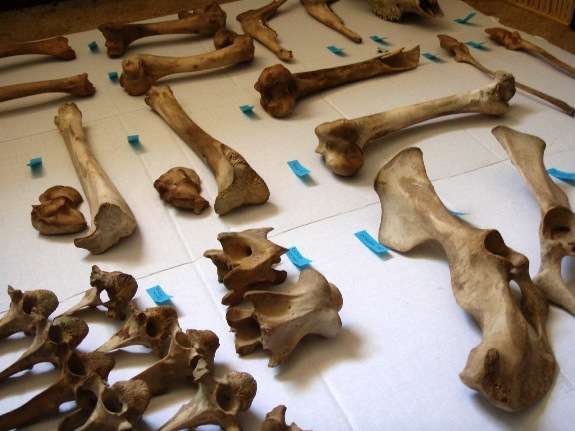
My daughter spent much of this week with a deer skeleton she found in the woods.
As she searched the site she was thrilled to find most bones intact. My only involvement was providing toothbrushes and bleach to clean them.
Today she’s reassembling the skeleton in the driveway. She shows me how the back legs fit into the hip sockets, giving the deer power to leap and run while the front legs are mostly held on by bone and connective tissue.
She points out that the spine is somewhat similar to a human spine in the lower thoracic and upper lumbar regions, but very different where the large cervical vertebrae come in.
I know so little about this topic that I forget what she’s telling me while she speaks.
Handling the bones carefully, she faithfully reconstructs the skeleton. She’s so deeply engrossed in the project that she hasn’t come in for lunch or bothered to put on a jacket to ward off the chill.
Her interests are far different than mine, but I know what it’s like to be this captivated.
You know the feeling too. You become so absorbed in something that time scurries by without your notice. Your whole being is engrossed by the project. You feel invigorated.
Skiers call it becoming “one with the mountain.” Athletes call it being in the “zone.” Psychologist Mihaly Csikszentmihalyi has termed it the “state of flow.”
In this marvelous state the boundaries between you and your experience seem fluid, as if you are merging with what you’re doing. The more opportunities any of us have to immerse ourselves in activities we love, especially those that stretch us to our full capacities, the more capable and centered we feel in other areas of our lives.
Photo by Claire Weldon
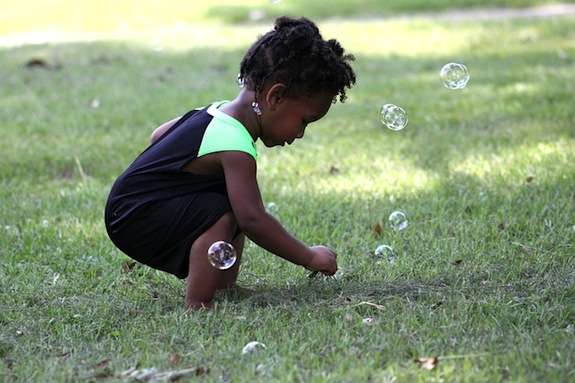
Children, especially the youngest ones, slide into flow effortlessly. While playing they concentrate so fully that they lose sense of themselves, of time, even of discomfort. They’re inherently drawn to full-on engagement. As Csikszentmihalyi explains in Flow: The Psychology of Optimal Experience,
Contrary to what we usually believe, moments like these, the best moments in our lives, are not the passive, receptive, relaxing times—although such experiences can also be enjoyable, if we have worked hard to attain them. The best moments usually occur when a person’s body or mind is stretched to its limits in a voluntary effort to accomplish something difficult and worthwhile. Optimal experience is thus something that we make happen.
For a child, it could be placing with trembling fingers the last block on a tower she has built, higher than any she has built so far; for a swimmer, it could be trying to beat his own record; for a violinist, mastering an intricate musical passage. For each person there are thousands of opportunities, challenges to expand ourselves.”
Kids demonstrate flow when they’re eagerly drawing, building, climbing, pretending, reading, exploring—-however rapt involvement captures them. Their intent focus makes a mockery of what is supposedly a child’s developmental handicap — a short attention span.
Flow truly puts a person in the moment. No wonder it can be hard for our kids when we call them away from what they’re doing to what we deem more important. No wonder they might be more enthusiastic about playing with Legos than taking part in a structured geometry lesson.
Imposing too many of our grown-up preoccupations on kids can teach them to block the experience of flow.
What do we need to remember about this state?
Flow is typically triggered:
when a person’s abilities are stretched nearly to their limits
during a self-chosen pursuit
when they are looking to accomplish something worthwhile to them.
These characteristics are also the way we’re primed to learn from infancy on. It’s been called the Goldilocks Effect. This means we are attracted to what holds just the right amount of challenge for us. Not too big a challenge, not too little, but something that sparks our interest and holds it close to the edge of our abilities, moving us toward greater mastery.
That’s pretty much the way science, art, and other major human endeavors happen too. Flow may indeed be our natural state.
It doesn’t have to be complicated. Here are some ways to allow more flow in your kids’ lives (and yours too!).
Foster a calm, relaxed environment.
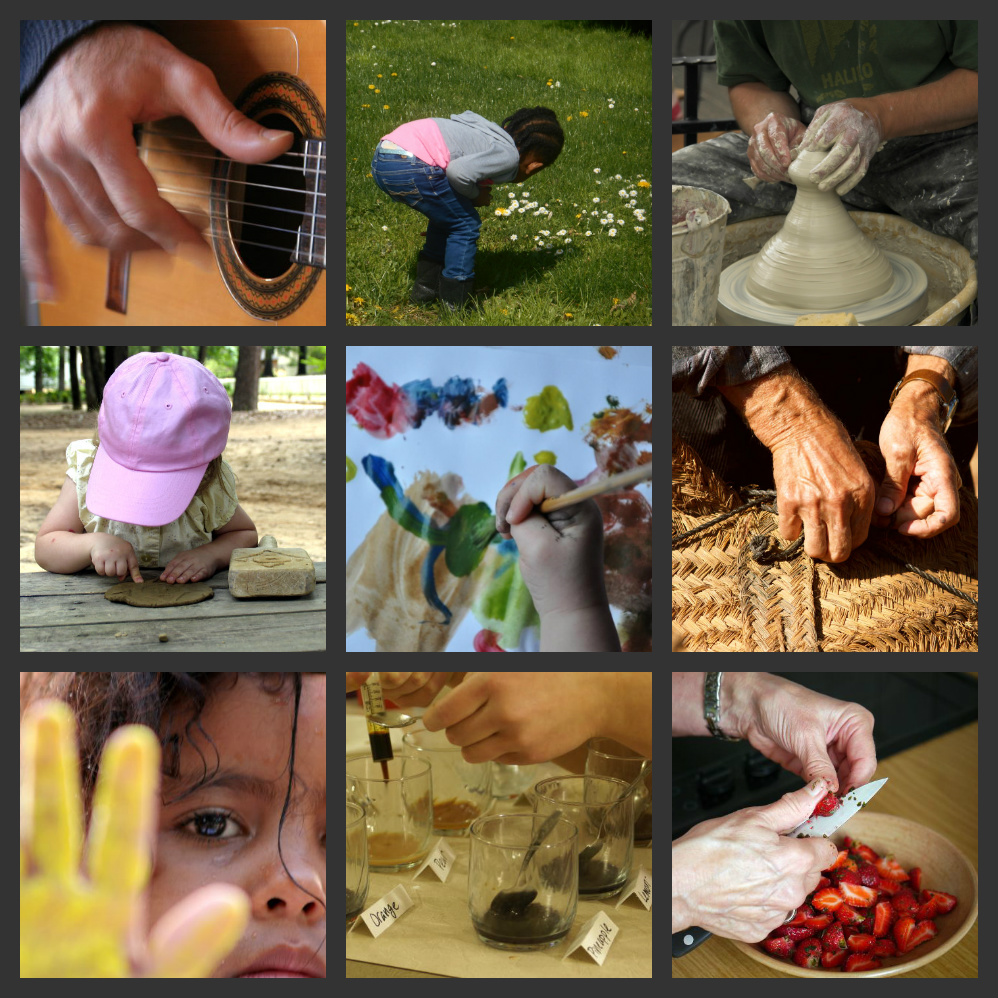
Engage in what brings out delighted fascination. If you’re not sure what that is, fool around with something hands-on. Tinker, paint, write, sculpt with clay, take something apart, dance, experiment—-whatever feels enticing.
A drive toward complexity, luring us to increase challenges, broaden our range of abilities, even face anxiety and boredom as we access an ever more profound state of engagement. (As A Playful Path author Bernie DeKoven explains here.)
Dr. Csikszentmihalyi’s work tells us achieving the flow state regularly is a key component of happiness.
That’s vital, even if it means you end up with a deer skeleton in your driveway.
Children are drawn to explore the world through their senses. (We all are, at any age.) When they are fully involved, what they learn is entwined with the experience itself. A child’s whole being strains against the limitations of curricula meant only for eyes and ears, or that assigns closed-ended tasks.
A typical school or school-at-home lesson intended to teach a child about worms may have diagrams of a worm’s body to label and a few paragraphs about the importance of worms, followed by comprehension questions. If the child musters up enthusiasm to learn more about worms despite this lackluster approach, there’s no time to do so because directly after the science lesson the child must go on to the next subject. When education is approached in this disconnected manner, the brain doesn’t process the information in long-term storage very effectively. It has no context in the child’s experience and no connection to the child’s senses.
On the other hand, a child encountering a worm while helping in the garden gains body memories to associate with the experience. The heft of a shovel, sun on her face, fragrant soil on her knees, and the feel of a worm in her hands provide her with sensory detail. She also encodes the experience with emotion. Her father likes to read books about soil health and sometimes she looks at the pictures. When she asks about worms he answers the few questions she has. And when she is satisfied he doesn’t go on to give her more information than she can handle. Next time they go to the library or get online they may decide to find out more about worms. She may be inspired on her own to draw worms, save worms from the sidewalk after the next rain, or otherwise expand on that moment in the garden. She is much more likely to retain and build on what she has learned.
The difference between these two approaches is worlds apart. Separating children from meaningful participation, as in the first example, doesn’t simply impair comprehension. It changes the way learning takes place. The child is made a passive recipient of education designed by others. Then the excitement of learning is transformed into a duty.
Education that treats the brain apart from the body will ultimately fail. Our senses cannot be denied. They inform the mind and encode memory. We must see, hear, smell, touch and, yes, taste to form the kinds of complex associations that make up true understanding. We humans are direct hands-on learners.
Brain development and hand use are inextricably intertwined. When neurologist Frank R. Wilson interviewed high achievers to understand this connection, he found that people credit their success to attributes learned through hands-on activities. In The Hand: How Its Use Shapes the Brain, Language, and Human CultureWilson writes:
I was completely unprepared for the frequency with which I heard the people whom I interviewed either dismiss or actively denounce the time they had spent in school. Most of my interview subjects, although I never asked them directly, said quite forcefully that they had clarified their own thinking and their lives as a result of what they were doing with their hands. Not only were most of them essentially self-taught, but a few had engineered their personally unique repertoire of skills and expertise in open retreat from painful experiences in a school system that had dictated the form and content of their education in order to prepare them for a life modeled on conventional norms of success.
Hands-on experience makes learning come alive. For example, principles of geometry and physics become apparent while children work together figuring out how to stack firewood. They develop multiple layers of competence as they solve tangible problems. Their bodies are flooded with sensation, locking learning into memory. Such experiences develop a stronger foundation for working with abstract postulates, theorems, and formulas later on. (Household responsibilities are actually a vital way to incorporate more hands-on experience, with amazing long-term benefits.)
When we’re engaged hands-on something greater can come into being. We gain a sense of effortlessness, of becoming one with the movement. Then it seems we’re longer working with things, but with material partners in a process of co-creation. Work and play are one, we are whole within it.




 ,
,

 Wilson writes: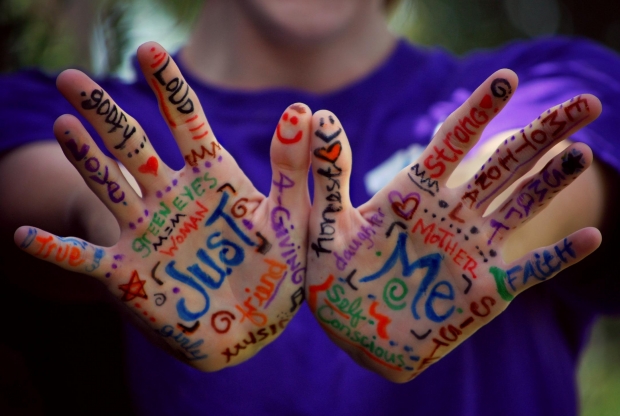
 Laura Grace Weldon