Why Write Poetry

write poetry, why poetry, becoming a poet,

Image: karrr.deviantart.com

I started to write poetry when I was eight or nine years old and continued until I was 13. The highlight? Winning a poetry contest in Mrs. Barker’s third grade class. The prize was a large chocolate bar.

The few scraps of writing I’ve found from those years consist of a child’s earnest questions and the comfort sought in a forest that once stood behind my parent’s home. Most lines are drenched with early existential dread. I’m not sure why I stopped writing. It could have been the surprisingly arduous trials of growing up or simple self-consciousness.

A moment from my 12th year comes to mind. I was in sixth grade, trying very hard to be like the other girls, never discussing the concerns that kept me awake most of the night. During the day, sleep-deprived into silliness, it often seemed to me that the conventions people took for granted were absurd. I did lots of laughing. One afternoon, walking out of class toward the playground for recess, I was telling a funny anecdote. A cluster of friends not only walked with me but jockeyed to be closest to me. The sun was shining on gumdrop green grass and I felt completely alive as I reached the best part of my story. I thought for a blindingly self-absorbed instant that this was what it was like to be popular. The next second I walked straight into a tall pole.

I hit it so hard I was thrown back. Dizzy, I made a joke about not seeing what had been there all along. My friends acted concerned but that was it, my brief encounter with popularity. Maybe I lost the secret habit of writing poetry because it seemed too much like an unseen pole, the sort of fullness that can erupt into a poem but might also raise a welt.

I never walked entirely away from poetry. As an adult I created poems from the phrases given to me by nursing home residents, crediting them separately for each line that eventually appeared in a book titled Gathering Our Thoughts. I led support groups for victims of abuse, hearing poetry as they shared their anguish in grace-laden detail. I taught non-violence workshops using poetry to emphasize the message of each session. I sent the work of my favorite poets to dear ones as a way of celebrating their joys and sharing their sorrows.

Yet I rarely encountered people living nearby who talked about, read, or wrote poetry. Far from our little farm I’m aware that poetry speaks for itself in slam festivals and readings, that it takes up residence in MFA programs and literary journals. Those worlds seem distant.

Poetry still feels like an indulgence. It hear it rustle in my head, trying to shuffle impressions into form, but I focus on my usual work of writing articles, editing, gardening, bringing in firewood, feeding cows, and other ordinary tasks. Besides, those impressions never entirely fit into words. I usually hush them till they are quiet. The ones that continue to pester I allow to fall onto paper although they don’t fully capture what’s just beyond language. When I took my manuscript to the post office to be weighed, addressed to “Poetry Editor,” I felt faintly ashamed, as if publicly admitting I squander time that could be devoted to more useful pursuits. The Puritan ethic dies slowly.

But the articles I write and the books I’m working on center around letting each person’s unique radiance shine. I believe this has to do, in part, with claiming both the light and dark in our lives so we can move toward a world of deeper mutuality. I know I’m not true to my ideals unless I live them. So I’m learning to treat the poetry writing impulse more gently. It feels starkly revealing, as liberation does.

The pieces in this collection have to do with beginning, uprooting, gathering, and abundance. They rise from the simple daily rituals that nourish me and from the loved ones who shape my life. They’re a way of walking into something hard without falling backwards.

publish poetry, why write poems,

Image: xxju.deviantart.com

Endless thanks to the intrepid souls who helped shape this book. The first ms readers: my beloved siblings Dale Piper and Cynthia Piper. My merry writing group: Connie Gunn, Margaret Swift, and Sarah Vradenburg. Those discerning individuals who commented on later drafts: Laurie Kincer, Leslie Nielson, Katherine Clark, and Mark Hersmann. I’m endlessly grateful. 

Peace Meeting Disrupted By Vegetation Attack

bad behavior at restaurant, eating fail, FML meeting, peace meeting screw-up, gagging in front of people,

Image metaloxide.deviantart.com

I once worked for a peace organization headed by a man I regard as close to sainthood. I have no saintly aspirations of my own, but when I was anywhere near John I wanted to live up to his example or, at least behave myself.

John and I met at an eco-conscious lunch spot to discuss a new project. There I drank coffee stronger than I’d ever tasted in a mug larger than I’d ever seen. Too late I remembered that caffeine gives me the jitters.

A third person joined us for the meeting. John was effusive in his praise for my accomplishments as he introduced me to this older gentleman.  Way too effusive. It’s hard to live up to such superlatives, especially while trying to keep one’s hands from caffeine-related jitters.

The men ordered soup and sandwiches. I quickly ordered the first salad listed and turned my attention back to the meeting. When my meal arrived I was alarmed. Dark, unfamiliar vegetation loomed over the plate. The leaves looked quite a bit like invasive weeds. I dug in bravely, hoping that once I’d gotten some nourishment the coffee shakes would wear off.

My tablemates had charming manners. They took small bites, wiped their mouths carefully, and added wonderful insights to the conversation only after swallowing. In the meantime I discovered the giant plants on my plate couldn’t be cut in pieces with ordinary tableware. Instead I had to bend them in half with my fork and hope that dressing didn’t dribble on the table, my clothes, or chin as I drove each bite resolutely into my mouth. To cope, I listened intently and kept my comments to a minimum.

Just as I was inserting a neatly folded plant leaf in my mouth John addressed a question to me. A serious, lengthy reply sort of question. I was in trouble. Not because I had no response. No, because the process of shoveling in a huge bent leaf took longer than a sip of soup or bite of sandwich ever could.

Worse yet, the leaf was larger than my coffee-addled brain anticipated. As it headed toward my lips it seemed to grow. Because the food was already partway in my mouth it was too late to throw the whole action in reverse. So I shoved the rest of it in, afraid that I looked like one of those mulching machines grinding a tree branch.

A conversational pause developed around the table as my lunch companions politely waited for me to answer. I hurried, hoping after a few quick chewing motions I’d be able to respond.

No such luck. As I pulled the fork out of my mouth the unexpected happened.

That hulking leaf unfolded. Like an angry vegetable on a rampage it sprung fully open and leaped to the back of my throat, instantly triggering a gag reflex.

There was nothing I could do.  Reflexes do not respect politeness nor honor the presence of a saint. My eyes widened in horror as my mouth involuntarily flung open. The entire lettuce leaf emerged at top speed from my gaping maw right onto the plate.  Gag related tears sprung to my eyes and gag related saliva hovered with great drool potential on my lower lip.

It is a testament to the training of those involved in the peace movement that my companions didn’t bolt from the table.  They didn’t even blink.

John looked at me kindly. As if his wording had caused me some discomfort, he said without a hint of irony, “Let me rephrase the question.”

Imaginary Motherhood

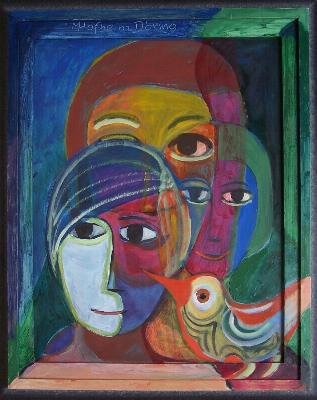
Belakane und Feirefil by Margret Hofheinz-Döring

I’m a much better mother in my imagination than in reality.

That imaginary mother has casual grace and unflappable calm. She doesn’t speak in funny accents or talk to inanimate objects. She also has the confidence to wear a bathing suit. In public. Without scuttling around using a small hut as a beach wrap. But I digress.

In my imagination I sparkle with enthusiasm for trigonometry and better yet, can explain it. I drive everywhere for everyone without grumbling about contributing to global warming. In fact, I am the mother my teens long for. I tell them I’ve secretly been saving up for one son’s trip to New Zealand to study spiders and another son’s year long trek along the Pan-American trail. As they leave I wave goodbye cheerfully.

The real me doesn’t sparkle unless craft supplies get loose.

I’m guilty of excusing myself to hide in the bathroom when my offspring go into lengthy monologues about topics I’ll never fathom. I ply my family with goodies in a not-so-subtle way of getting them to watch the documentaries I want to watch, even though it is entirely necessity after that endless German film about Mongolian salt miners. The stories retold with great hilarity by my kids usually feature my tendency to trip over invisible objects and my exaggerated startle reflex.

In my imagination I cook using recipes instead of improvising. When my children ask, “What are we having for dinner?” I’m able to answer with the names of actual dishes. This reassures them that someone, somewhere has taste-tested the food before them. This also spares me the daily trauma of watching my offspring tolerate meals made with home grown vegetables, dark scary grains, spontaneously seasoned sauces, and no names for anything.

“Why,” my son once asked, “can’t we try the kind of macaroni and cheese that comes in a box? It’s really bright yellow!” He regretted the question instantly, because unlike that imaginary mother who laughs sweetly at such questions, the real mother explains things. Or according to the daughter in the family, she rants.

In my imagination I am never preoccupied, never busy. When sought out I’m fully attentive. When my children look up from their pursuits they find my adoring eyes, but not often enough that they think I’m creepy and plot to institutionalize me. My wonderfully creative life inspires my children to live their own dreams (while still getting their omega-3 fatty acids and sufficient rest).

The real me falls terribly short.

I kvetch. I get tears in my eyes easily, even from poignant long distance ads. I juggle obligations badly while tossing out sarcastic asides like a performing seal. I plot giant world-saving accomplishments while forgetting to water the plants. I fuss and grumble and speaking of short, I’m also shorter than everyone in the house. That can’t be right. In my imagination I am tall.

In my imagination our family spends every evening together as we used to when the kids were small, back when we snuggled on the couch reading books, making puppets out of our socks, and making up games out of nothing. Although now we wouldn’t all fit on the same couch and the kids would suffer withdrawal symptoms away from glowing screens and friends.

But still, the vision of togetherness keeps the imaginary mother in me happy. She is able to hold on to every moment of the kids’ earliest years. She builds precise memories of each squabble and laugh and each child’s way of drifting slowly toward his or her larger self because she knows the actual mother, me, never could have imagined how fast time would go by. For real.

bittersweet motherhood, children nearly grown, being a better mom,

Nachtgespräch by Margret Hofheinz-Döring


Mine Is The Wrong Kind Of Lust

don't make me travel, why I stay put,

Image: babyoctopuss.deviantart.com

Let me explain.

My schoolteacher father had summers off, so my parents made the best use of that time. That meant teaching their children geography and history through travel. Each winter my mother started planning our frugal summer trips. She sat at the kitchen table with maps and guidebooks arrayed in front of her as she carefully plotted a route that maximized educational stops along the way. Old battlegrounds, restored villages, and scenic natural wonders were her priority. The other priority? No admission fees.

*

why I don't travel,

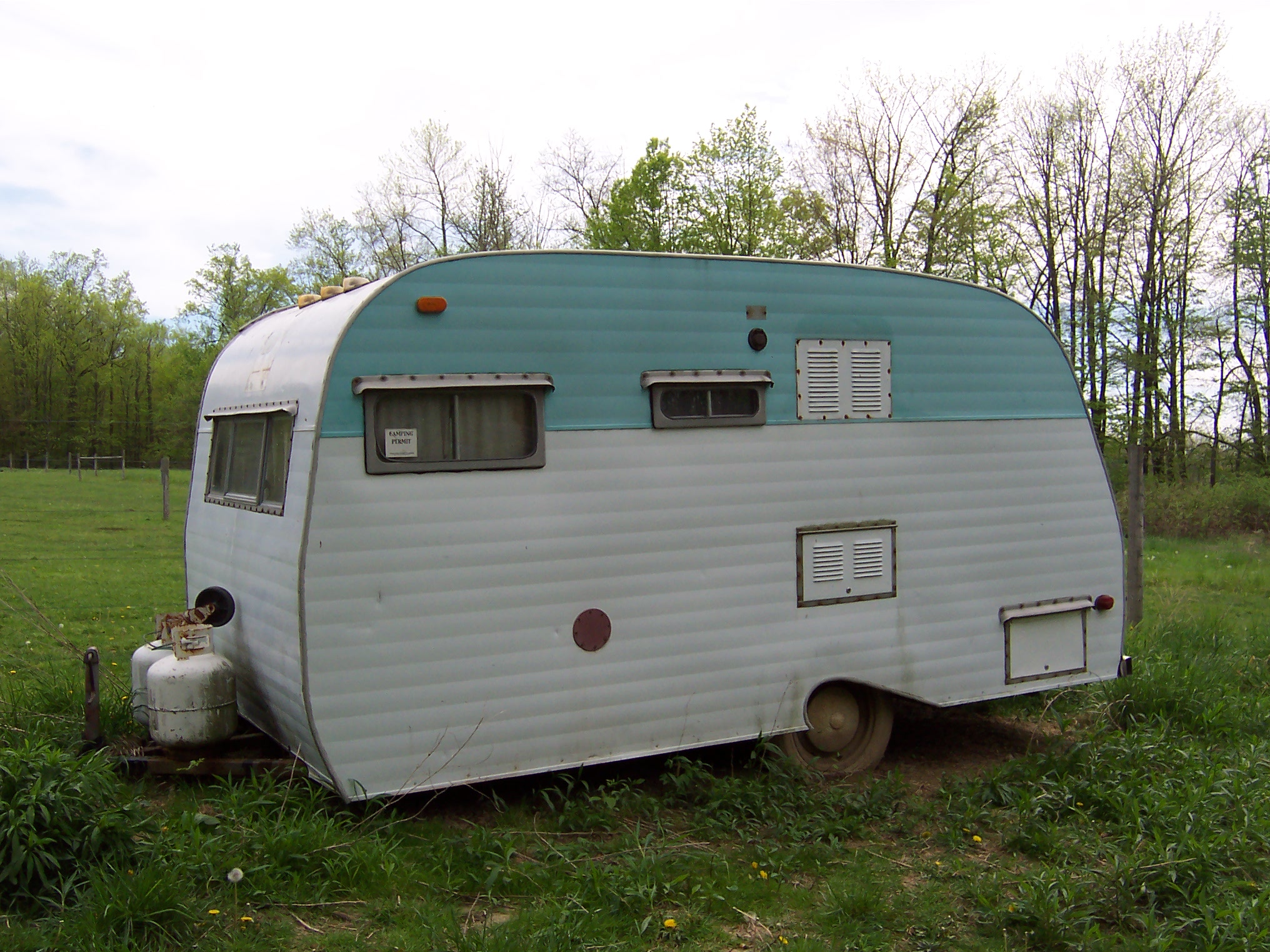
One summer we traveled over 6,000 miles. Most days we had an early breakfast, drove for six hours, spent the late afternoon sightseeing in the steamy heat, then went on to a trailer park where our 15 foot Scotty was invariably the smallest trailer around. Other folks in these places looked like there were staying a few days. They sat in lawn chairs and chatted around campfires. My parents meant business. Ours was a carefully planned agenda which meant we kids showered soon after supper in those ubiquitous cement block restrooms and went to bed early, usually lying awake in the hot metal trailer listening to other families laugh and talk under the trees.

*

why I don't travel,

Our trips were strictly no-frills in every way. My parents spent as little as possible on food—we never had fast food or restaurant meals while we traveled. I ate a peanut butter minus jelly sandwich chased by Tang every day at lunchtime. They scouted out the cheapest gas and took only the most carefully considered photos in those pre-digital days. Miraculously they maintained family peace in very close proximity for weeks on end, although we kids found minor parental spats over directions and mileage calculations secretly hilarious.

Don’t get me wrong, my parents had wonderful motives. They piled three kids in a small car and showed us the country. But I was a lethargic and grumpy traveler. Hurtling down the highway with windows open (air conditioning allegedly reduced fuel economy) only aggravated my asthma and hay fever, plus I suffered with relentless headaches and nausea from car sickness. Yet I wasn’t sufficiently self-aware to let anyone know that I felt dizzy, woozy, and short of breath. I longed for the comforts of home: library books, a familiar bathtub, my trusty bike, and some control over my own life. As soon as my mother got out the maps to start planning I felt nothing but dread, which I masked with a facade of eager anticipation lest I be called “ungrateful.” But every minute our car headed farther away from home seemed wrong somewhere in the center of my being. Until we returned I felt suspended from my own completeness—a weary, one-dimensional version of myself.

*

I refuse to travel,

Perhaps these long yearly trips, taken when I was unwell and unwilling, served to inoculate me against travel. As an adult I still struggle to feel wholly myself when I’m away. That marks me as seriously maladjusted. Wanderlust, or at least the urge to get away, is the norm. All sorts of well-meaning people mock non-travelers as people with no sense of adventure.

Oh sure, I long to go places. I’ve even traveled of my own volition. But I rail against the backward century in which I’ve been born, or perhaps the backward planet I’ve been born on, because I can’t adjust to the concept that it’s not possible to mosey over to Belarus or Uruguay or Finland this afternoon, have a wonderful lunch, meet some new friends and assure them that I’ll stop by next Friday. The problem isn’t the destination, it’s getting there. I know poets and sages say it’s all about the journey. I’ve journeyed, believe me. I say all of life is a journey, every single moment that we’re wide awake and fully participating in the process of living.

hermit's rationale, staying home, peace in place,

Besides, aren’t poets and sages all about being true to oneself? Being true to myself means giving in to the lust to stay rooted.

I experience a kind of delicious completion as I perform the simple rituals of life right here every day. I make cheese from our cow’s milk, walk the dogs, chop vegetables, work at my desk—-all in view of the fields and trees that sustain me season after season with their subtle, incremental changes.

I hope those of us who are truly rooted have something to offer this ever faster world. Our insights may be simple. I pay attention to the vegetable gardens, the beehives, to blackbirds convening in a clamor across the treetops. Changes I see are those that take place slowly and noticing them is part of the pleasure I find in being fully here. To me there’s soul-drenching nourishment that comes of contemplation, quiet, and service. Thank goodness we can fulfill the desires we choose, leaning eagerly toward the excitement of travel or to answering longings that serve a quieter nature.

You know where to find me. I’m right here.

*

staying home, anti-traveler, delights of home,

Naked With My Editor

I’m not well-behaved or well-dressed enough for most careers. That may be what led me to cobble together enough freelance gigs to call myself a writer. It doesn’t pay quickly or pay well. In fact, I earn less than in my former occupation, social work, and that’s saying something.  But freelancing suits me.

Well, except for that episode of nudity with my editor.

Perhaps I should explain.

Years ago I secured a job writing a column for a newspaper. I worked after the kids were in bed and I e-mailed the first piece just before the midnight deadline in a sleepy haze.

The next morning was typical. I unloaded the dishwasher, explained long division, feigned patience while listening to a child’s original knock knock jokes, discussed the ethics of phone screening with my eight-year-old (who considered it a politeness violation to let it ring), and took photographs of my daughter dissecting a sheep eyeball for a biology project.

It was mid-morning before I had time to shower.  Because I’m efficient (lazy) I wear whatever comes out of the dryer.  It spares me the effort of putting away my own laundry.  I don’t mind monotonous outfits in the service of convenience.

When I got out of the shower I grabbed a towel for my usual mad dash to the dryer and on the way was handed the phone by my eight-year-old.  It was the newspaper editor. He wanted me to add a few sentences to my column.  He expected me to do this off the top of my head, over the phone, immediately.

While he was telling me this I realized my 11-year-old son had opened the front door, inviting in his pubescent pals.  They were chatting eagerly as they headed toward me on their way to the kitchen.  There was no way I could get to our dryer, handily located on the first floor, unless I ran directly into these youths and knocked them over like baggy-pants’d bowling pins.  I didn’t want to expose these poor youngsters to my not-supermodel flesh at their impressionable ages so I took the kindest course of action possible. I retreated down the basement steps, towel clutched in one hand and phone in the other.

Although I had no chance of sounding professional on the phone, I went on talking to my editor, giving him the lines he needed. He asked if he could edit them to fit.  “Sure,” I told him. He’s a writer too, I thought, it’ll be fine. He chatted away as if we were old friends—-he surely sitting in a comfortable chair at his desk, me a semi-naked freelancer huddled in the basement.

I stayed trapped in that basement long enough to meditate on the beauty of cobwebs and the interconnection of all life.  Long enough to get really cold in my small wet towel.

When my column was published, I saw that my editor had rearranged my few sentences into a nonsensical word soup.  It took a lot of self control to keep myself from going into a  sheep eyeball tossing snit. But just then my check arrived in the mail. It was larger than I’d expected. I felt like dancing right out the door to celebrate, but I couldn’t. That’s because I’m a freelance writer and of course, I wasn’t dressed yet.