Singing From the Inside Out

I can’t sneeze in a roomful of my friends without hitting a number of talented singer-songwriters who’d love to make a living through music. (Yes, a metaphorical sneeze.) Yet nearly every gifted artist any of us know has to ignore his or her gifts in order to make a living.

What cultural transformation might we see if those drawn to poetry, sculpting, composing, painting or other mediums of expression had some hope of living by their art?

Well here’s some hope.

A homeschooled guy who chose to help out with a worthwhile project now appears with John Mayer, Sheryl Crow and the Dave Matthews Band. His songs are heard on House and Ugly Betty. And more importantly, he sings about what matters to him.

See if the questions posed by this deceptively beautiful piece, “Ain’t No Reason,” resound long after the music is over.

Brett Dennen grew up in rural California, homeschooled along with his brother and sister. In an interview with Frank Goodman for Puremusic.com Dennen describes his mother’s homeschooling approach as “experiential.”  He says, “…so she rarely had a lesson plan or anything like that. She would give us books, and we would read the books. And we did a lot of gardening, and we did a lot of science education through being outside. We took camping trips with other kids who were homeschooled. And when we were out camping, we learned about rivers and forests and mountains and geology. We’d take books out camping with us, and we’d read about it, and we’d look for what we’d read about. Experiential education basically means instead of being in a classroom and being taught or told something, to actually go out and see it, and see how it works and learn through experiencing it instead of learning through being taught or told it. And that was really valuable to me.”

Dennen took the same approach when learning music. As he says in the same interview, “Because of the way I was homeschooled, I got into the idea of trying to learn how to do things my own way. And so when I started playing guitar, I taught myself. I took lessons for a while, but I lost interest in them because I think I just didn’t like going to my lessons, I didn’t like my teacher, I didn’t like what I was learning. So then I quit. And after I quit, then I really started to learn.”

He went to college planning to become a teacher. While a student, Dennen met Lara Mendel at a wilderness-safety class and the two of them wrote a humorous song about backwoods diarrhea for a class assignment. Mendel happened to be developing a powerful hands-on program for children, one that tackles intolerance and violence head on. She named it The Mosaic Project. Dennen wrote songs to reinforce the activities. Now his music and her project teach hundreds of California children about acceptance, friendship and peace in each session of The Mosaic Project.
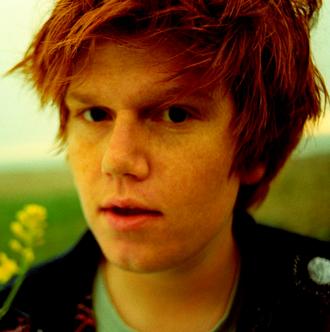
The creative and independent spirit of Dennen’s homeschooling background hasn’t left him. Goodman’s interview opens with these comments. “He’s like a new kind of human being to me, this Brett Dennen. After spending time with him this week, I feel that way even stronger than after the positively confounding impression that his new CD, There’s So Much More, left on me. If he’d said that he was an alien, I could have swallowed that; it would even have made sense to me. Because I’m simply not accustomed to meeting and spending time with people that appear to be so incorruptible, so odd and yet so self-assured; so, uh, enlightened and inner-directed, if I might venture all that.”

I don’t know if Dennen’s life up to this point says more about homeschooling or about doing the work of one’s heart. I do know there’s no separating the two.

Our Kid’s Pursuits Are Their Own

Snake wrangler, computer geek, vintage auto restorer. These are a few of the identities one of my sons tries on as he masters areas of interest to him.

He used to patiently stalk alongside our creek and behind the woodpile to find snakes. He didn’t hurt them or even keep them for more than a few minutes. I’m not sure even now what the object was other than a pursuit of something that fascinated him. He brought many of his captives up to the house where we marveled at them before he released them. Personally I prefer to marvel at snakes from a healthy distance but I can squelch the shivers when necessary. He didn’t just wrangle snakes, he also studied huge reference books about snakes, drew pictures of snakes, talked about snakes. Then one day he moved on to other interests.

Mostly out of necessity he put together his first computer from cast-off parts. That started a new obsession: bettering computer operations. He became particularly intrigued by the cooling systems. I listened, or at least kept my head swiveled in his direction, as he gave excruciatingly in-depth explanations about cooling system modifications and the resultant effect on computer efficiency. He taught himself so well that he’s still paid to fix our friend’s computer problems, both software and hardware. Sometimes he shakes his head sadly at how poor cooling compromises these systems.

He became interested in auto restoration before he was old enough to drive. Using money earned by shoveling manure from horse stalls, he bought a 1973 Opel GT. He clearly relished the time and mess it took to carefully tear nearly everything out of the car. Now he is in the rebuilding phase, his progress limited to what parts he can afford.  He shares details with us at the dinner table and tracks each step with friends on forums. The day his little Opal is roadworthy I know that acclaim will come from friends, family and forum pals all over the world.

My husband owned his own computer business and has always fixed our cars, but he recognizes (sometimes to his chagrin) that our son prefers to go his own way as much as possible. In fact, when a question about computers or cars comes up it doesn’t always stay in the realm of consultation. It’s just as likely to become a spirited debate. That’s the nature of young people as they prove themselves, and we try to understand. (That is, as long as the tools are put away.)

We’ve noticed that eager parental encouragement doesn’t always translate to more eagerness on the part of our kids. Sometimes we like a hobby, lesson or interest much more than our kids do. Sometimes, even when they’re winning awards, they don’t want to continue. Or perhaps our excitement has put a damper on the pursuit. As our kids get older this becomes more evident.

We’ve learned our kids’ interests are their own. There’s no real value in forcing, cajoling or otherwise pressuring a young person to stay with an endeavor that has lost its allure. Kids in our house have to stick with chores and other work obligations, not interests.

Child development expert David Elkind notes in The Power of Play: Learning What Comes Naturally it’s a misconception that children should “stick” to a pursuit once they’ve started in order to build better staying power for adult challenges. As Elkind writes, “The common assumption that commitment transfers from one activity to another is wrong.”
Making sure that a young person pursues interests for his or her own reasons, not the parent’s, keeps motivation alive and passion genuine. Research backs this up.

Sure, we can foster our children’s enthusiasm with our approval and guidance when necessary. But we can also show them by example. We can pursue our own interests with the kind of joy and fervor that can’t help but inspire. That’s my newest excuse for my own art projects. I’m not making a mess, I’m providing a good example!

Edible Knowledge

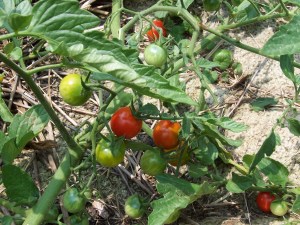
cherrytomatoes Living on a farm we can’t help but be connected to the food on our table. We’re by no means perfect when it comes to eating locally. We’ll never come close unless chocolate and coffee start sprouting up in Ohio.

While more of us are paying attention to adopting better habits for our own health and planetary health, it’s easy to overlook the vital and wondrous learning that is directly related to food. For my family, those lessons often have to do with shared experiences.

~Many years we head out to pick apples together on a bright fall day. After an indulgent week of eating and baking with as many apples as possible, we devote a day to applesauce. We cook the remaining bushels of fruit down, cranking Grandma’s Victorio strainer that pushes with sauce out one side and pulp out the other (pulp eagerly eaten by the chickens), then can jars of applesauce to eat all winter long.

~We have encouraged each child to choose his or her own “crop” to plant and tend in the vegetable garden. Harvesting and sharing the bounty of one’s own fresh green beans teaches the satisfaction of work right along with lessons in botany and soil health.

~We try recipes from around the world, not only while learning about other cultures, but also because we freely trade garden bounty with friends, and have to do something with unfamiliar herbs, roots and fruits.

~We visit nearby farms. Observation and conversations with those who live on the land have been instructive, teaching us practices we want to emulate and those we hope to avoid.

~We eat meals together every day. Cooking frugally by choice as well as necessity has brought us myriad conversations about health, trends, politics and defining worth for ourselves. Of course our meals also precipitate family humor related to home ground grains that result in breads darker than wet cardboard and yes, we’ve had one or two loaded spatula chases around the kitchen. Oh wait, that didn’t involve the kids, just me thinking it might be funny to fling frosting at my husband.

~Unintentionally we learn by making plenty of mistakes. Ordering 25 pounds of organic buckwheat from the food co-op before knowing if anyone would eat it, raising our first flock of turkeys on faith more than fact, repeatedly attempting to make cheddar cheese although we can’t maintain the temperature needed to age it, well, this list could go on.

10 Things We Should Teach Every Kid About Food, recently posted on Every Kitchen Table, offers a handy list of important food-related categories to explore with our children.  The ideas are important and too often overlooked, such as the precepts of the industrial food system and the insidious effect of food advertising.

Here are some related resources:

Improve School Lunches With Locally Grown Food This article offers information plus strategies to bring positive change to your school district, whether you have children in school or not.

Don’t Buy It A non-profit site with learning games to help kids evaluate and analyze media messages.

I Buy Different A website sponsored by New Dream and World Wildlife Fund with tools to help tweens and teens be, live, and buy differently to make a difference.

Roots, Shoots, Buckets & Boots: Gardening Together with Children

I Love Dirt!: 52 Activities to Help You and Your Kids Discover the Wonders of Nature

What are some ways that learning, growing and eating work best in your family?100_5960